Home Blog Page 392

SCI signs contract with Mazagon Dock for India’s first Methanol Dual-Fuel Platform Supply Vessel

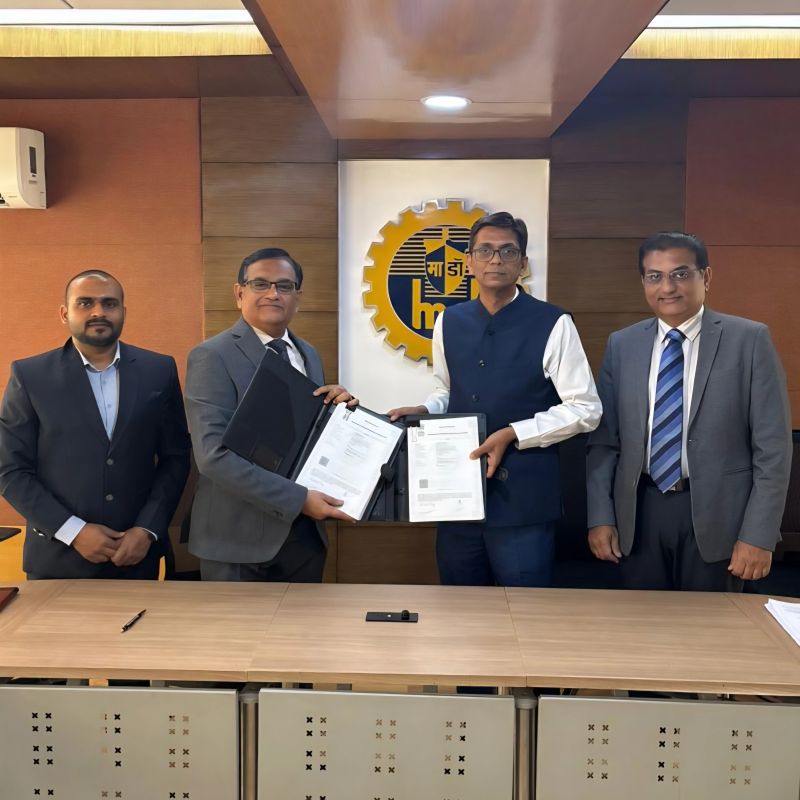
MUMBAI : In a significant milestone for India’s maritime sector, Shipping Corporation of India Ltd. (SCI) has entered into a contract with Mazagon Dock Shipbuilders Limited (MDL) on 18 March 2026 for the construction and delivery of one 3000 DWT Methanol Dual Fuel Diesel Electric Platform Supply Vessel (PSV).

This state-of-the-art vessel, the first of its kind to be built in India, represents a major advancement in the country’s transition toward greener and more sustainable maritime operations. Designed to operate on methanol as an alternative fuel, the vessel will significantly reduce greenhouse gas emissions, sulfur oxides, and particulate matter, contributing to cleaner seas and improved environmental performance.

The vessel will feature advanced diesel-electric propulsion, enhanced fuel efficiency, and cutting-edge automation systems to ensure optimal performance, operational flexibility, and safety. It will primarily support offshore operations, including the transportation of essential supplies, equipment, and personnel to offshore installations, thereby strengthening India’s offshore logistics capabilities.

The project underscores the Government of India’s strong push for “Make in India” and Aatmanirbhar Bharat in the shipbuilding sector. Construction at MDL will not only enhance indigenous shipbuilding capabilities but also generate employment opportunities and promote the development of a robust maritime industrial ecosystem.

Aligned with flagship national initiatives such as Maritime India Vision 2030, Maritime Amrit Kaal Vision 2047, and the National Green Hydrogen Mission, this project reinforces India’s commitment to achieving its Net Zero targets while fostering innovation in alternative marine fuels.

Speaking on the occasion, officials highlighted that the collaboration between SCI and MDL reflects a strategic step toward building a modern, sustainable, and globally competitive maritime sector. The induction of such green vessels is expected to set new benchmarks in environmentally responsible shipping and encourage wider adoption of alternative fuels across the industry.

With this initiative, India continues to position itself as a forward-looking maritime nation, embracing clean technologies and strengthening its presence in the global shipping and shipbuilding landscape.
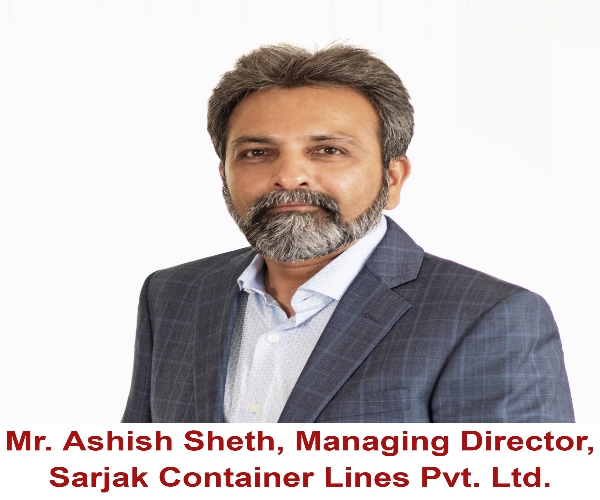
Gulf tensions may disrupt India’s infra execution, raise logistics costs: Ashish Sheth, CMD, Sarjak Container Lines

MUMBAI: Escalating tensions in the Middle East could impact India’s energy and infrastructure sectors through rising logistics costs and supply chain disruptions, even if crude oil supplies remain stable, according to Sarjak Container Lines.

The ongoing escalation, including reported attacks on energy infrastructure and emergency measures such as the U.S. waiver of the Jones Act to stabilise domestic shipping, is beginning to create ripple effects across global energy and logistics networks.

Ashish Sheth, Chairman and Managing Director of Sarjak Container Lines, said the situation should not be viewed only as an oil price risk, but as a broader logistics challenge for India.

“The risk for India is not just about whether oil is available, but whether it can be transported reliably and at predictable costs,” Sheth said.

“India imports about 85 percent of its crude oil requirements, with a significant share routed through the Strait of Hormuz, a key global shipping corridor.

While there has been no large-scale disruption to flows so far, rising war-risk insurance premiums and freight volatility are beginning to impact shipping economics”, he added.

According to Sheth, this could increase the landed cost of crude and put pressure on refining and fuel pricing margins.

He said the impact could be more pronounced on India’s infrastructure and energy projects, which depend heavily on global supply chains for equipment and machinery.

“Project cargo, including critical equipment for refineries, power plants and renewable energy projects, is highly sensitive to delays. Even minor disruptions in shipping routes or schedules can lead to cascading delays and cost overruns,” he said.

Sheth also flagged potential pressure on LNG supplies, as geopolitical tensions tighten global markets and increase competition for cargo.

“We have seen this pattern before, during COVID and the Red Sea crisis, where supply does not immediately stop, but movement becomes slower, more expensive and less predictable,” he said.

“The situation could lead to longer transit routes, higher freight costs and delays in cargo movement, potentially affecting project timelines across sectors”, he added.

He advised Indian companies to focus on supply chain resilience by diversifying sourcing, planning logistics capacity in advance and building flexibility into execution strategies.

“As global uncertainties rise, logistics will play a central role in determining how effectively India can sustain its infrastructure growth momentum,” Sheth said.

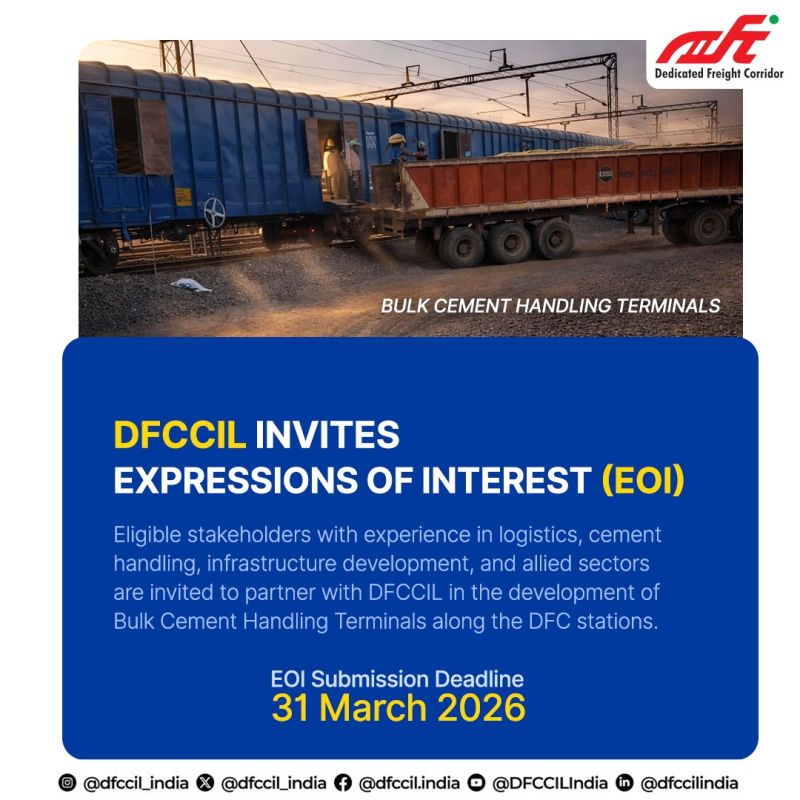
DFCCIL invites stakeholders for development of bulk cement handling terminals

NEW DELHI : Dedicated Freight Corridor Corporation of India Limited (DFCCIL) has invited eligible stakeholders to participate and partner in the development of Bulk Cement Handling Terminals, marking a significant step toward strengthening India’s rail freight ecosystem.

The initiative aims to enhance the share of rail-based transportation for bulk cement by establishing modern, technologically advanced terminals strategically located along the high-capacity Dedicated Freight Corridor (DFC) network. These terminals will be equipped with state-of-the-art mechanized handling systems, automated loading and unloading infrastructure, dust control measures, and digital tracking capabilities to ensure efficient, safe, and environmentally sustainable operations.

By leveraging the speed, reliability, and higher axle load capacity of the DFC network, DFCCIL seeks to enable faster turnaround times, reduced logistics costs, and seamless connectivity between cement production hubs and key consumption markets. The initiative is expected to significantly decongest road networks, lower carbon emissions, and improve overall supply chain efficiency for the cement sector.

The development of Bulk Cement Handling Terminals will be undertaken through a collaborative approach, encouraging private sector participation, investment, and innovation. This partnership model aligns with the Government of India’s focus on Public-Private Partnerships (PPP) to accelerate infrastructure growth and enhance logistics competitiveness.

The project also supports national objectives under initiatives such as Gati Shakti and the National Logistics Policy, aimed at creating an integrated, multimodal, and cost-efficient logistics framework across the country.

Officials highlighted that the move will not only boost rail freight volumes but also provide a reliable and sustainable logistics solution for the cement industry, which is a key driver of infrastructure development in India.

With this initiative, DFCCIL continues to play a pivotal role in transforming India’s freight transportation landscape by promoting modal shift to rail and enabling a more efficient, resilient, and eco-friendly logistics ecosystem.

India may review fuel exports to protect domestic supply

NEW DELHI : India, the world’s fourth-largest refiner, ​will review its fuel exports if needed to ensure availability in the local markets, a government ‌official said on Thursday, amid global disruption and soaring oil prices stemming from the Iran war.
“Domestic consumption is priority, and the government will review (the export plan),” Ms.Sujata Sharma, a joint secretary in the federal petroleum ministry told a news conference.

India has ordered oil and gas companies to ​share full details of exports, imports and inventories with a government agency, as the South Asian nation seeks ​to shield consumers from shortages.

India has designated the Petroleum Planning and Analysis Cell to compile ⁠the information and all companies must share information regardless of any confidentiality obligations.

India has been hit hard by the jump ​in crude prices and disruption in oil and gas supplies, but unlike China it has not moved to ban exports ​of refined fuels.

The data will help India in taking faster and “more targeted interventions such as imposing export restrictions or calibrating export flows to meet its own energy security”, said Prashant Vashisth, vice president at Moody’s affiliate ICRA.

He said India can use its excess refining capacity to ​prioritise fuel supply to friendly or strategically aligned countries after meeting its local demand.

“Nowadays buyers are willing to pay ​a higher price. The question is of availability, which is beginning to outweigh prices,” Vashisth said.

Any move to curtail fuel exports by ‌India will ⁠hit Reliance Industries (RELI.NS), opens new tab, the operator of the world’s biggest refining complex, as other refiners have largely stopped exporting fuels.

All companies involved in the oil and gas supply chain including oil producers, importers, refiners, fuel and gas retailers, liquefied natural gas importers, pipeline operators, and petrochemical plants were ordered to provide PPAC with data.

India, the world’s third-biggest oil importer and consumer, ​meets over 90% of its ​oil needs through purchases from ⁠overseas.

So far the federal government has said there are adequate crude supplies and refined fuel stocks to meet local demand.
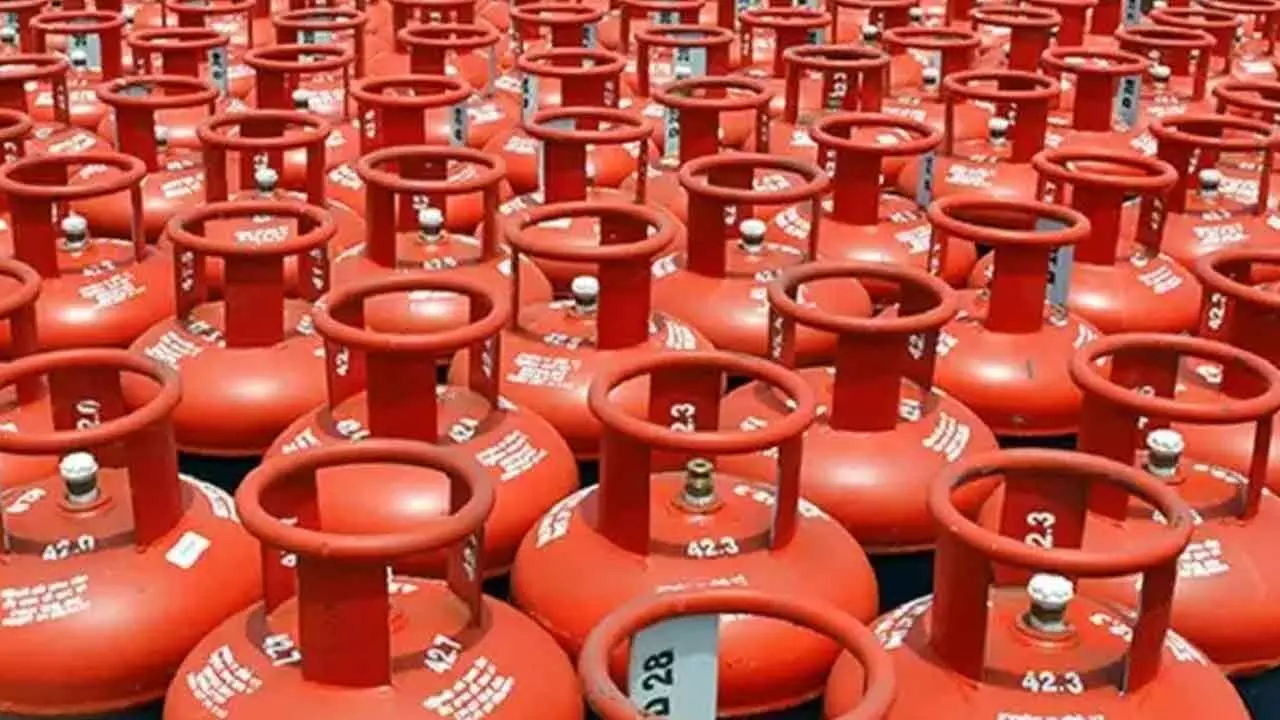
However, the world’s second-largest LPG importer is facing its worst ​cooking gas crisis in decades with shipments from the Strait of Hormuz almost halted due to ​the war.

India was ⁠sourcing more than 40% of its crude imports and 90% of its liquefied petroleum gas imports from the Middle East.

Indian refiners have bought millions of barrels of Russian oil floating on the high seas after Washington granted a sanctions waiver.

The country has ⁠invoked emergency powers ​ordering refiners to maximise production of LPG and cut sales to industry ​to avoid a shortage for its 333 million homes with LPG connections.

India last week asked consumers to avoid panic buying of LPG cylinders and shift to ​piped natural gas where possible.

Source : Reuters

Ras Laffan attack raises spectre of prolonged LNG supply disruption

OSLO: Severe damage to Qatar’s Ras Laffan LNG complex is likely to prolong supply disruption well beyond initial expectations, with traders and analysts now warning of the potential for a sustained outage and extended gas price volatility.

Questioned by specialist energy news outlet, Montel News, Tom Marzec-Manser, Director of European gas and LNG at Wood Mackenzie said: “The extensive damage sustained by trains at Ras Laffan means even once the Iran conflict ends and the Strait of Hormuz reopens, Qatari LNG production will not fully return within the few weeks previously envisaged.”

“[It could] easily take months for nameplate capacity to return,” he added.

Europe’s benchmark front-month gas contract on the Dutch TTF hub was last seen up 17% at EUR 64/MWh. It traded as high as EUR 74/MWh earlier in the session, its highest since January 2023.

Forward markets also appeared to start pricing in the threat of prolonged disruptions, as TTF prices also rose further along the curve, with the 2027 contract last seen up 17% at EUR 45.6/MWh and the 2028 contract last seen trading 12% higher at EUR 30.3/MWh.

Geopolitical Energy Analyst at Montel, Andres Cala said: “Confidence, unlike infrastructure, cannot be quickly rebuilt. Even if repairs are finished this year, which is far from certain, buyers will be wary of prices and geopolitical risks to supply. Prices averaging between EUR 60-100/MWh in the TTF this year couldn’t be ruled out, depending on the specific details on infrastructure damage.”

Andreas Schroeder, Head of Energy Analytics at ICIS agreed the attack implied markets would “face an outage of the LNG facility for longer than previously expected”.

The market would now “price in a longer duration” of the Iran conflict, he said.

Reacting out of fear
“The market is reacting out of fear,” said Fabio Reale, head of LNG analytics at shipping company Clarksons. He said there were no confirmed reports of the exact nature of the damage caused.

“If damage is minimal… the market will still price the risk of further attacks to the plant [but] if the damage is substantial, meaning it will take several months or years to be fixed, then it’s a game changer,” he said.

Reale said a prolonged absence of Qatari LNG would lead Europe to maximise gas pipeline exports from Norway, Algeria, Libya and Azerbaijan, with pressure from certain European countries to resume Russian pipeline deliveries and scrap the LNG ban.

Lloyd’s Register strengthens partnership with Echo Marine Group to deliver Western Australia’s first electric ferry fleet

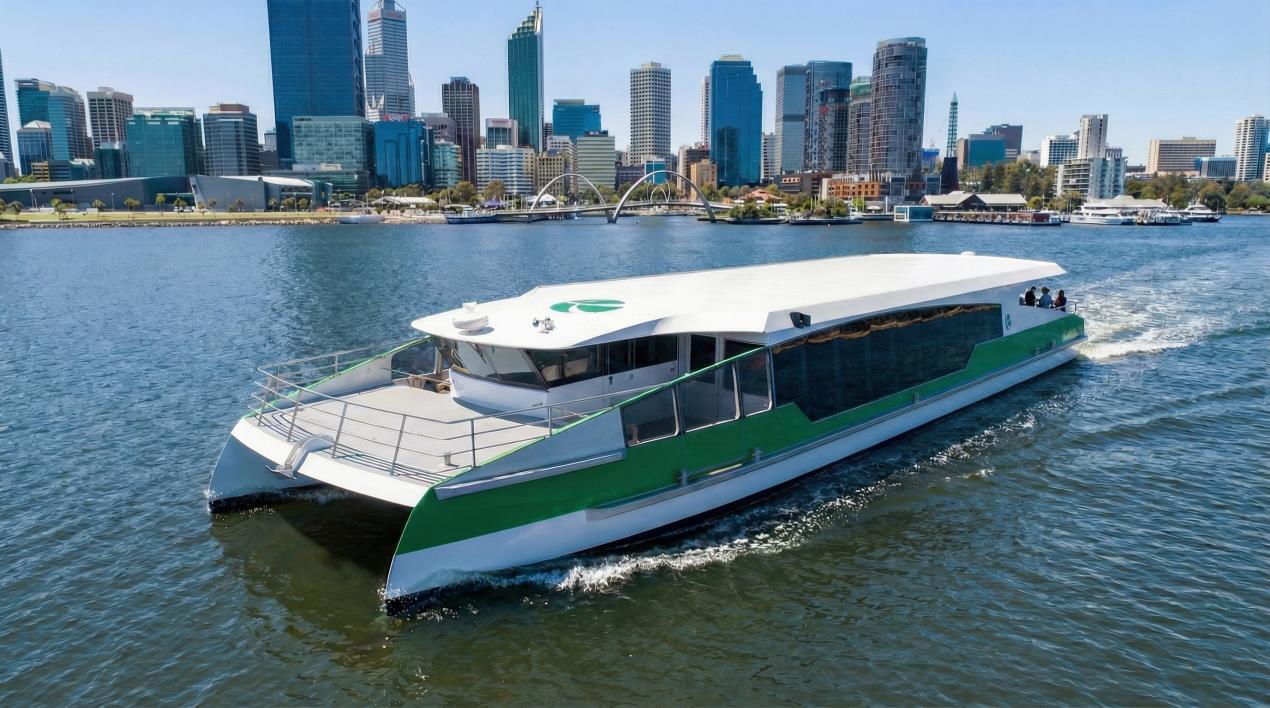
LONDON: Lloyd’s Register (LR) has signed a new contract with long-standing partner Echo Marine Group to support the delivery of Western Australia’s first fully electric passenger ferries – marking a major milestone for sustainable public transport in Australia.

The project, which is a part of the Perth Transport Authority’s (PTA) METRONET Swan River Ferry Service Expansion programme, will see the design and construction of five new battery-electric ferries for operation on Perth’s Swan River. LR will provide classification and technical assurance services throughout the design and build, supporting the safe introduction of this new generation of zero-emission vessels.

Building on an established working relationship, LR and Echo Marine Group are collaborating closely to bring first-of-its-kind electric propulsion technology into public transport service in Australia. The programme sets a new benchmark for zero-emission ferry design and construction in the region.

As one of the first fully electric ferry fleets in Australia, the project presents unique technical and regulatory considerations, including high-voltage battery integration, evolving standards and the safe deployment of new propulsion systems in a public transport environment. LR’s early involvement helped define a clear approval pathway, ensuring that technical decisions were validated from the outset and aligned with emerging requirements for electric vessels.

An initial first step of LR’s role has been proactive technical engagement. Through structured workshops, and regular stakeholder sessions, supported by LR’s global Technical Support Office.

Drawing on its global experience across electric and hybrid vessel projects, LR has also shared international reference cases and practical insights to benchmark the design against proven solutions. This has provided additional confidence in critical areas such as battery safety systems, system integration and operational performance.

In Perth, LR’s local surveyor team is working alongside Echo Marine throughout construction, providing on-site oversight during installation of the electric propulsion systems, high-voltage cabling and associated safety systems. The combination of strong on-the-ground presence and global technical depth ensures seamless assurance from concept to commissioning.

Asif Ghauri, Account Manager, Marine – Australasia, Lloyd’s Register, said: “The strength of our long-standing relationship with Echo Marine Group has enabled us to move forward with confidence on this pioneering project. By combining local insight knowledge with regional and global expertise, we are providing end-to-end assurance that supports safety, compliance and innovation.”

Anthony Livanos, Project Manager, Echo Marine Group said: “Our collaboration with Lloyd’s Register has been instrumental in reducing uncertainty around regulatory interpretation and safeguarding passenger safety, vessel efficiency, and delivery timelines. As governments across Australia and New Zealand accelerate decarbonisation efforts, this project showcases how close cooperation between owner, builder and class can successfully bring new technology into service.”

The programme is expected to provide a scalable model for future low-emission ferry developments across the region, with the first of the new electric vessels scheduled to enter service in 2027.

Lloyd’s Register’s Fuel for Thought: Electric explores the role of electric power and electrification as part of the maritime industry’s transition to lower‑ and zero‑emission operations. It examines how electric propulsion systems can deliver improved energy efficiency, reduced emissions and lower noise and vibration for certain vessel types and operating profiles. The research helps shipowners and designers understand where electrification is most technically and commercially viable today, and how it can be safely integrated into future vessel designs.

JLA Communication adds video production expertise through new partnership with Prospect Communications

LONDON: JLA Communication, a leading public relations and communications agency for the global maritime, offshore energy, and logistics industries, has added video production services to its portfolio through a new partnership with Prospect Communications, a specialist PR agency serving the breakbulk and heavy lift sectors.

The partners will offer businesses in the maritime, offshore and logistics sectors the opportunity to capture authentic industry insight and translate it into editorial-led video content that optimises brand positioning and reinforces credibility.

Under the agreement, Prospect will deliver high-quality video content in executive interviews, event-based films, podcast-style discussions, short-form social media assets and other storytelling formats which engage senior decision makers and strengthen strategic messaging.

“Having worked on several projects with Luke in recent years, I am delighted to establish a formal collaboration with Prospect Communications, and add his creative expertise to our portfolio,” commented Debbi Bonner, Managing Director, JLA Communication. “Luke’s editorial instincts and considerable experience in specialist B2B communications are reflected in Prospect’s video content, which demonstrates a clear understanding of audience, context, and industry nuance — qualities our clients value highly.”

“In today’s PR and marketing communications landscape, video content is crucial to creating an immersive experience, driving engagement, improving search performance, and humanising brands,” said Prospect Communications’ Director, Luke King, who is also founder and host of Project Cargo Professionals — the first global podcast dedicated exclusively to project cargo. “We are excited to partner with JLA Communication to deliver creative solutions to their global clients.”

Govt approves ₹472 crore road over bridge to power Tuna-Tekra Port Connectivity

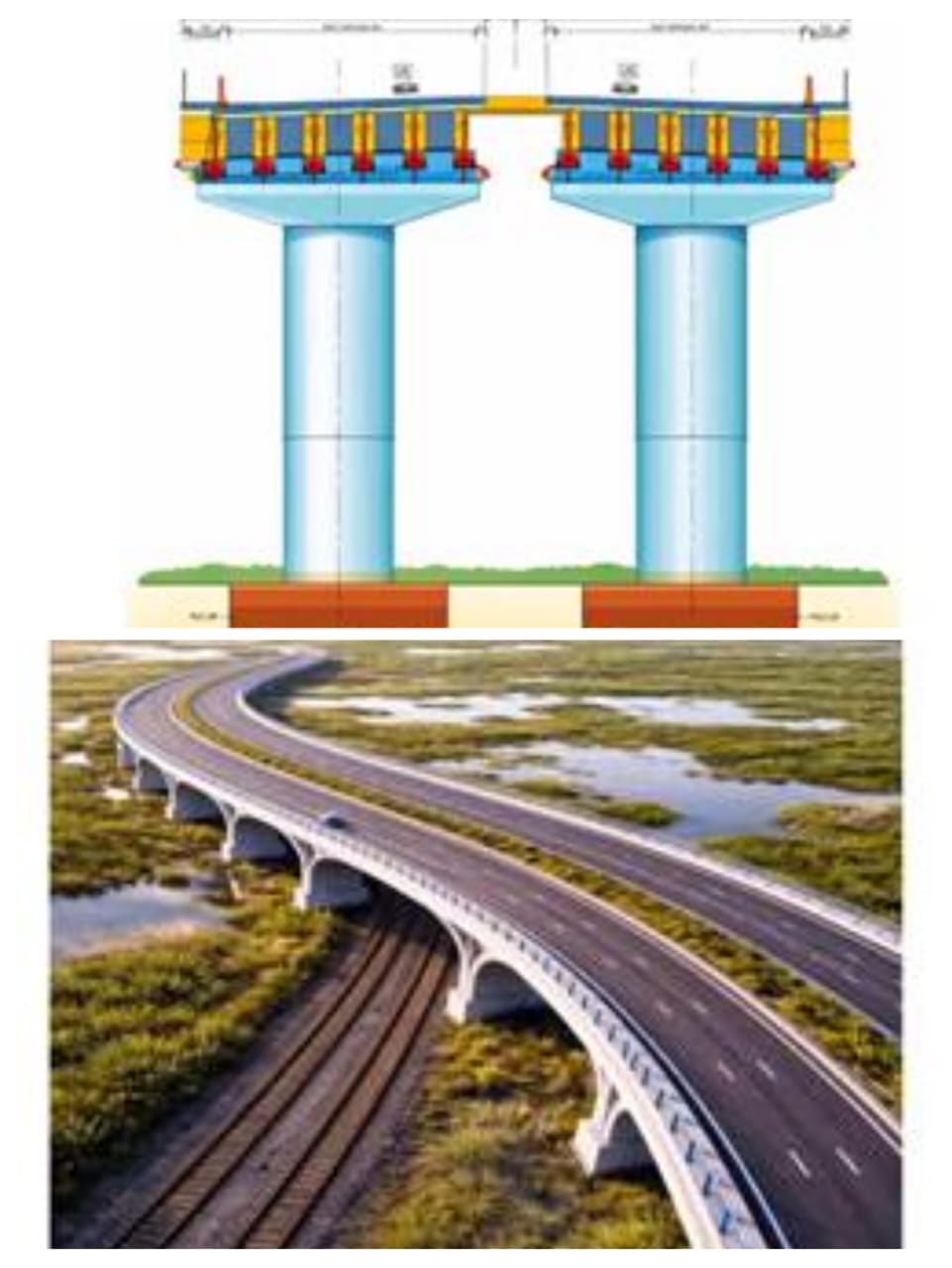
NEW DELHI : In a significant move to strengthen port connectivity and enhance cargo evacuation infrastructure, the Union Minister of Ports, Shipping and Waterways (MoPSW), Shri Sarbananda Sonowal, has approved the construction of a Road Over Bridge (ROB) along with associated roads and allied facilities at Tuna-Tekra. The project is estimated at ₹472 crore.

The project includes comprehensive civil works such as viaduct structures, a bridge over a creek, and provisions for maintenance over a period of 10 years to ensure long-term operational efficiency and durability.

Speaking on the development, Sarbananda Sonowal said, “Under the visionary leadership of Prime Minister Narendra Modi ji, India’s maritime sector is undergoing a transformational shift. This project will significantly strengthen port-led development, improve logistics efficiency and contribute to India’s emergence as a global maritime powerhouse.”

The proposal was earlier appraised by the Delegated Investment Board (DIB) in a meeting chaired by the Secretary, Ministry of Ports, Shipping and Waterways.

The ROB is strategically designed to serve as the primary connectivity artery for the upcoming Mega Container Terminal, with a capacity of 2.19 million TEUs, and the Multipurpose Cargo Berth, with a capacity of 18.33 MMTPA, at Tuna-Tekra.

Upon completion, the ROB is projected to significantly reduce logistics turnaround time, enhance supply chain efficiency and support the rapid scale-up of port operations in the region.

The execution of the project will be closely synchronised with the commissioning of the Tuna-Tekra Container Terminal, which is currently at 45% physical progress, ensuring timely readiness of supporting infrastructure.

This critical infrastructure is expected to play a pivotal role in ensuring seamless cargo evacuation, addressing potential rail-road bottlenecks, and facilitating the smooth movement of heavy-duty port traffic. The project aligns with the government’s long-term maritime roadmap under Maritime India Vision 2030 and Maritime Amrit Kaal Vision 2047.

Around 3 lakh metric tonnes LPG presently stranded at Strait of Hormuz : Govt

HORMUZ : About 3 lakh metric tonnes of liquified petroleum gas (LPG) is presently stranded at the Strait of Hormuz, Rajesh Kumar Sinha, special secretary at ministry of ports, shipping, and waterways said on March 17.

Presently, 22 Indian-flagged vessels are stranded at the Strait of Hormuz of which six are LPG carriers, one is an LNG tanker, four vessels are carrying crude oil, one is chemical and products carrier, three are container ships, and two are bulk carriers among other vessels, as per data by shipping ministry.

“One LPG vessel (Very Large Gas Carrier) roughly carries 45,000 metric tonnes of LPG. There are roughly 3 lakh metric tonnes of LPG presently stranded at the strait of Hormuz,” Sinha said.

Two Indian-flagged LPG tankers — the Shivalik and Nanda Devi — safely passed through the Strait of Hormuz on March 14 and have reached India carrying approximately 92,700 metric tons of LPG.

India has begun sourcing cooking gas from the United States as part of efforts to diversify supplies amid the ongoing West Asia crisis in addition with the long-term deal signed by state-run refiners for 2.2 million tonnes per annum of LPG for 2026.

“Most of the LPG is coming from the Gulf. Our OMCs have started taking LPG from the US. Government is putting all efforts to diversify sources of LPG too,” said Sujata Sharma, Joint Secretary in the Ministry of Petroleum and Natural Gas, at a government briefing. She added, “We are getting more crude today due to increased diversification.”

Meanwhile, Randhir Jaiswal, additional secretary in the ministry of external affairs clarified on reports of giving three Iranian vessel in exchange of safe passage to Indian vessels along strait of Hormuz and said that no discussion between Indian and Iranian authorities have taken place.

“In any case, the three vessels you refer to are not Iran owned and there’s no Iran crude on it,” Jaiswal said.

Government sources also told Moneycontrol that India continues to export pharmaceutical to Iran amid reports of India agreeing to provide medical equipment to Iran to ensure safe passage of vessels from the strait of Hormuz.

India will seek vessel by vessel permission rather than a blanket clearance from Iran for safe passage of its ships from the Strait of Hormuz, a government official has earlier told Moneycontrol.

Government sources had earlier told Moneycontrol that India is continuously engaging with Iran to ensure safe transit of remaining stranded vessels in the Persian Gulf. “We are in continuous talks, we want to ensure safe passage for Indian vessels,” the source said, adding that there will be more talks.

Sinha further said that the ministry has held discussions internally for providing war risk premium to shipping lines which is presently an issue. “We have asked them to give specific issues. The same issue was not raised by Shipping Corp of India when we were doing transit of these two ships (LPG carriers), but later on some shipping lines have faced this. So as soon as they inform us about the challenges, we will take up,” Sinha said.

Further, India is also mulling to establish Protection and Indemnity (P&I) insurance for the country’s maritime sector, the shipping ministry official said.

“On the P&I club, there has already been considerable progress on this matter earlier, and recently 2-3 days ago we have revisited it again with the Department of Financial Services,” Sinha said.

He added that the government has also commissioned a study on this, which is partly complete. “The study report should be with us very soon and based on its findings, we will take this forward, as it is important for us,” the official said.

“On the P&I club, there has already been considerable progress on this matter earlier, and recently we have revisited it again with DFS. We have also commissioned a study on this, which is partly complete. The study report should be shared with you very soon. Based on its findings, we will take this forward, as it is important for us.”

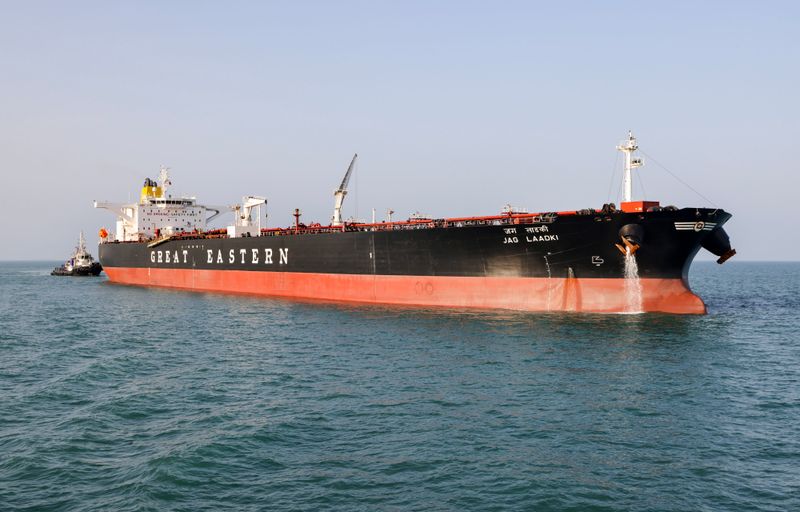
Indian vessel ‘Jag Laadki’ carrying over 80,000 metric tonnes of crude oil reaches Gujarat’s Mundra Port

MUNDRA: The Indian-flagged tanker ‘Jag Laadki’, carrying around 80,886 metric tonnes (MT) of crude oil, arrived at Mundra Port in Gujarat on Wednesday (March 18, 2026) amid the West Asia conflict, officials said.

A day earlier, the LPG carrier ‘Nanda Devi’ arrived at Vadinar port in Gujarat’s Devbhumi Dwarka district, carrying 46,500 metric tonnes of liquefied petroleum gas (LPG) and navigating through the Strait of Hormuz. On Monday (March 16, 2026), another vessel — ‘Shivalik’ — carrying LPG docked at Mundra Port.

Adani Ports, which operates Mundra Port, said in a statement that the crude oil carried by ‘Jag Laadki’ was sourced from the United Arab Emirates (UAE) and loaded at Fujairah Port there.

“Measuring 274.19 metres in length overall and 50.04 metres in beam, the tanker boasts a deadweight tonnage of approximately 164,716 tonnes and a gross tonnage of about 84,735 tonnes,” it said.

The tanker’s arrival at the Mundra Port underscores the facility’s critical role in handling substantial crude imports, it said.

“This delivery supports a major refinery that relies on such shipments to maintain operations and bolster India’s energy security during supply disruptions in the region,” Adani Ports added.

The port provided the safe berthing of the vessel and maritime coordination in safeguarding vital energy lifelines of India, it said.

Fujairah Port in the UAE faced drone and missile attacks during the ongoing Israel-U.S. and Iran war.

India imports about 88% of its crude oil, 50% of its natural gas and 60% of its LPG needs. Before the U.S.-Israel strikes on Iran on February 28 and Tehran’s retaliation, more than half of India’s crude imports, about 30% of gas and 85-90% of LPG imports came from countries such as Saudi Arabia and the UAE.

The conflict has led to a blockade of the Strait of Hormuz, the main transit route for Gulf energy supplies. While India has partly offset crude supply disruptions by sourcing oil from countries including Russia, gas supplies have been curtailed to industrial users, and LPG availability to commercial establishments such as hotels and restaurants has been reduced.