Home Blog Page 396

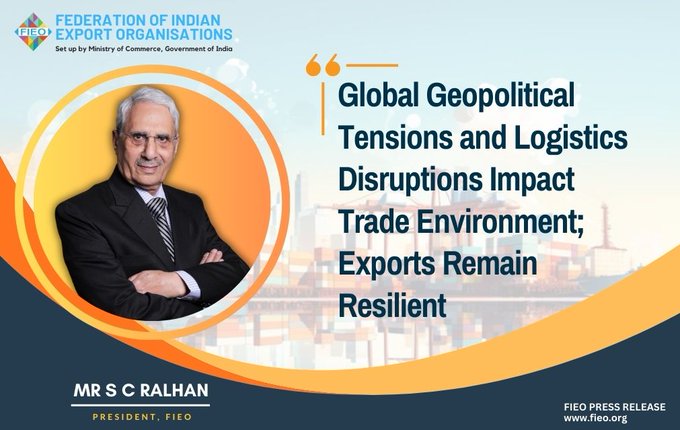
Global geopolitical tensions and logistics disruptions impact trade environment; Exports remain resilent : President, FIEO

NEW DELHI : Commenting on the latest trade data for February 2026, Mr S C Ralhan, President of the Federation of Indian Export Organisations (FIEO), said that India’s export sector continues to demonstrate resilience despite rising global uncertainties, supply chain disruptions and escalating geopolitical tensions.

According to government data, India’s merchandise exports stood at USD 36.61 billion in February 2026, showing a marginal decline of 0.81% compared to the same month last year. Merchandise imports rose by 24.11% to USD 63.71 billion, resulting in a trade deficit of USD 27.1 billion, which has moderated compared to January 2026. However, overall exports (merchandise and services combined) grew by about 11% year-on-year to USD 76.13 billion, while overall imports increased by about 22% to USD 80.09 billion, reflecting strong services exports and sustained domestic demand.

During April–February FY 2025-26, India’s merchandise exports reached USD 402.93 billion, registering a growth of 1.84%, while imports rose 8.53% to USD 713.53 billion. Cumulative merchandise and services exports during the period are estimated at USD 790.86 billion, compared to USD 747.58 billion last year, reflecting a growth of 5.8%.

Mr Ralhan noted that the escalating conflict in the Middle East involving the United States, Israel and Iran has heightened global trade uncertainty. Disruptions in key maritime routes, including the Strait of Hormuz and the Red Sea have forced vessels to reroute, increasing freight costs, insurance premiums, and transit times, thereby adding pressure on exporters.

Despite these challenges, India’s export sector continues to show resilience, supported by diversified markets and strong performance in key sectors such as engineering goods, petroleum products, electronic goods, pharmaceuticals, gems & jewellery, chemicals, ready-made garments, cotton yarn and fabrics, rice and marine products. Major export destinations continued to include the US, UAE, China, Netherlands, UK, Germany, Saudi Arabia, Bangladesh, Singapore and Hong Kong.

Mr Ralhan emphasized that close monitoring of geopolitical developments, maintaining smooth logistics connectivity and providing timely policy support will be essential to sustain export momentum. He added that continued diversification of markets, strengthening regional trade partnerships and improving logistics efficiency will help India mitigate global disruptions and maintain export growth.

Transworld launches Dedicated Air Charter Initiative to Strengthen India–UAE Food Supply Corridor amid Middle East Crisis

DUBAI: In a move aimed at strengthening food security and ensuring uninterrupted supply of essential commodities, Transworld Group has announced a new logistics initiative to facilitate the transportation of food and essential consumer products from India to the United Arab Emirates.

The initiative was announced by Mr. Ramesh Ramakrishnan, Chairman, Transworld Group, who highlighted the strategic importance of creating a dedicated logistics channel to support food distribution between the two countries. According to Mr. Ramakrishnan, the initiative represents a significant opportunity to expand Transworld’s service portfolio while contributing to regional food security.

As part of the programme, Transworld has scheduled a dedicated air charter flight on 19 March 2026 to transport food and essential supplies between India and the UAE. The initiative is designed to enable faster movement of critical cargo and provide exporters with a streamlined logistics solution during periods of high demand or supply chain disruptions amid Iran-Israel War.

The company’s campaign highlights several key operational advantages, including rapid response logistics for urgent deliveries, global sourcing access through established supply networks, and 24/7 operational capability to handle time-sensitive cargo movements. These features are intended to support exporters, food suppliers and logistics partners seeking reliable connectivity between the two markets.

Mr. Ramakrishnan has encouraged industry stakeholders and partner organisations to engage directly with Transworld’s logistics team to streamline the booking process and coordinate shipments under the initiative. The company believes that closer collaboration across the supply chain will help optimise cargo movement and ensure timely delivery of essential goods.

The India–UAE trade corridor has seen growing demand for efficient logistics solutions, particularly for food products, perishables and essential consumer goods. With this dedicated air charter service, Transworld aims to enhance supply chain resilience while strengthening trade connectivity between the two countries.

Industry observers note that such targeted logistics initiatives can play a crucial role in maintaining stable supply lines, especially during periods of market volatility or disruptions in global shipping networks.

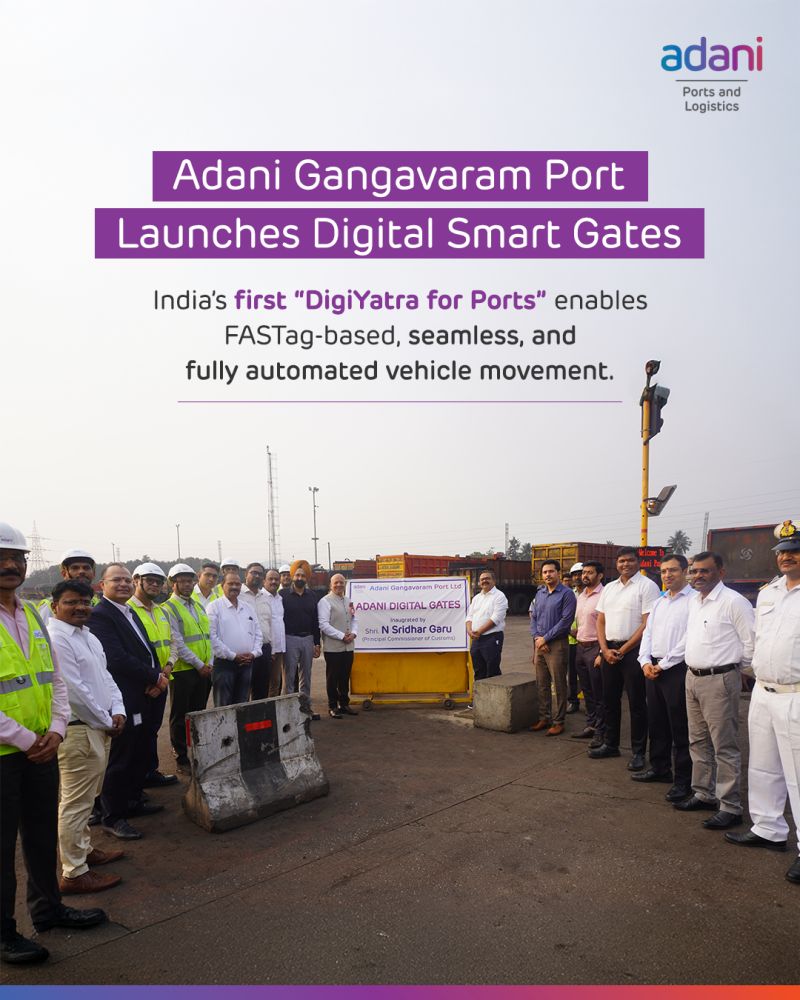
Adani Gangavaram Port introduces digital smart gates to enhance port efficiency

VISAKHAPATNAM : Adani Gangavaram Port has taken another major step in its digital transformation journey with the launch of Digital Smart Gates – DigiYatra for Ports, a technology-driven initiative designed to streamline gate operations and improve the efficiency of cargo movement.

The newly introduced system enables contactless entry and exit of vehicles, integrating FASTag-enabled access for seamless authentication and automated processing at the port gates. This digital solution is expected to significantly reduce manual intervention, shorten vehicle turnaround time, and enhance overall operational efficiency at the port.

With the deployment of Digital Smart Gates, trucks entering the port will experience faster vehicle clearance, real-time verification, and smoother traffic flow. The system leverages advanced digital technologies to automate gate transactions, minimize paperwork, and provide a more transparent and secure logistics environment for stakeholders.

The initiative is aligned with the broader vision of Adani Ports and Special Economic Zone Limited to integrate smart technologies across its port network and build future-ready, digitally enabled logistics infrastructure. By adopting innovative solutions such as DigiYatra for Ports, the port aims to improve service delivery, enhance cargo handling efficiency, and strengthen its role as a key gateway for trade on India’s eastern coast.

Industry stakeholders, including transporters, shipping lines, and logistics partners, are expected to benefit from reduced waiting time, improved operational transparency, and smoother cargo movement, supporting faster turnaround of vehicles and improved supply chain reliability.

The introduction of Digital Smart Gates marks another milestone in the port’s efforts to adopt smart, sustainable, and technology-driven operations, reinforcing its commitment to delivering world-class logistics solutions and supporting the growth of maritime trade in the region.

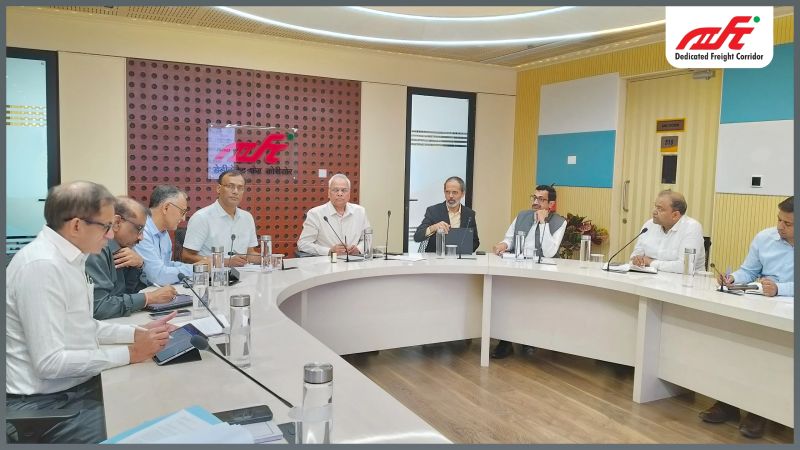
DFCCIL reviews preparations for East–West DFC

NEW DELHI : Dedicated Freight Corridor Corporation of India Limited is actively advancing preparations for the upcoming East–West Dedicated Freight Corridor, with a focus on strengthening institutional readiness and streamlining administrative frameworks ahead of the project’s pre-construction phase.

Sh. Praveen Kumar, Managing Director of DFCCIL, chaired a high-level review meeting to assess the organisational and administrative arrangements required for the early-stage activities of the corridor. The meeting particularly emphasized the preparedness of field units that will play a critical role in the smooth execution of the project.

During the discussions, senior officials reviewed strategies for enhancing coordination among various departments and field offices, expediting land acquisition processes, and ensuring that technical, financial, and contractual frameworks are in place well before construction activities commence. The meeting also highlighted the need for robust planning, efficient resource mobilisation, and timely decision-making to facilitate seamless implementation of the corridor.

The East–West Dedicated Freight Corridor is envisioned as a key component of India’s expanding freight infrastructure network. Once completed, the corridor is expected to significantly improve freight movement across the country, enhance logistics efficiency, reduce transit time, and support industrial and economic growth by providing a high-capacity rail freight route connecting major production and consumption centers.

The meeting was attended by several senior officers of DFCCIL, including Sh. Anurag Sharma, Director/Infrastructure; Sh. P. K. Rai, Director/Projects & Planning; Sh. S. K. Negi, Consultant/Project Development; Sh. Sanjeev Gupta, Executive Director/Finance; Sh. Manoj Awasthy, Executive Director/Infrastructure; Sh. Pawan Kumar, Executive Director/Contract Management; Sh. Ajay Kumar, Executive Director/Asset Management; Sh. Sandeep Ravi Vanshi, GGM/Land Acquisition & SEMU; Sh. Amit Saurashtri, GM/Corporate Communications; and Sh. Sunder Singh, GM/HR, along with other officials from DFCCIL.

The review meeting reaffirmed DFCCIL’s commitment to ensuring meticulous planning and coordinated efforts to pave the way for the timely execution of the East–West Dedicated Freight Corridor, which is expected to further strengthen India’s multimodal logistics ecosystem and boost the efficiency of freight transportation across the nation.

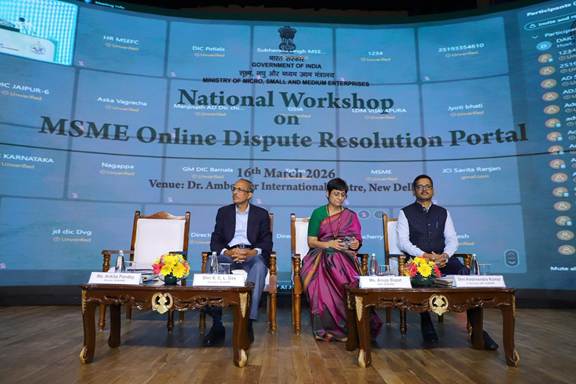
Ministry of Micro, Small and Medium Enterprises organises first National Workshop on MSME Online Dispute Resolution Portal

NEW DELHI: The Ministry of Micro, Small and Medium Enterprises, Government of India, organised the first National Workshop on the MSME Online Dispute Resolution Portal on 16th March 2026 at New Delhi. The workshop was organised to promote faster, cost-effective and technology-enabled mechanisms for resolving commercial disputes involving micro and small enterprises. The workshop brought together MSME industry associations, MSEF Councils, ADR institutions, policymakers and legal experts to deliberate the strengthening of dispute resolution mechanisms and to familiarise the stakeholders with the functionality of the MSME ODR Portal.

In their address, senior officials from the Ministry emphasised the government’s commitment to creating a supportive ecosystem for MSMEs by ensuring quicker resolution of business disputes. They noted that efficient dispute resolution mechanisms are critical for improving ease of doing business and building confidence among entrepreneurs and investors. Shri S.C.L. Das, Secretary MSME, urged all the stakeholders to take the collective ownership and encouraged Centre-State partnership for effective resolution of disputes through MSME ODR mechanism.

The representatives from various State Councils and Industry Associations highlighted the importance of ODR portal in resolving disputes relating to delayed payments and how ODR can significantly reduce the time and cost associated with traditional dispute resolution processes, while improving transparency and accessibility for small businesses across the country.

The participants also shared best practices and successful case studies where MSME ODR Portal have helped resolve commercial disputes efficiently. The workshop concluded with a consensus on strengthening institutional frameworks, promoting awareness among entrepreneurs, and encouraging the adoption of ODR Portal to ensure timely and effective resolution of disputes faced by MSEs.

ONE announces temporary empty container return arrangement in the Middle East

SINGAPORE : In light of the evolving situation affecting navigation and port operations in the Persian Gulf and around the Strait of Hormuz, and in order to safeguard the safety of vessels, crew, and cargo, Ocean Network Express (ONE) will implement temporary arrangements for the return of empty containers.

ONE has introduced temporary restrictions on empty container returns across several Middle East markets as security concerns and operational disruptions continue to affect navigation around the Strait of Hormuz and the Persian Gulf.

The Singapore headquartered container carrier said the measures took effect on March 12 and apply to import shipments into the United Arab Emirates, Qatar, Saudi Arabia, Bahrain, Kuwait, Iraq, and Oman.

Under the temporary arrangement, customers must return empty containers only to two designated ports. These are Sohar in Oman and Jeddah in Saudi Arabia.

The policy applies to import customers in Dubai as well as those located elsewhere in the affected countries. Local detention and demurrage tariffs will apply at the designated return terminals in accordance with local regulations.

Alternative return option carries steep drop off charges
For customers unable or unwilling to reposition empty containers to Sohar or Jeddah, the carrier has introduced an alternative drop off arrangement. This option comes with a significant cost.

Shippers choosing this route will face drop off charges of USD 2,250 for a 20 foot container and USD 2,750 for a 40 foot unit. The fee must be settled before the delivery order is issued.

The carrier did not specify alternative drop locations but indicated that the charge applies where containers are not returned to the designated hubs.

In practical terms, the measure shifts the burden of repositioning empties back onto import customers. For freight forwarders and logistics providers operating in Gulf markets, that could mean higher inland transport costs or difficult equipment repositioning decisions.

Industry observers note that equipment management becomes particularly sensitive during periods of maritime security risk. When vessel movements are disrupted or port calls change, empty container flows often fall out of balance quickly.

Measures linked to evolving maritime security conditions
The policy applies immediately for non FMC regulated trades from March 12. For FMC regulated trades including the United States and Canada, the rule will take effect on April 11.

ONE said the arrangement will remain in place until further notice and may change depending on operational conditions in the region.

The carrier urged customers with questions regarding specific shipments to contact their local representatives as the situation continues to evolve.

Saudi Arabia launches initiative to reroute Gulf cargo to Red Sea ports

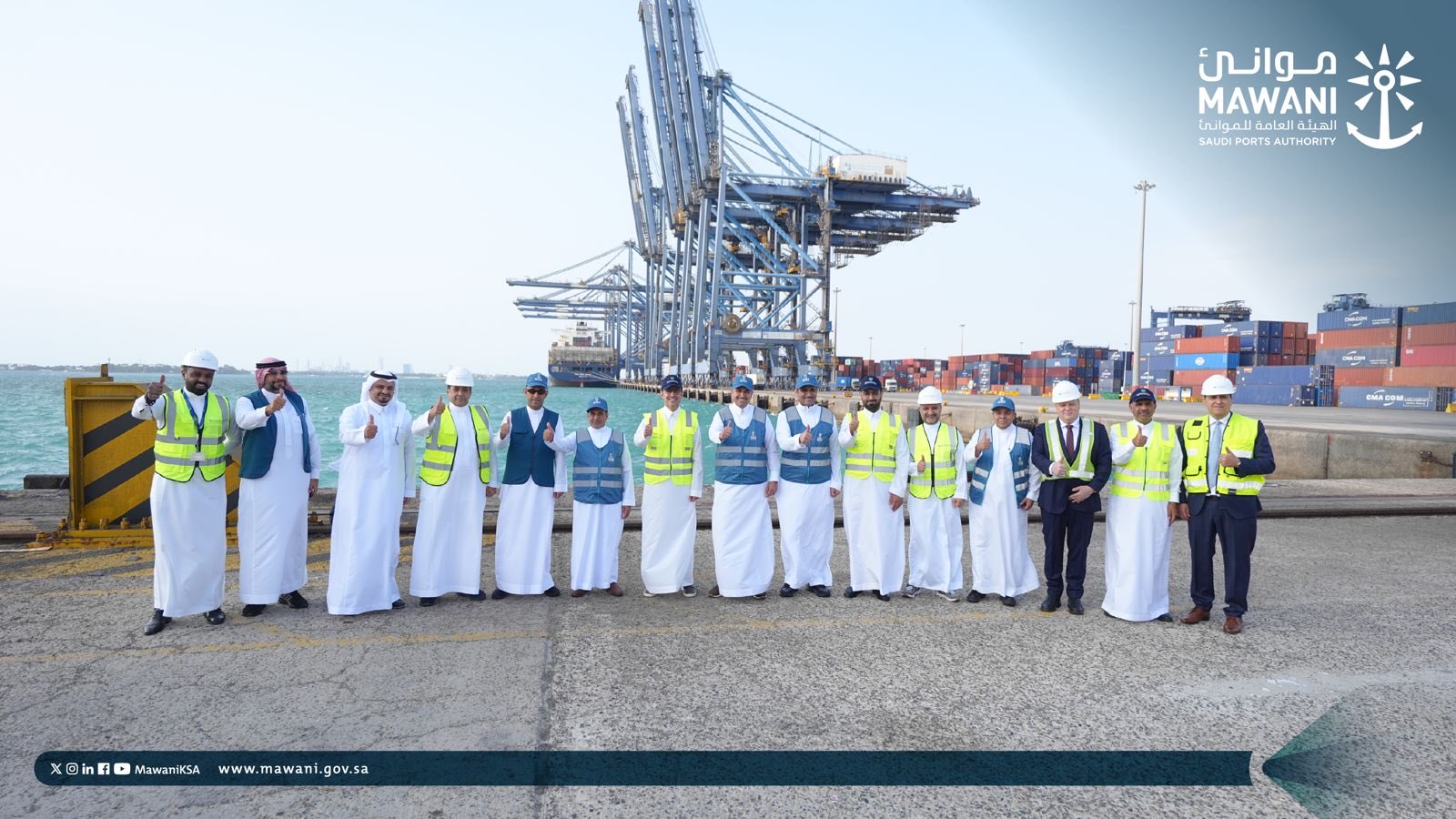
RIYADH: Saudi Arabia has launched an initiative to redirect shipping from ports in the Arabian Gulf to its Red Sea ports amid the ongoing US-Israel-Iran war.

Transport Minister Saleh Al-Jasser, who also chairs the Saudi Ports Authority (Mawani), launched the Logistics Corridors Initiative alongside Zakat, Tax and Customs Authority Governor Suhail Abanmi, Mawani President Suliman Al-Mazroua, and other officials, the Saudi Press Agency reported.

Mawani Logistics Corridor Saudi Arabia launches initiative to reroute Gulf cargo to Red Sea ports

The initiative will establish dedicated operational corridors to receive containers and cargo redirected from ports in the Kingdom’s Eastern Region and other Gulf Cooperation Council states to Jeddah Islamic Port and other Red Sea coast ports.

Al-Jasser said the Kingdom was committed to ensuring supply-chain stability and the smooth flow of goods through global trade routes. Jeddah Islamic Port and other west coast ports, he added, were already playing a key role in accommodating shipments redirected from the east, while also linking Gulf cargo to regional and international markets.

The initiative comes as shipping through the Strait of Hormuz has been severely disrupted by the widening conflict in the region. Iran has long threatened to close the strait — the world’s most critical oil and gas chokepoint, through which roughly a fifth of global oil supplies pass — in the event of a war.

Since the US and Israel struck Iran last month, Tehran has moved to restrict passage through the waterway, sending freight rates soaring and forcing shipping companies to seek alternative routes.

Saudi Arabia’s Red Sea ports offer a viable bypass, connecting Gulf cargo to global markets without passing through the strait.

Source: Arab News

IMO calls Extraordinary Council meeting to discuss situation in Middle East

LONDON: The International Maritime Organization (IMO) will hold an Extraordinary Session of its Council to address the impacts on shipping and seafarers of the situation in the Arabian Sea, the Sea of Oman and the Gulf region, particularly in and around the Strait of Hormuz.

The session will be held on 18 to 19 March 2026 at IMO headquarters in London, United Kingdom, to be chaired by Mr. Victor Jiménez of Spain.

The Extraordinary Session (C/ES.36) is convened following requests from several Council Members. 

IMO Secretary-General Mr. Arsenio Dominguez held briefings with industry organizations (11 March) and Member States (12 March) to share information and discuss recent developments.

The Council is the Executive Organ of IMO, consisting of 40 Member States, elected by the IMO Assembly. 

For more information about the situation in the Middle East and the Strait of Hormuz and its impact on shipping, click here.

Middle East Conflict: Straits of Hormuz Transits remain 95% Down

LONDON: Clarksons Research, the data and analytics arm of the Clarksons Group have been closely monitoring shipping activity and markets impacted by the conflict. Summarising their latest update issued on Monday at 10.00 am 16th March, Steve Gordon, Global Head of Clarksons Research commented :

  • Strait of Hormuz transits down 95% on pre-conflict levels (av. 5 transits per day past week vs ~125 pre-conflict).
  • 80% of transits have been exiting the Gulf in the past week.
  • Just 3 oil tankers with ~2m bbl capacity passed through the Strait across the weekend (vs 40 tankers over a typical two-day period), alongside 2 Indian-linked VLGCs while no LNG carriers have passed through the Strait in March.
  • Excluding locally trading vessels, there are ~1,100 ships (37m GT of $30bn) currently inside the Gulf. This total features ~250 oil tankers, including 5% of crude tanker (7% of VLCCs) and 3% of product tanker tonnage as well as 4% of VLGC and 1% of containership and bulker tonnage.
  • Some alternatives to Strait of Hormuz developing: VLCCs en-route to Yanbu on Red Sea up sixfold, IEA’s 400m bbl stock release draw has begun in Asia
  • Charter rates for tanker and gas carriers eased through last week, though generally remained very elevated. Average VLCC earnings stood at $185,000/day (x5 long-term averages) on Friday, while LNG carrier spot rates stood at a firm $135,000/day (+45% vs long-term trend) and VLGC earnings on the US-Japan route eased w-o-w but showed resilience at $48,305/day (-7% vs 10-yr avg.). Bulker and container markets have seen more limited impacts for now.
  • The cost of moving a barrel of crude oil remains elevated at $10/bbl (on a US Gulf – Asia voyage), up from $5/bbl at the start of the year.
  • Container freight rates have moved higher, though on mainlane routes remain at moderate levels with gains largely reflecting recent increases in bunker prices; the SCFI rate on the Shanghai to North Europe route rose 11% last week to $1,618/TEU, in line with the 2025 average and remaining well down from previous peaks of almost $8,000/TEU at the height of Covid-related congestion and disruption in 2021, and around $5,000/TEU in mid-2024 as the impact of Red-Sea re-routing built.
  • High bunker prices (e.g. VLSFO in Singapore stood at ~$1,100/t, +160% vs start-26) amid oil supply shortages is also starting to impact shipping markets – our data suggests that average container and bulkcarrier vessel speeds are down 2% across March so far.
  • Prior to the conflict, 20% of global oil supply passed through the Strait of Hormuz, including 37% / 19% of seaborne crude oil and products trade. 19% of global LNG trade (3% of global natural gas supply) also passed through the Strait, alongside 28% of global LPG volumes (~10% of supply), as well as 13% of seaborne chemicals, 9% of cars, 4% of dry bulk and 3% of container trade volumes.

More detail from the latest update from Clarksons Research can be found below along with the graphics attached (underling data available on request).

Middle East Conflict: Update No. 6

By Stephen Gordon

The second week of the conflict has seen Strait of Hormuz vessel traffic remain very limited, further attacks on vessels and maritime infrastructure, accelerating impacts on oil production, volatility in energy prices and some easing in vessel charter rates. With mixed scenarios ahead for shipping markets depending on the duration of conflict, we again take stock in this weeks Analysis, while the full update, including a wider range of data points is available here.

Attacks & Transits

The 2nd week of the conflict has seen continued acute operational stress and disruption for the shipping industry, with reported attacks on vessels now totalling 18 (as at 16/3/26) and further attacks on ports (e.g. Fujairah) and refineries (e.g. 837,000 bpd Ruwais complex).

Exact transit levels through the Strait of Hormuz are uncertain (we have adapted our methodology) but remain very limited (down 95%, averaging 5 per day this week vs 125 pre-conflict – see p.4). Most tanker transits (avg. ~1 per day vs ~40 normally) were by ‘non-mainstream’ ships, while 80% of all transits have been exiting the Gulf. Reports of transits by specific flagged tonnage (e.g. India) have not materially impacted transit levels yet, and no military convoys have been launched.

Energy Markets

Oil markets have seen extreme volatility ($120/bbl to $85/bbl,) with sensitivity both to announcements aiming to reassure energy markets or to news of deepening disruption (e.g. with storage capacity ‘filling up’, production at major oil and gas fields (e.g. Zuluf, Safaniya) has been suspended and ~10m bpd of oil output is now offline).

While Iranian volumes (2m bpd) have continued through the Strait alongside flows out of Fujairah (U.A.E., ~1m bpd) and Oman (1m bpd), alternatives for the 15m bpd of crude normally flowing via Hormuz are also emerging, mainly out of Yanbu (extra volumes of 3-4m bpd could be seen – VLCCs enroute have increased sixfold). Even with these alternatives, the drop in global oil supply is the largest ever recorded (though the Middle East accounts for a lower share of global oil (31%) today vs 1973 (38%) when oil reached an inflation-adjusted $160/bbl).

Additional supportive, but temporary, measures, are also impacting energy (and shipping) markets e.g. the IEA’s 400m bbl stock draw (monitor rate of release and if used domestically, e.g. Japan), the US’s sanctions waiver on Russian oil on the water (~125m bbl of crude) extending from India to all countries and potential US Jones Act waiver (may support tanker demand e.g. US Gulf to US West Coast using SPR release). Downstream pressures are also building, especially in Asia (e.g. bunker prices have reached record highs – VLSFO at Singapore: >$1,100/t, +160% vs start-26) that will hit energy demand and heighten macro-economic risk.

Shipping Markets

The nature and duration of the conflict remain key for shipping and energy markets.

Tanker markets eased w-o-w on 13th March but remain elevated (e.g. VLCC $185,000/day, MR $43,000/day). A conflict of weeks rather than months may continue to offer supportive disruption factors (e.g. convoys add voyage duration time) albeit loss of seaborne volumes would eventually “catch up” with the market (despite Atlantic exports to Asia being longer haul). A slow-down in tanker S&P reflects the building uncertainties.

LNG spot rates also remain elevated ($135,000/day though ‘watch out’ for Qatari re-lets), while LPG carrier markets have shown ‘resilience’ but may also be impacted eventually by loss of volumes.

Bulker market impacts, more limited overall so far, may see higher coal trade from a longer conflict but may also be impacted by a weaker economy.

Impacts for container charter and freight rates seem generally positive with potential congestion and continued Red Sea re-routing (though inflation pressures may dent consumer demand in a longer conflict).

Mixed impacts across shipping segments and lots to digest.

Shipping Intelligence Network (SIN) is Clarkson Research’s market leading digital platform and the most comprehensive source of data on shipping and trade. The system provides immediate access to uniquely powerful data and analysis tracking and projecting market supply / demand, freight, vessel earnings, vessel values and macro-economic data around trade flows and global economic developments.

Middle East Conflict Update 16th March 2026 1 Middle East Conflict: Straits of Hormuz Transits remain 95% Down

About Clarksons Research

Clarksons Research, the data and analytics arm of Clarksons, are the market leaders in the provision of independent data and intelligence around shipping, trade, offshore and the maritime energy transition. Millions of data points are processed and analysed each day to provide trusted and insightful intelligence to thousands of stakeholders across maritime. Better data for better decisions.

QodeNext Partners with Clustag to Accelerate At Source RFID Adoption Across South Asia

MUMBAI: Qodenext, one of India’s fastest-growing supply chain traceability and automation service providers, has announced a strategic collaboration with Clustag to integrate advanced RAIN RFID intralogistics solutions into its technology portfolio. The partnership aims to help manufacturers across South Asia implement RFID at source to meet compliance requirements of major global brands.

The collaboration combines QodeNext’s regional integration capabilities with Clustag’s expertise in item level RFID encoding, verification and content control. Together, the companies will support suppliers in deploying accurate RFID tagging directly at the point of manufacture, an increasingly critical requirement for exporters in sectors such as fashion, sportswear and home goods.

QodeNext, which has a presence in major cities in India and boasts of more than 200 technical experts, will integrate the superior RFID systems of Clustag to enhance its end-to-end traceability services. The move will put the company in a position to better serve manufacturers who are shifting to digital supply chains and transparency standards that are required by global retailers.

The Asia Pacific region is witnessing rapid growth in RFID adoption, driven by regulatory pressures, supply chain modernization and the shift toward traceable production models. Leveraging more than 35 years of experience in automatic data capture technologies, QodeNext will act as a key implementation partner for factories, distribution centres and retail networks across India and Southeast Asia. Clustag will bring its ecosystem of RFID solutions, including encoding workstations, RFID tunnels for cartons and pallets, and its Zentup middleware platform, to major manufacturing hubs in the region. The company views South Asia as a strategic market where accurate at source encoding is becoming essential for global supply chain participation.

Under the alliance, manufacturers will gain access to integrated RAIN RFID solutions for encoding and verification at source, advanced hardware and software integration, turnkey factory implementations, and real time visibility across supply chains. The partnership will also provide local deployment support through QodeNext’s service network across India.

Manolo Reguart, Strategy & Business Development Director at Clustag, highlights, “The Asian region is fundamental to ensuring reliable traceability at source. QodeNext shares our technological vision and brings exceptional integration and support capability. Together, we will accelerate RFID adoption in the world’s main manufacturing hubs.”

Commenting on the same, Mr. S R Srinivasan, CEO, Qodenext, said, “Adding Clustag’s advanced solutions to our portfolio enables us to offer a more robust and specialized RFID ecosystem for manufacturers, retailers and logistics operators in India. It is a partnership set to grow.”

This partnership is a huge milestone in bolstering the traceability infrastructure in the South Asia manufacturing system to help the exporters to not only adapt to changing compliance demands globally but also enhance efficiency in their operations and the visibility of their supply chains. With RFID being the new requirement of the international brands at the source, the collaboration is set to become significant in the speed of digital transformation in the production centers in the region.