Home Blog Page 395

Middle East conflict raises stagflation risks for global economy, Asia, Europe more vulnerable: Report

NEW DELHI: The ongoing conflict in the Middle East and the effective closure of the Strait of Hormuz since the start of March have introduced a stagflationary risk to the global economy, according to a report by Fidelity International.

The report highlighted that the situation has now moved beyond mere market fears to actual supply constraints.

“The Strait of Hormuz being effectively closed since the start of March means that the mechanism has shifted from headline fear to physical constraint,” it said, highlighting the seriousness of the disruption.

A prolonged disruption in the Strait is expected to create a supply-side shock, leading to higher inflation and weaker economic growth globally.

The report noted that such a scenario would result in “higher headline inflation via higher energy/commodity prices and negative growth via real income compression, tighter financial conditions, and margin pressure.”

It further pointed out that the impact would not be evenly distributed across regions. Import-dependent economies are likely to face a sharper blow due to adverse trade dynamics.

“Europe and Asia will take a heavier hit with the US relatively insulated,” the report stated, highlighting the vulnerability of regions dependent on energy imports.

Additionally, the report cautioned that even after the conflict subsides, the economic effects may persist.

“The ‘day after’ is not a clean revert, oil is likely to carry a durable premium in the near future,” it said, indicating sustained pressure on global energy prices.

This trend aligns with its broader outlook of increasing global fragmentation, described as a “medium-term scenario framework of ‘strategic fragmentation’.”

On the policy front, the report suggested that governments and central banks may respond quickly if risks continue.

It expects “a swift policy response focused on affordability ahead of the mid-term elections,” particularly in major economies.
The report also maintained its outlook for monetary easing in the United States, stating, “We continue to expect a dovish Fed with two more cuts in H2 2026 given a higher inflation tolerance.”

It added that current conditions differ significantly from earlier periods, noting that “policy is still in restrictive territory and the labour market is much weaker compared to 2022,” which may influence central bank decisions.

The report also highlighted that Asia, while more exposed to the supply shock, has some buffers to manage the situation.
“Asia is more vulnerable to the supply shock, but the region is prepared in terms of policy room and reserve buffers,” the report said.


However, it cautioned that the duration of the conflict will remain a key factor in determining economic outcomes.

“The duration of the war will have significant implications on growth,” it noted, adding that fiscal easing measures are expected to be used to offset some of the near-term economic headwinds.

Overall, the report highlighted that the evolving geopolitical situation could have lasting implications for global inflation, growth, and policy direction.

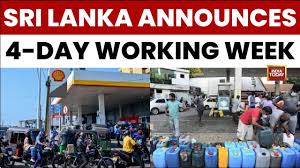
Sri Lanka announces 4-day work week, declares Wednesdays off to save fuel amid Hormuz crisis

COLOMBO : Sri Lanka has moved to a four-day workweek as part of emergency measures to conserve fuel reserves amid a deepening global energy crisis triggered by tensions around the Strait of Hormuz. According to the BBC, the Sri Lankan government has declared one additional day each week as a holiday for public institutions, effectively cutting the workweek to four days for many sectors. Starting March 18, Wednesdays are declared public holidays, reducing transportation fuel consumption.

“We must prepare for the worst, but hope for the best,” President Anura Kumara Dissanayake said at an emergency meeting with senior officials on Monday.

The newly implemented four-day workweek will extend to educational institutions, including schools and universities. Essential services such as healthcare, ports, and emergency operations, however, will continue to function as usual.

Officials opted for Wednesday as the additional day off so that government offices would not be closed for three days in a row. Additionally, a National Fuel Pass system has been introduced, requiring motorists to register and allocating a limited amount of fuel for purchase.

The government is also encouraging remote work wherever possible and urging both public and private sector organisations to adopt energy-saving practices. “We are also asking the private sector to follow suit and declare every Wednesday a holiday from now on,” Prabath Chandrakeerthi, commissioner general of essential services, told reporters.

Authorities in Colombo are keen to avoid a repeat of the severe economic crisis the country experienced in 2022, when fuel shortages led to long queues at petrol stations, power cuts, and widespread public unrest.

The Strait of Hormuz, a narrow but strategically vital passage, handles a significant portion of the world’s oil shipments. Ongoing geopolitical tensions in the region have disrupted supply chains, pushing up global oil prices and creating uncertainty for import-dependent nations like Sri Lanka.

Similar measures by other Asian countries
Sri Lanka is not alone in taking such steps. Other countries in South and Southeast Asia have introduced similar measures, including fuel rationing, work-from-home policies, and reduced office hours, as they grapple with the impact of rising oil prices and supply disruptions.

In Thailand, citizens are being encouraged to ditch formal attire for short-sleeved shirts to minimise air conditioning use.
Myanmar has introduced alternate-day driving restrictions based on license plate numbers.
Bangladesh has brought forward Ramadan holidays and implemented planned blackouts to conserve energy.
The Philippines has introduced flexible work arrangements, including remote work, and banned non-essential public sector travel. The country is also offering financial assistance to vulnerable groups to help with rising fuel costs.
Vietnam is promoting cycling, public transport, and reduced personal vehicle use.

Arab maritime sector attracts nearly $4bn in foreign investment over 23 years : Dhaman

JEDDAH : Arab countries secured 146 foreign maritime transport projects worth nearly $4 billion over the past 23 years, according to a report by Arab Investment and Export Credit Guarantee Corp., also known as Dhaman.

In its fourth sectoral report for 2025, the corporation said 146 foreign projects were recorded during the period, with five countries — Egypt, the UAE, Oman, Saudi Arabia and Mauritania — accounting for 114 projects, or 78 percent of the total, according to Kuwait News Agency, or KUNA.

Those five countries attracted nearly $3.8 billion in investment, representing more than 91 percent of total foreign capital directed to the Arab maritime transport sector.

About 80 percent of global trade by volume is carried by sea, while global maritime trade reached 12.3 billion tonnes in 2023 and is expected to expand at an average annual rate of 2.4 percent through 2029, according to UN Conference on Trade and Development.

The findings come as maritime trade routes across the Middle East face renewed pressure from regional conflict, with restrictions on shipping through the Strait of Hormuz prompting cargo operators to review routes, insurance costs and delivery schedules.

The latest tensions have increased freight volatility and underlined the strategic importance of Arab ports and shipping infrastructure in keeping global supply chains moving.

“It (Dhaman) noted that the US company Think Big for Shipping and Logistics ranked first as the largest foreign investor in the region by investment cost, with $606 million, representing 15 percent of the total, followed by the German company Hapag-Lloyd with $581 million and a 14 percent share,” KUNA reported.

Next was the Belgian company Deme, with $550 million and 13 percent, followed by Yang Ming of Taiwan and Japan’s Mitsui OSK Lines and K Line, each ranking fourth with $371 million and a 9 percent share.

Japan ranked as the largest foreign investor in Arab maritime transport projects, contributing $784 million, equivalent to 19 percent of total investment. Germany followed with a 16 percent share, while the US accounted for 15 percent.

On intra-Arab investment, six countries — the UAE, Saudi Arabia, Bahrain, Oman, Morocco and Egypt — participated in 11 joint projects worth more than $218 million.

Five Arab companies, including Kanoo Shipping of Bahrain, TripleF of Saudi Arabia, and Abu Dhabi Ports, accounted for 89 percent of the total.

The report also stated that, according to the logistics services sector risk assessment, the UAE, Qatar, and Bahrain, along with Saudi Arabia, Oman, Egypt, and Kuwait, topped the Arab rankings for 2025, making them the most attractive destinations for investment in this field.

“It recorded a 4 percent increase in the Arab commercial fleet, reaching 2,900 vessels in 2025 based on actual ship ownership, while the fleet’s carrying capacity rose by 4.6 percent to approximately 109 million metric tonnes of deadweight in 2025, representing 5 percent of global shipping volume,” KUNA stated.

Achilles data shows ESG and Compliance Maturity improving across Global Supply Chains, despite Rising Disruption Pressures

ABINGDON: Achilles, a global leader in supply chain risk and performance management, has released new data outlining how ESG and compliance maturity across global supply chains is increasing year-on-year, despite a rise in potential business disruption events. The figures, based on risk intelligence spanning more than 150,000 suppliers across over 40 countries, show clear progress in ESG and regulatory compliance in 2025 compared with 2024.

Progress in ESG compliance remains uneven but measurable across regions, with most regions recording measurable gains in ESG maturity. Environmental performance was the fastest improving ESG dimension, recording improvements of between approximately 5-10% in Europe, Latin America, and North America. Governance improved by between approximately 2-5% in Europe and Latin America, partially offset by more limited progress or slight deterioration in other regions, and social performance rose by 2-4% globally, pointing to greater standardisation of labour and health and safety practices across supplier bases. Compliance performance remained consistently high at ±1% across all regions. 

Overall regional performance was led by Europe and Asia-Pacific, while Latin America emerged as the fastest improving region, driven by strong gains across financial stability and governance. Collectively, the findings point to a more mature global supply base in 2025 than 2024 in relation to ESG and compliance.

However, research also shows that the total volume of potential business disruption alerts increased by approximately 33% year-on-year, due to a more volatile risk environment driven by geopolitical instability and climate-related hazards.

Business disruption risks or alerts are assessed based on the occurrence and severity of natural hazard events, such as flooding, droughts, extreme weather events, and other climate-related incidents, as well as geopolitical risks, including conflict escalation, political instability, trade restrictions, and sanctions-related constraints that impact supplier operations. 

Commenting on the findings, Luis Olivié, President and Board Member at Achilles, said: 

“It is encouraging to see ESG firmly embedded in organisational priorities, with companies increasingly recognising the rising expectations for transparency, and strengthening ESG performance across their supply networks. Our data shows a maturing global supply base, with clear progress being made in environmental performance, governance, social practices, and compliance performance across regions. However, this internal strengthening is happening against a backdrop of increasing volatility, where potential disruption events are rising year-on-year.

“Companies need to consider that resilience today is no longer determined by supplier fundamentals alone, but by their ability to continuously anticipate, monitor, and respond to risk as conditions evolve. Achilles helps organisations to strengthen compliance and pinpoint emerging risk across this volatile operating environment, transforming real-time intelligence into actionable insights. By facilitating the continuous monitoring of ESG, compliance and operational risk, we help you to understand where risks lie, and ensure your business is better equipped to drive meaningful improvements.”

Overall, environmental performance improved globally, with Europe’s aggregate environmental score increasing from 49 in 2024 to 52 in 2025 – an improvement of 5.8% year-on-year, and Latin America’s rising from 43 to 46 – an increase of 7% year-on-year. These improvements indicate better environmental performance across supplier bases in these regions, as measured by Achilles’ ESG scoring methodology which is built on the systematic collection, validation, and assessment of supplier-provided ESG information.

However, environmental ESG performance showed clear regional divergence, improving in some regions while deteriorating in others. The Asia-Pacific region experienced a relative deterioration of approximately 20–25% year-on-year, with its environmental score declining from 78 in 2024 to 59 in 2025. This is a result of increased environmental pressures in the region, defined as external factors reflected in declining environmental scores, rather than internal governance or disclosure maturity. Additionally, North America showed only marginal improvement of 4.8% and remained below the global average. 

Social performance remained the strongest and most stable ESG dimension globally, improving by 2–4% year-on-year in most regions at an average ESG score of 77-78. Latin America and North America continued to lead with social ESG performance improvements of 4.1% and 3% respectively, while Europe narrowed the gap with a 2.5% improvement, indicating increased standardisation of labour and health and safety practices across supplier bases. Latin America emerged as the fastest-improving region overall, driven by strong gains across financial stability and ESG. 

Beyond ESG, operational and cyber risk scores showed modest but positive improvements in 2025, generally in the low single digits, indicating incremental gains rather than broader structural shifts. Improvements in operational risk scores were driven by stronger quality and health and safety policies. These scores are supported by the broader adoption of recognised certifications, and consistent implementation of operational controls across suppliers. Similarly, increased cyber risk scores reflect greater maturity in supplier cybersecurity, including clearer policies and certifications, increased use of supplier audits, enhanced employee training, and more structured management of incidents and breaches.

Overall, despite some regional variation, these findings point to a more mature global supply base last year in comparison to 2024, despite a more volatile environment where potential disruption events are increasing year-on-year. However, compliance must be paired with dynamic risk intelligence, and organisations will need to move beyond periodic assessments towards a more continuous monitoring of ESG, compliance, and third-party risk across supply chains.

Achilles supports businesses in becoming more resilient, agile, and future-ready, by providing continuous supply chain visibility, on-site supplier auditing, sustainability scoring, and actionable intelligence. The significant regional divergences in the data underscore the importance of consistent, standardised ESG data and benchmarking across global supplier bases, and by providing this end-to-end visibility, Achilles help companies reduce exposure to both financial and reputational risk.

Achilles’s findings exemplify a defining trend in global supply chain behaviour, where in response to rising geopolitical volatility and climate-related hazards, ESG maturity is becoming more important. Business resilience is now defined by the ability to constantly anticipate, monitor, and respond to evolving external risks, and those that pair strong supplier fundamentals with ongoing risk visibility will be better positioned to operate with confidence and maintain regulatory trust.


FLOWRA and Lloyd’s Register to collaborate on floating offshore wind development

LONDON: The Floating Offshore Wind Power Technology Research Association (FLOWRA) of Japan and Lloyd’s Register (LR) have signed a Memorandum of Understanding to explore technology development cooperation in the field of floating offshore wind.

FLOWRA is a technical research association that works with overseas organisations to research and develop common basic technologies for floating offshore wind to reduce costs and risks.

Masakatsu Terazaki, Chairperson of FLOWRA Board of Directors, said: “We are delighted and proud to have concluded a cooperation agreement with Lloyd’s Register, the authoritative classification society in the United Kingdom, having the world’s longest history.

“The promotion of renewable energy and the realisation of a sustainable society are vital mission for us. Particularly, floating offshore wind is greatly expected both domestically and internationally as a power source capable of utilizing marine resources at the maximum extent with minimum environmental impact, and to deliver large-scale electricity supply.

“Through our collaboration with Lloyd’s Register, we believe that we will be able to execute technological development in line with global standards, incorporating international standards and expertise in design, construction, and operation, and enabling Japan’s floating offshore wind technology to gain further trust in the global market.

“We strongly hope that this cooperation agreement will contribute to the development of floating offshore wind in Japan and worldwide and contribute to the creation of a more sustainable future.”

Manuel Ruiz, Renewables Director, Lloyd’s Register, said: “The successful deployment of floating offshore wind needs strong alignment between innovation, safety and internationally recognised standards. Through our collaboration with FLOWRA, LR brings its global certification and energy asset assurance expertise to help reduce technical risk, to optimise projects’ development costs and reduce uncertainties to accelerate the deployment of floating wind.

“By working closely with Japan’s industry leaders like FLOWRA, we aim to enable safe, scalable projects that contribute both to national wind energy ambitions and to the wider global maritime and offshore energy transition.”

ClassNK certifies its first Hong Kong Convention–compliant ship recycling facility in Pakistan

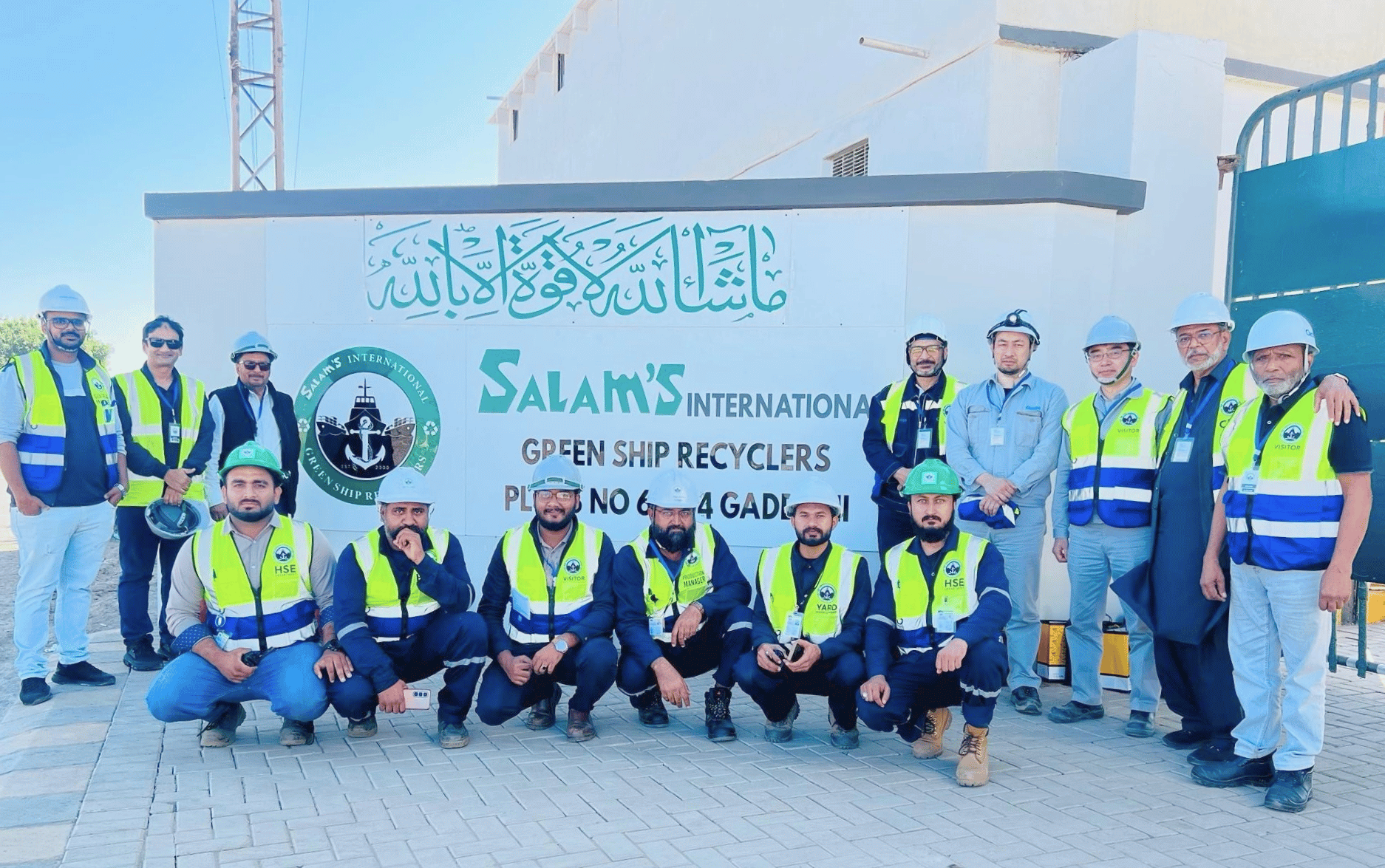
TOKYO: ClassNK has certified Salam’s International, a ship recycling facility in Pakistan, as the first facility in the country to be certified by ClassNK for compliance with the Hong Kong International Convention for ship recycling*1. Based on this certification, the competent authority in Pakistan is expected to issue the Document of Authorization to conduct Ship Recycling

(DASR)*2 as required by the Convention.

Pakistan acceded to the Hong Kong Convention in November 2023, and ship recycling facilities in the country have since been working toward compliance. Among them, Salam’s International has actively undertaken improvements in both its infrastructure and management systems from an early stage to achieve safe and environmentally sound recycling. ClassNK has evaluated these activities and granted certification.

Since 2012, ahead of the Convention’s entry into force, ClassNK has been providing certification for ship recycling facilities and has certified approximately 80 facilities, mainly in India and Bangladesh. With the expected increase in global ship recycling demand, the launch of a ClassNK‑certified facility in Pakistan expands the options for Convention-compliant recycling, while also contributing to improved safety and environmental protection within the country’s ship recycling industry.

As a third‑party certification body, ClassNK will continue to promote transparent, safe, and environmentally sound ship recycling through certification of facilities that meet the standards of the Convention.

*1 The Hong Kong International Convention for the Safe and Environmentally Sound Recycling of Ships, 2009

*2 DASR (Document of Authorization to conduct Ship Recycling): An authorization document issued by the competent authority under the Hong Kong Convention, authorizing that a ship recycling facility meets the requirements of the Convention.

ClassNK Salams International ClassNK certifies its first Hong Kong Convention–compliant ship recycling facility in Pakistan

Iran-Israel tensions create logistical challenges for India’s trade: Commerce Secretary

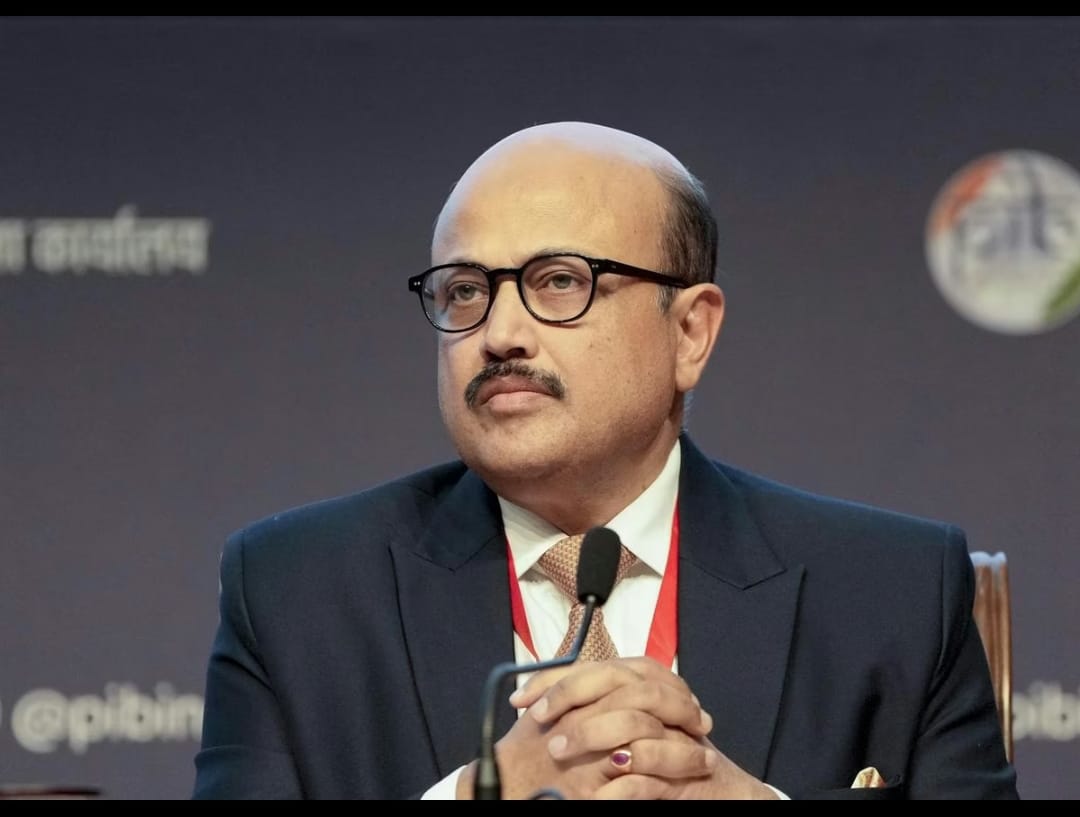
NEW DELHI: As the West Asia conflict entered its third week, Shri Rajesh Agrawal, Commerce Secretary on Monday flagged the logistical challenges for trade for India.

Speaking about the situation, the Commerce Secretary said, “There are logistical challenges that are being faced. Air cargo is also facing certain challenges because of some destruction in flights.”

He added that the disruptions could affect trade flows between India and the region.

“It will have some impact. Their imports from India will also suffer because they are also dependent on India for multiple categories,” Agrawal said.

However, he emphasised that both sides are working to address the issues and keep trade channels functional.

“Both sides are very engaged in finding solutions which can address some of these challenges. It may have some impact, but it will not be completely wiped out,” he said.

Agrawal also said the government has set up a mechanism to monitor the situation and respond quickly.

“There are certain collaborations, certain work that we are doing by forming an interministerial group under DGFT, which meets everyday morning,” he added, referring to the Directorate General of Foreign Trade.

Meanwhile, government trade data for February also showed continued action on trade remedies and facilitation measures. The Directorate General of Trade Remedies (DGTR) initiated a countervailing duty investigation on imports of “PVC Suspension” from China.

The data indicated, “DGTR has initiated one Countervailing duty investigation concerning imports of ‘PVC Suspension’ from China PR.”

It also noted that “DGTR has issued two final findings in the month of February, 2026” concerning anti-dumping investigations related to “Monoisopropylamine (MIPA)” and “Methyl Acetoacetate” imports from China PR, while “DGTR has not issued any Preliminary findings in the month of February, 2026.”

The Commerce Secretary’s press conference further highlighted measures aimed at improving the ease of doing business in foreign trade.

According to the information provided, “Exporter bank accounts are automatically verified via NPCI, linked with PAN and matched with IEC details,” a move that “reduces manual intervention, improves compliance speed, and enhances trade facilitation.”

The government also extended support to exporters through reforms in duty exemption schemes. It said the “export obligation fulfilment period extended till 31 Aug 2026 to address disruptions due to the West Asia crisis.”

In addition, a nationwide drive conducted from “2-12 March 2026 issued 3,796 EODCs to clear long-pending cases,” which helps “release bank guarantees/bonds, reduce compliance burden, improve liquidity, and strengthen trade facilitation.“

Source: ANI

DP World Mundra handles 1.5 Million Teus in CY25, Reinforcing its Role in India’s Exim Trade

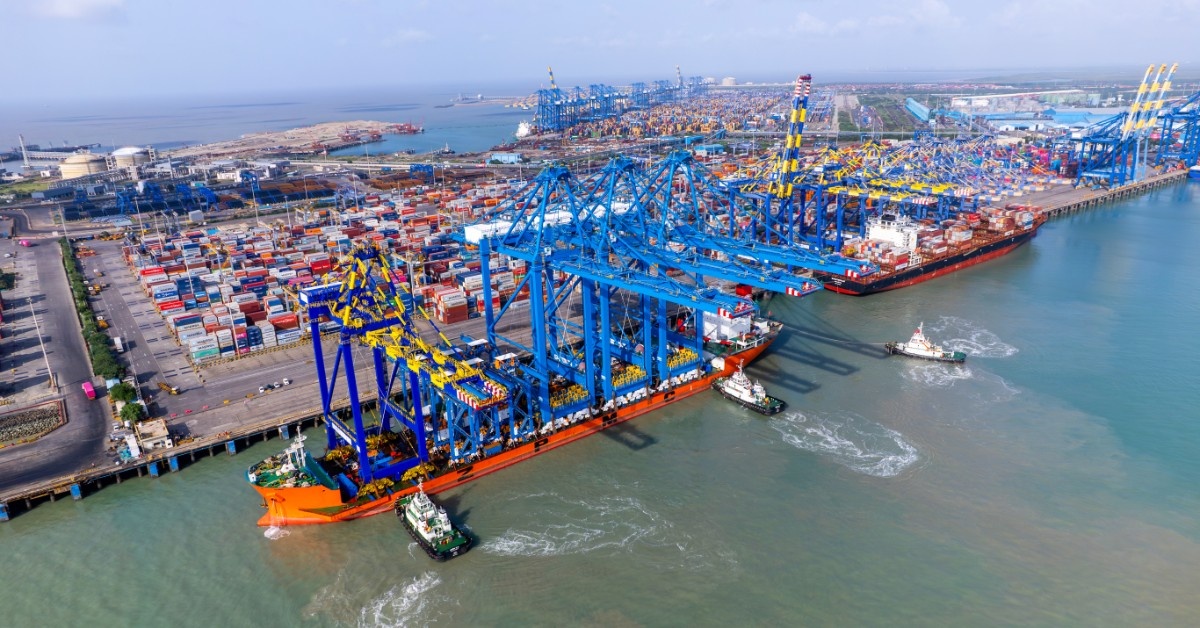
MUNDRA: DP World’s Mundra International Container Terminal (MICT) has delivered strong performance in CY25, with throughput rising 13.6% to nearly 1.5 million TEUs. Momentum extended into early 2026, with January volumes reaching 1,46,063 TEUs and February hitting 1,32,590 TEUs, both surpassing prior year levels and solidifying DP World Mundra’s role as a premier gateway for India’s EXIM trade.

DP World Mundra’s growth was driven by a 6.57% rise in vessel calls to 762 in CY25, while higher container volumes on rail have strengthened the terminal’s multimodal connectivity to India’s hinterland. Infrastructure upgrades, including the commissioning of a new quay crane along with new electric rubber-tyred-gantry cranes (RTGs) continue to support this growth momentum by enhancing berth productivity and operational efficiency.

Commenting on the performance, Alok Mishra, CEO, Ports & Terminals, DP World Mundra, said, “Sustained double-digit growth through CY25 and continued momentum into 2026 demonstrate our ability to efficiently manage rising vessel calls and rail volumes, even amidst global volatility. We remain committed to delivering reliable, efficient operations that support India’s expanding EXIM trade.”

With direct links to the Far East, Southeast Asia, Middle East, East and West Africa, US East Coast and the Mediterranean, DP World Mundra plays a vital role in supporting Gujarat’s ambition of becoming a global trade powerhouse in the subcontinent.

The terminal is also advancing its sustainability agenda. DP World is accelerating electrification across Mundra operations, deploying electric light motor vehicles (E-LMVs), electric forklifts, and upcoming electric internal transfer vehicles (e-ITVs). The terminal has also achieved Zero Waste to Landfill’ certification by the National Productivity Council (NPC) of India.

Beyond its operational performance, DP World Mundra is focused on creating long-term social value in neighbouring communities. Through initiatives such as the Pragati Scholarship Program, it nurtures girl students, providing them opportunities to pursue their dreams, while two mobile medical vans serve 40,000 patients annually in and around Mundra. This integrated approach ensures that growth at Mundra contributes not only to India’s EXIM trade, but also to more inclusive and sustainable regional development.

India remains engaged with US for mutually beneficial trade agreement: Commerce Secretary

NEW DELHI: India remains engaged with the US for a mutually beneficial trade agreement, Commerce Secretary Shri Rajesh Agrawal said on Monday.

He said at a media briefing that India and the US announced a trade deal on February 2, and a Joint Statement for the same was released on February 7.

“On February 7, 2026, the 25% additional ad-valorem tariffs imposed by the U.S. on certain Indian exports citing India’s imports of Russian oil were removed,” he said.

The Commerce Secretary said that pursuant to the US Supreme Court judgement of February 20, 2026 invalidating reciprocal tariffs, the reciprocal tariffs are no longer in force.

“The US Government has issued Executive Orders imposing 10% tariffs pursuant to Section 122 of the Trade Act, 1974 on certain products from all countries. India remains engaged with the US side for a mutually beneficial trade agreement,” he said.

Sources said the US is trying to recreate a tariff architecture globally and once that is created, will be better to sign the trade deal. They added that trade agreement would be signed when a new architecture of tariffs globally is implemented by the US. There were indications earlier that Interim Trade Agreement could be signed in March.

Commerce Ministry officials had said last week that India and the United States remain engaged for a mutually beneficial trade agreement, and there is no hold off in bilateral engagement.

The Ministry rejected reports in sections of the media that talks between India and the United States for a Bilateral Trade Arrangement are on hold.

The United States and India last month announced that they have reached a framework for an Interim Agreement regarding reciprocal and mutually beneficial trade. The framework reaffirmed the countries’ commitment to the broader US-India Bilateral Trade Agreement (BTA) negotiations, launched by President Donald J Trump and Prime Minister Shri Narendra Modi on February 13, 2025, which will include additional market access commitments and support more resilient supply chains.

“We have noted a media report regarding ongoing trade talks with the US. It is denied that there is any hold off in bilateral engagement. It is reiterated that the two sides remain engaged for a mutually beneficial trade agreement,” the Commerce Ministry had said

In a fresh development, the Donald Trump administration has initiated fresh investigations into alleged “unfair trade practices” by 16 major trading partners, including India, China, and Bangladesh.

The move aims to reinstate tariff pressure following a US Supreme Court ruling last month that declared previous levies illegal.
These inquiries are being carried out under “Section 301” of the Trade Act of 1974. This legislation grants the US Trade Representative the authority to enforce tariffs or other punitive actions against nations found to be using unfair trade practices.

US Trade Representative Jamieson Greer indicated that the investigations could result in new tariffs being applied to China, the European Union, India, Japan, South Korea, and Mexico by the coming summer.

The “excess capacity” probe also extends to several other partners, including Taiwan, Vietnam, Thailand, Malaysia, Cambodia, Singapore, Indonesia, Bangladesh, Switzerland, and Norway. Notably, Canada, the second-largest trading partner of the US, was excluded from the list.

The BTA, formally proposed in February 2025, seeks to more than double bilateral trade between India and the US, from the current USD 191 billion to USD 500 billion by 2030.

Merchandise exports grow 1.84% to US$ 402.93 billion in April–February 2025–26

NEW DELHI : India’s total exports of merchandise and services recorded steady growth during the current financial year, reaching $790.86 billion in April-February 2025-26, marking a 5.79 per cent increase over $747.58 billion during the same period last year, according to data released by the Ministry of Commerce and Industry.

The growth was driven by strong performance in sectors such as engineering goods, electronics, chemicals, gems and jewellery, and agri-based products.

Merchandise exports see moderate rise

India’s merchandise exports during April-February FY26 stood at $402.93 billion, compared with $395.66 billion in the corresponding period of FY25, registering 1.84 per cent growth.

Non-petroleum exports also showed improvement, rising to $354.12 billion during the period, up 5.03 per cent from $337.17 billion in the previous year.

However, merchandise imports increased to $713.53 billion, resulting in a merchandise trade deficit of $310.60 billion, higher than $261.80 billion recorded during April-February 2024-25.

February trade data

For February 2026, India’s total exports (merchandise and services combined) were estimated at $76.13 billion, reflecting 11.05 per cent growth compared with February 2025.

Total imports during the month stood at $80.09 billion, registering a 21.64 per cent increase year-on-year.

Merchandise exports in February were $36.61 billion, slightly lower than $36.91 billion in February 2025, while imports rose to $63.71 billion from $51.33 billion in the same month last year.

Services exports continue strong growth

India’s services sector continued to support overall export growth.

Services exports are estimated at $39.53 billion in February 2026, up from $31.65 billion in February 2025.

During April-February FY26, services exports reached $387.93 billion, compared to $351.93 billion in the same period of the previous year. Services imports were estimated at $186.98 billion, resulting in a services trade surplus of $200.96 billion, significantly higher than $170.69 billion in April-February 2024-25.

Key sectors driving export growth

Several sectors registered strong growth in February 2026 compared to the same month last year.

Among the major contributors were:

  • Engineering goods exports, which rose 12.9 per cent from $9.17 billion to $10.36 billion
  • Electronic goods exports, up 10.37 per cent from $3.79 billion to $4.18 billion
  • Organic and inorganic chemicals, which grew 6.85 per cent from $2.23 billion to $2.38 billion
  • Gems and jewellery, rising 4.08 per cent from $2.53 billion to $2.64 billion
  • Meat, dairy and poultry products, recording 22.66 per cent growth from $0.45 billion to $0.55 billion

Other sectors showing positive growth included coffee, marine products, handicrafts, minerals, ceramic products, pharmaceuticals, fruits and vegetables, cereal preparations, and rice.

Trade excluding petroleum and gems

Exports excluding petroleum and gems & jewellery stood at $30.55 billion in February 2026, compared to $28.66 billion in February 2025.

For April-February FY26, non-petroleum and non-gems exports reached $327.96 billion, up from $310.25 billion in the same period last year.

Key trading partners

Major export destinations showing significant growth in February included China, Hong Kong, Vietnam, Togo and Sri Lanka.

During April-February FY26, exports to the United States, United Arab Emirates, Spain, and Hong Kong also recorded notable growth.

On the import side, major sources showing higher growth included China, Switzerland, the United Kingdom, the United States and Peru.