Home Blog Page 403

Hexalog Technologies Signs MoU with Birla Institute of Management Technology to establish Centre of Excellence in Supply Chain & Logistics

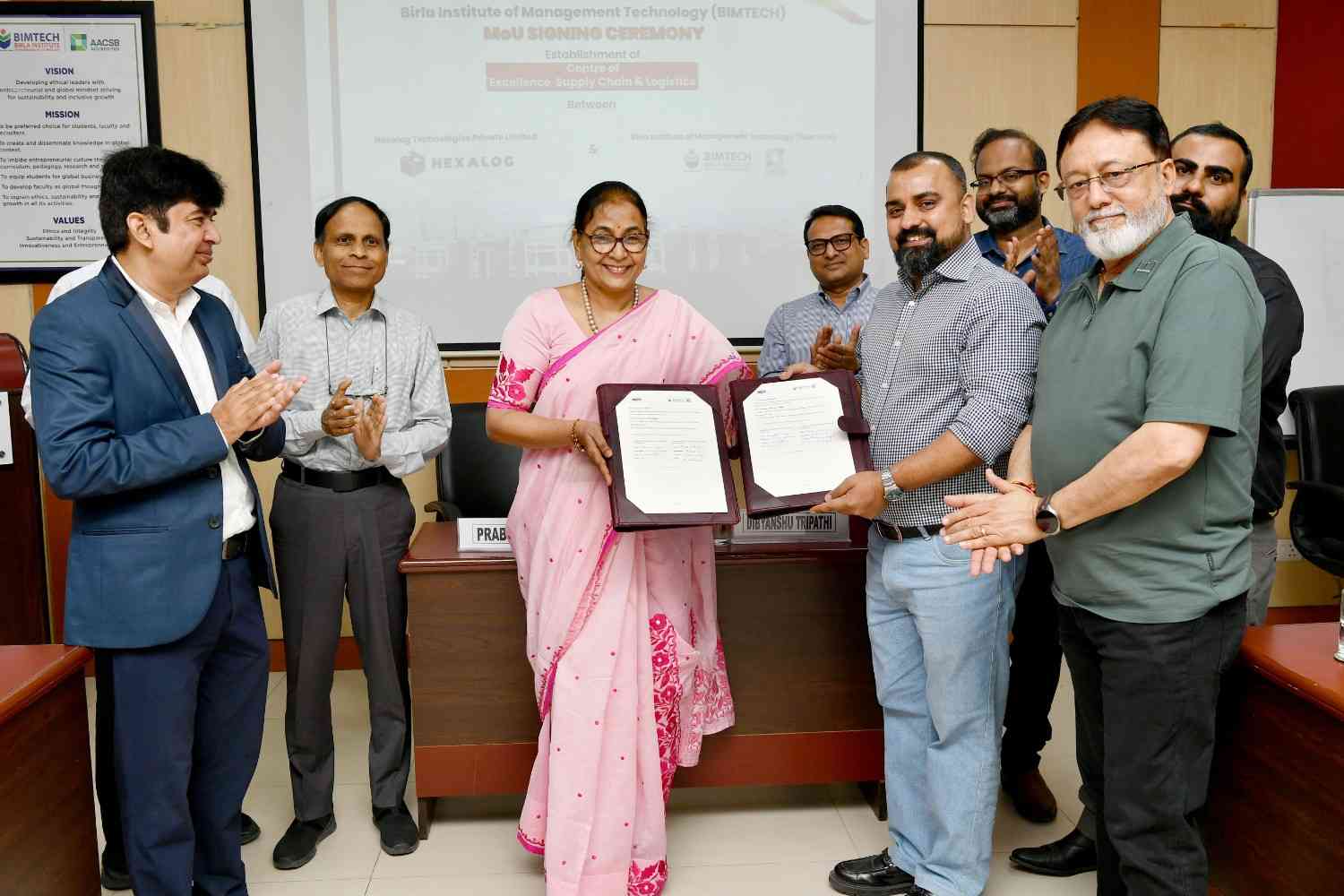
NEW DELHI: Hexalog Technologies Private Limited signed a strategic Memorandum of Understanding (MoU) with Birla Institute of Management Technology (BIMTECH), a leading AACSB-accredited business school in India, to establish a Centre of Excellence (CoE) in Supply Chain & Logistics (SCL) at BIMTECH’s campus. The Centre aims to introduce industry-aligned micro-credentials and certificate programmes in areas such as AI in logistics, supply chain analytics, and digital freight management. The MoU was signed in the presence of Prof. Pankaj Priya, Deputy Director & Dean (Academics), and Dr. Danish Nasir, Associate Professor of Practice (Operations and Decision Sciences), BIMTECH, along with members of the Hexalog Technologies team.

The partnership will result in real-world industry engagements for students through on-the-job training, internships, live consulting assignments, and opportunities to pitch ideas to real investors. Additionally, nurturing the entrepreneurial spirit, this collaboration will also facilitate structured entrepreneurship bootcamps under the mentorship of industry practitioners.

Strengthening industry–academia collaboration, both institutions will also engage in activities such as supply chain fest, joint research, hackathons, case development, and curation of executive education programs.

Mr. Dibyanshu Tripathi, CEO & Co-founder, Hexalog Technologies, said, “Returning to BIMTECH to sign this MoU carries a certain weight—this is where the thinking began, and it feels right to bring something back. What Hexalog is formalizing today isn’t a symbolic gesture; it’s a working partnership. Students will get direct access to live databases and the kind of supply chain complexity that doesn’t exist in textbooks—real constraints, real trade-offs, and real stakes.

The next wave of logistics leaders won’t be built in classrooms alone. They’ll be shaped by exposure to problems that are still unsolved, by organizations willing to share not just their successes but their open questions. That’s what we’re putting on the table. For me personally, there’s something clarifying about coming back—not as a student, but as someone who can help accelerate what comes next for the people sitting where I once sat.”

Speaking on the strategic significance of the collaboration, Dr. Prabina Rajib, Director, BIMTECH, said, “As global supply chains become increasingly digital, data-driven, and interconnected, it is imperative for academic institutions to move beyond traditional pedagogy. This collaboration with Hexalog Technologies marks an important milestone in BIMTECH’s ongoing efforts to strengthen industry–academia partnerships. The establishment of the Centre of Excellence in Supply Chain & Logistics will provide our students and faculty with meaningful opportunities to engage with industry experts, work on real-world challenges, and develop capabilities aligned with the evolving demands of the global supply chain ecosystem.”

The partnering institutions collaborated through a structured CoE program. Twelve student teams will be shortlisted by BIMTECH, and the top five qualifying teams by Hexalog based on innovation, scalability, and market relevance. Each selected team will receive “Hexalog Credits” worth INR 1,00,000 to support logistics and supply chain operations, ensuring practical learning and venture readiness.

The MoU signing ceremony was attended by senior leadership teams from both organizations, marking the beginning of a long-term strategic engagement aimed at strengthening industry–academia collaboration and building advanced capabilities in supply chain and logistics management.

Inspired by its founders Late Basant Kumar Birla and Sarala Birla, BIMTECH offers programs like PGDM, PGDM (International Business), PGDM (Insurance Business Management), and PGDM (Retail Management), PGDM-Online and Fellow programs (FPM/E-FPM) nurturing individuals into global leaders. BIMTECH is amongst the Ivy League of top globally recognized B-Schools that excels in management education, supported by its globally placed robust alumni network of over 8000 individuals.
Allana Group committed to help India export food to West Asia amid uncertainties

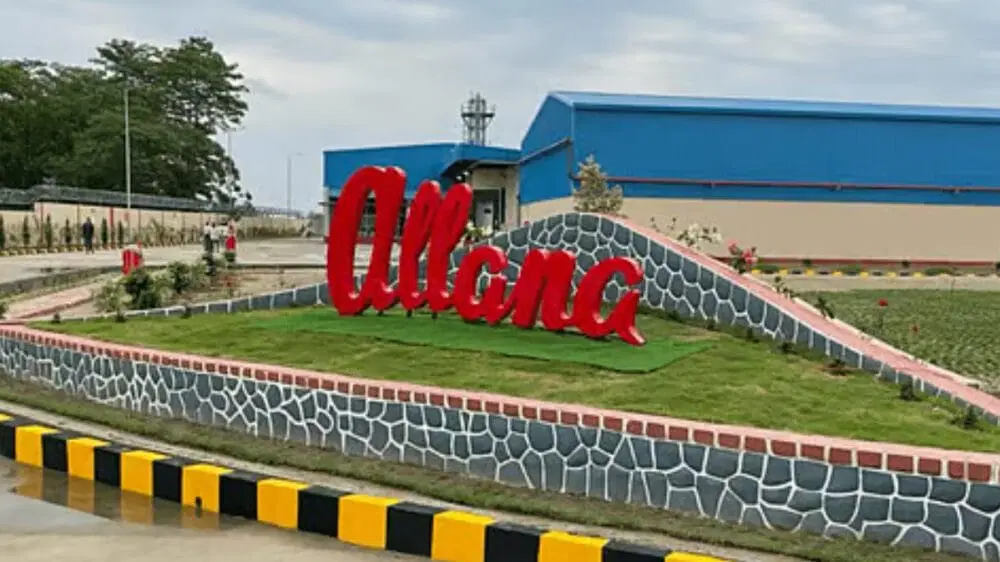
MUMBAI: Amid rising geopolitical tensions sparked by the West Asia war and shipping routes facing widespread disruption, India’s top food exporters are emerging as the crucial link in stabilizing the region’s daily supply needs. Among them, the Allana Group – one of India’s largest food exporters is playing an increasingly significant role in ensuring that essential food supplies continue reaching import-dependent West Asian economies amid rising geopolitical uncertainties.

The stakes are particularly high for the six-member Gulf Cooperation Council, which includes the UAE, Saudi Arabia, Oman, Kuwait, Qatar and Bahrain. The countries’ structural limitations on agriculture mean they are heavily dependent on global food markets to meet basic consumption needs. Across the bloc, 75-90% of food consumption is imported, including roughly 93% of cereals, 56% of vegetables and about 62% of meat. Collectively, GCC countries spend close to $50billion annually on food imports, making stable supply corridors vital for their economic needs.

India has increasingly stepped into that role.

With one of the world’s largest agricultural bases and a rapidly expanding food-processing sector, the country has become a key supplier of staples ranging from rice and wheat to processed foods, fruits and beverages for markets across West Asia. As the raging war strains logistics and swells shipping risks in the region, such long-standing trade links, especially the one with India, are gaining new strategic significance.

The scale of India’s agricultural exports has expanded sharply in recent years. Shipments grew from around $6.6billion in FY2022-23 to $7.2billion in FY2023-24.

Rice continues to dominate India’s export basket. In 2024, India exported rice worth $4.08 billion to West Asia. 

Total shipments reached about 20.1mn tonnes valued at around $12.9billion in FY2024-25, followed by processed food exports worth $7.89billion. Fresh produce from India has also gained ground, with fruits and vegetables alone contributing around $1.82billion in export value during the same period.

Within this expanding trade network, the Allana Group has emerged as a major pillar of India’s food export ecosystem. Operating in nearly 70 countries, the Mumbai-headquartered conglomerate counts West Asia as one of its most important global markets and today supplies roughly $1billion worth of food products annually to the region.

The company’s export portfolio somewhat reflects the diversity of India’s agricultural output. It ships a wide range of washed and unwashed Arabica, Robusta and monsooned- coffees, with annual exports estimated at 24,000–30,000 tonnes. The group also produces aseptic and frozen fruit pulps including mango and guava with an annual capacity of about 50,000 metric tonnes, alongside exports of wheat, other agricultural commodities, frozen meat and potato-based products.

Over the past few years, the company has put in significant efforts in building up large capabilities to ensure continuity of food supply during periods of acute disruption or sudden spikes in demand. In fact, at any given time, Allana Group holds around 40,000 tonnes of food products ready for immediate dispatch to West Asian markets. These stocks typically include staples such as wheat, fruits, vegetables and coffee.

Besides, Allana has invested significantly in expanding regional logistics infrastructure to strengthen supply flexibility. The company operates several value-addition and distribution facilities across West Asia, which is further supported by large, advanced grain storage facilities in the UAE, with their warehouse capacity estimated at around 80,000 tonnes. These facilities are meant to ensure food supply continuity during periods of uncertainty.

Such safeguards are possibly becoming increasingly important as tensions around the critical Iran-controlled Strait of Hormuz threaten to disrupt global trade routes. While the narrow waterway is widely known for carrying a significant portion of the world’s oil shipments, it is equally vital for food imports entering the West Asia markets.

Against this volatile backdrop, India’s long-standing commercial ties with West Asia are helping provide stability to regional food markets. Exporters from India such as the Allana Group with established supply chains, advanced storage capacity and diversified food portfolios are playing a crucial role in keeping essential commodities moving even as geopolitical uncertainties rise.

For West Asia economies that depend heavily on imported food, the India–West Asia food corridor is becoming an increasingly strategic economic lifeline. Within that system, companies like Allana are acting as a vital bridge between India’s vast agricultural output and the millions of consumers across war-hit West Asia who rely on those supplies every day.

Indian Naval Ship Trikand, at Port Louis Mauritius 

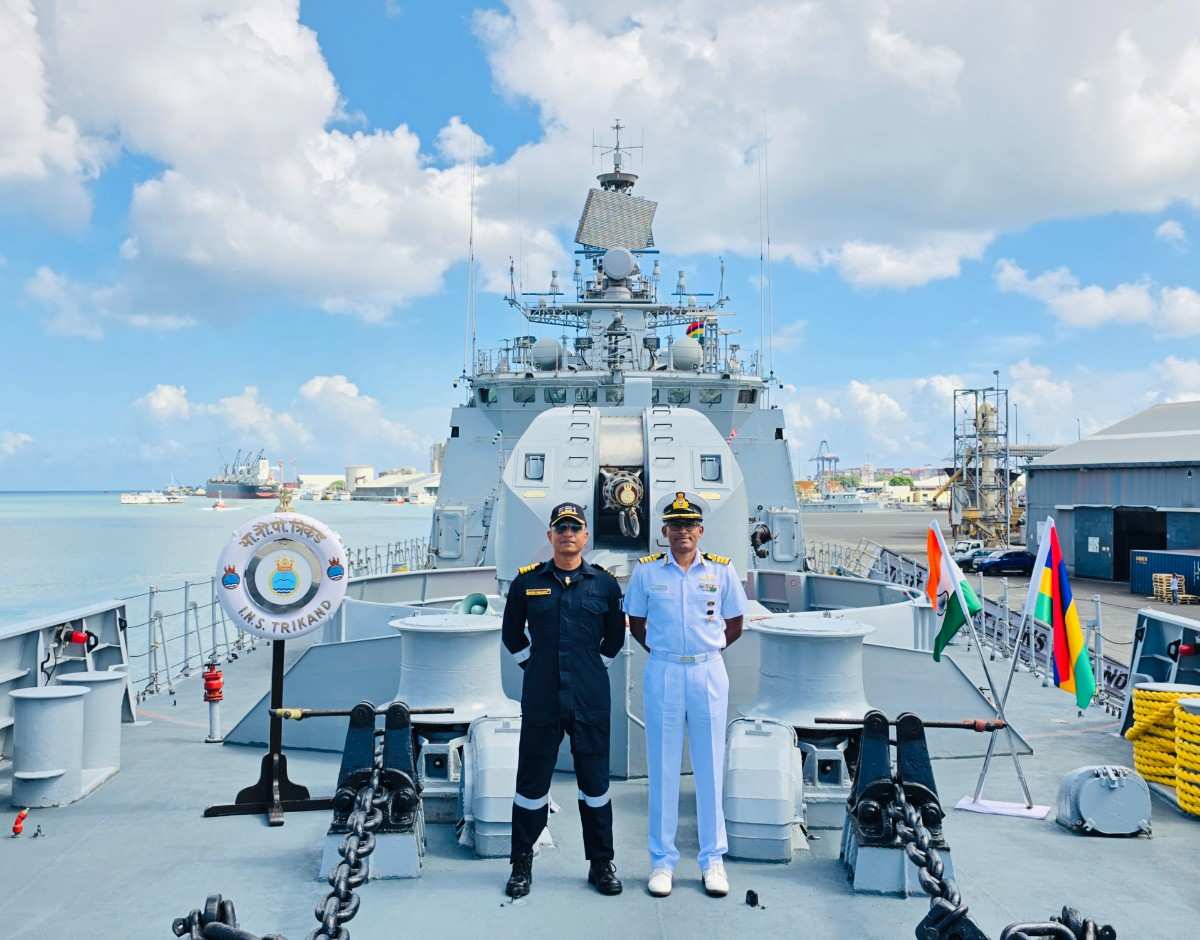
PORT LOUIS : Indian Naval Ship Trikand, stealth frigate of the Indian Navy, called at Port Louis, Mauritius on 10 Mar 2026 during her ongoing operational deployment to the South West Indian Ocean Region.

During the port call, the ship will participate in the 58th Mauritius National Day celebrations on 12 Mar 2026 with a marching contingent, naval band and integral helicopter for the fly-past at the National Day Parade at Champ de Mars, Port Louis. Captain Sachin Kulkarni, Commanding Officer, is also scheduled to call on senior Government and Mauritius Coast Guard functionaries. Training and cultural exchanges, including cross training visits, friendly sports fixtures and community service activities are also scheduled.

The visit is aimed at strengthening maritime cooperation, enhancing operational interoperability and furthering bilateral relations between India and Mauritius.

LNG and methanol create path dependencies that divert investments from shipping’s long-term decarbonisation pathway, new study warns

Study by UCL academics finds that while LNG and methanol use as alternative fuels generate some knowledge spillovers and procedural regulatory learning useful for green ammonia, the main scalable zero emission shipping fuel, these benefits are likely outweighed by capital lock-in and the entrenchment of fossil fuel infrastructure, which then compete with, rather than enable the long-term solution.

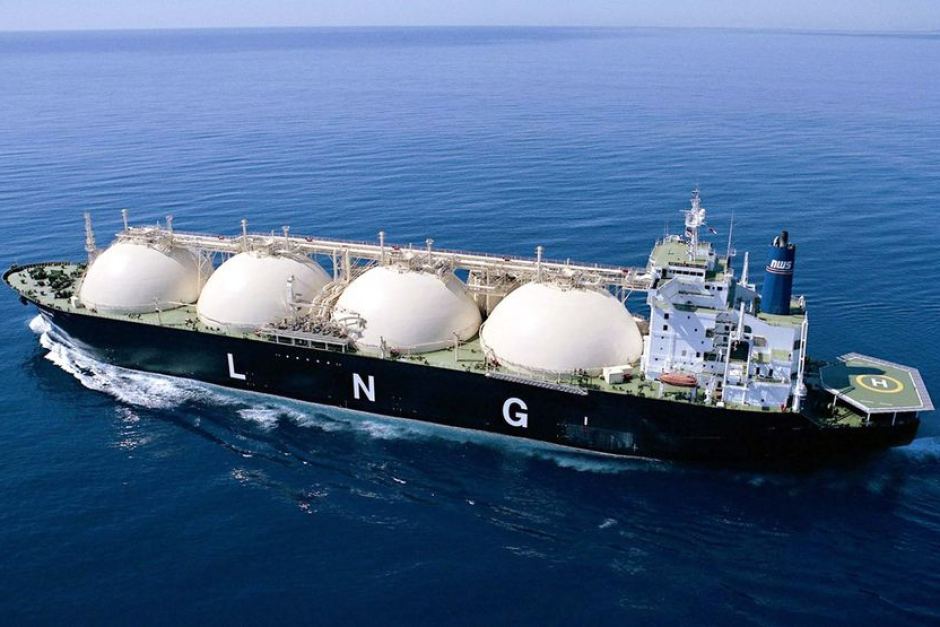
LONDON: A new academic research paper finds that current investments in liquefied natural gas (LNG) and methanol fuelled ships do not constitute genuine stepping stones toward green ammonia use in the shipping sector, and risk deepening dependence on fossil fuels rather than accelerating the transition to zero-GHG alternatives.

The research paper, submitted to Environmental Innovation and Societal Transitions, titled “When is a stepping stone a dead-end? Insights into ‘stepping stone’ pathways from the maritime shipping transition,” develops a new analytical framework to assess whether near-term transitional fuels such as LNG and methanol can genuinely enable a zero-emissions future system. Stepping stones build capacity-such as adaptable infrastructure or transferable skills-for a sustainable long-term solution. In contrast, dead ends may cut emissions in the short term but lock in fossil-based architectures and create stranded assets.

Dr Pinar Langer, Research Fellow at the UCL Energy Institute Shipping and Oceans Research Group, said: “There is a real danger in confusing short-term movement with long-term progress. Our findings based on interviews, documentary analysis, including patent data and econometric analysis, show that investments in LNG and methanol can easily become dead ends if they lock capital, infrastructure and expectations into pathways that do not lead to zero-emission shipping.”

The study draws on 25 semi-structured interviews with shipping industry professionals, documentary content analysis, patent data analysis, and a quantitative econometric analysis of 7,355 vessels from the Clarksons World Fleet Register to assess newbuild premium paid for dual fuel capability. Across all four dimensions examined — material and financial resources, technological knowledge, regulatory institutions, and expectations and narratives — the evidence points in the same direction: while LNG and methanol generate some knowledge spillovers and procedural regulatory learning useful for ammonia, these benefits are likely outweighed by capital lock-in and the entrenchment of fossil fuel infrastructure.

For LNG, the study finds potential for a stepping stone role, but only if more stringent policies drive deployment of genuinely “ammonia ready” ships, port infrastructure and bunkering systems that can be cost-effectively repurposed. Without such design and policy safeguards, LNG investments risk becoming stranded assets that compete with, rather than enable, green ammonia. Methanol is assessed as offering even weaker stepping stone characteristics and may divert capital and political attention away from ammonia without providing durable system benefits.

Dr Will McDowall, at the UCL Energy Institute said: “We know that we need deep decarbonisation of the global shipping fleet. Near-term investments need to build a pathway to a sustainable long-term solution, not risk locking in further reliance on unsustainable fossil fuels or insufficient bioenergy. Our analysis shows the risks inherent in today’s focus on methanol and LNG as routes to clean shipping – and we show that they risk becoming dead ends.”

The study calls on policymakers to take two urgent steps. First, to build long-term credibility around emissions reduction goals so that ship investors price in the value of genuine ammonia-readiness. Second, to accelerate ammonia deployment through dedicated R&D funding, demonstration trials and the development of robust safety standards — with the goal of establishing ammonia within commercial niches this decade. The research also offers a broader contribution to the field of sustainability transitions, providing a conceptual framework applicable to other sectors weighing up transitional technologies — from hydrogen in gas networks to natural gas in electricity generation

Link to full research paper: https://doi.org/10.13140/RG.2.2.11929.89449

About UCL Energy Institute

The UCL Energy Institute hosts a world leading research group which aims to accelerate the transition to an equitable and sustainable energy and trade system within the context of the ocean. The research group’s multi-disciplinary work on the shipping and ocean system leverages advanced data analytics, cutting-edge modelling, and rigorous research methods, providing crucial insights for decision-makers in both policy and industry. The group focuses on three core areas: analysing big data to understand drivers of historical emissions and wider environmental impacts, developing models and frameworks to explore energy and trade transition to a zero emissions future, and conducting social science research to examine the policy and commercial structures that enable the decarbonisation of the shipping sector. For more information visit www.shippingandoceans.com

Qatari LNG resumption requires strait free of mines

OSLO: The resumption of Qatari LNG exports through the Strait of Hormuz could take “significantly longer than expected” if naval mines are deployed in the waterway, with ships likely requiring minesweeper escorts before normal transit can resume, experts told specialist energy news service Montel News on Wednesday.

The presence of naval mines could significantly complicate efforts to restore shipping through the strait, even if LNG production facilities return to operation quickly, leaving global supplies depressed for longer and keeping prices elevated.

Speaking to Montel News, Wael Abdel Moati, Global Gas Expert and Chief Gas Officer at the Organization of Arab Petroleum Exporting Countries said: “Even if LNG production and exports were to resume quickly, the presence of naval mines in the Strait of Hormuz would make the reopening of the waterway far more complex and gradual.”

As a result, the restoration of LNG supply to pre-conflict levels would be “challenging” and could take “significantly longer than expected”, he added, noting that shipping lanes would need to be secured, with both insurers and shipowners regaining confidence in the safety of transit.

The warning comes after US Central Command said in a statement on X that it had “eliminated” 16 minelayers near the Strait of Hormuz, following unconfirmed media reports that Iran had begun laying sea mines in the area. Iran is estimated to possess a stockpile of at least 6,000 naval mines.

Military operations likely prerequisite

Security experts say clearing the strait would likely require extensive military operations before shipping can resume safely.

Speaking to Montel News, Derek Steel, Managing Director of security consultancy Chartsec said: “The US Navy would first need to complete its targeted strikes and destroy Iranian shore-based naval facilities, as well as collectively eliminate their short- to medium-range missile capabilities.”

Steel, who previously served in the UK SAS special forces and has worked extensively in high-risk environments in the oil and gas sector, added: “The Iranian strategy would be to conduct nocturnal covert operations to enhance the likelihood of success… in their attempts to deploy their vessel mine warfare capabilities.”

But even once the conflict has abated, and mines cleared, a naval escort would be required for vessels passing through the strait.

Mitsubishi Logisnext Asia Pacific Rebrands as Logisnext Asia Pacific, to Strengthen Leadership in Logistics Solutions

SINGAPORE: Mitsubishi Logisnext Asia Pacific (MLAP) announced on Wednesday that it will be rebranded to Logisnext Asia Pacific in the future, aligning with the strategic direction set by Mitsubishi Logisnext Co. Ltd. (ML) for its group companies.

This global change will mark a significant step in ML’s ongoing transformation, guided by the “Logisnext Vision 2035”. As part of this process, ML has formed a partnership with Japan Industrial Partners (JIP) as the new strategic partner to support sustainable growth and long-term value creation. Consequently, all group companies will adopt the new company name from 30th of April.

Commitment to Customers
“While our name is changing, our commitment to customers and dealer partners remains unchanged,” said Yasumitsu Baba, Managing Director of Mitsubishi Logisnext Asia Pacific. “We will continue to provide reliable equipment, trusted services, and solutions that drive customer success, while further strengthening our global alignment.”

Global and Regional Strategy
Logisnext operates globally through four regional hubs: Japan, EAME (Europe, Africa, CIS, and Middle East), Americas, and APAC/C/SA (Asia Pacific, China and South Africa). This structure enables the group to reinforce its position as a leading solutions provider in the logistics industry answering to the local customers’ needs.

In line with the rebrand, the global Logisnext group will implement strategic changes to its brand portfolio in the coming years. These are tailored to the specific needs of each region, ensuring the best fit to serve regional markets. Starting with Japan, “Mitsubishi Forklift Trucks” product lines will rebrand to “Logisnext”.

APAC/C/SA Region Update
In the APAC/C/SA region, the “Mitsubishi Forklift Trucks” will transit to “Logisnext Forklifts” in the coming years as part of the rebranding initiative. During this period and beyond, we are committed to continue offering customers the same dependable engineering, innovative equipment and comprehensive solutions, delivered through our dealer partners. Mitsubishi Forklift Trucks is best known for its Reliability, Quality and Value for Money will continue to be with the “Logisnext Forklifts” brand, customers can expect same ownership experience and satisfaction.

Transition and Support
Throughout this transition, MLAP is prioritising stability and consistency for dealer partners and customers. All current support teams and service structures will remain in place, ensuring a seamless process for all stakeholders.

Bernhard Schulte Offshore takes delivery of new CSOV ‘Windea Carnot’

HAMBURG: Bernhard Schulte Offshore (BSO) has taken delivery of a new Commissioning Service Operation Vessel (CSOV). The ship, which was built at Ulstein Verft in Norway on behalf of an institutional investor, was handed over to its new owner, BSO, following completion. The vessel was christened ‘Windea Carnot’ on 6 March 2026. 

The ‘Windea Carnot’ is the third of three sister ships built at Ulstein that BSO has integrated into its modern offshore fleet since the middle of last year. BSO now operates six specialised vessels serving the global offshore energy industry. 

“The offshore market offers promising prospects. Therefore, we are pleased to have added ‘Windea Carnot’ to our portfolio,” says Matthias Müller, Managing Director at Bernhard Schulte Offshore. “The Ulstein design, characterised by reliability, flexibility and innovative features, is very well received by the offshore industry.” 

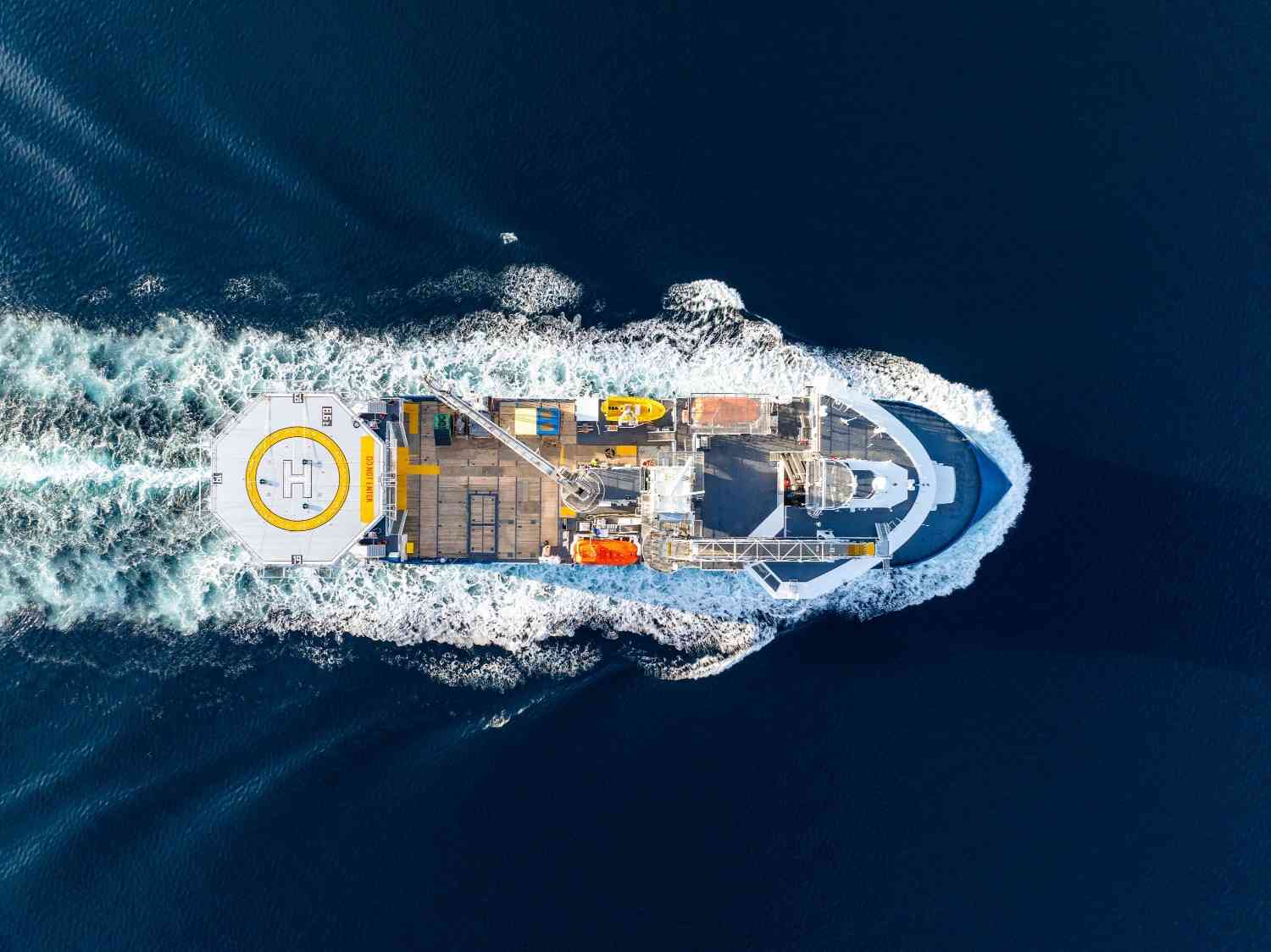
‘Windea Carnot’ features Ulstein’s innovative TWIN X-STERN solution, which provides exceptional manoeuvrability, reduced vessel motions and improved fuel efficiency—key qualities for safe and sustainable offshore operations. Featuring hybrid battery propulsion and prepared for future methanol fuel use, the CSOV is designed for low-emission operations and is well suited for both operations and maintenance (O&M) as well as construction support activities, including deployments in demanding offshore conditions. 

The CSOV, offering comfortable single cabins for up to 90 charterers’ offshore personnel, is fitted with a centrally positioned, height-adjustable walk-to-work gangway and elevator tower to enable safe personnel and cargo transfers. Furthermore, the ‘Windea Carnot’ is equipped with a helideck for helicopters with a maximum take-off weight of up to 8.6 tonnes. A 3D motion-compensated crane with a lifting capacity of up to 5 tonnes supports offshore handling operations, while generous storage areas and step-free access optimise onboard logistics. In addition, a height-adjustable boat-landing system enables stepless transfer between the CSOV and smaller crew transfer vessels, a key safety feature when operating in offshore wind farms. 

The newbuilding is named after the French physicist and engineer Nicolas Léonard Sadi Carnot, who is widely regarded as the father of thermodynamics. This naming continues the tradition of the two previous sister ships, ‘Windea Curie’ and ‘Windea Clausius’, also named after outstanding scientists.

DG Shipping warns Shipping Lines against Opportunistic Pricing in India’s EXIM Trade

MUMBAI: In a significant move aimed at safeguarding India’s export–import (EXIM) trade ecosystem, the Directorate General of Shipping (DG Shipping), under the Ministry of Ports, Shipping and Waterways, has issued an advisory urging shipping lines, carriers, and their agents to maintain transparency in transaction costs and refrain from imposing non-transparent or opportunistic charges.

The directive, issued through DGS Circular No. 14 of 2026 dated March 9, 2026, highlights concerns raised by various stakeholders regarding the levy of multiple ancillary charges in the logistics chain. These charges, according to the circular, are perceived as non-transparent and opportunistic, particularly amid ongoing geopolitical tensions and war-like situations affecting global shipping markets.

Concerns Over Rising Ancillary Charges

DG Shipping noted that industry stakeholders have made representations regarding the increasing imposition of additional fees by shipping lines and their agents. Such practices are believed to inflate transaction costs within the logistics chain and potentially exploit volatile market conditions caused by global geopolitical developments. DG Shipping Circular

The circular reiterates the government’s commitment to ensuring a fair and efficient maritime trade environment under the framework of the Merchant Shipping Act, 1958, which aims to foster the development and efficient maintenance of the Indian mercantile marine in alignment with national interests. It also references the Multimodal Transportation of Goods Act, 1993, which governs the registration and functioning of Multimodal Transport Operators (MTOs).

Emphasis on Transparency Under Merchant Shipping Act, 2025

The advisory further draws attention to provisions under the Merchant Shipping Act, 2025, which empower the Central Government to mandate greater transparency in charges levied by service providers or agents involved in the transportation of goods.

Under Section 317 of the Act, service providers may be required to clearly specify all charges—both fixed and conditional—in the Bill of Lading or other transport documents issued to exporters, importers, consignors, or consignees in India. DG Shipping Circular

Key Advisory to Shipping Lines and Agents

In the interest of promoting fairness, predictability, and transparency in India’s maritime logistics ecosystem, DG Shipping has advised shipping lines, carriers, and their agents to:

  • Refrain from predatory, non-transparent, or opportunistic pricing practices, including the imposition of exorbitant charges.
  • Avoid exploiting prevailing geopolitical situations to levy additional or unjustified fees.
  • Follow fair trade practices and prevent disputes arising from arbitrary charges.
  • Clearly communicate all applicable charges to exporters, importers, and other stakeholders in advance. DG Shipping Circular

Supporting Ease of Doing Business

DG Shipping emphasized that cooperation from all stakeholders in the maritime logistics chain is essential to ensure transparency and fairness in commercial practices. Such measures are expected to help reduce logistics costs, strengthen trust in the shipping sector, and support the government’s broader objective of improving the ease of doing business in India. DG Shipping Circular

The circular was issued with the approval of the Director General of Shipping and Additional Secretary to the Government of India.

Link to DG Shipping Circular

https://www.dgshipping.gov.in/writereaddata/ShippingNotices/202603091042479576067DGSCir14of2026.pdf

JNPA Grants Relief Measures by the Waiver of Storage, Dwell Time and Reefer Plug-in Charges for the Middle East–Bound Export Containers

MUMBAI: Jawaharlal Nehru Port Authority (JNPA), India’s largest container port, on Tuesday, has issued a trade notice for immediate compliance by all concerned, to mitigate the hardships faced by port users due to the ongoing geopolitical disturbances in the Middle East.

In line with the directives of the Ministry of Ports, Shipping and Waterways (MoPSW), JNPA is extending support to the EXIM community to help mitigate the impact of the ongoing crisis. The port has announced a waiver on charges such as ground rent and reefer plug-in fees for stranded export containers.

In addition to the measures already undertaken by JNPA, such as the BTT initiative and the temporary transshipment facility, JNPA, in coordination with its terminal operators, has decided to implement the following additional measures to ease the burden on exporters whose cargo bound for ports and terminals in the Middle East has been affected by the recent geopolitical disturbances:

The shipping lines, NVOCC, Freight Forwarders are directed to ensure that these benefits are passed on to the actual exporters.

All Terminal Operators shall give 100% waiver on ground rent / dwell time charges up to 15 days (from 0000 hours on 28.02.2026 up to 2400 hours on 14.03.2026) for containers which were lying inside the Terminals from 28th February 2026 or those which had gated in till 0700 hours on 08.03.2026.

All Terminal operators shall waive 80% of the reefer plugin charges up to 15 days (from 0000 hours on 28.02.2026 till 2400 hours on 14.03.2026) to those stranded reefer containers loaded with perishable goods, which were lying inside from 28th February 2026 or those which had gated in till 0700 hours on 08.03.2026 only.

Expressing his views on this decision, Shri Gaurav Dayal, IAS, Chairperson, JNPA said, “JNPA stands firmly with the EXIM community in navigating the challenges arising from the current geopolitical situation in the Middle East. Our priority is to mitigate the impact on exporters and ensure continuity of trade, while ensuring that no single industry or community bears an undue financial burden. We will continue to explore additional measures to facilitate trade and support the EXIM ecosystem.”

Exporters and trade stakeholders are advised to coordinate with their respective terminal operators and shipping lines for availing the above relief measures. JNPA will continue to review the situation and take further steps, if required, in the interest of the trade.

Dakshin Bharat Gateway Terminal achieves new milestone, handled 5 million TEUs

TUTICORIN: Dakshin Bharat Gateway Terminal Pvt. Ltd. (DBGT), the container terminal located at V.O. Chidambaranar Port, has achieved a significant operational milestone by handling 5 million TEUs on Tuesday (10th March 2026), underscoring the terminal’s steady growth and strengthening role in India’s maritime logistics ecosystem.

Announcing the achievement on LinkedIn, the terminal described the milestone as a proud moment reflecting its sustained focus on operational excellence, efficiency, and customer trust. The accomplishment marks years of consistent effort by the terminal’s workforce and strong collaboration with customers, partners, and stakeholders.

According to DBGT, the journey from handling its first container to reaching the 5-million-TEU mark has been driven by the dedication of employees, the confidence of shipping lines and trade partners, and the support of the wider logistics community. Each container move, lift, and shipment has contributed to building the terminal’s growing reputation as a reliable gateway for containerized cargo.

Strategically positioned at the southern gateway of India, DBGT plays a crucial role in facilitating international trade through V.O. Chidambaranar Port, serving exporters and importers across southern India. The terminal’s continued investments in infrastructure, technology, and operational efficiency have helped enhance cargo handling capabilities and improve turnaround times for vessels and cargo.

Expressing gratitude to its team and partners, DBGT emphasized that the milestone belongs to everyone involved in the terminal’s journey—from employees and shipping lines to logistics partners and customers.

The company noted that while the 5-million-TEU milestone represents a major achievement, it is only the beginning as the terminal continues to expand its capabilities and set new benchmarks in container terminal operations.

With India’s container trade continuing to grow, DBGT said it remains committed to pushing operational boundaries and supporting the country’s maritime growth, while building on the momentum of this landmark achievement.