Home Blog Page 407

CISF to oversee security of sea ports across country: Amit Shah

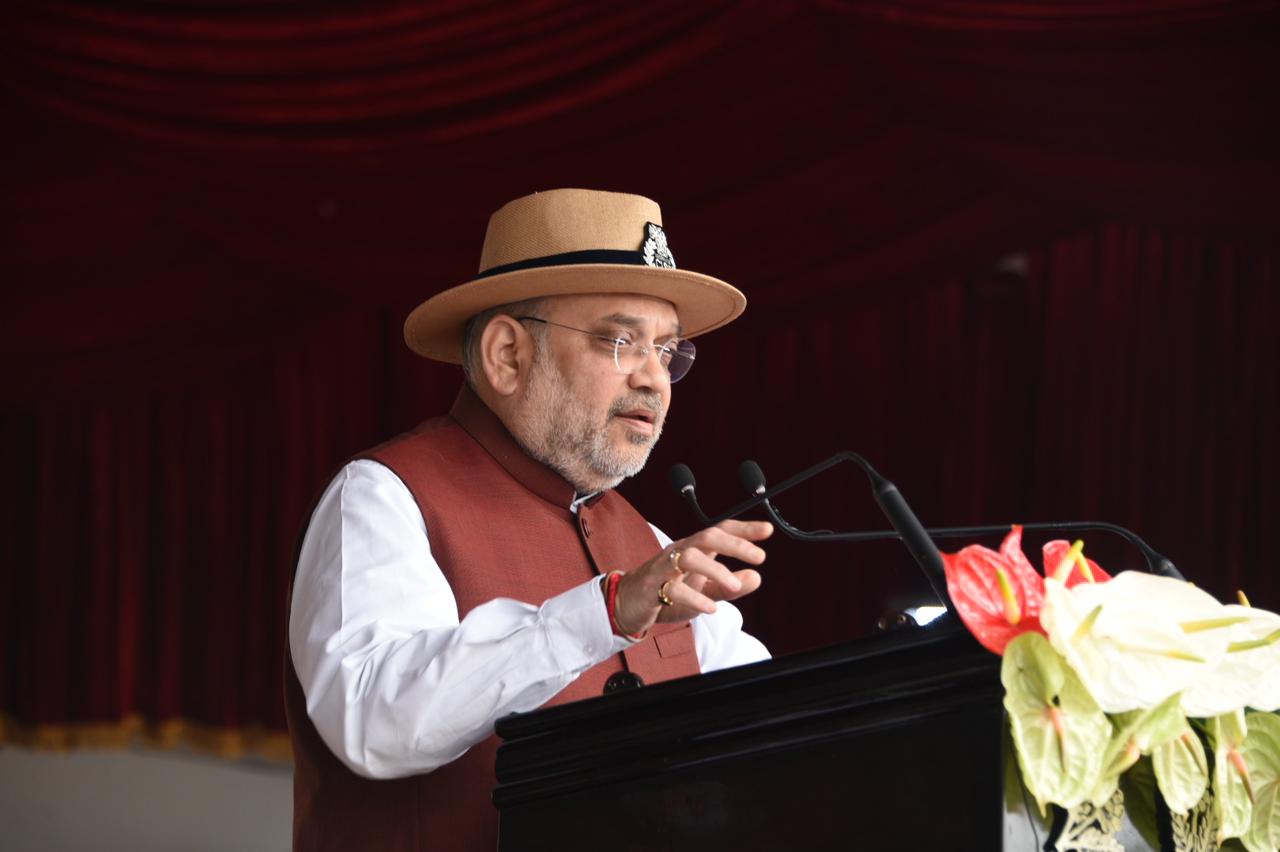
MUNDALI : Union Home Minister Shri Amit Shah on Friday announced that the Central Industrial Security Force will now oversee the security of various sea ports across the country.In his address at the 57th Raising Day of the Central Industrial Security Force (CISF) here, Shah said the force already protects 361 critical installations, including 71 airports, the Parliament complex, and the Statue of Unity near Kevadia in Gujarat.

“The CISF undertakes such a variety of tasks. You are securing the grand monument of Sardar Patel, you are protecting our Parliament complex, the largest panchayat of our democracy, and elsewhere you are securing dams and critical railway installations,” Shah said.

The home minister also detailed the strategic shift toward maritime and aerial defence, saying that, along with these established roles, the government has worked to include the security of ports for the CISF.

Shah announced that the CISF has been designated as the nodal agency for drone security and said that the Ministry of Home Affairs has decided to create a new vertical for this purpose.

Highlighting the force’s growing footprint over the past year, Shah listed several new locations approved for CISF protection, including the Kartavya Bhavan, Seva Teerth, Noida International Airport, Navi Mumbai Airport, and various critical energy and mining projects such as the Talaipalli coal mine project in Chhattisgarh.

“After the CISF takes over the security of the ports, our maritime safety will improve in tandem with the country’s economic growth,” Shah said.

The announcement follows a decision by the Centre to designate the CISF as a Recognised Security Organisation (RSO) under the International Ship and Port Facility Security (ISPS) code, effectively making it the new safety regulator for approximately 250 facilities along India’s maritime borders.

This role was previously managed by the Indian Register of Shipping, but the government identified a need for a professional paramilitary agency to handle core functions such as counter-terrorism and anti-sabotage operations at all export-import ports. PTI NES ABS SKL ARI.

Source : PTI
DG Shipping issues Safety Advisory to Indian Seafarers and Shipping Stakeholders in the rising tensions in Gulf

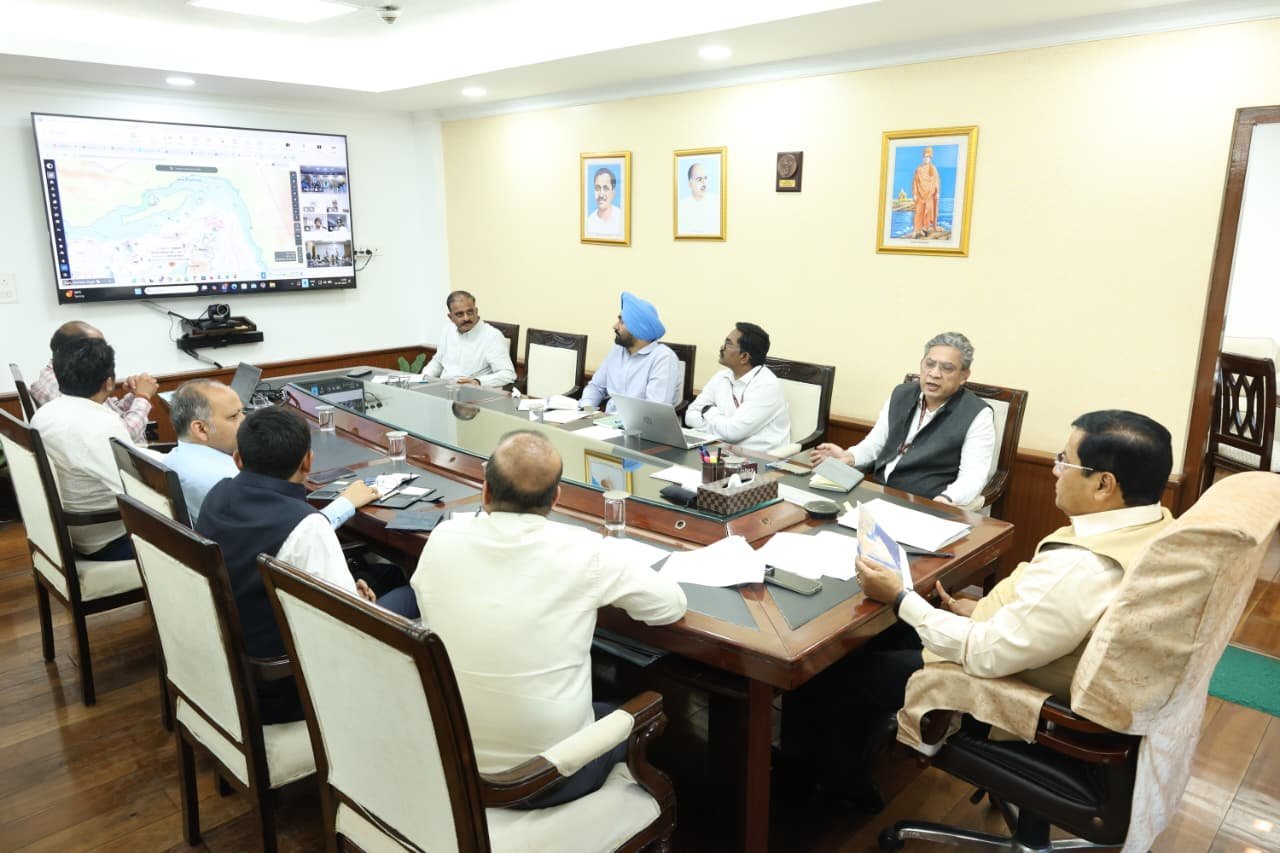
NEW DELHI : The Directorate General of Shipping, Government of India, has issued DGS Circular 10 of 2026, providing an updated Safety Advisory for Indian Seafarers and Shipping Stakeholders operating in the Persian Gulf, Strait of Hormuz, and adjacent waters.

In view of the evolving maritime security situation and recent attacks on merchant vessels, seafarers, ship owners, operators, and RPSL companies are advised to maintain heightened vigilance, continuous situational awareness, and strict compliance with maritime security protocols.

All companies are requested to ensure the following:

Maintain round-the-clock watch on vessels operating in the region.

Establish 24×7 emergency contact numbers/control center at company level.

Arrange psychological counselling support for seafarers (in-house or through professional agencies) to address stress or panic due to the prevailing situation.

Stakeholders are also encouraged to ensure 24×7 emergency contact mechanisms, crew preparedness, and psychological support systems for seafarers and their families during distress situations.

The advisory underscores the importance of timely reporting, preparedness, and coordinated response to safeguard the lives of seafarers and ensure the safety of vessels operating in the region.

Govt. mulling deploying Indian Navy to escort ships stranded in Persian Gulf

NEW DELHI : The Indian Government is considering deploying Indian Navy ships to escort ships stranded in the Persian Gulf, said a senior government official. Decision will be taken in two days, the source said. Shipping industry sources estimate that some 10% of the oil tankers and gas carriers stranded in the Persian Gulf are Indian flagged. State-owned Shipping Corporation of India is among the major global ship owners whose ships amounting to more than 8 lakh tonnes of cargo carrying capacity are among the stranded, as per data from Lloyds List Intelligence. This would be equivalent to nearly 6 million barrels of oil.

The International Maritime Organization estimates nearly 20,000 seafarers are onboard the stranded ships. Given that India is a major source of seafarers to global shipping, Indian seafarers stranded would amount to several thousands.

The Indian Navy has conducted extensive operations defending merchant ships including those with Indian seafarers against Houthi attacks as well as Somalian pirates. Operation Sankalp, which was launched to ensure maritime security in the Gulf region, included action against Houthi rebels.

Meanwhile, Iran’s promise to not attack neighbours in the Persian Gulf may give confidence for ships stuck there to move across the Strait of Hormuz and sail away, another highly placed source and decisionmaker in the government said.

West Asia crisis: Govt asks ports to consider waiving charges, issues SoP

NEW DELHI : Union Shipping, Ports and Waterways Ministry has proposed that ports may consider requests regarding reduction, waiver or remission of charges, including change of vessel charge, and also rolled out a standard operating procedure (SoP) for them to deal with issues arising from the West Asia crisis.

As part of the SoP that followed extensive consultations with all stakeholders on Friday, each port will appoint a nodal officer at the level of head of department or deputy head of department, who will be the single point of contact for addressing the issues coming up for consideration at ports.

The nodal officer will be responsible for taking up the matter with the competent authority and ensure that the action is taken within 24-72 hours.

Also, as per the SoP, port chairpersons should have periodical meetings with stakeholders such as shipping lines, exporters, terminal operators, customs, among others to closely monitor the situation and ascertain and address legitimate concerns.

The ministry also said that the port may consider various facilitation measures such as considering requests from users regarding reduction, waiver or remission of storage rent and change of vessel charge, among others on a case-to-case basis, depending on the prevailing circumstances at the port.

It said the port may also consider permitting the storage of cargo destined for the Middle East as transshipment cargo during the affected period besides allotting additional storage area, if required, for storing such cargo during the crisis.

Ports may also consider facilitating berthing of ad-hoc call vessels for dropping or picking Middle East bound transhipment cargo and expeditiously facilitating ‘Back to Town’ movement of export cargo lying in port premises in co-ordination with Customs, it said.

Besides, ports may provide priority handling for perishable cargo to prevent deterioration and give priority to export cargo returning from the Middle East, in addition to facilitating additional bunkering capacity, wherever feasible, to meet potential demand, the ministry said.

Ports have been directed to coordinate closely with agencies such as Customs, DGFT and other relevant authorities to ensure implementation of these measures within the stipulated timelines, it stated.

Source : PTI

Gandhidham Chamber urges Shipping Lines to Waive Charges amid Global Shipping Disruptions

GANDHIDHAM: The Gandhidham Chamber of Commerce & Industry (GCCI) has urged global shipping lines and port operators to extend temporary relief to the trade community by waiving several charges that have surged amid the ongoing geopolitical tensions affecting global shipping and logistics.

In a formal representation addressed to shipping lines and relevant authorities, the apex trade body of the Kutch region highlighted the severe impact of the prevailing war situation involving the United States, Israel and Iran on international shipping routes and supply chains. The Chamber noted that the Gandhidham–Kandla region, owing to its proximity to major ports such as Kandla and Mundra, serves as a key hub for India’s shipping and logistics activities, and disruptions in global trade are beginning to significantly affect the region’s EXIM ecosystem.

According to GCCI, the uncertain geopolitical environment has already led to delays, renegotiations, and disruptions in import and export orders. At the same time, shipping lines have sharply increased freight rates and associated charges, placing a substantial financial burden on exporters, importers, freight forwarders, and logistics operators. The Chamber stated that it has received numerous representations from members of the trade community expressing concern over the mounting costs.

Recognising that extraordinary geopolitical developments can disrupt normal shipping operations, GCCI nevertheless emphasised that shipping lines and the trade community are closely interlinked components of the global EXIM ecosystem. The Chamber therefore called for cooperation from shipping lines to mitigate the adverse impact of the ongoing crisis.

Key Relief Measures Sought

In its letter, GCCI requested shipping lines and terminal operators to consider several immediate relief measures to ease the financial strain on the trade community:

  • Waiver of Detention Charges: Shipping lines have been urged not to levy detention charges on containers affected by operational delays caused by the conflict, as these disruptions are beyond the control of shippers and consignees.
  • Waiver of Booking Cancellation Charges: The Chamber requested that cancellation charges be waived for shipments on Middle East routes where bookings have been amended or cancelled due to war-related uncertainties.
  • Terminal-Level Waivers: Port terminals have been requested to suspend or waive charges such as Shut-Out charges, Back-To-Town (BTT) charges, Ground Rent and Storage charges wherever applicable.
  • Waiver of War Risk Premium on Existing Shipments: GCCI has also sought relief from war risk premium charges for containers already loaded on vessels or those that sailed on or before 28 February, prior to the escalation of the conflict. GCCI-K-547

The Chamber cautioned that the retrospective imposition of war-related charges on shipments executed under normal commercial conditions could place an undue financial burden on trade participants.

Concern Over Trade Sustainability

GCCI President Shri Teja Kangad, in the communication, warned that unilateral and excessive charges imposed during the crisis are creating significant financial stress for freight forwarders and the broader logistics community. Such developments, he noted, could adversely affect the operational sustainability of trade and disrupt the smooth functioning of the entire EXIM ecosystem if left unaddressed.

Highlighting the seriousness of the issue, the Chamber has also sought intervention from Union Minister for Ports, Shipping and Waterways Shri Sarbananda Sonowal, along with other authorities, requesting their support in facilitating a balanced and timely resolution in the larger interest of India’s trade and shipping industry.

The Gandhidham Chamber expressed hope that shipping lines and port stakeholders would respond positively and support the trade community during what it described as an extraordinary and challenging phase for global commerce.

India using every policy tool to help exporters : Piyush Goyal

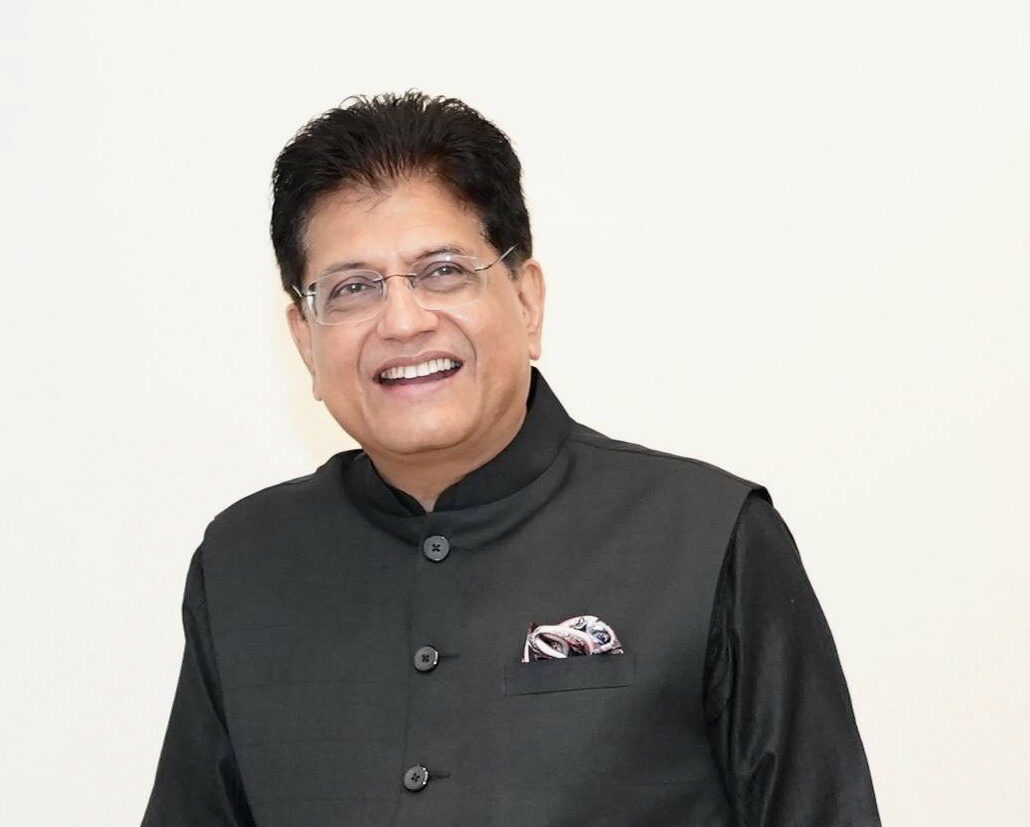
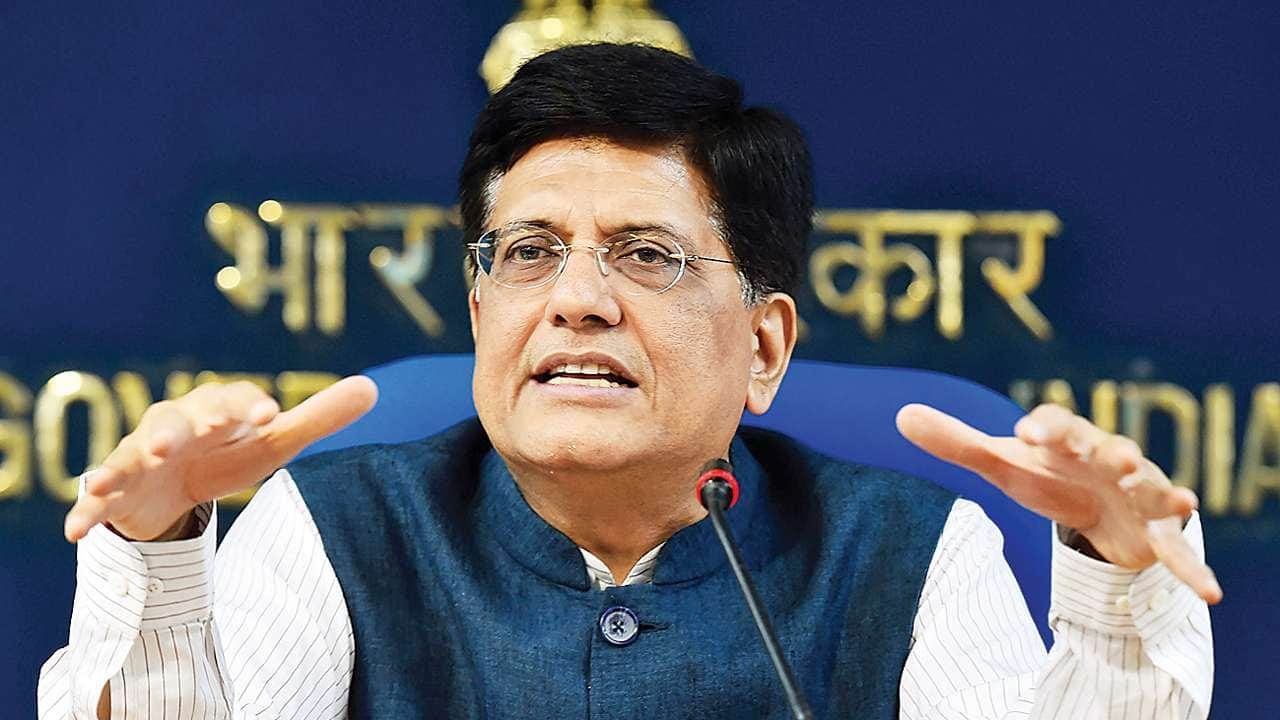
NEW DELHI : An inter-ministerial group is in regular talks with the companies whose cargoes have been stuck due to growing conflict in West Asia, Commerce Minister Shri Piyush Goyal said on Friday.

“Every day, the inter-ministerial group talks to the exporters. Even this morning, they must have had an engagement. They take feedback, and we will not be found wanting in supporting our exporters in any way,” Goyal told reporters on the sidelines of an event organised by the Indian Institute of Foreign Trade (IIFT).

He said the government will use every policy tool to support exporters.

“I have already given some instructions in the last few days, as I get to the office today, we will be formulating ways to give comfort to our exporters, in the next two days,” the minister added.Escalation of conflict in West Asia has led to disruption in the global supply-chain hitting Indian exporters, especially dealing in farm products like rice, spices, fruits and meat products.

On the issue of a jump in freight cost due to disruption in the Strait of Hormuz, Goyal said the ministry is working with exporters to work out possible ways of support.

Meanwhile, the Union Finance Ministry said the conflict in West Asia could have significant and potentially long-lasting implications for India’s economy, including risks to oil prices, balance of payments and financial stability.

“Speculation as to what would constitute the endgame for this conflict is rife. One thing is certain. The levels of volatility in macroeconomic outcomes and financial markets, and the world’s uncertainty, have risen and will likely remain elevated for some time,” the ministry said in its Monthly Economic Review.

Regardless of the immediate endgame for this conflict, it may have made the long-term endgame for lasting peace in the Gulf and beyond less clear, it said.

“The implications of this conflict for India are significant and may be longer-lasting in ways that are not immediately understood,” the report noted.

The report further noted that “if the Strait of Hormuz remains vulnerable to disruption, the geopolitical risk premium in oil prices will inevitably return. If the confrontation ends with a credible shift in the regional balance of power, the international system will gradually absorb the shock, and markets will stabilise”.

WTO ministerial talks to discuss trade issues with open mind: Piyush Goyal

NEW DELHI: India will discuss key trade issues with an open mind at the upcoming World Trade Organization (WTO) ministerial meeting later this month, Commerce and Industry Minister Shri Piyush Goyal said on Saturday, as New Delhi continues to engage global partners while expanding its trade footprint.

“We have the WTO ministerial coming up end of this month. We’ll discuss these issues with an open mind during the WTO ministerial,” Shri Goyal said while speaking on the sidelines of the Raisina Dialogue in New Delhi.

Goyal also praised the Raisina Dialogue, India’s flagship conference on geopolitics and geo-economics, for emerging as a major international platform that attracts policymakers, diplomats and experts from around the world.

“Raisina Dialogue makes India proud. It has truly established itself on the global stage as a must-attend event,” he said. “Very high-quality discussions, very high level of participation both from India and internationally.”

The annual conference, organised by the Observer Research Foundation (ORF) in partnership with India’s Ministry of External Affairs, brings together leaders, ministers, academics and policy experts from dozens of countries to discuss global strategic and economic issues.

Shri Goyal credited External Affairs Minister Shri S Jaishankar, ORF President Sameer Saran and the organising team for building the event into a globally recognised forum.

“I must compliment my dear brother and friend Dr Jaishankar, Mr Sameer Saran and the entire team working on Raisina Dialogue for the fabulous work they’ve done,” he said.

The minister said more such engagements across India could help showcase the country to the world and strengthen international partnerships.

“We need more engagements like this across the length and breadth of India to showcase India to the world,” he said, adding that such interactions help deepen global understanding and cooperation.

“These engagements help build bridges of trust and friendship,” Goyal said. “In this day and age where we are looking at globalising the Indian economy and expanding our trade, particularly reaching out to the developed world with our offerings, I think such engagements will hold us in good stead.”

He added that greater engagement between the developed and developing world could also benefit younger generations.

“The future economic growth is going to be led by the less developed countries and the developing world,” Goyal said.

“If children in the developed world were to spend six months a year in India, they would actually have a much more rounded personality and learn to deal with the challenges that developing countries or less developed countries have to face.”

Such exposure, he added, would better prepare them for careers in an increasingly interconnected global economy.

Rajnath Singh exhorts GRSE to build niche platforms in today’s evolving tech-driven era to realise Govt’s Viksit Bharat goal

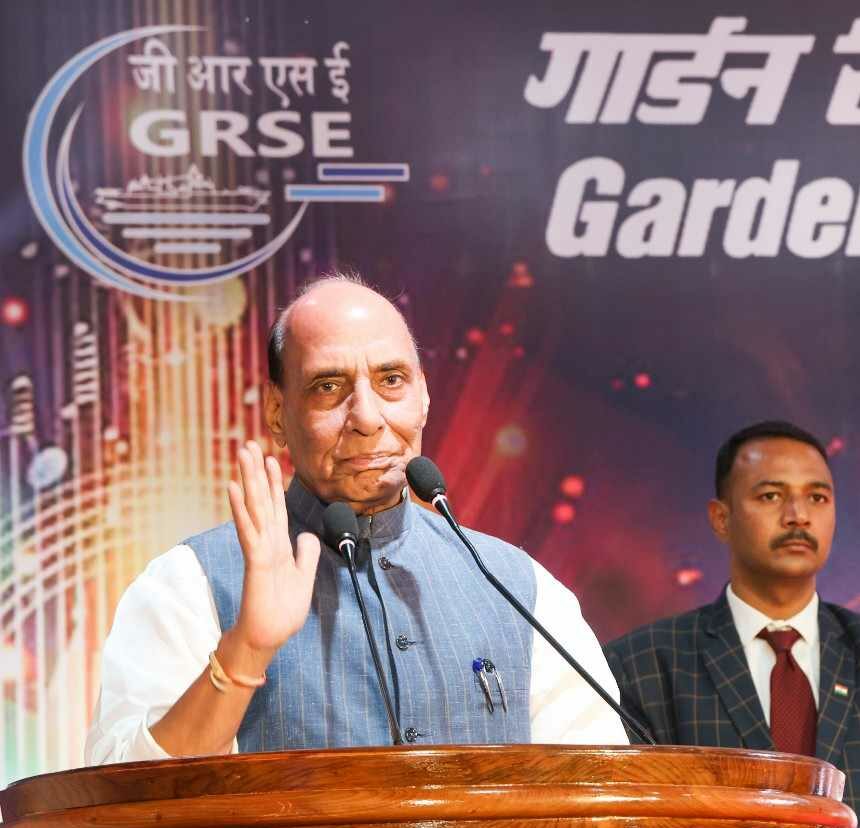
NEW DELHI : Raksha Mantri Shri Rajnath Singh has called upon Garden Reach Shipbuilders & Engineers (GRSE) Limited to continue coming forth with state-of-the-art platforms in sync with the technology-driven era to establish itself as a shining example of shipbuilding excellence in India & across the world, while playing a pivotal role in achieving Prime Minister Shri Narendra Modi-led Government’s goal of Viksit Bharat@2047. He was addressing the GRSE personnel in Kolkata, West Bengal on March 05, 2026.

Commending GRSE for its contribution to Nation-Building and Blue Economy, Raksha Mantri described the Indian shipyard as a vibrant chapter in India’s glorious industrial and defence history as it has equipped the Indian Navy and the Indian Coast Guard, for the past nearly a century and a half, with potent warships & frigates to secure the maritime interests of the nation. “When a modern warship built by you sails through the waves of the ocean, it is not just a structure of steel and machinery, it embodies the hard work of thousands of workers, the innovation of engineers, the precision of technicians, and the dedication of the shipyard towards the nation,” he said, terming every person working in GRSE as not just an employee, but an important part of a larger process of nation-building.

Shri Rajnath Singh emphasised that through hard work, skill, and commitment, GRSE has achieved what many once considered impossible. He urged the personnel to continue working with the same spirit and play their part in transforming India into a maritime power & a developed nation in the times to come. “New challenges will arise, new technologies will emerge, and competition will increase. But with the same hard work, dedication, and commitment, GRSE will become a glowing symbol of shipbuilding excellence for India and the world,” he said.

As part of the event, a colourful culture performance by the personnel of GRSE and their families was also presented to Raksha Mantri, who termed it as “excellent” and a reflection of India’s diversity, unity of India, and rich cultural heritage. CMD, GRSE Commodore PR Hari (Retd) and other senior officials of the Ministry of Defence as well as the shipyard were present on the occasion.

Govt will use every policy tool & export promotion mission to support the country’s exporters : Piyush Goyal

NEW DELHI : Commerce and Industry Minister Shri Piyush Goyal said that the government will use every policy tool and the export promotion mission to support the country’s exporters.

Talking to the media in New Delhi about trade disruptions amid the US-Israel and Iran conflicts, the Minister said that the government has set up an inter-ministerial group to look into the issues on a daily basis. He added that India would continue to meet all the commitments that the country’s industries have made to foreign buyers in goods and services.

Mr Goyal said that the commerce ministry is in dialogue with the ministry of shipping and with shipping companies on the issues of exporters. He assured us that the government stands with the industry and will continue to ensure that all our international commitments are met.

DGFT extends EO period for Advance Authorisations and EPCG Authorisations till August 31, 2026

NEW DELHI : In view of the prevailing geopolitical developments impacting global shipping routes, logistics corridors and international supply chains, the Directorate General of Foreign Trade (DGFT), under the Ministry of Commerce & Industry, has announced a facilitation measure for exporters by extending the Export Obligation (EO) period for certain export promotion schemes.

Through Public Notice No. 51/2025-206 issued on March 06, 2026, DGFT has provided for automatic extension of the Export Obligation (EO) period or Block-wise EO fulfillment period up to August 31, 2026, for specified Advance Authorisations and Export Promotion Capital Goods (EPCG) Authorisations where the EO period is expiring between March 01, 2026, and May 31, 2026.

The extension shall be granted automatically, and exporters will not be required to submit any separate application or pay any composition fee to avail the benefit. This measure has been introduced to provide additional operational flexibility to exporters facing disruptions arising from current geopolitical developments affecting global trade and logistics.

The relaxation applies to Advance Authorisations, including Advance Authorisation for Annual Requirement and Special Advance Authorisation, as well as EPCG Authorisations. The extension granted under the Public Notice will be in addition to the existing provisions under the Foreign Trade Policy (FTP) and Handbook of Procedures (HBP), which allow exporters to seek EO period extensions upon payment of prescribed composition fees.

The Regional Authorities of DGFT will verify compliance with the Export Obligation requirements at the time of issuance of the Export Obligation Discharge Certificate (EODC), closure, or regularisation of the authorisation.

Customs authorities have also been duly informed through the Public Notice to permit exports in accordance with the revised EO timelines.

This step reflects the Government’s continued commitment to supporting exporters and ensuring that temporary global disruptions do not adversely impact India’s export performance or compliance obligations under export promotion schemes.