Home Blog Page 408

PSA BMCT, Mumbai handles one of the world’s largest container vessels – Damietta Express

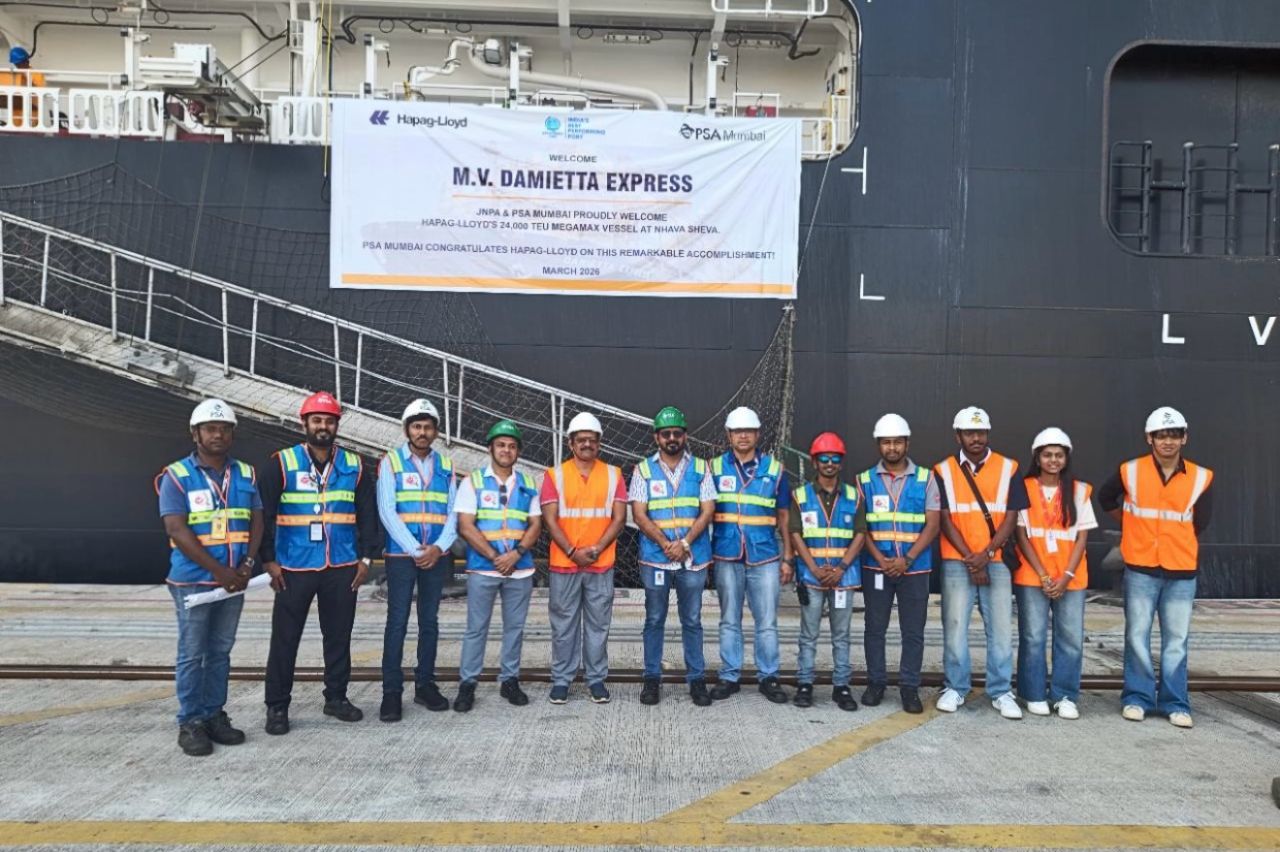
MUMBAI : In a significant milestone for India’s maritime and logistics sector, one of the world’s largest container vessels, “Damietta Express” operated by Hapag-Lloyd, has successfully berthed at the PSA BMCT Terminal at Jawaharlal Nehru Port.

DAMIETTA EXPRESS PSA BMCT, Mumbai handles one of the world’s largest container vessels – Damietta Express

Measuring an impressive 399.9 meters in length, the ultra-large container vessel (ULCV) is among the biggest ships currently deployed on global trade routes. The successful berthing and handling of such a massive vessel underscores the advanced infrastructure and operational capabilities of PSA Mumbai’s Bharat Mumbai Container Terminals (BMCT).

The arrival of Damietta Express demonstrates the terminal’s preparedness to efficiently manage next-generation container vessels. Handling vessels of this scale requires precise marine planning, highly skilled personnel, and seamless coordination between the terminal operations team, port authorities, pilots, tug operators, and other supporting stakeholders.

Equipped with state-of-the-art quay cranes, deep draft berths, and advanced terminal operating systems, PSA BMCT is designed to accommodate ultra-large container ships that dominate long-haul trade routes connecting Asia, Europe, and other major global markets. The terminal’s robust infrastructure ensures faster turnaround time, safe cargo handling, and improved supply chain efficiency for shipping lines and exporters.

Officials highlighted that managing operations for vessels close to 400 meters in length reflects the terminal’s operational excellence and its ability to support the evolving needs of global shipping. The successful handling of Damietta Express also reinforces PSA International’s commitment to strengthening India’s role in international maritime trade.

With global shipping lines increasingly deploying mega container vessels to achieve economies of scale, terminals like PSA BMCT at Jawaharlal Nehru Port are playing a crucial role in enhancing India’s port capacity and connectivity. The call of Damietta Express further highlights the growing importance of the port as a key gateway for the country’s containerized trade.

The development is expected to further boost confidence among global shipping lines and reinforce the port’s position as India’s premier container gateway on the western coast.

VOC Port plans Rs 150 bn outer harbour project

TUTICORIN : V O Chidambaranar Port, known as VOC Port, plans to invest Rs 150 bn in an Outer Harbour project to handle the largest container ships and boost transhipment capacity. The chairperson outlined the project during an interview with PTI and said it formed part of an effort to position Tamil Nadu as a major transhipment hub competing with Sri Lanka, Singapore and Indonesia. The announcement framed the investment as aligned with the prime minister’s maritime vision.
The development is expected to add four mn t of capacity per annum in two phases by 2030 and will include two new berths capable of receiving the largest container vessels at an 18 metre draft. The scheme foresees two deep-draft terminals, each with a 1,000-metre quay length, designed to accommodate next-generation ships and to improve operational efficiency. Capital dredging and construction of breakwaters are among the core works envisaged.

A tripartite financing agreement has been signed with Indian Railway Finance Corporation and Sagarmala Finance Corporation Limited to support the project, which is being developed under the Hybrid Annuity Mode. The tender process has been floated for offshore reclamation for backup yards and allied facilities required to handle larger ships and expanded container throughput. Officials indicated the scheme aligns with the Government of India’s Sagarmala Programme and the PM Gati Shakti National Master Plan.

Officials projected that the Outer Harbour will strengthen India’s global trade connectivity by enabling handling of larger container and bulk vessels, reducing logistics costs and improving turnaround times. The port authority estimated reduced dependence on overseas transhipment hubs such as Colombo and Singapore could save as much as $200 per TEU and deliver foreign exchange savings of approximately Rs 40 bn annually. The development is expected to accelerate industrial activity across Tuticorin, Tirunelveli and Madurai districts.

MSC to impose emergency fuel surcharge on cargo from March 16

GENEVA : MSC said on Saturday it would implement an ​emergency fuel surcharge to all ‌cargo from the Mediterranean (including West Mediterranean, Adriatic, East Mediterranean, Greece and Turkey) ​and Black Sea to the ​Indian sub-continent, Red Sea and East ⁠Africa, effective March 16.

It said ​the surcharge would be $30 per ​twenty-foot equivalent unit (TEU) from the Mediterranean and Black Sea to the Red Sea for ​dry containers, and $50 per TEU ​for refrigerated containers.Dry containers from the Mediterranean ‌and ⁠Black Sea to East Africa will be charged $60 per TEU, while refrigerated containers will be charged $90 ​per TEU, ​the world’s ⁠largest carrier of ocean container cargo said.

MSC will ​also impose a surcharge of $40 ​per ⁠TEU from the Mediterranean and Black Sea to the Indian sub-continent ⁠for ​dry containers, and $60 ​per TEU for refrigerated containers.

Source : Reuters

US commits up to $20 billion in reinsurance for maritime losses in Gulf region

WASHINGTON : The United States Government has announced plans to offer reinsurance for maritime losses in the Gulf region, with coverage extending up to approximately $20 billion. This decision follows disruptions in oil and liquefied natural gas tanker transit through the Strait of Hormuz, a strategic waterway between Iran and Oman that typically handles about 20 per cent of the world’s oil shipments daily. President Donald Trump has directed the Development Finance Corporation (DFC) to provide political risk insurance and financial guarantees to bolster the flow of maritime trade in this vital corridor.

The new reinsurance support will be provided on a rolling basis, with initial attention given to hull and machinery as well as cargo insurance, according to the DFC. The move aims to address risks to vessels and cargoes operating in the region, which have arisen amid the halt to regular transit. The DFC stated that the insurance would be available to support continued operations while immediate threats to shipping persist.

The Strait of Hormuz’s disruption has led authorities to develop this targeted insurance facility to sustain confidence among oil and gas shippers. The coverage is expected to maintain stability in maritime trade by ensuring that insurers and shipping companies can manage political and operational risks effectively. The DFC’s role will be central to the deployment of these financial guarantees during the period of uncertainty in the Gulf.

The announcement underscores the scale of US involvement in supporting energy trade infrastructure at a time when a significant proportion of global oil supply is impacted. US government sources reiterated the importance of safeguarding maritime passage through the Strait of Hormuz and ensuring the continuity of energy shipments for international markets. The DFC’s insurance mechanism is a response to the immediate challenges facing the sector.

Source : BT
 

Insurers say war cover still available for Gulf Voyages as shipping crisis deepens

NEW DELHI : War risk insurance for vessels transiting the Persian Gulf and Red Sea remains available despite a wave of cancellations tied to the escalating conflict in the Middle East, according to the International Union of Marine Insurance, offering a limited pathway for ships considering a return to the region.

In a media statement released March 5, IUMI said insurers continue to provide war cover on a single-voyage basis, even as underwriters reassess their exposure amid rapidly evolving security conditions.

“The granting of war cover for the Persian Gulf and Red Sea is and will remain available under specific agreement on a single voyage basis as long as navigation is authorised by governments and flag states,” the organization said.

The update comes as commercial shipping through the Strait of Hormuz has slowed dramatically following missile and drone attacks on merchant vessels and the widening conflict involving the United States, Israel, and Iran.

Several members of the International Group of P&I Clubs—which collectively insure about 90% of the world’s ocean-going tonnage—issued 72-hour cancellation notices over the weekend for certain war-risk policies covering Iranian waters and nearby Gulf areas after reinsurers withdrew capacity from the market.

Those notices, issued March 1, took effect Thursday, March 5, forcing shipowners to negotiate coverage on a voyage-by-voyage basis if they wish to continue trading in the region.

IUMI emphasized that such notices are a standard mechanism used when risk levels shift rapidly and do not necessarily mean coverage disappears entirely.

“It is important to recognise that a Notice of Cancellation does not, necessarily, end the cover,” the organization said. “War cover remains available for owners and operators wishing to take it.”

At the same time, the London insurance market says coverage remains in place for many vessels currently anchored in Gulf waters.

Sheila Cameron, CEO of the Lloyd’s Market Association, said insurers in London continue to support efforts to keep maritime trade moving through the region.

“The Lloyd’s Market Association welcomes the engagement of President Trump and the U.S. Development Finance Corporation to support the movement of non-sanctioned vessels and their commodities through the Strait of Hormuz in order to facilitate global trade and economic stability,” Cameron said in a statement.

President Donald Trump said Tuesday he has directed the U.S. government to provide political risk insurance and financial guarantees for maritime trade transiting the Persian Gulf, while signaling that U.S. Navy escorts for tankers through the Strait of Hormuz could begin “as soon as possible.”

According to Cameron, vessel movements through the strait have slowed but not completely stopped.

“Since Sunday 1 March, there have been at least 40 transits of vessels through the Strait of Hormuz,” she said.

However, a large number of ships remain effectively stranded in the region while operators weigh the risks.

“There remain approximately 1,000 vessels — around half of which are oil and gas tankers — with an aggregate hull value exceeding $25 billion in the Persian/Arabian Gulf and surrounding waters,” Cameron said. “Most ships remain anchored… primarily due to the understandable concerns of the shipowners and ship masters for the safety of their vessels and crew.”

Beyond security risks, shipowners are also navigating legal and operational uncertainties.

“There is uncertainty with regards to availability of salvage services and contractual positions between charterers, owners and cargo in what is a rapidly evolving situation,” Cameron added.

The insurance market itself has emerged as a central factor shaping operational decisions for shipowners. Without war-risk coverage, vessels often cannot legally or contractually transit high-risk waters.

Cameron said insurers in the London market are continuing to quote coverage for ships willing to undertake the voyage.

“We understand that offers of insurance are being made for vessels seeking to transit the Strait of Hormuz and offers will continue to be made available through the London marine war insurance market should they wish to transit at a future date when they consider it safe for their vessels and crew,” she said.

The London market has previously stepped in during major maritime crises, including the creation of a war-risk insurance facility that enabled vessels to sail the Ukraine grain corridor in the Black Sea.

“The London market is the home of insurance innovation,” Cameron said. “We look forward to collaborating with the relevant parties, including the U.S. Development Finance Corporation, to continue supporting shipowners and to facilitate global trade and economic stability.”

The International Union of Marine Insurance is separate from the International Group of P&I Clubs, which insures shipowners’ liability risks. IUMI primarily represents insurers that provide property coverage such as hull, machinery, and cargo insurance, while the International Group’s P&I clubs collectively insure the majority of the world’s ocean-going fleet against liabilities including pollution, crew injury, and cargo claims.

IUMI warned that the crisis is already reshaping vessel routing decisions and could disrupt global supply chains in the near term.

“The situation remains fluid with a number of vessels being trapped in the Persian Gulf and many operators re-routing their vessels to avoid the high-risk areas,” the organization said.

Insurers are also monitoring the concentration of vessels at regional ports and anchorages as operators wait for conditions to stabilize.

“We are likely to see disruptions to supply chains in the short-term, as a result,” IUMI said.

For now, insurers say the fast-moving security situation means coverage decisions will continue to evolve alongside developments in the conflict.

“In the current fast-paced situation, insurers will regularly re-examine their ability and willingness to provide that cover,” IUMI said.

Why have 1,000 ships at times lost their GPS in the Mideast?

PARIS: The global positioning system (GPS) capabilities of cargo ships, oil tankers and other vessels stuck in the Middle East because of the widening war are likely worse than those in your cell phone.

Experts say this deficiency explains why since the start of US-Israeli strikes, the jamming of satellite navigation signals has left about 1,000 ships in the Gulf and the Gulf of Oman unable to determine their location, either momentarily or continuously.

Dimitris Ampatzidis, a senior risk and compliance analyst for the energy market intelligence firm Kpler, told AFP the number represents about half of the vessels in the area.

The vast majority of those ships are located off the United Arab Emirates and Oman.

A satellite navigation system is made up of a constellation of satellites that send signals with the time to Earth, allowing the receiver to determine its precise location.

Modern smartphones receive signals from four groups of satellites: the American, European (Galileo), Russian (GLONASS) and Chinese (BeiDou) Global Navigation Satellite Systems (GNSS).

Most cell phones now use two GPS frequency bands — one that is older and fainter, and a second that is newer and stronger.

But “many ships only listen to the original civilian GPS signal, which is called the L1 C/A signal. It’s the one that’s been around since the early 1990s for civilian use,” Todd Humphreys, an engineering professor at the University of Texas at Austin, told AFP.

Most ships are thus unable to rely on the BeiDou or Galileo systems in the event that a GPS is jammed.

The situation is even worse for airplanes, due to aviation regulations.

“You will not find any aircraft flying in the world today whose built-in GPS receiver is capable of tracking and interpreting signals other than the GPS L1 C/A. So it’s out of date by 15 years,” Humphreys said.

Spoofing

Jamming a GPS signal is “not that complicated,” said Katherine Dunn, the author of an upcoming book of the history of GPS, “Little Blue Dot.”

All one needs is “another radio transmitter that can broadcast on the same frequency, but louder,” she said, which creates “a wall of mush.”

Spoofing is more sophisticated — and more dangerous, affecting a ship’s Automatic Identification System, or AIS.

Every vessel transmits a message per second over a universal radio frequency that announces its identity, destination and position.

Spoofing manipulates that system, causing the affected ship to send a fake, or even nonsensical, location — meaning that ships could appear to be on land in Iran or the Emirates.

Clocks

Today, GPS signals are not just used to determine location; they also power onboard clocks, radar systems and speed logs, Dunn said.

So even if the ships off the Emirates or Kuwait were protected from drone fire and escorted through the Strait of Hormuz, navigating without a GPS would be perilous.

“Given the size of the ships, electronic assistance has become necessary to steer them,” said one merchant marine captain who has sailed on cargo ships around the world.

Crews must “resort to using 20th-century instruments — radar or visible landmarks,” he told AFP on condition of anonymity.

Defensive jamming

Signal jamming is undoubtedly being used both offensively and defensively. Gulf states are directing their systems towards their own shores to ward off Iran’s satellite-guided Shahed drones — at the cost, deemed acceptable, of disrupting their own lives.

Israel did the same thing in 2024, as did Iran after its 12 days of conflict with Israel last year.

“Even if their own air traffic or maritime traffic or their delivery drivers or their dating apps are affected by GPS jamming and spoofing, they’ll do it, just like Israel did. Israel did it for a year in 2024,” Humphreys said.

For air and sea navigation, start-ups are developing alternative technologies using Earth’s magnetic field or inertial navigation.

But for ships today, navigating without a GPS is still far in the future.

GPS Jamming rises 55% in a Week in the Middle East Gulf

TEL AVIV (ISRAEL): GPS jamming affected more than 1,650 ships in the Middle East Gulf on March 7, up 55% from the previous week, erroneously placing vessels across land and sea in Kuwait, Iran, Saudi Arabia, Oman, and the United Arab Emirates.

Electronic interference with ships’ Automatic Identification Systems was already endemic in the region before the launch of Operation Epic Fury. Nearly 1,100 ships were impacted within 24 hours after the U.S. attacked Iran on February 28. That number has now risen to more than 1,650.

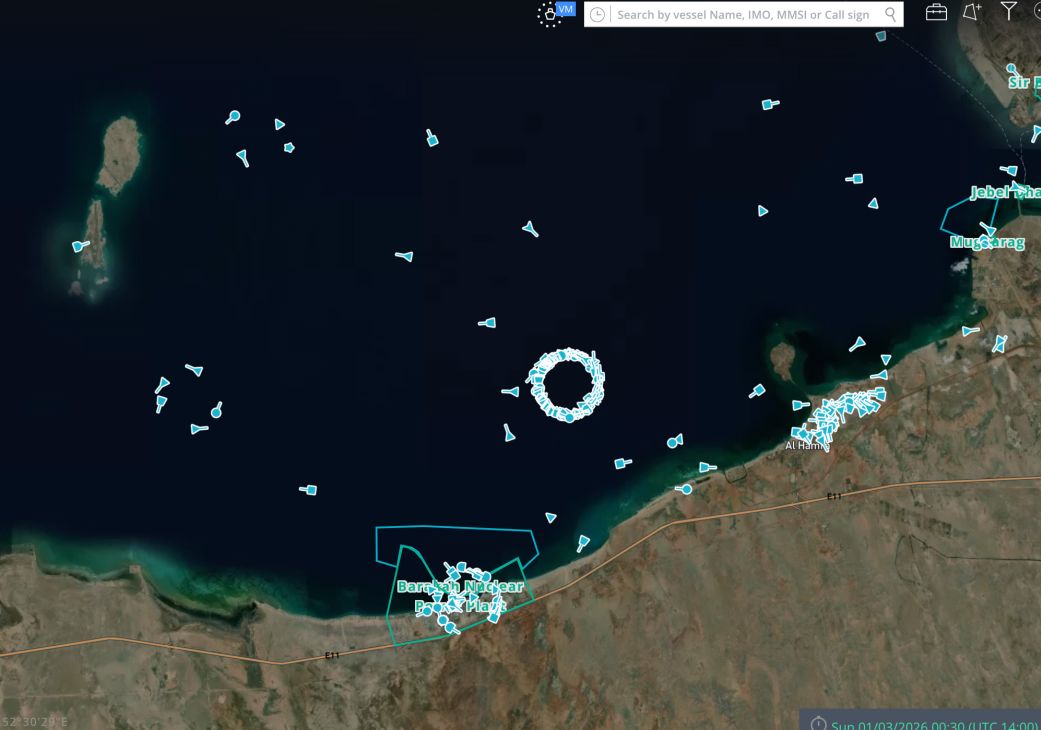
Windward has identified at least 30 clusters where ships’ AIS are being jammed, including across the Gulf of Oman, and areas on land and sea within the Middle East Gulf, especially near areas where port and facility infrastructure has been attacked or near military areas.

A week ago, clusters were mainly crop circle-like patterns, but have since evolved into zig-zag type lines, with ships’ signals thrown across multiple locations within a 24-hour period. There was mass AIS interference at the bunkering hub of Fujairah, from where ships have since dispersed after fuel tanks were attacked on March 3, and amid warnings that congested areas carry greater risks of attack.

GPS jamming is concentrating ships’ AIS into clusters of several hundred vessels off the Gulf of Oman.

Source: WINDWARD

Dry Bulk Shipping: Rates Volatility as Middle East War intensified

LONDON: Baltic Exchange Weekly Roundup Bulk report – Week 10

Capesize

The market experienced a volatile week, shaped largely by macro developments and rising bunker prices rather than a clear improvement in underlying demand. Early in the week, geopolitical tensions in the Middle East and the resulting surge in oil prices pushed bunker costs sharply higher. This drove voyage rates upward, particularly in the Pacific, although much of the increase reflected higher fuel expenses rather than stronger earnings for owners.

The Pacific initially maintained a firm tone, supported by intermittent miner activity and steady C5 volumes, with rates briefly climbing into the low-$11s. However, momentum proved fragile and, by the latter part of the week, sentiment softened as fixing levels slipped back toward the mid-$9.00 range. In the Atlantic, the South Brazil and West Africa to China market showed pockets of activity and remained comparatively more resilient, although interest around index dates cooled towards the end of the week. The market was notably date dependent, with a clear premium for April arrivals and fixtures concluded in the $27s on C3. Meanwhile, the North Atlantic remained largely subdued throughout the week, reflecting ample vessel supply and limited fresh demand.

Panamax

The week was characterised by a continued divergence between the Atlantic and Pacific markets. In the Atlantic, sentiment steadily weakened as the week progressed, driven by limited fresh enquiry and a growing list of prompt tonnage. This oversupply placed increasing pressure on owners, with the P1A index declining throughout the week and fixtures remaining relatively sparse. By contrast, the Pacific maintained firmer fundamentals, supported by tighter vessel availability and a steady flow of cargoes, particularly from the North Pacific and Australian loading regions. Index gains across the P3A and P4A routes earlier in the week reflected this stronger utilisation, although by Thursday signs emerged that rates may be approaching a near-term ceiling as enquiry slowed. Period activity was modest overall, with the P5TC ending the week broadly stable around the $17,656 mark despite midweek gains.

Ultramax/Supramax

The market recorded a generally firm week, although momentum moderated toward the end of the period as participants tried to observe developments in the Middle East.

In the Continent and Mediterranean, activity gradually increased as fresh enquiry, particularly scrap stems, supported rates slightly above previous fixtures. A 64,000-dwt open Avilés 7–8 March fixed via the Continent to the East Mediterranean with scrap at $20,000. The US Gulf remained relatively firm earlier in the week, benefiting from stronger bids and renewed cargo interest, although sentiment softened later as activity slowed.

A 56,000-dwt was placed on subjects for delivery SW Pass to WC Central America at $31,000. The South Atlantic maintained a healthy tone overall, with steady March demand and tightening availability. A 58,000-dwt was fixed for a trip delivery Tema 1 March via Recalada to Mediterranean Egypt at $20,500. In Asia, market conditions remained broadly stable. Early improvements were supported by fresh cargoes and stronger bids seen on NoPac and backhaul routes. However, activity later levelled off as both cargo volumes and the tonnage list stabilised. A 64,000-dwt open Chittagong 7–8 March was heard fixed for a trip via Indonesia to WC India at $18,000. Period activity remained active throughout the week, reflecting continued confidence in near-term market fundamentals. A 61,000-dwt open Chittagong 6–7 March fixed for one year at $17,000.

Handysize

The market recorded a generally positive week despite some caution linked to developments in the Middle East.

In the Continent and Mediterranean, activity remained relatively healthy, with fresh demand helping rates hold at firmer levels. A 38,000-dwt vessel was reported fixed for a trip from Canakkale to the US Gulf at $9,600. In the Atlantic, the South Atlantic and US Gulf appeared quieter overall, with limited fresh information emerging and sentiment easing slightly as the week progressed. Asia, however, continued to be the primary driver of market strength. Steady cargo demand combined with tightening vessel availability across Southeast Asia and the North Pacific supported a firmer tone. Increased competition for prompt tonnage encouraged charterers to raise bids, resulting in several firm fixtures and improved rate discussions. A 32,000-dwt vessel open Japan was reported fixed for a trip to India at $14,250. Period activity was also noted during the week, with several vessels securing short-term employment. Among these, a 32,000-dwt vessel open Hong Kong was fixed for 3–5 months at $13,000, reflecting continued interest in period coverage despite broader market uncertainties.

Source: Baltic Exchange

MoPSW strengthens monitoring and preparedness amid evolving West Asia Maritime Situation

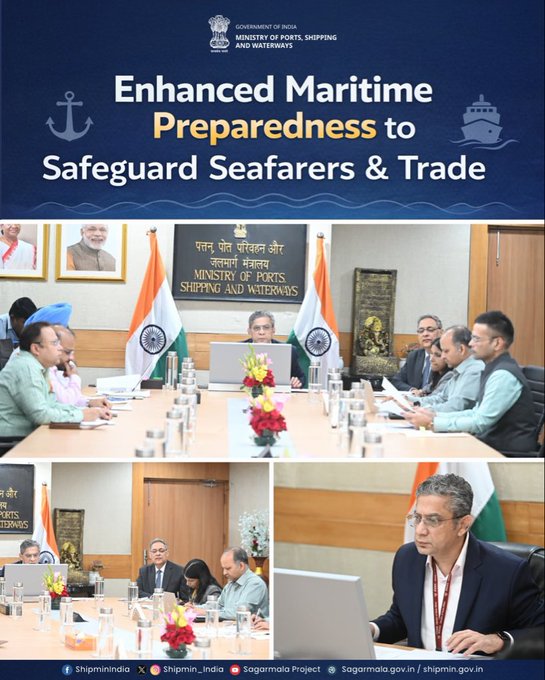
NEW DELHI : The Ministry of Ports, Shipping and Waterways (MoPSW) has strengthened monitoring and preparedness measures in view of the evolving maritime situation in the West Asia region, with a focus on safeguarding Indian seafarers, ensuring the safety of Indian vessels and maintaining continuity of maritime trade.

A high-level inter-ministerial review meeting was held under the chairmanship of the Secretary, MoPSW, to review the evolving situation. The meeting was attended by representatives of the Government of India including the Ministry of External Affairs (MEA), Directorate General of Foreign Trade (DGFT) and Ministry of Petroleum and Natural Gas (MoPNG), along with stakeholders from the shipping industry and trade organisations such as RIL, INSA, CSLA and FIEO.

The review was held in continuation of the earlier review of the evolving maritime situation undertaken by the Hon’ble Union Minister for Ports, Shipping and Waterways, Shri Sarbananda Sonowal.

The Ministry apprised stakeholders of the steps being taken by the Government of India, particularly by MoPSW, following the evolving situation in the Middle East. MoPSW is actively coordinating with the shipping industry and a 24-hour helpline has been established at the Directorate General of Shipping (DGS) to facilitate coordination and support seafarers. A monitoring mechanism has also been established at MoPSW to continuously track developments.

An advisory outlining precautionary measures to safeguard Indian seafarers, Indian-flagged vessels and maritime trade operations has been issued through DGS Circular No. 08 of 2026 dated 28 February 2026, directing all Indian-flagged vessels and Indian seafarers to adopt enhanced security measures and strictly comply with reporting protocols under DGS Circular 08 of 2024. Further, a Crew Safety Advisory vide DGS Circular No. 09 of 2026 dated 28 February 2026 has issued urgent instructions to Indian seafarers and shipping stakeholders, including registration with the Embassy of India, Tehran and submission of crew details to the Directorate.

Indian-flagged ships continue to remain safe and no confirmed detention, boarding or casualty involving Indian-flagged vessels has been reported. All 35 Indian-flagged vessels in the Persian Gulf region (24 west of the Strait of Hormuz and 11 east of the Strait including the Gulf of Oman and adjoining areas) and 03 vessels in the Gulf of Aden are being continuously tracked through the LRIT National Data Centre at hourly intervals, with regular SITREPs being issued.

The Ministry is closely monitoring the situation through the Directorate General of Shipping (DGS), in coordination with major Indian ports, maritime authorities and other relevant agencies. Enhanced monitoring and reporting mechanisms have been activated for Indian-flagged vessels as well as foreign-flagged vessels carrying Indian seafarers to ensure continuous situational awareness and operational preparedness.

Shipping companies, vessel operators and Recruitment and Placement Service Licensees (RPSLs) have been advised to exercise caution in crew deployment in sensitive regions, undertake voyage-specific risk assessments and maintain regular communication with seafarers and their families. Dedicated coordination mechanisms have also been put in place to facilitate timely assistance to Indian seafarers, as required.

The Ministry also reviewed the status of vessels and cargo bound for Gulf Cooperation Council (GCC) and West Asian destinations. Overall port operations across India remain stable. Ports have been directed to extend all necessary assistance to minimise hardships faced by exporters and ensure continuity of EXIM trade.

Major ports have implemented operational measures including continuous monitoring of vessel movements in coordination with shipping lines and vessel agents, real-time assessment of developments in the region and regular reporting of vessel and cargo status. Additional storage space has been arranged wherever required, while refrigerated and perishable cargo consignments are being closely monitored to ensure priority handling where necessary.

The Ministry continues to closely monitor developments in coordination with maritime stakeholders and relevant ministries of the Government of India to safeguard Indian maritime interests, ensure the safety of seafarers and maintain the smooth functioning of maritime trade and logistics operations.

PM Modi calls for making agricultural exports globally competitive

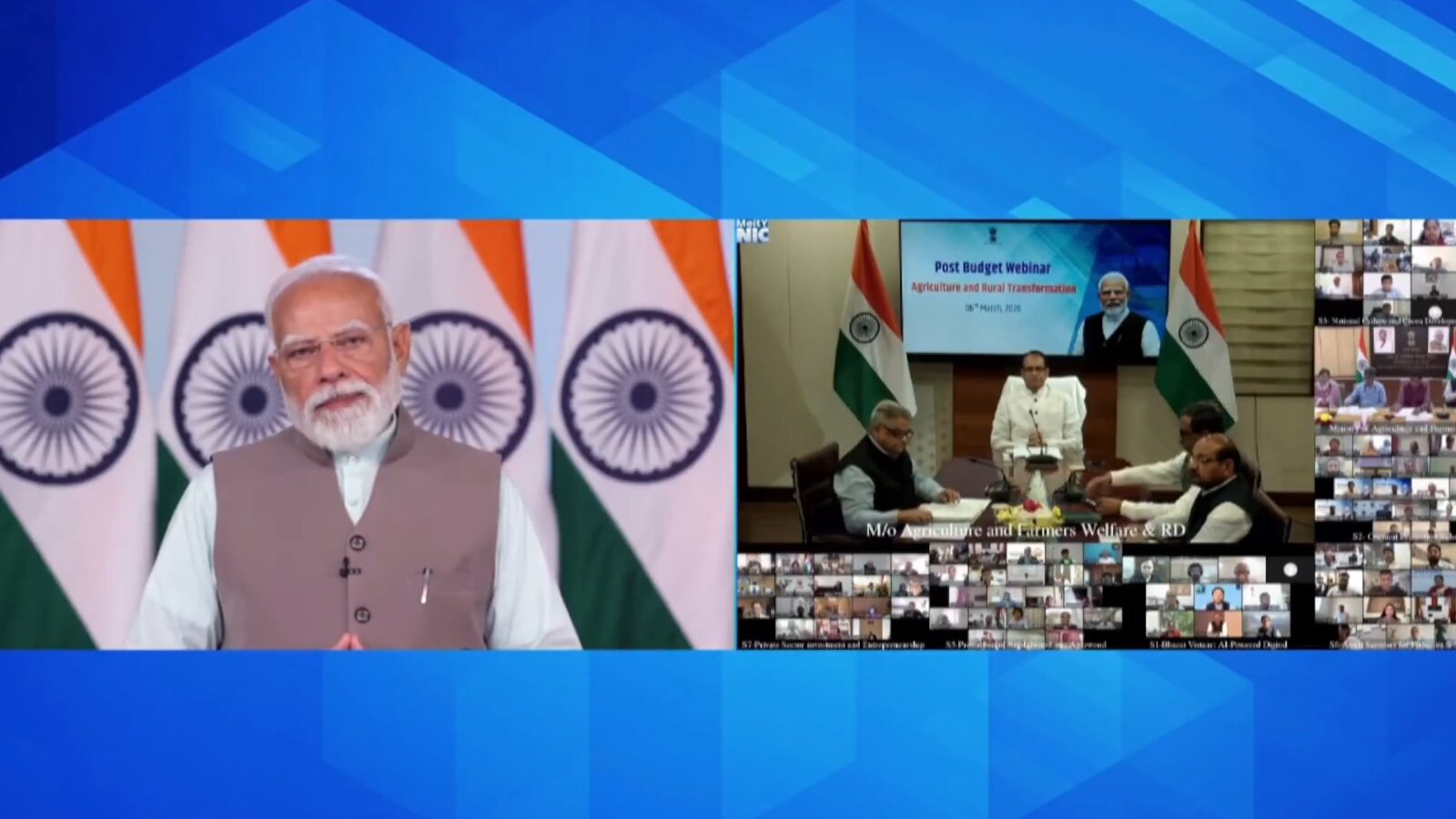
NEW DELHI : Prime Minister Shri Narendra Modi on Friday (March 6, 2026) asked farmers to leverage India’s diverse climatic conditions and focus on scaling up the harvest of high-value crops to enable the country’s agricultural products to effectively compete in global markets.

Addressing a post-Budget webinar on ‘Agriculture and Rural Transformation’, Mr. Modi said steps need to be taken to promote all aspects of “quality, branding and standards” of Indian agriculture produce. Agri experts, industry and farmers will have to come together to achieve this goal, he said.

“Today the markets of the world are opening, and global demand is changing… It is necessary to have more discussion on making our agriculture export-oriented. We have a diverse climate, and we must take full advantage of it. We are rich in agro-climatic zones,” he said in his third post-Budget webinar.

The Budget for 2026-27 has also focussed on high-value agriculture, including cashew, cocoa, sandalwood, Mr. Modi said, adding the National Mission on Edible Oil and Pulses and the National Mission on Natural Farming are all strengthening the agriculture sector.

“If we scale up the high-value agri sector, only then we can convert our agriculture sector to a globally-competitive sector,” Modi said. The Prime Minister said that today the world is becoming more conscious about health, with a strong focus on holistic healthcare and organic food.

“We must place greater emphasis on chemical-free and natural farming. Natural farming creates a highway to reach markets across the world,” he said.

Stressing that agriculture is also a strategic pillar of India’s long-term development journey, he said that the government has continuously strengthened the agriculture sector.

“Nearly 10 crore farmers have received more than ₹4 lakh crore through the PM Kisan Samman Nidhi. This year’s Union Budget gives a strong push to agriculture and rural transformation,” Mr. Modi added.