Home Blog Page 409

PM to inaugurate and lay the foundation stone of multiple development projects worth around ₹33,500 crore in Delhi on 8th March

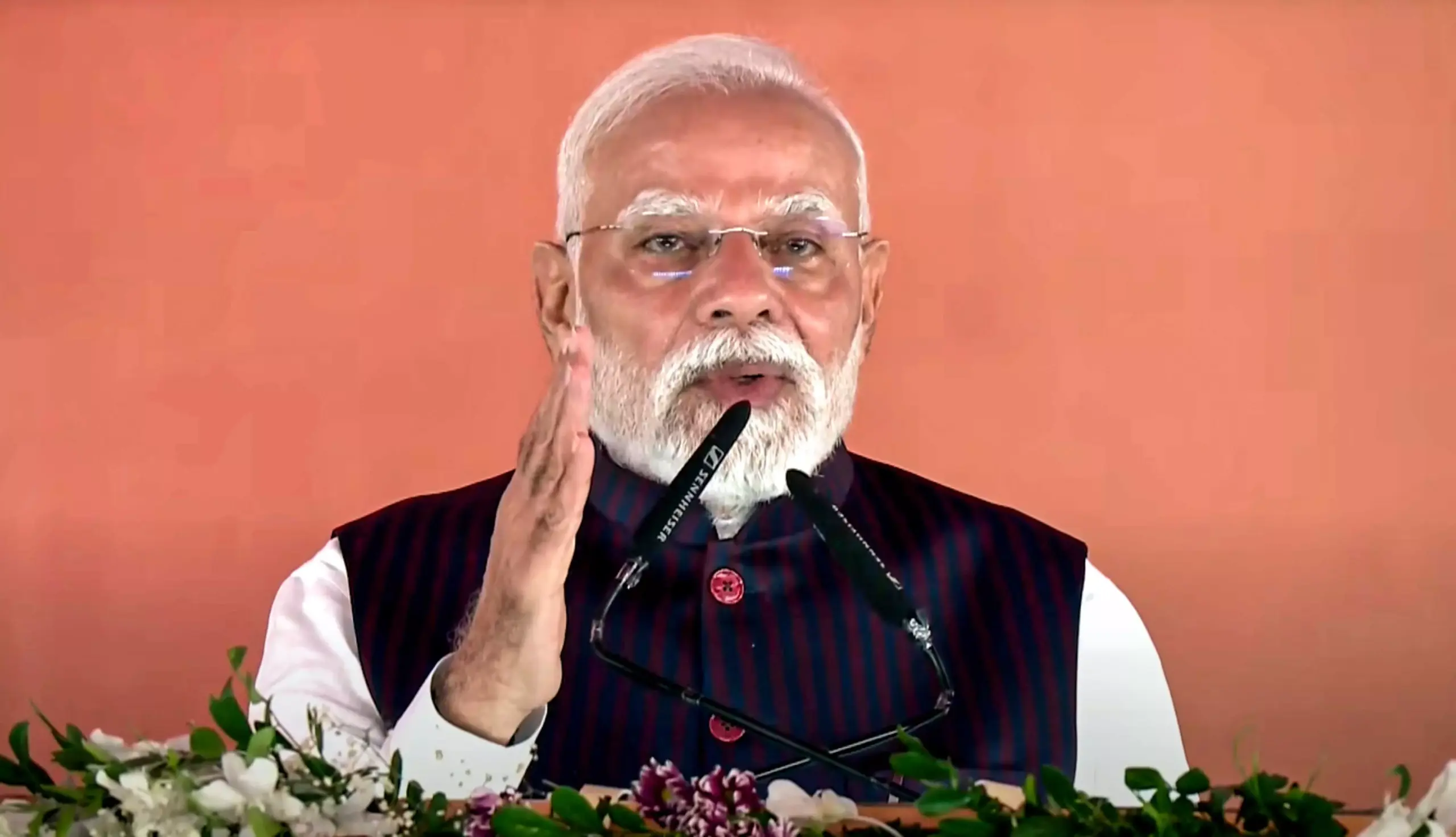
NEW DELHI : : : Prime Minister Shri Narendra Modi will inaugurate and lay the foundation stone of multiple development projects worth around ₹33,500 crore on 8th March at around 12 noon in Delhi. He will also address the gathering on the occasion. Prior to the programme, the Prime Minister will visit GPRA Type-5 quarters in Sarojini Nagar and hand over the keys to female allottees.

Prime Minister will inaugurate and lay the foundation stone of Delhi metro projects worth about ₹18,300 crore. Prime Minister will inaugurate two new corridors of the Delhi Metro. These include the Majlis Park-Maujpur Babarpur (Pink Line) corridor of around 12.3 km and the Deepali Chowk-Majlis Park (Magenta Line) corridor of around 9.9 km. The new connectivity will benefit several areas of Delhi including Burari, Jagatpur-Wazirabad, Khajuri Khas, Bhajanpura, Yamuna Vihar, Madhuban Chowk, Haiderpur Badli Mor, Bhalaswa, Majlis Park among others.

Prime Minister will also lay the foundation stone for three new corridors under Phase V-A of the Delhi Metro, covering a route length of around 16.10 km. The three new corridors are R.K. Ashram Marg to Indraprastha, Aerocity to Indira Gandhi Airport Terminal-1, and Tughlakabad to Kalindi Kunj. These corridors will provide direct connectivity to several important locations in the national capital and improve connectivity for residents travelling between Noida, South Delhi and the airport.

Prime Minister will also inaugurate and lay the foundation stone of multiple projects worth ₹15,200 crore under the General Pool Residential Accommodation (GPRA) Redevelopment Plan. Spread across key locations such as Sarojini Nagar, Netaji Nagar, Kasturba Nagar and Sriniwaspuri, these projects are part of the Government’s ambitious programme to modernize GPRA colonies and create world-class infrastructure for Government employees and administrative offices.

The projects have been redeveloped through an innovative self-sustainable financial model that ensures the redevelopment is carried out without burdening the public exchequer. Under this model, the government is developing and monetising a limited portion of the project area for commercial and residential space to finance the entire project. The revenue generated from it is being used to fund the redevelopment of modern government housing, supporting infrastructure and public facilities.

The redevelopment plan will provide more than 9,350 modern flats for government employees along with the creation of approximately 48 lakh square feet of office space, which will significantly enhance administrative efficiency while also generating monetization potential.

Piyush Goyal says education as a service has significant potential to boost India’s export earnings and take high-quality Indian education to the World

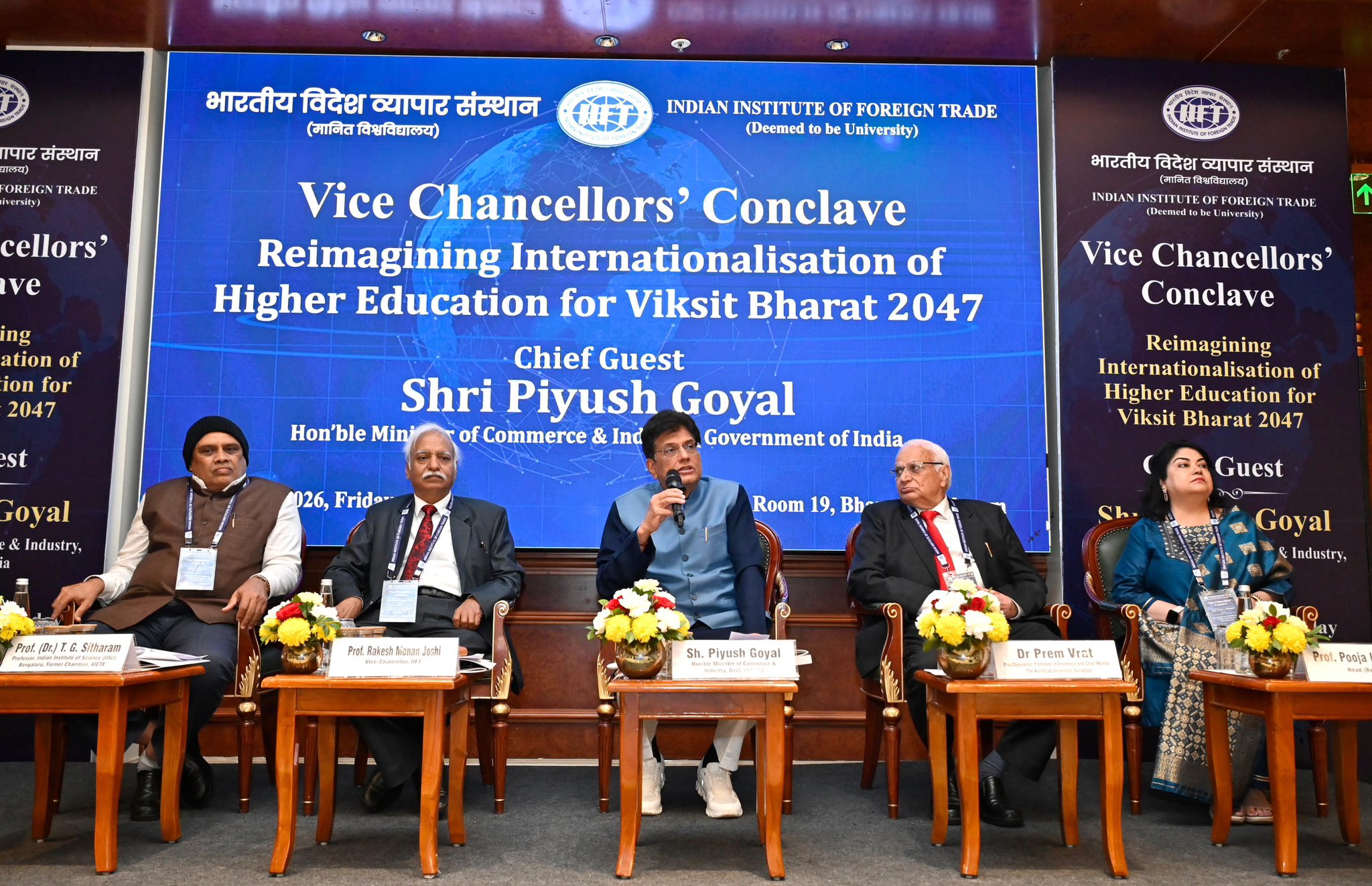
NEW DELHI : Union Minister of Commerce & Industry Piyush Goyal said that education as a service has significant potential to contribute to India’s export earnings and help take high quality Indian education to the rest of the world.

Addressing the Vice Chancellor’s Conclave on “Reimagining Internationalisation of Higher Education for Viksit Bharat 2047” in New Delhi, Shri Goyal said he would like to engage with Vice Chancellors and hear their ideas and thoughts on the future of higher education in India. He expressed happiness that the Ministry of Commerce and the Indian Institute of Foreign Trade (IIFT) under the Ministry is taking a lead in exploring the potential that education as a service holds for India’s export earnings as well as for expanding the global reach of Indian education.

The conclave provided a platform for thematic discussions and expert dialogues on key aspects of internationalising higher education, including international partnerships, student mobility, regulatory frameworks and dual degree programmes. Participants also deliberated on strategies to enhance the global competitiveness of Indian Higher Education Institutions, while examining emerging global trends in education mobility and exploring opportunities for India to strengthen its presence in the expanding global education services market.

He said that the future growth engines of the world are likely to be countries that are less developed or developing, such as India. Therefore, exposure to India would help students from developed countries in their future careers.

Shri Goyal said he sees growing recognition of this trend while negotiating services chapters in Free Trade Agreements (FTAs). He noted that the nine FTAs finalised by the government led by Prime Minister Shri Narendra Modi have all been with developed economies. According to him, nearly two-thirds of global trade is now covered by India’s FTAs because the country has engaged with more developed and evolved economies.

He said this reflects a shift in India’s approach to global engagement, noting that the country no longer negotiates from a weak position or a colonial mindset. Instead, India now engages with the world with confidence and from a position of strength.

The Minister said that if India is currently contributing around 20 per cent of global growth and has emerged as an engine of growth, then in the future the younger generations across the world will increasingly need to work with countries such as India.

The Minister said that a comprehensive effort to reform India’s education system was undertaken through extensive consultations with educationists across the country in drafting the National Education Policy 2020 under the leadership of Prime Minister Narendra Modi. He noted that the policy was formulated after wide-ranging consultations and inputs from stakeholders across the country and overseas. Nearly three lakh inputs and feedback were received, each of which was given due importance and carefully considered before finalising the policy.

He said that the policy emerged after years of deliberation and reflects Prime Minister Narendra Modi’s style of working. Shri Goyal said that the policy has opened India’s thinking to aspire for international standards in education, expand educational institutions to meet India’s growing needs, and attract students from across the world.

The Minister said the policy has permitted international campuses to come and set up in India and has enabled universities to collaborate with Indian institutions to offer dual degrees. It has also encouraged cross-border student exchanges so that Indian students can gain exposure to education systems in developed and other countries while international students can also experience India’s education system.

Shri Goyal noted that there is now a need to encourage students from developed countries to come and study in India. He suggested models such as a three-year programme where students could spend one year in India and two years in their original institution, or split their time equally between both institutions. According to him, such dual degree programmes would help students from developed countries understand how developing countries think, work, and engage with culture and society.

Addressing the Vice Chancellors present at the conclave, Shri Goyal described them as architects of India’s future, noting that they play a crucial role in shaping the minds of young Indians. He said that each Vice Chancellor carries a significant responsibility as they prepare students to face the challenges of tomorrow and lay the foundations of a modern developed nation.

He said that higher education institutions must evolve with changing times and that teachers should undergo retraining and relearning so that they remain current with modern curriculum and future-oriented knowledge while teaching students.

The Minister stressed that students cannot be prepared for the future through outdated curricula. He said that institutions and teachers must remain agile and understand emerging opportunities that the future holds.

Shri Goyal highlighted the importance of internationalisation of India’s trade, manufacturing and services sectors as well as engagement with modern technologies such as artificial intelligence, quantum computing and machine learning. He said these will become increasingly important if India is to continue growing at the current pace, become one of the top three economies in the world and emerge as a global technology powerhouse.

He said educational institutions will need to reassess their curriculum and teaching styles accordingly. He emphasized that subjects such as international trade and India’s Free Trade Agreements should be included in academic curricula so that students understand the opportunities available in the global economy.

The Minister expressed confidence that students who understand international law, trading rules and the benefits emerging from Free Trade Agreements will play an important role in taking India towards Viksit Bharat during the Amrit Kaal.

Shri Goyal said that as institutions adopt modern teaching techniques, upgrade facilities and improve teachers’ understanding of global trends, Indian students will increasingly choose to study in India rather than abroad. At the same time, India will begin attracting students from across the world.

He expressed hope that in the coming years the present ratio of 28 Indian students going abroad for every one international student coming to India would be reversed, and that India would attract around 1.3 million foreign students to study in its institutions while only a small number of Indian students go abroad.

The Minister concluded by encouraging greater collaboration between academia, government and industry to realise the vision of internationalising higher education and transforming India into a global education destination by 2047.

Vice Chancellor, Indian Institute of Foreign Trade (IIFT), Prof. Rakesh Mohan Joshi noted that the conclave created a collaborative platform for academic leaders to collectively reflect on how Indian institutions can expand their global engagement while contributing to the broader national vision of Viksit Bharat 2047. “India has immense potential to emerge as a global destination for quality education. Through initiatives such as the Vice Chancellors’ Conclave, IIFT seeks to catalyse partnerships and dialogue that will strengthen internationalisation of Indian higher education,” said, Prof. Joshi.

The conclave was attended by several eminent academic leaders including Pro-Chancellor, Prof. Prem Vrat; Vice-Chancellor, Jawaharlal Nehru University, Prof. Santishree Dhulipudi Pandit; Director, Indian Institute of Science, Prof. T. G. Sitharam; and Chairman, Executive Committee, National Assessment and Accreditation Council, Prof. Anil Sahasrabudhe.

The gathering also witnessed distinguished academic leaders and Vice Chancellors from prominent institutions such as Indian Institutes of Management, Jawaharlal Nehru University, Jamia Millia Islamia, University of Southampton, Jamia Hamdard, Central University of Tamil Nadu, North Eastern Hill University, Dr. B.R. Ambedkar University Delhi, and Netaji Subhas University of Technology, along with several other leading universities from across India. Senior policymakers, education leaders, and representatives from global academic institutions also participated in the deliberations.

India’s West Coast Ports feel Gulf War Impact as Cargo gets Stranded

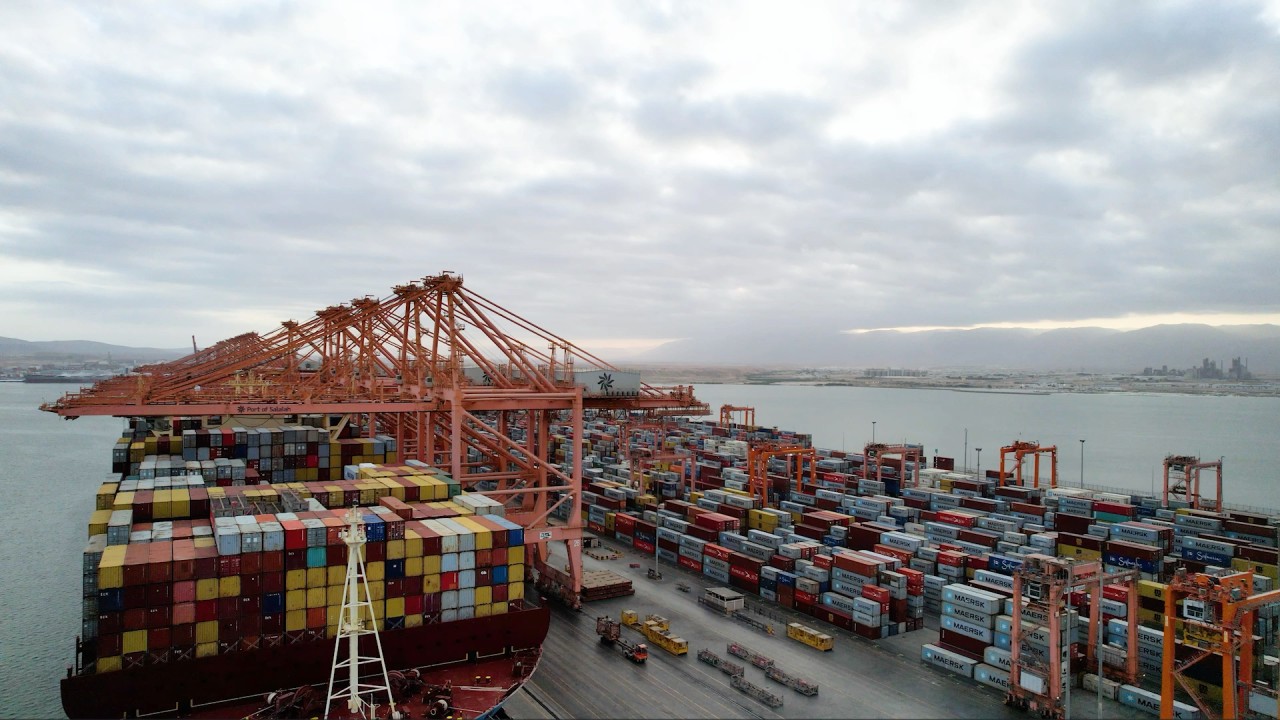
MUMBAI/GANDHIDHAM: Exports of containers, rice shipments, LPG imports and bulk cargo such as sulphur and gypsum have been disrupted at India’s key west coast ports — Deendayal Port (formerly known as Kandla in Gujarat) and Jawaharlal Nehru Port (in Maharashtra) — as the escalating conflict in the Middle East and heightened security concerns across the Persian Gulf have delayed vessels, forced suspension of export gate-in activities and left thousands of containers stranded at terminals.

Close to 20,000 Middle East-bound containers are currently stuck at the two ports, with exporters unable to load cargo as several sailings have been postponed and shipping lines reassess vessel movement through the region. In a notice to trade, Deendayal Port Authority said maritime operations are being affected by the prevailing security situation. “Owing to the prevailing war situation and heightened maritime security concerns in the affected region, vessels and cargo movements have been impacted. The disruptions include postponement of sailings, operational delays, suspension of gate-in activities and logistical constraints,” the port authority stated.

At Kandla, around 0.015 million TEUs — or roughly 15,000 twenty-foot equivalent containers — are lying stranded, while container vessels have temporarily suspended export gate-in activities at KICTPL. Gate-in refers to the process where exporters bring containers into a port terminal so they can be loaded onto a scheduled vessel. When gate-in is suspended, exporters are unable to move their cargo into the terminal for shipment. Efficient Marine Services has also restricted gate movement for two vessels and is not accepting export cargo for ships such as MV Intersydney and MV Libra, further delaying shipments.

The disruption has also affected inbound bulk cargo shipments from the Persian Gulf, a major supply region for several industrial raw materials. Imports of about 3 lakh tonnes of sulphur, gypsum and iron ore expected during March have been delayed. The Persian Gulf shipping corridor is one of India’s most important trade routes, handling a large share of the country’s energy imports as well as exports of food grains, chemicals and engineering goods.

In addition, five LPG carriers scheduled to call at Kandla with imported cargo have been delayed, which could tighten LPG availability for industrial users and distributors in western India. Gujarat hosts a large number of ceramic, chemical and manufacturing units that rely on imported LPG as a key fuel, and prolonged delays in vessel arrivals could disrupt supply chains for local businesses.

Exporters have already begun postponing shipments amid the uncertainty. Rice exporter Suppletex has deferred dispatch of 30,000 tonnes of rice planned for export this month. Energy cargo movements have also been affected. The crude oil tanker MT Desh Vaibhav, carrying about 2.85 lakh tonnes of crude oil, has faced disruption due to delays in vessel movement.

A similar situation is unfolding at Jawaharlal Nehru Port — India’s largest container gateway located in Maharashtra — where about 5,000 Middle East-bound containers are currently stranded. The port has provided holding space within its premises for these containers to ease congestion at terminals and has arranged continuous power supply for around 1,000 refrigerated (reefer) containers, which carry temperature-sensitive perishable cargo. “Our effort is to see that the there is no congestion at the port and there is smooth flow of cargo to regions that remain unaffected by the current US-Iran conflict,” a JNPA official added.

Source: The Hindu businessline

Adani Gangavaram Port achieves record monthly container throughput in February 2026

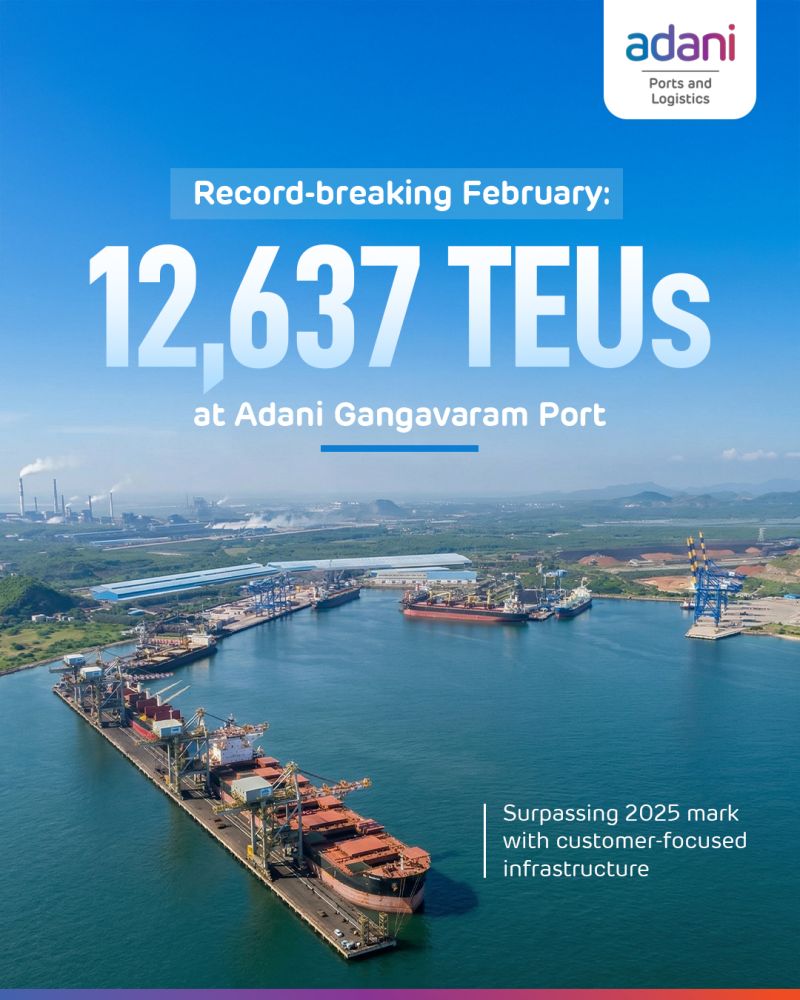
VISAKHAPATNAM : Adani Gangavaram Port has set a new operational milestone by recording its highest-ever monthly container throughput of 12,637 TEUs in February 2026, surpassing the previous record of 11,545 TEUs.

The achievement highlights the port’s growing strength as a key logistics gateway on India’s East Coast. The record performance reflects the port’s continued focus on operational efficiency, seamless coordination, and robust infrastructure, enabling faster cargo movement and reliable services for customers.

Strategically located near Visakhapatnam, Adani Gangavaram Port has been steadily expanding its capabilities to support rising trade volumes and strengthen supply chain connectivity for the region.

Officials noted that the milestone underscores the port’s commitment to delivering world-class port services and efficient logistics solutions, reinforcing its role in supporting India’s maritime trade and economic growth.

The record-breaking performance further positions Gangavaram Port as an emerging hub for containerized cargo on the eastern seaboard, driven by strong operational planning and customer-centric services.

Tamil Nadu unveils Shipbuilding Policy 2026 with focus on Green Vessels, Recycling Clusters and Mega Shipyards

CHENNAI: Tamil Nadu has unveiled an ambitious Shipbuilding Policy 2026 that places sustainability and green maritime innovation at the centre of the state’s industrial strategy.

The policy, released by Chief Minister Shri MK Stalin on Wednesday (4 March), seeks to position Tamil Nadu as a global hub for environmentally responsible shipbuilding, with a strong emphasis on zero-emission vessels, green recycling practices and advanced maritime manufacturing.

A central pillar of the policy is the promotion of low-carbon shipbuilding technologies. The government will provide dedicated incentives for the construction of “green vessels,” including ships powered by green hydrogen, ammonia and electric propulsion systems.

These measures are intended to support India’s broader Maritime Amrit Kaal Vision 2047, which aims to significantly cut emissions from the country’s shipping fleet over the coming decades.

The policy also encourages environmentally compliant ship recycling through the creation of specialised Green Ship Recycling clusters.

To accelerate their development, the state has announced a 15 per cent capital subsidy for the first five recycling facilities that secure global environmental certifications such as the Hong Kong International Convention and the EU Ship Recycling Regulation.

Women’s Day 2026: Allcargo Group highlights Growing Role of Women in Logistics

MUMBAI: Ahead of International Women’s Day, leadership at Allcargo Group has highlighted the growing participation of women in India’s logistics sector, noting that technology, automation and evolving workplace policies are helping make the traditionally male-dominated industry more inclusive.

Sharing her views on the occasion, Ms. Indrani Chatterjee, Group Chief Human Resources Officer, Allcargo Group, emphasised that advancements in logistics infrastructure and digital transformation are opening new opportunities for women across various roles in the sector.

She said:

“India’s logistics industry is experiencing a transformation that is making this traditionally male-dominated sector structurally more inclusive at its core. As technology, automation and smart infrastructure reshape the backbone of warehousing and last-mile delivery, they are also helping lower barriers that earlier limited women’s participation. This has resulted to a gradual increase in women’s participation across a wider range of functions, reflecting evolving roles within the sector.

At Allcargo Group, our overall gender representation is 49% women globally, supported by initiatives such as all-women shifts, return-to-work programmes and targeted talent acquisition that prioritises inclusivity without compromising on capability. We have strengthened workplace infrastructure with safe transport, secure amenities, POSH compliance and flexible shift structures. These reforms create an ecosystem where women can enter, sustain and grow within the workforce.

The industry must continue to innovate HR strategies, strengthen safety protocols and build ecosystems that welcome women from urban centres to rural talent pools. For us, the goal is clear: build a logistics workforce that reflects the communities it serves, while strengthening efficiency, resilience and long-term growth.”

Ms.Chatterjee, a seasoned HR leader with over two decades of corporate experience, currently leads the global HR function at Allcargo Group, which operates across 180 countries with more than 300 offices worldwide. She has previously held leadership roles with PricewaterhouseCoopers SDC, PepsiCo International and Vodafone India.

She holds an M.Sc in Organic Chemistry and an MBA in HR and Information Systems, along with a PGCHRM from XLRI – Xavier School of Management, Jamshedpur. Over the years, she has received several industry recognitions for her contributions to the HR domain.

Women Leaders Driving Transformation in Supply Chain and Logistics: Achilles APAC Director

MUMBAI: As the world prepares to mark International Women’s Day, industry leaders are highlighting the growing influence of women in shaping the future of global supply chains and logistics.

Sharing her perspective on the evolving role of women in the sector, Ms. Smitha Shetty, APAC Regional Director at Achilles Information Limited, noted that modern supply chains now demand broader capabilities that extend beyond traditional operational efficiency.

She said:

“The logistics and supply chain sector has traditionally been viewed through the lens of operational efficiency, but today it requires a far broader set of capabilities including risk management, sustainability oversight, and responsible sourcing. Women leaders are bringing strong cross-functional thinking and collaborative leadership styles that are particularly valuable in this environment. As more organisations recognise the importance of diverse leadership, we are seeing women play an increasingly influential role in shaping how supply chains evolve to meet the expectations of regulators, customers and society.”

Industry observers note that the logistics and supply chain ecosystem is undergoing significant transformation, with organisations increasingly focusing on resilience, sustainability and responsible sourcing. In this changing landscape, diverse leadership and inclusive decision-making are emerging as key drivers for long-term growth and innovation.

About Achilles Information Limited

Achilles Information Limited is a global provider of supply chain risk management and performance improvement solutions. The company focuses on enhancing supply chain resilience and efficiency by enabling transparent and sustainable supplier relationships across industries worldwide.

Its solutions include supplier pre-qualification, risk management, compliance monitoring and performance benchmarking, helping organisations mitigate risks, streamline operations and make informed strategic decisions.

About Smitha Shetty

Smitha Shetty serves as Regional Director for Asia-Pacific at Achilles Information Limited, where she oversees supply chain management and business development initiatives in India and the broader APAC region.

With a deep understanding of regional market dynamics and supply chain best practices, Shetty brings valuable insights into emerging trends, regulatory developments and sustainability-driven transformation in supply chain management. Her collaborative leadership style and focus on innovation have positioned her as a key voice in advancing supply chain resilience and responsible sourcing across the region.

Key milestones in India’s FTAs in 2025–26

NEW DELHI : In last one decade, India has emerged decisive and confident: redrawing and redefining the map of global trade and charting modern, future-ready, new generation of Free Trade Agreements (FTAs).

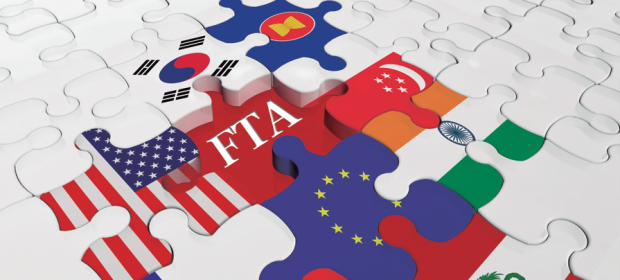
India has steadily expanded its network of free trade agreements over the past few years reaching Nine FTAs spanning 38 countries. Starting with India–Mauritius in 2021, the India–UAE Comprehensive Economic partnership agreement followed in May 2022. India–Australia Economic and Trade Agreement was implemented in December 2022. India then signed the EFTA TEPA on 10th March 2024, which entered into force on 1st October 2025. The India–UK CETA was signed in July 2025 and India–Oman CEPA in December 2025. The India–New Zealand FTA was announced on 22nd December 2025, followed by the India–EU FTA on 27th January 2026. With United States, we have delivered framework for an interim agreement on 7th February 2026 and cemented our global trade footprint.

Every agreement has been unique and a recognition: of the scale of our market, our economic potential and the trust in the capabilities of 1.4 billion Indians.

These Agreements are for farmers whose products now have access to the developed world. They are for entrepreneurs, women-led MSMEs exporting garments, leather and handicrafts with new competitiveness. They are for talent – young Indians, our students, IT professionals, chefs, yoga instructors who now have choices and clear mobility pathways to work, to study and to build futures supported by post-study work visas, mobility and social security relief. They are for organic products and traditional wellness systems of AYUSH. They are for Digital Services, powering the worlds’ AI. They are for catalyzing investments and making our FTA partners, our stakeholders.

India has negotiated FTAs with openness, balance and our national priority of an atmanirbhar bharat. The interests of all sensitive sectors—dairy, agriculture, farmers, and domestic industry—have been protected, and market access has been safeguarded. This is India negotiating from strength to usher in an age of transformation in trade and fulfilling the aspirations of our people. India is leading the way to Viksit Bharat @2047.

Pharma exporters brace for Rs 5,000-crore hit as US-Iran war drives up freight costs

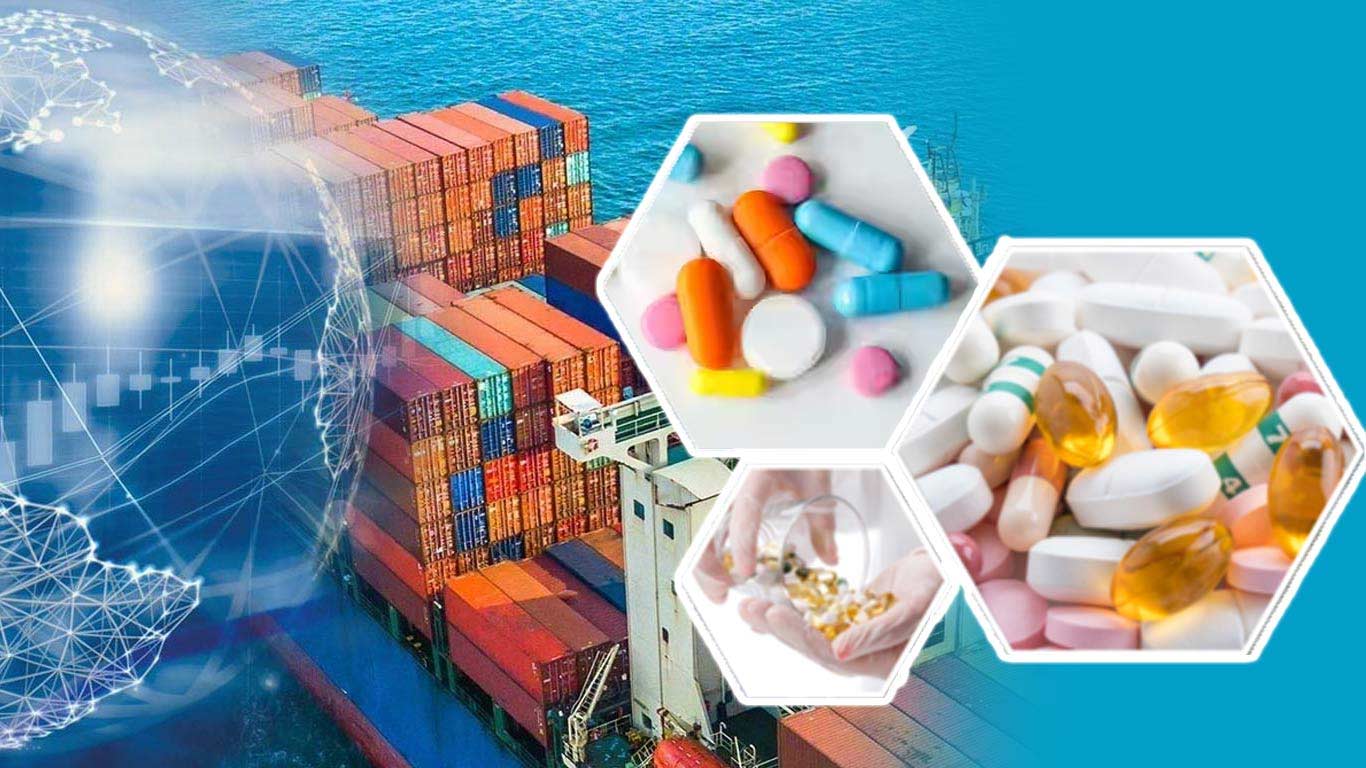
NEW DELHI: A total stop to pharma shipments to West Asia this month alone can drain Rs 2,500–Rs 5,000 crore of export value, the Pharmaceuticals Export Promotion Council of India (Pharmexcil) has warned, as freight rates double amid a worsening war between the US-Israel and Iran.

Exporters face steep surcharges of $4,000–$8,000 a shipment, driving up logistics costs for drugmakers heavily dependent on the Gulf and the wider West Asia market.  Heftier insurance premiums, fuel spikes and operational delays from longer routes are the primary reasons for the spike.

The region accounts for more than 5.5 percent of India’s pharma exports at around $30 billion.

According to Pharmexcil Chairman Mr. Namit Joshi, higher crude prices and unpredictable transit times are also feeding into active pharmaceutical ingredient (API) procurement costs and inventory distortions, stretching working capital cycles across both large and mid‑sized pharma exporters.

Joshi said logistics pressures are mounting at a pace not seen since the pandemic-era disruptions.

Since February 28, when the US and Israel attacked Iran, the benchmark Brent has jumped nearly 16 percent. On March 6 morning, Brent was trading close to $84 a barrel, rising from $72.48 on February 28.

The war has disrupted critical shipping corridor of the Strait of Hormuz, from where 50 percent of India’s oil and around 80 percent of natural gas flow through. The Red Sea and major Gulf channels essential for timely delivery of medicines, active pharmaceutical ingredients (APIs) and temperature‑sensitive formulations, have also been hit.

Rerouting or delays on these routes could severely affect delivery schedules and compromise cold‑chain integrity, particularly for high‑value and time‑critical pharmaceutical cargo, Joshi said.

The Middle East — especially the Gulf Cooperation Council (GCC) and wider West Asia and North Africa region—has emerged as an important destination for India’s drug industry, with exports rising from $1.32 billion in FY21 to $1.75 billion in FY25, data from Pharmexcil shows.

Key markets including the UAE, Saudi Arabia, Oman and Kuwait rely heavily on Indian generics and affordable medicines, positioning India as a lifeline supplier across the region.

The council said it is closely monitoring the situation and is in talks with logistics and trade partners to explore mitigation measures. It has urged greater government support, including freight‑relief mechanisms and diversification of shipping routes, to ensure uninterrupted access to essential medicines in West Asia.

MSC to offload all cargo bound for Gulf at nearest safe seaport

LOS ANGELES : MSC, the world’s largest carrier of ocean container cargo, said on Tuesday all cargo bound for ports in the Gulf ​will be offloaded at the nearest safe seaport due to ongoing ‌hostilities in the Middle East following U.S. and Israeli attacks on Iran.
The move, known as an “End of Voyage” declaration, also applies to empty containers that have been released for loading with ​cargo and are intended for export to the ports in the Gulf, ​Geneva-based MSC said in a customer advisory.

A mandatory surcharge of $800 per ⁠container will apply to all affected shipments, without exception, to cover deviation ​costs, MSC said. “MSC sincerely regrets the necessity of this decision, which arises from exceptional ​circumstances beyond its control,” the company said.
Customers will assume responsibility for the container at the discharge port, said Lars Jensen, CEO of container shipping-focused consultancy Vespucci Maritime, on LinkedIn. That means ​shippers are responsible for finding alternate transportation and paying local port fees, he ​said. The hostilities have caused vessels including oil tankers and container ships to back up at the ‌critical ⁠Strait of Hormuz chokepoint, sparking worries that global fuel prices could soar.

As of Sunday, 158 container ships were present in the Middle East, including the Gulf of Oman, the Arabian Sea and the Gulf, representing just 2.1% of the current ​active container ship ​fleet, according to ⁠data from Drewry, a London-based maritime consultancy.

MSC and Ocean Network Express, known as ONE, earlier this week stopped accepting cargo ​bound for the affected areas in the Middle East. Industry ​experts warned ⁠that the hostilities would trigger cascading delays and disruptions that could take weeks to play out as operators reroute ships, containers and other assets

.”Container shipping has less ⁠to lose ​from the Iran conflict compared to other shipping ​sectors, but it cannot escape disruption and higher costs,” said Simon Heaney, Drewry’s senior manager of ​container research, in a report on Tuesday.

Source : Reuters