Home Blog Page 411

Indian Exporters hit hard by $4,000 contingency surcharge

NEW DELHI : Indian exporters whose goods had managed to cross the Strait of Hormuz and docked safely at ports in West Asia are being asked to pay a contingency surcharge that could in some cases go up to $ 4000 a container before cargoes are unloaded. This has put exporters in a situation where the freight costs are much below the surcharge, which is creating a big problem for them, CEO and Director General of Federation of Indian Export Organisations Ajay Sahai said.

The ships had crossed disturbed sea lanes before the conflict so the extra charge makes little sense. In new cargo bookings exporters can adjust the enhanced costs by raising prices or getting into arrangements with the buyers but on the goods that have already reached destinations exporters are struggling for alternatives, including abandoning the goods, he added.

Contractual Deadlock

The surcharge of $ 4000 is for a 40 feet container carrying perishables. For containers carrying hazardous items like chemicals surcharge is $ 3800 while for a 20 feet container the extra charges are $ 2000. As per the contract between the exporter and shipping line, the goods that are already handed over and the bill of lading has been issued so the risk should be borne by the shipping companies, Sahai said..

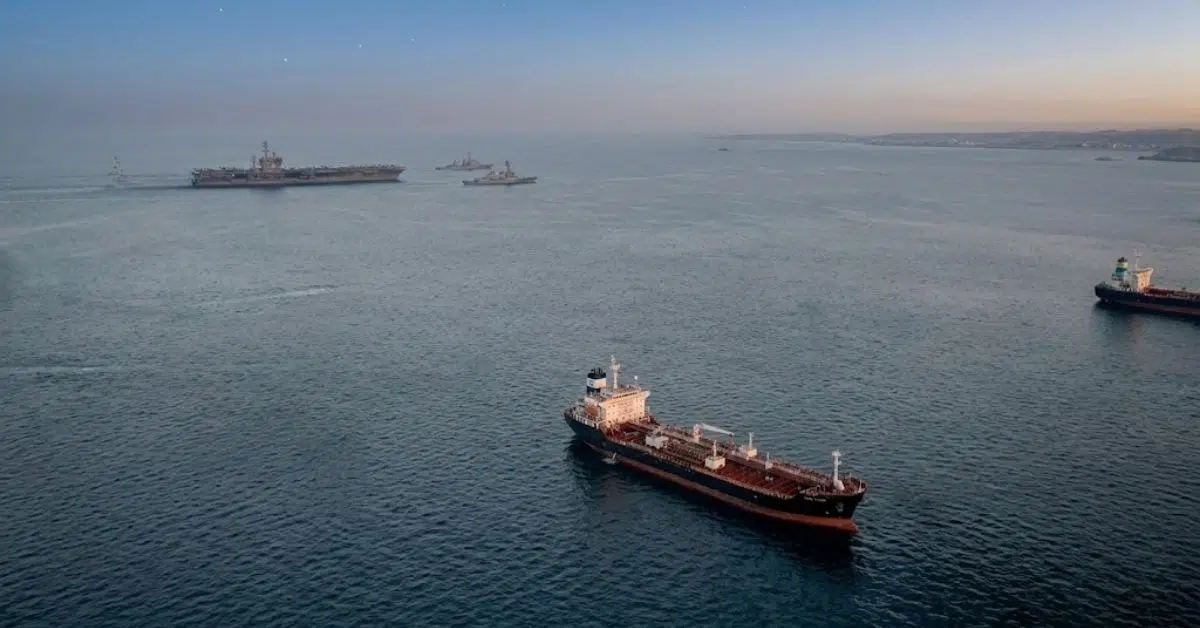
An estimated 150–200 ships are currently anchored outside the Strait, unable or unwilling to enter. Approximately 140 container vessels are reported trapped inside the Persian Gulf, according to reports.

Due to congestion, shipping companies are not taking bookings for West Asia ports. The stranded ships would also put the availability of containers at risk, Even air cargo prices have shot through the roof. The prices for goods from India to West Asia have gone up to Rs. 425 per kg from 175 per kg. The stoppage in routes will put a halt to exports to the region, which stood at $ 58.8 billion in the last financial year.

Bypassing Hormuz

Because of the conflict, the shippers are exploring alternate ports that are not directly impacted by the blockage of Hormuz strait. The ports that are being examined are the Ports of Fujairah and Khorfakkan on the east coast of the United Arab Emirates (UAE)  that are designed to bypass the Strait of Hormuz. From India the ships from Mundra Port in Gujarat and Nhava Sheva in Maharashtra.

However, not all is clear at Fujairah and Khorfakkan. Drone incidents and debris have targeted the Fujairah Oil Industry Zone, resulting in fires and forced suspensions of activity.

While shipments to West Asia are on hold, the goods to the key western markets of US and Europe are being loaded at Indian ports. For these markets the ships will avoid West Asia and go through the Cape of Good Hope. This route will add 14 to 20 days to the voyage leading to higher rates.

“The shipping companies are yet to come up with new rates from the route,” chairman of Engineering Export Promotion Council Pankaj Chadha said.

Source : FE
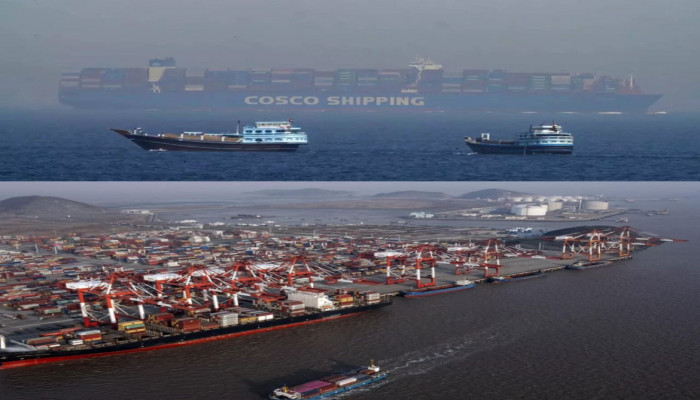
37 Indian-flagged ships with over 1,100 seafarers stranded near Hormuz amid West Asia tensions

NEW DELHI : With tensions between US-Israel and Iran on the rise, at least 37 Indian-flagged ships, along with 1,109 crew members, are stuck in the region around the Strait of Hormuz, sparking safety and potential trade worries for India.

These ships are located in the Persian Gulf and the Gulf of Oman, with some ships awaiting cargo and some already fully loaded.

In a statement, the Indian National Shipowners’ Association (INSA) confirmed the presence of the ships and sought government intervention in the issue.

“We understand that about 37 Indian flag ships are in the region while servicing the needs of the nation, some waiting to load and others in laden condition. These vessels are on both sides of the Hormuz Straits. Indian ships have Indian seafarers on board. It is our request to the govt of India to assist the Indian flag ships in obtaining safe passage for its ships through the Hormuz Straits. The ships which are in ballast awaiting instructions may be given further instructions by Charterers thereby protecting Indian life, Indian assets and the supply chains of the nation,” the association said.

The shipping industry body has also highlighted the need to take collective action to protect Indian sailors, commercial interests, and supply chains, especially oil.

Islamic Revolutionary Guard Corps announced on March 2 that they had effectively closed off the Strait of Hormuz to maritime traffic and threatened to attack any ship that tries to pass through this critical shipping chokepoint, a situation that has already resulted in a significant decrease in ship traffic through this critical shipping route because of the Middle East conflict.

Moneycontrol reported that nearly a fifth of India’s imports, including crude oil, goods such as food items and chemicals, could be at risk if hostilities escalate further. The narrow waterway is a critical artery for global oil flows, and any prolonged closure could significantly impact crude supplies and freight costs. Also, about 46 per cent of the country’s crude oil imports are tied to shipments that pass through Hormuz, making energy supplies particularly vulnerable to tensions in West Asia.

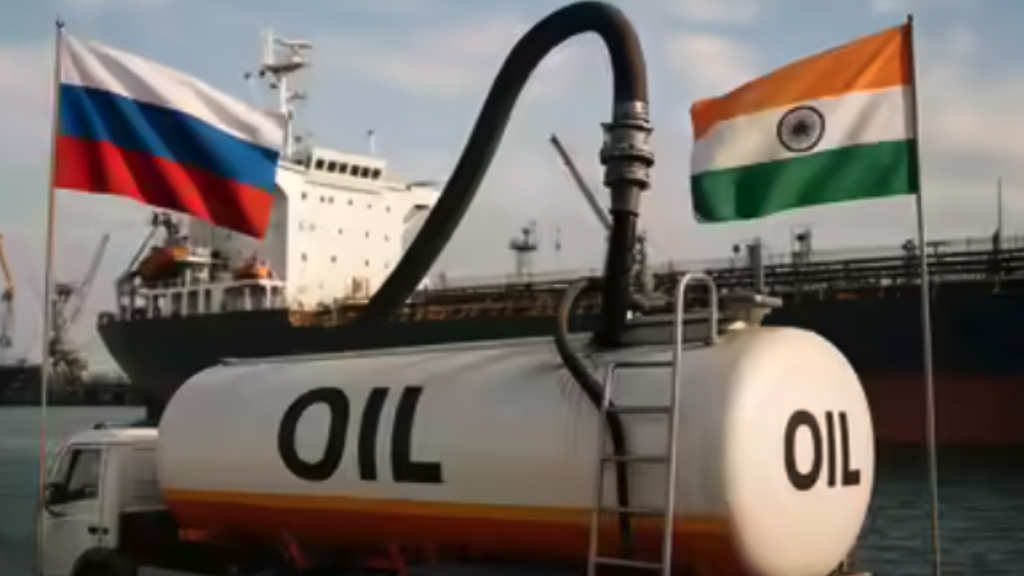
US permits 30-day waiver for India to purchase Russian Oil, as conflict puts stress on Strait of Hormuz supply route

WASHINGTON : With the crisis in the Gulf severely hampering shipping routes that pass through the Strait of Hormuz, the United States on Thursday (local time) allowed a 30 day waiver for India to purchase Russian Oil to meet its energy requirements.
US Treasury Secretary Scott Bessent said, “President Trump’s energy agenda has resulted in oil and gas production reaching the highest levels ever recorded.

To enable oil to keep flowing into the global market, the Treasury Department is issuing a temporary 30-day waiver to allow Indian refiners to purchase Russian oil. This deliberately short-term measure will not provide significant financial benefit to the Russian government as it only authorizes transactions involving oil already stranded at sea. India is an essential partner of the United States, and we fully anticipate that New Delhi will ramp up purchases of U.S. oil. This stop-gap measure will alleviate pressure caused by Iran’s attempt to take global energy hostage.”

The waiver comes at a time when India continues to face potential risks linked to energy supply disruptions in the Middle East amid escalating tensions in West Asia after a joint US-Israel military strike on February 28 on Iranian territory resulted in the death of its Supreme Leader, Ayatollah Ali Khamenei and other senior figures.

India sources nearly 40 per cent of its oil imports from the region, with a significant portion transported through the strategically important Strait of Hormuz.According to sources, India is reviewing its energy situation twice a day and is in a very comfortable position regarding its energy security.

India’s current position of stock is also seen to be comfortable, with stock being replenished every day. As per the sources, there is no shortage of LPG or LNG as well as crude oil, in the world. Sources noted that India is in touch with other suppliers as well. Sources said India is closely monitoring developments in the region but is well-prepared to manage any potential supply-side challenges due to adequate inventory levels and diversified sourcing.

India continues to import Russian crude as per previous contracts. The government, according to sources, is keeping a close watch on the global energy market to ensure uninterrupted supplies for the country.

Source : ANI

Oil tankers seen floating storage as shipments from Persian Gulf at near standstill

Oil tanker companies are exploring opportunities to store refined products in the Persian Gulf to ensure cash flow at a time when they are facing challenges loading and moving out of the region, several market participants said.

“It’s a commercial decision, as there is nothing [else] to do right now,” a senior executive of a global oil tankers’ company that regularly loads cargoes of refined products from the Persian Gulf said.

Deals are being considered on a dollars per day basis because dozens of Long Range and Medium Range tankers are stuck in the Persian Gulf, a clean oil tankers broker said.

Before the Iran-US war broke out over the weekend, Long Range II and I tankers on the benchmark Persian Gulf-North Asia routes were daily earning close to $45,000/day and $38,000/day on a round voyage basis, respectively, according to the estimates of brokers. The earnings are now notionally more than double these values at over $100,000/day, but brokers, owners and charterers in the UAE, Singapore, Seoul and Tokyo said that finalizing and executing a deal is next to impossible in the current geopolitical scenario.

Even if a smaller fraction of these notional earnings can be generated by floating storage, it will help cover capital and operational expenses, the sources said.

The entire Middle Eastern oil supply chain has been affected because there is hardly any movement of oil exports through the Strait of Hormuz, a globally vital waterway that daily caters to 20% of the global supply of oil and LNG.

Tankers for loading most of these oil products are chartered around one to three weeks in advance. Ships that were hired in mid-February were positioning themselves in various ports in the Persian Gulf on the previous weekend, when the conflict broke out. Now, they are stuck in the region without cargoes, and market participants said temporary storage of refined products, until the situation improves, is their best bet.

Provided they are in the Persian Gulf, the storage play to pass the time is an option for tankers until the lanes remain closed, a chartering executive with a global commodities trading company said.

The Middle East countries export a combined total of more than 50 million tons of naphtha to North and Southeast Asia and around 25 million tons of gasoil annually to Europe, according to the S&P Global Commodities at Sea(opens in a new tab) data. All these shipments, along with jet fuel to Europe, are now in jeopardy, and there is a serious danger of tankers remaining idle for several days, or even weeks, amid conflict and lack of insurance cover.

A monthly average of more than 100 LR1s and LR2s each, load for long haul voyages in the Persian Gulf and West Coast India combined, or a total of around half a dozen LR1s and LR2s daily, according to the estimates of brokers.

In a business, where a Cosco-controlled LR1 coming from Hastings, Australia had taken a cargo last month for loading in Duqm, Oman, to slash the ballast leg and reduce the idle time before the next voyage to zero, staring at lack of employment, or laden voyages for days together, implies significant foregoing of earnings.

Trading companies also want to hold on to their cargoes, rather than declaring force majeure, as a knee-jerk reaction and are therefore considering floating storage.

“No major floating storage deal has been done so far, though many charterers are asking for it,” an executive with a large tankers’ owning company said.

Tankers currently in the Persian Gulf are also seeking short-term employment to move cargoes within the region. One such Dynacom-controlled LR1 was chartered for a whopping $3.75 million to move cargo from Jubail to Ras Tanura, several sources said. In February, at this freight, an LR2, a much larger tanker, could have been hired to move cargo from Ras Tanura to Rotterdam. The LR1s and LR2s typically load up to 65,000 mt and 90,000 mt cargoes each.

Limited scope
However, not everyone is enthusiastic about the prospect of floating storage. “Surplus cargoes will dry up faster than one can think,” a source with an owner who charters out tankers said.

If there is an ullage issue, that is, shore tanks are full, then the option to store refined products, mostly gasoil and gasoline, on ships makes sense, but this may not necessarily be the case.

To be sure, shore tank operating companies are also facing operational issues due to the ongoing conflict, but refineries are also cutting output as exports will be difficult in the near term.

All three oil refineries in Kuwait are operating at around half their capacity because of a blanket reduction in throughput due to the war, two sources with direct knowledge of the matter said.

Source : HS

ICS Chairman Emanuele Grimaldi’s message on the military conflict in the Strait of Hormuz

LONDON : ICS Chairman Mr. Emanuele Grimaldi messaged in the military conflict that, “I have been deeply concerned about the seafarers who are being put in extreme danger in the Strait of Hormuz and the surrounding region when they are simply trying to do their job. By no fault of their own, their lives are now tragically at risk. We call on all States to take the fundamental steps to ensure their safety. My thoughts are with the seafarers who have tragically lost their lives and their families, as well as the seafarers currently stranded.

Freedom of navigation is crucial to global trade. All States must ensure the safe passage of merchant vessels, prioritising the safety and welfare of the crew on board.

The International Chamber of Shipping is monitoring the situation closely and will continue to update its members and the wider shipping community. We all hope for a quick and peaceful resolution to this crisis.”

Source: ICS

Hanseatic Global Terminals announces new leadership for its operations in Europe and Latin America

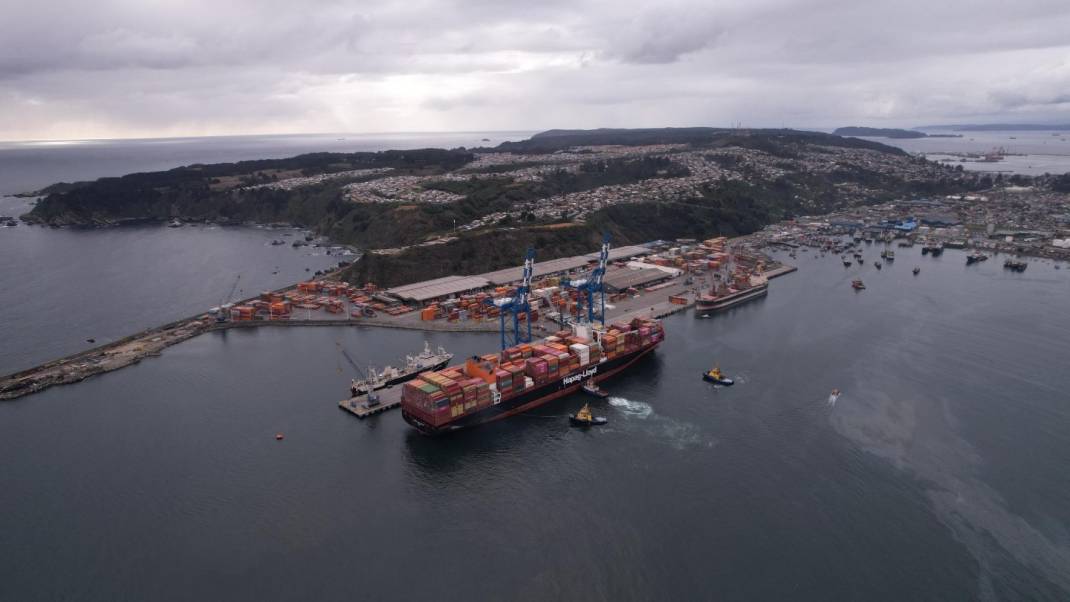
HAMBURG : Mauricio Carrasco will assume the role of Regional CEO at Hanseatic Global Terminals Europe, while Rodrigo Galleguillos will take on the role of Regional CEO in Latin America.ebranding of “CNMP LH” to “Hanseatic Global Terminals Le Havre” concluded.

Hanseatic Global Terminals (HGT) announced today two appointments that strengthen its global executive structure. Mauricio Carrasco will assume the role of new Regional CEO for Europe, leading the company’s operations on the continent starting on March 15. Meanwhile, Rodrigo Galleguillos has been appointed as the new head of Hanseatic Global Terminals Latin America, succeeding Mauricio Carrasco.

“These changes are part of our growth strategy toward 2030, whose objective is to expand our global network, strengthen operational capabilities in key markets, and advance toward the goal of operating 30 terminals by the year 2030. Our new structure aims to consolidate the presence in both regions and accelerate the execution of our strategic plan,” said Dheeraj Bhatia, CEO Hanseatic Global Terminals.

Carrasco, an electrical civil engineer from the University of Chile with an MBA from UCLA Anderson School of Management, has an extensive career in the global maritime port industry. He has held high level executive positions: he served as Managing Director of SAAM Terminals, Senior Director at Hapag-Lloyd in Dubai and Shanghai and Senior Vice President of Business Development at Compañía Sudamericana de Vapores (CSAV).

Galleguillos, meanwhile, is a business engineer from Universidad Adolfo Ibáñez, Chile, with a Master’s in Finance from the same institution and an MBA from Bond University (Australia). He has a solid track record in the maritime, port and logistics sectors, where he has held various managerial roles in Latin America.
Established in 2023, Hanseatic Global Terminals is an independent entity operating under the Hapag-Lloyd group of companies, focused on terminals and infrastructure. Hanseatic Global Terminals has a robust vision to become a global terminal operator, expanding to 30 terminals by 2030.

A Global survey confirms the quality of relationships between GEODIS and its suppliers

In 2025, the survey was entrusted to the independent research firm INIT to broaden its scope and strengthen the analysis of the results. The questionnaire, available in seven languages, gathered responses from 536 suppliers, providing a representative global overview with detailed results by region and business line.

The results confirm the strength of the relationships with the Group’s partners:

  • 19% participation rate, up 2 points compared to the previous edition;
  • 89% overall satisfaction;
  • GEODIS recommendation score*: +83, with more than 8 out of 10 suppliers extremely likely to recommend GEODIS.

“These results confirm the quality of the relationships we build with our suppliers across all our business lines and regions. In an industry as demanding as transport and logistics, performance relies on the strength of partnerships. This survey allows us to identify our strengths, but also areas for improvement, so that we can continue to enhance our collective efficiency,” said Benjamin Hulot, Group Chief Procurement Officer at GEODIS.

Beyond the overall indicators, the survey also highlights the importance given to CSR and innovation priorities. More than 80% of suppliers expressed their willingness to strengthen their commitment to GEODIS, particularly on topics such as co-development, decarbonization, and digitalization.

Finally, GEODIS has recently launched a dedicated “Procurement” page on its website, providing greater visibility on its strategy and its responsible and innovative procurement policy. It also offers progressive access to its supplier portal, “Coupa Source to Pay,” further strengthening transparency and the quality of supplier relations.

Seqrite Reveals Key Insights into the Rising Software Supply Chain Attacks in 2026, Advises Enterprises to Secure their Digital Vendors

PUNE: As India’s digital economy deepens its reliance on interconnected vendor ecosystems, the threat lurking within those very connections has never been more acute. Amidst this, Seqrite, the enterprise security arm of Quick Heal Technologies Limited, a global provider of cybersecurity solutions, cautions Indian organizations about the sharp rise in software supply chain attacks and called for urgent action to secure third-party applications, tools and digital service providers before they become a single point of failure.

A supply chain attack is a calculated, patient strategy where an attacker does not break down the front door but instead walks in through the trusted back entrance: a vendor update, a compromised plugin, or an open-source library. The danger is invisible by design. Adversaries first identify a vendor or partner the target organization relies upon. They break into that partner’s systems through phishing, credential theft, or security gaps. Once inside, they embed malicious code or backdoors into the vendor’s software, updates, or services. The tampered package then travels through standard delivery channels directly into the target’s environment – approved, signed, and trusted.

Historical incidents illustrate just how deep the impact can be. The 2021 Kaseya breach pushed ransomware updates through managed service providers, disrupting hundreds of businesses simultaneously. The 2020 SolarWinds attack silently poisoned a trusted software update to infiltrate organizations across government and enterprise. NotPetya, in 2017, weaponized a routine tax software update to cause billions in damage across interconnected networks worldwide. These were not anomalies. They were early chapters of a pattern that is now accelerating.

Seqrite’s India Cyber Threat Report 2026, drawing from telemetry across more than 8 million endpoints, leaves little room for complacency. Between October 2024 and September 2025, Seqrite Labs, India’s largest malware analysis facility, recorded 265.52 million detections, averaging 505 every minute. The Report reveals that India’s exposure is growing at an unprecedented pace. Groups like KillSec and Babuk2 were among the most aggressive ransomware operators targeting Indian enterprises, with supply chain vulnerabilities identified as key entry points, particularly in BFSI, healthcare, and manufacturing. The Education, Healthcare, and Manufacturing sectors together accounted for nearly 47% of all detections.

Protecting against supply chain attacks calls for a continuous posture of verification, visibility, and response readiness. Enterprises must regularly assess vendor security policies, update processes, and incident response capabilities. Third-party access should be limited to only what is operationally necessary, and permissions should be revoked the moment they are no longer required. Monitoring software updates, tracking unusual application behavior, and enforcing multi-factor authentication for all internal and external connections are foundational, non-negotiable steps.

However, prevention alone is no longer sufficient. In a supply chain breach, sensitive data such as personally identifiable information, financial records, employee data, customer profiles, is almost always among the first casualties. This is precisely where solutions such as Seqrite Data Privacy transition from a recommended investment to an operational necessity. Designed for the realities of India’s evolving regulatory and threat environment, Seqrite’s advance cybersecurity solutions empower enterprises with automated discovery, classification, consent tracking, access controls, and breach readiness across hybrid environments.

With the Digital Personal Data Protection (DPDP) Act, 2023 placing stringent obligations on Data Fiduciaries, the stakes of a supply chain compromise have grown exponentially. A single vendor breach can trigger cascading compliance failures across the entire data supply chain, exposing organizations to penalties of up to ₹250 crore. Seqrite’s enterprise-grade security products are fully compliant with the provisions of the DPDP Act, enabling enterprises to strengthen their security posture achieving regulatory compliance.

KR lunches AI-Integrated Technical Software Platform ‘SeaTrust Software Hub’

Korean Register (KR) has launched an upgraded version of its technical software platform, ‘SeaTrust Software Hub’, introducing an AI-integrated system designed to enhance user accessibility and strengthen customer support.

SeaTrust Software Hub provides a more intuitive and structured interface for KR’s suite of technical software. It also enables users to manage the entire workflow, from software downloads and technical inquiries to feedback submission and improvement requests, all within a single integrated platform.

A key highlight of the upgrade is the implementation of an AI-driven feedback processing system. The new platform analyzes user inquiries and automatically directs them to the appropriate team, helping KR respond more efficiently to customer requests.

The AI system has been developed using extensive technical resources, including engineering documentation, user manuals, email correspondence and historical feedback records. By leveraging this data, the platform can generate context-aware responses to user inquiries.

kr seatrust software hub website main page KR lunches AI-Integrated Technical Software Platform ‘SeaTrust Software Hub’

As inquiry data continues to accumulate, the AI system is expected to further enhance response speed, accuracy and quality over time.

In addition, the website has been reorganized into a unified digital hub where users can search for and download all KR’s technical software solutions in one place. This includes SeaTrust-HullScan, a structural strength assessment software widely used by shipyards and design companies, as well as web-based applications such as the route-specific reduction factor calculator used by container shipping operators.

Commenting on the launch, KIM Daeheon, Executive Vice President of KR, said the upgraded platform will strengthen the link between user feedback and technology development.

“This upgrade significantly improves accessibility and user experience while enabling us to respond more quickly to customer feedback. By strengthening the connection between user input and our technology development and services, SeaTrust Software Hub will evolve beyond a software platform into a digital knowledge center where operational experience and technical expertise are systematically accumulated and shared.”

Lloyd’s Register warns fatigue, inconsistent leadership and reluctance to speak are driving yacht safety risk

Inconsistent leadership and variable safety priorities, along with indications that formal procedures are not always followed, are creating avoidable risks across the yacht sector.

Additionally, current levels of crew engagement mean that opportunities to recognise and respond to both perceived and emerging risks are not being fully realised onboard.

These are findings from Lloyd’s Register’s (LR) Yacht Safety Culture and Wellbeing Survey, which gathered input from crew and shore-based professionals working across a broad range of yacht sizes (all over 24 metres) and operating models. The survey indicates that although safety‑critical rules, checklists, and safety meetings are in place, their effectiveness is frequently diminished by financial, operational, and guest‑driven pressures, as well as by crewing levels and workload demands.

Process and procedures, along with communication, were identified as relative strengths underpinning safety culture onboard. Crew generally understand basic risk principles and say that well-run safety meetings help them work more safely. However, the survey highlights significant variation between yachts in how consistently these practices are applied.

Engagement emerged as a critical area requiring attention to strengthen reporting culture, trust, and safety performance. Respondents conveyed low confidence in reporting, challenging decisions, and speaking up without fear of negative consequences. Engagement is notably lower on yachts under 500 GT and among long‑tenured crew, who report declining trust in follow‑through related to safety observations and improvement suggestions. On smaller yachts in particular, unclear roles and responsibility were seen to weaken accountability and make it harder for crew to raise concerns.

Owner and management company priorities and instructions and onboard leadership behaviours were found to be a decisive factor. While some captains and senior crew demonstrated and encouraged engagement, others were perceived as prioritising schedules, guest experience or commercial demands.

Fatigue and workload pressures featured heavily throughout the survey. Long hours, reliance on overtime and limited recovery time were repeatedly cited, especially during busy seasons. Engineers and senior officers recorded the lowest wellbeing scores, reflecting sustained responsibility and operational strain. The findings show that when fatigue becomes accepted as normal, risk increases.

The survey also identified missed opportunities in learning from incidents. Based on engagement results, better reporting practices are needed. Although investigations take place, respondents described inconsistent follow-up and limited sharing of lessons learned. Some crew said that excessive reporting of minor issues diluted meaningful learning and reduced confidence in reporting systems.

Positive wellbeing was linked to better focus and safer behaviours. Good food, good connectivity and regular contact with home were consistent wellbeing boosts, but support for stress, fatigue and mental health onboard varied widely. Many crew were hesitant to raise wellbeing concerns due to inconsistent follow‑through and low trust in reporting processes. Overall, the findings show that wellbeing systems exist but are inconsistently implemented.

Stephanie McLay, Human Factors Team Lead for LR Advisory, said: “The survey shows strong procedural and communication foundations across the yacht industry, with improved risk awareness offering real potential to enhance safety and engagement. But it also reveals the need for more consistent practice to improve safety culture, and everyday life for crew. People are the industry’s greatest asset, and supporting their wellbeing is the most powerful safety intervention we can make.”

Engel-Jan de Boer, LR’s Global Yacht Segment Director, added: “The findings underline the need for stronger leadership behaviours, more effective fatigue management and a reporting culture that encourages early intervention. Without action, the industry risks higher underlying safety exposure and the loss of experienced crew.