Home Blog Page 42

MSC receives ESG Recognition from DNV for the first time

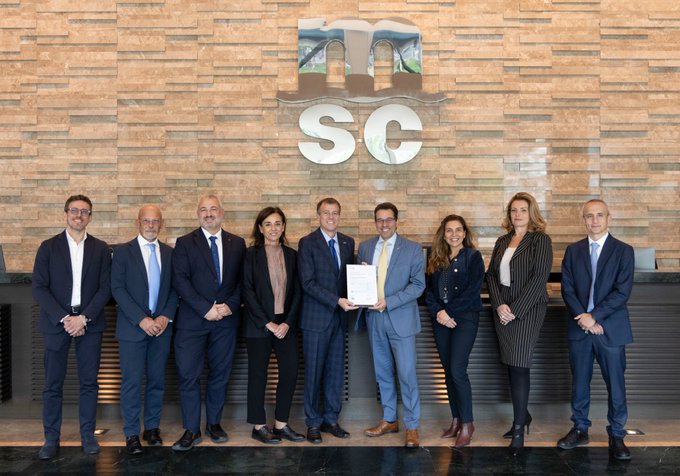
GENEVA : MSC has received its first ESG Recognition from global certification body DNV. Achieving this recognition reflects MSC’s commitment to continuous improvement, recognized international standards and responsible business practices. It also supports our broader approach to sustainability, which revolves around four priorities: enabling logistics decarbonization, protecting our blue planet, fostering inclusive trade and addressing social challenges.

This recognition is based on the independent evaluations of the company’s certified management systems against internationally recognized standards, including those developed by the International Organization for Standardization (ISO).

The certified management systems covered by the ESG Recognition include:

ISO 14001 for environmental management;
ISO 45001 for occupational health and safety;
and ISO 9001, ISO 28000, ISO/IEC 27001 and ISO 22301 covering areas including quality, security, information security and business continuity.
These systems provide structured frameworks to manage and continually improve MSC’s environmental, social and governance performance.
Find further information on MSC’s actions, progress and performance in the 2025 Sustainability Report.

“Managing environmental, social, and governance performance in a structured way is important to the resilience and long-term development of our business. DNV’s ESG Recognition provides independent confirmation of the certified management systems that support the delivery of our sustainability priorities. It reflects the work taking place across MSC to strengthen our approach and provide transparency towards stakeholders on how we manage these topics.” said Claudio Bozzo, MSC Chief Operating Officer.

“We are experiencing increased focus on ESG in the market. More companies are seeking to manage related risks and demonstrate performance in a credible and traceable manner. An ESG Recognition issued by DNV confirms which certified management systems a company is operating to support its ESG performance. I would like to congratulate MSC on this”.
UCSL launches first of eight 6,300 DWT cargo vessels at Malpe

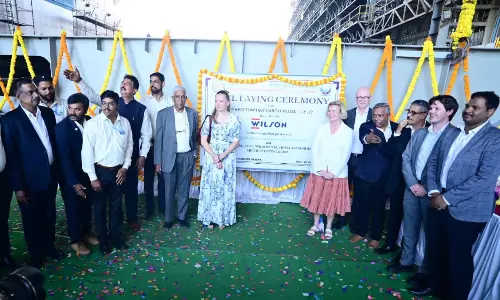
UDUPI : The first of eight 6,300 deadweight tonnage (DWT) dry cargo vessels being built by Udupi Cochin Shipyard Limited (UCSL) for Norway-based Wilson ASA was launched at the shipyard in Malpe on Monday. It is the largest vessel built at the yard since UCSL was incorporated in 2021.

The shipyard also marked two other stages of the project on Monday, with the keel laying of the third vessel and steel cutting for the fourth vessel in the series.

The launched vessel is 99 metres long and 15.85 metres wide, with a cargo hold capacity of 3,16,278 cubic feet. Designed by Netherlands-based Conoship International BV, this vessel is an innovative, future-proof, and eco-friendly general cargo vessel, which gives more thrust on fuel efficiency thereby reducing the Operational expenses and environmental impact.

Wilson ASA Chairman Eivind Eidesvik and his daughter Anna Eidesvik jointly launched the vessel, while Norwegian Ambassador to India May-Elin Stener laid the keel for the third ship.

Union Shipping Secretary Vijay Kumar, who attended the programme through video conferencing from New Delhi, appreciated the shipyard for achieving the milestones.

The contract for the eight 6,300 DWT vessels was signed in June 2024, and the first vessel is scheduled for delivery in December 2026.

UCSL had earlier completed and delivered six 3,800 DWT Dry Cargo Vessels to Wilson ASA, each measuring approximately 89 metres in length. The first of the 3,800 DWT dry Cargo Vessel was delivered in Apr 2025 and the remaining 5 sister ships were delivered in a span of 14 months, marking a remarkable achievement for a shipyard that restarted its operations four years back.

Sarbananda Sonowal to pitch India’s shipbuilding opportunity to Korean industry during Korea visit

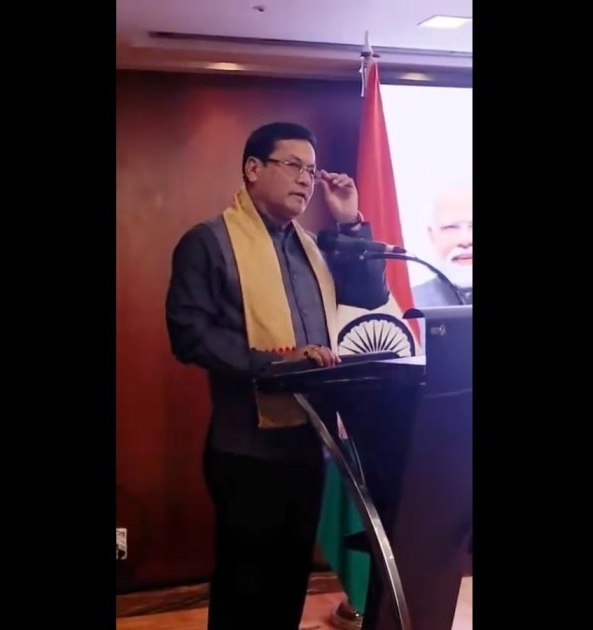
BUSAN : Union Minister of Ports, Shipping and Waterways (MoPSW), Shri Sarbananda Sonowal began a four-day visit to South Korea from Sunday, pitching India’s maritime opportunity to Korean industry as the two countries work to expand shipbuilding cooperation and move India toward its goal of becoming one of the world’s top five shipbuilding nations by 2047.

Sonowal opened the trip in Busan, which he called the hub of Korea’s maritime industry, with an interaction with Indian professionals working in Korean shipbuilding. India’s Ambassador to South Korea, Gourangalal Das, welcomed the gathering and introduced the community, which includes people from Samsung Heavy Industries, Hanwha Ocean, HD Hyundai, DNV and the Indian Register of Shipping.

“Your presence in Korea, at the heart of one of the world’s most advanced shipbuilding ecosystems, is a matter of pride for India,” Sonowal said.

He urged them to see the framework adopted by the two countries in April, during South Korean President Lee Jae Myung’s state visit to India, as more than a government agreement. The framework, called VOYAGES, covers cooperation in shipbuilding, shipping and maritime logistics.

“I want you to see VOYAGES not merely as a government framework, but as a platform for your professional growth and for India’s maritime future,” Sonowal said.

India aims to become a globally competitive centre for shipbuilding, ship repair, maritime manufacturing and logistics under Prime Minister Narendra Modi’s Maritime India Vision 2030 and Maritime Amrit Kaal Vision 2047, Sonowal said. India’s Cabinet approved a series of policy incentives for the sector in September 2025.

Sonowal said India will need many more shipbuilders, marine engineers, naval architects, designers, welders, project managers and technology specialists. He asked the professionals to bring their Korean experience home or to support Indian companies from Korea.

“You can serve as living bridges between your networks in both countries,” Sonowal said. He also encouraged them to mentor young Indian professionals and to take part in the India Ship Technology Centre and in the shipbuilding skills partnership between India and the Korea International Cooperation Agency.

Sonowal sought practical suggestions from the community on three issues: how to improve shipyard productivity and project execution, how to build a globally competitive skilled workforce, and how Indian and Korean industries can deepen cooperation in technology, manufacturing and innovation.

“We are looking for partnership with Korea in shipbuilding, shipping, ports and maritime logistics,” Sonowal said.

The schedule includes meetings with leaders of global shipbuilding industries, engaging with the maritime industry bodies and other maritime think tank & research institutions.

Union Minister Sarbananda Sonowal will take part in a ministerial roundtable in Busan for World Maritime Day, with ministerial representation from major maritime nations of the world, along with the secretary-general of the International Maritime Organisation (IMO), are expected.

Piyush Goyal holds trade and investment talks in the Netherlands

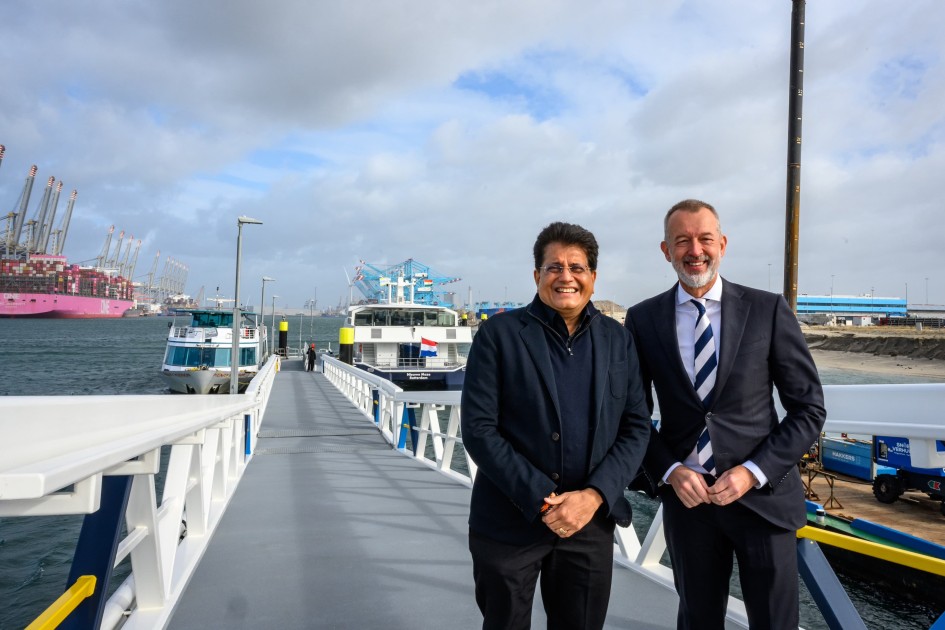
ROTTERDAM : Union Minister of Commerce and Industry Shri Piyush Goyal commenced his visit to the Netherlands on 25 October 2026, undertaking a series of engagements focused on strengthening India-Netherlands Economic Ties, exploring new avenues for trade and investment, and deepening engagement with the Indian community.

The visit featured engagements with stakeholders in the maritime and logistics sector in Rotterdam, interaction with the Indian community in Amsterdam, and media engagement.

As part of his programme in Rotterdam, Shri Piyush Goyal undertook a tour of the Port of Rotterdam, accompanied by its Chief Executive Officer, Mr. Boudewijn Siemons. The visit highlighted the strategic importance of Rotterdam, Europe’s largest port, as a gateway for Indian goods to the European market and a key hub for international trade and global supply chains.

The Minister’s visit to the Port of Rotterdam underscored the Netherlands’ strategic importance as a gateway to Europe, particularly in the context of the India-EU Free Trade Agreement. With the Agreement expected to create significant new opportunities for Indian exporters, the Netherlands’ world-class ports, logistics infrastructure and connectivity with European markets can play an important role in facilitating increased trade flows and strengthening India-Europe supply chains.

The Minister also attended an Indian community interaction hosted by the Embassy of India over high tea at the Waldorf Astoria Amsterdam, with approximately 70 participants. The gathering brought together members of the Indian community, including business and professional representatives, and provided an opportunity to engage with the diaspora.

The engagement reaffirmed the importance of the Indian community in fostering closer connections between India and the Netherlands and in contributing to bilateral economic, cultural and people-to-people ties.

Shri Piyush Goyal’s visit underscores the importance of sustained engagement with Dutch stakeholders to advance trade, investment and commercial cooperation. The programme also highlighted opportunities for stronger collaboration in maritime logistics and other areas of mutual interest, including in the context of the India-EU FTA and closer economic integration between India and Europe.

DPA Kandla achieves 1 million tonnes of cargo handling in a day for the fifth time in October

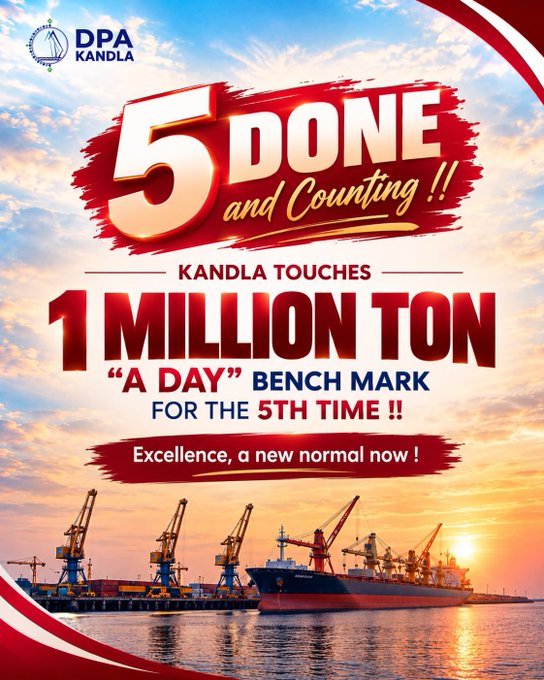
GANDHIDHAM : Deendayal Port Authority (DPA), Kandla, has achieved the significant operational milestone of handling over 1 million tonnes of cargo in a single day for the fifth time during October 2026, reaffirming its strong cargo-handling capabilities and operational efficiency.

The achievement reflects the coordinated efforts of the entire port ecosystem, including port users, exporters, importers, shipping lines, vessel agents, stevedores, Customs House Agents, terminal operators, trade associations, truck drivers, DPA officials, employees and Shramiks.

Congratulating all stakeholders on this accomplishment, the Chairman of Deendayal Port Authority acknowledged their dedicated efforts, teamwork and unwavering support in achieving this landmark performance. The Chairman also recognised the collective contribution of every member of the port fraternity in strengthening the port’s operational excellence.

The repeated achievement of the one-million-tonne daily cargo-handling mark highlights DPA’s capacity to manage substantial cargo volumes while supporting the efficient movement of goods and facilitating India’s domestic and international trade.

As one of India’s major maritime gateways, Deendayal Port Authority continues to play a vital role in strengthening the country’s logistics network, supporting EXIM trade and enhancing port efficiency. This latest milestone further underscores the importance of collaboration among port authorities, trade partners and logistics stakeholders in sustaining growth and operational performance.

The achievement stands as a testament to the collective commitment of the entire DPA fraternity towards operational excellence and the continued growth of India’s maritime sector.

Paradip Port records remarkable 512.95% growth in pig iron handling in FY 2026–27

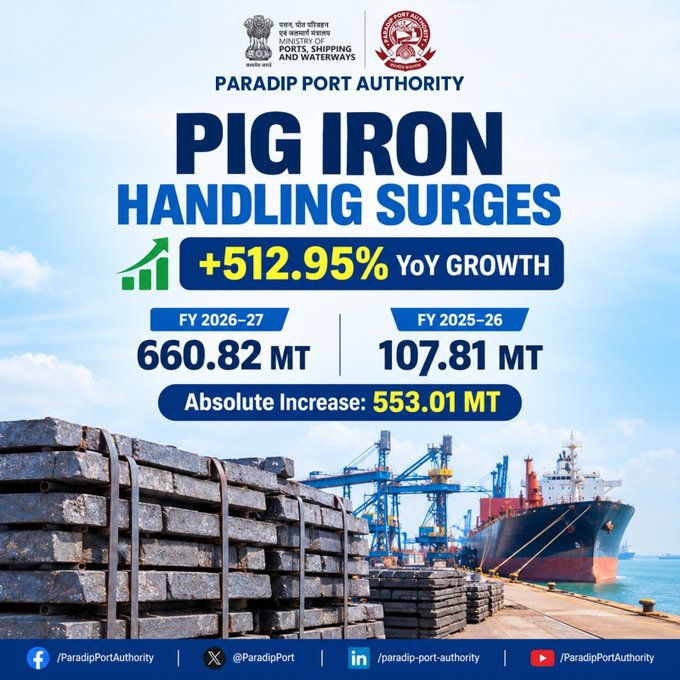
PARADIP : Paradip Port Authority (PPA) has registered an exceptional 512.95% year-on-year growth in pig iron handling during FY 2026–27, reflecting a significant increase in cargo volumes and the port’s growing role in supporting India’s industrial and maritime trade.

According to the latest figures shared by the port authority, Paradip Port handled 660.82 MT of pig iron in FY 2026–27, compared with 107.81 MT in FY 2025–26. This represents an increase of 553.01 MT over the corresponding period of the previous financial year.

The substantial growth highlights the port’s ability to handle increased cargo volumes and underscores the importance of efficient port operations in facilitating the movement of industrial raw materials and metal products. Pig iron is a key input for the iron and steel industry, making its efficient transportation an important component of the broader industrial supply chain.

The strong performance also reflects the significance of Paradip Port as a major maritime gateway on India’s eastern coast. With its strategic location, cargo-handling infrastructure and connectivity to industrial and hinterland markets, the port plays an important role in facilitating trade and supporting the country’s manufacturing and logistics ecosystem.

The sharp rise in pig iron volumes further demonstrates the importance of operational efficiency, effective cargo management and coordination among port stakeholders in meeting evolving trade requirements.

Paradip Port Authority continues to strengthen its cargo-handling capabilities and contribute to India’s maritime growth by facilitating the efficient movement of diverse commodities and supporting the nation’s expanding trade and industrial activities.

Key Highlights

FY 2026–27 pig iron handling: 660.82 MT

FY 2025–26 pig iron handling: 107.81 MT

Year-on-year growth: 512.95%

Absolute increase: 553.01 MT

VOC Port crosses 25 million tonnes in cargo throughput in FY 2026–27

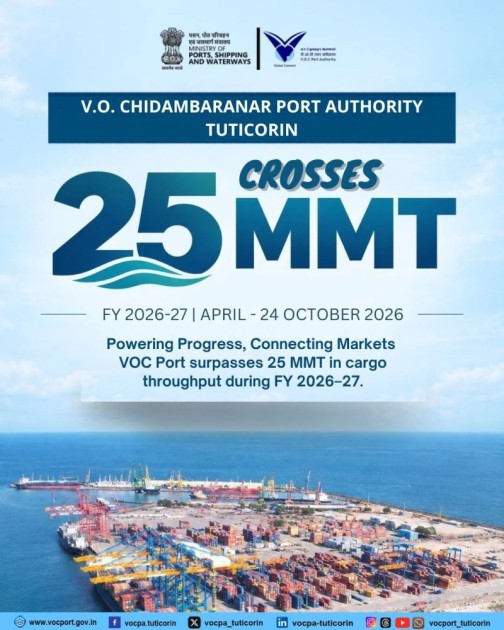
THOOTHUKUDI : V.O. Chidambaranar Port Authority (VOCPA), Tamil Nadu, has achieved a significant operational milestone by crossing 25 million tonnes (MMT) in cargo throughput during FY 2026–27. The landmark was achieved on October 24, 2026, reflecting the Port’s sustained operational performance and its contribution to India’s maritime trade.

The achievement highlights VOC Port’s continued focus on efficient cargo handling, improved port operations and strengthening connectivity with domestic and international markets. As a key maritime gateway on India’s southeastern coast, the Port plays an important role in facilitating EXIM trade and supporting the movement of cargo across vital trade routes.

Crossing the 25 MMT mark underscores the importance of robust port infrastructure, operational efficiency and coordinated logistics services in meeting the evolving requirements of India’s shipping and trade sectors.

This milestone further reinforces V.O. Chidambaranar Port Authority’s commitment to supporting port-led economic development, enhancing trade connectivity and contributing to the growth of India’s maritime sector.

Powering Progress, Connecting Markets.

Ashapura Logistics facilitates 80-Teu export block rake from JK Paper’s Rayagada Plant to JNPT

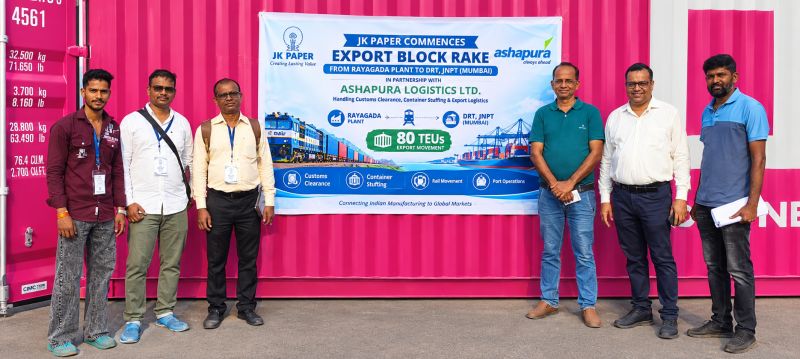
AHMEDABAD : Ashapura Logistics Limited has marked an important milestone in export logistics by supporting the movement of an 80-TEU export block rake from JK Paper’s Rayagada Plant in Odisha to DRT, Jawaharlal Nehru Port (JNPT), Mumbai, reinforcing the role of integrated multimodal transportation in facilitating efficient export operations.

The movement highlights the importance of seamless coordination between manufacturing facilities, rail networks and port infrastructure in strengthening India’s export supply chain. By leveraging its logistics expertise, Ashapura Logistics supported the movement through a comprehensive range of services, including customs clearance, export container stuffing, export logistics coordination, and integration with rail and port operations.

The use of rail-based container transportation for this export movement underscores the significance of multimodal logistics in connecting industrial production centres with major port gateways. Efficient coordination across the logistics chain helps streamline cargo movement and strengthens connectivity between Indian manufacturers and international markets.

Ashapura Logistics expressed its appreciation to JK Paper for the opportunity to support its export logistics requirements. The company reaffirmed its commitment to delivering reliable logistics solutions, operational excellence and customer-focused services while building stronger partnerships across the export and shipping ecosystem.

This milestone reflects Ashapura Logistics Limited’s continued focus on facilitating integrated logistics solutions and supporting the growing needs of India’s export sector.

Ashapura Logistics Limited — Always Ahead.

Capt. Harinder Singh elected to IOPC Funds’ Joint Audit Body, appointed Vice-Chair

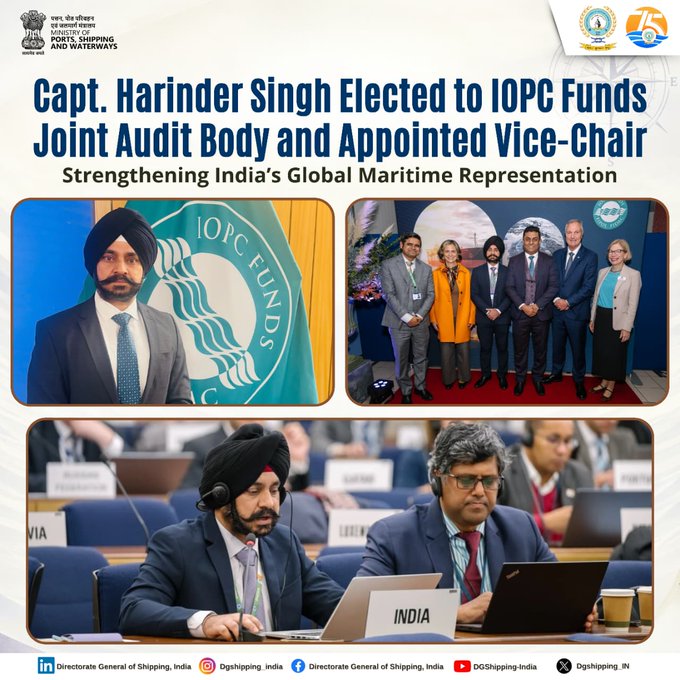
LONDON : Capt. Harinder Singh, Nautical Surveyor and Deputy Director General (Technical), Directorate General of Maritime Administration (DGMA), Ministry of Ports, Shipping and Waterways, Government of India, has been elected as a member of the Joint Audit Body of the 1992 Fund and the Supplementary Fund of the International Oil Pollution Compensation Funds (IOPC Funds). He has also been appointed Vice-Chair of the Body.

The election took place on October 22, 2026, during the 31st session of the 1992 Fund Assembly in London. Eight candidates nominated by Member States contested six available seats, making the election an important milestone in India’s continued engagement with international maritime governance.

The Joint Audit Body plays a critical role in ensuring independent oversight of the Funds’ financial reporting, internal control systems and risk management processes. Its work supports transparency, accountability and sound governance in the administration of international compensation mechanisms for oil pollution damage.

Capt. Singh’s election continues India’s representation on the Joint Audit Body, while his appointment as Vice-Chair marks the second occasion on which an Indian nominee has held this position. The development underscores India’s growing contribution to international maritime institutions and its commitment to strengthening the global framework for oil pollution liability and compensation.

The achievement also reflects the expertise of Indian maritime professionals and the country’s active participation in international efforts to promote responsible shipping practices, effective maritime governance and robust mechanisms for addressing marine pollution incidents.

The appointment marks a significant recognition of India’s role in advancing transparency, accountability and cooperation within the international maritime sector.

IMO highlights seafarers’ safety, fair treatment and wellbeing at ‘Crew Connect Global’ in the Philippines

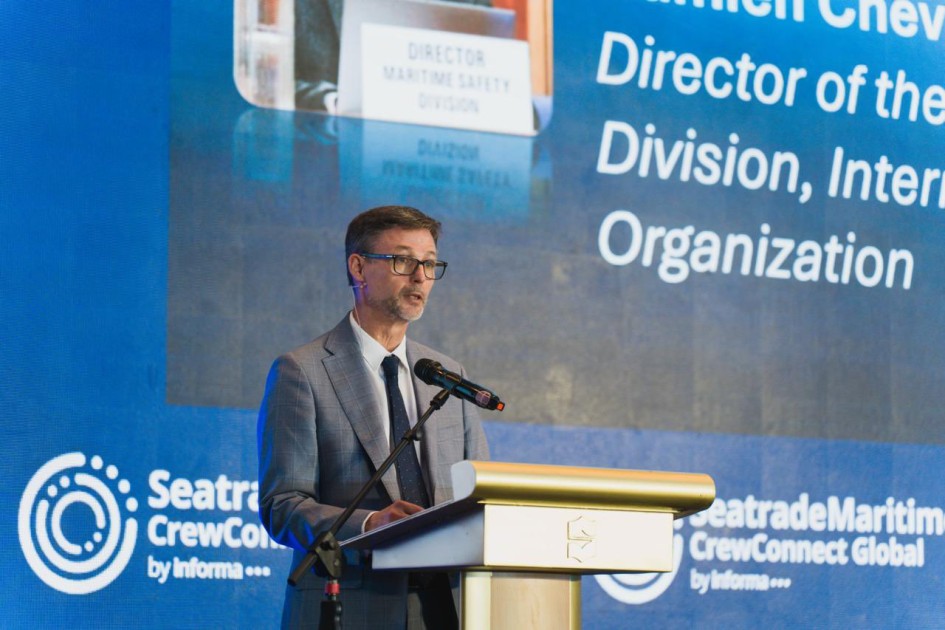
PHILIPPINES : The International Maritime Organization (IMO) has reiterated the importance of placing seafarers’ safety, protection and wellbeing at the centre of the global maritime agenda during discussions at Crew Connect Global in the Philippines.

Speaking at the event, D. Chevallier, IMO Maritime Safety Director, emphasised that maritime security, fair treatment, training and wellbeing are interconnected priorities that must be addressed collectively to safeguard seafarers and prepare them for the future of the shipping industry.

“Whether we are talking about security, fair treatment, training or wellbeing, we are discussing the same question: How do we ensure that seafarers remain safe, protected and prepared for the future?” Chevallier said.

The message highlights the essential role seafarers play in sustaining global trade and maintaining the uninterrupted movement of goods across international supply chains. As the maritime sector undergoes significant transformation driven by technological advancements, digitalisation, decarbonisation and evolving operational requirements, investing in the skills, safety and welfare of the maritime workforce has become increasingly important.

Ensuring safe working conditions, protecting seafarers’ rights, promoting fair treatment and providing access to quality maritime education and training are vital to building a competent, resilient and future-ready workforce. Equally important are mental health support, decent living and working conditions, and effective measures to address the risks and challenges associated with life at sea.

The discussions also underline the need for continued collaboration among governments, shipowners, maritime training institutions, seafarers’ organisations and other industry stakeholders. A coordinated approach is essential to strengthening safety standards, improving working conditions and ensuring that seafarers are equipped to meet the changing demands of modern shipping.

As the United Nations specialised agency responsible for the safety and security of shipping and the prevention of marine pollution by ships, the IMO continues to promote international cooperation and regulatory frameworks that support safer, more secure and sustainable maritime operations.

The central message from Crew Connect Global is clear: protecting seafarers is fundamental to the future of shipping. Their safety, dignity, skills and wellbeing must remain core priorities as the global maritime industry evolves.