Home Blog Page 43

GE Shipping to buy 82,000-cbm gas carrier as fleet expansion gathers pace

KOLKATA : The Great Eastern Shipping Company (GE Shipping) has contracted to acquire a secondhand very large gas carrier (VLGC) with a capacity of about 82,000 cubic metres, as it expands its fleet to meet demand for shipping services.

The vessel, built in 2015, is expected to join the company’s fleet in the third quarter of FY27. The acquisition contract was signed on October 23 and will be funded entirely through internal accruals, the company said in a stock exchange filing on Friday.

GE Shipping’s owned fleet currently comprises 40 vessels — 25 tankers and 15 dry bulk carriers — with a combined capacity of 3.24 million deadweight tonnes (dwt). The tanker fleet includes five crude tankers, 16 product tankers and four liquefied petroleum gas (LPG) carriers. Its dry bulk fleet comprises two Capesize, 10 Kamsarmax, one Ultramax and two Supramax vessels. The company said its fleet capacity utilisation was close to 100%.

GE Shipping has also contracted to buy two secondhand Kamsarmax dry bulk carriers, with both acquisitions expected to be completed in the third quarter of FY27.

Separately, the company has contracted to acquire a new-build Suezmax tanker, scheduled for delivery in the second half of FY29.

The VLGC and the two Kamsarmax vessels are expected to join the fleet in the third quarter of FY27, while the new-build Suezmax tanker is due in the second half of FY29.

Source : CNBC

Iran has detailed plans to hit Gulf undersea cables if war resumes, officials say

DUBAI : Tehran has drawn up detailed plans to target undersea communications cables in the Gulf if the United States and Israel attack Iran again, two senior Iranian security officials ​told Reuters. Their comments followed warnings by Iranian officials that undersea cables in the region could become targets in any renewed conflict if diplomacy with Washington ‌collapses.

The two Iranian security officials, speaking on condition of anonymity, gave few details and did not say how or where exactly Tehran would carry out such attacks. But one of them said Iran would aim to prevent repairs after any attacks to prolong disruptions to communications, including internet connections.

“If Iran is attacked, there will be no more red lines … from undersea cables to military bases, including covert ones,” one ​of the officials said. The official warned Washington not to “play with fire”, and said Iran had full access to the undersea cables and could easily destroy them.

Yadollah ​Javani, the deputy head of political affairs for Iran’s Revolutionary Guards (IRGC), said on Wednesday that Iran could target seven major internet cables beneath ⁠the Strait of Hormuz if Iranian infrastructure came under attack.
Undersea cables carry around 99% of global internet traffic, according to the International Telecommunication Union, a UN agency. But the ​global impact of such attacks by Iran could be limited as less than 1% of international bandwidth passes through the Strait of Hormuz, said Alan Mauldin, research director at telecommunications ​research firm TeleGeography.

The strait separates Iran and Oman, linking the Gulf to the Gulf of Oman and Arabian Sea. The US Department of State and Iran’s Foreign Ministry did not respond to Reuters’ requests for comment on the Iranian security officials’ remarks. There was no immediate comment from Gulf states.

‘STRONGER RESPONSE’
The plans for possible attacks on undersea cables reflect a conviction in Iran’s leadership that a renewed US military ​campaign would have to be met with a stronger response than before.
Top security official Mohsen Rezaei warned this month that US-linked digital infrastructure across the Gulf, including data centres and ​AI facilities, could be targeted in a renewed conflict.

Washington’s Gulf allies have invested heavily in such infrastructure and they “should hold Washington, not Tehran, responsible for any damage to undersea cables,” the second Iranian ‌security official ⁠said.

Alex Vatanka, director of the Iran program at the Middle East Institute in Washington, said such threats were intended to deter renewed conflict and put pressure on Washington by making Gulf governments and US companies fear for their investments in the region.”Tehran wants Gulf states and corporate executives to press (US President Donald) Trump over the risks his policies pose to their investment plans,” said Vatanka.

Multiple cable cuts could slow internet services and disrupt financial transactions, e-commerce and cloud computing, analysts said. The impact would depend on how operators rerouted traffic and ​the capacity available on alternative connections, Mauldin said.

Restoring ​connections during wartime could be difficult, ⁠experts said, and higher insurance costs and delays in obtaining permits to enter territorial waters could further complicate repairs. The Red Sea could offer a more significant target than the Strait of Hormuz, particularly if Iran had support from its Houthi allies in Yemen, though Tehran ​has made no public statement indicating it plans to target cables there.

The Red Sea carries data between Europe, East Africa and ​Asia, with capacity routed ⁠through it accounting for about 3% of global international demand and around 10% of traffic travelling between regions, Mauldin said.

Gulf governments have been investing heavily in technology to diversify beyond oil and become global artificial intelligence hubs, deepening ties with US technology firms. Iranian strikes directly hit two Amazon Web Services facilities in the UAE in March and damaged infrastructure near one of its ⁠facilities in Bahrain. ​The IRGC named US tech companies including Microsoft, Google, Apple and Nvidia as legitimate targets at the ​height of the war in March.

Land-based connections can provide alternative routes for internet traffic, and Gulf states and US technology companies are investing in additional infrastructure to improve resilience. Microsoft plans to invest more than $400 million in subsea ​and terrestrial connectivity across the Middle East by 2030.

Sources : Reuters

Oil spill off UAE coast prompts beach closures, cleanup effort

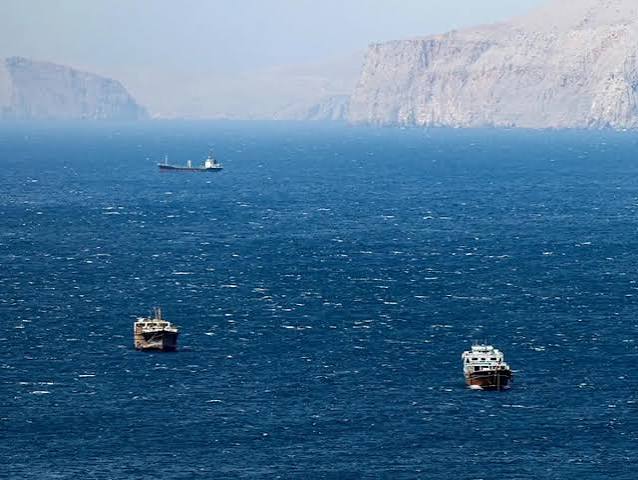
DUBAI : The United Arab Emirates said efforts were under ​way on Friday to contain oil leaking from a tanker vessel offshore that prompted authorities to close beaches and warn fishermen ‌to avoid the area. Since the start of the US-Israeli war with Iran, attacks on commercial vessels in Gulf shipping lanes have driven up security risks for maritime traffic and heightened fears over the conflict’s environmental fallout.

The UAE’s Ministry of Climate Change and Environment said in a statement that containment operations had been launched and an environmental assessment was being carried ​out. All beaches and coastal areas around the city of Umm Al Quwain had been temporarily closed until technical teams completed their assessments ​and determined the necessary safety and marine protection measures, it said.

The ministry also urged fishermen and other sea users ⁠to avoid affected areas and follow official instructions.
Authorities in Sharjah temporarily closed Al Hamriyah Beach, on the UAE’s northern coast near the border with Umm ​Al Quwain, as a precaution, the Sharjah Government Media Bureau said.

ANALYST IDENTIFIES LEAKING TANKER AS THE GEM NO.2
UAE authorities have not named the tanker involved in ​the incident or said what caused the spill. The environment ministry did not immediately respond to a request for comment. Martin Kelly, CEO of Orbital Risk Intelligence, told Reuters that the spill was coming from a tanker called the Gem No.2 and analysts say satellite imagery from October 19 and 21 appears to show a significant oil slick from ​the tanker.

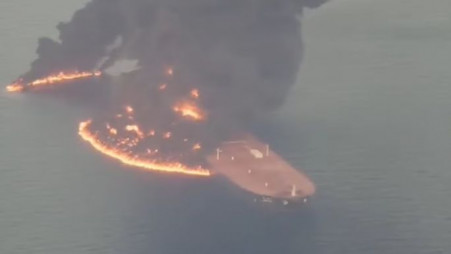
“The slick is considerably larger, covering approximately 160 km2, and looks to be coming from the ship,” Leon Moreland, researcher at the Conflict ​and Environment Observatory, said. “Furthermore, a slick this close to shore increases the chance it could impact nearby beaches and ecologically sensitive habitats,” he said. Shipping sources said on October 9 ‌that the ⁠Gem No.2 was struck by an unidentified projectile 13 nautical miles west of Al Jazeera in the UAE, causing a fire that was later extinguished.

While no group claimed responsibility, maritime security sources told Reuters at the time that the incident occurred outside the Strait of Hormuz and pointed to a widening of risks for commercial shipping. Earlier that week, a tanker was also struck off the coast of Qatar inside the Gulf.

SPILL PUTTING COASTAL INFRASTRUCTURE AT RISK
Maritime ​intelligence firm Windward first identified the spill ​on Tuesday, writing in a ⁠post on X that a VLCC-sized vessel was leaking oil about 25 km (16 miles) off Umm Al Quwain. Prevailing currents, it said at the time, could carry the slick southwest toward the UAE coastline.

“Windward’s drift model shows it reaching ​Sharjah’s and Ajman’s desalination intakes and ports by (October 22–23) if the leak isn’t stopped,” it wrote on X. Residents ​in some areas had ⁠posted on social media about strange odours. The ministry, however, said that odours reported in Sharjah, Ajman and Umm Al Quwain posed no health risks.

The smell was still pungent across Umm Al Quwain on Friday. The UAE relies on desalination plants for most of its drinking water, and much of the economy — including ports and ⁠industrial facilities — ​is also located on the coast, making any contamination along its shoreline particularly sensitive. The spill ​follows a separate tanker-related environmental incident in August, when oil from a tanker that ran aground off Oman began reaching the mainland coast.

Source : Reuters

Brent Crude continues to burn, trading at USD 115/Barrel amid Middle East tensions

NEW DELHI : Brent crude oil prices continued to remain around USD 115 per barrel on Monday amid escalating tensions in West Asia, with persistent supply concerns and the risk of further conflict keeping global oil markets on edge. Crude oil prices have surged more than 5 per cent over the past week and are trading near their 52-week high of USD 117.41 per barrel, reflecting concerns over the impact of the Middle East conflict on global energy supplies.


Ponmudi R, CEO of Enrich Money, said the continuing stand-off in the Middle East and the possibility of further escalation remained key concerns for domestic markets. “The continuing stand-off in the Middle East, with the risk of further escalation, remains a key concern for domestic markets. WTI crude is trading around USD 101– USD 102 a barrel, while Brent remains above USD 115, as persistent supply concerns continue to underpin prices and cloud the outlook for energy-importing economies,” he said.


Concerns over the security of critical infrastructure and energy shipments have added to market uncertainty. On Sunday, the US Department of State ordered non-emergency government personnel and eligible family members to leave Saudi Arabia, citing serious safety risks following recent missile and drone attacks on civilian airports and critical infrastructure by Iranian-backed Houthi forces, according to an announcement by the US Embassy in Riyadh.Meanwhile, US President Donald Trump claimed that oil transit through the Strait of Hormuz had surpassed pre-war levels.

He credited the US naval blockade and military operations with maintaining maritime flows.The Strait of Hormuz normally handles around 20–25 per cent of global seaborne oil and liquefied natural gas (LNG) flows; any disruptions in the waterway are a significant concern for global energy markets.In recent times, hostilities and drone and missile strikes have also knocked out roughly 3 million barrels per day of regional refining capacity across the Middle East, which is pushing global energy prices.

With crude prices remaining elevated amid geopolitical risks and physical supply disruptions, concerns over prolonged instability in the region continue to cloud the outlook for global energy markets and oil-importing economies.

Source : ANI

India’s first maritime NBFC SMFCL scales up with Rs 5,107 Cr. disbursed, aims for Rs 60,205 Cr. by 2031

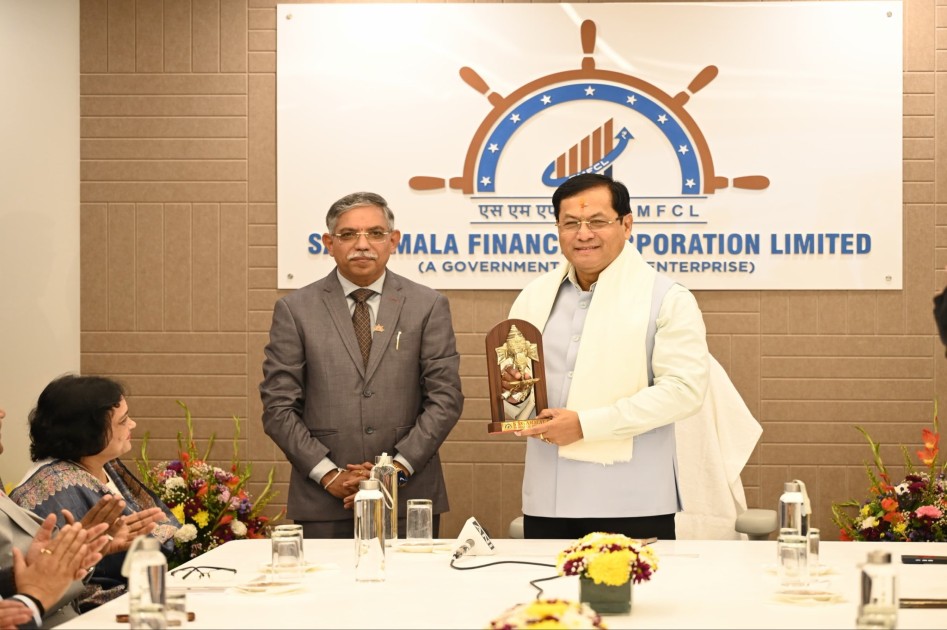
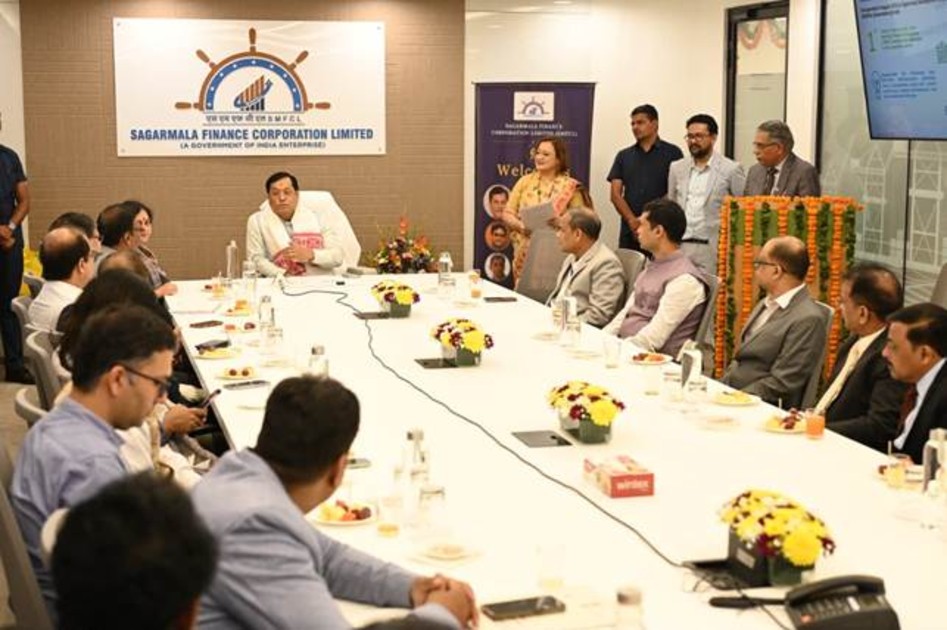
NEW DELHI : Union Minister of Ports, Shipping & Waterways (MoPSW), Shri Sarbananda Sonowal inaugurated the corporate office of Sagarmala Finance Corporation Limited (SMFCL) at the Institute for Studies in Industrial Development (ISID) in New Delhi on Friday, giving a permanent home to what he called India’s first dedicated Non Banking Financial Company (NBFC) in the maritime sector.

The new office opens at a time of fast progress. As on 30 September 2026, SMFCL has sanctioned Rs 11,563 crore of financing and disbursed Rs 5,107 crore, with more than half of the sanctioned amount still to be drawn as projects advance.

The corporation’s plan looks well beyond today. It aims to reach cumulative disbursements of Rs 60,205 crore by the end of FY2031, a build-up that depends on equity support to scale up in line with RBI norms and its debt-to-equity ratio.

“As India’s first dedicated NBFC in the maritime sector, SMFCL is playing a pivotal role in mobilising long-term finance for port-led development, enhancing shipbuilding and coastal connectivity and catalysing the overall growth of our maritime economy. It has a vital role to play in propelling India’s maritime growth towards achieving the vision of PM Narendra Modi of becoming a leading maritime nation of the world by 2047,” Sarbananda Sonowal said.

The Maritime Development Fund (MDF), which has two components, is also taking shape. For its MIF component, SBI Ventures Limited has been appointed official Fund Manager. Registration as an Alternative Investment Fund with SEBI is due to be completed by the end of November, and the first close of Rs 5,000 crore is targeted by January, 2027.

The Interest Incentivisation Fund (IIF) is already delivering. Its online portal, www.iifmdf.in, is live, and loans of Rs 4,500 crore have been supported so far. About Rs 25 crore of interest subvention has been released against interest paid by borrowers.

“Under PM Narendra Modi’s transformative Maritime Amrit Kaal Vision 2047, India is building a stronger, more self-reliant and globally competitive maritime sector,” Sonowal said.

The schemes SMFCL runs now cover a maritime project from first idea to final loan. The Government of India’s contribution to the Maritime Investment Fund, up to Rs 9,800 crore, is channelled through SMFCL, while SBI Ventures, selected as Fund Manager, brings professional management to the fund.

The Interest Incentivisation Fund eases the cost of borrowing for eligible shipyards, with SMFCL working out the incentive, running the application and claims portal, and releasing the interest support. Under the Shipbuilding Development Scheme, the credit risk cover corpus is managed centrally and backed by premium and claims review, giving shipyards and lenders a safety net against payment risk.

SMFCL’s own lending appraises, sanctions and monitors projects across ports, rail and road links, inland waterways, coastal infrastructure, port-hinterland logistics, shipbuilding and ship repair. It also oversees the release and use of Sagarmala and National Maritime Heritage Complex (NMHC) funds, so that money reaches projects and is tracked until it is spent.

India and the Netherlands explore stronger maritime cooperation in Green Shipping and Sustainable Port Development

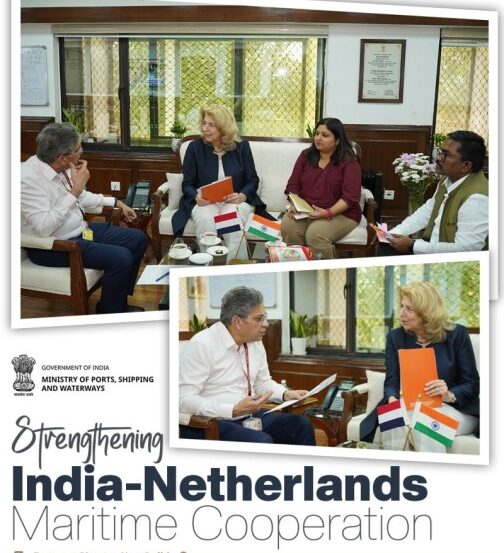
NEW DELHI: Shri Vijay Kumar, IAS, Secretary, Ministry of Ports, Shipping and Waterways (MoPSW), held a bilateral meeting with the Ambassador of the Netherlands to India to explore opportunities for strengthening maritime cooperation between the two countries, with a focus on green shipping, sustainable port development and advanced logistics technologies.

The meeting highlighted the shared commitment of India and the Netherlands to building a more sustainable, efficient and technology-driven maritime sector. Discussions centred on expanding collaboration in environmentally responsible shipping practices, promoting cleaner port operations and leveraging technological innovations to improve logistics efficiency across the maritime supply chain.

Green Shipping and Sustainable Ports in Focus

Green shipping remains a key priority for the global maritime industry as countries work towards reducing greenhouse gas emissions and accelerating the transition to cleaner fuels and energy-efficient vessels. India and the Netherlands can explore opportunities for cooperation in alternative marine fuels, port electrification, energy efficiency and the adoption of sustainable maritime technologies.

The discussions also underscored the importance of developing sustainable port infrastructure, modernising cargo-handling systems and deploying digital solutions to improve operational efficiency, connectivity and cargo movement.

Advancing Logistics Technology and Knowledge Exchange

With both countries possessing important maritime and logistics capabilities, cooperation in digitalisation, smart-port solutions, supply-chain optimisation and the exchange of technical expertise could further strengthen bilateral engagement. Greater collaboration between ports, shipping companies, technology providers and maritime institutions could also help identify new opportunities for innovation and investment.

The Netherlands, with its established port and logistics ecosystem, offers scope for knowledge-sharing in port management, multimodal connectivity and the integration of advanced technologies into maritime operations.

Strengthening India–Netherlands Maritime Partnership

The bilateral engagement reflects the importance of international partnerships in advancing India’s maritime development priorities, including the modernisation of ports, improvement of logistics efficiency and promotion of sustainable shipping practices.

Closer cooperation between India and the Netherlands could contribute to building resilient supply chains, encouraging maritime innovation and supporting the long-term transition towards a greener and more competitive global maritime industry.

The meeting reaffirmed the importance of continued dialogue and collaboration between the two countries to explore mutually beneficial opportunities in the evolving maritime and logistics landscape.

TCI Seaways explores Dedicated Service with Chennai Port Authority under BIMSTEC initiative

Chennai–Ranong Shipping Link in Focus to Boost India–Thailand Trade

CHENNAI: India–Thailand maritime connectivity could receive a boost with TCI Seaways, a division of Transport Corporation of India Ltd. (TCI), exploring a proposed dedicated shipping service between Chennai and Ranong, Thailand, under the BIMSTEC trade initiative.

According to a post shared by Chennai Port Authority, a delegation led by Mr. R. U. Singh, President & CEO, TCI Seaways, met Shri Sachin S. Kurve, IAS, Chairman, Chennai Port Authority, to discuss the proposed service and opportunities to strengthen maritime cooperation between the two countries.

The discussions focused on improving shipping connectivity, facilitating bilateral trade and developing efficient maritime logistics solutions to support regional commerce.

If implemented, the proposed Chennai–Ranong service could provide an additional shipping link between India and Thailand, strengthen port-to-port cooperation and create new opportunities for businesses and logistics operators. It could also support more integrated regional supply chains and improve cargo connectivity across the Bay of Bengal.

The initiative aligns with BIMSTEC’s broader objectives of promoting regional trade, transport connectivity and economic cooperation among countries surrounding the Bay of Bengal.

While the service remains at the proposal stage, the discussions mark a step towards exploring stronger maritime links between India and Thailand, with the potential to expand trade opportunities and reinforce Chennai’s role in regional shipping and logistics networks.

Adani Ports expands Middle East footprint with new Oman subsidiary

AHMEDABAD: Adani Ports and Special Economic Zone Ltd (APSEZ), India’s largest private ports operator, has established a subsidiary in Oman as it expands its international logistics and maritime operations.

The company, Indian Ocean Gateway Terminal, was incorporated on October 21, 2026, through Adani International Ports Holdings Pte Ltd, APSEZ’s wholly owned international holding company.

In a disclosure dated October 22, APSEZ said the new entity had share capital of 500,000 Omani rials, divided into 100 shares valued at 5,000 rials each.

Adani International Ports Holdings owns the entire shareholding, making the Omani company a wholly owned step-down subsidiary of APSEZ.

The company said the entity had been established to conduct operations locally as part of its wider international expansion.

The disclosure did not identify a specific port, terminal concession, construction project or commercial agreement associated with the new subsidiary.

Oman adds to international footprint

Oman’s location on the Arabian Sea gives it strategic importance for shipping routes connecting India, the Persian Gulf, East Africa and international markets.

Its major commercial ports, including Sohar, Duqm and Salalah, support container shipping, industrial cargo, energy exports and logistics services.

The country has been investing in transport infrastructure and industrial development as part of efforts to diversify its economy beyond hydrocarbons.

For international port operators, Oman offers access to shipping networks serving both Gulf markets and the wider Indian Ocean.

APSEZ has not specified which of these opportunities its new subsidiary will pursue.

The incorporation nevertheless gives the company a locally registered entity through which it could undertake future business activities, subject to the necessary agreements and regulatory approvals.

The announced share capital should not be confused with the cost of a port development. No investment commitment of that kind has been disclosed.

Overseas terminals already form part of strategy

APSEZ has been expanding beyond its Indian port network through investments, concessions and partnerships.

In Tanzania, its international holding company signed a 30-year concession agreement with the Tanzania Ports Authority in May 2024 to operate and manage Container Terminal 2 at Dar es Salaam Port.

The terminal comprises four berths and has an annual handling capacity of approximately one million twenty-foot equivalent units, or TEUs.

The agreement gave the group an operating presence in East Africa, a region connected to major shipping routes across the Indian Ocean.

In Sri Lanka, APSEZ is part of the consortium developing Colombo West International Terminal, alongside John Keells Holdings and the Sri Lanka Ports Authority.

The terminal began operations in April 2025 under a 35-year build-operate-transfer arrangement.

The approximately $800 million project has a planned annual capacity of 3.2 million TEUs, with a 1,400-meter quay and a depth of 20 meters.

Colombo is an important transshipment center serving cargo moving between the Indian subcontinent and international shipping networks.

These projects illustrate the group’s existing approach to overseas expansion, although APSEZ has not indicated whether the Oman subsidiary will follow a similar model.

Expansion beyond container terminals

APSEZ’s international activities also include marine services and offshore support operations.

Its acquisition of a controlling interest in Astro Offshore expanded the group’s offshore vessel fleet and strengthened its presence in the Middle East, Africa and Asia.

Astro Offshore brought 26 offshore support vessels, including anchor-handling tugs, barges, multipurpose support vessels and workboats.

Such vessels serve industries including offshore energy, engineering and renewable energy development.

APSEZ’s marine-services operations also include Ocean Sparkle and other group businesses involved in harbor and offshore activities.

The Oman subsidiary could provide a corporate platform for future maritime activities, but the company has not disclosed any direct connection between Indian Ocean Gateway Terminal and these existing businesses.

The immediate significance of the Oman announcement is corporate rather than operational.

APSEZ has created a wholly owned local subsidiary, but has not announced that it has secured a terminal concession, acquired port infrastructure or begun construction.

The scale of any future investment, the nature of its services and its expected contribution to group revenue remain unknown.

Those details will determine whether the new company becomes a significant addition to APSEZ’s overseas portfolio or serves primarily as a vehicle for local operations.

CONCOR and Honda Motorcycles strengthen logistics partnership with first container rake dispatch from MMLP Kathuwas

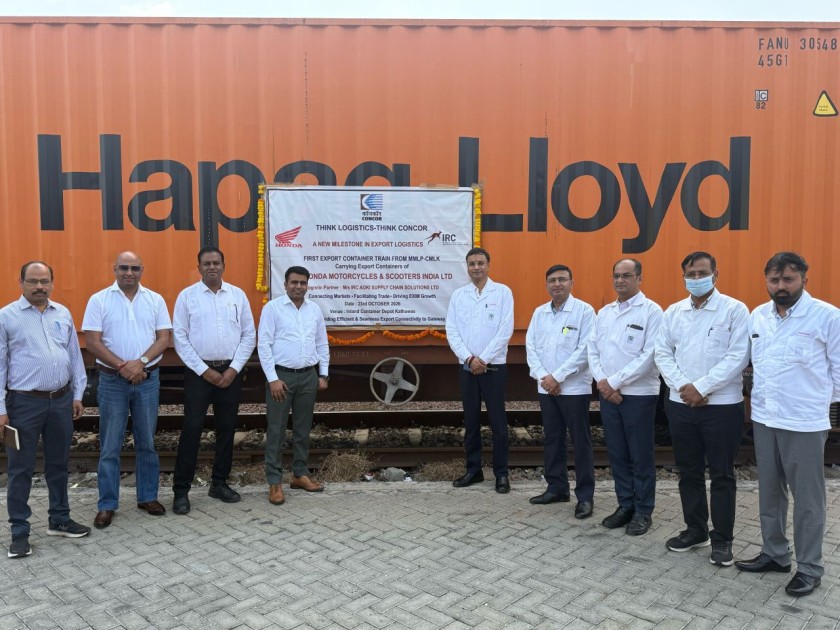
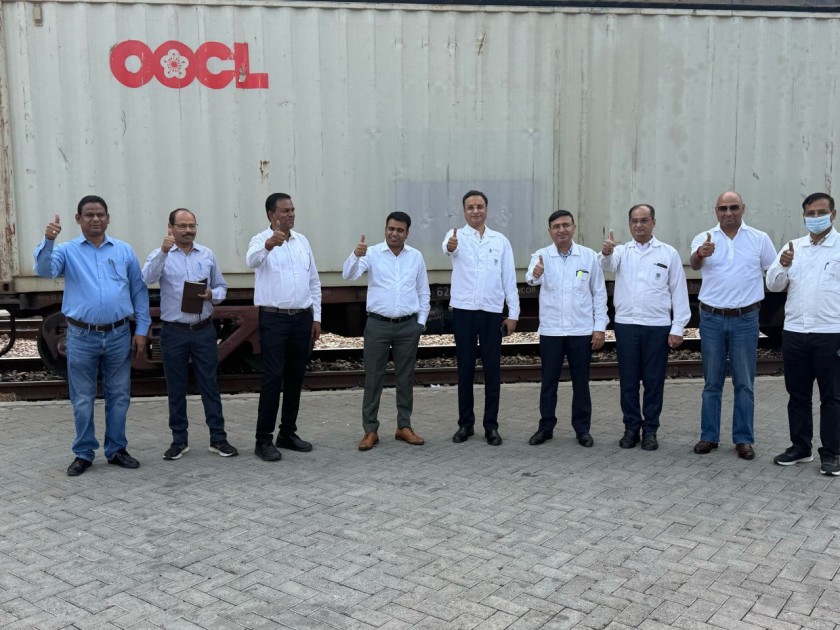
NEW DELHI: Container Corporation of India Limited (CONCOR) has achieved a significant milestone in its logistics collaboration with Honda Motorcycle, with the successful dispatch of the first rake of motorcycle containers by rail from its Multimodal Logistics Park (MMLP) at Kathuwas (CMLK), Rajasthan.

The milestone was marked during a strategic review meeting hosted by CONCOR for Honda Motorcycle’s export, domestic and finance leadership teams at MMLP Kathuwas. The meeting focused on identifying new opportunities to strengthen the partnership and enhance the efficiency of integrated supply chain operations.

CONCOR hONDA mOTOR CONCOR and Honda Motorcycles strengthen logistics partnership with first container rake dispatch from MMLP Kathuwas

Focus on Integrated, End-to-End Logistics Solutions

Discussions centred on expanding collaboration across warehousing, First and Last Mile Mobility (FMLM) and Export-Import (EXIM) operations. The two organisations explored opportunities to leverage their respective capabilities to develop seamless, reliable and cost-effective logistics solutions supporting domestic distribution as well as international trade.

The proposed areas of collaboration are expected to create greater synergies across transportation, storage and cargo movement, while supporting improved supply chain visibility, operational coordination and logistics efficiency.

First Rail Rake Marks a Key Milestone

The successful dispatch of the first rake carrying Honda motorcycle containers represents an important step towards strengthening rail-based freight movement between the two organisations. The initiative highlights the potential of multimodal logistics in supporting the movement of manufactured goods through coordinated transportation solutions.

Greater utilisation of rail freight can help optimise cargo movement, improve transportation efficiency and support efforts to reduce the environmental footprint of logistics operations, depending on the transport mix and operational conditions.

Driving Sustainable Growth Through Collaboration

The strategic engagement reinforces CONCOR’s commitment to providing integrated logistics services through its network of terminals, multimodal logistics parks, warehousing facilities and rail-linked transportation solutions.

For Honda Motorcycle, the collaboration offers an opportunity to explore more integrated logistics arrangements for domestic distribution and export-related movements.

The successful first rake dispatch provides a strong foundation for further cooperation between CONCOR and Honda Motorcycle, with both organisations looking to build on this milestone and explore opportunities to scale up their logistics partnership.

The engagement underscores the growing importance of industry partnerships in developing efficient, sustainable and future-ready supply chains for India’s manufacturing and export sectors.

Indian shipyards double delivery pipeline, but still hold only 0.5% of global orders

NEW DELHI: Indian shipyards held an order book of 1.1 million compensated gross tonnage (CGT) as of September 1, 2026, accounting for just 0.5% of the global total, highlighting the scale of the challenge facing the country’s ambition to emerge as a major shipbuilding hub.

India ranked 12th globally, trailing China, South Korea, Japan, Italy, Russia, France, Vietnam, Germany, the Philippines, the U.S. and the Netherlands, Niels Rasmussen, Chief Shipping Analyst at BIMCO, the international shipping association, told The Hindu.

However, domestic shipyards are poised for a pickup in activity. Deliveries scheduled for 2026-2030 are nearly double the tonnage delivered during 2021-2025, Mr. Rasmussen said. The volume could increase further if additional orders are secured for delivery within the period. The Centre’s ₹69,725-crore shipbuilding package aims to propel India into the world’s top 10 shipbuilding nations by 2030 and the top five by 2047.

Global order book hits record
India’s expansion plans come against the backdrop of a rapidly growing global market dominated by a handful of countries. The global shipbuilding order book reached a record 203.2 million CGT on September 1, 2026, up 13% from a year earlier. The previous high was 195.4 million CGT, recorded in 2008.

China has captured the lion’s share of the expansion, securing 74% of the tonnage contracted globally over the past year. Chinese shipyards now account for 64% of the global order book, followed by South Korea at 19% and Japan at 6%.

China’s dominance extends across major shipping segments. Its shipyards hold more than 72% of orders in each of the six main cargo sectors, including container ships, tankers and dry bulk carriers. Container ships alone account for 30% of the global tonnage currently on order.

Capacity expansion risks
The unprecedented order book is also placing pressure on China’s shipbuilding capacity. Chinese yards are scheduled to deliver a record 44 million CGT in 2028, almost twice the 22.7 million CGT delivered in 2025.

“The capacity expansion needed to achieve this could increase the risk of underutilisation if contracting weakens in the future,” Mr. Rasmussen said.

Source: The Hindu