Home Blog Page 434

MoPSW highlights Port Development and Inland Waterways in Kerala

NEW DELHI : The Union Minister of Ports, Shipping, and Waterways, Shri Sarbananda Sonowal, informed in a written reply to the Lok Sabha that, Vizhinjam International Seaport Project is being developed under the Public Private Partnership (PPP)model between the Government of Kerala (GoK) and Adani Vizhinjam Port Private Limited (AVPPL)for which a concession agreement was signed on 17.08.2015. The Phase I of the project became operational on 03.12.2024, with an annual handling capacity of 1 million twenty-foot equivalent units (TEUs). The Government of Kerala and the AVPPL, through a supplementary concession agreement dated 28.11.2024, have decided to implement Phase II, III and IV together as a single capacity augmentation phase with completion target of December 2028. This will increase the capacity to 3 million TEUs per annum with a potential to handle upto 5.7 million TEUs per annum through enhanced automation and operational efficiencies.

The details of central assistance and investment including Viability Gap Funding (VGF) extended to the Vizhinjam International Seaport Project and the expenditure incurred till date are as under:.

  1. Viability Gap Funding by Govt. of India (GoI): Rs. 817.80 crore – 100% expenditure incurred
  2. Scheme for Special Assistance to States for Capital Investment by GoI:
  • FY 2023-24: Rs. 145.07 crore – 100% expenditure incurred
  • FY 2024-25: Rs. 1,134.52 crore – Rs. 1134.46 crore expenditure incurred
  • FY 2025-26: Rs. 341.30 crore sanctioned and first installment Rs. 225.258 crore released and Rs. 184 crore expenditure incurred as on 31.01.2026

The details of expenditure incurred by Indian Waterways Authority of India(IWAI) during the last five years for development of inland waterways including Vembanad–Kuttanad system in Kerala is as under:

Financial Year2020-212021-222022-232023-242024-25
Expenditure (in₹ crore)21.5210.833.824.7615.26

The IWAI has undertaken various works in the declared National Waterways (NW) i.e. NW-3, NW-8 and NW-9 in the state of Kerala along with several measures for enhancement of cargo handling, passenger movement, and employment generation, which are as under:

  1. Re-construction of navigation lock cum bridge at Thrikunnapuzha in NW- 3 (progress: 52%);
  2. Construction of a new single-lane bridge at Kovilthottam in Chavara in NW- 3 (progress: 80%);
  3. Dredging and widening works, including bank protection and removal of hard strata in Edapallikota – Kollam stretch in NW-3 (progress: 15%);
  4. Construction of HDPE floating jetties at IWT terminals (progress: 10%) and construction of a new survey launch (progress: 20%) in NW-3.

In addition, the IWAI has undertaken the following initiatives for the promotion of Inland Water Transport (IWT) in the state of Kerala:

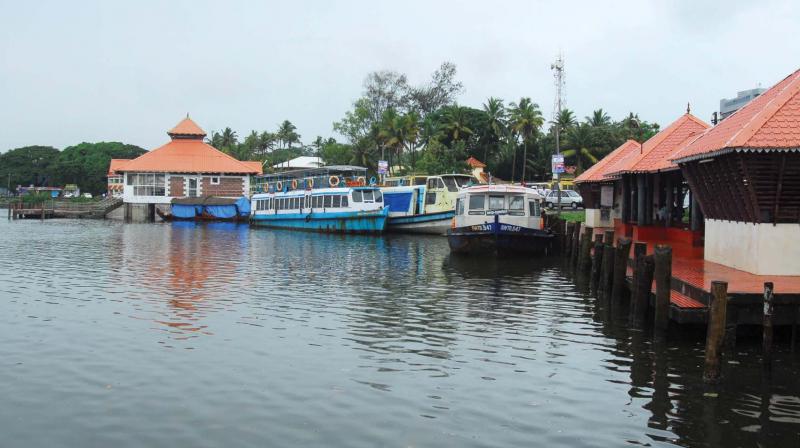
  1. Constructed 9nos. Inland Water Transport Terminals (IWT) terminals cum godowns at Kottapuram, Aluva, Maradu, Vaikom, Thaneermukam, Alappuzha, Thrikunnapuzha, Kayamkulam, and Kollam for cargo handling, and 2nos. Roll on – Roll off (Ro-Ro) terminals at Bolgatty and Willington Island in NW-3 for Ro-Ro service to de-congest Kochi city traffic;
  2. Constructed 02 nos. Ro-Ro vessels through Cochin Shipyard Limited (CSL), Kochi, and operating between Bolgatty and Willington Island in NW-3 through Kerala Shipping and Inland Navigation Corporation, Kochi (Govt. of Kerala), to de-congest the roads in Kochi city;
  3. Navigational buoys installed in NW-3 (312 nos.), NW-8 (15 nos.), and NW-9 (25 nos.) for 24 hours of safe navigation of vessels;
  4. Planned construction of 04 nos. HDPE jetties at IWT terminals (Vaikom, Thaneermukam, Alappuzha, and Kayamkulam) for River Cruise Tourism in NW-3;
  5. Undertaken feasibility studies such as Urban Water Transport at Alappuzha and Kollam through Kochi Water Metro Ltd.
NITI Aayog releases Sixth Edition of Trade Watch Quarterly (Q2 FY2025–26)

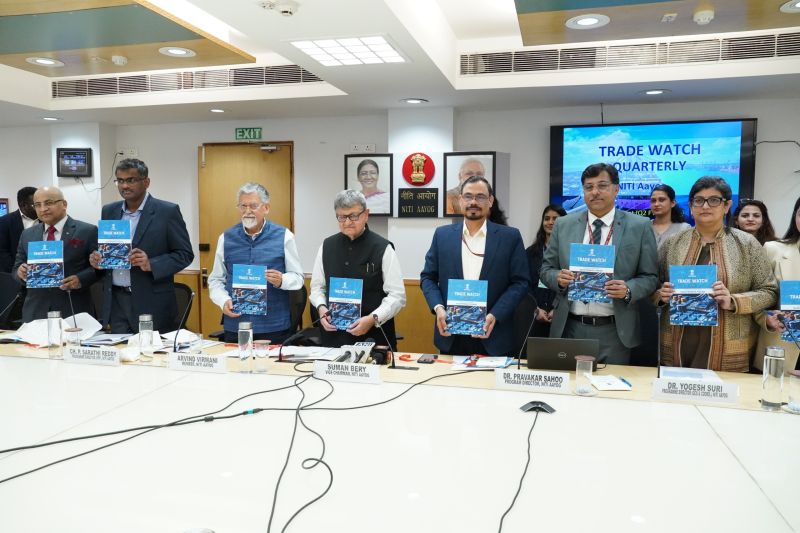
NEW DELHI : NITI Aayog released the Sixth Edition of Trade Watch Quarterly (Q2 FY2025–26) on 13th February 2026 in New Delhi. The publication was released by Shri Suman Bery, Vice-Chairman, NITI Aayog.

The edition, covering July–September 2025, highlights India’s resilient trade performance amid global economic uncertainties, with overall exports rising by around 8.5% during the quarter. Electrical machinery exports grew by 33.4% outpacing imports, while fertiliser imports saw a sharp 239 % year-on-year increase. The report also notes stronger exports to key markets and India’s expanding engagement with the Global South and increasing role of e-commerce as a driver of export growth.

This quarter’s thematic focus is on electronics, now India’s second-largest export category. Electronics exports have grown fivefold between 2016 and 2024, reaching USD 42.1 billion, driven largely by mobile phone exports. Supported by initiatives such as the Electronics Components Manufacturing Scheme, the sector is positioned to play a pivotal role in strengthening India’s integration into global value chains, logistics, tariff, skill reforms and advancing its technological and export competitiveness.

IMU’s AZIMUTH 2026 Concludes Successfully at Chennai Campus, Showcasing the Digital Future of Maritime

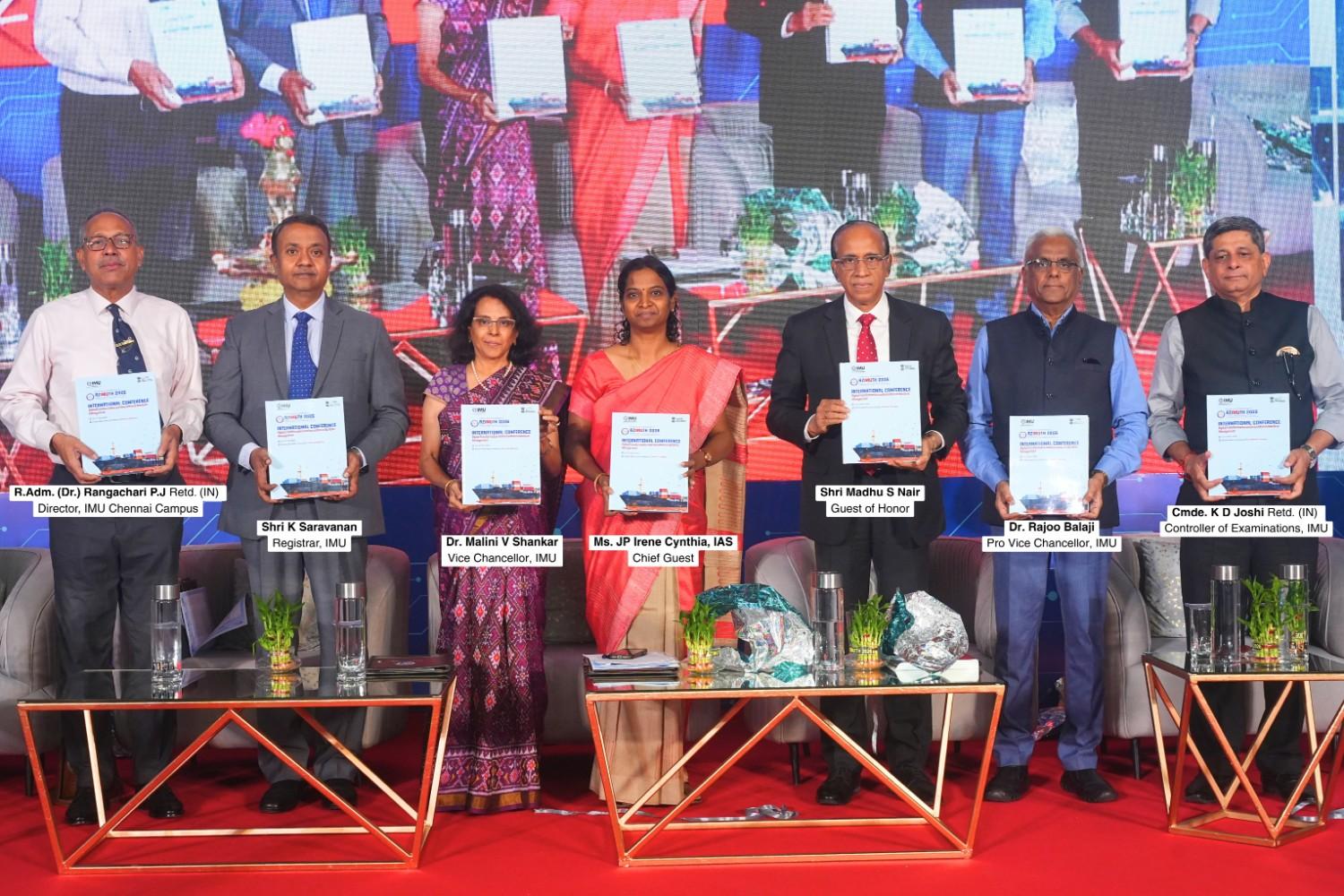
CHENNAI: The Indian Maritime University (IMU), a central university under the Ministry of Ports, Shipping and Waterways, Government of India, successfully concluded AZIMUTH 2026 – Academic Zeal for Innovation in Maritime: Understanding Transformation and Horizons, an international conference dedicated to Digital Transformation and Innovation in Maritime Management, held at the IMU Chennai Campus on 12–13 February 2026.

AZIMUTH 2026 brought together a diverse and influential gathering of global maritime leaders, policymakers, academicians, researchers, technologists, and industry professionals to examine how emerging technologies are reshaping the future of maritime operations, logistics, sustainability, safety, and governance.

The conference served as a strategic platform to accelerate dialogue on the regulatory frameworks, global standards, and governance systems required to support maritime digital transition while ensuring long-term resilience, security, and efficiency across maritime ecosystems.

Key Focus Areas and Thematic Tracks

Aligned with India’s maritime vision and the evolving needs of global shipping and port ecosystems, AZIMUTH 2026 featured discussions, research presentations, and expert sessions across six major thematic tracks:

Smart Ports, Logistics & Supply Chain Technologies

Maritime Data Science, AI & Predictive Analytics

Cybersecurity, Digital Governance & Regulatory Innovation

Autonomous Shipping, Smart Navigation & Fleet Operations

Sustainability, Circular Economy & Green Maritime Solutions

Integrated Transport Ecosystems

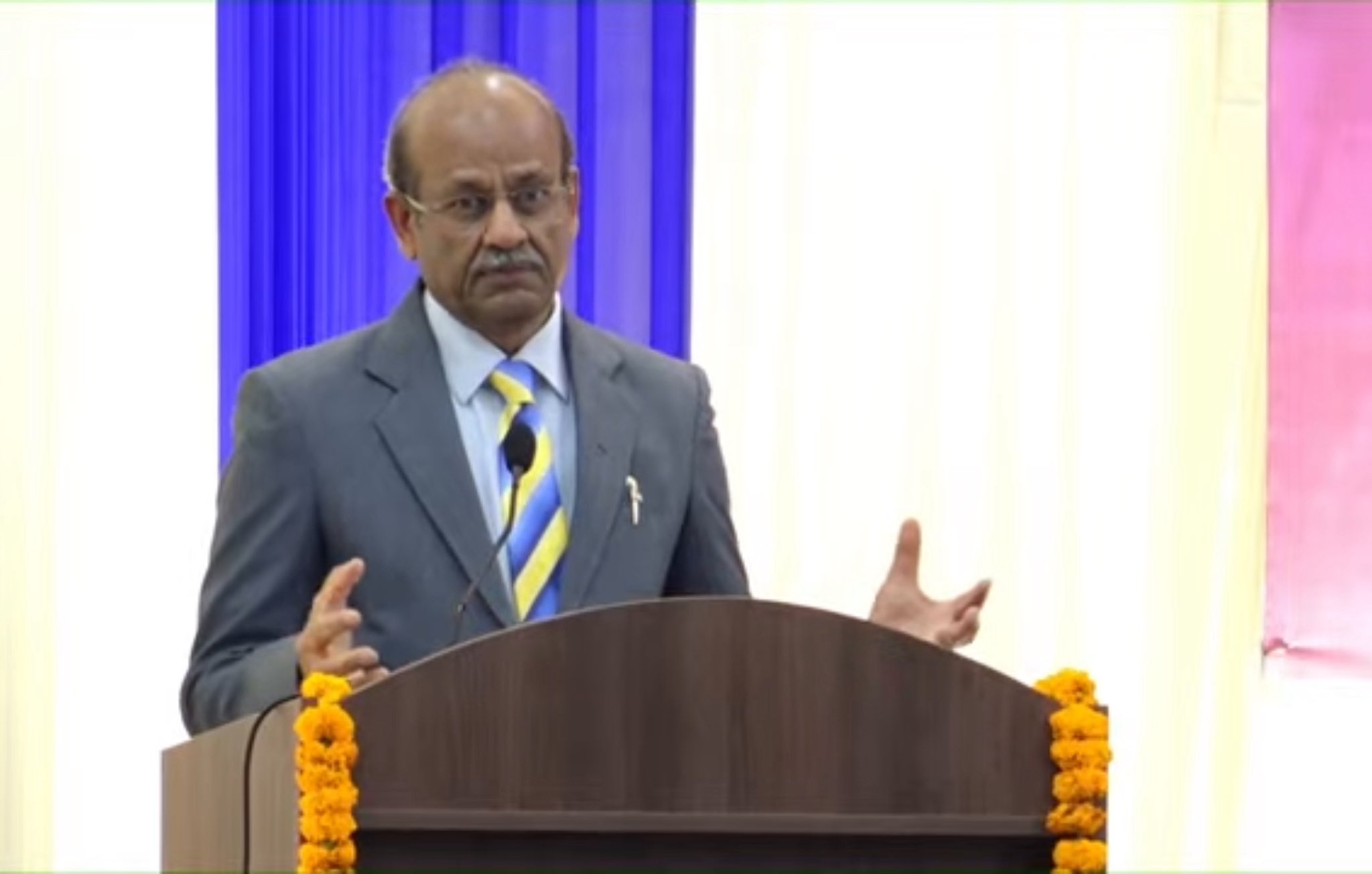
Speaking during the conference, Prof. Malini V. Shankar, Vice Chancellor, Indian Maritime University, emphasized the importance of aligning innovation with execution and national priorities and said “All the initiatives that have been taken are in alignment with what was planned and documented. So, it’s a commitment of India to not just put it on paper but actually to implement it,” she stated.

AZIMUTH 2026 concluded with a strong consensus on the need for collaborative action between academia, industry, and government to ensure that maritime innovation remains both scalable and secure. Selected research papers presented during the conference will be considered for publication through official conference channels, strengthening knowledge exchange and global academic contribution.

With this successful edition, IMU reinforced its role as a national and international hub for maritime research, policy dialogue, and technology-driven transformation—supporting India’s broader ambition to lead in smart, sustainable, and secure maritime ecosystems.

About Indian Maritime University (IMU)

The Indian Maritime University (IMU) is a Central University under the Ministry of Ports, Shipping and Waterways, Government of India, committed to advancing maritime education, research, and capacity building across the country and beyond.

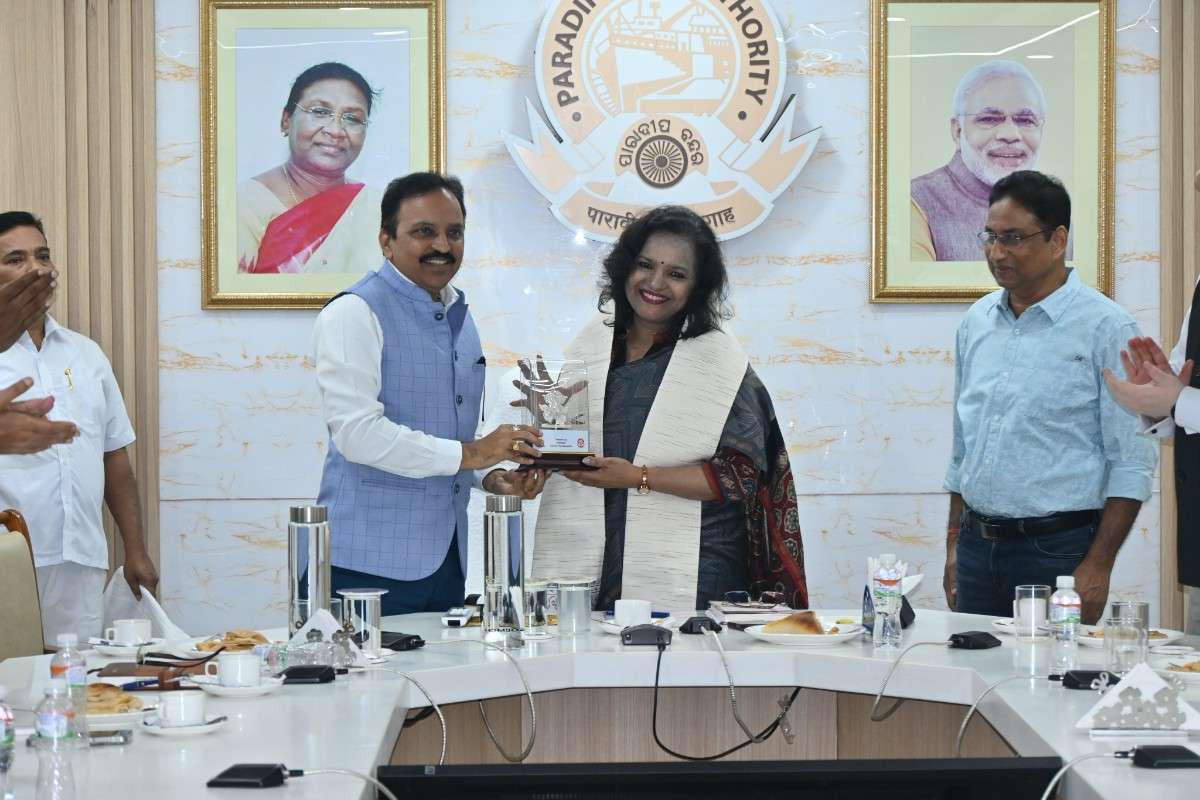
Anu Garg, IAS, Hon’ble Chief Secretary, Govt of Odisha, visited Paradip Port Authority (PPA)

PARADIP : Smt. Anu Garg, IAS, Hon’ble Chief Secretary, Government of Odisha, visited Paradip Port Authority (PPA) to review its operations and long-term expansion plans. She was received by Shri P. L. Haranadh, IRTS, Chairman, PPA, at the Wet Basin and accorded a Ceremonial Guard of Honour by the CISF Unit. She also took a launch ride to review berth readiness, vessel traffic management systems, and marine operations.

Paradip Port achieved a record cargo handling of 150.41 MMT in FY 2024–25, ranking as India’s No. 1 Major Port. With a rated capacity of 289 MTPA, industry-leading productivity, and a provisional net surplus of ₹1,860 crore, the Port continues to set national benchmarks while maintaining the lowest vessel and cargo charges among major ports.

During the interaction, the Chief Secretary outlined Odisha’s ambitious economic roadmap targeting USD 500 billion by 2036 and USD 1.5 trillion by 2047. She emphasized the need for double-digit growth driven by exports, shipbuilding, and port-led development, highlighting Odisha’s coastline as a strategic advantage.

She underscored the importance of the “Paradip Port 2.0” vision, including capacity expansion beyond 500 MTPA, Western Dock deepening, and development of a dedicated green hydrogen berth. Discussions also covered the proposed 150 MTPA Bahuda Port in Ganjam district and a 1.2 million GT capacity shipbuilding and ship repair cluster north of the Mahanadi in Kendrapara district. These projects, to be developed through a Special Purpose Vehicle between the Government of Odisha and Paradip Port Authority, are expected to significantly strengthen the State’s maritime economy. Development of a cruise terminal at Puri was also discussed, with emphasis on priority implementation.

The Chief Secretary stressed integrated development of Paradip alongside industrial growth in PCPIR, the Plastic Park, AMNS, and the Green Hydrogen hub, supported by industrial townships, housing, tourism infrastructure, and urban amenities. She highlighted planned land use, strong law and order, and inclusive public infrastructure as key enablers of growth.

Referring to Odisha’s strong fiscal position and high capital expenditure allocation, she called for diversification beyond mining into shipbuilding, renewable energy, rare earth processing, aerospace, apparel, tourism, and cruise development to ensure sustainable long-term expansion.

The visit reaffirmed a shared commitment to transform Paradip into a globally competitive maritime gateway and a major driver of Odisha’s economic and maritime growth.

District Collector and District Magistrate of Jagatsinghpur, Shri J. Sonal, IAS, and Superintendent of Police, Jagatsinghpur, Shri Ankit Kumar Verma, IPS, were also present on the occasion. Shri T. Venu Gopal, Deputy Chairman, PPA, along with senior officials of Paradip Port Authority, attended the deliberations.

Railway Board asks DFCCIL to fast-track Dankuni–Surat DFC revise DPR

NEW DELHI : Dankuni-Surat Dedicated Freight Corridor: The Railway Board on Thursday directed the Dedicated Freight Corridor Corporation of India Ltd (DFCCIL) to expedite the implementation of the newly announced Dankuni–Surat Dedicated Freight Corridor (DFC). The proposed 2,100-km corridor will connect Dankuni with Surat, passing through West Bengal, Jharkhand, Odisha, Chhattisgarh, Maharashtra and Gujarat.

In a statement, the Railway Board said: “Minister of Railways, Ashwini Vaishnaw has directed officials for the time-bound execution of this strategically significant freight corridor.”

Dankuni-Surat Dedicated Freight Corridor project. The Dankuni-Surat Dedicated Freight Corridor is expected to improve freight movement between eastern and western India, make logistics faster and more efficient, reduce travel time for goods trains, and ease congestion on existing Indian Railways routes.

“Dedicated Freight Corridor Corporation of India Limited (DFCCIL) officials have been asked to immediately formalize optimum technical standards incorporating the latest advancements in freight logistics,” the Railway Board said.

Key features under consideration include high-capacity electrification systems, no level crossings (nil LCs) and advanced signalling systems such as Kavach, to ensure enhanced safety and higher throughput, it said.

Dankuni-Surat Dedicated Freight Corridor DPR to be revised

The Railway Board also asked the DFCCIL to revise the Detailed Project Report (DPR) of the Dankuni-Surat corridor with the latest cost estimates and revised timelines. The updated DPR will ensure better planning, budgeting and timely execution of the corridor.

According to the national transporter, the Dankuni-Surat DFC will be divided into suitable areas to enable early and simultaneous implementation. “Dedicated core teams for each area will be finalized and stationed in the field to closely monitor progress,” it added.

Dankuni-Surat Freight Corridor

The Railway board has also asked DFCCIL that all pre-construction activities be comprehensively identified and fast-tracked, with simultaneous initiation of preparation of contract documents to avoid any delay in project rollout.

“An assessment of optimum manpower requirements for the corridor is also underway. The Railway Board will be apprised on a weekly basis regarding action taken, progress achieved, and assistance required to ensure seamless and expeditious implementation,” the Railway Board stated.

Centre for Trade and Investment Law organises 3rd International Moot Court Competition under WTO Chairs Programme

NEW DELHI : The Centre for Trade and Investment Law (CTIL), Indian Institute of Foreign Trade, in collaboration with the School of Law, Bennett University, organised the 3rd CTIL–Bennett International Moot Court Competition 2026 from 6–8 February 2026 at Greater Noida under the aegis of the WTO Chairs Programme.

The three-day international moot court competition served as an academic platform for law students to engage with contemporary issues in international trade law and labour standards. Teams from universities across India and abroad participated in the competition. The rounds were evaluated by experts drawn from the legal profession, academia and policy institutions.

The moot proposition focused on issues relating to alleged violations of labour standards and occupational safety obligations under a Free Trade Agreement, following an industrial accident and subsequent regulatory developments.

Judge, Supreme Court of India, Justice Rajesh Bindal, addressed the inaugural session and underscored the importance of constitutional values, judicial reasoning and the role of legal institutions in upholding the rule of law. Vice Chancellor, Bennett University, Dr. Raj Singh, spoke on the role of universities in advancing policy-oriented legal education. Speakers also highlighted the importance of WTO law moots in capacity building and strengthening understanding of international trade governance. Academic publications were also released during the programme.

Judge, Supreme Court of India, Justice Pankaj Mithal, addressed the valedictory session and emphasised the role of legal education in strengthening justice delivery systems, highlighting constitutional principles, judicial integrity and professional responsibility. The valedictory session also included the announcement of results and presentation of awards recognising excellence in research, advocacy and overall performance.

The competition reaffirmed the role of academic and policy institutions in promoting advanced study and practical engagement in international trade law and global economic governance.

Startup India recognises 2.07 Lakh Ventures, creates 21.9 Lakh Jobs; Govt expands funding push through flagship schemes

NEW DELHI : Startup India is an initiative by the Government of India. As on 31st December 2025, a total of 2,07,135 entities have been recognised as startups by the Department for Promotion of Industry and Internal Trade (DPIIT) across all States/Union Territories (UTs), and such startups have generated over 21.9 lakh direct jobs. The year-wise details of recognized startups and jobs generated by such startups are placed as Annexure-I.

Under the Startup India Initiative, the Government is implementing three flagship Schemes, Fund of Funds for Startups (FFS), Startup India Seed Fund Scheme (SISFS), and Credit Guarantee Scheme for Startups (CGSS) to provide funding opportunities for startups across sectors at various stages of their business cycle.

FFS has been established to catalyze venture capital investments and is operationalized by Small Industries Development Bank of India (SIDBI), which provides capital to Securities and Exchange Board of India (SEBI)-registered Alternative Investment Funds (AIFs), which in turn invest in startups through equity and equity-linked instruments. As on 31st December 2025, supported AIFs under the Scheme have invested Rs. 25,547.98 crore in 1,371 selected startups across 29 States/UTs. The year-wise details of the amount invested in startups by AIFs supported under the FFS are placed as Annexure-II. Such supported startups have generated over 2 lakh jobs.

SISFS provides financial assistance to seed stage startups through incubators in the form of grants, convertible debentures or debt or debt-linked instruments. SISFS is implemented from 1st April 2021. As on 31st December 2025, selected incubators under the Scheme have approved funding of Rs. 590.93 crore to 3,271 startups across 32 States/UTs. Such supported startups have generated over 22,600 jobs.

CGSS is implemented for enabling debt funding to startups through eligible financial institutions by guaranteeing up to a specified limit against credit instruments. CGSS is operationalized by the National Credit Guarantee Trustee Company (NCGTC) Limited and has been operationalized from 1st April 2023. As on 31st December 2025, 334 loans amounting to around Rs 808.18 crore have been guaranteed to startup borrowers under CGSS across 20 States/UTs. Such supported startups have generated over 23,700 jobs.

Impact assessment studies have been undertaken for FFS and SISFS schemes. As per impact assessments of Schemes, supported startups have reported improvement in economic areas such as revenue and employment generation. Further, capacity building of investors has been enabled, and startups from a wide variety of sectors have been supported.

Steps taken by the Government to ease regulatory compliance and provide tax benefits to startups:

For easing regulatory compliance across the country, Central Government has taken several initiatives under the flagship programme of Ease of Doing Business which includes Business Reform Action Plan (BRAP), the Business-Ready assessment, Jan Vishwas and Reducing Compliance Burden on Businesses and Citizens, and Cost of Regulation (CoR) exercise to identify and reform the areas of pain-points in terms of administrative costs for the services. Central Ministries/Departments, and States/UTs are actively engaged in self-identification exercises, successfully reducing various compliances.

Further, the Government has undertaken several initiatives, policy measures, and reforms for startups and small businesses to avail various tax related benefits. These include profit linked deductions under Section 80-IAC of the Income Tax Act 1961, deferring Tax Deducted at Source (TDS) in respect of income pertaining to Employee Stock Option Plan (ESOP), relaxation for carry forward and set-off of loss, and relaxations on Goods and Services Tax (GST) for entrepreneurs located within eligible incubators, amongst others.

As per the Central Board of Indirect Taxes and Customs, general policy measures have been undertaken by the Government under GST. The details are placed as Annexure-III.

Additionally, as per the Ministry of Corporate Affairs, startups are provided with certain compliance relaxations/exemptions under the Companies Act 2013. The details are placed as Annexure-IV.

Tata Auto Comp adds two new state-of-the-art plants at Sanand

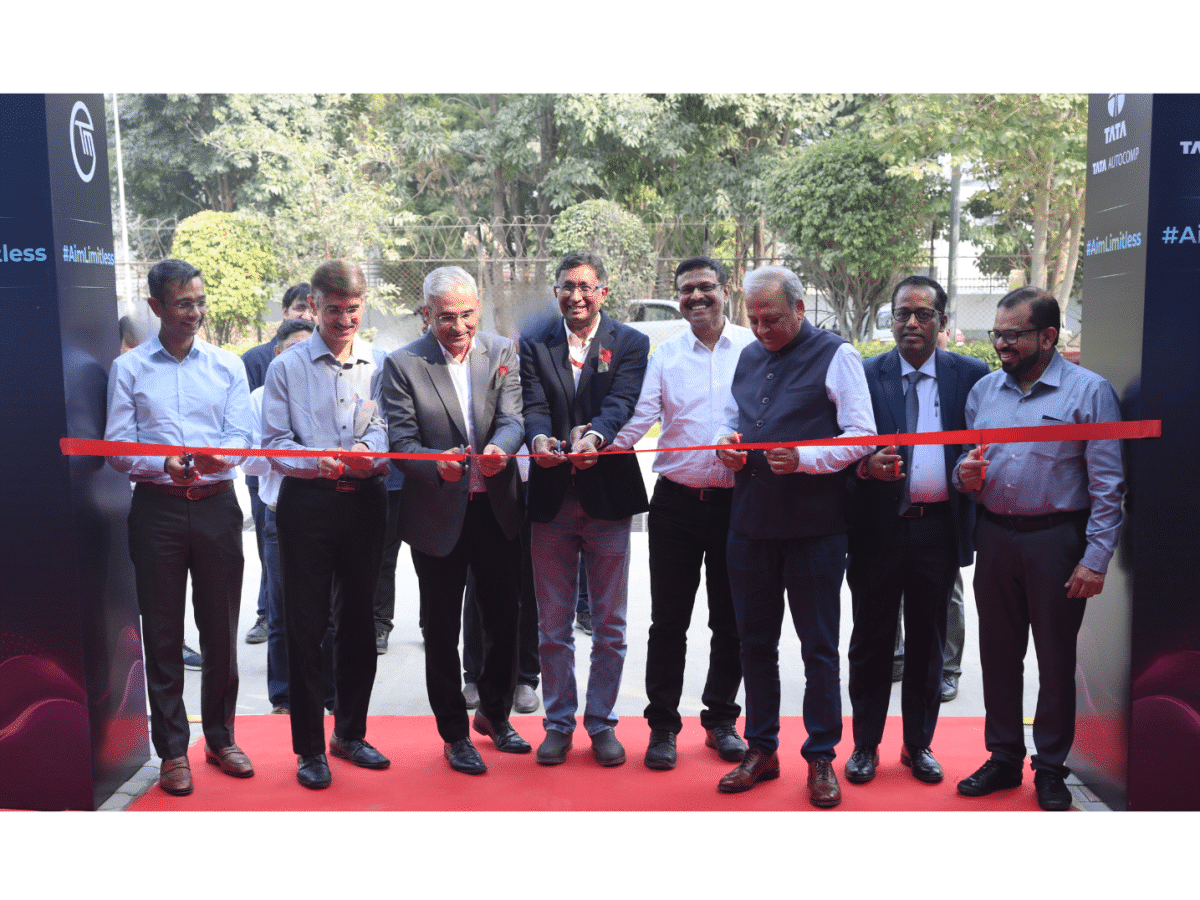
SANAND : Tata AutoComp Systems has inaugurated two advanced manufacturing plants in Sanand, Gujarat, in a single day. The move strengthens its production base, supports key OEMs including Tata Motors, and signals the company’s push towards future-ready, sustainable automotive manufacturing in India.

Two plants inaugurated in Sanand
Tata AutoComp Systems Limited inaugurated two new manufacturing plants in Sanand, Gujarat, on 30 January 2026. The facilities are for its business units TM Automotive Seating Systems Private Limited and TACO Air International Thermal Systems Private Limited.

With this expansion, Tata AutoComp now operates more than eight plants in Sanand. The new plants underline the company’s growing footprint in the region and its focus on supporting original equipment manufacturers, including Tata Motors Limited, as well as its export operations.

Senior leaders from Tata Motors and Tata AutoComp attended the inauguration, including Sudhir Chikhle, Chief Purchasing Officer – PV & EV, Tata Motors, and Arvind Goel, Vice Chairman, Tata AutoComp Systems, along with other top executives from both organisations.

Strengthening supply chains and localisation
Commenting on the inauguration, Arvind Goel, Vice-Chairman, Tata AutoComp Systems Limited, said, “These new facilities mark a significant milestone in Tata AutoComp’s strategic growth, enhancing our ability to support OEM partners and respond effectively to evolving platform requirements. Sanand, as a long-term manufacturing hub, provides proximity to key customers and a strong vendor ecosystem, enabling deeper localisation, faster lead times, and a more resilient supply chain. We are expanding our capabilities to deliver world-class quality and operational excellence to our customers. Building on this momentum, we plan to establish several additional plants across India this year, further strengthening our footprint and capacity to meet the future needs of the automotive industry.”

Focus on future-ready manufacturing
Manoj Kolhatkar, MD & CEO, Tata AutoComp Systems Limited, said, “These future-ready plants are designed to advance sustainability and deliver auto component solutions aligned with next-generation mobility platforms in India, enabling us to proactively address the evolving needs of our customers and the industry. People, quality, safety and environment will remain the cornerstones of our manufacturing excellence as we expand and set up new plants across the country to Make in India.”

Sudhir Chikhle, Chief Purchasing Officer – Tata Motors Limited (PV & EV), added, “Tata AutoComp has been a valued partner to Tata Motors Limited, consistently demonstrating a strong customer-centric approach, responsiveness, and reliability. Their collaborative mindset and ability to support us across programs have contributed immensely to our operational and business objectives.”

New Damietta Alliance Container Terminals (DACT) launches commercial operations

DAMIETTA PORT (EGYPT): The “Essen Express” (13,117 TEU) will be the first Hapag-Lloyd vessel to call at the Damietta Alliance Container Terminals (DACT) facility on Saturday, February 14, marking the launch of operations at the new Egyptian terminal. 

“We are pleased to see the Damietta terminal enter commercial operations. It represents an important addition to our global network,” said Juan Pablo Richards, Senior Managing Director Region South Europe at Hapag-Lloyd. “The new hub strengthens our position in the East Mediterranean and enhances our ability to provide customers with reliable, efficient and competitive services across key east-west and regional trade lanes.” 

Dheeraj Bhatia, CEO Hanseatic Global Terminals and Executive Board Member of Hapag-Lloyd shared: “The successful start of operations at our new terminal in the Port of Damietta marks a significant milestone for our terminal portfolio. As we move toward full operations in 2026, this facility will play a key role in strengthening global supply chains, further enhancing the Gemini Cooperation’s industry-leading schedule reliability, and delivering high-quality, efficient services to our customers.”

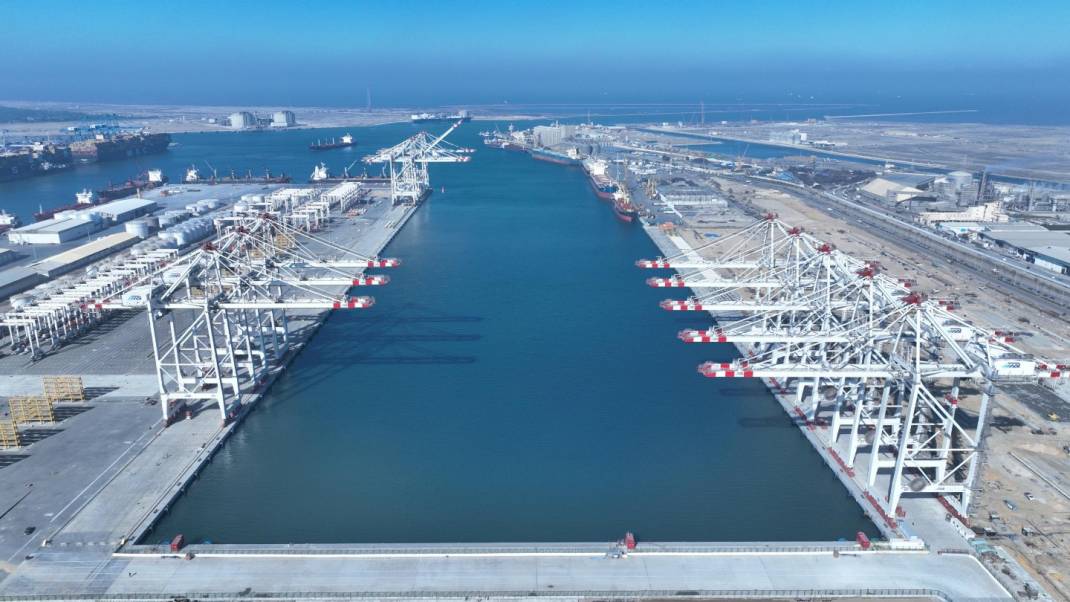
Damietta Alliance Container Terminals (DACT) has been designed primarily for transshipment operations and is planned to have a total capacity of 3.3 million TEU after the final construction phase. The expected cargo mix is approximately 80 percent transshipment and 20 percent import and export, serving both the Egyptian market, including Damietta and Greater Cairo, and regional markets such as the Levant and the Black Sea.

The DACT facility covers an area of approximately 93 hectares and features a quay length of 1,670 meters with a water depth of 18 meters. The terminal is equipped with 12 fully electric ship-to-shore cranes with a 25-row outreach and 40 hybrid rubber-tyred gantry cranes. Additional equipment includes spreaders, lashing cages, out-of-gauge frames and rail infrastructure with six train lanes, of which two are operational at launch.

Damietta Alliance Container Terminals S.A.E. is a joint venture established to develop and operate the DACT terminal. Shareholders are Hapag-Lloyd Damietta GmbH (39%) (represented by Hanseatic Global Terminals), EUROGATE GmbH (29.956%) and Contship Italia S.p.A (29.956%), together with Ship & C.R.E.W. Egypt S.A.E. (0.07%) and Middle East Logistics & Consultants Group (1.00%).

DACT places a strong focus on occupational safety, environmental performance and energy efficiency. The use of electric and hybrid handling equipment is intended to reduce emissions and support more sustainable terminal operations. The company is actively involved in an open and constructive dialogue with local communities and stakeholders in Damietta.

You can find more info here.

Key Facts

Terminal name: Damietta Alliance Container Terminals (DACT)
Location: Damietta Port, Egypt
Start of commercial operations: February 14, 2026
Area: 93 hectares
Quay length: 1,670 meters
Water depth: 18 meters
Annual handling capacity after final construction: up to 3.3 million TEU
Equipment Highlights

12 fully electric ship-to-shore cranes (25-row outreach)
40 hybrid rubber-tyred gantry cranes (electric busbar or diesel generator)
Additional equipment: spreaders, lashing cages, out-of-gauge frames
Rail infrastructure: six train lanes (two operational at launch)

PIL LNG vessel KOTA ODYSSEY makes historic maiden call at Saudi Arabia’s Red Sea Gateway Terminal

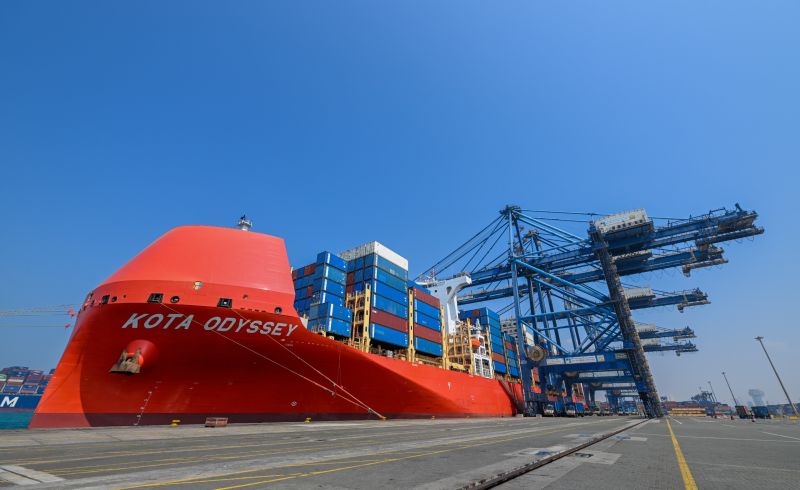
SINGAPORE : In a significant milestone for sustainable maritime transport, Pacific International Lines (PIL) marked the first entry of its LNG-powered vessel, KOTA ODYSSEY, into the Red Sea. The vessel celebrated her maiden call at Red Sea Gateway Terminal (RSGT), reinforcing PIL’s commitment to advancing cleaner and more efficient shipping solutions across key global trade lanes.

PIL KOTA ODESSY PIL LNG vessel KOTA ODYSSEY makes historic maiden call at Saudi Arabia’s Red Sea Gateway Terminal

The arrival of KOTA ODYSSEY underscores PIL’s ongoing transition towards lower-emission vessels, with LNG propulsion significantly reducing greenhouse gas emissions, sulphur oxides, and particulate matter compared to conventional marine fuels.

The commemorative call was attended by representatives from Red Sea Gateway Terminal, Saudi Ports Authority (MAWANI), Zakat, Tax and Customs Authority, the vessel’s crew, and the PIL Arabia team. The occasion highlighted the strong collaboration among stakeholders in driving operational excellence and environmental responsibility in the region.

With its regional office based in Saudi Arabia, PIL continues to strengthen partnerships across the Kingdom while enhancing connectivity through the Red Sea corridor — a vital gateway linking Asia, the Middle East, Europe, and beyond.

This milestone reflects PIL’s broader sustainability strategy and its dedication to supporting customers with reliable, efficient, and cleaner shipping services while contributing to the maritime sector’s global decarbonization goals.