Home Blog Page 435

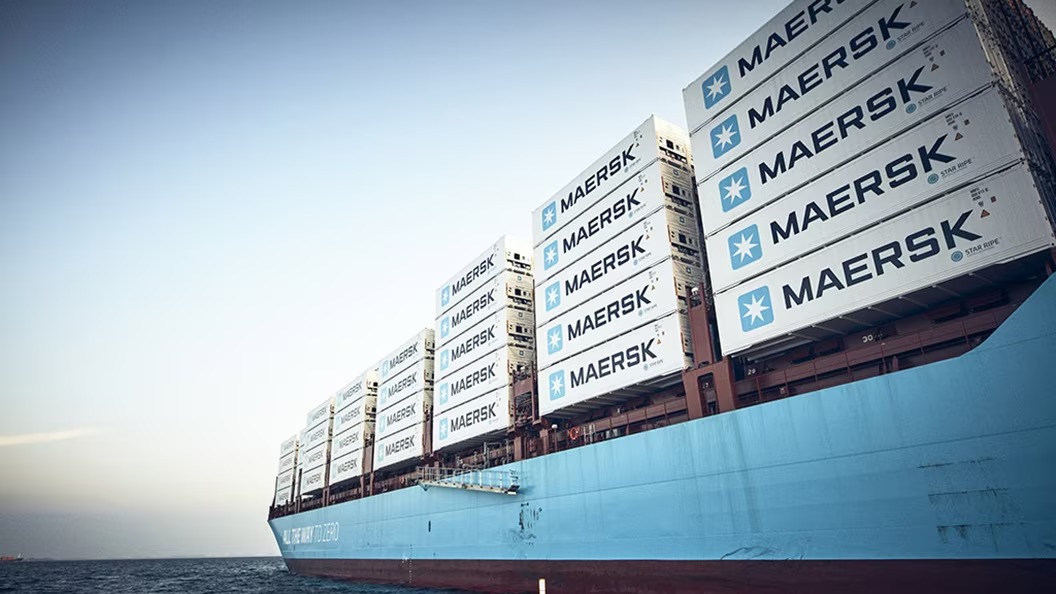
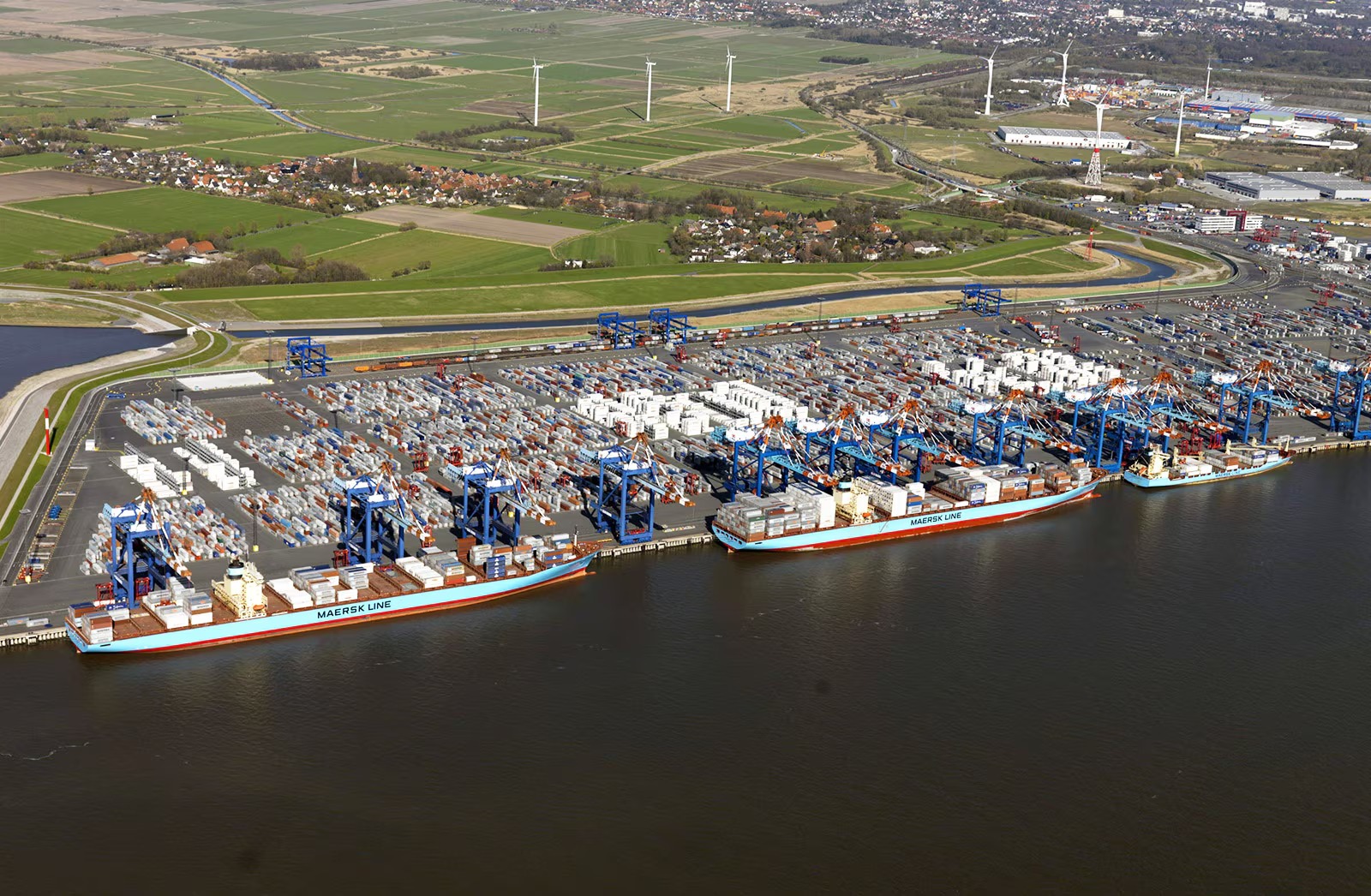
APM Terminals and Eurogate plan to turn NTB into one of the most modern and efficient terminals in Europe – 1bn Euro investment for Bremerhaven announced

BREMERHAVEN : APM Terminals, a subsidiary of A.P. Moller – Maersk, and Eurogate aim for and are in advanced negotiations for a long-term partnership under which they plan to invest one billion Euro in the modernisation of their joint container terminal North Sea Terminal Bremerhaven (NTB).

The one billion Euro investment aims to upgrade NTB into one of the world’s most efficient and resilient container handling facilities, with zero greenhouse gas (GHG) emissions operations. The plan is to modernise the equipment and increase the terminal’s capacity from 3 to 4 million TEU throughput annually.

Through the electrification of equipment and the use of renewable electricity, the terminal is intended to operate with zero GHG emissions, the first of its kind in Germany. The planned investments remain subject to internal and external approvals.

“Bremerhaven has unique potential to grow as a strategic hub in the region and to support cargo flows into Germany as well as our ocean network. Our investments are intended to realise the full potential of the terminal, making NTB one of the most competitive terminals in Europe’s North Range. We aim to future-proof the terminal over the long term, while strengthening the reliability and resilience of supply chains for the German economy,” says Vincent Clerc, CEO of A.P. Moller – Maersk.

“With our NTB terminal we can proudly look back on more than 25 years of successful partnership with Maersk and APM Terminals and look forward to continuing this success story together in the future,” says Michael Blach, Chairman of the EUROGATE Group Management Board. “The joint project to equip the terminal with state-of-the-art technology and decarbonise the operations, thereby making NTB fit for the coming decades, shows how convinced we are of the future success of Bremerhaven as a location in the global maritime trade network. The modernisation of the NTB sets standards and also secures many high-value jobs in the region in the long term.”

“The fact that Maersk, a global market leader, is so strongly committed to Bremerhaven is impressive proof of the efficiency of our ports and of EUROGATE,” says Andreas Bovenschulte, Mayor of Bremen. “I very much welcome Maersk’s intention to expand and intensify its 25 years of successful cooperation at the Bremerhaven site. With Maersk’s announced investments in the port’s superstructure and the state and federal government’s investments in the port infrastructure, Bremerhaven will be well positioned for the future and its importance in the North Range will be strengthened. Now it is up to the federal government to press ahead with the deepening of the Outer Weser and implement it quickly.”

In addition to the investments, the deepening of the Outer Weser river is an essential prerequisite for fully unlocking the potential of the upgraded terminal. A corresponding planning process is currently underway at the level of the public administration.
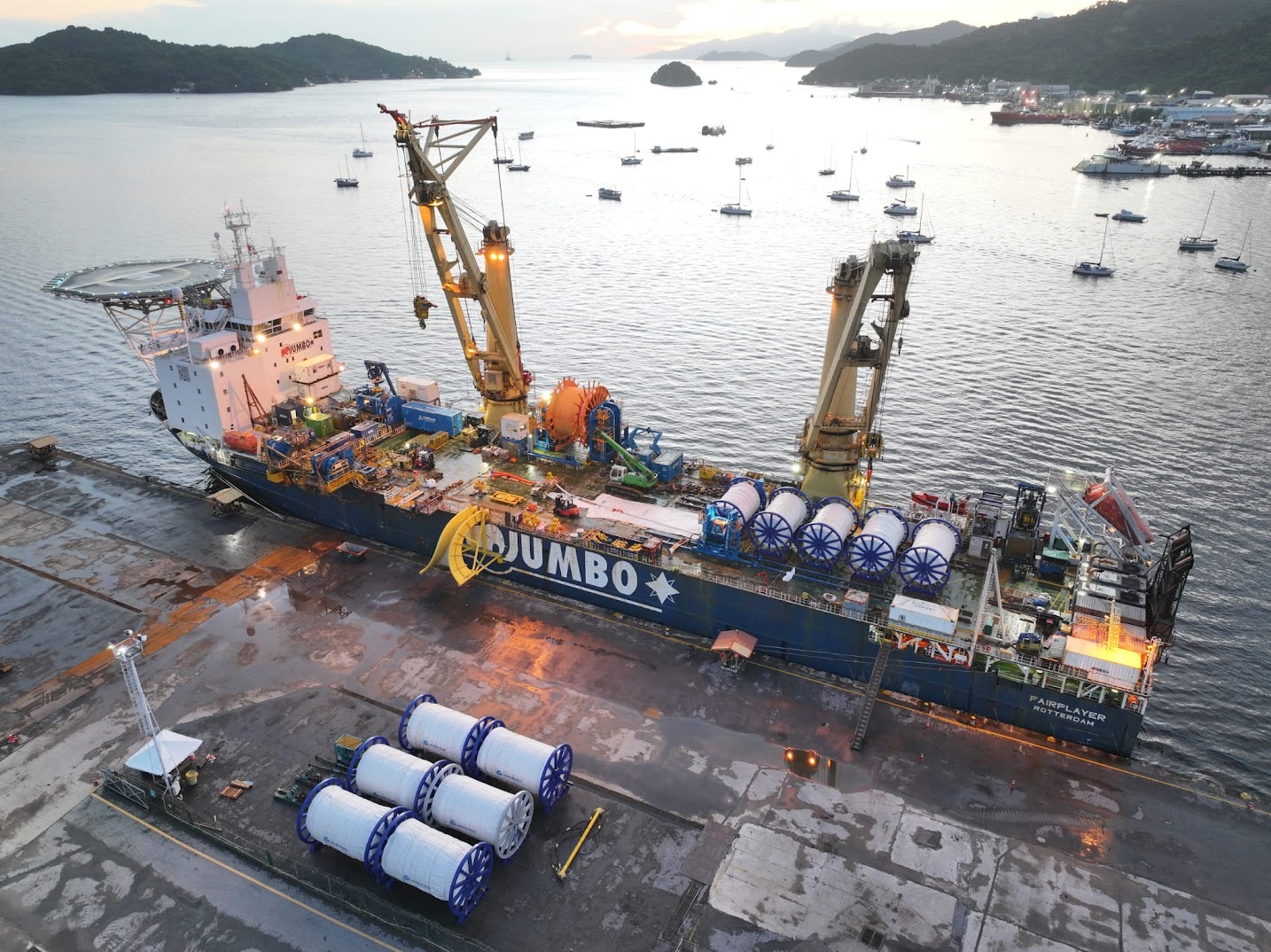
Jumbo Offshore completes mooring line installation for Errea Wittu FPSO mooring spread for ExxonMobil Guyana Ltd. at Uaru Field, Stabroek Block, Offshore Guyana

SCHIEDAM: Jumbo Offshore has completed mooring pre-installation activities for the FPSO Errea Wittu for Exxon Mobil Guyana Ltd. at Uaru Field, Stabroek Block, Offshore Guyana, on behalf of Modec. The scope of work included the installation of suction anchors and the pre-lay of mooring lines in preparation for FPSO hook-up.

Jumbo Offshore performed installation engineering, procurement, mobilisation and marshalling activities to support offshore installation. The offshore campaign was executed using Jumbo Offshore’s J-class installation vessel, Fairplayer. All operations were conducted in accordance with project requirements and applicable safety standards.

Freek Muurling, Project Manager at Jumbo Offshore said, “I am very proud of the hard work and commitment shown by all Jumbo personnel and subcontractors during the preparation, mobilisation, and execution of this deepwater pre-lay mooring project. The team demonstrated full focus on engineering, procurement, documentation, and meticulous planning in sometimes challenging circumstances. The yard and offshore teams’ resilience and teamwork led to a safe and successful completion of the mooring line installation campaign.

I would also like to highlight the transparent and constructive communication between Jumbo, Modec, and Exxon, which created a strong working relationship and contributed greatly to moving the project forward safely and efficiently.”

The Uaru field is located 200 kilometres offshore Guyana at a depth of 1,750 metres. It is estimated to hold more than 800 million barrels of oil.

The Errea Wittu FPSO will produce 250,000 barrels of oil per day and will have a gas treatment capacity of 540 million cubic feet per day. It will have a water injection capacity of 350,000bpd, a produced water capacity of 300,000bpd and a storage capacity of two million barrels of crude oil.

NGOs urge IMO: “Dilution is not a solution” – choose onboard retention & port offload for ammonia ship waste

LONDON: A group of environmental and technology NGOs is urging the International Maritime Organization (IMO) to reject emerging proposals that would allow ships to routinely discharge ammonia at sea. Instead, the group is calling for a simpler safeguard: retain ammonia effluent onboard and offload it at port reception facilities–so shipping can cut pollution without adding a new source of toxic marine pollution.
 
The statement follows a week of discussions at the IMO’s Pollution Prevention and Response (PPR) Sub-Committee in London (9–13 February), where governments, for the first time, considered approaches to managing ammonia effluent generated from ammonia-fueled ships.
 
“Shipping needs to decarbonize fast, and green ammonia could play an important role,” said Dr James Kershaw, Scientific Officer at Opportunity Green. “But we must not reduce climate pollution while normalizing ocean discharge of toxic waste. The IMO must ensure green fuels are adopted with safeguards that protect marine ecosystems, coastal communities, and seafarers.”
 
What is ammonia effluent — and why it matters
Ammonia gas is extremely toxic and harmful to human health. On ammonia-fueled ships, leftover ammonia gas (for example, when crews purge fuel lines during routine operations) must be captured and contained, often by absorbing it into water. This produces a high-strength liquid waste known as ammonia effluent.
 
At PPR this week, some Member States discussed a framework that would allow conditional discharge of ammonia effluent into the ocean if certain operational and dilution conditions are met.
 
NGOs warn: focusing only on short-term toxicity misses bigger risks
Supporters of discharge argue that sufficient dilution can avoid immediate harmful effects on marine life. But the group cautions that’s only one part of the environmental risk:

  • Chronic, long-term impacts from repeated low-level exposure are an evidence gap that short-duration studies cannot resolve, and more research is urgently needed.
  • Discharging ammonia introduces reactive nitrogen pollution to marine environments, contributing to eutrophication, oxygen depletion, and ocean acidification—pressures already straining ocean health.

In a fully decarbonized maritime future, 35–50% of ships are projected to run on green ammonia. If tens of thousands of vessels are periodically discharging ammonia waste, “conditional discharge” could quickly become routine, with consequences that are still unknown for long-term ocean health.  

“The nitrogen cycle is already beyond safe planetary boundaries—we cannot afford to normalize another source of reactive nitrogen pollution as shipping decarbonizes. The industry has an opportunity to get ammonia fuel right from the start by retaining waste onboard and landing it ashore, rather than defaulting to ocean discharge. This isn’t just about toxicity—it’s about preventing further disruption to a critical planetary system that’s already under stress,” said Dr Lucy Gilliam, Co-executive Director of One Planet Port.

The alternative: retain onboard, offload in port, and enable reuse
NGOs urge the IMO to adopt a precautionary approach that prohibits discharge at sea and instead requires ships to retain ammonia effluent onboard and offload it at port reception facilities—where it could be reused by other ammonia users, such as the chemical or fertilizer industries, supporting a circular economy.

The group also calls for the IMO to ensure decisions are based on transparent evidence. Concerns have been raised that exclusive shore disposal could be burdensome, but the NGOs note that cost and storage impacts must be quantified, and available examples suggest effluent volumes from routine operations may be small relative to ship capacity. It is vitally important that the IMO considers the various options for fully managing ammonia effluent, including quantifying the full range of challenges and risks associated with each.

NGOs call on IMO Member States to:

  1. Prohibit routine or conditional discharge of ammonia effluent at sea, consistent with the precautionary principle.
  2. Ensure guidelines address long-term, chronic ecosystem impacts and the broader consequences of reactive nitrogen pollution—not only acute toxicity.
  3. Advance a global pathway for onboard retention and port offloading, paired with coordinated scaling of port reception facilities.
  4. Establish a transparent, science-based work program through PPR14 and beyond to close key evidence gaps and deliver enforceable measures.

“The ocean should not be a testing ground for routine disposal of toxic ammonia waste,” said Marie Cabbia Hubatova, Director, Global Shipping at Environmental Defense Fund. “The risks go beyond short-term toxicity to long-term ecosystem damage and added pressure on a global nitrogen cycle that is already out of balance. Until these impacts are fully understood, the precautionary principle demands a strict prohibition on discharge at sea and a clear requirement for onboard retention and unloading at ports.”

“Ammonia cannot become shipping’s next pollution problem. Real climate action starts with cutting ships’ energy demand through efficiency and wind propulsion. If ammonia is used, its waste must stay out of the sea. Ocean health quite simply cannot be collateral damage,” said Anaïs Rios, Senior Shipping Policy Officer and Clean Shipping Coalition Board Member.

“Shipping’s fuel transition is a chance to reduce harm to the ocean,” said Madadh MacLaine, Secretary General of ZESTAs. “Industry first movers stand ready to enable that transition, but this opportunity will be missed if the lowest-cost option becomes the default. The IMO must set clear regulations, pre-deployment.”

“The fuel transition must be both fast and durable. Pathways that shift risk from the atmosphere to the ocean will ultimately slow deployment by eroding public trust. Getting ammonia right from the start is how we ensure zero-emission fuels scale globally,” said Davina Hurt, California policy director with Pacific Environment.

India will also get zero duty access on textiles, similar to Bangladesh: Piyush Goyal

NEW DELHI: Commerce Minister Shri Piyush Goyal on Thursday addressed concerns that the Indian textiles industry would be hit by duty differentials vis-a-vis Bangladesh after the neighbouring country signed a deal with the US.

The US and Bangladesh signed an agreement on February 9, reducing reciprocal tariffs to 19 per cent from 20 per cent previously announced. Alongside, zero-tariff access for special textile and apparel products made with US cotton and man-made fibre was provided under the arrangement.

“India also has the same facility and India will also get it. Right now, our framework agreement is being made. When the interim agreement is finalised, then you will get to see this in the fine print,” Piyush Goyal told reporters, as many in the Opposition have tried to corner the govermment.

According to a report from SBI Research, US imports around USD 7.5 billion of textile imports from India and around the same quantity from Bangladesh.

“The recent trade deal between US-Bangladesh has reduced the tariffs on Bangladesh goods to 19 per cent. However, a certain clause that allows certain quantity of textile and apparel goods from Bangladesh imported at zero reciprocal tariff rate depending on the quantity of cotton and manmade fibre textile inputs imported from US has raised suspicion that it can harm Indian textile exporters as Bangladesh’s imports could become more competitive for the US,” the report read.

India and the US also have finalized an interim trade deal framework last week, whose fine print is expected sometime in March.
Both countries decided to address non-tariff barriers affecting bilateral trade. On February 2, a phone call between Prime Minister Narendra Modi and US President Donald Trump led to the announcement of the conclusion of negotiations on the much-awaited trade deal.

The Trump administration had imposed tariffs on major exporters to the US, including India. There was a 50 per cent tariff on goods from India entering the United States since August 2025. The tariffs have now been reduced to 18 per cent following the leaders’ recent phone call.

The BTA, formally proposed in February 2025, seeks to more than double bilateral trade, from the current USD 191 billion to USD 500 billion by 2030.

We will make affordability, last-mile delivery, India’s cutting edge through FTAs: Piyush Goyal

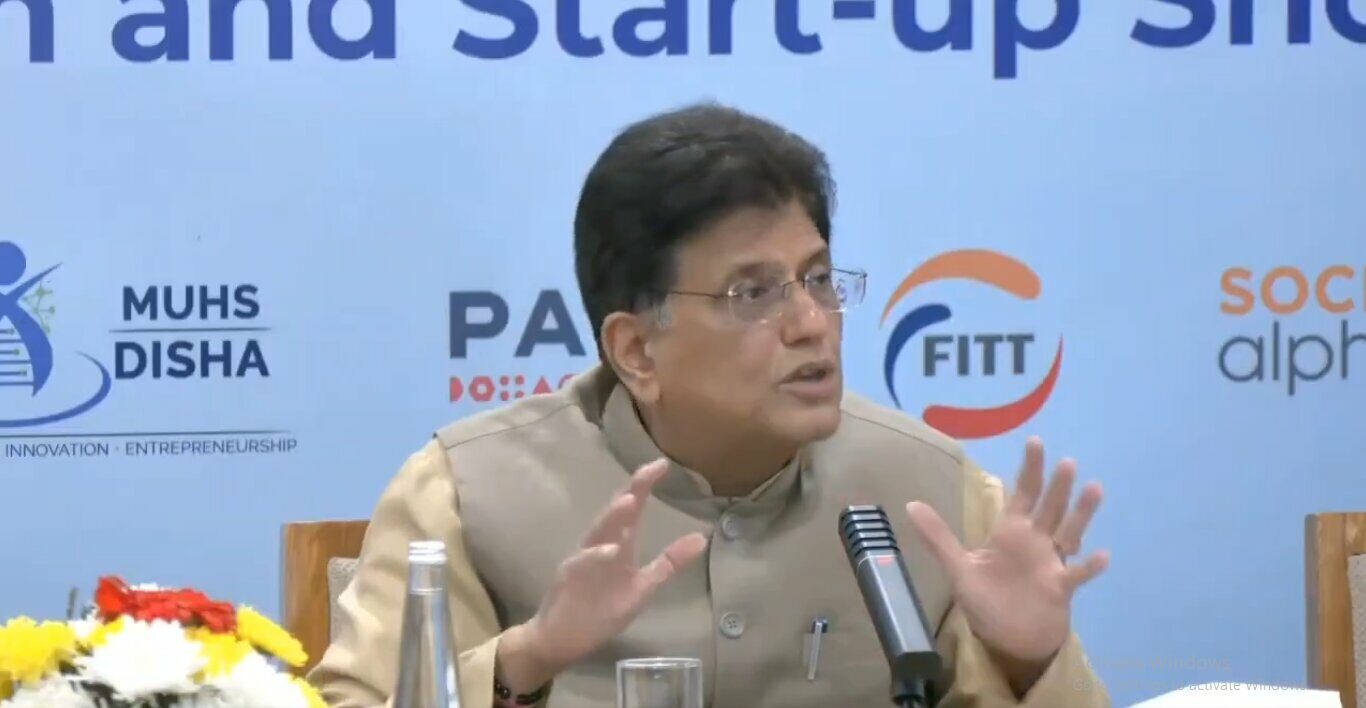
NEW DELHI: Union Commerce Minister Shri Piyush Goyal on Thursday said that with most of the developed world signing trade agreements with India, we will be able to make affordability and last-mile delivery India’s cutting edge.

“Huge markets have been opened up with all the trade deals that we have done. We now cover, as a nation, 70 % of the global GDP with market access, in most cases, at zero duty for your products,” he said.

In a message to the startups, he said the world is your market, and the “world is your stage now.”

“I wish you the best for the wonderful work that you’re doing. We’ll be able to make affordability and last mile delivery India’s cutting edge,” he said.

Praising the Indian startups, Goyal said, “Seeing our innovators work with a sense of patriotism gives us complete confidence that India is on the right path towards the goal of Viksit Bharat by 2047.”

While speaking with the media on the sidelines of the ‘INDovation’ Medtech Innovation & Startup Showcase at Vanijya Bhawan, Goyal said, “It is a wonderful feeling seeing the Indian start-up and innovation system growing.”

“Seeing our innovators work with a sense of patriotism gives us complete confidence that India is on the right path. Today, at this event, I was fortunate to witness a reflection of the pledge of Viksit Bharat taken by 140 crore people of the country…” he said.
While addressing the startups at the event, Goyal said India is at the cutting edge of technology today.

“India is at the cutting edge of technology today, but it couldn’t have been possible until the government and private sector both have encouraged our young entrepreneurs.

He further said that innovation is supporting India’s day-to-day needs, supporting India’s real imperatives on the ground.

“It’s important also to showcase what are the success stories to encourage newer people to come into this field. Otherwise, you’ll end up having only few stories of people who may not have succeeded in the first instance,” he said.

“I have urged Startup India, and would urge private sector players too that we must also continuously encourage those who may not have succeeded in the first instance because it not necessary that you have to hit it right first time around but failure is not something bad, it’s not a stigma,” he said.

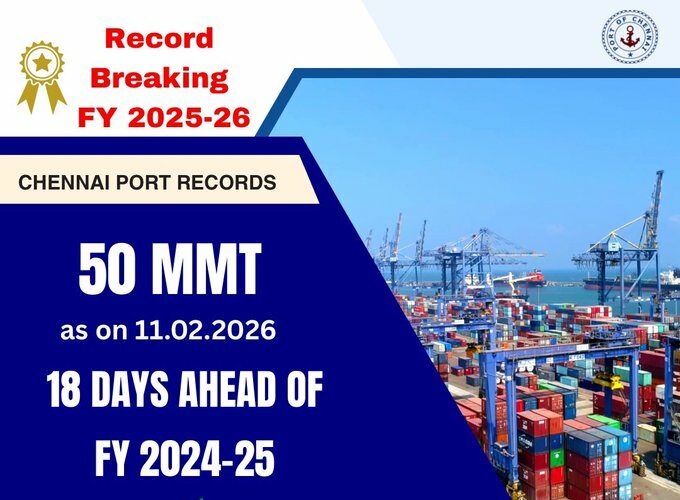
Chennai Port crosses 50 MMT Cargo Throughput Milestone 18 Days Ahead of Last Year in FY 2025–26

CHENNAI: Chennai Port Authority has achieved a significant operational milestone by crossing 50 million metric tonnes (MMT) of cargo throughput in the ongoing FY 2025–26, accomplishing the feat 18 days earlier than in the previous financial year.

According to official data, the landmark volume was reached on 11 February 2026, reflecting sustained growth momentum and improved operational efficiencies at one of India’s oldest and most strategic major ports.

The early achievement underscores the port’s enhanced cargo handling capacity, streamlined processes, and close coordination with key stakeholders, including shipping lines, terminal operators, logistics service providers, and trade partners. It also highlights the positive impact of ongoing modernization initiatives and digital interventions aimed at improving turnaround times and optimizing berth productivity.

Port officials attributed the performance to consistent growth across cargo segments, supported by efficient planning, better asset utilization, and a focus on operational excellence. The port’s proactive approach to addressing congestion, improving hinterland connectivity, and leveraging technology has played a critical role in accelerating cargo movement during the current fiscal.

The milestone comes at a time when India’s maritime sector is witnessing increased cargo flows driven by industrial growth, rising exports, and infrastructure-led economic expansion. Chennai Port’s performance reinforces its role as a vital gateway for trade on the east coast, serving key manufacturing and consumption centers in southern India.

With more than a month remaining in the financial year, the port is expected to further build on this momentum and close FY 2025–26 with a robust growth trajectory.

The achievement aligns with the port’s broader vision of advancing trade and enhancing efficiency, contributing to India’s port-led development and national logistics competitiveness.

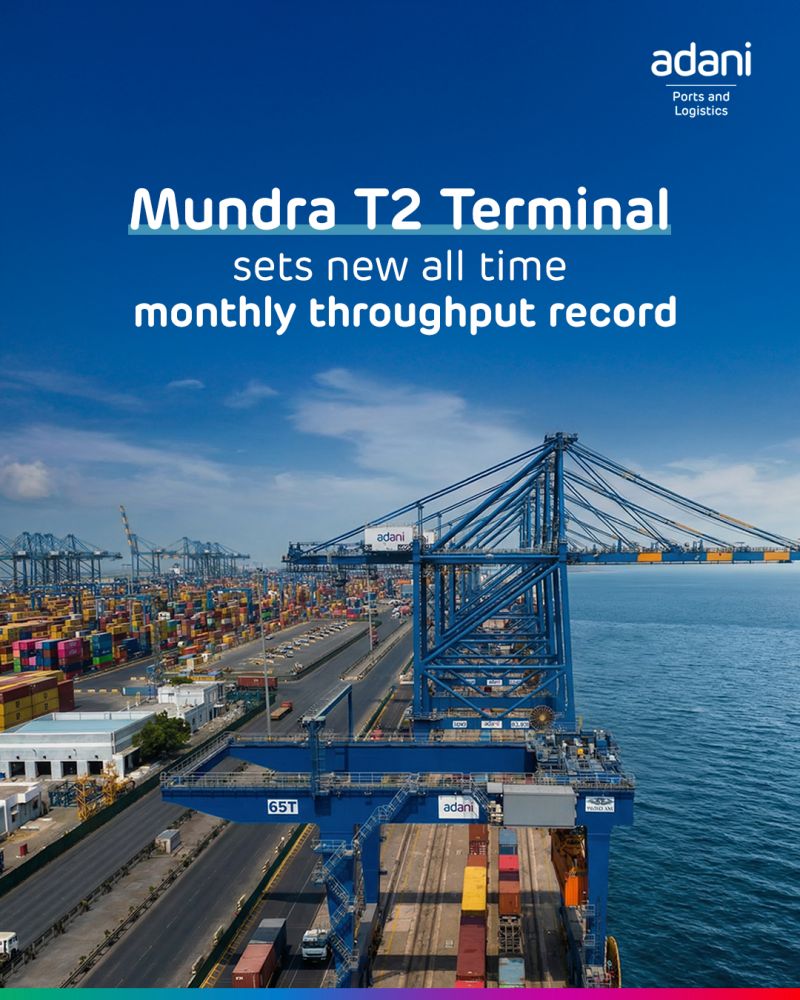
APSEZ announces record-breaking monthly throughput at Mundra T2 Terminal

MUNDRA : Adani Ports and Special Economic Zone Limited (APSEZ) has announced that the Mundra T2 Terminal has achieved its highest-ever monthly throughput, handling a record 1,31,775 TEUs in January 2026. This milestone marks the third record-breaking month in the current financial year, with the terminal consistently surpassing its previous best performance—reflecting enhanced operational efficiency, improved vessel turnaround time, and seamless hinterland connectivity.

The achievement underscores Mundra Port’s growing prominence as India’s leading gateway for containerized trade. The T2 Terminal has demonstrated sustained growth driven by:

Optimized yard planning and equipment utilization

Faster vessel berthing and turnaround time

Stronger coordination with shipping lines and logistics partners

Enhanced rail and road evacuation systems

Adoption of digital tracking and process automation for smoother cargo flow

January’s performance highlights the terminal’s capability to handle rising EXIM and domestic cargo volumes while maintaining service reliability and operational precision. The milestone also reflects the trust reposed by customers and global shipping lines in Mundra’s infrastructure and service standards.

APSEZ credited its on-ground teams, logistics partners, and customers for their collaborative efforts in achieving this landmark. The company reiterated its commitment to setting new performance benchmarks, strengthening supply chain efficiency, and supporting India’s expanding trade ecosystem.

With continuous investments in capacity augmentation, mechanization, and technology-led operations, Mundra T2 Terminal is poised to further enhance its throughput capabilities and contribute significantly to India’s logistics transformation journey.

Maersk announces PSS on Asia–South Asia trade lane

MUMBAI : A.P. Moller – Maersk has announced a Peak Season Surcharge (PSS) for cargo moving from Asia to India, Nepal, and Sri Lanka, as rising volumes and seasonal pressures tighten capacity across the trade lane.

The surcharge will apply to shipments originating from selected Asian countries and destined for ports and inland locations in the three South Asian markets. The decision comes amid elevated booking activity, equipment imbalances, and constrained vessel space during the peak shipping cycle.

According to market participants, the PSS has been introduced to safeguard service reliability and optimize available capacity in response to increasing cargo flows. Strong demand for consumer goods, raw materials, and industrial cargo has contributed to space constraints on key routes serving the region.

Maersk stated that the surcharge will remain in effect for a limited period and will vary depending on container type, origin, and destination. Customers have been advised to consult updated tariff notifications and coordinate with local Maersk representatives for detailed implementation timelines and booking procedures.

Peak Season Surcharges are commonly implemented during periods of high freight demand to help carriers manage operational costs and maintain schedule integrity. The announcement reflects ongoing adjustments within the global container shipping market, where trade patterns continue to fluctuate.

Importers and exporters in India, Nepal, and Sri Lanka are expected to account for the additional surcharge in their supply chain planning as regional trade activity remains steady.

DFCCIL : India–Japan collaboration strengthens as WDFC’s Vaitarna–JNPT section nears completion

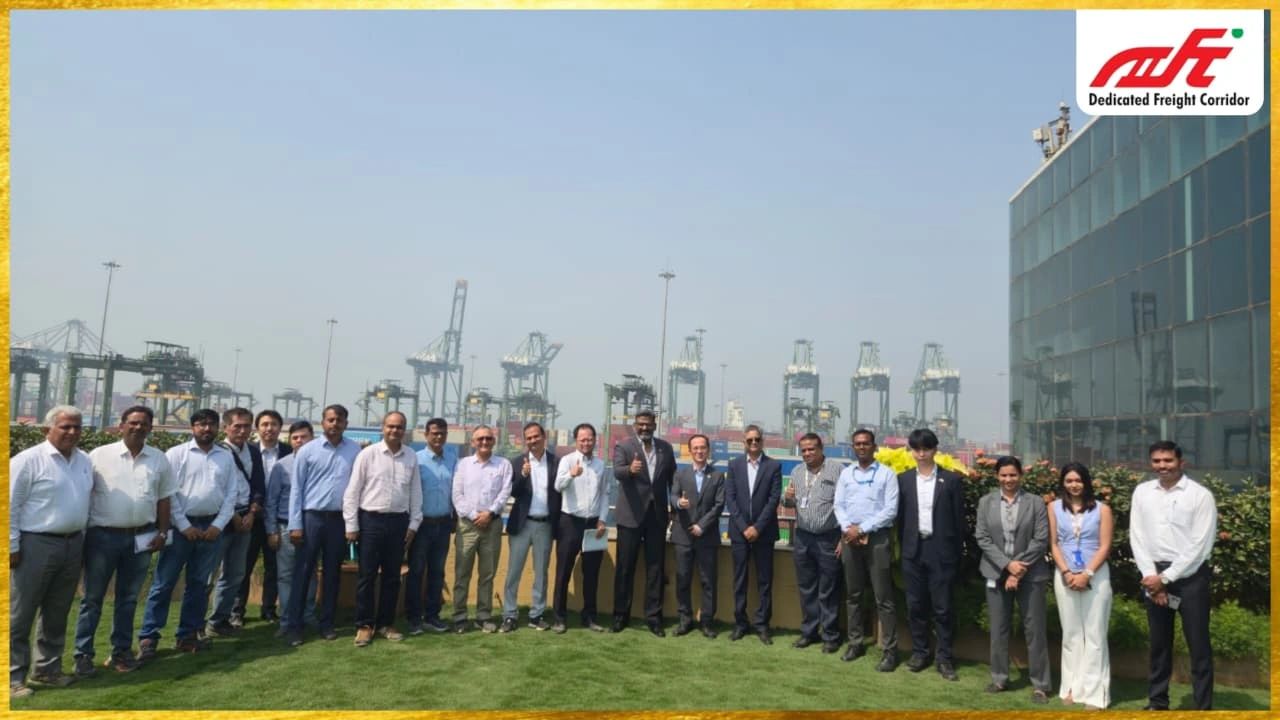
MUMBAI : As the Dedicated Freight Corridor Corporation of India Limited (DFCCIL) moves closer to the full commissioning of the Western Dedicated Freight Corridor (WDFC), a significant milestone was achieved with the joint inspection of the Vaitarna–JNPT section by delegates from the Government of Japan and DFCCIL officials.

The inspection marks a crucial step towards operationalizing seamless freight connectivity to Jawaharlal Nehru Port (JNPT), India’s largest container gateway. With WDFC connectivity to JNPT nearing completion, the long-envisioned objective of faster, efficient, and reliable cargo movement between the port and the northern hinterland is set to become a reality.

More than a technical review, the visit symbolized the enduring partnership and shared commitment between India and Japan in building world-class freight infrastructure. The WDFC project, supported through Indo-Japanese cooperation, is poised to significantly enhance logistics efficiency, reduce transit time, lower freight costs, and strengthen India’s global trade competitiveness.

Following the successful inspection, delegates from the Government of Japan and DFCCIL visited JNPT, where they were joined by representatives of PSA International (Port of Singapore Authority – PSA). The visit underscored the strategic importance of dedicated freight connectivity in supporting port-led development and boosting container throughput at JNPT.

The Japanese delegation was led by Mr. Kawakami Masahiro, First Secretary, Embassy of Japan, and Mr. Koji Yagi, Consulate General, Embassy of Japan. The DFCCIL delegation was led by Mr. H. G. Tiwari, Chief General Manager/Mumbai, and Mr. S. K. Negi, Consultant/PD, along with senior officers from the Mumbai Unit.

Once fully commissioned, the WDFC will provide high-capacity, high-speed freight movement along the western corridor, connecting major industrial hubs to key ports. The Vaitarna–JNPT link is expected to play a transformative role in decongesting existing rail routes and accelerating multimodal logistics integration.

This milestone reinforces India’s commitment to infrastructure modernization through global partnerships, further anchoring the nation’s vision of efficient, sustainable, and future-ready freight transport systems.

SMPA develops Balagarh-project Kolkata

KOLKATA : Union Minister of Ports, Shipping, and Waterways, Shri Sarbananda Sonowal, informed in a written reply to the Lok Sabha that, to accommodate anticipated traffic growth and reduce intra-city cargo movement, Syama Prasad Mookerjee Port Authority (SMPA) is developing dedicated container and coal berths at Balagarh. The project also seeks to promote cargo transportation through National Waterway-1, thereby strengthening inland waterway connectivity and enhancing overall logistics efficiency.

Land is already available with the SMPA, and environmental clearance was received on 24.01.2025. Under the Engineering Procurement and Construction (EPC) component of the project, the tender for road construction was opened on 02.02.2026, and the work order for the construction of the Road Over Bridge (ROB) was issued on 09.01.2026.

The estimated cost of the project is ₹ 539.17 crore, including the Engineering Procurement and Construction (EPC) component of Rs. 131.97 crore and Public Private Partnership (PPP) component of ₹ 407.20 crore. The EPC component is to be funded by the Inland Waterways Authority of India, while the PPP component is to be financed and implemented by the selected concessionaire. The EPC part of the project, except for the dredging part, is scheduled for completion by 31.03.2028. The dredging activities will be taken up by IWAI immediately before the commencement of the construction of the jetties by PPP operators. Construction of facilities under the PPP component is to be completed within three years from the award of the concession.

The proposed cargo handling capacity under the project is 2.7 million metric tonnes per annum (MMTPA). The project is expected to provide trade benefits by reducing congestion arising from cargo movement within city areas, lowering logistics costs, and facilitating the development of an alternate trade hub. The project is expected to generate around 2,600 employment opportunities through both direct and indirect avenues, which will also create significant employment opportunities for the local population, thereby contributing to regional socio-economic development.