Home Blog Page 438

Trade Tech Survey Finds Half of Logistics Respondents Unprepared for UAE MPCI Cargo Security Enforcement

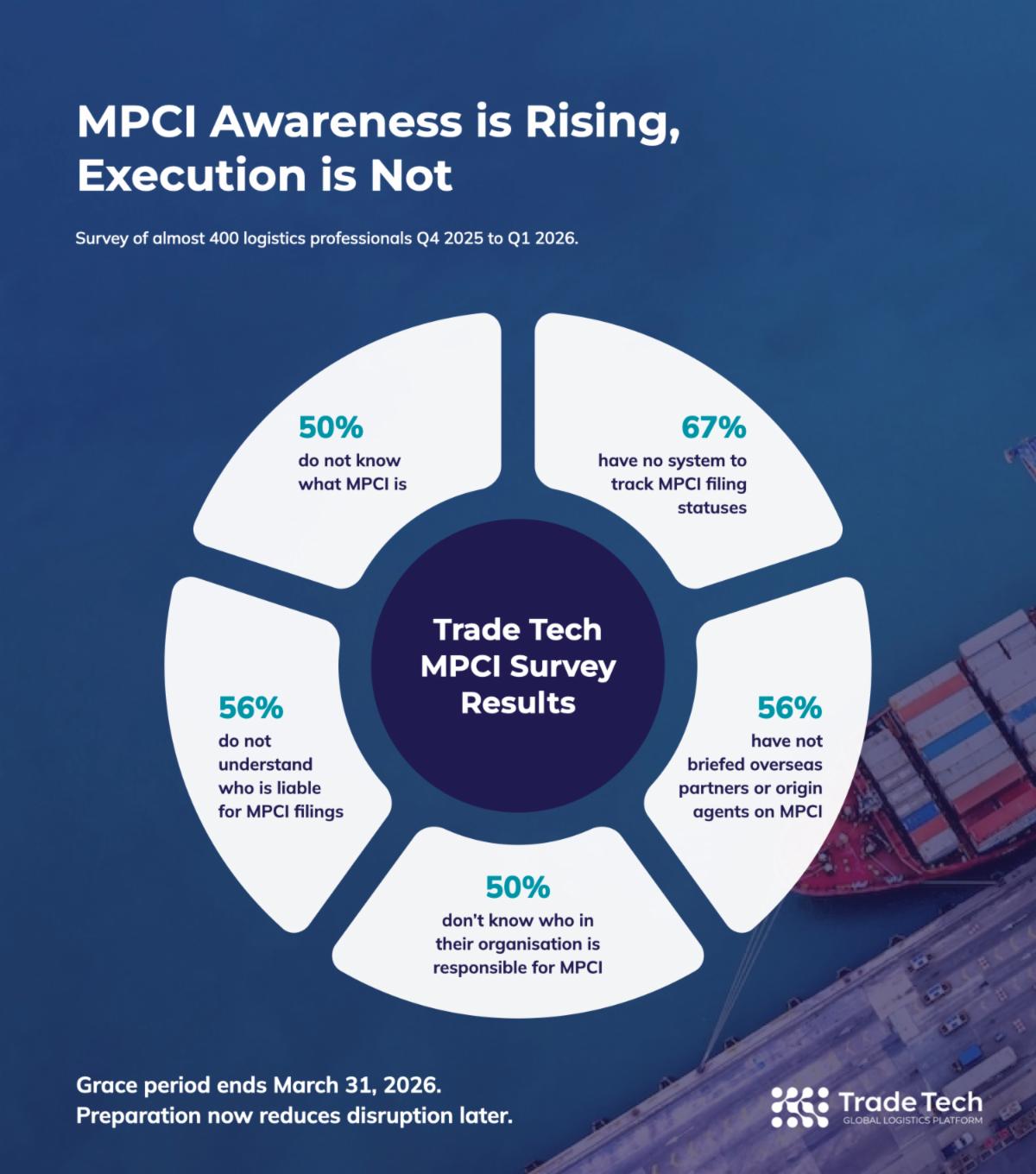
DUBAI: The results of a recent survey from Trade Tech, a global logistics technology platform, reveal that half of logistics professionals still do not fully understand what the UAE’s Maritime Preload Cargo Information (MPCI) regulation is despite the filing requirement being in effect since August 1, 2025.. With enforcement expected to begin after the March 31, 2026 grace period ends, the findings reveal critical gaps in awareness, systems, and operational execution across the industry.

Trade Tech surveyed nearly 400 logistics professionals between Q4 2025 and Q1 2026 about MPCI compliance readiness. While awareness has improved in recent weeks, significant operational gaps remain.

●     67% of respondents have no system to track MPCI filing statuses such as ACT (Assessment Complete), RFI (Request for Information), or DNL (Do Not Load)

●     50% do not know who in their organization is responsible for MPCI filings

●     56% have not briefed partners or origin agents on requirements

●     Liability understanding remains unclear across the industry

“Whether it was the US with AMS in 2002, the EU with ICS2 ENS, or Canada with eManifest, industry adoption is always late. Decades of experience has shown us that waiting to invest in proper systems until enforcement begins can leave organizations scrambling to meet requirements under tight timelines,” said Bryn Heimbeck, President and Co-Founder of Trade Tech. ” Unlike many providers entering MPCI filing for the first time, Trade Tech has been through this cycle in 37 countries. Organizations who establish structured compliance processes now with proper system visibility and global support will have a significant advantage when the grace period ends.”

“Trade Tech understands what customers need because this is not our first security filing,” said Toby Edwards, Director at Trade Tech, based in Dubai. “Our global support network means customers get help when and where they need it. Awareness has been improving, but awareness alone will not prevent a Do Not Load order. Companies need structured processes, clear accountability, and real-time visibility into filing status.”

The MPCI program, managed by the National Advance Information Center (NAIC), requires electronic submission of containerized cargo information at least 24 hours before loading for HBLs and 6 hours for MBLs. The regulation applies to all containerized shipments to or transiting through the UAE.

With just seven weeks remaining before enforcement begins, logistics organizations moving cargo to or through the UAE face a narrow window to define accountability, test filing processes, and ensure real time visibility before penalties apply.

About Trade Tech

Since 1997, Trade Tech, Inc. has provided global logistics solutions that connect shippers, importers, Customs House Brokers, NVOCCs, carriers, global logistics providers, truckers, and warehouses. The company enables full visibility across the supply chain. With its multi-tenant, cloud-based platform, Trade Tech enhances connectivity, reduces operational costs, and minimizes errors for clients worldwide, without the need for software downloads.
IMO launches global campaign to put maritime “policy into practice”

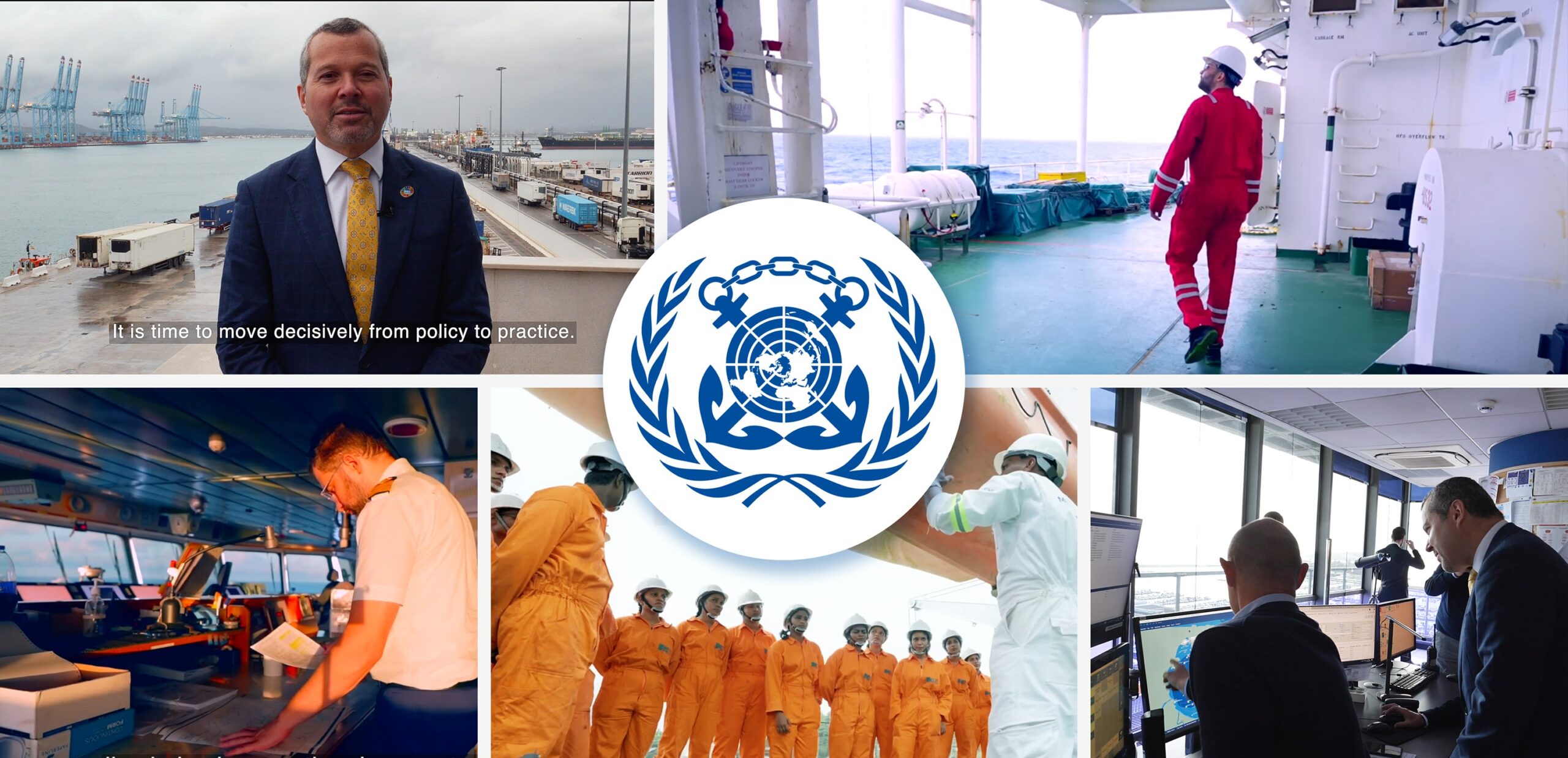
LONDON: The International Maritime Organization (IMO) has launched a two-year global initiative to promote the World Maritime Day theme for 2026-2027: ‘From Policy to Practice: Powering Maritime Excellence’.  

In a video message marking the launch, IMO Secretary-General Arsenio Dominguez stressed that the global regulatory framework developed by IMO must not merely be adopted in principle, but translated into concrete actions and real-world results that deliver tangible benefits for all. 

“When we talk about ‘practice’, we are talking about people. The seafarers on the ship; the people in the port; those managing ship operations, ship recycling workers, port State control officers and flag State administrators,” Secretary-General Dominguez said.  

“To make the maritime industry truly sustainable, we must ensure these high standards are felt in every port and on every deck – not selectively, not unevenly, but globally. IMO is committed to powering this transition through technical cooperation and direct support,” he said.  

Closing the enforcement gap 

IMO’s global framework of maritime conventions, codes and guidelines help to ensure ships operate and trade safely, efficiently and smoothly while protecting the marine environment. The framework is most effective when Member States adopt and implement IMO rules widely and consistently. 

However, audits conducted under the IMO Member State Audit Scheme (IMSAS) have found gaps in national laws and enforcement in some countries. Those gaps weaken regulations and increase the risk of noncompliance and unsafe shipping. 

To address this challenge, the campaign seeks to support Member States in deepening their understanding of IMO conventions and strengthening their ability to adopt and enforce them at home. The focus will be around nine pillars: 

  • Capacity development and technical cooperation: Boosting countries’ capacity to apply IMO rules, through legislative support, enforcement frameworks and training. 
  • Focus on SIDS and LDCs: Tailored legal assistance and technical support for Small Island Developing States (SIDS) and Least Developing Countries (LDCs), recognising the unique challenges they face, while highlighting achievements. 
  • Safety first through innovation: Translating new safety standards on fuels, automation and digitalization into operational practice through updated training, oversight and risk management. 
  • Regulatory readiness for decarbonization: Equipping States to implement the IMO Strategy on the Reduction of GHG Emissions safely, consistently and in line with operational realities. 
  • Tackling fraudulent ship registration and maritime fraud: Developing practical guidance and strengthening due diligence, transparency and data-sharing to prevent unlawful practices and misuse of national flags. 
  • Audit driven improvement: Using IMSAS audit findings as a basis to address legal and enforcement gaps, prioritizing reforms and enhancing oversight and continuous monitoring. 
  • Facilitation, digitalization and resilience: Embedding digital systems, including Maritime Single Windows, into daily port operations to boost efficiency and resilience. 
  • Cybersecurity and maritime security: Integrating cyber risk management into safety management systems, training and port operations to protect global shipping networks. 
  • Ocean protection: Implementing IMO environmental instruments (beyond those for GHG emissions), including on plastics, underwater radiated noise, invasive species and ship recycling, through national laws and day-to-day maritime operations. 

Support the campaign  

The IMO Secretariat plans to roll out a two-year action plan including events and outreach activities, knowledge products, partnership programmes and social media engagement to promote the theme. 

As part of the campaign, IMO Member States and observer organizations are encouraged to organize events and activities throughout the 2026-2027 period and inform the Secretariat of their planned activities. Sharing outcomes and discussions on social media is encouraged, using the hashtags #WorldMaritimeDay and #MaritimePolicytoPractice.  

Secretary-General Dominguez urged: “Let us move beyond the conference room and turn our collective decisions into real-world results that benefit everyone. It is time to move decisively from policy to practice.” 

Transcript

“For nearly 80 years, IMO has built the framework for global shipping – more than 50 international conventions shape the everyday of maritime life.  

However, we must be honest – experience shows that the true value of these instruments is realized only when they are effectively applied, delivering practical benefits on board ships, in ports and throughout the global maritime domain. 

The real test and the real responsibility lie in implementation, how we transition ‘From Policy to Practice: Powering Maritime Excellence’.

This theme reflects our mission: ensuring that the global regulatory framework we develop is not merely adopted in principle, but translated into concrete actions and real-world results that deliver tangible benefits for all.  

When we talk about ‘practice’, we are talking about people. The seafarers on the ship; the people in the port; those managing ship operations, ship recycling workers,  port State control officers and flag State administrators. 

To make the maritime industry truly sustainable, we must ensure these high standards are felt in every port and on every deck – not selectively, not unevenly, but globally. IMO is committed to powering this transition through technical cooperation and direct support. 

Let us move beyond the conference room and turn our collective decisions into real-world results that benefit everyone. 

 It is time to move decisively from policy to practice.”

Georgia Ports welcomes U.S.-India trade agreement

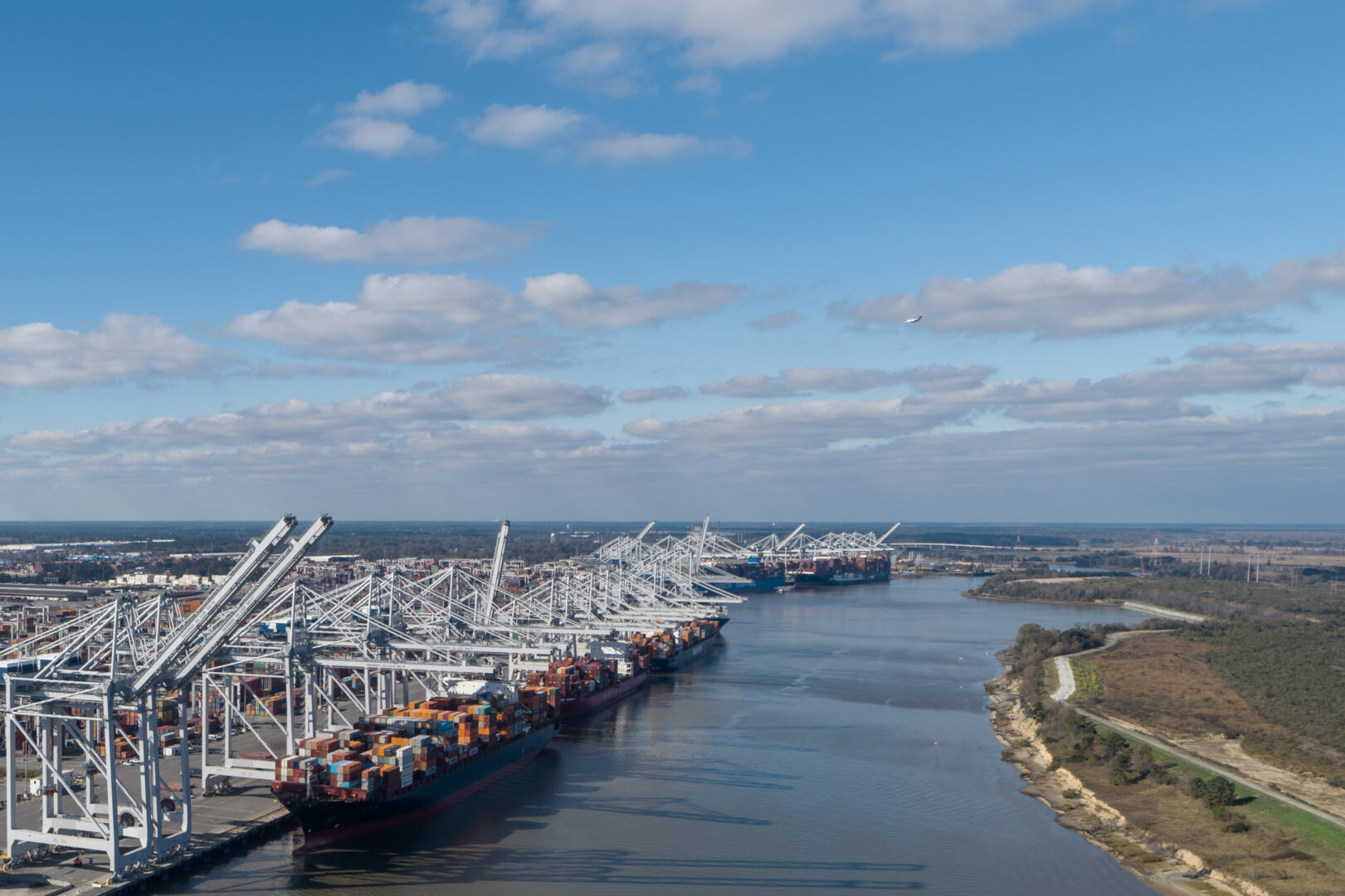
SAVANNAH: The Georgia Ports Authority welcomed the announcement of a new trade agreement between the U.S. and India, opening the way for increased business between the two countries.

“This is excellent news for American exporters and consumers, for Georgia and for our customers,” said GPA President and CEO Griff Lynch. “GPA has long thought India will be the key to our future success with the market proximity our U.S. East Coast gateway port offers. In time, this will bring more volumes to Georgia Ports.”

Georgia Ports handled 22 percent of India’s containerized trade on the U.S. East Coast in fiscal year 2025. Savannah’s overall loaded container trade with India grew by nearly 48 percent to 304,450 twenty-foot equivalent container units FY2021-2025.

A Growing Economy

With India set to become the world’s fourth-largest economy in 2026, the country holds major trade potential for American shippers. Home to nearly 1.5 billion people, India is already the world’s most populous country. Sixty-five percent of the population is under age 35. India and the U.S. are both democracies, English-speaking and offer huge economic potential. Sourcing from India helps U.S. companies diversify their supply chains and offers a cost competitive procurement strategy. India is expected to outpace other Asian nations this year, with a projected GDP growth of 6.5 percent in 2026, according to the World Bank.

Faster Connections

The Port of Savannah offers faster total transit times for Indian cargo destined for markets such as Atlanta, Memphis and Nashville, compared to West Coast gateways. Ocean routes are shorter from India to the U.S. East Coast, and Savannah delivers faster rail service.

Six weekly vessel services provide direct Savannah–India connections, with a total of 10 services linking Savannah to the broader Indian subcontinent. Eleven ocean carriers operate on these routes, delivering transit times as short as 29 days. Direct services call Nhava Sheva/Mumbai, Pipavav and Hazira with additional port calls on the Indian subcontinent, including Colombo, Sri Lanka.

With Savannah’s industry-leading speed to U.S. rail of 22 hours, cargo is discharged from vessels on day one, placed on rail by day two, and available at many inland destinations by day three. The Port of Savannah’s Mason Mega Rail Terminal handles 42 trains per week, with double-stack rail service from CSX and Norfolk Southern to all major inland markets.

ABOUT GEORGIA PORTS

Georgia’s Ports in Savannah and Brunswick are strategic gateways, creating the most competitive supply chains in the nation with their level of operations, connectivity and supply chain ecosystem. These attributes combined with Georgia’s ranking as the top state to do business for 12 consecutive years create a unique business model for growth. The Port of Savannah is one of the best-connected ports in the U.S. to world markets with 39 ship calls a week, 42 doublestack trains per week and 14,000 truck gate moves daily. The Port of Brunswick is the top U.S. RoRo port for automotive and machinery logistics with over $262 million in recent upgrades and a new $100 million fourth berth being built. GPA has a self-financed $4.5 billion investment plan for the next ten years which will see five new big ship berths added in Savannah and a fourth berth in Brunswick to meet future growth. In the past decade, GPA has invested $3.2 billion in infrastructure improvements.

Lloyd’s Register approval clears path for cubic LNG tank design for LNG-fuelled vessels

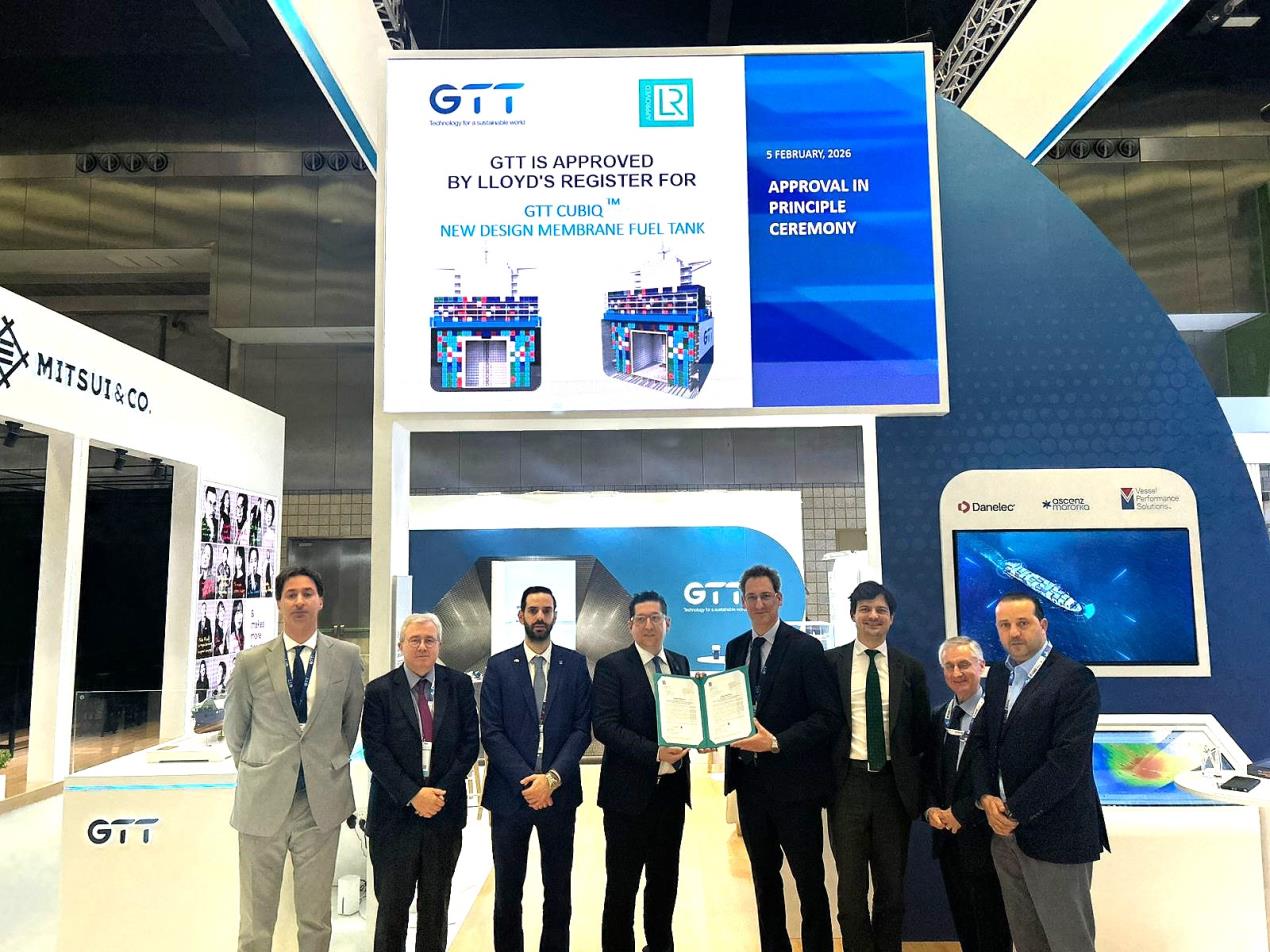
LONDON: Lloyd’s Register (LR) has issued an approval in principle (AiP) for GTT’s CUBIQ™ LNG fuel containment system. This cubic tank design aims to streamline project engineering and planning, simplify shipyard construction processes and free up more cargo space on LNG-fuelled vessels.

GTT CUBIQ™ brings a new approach to LNG containment by extending its suitability to various types of LNG-fuelled ships, including container and passenger ships. Its near-cubic geometry eliminates traditional upper and lower chambers, enabling standardised engineering and simplifying construction. With fewer complex corner areas, installation is faster, helping shipyards reduce build time. Once in service, GTT CUBIQ™ provides strong volumetric efficiency, maximising usable space and unlocking additional cargo capacity.

The approval also verified the ability of GTT CUBIQ to operate under 1 barg design pressure, a feature that would support cold ironing regulation compliance. Pressure build-up capability for membrane tanks is being evaluated for GTT Mark III Technology conventional designs for the use of LNG as fuel and is becoming a key consideration for LNG-fuelled newbuilds.

LR’s role was to provide early-stage assurance that new designs meet rule requirements and are supported by appropriate risk assessment through construction and operation.

Constantinos Chaelis, LR’s Global Gas Segment Director, said: “As the use of LNG as fuel grows at a considerable pace, expanding beyond gas carriers, it is critical that novel containment designs are assessed against robust rule requirements.

“This approval in principle supports the safe development of an innovative containment system that can be applied across a wider range of ship types.”

François Michel, CEO of GTT, said: “The AiP from Lloyd’s Register is a strong endorsement of our GTT CUBIQ™ technology and confirms the robustness of its design.

“This innovation responds directly to shipyards and ship-owners’ expectations by simplifying the integration of membrane containment systems for LNG tanks, optimising space on the vessels, and thereby supporting the growing adoption of LNG as a marine fuel.”

The AiP was presented at GTT’s stand during the LNG2026 conference in Doha last week.

FM Sitharaman outlines Union Budget 2026-27 priorities at US-India Strategic Partnership Forum meet

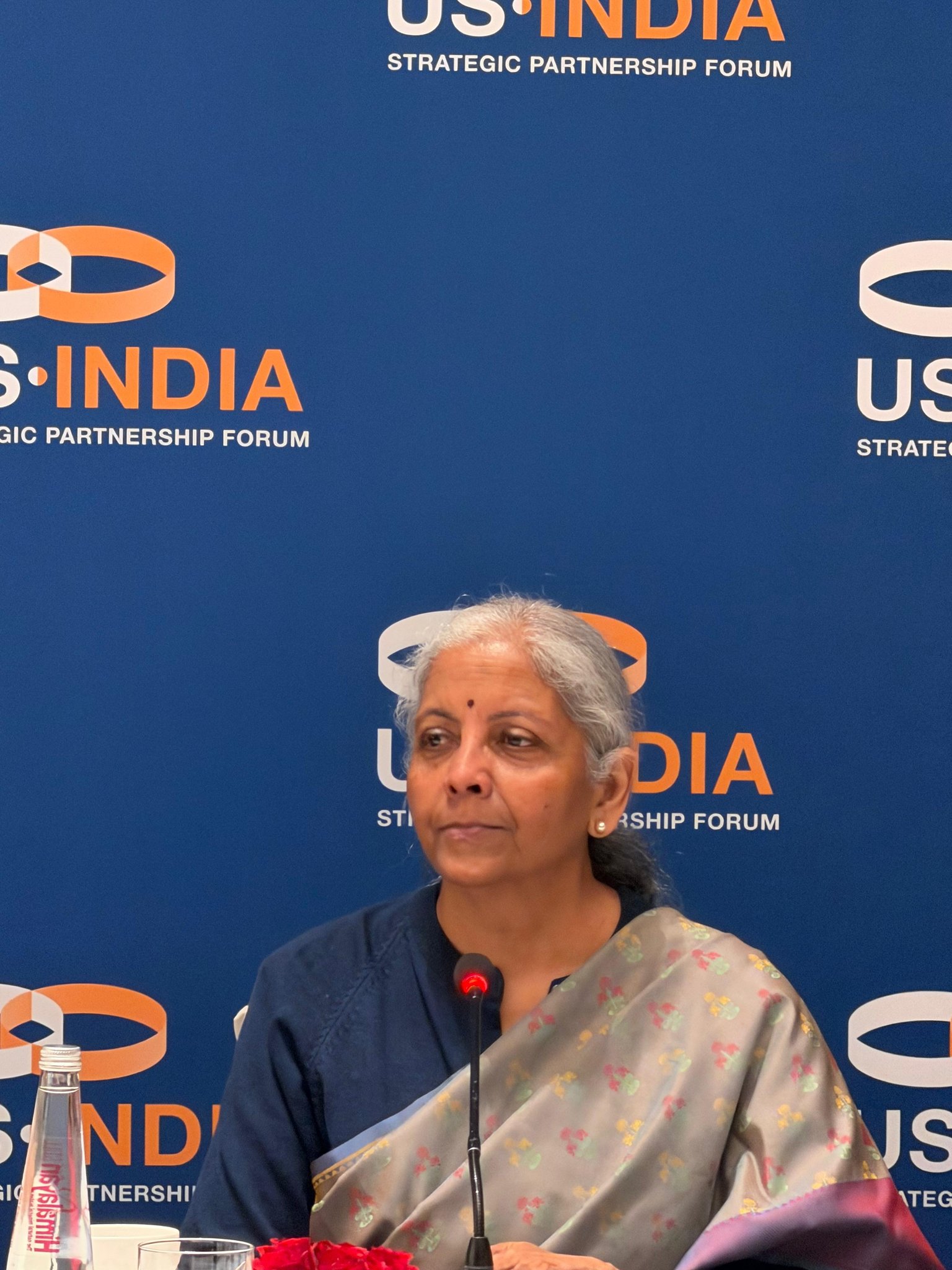
NEW DELHI : Union Minister for Finance and Corporate Affairs Smt. Nirmala Sitharaman shared the key priorities and reform direction of the Union Budget 2026-27, with a focus on policy stability, manufacturing growth and long-term investment.
The minister on Monday, addressed the Board Members of the US-India Strategic Partnership Forum in New Delhi and shared the budget priorities.

According to a social media post by the Ministry of Finance, the meeting focused on strengthening India-US economic engagement and sharing the outcomes and intent of the Union Budget. The ministry said the interaction underlined the government’s broader objective of creating a predictable and stable policy environment to encourage businesses and industry to plan long-term investments.

Outlining the key tenets of the Union Budget 2026-27, Finance Minister Sitharaman said that under the leadership of Prime Minister Shri Narendra Modi, the Budget reflects the government’s commitment to continuity, certainty and predictability from a policy perspective. She noted that such an approach is aimed at enabling businesses and industry to foster long-term plans and make sustained investment commitments.

During her address, the finance minister highlighted major announcements related to reforms across multiple sectors.
She specifically pointed to government support for semiconductors and electronic components manufacturing, Bio Pharma Shakti initiatives, development of Rare Earth Corridors, and the upgradation of legacy industry clusters. Sitharaman also underlined the government’s focus on building and strengthening India’s manufacturing capacity through Micro, Small and Medium Enterprises (MSMEs).

She said special emphasis has been placed on medium enterprises, with the objective of creating strong manufacturing champions that can drive growth, innovation and employment. The finance minister reiterated that these measures are aligned with the broader vision of enhancing India’s industrial base and improving competitiveness in key strategic sectors.

Participants at the meeting acknowledged the policy efforts being made by the government to support the reform momentum. They appreciated the commitment towards fiscal discipline, particularly in the backdrop of heightened global uncertainty. The participants also noted that policy clarity and fiscal prudence would help reinforce investor confidence and deepen economic cooperation between India and the United States.

Source : ANI

India-US partnership to reach newer heights, says Piyush Goyal after meeting Ambassador Sergio

NEW DELHI : Union Minister for Commerce and Industry Shri Piyush Goyal on Tuesday expressed confidence that the India-US Partnership will scale new heights in the coming period, particularly in the backdrop of the recently announced interim India-US trade deal.

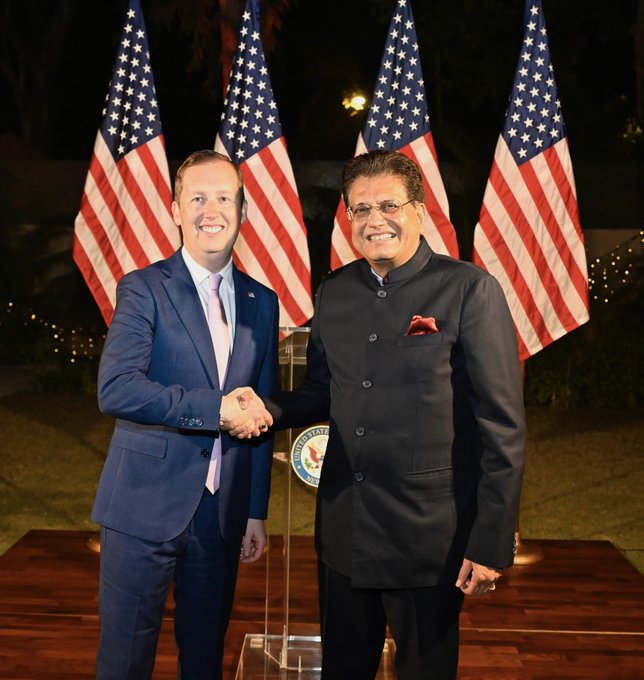
In a social media post, the minister said he was delighted to attend the welcome reception of Sergio Gor at the US Embassy in India. Highlighting the importance of the engagement, Goyal stated that the India-US Trade Deal will play a key role in strengthening bilateral ties between the two countries.

“Delighted to attend the welcome reception of US Amb India Sergio Gor at the US Embassy in India. Confident that the India-US partnership will reach newer heights with the India-US Trade Deal,” the minister noted in his post.The interim US-India Bilateral Trade Agreement was declared on February 7 and establishes an interim framework linked to a broader Bilateral Trade Agreement (BTA) that was initiated in 2025. Under the interim arrangement, the United States has set a reciprocal tariff rate of 18 per cent on select Indian goods. These include textiles, apparel, leather, plastics, chemicals and machinery.

The interim trade deal framework is positioned as the first step towards a comprehensive BTA. As per the framework, the US will apply a reciprocal tariff rate of 18 per cent on Indian goods. It also outlines a clear pathway for the removal of reciprocal tariffs on a wider set of products, provided the interim trade agreement (ITA) is successfully concluded. Beyond tariffs, the framework highlights cooperation in several key areas. Both countries have agreed to address non-tariff barriers, establish clear rules of origin, strengthen supply chain resilience and work towards ambitious digital trade rules as part of the proposed BTA.

Separately, on Monday, the minister also held a meeting with Henry Kravis, Co-Founder and Co-Executive Chairman of KKR, a global investment firm. The discussions focused on the company’s journey in India and the significant opportunities for expanding investments in the country.

According to the minister, the meeting highlighted India’s strong, reform-driven growth trajectory and the vast potential it offers for long-term global investors. The interaction reflected continued interest from global investment firms in India’s growth story and its evolving economic landscape. The meetings and recent developments show India’s efforts to strengthen global partnerships, boost trade, and attract investments through policy certainty and sustained economic reforms.

Source : ANI

India-EU working on “Fast Track” to operationalise FTA within a year: Commerce Secretary Rajesh Agrawal

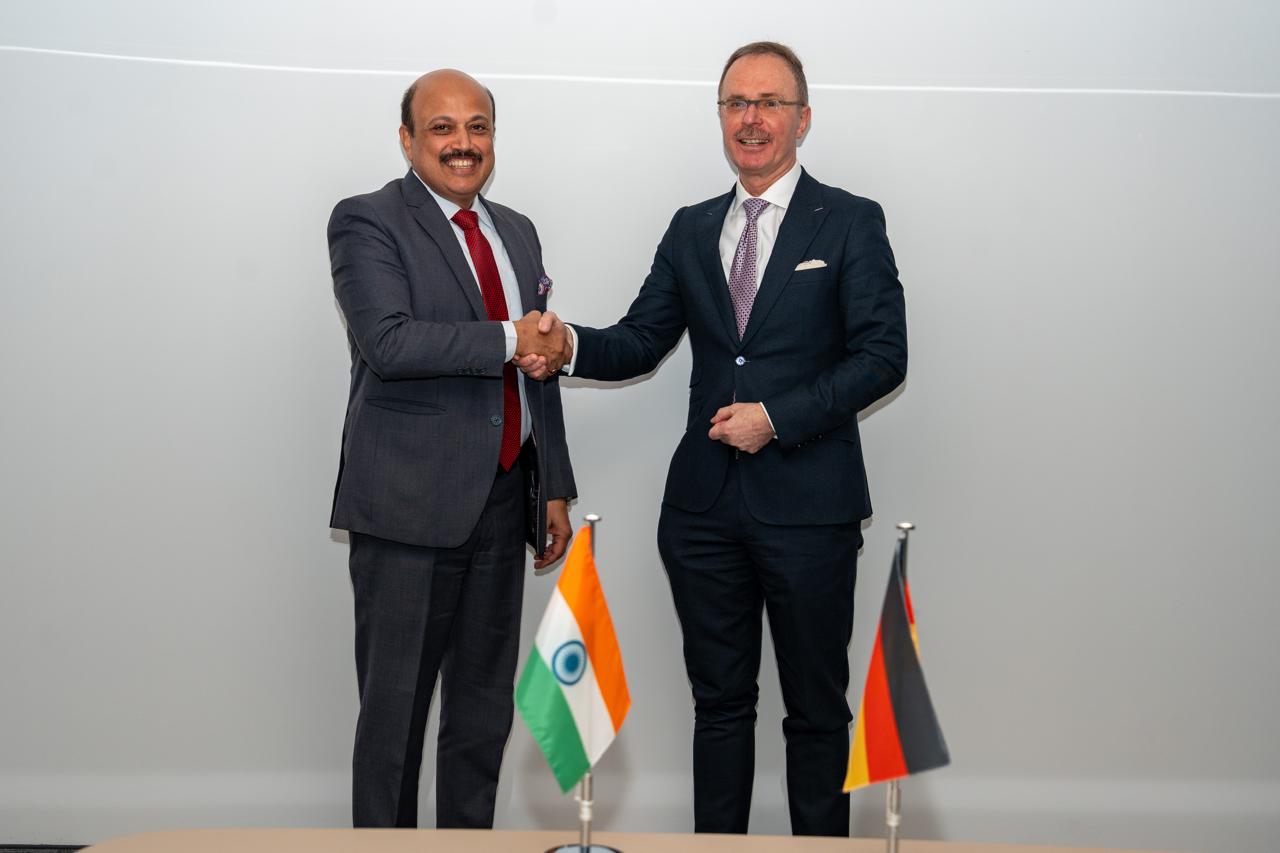
NEW DELHI: India and the European Union are working on the India-EU Free Trade Agreement on a “very fast track basis, trying to speed up the process,” said Shri Rajesh Agrawal, Commerce Secretary, Government of India, on the sidelines of BIOFACH 2026, the world’s leading exhibition for organic products.

Speaking to ANI, the Commerce Secretary expressed strong optimism about the landmark agreement, noting widespread enthusiasm on both sides. “The India-EU Free Trade Agreement is something which I think everybody is very positive about. There is a lot of positive energy about this FTA in India also, and in Europe also. Whomsoever I have met, they have been very bullish about the FTA, and they feel that the FTA will open up new opportunities for both Europe and India,” Agrawal said.

Commerce Secretary emphasised that the agreement’s impact would extend beyond traditional trade. “Not only trade will grow, but investments also on both sides will grow,” he noted.

Agrawal detailed his discussions with European counterparts, including the Minister for Agriculture of Germany, which focused on leveraging the FTA to create synergies between Indian and European strengths. “My discussions at Berlin, also my discussions here, focused a lot on how we can leverage this FTA going forward, create more opportunities for our businesses to meet each other and see what are the unique strengths that India and EU has to offer, how those strengths can come together, how their technology and Indian talent can come together to build world class supply chains, world class global value chains, which can serve both India and Europe and also the global market,” he explained.

When asked about the timeline for the agreement to come into effect, the Commerce Secretary acknowledged the typically lengthy process involving legal scrutiny and translation into all European languages. However, he expressed confidence in an accelerated timeline.

“Normally, it takes a lot of time, because there is legal scrub to be done. There is translation in all the languages that is required in Europe that needs to be done. But I think both sides are working on a very fast track basis, trying to speed up the process. And we expect at the best, at the most, I think within next one year. Within next one year, we should make this agreement operational,” Agrawal stated.

The Commerce Secretary’s remarks came during India’s participation as Country of the Year at BIOFACH 2026, being held from February 10-13 in Nuremberg. India’s prominent presence at the exhibition, with a 1,074 square meter pavilion hosting 67 co-exhibitors from over 20 states, represents the country’s first major international engagement following the conclusion of FTA negotiations on January 27.

The convergence of the FTA momentum and India’s showcase of organic products at BIOFACH underscores the growing economic partnership between India and the EU, with both sides working to expedite the formalisation of their enhanced trade relationship.

Source: ANI

Pipavav Port Q3 profit rises 9% on RoRo, bulk cargo surge despite container dip

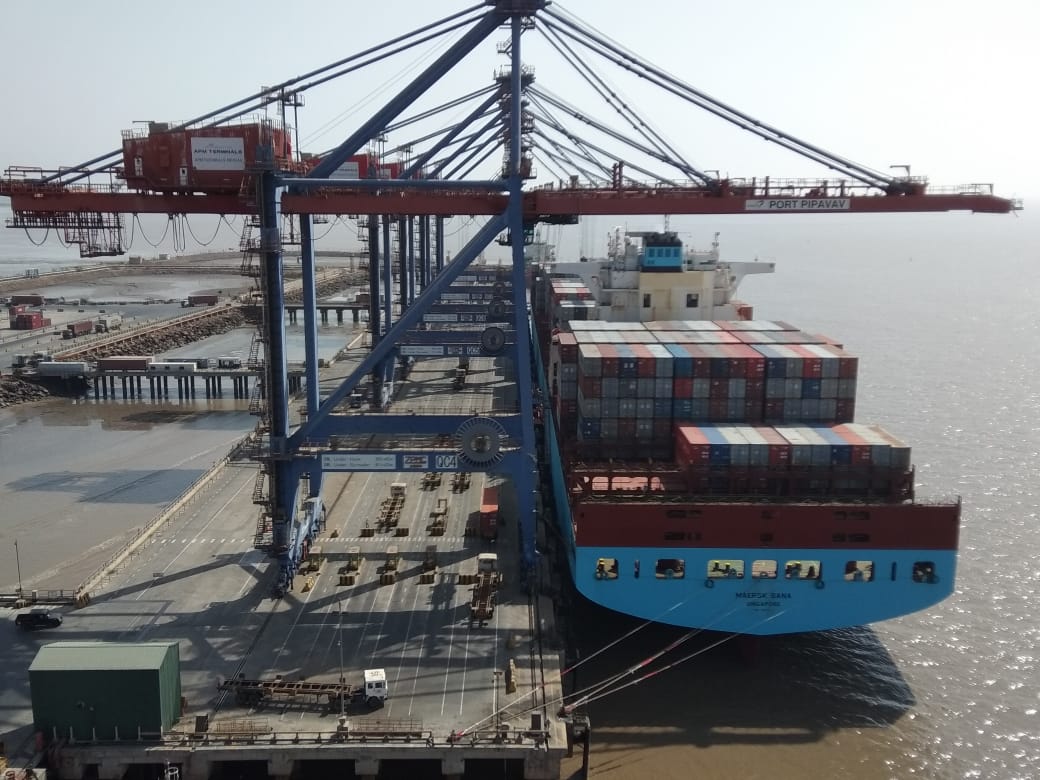
PIPAVAV : Gujarat Pipavav Port Ltd on Tuesday reported a 9 percent year-on-year rise in consolidated net profit to ₹107.9 crore for the third quarter of FY26, aided by a sharp increase in RoRo and dry bulk cargo volumes, even as container traffic declined.

The port operator’s revenue from operations grew 11 percent year-on-year to ₹292 crore during the quarter ended December 31, 2025. While container volumes slipped 1.7 percent to 1.74 lakh TEUs, RoRo volumes handled at the port surged 41 percent to 62,000 units during the quarter. Dry bulk cargo volumes rose 21 percent to 0.87 million tonnes, while liquid cargo volumes increased 2.6 percent to 0.4 million tonnes, the company said.

The company posted a profit despite an incremental impact of ₹4.32 crore, comprising gratuity-related past service costs arising from a change in law. Given the non-recurring and regulatory-driven nature of the impact, the amount has been recognised as an exceptional item in the statement of profit and loss for the quarter.

Source : BL

After Trump’s “Zero Tariff” Claim, A White House Factsheet on India-US Deal

WASHINGTON : The Donald Trump administration has termed the new India-United States trade deal a “historic” step, which, according to the White House, will open the Indian market of over 1.4 billion people to American products. The White House has also released a statement defining the key terms of the deal, under which the US has agreed to lower the reciprocal tariff on India from 25 per cent to 18 per cent.

The statement brought clarity on several aspects of the deal, especially on President Trump’s claim of India agreeing to cut “tariffs and non-tariff barriers against the United States to ZERO”. It also specified that Trump has agreed to remove the additional 25 per cent tariff on Indian imports in recognition of New Delhi’s commitment to stop purchasing Russian oil.

The White House said that India has agreed to “eliminate or reduce tariffs” on all US industrial goods and a wide range of US food and agricultural products, including “dried distillers’ grains (DDGs), red sorghum, tree nuts, fresh and processed fruit, certain pulses, soybean oil, wine and spirits, and additional products.”

It noted that India has committed to buying more American products and purchasing over $500 billion of US energy, information and communication technology, agricultural coal, and other products.

The statement stressed that New Delhi has also agreed to address non-tariff barriers that affect bilateral trade in priority areas.

Moreover, India will also remove its digital services taxes and has committed to negotiating a robust set of bilateral digital trade rules that address discriminatory or burdensome practices and other barriers to digital trade, including rules that prohibit the imposition of customs duties on electronic transmissions.

The statement added that the United States and India have also agreed to “negotiate rules of origin that ensure that the agreed benefits accrue predominantly to the United States and India.”

Both nations were also committed to strengthening economic security alignment to enhance supply chain resilience and innovation through complementary actions to address non-market policies of third parties, as well as cooperating on inbound and outbound investment reviews and export controls,” it said.

The United States and India will significantly increase bilateral trade in technology products and expand joint technology cooperation, the White House said.

Trump’s Claims
Trump had claimed that India has agreed to “reduce Tariffs and Non-Tariff Barriers against the United States, to ZERO”. Largely, Trump’s language signified an in-principle commitment to lower or phase out duties on selected US products rather than an immediate elimination of all import duties. However, the assertive phrasing of the claim brought anxiety among Indian traders.

The Path Forward
The statement followed a call between President Trump and Indian Prime Minister Narendra Modi last week, in which the leaders reached a framework for an interim agreement on reciprocal trade and reaffirmed their commitment to broader US-India Bilateral Trade Agreement (BTA) negotiations.

The statement said that in the coming weeks, Washington and New Delhi will promptly implement this framework and work toward finalising the interim agreement with a “view to concluding a mutually beneficial BTA to lock in benefits for American workers and businesses.”

“In line with the roadmap set out in the Terms of Reference for the BTA, the United States and India will continue negotiations to address the remaining tariff barriers, additional non-tariff barriers, technical barriers to trade, customs and trade facilitation, good regulatory practices, trade remedies, services and investment, intellectual property, labour, environment, government procurement, and trade-distorting or unfair practices of state-owned enterprises,” it added.

India-US interim trade deal, tariff reduction to boost chemical sector exports: Indian Chemical Council

CHENNAI: The reduction in tariffs under the India-US trade deal framework is expected to significantly improve the competitiveness of Indian exports and deliver broad-based gains for the chemical industry, Ms.Ramya Bharathram, President of the Indian Chemical Council (ICC), said on Monday.

Bharathram said higher tariffs had been affecting Indian industry “to a very large extent,” and the proposed duty easing was a welcome development.

“The fact that tariffs have come down and there is a deal that is going to be announced in the future is definitely a big positive,” she said.

According to Bharathram, reducing tariffs to an average of around 18 per cent would put Indian products on a more competitive global footing.

“A lot of Asian countries are already at around 18 to 19 per cent. With this reduction, India will become much more competitive in comparison,” she noted.


She said the chemical sector would be a direct beneficiary of the tariff cuts.

“On the chemical side, both organic and inorganic chemicals will benefit directly,” Bharathram said, adding that exports from the sector are expected to increase as market access improves.

Highlighting the broader impact of the move, Bharathram said the benefits would also extend indirectly across multiple industries where chemicals play a critical role.

“Chemicals are present in almost all industries. So if there is improved market access because of duty reduction for sectors such as textiles, agriculture, electronics, semiconductors, leather and pharmaceuticals, the chemical industry will also benefit indirectly,” she said.

Calling the development a very positive move, Bharathram said the industry is now looking forward to the finer details of the trade agreement.

The US and India last week issued a joint statement, stating that they have reached a framework for an Interim Agreement regarding reciprocal and mutually beneficial trade (interim agreement), and have agreed to a framework.

India had reservations about opening the entire US agricultural sector to Indian markets, which is why the interim trade deal apparently missed the initially set timeline – fall of 2025. The Indian side has secured protection for its sensitive sectors, particularly agriculture and dairy, in this deal.

Furthermore, both countries decided to address non-tariff barriers affecting bilateral trade.

On February 2, a phone call between Prime Minister Narendra Modi and US President Donald Trump led to the announcement of the conclusion of negotiations on the much-awaited trade deal.

The Trump administration had imposed tariffs on major exporters to the US, including India and China. There was a 50 per cent tariff on goods from India entering the United States since August 2025. The tariffs have now been reduced to 18 per cent following the leaders’ recent phone call. The BTA, formally proposed in February 2025, seeks to more than double bilateral trade, from the current USD 191 billion to USD 500 billion by 2030.

Source: ANI