Home Blog Page 437

Indian Railways approves major projects across India to enhance capacity, ease congestion, improve safety, and operational efficiency

NEW DELHI : Indian Railways has approved a comprehensive set of rail infrastructure projects aimed at eliminating congestion, enhancing line capacity, improving safety systems, and enabling faster, more reliable passenger and freight movement across the country. These approvals span Southern, Northern and South Eastern Railways, covering line doubling, third and fourth lines, bypass corridors, and advanced electronic interlocking systems.

Barbenda–Damrughutu Doubling & Damrughutu–Bokaro Steel City 3rd & 4th Lines: ₹815.32 crore

Barbenda–Damrughutu Doubling and Damrughutu–Bokaro Steel City 3rd & 4th Lines in Jharkhand are major capacity expansion projects under South Eastern Railway and a cornerstone of India’s Energy, Mineral, and Cement Corridor. Currently, the line operates at 108% utilisation, with train detention ranging between 90-150 minutes, handling 78 trains daily (38 passenger and 40 freight) and supporting a freight throughput of 35.22 MTPA. Without intervention, utilisation was projected to reach 132% by 2028–29.

The project strengthens connectivity to key industrial and energy hubs, including Central Coalfields, cement and steel plants, Hindustan Petroleum Corporation Limited Depot, Bharat Petroleum Corporation Limited Depot, and the Bokaro Steel City industrial ecosystem. By enhancing capacity, the expansion will directly improve energy logistics, industrial output, and the efficiency of national supply chains.

Electronic Interlocking on High-Density Network (HDN) and Highly Utilized Network (HUN) Routes: ₹421.41 crore

To further enhance safety and operational efficiency, Indian Railways has approved the implementation of Electronic Interlocking (EI) at 34 stations across Northern Railway routes where Kavach is being rolled out. This includes 21 stations in the Delhi Division at a cost of ₹292.24 crore and 13 stations in the Ambala Division costing ₹129.17 crore.

These upgrades will enable faster and safer train operations, improve the reliability of signalling systems, support higher train frequencies on high-density routes, and complement modern train protection systems.

Rajpura Bypass Line (13.46 km), Northern Railway: ₹411.96 crore

The approval of the Rajpura Bypass Line will significantly enhance capacity and operational efficiency on the Ambala–Jalandhar section, one of the busiest corridors on Northern Railway. The project will provide direct rail connectivity between New Shambhu Dedicated Freight Corridor (DFC) station and Kauli station on the Rajpura–Bathinda line, enabling freight trains to bypass the congested Rajpura Yard. This will streamline freight movement, ease pressure on existing lines, and support the projected rise in traffic demand, while ensuring smoother integration with the DFC and more reliable passenger and freight operations across the region.

Alappuzha–Ambalapuzha Doubling (12.66 km): ₹324.16 crore

This strategically important project removes a critical single-line constraint on the Ernakulam–Turavur–Kayankulam route. Once completed, it will enable nine additional passenger trains per day in each direction, add 2.88 million tonnes per annum (MTPA) of freight capacity, and generate additional annual earnings of ₹3.23 crore. The project will significantly improve operational efficiency by reducing detention for both passenger and freight trains.

By addressing the last remaining single-line stretch on this corridor, it ensures smoother and uninterrupted train movement, enhancing travel reliability for long-distance passengers and strengthening inter-State freight flows within Kerala, while decongesting major junctions for faster, seamless travel.

Palakkad Town–Parli Bypass Line (1.80 km): ₹163.57 crore

The Palakkad bypass project provides immediate operational and passenger benefits by eliminating engine reversal at Palakkad Junction in Kerala for multiple train services. It reduces average detention of passenger trains by 40-44 minutes and cuts freight detention by up to 120 minutes per train, while also supporting additional passenger services planned from Palakkad Junction.

By streamlining train movements, the bypass will significantly improve punctuality on routes connecting Shoranur, Thiruvananthapuram, and Pollachi, while easing congestion at one of Southern Railway’s busiest junctions.

Irugur–Podanur Doubling (10.77 km): ₹277.42 crore

One of the most significant developments for Tamil Nadu is the approval for the doubling of the Irugur–Podanur section, a crucial link on the Chennai–Thiruvananthapuram corridor. This project will allow the operation of 15 additional passenger trains per day and increase freight capacity by 3.12 million tonnes per annum (MTPA), with annual net earnings expected to rise by ₹11.77 crore.

Currently, line capacity utilisation stands at 60%, but with this expansion, it is projected to reach 131% by 2027–28, highlighting the urgency and strategic importance of the project. With multiple quadruplication projects already completed or underway on adjoining stretches, the doubling of this section will ensure that the entire Chennai–Coimbatore–Podanur belt transforms into a high-capacity, four-line corridor. This will directly benefit industrial hubs such as Coimbatore, improve terminal operations at Podanur, and support new train services to northern destinations.

These approvals reaffirm that Indian Railways remains fully prepared to deliver world-class rail infrastructure at scale. With timely cooperation from State Governments, these projects will translate into faster journeys, higher freight efficiency, improved safety, and sustained economic growth.
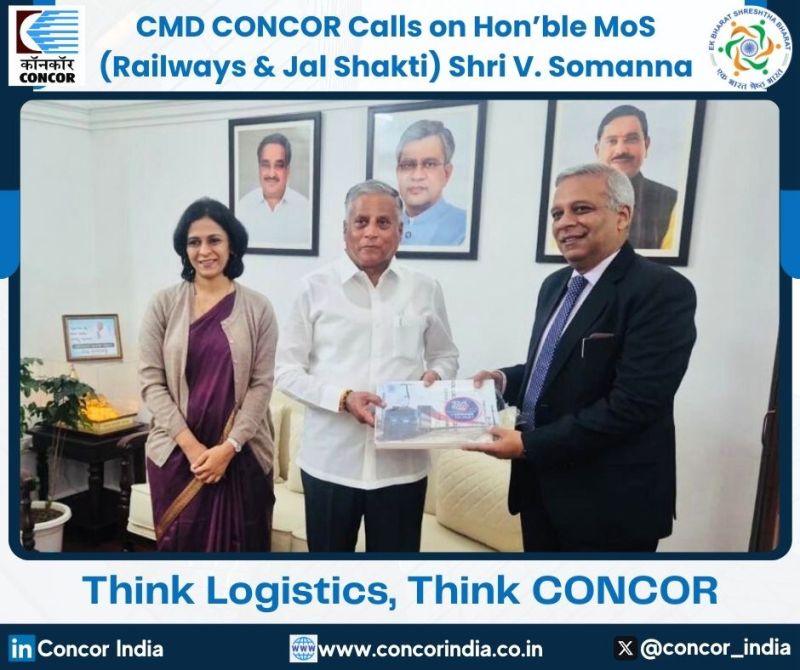
CONCOR leadership meets Hon’ble MoS for Railways & Jal Shakti V. Somanna; highlights customer-centric logistics initiatives

NEW DELHI : The Chairman & Managing Director (CMD) of Container Corporation of India Ltd. (CONCOR), Shri Sanjay Swarup, along with Area Head (Southern Region), Mrs. G. Gayatri, called on the Hon’ble Minister of State for Railways & Jal Shakti, Shri V. Somanna, today to brief him on the Corporation’s ongoing initiatives aimed at enhancing customer-centric, seamless end-to-end logistics solutions.

During the meeting, the CONCOR leadership apprised the Hon’ble Minister of key operational and strategic initiatives undertaken to strengthen rail-led logistics, improve multimodal connectivity, and enhance service efficiency for trade and industry. Discussions covered initiatives focused on digitalization, terminal infrastructure augmentation, first- and last-mile connectivity improvements, and customized logistics offerings designed to meet evolving customer requirements.

The CMD highlighted CONCOR’s continued efforts toward optimizing rail freight movement, expanding inland container depot (ICD) and container freight station (CFS) capabilities, and supporting India’s growing export-import and domestic cargo demand through reliable, cost-effective logistics solutions.

The Hon’ble Minister appreciated CONCOR’s role in strengthening the country’s logistics ecosystem and emphasized the importance of rail-based freight movement in achieving sustainable and efficient transportation growth.

CONCOR expressed its sincere gratitude to Shri V. Somanna for his valuable time, guidance, and encouragement. The Corporation looks forward to his continued support in advancing future-ready logistics initiatives and contributing to India’s vision of rail-led growth and integrated infrastructure development.

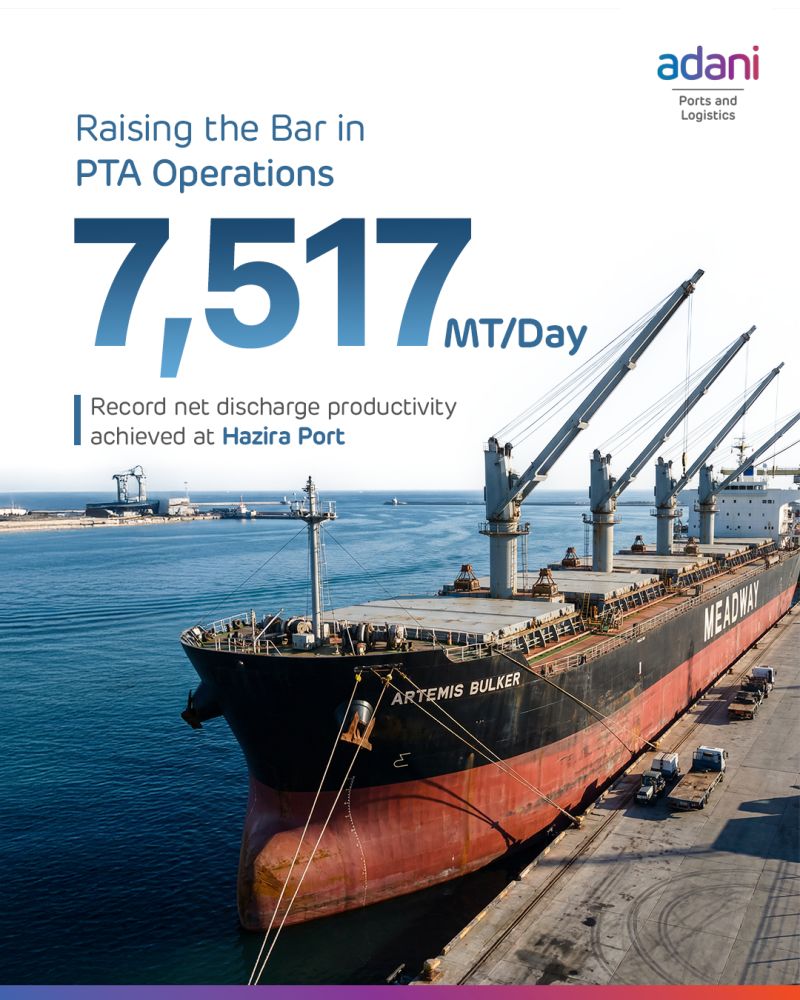
Adani Hazira Port sets new productivity benchmark with record PTA discharge performance

HAZIRA : Adani Ports and Special Economic Zone (APSEZ) has achieved a new milestone in operational excellence at Hazira Port, setting a record-breaking vessel discharge productivity for purified terephthalic acid (PTA).

The vessel MV ARTEMIS BULKER registered an outstanding net discharge rate of 7,517 metric tonnes per day (MT/day), with operations successfully completed at 05:00 hours on February 5, 2026. This performance surpasses the previous record of 7,107.039 MT/day, establishing a new benchmark in bulk cargo handling efficiency at the port.

The achievement reflects meticulous berth planning, synchronized stevedoring operations, optimized equipment deployment, and seamless coordination between marine, operations, and logistics teams. Advanced cargo handling systems, real-time monitoring, and streamlined evacuation planning ensured minimal turnaround time and enhanced supply chain efficiency.

PTA, a critical raw material for the polyester and textiles industry, demands precise handling and swift discharge to maintain downstream production schedules. The accelerated discharge rate not only reduced vessel turnaround time but also improved berth availability and strengthened cargo flow reliability for trade partners.

This milestone underscores Hazira Port’s capability in handling high-volume bulk cargo with speed, safety, and precision. It further reinforces Adani Ports’ commitment to delivering world-class port infrastructure, performance-driven operations, and enhanced value to customers.

The management extended appreciation to all teams involved, recognizing their dedication, operational discipline, and collaborative effort in setting this new productivity benchmark.

With continuous investments in mechanization, digitalization, and capacity enhancement, Hazira Port remains focused on elevating service standards and strengthening India’s maritime logistics ecosystem.

Allcargo Terminals Q3 Results: Net profit surges 21% on record volumes and capacity expansion

MUMBAI : Multimodal logistics operator Allcargo Terminals Ltd reported a net profit of ₹15 crore for the third quarter, up 21% from ₹11.8 crore in the corresponding period last year. Revenue for the quarter increased 16.6% year-on-year to ₹218 crore from ₹187.3 crore. EBITDA rose 29.3% to ₹42.5 crore, compared with ₹32.9 crore in Q3 of the previous year. EBITDA margin for the quarter stood at 19.5%, up from 17.6% in the year-ago period.

The growth in revenue was driven by higher volumes, supported by capacity additions at JNPA, along with organic growth across Allcargo Terminals’ pan-India Container Freight Station (CFS) and Inland Container Depot (ICD) network. The company achieved its highest-ever quarterly volumes in Q3 FY26, reaching 1.76 lakh TEUs.

Suresh Kumar R, Managing Director, Allcargo Terminals Limited, said: “In Q3FY26, we achieved significant growth of 18% year-on-year in volumes. This growth reflects early benefits of our three-year strategic plan, where we added capacity at JNPA in Q2FY26 and renewed a contract with CWC Mundra at the beginning of the year.

Our deep customer equity is enabling us to leverage capacity expansion, ensuring revenue to keep pace with volumes. Our profit after tax increased by 28% year-on-year, underscoring the operating leverage in the business.

We remain confident about the long-term growth prospects of CFS and ICD operations in India, especially at a time when global trade dynamics are being reset. Recent trade agreements signed by India with the European Union and the United States are expected to provide a meaningful fillip to manufacturing activity and India’s EXIM trade.”

VoC Port Authority secures Platinum rating for sustainable, eco-friendly buildings & energy efficiency certification for energy-efficient, sustainable buildings

igbc award VoC Port Authority secures Platinum rating for sustainable, eco-friendly buildings & energy efficiency certification for energy-efficient, sustainable buildings

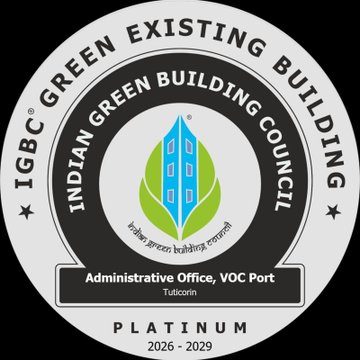
TUTICORIN : V.O. Chidambaranar Port Authority has become India’s first Major Port to receive the prestigious IGBC Platinum Rating, the highest certification awarded by the Indian Green Building Council.

The Administration Building follows the Port Authority’s Green Policy and waste management plan to support sustainability. It is equipped with rooftop solar panels and a high Solar Reflectance Index (SRI) reflective roof coating, which helps reduce the Urban Heat Island effect and improve energy efficiency. Resource efficiency has been strengthened through IoT-enabled water meters, Indoor Air Quality (IAQ) monitoring systems, rainwater harvesting, and water-saving plumbing fixtures, resulting in a 37% reduction in potable water usage. All wastewater is treated in an on-site Sewage Treatment Plant (STP) and fully reused.

In a significant step towards decarbonization, the Administration Building operates on 100% renewable energy, with 89% of electricity generated on-site through solar power and the remaining 11% sourced from off-site renewable energy sources of the port.

Occupant health, safety, and inclusivity have also been prioritized. The building has a No Smoking Policy, uses eco-friendly housekeeping chemicals, and is equipped with non-slippery ramps, differently-abled-friendly (DAP) toilets, electric wheelchairs, and lifts with braille and audio assistance, ensuring easy access for senior citizens and differently abled. To strengthen sustainability practices, VOC Port has seven IGBC Accredited Professionals overseeing effective implementation and continual improvement. The campus boasts over 70% green cover, supported by extensive tree plantation.

In addition, V.O. Chidambaranar Port has also been awarded with Shunya and Shunya Plus certifications by the Bureau of Energy Efficiency (BEE) under the Ministry of Power, Government of India. The Shunya Certification system is based on the principle that a building’s total annual energy demand is fully met through on-site or off-site renewable energy sources. A Shunya building is a Net Zero Energy Building, meaning it produces as much green energy as it consumes annually, with an Energy Performance Index (EPI) between 0 and 10 kWh/m²/year, focusing on energy efficiency and balance. A Shunya Plus building is a Net Positive Energy Building that generates more on-site renewable energy than it consumes, with an EPI of less than 0 kWh/m²/year, enabling surplus energy to be exported to the power grid. Under this certification, VOC Port’s Hospital and CISF Barracks have been awarded with Shunya Plus certification and the Port’s Administrative Building and Guest House have been awarded with Shunya certification.

Aligned with the Maritime India Vision 2030 and Harit Sagar – Green Port Guidelines led by the Hon’ble Prime Minister Shri Narendra Modi, VOC Port has been implementing several green initiatives and resource-efficient practices. This dual achievement highlights VOC Port’s leadership among Indian ports in inclusive growth and sets a benchmark for sustainable and energy-efficient port infrastructure across the country.

Shri Susanta Kumar Purohit, IRSEE, Chairperson, VOC Port, stated that the project involved targeted building upgrades and policy measures to enhance environmental performance, energy efficiency, and occupant well-being. He further noted that achieving the IGBC Platinum Rating, along with the Bureau of Energy Efficiency (BEE) certification, marks a proud milestone, making VOC Port the first Indian Major Port to attain this distinction.

Can Data Reduce India’s Logistics Carbon Footprint?

By Vaibhav Singh, Program Manager, NLDSL

Logistics in India is the key driver for the growth of Indian economy which serves manufacturers, retailers and end-users by moving their goods across large distances. Yet this growth is occurring at a cost for the environment, and transportation, warehouse activities and inefficiencies within the supply chain are major contributors to the carbon India produces as a country. Therefore, the question remains whether data can be used to optimize logistics activities to decrease emissions and create more sustainable and environmentally friendly supply chains in India, and the answer is increasingly affirmative.

Growing the Environmental Footprint of Logistics

India has a substantial negative impact on the production of greenhouse gases from its over-reliance on road transportation; numerous opportunities to utilize rail transportation are not realized, and the distribution network is highly fragmented. As logistics operations cannot efficiently utilize rail, and due to poor route planning and inefficient utilization of time, unnecessary trips are being made. As India’s logistics operation grows and the economy continues to expand, as well as the expected growth of the manufacturing and e-commerce sectors, it will be critical to improve the sustainability of logistics operations while maintaining operational efficiency.

Harnessing Data for Green Logistics

Emerging technologies to provide insights into supply chain efficiencies will allow for a significant reduction in carbon footprint through optimization of transportation networks, driving efficiencies to enhance on-time deliveries, and real-time tracking of all modalities within these networks. The success of these emerging technologies will allow organizations to fully utilize all available methods of transportation and reduce carbon emissions.

Policy Coordination for A Sustainable Logistics System

The Indian government’s initiatives, such as the National Logistics Policy and efforts to improve multimodal transport, provide an enabling environment for data-driven decarbonization.

Several evidence-based frameworks have been developed at national level in India to nudge decarbonization in the logistics sector. For instance, the National Logistics Policy and multimodal transport would enable carbon reduction strategies with data-driven decisions. ULIP is a related data-based approach which was developed to support adoption of carbon reduction measures by building an infrastructure that links the logistics partners (e.g., trucking, shipping and rail). Since ULIP unifies all modes of logistics, Users can make smarter, integrated plans that optimize the use of their assets across modes, result in fewer trips and less waste, and bring about overall reduction in carbon emissions.

One area in which significant progress was made in turning the logistics industry sustainability around through data-driven developments is the release of an aligned set of emissions factors developed by the TCI–IIMB Supply Chain Sustainability Lab at IIM Bangalore in collaboration with ULIP. In combination with the ULIP platform, the ULIP community will be able to apply the standardized emissions factors to systematically quantify their GHG emissions associated with moving freight and offer a standardised and reproducible method to calculate the carbon intensity of their logistics supply chain. This collaboration signifies a move toward embedding sustainability metrics into national digital logistics infrastructure, supporting informed decision-making and encouraging the adoption of greener transport practices across the sector.

Public-private collaboration is key to standardizing data collection, encouraging digital adoption among small carriers, and incentivizing sustainable practices.

Prospects for Industry and the Environment

Decreasing the carbon footprint is not only beneficial for the environment but is also becoming increasingly business-friendly. Reduced fuel consumption, better fleet management, and lower energy consumption can increase profits. Stronger sustainability profile better brand reputation and customer appeal, especially as the global supply chains become more sensitive to sustainability issues, will make Indian industry more competitive in these chains. Data-informed decisions ensure green logistics is embedded in the operational strategy and not the strategies costed addition.

Conclusion

Data could enable India’s logistics industry to set the benchmark for sustainability and efficiency. With real-time insights, predictive analytics and intelligent planning, India will be able to reduce emissions, increase operational efficiency, and develop greener supply chains. The logistics carbon footprint is not a given cost, it’s a potential source of innovation, leadership and environmental responsibility. India has the requisite technology and policy-constructs to demonstrate global leadership in data-driven, sustainable logistics.

Author:

Vaibhav Singh Program Manager NLDSL 1 Can Data Reduce India’s Logistics Carbon Footprint?

Mr. Vaibhav Singh, Program Manager, NICDC Logistics Data Services Ltd. (NLDSL).

Mumbai-Ahmedabad Bullet Train Project experience lays a strong foundation for India’s future high-speed rail network

MUMBAI : Union Minister for Railways, Information & Broadcasting and Electronics & Information Technology, Shri Ashwini Vaishnaw, informed in a reply to the Lok Sabha that, presently, the Mumbai-Ahmedabad High Speed Rail (MAHSR) Project (508 km) is under execution with technical and financial assistance from Government of Japan. The MAHSR project is planned and constructed on a elevated viaduct. The design for stations on the corridor provides for security measures like controlled entry points, baggage scanners, DFMDs (Door Frame Metal Detectors), CCTV(Close Circuit Television) cameras etc.

The experience and technical capabilities being developed through the MAHSR project, particularly in track construction, advanced signalling, Rolling Stock manufacturing & maintenance, project management etc. are expected to provide a strong foundation for future high-speed rail corridors in the country. With gain of such expertise, India will strengthen its position for planning and decision making in HSR Sector.

Indigenization & Capacity Building:

• Long-span steel truss girders are being fabricated in Indian workshops, supported by analytical modelling and field measurements to strengthen domestic HSR design capability.

• Heavy construction machinery used for full-span launching has been indigenised and is now being manufactured in India.

• Most slab track materials and specialized track machines are being developed and produced by Indian manufacturers, boosting domestic manufacturing capability.

• Design variations and detail regarding dynamic analysis are being handled by Indian agencies in collaboration with IITs, with advanced dynamic analysis tools and design charts developed to build long-term HSR expertise.

Innovation:

• Full-span launching method adopted for the first time in India for launching 40 m prestressed box girders (~1000 MT), enabling faster launching within 16 hours.

• Indigenous noise barriers being installed along the elevated corridor to minimise noise for nearby residents.

• Advanced simulation tools for OHE-pantograph interaction and Simulation model for designing of traction power supply developed with IIT Delhi for accurate design and planning.

• Underground station is being constructed with provision for a future 90 m high building on the same foundation.

• Indigenously developed Rail Turnover Prevention Device (RTPD) introduced to enhance safety during derailments.

Training:

• Indian Engineers and Skilled workers (approx. 1000 nos.) have been trained for Japanese methodology and presently, track works are being executed under their supervision.

• A Special Track training facility has been created at Surat for training and regular refresher courses.

Stations:

• HSR stations are being designed as city gateways reflecting local identity, with advanced security features such as controlled entry points, baggage scanners, Door Frame Metal Detectors (DFMDs) and Closed-Circuit Television (CCTV) surveillance.

• Safety-focused design includes anti-vibration measures, wind-pressure management in station roofs and provisions like anti-vibration hangers, clamps and bolting plates integrated during construction.

• Passenger convenience is ensured through ample parking, drop-off areas and seamless multimodal connectivity with coordinated city master planning.

• Sustainable and energy-efficient features aligned with Indian Green Building Council (IGBC) Platinum standards.

Geo-technical investigation:

• Greater emphasis has been put on Geo Technical Investigations (GTI) to be sure of structural adequacy and to rule out possibility of geological surprises.

• The GTI has been generally carried out at 100 m, and at shorter intervals in case of special structures.

• A new geo tech lab has also been been set up

Safety and security:

• A high level of security has been adopted for operational areas and buildings housing sensitive equipment to ensure passenger safety.

• Civil engineering structures are designed and constructed as per best international practices, with designs validated by a Japanese High-Level Committee.

• To enhance earthquake safety, structures have been designed considering relevant seismic zones, with steel and damper stoppers provided on viaducts and bridges to prevent dislodgement, along with installation of an Earthquake Early Warning System (EQEWS).

Progress of  Mumbai-Ahmedabad High Speed Rail Project

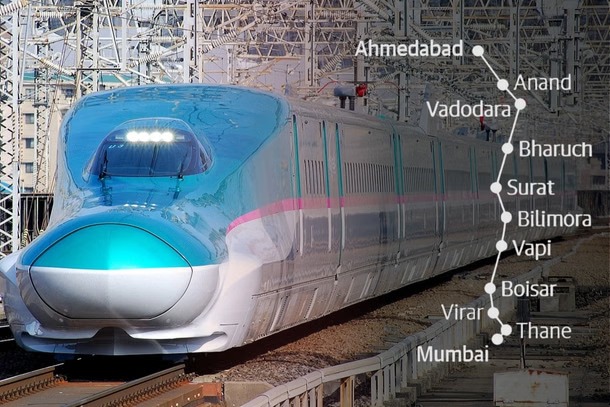
The Mumbai-Ahmedabad High Speed Rail (MAHSR) Project (508 km) is passing through the States of Gujarat, Maharashtra and Union Territory of Dadra & Nagar Haveli with 12 stations planned at Mumbai, Thane, Virar, Boisar, Vapi, Billimora, Surat, Bharuch, Vadodara, Anand, Ahmedabad and Sabarmati.

Entire land (1389.5 Ha.) for MAHSR project has been acquired. All Statutory Clearances have been obtained.  All 1651 utilities have been shifted. The delay in land acquisition in the State of Maharashtra has impacted the project till 2021. The land acquisition picked up in 2022 in Maharashtra.

The progress of various major items so far is as under:

Gujarat:      

ItemProgress
Foundation352 kms.
Piers352 kms.
Girder Casting342 kms.
Girder Launching331 kms.
Track Bed Construction152 kms.
OHE Masts Erection121 kms.

Maharashtra:

ItemProgress
Foundation74 kms.
Piers65 kms.
Girder Casting9 kms.
Girder Launching3 kms.

Out of total 12 stations, foundation works has been completed at 8 stations (Vapi, Bilimora, Surat, Bharuch, Anand, Vadodara, Ahmedabad, and Sabarmati). In Maharashtra section, foundation work is in progress at 3 stations (Thane, Virar, Boisar) and excavation work at BKC station is near completion and Casting of base slab started. 

17 river bridges have been completed. Work is in advance stage for 4 major river bridges (Narmada, Mahi, Tapti and Sabarmati) in Gujarat & in progress in 4 river bridges in Maharashtra. Work on Depots (Thane, Surat and Sabarmati) is in full swing.

Civil works at Bandra Kurla Complex (BKC) are progressing satisfactorily. Excavation works have achieved about 91% progress, and concreting works are at various stages, with 100% completion of the basement slab at Level-4. The work of the under-sea tunnel (approximately 21 km) has commenced, out of which 4.8 km of tunnel between Ghansoli and Shilphata in Maharashtra has been completed.

In line with the Make in India and Aatmanirbhar Bharat initiatives, Indian Railways is promoting indigenous manufacturing of high-speed rail systems and components to reduce import dependence. Building on the success of Vande Bharat, Integral Coach Factory (ICF) in collaboration with M/s Bharat Earth Movers Limited (BEML) is designing and manufacturing high-speed train sets with a design speed of 280 kmph.

Land acquisition for the project has been carried out in accordance with applicable laws, and affected persons have been compensated as per the Right to Fair Compensation and Transparency in Land Acquisition, Rehabilitation and Resettlement Act and relevant State policies. Rehabilitation and resettlement measures, including additional benefits and solatium, have been undertaken in coordination with State Governments.

The MAHSR corridor is designed for high-frequency operations with substantial passenger-carrying capacity. Ticket pricing is proposed to be competitive with respect to existing rail/air travel options. The viability of the project has been assessed on a long-term basis, taking into account projected passenger demand, economic benefits, time savings and regional development.

The Mumbai-Ahmedabad High Speed Rail (MAHSR) Project (508 km) is the only HSR Project under execution with technical and financial assistance from Government of Japan. Expenditure amounting to ₹ 86,939/- crore has been incurred on the project till 31.12.2025. 

Dedicated Freight Corridors

Ministry of Railways has taken up construction of two Dedicated Freight Corridors (DFC) viz. Eastern Dedicated Freight Corridor (EDFC) from Ludhiana to Sonnagar (1337 Km) and the Western Dedicated Freight Corridor (WDFC) from Jawaharlal Nehru Port Terminal (JNPT) to Dadri (1506 Km) at a total cost of ₹ 1,24,005 Cr. The work on EDFC has been completed and commissioned. In WDFC, 1404 RKm out of total 1506 RKm has been completed and commissioned. The balance work on WDFC from Vaitarna-JNPT section (102 Rkm) has been taken up.

DFC has contributed to creating additional paths on the conventional network by diverting freight traffic to EDFC and WDFC. Presently, 406 average trains per day are being run on these corridors.

.

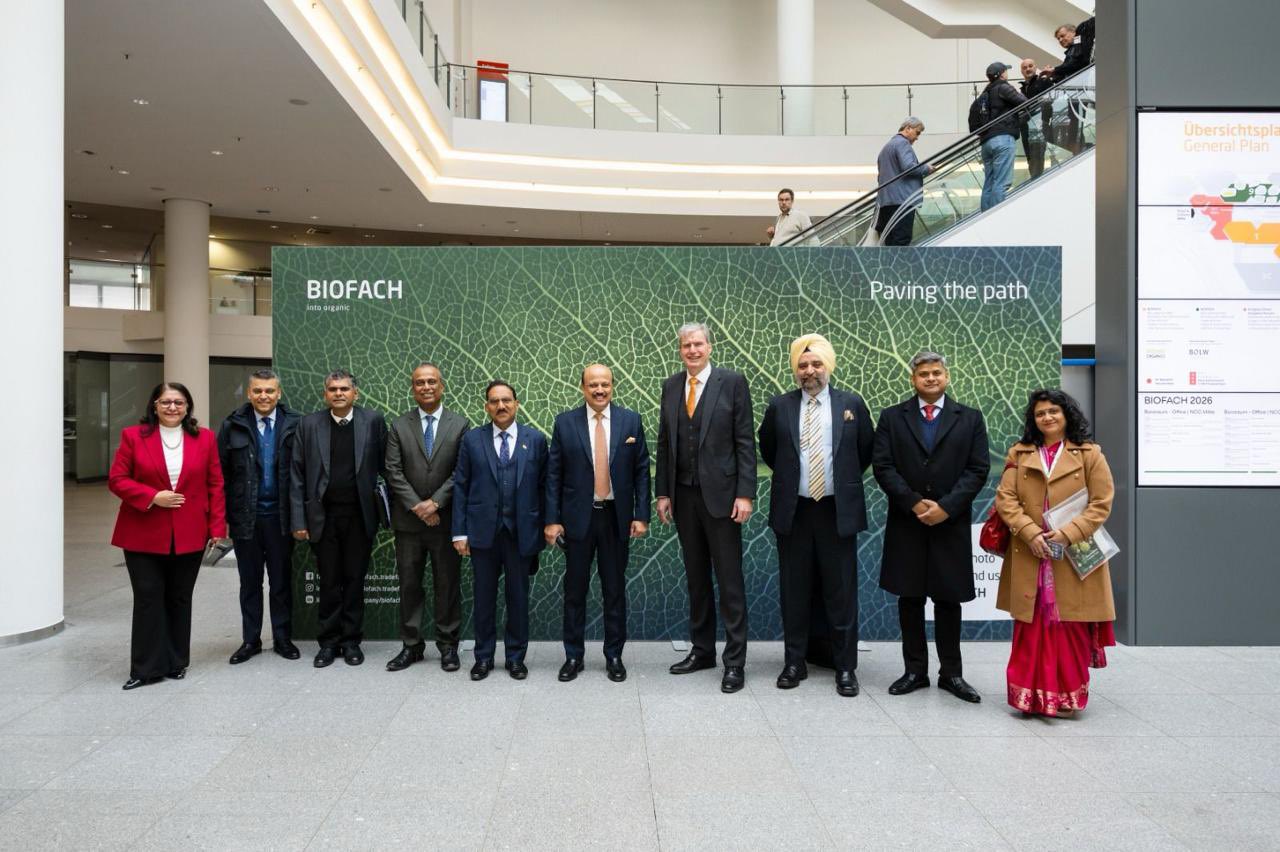
India highlights strengthened organic regulatory framework and India–EU Trade momentum at BIOFACH 2026

NUREMBURG : India marked a significant presence as the “Country of the Year” at the inaugural of BIOFACH Germany 2026, the world’s leading trade fair for organic products, held on 10 February 2026 at Nuremberg, Germany. The Agricultural and Processed Food Products Export Development Authority (APEDA), under the Ministry of Commerce and Industry, Government of India, is organising India’s participation with a prominent and high-impact presence, highlighting the country’s rich agricultural heritage and its growing stature as a reliable global supplier of organic products. Trade visitors are being provided insights into Indian organic products, value creation models and partnership opportunities.

At the inaugural ceremony of BIOFACH 2026, attended by Federal Minister of Agriculture, Food and Regional Identity, Government of Germany, Mr. Alois Rainer; Director-General, Agriculture and Rural Development, European Commission, Ms. Elisabeth Werner; and other delegates from leading organic-producing countries, Secretary, Department of Commerce, Government of India, Shri Rajesh Agrawal, highlighted India’s position as one of the world’s leading producers of organic products. He underlined the key amendments made in India’s organic regulation, the National Programme for Organic Production (NPOP), which further strengthen the credibility of India’s organic framework. He also emphasised the complementarities between India and the European Union bloc, noting their combined demographic and economic strength. Referring to the successful conclusion of negotiations of the India–European Union Free Trade Agreement, he stated that the agreement would enhance bilateral trade and investment ties, strengthen resilient supply chains and support sustainable growth. He also called for the early conclusion of the Mutual Recognition Agreement on organics between India and the European Union to further expand organic trade.

The India Country Pavilion was inaugurated by Secretary, Department of Commerce, Government of India, Shri Rajesh Agrawal, in the presence of Additional Chief Secretary, Government of Manipur, Shri Vivek Dewangan; Minister (Personnel), Embassy of India, Berlin, Dr. Mandeep Singh Tuli; Consul General of India, Munich, Shri Shatrughna Sinha; Secretary, Industry, Government of Arunachal Pradesh, Shri Hage Tari; Secretary, Trade and Commerce, Government of Arunachal Pradesh, Shri Taru Talo; Secretary (Agriculture), Government of Madhya Pradesh, Shri Nishant Warwade; Chairman, APEDA, Shri Abhishek Dev; Joint Secretary, Ministry of Commerce and Industry, Shri Saket Kumar; Joint Secretary, Ministry of Cooperation, Shri Raman Kumar; and Secretary, Horticulture, Government of Mizoram, Mrs. Maria C.T. Zuali, along with other senior dignitaries from the Government of India and State Governments.

Curated by APEDA, the India Pavilion spans 1,074 square metres and hosts 67 co-exhibitors, including organic product exporters, Farmer Producer Organisations (FPOs), cooperatives, organic certification and testing laboratories, state government organisations and commodity boards. The pavilion showcases a wide range of organic products such as rice, oilseeds, herbs, spices, pulses, cashew, ginger, turmeric, large cardamom, cinnamon, mango puree, essential oils, tea, coffee and millets. India’s participation at BIOFACH 2026 represents a significant expansion over previous editions, with a 50 per cent increase in area and participation, making India the top non-European Union exhibitor and among the top five exhibiting countries at the event. This reflects the steady growth of Indian organic exports, rising international demand and increased participation from exporters and state institutions.

Exhibitors from more than 20 Indian States, including Assam, Meghalaya, Manipur, Arunachal Pradesh, West Bengal, Madhya Pradesh, Maharashtra, Rajasthan, Gujarat, Haryana, Uttar Pradesh, Uttarakhand, Jammu and Kashmir, Delhi, Karnataka, Kerala, Tamil Nadu and Telangana, are participating in the exhibition, highlighting region-specific organic produce and value-added products.

In addition to product displays, the India Pavilion is featuring curated food tastings that showcase the flavours and aromas of Indian cuisine, including innovative pairings of Indian organic products with European culinary styles. A highlight includes the serving of organic basmati rice-based preparations featuring select spices, celebrating India’s culinary heritage.

India’s participation as “Country of the Year” at BIOFACH Germany 2026 underscores its growing role in the global organic ecosystem. With a rapidly expanding organic sector, India continues to supply high-quality, sustainably produced products meeting stringent international standards. Through focused initiatives and market-oriented support, APEDA remains committed to enabling Indian exporters to effectively respond to evolving global demand and contribute to a dependable and sustainable organic food basket for the world.

Fears of Bangladesh getting US trade deal edge overstated, says Tiruppur Exporters’ Association

TIRUPUR : Fears that Bangladesh will gain a disproportionate advantage in the US market under a new trade framework are overstated, said Kumar Duraiswamy, Joint Secretary of the Tiruppur Exporters’ Association, which represents garment exporters.

Concerns that the deal could hurt Indian cotton farmers are also misplaced, he said, arguing that the emerging trade landscape presents more opportunity than risk for India’s cotton and textile sector. Tiruppur is the largest knitwear and cotton textile hub in India.

“India’s expanding export commitments, rising domestic consumption and strategic trade negotiations ensure that Indian cotton farmers remain protected. In fact, the sector stands to benefit from higher demand and expanded cultivation opportunities,” he said.

Bangladesh currently imports around 85 lakh bales of cotton annually to service nearly 500 spinning mills. Its sourcing is largely diversified across Brazil, India and African nations, with negligible imports from the US in recent years.

Despite its spinning capacity, Bangladesh’s domestic yarn production remains insufficient to fully support its garment manufacturing industry, resulting in continued imports of yarn and fabrics. The country has also been strengthening its footprint in man-made fibre production, Duraiswamy added.

India exports approximately 12 lakh bales of cotton to Bangladesh annually.

Duraiswamy noted that India itself is not in a surplus cotton position. With an annual production of around 370 lakh bales and strong domestic consumption driven by spinning, weaving, processing and garmenting segments, the South Asian nation imports nearly 50 lakh bales each year to bridge the supply-demand gap.

“This clearly establishes that India is not surplus in cotton availability, even at current production levels,” he said.

The US–Bangladesh Agreement on Reciprocal Trade, signed on February 9, lowers the reciprocal tariff on Bangladeshi goods from 20 percent to 19 percent. It also includes a mechanism for granting zero-duty access to textile and apparel products from Dhaka made with US-produced cotton.

Addressing apprehensions about the potential impact of the Bangladesh–US trade arrangement, Duraiswamy said India is well positioned, citing recently concluded and ongoing free trade agreement negotiations, including with the UK and the European Union, as well as the forthcoming pact with the US, which are expected to accelerate textile and apparel exports.

“As these FTAs come into effect, capacity expansion across spinning, weaving, processing and garmenting will gather pace. This will lead to higher domestic cotton consumption and further tighten supply,” he said, adding that in the absence of a significant increase in cotton productivity or acreage, India may in fact need to increase cotton imports rather than reduce them.

He also clarified that the much-discussed zero-duty access provision to the US market may not be Bangladesh-specific.

Referring to tariff guidelines released during the Trump administration, he said the framework allows any country to export finished goods to the US at zero duty, provided at least 20 percent of the import value consists of US-origin raw materials that are converted into finished products.

“This provision is uniformly applicable to all countries, not Bangladesh alone,” he said.

He added that textile and apparel industry bodies in India have consistently highlighted this clause in discussions with the Ministry of Commerce during bilateral negotiations with the US.

If incorporated into a future India–US trade agreement, India’s integrated textile value chain, scale of operations, and manufacturing depth would place it in a stronger competitive position.

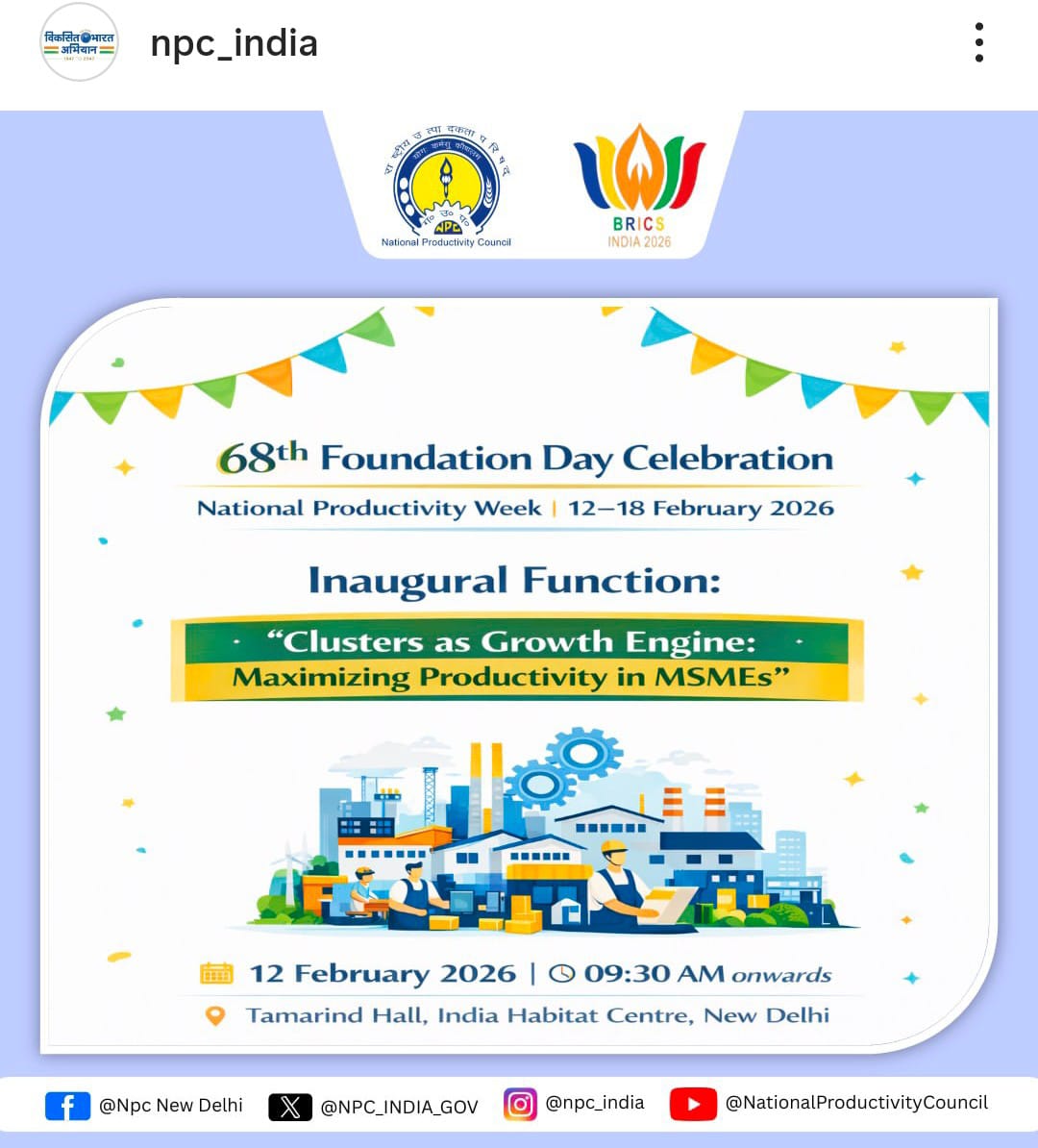
National Productivity Council to observe 68th National Productivity Week 2026 with focus on cluster-based growth for MSMEs

NEW DELHI : The National Productivity Council (NPC) will celebrate its 68th Foundation Day on 12 February 2026 and observe National Productivity Week from 12 to 18 February 2026 across the country. The theme for the 68th National Productivity Week is “Clusters as Growth Engine: Maximizing Productivity in MSMEs”.

The theme aligns with the emphasis of Union Minister of Commerce and Industry and President, National Productivity Council, Shri Piyush Goyal, on strengthening Micro, Small and Medium Enterprises (MSMEs), enhancing manufacturing competitiveness and promoting sustainable industrialisation. In the backdrop of India’s recent trade agreements, the focus on cluster-based development assumes greater significance as a strategic instrument for accelerating productivity, fostering inclusive growth, driving sustainable industrial expansion and strengthening India’s integration into global value chains.

A series of events, seminars and workshops will be organised nationwide through the 12 Regional Directorates of NPC located at Bengaluru, Bhubaneswar, Chandigarh, Chennai, Gandhinagar, Guwahati, Hyderabad, Jaipur, Kanpur, Kolkata, Mumbai and Patna. Twenty-four Local Productivity Councils, concerned Ministries of the Government of India, State Governments, industry associations and academic institutions will collaborate in conducting outreach and awareness activities during the week.

The National Productivity Council, an autonomous society under the Department for Promotion of Industry and Internal Trade, Ministry of Commerce and Industry, Government of India, was established in 1958 with the vision of becoming a knowledge leader in productivity and supporting the Indian economy in achieving global competitiveness while contributing to sustainable and inclusive socio-economic development. NPC provides consultancy and training services in areas including Industrial Engineering, Environmental and Energy Management, Agri-Business, Economic Services, Quality Management, Human Resources Management, Information Technology and Technology Management to Government, public and private sector organisations. NPC also undertakes research in productivity and is a constituent of the Tokyo-based Asian Productivity Organisation (APO), an inter-governmental body of which the Government of India is a founding member and the current Chair.