Home Blog Page 442

GSV partners with Airbus, inaugurates a Centre of Excellence to drive Sustainable Aerospace Research, Innovation and Skill Development

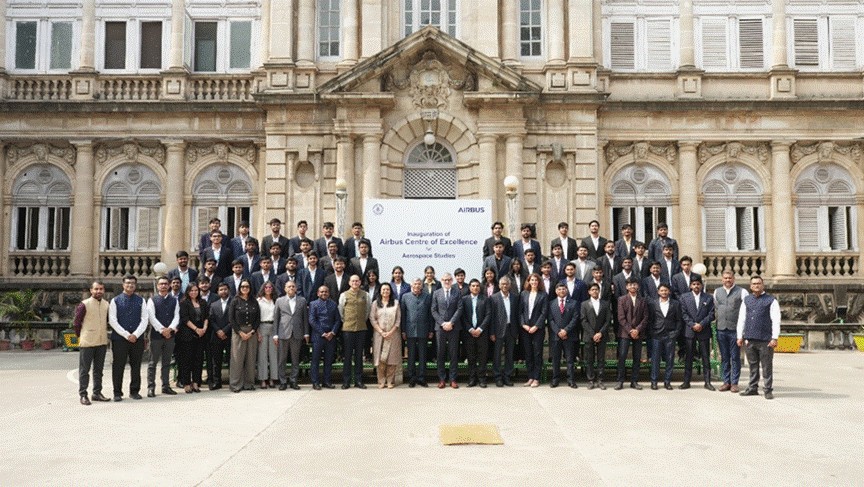
VADODARA : Airbus inaugurated a Centre of Excellence (CoE) for aerospace studies at the Gati Shakti Vishwavidyalaya (GSV), India’s unique industry-driven central university for the transportation and logistics sector, based in Vadodara, Gujarat.

The Centre marks a significant milestone in the long-term collaboration between Airbus and GSV to strengthen India’s aerospace ecosystem through organic research, innovation and talent development. A key focus area of the CoE would be R&D into Sustainable Aviation Fuel and supporting student-led innovations in future aerospace technologies.

Announced in 2024, the CoE was inaugurated by Jürgen Westermeier, President and Managing Director of Airbus India and South Asia, in the presence of Her Highness Rajmata Shubhanginiraje Gaekwad, Member of the Court of GSV and Prof. (Dr.) Manoj Choudhary, Vice Chancellor, Gati Shakti Vishwavidyalaya.

“The inauguration of this Centre of Excellence at Gati Shakti Vishwavidyalaya marks a milestone in our mission to co-create a robust aerospace ecosystem in India. This Centre is a clear demonstration of Airbus’ commitment to R&D and innovation, focusing on ground breaking technologies such as transforming Municipal Solid Waste (MSW) into Sustainable Aviation Fuel (SAF). We are pleased that this collaboration between Airbus and GSV will empower students with the skills to lead overall ecosystem development, shaping India’s future aviation landscape and supporting the Government of India’s Aatmanirbhar Bharat vision,” said Jürgen Westermeier, President and Managing Director, Airbus India and South Asia.

Prof. Manoj Choudhary, Vice Chancellor of GSV highlighted, “Under the guidance of our Hon. Chancellor Sh. Ashwini Vaishnaw, Gati Shakti Vishwavidyalaya is converting industry-driven innovation-led vision into reality for building highly skilled human capital and new technologies for the entire transportation and logistics sector. Airbus has been the foremost leader to set up one of its kind Industry-Academia partnership with GSV which has now become a template for the country. The inauguration of the CoE is yet another tangible step to realize our shared mission and partnership for aerospace sector growth in the country, in addition earlier actions for setting up Airbus Chair Professorship and Airbus Scholarships. This whole of the sector approach envisaged by our Hon. PM Sh. Narendra Modi shall be a key enabler for Viksit Bharat by 2047.”

Since 2024, Airbus and GSV have established a holistic partnership aimed at maturing the building blocks of an integrated aerospace ecosystem in India. This collaboration includes a significant commitment to human capital development through a full scholarship programme for 45 meritorious and underprivileged students, with one-third of these scholarships reserved for women. To anchor academic excellence, Airbus has also established a Chair Professor for Aerospace Studies at GSV to support the development of undergraduate, postgraduate, and short-term executive programmes. Additionally, the partnership has expanded into high-impact research with a Joint Study Agreement (JSA) to develop sustainable aviation solutions. This initiative provides grants for R&D focused on converting Municipal Solid Waste (MSW) into Sustainable Aviation Fuel (SAF), leveraging GSV’s research capabilities and Airbus’ industrial expertise to create a locally sourced, circular economy for aviation fuel in India.

Gati Shakti Vishwavidyalaya (GSV), India’s only University in Transportation and Logistics sector, was established as a Central University by the Act of Parliament in 2022. Following demand-driven curriculum, the University is mandated to cover the entire transportation sector including Railways, Aviation, Highways, Ports, Maritime, Shipping, Inland Waterways, Urban Transport and complete Logistics and supply chain networks. The university is headed by Sh. Ashwini Vaishnaw (Union Minister for Railways, Information & Broadcasting, Electronics & Information Technology) as the University Chancellor.
Trade agreements with EU and US to support export growth, says RBI Governor Sanjay Malhotra

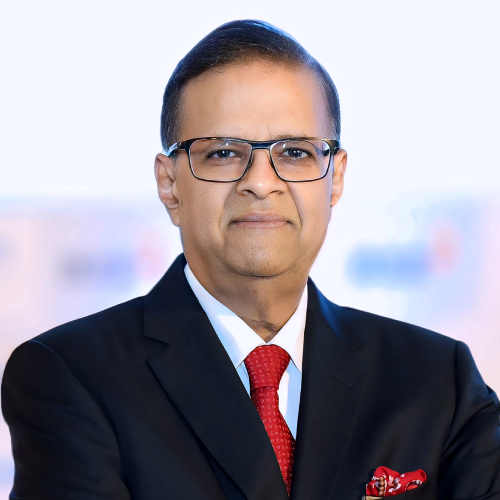
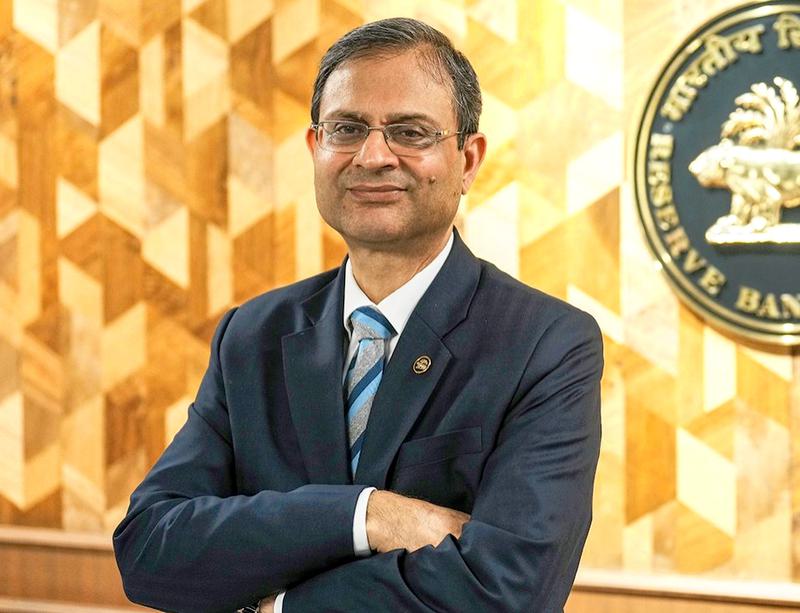
NEW DELHI: The recently concluded India-EU Free Trade Agreement (FTA) and the India-US trade deal, along with several other trade agreements, will support exports over the medium term, according to Reserve Bank of India (RBI) Governor Sanjay Malhotra.

“The recently concluded India-EU free trade agreement and the prospective India-USA trade deal, along with several other trade agreements, will support exports over the medium-term,” the RBI Governor said on Friday.

Presenting the Monetary Policy Statement, Governor Malhotra noted that while services exports should remain resilient, the spillovers emanating from geopolitical tensions, volatility in international financial markets, and shifting trade patterns pose risks in the outlook.

“Taking all these factors into consideration, real GDP growth projections for Q1:2026-27 and Q2 are revised upwards to 6.9 per cent and 7.0 per cent, respectively,” he said

The Governor emphasised that the risks to these projections are evenly balanced. “I may mention that we are deferring the projections for the April policy as the new GDP series will be released later in the month,” Malhotra said during his address. Despite political tension and elevated uncertainty, he asserted that “the Indian economy is in a good spot with strong growth and low inflation.”

Despite heightened uncertainty, global trade remained relatively robust. The RBI Governor noted that India’s merchandise exports, supported by trade diversification efforts, grew by 1.9 per cent YoY in Q3 of FY2025-26, whereas merchandise imports grew by 7.9 per cent YoY during the same period, resulting in a widening of the trade deficit.

The RBI also projected retail inflation for the current fiscal year (FY2025-26) at 2.1 per cent, even as it flagged potential “upside risks” from geopolitical tensions and volatile energy prices. Governor Malhotra noted that while headline CPI inflation remained low through November and December, it witnessed a slight hardening.

The central bank expects a shift in the inflation trajectory during the final quarter of the current fiscal year. While the annual average is pegged at 2.1 per cent, the projection for Q4 (January-March 2026) stands at 3.2 per cent.

Governor Malhotra explained that this rise is largely technical rather than a surge in current price momentum. “Unfavourable base effects stemming from large decline in prices observed during Q4 of last year, i.e., 2024-25, would lead to an uptick in year-on-year inflation in Q4 this year,” the Governor stated.

Looking further ahead into the next financial year, the RBI projected inflation for Q1 at 4 per cent and Q2 at 4.2 per cent.

FTA to boost Indian textiles, pharma, chemicals, agri exports as EU remains key trade partner: ICRA

NEW DELHI : India‘s recently concluded Free Trade Agreement (FTA) with the European Union is expected to deliver significant gains for several Indian sectors, including textiles, pharmaceuticals, chemicals, agriculture, leather, and marine products, as the EU remains one of India’s largest and most important trading partners.

The India-EU FTA, finalised in January 2026 after long negotiations, eliminates tariffs on over 90 per cent of goods traded between the two sides.

According to a sectoral analysis by credit rating agency ICRA, the agreement grants India preferential zero-duty access on 97 per cent of EU tariff lines, covering nearly 99.5 per cent of the value of Indian exports, while India will cut or eliminate tariffs on 92 per cent of its tariff lines for EU imports.

The textile and apparel sector is expected to be among the biggest beneficiaries. ICRA noted that duty-free access to the EU market will place Indian exporters on par with competitors such as Bangladesh, Vietnam, and Turkey, which previously enjoyed tariff advantages. Apparel and home textiles, in particular, are expected to see improved export competitiveness and higher long-term investment.

Pharmaceuticals and healthcare products are also set to benefit under the EU FTA. The EU currently accounts for around 12 per cent of India’s pharmaceutical exports and 46 per cent of its pharma imports.

Removal of EU import tariffs on Indian medicines is expected to boost export competitiveness, while lower EU tariffs on imports of medicines, bulk drugs, and medical devices will reduce domestic input and healthcare costs, ICRA said.

The EU is a key destination for India’s organic chemical exports, accounting for about a quarter of shipments.

Following the FTA’s implementation, Indian chemical companies are expected to improve their competitiveness against global suppliers, including those from China.

Engineering goods such as iron and steel, machinery, and automotive components will also benefit from improved market access, although finished steel exports may continue to face challenges due to the EU’s Carbon Border Adjustment Mechanism (CBAM), which appears to fall outside the scope of the current deal.

Agricultural and processed food exports, such as tea, coffee, spices, fruits, vegetables, and marine products, will gain preferential access to the EU market. Marine exports are expected to benefit from tariff reductions of up to 26 per cent, supporting coastal employment and export growth

.Labour-intensive sectors such as leather, footwear, furniture, and rubber products are also expected to see gains. At the same time, sensitive sectors, including dairy, cereals, and poultry, have been safeguarded to protect farmers and MSMEs.

Merchandise trade between India and the EU grew at a compound annual growth rate of 7 per cent between 2015-16 and 2024-25, with India maintaining a trade surplus since 2020-21.

Sourrce : ANI


₹100 cr Urban Transport Fund to drive mobility reforms in Ahmedabad and Surat

GANDHINAGAR : The Gujarat government has constituted the Unified Metropolitan Transport Authority (UMTA) to address traffic congestion in the megacity of Ahmedabad and the textile hub of Surat, coordinate public transport systems such as city buses, BRTS, and metro rail, and ensure last-mile connectivity from residential areas to workplaces, thereby strengthening urban public transport management in the two major cities.

Several key decisions were taken at the first meeting of the authority’s committee, held on Thursday and chaired by the Chief Secretary. Among them was the decision to allocate an Urban Transport Fund of ₹100 crore as initial seed capital to support UMTA. The corpus is expected to be provided through a budgetary provision in the state government’s 2026–27 budget.

Three additional initiatives were approved for Ahmedabad and Surat—One City, One Mobility Card; Common Mobility Plan; and Last-Mile Connectivity—with municipal commissioners of both cities asked to submit detailed reports at the earliest.

One City, One Mobility Card
The proposed card will enable passengers to travel across BRTS, city bus services (including AMTS), and metro rail within a fixed distance, allowing seamless use of all public transport modes through a single payment system. Both municipal corporations have been directed to expedite the launch of the card along with a dedicated transport mobile application, and to quickly issue a Request for Proposal (RFP) for selecting an implementing agency.

Common Mobility Plan
A comprehensive assessment will be conducted to identify routes already served by public transport and areas lacking connectivity in the two cities. Public transport services will then be introduced in underserved corridors.

Last-Mile Connectivity
UMTA aims to ensure convenient access to public transport from locations near passengers’ homes to their workplaces, improving the overall usability of mass transit.

Multimodal Transport Hubs
Major multimodal hubs are planned at key metro junctions in Ahmedabad, including Motera and Thaltej, where integrated feeder services will connect surrounding areas. This is expected to reduce reliance on private vehicles for reaching transit points and help address parking congestion.

It is learnt that the Urban Transport Fund will support the planning, implementation, operations, and maintenance of strengthened public transport systems. Improved last-mile services are expected to reduce the number of private vehicles on roads and ease traffic congestion.

Gujarat to Emulate Other States
Similar urban transport management structures are already operational in states such as Tamil Nadu, Haryana, Karnataka, Andhra Pradesh, and Telangana. Gujarat is adopting elements of these models, beginning with Ahmedabad and Surat, with plans to extend the framework to other major cities in the future.

“India to resume $150 million glass export business with US”: Borosil Chairman Pradeep Kheruka on India-US trade deal

MUMBAI: The bilateral trade agreement between India and the United States is expected to reignite the export of glass for high-quality perfume and cologne bottles, according to Mr. Pradeep Kheruka, Chairman of Borosil Renewables.

“There is a very large requirement for very high-quality pure glass bottles used by perfumers. So colognes, perfumes, and similar products require high-quality bottles, which are made in India. India is a leading manufacturer of high-quality perfume bottles. This sort of trade had stopped; it had halted because of the absence of a trade agreement,” he noted.

Discussing the competitive advantage this provides, Kheruka said, “I can see that this is going to resume with great vigor and with perhaps now–it remains to be seen its early days–if we have 18% tariff and let’s say other competing countries have a higher tariff, then this could possibly mean that their volumes might also come to India which would be a very good thing for our country.”

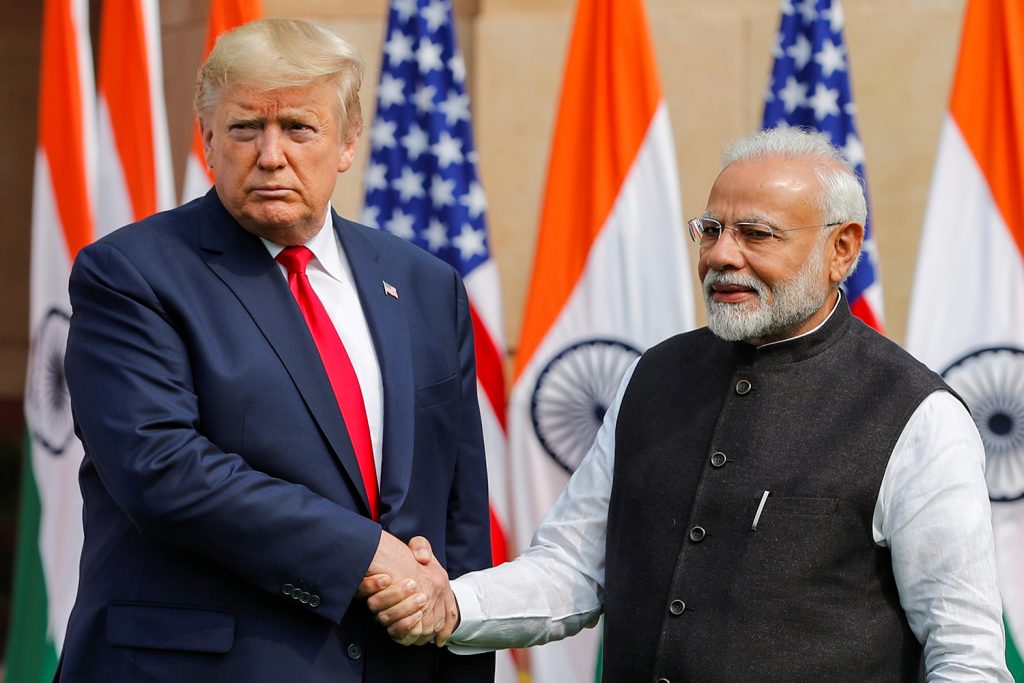
In an exclusive interview with ANI, Kheruka noted that while India is already a global leader in this niche, trade had previously stalled due to the lack of a formal agreement. He characterised the deal as a “historic agreement” and credited the diplomatic efforts of President Trump and Prime Minister Shri Narendra Modi for resolving long-standing issues between the two nations.
The economic impact of this trade resumption is expected to be significant, with Kheruka noting that, prior to the trade halt, glass exports to the United States accounted for a substantial share of the industry’s portfolio.

“Well, the figure that I have readily is the figure of exports to the United States, which was well over a hundred million dollars, maybe 150 million dollars. And so therefore, this is a business that will definitely resume, which would be a very good thing,”

Kheruka stated. He noted that there is a demand in the US for almost everything manufactured by India’s large glass industry, and the potential for growth remains “very large.”

Beyond the relationship with the US, Kheruka also discussed the strategic importance of the trade agreement with the European Union. He noted that Europe is currently facing a shortage of skilled labour, which presents a unique opportunity for Indian manufacturing.

According to Kheruka, the agreement could prompt European companies to relocate production to India to maintain brand quality while reducing costs.

Kheruka remarked, “If they start manufacturing in India, they would be able to continue to sell products carrying their brand at a much more competitive price as compared to the prices which were prevailing when they were exporting the same products from Europe.”

He further stated that this manufacturing shift is expected to benefit both the engineering and glass sectors by creating a steady stream of exports to the European bloc.

While Kheruka noted that the industry will need time to identify the specific lines of trade that offer the most competitive advantage, he expressed strong confidence in the path ahead.

Reflecting on the broader impact of these international partnerships, Kheruka concluded, “I think the stars look good for business for India with its large developed country trading partners.”

Source: ANI

India-US trade deal: FY27 textile, apparel exports to grow in double digits

NEW DELHI : India’s textile and apparel exports to the US are likely to experience double-digit growth in the financial year 2026–27, boosted by the interim framework for a India–US trade deal, industry experts said on Saturday.

India’s share in the $80 billion US apparel import market rose from about 5 per cent to nearly 7 per cent over the past two years, before temporarily dipping below 5 per cent in November due to short-term disruptions rather than structural weakness.

“With the new trade arrangement giving India a relative advantage over competing sourcing countries, the industry expects a quick return to a 6–7 per cent market share and is confident of double-digit export growth in the coming financial year,” said Prabhu Dhamodharan, convenor, Indian Texpreneurs Federation (ITF).

An industry thumb rule calculates that a one per cent market share is equivalent to roughly ₹7,000 crore in exports. Starting FY27, the sector is likely to see month-on-month double-digit growth in apparel and home textile exports, lifting the monthly apparel export run rate to $1.5 billion–$1.6 billion from the current $1.27 billion. At nearly $11 billion, India’s exports of textile and apparel products to the US accounted for close to 28 per cent of the country’s total exports in this category during FY25.

The trade deal may also play a crucial role in India’s ambitious target of achieving $100 billion worth of exports in the textile and apparel sector by 2030, up from $37.7 billion in FY25.

“The apparel sector — being one of the largest employment generators in the country — will benefit immensely. This move will help safeguard existing jobs and create substantial new employment opportunities, particularly for women and workers in labour-intensive segments,” said A Sakthivel, Chairman, Apparel Export Promotion Council.

“The United States is India’s single largest apparel export market, and improved trade terms will significantly enhance the competitiveness of Indian apparel products in the US market,” he said. Sakthivel added that the development is expected to provide a strong impetus to apparel exports, attract fresh investments across the value chain, and further strengthen India’s position as a reliable global sourcing hub.

The 50 per cent US tariff on Indian goods, effective August 27, 2025, had adversely affected several Indian textile and apparel companies, raising concerns that millions of people employed in the sector could lose jobs and livelihoods. The knitwear hub of Tiruppur has already witnessed an estimated loss of ₹15,000 crore in 2025 due to the higher US tariffs.

Source : BS

Xeneta Schedule Reliability Scorecard – 2025 Year in Review – Carriers

OSLO: Welcome back to Xeneta Schedule Reliability – A Year in Review. We’ve drilled down all the way from global reliability to trades and alliances, arriving at last to carrier rankings.

Xeneta covers reliability for over 200 operators across more than 25,000 port pairs. Our report today focuses on a small but significant selection of these carriers.

Average Carrier Reliability, 2025

  1. Maersk (56% on-time, -2.0 days delayed)
  2. Hapag-Lloyd (52% on-time, -3.0 days delayed)
  3. Zim Integrated Shipping Services (36% on-time, -4.6 days delayed)
  4. Cosco Shipping Lines (35% on-time, -3.4 days delayed)
  5. CMA CGM (33% on-time, -3.6 days delayed)
  6. Wan Hai Line (31% on-time, -3.4 days delayed)
  7. Pacific International Lines (27% on-time, -4.2 days delayed)
  8. Yang Ming Lines (27% on-time, -4.7 days delayed)
  9. Ocean Network Express (26% on-time, -5.6 days delayed)
  10. Evergreen Line (25% on-time, -3.9 days delayed)
  11. Mediterranean Shipping Company (25% on-time, -4.7 days delayed)
  12. HMM (15% on-time, -8.5 days delayed)

Carrier Reliability Highlights

Hapag-Lloyd and Maersk reveal that their Gemini partnership has carried them far, performing significantly better in tandem (81% on-time) throughout 2025 than they did as individual operators. This suggests that the reliability of their non-alliance partnerships generally fall short of Gemini’s optimized structure. From a competitive perspective, Maersk (56% on-time) outperforms Hapag-Lloyd (52% on-time) by 4 percentage points for on-time arrivals and boasts a full 24 hours less in average delay.

xeneta 1 Xeneta Schedule Reliability Scorecard – 2025 Year in Review – Carriers
Screenshot

On the other end of our scale, global giant MSC’s average reliability of 25% on-time and nearly 5 days of delay is just a pace above the bottom of our rankings. As a prime example of how network peers can diverge in their day-to-day vessel operations, MSC’s transatlantic partner ZIM fairs considerably better; placing in the top 3 performers with 36% of vessels on-time.

ONE (26% on-time), and YML (27% on-time) align closely against their collective performance as Premier Alliance (26% on-time), but HMM (15% on-time) stands out with starkly low reliability. In contrast, Ocean Alliance (26% on-time) members COSCO (35% on-time) and CMA CGM (33% on-time) appear to manage reliability better independently than as a whole.

This is valuable evidence for shippers to consider selecting CMA CGM or COSCO on their non-alliance offerings, or to potentially lean into Ocean Alliance services where they function as the primary vessel providers instead of EMC (25% on-time).

Red Sea Dynamics and Carrier Performance

Regarding a return to the Red Sea, the situation is currently too dynamic to try to confidently pinpoint a ‘safe’ bet in terms of carrier selection. The geopolitical decisions that control these tides rest in the hands of mercurial leaders and dangerous militias.

xeneta 2 Xeneta Schedule Reliability Scorecard – 2025 Year in Review – Carriers
Screenshot

Carriers and insurers are continuously adjusting to these developments on a voyage-by-voyage basis. In the case of CMA CGM and their FAL1, FAL3, and MEX strings, this could mean executing unexpected strategies like scaling down several weeks of scheduled voyages through the canal to match overnight developments.

Shippers are at the very bottom of the decision-making funnel in this equation, highlighting their vulnerability. So, what can they do? Shippers can lean into services where their preferred carriers function as vessel operators to limit their horizon of risk. Then, they can reinforce those best laid plans by identifying failsafe options on their port pairs and maintaining a daily rate of refresh on that intel.

Further down that track, we have the possibility of service specific risk assessment, port congestion scores, and daily updated vessel forecasts to explore with the help of Xeneta’s expert analysts.

Mapping operator performance against specific trades can offer a quick scale of confidence for shippers to consider. Due to most strings routing past the Cape of Good Hope, carrier performance on Far East – Europe in 2025 is not an exact 1:1 indicator of how they will handle a dedicated return to the Suez Canal. It is, however, still a solid measure of how carriers held up against relentless reliability challenges on the world’s most troubled trade.

Average Carrier Reliability on Far East – Europe, 2025

  1. Maersk (58% on-time, -1.7 days delayed)
  2. Hapag-Lloyd (51% on-time, -4.3 days delayed)
  3. Wan Hai Line (39% on-time, -2.8 days delayed)
  4. Cosco Shipping Lines (33% on-time, -3.8 days delayed)
  5. Zim Integrated Shipping Services (25% on-time, -3.5 days delayed)
  6. Yang Ming Lines (18% on-time, -5.6 days delayed)
  7. CMA CGM (16% on-time, -4.8 days delayed)
  8. Mediterranean Shipping Company (16% on-time, -5.9 days delayed)
  9. Evergreen Line (12% on-time, -6.0 days delayed)
  10. Ocean Network Express (10% on-time, -11.0 days delayed)
  11. HMM (5% on-time, -15.2 days delayed)

Maersk (58% on-time) and Hapag-Lloyd (51% on-time) have both been characterized by cautious strategies towards the Red Sea conundrum. Their reliability demonstrates that their operations remain resilient on this trade, making them a preferred choice for shippers keen on predictability.

X1 Xeneta Schedule Reliability Scorecard – 2025 Year in Review – Carriers
Screenshot

COSCO (33% on-time) and WHL (39% on-time) perform solidly in the middle range on this scale, with WHL even achieving an additional 8 percentage points against their global results. These appraisals of course fall under the long-established understanding that none of these results are particularly ‘good’ from a historical perspective.

Most of the poorest performers on this trade are already at the bottom of global reliability rankings, with the exception of two operators. CMA CGM (16% on-time) has taken one of the most proactive approaches to the Red Sea among its largest peers, but the results from 2025 suggest these operations don’t meet their average service standards.

X 2 Xeneta Schedule Reliability Scorecard – 2025 Year in Review – Carriers
Screenshot

ZIM (25% on-time) also reveals they faced significant challenges here, dropping from the coveted top three down to fifth place on Far East – Europe. That however, is of little surprise given the nature of the carrier’s relationship to the Israel-Palestine crisis and heavy operational limitations.

When considering a drop in trade-level reliability for a preferred carrier, shippers are advised to confirm if the same trends hold true on their specific port pairs before switching suppliers.
Source: Xeneta

Asia-US container rates fall as new ships enter market at record pace, scrapping wanes

LONDON: Rates for shipping containers from east Asia and China to the US fell this week, and analysts at supply chain advisors Drewry said increased deliveries of new ships and a slowing scrapping program are one of the reasons.

“Deliveries of new containerships averaged 180,000 TEU (20-foot equivalent unit)/month in 2025, while demolitions reached only 6,000 TEU/month over the entire year,” Drewry said in a market opinion published this week. “More new orders will only continue to fuel this imbalance and create a deeper hole for carriers to climb out of.”

Drewry said in response to this weak demand ahead of factory closures, carriers have aggressively managed capacity by announcing 18, 27 and 28 blank sailings over the next three weeks, a frequency much higher than in previous years.

But some analysts think the surge in newbuilds is too much to overcome through blank sailings.

The following chart shows the sharp increase in orders for new vessels, which began in 2021, and has seen the largest number of orders since at least 2010 in the past two years.

Lars Jensen, president of consultant Vespucci Maritime, said the container shipping orderbook relative to the size of the fleet in operation is now above 34%, which is very high.

“We have not seen the orderbook ratio of this magnitude on this side of the financial crisis a decade-and-a-half ago,” Jensen said.

The share of vessels older than 20 years is now at 17%, Jensen said, which means a significant portion of this might well be scrapped as overcapacity hits the market in the coming years.

“But not all of them, as this would lead to potential bottleneck issues related to smaller container vessels,” Jensen said. “But even with a high level of scrapping, it is presently difficult to see how demand can fully keep pace with the new vessel injections.”

CONTAINER RATES
Rates were lower to both coasts from all analysts tracked by ICIS.

Rates from global logistics company Freight Right on its TrueFreight Index (TFX) fell for the third week in a row, as shown in the following chart.

Robert Khachatryan, founder and CEO of Freight Right Logistics, said the ocean freight market has entered a phase of significant decline as the industry moves through the Lunar New Year period.

“Rates have retreated further than market analysts initially projected, reaching levels that challenge carrier profitability,” Khachatryan said.

Rates from Drewry fell by 8% to the US West Coast and by 5% to the East Coast, as shown in the following chart.

“This downwards trend highlights a significant shift in the market, as the traditional pre-Lunar New Year cargo rush – which typically bolsters demand – is failing to materialize in 2026,” Drewry said.

Rates from online freight shipping marketplace and platform provider Freightos edged lower this week.

Judah Levine, head of research at Freightos, also attributed some of the decline to more newbuilds entering the market.

“Prices across these lanes are significantly lower than this time last year due partly to fleet growth,” Levine said. “[Global container shipping line] ONE identified overcapacity as one driver of Q3 losses last year, with lower volumes due to trade war frontloading the other culprit.”

Container ships and costs for shipping containers are relevant to the chemical industry because while most chemicals are liquids and are shipped in tankers, container ships transport polymers, such as polyethylene (PE) and polypropylene (PP), which are shipped in pellets.

They also transport liquid chemicals in isotanks.

LIQUID TANKER RATES
US chemical tanker freight rates as assessed by ICIS were largely unchanged this week with contract of affreightment (COA) nominations steady for most trade lanes.

For the cargoes in the South American trade lane, COAs remain strong leaving very little spot availability. A large parcel of ethanol fixed USG to San Luis, and several others were quoted for second half of February, but inquiries remain limited for spot cargoes.

Similarly, for the USG to ARA trade lane, it was another off week with only a few reported fixtures, as the market remains fully supported by steady COA nominations.

However, there were some unusual cargoes fixed for products like caustic soda and ethanol.

Some styrene was reported fixed from Lake Charles to ARA. Overall, rates seem to be maintaining current levels.

There was no difference along the USG to Asia routes, as it was another quiet week on this trade lane.

Spot rates remain steady as the 1H February space across the regular carriers is sold out.

Some of the larger players should have space in the second half of February depending on COA nominations. The chemical COAs have been steady through 1H March, but still in the tentative phase.

Several inquiries were seen for methanol, ethanol, vinyl acetate monomer (VAM), styrene, and MEG.

On the other hand, bunker prices were unchanged this week but overall remain strong.

Drewry Clarkson Asia-US container rates fall as new ships enter market at record pace, scrapping wanes

Source: ICIS

UNITED STATES – INDIA Joint Statement on Interim Agreement

NEW DELHI: The United States of America (United States) and India are pleased to announce that they have reached a framework for an Interim Agreement regarding reciprocal and mutually beneficial trade (Interim Agreement). Today’s framework reaffirms the countries’ commitment to the broader U.S.-India Bilateral Trade Agreement (BTA) negotiations, launched by President Donald J. Trump and Prime Minister Shri Narendra Modi on February 13, 2025, which will include additional market access commitments and support more resilient supply chains. The Interim Agreement between the United States and India will represent a historic milestone in our countries’ partnership, demonstrating a common commitment to reciprocal and balanced trade based on mutual interests and concrete outcomes.

Key terms of the Interim Agreement between the United States and India will include:

  • India will eliminate or reduce tariffs on all U.S. industrial goods and a wide range of U.S. food and agricultural products, including dried distillers’ grains (DDGs), red sorghum for animal feed, tree nuts, fresh and processed fruit, soybean oil, wine and spirits, and additional products.
  • The United States will apply a reciprocal tariff rate of 18 percent under Executive Order 14257 of April 2, 2025 (Regulating Imports With a Reciprocal Tariff to Rectify Trade Practices That Contribute to Large and Persistent Annual United States Goods Trade Deficits), as amended, on originating goods of India, including textile and apparel, leather and footwear, plastic and rubber, organic chemicals, home décor, artisanal products, and certain machinery, and, subject to the successful conclusion of the Interim Agreement, will remove the reciprocal tariff on a wide range of goods identified in the Potential Tariff Adjustments for Aligned Partners Annex to Executive Order 14346 of September 5, 2025 (Modifying the Scope of Reciprocal Tariffs and Establishing Procedures for Implementing Trade and Security Agreements), as amended, including generic pharmaceuticals, gems and diamonds, and aircraft parts.
  • The United States will also remove tariffs on certain aircraft and aircraft parts of India imposed to eliminate threats to national security found in Proclamation 9704 of March 8, 2018 (Adjusting Imports of Aluminum Into the United States), as amended; Proclamation 9705 of March 8, 2018 (Adjusting Imports of Steel Into the United States), as amended; and Proclamation 10962 of July 30, 2025 (Adjusting Imports of Copper Into the United States).  Similarly, consistent with U.S. national security requirements, India will receive a preferential tariff rate quota for automotive parts subject to the tariff imposed to eliminate threats to national security found in Proclamation 9888 of May 17, 2019 (Adjusting Imports of Automobiles and Automobile Parts Into the United States), as amended.  Contingent on the findings of the U.S. Section 232 investigation of pharmaceuticals and pharmaceutical ingredients, India will receive negotiated outcomes with respect to generic pharmaceuticals and ingredients.
  • The United States and India commit to provide each other preferential market access in sectors of respective interest on a sustained basis.
  • The United States and India will establish rules of origin that ensure that the benefits of the Agreement accrue predominately to the United States and India. 
  • The United States and India will address non-tariff barriers that affect bilateral trade. India agrees to address long-standing barriers to the trade in U.S. medical devices; eliminate restrictive import licensing procedures that delay market access for, or impose quantitative restrictions on, U.S. Information and Communication Technology (ICT) goods; and determine, with a view towards a positive outcome, within six months of entry into force of the Agreement whether U.S.-developed or international standards, including testing requirements, are acceptable for the purposes of U.S. exports entering the Indian market in identified sectors. Recognizing the importance of working together to resolve long-standing concerns, India also agrees to address long-standing non-tariff barriers to the trade in U.S. food and agricultural products.
  • For the purposes of enhancing ease of compliance with applicable technical regulations, the United States and India intend to discuss their respective standards and conformity assessment procedures for mutually agreed sectors. 
  • In the event of any changes to the agreed upon tariffs of either country, the United States and India agree that the other country may modify its commitments.
  • The United States and India will work towards further expanding market access opportunities through the negotiations of the BTA. The United States affirms that it intends to take into consideration, during the negotiations of the BTA, India’s request that the United States continue to work to lower tariffs on Indian goods.
  • The United States and India agree to strengthen economic security alignment to enhance supply chain resilience and innovation through complementary actions to address non- market policies of third parties, as well as cooperation on inbound and outbound investment reviews and export controls.
  • India intends to purchase $500 billion of U.S. energy products, aircraft and aircraft parts, precious metals, technology products, and coking coal over the next 5 years. India and the United States will significantly increase trade in technology products, including Graphics Processing Units (GPUs) and other goods used in data centers, and expand joint technology cooperation.
  • The United States and India commit to address discriminatory or burdensome practices and other barriers to digital trade and to set a clear pathway to achieve robust, ambitious, and mutually beneficial digital trade rules as part of the BTA.

The United States and India will promptly implement this framework and work towards finalizing the Interim Agreement with a view to concluding a mutually beneficial BTA consistent with the roadmap agreed in the Terms of Reference.

“Mumbai’s Eastern Waterfront Emerges as Anchor of India’s Global Maritime Ambition :” Sarbananda Sonowal

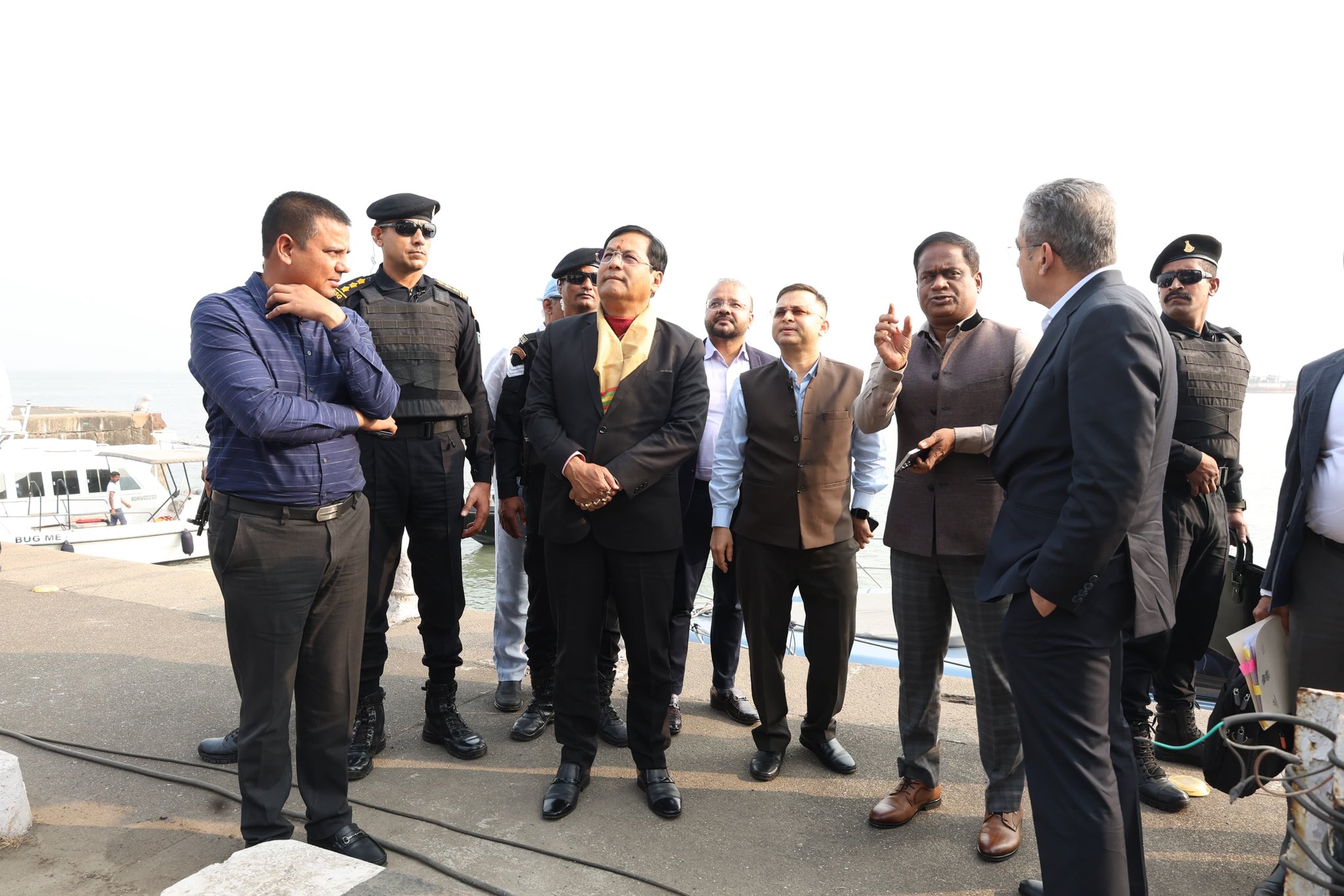
NEW DELHI : Union Minister for Ports, Shipping and Waterways Shri Sarbananda Sonowal led a comprehensive review of Mumbai Port Authority’s (MbPA) ongoing and proposed projects, reaffirming the Centre’s commitment to a ₹22,672-crore transformation of Mumbai’s Eastern Waterfront into a global maritime, logistics and tourism hub.

The review outlined a long-term development roadmap aimed at positioning Mumbai as a leading maritime and waterfront destination by 2047. The transformation strategy is structured around two parallel growth pathways — strengthening Mumbai Port’s core cargo operations and repurposing underutilised port land for urban, tourism and business infrastructure.

“Under the dynamic leadership of our Prime Minister Shri Narendra Modi ji, India is moving decisively towards becoming one of the world’s foremost maritime nations. The ₹22,672-crore transformation of Mumbai’s Eastern Waterfront is central to that journey — strengthening maritime self-reliance, expanding trade and tourism, and creating globally benchmarked waterfront infrastructure. This initiative aligns with the goals of Viksit Bharat and Atmanirbhar Bharat while establishing Mumbai as a global maritime and blue economy hub,” Sarbananda Sonowal said.

Large stretches of underutilised land along the Eastern Waterfront are being systematically redeveloped to support cruise tourism, maritime business, skilling and blue economy activities. The redevelopment programme is aligned with the Maritime Amrit Kaal Vision 2047, the Cruise Bharat Mission and NITI Aayog’s Mumbai Metropolitan Region Growth Hub Plan, positioning the waterfront as a multi-use economic and public space.

Mumbai Port is targeting a cargo handling capacity of 150 million tonnes per annum by 2047, driven primarily by offshore liquid bulk cargo such as crude oil, petroleum products, LNG and chemicals at Jawahar Dweep and Pirpau. Key infrastructure projects include reclamation and shore protection works, development of a 22 MTPA sixth oil berth at Jawahar Dweep, and new anchorage facilities in the outer harbour to support solid bulk transshipment.

“Mumbai has always been India’s maritime gateway to the world. PM Modi ji’s call for revival, rejuvenation and revamp of our maritime prowess lies central towards our journey to become Atmanirbhar Bharat. Mumbai’s revival as a modern, efficient and people-centric port city will play a defining role in powering India’s ascendancy as a global maritime power, capable of shaping international trade, logistics and maritime services in the decades ahead,” Union Minister Sarbananda Sonowal added.

A key anchor project is the Viksit Bharat Mumbai Marina, envisaged as India’s first and largest world-class marina, with an investment of ₹887 crore through a hybrid EPC–PPP model. Complementing this will be the Namo Bharat International Sailing School, which aims to provide structured sailing education and expand equitable public access to water-based sports and skills.

The redevelopment plan also includes the Chhatrapati Shivaji Maharaj International Convention Centre at Princes’ Dock, proposed at an estimated investment of ₹5,500 crore on a PPP basis. Designed as a landmark MICE destination, the facility is expected to host national and international business conferences and events on the waterfront. Passenger and cruise infrastructure is being strengthened through projects such as the RoPax Terminal at M-Shed, the Bhaucha Dhakka Glass House and Passenger Terminal, and the activation of the Domestic Cruise Terminal as a venue for major city events.

As part of modernising traditional maritime livelihoods, a new fish jetty at Mallet Bunder is being developed at a cost of ₹132 crore with support from the Pradhan Mantri Matsya Sampada Yojana. The facility will increase fishing trawler capacity from about 300 to over 1,200 vessels while segregating fishery operations from passenger movement to improve safety and efficiency. The surrounding waterfront area will be activated through themed streets, open-air dining zones and public spaces, contributing to a 3.5-kilometre continuous waterfront promenade for citizens and tourists.

Institutional and governance infrastructure is also being upgraded as part of the transformation. This includes a new Mumbai Port Administrative Building being developed at an estimated cost of ₹295 crore, and the Shivdurg Tower at Mallet Bunder, which will house offices of Vadhvan Port and the Directorate General of Shipping. In addition, a Central Government Office Complex is being developed at Cotton Green to consolidate multiple central government bodies at a single modern location.

“The transformation of Mumbai’s Eastern Waterfront is a reflection of Prime Minister Narendra Modi’s clear and long-term vision to place India among the world’s leading maritime nations. By integrating world-class port infrastructure, cruise and convention facilities, modern fisheries, skilling institutions and public waterfront spaces, we are unlocking new maritime opportunities that will drive jobs, trade and tourism. Mumbai’s resurgence as a maritime and blue economy hub will play a decisive role in India’s journey towards becoming a global leader in maritime services and logistics,” Union Minister Sarbananda Sonowal said.

Mumbai Port Authority is also supporting key state-led infrastructure projects such as Metro Line 11, the Orange Gate–Marine Drive Tunnel Project and the Radio Club Jetty, ensuring seamless integration of port-led development with Mumbai’s wider urban mobility network. The integrated portfolio of projects will generate employment for about 5.5 lakh people, create more than 500 hectares of built-up maritime and blue economy space, and attract over 25 million annual footfalls by 2047.

Union Minister Sarbananda Sonowal said the transformation of Mumbai’s Eastern Waterfront reflects the visionary leadership of Prime Minister Narendra Modi in repositioning India as a leading maritime nation.