Home Blog Page 443

₹10,000 Crore Budget boost: Sarbananda Sonowal engages industry to accelerate domestic container manufacturing

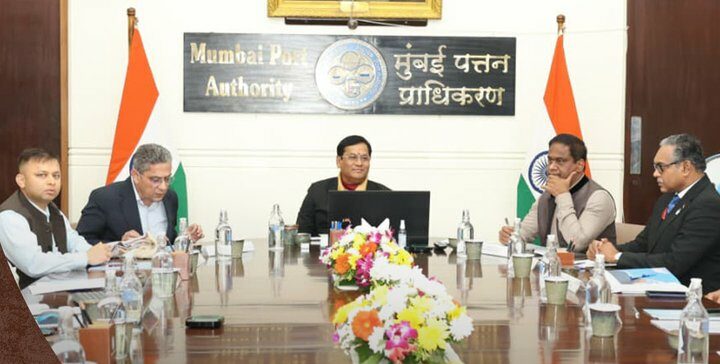
MUMBAI : Hon’ble Minister of Ports, Shipping & Waterways, Shri Sarbananda Sonowal, held a high-level interaction with global container manufacturers, leading shipping lines, MSMEs and key industry stakeholders following the landmark announcement of ₹10,000 crore Budgetary support for domestic container manufacturing.

The meeting focused on operationalising the Budget allocation and charting a clear roadmap to strengthen India’s self-reliance in container production, reduce import dependence and enhance competitiveness in global trade logistics.

Addressing the stakeholders, Shri Sonowal underscored that the ₹10,000 crore support marks a transformative step towards building a robust domestic container manufacturing ecosystem. He highlighted that strengthening local manufacturing capacity will help stabilize container availability, reduce logistics costs and ensure supply chain resilience for exporters and importers.

The discussions covered critical areas including:

Scaling up manufacturing capacity through public–private partnerships

Technology transfer and adoption of global best practices

Incentives for MSME participation in container components and fabrication

Development of container testing, certification and quality standards infrastructure

Integration of domestic container production with India’s expanding port and multimodal logistics network

Industry representatives welcomed the Budget announcement and shared recommendations on policy clarity, financing mechanisms, cluster-based manufacturing models and export potential for India-made containers.

The Minister reiterated the Government’s commitment to creating a globally competitive maritime ecosystem under the dynamic leadership of Hon’ble Prime Minister Shri Narendra Modi. He noted that India’s ports, shipping, shipbuilding and logistics sectors are undergoing rapid transformation, aligned with the vision of Vikas and Aatmanirbharta.

Shri Sonowal emphasized that enhanced domestic container manufacturing will complement major national initiatives including port-led development, multimodal connectivity expansion and strengthening India’s role in global value chains.

The interaction concluded with a commitment to continued consultation with industry stakeholders to ensure timely implementation of the Budget initiative and to position India as a significant hub for container manufacturing in the coming years.

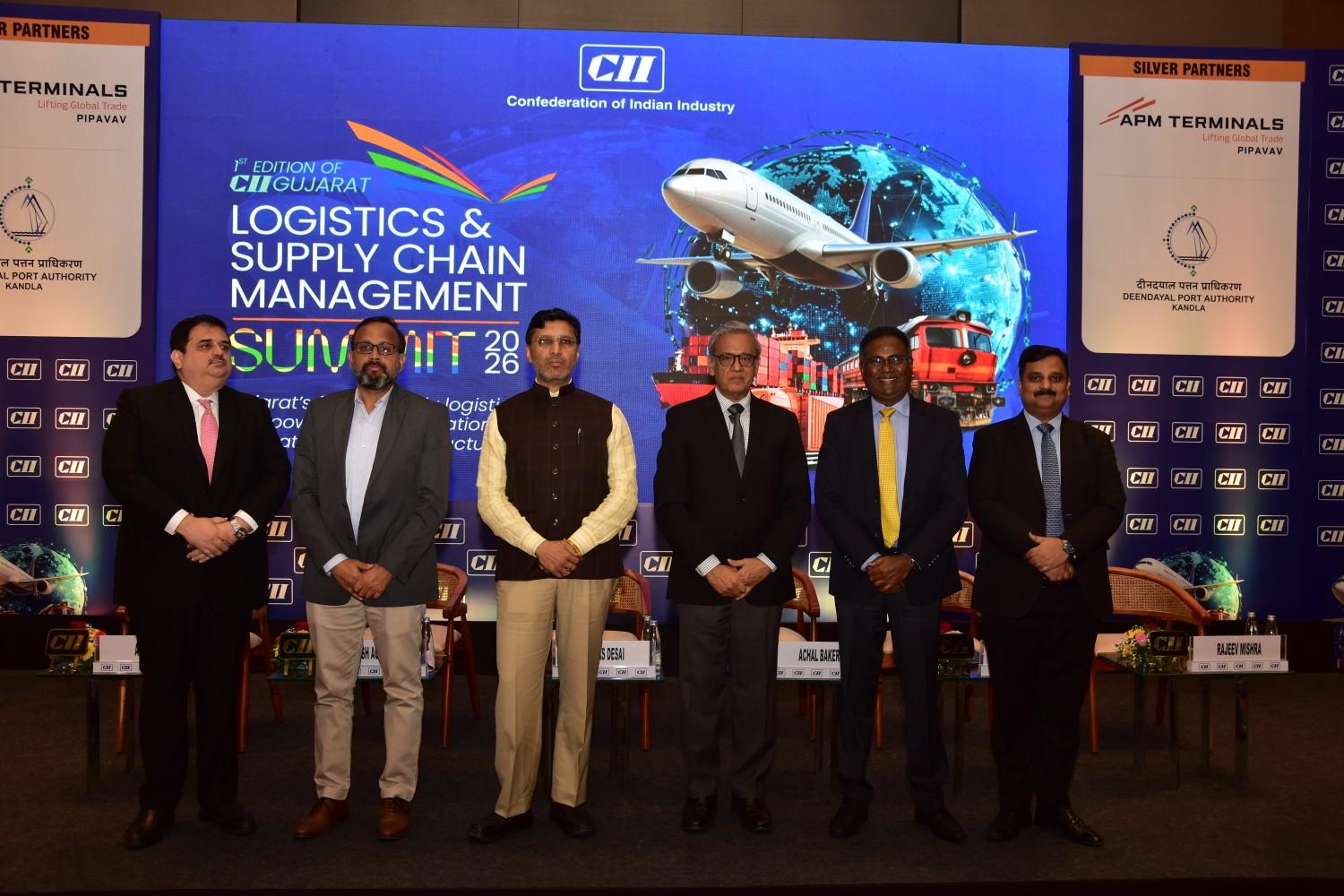
1st Edition of CII Gujarat Logistics & Supply Chain Management Summit 2026 – “Empowering Gujarat as a Future-Ready Logistics Hub:Integration, Innovation & Infrastructure”

AHMEDABAD: The 1st Edition of the CII Gujarat Logistics & Supply Chain Management Summit 2026 concluded today, bringing together the state’s most influential policymakers and industry titans. Under the theme “Empowering Gujarat as a Future-Ready Logistics Hub: Integration, Innovation & Infrastructure,” the summit outlined a strategic roadmap to cement Gujarat’s position as India’s premier gateway for global trade.

The summit opened with a powerful call to action. Mr Girish Aggarwal, Convenor, CII Gujarat Logistics & Supply Chain Taskforce, & Managing Director, Gujarat Pipavav Port Limited, APM Terminals, delivered the welcome address, setting the context for a day focused on seamless integration. Mr Aggarwal underscored the significance of this milestone event, “This is the first edition of the CII Gujarat Logistics and Supply Chain Summit, and it brings together government, industry, and infrastructure leaders on a common platform. At a time when global supply chains are undergoing major transformation, resilience, efficiency, and sustainability have become critical for India’s growth. Our objective is to generate practical, actionable outcomes that will support investments, create jobs, and enhance trade competitiveness.”

This was followed by insights from Mr Achal Bakeri, Vice Chairman, CII Gujarat State Council, & Chairman & Managing Director, Symphony Ltd, who highlighted the critical role of logistics in scaling Gujarat’s industrial output, “I see three imperatives for Gujarat’s logistics future: First, Integration—We must break silos. Our ports, dry ports, warehouses, and transport networks must function as one seamless ecosystem. Data must flow as smoothly as cargo. Second, Innovation—We must embrace technology. From IoT-enabled tracking to AI-powered route optimisation, from blockchain-based documentation to automated warehousing, the future of logistics is digital. Third, Infrastructure—We must invest strategically. Not just in physical assets, but in skill development, sustainability practices, and regulatory frameworks that enable rather than constrain.”

The session was further enriched by special addresses from Mr Paras Desai, Convenor, CII Gujarat Food & Agro Taskforce, & Executive Director, Wagh Bakri Tea Group, who remarked, “Gujarat is well positioned with robust port infrastructure at Mundra, Pipavav, Kandla, and Hazira, supported by strong state and national road connectivity. However, a significant volume of export cargo from South Gujarat continues to be routed through Nhava Sheva and JNPT (Mumbai), primarily due to logistical convenience and proximity. This indicates a clear opportunity to further strengthen Gujarat’s port-centric logistics ecosystem to capture greater export and import volumes”.

Mr Upparapalli Venkat Rao, CEO & Director, Essar Ports, emphasised the need for resilient supply chains in an era of global volatility — “Modern port efficiency is no longer just about speed—it’s about creating integrated, predictable flow systems where marine operations, cargo handling, and evacuation work seamlessly together. Ports must function as multimodal logistics platforms, tightly linked with rail, road, and industrial networks, enabled by technologies like AI, IoT, digital twins, and automation. True scalability comes from new modular designs and operational resilience, not just adding capacity, while expansion readiness demands strong master planning and stakeholder coordination. Sustainability now ties everything together—modal shift, renewable energy, and green practices are essential for global competitiveness, as ports are increasingly judged not only by volumes handled but by how responsibly they operate.”

Mr Amit Oza, Co-Convenor, CII Gujarat, Logistics & Supply Chain Taskforce & CEO, Astramar Shipping & Trading Services, concluded the session with a vote of thanks, transitioning the floor to deep-dive technical discussions.

WhatsAppImage2026 02 05at41608PM photoaidcom lighten 1st Edition of CII Gujarat Logistics & Supply Chain Management Summit 2026 - “Empowering Gujarat as a Future-Ready Logistics Hub:Integration, Innovation & Infrastructure”

The first panel, moderated by Mr Samir J Shah, Director, JBS Jeena Logistics, focused on Port-Led Growth and Infrastructure Development: Strengthening Gujarat’s Gateway Advantage. Key insights were shared by:

  • Captain Dharam Prakash, Head, Adani Dahej Port, on port efficiency.
  • Mr Upparapalli Venkat Rao, CEO & Director, Essar Ports, on expanding maritime capacity.
  • Mr Harsh Lapsia, Partner, U M Khona & Company, on the complexities of customs and trade facilitation.
  • Mr Mihir Parekh, Associate Partner, Foundation for Economic Development, on the economic ripple effects of infrastructure spending.
WhatsAppImage2026 02 05at4.16.08PM1 1st Edition of CII Gujarat Logistics & Supply Chain Management Summit 2026 - “Empowering Gujarat as a Future-Ready Logistics Hub:Integration, Innovation & Infrastructure”

The second panel, moderated by Mr Chintan Mehta, Partner, Technical Advisory, KPMG, explored the future of logistics in Gujarat through Modal Shift, Technology, & Sustainability. The discussion featured a diverse range of perspectives:

  • Smt Rini – IRTS – Indian Rail spoke on the Rail connectivity, Reducing Logistics cost and carbon emissions.
  • Mr Rohit Bajaj, CMD, Segal Group of Companies, highlighted the necessity of agile management.
  • Mr Rajat Gupta,Chief Manager, Container Corporation of India, Ahmedabad spoke on the shift toward rail-led multimodal transport.
  • Mr Sameer Patel, Vice President, Globelink WW India, addressed global connectivity trends.
  • Mr Ankit Kapasi, Sustainability Lead, DSS+, provided a roadmap for decarbonising the supply chain to meet international ESG standards.
WhatsAppImage2026 02 05at4.16.08PM2 1st Edition of CII Gujarat Logistics & Supply Chain Management Summit 2026 - “Empowering Gujarat as a Future-Ready Logistics Hub:Integration, Innovation & Infrastructure”

The event wrapped up with a final synthesis by Mr Amit Oza, who noted that the synergy between private innovation and public policy seen today would be the engine of Gujarat’s growth. The summit concluded with an extensive networking lunch where attendees and speakers continued the dialogue on building a more integrated logistics ecosystem.

About Confederation of Indian Industry (CII)

The Confederation of Indian Industry (CII) works to create and sustain an environment conducive to the development of India, partnering with industry, Government, and civil society, through advisory and consultative processes.

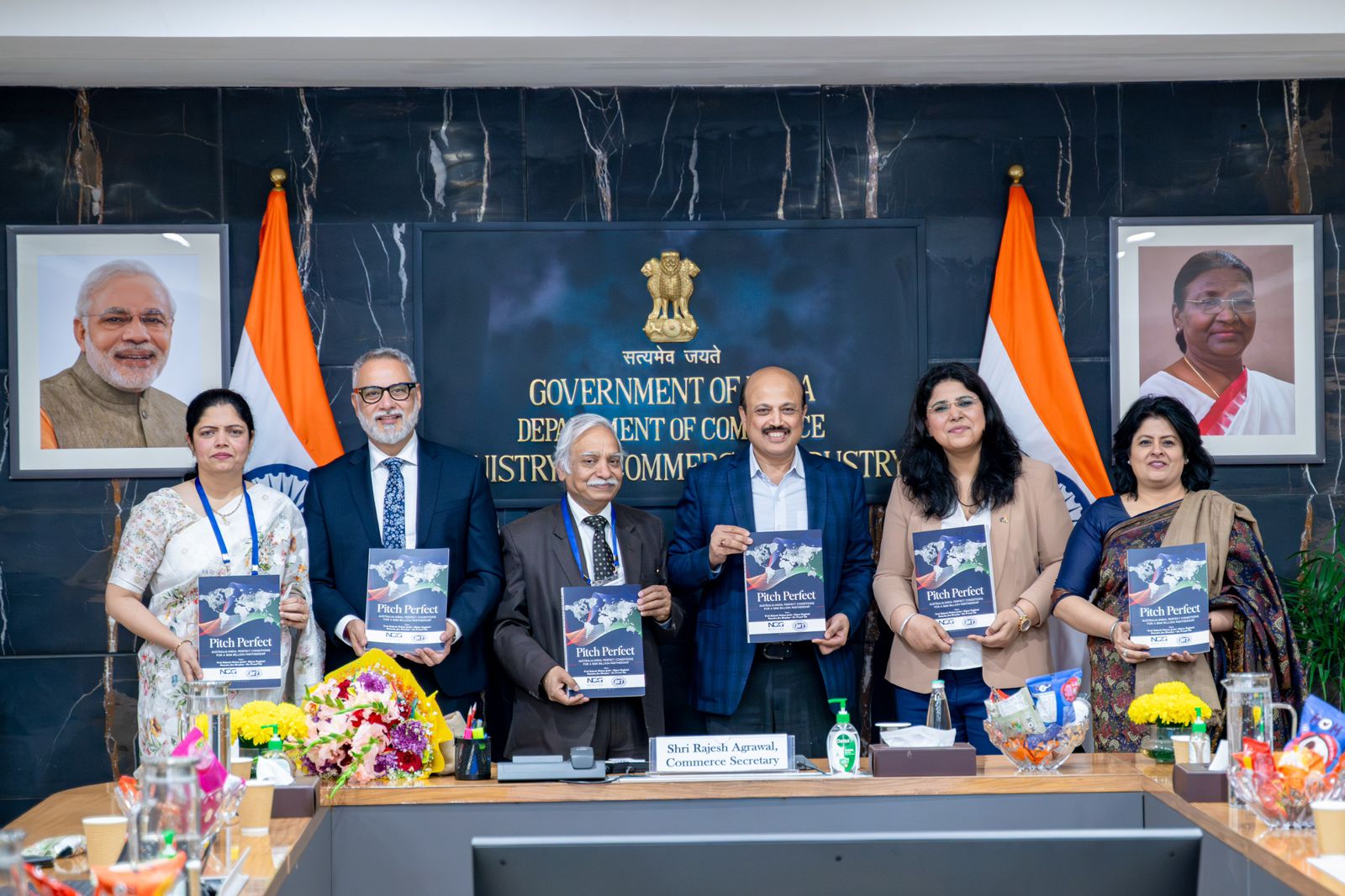
‘Pitch Perfect Australia–India’ business case studies compendium launched at IIFT

NEW DELHI : The India–Australia Business Case Studies Compendium, titled “Pitch Perfect Australia-India: Perfect Conditions for a $100 Billion Partnership”, was launched at the Indian Institute of Foreign Trade, Delhi Campus, bringing together policymakers, diplomats, industry leaders, and academia to discuss the next phase of economic collaboration between the two countries.

Jointly developed by the Indian Institute of Foreign Trade (IIFT) and Newland Global Group, the compendium captures real-world business journeys of companies operating across India and Australia. The publication captures real business journeys of companies operating across India and Australia, documenting market-entry experiences, growth strategies, and lessons from 30 organisations that have successfully navigated opportunities in both markets.

Commerce Secretary Shri Rajesh Agrawal complemented IIFT for its efforts to anchor this initiative underscoring its relevance for policy, industry, and academic stakeholders. He said, “The case studies are evidence-based on how the trade agreement has translated into real opportunities and has been used by businesses for their growth.” He further added, “This would play an important role in strengthening and enhancing the gains of the India–Australia Economic Cooperation and Trade Agreement (ECTA).”

Australian High Commissioner to India Mr. Philip Green OAM, praised the initiative and acknowledged IIFT’s role in fostering informed dialogue on bilateral trade. He noted, “The platforms bringing together academia, government, and industry are vital for the strong strategic relationship between India and Australia.

Joint Secretary, Ms. Petal Dhillon highlighted the growing momentum in India–Australia economic relations. She noted, “IIFT has played an important role in generating research-driven insights and facilitating dialogue that supports the strengthening and enhanced utilisation of the India–Australia Economic Cooperation and Trade Agreement (ECTA).”

Vice Chancellor, IIFT, Prof. Rakesh Mohan Joshi, highlighted the value of documenting real business journeys and turning them into learning resources for industry and academia alike. He noted, “The collaborations like this reflect IIFT’s commitment to bridging research and practice and to supporting India’s expanding footprint in global trade.”

Founder & CEO, Newland Global Group, Australia, Mr. Dipen Rughani, emphasised the role of business-driven case studies in enabling deeper bilateral engagement. Executive Director, Newland Global Group, Australia Ms. Natasha Jha Bhaskar, showcased success stories and lessons from companies operating in both markets. The session concluded with a panel discussion featuring representatives from government, trade bodies, and companies operating in both markets, followed by networking interactions among stakeholders.

Ambassador Anil Wadhwa appreciated the case compendium and said that it is a meaningful step toward strengthening India–Australia economic engagement.

With India and Australia working toward deepening economic ties, the compendium is expected to serve as a practical resource for businesses, policymakers, and researchers by identifying opportunities, addressing challenges, and showcasing successful cross-border collaborations.

The Indian Institute of Foreign Trade (IIFT), established in 1963 under the Ministry of Commerce & Industry, Government of India, is a premier institution dedicated to capacity building in international business through education, training, research, and consultancy. Granted Deemed-to-be-University status in 2002, IIFT has played a pivotal role in developing human resources and knowledge frameworks for India’s external trade and global business engagement.

The Rs 10,000 crore ‘Container Assistance’ scheme – From Container Corp, SCI to Texmaco, 6 stocks to watch

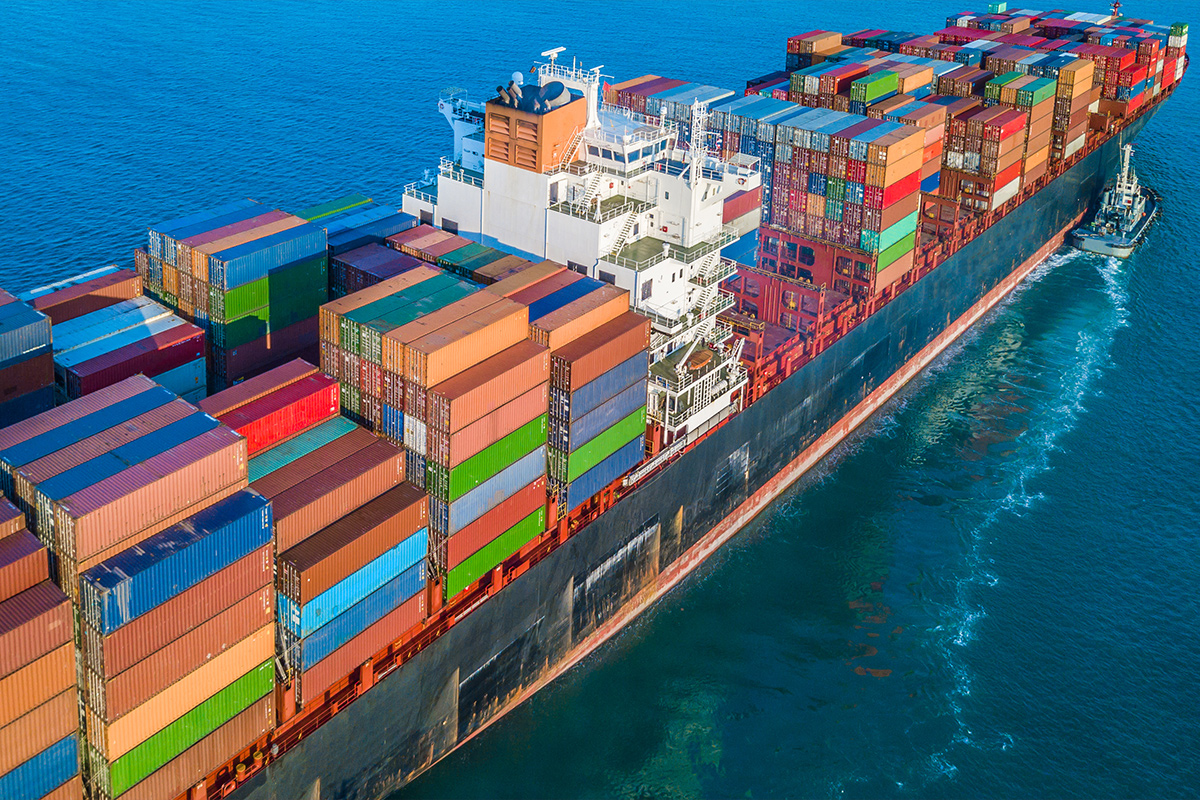
NEW DELHI : The Budget has brought container manufacturing back into the policy spotlight. The government announced the Container Manufacturing Assistance Scheme (CMAS) with a budgetary allocation of Rs 10,000 crore spread over 5 years, aimed at building domestic container manufacturing capacity and limiting India’s exposure to volatile global freight markets.

More on the Container Manufacturing Assistance Scheme
The Finance Minister said the government aims to promote domestic container production to support the rapid growth of containerised cargo, which already forms a dominant share of international trade value.

The official note describes CMAS as an initiative to “build a globally competitive domestic container manufacturing ecosystem” while supporting environmentally sustainable cargo movement. The scheme is positioned within the broader logistics framework of PM Gati Shakti and Sagarmala, where railways, ports and shipping are expected to work in tandem.

The companies closest to this policy direction differ widely in size, balance sheets and business exposure, ranging from container movement and port throughput to rail-linked freight equipment and container fabrication. Here is a look at the key stocks that are likely to be in focus as a result of the focus on the container production space-

Texmaco Rail & Engineering
Texmaco Rail & Engineering manufactures freight wagons, rail infrastructure products and heavy engineering components, with freight wagons forming the largest share of its revenue, as per the company’s disclosures. The company supplies primarily to Indian Railways and freight operators.

Texmaco does not manufacture shipping containers. Its exposure lies in container wagons and rail platforms used to transport containers. At the time of writing this report , the stock closed at Rs 120.16 on the NSE. Over the past month it has declined 9.13%, is down 14.58% over six months, and lower 9.33% year-to-date, even as the five-year return stands at over 360%.

The company trades at a price-to-earnings multiple of about 25 times and a price-to-book ratio of about 1.9, with a market capitalisation of roughly Rs 5,000 crore, placing it in the small-to-midcap bracket.

Titagarh Rail Systems
Titagarh Rail Systems manufactures freight wagons, passenger coaches and metro rolling stock. Its public filings show freight wagons, including container wagons, as a significant part of its business.

The company’s role in the container theme is tied to equipment used for container movement rather than container manufacturing. The stock closed at Rs 779.90 on February 5. It has fallen 10% over the past month, 6.7% over six months, 9.84% year-to-date, and 11.82% over the past year, while delivering a five-year gain of about 69%.

Titagarh trades at a P/E multiple of about 55 times and a P/B ratio near 4.3, with a market capitalisation of approximately Rs 10,600 crore, classifying it as a mid-cap stock.

Shipping Corporation of India
Shipping Corporation of India operates a diversified fleet comprising bulk carriers, tankers, container vessels and offshore assets. Containers currently form a smaller share of its revenue mix compared to bulk and tanker operations, as reflected in its annual reports.

SCI is a signatory to the MoU for Bharat Container Shipping Line, which the government has positioned as a step towards building national container shipping capability. The stock closed at Rs 223.50 on February 5. It is down over 2% year-to-date, up 6.98% over six months, 17.52% over the past year, and 154.16% over five years.

The PSU trades at a P/E ratio of around 12–13 times and a P/B multiple near 1.2, with a market capitalisation of roughly Rs 10,400 crore.

Container Corporation of India
Container Corporation of India is engaged in rail-based container transportation and inland container depot operations. Its revenues are largely driven by EXIM container movement, with domestic container logistics forming a smaller portion.

CONCOR is also part of the BCSL initiative. The stock closed at Rs 519 on February 5. It has declined 0.26% over the past month, 9.41% over six months, is marginally higher 0.52% year-to-date, and down 10.09% over the past year, while delivering a five-year return of about 41%.

The Navratna PSU trades at a P/E multiple of around 29–30 times, a P/B ratio close to 3, and has a market capitalisation near Rs 38,000–40,000 crore.

Larsen & Toubro
Larsen & Toubro operates across infrastructure, energy projects, heavy engineering and defence manufacturing. Port construction, breakwaters, logistics infrastructure and industrial facilities form part of its EPC portfolio.

L&T does not operate container services or manufacture containers. Its linkage to the theme is through execution of port and logistics infrastructure under programmes such as Sagarmala and PM Gati Shakti. The stock closed at Rs 4,060 on February 5. It is down 1.69% over the past month, up 12.37% over six months, lower 1.45% year-to-date, higher 18.64% over one year, and up 169.05% over five years.

The company trades at a P/E multiple of around 30 times, a P/B ratio near 5.5, and carries a market capitalisation exceeding Rs 5.5 lakh crore, firmly in the large-cap category.

Trans Freight Containers
Trans Freight Containers manufactures marine freight cargo containers and has historically focused on exports. The company’s filings indicate container manufacturing as its principal business.

The stock, listed on the BSE, closed at Rs 24.38 on February 5. It is up 22.67% year-to-date, marginally higher 1.28% over six months, down 23.75% over the past year, and higher 140.21% over five years.

As a small-cap company, Trans Freight trades with limited liquidity. Detailed valuation multiples are not consistently available, though its market capitalisation remains in the micro-cap range.

Conclusion
The container manufacturing push announced in Budget 2026–27 ties together rail equipment, shipping, ports and logistics rather than creating a single-sector opportunity.

As the official statement notes, the aim is to build domestic capacity and reduce vulnerability to external shocks. Whether that intent translates into sustained commercial traction will depend on execution, capacity creation and demand growth over time rather than on the announcement alone.

SCI delivers stellar Q3 FY 2025–26 performance; posts highest 9-Month PAT in two decades

MUMBAI : The Shipping Corporation of India Ltd. (SCI) has delivered an outstanding financial performance in Q3 FY 2025–26, marking another landmark quarter driven by strong financial discipline, operational efficiency and enduring financial resilience.

For the nine months ended December 31, 2025, SCI reported its highest-ever consolidated Profit After Tax (PAT) of ₹948 crore in the past two decades, underscoring sustained profitability and robust business fundamentals.

In Q3 alone, SCI posted a record PAT of over ₹400 crore, the highest quarterly profit in a decade, reflecting a sharp improvement in earnings and nearly doubling on a quarter-on-quarter basis. The strong performance was supported by improved fleet utilisation, optimized cost structures, disciplined capital management and stable freight market conditions across key segments.

The company’s consistent focus on operational excellence, prudent financial management and strategic deployment of assets has strengthened its balance sheet and enhanced its ability to navigate market cycles effectively.

SCI continues to align its growth strategy with India’s expanding maritime ambitions, supporting national priorities in trade facilitation, energy security and maritime self-reliance. The company remains focused on modernizing its fleet, enhancing service reliability and leveraging emerging opportunities in global and coastal shipping.

With a strengthened financial position and positive momentum across business verticals, SCI is well-positioned to sustain growth and create long-term value for its stakeholders.

SCI expressed its sincere gratitude to its shareholders, customers, partners and employees for their continued trust and support, reaffirming its commitment to excellence as it sails ahead toward a stronger and more resilient future.

Allcargo Logistics reports Q3FY26 results; completes integration of domestic supply chain businesses

MUMBAI: Allcargo Logistics Limited, post approval of the organisation’s restructuring plan, housing its domestic supply chain business; Express distribution and Contract logistics, announced its consolidated financial results for the quarter ended December 31, 2025.

During the quarter, the Company completed the integration of its express and consultative logistics businesses, implementation of Oracle Fusion Accounting Software, enabling unified operations across customers, warehousing infrastructure, transport assets and technology platforms. Q3FY26 was a transition quarter focused on improving service quality, strengthening profitability and enhancing platform readiness for future growth.

Mr. Ketan Kulkarni, Managing Director and Chief Executive Officer of Allcargo Logistics Limited said, “Q3FY26 marks the successful completion of the integration of our express and contract logistics businesses, with Allcargo Logistics now operating as a unified domestic platform. This transition quarter was focused on strengthening quality, profitability and platform readiness. Our express business witnessed a strong volume recovery in December, leading to market share gains, while yield-enhancement initiatives drove a meaningful improvement in gross margins, providing a solid base for margin-led growth going forward. Contract logistics saw muted demand due to deferred expansion by certain e-commerce clients; however, underlying client relationships remain strong. On a cumulative basis, the domestic business continues to remain profitable. As we move ahead, our focus will be on technology-led execution, disciplined cost management and unlocking new growth levers, particularly in the Full Truck Load (FTL) and transport segments. With integration behind us, we expect EBITDA and PBT to grow faster than revenue in the coming quarters.”

Financial Performance:

  • The company recorded a 7% YTD increase in revenue, EBITDA rose by 9%, and Profit Before Tax (PBT before Exceptional items) grew sharply by 50%.
  • Express Distribution: Registered EBITDA growth of 19% year-on-year and 6% QoQ, driven by enhanced service quality, customer stickiness, and new client additions.
  • Contract Logistics (CL): Delivered Revenue growth of 23% YTD & 5% year-on-year and EBITDA growth of 16% YTD and 2% year-on-year but demand growth remained muted during the quarter as certain clients deferred expansion plans
  • Outlook: With the integration complete, Allcargo Logistics is well-positioned to drive steady revenue growth, with EBITDA and PBT expected to grow faster than the topline. The Company will focus on yield-led margin expansion, technology-led execution and new growth levers, particularly in the Full Truck Load (FTL) and transport segments.

About Allcargo Logistics Limited (Post NCLT Order)

Allcargo Logistics Limited under the composite Scheme of Arrangement has demerged its International Supply Chain (ISC) business and merged its Domestic Supply Chain business.

Domestic supply chain business houses express distribution and consultative logistics. Allcargo Logistics’ combine legacy, innovation, and customer-centricity with a robust distribution network, deep expertise, and a digital-first approach to provide reliable logistics for MSMEs, retailers, and enterprises. With a nationwide network covering 99% of India’s districts and a growing presence across Asia, the company offers unparalleled reach and service capability. Its key business verticals include Express Distribution, Air Freight, E-commerce Logistics, First and Last Mile Delivery, and more. The company also offers specialized B2C services such as Laabh, Bike Express, and Student Express, designed to meet the evolving needs of diverse customer segments. Allcargo group stays true to its strong commitment to adhere to Environmental, Social, and Governance (ESG) standards and continues to direct efforts towards enhancing its people, technology as well as business processes and operations on a regular basis. The group has set out to achieve 100% carbon neutrality by 2040.

Kuehne+Nagel opens new CFS to meet India’s growing trade needs

New 3,500 sqm facility strengthens India’s sea freight
network for faster, more efficient operations
Strategic location near India’s largest seaport for quick
turnaround
Advanced safety and sustainability features

MUMBAI : Kuehne+Nagel, a leading global logistics provider, has opened a new, built-to-suit 3,500 sqm Container Freight
Station (CFS) in Mumbai. This facility reinforces its Sea Logistics capabilities in India and supports the country’s expanding trade
ecosystem.

Located near the Jawaharlal Nehru Port Authority (JNPA), India’s largest seaport, the facility provides direct access to a key maritime gateway that handles a significant share of the country’s containerised trade. The built-to-suit facility is designed for scalable operations, enabling efficient cargo handling and value-added logistics services. It follows strict safety and security protocols, with end-to-end surveillance, and meets global standards, including CTPAT (Customs Trade Partnership Against
Terrorism), AEO (Authorised Economic Operator), and ISO (International Organization for Standardization). Sustainability is integral to the design, featuring electric material-handling equipment and solar-powered lighting to reduce environmental impact.

Anish Kumar Jha, Managing Director for Kuehne+Nagel India, Sri Lanka, and the Maldives, says: “Our new CFS enables faster, more connected operations. It helps customers move shipments efficiently and reliably today; while supporting their logistics needs as they evolve in the future.”

India is on track to become the world’s third-largest economy within this decade. With more than 70 per cent of its trade moving by sea, the demand for modern logistics infrastructure is accelerating and underscores the country’s growing influence in global commerce.

About Kuehne+Nagel

With close to 85,000 employees at almost 1,300 sites in close to 100 countries, the Kuehne+Nagel Group is one of the world’s leading logistics providers. Headquartered in Switzerland, Kuehne+Nagel is listed in the Swiss blue-chip stock market index, the SMI. The Group is the global number one in air and sea logistics and has strong market positions in road and contract logistics. Kuehne+Nagel is the logistics partner of choice for 400,000 customers worldwide. Using its global network, logistics
expertise and data-based insights, the Group provides end-to-end supply chain solutions for global companies and industries.

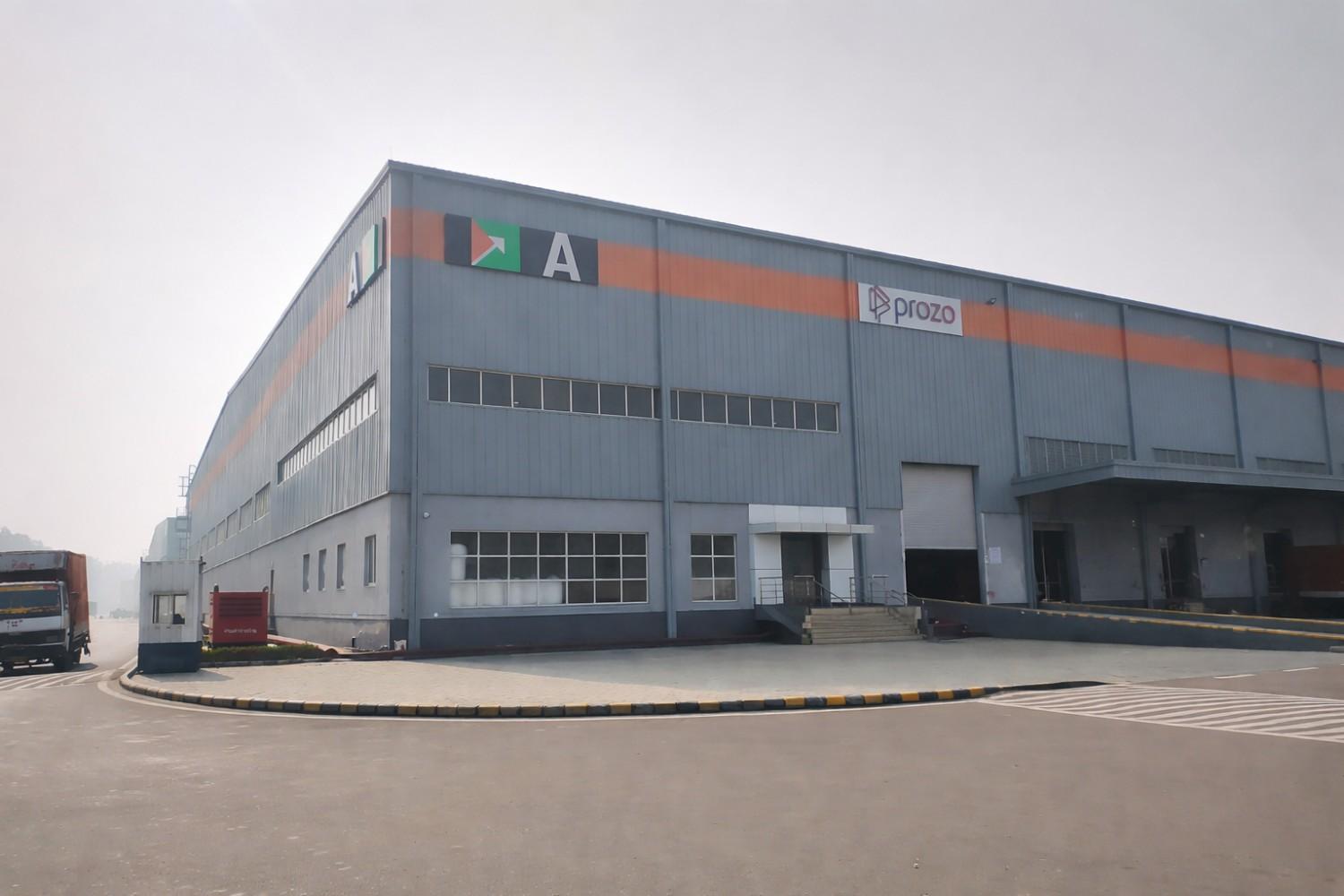
Prozo launches its largest multi-client fulfilment hub, a state-of-the-art, 1.5 lakh sq. ft. facility in Haryana

GURGAON:  Prozo, India’s fastest-growing full-stack supply chain company, unveiled a 1.5 lakh sq. ft. enterprise-grade multi-client facility at Horizon Industrial Parks, Gurugram, Haryana. This is now Prozo’s largest multi-client warehouse in the country and its sixth multi-client facility in the Haryana regionand overall its eleventh in Northern India, reinforcing the company’s fast-expanding network of 50+ fulfilment centres spanning 3 million sq. ft.

Designed as a model warehouse for North India, the new hub combines high-spec infrastructure with Prozo’s proprietary technology stack to create one of the region’s most advanced fulfillment environments. The facility is engineered to handle complex and high-volume operations for enterprise, retail and D2C brands, delivering precision at scale. It is designed to support omnichannel fulfilment, enabling seamless integration across multiple sales channels while ensuring accuracy and speed.

The site features next-generation conveyor systems, chutes, and automated material-handling infrastructure to accelerate inventory movement, enhance accuracy, and deliver consistently high throughput. This enterprise-grade facility is designed as a state-of-the-art hub with automated processes and infrastructure, running on Prozo’s enterprise-grade standards supported by advanced warehouse management systems, real-time visibility tools, multi-channel order orchestration, and robust safety and compliance frameworks.

Commenting on the launch, Dr. Ashvini Jakhar, Founder & CEO, Prozo, said, “This facility marks a new chapter in how we design and scale fulfillment infrastructure. We now work with some of the largest and globally known brands, and they expect networks that deliver speed, accuracy and predictability at all times. This site gives us stronger control over large and varied order flows, enabling us to perform at a standard that reflects the scale and complexity of the customers we serve. It also allows our teams to engineer sharper processes and deepen the tech-led design of our national network as we prepare for the next phase of growth.”

Strategically located within a key industrial and logistics corridor, the Horizon Industrial Park hub strengthens Prozo’s broader capacity expansion programme and improves connectivity to key consumption centres. It enhances network resilience, supports service continuity and reduces operational bottlenecks for fast-growing, multi-channel brands.

Over the past year, Prozo has accelerated investments in SLA intelligence, automated reporting and integrated multi-channel order management across its network. The new facility integrates seamlessly with these capabilities and advances Prozo’s mission of delivering precision-led logistics at nationwide scale.

Prozo’s clientele includes leading brands such as Reliance, TMRW (Aditya Birla), Tira, Traya, Minimalist, Beardo, Neemans, Comet Shoes, Bata, Relaxo and VIP (Caprese), along with several other large enterprise, retail and D2C brands across FMCG, consumer electronics, healthcare, beauty, fashion and lifestyle categories.

With this addition, Prozo continues to reinforce its position as one of India’s most dependable and technology-forward fulfilment partners, offering brands a future-ready ecosystem built on scale, visibility and engineering-led reliability.

About Prozo
Prozo is a full-stack supply chain company that helps omni-channel brands achieve fast and reliable fulfillment. Backed by a pan-India warehousing and logistics network and its proprietary Control Tower tech stack, Prozo offers enterprise-grade capabilities on a flexible, pay-per-use model.

Maersk delivers a strong 2025 with progress across the business

COPENHAGEN : A.P. Moller – Maersk delivered a strong performance in all businesses in 2025 as volume growth, operational execution and proactive cost measures helped results reach the top-end of the financial guidance for the year.

Executive Summary
Ocean grew in line with market with 4.9% volume growth in 2025 despite volatile markets
Logistics & Services continued to improve profitability driven by targeted refocusing efforts
Terminals achieved its strongest financial performance ever with record volumes, revenue and EBIT
Share buy-back programme initiated with a total of USD 1.0bn to be executed over 12 months
Maersk expects global container market volume growth of 2-4% in 2026
Logistics & Service products regrouped into three subsegments: Landside, Forwarding, and Solutions
Corporate overhead cost to be reduced by USD 180m

“We delivered a strong performance and high value for our customers in a year where supply chains and global trade continued to be reshaped by evolving geopolitics. Across our operations, volumes grew and asset utilisation was very high. Our Ocean business set a new benchmark for reliability, Terminals delivered record results, and Logistics & Services continued to advance. The year highlighted the need to strengthen, and modernise global supply chains and critical infrastructure, further emphasising the relevance of our strategy. Our key to success remains to grow in close partnership with our customers, leveraging our unique asset footprint, and a continuous drive for operational excellence and cost discipline.”

Vincent Clerc, Chief Executive Officer at Maersk
Year in review
Maersk’s financial performance in 2025 proved the company’s ability to build competitive edge from vast, integrated logistics, terminals and ocean networks. Full-year revenue stood at USD 54.0bn (USD 55.5bn), EBITDA was USD 9.5bn (USD 12.1bn), and EBIT was USD 3.5bn (USD 6.5bn) – reaching the top-end of the financial guidance.

The Ocean business drove increased competitiveness through high asset utilisation and volumes growth in line with market at 4.9%, while profitability declined due to lower freight rates caused by supply overcapacity. The new East-West network was launched and delivered industry-leading reliability with more than 90% on-time arrivals on average and has enabled cost savings above expectations.

The Logistics & Services business continued to invest and to advance performance delivering improved profitability and operational improvements. Despite this progress, the segment is not yet at full potential and further improved performance remains a priority.

Maersk continued to strengthen its position as a global leader in terminal operations and critical port infrastructure – the backbone of any country’s exports and imports. Terminals accelerated growth by developing new sites, modernising existing facilities, and securing key concessions across strategic locations. Terminals revenue increased by 20% propelled by record-high volumes from strong demand, improved rates and higher storage revenue. This underpinned the delivery of the best financial results on record.

Q4 2025 financial highlights
Ocean

Strong volume growth of 8.0%; Continued market pressure on freight rates drove EBIT into negative territory
EBIT: USD -153m, down from USD 567m in the previous quarter. Was USD 1.6bn in Q4 24
Logistics & Services

Revenue grew 1.9% from Q4 2024, profitability improved year-on-year for the seventh consecutive quarter with the EBIT margin increasing 0.8 percentage points to 4.9%: improvements driven particularly by the performance in Warehousing and E-fulfilment.
EBIT: USD 194m, down from USD 218m in the previous quarter. Was USD 158m in Q4 24
Terminals

Revenue grew 13% from Q4 2024; Volumes grew 8.4% driven by strong demand across Americas and Europe. The EBIT margin excluding impairment in Europe and a write-down in Asia was 30.1%
EBIT: USD 321m, down from USD 571m in the previous quarter due to one-offs. Was USD 338m in Q4 24
Dividend and share buy-back program
In accordance with the existing policy, The Board of Directors will propose for AGM approval of a dividend of DKK 480/share corresponding to around USD 1.1bn and a pay-out ratio of 40%, similar to previous year.

The Board of Directors has decided to initiate a share buy-back programme of up to DKK 6.3bn (around USD 1bn), to be executed over a period of 12 months, with the first phase of DKK 3.15bn (around USD 500m) to run from 9 February up to 5 August 2026

Organisational cost reductions
To drive continuous productivity improvements and maintain strong cost discipline, Maersk has announced steps to simplify the organisation and reduce the company’s corporate overhead. As part of this, Maersk is reducing corporate costs across headquarters, regions, and countries with USD 180m annually. Out of approximately 6,000 corporate positions, around 15% – or approximately 1,000 positions – will be closed. The required notification and consultation processes have been initiated.

Regrouping products in Logistics & Services
Maersk’s Logistics & Services product portfolio will be regrouped into three subsegments: Landside, Forwarding, and Solutions. This grouping reflects the general product segmentation in the industry and the fundamental differences across logistics products in how they create value for customers. Consequently, the organization is adjusted with Landside products managed locally at a country level, while Forwarding and Solutions will operate as global product organisations. Responsibility for the global products will be divided between two roles, aligned with the new product categories. Narin Phol, current Head of Logistics & Services, is appointed Head of Solutions, and Christoph Hemmann, current Global Head of Air Product & LCL, is appointed Head of Forwarding. With this appointment, Christoph Hemmann will join Maersk’s Executive Leadership Team alongside Narin Phol.

Financial guidance
Guidance is based on the expectation that global container volume growth will be between 2% and 4% in 2026 and that A.P. Moller – Maersk will grow in line with the market. The ranges reflect the expected overcapacity in the shipping industry and scenarios of a gradual Red Sea reopening in 2026. The underlying EBIT guidance also includes the impact of a change in estimated useful lives of vessels from 20 to 25 years effective 1 January 2026, with an estimated impact of around USD 700m in reduced depreciation in 2026.

Guidance 2026EBITDA
Underlying
EBIT
Underlying
Free cash flow (FCF) or higherCAPEX guidance, maintained
2025-2026
CAPEX guidance
2026-2027
USDbn4.5 – 7.0-1.5 – 1.0≥-3.010.0 – 11.010.0 – 11.0

Sensitivity guidance

Financial performance for A.P. Moller – Maersk for 2026 depends on several factors subject to uncertainties related to the given uncertain macroeconomic conditions, bunker fuel prices and freight rates. All else being equal, the sensitivities for 2026 for four key assumptions are listed below:

FactorsChangeEffect on EBIT
(full year 2026)
Container freight rate+/- 100 USD/FFE+/- USD 1.3bn
Container freight volume+/- 100,000 FFE+/- USD 0.01bn
Bunker price (net of expected BAF coverage)+/- 100 USD/tonne+/- USD 0.3bn
Foreign exchange rate (net of hedges)+/- 10% change in USD+/- USD 0.3bn

About Maersk:
A.P. Moller – Maersk (Maersk) is an integrated logistics company connecting and simplifying its customers’ supply chains. As a global leader in logistics services, the company has 100,000+ customers, operates in about 130 countries, and employs 100,000+ people. Maersk delivers innovative, reliable ocean network solutions, offers truly integrated logistics products and operates advanced container terminals, both gateways and hubs, with 60+ locations globally.

Mexico’s tariffs on India are a double whammy after US tariffs

KOLKATA : Pankaj Chadha has been running a steel manufacturing unit in Mumbai, India’s financial capital, for the past four decades. The 65-year-old told Al Jazeera that his company exports products mostly to the United States and Mexico, where they are used in various industries.

The recent spike in tariffs in both countries, however, has come as a crushing blow for Chadha. Before the tariffs, he had sales of roughly $5m and $8m to the US and Mexico, respectively. But those have since been halved.

“I have lost 50 percent of my business in Mexico and the US since the tariffs came into effect. It is a severe blow to my business as I was focusing on Mexico after the US tariffs, but the future looks bleak there also now,” he said.

US President Donald Trump imposed a 25 percent tariff on India in August and soon tacked on another 25 percent as punishment for its continuing purchase of Russian oil, which, he said, was helping to fund Russia’s war on Ukraine.

Now, within months of those punishing tariffs devastating businesses and jobs across industries in India, including diamond cutting, shrimp farming, and carpet manufacturing, businesses are dealing with equally high tariffs from Mexico, a double whammy, they say.

On January 1, Mexico implemented steep import tariffs ranging from 5 percent to 50 percent on more than 1,400 products from non-free trade nations, including India, Brazil, China, South Korea, Russia, Indonesia and Thailand.

Mexico has free trade agreements (FTAs) with more than 50 countries, including the US, Canada, Japan, and countries in the European Union, Asia-Pacific region, and Latin America.

The North American nation contends that the tariffs have been hiked to boost domestic production, address trade imbalances, and safeguard local employment.

However, Indian businesses have put it down to Mexico safeguarding itself from US wrath over trans-shipment and supply-chain diversion – issues that businesses from countries like China, which are dealing with high US tariffs, can undertake.

India has so far warned of “appropriate action for the unilateral” tariff hike by Mexico.Ajay Srivastava, founder of Global Trade Research Initiative (GTRI), told Al Jazeera that India is likely to focus on export diversification, treating the tariff hike as another sign of accelerating erosion of global trade rules rather than a dispute to be fought bilaterally.

The automobile sector, which has a strong market in Mexico, has been badly affected by the tariff hike.

Indian automobile companies exported passenger vehicles worth around $938.35m and motorcycles valued at $390.25m in the financial year ending March 31, 2025.

Even the auto components, which are predominantly used in vehicles meant for export to the US, have been slapped with tariffs of 35 percent, pointed out Vinnie Mehta, director-general of the Automotive Component Manufacturers Association of India (ACMA).

Last year, India exported auto components worth $835m to Mexico.“Undoubtedly, the exports are clearly suffering due to the tariffs by the US, and the addition of Mexico has created a new challenge. The visible impact would be clear after the end of the second fiscal cycle in March,” Mehta told Al Jazeera.

The automobile industry, however, is shifting gears and pinning its hopes on a strong domestic demand driven by a recent reduction in India’s Goods and Services Tax (GST) from 28 percent to 18 percent, a government move to soften the US tariff blow.

For now, various industry bodies have written to the government to sign a preferential trade agreement with Mexico to provide quick relief for the Indian business sector.

Ajay Sahai, director-general of the Federation of Indian Export Organisations (FIEO), has, however, called the tariff hikes a push for the industry to increase domestic demand and look for diversification.

“The tariffs have proved that excessive dependence on single or two countries could be harmful,” he said, “and diversification is the only solution for survival and market expansion.”