Home Blog Page 449

Strategic Marine strengthens Taiwan Offshore Wind Presence with first Stratcat 27 delivery to a Taiwanese Company

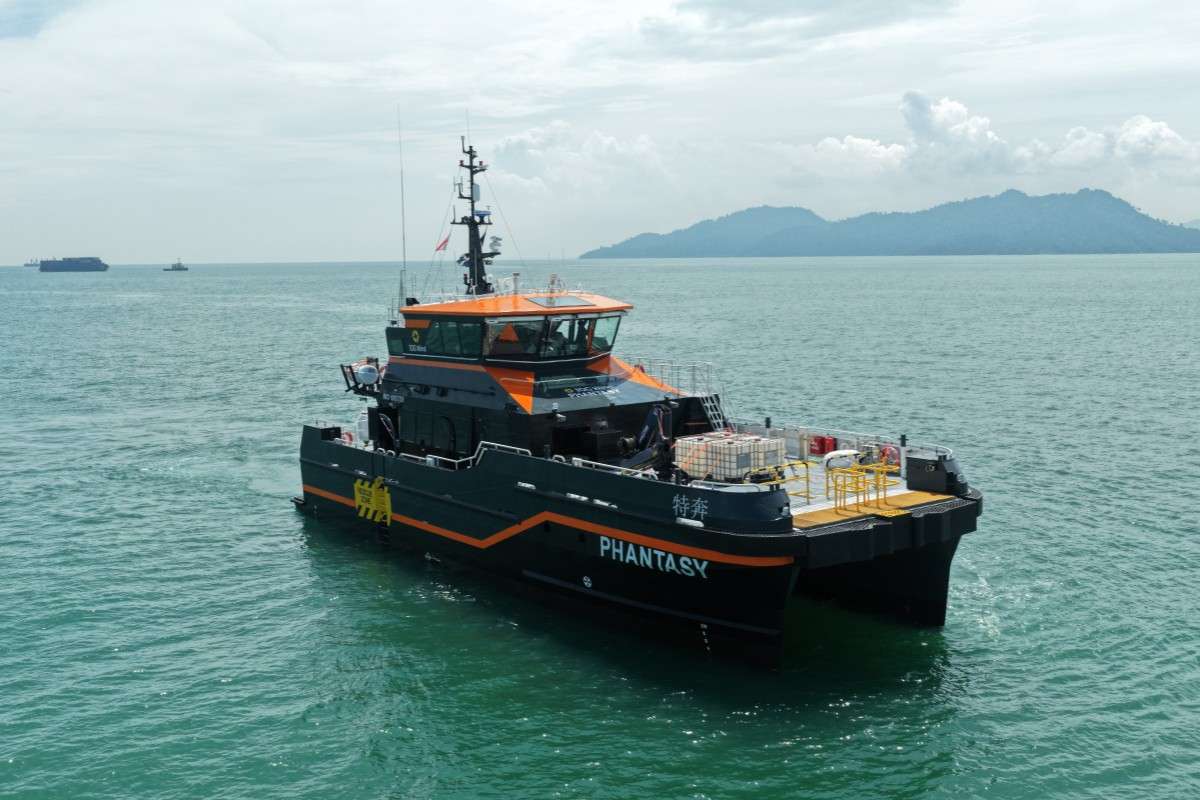
SINGAPORE: Strategic Marine, a global leader in aluminium vessel construction, has successfully delivered a 27-metre Crew Transfer Vessel (CTV) to a Taiwanese company in Taiwan, reinforcing its role as a trusted vessel partner to the region’s offshore wind industry.

Based on Strategic Marine’s proven StratCat 27 design, developed in collaboration with BMT, the vessel is purpose-built to support offshore wind farm construction, operations, and maintenance activities. The CTV features an optimised hull form for improved seakeeping, manoeuvrability, and operational performance in Taiwan’s offshore operating conditions.

This delivery marks another milestone in Strategic Marine’s ongoing engagement with Taiwan’s offshore wind sector, as the country continues to advance its renewable energy targets. The vessel will support the safe and efficient transfer of technicians and crew to offshore wind sites, contributing to long-term operational readiness and sustainability objectives.

The milestone delivery also marks the 8th SC27 class of vessel to be deployed in the region, further solidifying its testament of the quality, reliability and functionality of its class.

Mr. Chan Eng Yew, Chief Executive Officer of Strategic Marine, commented: “We are pleased to deliver the StratCat 27 Crew Transfer Vessel to a Taiwanese company in Taiwan. This project demonstrates our ability to deliver reliable, high-performance vessels that are tailored to regional requirements and support the continued growth of offshore wind across Asia.”

Strategic Marine remains committed to delivering purpose-built vessel solutions that meet the evolving needs of offshore wind operators worldwide.

Inmarsat Maritime to deliver NexusWave connectivity across Auerbach fleet of newbuild heavy lift vessels

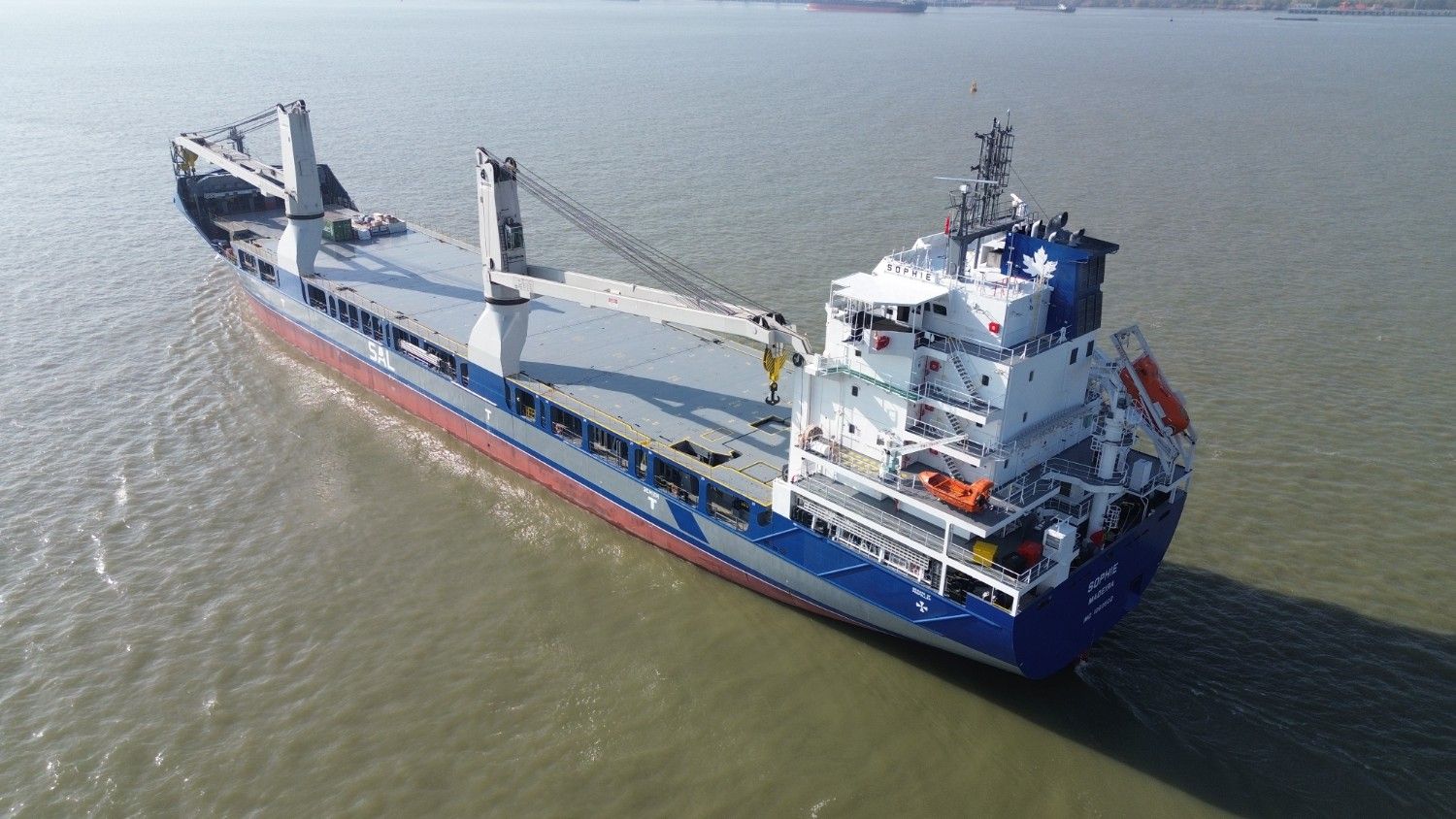
LONDON: Inmarsat Maritime, part of Viasat (NASDAQ: VSAT) Communication Services, will install NexusWave across Auerbach’s fleet of newbuild heavy lift vessels to meet the German shipping company’s connectivity performance needs for its new generation of ships.

Hamburg-based Auerbach has initiated a fleet renewal programme in response to growing demand for its high-quality project cargo transport services and to anticipate evolving environmental regulations. Auerbach’s new ‘ECO’ multipurpose vessels, which are being delivered by China’s Taizhou Sanfu Shipyard, set new standards for cargo handling and fuel efficiency. Inmarsat NexusWave will help to uphold these high standards by keeping mission-critical shipboard systems running at all times.

By combining high speed and availability with unlimited data and global coverage, the fully managed bonded solution is designed to provide a seamless connectivity experience comparable to shore-based internet. This is crucial to support the data-intensive technologies and processes deployed by modern ship owners like Auerbach which also need to comply with increasing regulatory reporting requirements. The NexusWave deployment can also translate into a competitive advantage.

Jan Boldt, Technical Director, Auerbach, said: “Our ongoing fleet renewal programme reflects a commitment to leading the modernisation of the project cargo sector by building, owning, and operating cutting-edge, eco-friendly multipurpose vessels. Inmarsat’s NexusWave will support the vessels’ efficient operations and regulatory compliance, as well as satisfying customer and crew requirements, with unlimited high-speed connectivity from a single, fully managed source.”

Jan-Henning Stehr, Sales Manager – Europe, Inmarsat Maritime, commented: “Modern ship owners and managers across the maritime industry recognise the competitive advantage that can be gained through fully managed bonded connectivity. Auerbach’s new ships will serve growing demand for top quality project cargo assets and NexusWave will provide the seamless, next-generation connectivity that aligns with the company’s ambitions to drive modernisation of the sector.”

US to cut tariffs on India to 18%, India agrees to end Russian oil purchases

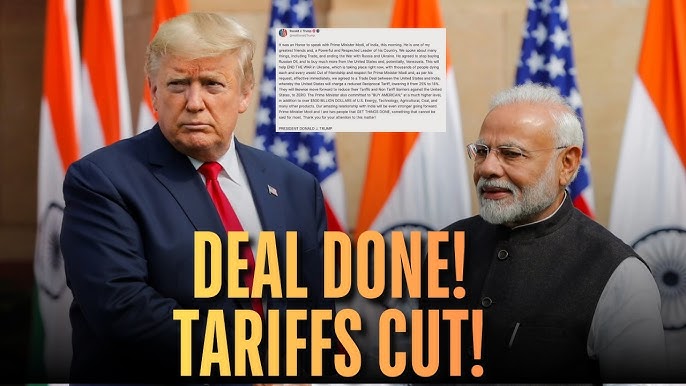
WASHINGTON/NEW DELHI : U.S. President Donald Trump on Monday announced a trade deal with India that slashes U.S. tariffs on Indian goods to 18% from 50% in exchange for India halting Russian oil purchases and lowering trade barriers. Trump announced the deal on social media following a call with Indian Prime Minister Shri Narendra Modi, noting that India would now buy oil from the U.S. and potentially Venezuela.

A White House official told Reuters that the U.S. was rescinding a punitive 25% duty on all imports from India over its purchases of Russian oil that had stacked on top of a 25% “reciprocal” tariff rate.

U.S.-listed shares of major Indian companies rallied on the news. IT consulting firm Infosys closed 4.3% higher, consultancy Wipro rose 6.8%, HDFC Bank gained 4.4% and the iShares MSCI India exchange-traded fund rallied 3%.

Trump’s announcement added to positive sentiment over semiconductor makers and artificial intelligence, lifting major indexes into positive territory on the day. Modi also committed India to “BUY AMERICAN at a much higher level,” in addition to buying more than $500 billion worth of U.S. energy, including coal, along with technology, agricultural and other products, Trump added.

“They will likewise move forward to reduce their Tariffs and Non Tariff Barriers against the United States, to ZERO,” Trump said of India.
Until Trump returned to office and raised U.S. tariff rates to double-digit levels last year, India had some of the world’s highest tariffs, with a simple applied rate of 15.6% and an effective applied tariff of 8.2%, according to World Trade Organization data.

FEW DETAILS AVAILABLE
Trump’s Truth Social message provided few details, including on the start date for the lower tariff rates, the deadline for India to end Russian oil purchases, trade barrier reductions and which U.S. products India had committed to purchasing.

As of late Monday afternoon, the White House had not issued a presidential proclamation nor a Federal Register notice required to make the changes official. A White House spokesperson offered no further details, while India’s commerce and foreign ministries did not immediately respond to requests sent after working hours. Russia’s embassy in Washington also did not immediately respond to a request for comment.

Previous trade deals with other major Asian trading partners including Japan and South Korea have included commitments to invest hundreds of billions of dollars into U.S. industries, but the India announcement did not mention any specific investments.

The deal brings India “broadly in line with its Asian peers on tariff rates” of 15% to 19%, said Madhavi Arora, economist at Emkay Global, adding that it would eliminate a disproportionate drag on India’s exports and its rupee currency.

Indian markets had been battered since the tariffs were levied by Washington, making it the worst-performing market among emerging nations in 2025, with record outflows of foreign investors.
U.S. business groups reacted with caution and criticism. The U.S. Chamber of Commerce, which has long advocated a market-opening trade deal with India, called Trump’s announcement progress towards that goal.

“We are optimistic that this is the first step toward a comprehensive trade agreement that will unlock even more private sector collaboration, and we look forward to reviewing the details of the deal,” Chamber CEO Suzanne Clark said in a statement.

A coalition of more than 800 small businesses called “We Pay the Tariffs” urged Americans not to celebrate the deal, which it called a “600% tax increase on American businesses compared to 2024.” The group noted that U.S. tariffs on Indian imports were about 2% to 3% at that time but would now be 18% and could go higher if India does not fully wean itself off Russian oil.

‘BIG THANKS’ FROM MODI
“Wonderful to speak with my dear friend President Trump today. Delighted that Made in India products will now have a reduced tariff of 18%,” Modi said in a social media post on X. “Big thanks to President Trump on behalf of the 1.4 billion people of India for this wonderful announcement.” India’s Trade Minister Shri Piyush Goyal said the deal would draw the U.S. and Indian economies closer together.

“This agreement unlocks unprecedented opportunities for farmers, MSMEs, entrepreneurs, and skilled workers to Make in India for the world, Design in India for the world, and Innovate in India for the world. It will help India get technology from the U.S.,” Goyal said in a post on X.

The deal comes less than a week after India signed a long-awaited trade deal with the European Union that is expected to eliminate or reduce tariffs on 96.6% of traded goods by value. That deal excludes EU soybeans, beef, sugar, rice and dairy from tariff reductions.

The Trump administration has been racing to complete framework trade deals with major trading partners before the U.S. Supreme Court rules on whether to strike down Trump’s “reciprocal” tariffs under the International Emergency Economic Powers Act.

Trump administration officials reached a deal with Taiwan last month and say such agreements are expected to continue no matter what the court rules, as they will reimpose tariffs under other authorities.

WESTERN HEMISPHERE OIL
On Saturday, Trump teased a potential deal for India to buy Venezuelan oil after the U.S. seized Venezuelan President Nicolas Maduro in a military raid in early January. The deal followed months of tense trade negotiations between the world’s two largest democracies.

Last August, Trump doubled duties on imports from India to 50% to pressure New Delhi to stop buying Russian oil, and earlier this month said the rate could rise again if it did not curb its purchases.
Purchases of Venezuelan oil would help replace some of the Russian oil bought by India, the world’s third-biggest oil importer.

India relies heavily on oil imports, covering around 90% of its needs, and importing cheaper Russian oil has helped lower its import costs since Moscow invaded Ukraine in 2022 and Western nations enacted sanctions on its energy exports.

Recently India has begun to slow its purchases from Russia. In January, they were around 1.2 million barrels per day, and are projected to decline to about 1 million bpd in February and 800,000 bpd in March, according to a Reuters report.

Source : Reuters

US tariffs have “no influence” on customs duty overhaul announced in Budget: Sitharaman

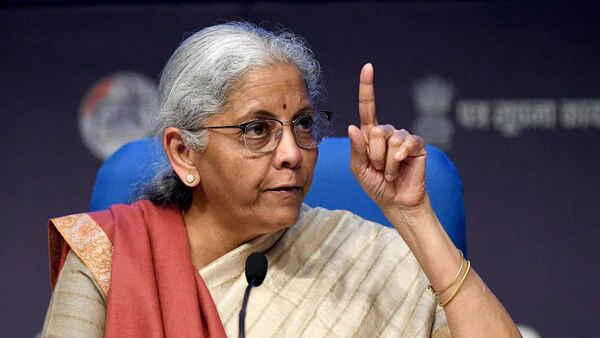
NEW DELHI: The Union Finance Minister Smt. Nirmala Sitharaman said that the United States (US) tariffs have “no influence on customs duty overhaul.”

“Custom duty overhauling exercise has been going on for the last two years. The US matter has had ‘no influence’ on Budget,” Sitharaman told reporters in the national capital in the context of the proposals announced in the Union Budget 2026-27 for the deduction in Customs and Central Excise for certain products.

The Union Minister said, “We didn’t make any assessment on the impact of US tariffs.”

Smt. Sitharaman in her budget speech yesterday, had proposed deductions in Customs and Central Excise for certain products, which she said aims to further simplify the tariff structure, support domestic manufacturing, promote export competitiveness, and correct inversion in duty.

Products/sectors that saw duty revisions include Marine, Leather, and Textile products; the Energy sector; and capital goods required for the processing of critical minerals. Components and parts required for the manufacture of civilian, training, and other aircraft were also covered. They also include 17 drugs or medicines, among others.

On disinvestment, Sitharaman said there is no change in the government’s stance and that the IDBI Bank disinvestment will proceed soon.

“The pace, and direction of disinvestment will set the tone for revenue generation, and we will certainly look at more on disinvestment and asset monetisation”, the Finance Minister said.

Secretary, Department of Investment and Public Asset Management (DIPAM), Arunish Chawla, had told ANI in a post-budget interaction that the strategic disinvestment of IDBI Bank has “moved to the third phase,” adding that “now the technical and financial bids will be invited.”

In May 2021, the Cabinet Committee on Economic Affairs gave its in-principle approval for the strategic disinvestment of IDBI Bank, along with the transfer of management control.

Further speaking on the roadmap for the banking sector, the finance minister said, “Banks today are in a position of strength, and the quality of assets are high. But we don’t want to leave it there, there is a need for futuristic banks.”

“The high-level committee announced in the Union Budget 2026 will look into bank consolidation, and the terms of reference for high-level committee will be drafted very soon,” Smt. Sitharaman said.

A High-Level Committee on Banking for Viksit Bharat was announced in the Budget 2026. The committee will comprehensively review the banking sector and safeguard financial stability, inclusion and consumer protection.

“It may take some time. Before the end of this Financial Year, we will be able to give further information in this matter,” the Finance Minister said.

Source: ANI

India–US trade deal very near completion, larger FTA will take time: Commerce Secretary Rajesh Agrawal

NEW DELHI: Commerce Secretary Shri Rajesh Agrawal on Monday said the India–US bilateral trade deal is very near completion, signalling progress in trade negotiations between the two countries.

Speaking in an interaction with CNBC TV18, Agrawal noted that while the United States is a large economy, concluding a comprehensive free trade agreement (FTA) would require more time. “The US is a big economy, and a larger FTA will take time,” he said.

Speaking on the first ‘Budget 2026: Accelerating India’s Export Story‘, the Commerce Secretary reiterated that two existing frameworks between the world’s two largest economies are still in place, underscoring New Delhi’s willingness to continue talks.

However, he stopped short of providing a timeline for a broader FTA, saying, “How fast it will happen, hope to get it sooner than later, can’t put a date.”

On reciprocal tariffs, the Commerce Secretary said the issue is “largely in the goods space”, adding that India is seeking to move towards “more balanced trade between both sides.”

The objective, he said, is to ensure that “both sides are better off” as negotiations progress. Referring to recent official commentary, Agarwal noted that the minister had said “most of the sticky issues are more or less resolved,” but declined to comment on recent remarks made by the US President.

Commerce Secretary Rajesh Agrawal also said India remains on a strong growth path despite global economic turbulence, with the country’s growth rate holding at around 7 per cent.

Sharing the government’s post-Budget 2026 outlook, Agrawal said that once ongoing trade agreements are fully operationalised, Indian exports will gain preferential access to nearly 55–60 per cent of global markets. This, he noted, would significantly strengthen India’s export competitiveness.

The Commerce Secretary added that India is aiming to cross $850 billion in exports in the current year, supported by long-term policy predictability and sustained service commitments that provide confidence to businesses and global investors.

The Commerce Secretary added that negotiations with several other countries are moving at a faster pace, and some free trade agreements are expected to reach the finish line this year. Emphasising the collaborative nature of trade talks, Agrawal remarked that such agreements require mutual effort, saying it “takes two to tango”.

Commerce Secretary Rajesh Agrawal also said that the successful conclusion of an India–US trade deal would require a strong appetite from both sides, underlining that negotiations can move forward only when there is mutual commitment.

He also pointed out that several trade deals announced by the US in recent years are yet to be rolled out.

Last month, US President Donald Trump expressed confidence about the future of India-US trade ties, praising Prime Minister Narendra Modi and signalling optimism on a bilateral trade deal.

Speaking to Moneycontrol when asked about the India-US trade agreement, Trump said he held Prime Minister Shri Modi in high regard and described him as a close friend. “I have great respect for your Prime Minister. He’s a fantastic man and a friend of mine. We are going to have a good deal,” the US President said.

Negotiations for a trade deal between India and the United States, expected to conclude this year, could help reduce uncertainty on India’s external front, the Economic Survey for 2025–26 said.

“At the same time, ongoing trade negotiations with the United States are expected to conclude during the year, which could help reduce uncertainty on the external front. While these risks remain manageable, they reinforce the importance of maintaining adequate buffers and policy credibility,” the Survey said.

India and the United States have concluded six rounds of talks for a trade deal so far. Both nations have reaffirmed their commitment to continue dialogue with the aim of reaching an early conclusion of a mutually beneficial agreement.

The recent US decision to exempt over 200 agricultural and food products from elevated tariffs marks a constructive shift in India–US trade dynamics. The move restores price competitiveness for key Indian exports, including spices, tea, coffee, nuts, and processed foods, helping offset earlier tariff pressures that had constrained market access, the Survey noted.

India’s goods and services exports in 2024-25 stood at $ 825 billion, and in 2025-2026, it is expected to cross USD 850 billion.

JNPA records highest-ever monthly container and cargo throughput in January 2026

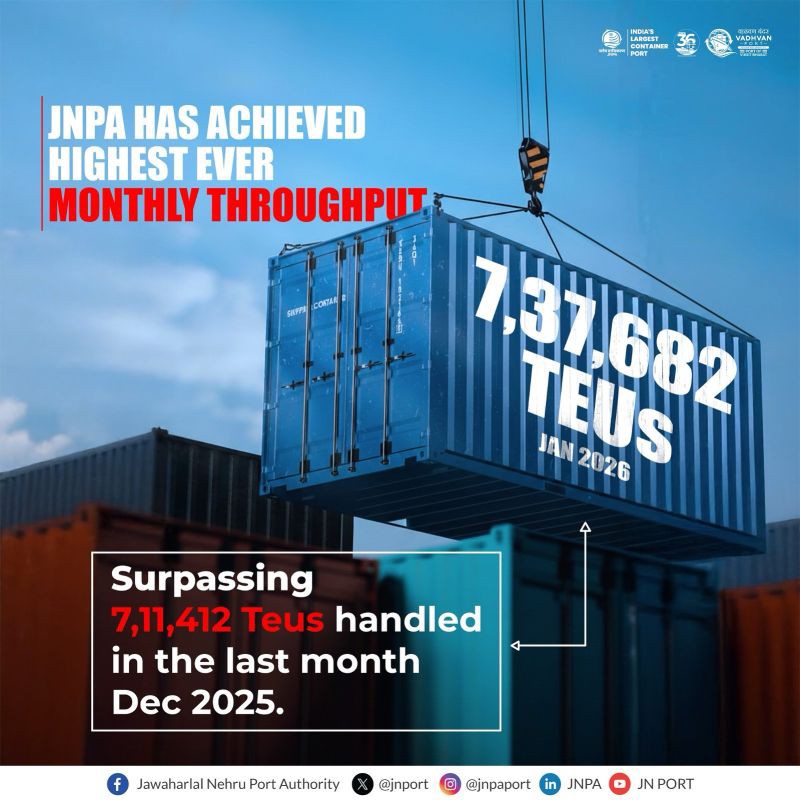
MUMBAI : Jawaharlal Nehru Port Authority (JNPA) has achieved a historic milestone by recording its highest-ever monthly container throughput of 7,37,682 TEUs in January 2026, surpassing the previous record of 7,11,412 TEUs registered in December 2025.

Adding to this landmark achievement, JNPA also posted its highest overall cargo throughput of 9.06 million metric tonnes (MMT) during January 2026, exceeding the earlier peak of 8.96 MMT recorded in December 2025.

The twin records underline JNPA’s growing operational efficiency, enhanced infrastructure capacity, and its pivotal role in strengthening India’s maritime trade ecosystem. The strong performance reflects seamless coordination among terminal operators, stakeholders, and logistics partners, supported by continuous digitisation and process optimisation at the port.

With this robust start to 2026, JNPA continues to consolidate its position as India’s premier container port and a key gateway for EXIM trade, reinforcing confidence among shipping lines, exporters, and importers alike.

Union Budget 2026 shows several proposals to rejuvenate indigenous shipping

NDW DELHI : Union Budget 2026 has several proposals to boost coastal shipping and kickstart inland shipping that has largely been a non-starter especially in cargo carrying. It also promises ₹10,000 crore to support the making of containers in India.

After COVID period during which the government realised the value of having Indian tonnage that it can leverage for national needs, the government has announced several proposals to rejuvenate indigenous shipping. In September 2025, the Union Cabinet approved a ₹69,725 crore comprehensive package that included major investment plans so State-owned Shipping Corporation of India (SCI) could buy a range of ocean-going merchant ships. The budget has allocated more than ₹1,700 crore for 2026-27 as part of this package.

In today’s speech, the Finance Minister spoke about the government’s aim to develop inland and coastal shipping so that its share in total cargo carried through road, rail and water increases from 6% to 12%. This would not only help to decongest roads and the rail system, but, being a potentially cheaper mode, inland waterways can facilitate market access for farmers and small businesses. A major push by the government is needed to overcome the current cost and time disadvantages of inland waterways, observers say.

In a major tax relief, the presumptive tonnage tax scheme will apply to inland and coastal ship companies rather than the generic income-based tax. Tonnage tax is the global standard and is typically at 5% on a presumptive income for a given tonnage. Further, centres to train youth in inland ship repair are targeted to come up in the hinterland in Varanasi (Uttar Pradesh) and Patna (Bihar).

The Budget has proposed to establish new Dedicated Freight Corridors connecting Dakuni in the east to Surat in the west and operationalise 20 new national waterways (NW) over the next five years starting with the Brahmani-Mahanadhi NW 5. This national waterway can connect mining centres in Talcher to industrial centres and feed Paradeep and Dhamra ports. “Mahanadhi has rich potential for development and cargo carrying. But it needs sustained investment such as in periodic dredging to make this project work,” said Amitabh Kumar, former director general of shipping.

The proposal on container shipping aims to create a globally competitive container manufacturing ecosystem with a budgetary allocation of ₹10,000 crore over a five-year period.

In the past, it was considerably cheaper to import new, empty containers from China than make them in India. There were no BIS standards for the specialised steel needed to make seaworthy containers that Indian steelmakers could use to manufacture the steel. Importing steel added to the costs. Also, quality guarantees could not be ensured. “Now, BIS standards are in place on a par with global and Chinese standards and more institutions have been certified to ensure high quality of containers made in India,” adds Mr. Kumar.

Container makers would like a combination of support measures: in land acquisition, through capex subsidy and a PLI scheme. “The aim should be to ensure that when scaled up, the cost of production of containers comes down to global levels,” says N. Bhanu Prakash, faculty at the Indian Maritime University, Visakhapatnam campus. He adds that mandating the use of Indian-made containers can also be considered.

Industry leaders applaud growth-oriented budget and long-term stability

NEW DELHI: The Union Budget 2026-27 has drawn widespread applause from India’s industrial heavyweights. Industry captains across finance, mining, manufacturing, and consulting have noted a strategic focus on long-term tax certainty, infrastructure spending, and the strengthening of domestic supply chains. There is a palpable sense of optimism regarding the government’s push for “Viksit Bharat”.

For the financial sector, the big win came in the form of extended tax benefits for the International Financial Services Centre. Mr. Sanjay Kaul, Managing Director and Group CEO of GIFT City, pointed out that the new measures are “significantly enhancing the country’s offshore financial competitiveness. The extension of the tax deduction window to 20 years out of 25 years from 10 years out of 15 years, coupled with a clearly defined 15 per cent tax rate thereafter, offers clarity and predictability that global financial institutions and investors look for when making long-term location and capital allocation decisions.

“In the natural resources and manufacturing space, the focus on self-reliance was a highlight. Mr.Anil Agarwal, Chairman of the Vedanta Group, described the budget as a “a growth-oriented Budget, with a clear focus on increasing public capital expenditure and boosting manufacturing.” He specifically welcomed the “keen attention to critical minerals and rare earths. The Rare Earths Corridors for mining, processing, R&D and manufacturing in Odisha, Tamil Nadu, Andhra Pradesh and Kerala will boost growth, employment and mineral security. Import duty exemption on capital goods for critical minerals processing is very timely in the current global scenario.

“From a broader industrial and regional perspective, the Budget’s commitment to fiscal stability was well-received. Mr. Sandeep Engineer, President of the Gujarat Chamber of Commerce and Industry (GCCI), remarked that the Budget is strategically crafted to build resilience in a volatile global environment. He appreciated the disciplined fiscal consolidation path, with the deficit estimated at 4.3 per cent of GDP, noting that with public capital expenditure proposed at Rs 12.2 lakh crore, the “Government continues to crowd in private investment.” He emphasised that these measures will “accelerate investment, employment generation, and long-term economic resilience” while complementing Gujarat’s existing industrial strengths.The consulting and professional services sector saw the Budget as a bridge between India’s past and its future.

Mr. Sanjeev Krishan, Chairperson of PwC in India, stated that, “amidst geopolitical concerns, fragmentation, and financial tightening across the globe, this year’s Union Budget lays emphasis on the collective strength of Bharat. From domestic manufacturing and infrastructure-led investments to targeted sector-specific reforms and expanding the workforce, these interventions reflect conscious choices–a clear effort to balance macroeconomic priorities with micro-level necessities.”Manufacturing associations also found plenty to celebrate in the sectoral schemes.

Mr. Nirmal K Minda, President of ASSOCHAM, highlighted the strong push to domestic manufacturing through targeted schemes in biopharma, electronics, and semiconductors. He mentioned that initiatives like the Indian Semiconductor Mission 2.0 and the revival of legacy clusters will strengthen value chains and reduce logistics frictions. Minda believes these measures will “accelerate India’s transition towards globally competitive, high-value manufacturing.

“Finally, the ease of doing business remained a central theme for trade bodies. Mr. Anant Goenka, President of FICCI, welcomed the steps taken toward tax simplification and decriminalisation. He noted that, “the incentives and tax certainty measures aimed at attracting global capital are a strong positive and will further reinforce India’s position as a preferred destination for foreign investment.” 

Source: ANI

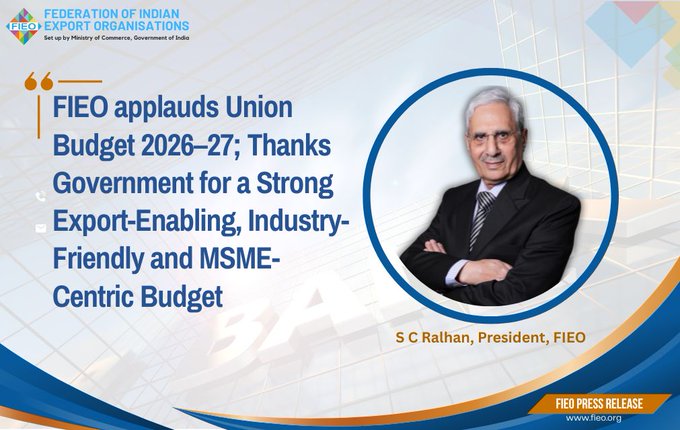
FIEO applauds Union Budget 2026–27; Thanks Government for a strong export-enabling, industry-friendly and MSME-Centric Budget : President, FIEO

NEW DELHI : The Federation of Indian Export Organisations (FIEO) warmly welcomes the Union Budget 2026–27 and compliments the Government for presenting a bold, forward-looking, and reform-oriented Budget that significantly strengthens India’s growth trajectory while decisively enhancing the global competitiveness of Indian exports, manufacturing and MSMEs.

Commenting on the Budget, Mr S C Ralhan, President, FIEO, expressed his appreciation to the Hon’ble Finance Minister and the Government for their continued commitment to sustained economic growth, fiscal prudence, infrastructure expansion and trust-based governance. He noted that these measures will further energise the trade and investment ecosystem and provide exporters with a stable and predictable policy environment.

“The Union Budget 2026–27 clearly demonstrates the Government’s resolve to translate India’s economic potential into tangible performance. The strong thrust on manufacturing, MSMEs, infrastructure and services—backed by meaningful tax and customs reforms—will enable Indian exporters to integrate more deeply and competitively with global value chains,” Mr Ralhan said.

FIEO particularly appreciates the Government’s focused approach towards strengthening domestic manufacturing in high-value and strategic sectors such as electronics, semiconductors, biopharma, textiles, chemicals, aircraft components, construction equipment and rare earth magnets. The proposed revival of 200 legacy industrial clusters, along with multiple sector-specific initiatives, is expected to improve scale, productivity, technology adoption and export preparedness. Industry, Mr Ralhan said, stands ready to actively leverage these initiatives to expand India’s export footprint.

Welcoming the trade facilitation measures, Mr Ralhan noted that duty exemptions on key inputs, extension of export timelines, recognition of trusted exporters and clearance of export cargo from factory premises will significantly reduce transaction costs, improve ease of doing business and enhance supply-chain efficiency. “These reforms will directly strengthen exporter confidence and competitiveness,” he added.

The FIEO President also lauded the Government’s strong and well-calibrated support for MSMEs through a three-pronged approach encompassing the ₹10,000 crore SME Growth Fund, enhancement of the Self-Reliant India Fund, mandatory onboarding of CPSEs on TReDS, and credit guarantee support for invoice discounting. “MSMEs are the backbone of India’s export ecosystem. The Budget’s focus on liquidity support, equity infusion and professional capacity-building will empower MSMEs to scale up, innovate and evolve into global champions,” Mr Ralhan said.

FIEO further welcomed the renewed emphasis on the services sector—including IT, medical value tourism, education, design, sports and the care economy—supported by safe harbour provisions and greater tax certainty. These measures, coupled with continued public capital expenditure on logistics corridors, waterways and energy security, will reduce logistics costs and further strengthen India’s position as a global services and manufacturing hub.

Expressing confidence in the Budget’s direction, Mr Ralhan said that the Union Budget 2026–27 lays a robust foundation for achieving the vision of Viksit Bharat, balancing growth, inclusion and fiscal discipline. “The Budget sends a strong and positive signal to global markets and reinforces India’s credibility as a reliable, resilient and attractive trade and investment destination. Indian industry and exporters are fully committed to partnering with the Government in maximising the benefits of these initiatives and accelerating export-led growth,”

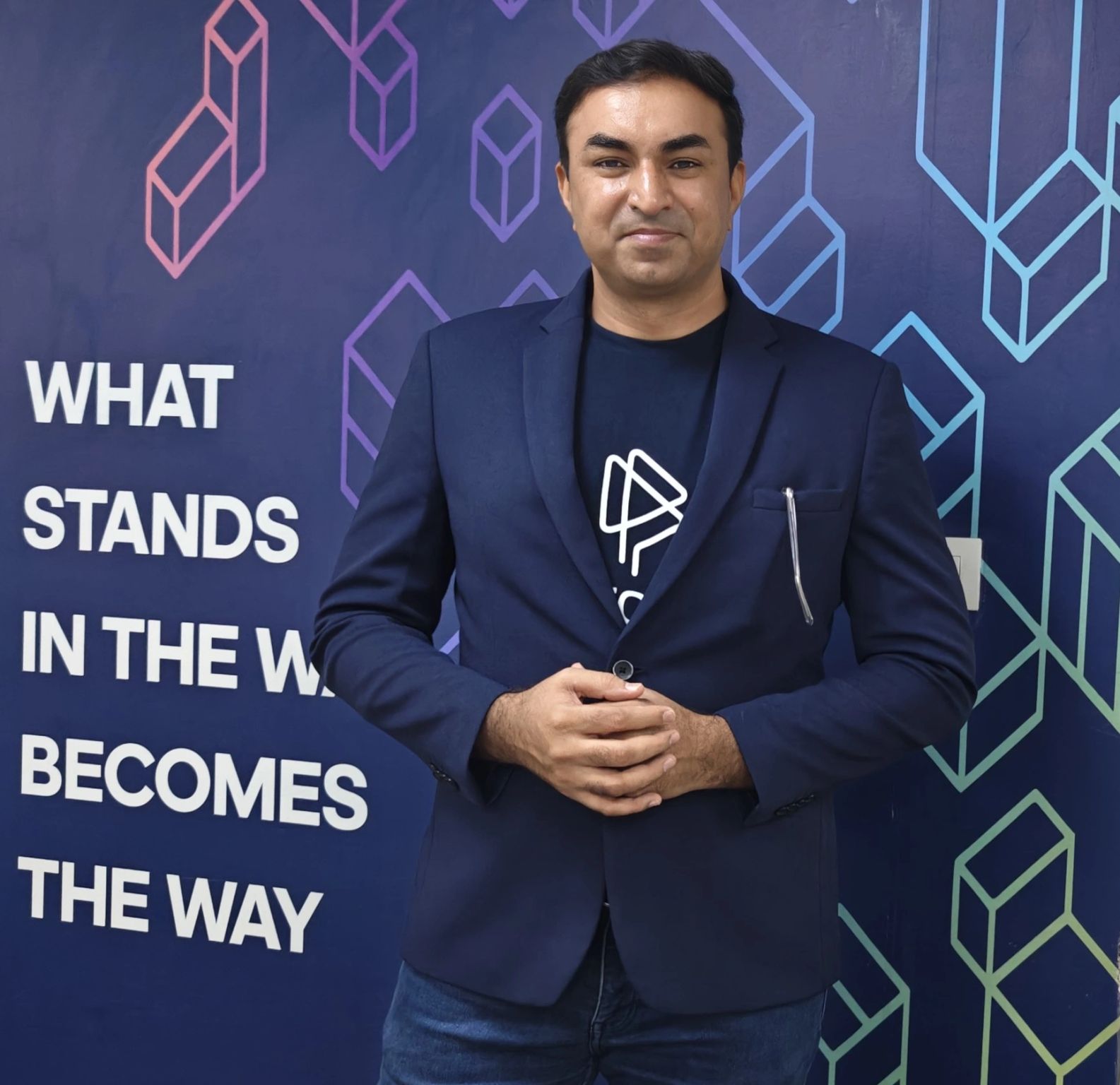
Prozo Founder highlights Continuity and Technology-Led Supply Chain Focus in Union Budget 2026

MUMBAI: Reacting to the Union Budget 2026–27, Dr. Ashvini Jakhar, Founder and Chief Executive Officer of Prozo, said the Budget sends a strong signal on the government’s commitment to building resilient, technology-enabled supply chains as a core pillar of India’s growth strategy.

Commenting on the infrastructure outlay, Dr. Jakhar noted that the increase in central capital expenditure from ₹11.2 lakh crore last year to ₹12.2 lakh crore this year underscores continuity, predictability and execution momentum, rather than aggressive policy shifts. He highlighted the rise in railway allocations—from approximately ₹2.52 lakh crore to ₹2.78 lakh crore—with higher spending on line doubling, new lines, rolling stock and signalling, which is expected to directly improve the reliability of goods movement across the country.

“The Budget 2026–27 sends a clear signal that resilient, technology-led supply chains are central to India’s growth strategy. What stands out is continuity rather than aggression, with central capital expenditure rising from ₹11.2 lakh crore last year to ₹12.2 lakh crore this year, reinforcing predictability and execution momentum,” Dr. Jakhar said.

He further pointed out that the Budget’s emphasis on multimodal logistics—strengthening roads, railways and waterways in parallel—will be critical in structurally reducing logistics costs. According to him, continued investment in rail freight and inland waterways, alongside highways, supports more efficient cargo movement and long-term cost optimisation.

Dr. Jakhar also welcomed the focus on Tier II and Tier III cities, noting that decentralised infrastructure development will enable distributed manufacturing, drive regional consumption and improve last-mile fulfilment efficiency through more balanced supply chains.

“For integrated supply chain platforms like Prozo, the Budget enables scalable, end-to-end logistics models combining warehousing, fulfilment, and data-driven visibility, providing long-term foundations for businesses of all sizes to compete efficiently in domestic and global markets,” he added.