Home Blog Page 458

Historic milestone announced at the 16th India–EU Summit by PM Modi and President Ursula von der Leyen

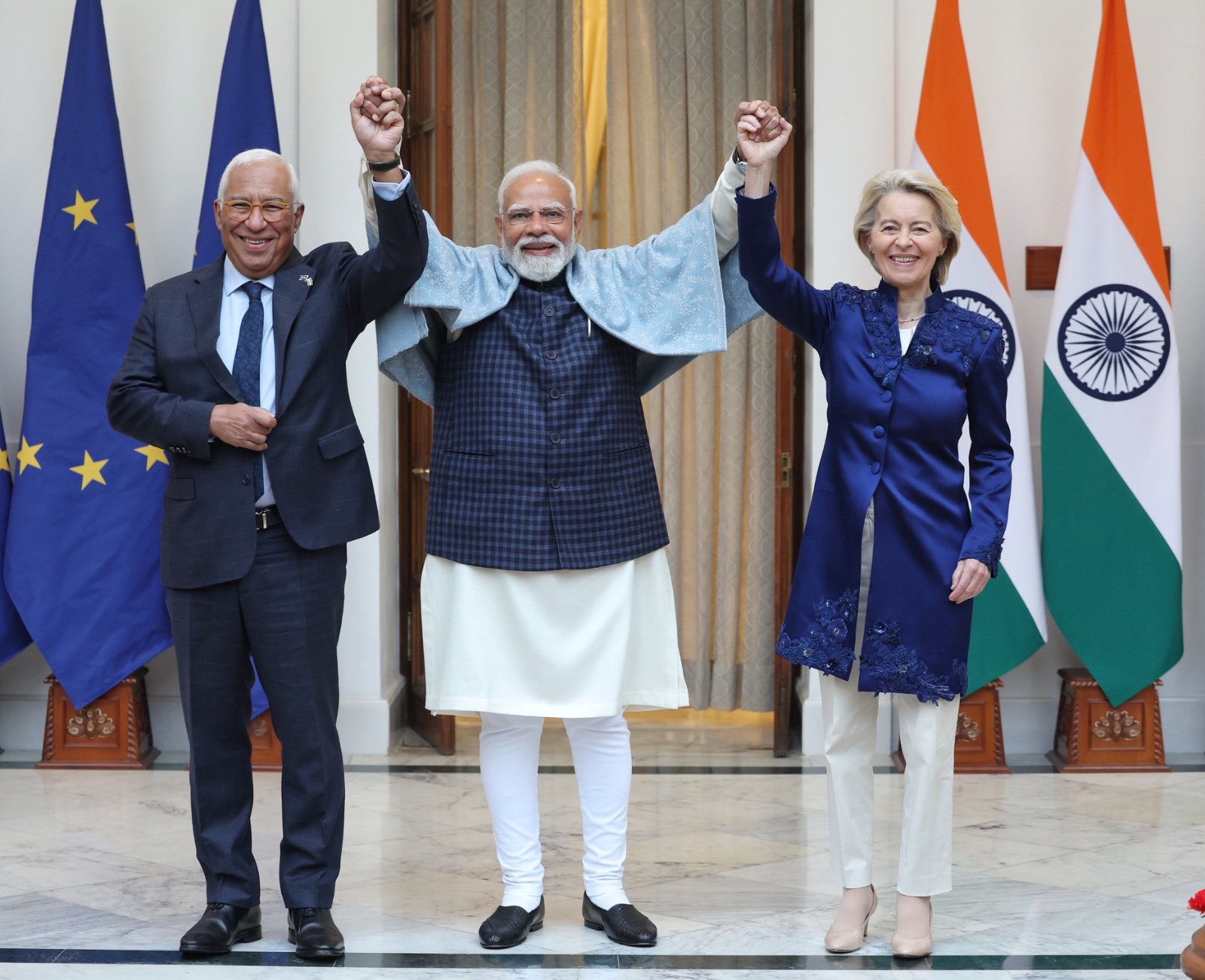
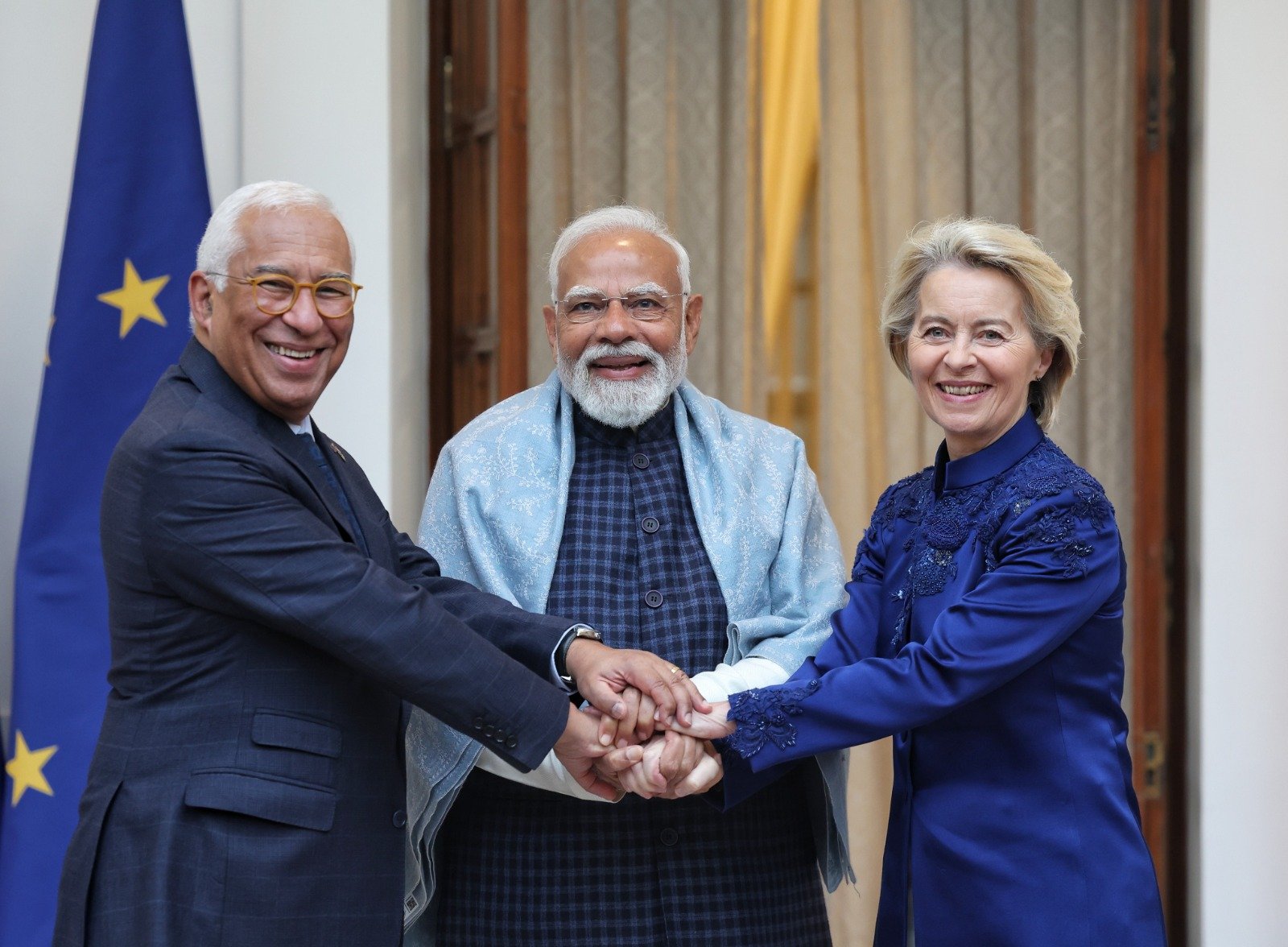
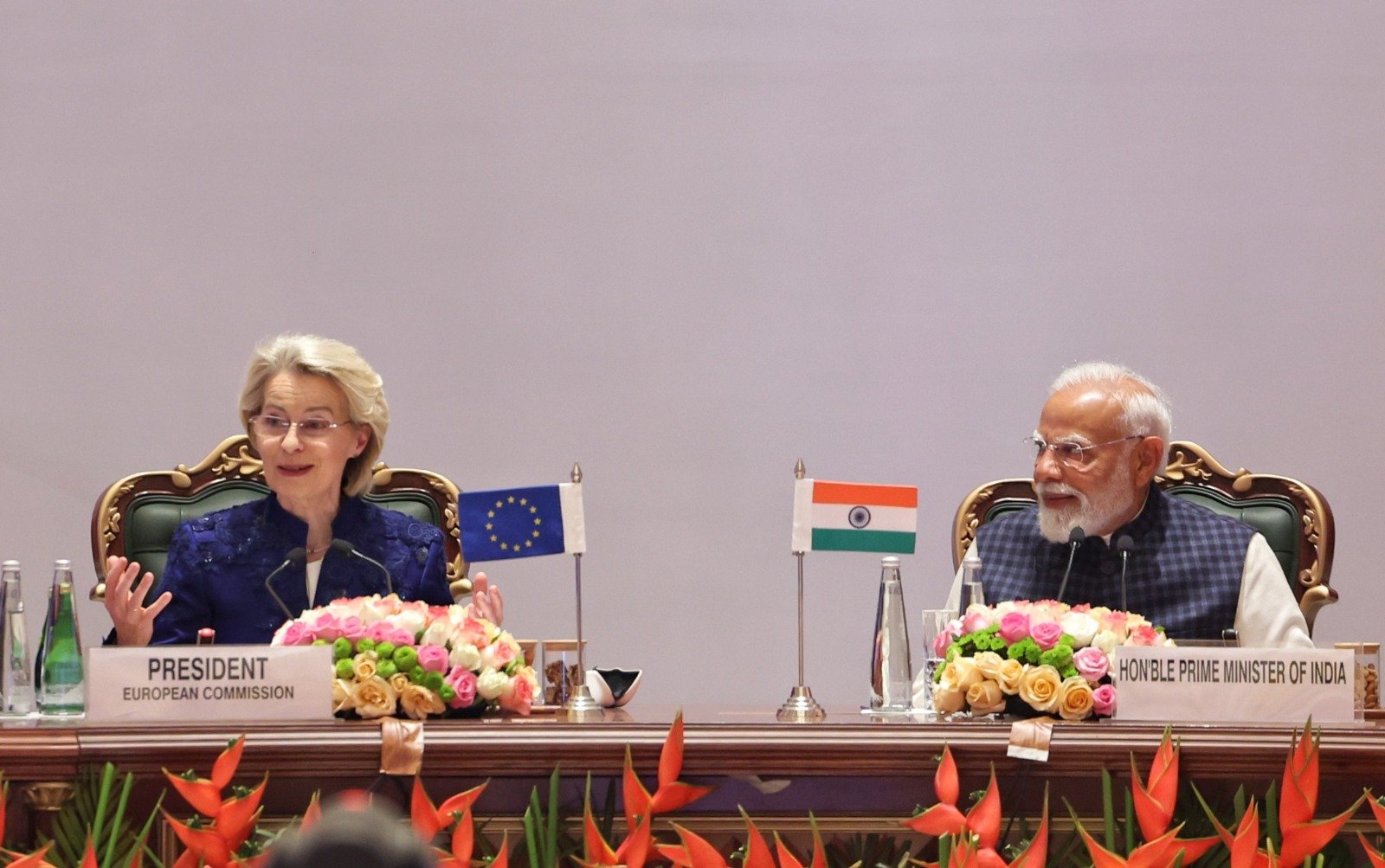
NEW DELHI : Hon’ble Prime Minister Shri Narendra Modi and European Commission President H.E Ms. Ursula von der Leyen, jointly announced the conclusion of the India–European Union Free Trade Agreement (India–EU FTA) at the 16th India–EU Summit, held during the visit of the European leaders to India. This announcement marks a historic milestone in India–EU economic relations and trade engagement with key global partners.

The conclusion of this FTA positions India and the European Union as trusted partners committed to open markets, predictability, and inclusive growth.

The FTA comes after intense negotiations since the re-launch of negotiations in 2022. The announcement of the FTA today marks the culmination of years of sustained dialogue and cooperation, between India and the EU, demonstrating the political will and shared vision to deliver a balanced, modern, and rules-based economic and trade partnership.

The European Union is India’s one of the largest trading partner, with bilateral trade in goods and services growing steadily over the years. In 2024–25, India’s bilateral trade in goods with the EU stood at INR 11.5 Lakh Crore (USD 136.54 billion) with exports worth INR 6.4 Lakh Crore (USD 75.85 billion) and imports amounting to INR 5.1 Lakh Crore (USD 60.68 billion). India-EU trade in services reached INR 7.2 Lakh Crore (USD 83.10 billion) in 2024.

India and EU are 4th and 2nd largest economies, comprising 25% of Global GDP and account for one third of global trade. Integration of the two large diverse and complementary economies will create unprecedented trade and investment opportunities.

Union Minister for Commerce and Industry, Shri Piyush Goyal, lauded the strategic vision and steadfast leadership of Hon’ble Prime Minister Shri Narendra Modi. He stated:

“The conclusion of the India–European Union Free Trade Agreement represents a defining achievement in India’s economic engagement and global outlook. This supports India’s approach to secure trusted, mutually beneficial and balanced partnerships.

Beyond a conventional trade deal, it represents a comprehensive partnership with strategic dimensions and is one of the most consequential FTA. India has secured unprecedented market access for more than 99% of Indian exports by trade value to the EU that also bolsters the ‘Make in India’ initiative. Beyond goods, it unlocks high-value commitments in services complemented by a comprehensive mobility framework enabling seamless movement of skilled Indian professionals.

India, powered by a young and dynamic workforce and one of the fastest-growing major economies, stands poised to leverage this FTA to create jobs, spur innovation, unlock opportunities across sectors, and enhance its competitiveness on the global stage.”

The India-EU trade pact covers conventional areas such as trade in goods, services, trade remedies, rules of origin, customs and trade facilitation, as well as emerging areas such as SMEs and digital trade, amongst others.

The India–EU FTA gives a decisive boost to its labour-intensive sectors such as textiles, apparel, leather, footwear, marine products, gems and jewellery, handicrafts, engineering goods, and automobiles bringing down tariffs up to 10% on almost 33 bn USD of exports to zero on entry into force of the Agreement. Beyond enhancing competitiveness, it empowers workers, artisans, women, youth, and MSMEs, while integrating Indian businesses more deeply into global value chains and reinforcing India’s role as a key player and supplier in global trade.

On automobiles, calibrated and carefully crafted quota based auto liberalisation package will not only allow EU auto makers to introduce their models in India in higher price bands but also open the possibilities for Make in India and exports from India in future. Indian consumers to benefit from high tech products and greater competition. The reciprocal market access in EU market will also open up opportunities for India made automobiles to access EU market.

India’s agricultural and processed food sectors are poised for a transformative boost under the India–EU FTA, creating a level playing field for Indian farmers and agrarian enterprises. Key commodities such as tea, coffee, spices, fresh fruits and vegetables, and processed foods will gain enhanced competitiveness, strengthening rural livelihoods, promoting inclusive growth, and reinforcing India’s position as a trusted global supplier. India has prudently safeguarded sensitive sectors, including dairy, cereals, poultry, soymeal, certain fruits and vegetables, balancing export growth with domestic priorities.

Beyond tariff liberalisation, the FTA provides measures to tackle non-tariff barriers through strengthened regulatory cooperation, greater transparency, and streamlined customs, Sanitary and Phytosanitary (SPS) procedures, and Technical Barriers to Trade disciplines.

Through CBAM provisions, commitments have been secured including a forward-looking most-favoured nation assurance extending flexibilities if any granted to third countries under the regulation, enhanced technical cooperation on recognition of carbon prices, recognition of verifiers, as well as financial assistance and targeted support to reduce greenhouse gas emissions and comply with emerging carbon requirements.

Services being dominant and faster-growing part of both economies will trade more in future. Certainty of market access, non-discriminatory treatment, focus on digitally delivered services, ease of mobility will provide boost to India’s services exports.

The FTA secures expanded and commercially significant commitments from the EU across key sectors of Indian strength, including IT and IT-enabled services, professional services, education, financial services, tourism, construction, and other business sectors.

India’s predictable access to EU’s 144 subsectors (which includes IT/ITeS, Professional Services, Other Business Services and Education Services) will provide boost to Indian service providers and enable them to provide competitive world class Indian services to EU’s consumers while EU’s access to 102 subsectors offered by India will bring in high tech services, investment into India from EU resulting in a mutually beneficial arrangement.

On mobility, the India-EU FTA provides a facilitative and predictable framework for business mobility covering short-term, temporary and business travel in both directions. These enable professionals to travel between the two economies to provide services under different scenarios. EU and India is providing mobility commitments to each other for Intra-Corporate Transferees (ICT) and Business Visitors, along with entry and working rights for dependents and family members of ICTs. The EU has also offered commitments in 37 sectors/sub-sectors for Contractual Service Suppliers (CSS) and 17 sectors/sub-sectors for Independent Professionals (IP), many of which are sectors of interest to India, including Professional Services, Computer and related Services, Research and Development Services, and Education Services.

India also secured a framework to constructively engage on Social Security Agreements over a five-year horizon, together with framework supporting student mobility and post-study work opportunities.

Additionally, India has also secured access for practitioners of Indian Traditional Medicine to work under home title in EU Member States where traditional medical practices are not regulated.

In financial services, the FTA promotes cooperation to advance innovation and secure cross-border electronic payments, while providing India with enhanced market access across several major EU member states. These provisions are expected to deepen financial integration and support the growth of financial services trade.

These commitments not only unlock high-value employment opportunities but also reinforce India’s position as a global hub for talent, innovation, and sustainable economic growth.

The FTA reinforces intellectual property protections provided under TRIPS relating to copyright, trademarks, designs, trade secrets, plant varieties, enforcement of IPRs, affirms Doha Declaration and recognises the importance of digital libraries, specifically the Traditional Knowledge Digital Library (TKDL) project initiated by India.

The FTA is expected to facilitate cooperation in critical areas like Artificial Intelligence, clean technologies, and semiconductors, supporting India’s technological advancement.

The FTA is expected to substantially scale up trade, enhance export competitiveness, and integrate Indian businesses more deeply into the European and global value chains.

The India–EU FTA marks a new chapter in bilateral economic engagement, strengthening trade, and strategic cooperation between India and the 27-member EU bloc. Cognizant of multifarious objectives placed on trade, dynamic nature of trade, fast evolving technologies and increasing regulatory complexities, the Agreement embeds multiple review, consultation and response mechanisms to deal with new, sudden challenges which emerge in future. The Agreement relies on strong stewardship and trust to deliver gains for both sides.

EU becomes India’s 22nd FTA partner. The Government since 2014 has signed trade deals with Mauritius, UAE, UK, EFTA, Oman and Australia, and announced trade deal with New Zealand. In 2025, India signed trade deal with Oman and UK and announced conclusion of trade deal with NZ.

The India-EU trade deal, along with India’s FTA with the UK and the EFTA effectively opens up the entire European market for Indian businesses, exporters and entrepreneurs.

Beyond boosting commerce, it reinforces shared values, fosters innovation, and creates opportunities across sectors and stakeholders from MSMEs, women and skilled professionals to farmers and exporters. Aligned with India’s vision of “Viksit Bharat 2047,” the FTA positions India as a dynamic, trusted, and forward-looking partner on the global stage, setting the foundation for inclusive, resilient, and future-ready growth for both regions.
India-EU FTA will provide India’s labour-intensive products easy access to European Union market: PM Modi

NEW DELHI: Prime Minister Shri Narendra Modi has said that the India-EU Free Trade Agreement finalized on Tuesday will provide easy access to the European Union market for India’s labour-intensive products, including textiles, gems and jewellery, auto parts, and engineering goods.

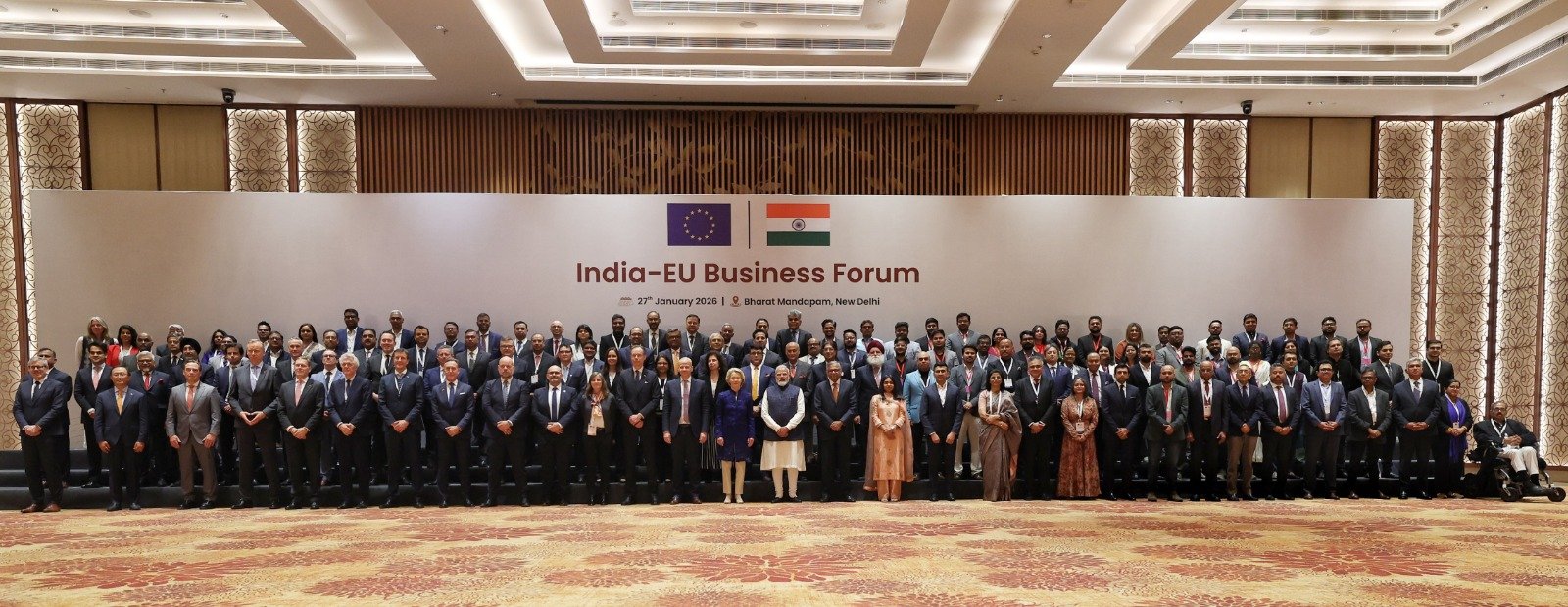
Speaking at the India-EU Business Forum, PM Modi said the FTA with Europe is the largest such agreement in India’s history.

“This visit to India by the Presidents of the European Union Council and Commission is no ordinary diplomatic visit. It heralds a new era in India-European Union relations,” he said.

He said the achievements during the visit of European Council President Antonio Luis Santos da Costa and European Commission President Ursula von der Leyen symbolise the unprecedented alignment taking place between the world’s two largest democratic powers.

“Indian investment in the EU has reached almost 40 billion euros. Today, there is deep cooperation between India and European companies in every sector, including R&D, manufacturing, and services, and business leaders like you are both the drivers and beneficiaries of this. Now is the time to transform this partnership into a whole-of-society partnership,” he said.

“With this vision, we have today finalised a comprehensive FTA. This will provide easy access to the European Union market for India’s labour-intensive products. This includes textiles, gems and jewellery, auto parts, and engineering goods. Fruits, vegetables, processed foods, and marine products will see new opportunities. Our farmers and fishermen will directly benefit from this. Our service sector will also benefit. The IT, education, traditional medicine, and business services sectors will particularly benefit. Today, there is great upheaval in global business. Every company is re-evaluating its market strategy and partnerships. At such a time, this FTA is a clear and positive message for the business world. It is a clear invitation for the business communities of both sides to build a capable, reliable, and future-oriented partnership,” he added.

PM Modi urged business community members of India and the EU to collectively reduce external dependencies in EVs, batteries, chips, and APIs.

“I am fully confident that you will all take full advantage of the opportunities presented in this FTA. It aligns with several priorities of both India and the European Union. Your business partnerships can also benefit from this. I will talk about three priorities in this context. First, today, trade, technology, and critical minerals are being weaponised globally. We need to work together to de-risk our dependencies. Can our business community collectively reduce external dependencies in EVs, batteries, chips, and APIs?” he asked.

“Can we build a shared alternative for reliable supply chains? Second, both India and the European Union have focused on the defence industry and frontier technologies. I urge you to enhance partnerships in sectors such as defence, space, telecom, and AI,” he added.

PM Modi said a clean and sustainable future is a priority for both of the countries.

“We should increase joint research and investment in every sector, from green hydrogen to solar energy and smart grids. Both industries should also work together on small modular reactors and sustainable mobility. In addition, we should develop solutions together in areas such as water management, the circular economy, and sustainable agriculture,” he said.

PM Modi India EU FTA Joint Press Statement India-EU FTA will provide India's labour-intensive products easy access to European Union market: PM Modi

In his earlier statement during the Joint Press Statement with the President of the European Council and the President of the European Commission, PM Modi said that relations between India and the European Union have witnessed remarkable progress in recent years.

“Our partnership, based on shared democratic values, economic synergy, and strong people-to-people ties, is reaching new heights. Today, we have trade worth 180 billion euros. More than 800,000 Indians are living and actively contributing to the countries of the European Union,” he said.

“We have established new dimensions of cooperation in every sector, from strategic technologies to clean energy, from digital governance to development partnerships. Building on these achievements, at today’s summit, we have taken several decisions that will benefit all sections of society,” he added.

Source: ANI

India–EU FTA-A strategic deal set to reshape Global Commerce and Maritime Flows

NEW DELHI : India and the European Union have successfully concluded negotiations on a long-awaited Free Trade Agreement (FTA)—a landmark deal described as a strategic game-changer for global trade and economic cooperation. Referred to by leaders as the “mother of all deals,” the agreement marks the culmination of nearly two decades of negotiations and is expected to significantly deepen economic ties between two of the world’s largest economic blocs.

Major Economic and Trade Outcomes

Under the agreement, tariffs on the vast majority of goods exchanged between India and the EU will be eliminated or substantially reduced:

The EU will eliminate tariffs on over 90% of its goods exports to India, lifting duties on machinery, chemicals, pharmaceuticals, industrial products, and more.

India will provide preferential access to 99%+ of its goods exports to the EU market, benefitting sectors such as textiles, chemicals, gems and jewellery, leather, and marine products.

The arrangement also features enhanced services liberalisation, investment facilitation, and regulatory cooperation that extend beyond traditional goods trade.

Strategic Global Trade Impact

The India–EU FTA arrives at a time of heightened global trade tensions, including tariff pressures from the United States and shifting supply chain dynamics. By forging stronger economic links, both India and the EU aim to diversify trade partnerships, enhance supply chain resilience, and reduce over-dependence on any single market.

Economists and trade officials anticipate that the FTA could boost bilateral trade flows substantially over the coming years by improving competitiveness and opening larger markets for exporters on both sides.

Maritime, Ports, and Shipping: A New Growth Corridor

The India–EU trade pact is expected to have wide-ranging implications for maritime transportation, ports, and global shipping networks, reinforcing the strategic importance of India–Europe sea lanes:

  1. Increased Container and Breakbulk Volumes
    With tariff cuts and streamlined trade flows, containerised cargo movements between Indian and European ports are projected to grow, particularly for manufactured goods, electronics, automotive parts, textiles, and processed marine products.
  2. Port Opportunities on Both Sides
    Key Indian ports—such as Jawaharlal Nehru Port (Nhava Sheva), Mundra, and Pipavav—are well-positioned to serve expanded India–EU trade. These ports, already major container gateways on the Indian west coast, could see increased throughput as direct services to Europe become more commercially viable.

European hubs including Rotterdam, Antwerp, Hamburg, Valencia, and Piraeus are expected to benefit from higher inbound volumes from India, reinforcing their roles as transshipment and distribution centres for intra-European logistics.

  1. New Shipping Services and Corridors
    Shipping lines are evaluating service adjustments that could include new direct deep-sea routes linking Indian ports with northern European destinations. These routes may reduce reliance on traditional transshipment hubs in East Asia and shorten transit times for Indian exporters reaching European markets.
  2. Logistics and Supply Chain Enhancements
    Greater predictability in trade flows fosters transport contracting stability, encourages investment in port infrastructure, and supports expansion of intermodal logistics solutions (including rail and inland connectivity) that tie production zones in India to maritime gateways.

Next Steps and Implementation

Although the India–EU FTA was signed on 27 January 2026, it must now undergo ratification by India’s cabinet, the European Parliament, and EU member states before coming into force. Implementation is anticipated gradually throughout 2026–2027.

As the world’s economy adapts to evolving trade landscapes, this comprehensive agreement is poised to be a cornerstone in future economic cooperation—reshaping trade patterns, unlocking port and shipping growth, and strengthening global supply chains for both India and the European Union.

FTA opens EU markets for exports worth Rs 6.4 lakh crore from various states in India: Piyush Goyal

NEW DELHI: States across India are set to benefit from the landmark India-European Union Free Trade Agreement (FTA), with exports estimated at Rs 6.4 lakh crore expected to gain access to 27 EU markets under a single trade framework, Commerce Minister Shri Piyush Goyal said in a post on X.

India EU FTA States FTA opens EU markets for exports worth Rs 6.4 lakh crore from various states in India: Piyush Goyal

Several States, including Gujarat, Maharashtra, Tamil Nadu, Karnataka, Uttar Pradesh, Rajasthan, Punjab, Telangana, Andhra Pradesh, West Bengal, Assam and Kerala, are expected to be among the key beneficiaries of the agreement, given their strong presence in manufacturing, agri-based industries and export-driven sectors.

The FTA is expected to enhance market access for Indian products across a wide range of sectors, including textiles and apparel, engineering goods, pharmaceuticals and medical devices, electronics, chemicals, plastics and rubber, marine products, leather and footwear, gems and jewellery, handicrafts, tea and spices, minerals and agri-products.

Rajasthan, Gujarat, Maharashtra, Kerala, Tamil Nadu, Karnataka, Telangana, Uttar Pradesh, Andhra Pradesh, Assam, and Punjab are expected to see increased opportunities in key sectors.

The agreement is expected to support export-oriented enterprises, including micro, small and medium enterprises (MSMEs), by expanding access to EU markets across multiple sectors and regions.

In particular, labour-intensive sectors are expected to get a big boost, helping India’s exports leapfrog.
In textiles and apparel, the FTA ensures immediate zero duty on 100 per cent tariff lines and value, with direct access to the USD 263 Billion EU textile market

It will level the playing field against global competitors and empower millions of Indian weavers.
For leather and footwear, tariffs have been slashed from 17 per cent to 0 per cent, helping tap the USD 100 billion EU leather and footwear segment. It will help revitalise clusters in Agra, Kanpur, Kolhapur, and Ranipet with design-led exports.

Gems and jewellery also got 100 per cent duty-free access, with shimmering opportunities in a USD 79 billion premium market. Hubs across Gujarat, Rajasthan, Maharashtra and West Bengal are expected to gain.

In engineering and manufacturing, India win direct entry into a USD 2 trillion industrial market; besides preferential access for Indian engineering goods. It is expected to fuel India’s USD 300 billion export target by 2030. It will help MSMEs in Maharashtra, Karnataka, Andhra Pradesh, Gujarat, and Tamil Nadu, among others.

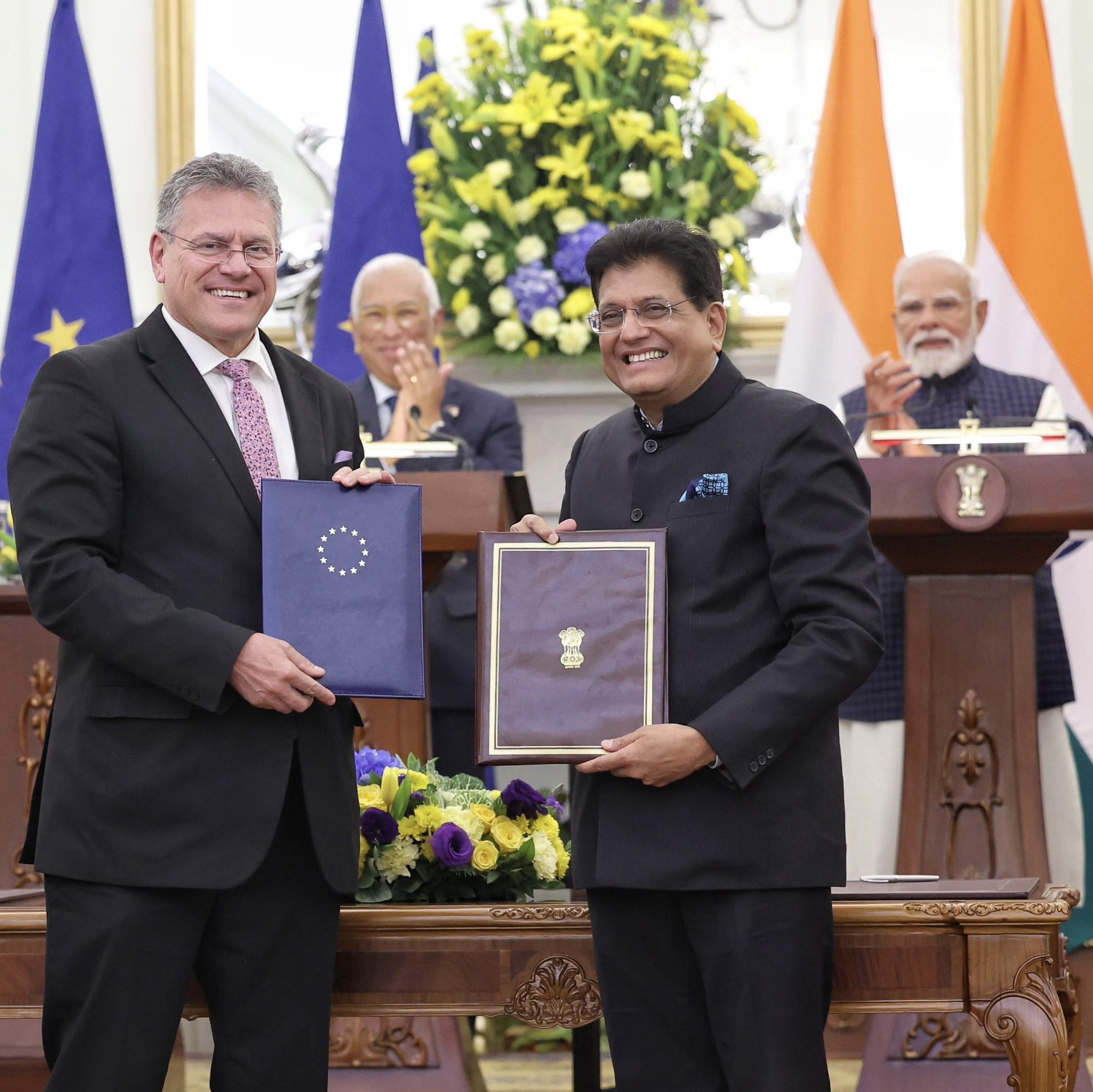
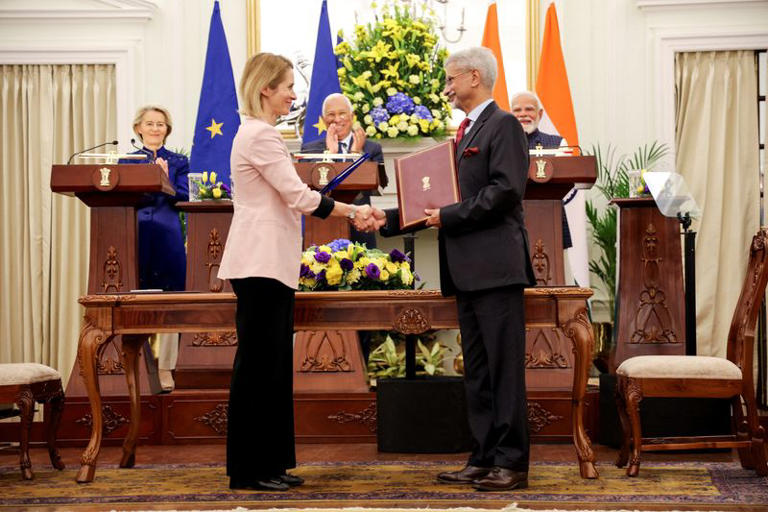
India and the EU successfully concluded negotiations of the landmark India-EU Free Trade Agreement (FTA) on Tuesday. The documents on the FTA conclusion were exchanged between EU Trade Commissioner Maros Sefcovic and Union Commerce Minister Piyush Goyal.

This announcement marks a historic milestone in India-EU economic relations and trade engagement with key global partners.

According to the joint statement, this historic deal is a milestone in the India-EU Strategic Partnership that will significantly enhance bilateral trade and investment ties, drive shared prosperity, strengthen resilient and diversified supply chains, and support sustainable and inclusive growth.

The FTA comes after intense negotiations since the re-launch of negotiations in 2022.

The European Union is India’s one of the largest trading partner, with bilateral trade in goods and services growing steadily over the years. In 2024-25, India’s bilateral trade in goods with the EU stood at Rs 11.5 Lakh Crore (USD 136.54 billion) with exports worth Rs 6.4 Lakh Crore (USD 75.85 billion) and imports amounting to Rs 5.1 Lakh Crore (USD 60.68 billion). India-EU trade in services reached Rs 7.2 Lakh Crore (USD 83.10 billion) in 2024.

Piyush Goyal addresses media on landmark India–EU Trade deal, highlights major sectoral gains

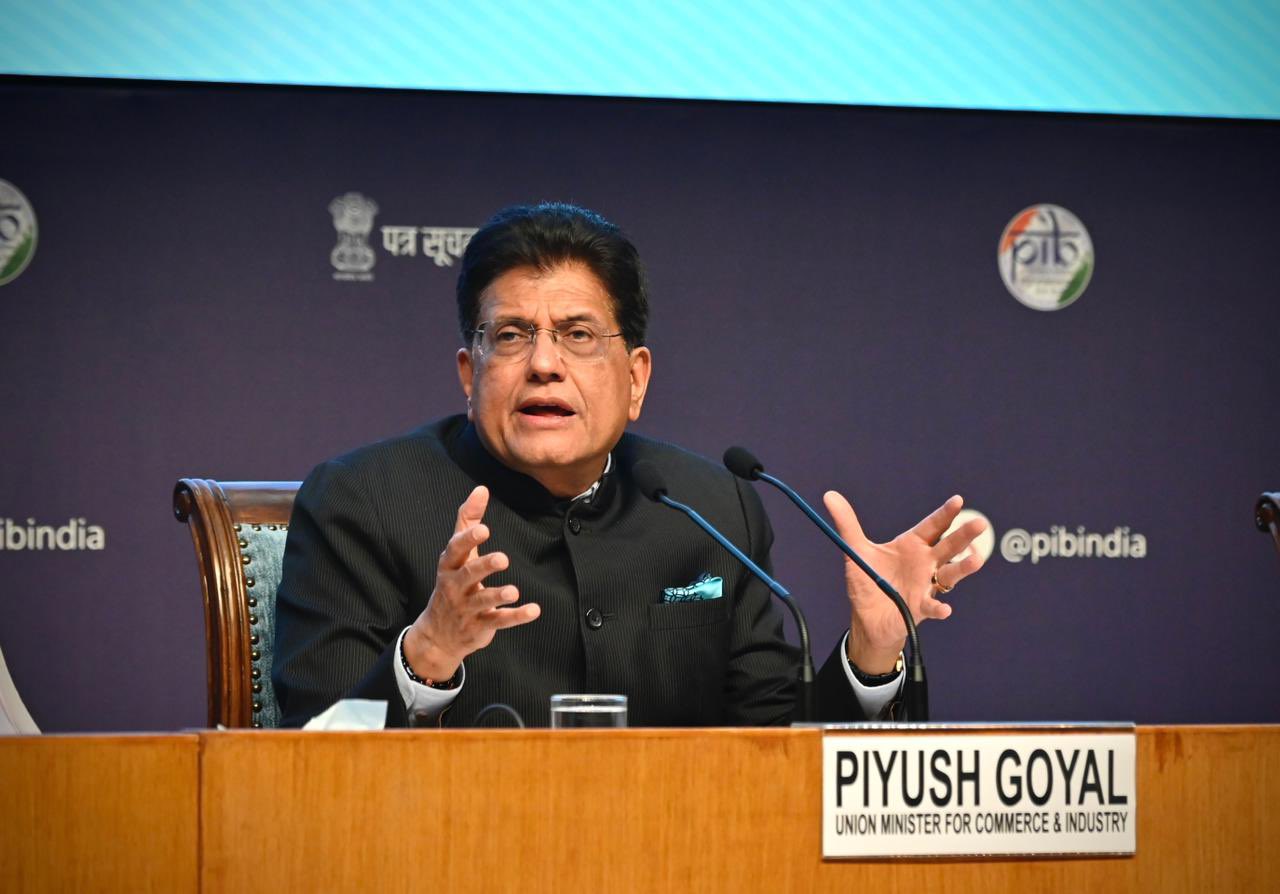
NEW DELHI : Union Minister for Commerce and Industry, Shri Piyush Goyal, addressed the media today following the signing of the historic India–European Union Trade Deal, describing it as a transformative milestone in India’s global trade and economic engagement.

india eu fta deal Piyush Goyal addresses media on landmark India–EU Trade deal, highlights major sectoral gains

During his interaction, the Minister highlighted that the agreement opens up a plethora of opportunities for businesses, workers, and consumers on both sides, while significantly strengthening India–EU economic ties. He emphasised that the deal reflects a shared commitment to rules-based trade, inclusive growth, and long-term strategic cooperation.

Shri Goyal underlined the significant benefits for India’s labour-intensive sectors, including textiles, garments, leather, footwear, gems and jewellery, marine products, and select engineering goods, which are set to gain enhanced access to the high-value and high-standards EU market. The agreement is expected to boost exports, create employment opportunities, and improve competitiveness for Indian manufacturers and MSMEs.

The Minister also stressed that the trade deal will act as a catalyst for greater investments and deeper collaborations between India and the EU in key areas such as research & development, innovation, clean energy, digital technologies, advanced manufacturing, and sustainability-driven industries. These collaborations are expected to accelerate technology transfer, skill development, and value creation across sectors.

Highlighting the broader economic impact, Shri Goyal noted that the agreement will enhance supply chain resilience, encourage diversification of trade, and foster a more predictable and transparent business environment. He reiterated that the deal is aligned with India’s vision of becoming a global manufacturing and innovation hub, while ensuring inclusive and people-centric growth.

The India–EU Trade Deal is being seen as a win-win partnership, strengthening economic cooperation, supporting job creation, and paving the way for long-term strategic collaboration for the mutual benefit of both economies.

Indian Industry Chambers welcome landmark India-EU trade deal

NEW DELHI: Indian industry chambers have welcomed the announcement of the India-European Union Free Trade Agreement (FTA), terming it a “strategic breakthrough” that will significantly deepen trade, investment, employment, and competitiveness across key sectors.

In a statement, Chandrajit Banerjee, Director General of the Confederation of Indian Industry (CII), said CII applauded the India-EU FTA announced today.

“This landmark agreement represents a strategic breakthrough in India’s global trade engagement and significantly deepens the partnership between two major democracies and economies that together account for nearly 25% of global GDP.”

Highlighting the scale of market access secured under the agreement, Banerjee said the unprecedented preferential access secured for over 99% of Indian exports is a game-changer for the Indian industry.

“It decisively improves competitiveness in the EU’s high-value market, anchors Indian manufacturers and service providers deeper into global value chains, and accelerates investment, technology inflows, and scale,” Banerjee said.

He added that key sectors of focus include textiles and apparel, leather and footwear, gems and jewellery, marine products, engineering goods, automobiles, agriculture and processed foods, IT and IT-enabled services, and other business and professional services.

Echoing similar sentiments, Ranjeet Mehta, CEO and Secretary General, PHDCCI, said the agreement marks a major milestone for the Indian industry.

“The India-EU deal is a pivotal economic milestone, opening access for Indian industries to a nearly $23-trillion EU market across 27 countries,” Mehta said.

He noted that “MSMEs stand to be major beneficiaries, especially sectors like textiles, apparel, and gems & jewellery, which have faced pressure from recent US tariffs.”

According to Mehta, “The agreement is expected to boost employment and manufacturing demand, with industry surveys indicating stronger hiring intentions in coming quarters.”

He further said, “Deeper integration into global value chains, particularly in manufacturing and logistics, will enhance competitiveness and efficiency for Indian enterprises.” He added that “Technology collaboration and increased EU investments will support long-term, sustainable growth, making the deal a win-win for both India and the EU.”

Anant Goenka, President, Federation of Indian Chambers of Commerce and Industry (FICCI), congratulated the Government of India for advancing the agreement.

“Congratulations to the Government of India for advancing an agreement of strategic scale and long-term significance under the leadership of Hon’ble Prime Minister Shri Narendra Modi. The European Union represents the most expansive and high-potential market covered under India’s recent FTA engagements, opening new avenues for deeper economic collaboration,” Goenka said.

He added, “The India-EU FTA is poised to unlock substantial untapped trade and investment opportunities, enabling deeper market access, stronger value-chain integration, and enhanced export competitiveness across manufacturing and high-value sectors.”

The India-EU Free Trade Agreement was concluded today after long negotiations and is expected to significantly enhance bilateral trade and investment ties, strengthen supply chains, and deepen economic cooperation between India and the European Union.

The documents on the FTA conclusion were exchanged between EU Trade Commissioner Maros Sefcovic and Union Commerce Minister Piyush Goyal. This announcement marks a historic milestone in India-EU economic relations and trade engagement with key global partners.

According to the joint statement, this historic deal is a milestone in the India-EU Strategic Partnership that will significantly enhance bilateral trade and investment ties, drive shared prosperity, strengthen resilient and diversified supply chains, and support sustainable and inclusive growth.

The FTA comes after intense negotiations since the re-launch of negotiations in 2022.

The European Union is one of India’s largest trading partners, with bilateral trade in goods and services growing steadily over the years. In 2024-25, India’s bilateral trade in goods with the EU stood at Rs 11.5 Lakh Crore (USD 136.54 billion) with exports worth Rs 6.4 Lakh Crore (USD 75.85 billion) and imports amounting to Rs 5.1 Lakh Crore (USD 60.68 billion). India-EU trade in services reached Rs 7.2 Lakh Crore (USD 83.10 billion) in 2024.

Details of EU-India trade deal

NEW DELHI: India and the European Union have concluded negotiations on a long-awaited free trade agreement as both sides seek to cushion the impact of strained ties with the United States.

The pact paves the way for freer trade in goods and services between the 27-nation EU and India, together representing a market of roughly 2 billion people.

Key details of the deal include:

BENEFITS FOR EU EXPORTERS:

– Indian tariffs on 30% of goods traded with EU to fall to zero immediately

 Tariffs will be eliminated or reduced on over 90% of EU exports

– EU firms to save up to 4 billion euros ($4.74 billion) a year in duties

– Improved access for EU firms in financial and maritime services

– Simplified customs rules and stronger intellectual property protection

– India’s duties on vehicles imported from EU to fall from 110% to 10% over five years, under a 250,000-vehicle annual quota, likely benefiting Volkswagen, BMW, Mercedes-Benz and Renault.

– India completely scraps tariffs on most industrial imports from EU, including machinery and electrical equipment (currently at 44%), chemicals (up to 22%) and pharmaceuticals (11%).

BENEFITS FOR INDIAN EXPORTERS:

– At launch of deal, the EU will scrap all tariffs on 90% of Indian goods

– Zero tariffs to be extended to 93% of Indian goods within seven years

– Partial cuts and quotas for about 6% of Indian goods

– 99.5% of bilateral trade receives some form of tariff concession

– India to keep autos and agriculture out of full tariff elimination

– EU’s average tariff rate falls from 3.8% to 0.1%

– Tariffs cut to zero on key Indian exports to the EU, including marine products (currently at up to 26%), chemicals (12.8%), plastics/rubber (6.5%), leather/footwear (17%), textiles (12%), apparel (4%), base metals (10%), and gems and jewellery (4%), among a few others.

CARS: QUOTAS AND EXCLUSIONS

– EU cars priced below 15,000 euros ($17,800) excluded from the deal.

– Cars above that threshold split into three segments each with quotas and separate tariffs. Tariffs on most cars cut to 30–35% at launch of deal, then phased down to 10%. Indian officials said this would be over five years while an EU official said it would be over 10.

Electric vehicle tariff cuts begin from year five

– Final quotas will be 160,000 internal combustion engines and 90,000 electric vehicles from the EU.

– No duty cuts outside quotas and no tariff reduction on Completely Knocked Down (CKD) kits

STEEL AND CARBON RULES

– India seeking improved access to tariff-free EU steel import quotas as an FTA partner, with the outcome due by June 30, ahead of EU rules taking effect on July 1. An EU official says India will get 1.6 million metric tons duty-free, although this is about half of what India has been exporting to the EU annually, with the bloc seeking to halve tariff-free steel imports overall.

– No India-specific exemption from the EU’s carbon duties, though India says it can negotiate if EU grants flexibility to any other nation.

– A technical group will help Indian firms verify carbon footprints, alongside a separate agreement to ensure EU technical and financial support to help emission cuts in India

AGRICULTURE: ACCESS WITH SAFEGUARDS

– Indian tariffs on EU agri-food exports that attracted average duties of over 36%, cut or removed

– Sharp cuts on tariffs on EU wines, spirits, beer, olive oil, processed foods and some fruits

– Indian duties on premium wine will gradually fall from 150% to between 20% and 30%, with the rate in year one at 75%. For spirits, the rate will drop from as much as 150% to 40% over seven years, and over 10 years for gin.

– Beef, rice, sugar, dairy and poultry excluded; EU food safety rules unchanged and safeguard clause to limit imports in case of market disruption.

SERVICES, SUSTAINABILITY, DIGITAL TRADE

– The EU gives India access to 144 services sub-sectors, India opens 102 sub-sectors to the EU, including financial, maritime and telecoms

– Binding rules set on labour rights, environment, women’s empowerment and climate cooperation

– Digital trade rules to support business while protecting privacy, security and public policy

RULES AND NEXT STEPS

– Rules of origin prevent third-country goods routing through India for tariff benefits

– Disputes handled by independent panels with binding rulings

– Draft texts to be published, followed by legal review, translation and approval by EU governments, the European Parliament and India, expected possibly within a year.

($1 = 0.8424 euros)

Source: Reuters

From LNG to Deep-Sea resources, PM Modi maps India’s Energy Future at India Energy Week 2026

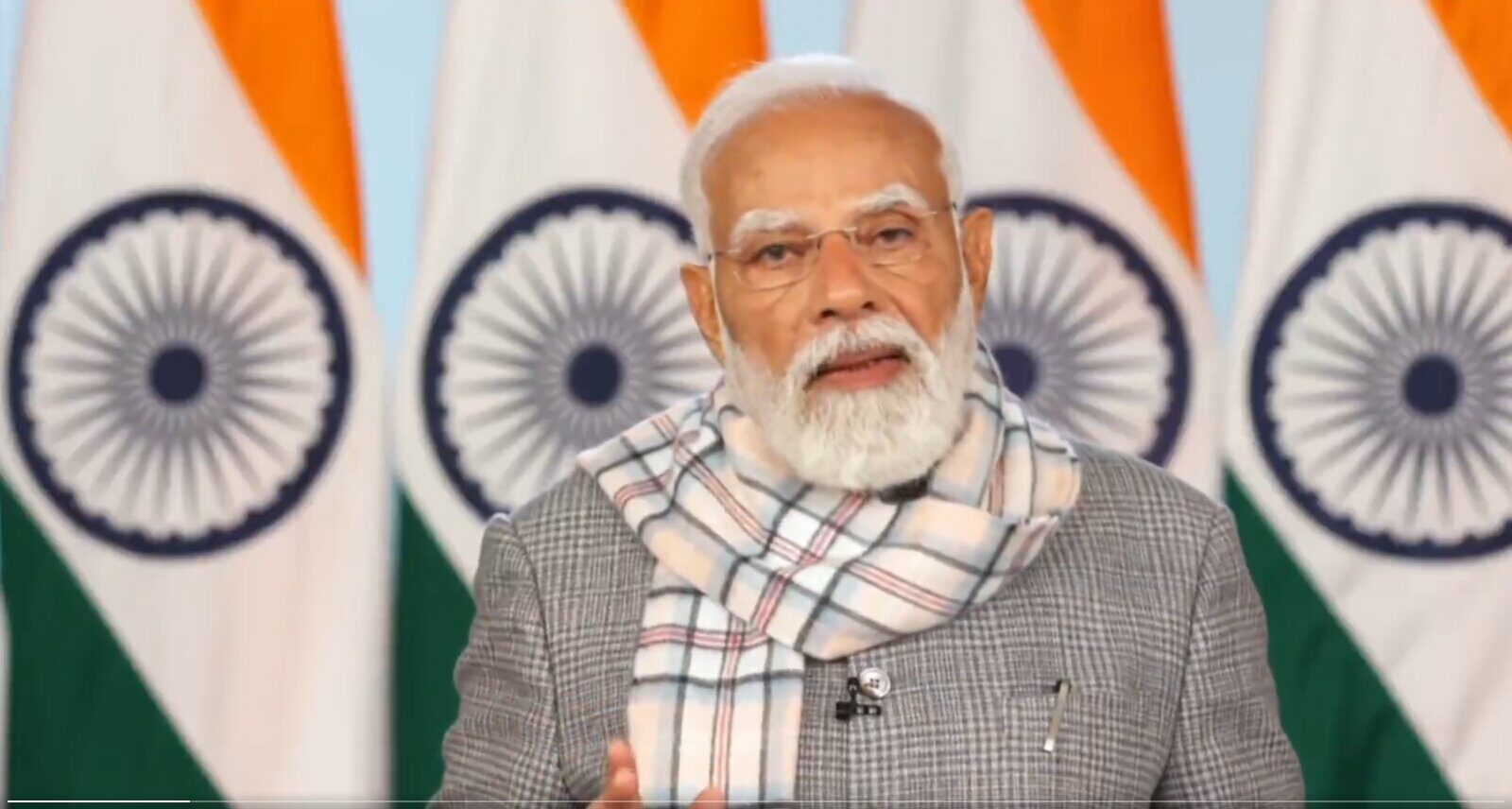
NEW DELHI : Prime Minister Shri Narendra Modi on Tuesday (27 January) said while addressing the inaugural session of India Energy Week 2026 via video conference, that India has positioned itself as a major destination for global energy investments, stressing that the country is steadily transitioning from the goal of energy security to the broader ambition of energy independence. Speaking on the occasion, Shri Modi remarked that in this new edition of Energy Week, representatives from nearly 125 countries have gathered in Goa. He highlighted that they have come to India to discuss an energy-secure and sustainable future and welcomed all the participants.

PM added ,” Today, India is a land of immense opportunities for the energy sector”. PM Modi noted that delegates from nearly 125 countries had assembled in Goa to discuss pathways towards a secure and sustainable energy future. He said the event had quickly grown into a significant global forum for dialogue, collaboration and action in the energy sector.

Highlighting India’s rapid economic expansion, the Prime Minister said rising domestic energy demand also creates opportunities for global partners.

He pointed out that India ranks among the world’s top five exporters of petroleum products, supplying energy to more than 150 countries, and said this capacity makes India a reliable partner in a volatile global market.

Referring to trade and economic integration, Modi described the forthcoming India–European Union Free Trade Agreement as the “mother of all deals”. He said the agreement would showcase unprecedented coordination between two major economies and would together account for nearly a quarter of global GDP and about one-third of global trade.

The FTA, he added, would complement India’s recent trade pacts with the UK and EFTA nations, strengthen supply chains and boost manufacturing and services. He said sectors such as textiles, gems and jewellery, leather and footwear stood to gain significantly.

Turning to energy sector reforms, Modi said India offers opportunities across the entire value chain.

He highlighted exploration reforms and the Samudra Manthan Mission, under which India aims to attract $100 billion in oil and gas investments by the end of the decade and expand exploration coverage to one million square km.

Over 170 exploration blocks have already been awarded, with the Andaman and Nicobar basin emerging as a key focus area.

The Prime Minister also underlined India’s growing refining strength, noting that the country is currently the world’s second-largest refiner and is on track to become the largest, with capacity expected to exceed 300 million metric tonnes per annum.

On LNG, he said India is targeting 15 per cent of its energy demand from gas and is investing heavily in terminals, pipelines, city gas networks and a Rs 70,000 crore shipbuilding programme.

“India is now moving beyond energy security towards the mission of energy independence,” Modi said, adding that the sector offers investment opportunities worth $500 billion. He concluded by urging global investors to “Make in India, Innovate in India, Scale with India, Invest in India.”

V.O. C Port flags off Electric Payloaders to strengthen Green Port initiatives

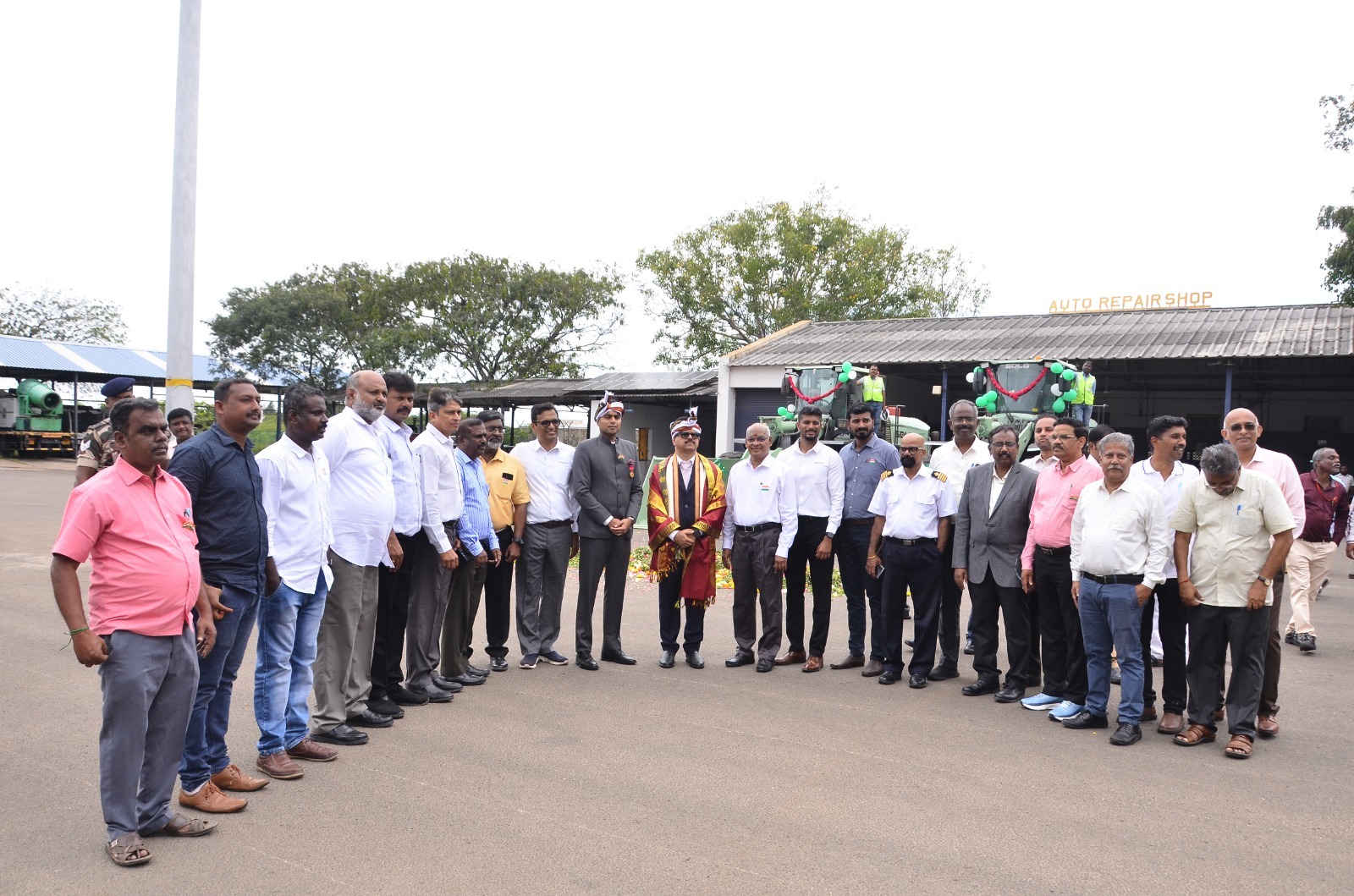
TUTICORIN : In a significant step towards sustainable port operations, Shri Susanta Kumar Purohit, IRSEE, Chairperson, V.O. Chidambaranar Port Authority, along with Shri Rajesh Soundararajan, IAS, Deputy Chairperson, flagged off two Electric Operated Payloaders of 5.5 CBM capacity at the port, in the presence of senior port officials.

The electric payloaders have been deployed by M/s Aasian Shipping Agency, marking a progressive move towards environmentally responsible cargo handling and supporting the Port Authority’s vision of adopting green technologies across port operations.

These state-of-the-art electric machines are designed to significantly reduce carbon emissions, noise pollution, and dependency on fossil fuels, while ensuring operational efficiency and reliability. Their induction is aligned with the Port Authority’s ongoing efforts to modernise cargo handling infrastructure and promote clean energy solutions within the port ecosystem.

Speaking on the occasion, the Chairperson emphasised that the introduction of electric equipment reflects the Port Authority’s strong commitment to sustainability, innovation, and compliance with national green port guidelines. The initiative also supports India’s broader goals of decarbonisation and transition towards cleaner logistics and maritime operations.

The deployment of EV-based cargo handling equipment is expected to enhance productivity, improve workplace safety, and contribute to a cleaner port environment, reinforcing V.O. Chidambaranar Port Authority’s position as a forward-looking and environmentally conscious port.

The Port Authority continues to encourage stakeholders and port users to adopt eco-friendly practices and modern technologies, paving the way for a sustainable and future-ready maritime logistics ecosystem.

DFCCIL- DB International exploring O&M Optimisation partnerships

NEW DELHI : DFCCIL held a meeting with DB International to explore partnership opportunities for optimising Operations & Maintenance (O&M) on the Dedicated Freight Corridors. DB International shared global best practices in asset management, digital O&M solutions, benchmarking, maintenance planning, safety enhancement, and capacity building.

1769511773869 DFCCIL- DB International exploring O&M Optimisation partnerships

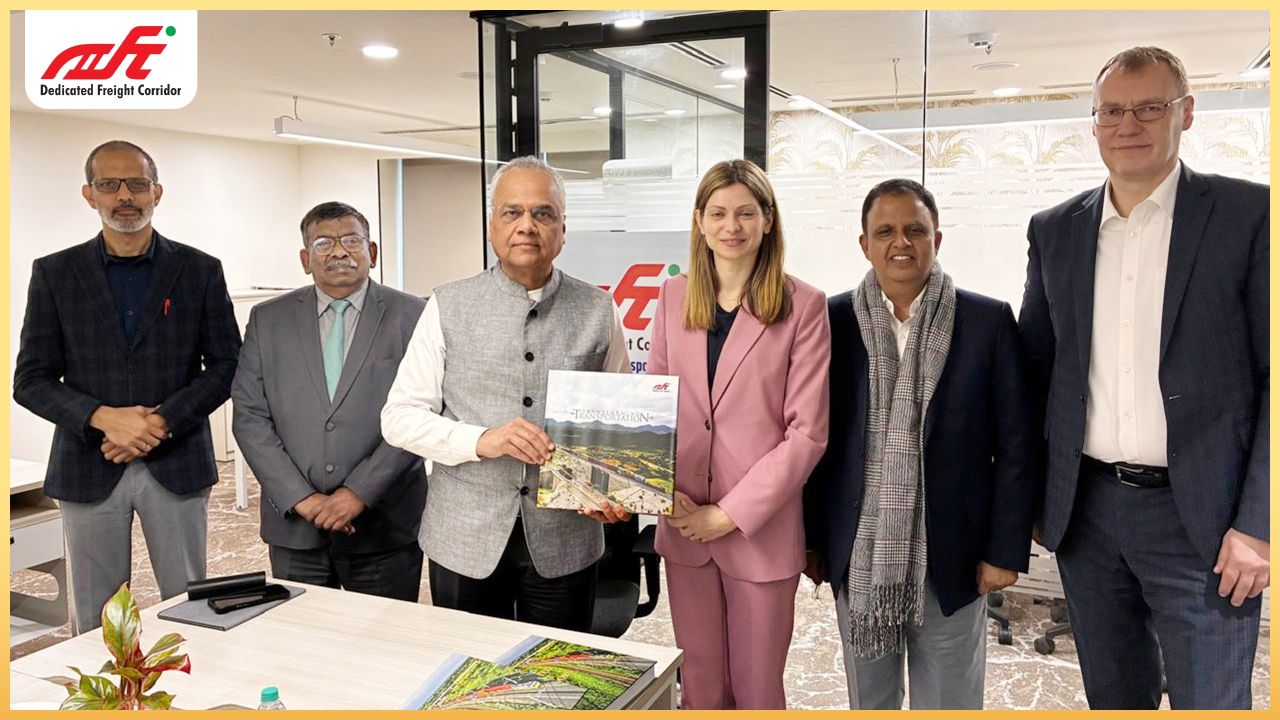
Chaired by Sh. Praveen Kumar, MD/DFCCIL, the meeting included senior officers from DFCCIL — Sh. Shobhit Bhatnagar, Director/OP & BD; Sh. Anurag Sharma, Director/Infrastructure; Sh. Manish K. Awasthy, ED/Infrastructure; Sh. Sandesh Srivastava, ED/Projects; Sh. Ajay Kumar, ED/Asset Management; Sh. Saurabh Singh Patel, GGM/Bridge; and Sh. Amit Saurashtri, GM/CC; Sh. Vivek, JGM/CC — along with representatives from DB International, including Ms. Jorra Piorr Zasada, Chief Sales Officer, DB International Operations; Mr. Michael Kortuem, Chief Operating Officer, DB RRTS and Member of the Board of Directors, DB RRTS; and Mr. Kumar Keshav, Director/Business Development (India), DB International Operations and Member of the Board of Directors, DB RRTS.

During the meeting, Shri Praveen Kumar, MD, DFCCIL, presented a DFCCIL’s History Book and Coffee Table Book to the DB International team.