Home Blog Page 462

GIFT City attracts global investors at World Economic Forum 2026

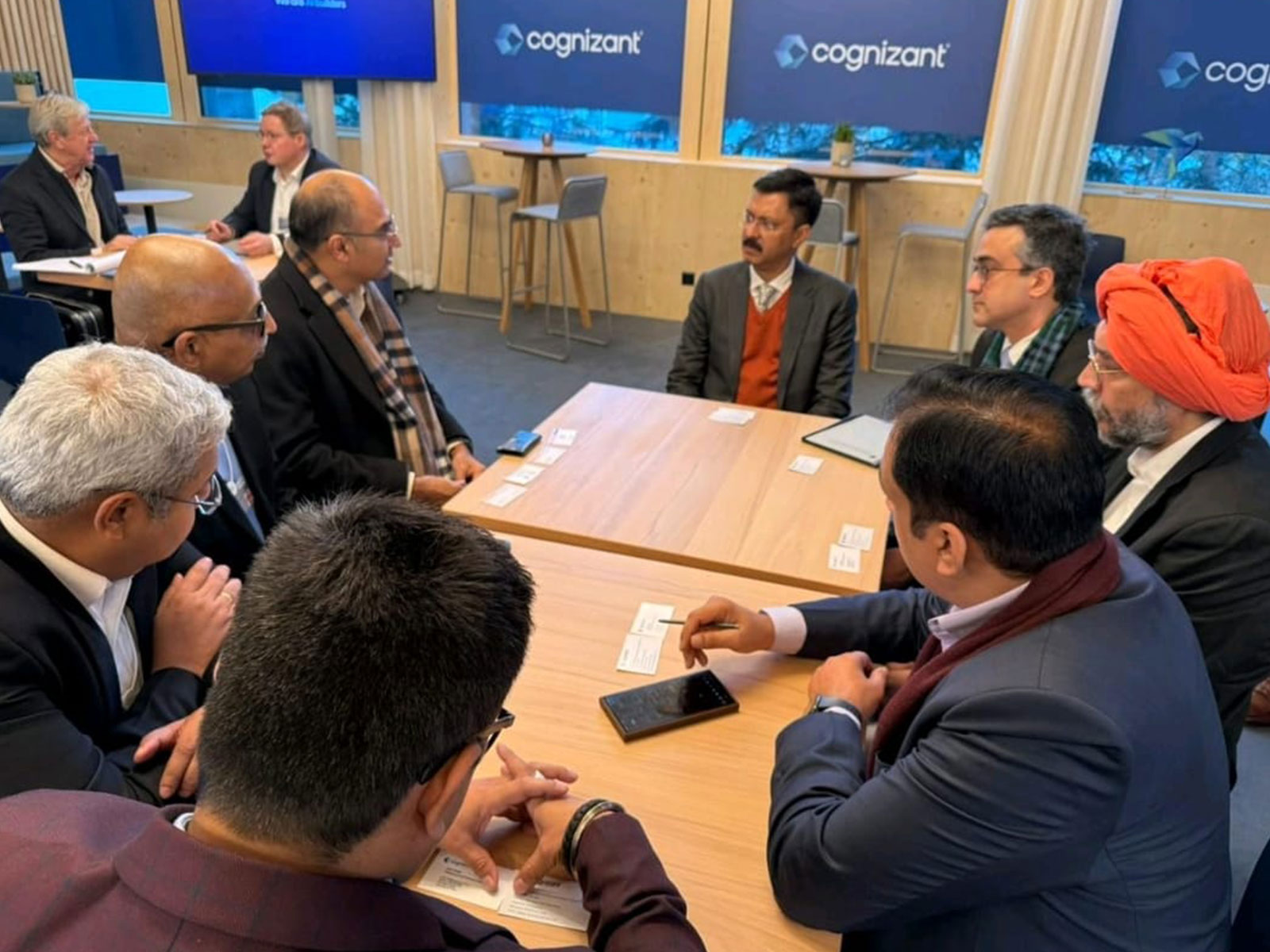
DAVOS: During its first participation at the forum, the Gujarat International Finance Tec-City (GIFT City) delegation engaged with international investors to position India’s first International Financial Services Centre (IFSC) as a scalable destination for banking, capital markets, and fintech. Global firms expressed interest in deepening engagement regarding India-linked financial services and cross-border operations.

GIFT City’s MD and Group CEO, Mr. Sanjay Kaul, noted the shift in how international businesses view the Indian market. “India is at a defining stage in its economic journey, with global institutions increasingly viewing the country not just as a market, but as a base for sophisticated financial and technology operations. The discussions at Davos reflect growing confidence in GIFT City’s regulatory framework and operating environment, and its ability to offer global firms a competitive, internationally aligned platform within India’s jurisdiction to participate in the country’s long-term growth,” Mr. Kaul said.

The delegation conducted structured meetings with senior leaders from major financial firms, including Euroclear, Marsh McLennan, Invesco, Visa, and Nasdaq. These talks focused on the evolution of India’s capital markets and the operational benefits provided by the IFSC ecosystem, such as the unified regulatory environment and ease of capital movement. The interest from these institutions underscored the growing recognition of the IFSC as a credible platform for international business expansion.

Digital infrastructure and technology were also central to the discussions. Meetings with companies such as Qualcomm, Cognizant, Wipro, and HCL Software highlighted GIFT City’s role as a hub for Global Capability Centres (GCCs) and cybersecurity.

Conversations with stakeholders like the IMD Business School and Egon Zehnder further established the city as an institutional destination. The delegation also participated in roundtables and sessions hosted by the Swiss Embassy and the Confederation of Indian Industry to discuss the future of global capital flows. (

Source: ANI

Maersk appoints Charles van der Steene as RMD for Indian Subcontinent, Middle East & Africa

COPENHAGEN : A.P. Moller–Maersk, the global integrated logistics company, has announced the appointment of Charles van der Steene as its new Regional Managing Director for the Indian Subcontinent, Middle East & Africa (IMEA), effective 1 January 2026.

A seasoned logistics and supply chain leader, van der Steene brings more than a decade of experience within the Maersk group, having joined the company in 2011. His career spans key leadership roles across regions, combining deep commercial acumen with operational excellence and customer-centric strategy.

Van der Steene has previously worked extensively in the IMEA region between 2016 and 2019, where he served as Regional CEO for Damco, Maersk’s supply chain and logistics arm, prior to its integration into Maersk in 2020. He later went on to lead Sales & Marketing in North America, and most recently served as Regional Head for North America, overseeing one of Maersk’s most critical markets.

Commenting on his appointment, Charles van der Steene said,

“I am honoured to be leading our exceptional team across the IMEA region, where we support customers operating in some of the world’s most complex and rapidly evolving trade corridors. The strategic importance of this region continues to grow as it connects three continents and plays a pivotal role in global commerce. I look forward to working closely with our colleagues to deliver consistency, resilience and innovation across the supply chains that depend on us every day.”

The IMEA region remains a key growth engine for Maersk, driven by expanding trade flows, infrastructure investments and increasing demand for integrated end-to-end logistics solutions. Van der Steene’s appointment underscores Maersk’s commitment to strengthening leadership capabilities across strategic markets and supporting customers through resilient, sustainable and digitally enabled supply chains.

Jayasimha Ambour takes charge as MD of Haldia Dock Complex (SMPK)

0

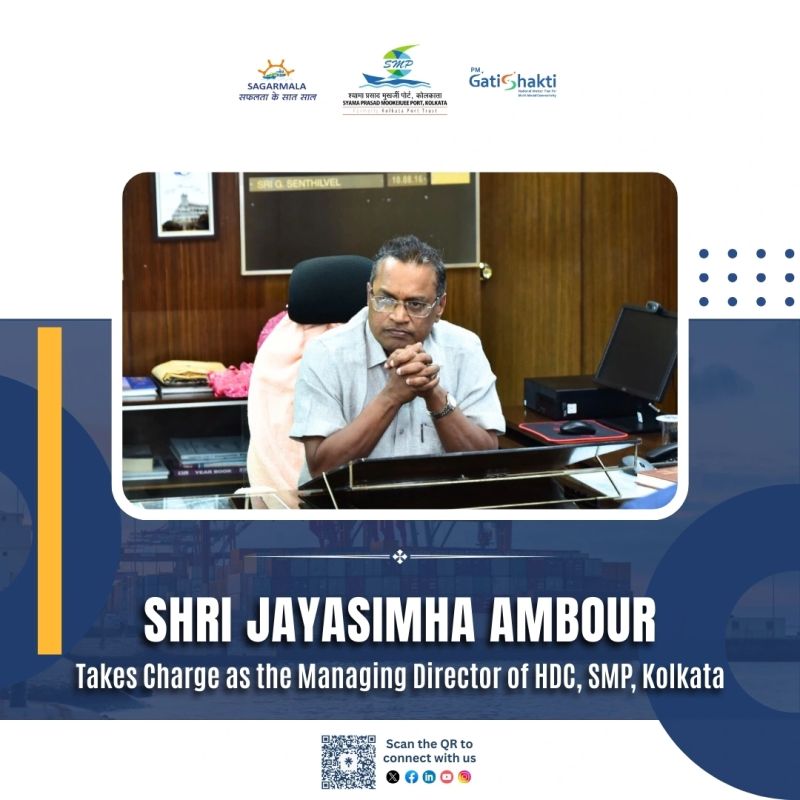
KOLKATA : Haldia Dock Complex (HDC), a key dock system under the Syama Prasad Mookerjee Port, Kolkata (SMPK), has entered a new phase of leadership with Shri Jayasimha Ambour assuming charge as Managing Director of HDC on January 19, 2026.

Shri Ambour brings with him rich experience in the maritime and port sector, with a proven track record in port administration, operational efficiency, and infrastructure development. His appointment is expected to further strengthen HDC’s role as a strategic gateway for trade and industry in eastern India and the hinterland regions.

Under his leadership, Haldia Dock Complex is poised to focus on enhancing operational efficiency, modernising port infrastructure, and adopting innovative, technology-driven solutions to improve cargo handling and turnaround times. A strong emphasis is also expected on sustainable port operations, aligned with India’s broader maritime vision of green and resilient logistics.

Haldia Dock Complex plays a vital role in handling bulk, breakbulk, and liquid cargo, supporting key sectors such as energy, agriculture, chemicals, and manufacturing. With growing trade volumes and evolving logistics demands, the new leadership is anticipated to steer the port towards future-ready growth, improved stakeholder engagement, and increased competitiveness.

Officials and stakeholders have expressed confidence that Shri Jayasimha Ambour’s stewardship will usher in a new era of innovation, sustainability, and operational excellence at Haldia Dock Complex.

PRANAAM Seafarers Assistance Counter inaugurated at Mumbai Airport; Services expand to Terminal 2

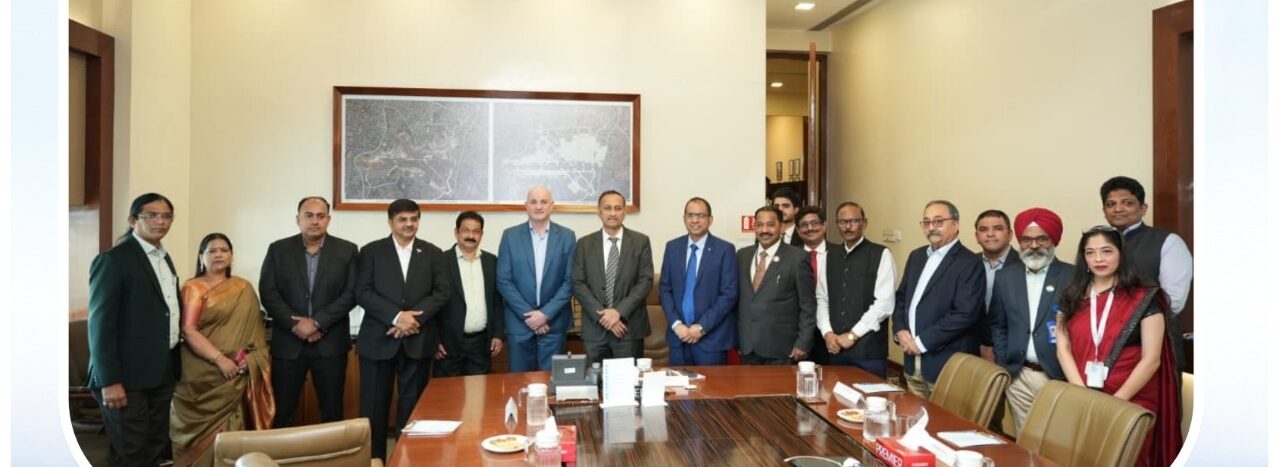
MUMBAI : The Directorate General of Shipping successfully inaugurated the PRANAAM Seafarers Assistance Counter at Chhatrapati Shivaji Maharaj International Airport (CSMIA), Terminal 1, on Wednesday, January 21, 2026. The initiative marks a significant step towards strengthening welfare measures, facilitation, and on-ground support for Indian seafarers transiting through one of the country’s busiest international gateways.

The programme commenced with the welcome of dignitaries, followed by the formal inauguration of the PRANAAM Seafarers Assistance Counter. A comprehensive presentation outlined the objectives, scope, and range of services under the PRANAAM initiative, which is designed to provide guidance, facilitation, and grievance redressal support to seafarers at the airport.

The event was graced by the Chief Guest, Shri Sushil Mansingh Khopade, IPS, Additional Director General of Shipping, who addressed the gathering and reiterated the Directorate General of Shipping’s unwavering commitment to seafarer welfare, ease of access to essential services, and institutional support across touchpoints of a seafarer’s journey.

The Guests of Honour, Shri Andrew Watt, Regional Manager – Home Office International Operations, British High Commission, and Shri Hitarth Mankodi, Chief Operating Officer, CSMIA, shared insights on the importance of international coordination and airport-level facilitation in ensuring smooth and dignified travel experiences for seafarers.

A notable highlight of the ceremony was the Guard of Honour presented by SCI MTI, Powai – ANDA (Upper) candidates to the Chief Guest and Guests of Honour, reflecting the discipline, professionalism, and rich maritime traditions upheld by India’s seafaring community.

During the programme, it was announced that, in addition to Terminal 1, the PRANAAM Seafarers Assistance Counter will soon commence operations at Terminal 2 (T-2) of CSMIA. This expansion will significantly enhance accessibility and ensure comprehensive coverage for seafarers travelling through both terminals of the airport.

The event concluded with the presentation of mementos, a vote of thanks, and interaction among dignitaries and stakeholders. The inauguration and forthcoming expansion of the PRANAAM Seafarers Assistance Counter represent an important milestone in strengthening institutional support systems and reaffirming the Directorate General of Shipping’s commitment to the welfare of the seafaring community.

Jeena & Company marks 125-year milestone with HISTORYTV18 collaboration

MUMBAI: Jeena & Company, a leading player in freight forwarding and supply chain solutions, is thrilled to announce its collaboration with HISTORYTV18 marking its 125-year journey. This documentary feature, titled “Living History: Jeena, A glimpse of India,” explores the brand’s storied journey from its inception in 1900 to its current status as a global logistics powerhouse.

The documentary provides a rare lens into how Jeena has mirrored India’s own evolution, navigating a century of geopolitical shifts, economic milestones, and the digital revolution. The title “Living History” serves as a tribute to the literal meaning of the brand name, ‘Jeena’ (to live), symbolizing a legacy that is vibrant, resilient, and perpetually evolving.

The collaboration brings together a rich mix of content crafted for both television and digital audiences. A 22-minute short film will premiere on HISTORY TV18 on 24th January 2026 at 6:30 pm, with a repeat telecast scheduled for 31st January at 6:00 pm. Alongside this, a 6-minute digital edit of the film will go live on Facebook, YouTube, and Instagram on 24th January, extending the story to social media platforms.

A story for the ‘ever-changing India’. As India stands in 2026 as a global hub for manufacturing and trade, this documentary highlights the three pillars, Agility, Adaptability, and Future-Readiness that have allowed Jeena to thrive for over a century. It is not merely a corporate history, but a narrative of how a homegrown Indian brand became synonymous with trust in the global trade ecosystem.

“We are excited to share our journey with the world for the first time on such a prestigious platform,” said, Ms. Ayesha Katgara, Head Transformation Office at Jeena & Company. “This film is a tribute to our Founders, Partners, our employees, logistics industry and India at large.”

Blue Dart expands Inclusive Workforce, Hiring 200+ Persons with Disabilities (PwDs) across Mainstream Roles

MUMBAI: Blue Dart, South Asia’s premier express air and integrated transportation & distribution company, announced a significant milestone in its inclusion journey with the onboarding of over 200 Persons with Disabilities (PwDs) across core operational and support functions. The newly hired employees are now contributing in full-time mainstream roles across sorting centres, customer experience, warehousing, and last-mile support.

This initiative is part of Blue Dart’s long-term commitment to building an inclusive organisation that drives equal opportunity, sustainable livelihoods, and dignity at work. The company has partnered with trusted ecosystem enablers such as Sarthak Educational Trust, leveraging skill development, workplace assessments, infrastructure alignment, and ongoing support to ensure seamless integration.

Speaking on the milestone, Balfour Manuel, Managing Director, Blue Dart, said “For us, inclusion is not a programme – it is a principle. True progress begins only when everyone has the opportunity to participate and belong. Every individual brings distinct strengths and perspectives, and when Persons with Disabilities join us in mainstream roles, they are not being accommodated at the margins – they are shaping the core of our business. We are creating pathways to confidence, independence and dignity, backed by clear goals and measurable outcomes. At Blue Dart, inclusion is deliberate, accountable, and central to the way we move forward.”

As part of this programme, Blue Dart has introduced sensitisation workshops, sign language training, customised workplace adaptations, and role-based enablement frameworks ensuring every employee is equipped, empowered, and set up for success. The organisation will continue to strengthen its hiring pipeline and expects this number to grow further in the coming year.

Reinforcing the company’s commitment, Beena Jacob, CHRO, Blue Dart, shared: “Every hire represents progress. When we integrate diverse talent into core business functions rather than symbolic spaces, we shift the focus from sympathy to merit from accommodation to empowerment. We are proud of the inclusive culture our teams are nurturing, where every individual is respected, enabled, and valued for their potential.”

Partnerships with Sarthak Educational Trust and other ecosystem organisations have enabled accessible recruitment processes, job-readiness programmes, and continued workplace support.

Dr. Jitender Aggarwal, Founder, Sarthak Educational Trust, added “Blue Dart is a benchmark example of what real inclusion looks like — equal opportunity, equal dignity, and equal expectations. Their approach proves that when organisations lead with intent and empathy, society moves forward.

EU GSP regulation to impact only 2.66% of India’s exports

NEW DELHI: The European Union Generalised System of preferences (GSP) regulation impacts only 2.66% of India’s exports to the European Union, underscoring the limited trade effect of EU’s GSP Regulations 2025, effective from January 1 this year, according to an official from the Commerce Ministry.

The European Union’s Generalised System of Preferences (GSP) is a unilateral trade preference scheme under which the EU grants reduced or zero customs duties to imports from developing and least-developed countries.

The GSP is non-reciprocal and operates as an exception to the WTO’s Most-Favoured-Nation (MFN) principle. Its permanent legal basis under WTO law is the 1979 Enabling Clause, which allows developed countries to grant differential and more favourable treatment to developing countries, the official said.

In 2023, EU imports from India amounted to approximately EUR 62.2 billion. Of this, only EUR 12.9 billion was eligible under the EU’s Standard GSP framework. India has graduated from 12 major product categories. As per new Regulation, EUR 1.66 billion of trade is expected to graduate out of GSP regime leaving the eligible GSP trade to be EUR 11.24 billion as per 2023 data, the official said.

The European Commission has adopted Implementing Regulation (EU) 2025/1909, laying down rules for the suspension of specific tariff preferences for certain GSP beneficiary countries, including India, for the period 2026-2028. The regulation formally entered into force from 1 January 2026 until 31 December 2028.

“Under the new GSP treatment, agricultural lines are not graduated. In the non-agricultural sector, only leather has been reinstated,” the official said.

The official said that suspension covers thirteen specific GSP sections such as Mineral products; Inorganic and organic chemicals; Plastics and articles thereof; Rubber and articles thereof; Textiles; Articles of stone, plaster, cement, asbestos, mica or similar materials; ceramic products; glass and glassware; Pearls and precious metals; Iron, steel and articles of iron and steel; Base metals (excl. iron and steel), articles of base metals (excl. iron and steel); Machinery and mechanical appliances; electrical machinery and equipment and parts thereof; Railway or tramway locomotives, rolling-stock; Motor vehicles, bicycles, aircraft and spacecraft, ships and boats.

Notably, there are three tiers under the scheme. One is standard GSP for low and lower-middle income developing countries that meet certain conditions. India gets the benefit under standard GSP.

Second is GSP+ which is an enhanced incentive scheme; countries must ratify and implement a set of international conventions on labour, human rights, environment, governance.

The official said that the third is Everything But Arms (EBA) in which the least developed countries get duty-free, quota-free access for all goods except arms.

Source: ANI

No evidence of anything bad in India’s GDP data, Gita Gopinath on IMF’s C-grade

DAVOS : Economist Gita Gopinath has said that, during her time at the International Monetary Fund, she found no evidence to suggest that India’s GDP numbers were flawed. Gopinath, who served as IMF Chief Economist from 2019 to 2022 and later as Deputy Managing Director from 2022 to 2025, made the remarks while speaking to India Today’s Rajdeep Sardesai on the sidelines of the World Economic Forum in Davos.

“When I was chief economist of the IMF, we used to ask ourselves this question all the time. And the truth is, for pretty much most emerging and developing countries of the world, they would get close to a C-grade on their national account statistics. Because they don’t have very good producer price indices, they don’t do the right kind of double deflation that needs to be done and so on,” she said.

Gopinath explained that the IMF routinely looks beyond headline GDP figures, examining high-frequency indicators to check for inconsistencies or warning signs. Based on those assessments, she said India’s data did not stand out negatively. “So when you try to look at other kinds of high-frequency data, and we didn’t see any smoking gun evidence that there was something particularly bad about India’s GDP numbers versus any other countries,” she said.

Asked why the Fund assigned a C-grade if it did not necessarily indicate a serious problem, Gopinath clarified that the grading framework is absolute, not comparative. “The grades are an absolute measure, not a relative measure. My previous point was that most emerging markets find themselves in that bracket because they don’t have the national statistics being done the way it can be done. That requires investment,” she said.

The economist added that the IMF is already working with Indian authorities to address these gaps. “IMF is working together with the Indian statistics office to improve on this kind of data collection,” she said, pointing to ongoing efforts to strengthen methodology and coverage.

Gopinath, currently serving as the Gregory and Ania Coffey Professor of Economics at Harvard University, also highlighted that a major rebasing exercise is currently underway, which could significantly improve data quality going forward. “There’s an important round that’s being done right now in terms of rebasing, which will help improve the quality of the statistics,” she said.

In its annual staff report for 2025, the IMF retained its C grade for India’s national account statistics or GDP data, which suggested that the data provided to the Fund may have “some shortcomings that somewhat hamper surveillance.”

BJP’s Sanju Verma, however, said the IMF’s ‘C’ grade is merely routine caution, not condemnation. It simply means, she added, there are broad areas that need improvement. She also said that the IMF’s Asia-Pacific Department issued a statement saying the new data “validates our view that India remains the standout performer among emerging markets.”

The IMF earlier this week raised its India’s growth forecast for the 2025–26 financial year. In its latest outlook, the global agency revised India’s GDP growth estimate for FY26 upward by 0.7 percentage points to 7.3 per cent. In its previous staff report, the IMF had projected 6.6 per cent growth for FY26.

India seeks to boost manufacturing, hit $1.3 trln in exports through deregulation, sources say

NEW DELHI : India will seek to triple the nation’s exports by 2035 by boosting manufacturing through structural changes rather than with hefty spending, according to two government officials.
In Prime Minister Shri Narendra Modi’s third such attempt, the South Asian nation is prioritising manufacturing in 15 sectors, including high-end semiconductors, metals and the labour-intensive leather industry, aiming to lift India’s growth and boost annual goods exports to $1.3 trillion, they said.

Modi’s government has twice failed to double the share of manufacturing to 25% of gross domestic product – with a “Make in India” campaign in 2014 and a $23 billion package of incentives in 2020.
“In past years, several government initiatives to boost manufacturing growth have led to modest, incremental progress at best. What is needed is a bold, focused and cohesive strategy to drive transformative change,” according to a government official involved in drafting the policy.

MODEST FUNDING TO BE DECIDED BY GOVERNMENT PANEL
The government will spend about 100 billion rupees ($1 billion) to build infrastructure for about 30 manufacturing hubs across the targeted sectors while providing grants of $218 million for advanced areas such as chips and energy storage, said the officials, who asked not to be named because they were not authorised to speak to media.The Finance Ministry and government think tank NITI Aayog, which is tasked with preparing the policy, did not respond to requests for comment
Funding this time is modest as the plan focuses on easing regulatory and compliance burdens, the biggest impediment to Indian manufacturing, rather than doling out subsidies, the officials said.
Financial support to industries will be decided case by case with recommendations from a new government panel to administrative departments, replacing the pre-budget fiscal packages of earlier schemes, they said.
The new structure, called the National Manufacturing Mission, was announced in the budget last year but details were not disclosed. Details could be announced in the budget on February 1, but that will be decided closer to the date, the officials said.

FOCUS ON CUTTING RED TAPE
The panel’s focus will be to ensure faster regulatory clearance, approvals for land and cheaper financing for large projects, the officials said. It will be chaired by a minister and composed of bureaucrats, including the cabinet secretary, they said.
It will oversee the building of manufacturing hubs for the 15 sectors, and work with state governments to assure steady and cheap electricity supplies for such units, the sources said.
Manufacturing hubs have been identified based on existing infrastructure, geographic advantages and proximity to ports, the officials said.
Divergent policies by India’s federal and state governments have weighed on investment and hampered manufacturing. States have followed different regulations for labour and business compliance, increasing costs for companies operating in multiple states.

The proposed panel would coordinate with states to ease regulations such as those requiring multiple permits for power, land and water.

It would also recommend cutting red tape by reducing overlaps between quality and standards checks, and suggest aligning tariffs to industry requirements and “national priorities”, the sources said.

Source : Reuters

Jobs at risk, irreversible market loss if US tariffs continue: Textile exporters in missive to Vice President

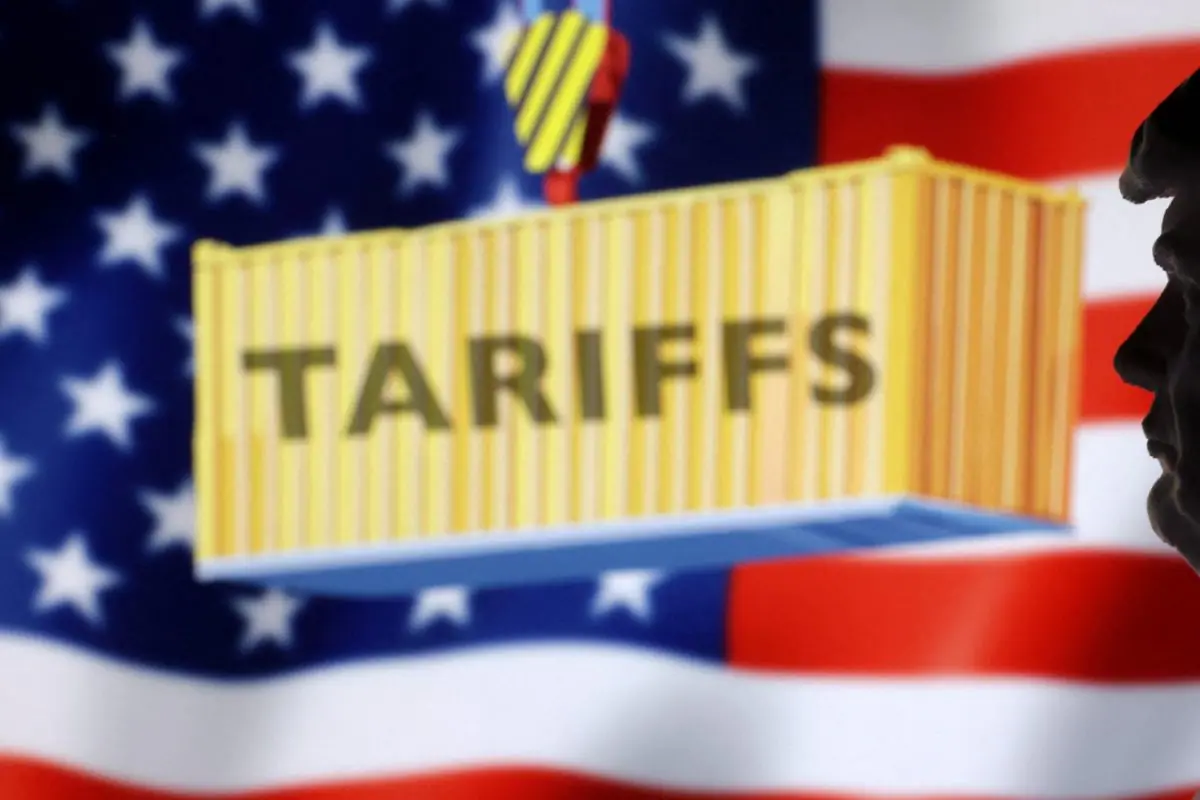
NEW DELHI : Sustained US tariffs in the absence of a trade deal could cause permanent damage to India’s market share, resulting in job losses, as there is no further shock-absorption capacity left, Indian apparel exporters have said in a letter to Vice President C P Radhakrishnan.

Before assuming the office of Vice President last year, Radhakrishnan had served as Tamil Nadu BJP president from 2004 to 2007. The Tiruppur textile cluster in Tamil Nadu is the hardest hit due to its dependence on the US market. Tiruppur exports garments worth nearly Rs 14,000 crore to the US annually, as per exporters.

“Recent US actions imposing 25 per cent tariffs and an additional 25 per cent oil-related penalty on imports are causing severe disruption to India’s textile exports, particularly to the US, India’s largest single export market. Without immediate resolution, the sector faces order stoppages, job losses, and permanent loss of market share,” Apparel Export Promotion Council (AEPC) said.

“With the threat of additional or prolonged tariffs, US buyers are withholding or cancelling new orders as buyers are unwilling to risk mid-cycle tariff escalation. Even with 25 per cent discounts, further tariff absorption is commercially impossible and passing costs to buyers is not viable,” the exporters said.

“The textile industry has already absorbed significant losses in national interest to protect exports and employment. There is no further shock-absorption capacity. Delay of even 3-6 months risks permanent damage to a strategic export sector,” the letter read.

Seeking immediate support from the government, the apparel exporters said that market diversification is not a short-term option as textile sourcing is embedded in long-term buyer supply chains and developing alternate markets requires “2-3 years for buyer onboarding, compliance audits, and volume scaling”.

“Abrupt loss of the US market will lead to permanent customer displacement and allow competitor nations with preferential access to replace India,” AEPC said, while seeking interim protective measures for textile exports pending treaty conclusion.

The Indian Express had reported in December that negotiations between Indian apparel manufacturers and US importers had stalled for summer orders, worth around $2 billion, due to uncertainty around the trade deal. And orders have begun moving to competitors, such as Bangladesh, Vietnam and even China, which face lower tariffs compared to the highest tariffs of 50 per cent imposed on India.

The stalled negotiations between Indian exporters and the US importers assume significance as India exported $10.3 billion of textiles and apparel (T&A) to the US in 2024. The share of T&A in India’s world exports was 8.21 per cent in 2023-24. The supply chain of apparel and textiles is largely domestic, as about 90 per cent of the inputs are sourced domestically, indicating the labour-intensive nature of the sectors.

However, the government has taken steps to aid the sector by easing duty on key raw materials like cotton, revoking several quality control orders impacting the textile supply chain and addressing the MSMEs’ access to input material.

An Indian Institute of Foreign Trade (IIFT) research report authored by Professor Sunitha Raju said that a 50 per cent tariff on India will result in $6.6 billion or a 67.8 per cent fall in US import demand for Indian T&A. “This negative effect is highest for fibre (-95.8 per cent), followed by yarn (-87.5 per cent) and fabrics (-82.9 per cent). However, in absolute values, made-ups and apparel account for US$5.7 billion or an 85 per cent fall in the T&A exports to the US,” the report said.

India’s tariff being higher relative to the competitors, China, Vietnam and Bangladesh will have significant market share gains for apparel and Pakistan, Mexico and China for made-ups. Thus, these tariff differentials are adversely influencing the competitive landscape in the US market, it said.

With a 25 per cent tariff, the negative demand effect is about $2.1 billion, translating into a 21.6 per cent fall in imports across product groups. In absolute terms, the fall in import demand is highest for made-ups ($921 million), followed by apparel ($788 million), as these two product groups account for an 81 per cent fall in the import demand, the report pointed out.

According to the report, even though small firms co-exist with large firms in the textile industry, textile exports are dominated by large firms. However, the impact of the US tariff shock affects all producers in the textile industry and is transmitted through many domestic suppliers, with nearly 70 per cent of sectoral value derived from intermediate inputs first-order indirect effects are substantial, totalling $ 4.6 billion, including $ 1.4 billion within the textile sector.