Home Blog Page 471

OCC Ahmedabad showcases India’s Multimodal Logistics Excellence to global delegation under ITEC Programme

AHMEDABAD : On 16 January 2026, the Operations Control Centre (OCC), Ahmedabad emerged as a truly global convergence point as it hosted a delegation of foreign national officials under the International Technical and Economic Cooperation (ITEC) Programme of the Ministry of External Affairs, Government of India. The programme, themed “Multimodal Logistics,” was organised by Gati Shakti Vishwavidyalaya.

The visiting delegation comprised officials from a wide spectrum of countries, including Lebanon, Syria, Tajikistan, Jordan, Maldives, Egypt, Ghana, Morocco, Nepal, Iraq, Mauritius, Guyana, Kiribati, Ecuador, Ethiopia, among others. The diverse participation fostered rich cross-country exchange of ideas and perspectives on logistics planning, infrastructure development, and integrated transport systems.

During the visit, delegates were provided with an in-depth overview of the strategic role of OCC Ahmedabad in overseeing and coordinating freight operations across the Dedicated Freight Corridors (DFCs). The sessions highlighted real-time train monitoring, traffic management, digital decision-support systems, and the seamless integration of rail with other modes of transport—key pillars of India’s evolving multimodal logistics ecosystem.

The delegation expressed strong appreciation for the world-class infrastructure, smart digital platforms, and advanced operational capabilities demonstrated at the OCC. The visit offered a live showcase of how technology-driven freight operations can significantly enhance efficiency, reliability, and capacity, reinforcing India’s position as a leader in modern logistics and corridor-based freight management.

The interaction also served as a valuable platform for knowledge sharing and international collaboration, aligning with the ITEC programme’s objective of strengthening global partnerships through capacity building and technical cooperation.

GTRI calls for overhaul of tariff structure, customs to boost India’s trade

NEW DELHI : India needs a sweeping overhaul of its import tariff structure and customs administration to cut trade costs, strengthen manufacturing competitiveness and revive export growth, suggests trade-focused think-tank Global Trade Research Initiative (GTRI).

The report, titled ;A Blueprint for Modernizing India’s Import Tariffs and Customs Regime’, outlined the need for reforms, spanning tariff policy, customs procedures, export incentives and manpower deployment.

Taken together, the measures would transform customs from a control-oriented system into what the authors described as a growth-enabling institution aligned with India’s broader manufacturing and supply-chain ambitions. The study comes as India’s merchandise trade crosses USD 1.16 trillion and nearly 29 per cent of gross domestic product flows through customs clearances.
In that context, even modest inefficiencies now impose economy-wide costs, raising input prices, delaying shipments and weakening export competitiveness at a time when global companies are reassessing sourcing locations amid geopolitical fragmentation.

Finance Minister Smt. Nirmala Sitharaman’s commitment in December to overhaul customs procedures has created a rare policy opening, the GTRI report said, but warned that piecemeal changes will not be enough. At the core of the recommendations is a call to rationalise India’s import tariffs, which the report argued have lost relevance as a revenue instrument while continuing to distort production decisions.

Customs duties now account for just 6 per cent of gross tax revenue and average only 3.9 per cent of the value of imports, according to GTRI.

The distribution of tariff revenue is highly skewed, it argued. Nearly 90 per cent of import value is concentrated in fewer than 10 per cent of tariff lines, while the bottom 60 per cent of tariff lines generate under 3 per cent of customs revenue.

Maintaining a complex tariff schedule for such limited fiscal return imposes high administrative and compliance costs, the GTRI report argued GTRI recommended imposing zero duty on most industrial raw materials and key intermediates, while adopting a low, standard duty (around 5 per cent), on finished industrial goods over the next three years. It also called for eliminating inverted duty structures, where inputs are taxed more heavily than finished products, quietly eroding domestic manufacturing competitiveness.

Extreme tariffs, such as the 150 per cent duty on alcohol, should be rationalised, the report added, arguing that such rates encourage evasion while delivering negligible fiscal gain. Equally important, tariff reform should be based on total import duty, not just headline basic customs duty, it suggested.

Importers face a cumulative burden of cesses, surcharges and trade remedies, making the effective tariff far more complex than official rate schedules suggest
Beyond tariffs, the report takes aim at what it describes as a labyrinthine system of customs notifications, many of which amend decades-old rules and are not self-contained. Traders must navigate hundreds of overlapping notifications to determine applicable duties, often without clear HS-code references.
GTRI urged the government to issue self-contained notifications that clearly state their full impact, and to publish all applicable import duties in a single, unified online schedule.

Source : ANI

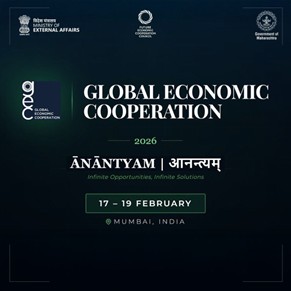
Global Economic Cooperation 2026 to Explore New Pathways for Cooperation, Growth and Resilience in a Multipolar World

MUMBAI: Senior policymakers, global CEOs, investors and leaders of multilateral institutions from India and abroad will convene in Mumbai from 17–19 February 2026 for the inaugural Global Economic Cooperation 2026 (GEC), a high-level, invitation-only forum designed to examine how economic diplomacy, cooperation and capital alignment must evolve in an increasingly multipolar world.

The summit is convened by the Future Economic Cooperation Council (FECC), a non-profit platform, in partnership with the Ministry of External Affairs, Government of India, and the Government of Maharashtra.

The Council is guided by a governing bodycomprising Shri Devendra Fadnavis, Chief Minister of Maharashtra, who serves as Chief Patron, Mr. Vijay Chauthaiwale, in-charge, Foreign Affairs, Bharatiya Janata Party, as Director, and Ms. Priyam Gandhi-Mody, Founder of Vishwamitra Research Foundation, as Director and Curator.

Positioned at a moment of global economic transition, GEC 2026 is designed to address the deeper structural shifts reshaping global commerce, investment flows and economic governance. With structured engagement across infrastructure financing, advanced manufacturing, technology systems, energy transitions and resilient supply chains, the event will underscore cooperation beyond trade. High-level plenaries and closed-door dialogues will focus on economic corridors, investment partnerships, digital connectivity, ESG frameworks and the governance of emerging technologies, which are areas now central to economic sovereignty and global stability.

Speaking on the vision for GEC 2026, Ms. Priyam Gandhi-Mody, Director, Future Economic Cooperation Council, said, “The global economy is entering a decisive decade where economies need to protect themselves against the threats of fragmentation, protectionism and uncertainty. Through Global Economic Cooperation 2026, India is stepping forward to convene governments, investors and industry leaders to shape practical pathways for cooperation across capital, infrastructure, technology and energy that reflect the realities of a multipolar world and our shared responsibility for global prosperity.”

Mr. Vijay Chauthaiwale, in-charge, Foreign Affairs, Bharatiya Janata Party, said, “Under the able guidance of our Prime Minister Shri Narendra Modi, India has built durable partnerships with global leaders that have stood the test of time in an increasingly multipolar world. Today, economic engagement is inseparable from geopolitics. At a time like this, we’re hosting GEC 2026, which further underscores India’s commitment to shaping cooperative, rules-based economic frameworks that advance national interest while strengthening global stability.” 

On the third day of the summit, GEC 2026 will also see the launch of the Emerging Leaders Circle, a dedicated platform engaging young business minds and future business leaders through curated panels and discussions on global economic change and innovation. The Emerging Leaders Circle will be convened in collaboration with leading academic institutions, including the Indian Institutes of Management (IIMs) [SM1] and Columbia University, underscoring the forum’s emphasis on nurturing the next generation of global economic leadership.

The Global Economic Cooperation platform envisions a world where economic corridors become conduits of cooperation, and where fair access to trade, connectivity and inclusivity drive peace, prosperity and shared progress. Envisaged as an annual convening, the forum will bring together ministerial leadership, sovereign and institutional investors, and CEOs from critical sectors including infrastructure, logistics, ports, clean energy, AI, fintech and advanced manufacturing. The inaugural edition aims to lay the foundation for renewed approaches to global economic cooperation.

About the Future Economic Cooperation Council

The Future Economic Cooperation Council (FECC) is a strategic platform to advance dialogue and collaboration on global economic cooperation in a rapidly evolving world order. Grounded in India’s expanding diplomatic and economic leadership, FECC serves as a connector between emerging and advanced economies navigating the new age of multipolarity, shifting trade norms and technological independence. Through high impact convenings and strategic initiatives, FECC aims to position India as a trusted convenor and catalyst for inclusive, forward-looking economic partnerships worldwide.

Mawani records growth in container throughput in 2025 compared to last year

RIYADH : The ports overseen by the Saudi Ports Authority “Mawani” recorded a 10.58% increase in container throughput during 2025, reaching 8,317,235 TEUs, compared to 7,521,306 TEUs in 2024. Transshipment containers also rose by 11.78%, reaching 1,927,348 TEUs, up from 1,724,184 TEUs last year.

Total exported containers increased by 11.72% to 3,146,003 TEUs, compared to 2,816,059 TEUs previously, while total imported containers grew by 8.82%, reaching 3,243,884 TEUs, up from 2,981,063 TEUs last year.

In addition, total cargo tonnage handled, including general cargo, solid bulk cargo, and liquid bulk cargo rose by 1.06% to 242,068,641 tons, compared to 239,532,876 tons in the corresponding period of 2024. General cargo totaled 12,005,735 tons, liquid bulk cargo 176,325,077 tons, and solid bulk cargo 53,737,829 tons.

Passenger numbers saw a significant increase of 47.07%, reaching 1,082,668 passengers, compared to 736,177 passengers last year. Meanwhile, maritime traffic declined by 17.98% to 9,508 vessels, compared to 11,592 vessels last year. Vehicle throughput decreased by 4.92% to 1,034,930 vehicles, compared to 1,088,515 vehicles last year. The ports also received 8,985,389 cattle heads, reflecting a 7.55% decrease compared to 9,719,343 cattle heads last year.

The increase in container throughput contributes to multiple economic benefits, including enhanced trade flows, stimulation of industries and sectors linked to maritime transport, growth in tourism and maritime activities and related services, and strengthened supply chains. It also supports the Kingdom’s food security objectives, in line with the goals of the National Transport and Logistics Strategy to reinforce Saudi Arabia’s standing as a global logistics hub.

It is worth noting that during December 2025, the ports overseen by Mawani recorded a 12.50% increase in container throughput, reaching 800,089 TEUs, compared to 711,170 TEUs in December 2024. Transshipment containers rose by 19.25% to 188,995 TEUs, compared to 158,491 TEUs last year.

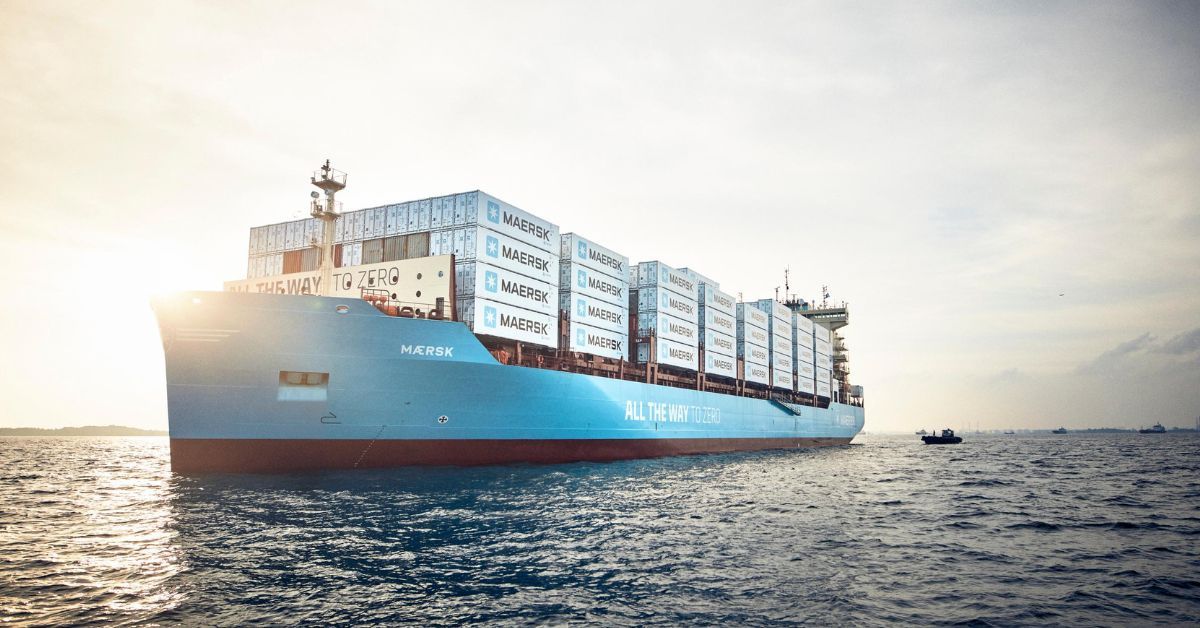
Maersk ramps up Suez Canal return that could dampen freight rates

LONDON: Maersk said last week that one of its services will resume using the Red Sea and Suez Canal this month, marking a key step towards ending two years of global trade disruption due to attacks on ships by Yemeni Houthi rebels.

The Danish shipping group’s share price fell more than 5% on the news, reflecting the likelihood of lower freight rates as vessels gradually return to the shorter Suez route.

Shipping companies are weighing a return to the critical Asia-Europe trade corridor after vessels were rerouted around Africa in late 2023 after attacks in the Red Sea the Houthis said was to show solidarity with Palestinians in Gaza.

Maersk said its weekly service connecting the Middle East and India with the U.S. east coast, known as MECL, will be first it its staggered return to the Suez route, starting on January 26 with a sailing departing Oman’s port of Salalah.

“This decision follows a continued stabilisation of conditions in and around the Red Sea, including the Suez corridor, as well as improved stability and reliability in the region,” it said in a statement.

Maersk said on last Monday that one of its vessels had tested the route as a ceasefire in Gaza raised hopes for normal traffic and one vessel also made a voyage through Suez in December.

“Maersk has generally been the most risk-averse out of the major carriers regarding a return to the Red Sea, so this is a turning point,” said Peter Sand, chief analyst at pricing platform Xeneta, calling the development “highly significant”.

While risk and security remain top of mind for ocean shipping customers, most would welcome a return to faster transit times via the Red Sea and Suez, said Mads Drejer, Global Chief Commercial Officer at Danish freight forwarder Scan Global Logistics, which books space on ships on behalf of clients.

MAERSK TAKES GRADUAL APPROACH
Maersk said it would make a gradual return to the Suez route, adding the aim was to offer customers “the most efficient transit times”. The route could cut a week off transit routes, it said. This should in theory help bring down costs.

“The return to the Suez Canal should ease freight rates,” Germany’s chemical industry association VCI said in a statement, calling Maersk’s move a positive sign, though adding it would also likely increase imports from China.

The Suez Canal is the fastest route linking Europe and Asia and, until the Houthi attacks, had accounted for about 10% of global seaborne trade, according to Clarksons Research.

“Maersk has contingency plans in place should the security situation deteriorate, which may necessitate reverting individual MECL sailings or the wider structural change of the MECL service back to the Cape of Good Hope route,” it said.

France’s CMA CGM previously said it sends vessels through Suez and the Red Sea when security allows.

German shipping company Hapag-Lloyd HLAG will not adjust its operations in the Red Sea for now, a spokesperson said, but added that the company was closely monitoring the situation and Maersk’s move changed the situation.

The ceasefire in the Gaza, in place since October last year, has renewed hope of normalising Red Sea traffic.

The ceasefire has ended major combat in Gaza over the past three months, but both sides have accused the other of regular violations. More than 440 Palestinians and three Israeli soldiers have been killed since the truce took effect.
Source: Reuters

Xeneta Schedule Reliability Scorecard: Global schedule reliability in 2025 only appeared stable on the surface

OSLO: Global schedule reliability in 2025 only appeared stable on the surface, masking a tug-of-war between geopolitical disruption and network optimisation. Route diversions, tariff uncertainty, and blank sailings weighed on performance, while new alliance strategies helped offset disruption across key trades.

As we hinted last week, the sideways shuffle of global schedule reliability in 2025 should not be oversimplified as stability. With a comprehensive coverage of vessel arrivals across all global trades, it becomes clear that the reliability plateau of 2025 has been driven by the neutralizing effect of opposing forces.

The ongoing use of South Africa’s Cape of Good Hope as standard routing for Far East – Europe and the Middle East trades continued to put significant downward pressure on global reliability throughout the year. The introduction of Gemini’s amped up hub n’ spoke methodology on the other hand, served to boost reliability across all trades. On the Europe – North America trade, where the Gemini Cooperation maintains market share dominance alongside MSC, positive reliability was also aided by the more muted whiplash of tariff relations between the United States and European nations. On the Far East – North America trade, the impact of the Trump administration’s tariff wars with China were not restricted to swings in on-time arrivals and were laid bare in specific periods of heightened uncertainty.

Xeneta SR Graph Xeneta Schedule Reliability Scorecard: Global schedule reliability in 2025 only appeared stable on the surface

Let’s look at how these competitive tides have translated into reliability numbers across our best and worst performers by trade.

Average Yearly Reliability Ranked from Best to Worst

West Coast South America (48% on-time, -2.2 days delayed)
Europe – North America (42% on-time, -2.5 days delayed)
Far East – North America (38% on-time, -2.8 days delayed)
Oceania (36% on-time, -3.5 days delayed)
East Coast South America (35% on-time, -4.0 days delayed)
Africa (34% on-time, -3.3 days delayed)
Far East – Europe (29% on-time, -3.8 days delayed)
Middle East (28% on-time, -4.8 days delayed)

West Coast South America continued in the lead but was almost edged out by Europe – North Americas adavnatges this year. Far East – North America was not so far behind, and demonstrated the stabilizing push and pull of geopolitics and new alliance structures best of all. Oceania could be poised to overtake the transpacific if relations between Trump and China cool again in 2026, and East Coast South America fell far below its sister coast after being plagued by congestion troubles at key Brazilian ports throughout the year. Far East – Europe and the Middle East were the poorest performers, hardly surprising given the enormity of the Red Sea challenge and knock-on effect of poor reliability shadowing both trades since the start of 2024.

Xeneta SR Graph 1 Xeneta Schedule Reliability Scorecard: Global schedule reliability in 2025 only appeared stable on the surface

Q1 vs Q4 Progression

West Coast South America gained 9% of on-time arrivals and reduced delay by 1.5 days
Europe – North America gained 33% of on-time arrivals and reduced delay by 1.3 days
Far East – North America stayed level with 0% change in on-time arrivals but reduced delay by 0.7 days
Oceania gained 25% of on-time arrivals and reduced delay by 1.3 days East Coast South America lost 9% of on-time arrivals but reduced delay by 2.4 days
Africa lost 12% of on-time arrivals and reduced delay by 0.3 days
Far East – Europe lost 22% of on-time arrivals but reduced delay by 0.9 days
Middle East lost 11% of on-time arrivals but reduced delays by 0.5 days

Quarterly comparisons at the start and close of 2025 illustrate how average days delayed and on-time percentage don’t always share a 1:1 trajectory, nor does net improvement does equate to a superior ranking. A trade like the Middle East can experience less reliability loss than its peers but still end up at the bottom of the pack. Mirroring that principle, the improvement in on-time arrivals for West Coast South America was dwarfed by Europe – North America and Oceania, but it still retained that 1st place ranking held since 2023. In other words, it’s rarely just changes in the past quarter, or even the past year, that determine how a trade performs against peers overall. Success is additive, consistency is key, and resilience often outperforms bursts of progress.

A brief look at the reliability impact of tariff uncertainties at a weekly scale reveals deeper pockets of concern than quarterly or monthly averages. Weekly on-time arrivals for Far East – North America averaged at 36% in Q3 but dipped as low as 26% on individual weeks. Even more telling as a measure of trouble between China and the United States was cancelled sailings.

The post-Chinese New Year period averaged at 41% on-time and doesn’t raise any alarms at the surface, but it serves well to demonstrate why we should diversify reliability measures as standard practice. We saw 163 total blanked voyages in March through May, with 61 in May alone exceeding the 59 Lunar New Year blanks of February. That amounts to a 43% increase against the number of blanks we saw in the same period in 2024. The rate of blank sailings did eventually return to normal levels by the summer, before giving way to poorer on-time performance.
Source: Xeneta

China sets a new record on a sea lane abandoned by the West: 14 container voyages on the Northern Sea Route in 2025

BEIJING : As the Arctic ice thins and geopolitics harden, Beijing is quietly stress‑testing a shortcut between Asia and Europe. China quietly turns a marginal Arctic route into a strategic test bed

In 2025, Chinese operators completed 14 container ship voyages between Asia and Europe via the Northern Sea Route (NSR), compared with 11 in 2024 and just 7 in 2023. The curve is steep. The experimental phase has faded into the background. China now treats this icy corridor as a live laboratory, not a one‑off stunt.

The push comes almost entirely from Chinese shipping companies sailing under Russian icebreaker escort. Western carriers, who flirted with the NSR a few years ago, now stay away, citing climate concerns, legal uncertainty and reputational risk. That absence leaves the field to a tight Sino‑Russian alignment in one of the world’s most sensitive regions.

On paper, the economics look tempting. Shorter routes mean fewer days at sea, lower fuel bills and reduced exposure to congestion around Suez or the Red Sea. In practice, ice, darkness and thin infrastructure still dictate the calendar.

What 14 voyages really mean on the Northern Sea Route
A shorter season, a more intense schedule
The 2025 Arctic season opened on 16 July, when the NewNew Polar Bear left Shanghai for Arkhangelsk in northern Russia. It closed on 30 October with the Xin Xin Tian 2 sailing from Shanghai to Kaliningrad in the Baltic. That window was about three weeks shorter than in 2024, as sea ice formed earlier in the eastern Arctic.

Despite fewer navigable days, traffic increased. Operators packed more voyages into a compressed calendar, showing a willingness to push assets and planning systems to the limit of what summer and early autumn ice conditions allow.

Two Chinese carriers at the sharp end
NewNew Shipping Line and Sea Legend sit at the centre of this build‑up. Both companies have stated they want more NSR transits in 2026, with one key objective: make schedules predictable on a route where wind, fog and drifting ice still write the rule book.

Reliability, not just speed, will decide whether the NSR attracts repeat customers. For now, the window runs mainly from mid‑summer to early autumn, when ice retreats, visibility improves and icebreaker support can be planned with some confidence. Chinese carriers keep investing anyway, betting that experience gained now will deliver an advantage if traffic later scales up.

400,000 tonnes of containers: a record, but still tiny
According to Rosatomflot, Russia’s state nuclear icebreaker operator, container cargo along the NSR reached around 400,000 tonnes in 2025, roughly 2.6 times more than in 2024. For a corridor historically dominated by crude oil, liquefied natural gas and bulk commodities, that marks a real adjustment in the traffic mix.

Why Western shipping stepped back while China leaned in
From Maersk’s trial to a Chinese near‑monopoly
The idea of container traffic in the Arctic is not new. In 2018, Danish giant Maersk sent the Venta Maersk through the NSR on an experimental trip. Technically, the voyage succeeded. Commercially, it stopped there. No regular service followed.

Big Western carriers then turned away from the Arctic. Concerns piled up: risks of spills in fragile ecosystems, reputational damage amid rising climate activism, high insurance costs, patchy port infrastructure, and an unpredictable regulatory environment shaped by Russian authorities and changing ice regimes.

As a result, the NSR’s container segment now rests almost entirely on Russian and Chinese shoulders. Where European and US firms see litigation, emissions and brand risk, Beijing sees strategic leverage and a chance to learn by doing.

Russia’s nuclear icebreakers underpin the experiment
None of this traffic would happen without Russia’s nuclear icebreaker fleet. These ships escort convoys through the thickest ice and keep channels open late into the season. Rosatom, the state nuclear corporation, not only runs the icebreakers; it also shapes much of the NSR’s infrastructure plan, from ports to navigation aids.

For Moscow, the NSR offers a dual prize: an export corridor for hydrocarbons and raw materials, and a geopolitical lever that binds China more tightly to Russian Arctic assets. For Beijing, alignment with Rosatom brings guaranteed icebreaker support and influence in setting operational norms on a route Western players barely use.

Climate, risk and the politics behind a shorter route
An Arctic shortcut shaped by warming seas
The NSR’s viability closely tracks shifts in sea ice. Satellite data over recent decades show a long‑term decline in summer ice extent. September – the seasonal low point – now brings record or near‑record minima some years, especially in the Siberian sector that the NSR crosses.

Thinner, more mobile ice opens the door to longer seasons, but it also increases unpredictability. Pressure ridges, drifting floes and rapidly changing conditions can still trap ships, as several cargo vessels have learned the hard way in recent winters. For insurers, that volatility complicates pricing. For climate scientists, growing traffic raises alarm bells about black carbon emissions and spill risk in a region that recovers slowly from accidents.

Strategic leverage, not just shipping margins
For Beijing, the NSR carries several advantages that go beyond saving a few days of sailing time:

Diversification of sea lanes away from Suez and the Malacca Strait.
Closer coordination with Russia on Arctic technology and governance.
Practical knowledge on operating in extreme cold, useful for both commercial and military assets.
Signalling power: China presents itself as a near‑Arctic stakeholder with real skin in the game.
This strategic dimension partly offsets the modest cargo volumes. Even if the NSR never rivals Suez in raw tonnage, it offers a pressure valve in moments of crisis, and a testing ground for winterised hull designs, ice navigation software and remote monitoring tools.

What could come next for shippers and policymakers
Several scenarios now preoccupy analysts. A gradual lengthening of the NSR season, combined with more powerful ice‑class container ships, could lift annual voyage numbers into the dozens or low hundreds over the next decade. That would still represent a niche route globally, yet it could become significant for specific trades, like Russia–China energy flows bundled with east–west container traffic.

At the same time, new rules may tighten the environmental screws. Restrictions on heavy fuel oil in the Arctic, limits on black carbon, or regional speed caps would change the cost calculus. Companies using the route would have to balance shorter distances against cleaner, often pricier fuels and stricter operational standards.

For ports, logistics hubs and governments far from the Arctic, the NSR serves as a kind of early warning system. It shows how quickly new routes can rise from near zero when climate, technology and geopolitics align. Watching China’s 14 voyages in 2025 gives clues about how future shocks to Suez or Panama might accelerate interest in alternatives that look marginal today.

For students of shipping or risk management, the NSR also offers a concrete case study. A simple simulation comparing a Shanghai–Rotterdam service via Suez and via the Arctic can highlight trade‑offs: fuel burned, days saved, CO₂ emitted per container, icebreaker fees, seasonal constraints and insurance premiums. Numbers from such exercises rarely favour the NSR in a normal year, but they shift during crises, when time reliability on traditional routes collapses.

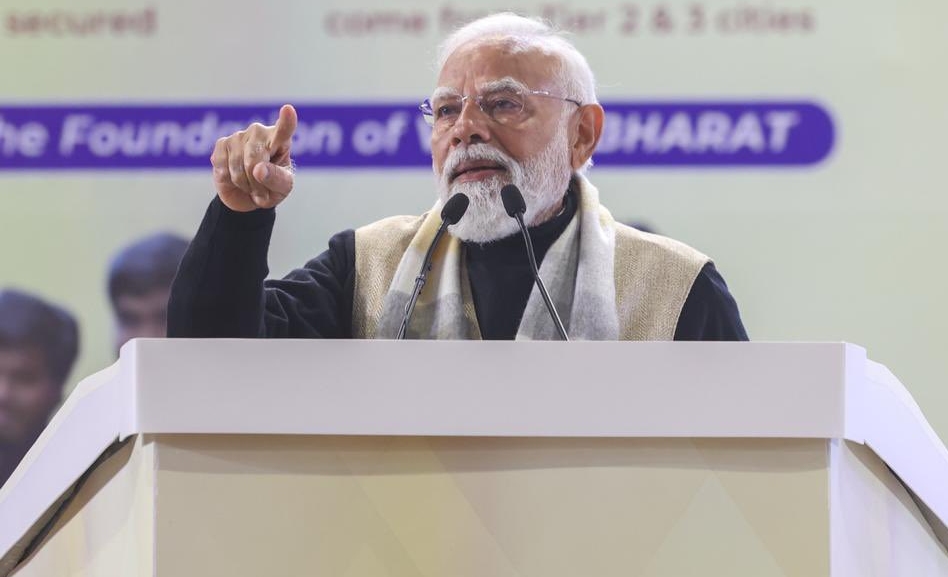
Risk-taking has become mainstream: PM Modi lauds startups marking 10 years of Startup India

NEW DELHI: Prime Minister Shri Narendra Modi on Friday highlighted the remarkable transformation of India’s startup ecosystem over the past decade, calling it a revolution driven by confidence, innovation, and a changing societal mindset toward risk-taking.

Addressing entrepreneurs and stakeholders of India’s startups ecosystem, the Prime Minister on the occassion of on National Startup Day said that for him, the confidence and impression of startups matter more than numbers alone.

Recalling the early days of the Startup India initiative, launched ten years ago, he shared an anecdote from an event at Vigyan Bhavan where a woman entrepreneur had spoken about the resistance she faced at home.

When she decided to quit her job to start a startup, her mother had feared it would lead to “disaster,” PM Modi recalled.

“Today, in these ten years, we have come a very long way,” the Prime Minister noted, underlining how attitudes toward entrepreneurship have evolved across the country.

The Prime Minister pointed out that a decade ago there was very limited scope for innovation in India, whereas Startup India has now emerged as a nationwide movement.

He said the number of startups has grown from just about 500 ten years ago to more than 200,000 today.
Highlighting India’s growing global footprint, he said that while there were only four unicorns in 2014, the country now has about 125 active unicorn startups.

Reflecting on changing attitudes toward entrepreneurship, the Prime Minister said that ideas once dismissed as fringe because they involved risk-taking are now becoming fashionable.

“Today, risk-taking has become mainstream,” he said, adding that people who think beyond the security of a monthly salary are no longer merely accepted but are now respected.

The Prime Minister said these changes reflect a deeper cultural shift in India’s approach to innovation, enterprise, and self-reliance, positioning startups as a key driver of the country’s economic future.

Mother of all deals: Piyush Goyal on proposed FTA with EU

NEW DELHI: Commerce and Industry Minister Shri Piyush Goyal on Friday described the proposed Free Trade Agreement (FTA) with the European Union (EU) as the “Mother of all deals”.

This agreement is expected to be a game-changer for India’s export sectors, offering significant opportunities for growth and development and transforming India’s trade relationship with one of the world’s largest economic blocs.

Speaking to media persons in New Delhi, Goyal highlighted India’s growing confidence in negotiating trade agreements with developed economies.

“We have done FTA deals with seven developed countries so far. This one (EU) will be the mother of all. It will cover two of the world’s most powerful economies. We have very good growth possibilities,” the minister said.

The minister stressed that the agreement would be mutually beneficial, noting a key advantage in the trade dynamics.

“It will be a win-win deal for both, but the good part is that we don’t compete with each other,” Goyal explained, adding that all of India’s FTAs are with developed countries rather than competing economies.
Goyal credited Prime Minister Shri Narendra Modi‘s leadership for India’s bold approach to trade negotiations.

“Previous governments were very scared to do FTAs with the developed world. We go to the developed world with full confidence. We are willing to take bold decisions, and therefore we get the best deal out of the other countries,” he said.

The minister drew attention to the trust factor, stating that PM Modi approaches negotiations backed by the confidence of 140 crore Indians and recognition from foreign governments of India’s emergence as a superpower. He also praised the Prime Minister’s risk-taking approach, comparing him to a startup entrepreneur willing to make bold moves.

Providing an update on negotiations, Goyal revealed strong support from EU member states. “In the last few months, at different levels–whether with me, the External Affairs Minister, our ambassadors, or between the Prime Minister and heads of state–all 27 EU states have conveyed their excitement to conclude the India-EU deal very quickly. Not a single one of the 27 states is opposed to an India-EU partnership,” he said.

The Minister assured that India would not compromise its national interests in pursuit of the agreement. “I can assure you that we will not compromise the benefit of our country with the FTA deal with the EU,” Goyal stated firmly.

Regarding the proposed FTA with the United States, Goyal indicated that negotiations are progressing. “Negotiations are ongoing. The US deal will be done at the right time,” he said, without providing a specific timeline.

The FTA aims to boost bilateral trade between India and the EU, which is already India’s largest trading partner, with goods trade totalling $136.53 billion in 2024-25. The agreement is expected to cover areas such as market access for goods, rules of origin, services, investment, and intellectual property rights.
India is seeking zero-duty access for labour-intensive sectors like textiles, leather, and handicrafts. The agreement will include safeguards for farmers and Micro, Small, and Medium Enterprises (MSMEs). The FTA will promote regulatory cooperation and transparency, making it easier for businesses to operate in both markets.

Notably, European Council President Antonio Costa and European Commission President Ursula von der Leyen will visit India to represent the EU at the 16th EU-India Summit, scheduled for January 27.

The two presidents will meet Prime Minister Narendra Modi in New Delhi for a summit to consolidate the EU-India strategic partnership and further strengthen cooperation in key policy areas. Discussions will focus primarily on trade, security and defence, clean transition, and people-to-people cooperation, a EU statement said.

Source: ANI

JNPA Chairperson highlights Smart Port Vision at International Conference on Digital Supply Chains & Smart Ports 2026

PUNE : Shri Gaurav Dayal, IAS, Chairperson, Jawaharlal Nehru Port Authority (JNPA), visited the International Conference on Digital Supply Chains & Smart Ports 2026 held at Symbiosis, where he engaged with global maritime leaders, technology innovators, and policymakers on the evolving landscape of port-led development and digital trade ecosystems.

Addressing the conference, Shri Dayal shared insights from JNPA’s ongoing transformation journey, underscoring the critical role of smart port ecosystems in enhancing efficiency, resilience, and competitiveness. He highlighted JNPA’s focus on selective automation, integrated digital platforms, Port Community Systems (PCS), and sustainable energy solutions as key pillars driving operational excellence and customer-centric growth.

Emphasizing the need for a collaborative approach, Shri Dayal noted that interoperability across systems, robust cybersecurity frameworks, skilled manpower, and seamless multimodal connectivity are essential enablers for building future-ready and resilient maritime supply chains. He stressed that digitalisation must be aligned with sustainability and inclusivity to unlock long-term value for the entire logistics ecosystem.

As India’s largest container port, JNPA reaffirmed its commitment to advancing as a progressive, future-ready port by adopting cutting-edge technologies and global best practices. Through continuous innovation and stakeholder collaboration, JNPA aims to further strengthen India’s gateway to global trade and support the nation’s vision of a digitally enabled, efficient, and sustainable maritime sector.