Home Blog Page 482

Hanseatic Global Terminals and GEN reach an agreement in ownership of FIT

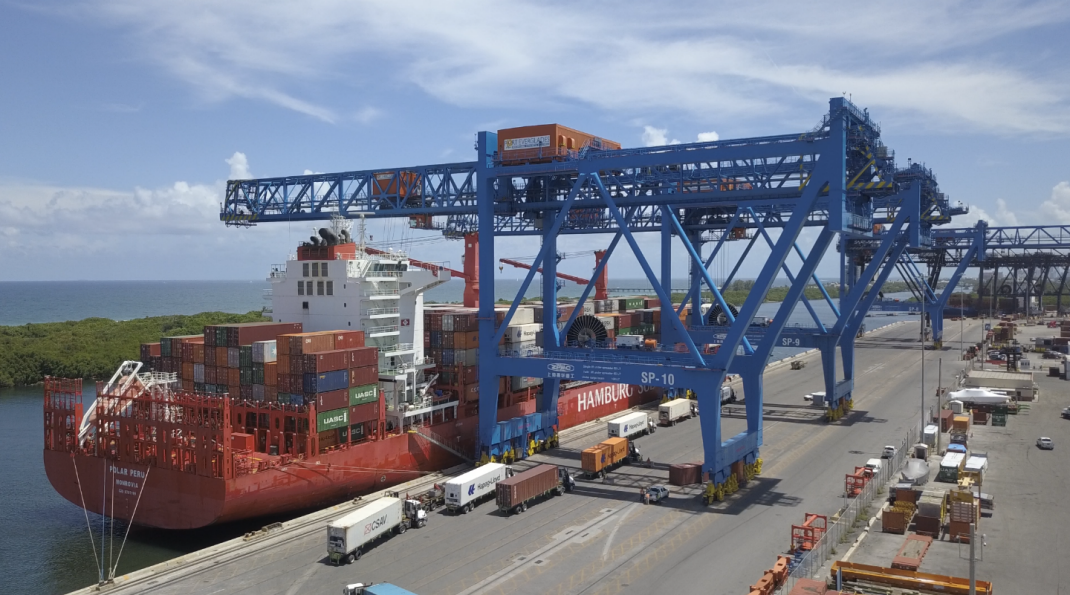
ROTTERDAM: Hanseatic Global Terminals (HGT) and Grupo Empresas Navieras (GEN), via its affiliate Agunsa Universales S.A. (AGUNSA USA), have reached an agreement regarding the capital structure of Florida International Terminal (FIT). As a subsidiary of GEN, Agunsa Universales S.A. (AGUNSA USA) consolidates GEN’s port, logistics, and towage operations. Following this transaction, Hanseatic Global Terminals will become the sole owner of FIT.

FIT is strategically located in Port Everglades, South Florida, serving one of the largest consumer markets globally. The terminal specializes in container and general cargo handling and provides direct connectivity to major highways and rail networks, ensuring efficient inland and intermodal transportation and access to the region’s hinterland.

Established in 2023, Hanseatic Global Terminals operates as an independent entity within the Hapag-Lloyd Group, focusing on terminals and infrastructure. With a clear vision for 2030, Hanseatic aims to grow from 21 port terminals to approximately 30 globally, reinforcing its position as a leading terminal operator.

SeaCube Cold Solutions Strengthens Its Position as the First Dedicated National Portable Cold Storage Provider with Martin Container Acquisition

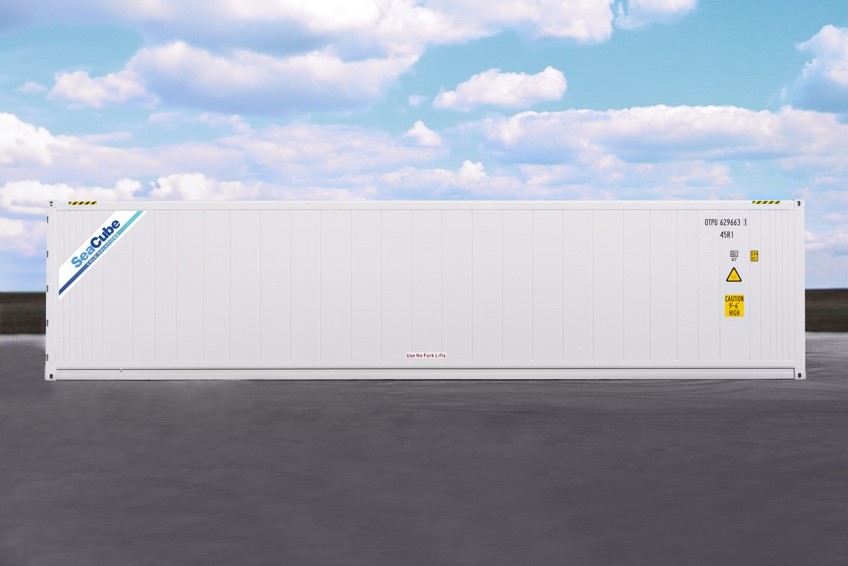
MONTVALE: SeaCube Cold Solutions, backed by SeaCube Container Leasing, the leading investor in refrigerated equipment, has acquired Martin Container, the long-standing and well-established portable cold storage container company serving the West Coast. This strategic alignment brings together SeaCube’s expanding national infrastructure with Martin’s trusted regional expertise, creating a more connected and responsive cold storage network for customers across the United States.

Since launching in 2025, SeaCube Cold Solutions has focused exclusively on portable cold storage, providing dedicated, reliable refrigeration solutions to grocery retailers, food distributors, agriculture, festivals, restaurants, pharmaceuticals, and logistics operators as well as other industries. Martin Container further strengthens that commitment, adding nearly 50 years of customer relationships and service excellence throughout California, Arizona, and Nevada.

“This acquisition enhances both scale and regional strength,” said James Armstrong, SVP of SeaCube Cold Solutions. “Martin’s long-standing reputation and operational depth complement our growing national platform, allowing us to deliver faster, more flexible cold storage solutions where customers need them most.”

Bringing Together Two Leaders for a Stronger West Coast Presence

Demand for portable cold storage continues to rise across the Southwest and Pacific regions. With Martin Container’s strategically located operations near the Ports of Los Angeles and Long Beach now integrated into SeaCube’s depot and transportation network, customers will benefit from:

  • Faster delivery and improved regional coverage
  • Increased service capacity backed by SeaCube’s national fleet
  • Expanded access to energy-efficient refrigeration technology
  • Enhanced reliability supported by digital monitoring systems

The result is a more resilient, more responsive service model for industries that depend on portable cold storage to protect product quality and reduce waste.

A Smooth, Stable Transition with Stronger Customer Benefits

Customers of both companies can expect a smooth, stable transition with full continuity of day-to-day operations, supported by new advantages. The Martin Container team will continue delivering the same reliable service they’ve provided for decades, now backed by SeaCube’s national resources, technology, and expertise. With an expanded distribution network, customers will also benefit from faster delivery and improved regional coverage across California, Arizona, and Nevada.

“This partnership is an evolution of who we are,” said Charlie Martin, CFO of Martin Container. “We’re building on our legacy by joining a company that shares our commitment to quality, innovation, and customer service.”

The combination of SeaCube Cold Solutions and Martin Container strengthens the cold storage landscape across the country, uniting national capability with established regional expertise. This acquisition preserves Martin’s trusted local presence while accelerating SeaCube’s ability to deliver reliable, scalable, and sustainable portable cold storage nationwide.

Sapling Financial Consultants Inc. served as financial advisor to SeaCube in connection with the acquisition.

3 Indians among crew on board Russian tanker seized by US

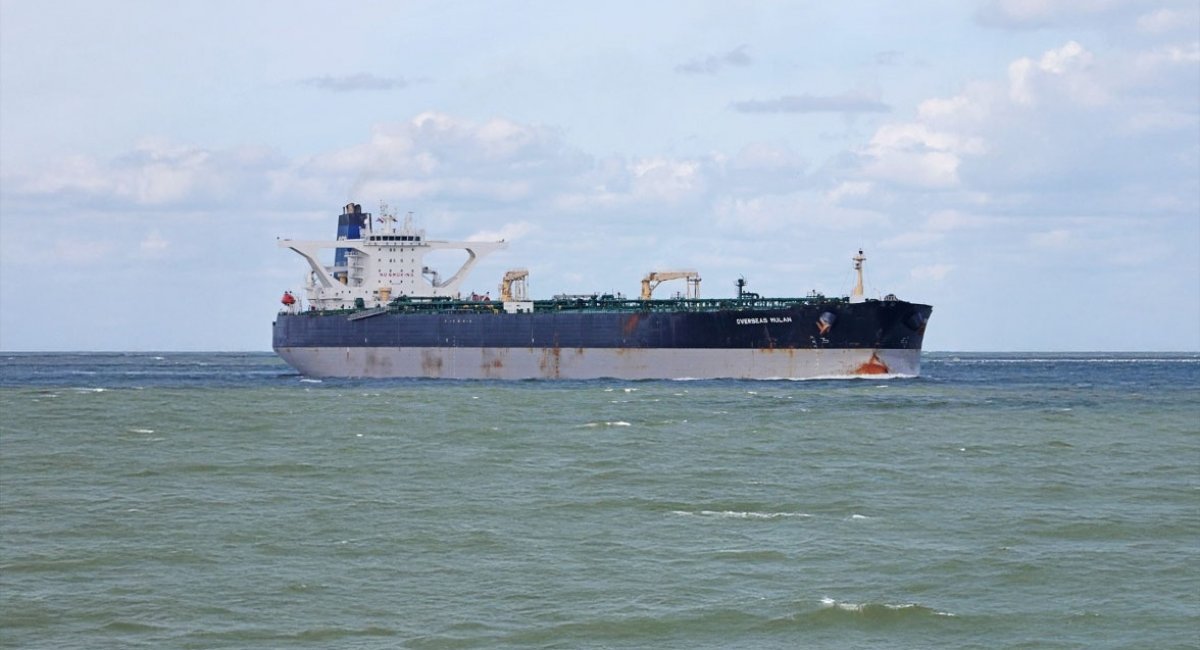
NEW DELHI: Three Indians are among the crew on board the Russian oil tanker seized by the United States, local media reported even as Moscow on Thursday asked Washington to comply with international laws on freedom of maritime navigation while strongly rejecting its ‘neo-colonist’ tendencies.

The Russian Foreign Ministry also said information about the Marinera tanker, previously known as Bella 1, that was seized on Wednesday by the US coastguard in the North Atlantic, was conveyed to America repeatedly.

“The Marinera crew consists of 17 Ukrainian citizens, six Georgian citizens, three Indian citizens and two Russian citizens,” Russia Today said, quoting sources.

“We call on Washington to resume compliance with the fundamental norms and principles of international maritime navigation and immediately cease its illegal actions against the Marinera tanker and other vessels engaged in law-abiding activities on the high seas,” the Foreign Ministry said in a statement.

Moscow said it considers the US references to its national “sanctions legislation” to be unfounded.

“The statements by some US officials that the seizure of the Marinera is part of a broader strategy to establish Washington’s unlimited control over Venezuela’s natural resources are extremely cynical. We strongly reject such neo-colonialist tendencies,” the Foreign Ministry underscored.

“Unilateral restrictive measures by the US, as well as other Western countries, are illegitimate and cannot justify attempts to establish jurisdiction and, even more so, to seize ships on the high seas,” it said.

Demanding humane and dignified treatment of its crew, the statement said: “We reiterate our demand that the US ensure humane and dignified treatment of the Russian citizens comprising the tanker’s crew, strictly observe their rights and interests, and make no obstacles to their prompt return to their homeland.”

It also expressed serious concerns of the use of military force by the US against the oil tanker, full information about which was conveyed to it.

“The Marinera, which on December 24 received temporary permission to sail under the Russian flag in accordance with the international law and Russian legislation, was peacefully transiting international waters in the North Atlantic, heading for one of Russia’s ports,” the foreign ministry said.

The US government had been repeatedly provided with reliable information, including from the Russian Foreign Ministry, about the ship’s Russian origin and its civilian status, it asserted.

“Russia did not give consent to these actions. On the contrary, it lodged an official protest with the US government regarding the pursuit of the Marinera by a US Coast Guard vessel over the past several weeks, insisting on the immediate cessation of these activities and the withdrawal of the unlawful demands made on the Russian ship’s captain,” the ministry said.

Under these circumstances, US military personnel boarding a civilian vessel on the high seas and effectively seizing it, as well as capturing its crew, “can only be viewed as a gross violation of the basic principles and norms of international maritime law and freedom of navigation,” the Russian Foreign Ministry said.

China bans export of dual-use goods to Japan in wake of growing tension over Taiwan

BEIJING : China banned the export of dual-use goods to Japan that can serve military purposes. This comes at a time of heightened tensions between the two countries over Taiwan, a self-ruled island Beijing claims as its sovereign territory. The Chinese commerce ministry said in a statement that exports of such items, which can serve both civilian and military purposes, to the Japanese military are prohibited.

Without identifying specific banned items, the statement said that any individual or organization that violates the rule by transferring or providing these products to Japanese groups and people would face legal consequences. There was no immediate reaction from Japan.

Centre rolls out ₹235-Crores port projects in Tamil Nadu ; Sarbananda Sonowal says boost to Maritime-led Growth

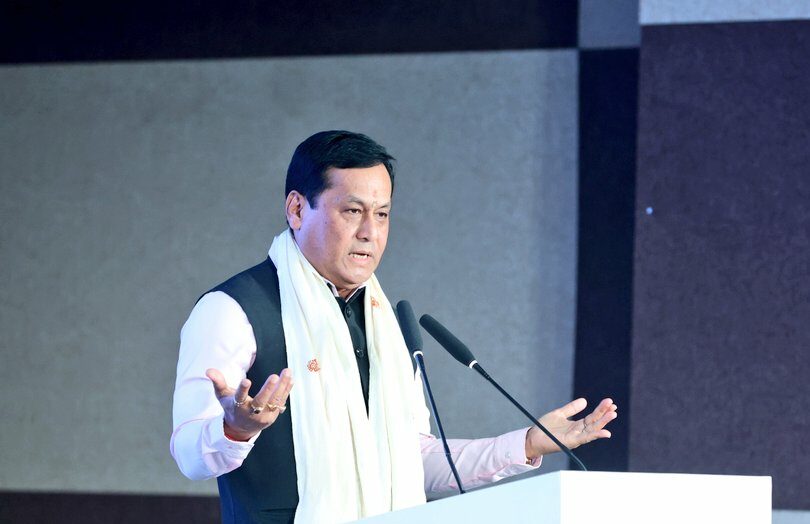
CHENNAI : The Union Minister for Ports, Shipping and Waterways (MoPSW), Shri Sarbananda Sonowal rolled out port infrastructure and digital governance projects worth ₹235 Crs at Chennai Port Authority and Kamarajar Port Limited, marking a major step to strengthen Tamil Nadu’s maritime capacity & advance India’s maritime-led growth agenda.

Addressing the “Viksit Bharat, Viksit Ports” programme in Chennai, Sarbananda Sonowal said the projects underscore the Centre’s commitment to building globally competitive, climate-resilient and digitally enabled ports, while improving ease of doing business (EODB) and coastal safety.

“Prime Minister Shri Narendra Modi ji provides the vision and leadership that drive India’s maritime transformation,” Sarbananda Sonowal said. “Modiji’s clear focus on Viksit Bharat and Atmanirbhar Bharat guides every reform we undertake. We are modernising ports, strengthening coastal resilience, digitising operations & expanding trade facilitation so that Indian ports emerge as engines of growth, national self-reliance and global competitiveness.”

Of the total outlay, ₹129.36 crore covers projects at Chennai Port Authority and ₹105.64 crore supports initiatives at Kamarajar Port Limited.

For Chennai Port Authority, the Union Minister laid foundation stones for three projects focused on resilience, safety and public service delivery. The projects include repair and strengthening of the coastal revetment behind the Coastal Berth over about 850 metres using climate-resilient designs at a cost of ₹33.28 Crores. The Minister also laid foundation stone for construction of a new firefighting pump house at the Oil Dock Area to meet OISD safety norms with an investment of ₹43 Crores. This will establish a dedicated high-capacity firefighting infrastructure fully compliant with safety norms for protection of critical energy-security assets. Another foundation stone was laid for modernisation of Chennai Port Hospital with an investment of ₹8.08 Crores aimed at upgrading wards, operation theatres, diagnostics and support services while ensuring uninterrupted medical care.

Sonowal also inaugurated the Enterprise Business System (EBS), a SAP-based integrated digital platform that brings finance, port operations, human resources, assets, procurement and customer services onto a single backbone. The system, developed at a cost of ₹45 Crore, is expected to enhance transparency, compliance and operational efficiency, significantly improving ease of doing business.

For Kamarajar Port Limited, the minister laid the foundation stone for a new boundary wall at the north-west boundary connecting the Northern Port Access Road (NPAR) at a cost of ₹1.39 Crores, improving access control and logistics efficiency. The Union Minister also inaugurated the rehabilitated Northern Breakwater Head at an investment of ₹105 crores, strengthened after cyclone damage to ensure navigational safety and uninterrupted port operations, reinforcing the port’s role in India’s eastern maritime corridor. The rehabilitation covers 202 m with 3035 new 25MT tetrapods. This area was earlier damaged during cyclones Thane and Nilam.

Speaking on the significance of their role in India’s maritime sector, Union Minister Sarbananda Sonowal said, “These projects are part of a larger, integrated push to position India among the world’s leading maritime nations. By modernising ports, strengthening resilience, digitising operations and improving ease of doing business, we are building the maritime backbone required to transform the Indian economy and propel it toward Prime Minister Narendra Modi ji’s vision of a Viksit Bharat.”

In a nationwide trade-facilitation move aligned with the One Nation–One Port Process (ONOP), Sonowal also launched the e-port clearance portal, enabling online submission and issuance of Port Clearance Certificates, including advance clearances. The initiative aims to cut turnaround time, enhance transparency and improve predictability for maritime operations across India. The portal will enable Shipping Lines/Steamer Agents to submit applications online and download the Port Clearance Certificate through their user login—strengthening transparency, speed and predictability for maritime operations. The Union Minister also handed over Rs. 18 Lakhs Cheque to Royal Madras Yacht Club (RMYC) for Sailing training of 20 students from Chennai Port School.

Sonowal said the combined investments will elevate Tamil Nadu’s position as a maritime powerhouse and strengthen India’s standing in global supply chains. “Sustained investments and reforms under Sagarmala are turning India’s ports into globally benchmarked hubs that support growth, jobs and national pride,” Sonowal said.

The programme also echoed the national spirit of “Vande Mataram @150,” marking the 150th year of the iconic song and reaffirming collective resolve to build a stronger, self-reliant India.

Union Minister Sarbananda Sonowal visited the Swabodhini School & Vocational Centre for Special Children at Tondiarpetin the city, interacting with students, parents and faculty while reaffirming the Modi Govt’s commitment to inclusive development. Sonowal reviewed Swabodhini’s integrated model combining special education with occupational, speech and sensory therapies, physiotherapy, sports, yoga and vocational training, including skill-building in printing, candle and soap making and computer education. Sonowal was briefed on measurable outcomes, including improved mobility, communication skills and successful placements. The minister also planted a sapling under the “Ek-Ped-Maa-Ke-Naam” campaign, reinforcing sustainability values.

The event was also attended by Dr Malini V Shankar, Vice Chancellor, India Maritime University (IMU), S Viswanathan, Chairperson, Chennai Port Authority, JP Irene Cynthia, Managing Director, Kamarajar Port Limited among other dignitaries. More than 450 participants comprising Port Stakeholders, Maritime Professional, Indian Maritime University Students, and Officials also attended.

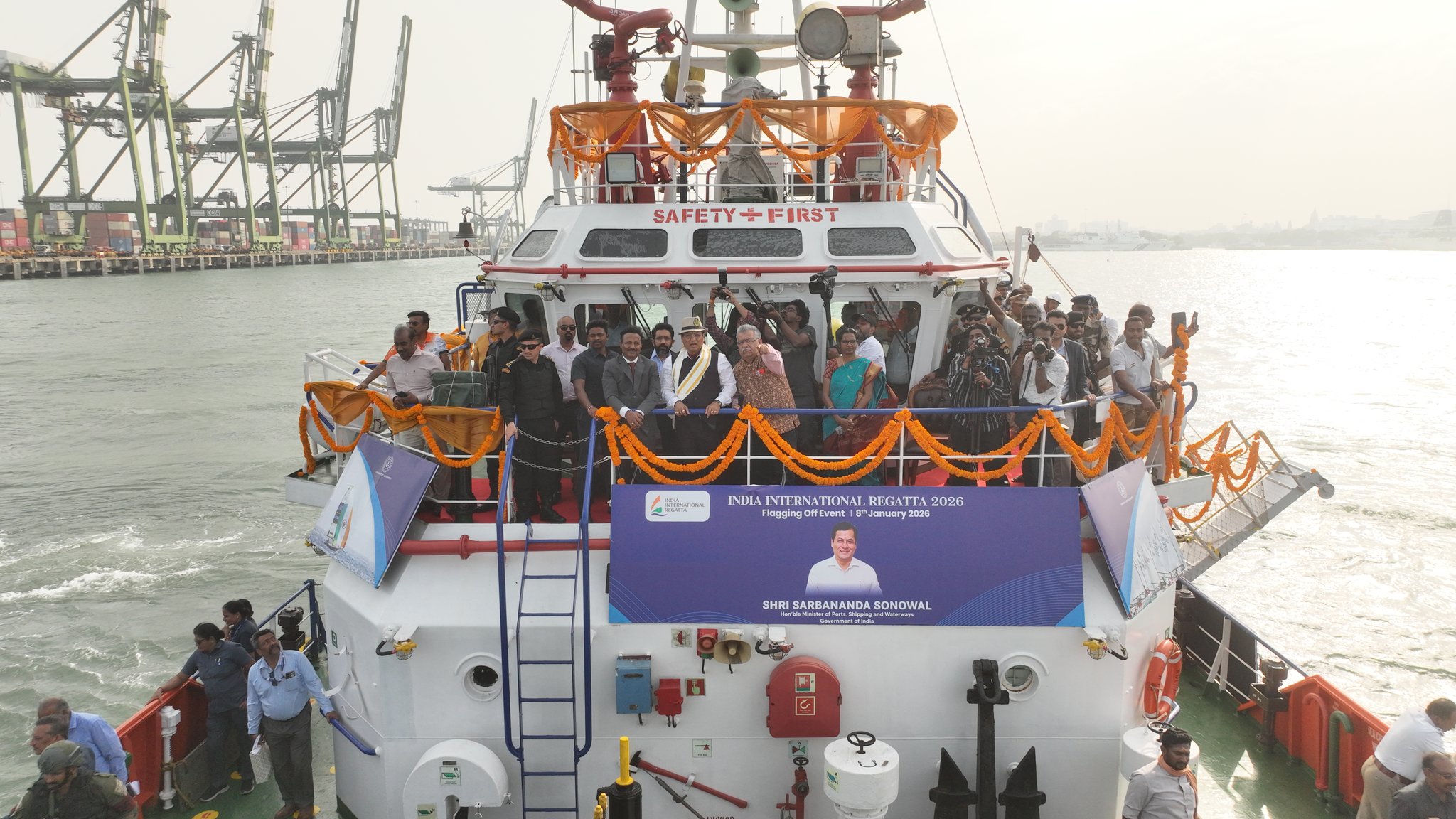
Sarbananda Sonowal flags off 11th India International Regatta at Chennai Port

CHENNAI : Hon’ble Union Minister of Ports, Shipping & Waterways, Shri Sarbananda Sonowal, on [date], inspected the Guard of Honour at Chennai Port Authority and formally flagged off the India International Regatta Programme at Bharathi Dock, marking the commencement of the 11th Edition of the India International Regatta—one of Asia’s premier youth sailing competitions.

Addressing the gathering, the Minister highlighted the Government of India’s commitment to promoting maritime sports, coastal tourism, and youth engagement as part of its broader vision for a vibrant blue economy. He underscored that initiatives such as international regattas not only nurture sporting excellence but also strengthen India’s maritime culture and global presence in water sports.

The India International Regatta, hosted by Chennai Port Authority in association with national and international sailing bodies, has emerged as a key platform for identifying and grooming young sailing talent. The event attracts participation from sailors across India and several overseas nations, providing young athletes with international exposure and competitive experience.

Shri Sonowal noted that ports are increasingly being developed as multi-dimensional hubs—supporting trade, logistics, tourism, sports, and community engagement. He added that leveraging port infrastructure for sporting and recreational activities aligns with the government’s focus on sustainable port-led development.

Senior officials from the Ministry of Ports, Shipping & Waterways, Chennai Port Authority, Indian Navy, Indian Coast Guard, sailing associations, and local administration were present during the event. The programme also witnessed enthusiastic participation from young sailors, coaches, and maritime stakeholders.

The 11th India International Regatta is expected to play a significant role in strengthening sailing infrastructure in the region, encouraging youth participation in water sports, and positioning Chennai as a leading hub for international sailing events.

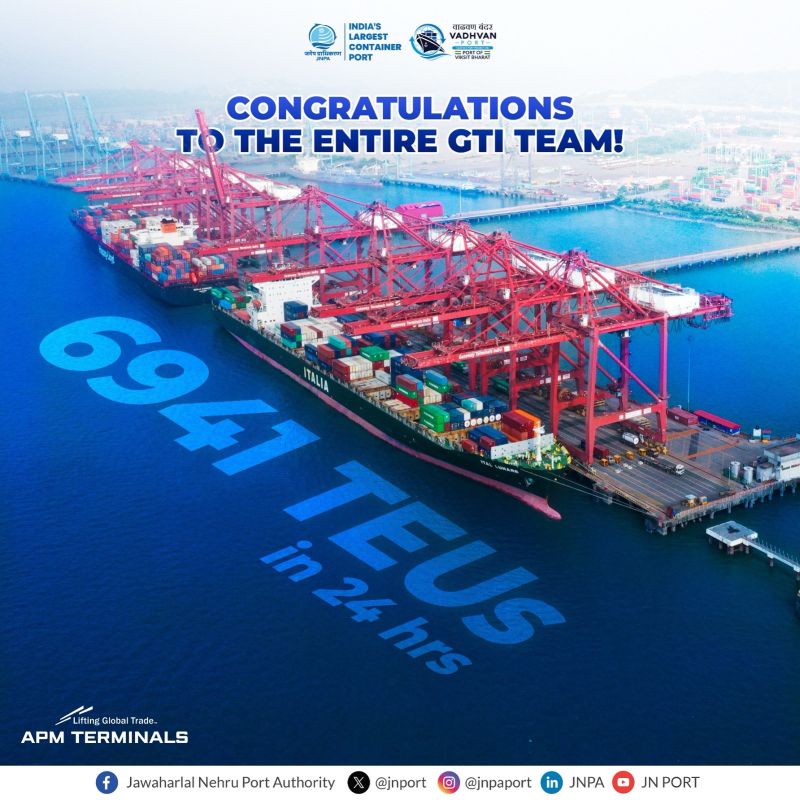
Gateway Terminals India at JNPA sets new operational benchmark with 6,941 TEUs in 24 Hours

MUMBAI : Gateway Terminals India Pvt. Ltd. (GTI), operated by APM Terminals at Jawaharlal Nehru Port Authority (JNPA), has achieved an impressive operational milestone by handling 6,941 TEUs within a 24-hour period, marking one of the highest single-day container throughput records at the port.

Jawaharlal Nehru Port Authority has congratulated the entire GTI team for this remarkable achievement, which reflects their operational excellence, efficient planning, and strong coordination among all stakeholders, including terminal operators, port officials, shipping lines, and logistics partners.

The milestone underscores GTI’s commitment to enhancing productivity, optimizing terminal operations, and supporting India’s growing containerized trade. It also highlights JNPA’s continued focus on improving port efficiency, embracing best global practices, and strengthening its position as India’s premier container port.

JNPA extended its best wishes to the Gateway Terminals India team for sustained success and many more such achievements in the future, reaffirming its support for initiatives that drive performance, reliability, and growth in the port ecosystem.

Piyush Goyal visits Liechtenstein, reviews India–EFTA TEPA implementation and pitches for investments

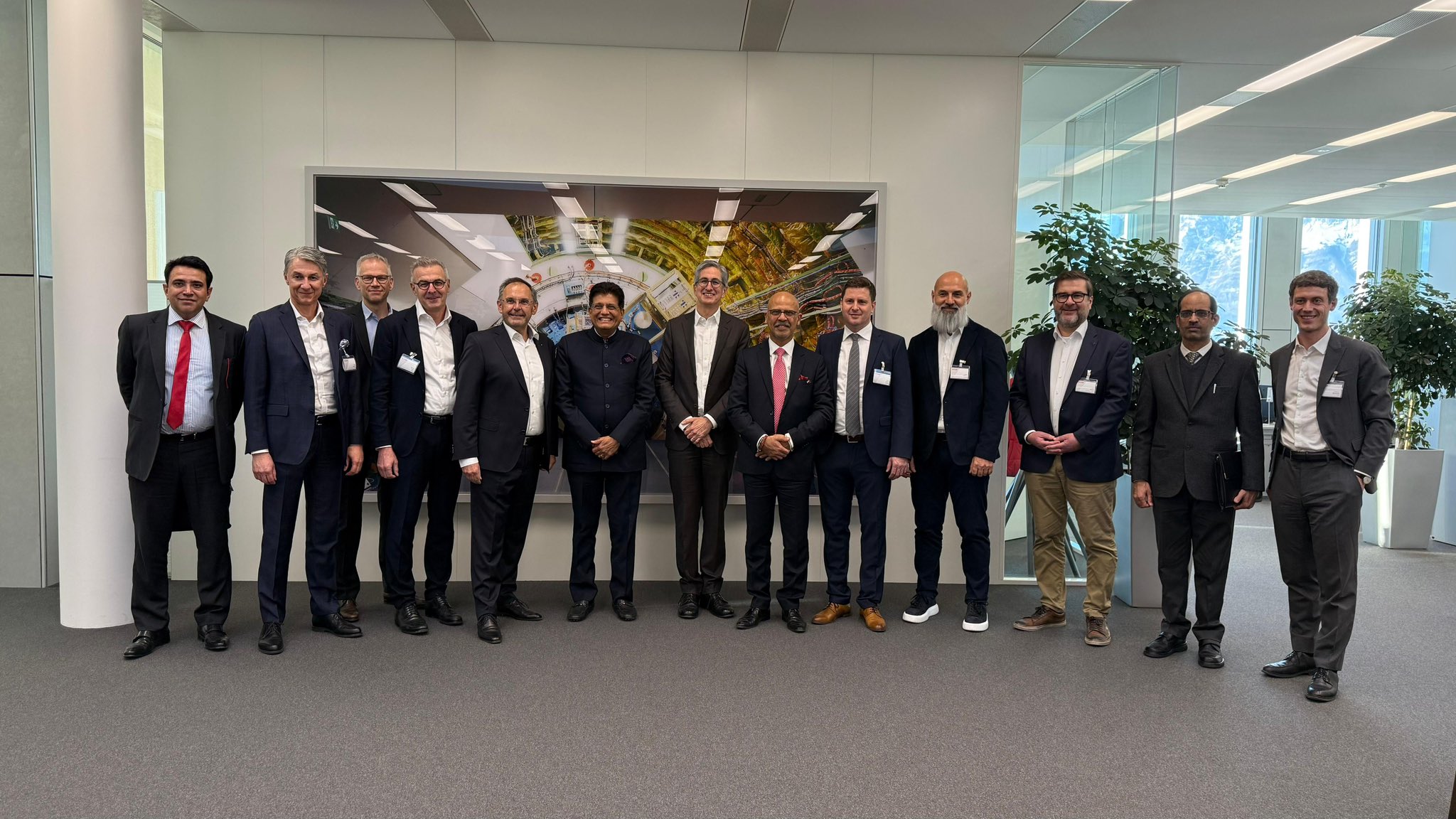
LIECHTENSTEIN : Union Minister of Commerce and Industry Shri Piyush Goyal undertook an official visit to Liechtenstein on 7 January 2026. During the visit, the Minister paid a courtesy call on H.S.H. Hereditary Prince Alois von und zu Liechtenstein at Vaduz Castle, called on H.E. Ms Brigitte Haas, Prime Minister, held a meeting with H.E. Ms Sabine Monauni, Deputy Prime Minister and Minister of Foreign Affairs, Environment and Culture, participated in an interview with ORF, attended a luncheon hosted by the Deputy Prime Minister; visited Hilti AG for an interaction with its leadership.

The first ministerial visit of 2026 reflects India’s commitment to accelerate the implementation of the India–EFTA Trade and Economic Partnership Agreement (TEPA) and translate it into sustained trade, investment, and manufacturing partnerships. The Minister also recalled the Prime Minister Shri Narendra Modi’s emphasis on India’s constructive role and optimism in the global economy. Prime Minister Modi has said: “The world is seeing India with a ray of hope amidst uncertainty” The Minister noted that this sentiment resonates with India’s approach to partnerships that create real outcomes for businesses, MSMEs, farmers, fishermen and communities.

TEPA is India’s first free trade agreement with a developed group of EFTA countries (Iceland, Liechtenstein, Norway, and Switzerland). It signals the improving quality of Indian products, the expanding and diversified range of Indian exports, and a steady strengthening of India’s manufacturing capabilities that support “Make in India” and “Make for the World”.

The Minister underlined that TEPA represents a shift to a higher-quality economic relationship. India’s manufacturing ecosystem is increasingly combining scale, competitiveness, and reliability for global markets.

In meetings with the Liechtenstein leadership and business community, the Minister set out India’s growth story as a stable and scalable base for long-term partnership. India is today the fourth largest economy, with an estimated GDP of USD 4.13 trillion in 2025. India offers both scale and reform momentum, a large and expanding consumer market, a deepening industrial base, and a sustained focus on ease of doing business, digitisation, and infrastructure-led competitiveness.

Both sides also exchanged views on the global business environment. With supply chains facing disruptions, uncertainties, and sharper volatility, India and Liechtenstein can combine strengths to offer stability and predictability to investors and enterprises. India’s scale, talent, and manufacturing depth can complement Liechtenstein’s specialised industrial capabilities, high-value innovation, and financial expertise. Together, these can create resilient value chains and a reliable investment bridge, sending a signal of confidence and hope in an increasingly unsettled world.

At Hilti AG, the Minister encouraged stronger industry-to-industry partnerships, higher value addition, supplier linkages including MSMEs, and an expanded role for India-based production in global operations. He invited Liechtenstein companies to use TEPA as a platform to grow their India presence, build manufacturing and innovation partnerships, and participate in India’s expanding opportunities across sectors.

The visit concluded with a call to intensify India–Liechtenstein and wider India–EFTA engagement in the months ahead. The Minister encouraged greater participation of EFTA companies in key trade and investment events in India and invited closer collaboration through business dialogues and delegations. TEPA carries an agreed ambition to facilitate USD 100 billion in investments into India and support the creation of one million direct jobs. The EFTA’s market access offer under TEPA covers 100% of non-agri products and tariff concession on Processed Agricultural Products (PAP). Sensitivity related to PLI in sectors such as pharma, medical devices & processed food etc. have been taken while extending offers. India’s offer to EFTA covers 82.7% of tariff lines, accounting for 95.3% of EFTA exports. Over 80% of these imports are Gold, with no change in effective duty on Gold. Sensitive sectors protected, including pharma, medical devices, processed food, dairy, soya, coal, and sensitive agricultural products. India looks forward to welcoming more Liechtenstein and EFTA enterprises to India, translating TEPA into stronger investments, deeper technology partnerships, and a larger Indian footprint in global trade and investment flows.

25th All India Major Port Cultural Meet begins at Paradip Port

PARADIP : The 25th All India Major Port Cultural Meet 2025–26 was inaugurated on Thursday at Jayadev Sadan, Paradip Port. The four-day cultural event is being organised by Paradip Port Authority under the aegis of the Major Ports Sports Control Board.

25th All India Major Port Cultural Meet 2 25th All India Major Port Cultural Meet begins at Paradip Port

Shri P. L. Haranadh, Chairman, Paradip Port Authority, inaugurated the meet as Chief Guest. Addressing the gathering, he said that culture reflects the inner beauty of the human soul and plays an important role in promoting unity and harmony. He stated that it was a matter of pride for Paradip Port to host the 25th edition of the cultural meet in Odisha, a state renowned for its rich cultural heritage, classical Odissi dance and artistic excellence.

He appreciated the enthusiastic participation of teams from major ports across the country and noted that the colourful inaugural parade reflected the vibrant cultural programmes planned for the meet. Emphasising that participation and cultural exchange are more important than competition, he observed that port employees across India possess remarkable cultural talent beyond their professional roles. Assuring participants that all necessary arrangements had been made for their comfort and wished everyone a memorable and enriching experience. With these remarks, he declared the meeting open.

The inaugural proceedings were presided over by Chairman, Organising Committee, Shri Himansu Sekhar Rout. Shri Ashoka Kumar Sahu, FA & CAO; Shri Susil Chandra Nahak, Chief Mechanical Engineer; and Dr. Bibhuti Bhusan Das, Chief Medical Officer were also present on the occasion. Dr. D. P. Sethi, Secretary of the Organising Committee, gave the welcome address.

More than 200 participants from nine major ports, including Chennai, Cochin, Deendayal, Jawaharlal Nehru Port Authority, Kolkata, Mumbai, Visakhapatnam, V.O. Chidambaranar and host Paradip Port, are taking part in the meet. Competitions are being held in Classical Vocal, Light Vocal, Instrumental Music, Dance and Drama categories.

The inaugural cultural performance was presented by Mumbai Port Authority followed by Visakhapatnam Port Authority setting the tone for the vibrant programmes scheduled over the next few days.

The 25th All India Major Port Cultural Meet will conclude on January 11, 2026, with a valedictory function and prize distribution ceremony.

Global Shipping Outlook 2026: Shipping rates to fall in 2026, but geopolitics and regulation cloud outlook

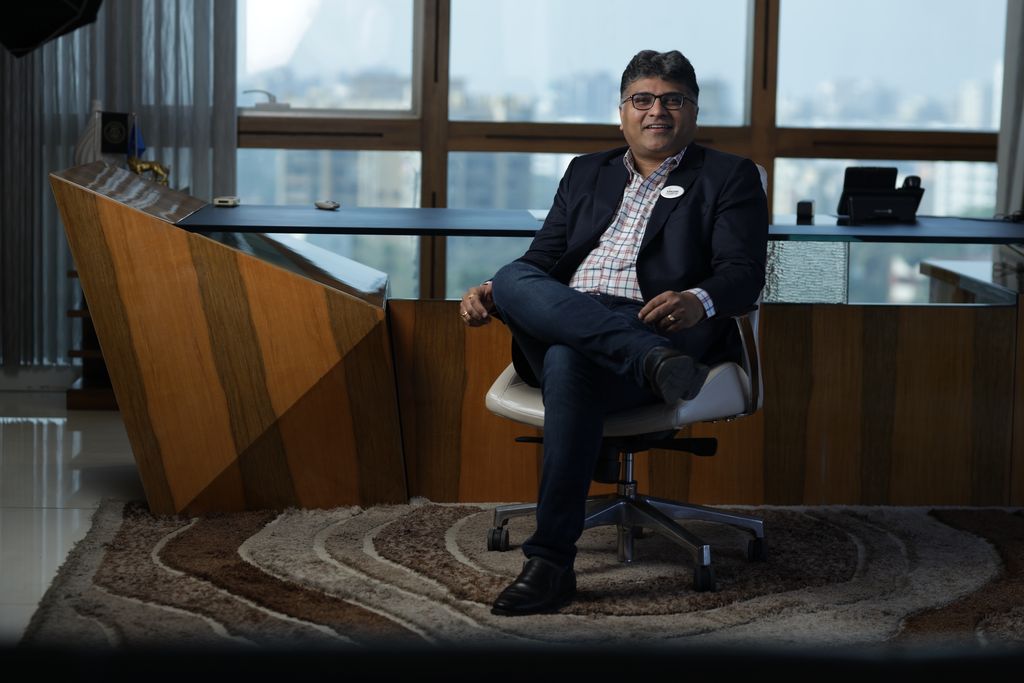
MUMBAI: The global shipping industry is entering 2026 firmly as a shipper-driven market, shaped by a widening supply–demand imbalance and easing freight rates, according to an industry outlook shared by Mr. Supal Shah, CEO of Sarjak Container Lines.

“While freight rates are expected to normalize sharply from recent highs, the industry is unlikely to return to pre-crisis stability due to persistent geopolitical, regulatory, and environmental risks.” shared Mr. Supal Shah.

“2026 will bring relief on rates, but not certainty,” said Supal Shah. “Oversupply is structural, costs are permanently higher, and volatility is now a feature, not a phase, of global shipping.”

Market Dynamics & Freight Rates

The sector is transitioning into a period of structural overcapacity, placing sustained downward pressure on freight rates across most segments.

  • Capacity Overhang: Global fleet capacity is projected to grow by 3.6%–5% in 2026, significantly outpacing demand growth of 1.5%–3%, according to industry forecasts.
  • Orderbook Pressure: The global container ship orderbook currently stands at 26–28% of the existing fleet, one of the highest levels seen in more than a decade.
  • Rate Outlook: Average global spot freight rates are expected to decline by up to 25% year-on-year, while long-term contract rates may fall by 8–12% as shippers regain negotiating leverage.
  • Profitability Impact: Industry-wide profitability is expected to weaken materially, with several analysts forecasting losses of up to USD 10 billion in 2026, driven by falling revenues and structurally higher operating costs.

Segment-Specific Outlook

Performance across shipping segments is expected to diverge significantly:

Container Shipping: Fundamentals are likely to deteriorate further due to oversupply, easing port congestion, and the potential return of vessels to Suez Canal routings, which would release additional effective capacity.

Tanker Shipping: Crude and product tanker markets are expected to remain resilient, supported by steady end-demand, OPEC+ supply adjustments, and longer average voyage distances that keep tonne-mile demand elevated.

Dry Bulk: The sector is expected to remain weak but stable, with potential upside if global trade volumes recover or geopolitical tensions ease.

LNG & Car Carriers: These segments are likely to remain broadly stable, underpinned by long-term contracts, energy transition dynamics, and steady vehicle trade flows.

Key Risk Factors to Watch

Several structural and geopolitical variables could materially alter the market trajectory:

Suez Canal Reopening: A broad return to Suez Canal transits could reduce effective global vessel demand by up to 10%, as shorter voyages free up capacity.

Geopolitics & Trade Policy: Rising trade protectionism, evolving U.S. tariff regimes, and shifting supply chains remain key uncertainties that could disrupt established trade lanes and dampen demand for higher-margin cargo.

Environmental Regulation: From 1 January 2026, the EU Emissions Trading System (EU ETS) moves to 100% emissions compliance, adding permanent cost structures to Europe-linked trade lanes and accelerating cost pass-through to shippers.

Technological & Operational Shifts

In response to sustained volatility, both shippers and vessel owners are reshaping operating models:

Digitalisation: Shippers are increasingly adopting continuous rate governance, real-time pricing analytics, and AI-driven procurement tools, moving away from rigid annual contracting cycles.

Sustainability & Fleet Strategy: Vessel owners are prioritising lifecycle optimisation, fuel flexibility, including LNG, methanol, and biofuels, and energy-efficiency investments to meet tightening decarbonisation targets while preserving asset competitiveness.

Outlook Summary

“While 2026 is expected to bring lower freight rates and improved cost visibility for shippers, the global shipping industry remains structurally fragile. Oversupply, regulatory costs, and geopolitical uncertainty will continue to define a market that is less crisis-driven, but far from stable.” shared Mr. Supal Shah.

“For shippers, this is a window of opportunity,” Shah added. “But success in 2026 will depend on smarter procurement, better data, and the ability to navigate risk, not just lower rates.”

About Sarjak Container Lines 

Sarjak Container Lines Pvt. Ltd. is a global project logistics specialist founded in 2003, delivering ODC, OOG, breakbulk, heavylift and freight-forwarding solutions through a dedicated equipment fleet and its own multipurpose vessel, SCL Mercury.  

With a strong international network spanning 84+ countries and 275+ port cities, the company ensures safe, efficient and end-to-end handling of complex cargo worldwide. Known for its technical expertise, customer-centricity and future-focused mindset, Sarjak Container Lines continues to deliver reliable, scalable and high-performance logistics solutions for sectors such as renewable energy, oil & gas, engineering, infrastructure, power, manufacturing and other diverse industries across global markets.