Home Blog Page 481

DFCCIL, JNPT hold High-Level Review on Crucial Vaitarna–JNPT Freight Corridor Link

NAVI MUMBAI: In a significant move toward enhancing India’s rail-based cargo movement, Shri Praveen Kumar, Managing Director, Dedicated Freight Corridor Corporation of India Limited (DFCCIL), met senior leadership of the Jawaharlal Nehru Port Authority (JNPA) to review progress on the critical Vaitarna–JNPT section of the Western Dedicated Freight Corridor (WDFC).

During the meeting held in Mumbai, Shri Kumar briefed Shri Gaurav Dayal, Chairman, JNPT, and Shri Ravish Kumar Singh, Deputy Chairperson, on the latest status of the soon-to-be-completed section, which is considered pivotal for seamless freight evacuation from the country’s busiest container gateway.

Detailed discussions focused on strengthening end-to-end connectivity between WDFC and JNPT, a linkage expected to transform freight logistics by enabling faster, more efficient, and dedicated rail movement for EXIM cargo. Officials underlined the strategic impact this integration will have on reducing transit time, boosting capacity, and ensuring more reliable freight operations.

Shri Praveen Kumar was accompanied by senior DFCCIL officials, including Shri Anurag Sharma, Director (Infrastructure); Shri Manish Kumar Awasthy, Executive Director (Infrastructure); Shri Sandesh Shrivastava, Executive Director (Project); Shri Vikas Kumar, Chief General Manager (Mumbai); and Shri Arvind Nagar, JGM (OP&BD).

As part of the interaction, the DFCCIL Managing Director also presented the organisation’s Coffee Table Book to the JNPT Chairman, showcasing the corporation’s journey, milestones, and its instrumental role in reshaping India’s freight transportation landscape.

Expressing strong interest in the project, the JNPT Chairman highlighted the far-reaching advantages of this strategic corridor. He noted that the Vaitarna–JNPT connectivity is expected to drive a major modal shift from road to rail, support sustainable logistics, and accelerate the growth of India’s EXIM trade. The improved rail access is also set to enhance operational efficiency and competitiveness at JNPT by optimizing capacity and strengthening the cargo-handling ecosystem.

The Vaitarna–JNPT section, once commissioned, will serve as a crucial link in the Western DFC, significantly augmenting freight movement between the hinterland and India’s premier container port.
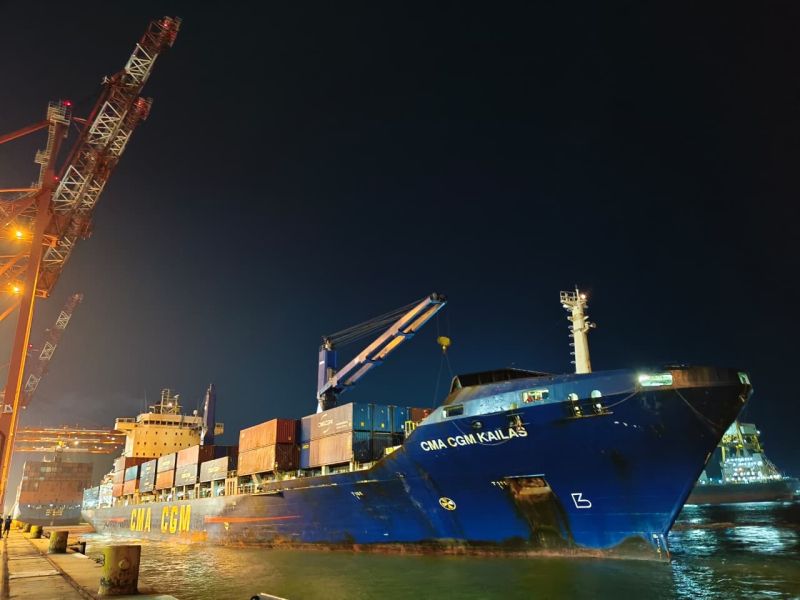
DBGT Strengthens International Trade Connectivity by successfully handling an ad hoc call of M. V. CMA CGM Kailas

TUTICORIN: Dakshin Bharat Gateway Terminal (DBGT) has further expanded its global trade network by successfully handling an ad hoc call of M. V. CMA CGM Kailas, arriving from the Port of Mtwara, Tanzania. This call also established a direct onward sailing connection from DBGT to the Port of Ho Chi Minh City, Vietnam and Chinese ports marking a significant milestone in international connectivity.

M. V. CMA CGM Kailas berthed at DBGT, VOC Port on 08 January 2026 at 2340H, during which approximately 600 TEUs were handled. The vessel subsequently sailed on 09 January 2026 at 0515H.

Port Rotation of M. V. CMA CGM Kailas:
TZMYW (Port of Mtwara, Tanzania) > INTUT (Tuticorin – DBGT) > VNSGN (Port of Ho Chi Minh City, Vietnam) > CNSKH (Port of Shekou, China) > CNDCB (Port of Da Chan Bay, China)

With the strong support of VOC Port, DBGT reaffirms its commitment to the EXIM trade and the shipping fraternity by strengthening global trade linkages, driving economic development and reinforcing its position as a premier gateway for international commerce.

India-U.S. trade deal didn’t happen because Modi did not call Trump: Lutnick

WASHINGTON : U.S. Commerce Secretary Howard Lutnick has said the trade deal with India did not happen because Prime Minister Shri Narendra Modi did not call U.S. President Donald Trump.

Mr. Lutnick’s remarks came a few days after Mr. Trump said that Mr. Modi knew he was unhappy with India’s purchases of Russian oil and that Washington could raise tariffs on New Delhi “very quickly”.

The threat by the U.S. President came at a time when the two countries were negotiating a bilateral trade agreement. So far, six rounds of negotiations have been held for that. The pact includes a framework deal to resolve the 50% tariffs on Indian goods entering America.

“It’s all set up and you have got to have Modi call the President. And they were uncomfortable doing it,” Lutnick said in an interview on the All-In podcast, a U.S. show by four venture capitalists that focuses on business and technology.

“So Modi didn’t call.” Responding to Lutnick’s remarks, India’s foreign ministry said the “characterisation of these discussions in the reported remarks is not accurate.”
The two nations have been close to a deal on several occasions since the agreement to negotiate in February last year, Indian foreign ministry spokesperson Randhir Jaiswal told reporters at a media briefing on Friday.

“We did Indonesia, the Philippines, Vietnam, and we announced a whole bunch of deals. So we did this whole bunch of deals because we negotiated them and assumed India was going to be done before them. I have negotiated them at a higher rate. So now the problem is that the deals came out at a higher rate. And then India calls back and says, ‘Oh, okay, we are ready. I said, ready for what.”

“Incidentally, Prime Minister and President Trump have also spoken on phone on eight occasions during 2025, covering different aspects of our wide-ranging partnership.”
Lutnick’s comments came after Trump stepped up the pressure for talks with a warning this week that tariffs could rise further unless India curbs its Russian oil imports.
The failure to reach a deal has pushed the Indian rupee to a record low and spooked investors waiting for progress in two-way negotiations.
India is still seeking a tariff rate between Washington’s offers to Britain and Vietnam that had formerly been agreed but the offer has expired, Lutnick added.
India’s trade ministry did not respond to an e-mailed request for comment on Lutnick’s remarks.
New Delhi and Washington were very close to a trade deal last year but a communication breakdown led to the collapse of any potential pact, Reuters reported.

It cited an Indian government official involved in the talks as saying that Modi could not have called Trump, for fear that a one-sided conversation would put him on the spot.

Govt may reduce number of customs duty slabs in Budget 2026

NEW DELHI : The Centre is reportedly considering reducing the number of customs duty slabs to five or six as part of efforts to streamline the customs framework. This follows major rationalisation in the previous budget cycle and aims to simplify the tariff structure, reduce disputes, and align duties with national priorities.

According to a report it quoted a senior official, there is scope for further rationalisation despite the changes made in the last budget. These efforts have been ongoing for several months, with an announcement expected in the 2026 budget.

The Central Board of Indirect Taxes and Customs (CBIC) is leading the changes, focusing on aligning customs duties with the revised Goods and Services Tax (GST) system. This is intended to create a more unified indirect tax regime and ease compliance for businesses operating under both customs and GST, the report added.

Officials have highlighted the need to address issues raised by businesses and are working to resolve persistent problems in the current customs structure. The government is also looking at redefining the duty structure between Special Economic Zones (SEZs) and Domestic Tariff Areas (DTAs) as part of broader SEZ reforms, the report stated.

Reducing classification disputes, which contribute to litigation, is a key focus. Over 75,000 customs cases were pending as of December 2024, with arrears of Rs 24,016.20 crore. Industry groups have called for an amnesty scheme in cases without wilful evasion to lower litigation.

Finance Minister Smt. Nirmala Sitharaman has stated that simplifying the customs duty framework remains a priority in the government’s reform agenda.

Made in India, but taxed like an import: Industry pushes for SEZ duty relief

NEW DELHI: As industry sharpens its wishlist ahead of the Union Budget 2026, a key demand gaining traction is the easing of customs duties on goods sold by Special Economic Zone (SEZ) units into the domestic market, a move companies argue is essential to keep SEZs relevant amid India’s expanding free trade agreement (FTA) landscape.

Under current rules, while domestic manufacturers can supply raw materials and inputs to SEZ units without restrictions, finished or semi-finished goods sold by SEZs into the domestic tariff area attract full import duties. Industry bodies say this creates a competitive imbalance at a time when India is pursuing aggressive manufacturing and export-led growth under initiatives such as Make in India.

Speaking to CNBC-TV18, Anurag Sehgal, Principal at Price Waterhouse & Co LLP, said the industry’s ask is limited and aligned with the government’s stated policy objectives. According to him, SEZ units should be required to pay customs duty only on the portion of inputs that were imported duty-free, rather than on the entire value of goods cleared into the domestic market.

Sehgal said the demand needs to be viewed in the context of India’s evolving trade and manufacturing ecosystem. With multiple FTAs being negotiated and signed, companies are re-evaluating supply chains and manufacturing locations. In this environment, SEZs, he argued, should be allowed to realise their full potential not just as export enclaves but as competitive manufacturing hubs that also support domestic industry.

He added that this approach was envisaged earlier under the proposed DESH Bill, which sought to replace the SEZ Act but has remained stalled. While the Bill included both procedural and fiscal reforms, Sehgal noted that the government has already taken steps towards regulatory easing by amending SEZ rules, including relaxing land requirements for priority sectors such as semiconductors and electronics. Fiscal easing, he said, would complete that reform arc even without a new law.

However, former Central Board of Indirect Taxes and Customs (CBIC) chairman Najib Shah pushed back strongly against the industry’s demand, cautioning against diluting the original purpose of SEZs.

Shah said SEZs were created as specialised export-oriented zones designed to overcome India’s domestic infrastructure, logistics and regulatory constraints. These zones, he noted, already enjoy significant advantages, including duty-free imports, easier compliance norms and superior infrastructure, benefits that are not available to manufacturers operating in the domestic tariff area.

He argued that free trade agreements and SEZs serve different policy objectives. While FTAs focus on tariff reduction and market access, SEZs are meant to enable competitive exports by providing a frictionless manufacturing environment. Allowing SEZ units to sell into the domestic market at lower duty rates, Shah said, would distort tariff parity and disadvantage domestic manufacturers who do not enjoy similar benefits.

Shah also pointed out that SEZs have not underperformed. He cited export numbers of around $170 billion in the previous year, suggesting that the zones continue to deliver on their core mandate. In his view, SEZs can complement FTAs by producing competitive export goods rather than seeking preferential access to the domestic market.

The debate highlights a deeper policy question confronting the government ahead of Budget 2026: whether SEZs should evolve beyond their export-first design to support India’s broader manufacturing ambitions, or whether maintaining tariff parity and the original export focus remains critical to protecting domestic industry.

With Budget discussions intensifying, the government will have to balance industry’s call for manufacturing flexibility against concerns over revenue impact and competitive fairness. Whether it chooses targeted duty tweaks, further procedural reforms, or maintains the status quo, the decision is likely to shape the future role of SEZs in India’s trade and industrial strategy.

RBI considering fresh exporter relief steps after low take‑up of loan moratorium: Report

NEW DELHI: India’s central bank is considering new ways to support exporters hit by U.S. tariffs after a moratorium on loan repayments it offered last year drew few takers, two sources aware of the matter said.

Sectors from garment-making and jewellery to leather goods and chemicals companies have been hit by Washington’s tariffs on imports from India of up to 50%, including a 25% levy imposed due to New Delhi’s purchases of Russian oil.

Earlier this week, U.S. President Donald Trump warned that tariffs could rise further unless India curbs its Russian oil imports, escalating the pressure as trade talks between the two countries drag on.

After the U.S. imposed its tariffs last year, the Reserve Bank of India and the government rolled out relief measures.

In November the RBI offered exporters with U.S. exposure the right to defer repayment of term loans due between September 1 and December 31, but fewer than a fifth of eligible exporters applied, prompting the central bank to think of other ways to help exporters, a source aware of its thinking said.

The RBI is weighing whether to loosen the eligibility criteria for the loan moratorium or allow for fresh lending at subsidised interest rates, the source said.

Banks were required to show proof of revenue loss, which many firms could not do by December, according to a senior public sector banker who also said very few exporters had applied for the moratorium on payments.

In talks with the government, bankers have said cash subsidies that help reduce the impact of business losses or squeezed export margins may be more helpful than loan relief, the banker said.

The sources declined to be identified as they are not authorised to speak to the media. A spokesperson for the RBI did not respond to a Reuters query.

AWAITING 2026 ORDERS

The central bank and bankers are also in conversation with export agencies to assess the flow of orders in the new year before finalising new relief measures, the two sources said.

India’s exports to the U.S. remained resilient until November as many exporters had locked in orders prior to the tariffs being imposed while others offered to ship goods at lower margins to avoid losing all revenue.

January orders are moderating or producing thinner margins, raising concern that existing relief measures may not offset weak demand, at least four exporters across the textiles, chemicals and engineering goods industries said.

Contracts for the new year which typically get finalised in December are also being deferred temporarily, said Mr. Ajay Sahai, CEO of the Federation of Indian Export Organisations.

“But since a trade deal has not been finalised yet, buyers have agreed to defer…till end of January,” he said.

This month the trade ministry began a scheme offering interest-cost subsidies for certain kinds of short-term credit used by small and midsized exporters, as part of the government’s 450.6 billion-rupee ($5.1 billion) support package for exporters approved last year.

Basmati exports to Iran hit by currency crisis, stocks worth ₹2,000 crore stranded at ports

NEW DELHI : A sharp fall in the Iranian rial and the withdrawal of food-import subsidies have forced Indian exporters to halt basmati shipments, hitting millers in Punjab and Haryana. The disruption follows a sharp fall in the Iranian currency after the tightening of US sanctions. With the rial touching a new low against the US dollar, the Iranian government has stopped providing subsidies on food imports, prompting Indian exporters to put shipments on hold.

As a result, consignments worth at least ₹2,000 crore are currently stuck at international ports, awaiting clearance for shipment to Iran.

“Due to the sharp depreciation of the Iranian rial against the US dollar, which has reached a record low, the Iranian government has refused to continue subsidies on food imports that were in place for many years. This has made exporters reluctant to carry on trade,” said Punjab Rice Millers Association vice-president Ranjit Singh Jossan, who is also an exporter.

Earlier, trade between India and Iran was facilitated through a barter system. However, the arrangement ended after India stopped importing oil from Iran. “Despite this, Iran continued to import food products such as tea, basmati rice and medicines from India, but now it appears that these imports are also being curtailed,” Jossan said.

Iran has traditionally been one of the largest buyers of Indian basmati rice, importing around 12 lakh tonnes annually, valued at about ₹12,000 crore. Nearly 40% of this volume was sourced from Punjab and Haryana, the two major producers of aromatic basmati. Prolonged uncertainty in exports has already affected rice millers, and if the situation persists, prices received by farmers are also expected to decline.

Before the Iran–Israel conflict, the exchange rate stood at about 90,000 rial to a US dollar. It has since weakened to around 1,50,000 rial per dollar, making imports significantly more expensive for Iran. Earlier, Iran had offered a preferential rate of 28,500 rial per US dollar for food imports, but this facility has now been withdrawn.

Iran typically halts imports from overseas markets around June 21, when its domestic harvest arrives, and reopens imports in September. During this lean period, Indian exporters usually procure stocks from millers. However, the current uncertainty has disrupted this cycle.

“The prices of the basmati varieties we process have already fallen by ₹3 to ₹4 per kilogram,” said a rice miller. The 1509 and 1718 varieties, known for their long grain and aroma and produced largely in Punjab and Haryana, are particularly popular in the Iranian market.

UP plans export-led excise push, sets ₹68,000 crore revenue target for next fiscal

LUCKNOW : Uttar Pradesh is preparing to scale up its excise economy with an export-oriented policy framework and a sharply higher revenue target of Rs 68,000 crore for the next financial year, as the state looks to transform its liquor sector into a stronger manufacturing and investment-driven industry.

Excise Minister Shri Nitin Agarwal said the upcoming excise policy will focus on building global brands from Uttar Pradesh, rationalising licensing norms and attracting fresh investment, while strengthening enforcement to curb illegal liquor.

“The next excise policy will be export-oriented. Our focus is to build the brand of Uttar Pradesh so that liquor produced here captures a larger share of both domestic and international markets. A few brands from UP have gone global, but their footprint is still very limited,” Agarwal told FPJ.

For the current financial year 2025-26, Uttar Pradesh’s excise revenue target was Rs 63,000 crore. Agarwal said collections had crossed Rs 41,000 crore by December, suggesting the state is on course to meet the annual goal.

The minister said excise revenues in the state have almost doubled in four years. In 2022, the target stood at Rs 36,000 crore. “We are now moving towards Rs 68,000 crore. This growth has been possible due to consistent policy reforms, improved transparency and structural changes in the system,” he said.

A key area of reform under the new policy will be further rationalisation of licensing fees and procedures. The government has simplified the licensing framework over the past four years, but Agarwal said more needs to be done to improve ease of doing business and make exports commercially viable. “The next policy will focus on making the sector more competitive and investment-friendly,” he said.

He attributed the steady rise in revenue to the introduction of e-auctions, wider participation and the dismantling of monopolies. This year, nearly 40 percent of those who secured retail shops through e-auctions were new entrants. “This shows that the monopoly of a few has been broken and confidence in the system has increased,” Agarwal said.

Technology-led monitoring has also reshaped the sector. Under the track and trace system, every bottle sold in Uttar Pradesh is digitally tracked from distillery to retail outlet. “We now have data for every bottle sold in the state. This has significantly curbed the sale of illegal liquor. I can say with conviction that 99.9 percent of liquor sold in Uttar Pradesh is routed through legitimate channels,” he said.

The minister underlined the sharp increase in capital investment in recent years. Earlier, total investment in the excise sector was estimated at around Rs 5,000 crore. That figure has since expanded substantially, with memorandums of understanding worth nearly Rs 30,000 crore signed.

“In 2022, there were only 60 distilleries in Uttar Pradesh. Today, the number is close to 100. A new distillery will start operations in Farrukhabad in March,” Agarwal said, adding that expanding manufacturing capacity is central to the state’s export ambitions.

He said Uttar Pradesh has a natural advantage in grain-based liquor, backed by its large agricultural base. “UP is a major granary. Grains such as wheat and corn support both liquor and ethanol production. Grain-based liquor is gaining popularity in the market, and we want to use this trend to expand production and revenue,” he said.

On the retail side, the government’s experiment with composite shops, where Indian-made foreign liquor and beer are sold under one roof, has boosted collections. According to Agarwal, revenue from these outlets has increased by around 30 percent.

The minister said the government will continue refining the excise framework to attract investment, promote exports, ensure availability of global brands and strengthen Uttar Pradesh’s position as a major excise hub.

At the same time, he asserted that the government does not promote alcohol consumption. “We do not encourage people to drink. There is no government advertising. But since people do consume liquor, it is our responsibility to ensure quality products at affordable prices and to prevent illegal alcohol,” he said.

MSC takes world’s largest container line crown from Maersk

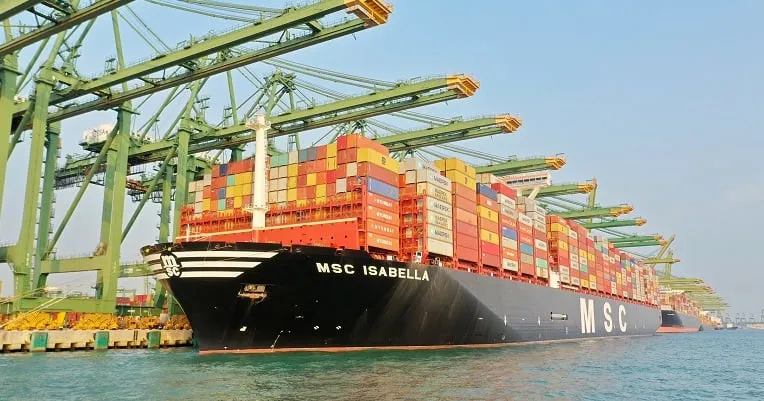
GENEVA : MSC Mediterranean Shipping Company’s rapid expansion over the past 12 months has put more distance between itself and liner rivals.

Latest figures from Alphaliner show MSC edging ahead of Maersk for the first time by 1,888 teu. MSC has 645 ships with a combined capacity of 4,284,728 teu, compared to Maersk with 738 ships with 4,282,840 teu in capacity.

MSC had been expected to overtake Maersk as the world’s largest container line for some time given both its large newbuild orderbook and acquisition of secondhand and chartered tonnage in recent times.

Both lines hold a market share of 17% at present and significantly larger than their nearest rival CMA CGM a 12.6% share and 3.17m teu of capacity.

MSC is set to considerably extend its lead over Maersk in capacity in the coming years with an orderbook of 60 newbuilds, just shy of 1m teu in capacity, or 23% of its current fleet. By contrast Maersk’s orderbook stands at 6% of its current fleet with 25 ships totalling 255,100 teu in capacity.

Much of Maersk’s expansion and investment over the last 12 months has focused on logistics and e-commerce related fulfilment rather than physical assets of containerships.

The world’s largest container carrier widened the gap with the second-largest carrier, AP Moller-Maersk, to 2.5m teu in 2025, up from 1.9m teu one year ago, according to Alphaliner data.

The Aponte-family-controlled group achieved that with above-average market fleet growth of 11.7%

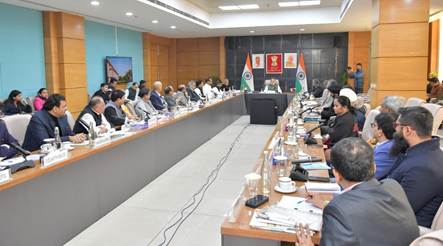
8th Meeting of National Traders’ Welfare Board reviews initiatives to strengthen retail trade sector

NEW DELHI : The 8th Meeting of the National Traders’ Welfare Board (NTWB) was held at Vanijya Bhawan, New Delhi, under the chairmanship of Shri Sunil J. Singhi. Addressing the meeting, Joint Secretary, Department for Promotion of Industry and Internal Trade (DPIIT), Shri Sanjiv, highlighted the importance of the retail trade sector in the Indian economy and encouraged Members to enhance awareness about the initiatives and activities of the NTWB, including virtual interactive sessions. He appreciated the leadership of the Chairperson and observed that the progress achieved by the Board reflects effective coordination and a clear vision.

image0022IQ2 8th Meeting of National Traders’ Welfare Board reviews initiatives to strengthen retail trade sector

The Chairperson, Shri Sunil, apprised the Board of the major initiatives undertaken towards achieving its objectives. He informed that representations received from trade associations and Members had been forwarded to the concerned Ministries and Departments for necessary action. He invited suggestions from Members to further enhance awareness and outreach of welfare schemes related to the retail trade sector.

He also briefed the Board on the next-generation Goods and Services Tax (GST) reforms and their positive impact on traders and consumers. He referred to the nationwide traders-led campaign, “GST Bachat Utsav”, which reflects the trading community’s appreciation of the transformative GST reforms implemented under the leadership of the Hon’ble Prime Minister Shri Narendra Modi. He reiterated the Government’s commitment to creating a conducive business environment through simplified procedures, reduced compliance burden, financial support and improved infrastructure.

The Board emphasized the importance of the ‘Vocal for Local’ initiative to boost indigenous industries and promote locally made products. In this context, discussions were held on taking the ‘Swadeshi Sankalp Daud’ nationwide from 12th to 23rd January, encouraging citizens across the country to participate and embrace the spirit of Swadeshi in both production and consumption.

The Chairperson further stressed the importance of digital transformation in the retail sector and urged small traders to leverage platforms such as the Open Network for Digital Commerce (ONDC) to expand market access and enhance income opportunities. It was highlighted that future policies and schemes will continue to prioritize traders’ welfare through capacity building, financial support, social security measures, market linkages and transparent grievance redressal mechanisms. Reaffirming the mission and vision of the Board, the Chairperson stated that sustained efforts would ensure traders remain competitive, secure and prosperous in the evolving economic landscape.

The meeting was attended by non-official Members representing various trade associations and States and Union Territories, along with ex-officio Members from nine Ministries and Departments of the Government of India.