Home Blog Page 485

India–UAE Food Corridor to be launched; APEDA’s ‘Bharati Initiative’ to spotlight agri-food start-ups

The 9th edition of Indusfood 2026, India’s flagship global food and beverage (F&B) sourcing exhibition, is scheduled to be held from 8 to 10 January 2026 at the India Expo Centre & Mart, Greater Noida. Organised by the Trade Promotion Council of India (TPCI), the event aims to further consolidate India’s position as a trusted and competitive partner in global food supply chains.

Branded as Asia’s premier F&B trade show, Indusfood 2026 will bring together leading Indian food producers, international buyers, policymakers, industry leaders and global institutions on a single platform to facilitate trade collaborations, bilateral engagements and long-term partnerships.

The event will be formally inaugurated by Union Minister of Food Processing Industries Shri Chirag Paswan, reflecting the Government’s commitment to strengthening India’s food processing ecosystem, enhancing export competitiveness and expanding global market access for Indian food products.

A key highlight of Indusfood 2026 will be the launch of initiatives such as the India–UAE Food Corridor by Abu Dhabi Food Hub, aimed at enhancing food security, streamlining supply chains and accelerating bilateral food trade flows. Another prominent highlight will be the 75-year milestone celebration by Saudi Arabian exhibitor Alsalan. This cultural and commercial showcase underscores Saudi Arabia’s long-standing food trade legacy and its strengthening partnership with India.

The exhibition is expected to witness participation from over 120 countries, including thousands of verified global buyers and several high-level international trade delegations.

Indusfood 2026 will also feature dedicated global business and logistics platforms, including a special ‘Bharat Mart’ session by DP World, focusing on export infrastructure, logistics integration and policy-level dialogue to boost India’s export competitiveness. In the area of culinary diplomacy and cultural engagement, the inaugural World Culinary Heritage Conference will be hosted, bringing together international and Indian chefs, policymakers and industry leaders to deliberate on heritage preservation and innovation.

Skill development and culinary leadership will be another focus area, with the India International Centre for Culinary Leadership (IICCL), in collaboration with IFCA, conducting a five-day residential programme for 150 chefs, offering Level 1 ‘Ambassador of Indian Cuisine’ certification. High-level cultural engagements will include the ‘India on a Platter’ Gala Dinner at Taj Palace, hosted by the Ministry of Commerce & Industry, for ministers, ambassadors, global buyers and international delegations.

The exhibition will also host international tasting and innovation platforms, including special tasting sessions such as Cheese and Wine Tasting by Cyprus, and APEDA’s ‘Bharati Initiative’, which will showcase innovative Indian agri-food start-ups to global buyers through Shark Tank–style pitch sessions. Curated engagements with industry bodies such as FIFI, FHRAI and KSBA will promote knowledge exchange, networking and sectoral collaboration.

Indusfood 2026 will host several high-level global delegations, including trade association leaders from Turkey, Worldchefs President Chef Andy Cuthbert and Asia Continental Director Chef Willment Leong, as well as senior government officials and retail buyers from Fiji representing major supermarket chains.

As global demand rises for safe, traceable, sustainable and ethically sourced food, Indusfood 2026 will serve as a key platform connecting Indian producers with global markets. With a strong focus on innovation, sustainability, value-added food processing and export-led growth, the event is poised to act as a catalyst for the next phase of India’s food trade expansion, opening new avenues for collaboration, investment and global competitiveness.

India’s economy to grow by 7.4% in FY26, driven largely by service sector: NSO Data

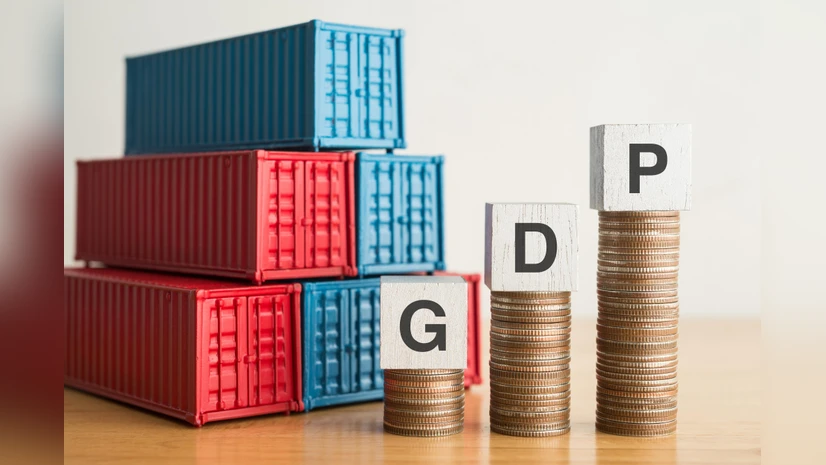
NEW DELHI: The Real GDP has been estimated to grow by 7.4% in the Financial year 2025-26 against the growth rate of 6.5% during FY 2024-25, as per the first advance estimates released by the National Statistics Office (NSO) on Wednesday.

The Nominal GDP is estimated to grow at 8% in FY 2025-26, it said.

Real GDP is estimated to attain a level of Rs 201.90 lakh crore in FY26, against the Provisional Estimates (PE) of GDP for FY25 of Rs 187.97 lakh crore.

Nominal GDP is estimated to reach Rs 357.14 lakh crore in FY 2025-26, up from Rs 330.68 lakh crore in FY 2024-25.

Further, the Real Gross Value Added (GVA) is estimated at Rs 184.50 lakh crore in FY 2025-26, up from the Provisional Estimates for FY 2024-25 of Rs 171.87 lakh crore, reflecting a 7.3% growth rate.

Nominal GVA is estimated to reach Rs 323.48 lakh crore in FY 2025-26, up from Rs 300.22 lakh crore in FY 2024-25, reflecting a 7.7% growth rate.

Nominal GDP uses current prices, including inflation, while Real GDP adjusts for inflation using base-year prices, showing true output growth.

The NSO said the growth momentum is being driven largely by the services sector, with real Gross Value Added (GVA) projected to expand by 7.3%. Financial, real estate, and professional services, along with public administration, defence, and other services, are estimated to grow by a robust 9.9% at constant prices during the year.

Manufacturing and construction are also expected to support overall growth, with the secondary sector projected to grow by 7.0%, while trade, hotels, transport, communication, and broadcasting services are projected to expand by 7.5%. In contrast, the agriculture and allied sector is estimated to post a more moderate growth of 3.1%

On the demand side, private final consumption expenditure (PFCE) is estimated to grow by 7.0%, reflecting steady household spending. Gross fixed capital formation (GFCF), a key indicator of investment activity, is projected to rise by 7.8%, up from 7.1% in the previous fiscal year.

Source: ANI

India should boost silver processing diversify imports : GTRI

NEW DELHI : Silver is not just a precious metal but a key industrial and energy transition input, and India should focus on processing it by securing long-term overseas mining supplies, boosting domestic refining and recycling, reducing reliance on imported finished silver, and diversifying import sources, GTRI said.
It said China is the world’s dominant processor of silver.

Beijing is importing around USD 5.6 billion of silver ores and concentrates out of a global total of USD 6.3 billion. It refines this metal domestically and exports higher-value silver embedded in electronics, medical devices, and solar panels India, by contrast, imported about USD 6.4 billion of refined silver in 2024, 21.4 per cent of global trade, making it the world’s largest consumer of finished silver rather than a processor.
“India must learn to process silver from the ore stage for domestic value addition,” Global Trade Research Initiative (GTRI) Founder Ajay Srivastava said.

In FY25, India exported just USD 478.4 million of silver products while importing USD 4.83 billion, underscoring its deep import dependence. That dependence surged in 2025. Imports jumped to USD 2.7 billion in October alone, up 529 per cent year-on-year, followed by USD 1.1 billion in November, a 126 per cent increase.

Cumulatively, imports reached USD 8.5 billion during January-November 2025 and are estimated at USD 9.2 billion for the full year, about 44 per cent higher than in 2024. During April-October 2025, India imported USD 5.94 billion worth of silver.

“India should recognise silver as a critical industrial and energy-transition metal, not merely a precious commodity, and integrate it into its minerals and clean-energy strategy,” he said. He added that this will require securing long-term supply through overseas mining partnerships and encouraging domestic refining and recycling capacity to reduce dependence on imported finished silver, and diversifying import sources beyond a few trading hubs.

“In a fragmenting global order, securing silver is becoming as important as securing energy. India’s policy framework must reflect that shift,” Srivastava said. He also said unlike gold, silver supply chains remain far less transparent — a vulnerability that is becoming strategic as competition intensifies. Import diversification is important as China has tightened export controls, shifting silver exports to a licence-based system from January 1, 2026.

Under the new rules, only approved firms can export silver, and each shipment requires government authorisation, replacing the older quota regime. While this is not an outright export ban, it has heightened global supply concerns and injected new volatility into prices — especially given China’s central role in silver processing, he said.

With limited new mining capacity and rapidly expanding technological uses, silver is increasingly viewed as a metal tied directly to future industrial and energy dominance.
At present, 55-60 per cent of global silver demand is industrial, driven by electronics, solar power, electric vehicles, defence equipment, and medical technologies

Further, he said the role of silver in green energy is particularly transformative as it is a critical input in solar photovoltaic cells, where it is used as a conductive paste to improve efficiency.
Solar energy already accounts for roughly 15 per cent of global silver demand, and that the share is rising rapidly as renewable capacity expands.

In medicine and healthcare, silver’s antibacterial properties are used in wound dressings, medical-device coatings, catheters, surgical instruments, water purification systems, and pharmaceutical compounds.
The metal remains central to jewellery, silverware, and coins, especially in countries like India where cultural demand is deeply embedded.

But its strategic importance now comes overwhelmingly from industry. Silver has the highest electrical and thermal conductivity of any metal, making it indispensable for electronics, circuit boards, connectors, batteries, and automotive systems

Over the past two decades, trade in silver ores and concentrates expanded from just USD 0.1 billion in 2000 to USD 6.27 billion in 2024. Trade in refined silver has grown even faster. Global commerce in silver bars, ingots, rods, wires, powders, and bullion jumped from USD 4.06 billion in 2000 to USD 31.42 billion in 2024.

DoPs and MoRD sign landmark MoU to strengthen rural financial inclusion, livelihood promotion and logistics enablement

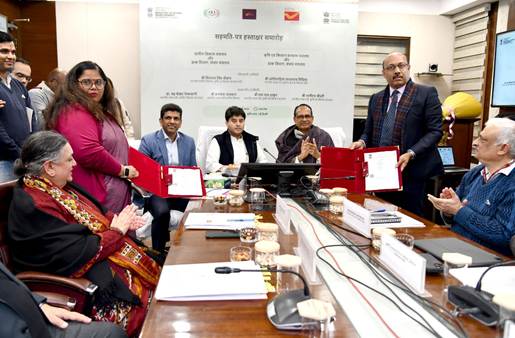
NEW DELHI : In a major step towards accelerating rural transformation and expanding financial, digital and logistics services for Self-Help Groups (SHGs) and rural households across the country, the Department of Posts (DoP) and the Ministry of Rural Development (MoRD) signed a Memorandum of Understanding (MoU) to deepen collaboration in support of inclusive and sustainable rural development.

The MoU was signed in the presence of the Union Minister of Communications and Development of North Eastern Region, Shri Jyotiraditya M. Scindia, and the Union Minister of Rural Development and Agriculture & Farmers’ Welfare, Shri Shivraj Singh Chouhan.

The collaboration aligns with the Government’s vision, as envisaged by the Hon’ble Prime Minister, to strengthen “Dak Sewa, Jan Sewa” and reposition India Post as a key driver of the rural economy. It also reflects the priorities outlined in the Union Budget 2025–26, which emphasise leveraging India Post’s unparalleled reach to promote financial inclusion, digital empowerment and livelihood opportunities in rural India.

With its extensive network of over 1.5 lakh rural post offices, India Post Payments Bank (IPPB) and nearly 2.4 lakh Gramin Dak Sevaks, the Department of Posts will play a pivotal role in enabling last-mile delivery of financial and digital services. The partnership aims to enhance financial inclusion, promote entrepreneurship, strengthen digital capabilities and improve market access for rural women, Self-Help Groups and community institutions across the country.

Under the MoU, IPPB will facilitate doorstep banking services, including savings, payments and remittances, through its digitally enabled platform. To further empower SHG members, electronic tablets and Point of Sale (PoS) machines will be provided to enable seamless digital transactions, promote cashless payments and improve record-keeping at the grassroots level. Certificates will also be issued to SHG members to formally recognise their participation and enhance their credibility for financial and market linkages.

The Department of Posts will ensure last-mile service delivery through its extensive network of postal staff and Gramin Dak Sevaks, enabling outreach even in remote and underserved regions. Market access for SHG products will be strengthened through Dak Ghar Niryat Kendras, facilitating domestic and international marketing and export opportunities for rural enterprises.

The collaboration will also support Aadhaar enrolment and updation activities in rural areas, easing beneficiary verification for various Ministry of Rural Development schemes. Insurance coverage will be expanded through the promotion of Postal Life Insurance (PLI) and Rural Postal Life Insurance (RPLI), including opportunities for SHG members to work as insurance agents.

India Post Payments Bank will further support capacity building by onboarding and training women in SHGs as Business Correspondents, creating new livelihood opportunities while enhancing financial literacy and accelerating digital adoption within rural communities.

This inter-ministerial partnership underscores the Department of Posts’ evolving role as a trusted, technology-enabled and citizen-centric institution, contributing decisively to inclusive growth, women-led development and rural prosperity.

China, EU are top buy­ers of Rus­sian fossil fuel; India’s share at 16.26%

NEW DELHI : Russia’s cumulative earnings from exporting fossil fuels since the war in Ukraine (February 24, 2022) surpassed $1 trillion at the beginning of the 2026 calendar year. China and the European Union (EU) accounted for more than half the share, followed by India.

According to data from the Finland-based Centre for Research on Energy and Clean Air (CREA), Russia’s earnings from the export of crude oil, natural gas and coal hit €1 trillion, or roughly $1.17 trillion at the current exchange rate, between February 24, 2022 and January 3, 2026.

Oil (including crude oil and oil products) and fossil gas (either pipelined gas or LNG shipments) represent the vast majority of this revenue, it added.

The EU was Rus­sia’s second largest fossil fuel trad­ing part­ner, account­ing for 21.81 per cent, or $255.21 bil­lion, with $123.23 bil­lion going to oil, $126.54 bil­lion to LNG and $4.1 bil­lion to coal. Together, China and EU accoun­ted for more than 51 per cent of Rus­sia’s fossil fuel export earn­ings.

India, which is the largest buyer of Rus­sia’s seaborne crude oil, ran up a bill of more than $190 bil­lion, account­ing for 16.26 per cent of Rus­sia’s cumu­lat­ive earn­ings from fossil fuel export.

The world’s third largest energy con­sumer pro­cured crude oil worth over $168 bil­lion and coal worth over $21 bil­lion between Feb­ru­ary 24, 2022, and Janu­ary 3, 2026.

“The trade flour­ishes because of Rus­sia’s abil­ity to expand mar­kets for its oil, grow its age­ing, dan­ger­ous shadow fleet, and fun­nel large volumes of unsanc­tioned gas to Ukraine’s allies in the EU. EU imports con­sist of one­fifth of this one tril­lion. Rus­sian gas is the major share of it,” CREA emphas­ised.

TRUMP’S EXEMPTION

Rus­sian oil flow to the EU goes mainly to Hun­gary and Slov­akia. US Pres­id­ent Don­ald Trump’s exemp­tion for Hun­gary means that €1 bil­lion will con­tinue to flow into the Krem­lin war chest, it added. “Sanc­tion­ing coun­tries also con­tinue to boost Rus­sian rev­en­ues by allow­ing products refined from Rus­sian crude to con­tinue enter­ing their shores. Over 500 ‘shadow’ tankers con­tinue to carry Rus­sian oil glob­ally, often trans­it­ing key check­points and straits while not hav­ing any known and recog­nised insur­ance,” the think tank poin­ted out.

DISCOUNT ON URALS

Last month, CREA said that State­run refiners increased Rus­sian crude oil pur­chases in Novem­ber 2025, as Urals crude is dis­coun­ted heav­ily fol­low­ing the US sanc­tions.

Dis­count on Urals increased by 4 per cent in Novem­ber, aver­aging $6.66 per bar­rel below Brent, com­pared to Octo­ber ($4.92) and Septem­ber ($5.13). The aver­age Urals price fell 6 per cent month­on­month to $55 per bar­rel (Novem­ber), remain­ing above the new price cap of $47.6, it added.

ONE and MTI establish JV “QUAVEO” in Vietnam leading the Shipping Industry’s DX with AI to create new value

SINGAPORE : Ocean Network Express Pte. Ltd. (ONE) and MTI Ltd. (MTI) established a joint venture, “QUAVEO Company Limited” (QUAVEO), in Ho Chi Minh City, Vietnam, in December 2025. The new company aims to promote Digital Transformation (DX) of operations and business models by utilizing AI technology. By combining the strengths of both companies, QUAVEO aims to drive DX in the container shipping industry and create new use cases for AI applications.

Background and Purpose of Establishment
ONE, as one of the world’s leading container shipping companies, operates over 260 vessels and provides container transport services connecting over 120 countries globally. Meanwhile, the need for DX involving AI technology adoption—such as responding to diversifying market needs, pursuing further operational efficiency, and enhancing customer experience—is rapidly intensifying. By overcoming challenges such as labor shortages and decarbonization, and by prioritizing safety and market needs, the shipping industry is poised to lead the global competition.

MTI, leveraging its long-standing expertise in providing services for consumers, corporations, and local governments, as well as its knowledge in AI technology and application, aims to realize “AI-driven DX”. This involves transforming business models, operational processes, and value provision mechanisms of companies and organizations with AI at the core, rather than merely digitizing operations.

QUAVEO was jointly established to realize problem-solving and new value creation for customers, including the shipping industry, by leveraging ONE’s extensive knowledge and practical experience in the container shipping industry and MTI’s know-how in AI-utilized human resource development. The company will promote the development of AI talent familiar with customer operations and the rapid development and introduction of AI solutions that function effectively on the front lines.

Business Activities

Develop and provide operation optimization solutions for the shipping industry
Realization of operational improvements utilizing AI, such as the sophistication of vessel allocation plans and equipment operation, and the efficiency of logistics processes.

Provide AI services contributing to customer experience improvement
Improvement of customer satisfaction through the automation of inquiry responses by AI and the provision of personalized services tailored to customer needs.

Business Automation Support by AI Agents
Promotion of automation for back-office operations and routine tasks to create an environment where employees can concentrate on higher value-added work.

AI Talent Development and In-house Production Support
Supporting the development of AI talent at client companies and the construction of sustainable DX promotion systems by utilizing the training know-how cultivated by MTI.

Provide and sell AI solutions for external companies
Expansion of AI contract development and data utilization support services targeting not only the shipping industry but also distribution, manufacturing, and other industries.

Thoughts behind the Company Name
“QUAVEO” is a new name created by combining positive elements from words that represent creativity and growth, such as QUALITY, QUANTITY, IDEA, and EVOLUTION. It was designed to be memorable and serve as a unifying identity for our international team, including Vietnam.

Future Outlook
While the volume of business data has exploded in recent years, efficiently harnessing these vast assets to generate revenue remains a significant challenge. This gap represents a massive, untapped market for AI-driven DX.

To monetize AI effectively, companies need to move beyond the Proof of Concept (PoC) stage. Success requires robust solutions capable of withstanding complex, real-world operations, supported by an agile implementation structure.

QUAVEO draws on the deep expertise ONE and MTI have cultivated through joint AI development in the complex arena of global shipping. Our core strength lies in our agility to rapidly apply cutting-edge technologies, such as Generative AI and Large Language Models (LLMs). Leveraging these strengths, we will expand our services beyond the maritime industry to sectors like distribution and manufacturing, driving digital transformation across society.

Overview of QUAVEO

Company Name: QUAVEO Company Limited (Trade name: QUAVEO)
Location: Ho Chi Minh City, Vietnam
Establishment Date: December 2025
Capital: 1.6 million USD (Approx. 250 million JPY)
Shareholding Ratio: MTI 51%, ONE 49%
CEO: Ichiro Igari (Managing Executive Officer, MTI)
Business Activities: Development and provision of solutions utilizing AI technology and data science, human resource development, etc.
Website: https://quaveoai.com/?lang=en

Ichiro Igari, Managing Executive Officer, MTI Ltd.
“MTI has strengthened the AI development and data science team launched at our Vietnamese subsidiary, MTI Technology, and has proceeded with business implementation mainly for our own services. In that process, we met ONE and gained the opportunity to utilize our AI development capabilities in real businesses that move people, goods, and money on a large scale. Currently, the ability to flexibly conceive ideas from a business perspective regarding AI technology, which is evolving at an unprecedented speed, is required in the market. In the new company, we will create results in the container shipping and healthcare businesses and realize business transformation through the latest AI technology for a wider range of client companies.”

Kenichi Michida, Senior Vice President, Ocean Network Express Pte. Ltd.
“ONE has built a strong relationship with MTI over many years, and as a result, we have already developed multiple solutions in-house. In the container shipping industry, the need for service quality improvement and operational efficiency utilizing AI and LLM is rapidly increasing. Through the establishment of this new company, we intend to introduce highly competitive AI/LLM solutions that meet these needs more rapidly and on a larger scale than ever before, and actively proceed with securing excellent AI talent.”

Vanguard Logistics names Vincent Argenzio as Chief Commercial Officer

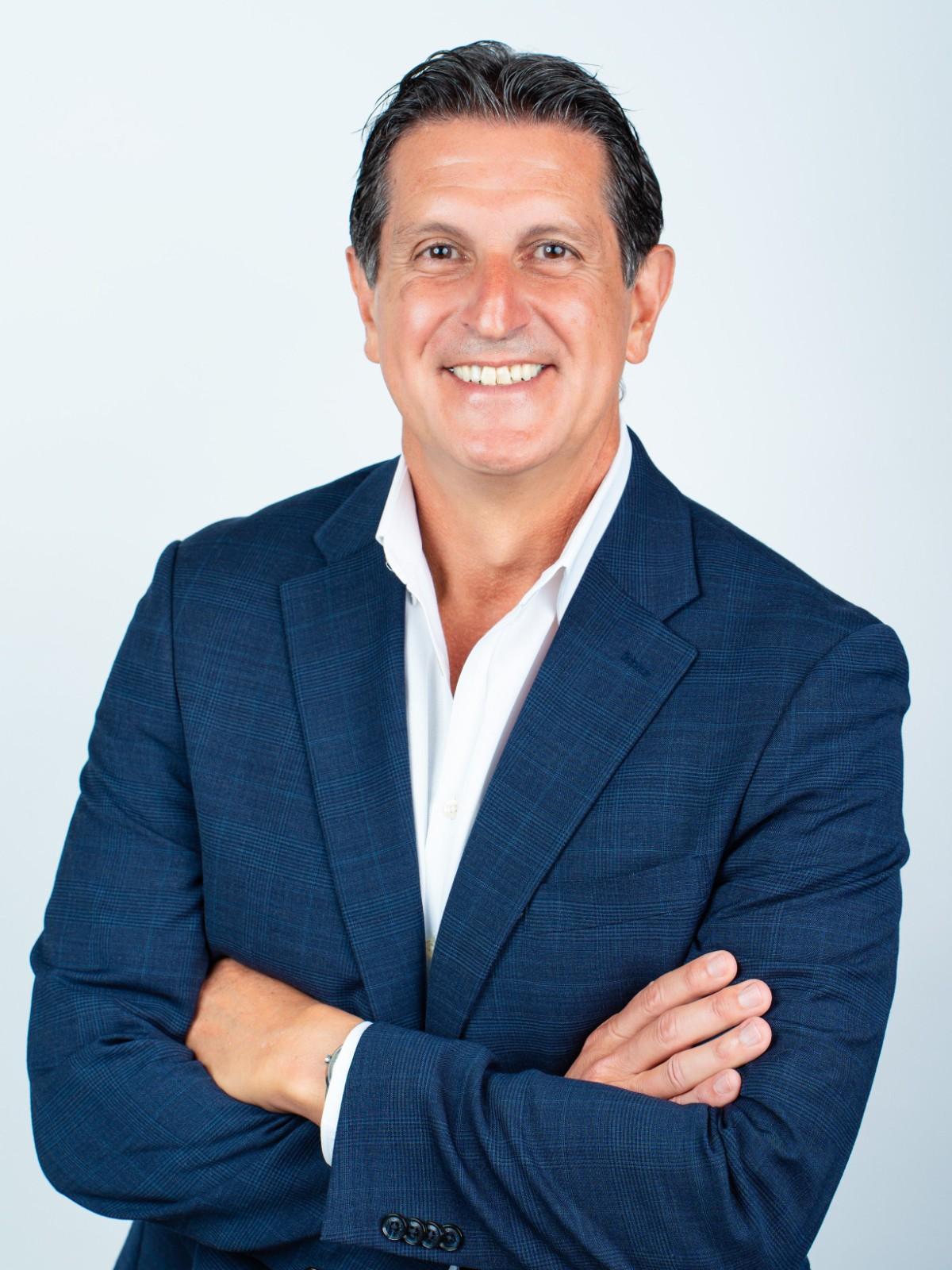
CYPRESS: Vanguard Logistics, a leading provider of less-than-container load (LCL) shipping solutions, appoints Mr. Vincent Argenzio as Global Chief Commercial Officer.

Bringing more than 25 years of executive experience within the global shipping industry, Vincent returned to Vanguard Logistics last year to assume the role of Commercial Director. Since then, he has played a key role in leading Vanguard Logistics’ commercial activities across North America.

In his new role, Vincent will focus on driving greater alignment across the company’s global commercial activities and enhancing coordination across regions to boost operational efficiency and customer service.

“I’m very pleased Vincent is stepping into this role to advance our commercial efforts and growth initiatives,” said Christopher Smith, CEO of Vanguard Logistics. “This appointment highlights his leadership and our commitment to strengthening our global commercial operations.”

About Vanguard Logistics:

Founded in 1978, Vanguard Logistics is the pioneer of the Less-than-Container Load (LCL) industry. Operating in over 36 countries with a team of 2,500+ professionals, Vanguard is one of the world’s leading neutral NVOCCs, trusted by freight forwarders and logistics providers for reliable and efficient ocean freight consolidation.

DP World partners with TEAM AKER DÆHLIE as Official Logistics Partner

DUBAI: Global smart logistics leader DP World is entering Nordic winter sports through a new partnership with Team Aker Dæhlie, one of the most innovative and progressive ski teams in the world. The collaboration brings together two organisations built on high-performance, movement and pushing human potential further through competition.

DP World Team Aker Daehlie 1 1 DP World partners with TEAM AKER DÆHLIE as Official Logistics Partner

The partnership marks DP World’s debut in cross-country skiing and builds on its long-standing relationship with Aker Solutions, the parent company of Team Aker Dæhlie, through their joint venture with Drydocks World, part of the DP World Group. It also strengthens DP World’s global sports strategy, which already spans the DP World Tour, Ryder Cup, McLaren F1, International Cricket Council and SailGP.

As the Official Logistics Partner, DP World will support the team’s operations, including travel planning, equipment movement and race-week logistics insights. DP World’s branding will feature on Team Aker Dæhlie’s race kit and equipment throughout the season. The agreement also opens opportunities for commercial introductions across the wider Aker network and co-promoted business events and forums.

“This partnership with Team Aker Dæhlie connects our global business with a team that shares our ambition to change what’s possible,” said Daniel Van Otterdijk, Group Chief Communications Officer, DP World.

“Our philosophy is about pushing past barriers and opening pathways and creating opportunity for male and female athletes, able-bodies and para-athletes. With DP World’s global logistics expertise and support, our athletes can focus on performance where it matters on the snow. We look forward to exploring performance, movement and possibility together.”

“We’re delighted to welcome DP World as our Official Logistics Partner,” said Jarle Wermskog, General Manager, Team Aker Dæhlie. “Team Aker Dæhlie is the first private team competing at the highest level that includes athletes from Ski Classics, FIS/All-Round, Paralympic cross-country skiing, and younger age groups. Our philosophy of Beyond is about giving people the chance to push past barriers, male and female athletes, able-bodied and Para-athletes, and chase dreams that once felt out of reach. With DP World’s support and global knowledge of movement and logistics, we can help our athletes focus on what they do best on the snow.”

Founded in 2022 through Aker ASA and Dæhlie Sportswear, Team Aker Dæhlie pioneers a new model for professional skiing that connects elite performance with purpose-driven collaboration and long-term sustainability. Headquartered in Dubai, United Arab Emirates, DP World operates across more than 75 countries, enabling over 10% of global containerized trade.

Sallaum Lines announces delivery of MV Ocean Explorer strengthening its sustainable fleet expansion

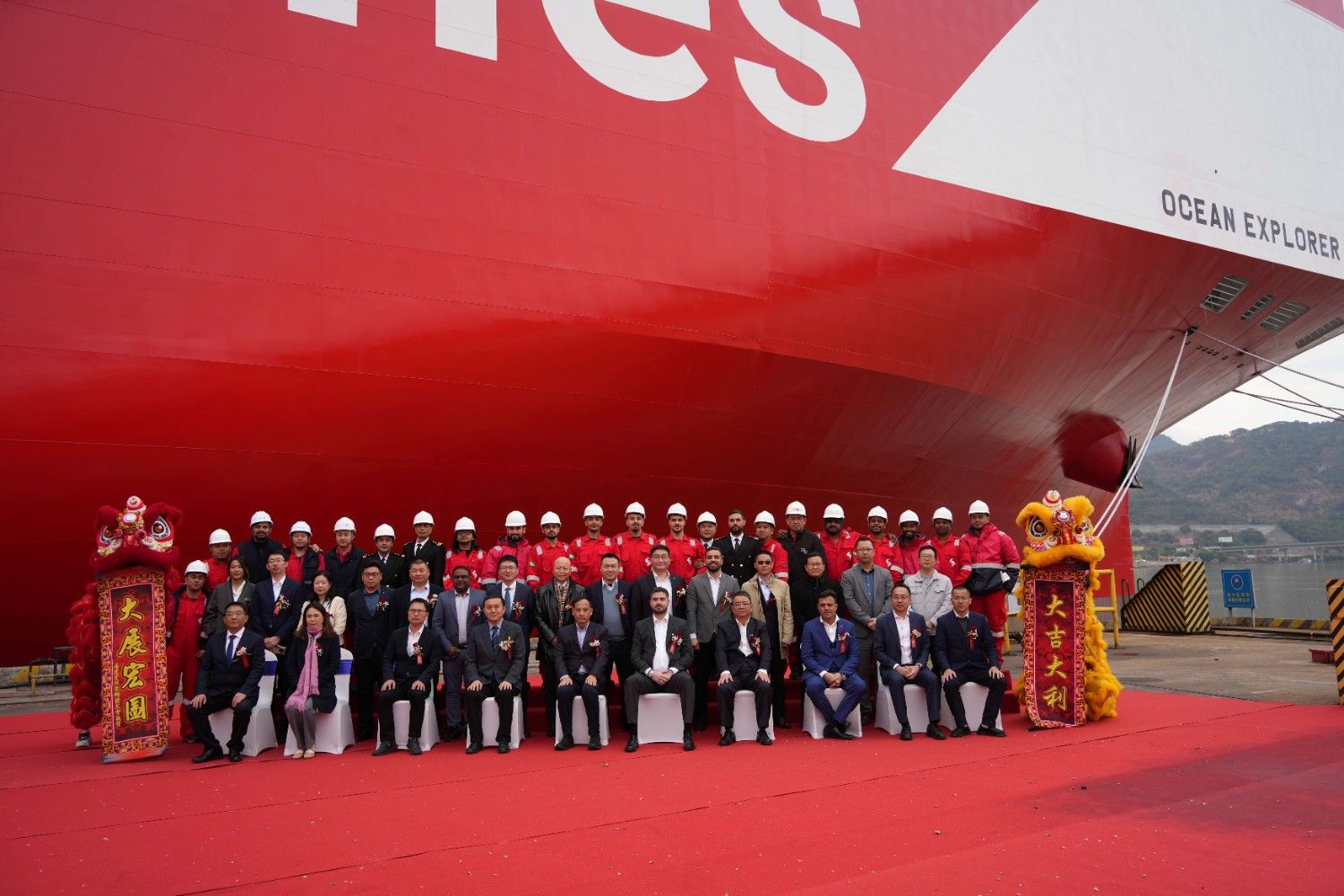
SARNEN: Sallaum Lines proudly announces the successful delivery of its latest Pure Car and Truck Carrier (PCTC) vessel, MV Ocean Explorer as part of its Ocean Class fleet. The newbuilding’s arrival represents a major milestone in the company’s ongoing fleet expansion strategy and its commitment to advancing sustainable and energy-efficient maritime operations.

The vessel is designed to meet the highest international standards of environmental performance and operational efficiency, featuring cutting-edge LNG dual-fuel propulsion systems that significantly reduce CO₂, NOx, SOx, and particulate emissions. This technological advancement aligns with Sallaum Lines’ vision of driving the decarbonization of the RoRo shipping sector.

MV Ocean Explorer, was constructed by Fujian Mawei Shipbuilding Ltd. and shares an overall length of 199.90 meters with a wide breadth measuring 38 meters. Designed to accommodate up to 7,500 car equivalent units (CEU) across 13 decks, it is powered by an LNG fuel system with a total capacity of 3,536.21 cubic meters.

SallaumLines Sallaum Lines announces delivery of MV Ocean Explorer strengthening its sustainable fleet expansion

“With the delivery of MV Ocean Explorer, we are proud to take another bold step toward a more sustainable future for maritime transport,” said Mr. Hasan Sallaum – Sallaum Lines Managing Director. “This vessel reflects our ongoing investment in cleaner technologies and our dedication to providing reliable, efficient, and environmentally responsible shipping solutions to our global partners.”

The delivery of the second LNG-powered vessel following MV Ocean Breeze reinforces Sallaum Lines’ position as a forward-looking carrier in sustainable RoRo shipping. It also demonstrates the company’s continued alignment with the International Maritime Organization’s decarbonization objectives, as part of its long-term strategy to operate one of the most modern and environmentally efficient fleets in industry.

About Sallaum

Lines Sallaum Lines is a leading global RORO carrier specializing in the safe, efficient, and environmentally responsible transportation of automobiles, trucks, and project cargo. With a rapidly growing fleet and a presence across Europe, Africa, Asia, the Middle East, and the United States of America, the company is committed to sustainable innovation, operational excellence, and long-term global partnerships.

Russia sends navy to guard oil tanker being pursued by US forces

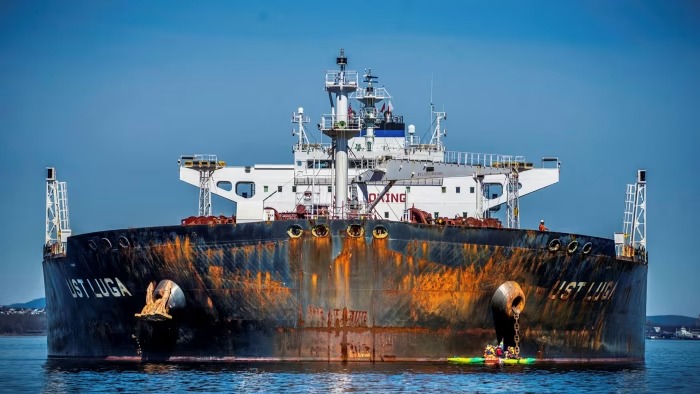
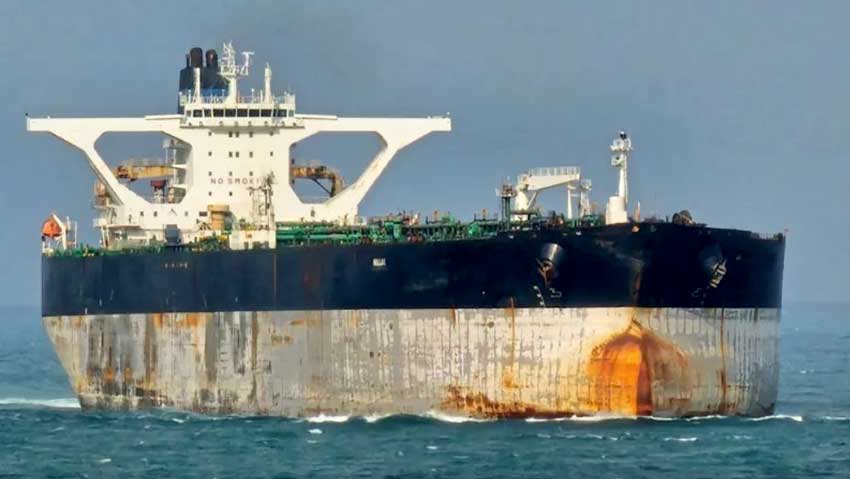
MOSCOW: Russia has reportedly deployed a submarine and other vessels to escort an oil tanker – which is also being pursued by US forces – across the Atlantic.

The ship, currently between Iceland and the British Isles, has been accused of breaking US sanctions and shipping Iranian oil. It has historically transported Venezuelan crude oil but is reporting to be empty at the moment.

Previously named Bella 1, its name has been changed to Marinera and it has also reportedly been reflagged from a Guyanese to a Russian vessel.

President Donald Trump said last month that he was ordering a “blockade” of sanctioned oil tankers entering and leaving Venezuela, a move the government there described as “theft”.

Meanwhile, several US military aircraft have been tracked over the North Atlantic in the area where the Marinera is reportedly being pursued by US authorities.

Data from sites such as FlightRadar24 show a US air-to-air refuelling tanker and several other aircraft used by US Air Force Special Operations Command for reconnaissance and other specialist missions, according to BBC Verify.

On Tuesday two US officials have confirmed to CBS News, the BBC’s US media partner, that Russia has sent a submarine and other navy vessels to escort the tanker.

The US Coast Guard tried to board it last month in the Caribbean when it was believed to be heading towards Venezuela. The Coast Guard had a warrant to seize the ship over its alleged breaking of sanctions.

Before it could be boarded, the vessel dramatically changed course and its approach to Europe has coincided with the arrival of around 10 US military transport aircraft as well as helicopters.

Russia says it is “monitoring with concern” the situation around the ship.

“At present, our vessel is sailing in the international waters of the North Atlantic under the state flag of the Russian Federation and in full compliance with the norms of international maritime law,” its Foreign Ministry said.

“For reasons unclear to us, the Russian ship is being given increased and clearly disproportionate attention by the US and Nato military, despite its peaceful status,” it said.

Two US officials told CBS News earlier on Tuesday that American forces were planning to board the ship, and that Washington preferred to seize it rather than sink it.

BBC Verify has been looking at footage released by Russia Today, reportedly taken onboard an oil tanker, which shows a ship in the distance matching the profile of a US Coast Guard Legend-class cutter.

It has also been monitoring the latest reported location of the Marinera. According to AIS location data from ship-tracking platform Marine Traffic, its location as of Tuesday morning was in the North Atlantic Ocean, about 300km (186 miles) south of Iceland’s shoreline.

Previous AIS tracking data suggests it travelled north, past the western coast of the UK over the past two days.

On Tuesday, the US military’s Southern Command posted on social media that it “remains ready to support our US government agency partners in standing against sanctioned vessels and actors transiting through this region.

“Our sea services are vigilant, agile, and postured to track vessels of interest. When the call comes, we will be there.”

Before any US military operation was launched from the UK, Washington would be expected to inform its ally.

For now, the UK Ministry of Defence says it will not comment on other nations’ military activities.

The US officials quoted by CBS suggested that America could mount an operation like one conducted last month when US forces seized the Skipper, a large crude oil tanker, flagged to Guyana, that had just left port in Venezuela.

Under international law, vessels flying a country’s flag are under the protection of that nation. However, simply changing a ship’s name and flag doesn’t necessarily change much, Dimitris Ampatzidis, senior risk and compliance analyst at maritime intelligence firm Kpler, told BBC Verify.

“US action is driven by the vessel’s underlying identity [IMO number], ownership/control networks, and sanctions history, not by its painted markings or flag claim,” he said.

Ms. Michelle Bockmann, a maritime intelligence analyst at Windward, said changing to a Russian registry could “complicate US enforcement efforts”.

“Under the UN Convention of the Law of the Sea, there’s a provision that allows a stateless vessel to be boarded by authorities. By reflagging to Russia, the vessel is no longer able to be boarded under this provision,” she explained.

Bockmann adds that she has previously observed vessels changing their flag mid-voyage, but “it’s highly unusual and only seen with dark fleet tankers”.

The potential stand-off over the oil tanker comes days after the US shocked the world with the arrest of Venezuela’s Nicolás Maduro in Caracas. It bombarded targets in the city during the operation to extricate him and his wife on suspicion of weapon and drug offences.

Since he was seized, BBC Verify has identified three US-sanctioned tankers that have switched to a Russian registry, including the Marinera.

This follows a broader trend.

Since the seizure of the Skipper, BBC Verify has identified 19 US-sanctioned oil tankers that have switched to a Russian registry, with many of them having previously sailed under a false flag.
Source: BBC