Home Blog Page 490

States flag facility and testing gaps at Board of Trade Meeting

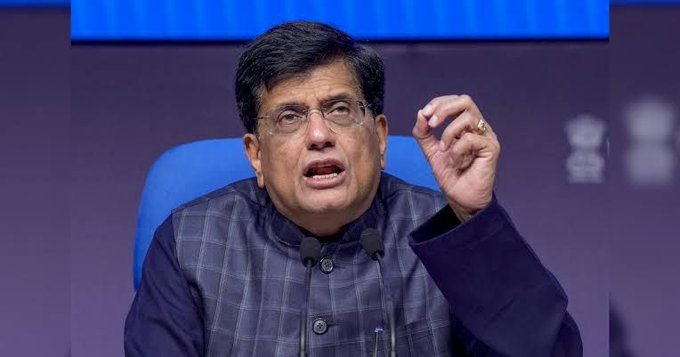
NEW DELHI : IT’S not just high US tariffs that are hurting exports. Costlier raw materials, shortage of testing facilities to ensure products meet global quality standards, and lack of adequate shipping containers are all leading to loss of competitiveness of goods exports, Union Commerce and Industry Ministry said in response to an Right to Infor­mation (RTI) application.

These challenges were flagged by exporters in a meeting of the Board of Trade chaired by Union Commerce and Industry Minister Shri Piyush Goyal on November 25. The BoT is an advisory body and suggests mea­sures related to foreign trade policy and procedural simplifications to boost trade. The Indian Express had sought the details of the BoT meeting in its RTI application.

The BoT meeting happened in the backdrop of slowing exports due to the steep US tariffs of 50 per cent, and both countries failing to conclude a trade deal till the fall of 2025. India was one of the first countries to initiate trade talks with the US when Prime Minister Shri Narendra Modi visited Washington in February last year.

The steep US tariffs, which came into effect on August 27, 2025, have dampened exports, and have triggered cancellations in orders and delayed payment. There are also worries that these could result in orders moving to its competitors such as Bangladesh, Vietnam and China.

Exports dipped in October, but jumped 19 per cent in November driven by growth in exports of products that remain outside the tariff net. Labour-intensive goods, however, risk losing market share as shipments of garments, footwear and other products are being replaced. New Delhi is aggressively pushing for newer markets and has signed as many as three free trade agreements, with Oman, New Zealand and the UK, in 2025.

Tariff & anti-dumping duty imposed by US
As per the minutes of the BoT meeting, Rajasthan said US tariffs have resulted in the “cancellation of orders” in the gems and jewellery sector and that “payments were also not coming”. The Spices Board said that “US tariffs had created a crisis with a 50 per cent duty on oleoresin”. Oleoresins help manufacturers achieve flavour and aroma in their final products.

Even as US tariffs have left out generic drugs, representatives from Goa flagged that “pharma exports had been affected due to tariffs. The Seafood Exporters Association also flagged a “significant drop in exports” to the US.

While the representative from Tirupur Exporters Association (TEA) stated that the government should subsidise the difference in the US tariffs on India and those with its competitors, the Engineering Export Promotion Council of India said that Market Access Initiative was not available for the last nine months and the utilisation of funds under Export Promotion Mission (EMP) would need to be expedited. EMP was announced in the Budget last year, with the Commerce and Industry Ministry announcing the modalities of the scheme only on December 31, 2025.

Beyond US tariffs, representatives also broached concerns over anti-dumping duties imposed by the US. Gujarat’s representative expressed apprehension of an impact on exports due to the imposition of anti-dumping duty by the US. The Spices Board also raised concerns due to “anti-dumping and Countervailing Duties (CVDs)”.

While the US has initiated most anti-dumping investigations against China, it has launched as many as nine probes on industrial items exported from India since July last year, including products such as hexamine, oleoresin paprika, certain freight rail couplers, and overhead door counterbalance torsion springs.
UP ramps up services to achieve $50 bn export goal, eyes $1-trn economy

NEW DELHI : To achieve its ambitious $50-billion export target by 2030, the Uttar Pradesh Government is planning a major scale-up of the services sector, with a sharp focus on Information Technology (IT) and Global Capability Centres (GCCs).

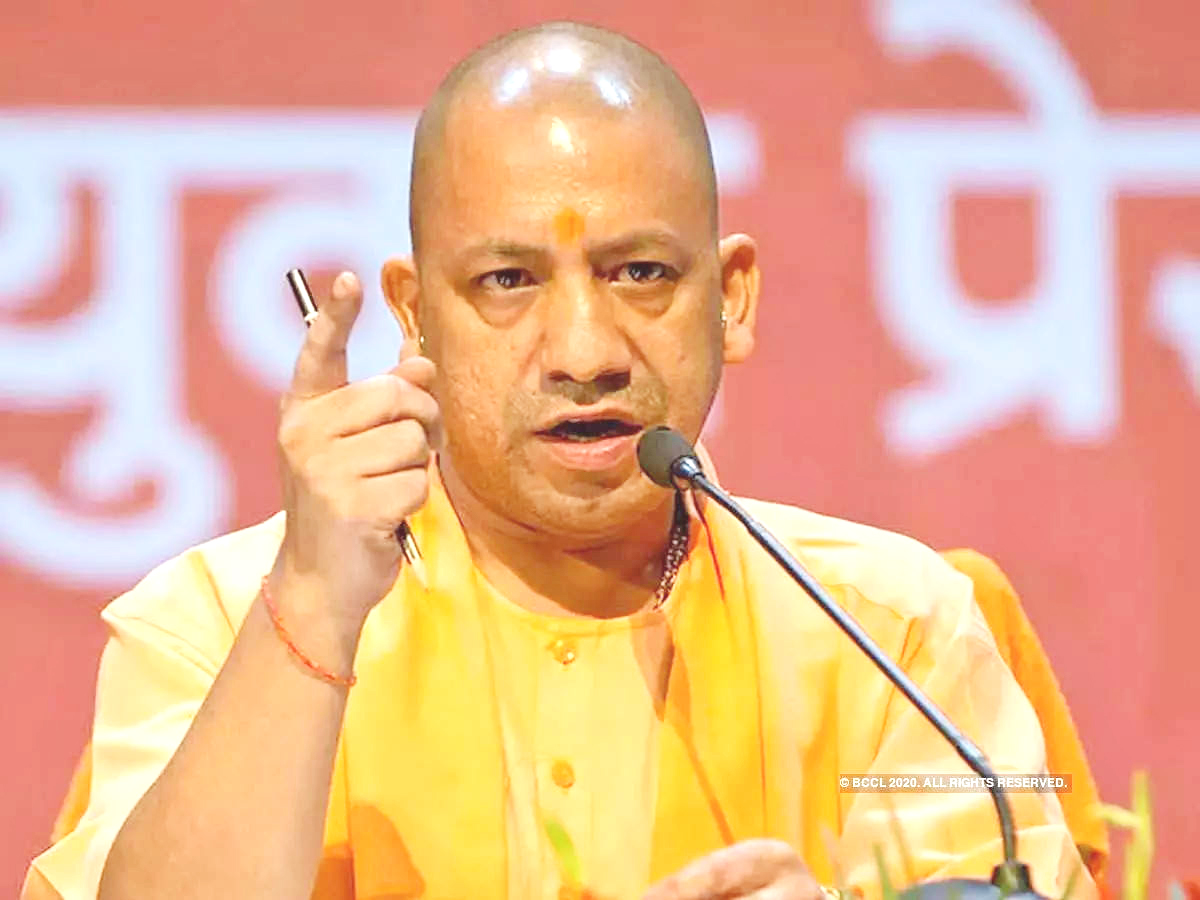
Under the Uttar Pradesh Export Promotion Policy 2025–30, the state aims to increase its combined goods and services exports from $21 billion in 2024 to $50 billion by 2030. While merchandise exports currently account for a significant share, the Yogi Adityanath-led Government is now placing strong emphasis on expanding services exports.

In a landmark move, Uttar Pradesh has become India’s first state to introduce Marketing Development Assistance (MDA) for service exports under its new export policy. A senior official noted that the initiative is particularly significant for a landlocked state, and will help service exporters from UP strengthen their presence in highly competitive global markets.

The enhanced focus on services exports aligns with Uttar Pradesh’s broader economic vision of becoming a $1 trillion economy by 2030 and a $6 trillion economy by 2047. Growth in services exports is expected to bolster the state’s export-driven economy while creating substantial employment and investment opportunities.

Commenting on the state’s growth potential, Godrej Capital Managing Director and CEO Manish Shah said that UP’s expanding economy and resilient MSME base position it at the forefront of India’s next phase of growth, offering significant long-term opportunities.

Global Capability Centres (GCCs) have emerged as a key driver of services exports, delivering high-value technology, finance, and business operations to multinational corporations worldwide.

The new policy will benefit service exporters registered with the Uttar Pradesh Export Promotion Bureau (UPEPB) and the UP Export Promotion Council, operating across the 12 champion service sectors identified by the Government of India.

Under the scheme:

Service exporters will be eligible for financial assistance of up to 75%, capped at ₹2 lakh, towards stall rentals for participation in international trade fairs and exhibitions.

Organising agencies conducting international trade fairs, exhibitions, and buyer–seller meets abroad will receive assistance of up to 75% of total expenditure, subject to a maximum of ₹1 crore.

For international events held in India, financial support of up to ₹75 lakh will be provided, provided at least 20 service-exporting units participate.

Sonowal underscores Media’s Role as Fourth Pillar of Democracy at APCU Conference

TINSUKHIA: Union Minister of Ports, Shipping & Waterways (MoPSW) Sarbananda Sonowal reaffirmed the media’s indispensable role as the fourth pillar of democracy, describing journalists as the vigilant sentinels of society and the authentic voice of the people.

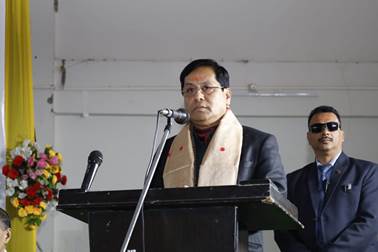
Addressing the 17th Central Mid-Term Conference of the Assam Press Correspondents’ Union (APCU) in Tinsukia in Assam, Sonowal said the press carries a critical responsibility in safeguarding freedom of expression and strengthening democratic values in a rapidly evolving information landscape.

“The role of the media as society’s conscious watchdog is immeasurable. As the voice of the people, journalists have consistently worked to protect freedom of speech and ensure accountability,” Sonowal said.

Highlighting the need for responsible journalism, he urged media professionals to prioritise truth, credibility and ethical reporting, and to resist misinformation and sensationalism. Sonowal said journalism must act as a bridge between the government and the people, amplifying public concerns while promoting social harmony.

Sonowal also stressed the importance of coordination, dialogue and consensus-building, noting that the media can play a decisive role in strengthening society through constructive engagement rather than conflict. Sonowal said the evolving challenges faced by journalists demand continuous capacity building, professional integrity and adaptation to new technologies, while remaining firmly rooted in public interest journalism.

MLAs Sanjay Kishan and Bolin Chetia, along with senior journalists and other dignitaries, were present at the event.

Earlier in the day, in the Makum LAC, Sonowal attended a programme marking the foundation stone laying and inauguration of various welfare schemes and interacted with beneficiaries of the Prime Minister’s flagship welfare programmes. Sonowal also engaged with local entrepreneurs, acknowledging their contribution to the growth of the local economy.

“Under the dynamic and visionary leadership of Prime Minister Narendra Modi ji, development has reached the last mile, ensuring that welfare schemes directly empower beneficiaries and strengthen grassroots entrepreneurship,” Sonowal said. “This inclusive approach has transformed governance into a people-centric model that drives both social upliftment and economic growth.”

“India is a proactive maritime nation, ensuring stability, cooperation & rule-based order throughout the Indian Ocean Region”: Rajnath Singh

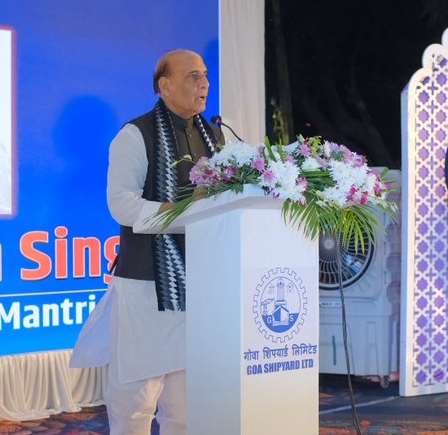
GOA: “The ships built by the Goa Shipyard Limited (GSL) and other Indian yards for the Indian Navy & the Indian Coast Guard (ICG) are the floating symbols of India’s sovereignty, representing our presence, capability, and resolve on the high seas,” said Raksha Mantri Shri Rajnath Singh during his visit to the GSL on January 04, 2026, on the eve of the commissioning of Pollution Control Vessel (PCV) ‘Samudra Pratap’ into the ICG. Samudra Pratap, the first of two PCVs built by the GSL, will be commissioned in the presence of Raksha Mantri in Goa today on January 05, 2026.

Shri Rajnath Singh described Aatmanirbharta in defence as not a luxury, but a strategic necessity, lauding institutions like the GSL for transforming this necessity into reality. The GSL is developing capabilities, absorbing technology, and strengthening indigenous design, which have resulted in the timely delivery of equipment to the Armed Forces and accelerated the pace towards making the nation self-reliant, he said.

Underlining the critical role played by the Indian shipyards in today’s complex security environment, Raksha Mantri asserted that non-traditional threats are constantly increasing alongside traditional challenges in the maritime domain. “We face numerous challenges at sea, such as narcotics trafficking, illegal fishing, human trafficking, environmental crimes, and grey-zone challenges. In such a situation, the role of shipyards becomes even more critical. Located in a city which is the center of the country’s maritime history, naval heritage, and strategic foresight, the GSL is one of the pillars of India’s defence ecosystem, bearing the responsibility for maritime security,” he said.

Shri Rajnath Singh emphasised that a ship is not just an amalgamation of steel, machinery, and technology, it is a symbol of the trust of the people and the expectations & needs of the Armed Forces. The GSL has fulfilled this trust and expectations for years, he said.

Raksha Mantri stressed that India is emerging as a proactive maritime nation, and its role in ensuring stability, cooperation, and rule-based order throughout the Indian Ocean Region is increasing constantly. He exhorted the institutions such as the GSL to further support India’s credibility in the future. “In view of the growing importance of technology in the defence sector, we will have to adapt to this changing landscape. We must focus on equipping the ships with state-of-the-art equipment, AI-enabled maintenance, and cyber-secure platforms to gain an edge over our adversaries. I am confident that the GSL will demonstrate leadership in this transformation as well,” he added.

Appreciating the efforts of the GSL towards building a high-technology dredger for Belgium, Shri Rajnath Singh endorsed enhanced focus on increasing defence exports with an aim to make India a self-reliant nation as well as a net defence exporter. “To realise the vision of Viksit Bharat @ 2047, we must ensure continuous progress through hard work and commitment,” he said, extending the Government’s full support to the capability enhancement of institutions such as GSL.

Defence Secretary Shri Rajesh Kumar Singh, Director General, ICG DG Paramesh Sivamani, Chairman & Managing Director, GSL Shri Brajesh Kumar Upadhyay and personnel of the shipyard were present on the occasion.

PPA Marks 65th Port Foundation Day with 21st Paradip Marathon

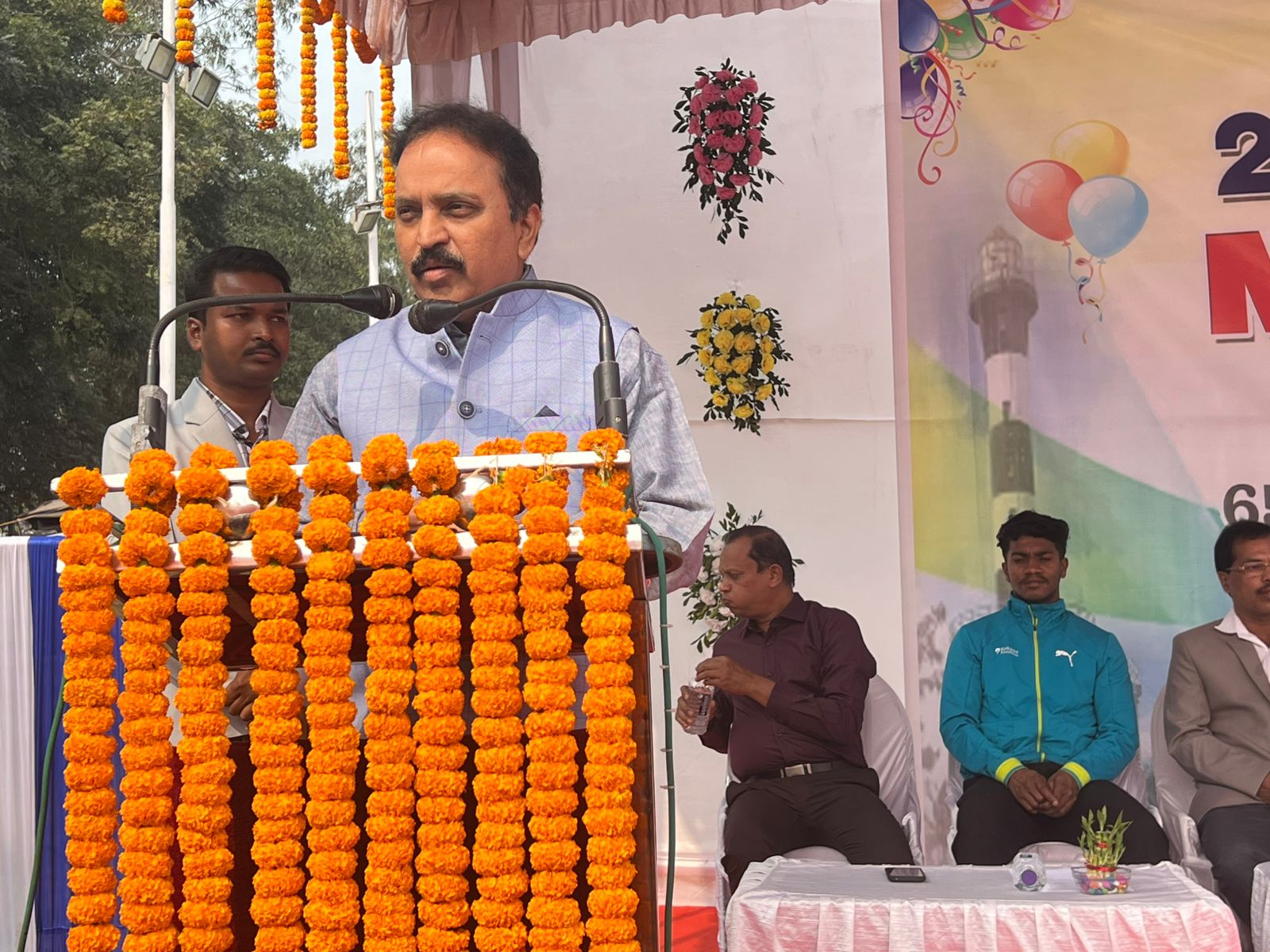
PARADIP: Paradip Port Authority, Odisha observed its 65th Port Foundation Day with the successful conduct of  the 21st Paradip Marathon 2026 on Saturday. The event was organised by the Gopabandhu Kreeda Sansad of PPA and flagged off from Hanuman Temple Square by the Chief Guest, Shri P. L. Haranadh, Chairman, PPA, in the presence of Shri T. Venu Gopal, Deputy Chairman, PPA, as Guest of Honour.

The 14 km stretch concluded at Gopabandhu Stadium amid enthusiastic support from residents of the port township and various organisations. A total of 336 runners participated, including 280 men and 56 women .

Gracing the valedictory function held at Gopabandhu Stadium as Chief Guest, Shri Haranadh recalled that Paradip Port Authority, whose foundation stone was laid on 3 January 1962, has grown from a small jetty into one of India’s leading major ports. He highlighted that the port is currently the largest major port in terms of rated capacity, records the best berth productivity among Indian major ports, and is the most cost-efficient major port in the country. He added that with ongoing modernisation, a strong focus on green development, and employee welfare, the port is steadily progressing towards a capacity of 400 MMT by 2030. He noted that the Paradip Marathon reflects the same spirit of growth, discipline, and collective participation.

On the occasion, Odisha’s rising sprinter Pratik Maharana, who recently bagged the bronze  in the men’s 200 m event and was part of the Indian men’s 4×100 m relay team that secured a silver at the 4th South Asian Senior Athletics Championships 2025, was specially felicitated by Shri P. L. Haranadh, Chairman, Paradip Port Authority.

In the men’s category, Shri Ashok Dandasena of Odisha Police secured first place in Paradip Marathon 2026 with a timing of 43 minutes 52.2 seconds. Shri Gulson Dung Dung of Ranchi finished second in 44 minutes 11.9 seconds, followed by Shri Rakesh Mahanta of Jharkhand in third place with 44 minutes 18.3 seconds.

In the women’s category, Ms. Anita Das of Jharkhand won first place by completing the race in 51 minutes 08.4 seconds. Ms. Sandhya Murmu from Mayurbhanj secured second place with a timing of 54 minutes 24.2 seconds, while Ms. Basanti Mandia of Odisha Police finished third in 54 minutes 51.6 seconds.

The valedictory function at Gopabandhu Stadium was also attended by Shri T. Venu Gopal, Deputy Chairman, PPA; and Heads of Departments of PPA.

The marathon was conducted smoothly by the officials and technical members of the Paradip Port Sports Council under the leadership of Shri H. S. Rout, President; Dr. D. P. Sethi, Working President, Gopabandhu Kreeda Sansad, Shri Dhuna Chandra Tarai, Secretary, GKS, with support from officials of the Odisha Olympic Association.

Land acquisition a major issue in infrastructure development: T.V. Somanathan

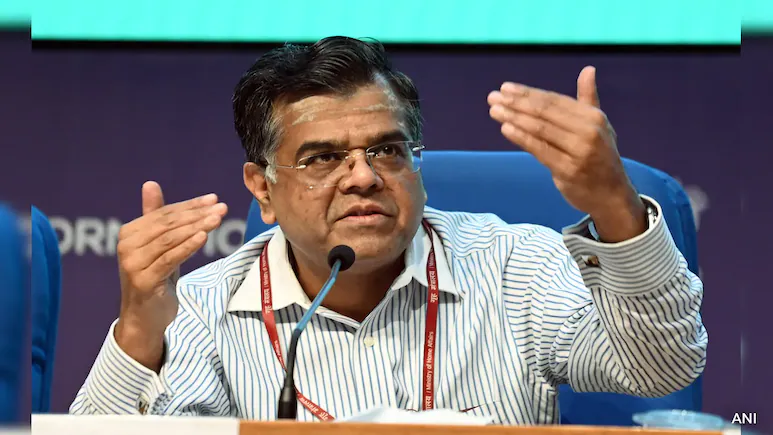
NEW DELHI : Land acquisition remained a major issue to resolve in infrastructure development, said Cabinet Secretary T.V. Somanathan while briefing reporters after the 50th meeting of the Pro-Active Governance and Timely Implementation (PRAGATI), a mechanism to review implementation of infrastructure projects, chaired by Prime Minister Shri Narendra Modi here on Friday (January 2, 2026). Mr. Somanathan said the Union government has no plans to change the existing land acquisition policy.

The Cabinet Secretary, secretaries of various Ministries dealing with infrastructure development and the Railway Board’s Chairman said in their presentations to media that land acquisition was one of the major reasons for the pendency of various infrastructure projects across the country. Mr. Somanathan said Pragati reviewed over 3,300 projects worth ₹85 lakh crore. 7,735 issues were raised during its meetings and 7,156 of them were resolved.

Timely monitoring
Mr. Somanathan said though the government has not calculated the savings due to timely monitoring of the schemes, he said several projects, some started as early as in 1990s, got completed after the Pragati system was launched. Of the 7,156 issues resolved, the Cabinet Secretary said 35% were on land acquisition, 20% were on forest, wildlife and environment issues, 18% were right of use/way, and other projects were delayed due to law and order, construction, power utility approvals and financial issues.

“There is no plan to change the land acquisition policy,” he said when asked if the government plans to change the law in the background of hurdles created by issues in land acquisition to infrastructure projects. “All States, irrespective of the political dispensations, want to complete their projects and all chief secretaries have been very responsive in resolving issues,” he added.

Mr. Somanathan said initially issues are addressed at the Ministry level, while complex and critical issues are escalated through defined institutional mechanisms for higher-level review, culminating at Pragati meetings chaired by the Prime Minister. “The escalation framework ensures coordinated inter-ministerial action, timely decision-making, and focused resolution of implementation bottlenecks in projects of national importance,” he said, while adding that PRAGATI ensured coordination between Central Ministries, coordination between States, Centre and local governments and coordination within the State governments.

Government extends PLI Scheme deadline for textiles upto 31 March

NEW DELHI : The government has announced the extension of the deadline for submission of fresh applications under the Production Linked Incentive (PLI) Scheme for Textiles up to 31st March this year.

The Ministry of Textiles informed that the extension follows the significant response received since the application portal was reopened in August last year, with proposals being submitted by textile companies.

The Ministry added that the decision underscores the growing investor confidence in India’s textile sector and aims to facilitate wider participation by offering additional time to eligible applicants.

India launches anti-dumping probe into nylon-6 chip imports from China and Russia

NEW DELHI : India has initiated an anti-dumping probe into imports of nylon-6 chips and granules—raw plastic materials—from China and Russia, after domestic manufacturers alleged that cheap imports are hurting local industry, the Commerce Ministry said on Saturday.

The probe, launched by the Directorate General of Trade Remedies (DGTR) under the ministry of commerce and industry, comes amid persistent concerns over price suppression and market distortion in the synthetic raw materials segment.

The investigation has been triggered by an application filed by Surat-based Gujarat Polyfilms Pvt. Ltd. As per the company’s website, Gujarat Polyfilms Pvt. Ltd lists its production capacity for nylon-6 chips, including engineering and textile grades, at around 1,200 tonnes per year.

The company has alleged that imports of nylon-6 chips and granules with relative viscosity below three from China and Russia have increased sharply in recent years, both in absolute terms and relative to domestic consumption, leading to a decline in prices, suppressed margins and adverse impact on profitability, as per the ministry’s notification.

Nylon-6 chips are primarily used in textile applications, particularly in the manufacture of synthetic yarns and fabrics, though they also find use in light-duty automotive and electrical applications. The DGTR has noted that the imported product and the domestically-produced material are technically and commercially substitutable, with similar physical and chemical characteristics, manufacturing processes and end uses, allowing buyers to switch between them based largely on price.

An industry executive, who wished not to be named, said that in the absence of corrective duties, domestic manufacturers face difficulty competing with imports that benefit from scale, state support or lower input costs in exporting countries.

However, others caution that trade protection measures, if overused, can weaken export competitiveness in globally price-sensitive sectors.

“In this global market era, merely protecting domestic industries can curtail a country’s export prospects, as seen in India’s man-made fibre (MMF) textile exports where prices became unviable in global markets,” said Raja M. Shanmugam, former president of the Tiruppur Exporters’ Association.

“Instead of imposing anti-dumping duties, the focus should be on equipping manufacturers to become more cost-competitive,” said Shanmugam.

Minister of state for chemicals and fertilizers Anupriya Patel told the Lok Sabha in March 2025 that India’s total production capacity of nylon-6 stands at 83,500 tonnes. In India, nylon-6 chips are manufactured primarily by Gujarat State Fertilizers & Chemicals Ltd and Gujarat Polyfilms Pvt. Ltd. In addition, Chevy Polymers operates in recycled nylon-6 granules and plastic resins, while Kayavlon Impex is active as a supplier and trader of nylon chips.

India imported 277,369.6 tonnes of nylon-6 in FY24 worth $613.81 million, and 335,242.2 tonnes in FY25 worth $730.61 million, per commerce ministry data, underlining the country’s growing reliance on overseas suppliers for a key textile and industrial input. Imports from China grew much faster, increasing by over 33% from $297.56 million to $395.96 million, lifting China’s share in India’s total nylon-6 imports from around 49% in FY24 to more than 54% in FY25. This indicates a rising dependence on Chinese material even as domestic producers flag injury from low-priced imports.

Imports from Russia, though small in absolute terms, saw a sharp jump of over 300%, rising from $6.37 million to $25.90 million during the same period, with Russia’s share in total imports increasing from about 1% to 3.5%.

Taken together, China and Russia accounted for nearly 58% of India’s nylon-6 chip imports in FY25, up from about 50% a year earlier, a trend that adds context to the anti-dumping probe as authorities examine whether the surge in imports is distorting prices and hurting domestic manufacturing.

In its preliminary assessment, the DGTR has found prima facie evidence that imports from China and Russia are being dumped in the Indian market, with dumping margins above the de-minimis threshold, as per the order.

The authority has also observed a causal link between the allegedly dumped imports and injury to the domestic producer, citing indicators such as price depression, loss of market share and weakened financial performance.

The period of investigation covers July 2024 to June 2025, while injury analysis spans the previous three financial years.

The case fits into a broader pattern of rising trade remedy actions by India in chemicals and polymers, sectors that are highly exposed to volatile global pricing and aggressive export strategies by overseas producers.

If the investigation confirms dumping and injury, the DGTR may recommend the imposition of anti-dumping duties to offset the price advantage of imports and restore fair competition. Any such duties, if imposed, would directly affect textile producers and other downstream users, who may see some impact on input costs, but are also expected to benefit from greater supply stability and reduced dependence on volatile imports.

Micro, small, and medium enterprise (MSME) industry representatives said that any trade remedial action would need to be accompanied by steps to ensure adequate and competitively-priced domestic supply of key raw materials to avoid disruption for small units.

“Domestic input material needs to be available at competitive prices and in adequate quantities. If the local supply of nylon-6 chips is reliable and reasonably priced, MSMEs will be able to adjust more smoothly without disrupting production or export commitments. Otherwise, it will be difficult for small manufacturers,” said Vinod Kumar, President, SME Forum.

Mumbai-Ahmedabad bullet train cost may rise to Rs 1.98 lakh crore due to delays

NEW DELHI : The cost of the Mumbai-Ahmedabad High-Speed Rail Project has almost doubled to Rs 1.98 lakh crore, Satish Kumar, Chairman and Chief Executive Officer of the Railway Board under the Ministry of Railways, said.

Chairman Railway Board Satish Kumar at the PRAGATI (Pro-Active Governance and Timely Implementation) briefing here said that due to a delay for various reasons including land acquisition, the cost of construction has gone up.

Earlier, the Railway Ministry said that total Rs 85,801 crore spent till November end, 2025 and made 56.6 percent physical work progress.

The foundation stone for the project was laid in 2017 and the entire project was supposed to complete in December 2023. However, Railway Minister Shri Ashwini Vaishnaw earlier this week announced that the first stretch between Surat and Bilimora would be operational on August 15,2027. The entire 508 km long Mumbai-Ahmedabad High Speed Corridor will be completed by the end of 2029.

Delay in construction mainly due to slow pace in land acquisition, finalization of rolling stocks and getting forest and environment clearances.

India’s first bullet train project envisages to reduce the travel time between Mumbai and Ahmedabad and is expected to take just 1 hour 58 minutes.

The high speed corridor covers 508 kilometres, covering 352 km in Gujarat and Dadra & Nagar Haveli, and 156 km in Maharashtra. The corridor will connect major cities including Sabarmati, Ahmedabad, Anand, Vadodara, Bharuch, Surat, Bilimora, Vapi, Boisar, Virar, Thane, and Mumbai, marking a transformative step in India’s transportation infrastructure.

The 508 km corridor has an overall tunnel length of 27.4 km, of which 21 km comprises underground tunnels and 6.4 km surface tunnels. The project includes eight mountain tunnels, with seven tunnels in Maharashtra having a combined length of about 6.05 km, and one tunnel of 350 metres located in Gujarat.

Ayush Export Promotion Council observes 4th Establishment Anniversary in New Delhi

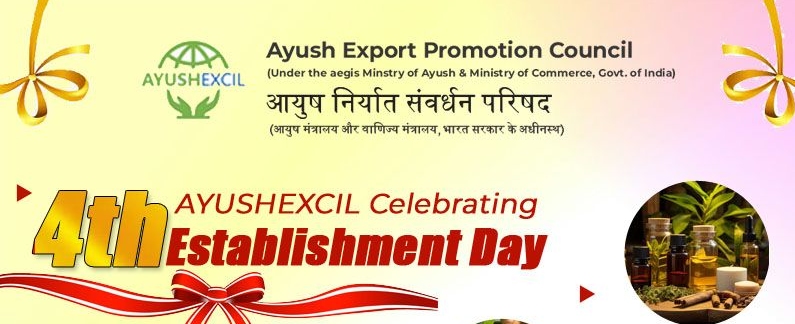
NEW DELHI: The Ayush Export Promotion Council (AYUSHEXCIL) observed its 4th Establishment Anniversary today in New Delhi in India’s efforts to promote exports of traditional systems of medicine and wellness products.

Since its formation, AYUSHEXCIL has undertaken several initiatives focused on capacity building of exporters, facilitation of export procedures and regulatory compliance, and the organisation of B2B meetings, international exhibitions, seminars, and outreach programmes in key overseas markets.

Exports of AYUSH and herbal products have registered a growth of 6.11 per cent, increasing from USD 649.2 million in 2023–24 to USD 688.89 million in 2024–25. Following the establishment of AYUSHEXCIL, this growth has accelerated, reflecting enhanced global outreach and rising international demand for India’s traditional medicine and herbal products.

India’s traditional medicine systems (AYUSH) have also received formal recognition in bilateral trade agreements, including the India–Oman CEPA and the India–New Zealand FTA, with dedicated annexes on health-related services and traditional medicine. AYUSHEXCIL has been entrusted with anchoring the Ayush Quality Mark programme of the Ministry of Ayush, launched by the Hon’ble Prime Minister during the 2nd WHO Summit on Traditional Medicine (17–19 December 2025), marking a key milestone in strengthening quality assurance and global recognition of AYUSH products.

As AYUSHEXCIL enters its fifth year, the Council aims to further strengthen international cooperation, leverage opportunities under Free Trade Agreements, promote quality and certification frameworks, and enhance global acceptance of India’s traditional systems of medicine.

The anniversary underscores India’s growing leadership in the global AYUSH and wellness economy, aligned with the vision of Atmanirbhar Bharat and Make in India.

AYUSHEXCIL was registered as a Section 8 company with the Registrar of Companies, New Delhi, on 4 January 2022, and was formally launched by Prime Minister Shri Narendra Modi during the Global AYUSH Investment and Innovation Summit held in Gandhinagar, Gujarat, on 20 April 2022. Subsequently, the Council was notified by the Directorate General of Foreign Trade (DGFT) on 31 July 2023 as the nodal Export Promotion Council for the AYUSH sector.

The Council functions in consultation with the Ministry of Ayush, with support from the Ministry of Commerce & Industry, to oversee exports of products and services related to Ayurveda, Yoga & Naturopathy, Unani, Siddha, Sowa-Rigpa, Homeopathy, and other Indian traditional healthcare systems.