Home Blog Page 491

IREF urges Finance Minister to boost rice exports, farmer incomes in Union Budget 2026

NEW DELHI: The Indian Rice Exporters’ Federation (IREF) has urged the Union government to introduce targeted fiscal and policy measures in Union Budget 2026 to bolster India’s rice export ecosystem, covering both basmati and non-basmati segments.

In a formal representation to Union Finance Minister Smt. Nirmala Sitharaman, the federation highlighted the strategic importance of rice exports to India’s economy, rural employment, and global food security.

“The rice sector faces ecological stress (notably groundwater depletion in major paddy belts), high fiscal costs of procurement and storage, and market/compliance volatility. Union Budget 2026 can strengthen competitiveness while improving sustainability and farmer outcomes through targeted fiscal and enabling measures,” the federation said in its letter.

IREF has outlined a set of priority demands aimed at strengthening sustainability, competitiveness, and farmer incomes across the rice value chain.

It sought tax and investment incentives linked to verified water-saving and low-emission practices such as Alternate Wetting and Drying (AWD), Direct Seeded Rice (DSR), laser land levelling, and energy-efficient milling to address environmental stress and improve long-term productivity.

They also called for incentives to encourage farmers to move acreage towards premium basmati and GI-tagged, organic, and specialty non-basmati rice. This, they say, would enhance farmer realisation, promote market-led diversification, and reduce dependence on MSP-based procurement.

Further, to improve export competitiveness, the sector has asked for interest subvention on export credit to ease working-capital pressures, along with targeted freight and port facilitation measures to lower logistics costs.

It also urged the government to continue and appropriately calibrate the Remission of Duties and Taxes on Exported Products (RoDTEP) scheme for rice, ensuring embedded taxes are offset and export competitiveness is maintained.

Stakeholders have also highlighted the need to reinforce export finance guarantees and upgrade compliance infrastructure, including testing, traceability, and quality assurance systems, to safeguard India’s reputation in premium international markets.

“These measures will directly lower exporters’ costs, incentivize sustainability, and encourage scaling of value-added shipments. IREF requests that rice, as a key agri-export, be explicitly covered in relevant budgetary initiatives for export credit, logistics and trade facilitation,” said Dr. Prem Garg National President, IREF in the letter.

As per the data highlighted by the IREF, India accounts for roughly 40% of global rice trade an exceptional level of dominance that India does not hold in any other commodity.

“Having met domestic food security requirements, India is structurally well placed to supply international markets at scale.”

In FY2024-25, India exported about 20.1 million tonnes of rice to more than 170 countries.

Source: ANI

Archaeologists just found the largest and most advanced Medieval cargo ship ever

DENMARK : The Viking Ship Museum in Denmark recently announced an unprecedented discovery in the Øresund Strait: the world’s largest and most advanced medieval cargo ship ever found.

Hailed as “a milestone in maritime archaeology,” the discovery occurred while divers were investigating the seabed in the Sound, in anticipation of Copenhagen’s new Lynetteholm district, and stumbled upon a record-breaking cog buried beneath centuries of sand and silt.

Found approximately 43 feet deep, the precious wreckage escaped destructive forces, resulting in an extraordinary state of preservation that provided archaeologists with a rare, close-up look at never-before-seen details.

“It is extraordinary to have so many parts of the rigging,” noted the researchers. Its sheer size and remarkable condition turned the excavation into a massive undertaking that required 289 dives and more than two and a half years to complete, according to Arkeonews. Now, the Viking Ship Museum has come forward, brimming with praise and insights into one of the medieval world’s most impressive vessels.

A groundbreaking cargo ship
Named Svælget 2, this medieval cargo ship would have sailed the seas of Northern Europe with the astounding capacity to carry an immense 300-ton load with only a minimal crew. Made of Polish and Danish wood, the vessel was described by the Viking Ship Museum in a press release as the “super ship” of the Middle Ages, measuring approximately 91 feet long, 30 feet wide, and 20 feet high.

Dendrochronological analysis revealed that Svælget 2 was built around 1410 using timber originating from Poland and the Netherlands. This indicated to archaeologists that while the frames were cut at the building site, shipbuilders imported other primary materials. So, researchers were impressed to discover that such large quantities of wood were moved across Europe.

In fact, this was the major insight archaeologists gleaned: the cog reflected the existence of a robust, complex trade network that the ship itself helped make possible. In a press release, the Museum called it “the backbone of medieval trade” because it could travel long distances and navigate treacherous waters without a large crew, making it an efficient, low-cost trading vessel.

“It is clear evidence that everyday goods were traded. Shipbuilders went as big as possible to transport bulky cargo – salt, timber, bricks or basic food items,” says Otto Uldum, head archaeologist.

The cog was a trailblazer
The ship marked a distinct shift in commerce when the goods exchanged were no longer just luxury items but everyday commodities too. The vessel literally expanded trade by cutting unnecessary costs and carrying heavy loads across Northern Europe.

Due to its excellent state of preservation, archaeologists recovered the ship’s hull, which is a rare find. Along the hull were remnants of the ship’s forecastle and aftcastle, which provided shelter for the crew. Until now, archaeologists could not confirm that these “castles” even existed on such ships.

A major surprise was the discovery of a brick-built galley, the earliest example of its kind ever found in Danish waters. This meant the crew could cook over an open fire in “remarkable comfort.” Besides, they found shoes, a comb, a cooking pot, and a wooden tray.

All these extraordinary finds opened up a unique vantage point into daily life on board a groundbreaking cargo ship that changed the face of trade in Northern Europe. It signaled an economic boom in the region as they had the finances to build a vessel to rule the seas.

DPA showcases port-led growth and sustainability at Vibrant Kutch Conference

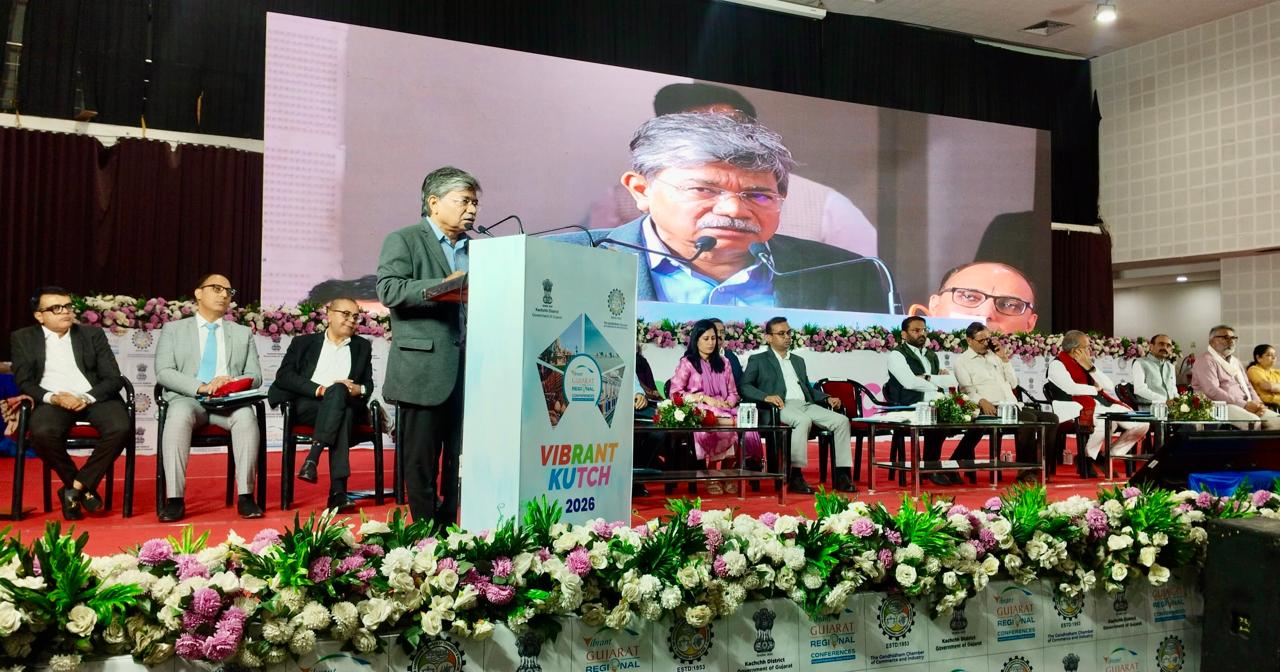
GANDHIDHAM : Shri Arjunbhai Modhvadiya, Hon’ble Minister for Forest & Environment, Science & Technology, Government of Gujarat, inaugurated the theme-based pavilion of Deendayal Port Authority (DPA) at the Vibrant Kutch (District-level) Vibrant Gujarat Regional Conference, held at the Dr. Babasaheb Ambedkar Convention Centre, Gandhidham.

The inauguration took place in the esteemed presence of Shri Tikrambhai Changa, Hon’ble Minister of State for Higher & Technical Education; Shri Vinodbhai Chavda, Hon’ble Member of Parliament, Kutch; and Shri Sushil Kumar Singh, IRSME, Chairman, Deendayal Port Authority, along with other senior officials and distinguished dignitaries.

Addressing the gathering, Shri Sushil Kumar Singh, IRSME, Chairman, DPA, highlighted the vast growth potential of Deendayal Port and its strategic role in driving regional and national economic development. He underlined the immense opportunities Kandla offers in logistics and multimodal connectivity, port-led industrial development, sustainability initiatives, green energy adoption, and operational excellence.

He emphasized that Deendayal Port Authority is emerging as a key growth engine for Kutch and the northern hinterland, supporting trade expansion, investment facilitation, and employment generation, while aligning with the Government’s vision of sustainable and inclusive development.

The DPA pavilion showcased the port’s infrastructure strengths, future-ready expansion plans, green initiatives, and its commitment to strengthening India’s maritime and logistics ecosystem under the Vibrant Gujarat framework.

JNPA has achieved the highest ever container throughput of 7.94 million TEUS recording 12.64% growth in CY 2025

MUMBAI : Jawaharlal Nehru Port Authority (JNPA) – India’s largest container port reported a consistent rise in cargo handling during the calendar year 2025, with growth recorded across container and overall cargo segments. For the calendar year 2025, container throughput at JNPA stood at 7.94 million TEUs, registering a 12.64% increase compared to 7.05 million TEUs handled in calendar year 2024. Overall cargo throughput during CY 2025 reached 99.17 Million Metric Tonnes (MMT), reflecting a 9.86% rise over 90.27 MMT handled in the previous year.
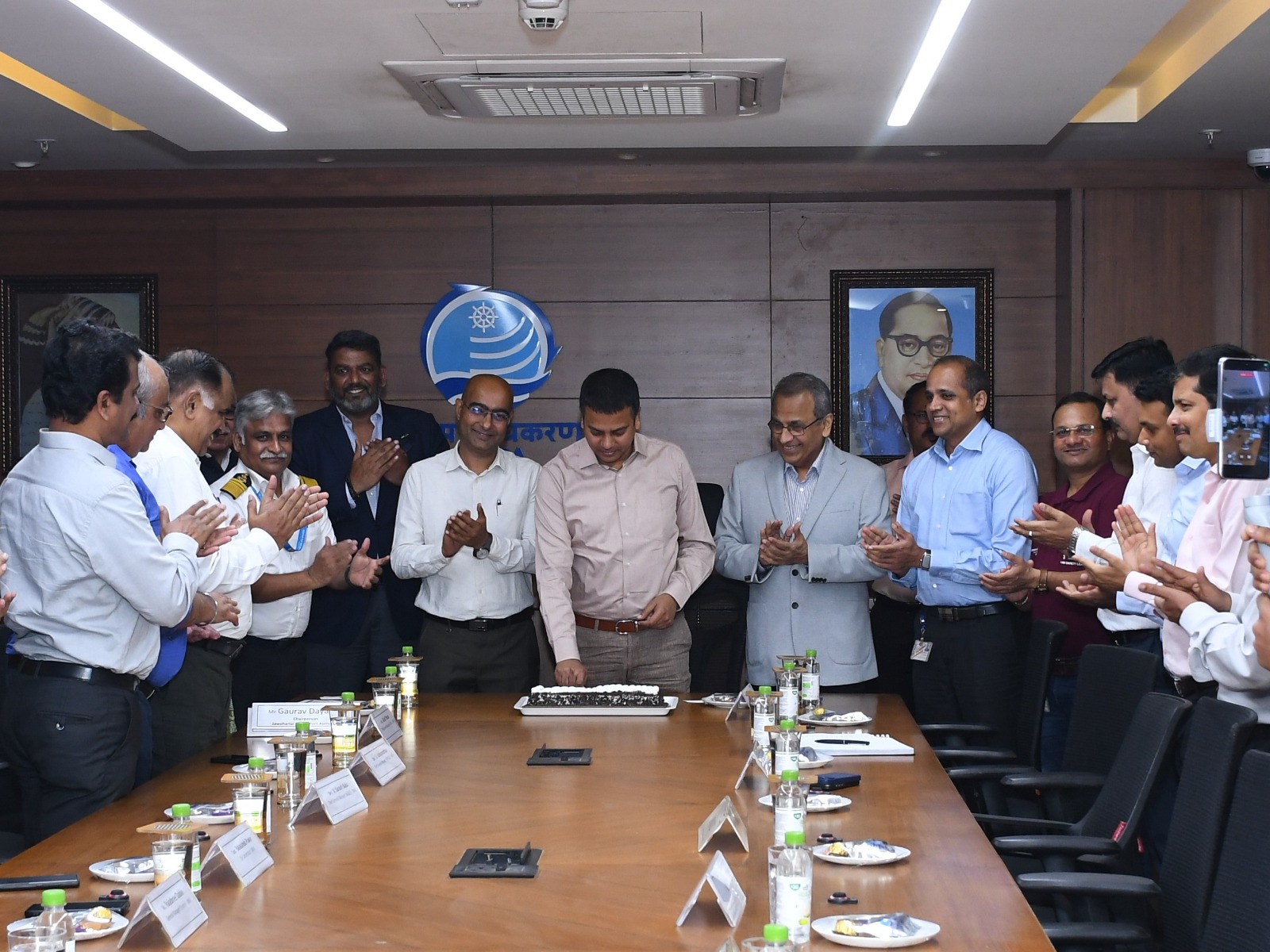
Against this backdrop, JNPA convened a stakeholders’ meeting to review terminal-wise performance, cargo trends, and operational outcomes during the year.
Key performance highlights:
• JNPA achieved highest ever monthly container throughput of 7,11,412 TEUs in Dec’2025 surpassing 6,95,968 TEUs handled in the month Aug’2025.
• NSFT has crossed their monthly container throughput of 1 Lakh TEUs in Dec’25.
• JNPA achieved overall monthly throughput of 8.96 MMT in Dec’2025 by surpassing previous highest of 8.56MMT handled in Aug’2025.
• NSDT has handled highest ever monthly throughput of 2,21,455 MT of Cement in 11 vessels
Commenting on the port’s performance, Shri Gaurav Dayal, IAS, Chairperson, JNPA, said, “The cargo and container volumes recorded during calendar year 2025 indicate stable demand conditions and improved alignment across terminal operations, shipping lines, and service providers. I congratulate the terminal operators on their instrumental role in handling higher volumes during the year. Their operational discipline and coordination across vessel, yard, and evacuation activities contributed to maintaining seamless cargo flow.”

The meeting was attended by representatives from BMCT, NSFT, DP World, GTI, CSLA, NASCOWA, MANSA, LCBUA, JSW, Divya CPP, BCBA, and MSC. The stakeholders’ meeting provided a structured forum to review performance across terminals, identify operational constraints, and discuss measures aimed at ensuring predictable cargo movement and service reliability in the coming months.
About JNPA:
The Jawaharlal Nehru Port Authority (JNPA) is one of the premier container-handling ports in India. Since its inception on May 26, 1989, JNPA has transformed from a bulk cargo terminal into the premier container port in the country.

Currently, JNPA operates five container terminals – NSFT, NSICT, NSIGT, BMCT and APMT. The Port also has a Shallow Water Berth for general cargo. A Liquid Cargo Terminal present at the JNPA Port is managed by the BPCL-IOCL consortium and the additional liquid cargo terminal developed by JNPA will be operated by M/s JSW – JNPT Liquid Terminal Pvt. Ltd. Additionally, the newly constructed coastal berth links other Indian ports and facilitates enhancing the traffic of coastal containers.

Nestled across 277 hectares of land, JNPA also operates a meticulously designed multi-product SEZ, with state-of-the-art infrastructure, to boost export-oriented industries in India.

JNPA is also developing an all-weather, deep-draft, greenfield port at Vadhvan, the 13th Major Port of India in Maharashtra. It is poised to be among the top 10 ports globally and will be a 100% green port since its inception.

Govt announces Rs 7,295-cr export package to improve exporters’ access to credit

NEW DELHI : The government on Friday announced a Rs 7,295-crore export support package, comprising a Rs 5,181-crore interest subvention scheme along with a Rs 2,114-crore collateral support, to improve exporters’ access to credit. Both measures will be rolled out over a period of six years (2025-31). Additional Secretary in the Commerce Ministry.

It will help cut the cost of credit for exporters.

MSMEs (micro, small and medium enterprises) currently pay anywhere between 9.5 per cent and 12.5 per cent for export credit, and the subsidy will make their goods competitive in the tough global market, which has been disrupted due to high tariffs imposed by the US.

This is the second component of the Rs 25,060-crore export promotion mission (EPM) approved in November 2025.

The first component — market access support with an outlay of Rs 4,531 crore — was rolled out on December 31, 2025.

The subvention scheme will help exporters from identified sectors to avail of rupee export credit at competitive rates at a time when global trade is facing headwinds.

Under the scheme, the government will provide subsidy benefits in the range of 2.75 per cent to eligible MSME exporters.

According to the commerce ministry, the subvention rates will be reviewed bi-annually in March and September based on domestic and global benchmarks.

The annual benefit is capped at Rs 50 lakh per firm.

The detailed guidelines of the scheme will be released by the RBI, which is the implementing agency, along with the Directorate General of Foreign Trade (DGFT).

A pilot roll-out will be undertaken, with a scope for refinement based on implementation feedback, it said. Even with the cap, 75 per cent of the total tariff lines or product categories (over 12,000) would be covered.

The interest rate subvention that has been capped at 2.75 per cent for now will be benchmarked against the Repo or policy rates of India and comparable economies, and would be adjusted as the interest rates move, Bhadoo said.

When the policy rates go down, the subsidy will also come down.

The rates will be adjusted every March and September, he said, adding that an additional interest subsidy will be provided to MSMEs exporting to new and emerging markets.

The additional benefit will be notified separately.

Of the total allocation of Rs 5,181 crore, about Rs 850 crore will be used this year for settling claims of the previous interest subvention scheme that expired in December 2024.

For the current financial year, which has just one quarter now, Rs 300 crore would be required for the subsidy.

The earlier scheme that expired in December 2024 provided a flat interest subsidy of 3 per cent. The government has also announced a Rs 2,114-crore collateral support for export credit. Under this, credit guarantee support will be given to MSMEs for export-linked working capital loans. Up to Rs 10 crore collateral guarantee per firm will be provided under this support measure.

The guarantee coverage up to 85 per cent will be available for micro and small exporters, and up to 65 per cent for medium exporters.

According to the DGFT, interest subvention and collateral support apply only to exports from a selected positive list of products. Defence and SCOMET (Special Chemicals, Organisms, Materials, Equipment and Technologies) products are covered in these measures.

However, restricted items, waste and scrap, and PLI (production-linked incentive) covered items will be out of the purview of these measures.

This intervention complements existing credit-guarantee mechanisms and is designed to increase bank lending for export-oriented MSMEs, the ministry said.

Guidelines will be notified by CGTMSE (Credit Guarantee Fund Trust for Micro and Small Enterprises), followed by a pilot phase and subsequent integration into a comprehensive revision of export-promotion frameworks, it added.

Commenting on the measures, the Federation of Indian Export Organisations (FIEO) said the launch of two critical interventions under the NIRYAT PROTSAHAN sub-scheme of the EPM would strengthen MSME exports and significantly improve access to affordable trade finance.

These announcements will address two of the biggest challenges faced by MSME exporters — high cost of credit and lack of collateral, FIEO President SC Ralhan said, adding that these measures will greatly enhance the competitiveness of Indian MSMEs in global markets.

He also said that the collateral guarantee framework will encourage banks to increase lending to export-oriented MSMEs and complement existing credit guarantee schemes.

It is a long-standing demand of the exporting community, particularly small exporters who struggle to meet collateral requirements.

“Both interventions will be implemented initially on a pilot basis, with continuous monitoring and refinements based on feedback and data analysis,” Ralhan said.

Directorate General of Foreign Trade issues details of interest subvention scheme for MSME exporters

NEW DELHI: The Directorate General of Foreign Trade (DGFT) has issued details of key financial support measures under the ‘NIRYAT PROTSAHAN’ initiative, aimed at strengthening export competitiveness of Micro, Small and Medium Enterprises (MSMEs).

The initiative focuses on improving access to affordable export credit and reducing financial constraints faced by MSME exporters.

As per the briefing addressed by Mr. Ajay Bhadoo, Additional Secretary, Ministry of Commerce and Industry and Mr. Lav Agarwal, Additional Secretary & Director General, DGFT, one of the major components is the Interest Subvention for Pre- and Post-Shipment Rupee Export Credit, which enables MSME exporters to avail export finance at rates below market interest levels.

The scheme is jointly implemented by DGFT and the Reserve Bank of India (RBI) and applies to both pre-shipment and post-shipment export credit in rupees. The interest subvention is benchmarked against repo rates of India and comparable economies.

Under the scheme, eligible MSME exporters will receive an interest subvention of 2.75 per cent, with an additional incentive proposed for exports to new and emerging markets, the details of which will be notified later. The government has earmarked a tentative budgetary outlay of Rs 5,181 crore for this component over six years from FY 2025-26 to FY 2030-31, with the annual benefit capped at Rs 50 lakh per exporting firm.

The scheme will benefit MSMEs engaged in the export of goods covered under a notified positive list of Harmonised System (HS) six-digit tariff lines, accounting for nearly 75 per cent of India’s total tariff lines. To be eligible, exporters must hold a valid Importer Exporter Code (IEC) and Udyam Registration.

To avail the benefit, exporters are required to file an intent on the DGFT portal, upon which a Unique Identification Number (UIN) will be generated. Each UIN will be linked to a single bank, and exporters must approach the corresponding bank while applying for export credit. Banks will sanction loans based on their internal due diligence and submit interest subvention claims on the DGFT portal.

The RBI will approve and disburse the eligible subvention amount, with claim settlements to be carried out on a monthly basis. Detailed operational guidelines are expected to be issued by the RBI.

Another important component under NIRYAT PROTSAHAN is Collateral Support for Export Credit, which provides credit guarantee support for export-linked working capital loans to MSMEs. The scheme offers an additional 10 per cent guarantee coverage over the existing 75 per cent coverage under Credit Guarantee Fund Trust for Micro and Small Enterprises (CGTMSE) for micro and small enterprises. It also extends guarantee support to medium enterprises, which were previously outside the scope of CGTMSE.
The government has proposed a tentative budgetary outlay of Rs 2,114 crore for the collateral support component over the six-year period from FY 2025-26 to FY 2030-31.

Both the interest subvention and collateral support measures apply only to exports from a selected positive list of products, which has been designed using a robust methodology to prioritise sectors with high MSME participation, including labour-intensive and capital-intensive industries.

The list excludes restricted and prohibited items, waste and scrap, PLI-covered products, and products already excluded under RoDTEP and RoSCTL, in order to avoid overlap and promote higher value addition. Defence and SCOMET products, however, have been included.

According to DGFT, the targeted design of the positive list and financial incentives under NIRYAT PROTSAHAN is intended to promote MSME exports, support employment generation, and enhance value addition in the Indian economy.

Source: ANI

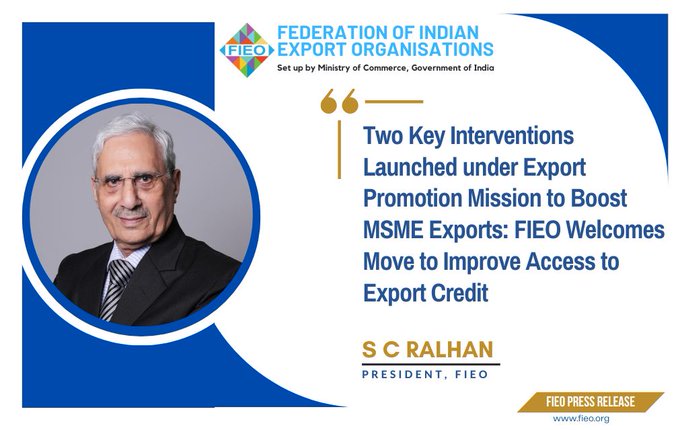
Two key interventions launched under Export Promotion Mission to boost MSME exports: FIEO welcomes move to improve access to export credit

NEW DELHI : The Federation of Indian Export Organisations (FIEO) welcomes the launch of two critical interventions under the NIRYAT PROTSAHAN sub-scheme of the Government of India’s Export Promotion Mission, aimed at strengthening MSME exports and significantly improving access to affordable trade finance.

Commenting on the development, Mr S C Ralhan, President, FIEO, said, “The launch of interest support for pre- and post-shipment export credit and the collateral guarantee mechanism marks a decisive step towards addressing two of the biggest challenges faced by MSME exporters—high cost of credit and lack of collateral. These measures will greatly enhance the competitiveness of Indian MSMEs in global markets.”

The first intervention provides interest subvention on pre- and post-shipment rupee export credit extended by eligible lending institutions. A base interest subvention of 2.75 per cent has been announced, with a provision for additional incentives for exports to notified under-represented or emerging markets, subject to operational readiness.

The interest support will apply to exports under a notified positive list of tariff lines at the Harmonised System (HS) six-digit level, covering nearly 75 per cent of India’s tariff lines, reflecting sectors with high MSME participation. An exporter-wise annual cap of ₹50 lakh per Importer Exporter Code (IEC) has been prescribed for FY 2025–26, with rates to be reviewed bi-annually in March and September.

Mr Ralhan noted that the data-driven positive list, with its focus on labour-intensive sectors, MSME concentration and value addition, will ensure that benefits reach genuine exporters. Inclusion of defence and SCOMET products will also support strategic and high-technology exports.

The second intervention introduces collateral guarantee support for export credit in partnership with the Credit Guarantee Fund Trust for Micro and Small Enterprises (CGTMSE). Under this mechanism, guarantee coverage of up to 85 per cent will be available for Micro and Small exporters and up to 65 per cent for medium exporters, with a maximum guaranteed exposure of ₹10 crore per exporter per financial year.

According to FIEO Chief, “This collateral guarantee framework will encourage banks to increase lending to export-oriented MSMEs and complement existing credit guarantee schemes. It is a long-standing demand of the exporting community, particularly small exporters who struggle to meet collateral requirements.”

Both interventions will be implemented initially on a pilot basis, with continuous monitoring and refinements based on feedback and data analysis. Detailed operational guidelines will be issued by the Reserve Bank of India for interest subvention and by CGTMSE for the collateral guarantee scheme.

The Export Promotion Mission, approved by the Union Cabinet on 12 November 2025, has a total outlay of ₹25,060 crore for the period FY 2025–26 to FY 2030–31. The Mission is jointly implemented by the Department of Commerce, Ministry of MSME and Ministry of Finance, and focuses on MSMEs, first-time exporters and labour-intensive sectors.

The Mission comprises two integrated sub-schemes:
NIRYAT PROTSAHAN, focusing on access to affordable and diversified trade finance; and
NIRYAT DISHA, supporting non-financial enablers such as market access, branding, logistics, regulatory compliance and trade intelligence.

Summing up, Mr Ralhan said that FIEO believes these interventions will lower the cost of exporting, expand access to finance, diversify export markets and strengthen India’s export brand. They will also play a crucial role in enabling MSMEs to integrate more deeply into global value chains and drive sustained export-led growth

Indian exports shift strategy toward diversification to offset US tariff impact: Report

NEW DELHI: Indian exporters have begun a strategic shift toward market diversification as a primary mechanism to counter the impact of significantly higher US tariffs and the absence of a formal trade deal. According to a report from the Bank of Baroda, this transition follows a period of rapid frontloading of shipments earlier in 2025 as businesses sought to secure cost advantages before new trade barriers took effect.

The report identifies a structural change in India’s export profile, specifically highlighting two distinct phases influenced by US policy shifts. Following the US tariffs announcement on April 2, 2025, exports to the US surged by USD 6 billion during the April-August period compared to the previous year. This spike occurred while older tariff rates of 0.5 per cent to 10 per cent remained in place.

However, the environment changed on August 7 when a 25 per cent tariff rate was implemented, followed by an increase to 50 per cent on August 27. The latter included a 25 per cent penalty linked to India’s status as a major buyer of Russian oil.

The report noted in the report that while the US remains a critical market, the subsequent September-November period showed a “degree of diversification with exports to the rest of the world excluding the US picking up and some trimming down of exports to the US.”

The report data indicate that during this second phase, exports to the rest of the world grew to USD 89.9 billion from USD 86.2 billion in the prior year, while the US-bound shipments saw a slight moderation. This shift suggests that “the beginning of the substitution effect has already started taking shape.”

Sector-specific data reveal that marine products, electronic goods, and gems and jewellery are leading this diversification. For marine products, the US market share fell by 13.6 per cent in the September-October period, while the share of exports to China and Thailand rose to 20.6 per cent and 7.3 per cent, respectively.

Similarly, electronic goods saw a sharp increase in shipments to the UAE, with its share rising to 15.3 per cent from 8.8 per cent. The report also highlights that Hong Kong has become a significant destination for gems and jewellery, with its export share reaching 11 per cent.

The report emphasises that certain sectors, including readymade garments, textiles, and machinery, require further country-wise diversification to “negate the impact of any loss in output from higher tariff rates.”

Average monthly exports to the US dropped to USD 5.9 billion in September-October 2025, down from USD 8.1 billion during the April-August period.

The report concludes that while individual market shares may currently be small, a focus on “integration with global supply chains, competitive pricing and improved logistics” may help insulate the Indian economy from output losses until a formal trade agreement is established.

Source: ANI

Govt approves 22 new projects across eight states under Electronics Components Manufacturing Scheme

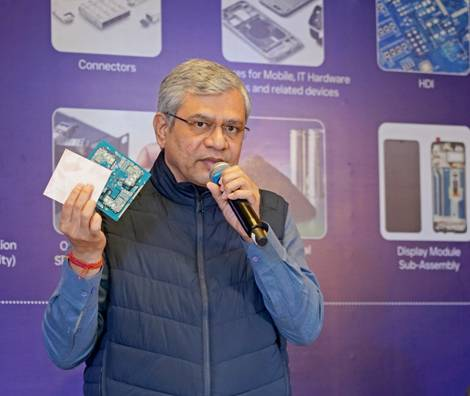
NEW DELHI : Centre has approved 22 new proposals under the third tranche of the Electronics Components Manufacturing Scheme, involving a projected investment of 41 thousand 863 crore rupees. These approvals cover the manufacturing of 11 target-segment products, including mobile manufacturing, telecom, consumer electronics, strategic electronics, automotive, and IT hardware.

Speaking on the occasion, Electronics and IT Minister Shri Ashwini Vaishnaw said, the implementation of major reforms and the acceleration of execution are key hallmarks of the Modi government. He encouraged electronics component manufacturers to establish design teams, specifically highlighting the need for a common design ecosystem.

The approvals for PCBs (including HDIs) have been given to 9 applicants which include India Circuits Private Limited, Vital Electronics Private Limited, Signum Electronics limited, Epitome Components Private Limited, BPL Limited, AT & S India Private Limited, Ascent-K Circuit Private Ltd, CIPSA TEC India Pvt Ltd and Shogini Technoarts Pvt Ltd. Further, approval for manufacturing of Capacitors, which are essential for energy storage and power conditioning in electronic circuits, has been awarded to Deki Electronics Limited and TDK India Private Limited, a major global manufacturer of electronic components and systems. For manufacturing of high-speed Connectors, approval has been given to Amphenol High Speed Technology India Private Limited. Further, approval for manufacturing of Enclosures for Mobile, IT Hardware products and related devices are granted to Yuzhan Technology (India) Private Limited, a global manufacturer of electronic components, Motherson Electronic Components Private Limited, a leading Indian manufacturer of electronic components and systems, and Tata Electronics Private Limited, a leading Indian electronics manufacturer and a trusted global brand. Also, an application for manufacturing of Li-ion cells for digital applications, which serve as rechargeable energy storage units for consumer and industrial electronics, has been approved for ATLbattery Technology (India) Private Limited, one of the leading global players in Li-ion cells manufacturing.

In sub-assembly category, approval has been given to Dixon Electroconnect Private Limited for manufacturing of Optical Transceiver (SFP); Kunshan Q Tech Microelectronics (India) Private Limited for manufacturing of Camera Module Sub Assembly; and Samsung Display Noida Private Limited, one of the top global Electronics brands, for manufacturing of Display Module Sub-Assembly..

The approved units are spread across eight states viz. Andhra Pradesh, Haryana, Karnataka, Madhya Pradesh, Maharashtra, Tamil Nadu, Uttar Pradesh and Rajasthan, reinforcing the Government’s focus on geographically balanced industrial growth and expansion of electronics manufacturing across the country. With the latest tranche of approvals, a total of 46 applications have been approved under the ECMS so far across 11 states, with a total investment of Rs. 54,567 crores, generating direct employment for about 51,000 people.

Speaking on the occasion, Minister for Electronics and Information Technology Shri Ashwini Vaishnaw noted that this programme has strengthened India’s electronics manufacturing ecosystem, enabling large portions of domestic demand to be met indigenously. Outlining the vision for the electronics sector, he noted that India would still be a very young demography in 2047 when growth would have stopped in many other economies. He added that India would be the only economy which will continue to grow till 2100 and hence it is important to set all the structural foundational blocks in place, so that the growth continues.

Minister of State for Electronics and Information Technology Shri. Jitin Prasada said that India is being seen as the next big Electronics manufacturing destination and is emerging as a reliable partner amidst global geopolitical uncertainty.

Meity Secretary Shri S. Krishnan said that the applications approved in the current tranche are important for the electronic manufacturing ecosystem of the country and help realise one of the significant goals of ECMS.

These approvals will significantly strengthen domestic supply chains, reduce import dependence for critical electronic components, and support the growth of high-value manufacturing capabilities in India.

These approvals under the Electronics Component Manufacturing Scheme reflects a bold, forward-looking step in electronics manufacturing journey, which is closely aligned with the Prime Minister Narendra Modi’s vision of making India a global hub for electronics manufacturing.

Further, to deepen the electronics manufacturing supply chain, approvals have also been given to NPSPL Advanced Materials Private Limited for manufacturing of Anode material which is a critical item for lithium-ion cell manufacturing that determines energy density and life-cycle of Li-ion cells; Wipro Global Engineering and Electronic Materials Private Limited for manufacturing of Laminate (Copper Clad), which is the base material for PCB manufacturing and constitutes a significant part (~30%) of the bill of materials of PCB manufacturing; and Hindalco Industries Limited for manufacturing of Aluminium Extrusion for mobile phones enclosures, which are currently being 100% imported.

These approvals reflect a forward-looking step in the electronics manufacturing journey, which is closely aligned with Prime Minister Shri Narendra Modi’s vision of making India a global hub for electronics manufacturing.

India’s Maritime reforms gain momentum in 2025, marking a transformational phase for the sector

NEW DELHI : The year 2025 marked a decisive phase in India’s reform journey, where policy intent aligned seamlessly with purpose and long-term vision translated into concrete action. The maritime sector, a key pillar of India’s economic and strategic architecture, witnessed significant legislative and policy advancements aimed at modernising the regulatory framework and strengthening institutional governance.

G9pBJu4aMAMDn7u 1 India’s Maritime reforms gain momentum in 2025, marking a transformational phase for the sector

During the year, the Government of India introduced landmark maritime Bills designed to overhaul decades-old laws, bring greater transparency, and improve ease of doing business across ports, shipping, inland waterways, and logistics. These reforms are focused on simplifying procedures, enhancing regulatory certainty, promoting private sector participation, and aligning India’s maritime laws with global best practices.

The forward-looking legislative measures seek to improve operational efficiency at ports, reduce logistics costs, enhance dispute resolution mechanisms, and ensure a more business-friendly ecosystem for domestic and international stakeholders. Special emphasis has been placed on digitalisation, sustainability, safety standards, and skill development to future-proof the sector.

These reforms also complement the government’s broader vision of strengthening India’s Blue Economy, boosting coastal and maritime infrastructure, and positioning India as a global maritime hub. By fostering policy stability and investor confidence, the initiatives are expected to accelerate capacity creation, promote green shipping practices, and support multimodal connectivity.

The maritime reforms of 2025 underscore India’s commitment to building a resilient, competitive, and future-ready maritime ecosystem—one that anchors economic growth, enhances global trade integration, and reinforces India’s role in international shipping and logistics networks.

As India charts its course towards becoming a leading maritime nation, these transformative policy interventions lay a strong foundation for sustained growth, innovation, and global competitiveness in the years ahead.