Home Blog Page 492

VOC Port Authority explores Green Hydrogen opportunities with GH2 India

TUTICORIN : A productive discussion was held between Shri Susanta Kumar Purohit, IRSEE, Chairperson, V.O. Chidambaranar Port Authority (VOC Port), and Shri Rajesh Soundararajan, IAS, Deputy Chairperson, with Shri Nishaanth Balashanmugam, CEO & Director of GH2 India, to deliberate on India’s emerging green hydrogen economy and the transformative opportunities it presents for maritime decarbonization.

The interaction focused on the potential role of VOC Port in supporting India’s transition towards green maritime fuels and sustainable port operations. Emphasis was placed on integrating green hydrogen and its derivatives into port-led energy ecosystems, aligning with national decarbonization goals and global maritime sustainability standards.

During the meeting, Shri Nishaanth Balashanmugam briefed the port leadership on the Green Ports and Shipping Network (GPSN)—an execution-oriented platform aimed at connecting green fuel producers, ports, and shipping stakeholders. GPSN seeks to facilitate the development of enabling infrastructure, commercial frameworks, and long-term offtake agreements to accelerate adoption of green fuels in the maritime sector.

With its strategic location, robust infrastructure, and forward-looking vision, VOC Port Authority is well positioned to play a pivotal role in advancing green maritime initiatives. The discussions underscored strong collaborative momentum as stakeholders prepare for the Green Hydrogen India Symposium 3.0, scheduled to be held on January 23, 2026, which will bring together the maritime decarbonization ecosystem and mark the official launch of the GPSN.

This engagement reflects VOC Port Authority’s continued commitment to sustainability, innovation, and supporting India’s clean energy transition within the maritime domain.

GRSE builds on export push as second MPV reaches keel-laying milestone

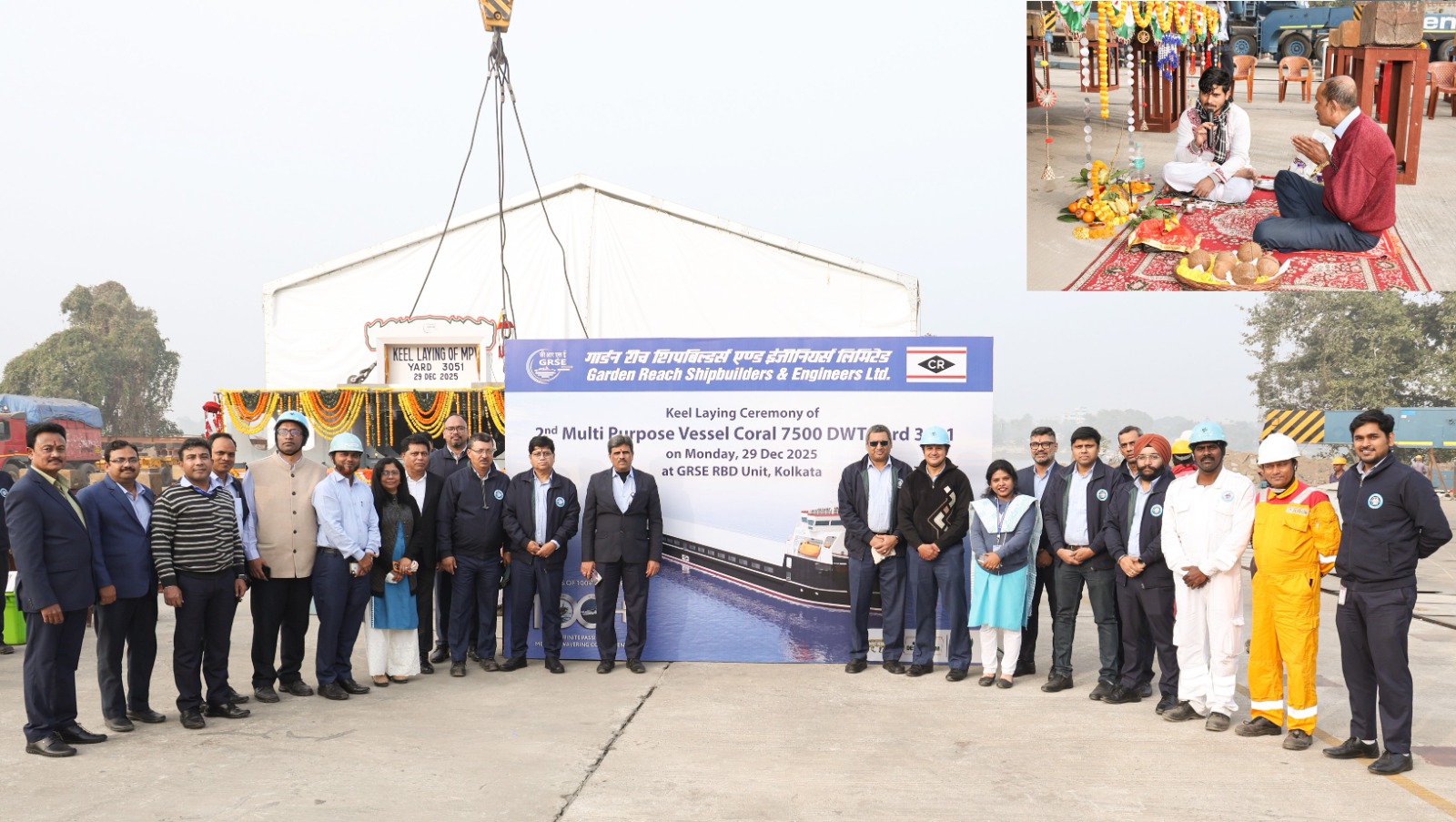
KOLKATA : As a mark of its commitment towards the “Make in India, Make for the World” vision, Garden Reach Shipbuilders and Engineers (GRSE) Ltd laid the keel for the second vessel of Multi-Purpose Vessel (MPV) project being executed for Germany’s Carsten Rehder Schiffsmakler and Reederei GmbH & Co. KG, on Monday, December 29, 2025.
This contract – the largest for MPVs in GRSE’s history – is a testament to the shipyard’s efforts towards diversification of products and expansion to the global commercial shipbuilding market.
The ceremony was graced by Shri M Venkatesh Murthy, Chief General Manager, CSB, GRSE, Shri Sujoy Chakravorty, Chief General Manager, Commercial, GRSE, in the presence of senior officials from GRSE and representatives from the German shipping firm & DNV.
The project involves the designing and building of modern series of high performance vessels under the CORAL 7500 DWT MPV series. The initial contract for four vessels was signed on June 22, 2024, followed by subsequent agreements bringing the total order to twelve vessels. The final contracts, including ninth to twelfth Hybrid Propulsion MPVs, were signed on September 19, 2025.
Each MPV will have an overall length of 120 metres and a beam of 17 metres, with a draught of 5.85 metres. With a capacity to carry 7,500 metric tonnes of cargo, these vessels are equipped with a single, large cargo hold designed for bulk, general and project cargoes. An innovative feature is the capability to carry containers on hatch covers and multiple large windmill blades on deck – enhancing flexibility in cargo handling.
The project is being developed in close collaboration with German firms including F.H. Bertling, ForestWave Navigation/Schulte & Bruns, and Delft Shipping. Technical design expertise has been provided by M/s SEDS, in partnership with GRSE. These ships shall be certified by DNV, the classification society.

Strong Russian buying lifts Indian coffee exports to record over $2 billion

NEW DELHI : India’s Coffee Exports for calendar year 2025 have crossed record $2 billion mark, registering a 22 per cent growth over the previous year on high prices and strong buying from the Russian Federation.

Per the Coffee Board’s latest data, shipments, based on the permits issued, touched $2.058 billion during 2025 over previous year’s $1.679 billion. Overall volumes saw a decline around 4.5 per cent at 3.48 lakh tonnes (lt) over previous year’s 4.02 lt, despite an increase in shipments of Arabicas and instant coffees.

In value terms, the shipments registered an increase of 27 per cent at ₹17,911 crore (₹ 14,046 crore). Reflecting the higher trend in global prices, the per unit realisations were up 33 per cent at ₹4.65 lakh per tonne over previous year’s ₹3.48 lakh per tonne.

The premium for Indian Robusta parchment AB is currently estimated at $1,000–$1,100 per tonne over London’s LIFFE prices, while Robusta cherry AB is trading at a premium of $400–$450 per tonne. For Arabica parchment, the premium is around 12–15 cents per pound over New York prices.

The top destination countries were Italy (18%), Germany (11%), Belgium (7.5%), the Russian Federation (5.3%) and the United Arab Emirates (5%). India is the world’s seventh largest producer and fifth largest exporter of coffee

Port of Colombo records historic high of 8.29 million teus in 2025

COLOMBO : The Port of Colombo reached a defining point in 2025 by recording a throughput of 8,291,178 TEUs, the highest volume ever handled in its history. This result follows a strong performance in 2024, when the port processed 7,792,069 TEUs, and affirms Colombo’s standing as the leading container hub in South Asia. The year-on-year increase reflects disciplined investment, operational resilience and sustained confidence from global shipping lines at a time when international trade conditions remain uneven and freight networks continue to recalibrate.

This achievement is the outcome of coordinated effort across all terminals operating within the port. The Sri Lanka Ports Authority (SLPA) terminals continued to provide stability and scale, handling a significant share of volumes while supporting both mainline and feeder operations. Colombo International Container Terminals (CICT) sustained its role as a deep-water gateway for ultra-large container vessels, supported by high berth productivity and consistent yard performance. South Asia Gateway Terminals (SAGT) delivered dependable service for regional and transhipment cargo, reinforcing Colombo’s role as a preferred intermediate hub. The progress at the Colombo West International Terminal (CWIT), led by the Adani Group in partnership with local stakeholders, further strengthens future capacity and signals long-term commitment to Colombo as a strategic maritime asset of regional and international relevance.

The 2025 performance is notable not only for the volume achieved, but also for the context in which it was delivered. Global shipping networks continue to adjust to route realignments, fleet expansion and persistent cost pressures. Against this background, Colombo’s ability to attract additional vessel calls, retain transhipment volumes and improve vessel turnaround times reflects operational maturity and commercial credibility. These outcomes also point to effective coordination between terminal operators, port services, regulators and logistics partners, ensuring service continuity and reliability across the port ecosystem.

Colombo’s present-day performance is rooted in a long tradition of maritime engineering and structured planning. A well-documented chapter of its history dates back to the late nineteenth century, when the modern harbour was shaped during the British colonial period. The design and construction of the first permanent breakwater were led by Sir John Coode, one of the most respected harbour engineers of his time. His work transformed Colombo from an exposed roadstead into a sheltered deep-water port, enabling year-round operations and establishing the technical foundation for sustained growth. That early emphasis on durable marine infrastructure and long-term planning continues to inform the port’s development approach today.

Surpassing 8.29 million TEUs positions the Port of Colombo on firmer footing to expand its role within global shipping networks while supporting Sri Lanka’s wider economic objectives. Continued focus on capacity enhancement, digitalisation, workforce capability and service reliability will be central to maintaining momentum. The 2025 milestone is not an endpoint, but a clear signal that the Port of Colombo possesses the structure, partnerships and operational discipline required to perform at scale, with consistency and confidence, in an increasingly demanding global market.

Saudi Arabia sets first-ever rules for beach operators on Red Sea coast 

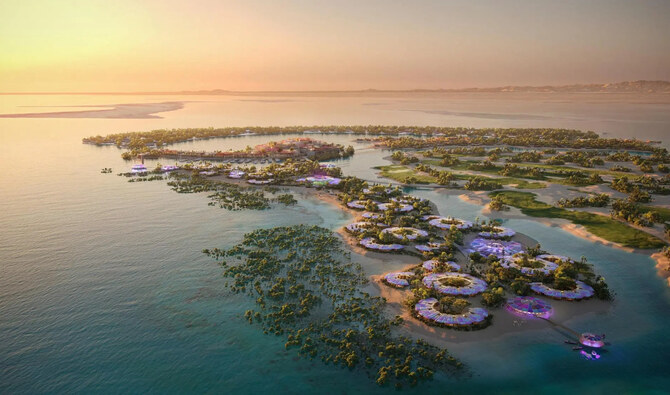
RIYADH : Saudi Arabia’s Red Sea tourism regulator has issued its first set of beach operating rules, laying out licensing, safety and environmental standards as the Kingdom moves to commercialize its coastline.

The Saudi Red Sea Authority said the new Beach Operators’ Requirements and Conditions establish a regulatory framework for beach operations, covering areas such as security, public health, environmental protection and infrastructure standards.

The rules are intended to support investment in coastal tourism while ensuring compliance with sustainability and safety benchmarks, as Saudi Arabia expands leisure and hospitality offerings along its western coast as part of Vision 2030.

The move builds on earlier efforts to position coastal tourism as a key economic pillar. In 2024, the authority and the Ministry of Investment released an “Invest in Coastal Tourism” report that identified the Red Sea coastline as central to Vision 2030 plans, including a target of attracting 19 million visitors.

In a release, the authority stated: “These requirements serve as a comprehensive operational and regulatory framework for issuing beach operation licenses. They define conditions related to security, safety, public health, and environmental protection, establishing a new phase governed by high-quality standards aligned with international best practices and experiences.”

It added: “This framework aims to deliver an optimal beach experience for visitors and, in the long term, enhance service quality, safety standards, beach sustainability, marine environmental protection, and overall attractiveness. The requirements are designed to act as an official reference for operators seeking to develop or operate beaches.”

The requirements also address beach design, development, and construction in line with the Saudi Building Code, ensuring architectural and structural compliance. They include accessibility for people with disabilities, enforcement of safety, security, and environmental measures, and alignment with high-quality standards, including those of the Blue Flag eco-label.

The regulations outline licensing procedures and documentation requirements, including commercial registration, environmental permits, marine zoning approvals, beach safety plans and capacity assessments. Operators must also separate swimming areas from other marine activities, provide safety and rescue equipment, ensure trained lifeguards are on duty and install clear signage.

“The requirements further impose strict environmental controls, including the prevention of pollutant discharge, effective waste management, the use of environmentally friendly materials, activation of environmental monitoring mechanisms, and immediate reporting of any environmental incident to preserve ecological balance,” it added.

The rules will come into force one month after their announcement, with existing beach operators granted a one-year transition period to comply with the new technical and environmental standards.

Saudi Arabia aims for coastal tourism in the Red Sea region to contribute about SR85 billion ($22.6 billion) to gross domestic product by 2030, generate more than 210,000 jobs, and capture a significant share of leisure tourism and entertainment spending.

China bets on province the size of Belgium to reshape global trade

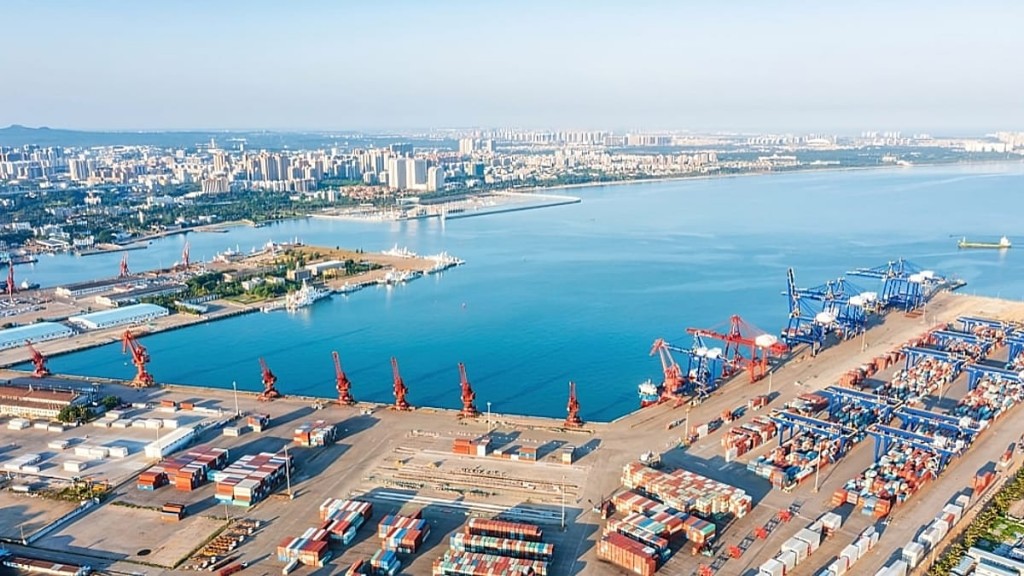
BEIJING : The Chinese Communist Party has officially turned the island province of Hainan into a free trade port, one of the government’s most ambitious economic experiments to date. As of December 2025, new laws came into effect making Hainan a separate customs zone and consolidating a favorable regulatory environment in the southernmost province of China.

The move contrasts with the current global trend of protectionism, as many countries move to tighten trade rules and investment controls.

Hainan is now effectively the world’s largest free trade port by area. Encompassing over 35,000 square kilometers, it is roughly fifty times bigger than Singapore and even slightly bigger than Belgium.

China is attempting to offer a solution for the “growing uncertainties in the global economy” and trying to replicate the success of Singapore, with a free trade port the size of a European nation.

According to the state-run Xinhua news agency, the launch of “special customs operations” is not merely a policy tweak but a fundamental restructuring of how the island province interacts with international markets.

The unique framework, instituted by the Chinese Communist Party, could make Hainan the most business-friendly jurisdiction in the world.

This is not the first time the state-led economy, described as a socialist market economy, takes a page from the capitalist playbook to boost its global dominance.

Special economic zones (SEZs) have been successfully implemented in China since the late 1970s, as part of the country’s economic open-door policy. These SEZs allow Beijing to experiment with capitalist mechanisms, in limited areas, while maintaining broader state control over the economy.

In 2020, the CCP unveiled a comprehensive plan to shift Hainan from a mere special economic zone to a strategic hub designed to rival Hong Kong, Singapore and Dubai.

Creating a completely separate trade and investment system for the province was the objective until the end of 2025. Going forward, the party projects that Hainan will reach “institutional maturity” by 2035 and achieve a “strong global influence” by the middle of the century.

First line open, second line controlled

The province comprises Hainan Island and various smaller islands in the South China Sea, and now operates under a “two-line” customs system designed for greater openness while maintaining domestic security.

The first line marks the boundary between Hainan and the global economy, where most trade barriers have been removed. Under the new legislation, the majority of goods can enter the province freely, with a significantly expanded list of zero-tariff imports covering raw materials, equipment and consumer products.

The second line functions as a filter between Hainan and mainland China. There, standard customs rules apply, with goods subject to tariffs and controls intended to protect domestic markets.

However, the system creates a powerful incentive for manufacturers. Goods entering Hainan that achieve at least 30% added value within the province can enter mainland China duty-free, a policy designed to encourage additional production on the islands rather than using them solely as a transit hub.

For example, Australian beef can be imported into Hainan duty-free. Then, if the beef is sliced and packaged for China-destined hotpot products on the island province itself, it can enter mainland Chinese supermarkets with the same exemptions.

China’s strategic gateway

The scope of the CCP’s plans for Hainan extends well beyond customs arrangements.

The province applies a flat corporate tax rate of 15%, lower than those in Hong Kong (16.5%), Singapore (17%) and mainland China (25%).

Hainan is now also operating under a distinct regulatory framework in several other areas, which differs significantly from regulation on the mainland.

For instance, if a pharmaceutical product or medical device is approved by one of many regulatory agencies anywhere in the world, it can be used on the island province despite being banned on the mainland.

Similarly, companies registered in Hainan can apply for broader internet access, allowing them to bypass the so-called “Great Firewall of China”, a system of laws and technologies enforced by the CCP to control online activity nationwide.

Foreign companies can also open special bank accounts in Hainan, with capital flows exempt from mainland foreign-exchange controls, while foreign universities are permitted to establish campuses without a Chinese partner.

Visa-free entry to the province has also been expanded from 59 to 86 countries, now including the United States, Germany and Australia, as well as several countries in the Middle East and South America.

Visitors can stay for up to 30 days without a visa for business, medical treatment or tourism, as the authorities also promote the island province as a major travel destination.

Amid rising tensions in the global economy, Hainan serves as China’s “pressure valve” offering a low-tax, zero-tariff, high-access gateway to Asia-Pacific markets

India’s First Maritime NBFC, SMFCL begins Lending, Sanctions ₹4,300 Crs

India’s Maritime Finance Ecosystem Gets Dedicated Lender as SMFCL Targets ₹8,000 Crore Loan Book in FY26

“PM Narendra Modi ji’s Vision Has Built India’s Financial Architecture for Maritime Growth:” Sarbananda Sonowal

About ₹4,000 Crore earmarked for Greenfield Port Project

Dredging Corporation of India (DCI) secured ₹150 Crs while Goa Shipyard secured ₹110 Crs from the tranche

NEW DELHI: Sagarmala Finance Corporation Limited (SMFCL), India’s first maritime focussed Non Banking Financial Company (NBFC), commenced its lending operations, marking a major milestone in the evolution of India’s maritime finance ecosystem. The company approved loan sanctions of about ₹4,300 crore at its 51st Board Meeting held on Dec. 30, 2025, formally entering the maritime lending space in line with the strategy approved by its Board.

The move follows an aggressive market roadmap cleared at SMFCL’s Annual General Meeting (AGM), where the Board approved an overall borrowing limit of ₹25,000 crore and a lending target of ₹8,000 crore for the current financial year. With the latest sanctions scheduled for disbursement within the ongoing fiscal year, SMFCL is targeting a loan book of ₹8,000 crore in FY 2025-26, reinforcing its ambition to emerge as a dedicated and credible financier for the maritime sector.

An amount of about ₹4,000 crore has been earmarked for a Greenfield Port Project, reinforcing the Centre’s push for port-led development. In addition, Dredging Corporation of India (DCI) secured ₹150 crore, while Goa Shipyard received ₹110 crore from the same tranche, supporting dredging capacity and indigenous shipbuilding capabilities.

SMFCL was inaugurated on June 26, 2025, as India’s first Non-Banking Financial Company (NBFC) exclusively focused on maritime financing by Union Minister of Ports, Shipping and Waterways (MoPSW) Sarbananda Sonowal. The institution was created to bridge long-standing financing gaps and deliver sector-specific financial solutions to ports, MSMEs, startups and institutions, in alignment with the ‘Amrit Kaal Vision 2047’ and the country’s broader blue economy goals.

Commenting on the commencement of lending operations, the Union Minister Sarbananda Sonowal said, “This is a milestone which reflects PM Narendra Modi ji led government’s resolve to build robust financial architecture for India’s maritime growth. SMFCL’s entry into lending marks an important step in strengthening maritime infrastructure and enterprise financing. This initiative draws strength from our dynamic PM Modi ji’s bold, inspiring and visionary leadership. Under Modi ji’s leadership, our maritime sector has witnessed unprecedented policy clarity, institutional reform and investor confidence. Such commitment to long-term, future-ready growth has created the ecosystem that enables specialised institutions like SMFCL to catalyse development across the blue economy. With strengthened maritime sector, we are cruising smoothly towards our goal of Viksit Bharat.”

The company said ratings from major credit rating agencies are expected shortly, a development that is likely to further optimise borrowing costs and support the scaling up of lending operations. SMFCL’s expansion strategy is backed by strong institutional support from the Ministry of Ports, Shipping and Waterways, which has designated the corporation as the nodal agency for the establishment and operational coordination of the Maritime Development Fund (MDF) with a total corpus of ₹25,000 crore.

The MDF includes the Maritime Investment Fund with a corpus of ₹20,000 crore and the Interest Incentivisation Fund with a corpus of ₹5,000 crore. Under the approved framework, SMFCL will hold and manage the Government of India’s contribution to the Alternative Investment Fund established for the Maritime Investment Fund in a fiduciary capacity. In addition, SMFCL will act as the nodal agency to channelise the Interest Incentivisation Fund, significantly expanding its scope of funding support across maritime segments.

SMFCL said the forthcoming notification of guidelines for the Shipbuilding Financial Assistance Scheme, with an outlay of ₹44,700 crore, is expected to open new avenues for investment and collaboration, particularly in shipbuilding and allied industries, further strengthening the domestic maritime manufacturing ecosystem.

The corporation will offer tailored financial products to eligible government and private sector entities operating across the entire maritime value chain. Its offerings will include short-, medium- and long-term loans, solutions to address cash-flow mismatches, balance-sheet financing, and non-fund-based products designed to meet the specific needs of maritime projects and enterprises.

With lending operations now underway, SMFCL said it is positioned to play a catalytic role in accelerating maritime infrastructure development, supporting indigenous shipbuilding, and deepening access to institutional finance for India’s rapidly expanding blue economy, in line with national development priorities.

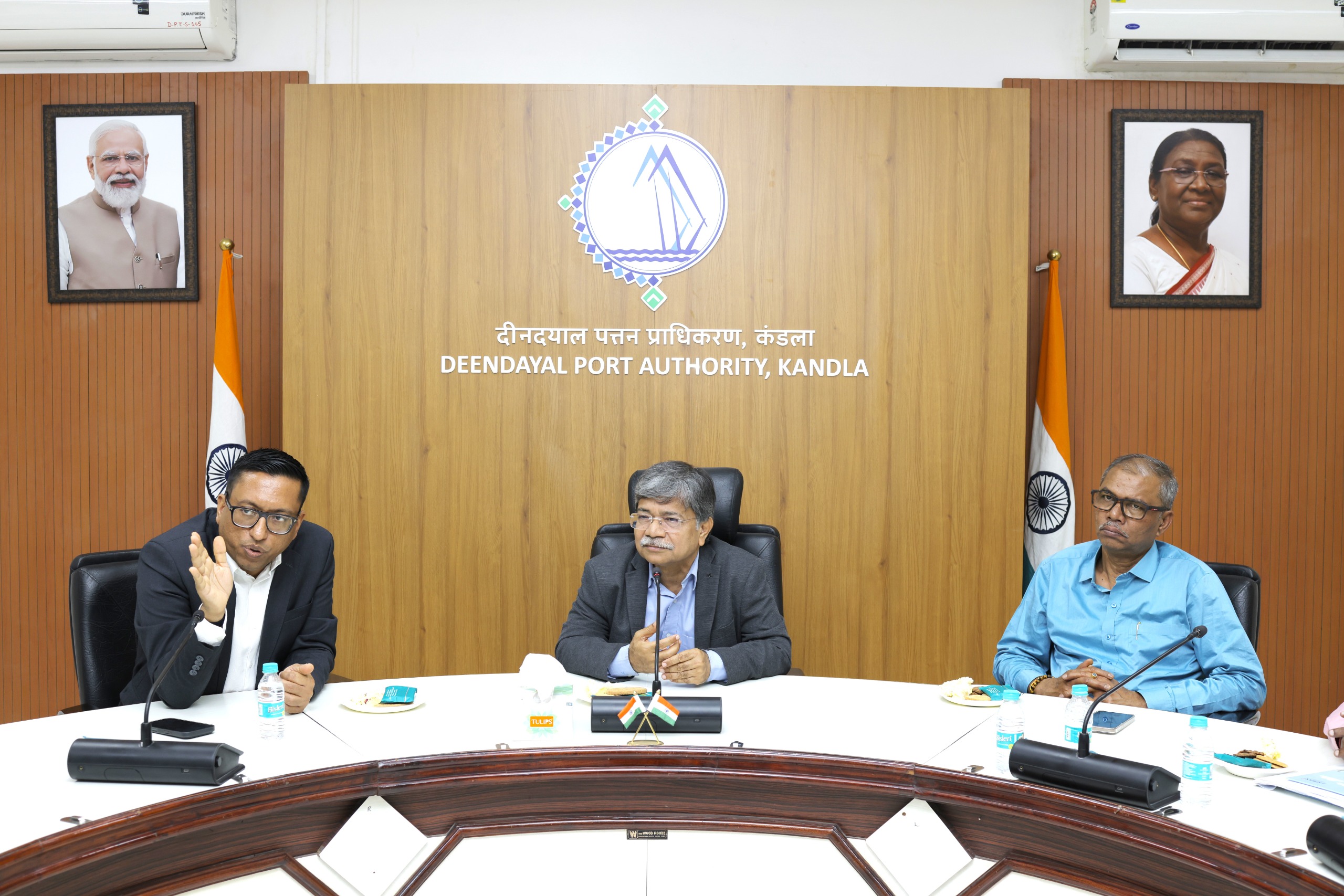
DPA Kandla goes LIVE with EBS – A major digital milestone

GANDHIDHAM : DPA Kandla has successfully gone fully LIVE with all modules of the EBS system, marking a significant step in its digital transformation journey.

The occasion was marked in the presence of Shri Sushil Kumar Singh, IRSME, Chairman and Shri Nilabhra Dasgupta, IRS, Dy. Chairman, along with officials from DPA, EBS and Tech Mahindra.

This implementation will reduce the cost of doing business, enhance supply chain visibility and promote ease of doing business for port users and stakeholders.

JNPA sets new benchmarks in CY 2025

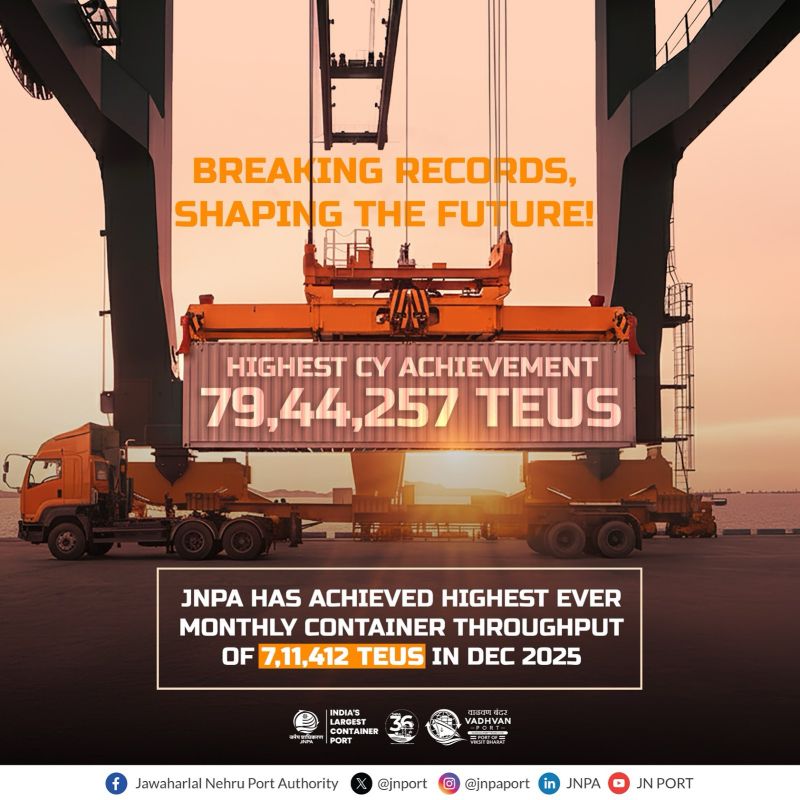
MUMBAI : Jawaharlal Nehru Port Authority (JNPA) has achieved a historic milestone in Calendar Year 2025, recording its highest-ever annual container throughput of 7,944,257 TEUs, reflecting a robust year-on-year growth of 12.64%.

Further underscoring this exceptional performance, JNPA also registered its highest monthly throughput in December 2025, handling 711,412 TEUs. This surpasses the previous monthly record of 695,968 TEUs achieved in August 2025, setting a new benchmark in the port’s operational history.

These achievements highlight JNPA’s sustained operational excellence, enhanced terminal productivity, and its pivotal role in supporting India’s growing trade volumes and supply chain resilience.

As JNPA steps into 2026, the Port Authority remains firmly committed to building on this momentum—driving efficiency, capacity expansion, and innovation—to set new milestones and further strengthen India’s maritime and logistics ecosystem.

FIEO engages with New and Outgoing DGFT Leadership to Reinforce India’s Export Momentum

NEW DELHI: In a significant step toward strengthening India’s export ecosystem, Federation of Indian Export Organisations (FIEO) reaffirmed its commitment to collaborative trade growth through high-level engagements with both the incoming and outgoing leadership of the Directorate General of Foreign Trade (DGFT).

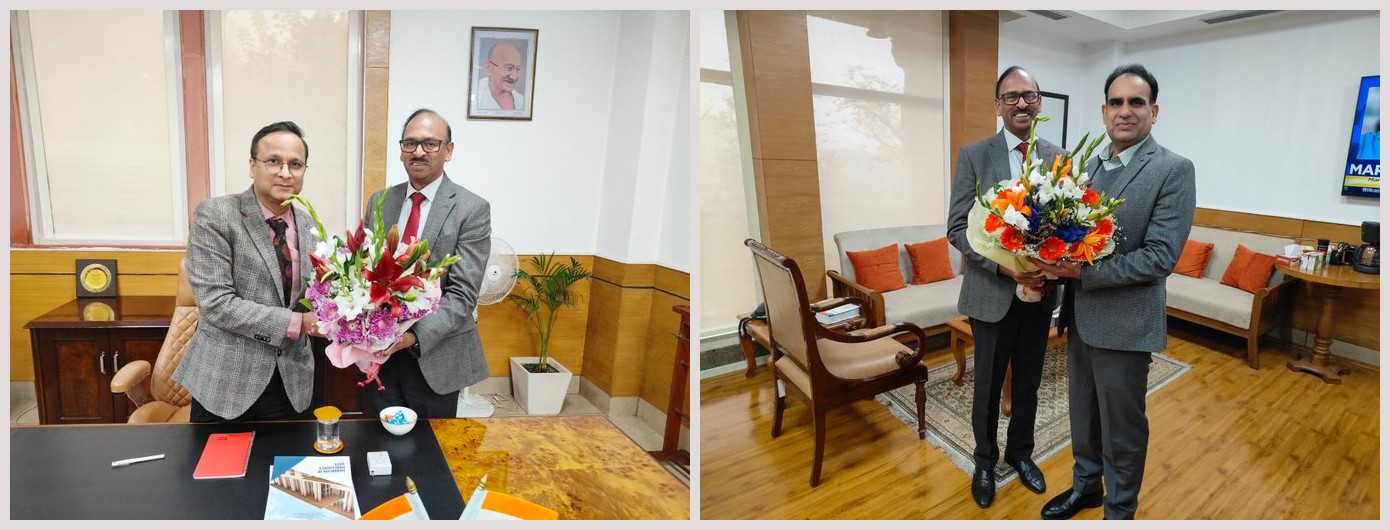
On December 31, 2025, Dr. Ajay Sahai, Director General & CEO, FIEO, called on the newly appointed Mr. Lav Agarwal, DGFT, Ministry of Commerce & Industry, Government of India, in New Delhi. Dr. Sahai extended a warm welcome to Mr. Agarwal and conveyed FIEO’s assurance of full support from the trade and industry, underscoring the collective resolve to accelerate India’s export journey and unlock new global opportunities for Indian exporters.

In a parallel interaction the same day, Dr. Sahai also met with the outgoing DGFT, Mr. Ajay Bhadoo, to express heartfelt appreciation for his leadership and steadfast support to India’s trade and industry. On behalf of FIEO and the exporting community, Dr. Sahai acknowledged Mr. Bhadoo’s valuable contributions in empowering exporters, streamlining trade processes, and strengthening India’s position in global markets.

These engagements reflect FIEO’s proactive role in ensuring continuity, cooperation, and policy alignment during leadership transitions. As India charts an ambitious export-led growth path, FIEO reiterated its commitment to working closely with the DGFT and the Government to build a resilient, competitive, and future-ready export ecosystem.