Home Blog Page 494

NRDC celebrates 72nd Foundation Day with Inauguration of System Engineering Facility, Strengthening Innovation, Technology Transfer, and Support for Startups & MSMEs

NEW DELHI: The National Research Development Corporation (NRDC), celebrated its 72nd Foundation Day with the inauguration of the Systems Engineering Facility (SEF) on 31 December 2025 in the presence of, Dr. N. Kalaiselvi, Director General, Council of Scientific and Industrial Research (CSIR) and Secretary, Department of Scientific and Industrial Research (DSIR), Government of India and other dignitaries.

Addressing the gathering, Cmde. Amit Rastogi (Retd.), Chairman & Managing Director, NRDC, highlighted NRDC’s journey over seven decades and its renewed focus on enabling deep-tech commercialization, supporting startups and MSMEs, and creating robust institutional mechanisms that bridge the gap between research outcomes and market deployment. He emphasized NRDC’s strategic initiatives aligned with national priorities, including Viksit Bharat@2047, Startup India, and Atmanirbhar Bharat, and reiterated NRDC’s commitment to building globally competitive, indigenous technologies.

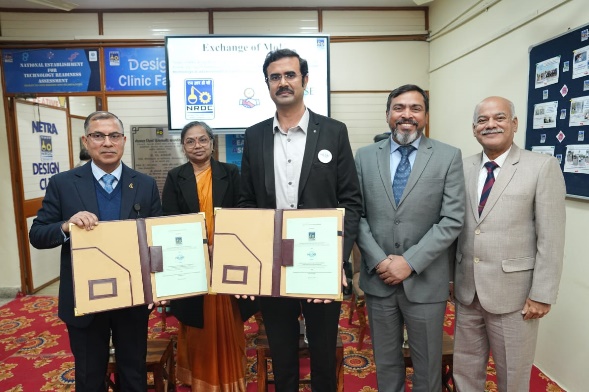
Following the CMD’s address, the event witnessed the exchange of a Memorandum of Understanding (MoU) between NRDC and the International Council on Systems Engineering (INCOSE). The MoU marks a significant milestone in collaborative innovation and capability building, aimed at strengthening systems engineering practices.

A major highlight of the occasion was the inauguration of the Systems Engineering Facility (SEF), a transformative national initiative of NRDC established in strategic collaboration with Pimpri Chinchwad College of Engineering (PCCoE), Maharashtra. The Systems Engineering Facility was inaugurated by the Chief Guest, Dr. N. Kalaiselvi, Director General, Council of Scientific and Industrial Research (CSIR) and Secretary, Department of Scientific and Industrial Research (DSIR), Government of India, in the presence of Cmde. Amit Rastogi (Retd.) CMD, NRDC and other senior officials from NRDC, Mr. Prasanna Ramamurthy, President, INCOSE, and Dr. G. N. Kulkarni, Director, PCCoE. In her address, Dr. Kalaiselvi underscored the critical role of systems engineering in managing technological complexity, accelerating innovation, and ensuring that indigenous technologies mature into scalable and deployable solutions.

The Systems Engineering Facility has been conceptualized as a national platform to empower incubated startups, MSMEs, and innovators by bridging the critical gap between ideas and validated technological solutions. By institutionalizing structured systems engineering practices, SEF provides end-to-end support across the innovation lifecycle, including requirements analysis, system architecture design, modeling and simulation, integration, verification, and validation.

The Foundation Day celebrations also underscored NRDC’s broader mandate of facilitating technology transfer and strengthening industry participation in publicly funded research outcomes. The event witnessed the signing and exchange of technology licensing agreements, including an electric tractor technology developed by CSIR–CMERI, West Bengal, licensed to M/s Mistrijee Technologies Pvt. Ltd., Patna in the presence of Dr. Naresh Chandra Murmu Director, CMERI, CSIR and a sustainable vegan leather alternative developed by CSIR–NIIST, Thiruvananthapuram, licensed to M/s EcoSolutions Pvt. Ltd.,in the the presence of Dr. Nishy P. Chief (BD) NEIST, Trivandrum produced entirely from plant-based resources and agro-residues.

Recognizing excellence, innovation, and outstanding contributions by its employees, NRDC also presented awards in multiple categories. The Best Employee (Non-Technical) award was conferred on Ms. Khushboo, (Public Relations & Corporate Communications) for her role in enhancing NRDC’s brand visibility. The winner & runner Ups for Technology Presentation was awarded to Ms. Prithee Niharika Deputy Manager and Ms. Priyanka Aswal, Senior Technical Assistant respectively   while the award for the Naming and Logo Designing Contest for AI enabled Technology Exchange was presented to Dr. Akanksha Jain, Deputy Manager, NRDC.

NRDC also announced seed funding support of ₹30 lakh each to VoltWorks Technologies Pvt. Ltd. for its automotive-grade VoltWorks Powertrain electric vehicle solution, and support to Tri Nano Technologies for its advanced nano-coating technology for solar panels, which enhances efficiency while significantly reducing maintenance requirements and resource consumption.

In addition, NRDC launched the MSME–Technology Transfer Facilitation Centre, aimed at empowering MSMEs by providing financial support of up to 70% for IP protection and technology acquisition. The program helps reduce innovation-related costs, strengthens competitiveness, and enables faster commercialization of technologies, reinforcing NRDC’s role as a national catalyst for deep-tech innovation and inclusive growth

The 72nd Foundation Day celebrations and the inauguration of the Systems Engineering Facility underscore NRDC’s continued commitment to fostering a robust innovation ecosystem in India. Through structured systems engineering practices, technology transfer initiatives, and support for startups and MSMEs, NRDC is enabling indigenous research to evolve into scalable, market-ready solutions.           
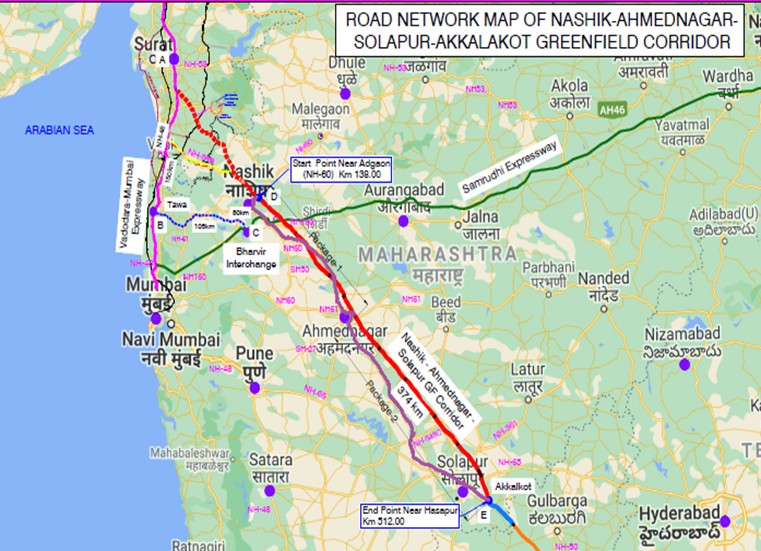
Cabinet approves construction of 6-lane greenfield access-controlled Nashik- Solapur-Akkalkot Corridor in Maharashtra on BOT (Toll) Mode with a project length of 374 km worth Rs.19,142 Crore

NEW DELHI : The Cabinet Committee on Economic Affairs, chaired by the Prime Minister Shri Narendra Modi, has approved the Construction of 6-lane greenfield access-controlled Nashik- Solapur-Akkalkot Corridor in the State of Maharashtra on BOT (Toll) Mode with project length of 374 km with a total Capital Cost of Rs.19,142 crore. This project will provide connectivity to important regional cities such as Nashik, Ahilyanagar, Solapur connecting to Kurnool, as indicated in the map. This infrastructure is a significant step to facilitate integrated transport infrastructure development under the PM Gatishakti National Master Plan principle.

The greenfield corridor from Nashik to Akkalkot is proposed to be connected to Delhi-Mumbai Expressway near Vadhawan port interchange, Agra-Mumbai corridor at Nashik at junction with NH-60 (Adegaon) and Samruddhi Mahamarg at Pangri (near Nashik). The proposed corridor will provide through connectivity from west coast to east coast. From Chennai port end, 4-lane corridors are already in progress from Chennai to Hasapur (MH Border) via Thiruvallur, Renigunta, Kadappa and Kurnool (700 km long). The primary purpose of the proposed access-controlled six-lane greenfield project corridor is to improve travel efficiency and is expected to reduce travel time by 17 hours and reduce the travel distance by 201 km. Nashik – Akkalkot (Solapur) connectivity will improve logistics efficiency for freight originating and terminating at major National Industrial Corridor Development Corporation (NICDC) nodes of Kopparthy and Orvakal. Nashik – Talegaon Dighe part of the section also addresses the requirement for development of Pune-Nashik Expressway, as identified by NICDC as a part of proposed new Expressway being taken up by the State Government of Maharashtra. The project provides high speed corridor designed for improved safety and uninterrupted traffic movement, reducing travel time, congestion, and operating costs. Importantly, the project will enhance the basic infrastructure in the region, contributing to the overall economic development of Nashik, Ahilyanagar, Dharashiv, and Solapur districts.

The 6-lane access-controlled greenfield corridor with close tolling, supporting average vehicular speeds of 60 km/h with design speed of 100 km/h. This will reduce the overall travel time to approximately 17 hours (Reduce by 45% from 31 hours), while offering safer, faster, and uninterrupted connectivity for both passenger and freight vehicles.

The project will generate about 251.06 lakh man-days of direct employment and 313.83 lakh man-days of indirect employment. The project will also induce additional employment opportunities due to increase in economic activity in the vicinity of the proposed corridor.

K2 Infragen Ltd. Secures INR 262 Crore Order from Indian Railways

GURUGRAM: K2 Infragen Ltd., an engineering and core infrastructure company has announced receipt of LOA of INR 262 Crores Project from Indian Railways. The work shall be pertaining to “Design, Supply, Erection, Testing & Commissioning of 2x25kV AC 220/132/55kV Traction Substation, Sectioning Posts (SPs), Sub-Sectioning Posts (SSPs) and SCADA over LUNI (Incl.) – Bhildi (Excl.) Double Line Section of Jodhpur Division, North Western Railway”. This Mega order shall help K2 Infragen to establish credential as a long-term bankable player in the railway infrastructure domain through augmentation of power infrastructure along the Luni-Bhildi section in Jodhpur division of North Western Railway. The said order has been awarded to M/s K2 Infragen Ltd. in JV with M/s Salasar Techno Engineering Ltd., where in K2 Infragen shall be the lead partner having 74% of the JV share.

Commenting on this Development, Mr. Pankaj Sharma – Managing Director, K2 Infragen said – “This day will be remembered in the history of K2 Infragen Ltd. as we usher into the New Year, 2026, with this mega procurement in our order book. This premium order from Indian Railways shall take us into the next leap altogether, when it comes to execution of multiple INR 250 Cr+ projects at one go. It will also bolster the confidence of our shareholders who aspire to see K2 in the big league of infrastructure players in India”

Commenting on this development, Ms. Priyanka Pareek – CFO, K2 Infragen said – “The journey ofsignificant investments for the upgradation of power infrastructure in Railways & Transmission has been going on in India. This order shall seal K2’s place in the category of top ranked professionally managed infrastructure players in the country, delivering growth with efficiency. With augmentation of order book crossing figures of INR 500 Crores and that too in conjunction with revenues and bottom line, I foresee an aggressive path of growth with discipline.”

K2 Infragen has been at the forefront of several major infrastructure initiatives in India. Aspiring to be a company participating in multiple domains of infrastructure, the company strives to play a key role in Power Transmission & Railways in the next 2 years. The company is also active on NHAI projects by contributing to critical road development – across the country. In the Past, the company has also been a key player in the in enhancing water supply infrastructure and has improved access to clean drinking water.

About K2 Infragen Limited –

Founded in 2015, K2 Infragen is a key publicly listed player in India’s infrastructure space. As an integrated EPC company, it specializes in project engineering, executing, & delivering large-scale projects across India in Roads, Railways, Power Transmission & Distribution, Civil Construction, Water Infrastructure, and Renewable Energy domains, with a focus on quality work and timely completion. The company serves a diverse clientele, including North Western Railways, NHAI, HSIIDC, Hindustan Copper Ltd., Vindhya Telelinks Ltd., L&T, TATA, HG Infra, and GR Infra. With operations spanning Uttar Pradesh, Gujarat, Rajasthan, Karnataka, Madhya Pradesh, Odisha, Bihar, Haryana, and Delhi NCR, K2 Infragen continues to demonstrate strong adaptability and execution capabilities. Committed to quality, timely delivery, and exceeding client expectations, the company is well-positioned to make significant contributions to India’s infrastructure growth. K2’s presence in varied infrastructure domains not only eliminates over exposure to one domain but also lead to consolidation of margins and creating synergy benefits. The company is simultaneously engaged in multiple ongoing projects across its operational verticals, reinforcing its reputation for reliability and delivery excellence.

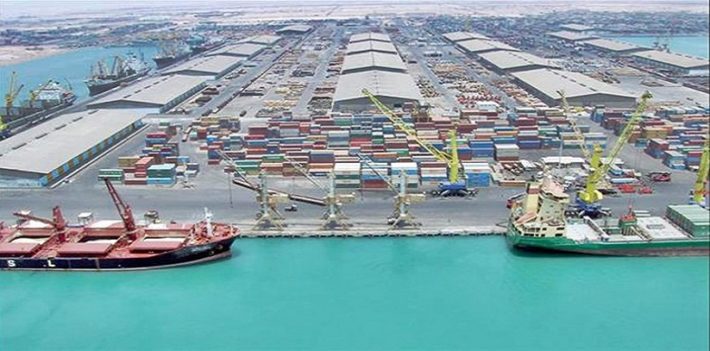
India and Iran work on pragmatic solutions to sustain Chabahar Port co-operation

NEW DELHI : Iran’s government is responding to public protests over inflation with dialogue aimed at seeking practical solutions to economic problems that have arisen because of “unjust sanctions imposed by the West”, Iranian ambassador Mohammad Fathali said on Thursday.

In his first interview with an Indian newspaper, Fathali spoke about India and Iran seeking practical solutions to continue developing the strategic Chabahar port so that it doesn’t become a “hostage to decisions of third countries”. He also highlighted the important role India can play in the Gaza peace process.

The government has responded to protests observed in Tehran and some other cities with a responsible, dialogue-oriented approach. It must be emphasised economic and professional demands are a natural and common phenomenon in all countries, and the Islamic Republic of Iran, as a system founded on the will and vote of the people, recognises peaceful protest as a legitimate right of its citizens.

President Masoud Pezeshkian has clearly stressed the necessity of hearing the voices of the people and instructed authorities to pursue a path of dialogue and engagement by understanding the legitimate demands of protesters. These gatherings have been peaceful, and the government, within the framework of the law, is managing the situation and seeking practical solutions to reduce existing problems.

Regarding the causes of these protests, the most important factor is economic hardship, the root cause of which lies in the years-long and unjust sanctions imposed by the West on the Iranian people. These sanctions have directly targeted people’s livelihoods and created difficulties. Nevertheless, our wise and resilient people have managed these pressures, and the protests have remained limited in number.

The Iranian people have endured these conditions with patience, strength and unity, and the government is making every effort, through proper management, economic reforms, and use of domestic capacities, to reduce the effects of these pressures and respond to the demands of the people.

Saudi Arabia bombs Yemen Port after calling strike by ‘brotherly’ UAE ‘dangerous’

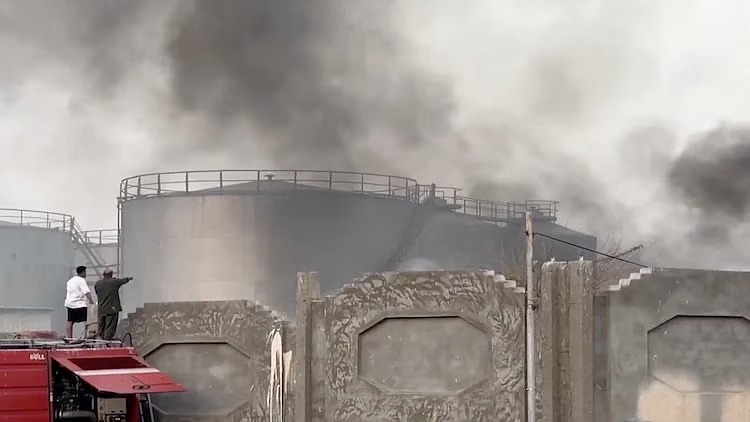
YEMEN : Amid rising tensions in Yemen, Saudi Arabia carried out airstrikes on the port city of Mukalla on Tuesday, targeting a shipment of weapons reportedly destined for the UAE-backed Southern Transitional Council (STC), a separatist group in southern Yemen. The United Arab Emirates did not immediately comment on the strike.

The attack marks a new escalation between Riyadh and the STC, while also straining relations between Saudi Arabia and the UAE, which support rival factions in Yemen’s decade-long war against Iranian-backed Houthi rebels. The move comes amid heightened tensions across the wider Red Sea region.

Targeted vessels and weapons shipment
The strike is believed to have hit a vessel identified by analysts as the Greenland, a roll-on, roll-off ship registered in St Kitts. Vessel tracking data indicated it was docked in Fujairah, UAE, on 22 December and reached Mukalla on Sunday. A second ship mentioned in reports could not be immediately identified.

Saudi authorities said the ships had disabled their tracking devices and unloaded significant quantities of weapons and military vehicles to support STC forces. According to the Saudi Press Agency, the weapons posed an “imminent threat” and threatened peace and stability, prompting a “limited airstrike” aimed at the offloaded arms and vehicles.

There was no immediate information on casualties, and it was unclear if any forces other than Saudi Arabia were involved. Saudi officials added that the strike was conducted overnight to avoid collateral damage.

Evidence of weapons movement

Mohammed al-Basha, a Yemen analyst and founder of the Basha Report, cited social media videos showing armoured vehicles moving through Mukalla after the ships’ arrival. Saudi state television later broadcast footage, purportedly filmed by a surveillance aircraft, showing vehicles being transported to a staging area—corroborating the social media reports.

“I expect a calibrated escalation from both sides,” al-Basha said. “The UAE-backed STC is likely to consolidate control, but the flow of weapons from the UAE to the STC will be curtailed, particularly since Saudi Arabia controls the airspace.”

Source : First Post

PIL marks New Year’s Eve by sponsoring Humanity Matters’ Gaza Relief efforts

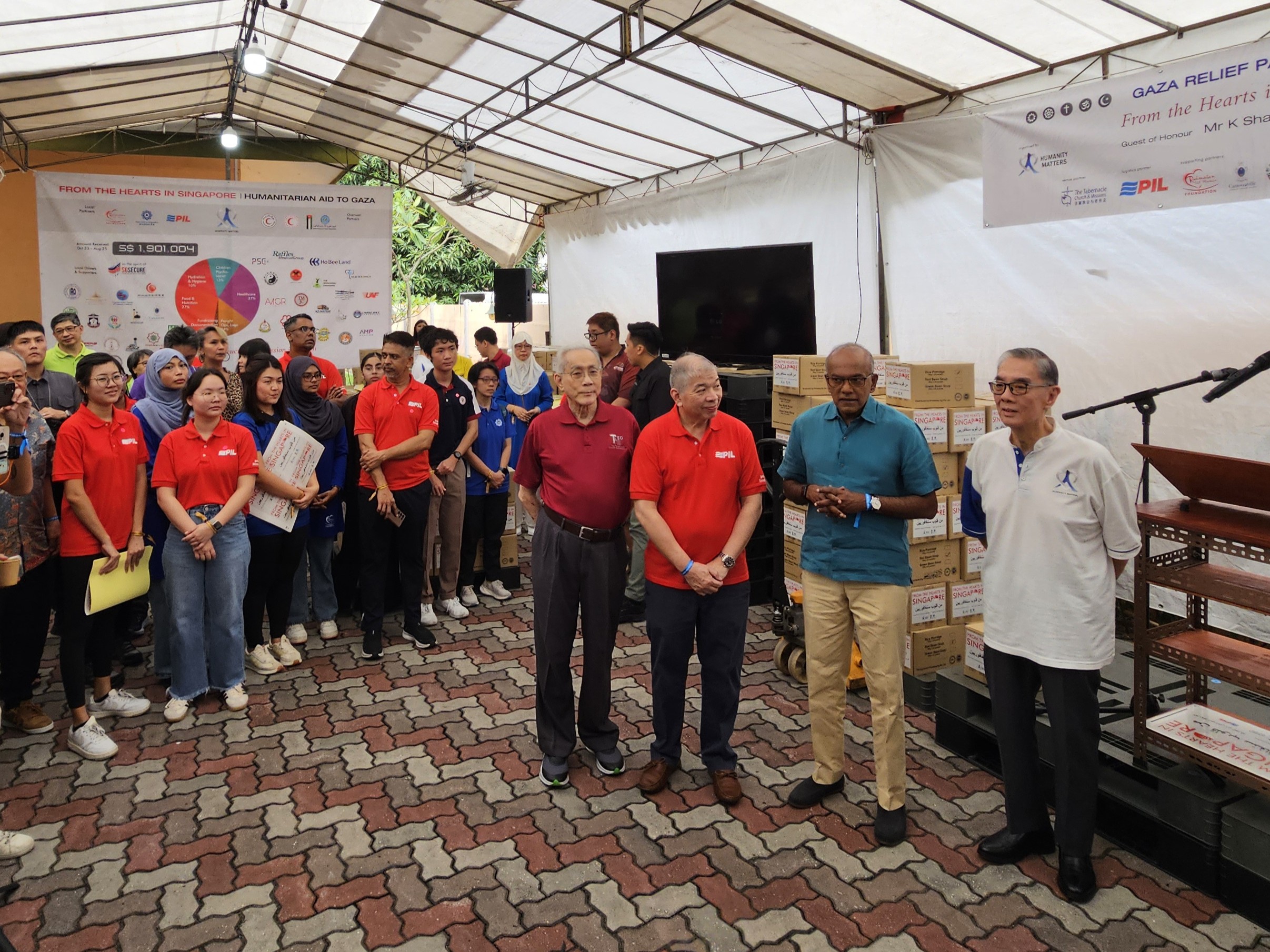
SINGAPORE: Pacific International Lines (PIL), Singapore’s home-grown shipping line, ushered in the New Year with purpose and compassion as 25 staff members joined more than 130 community volunteers to pack 18 tonnes of humanitarian relief supplies for conflict-stricken civilians in Gaza. The activity follows PIL’s sponsorship of Singaporean non-profit organisation Humanity Matters’ (HM) Gaza Relief Collection on 20 December 2025.

The relief packing initiative, titled Countdown with Compassion – HM Gaza Relief Packing, was partially funded by PIL and held at Charis Tabernacle on New Year’s Eve. The event was attended by Mr K. Shanmugam, Coordinating Minister for National Security and Minister for Home Affairs, as the Guest-of-Honour.

During the session, volunteers packed:

·        60,000 packs of Ready‑to‑Eat bean soup meals (MREs) to alleviate hunger; and

·        3,000 collapsible jerry cans to support hygienic collection and storage of drinking water distributed weekly by water trucks inside Gaza.

As the official Shipping & Logistics Partner for Humanity Matters (HM), PIL will transport the relief cargo to Jordan in early January on two 40‑foot containers. The shipment will subsequently be delivered into Gaza through land crossings or airdrops, depending on operational conditions.

PIL’s Executive Chairman, Mr S.S. Teo, said, “Following our sponsorship of Humanity Matters’ Gaza Relief collection earlier this month, today’s relief packing activity is a continuation of our strong support to this worthwhile cause. It is a good platform for us to further inculcate the spirit of common humanity and compassion amongst our workforce and amongst Singaporeans. I am heartened that so many of our employees have come out on New Year’s Eve to help out – this community spirit of giving runs deep in our company and our people wherever we operate.”

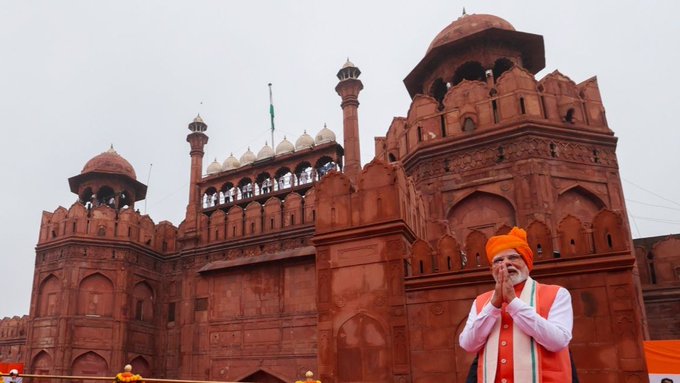
India has boarded ‘Reform Express’, world seeing us with hope: PM Modi in his year-end post

NEW DELHI : The year 2025 will be remembered as one where India “focused on reforms as a continuous national mission”, Prime Minister Shri Narendra Modi said in a LinkedIn post in which he went on to list the various reforms the government has implemented this year.

“I have been telling many people that India has boarded the Reform Express,” Mr. Modi said. “The primary engine of this Reform Express is India’s demography, our young generation and the indomitable spirit of our people. 2025 will be remembered as a year for India when it focused on reforms as a continuous national mission, building on the ground covered over the past 11 years, we modernised institutions, simplified governance, and strengthened the foundations for long-term, inclusive growth.” PM said that India has emerged as the centre of global attention due to the innovative zeal of its people and the world now sees India with hope and confidence.

PM added that the government moved ahead decisively with higher ambition, faster execution and deeper transformation. The reforms have been about enabling citizens to live with dignity, entrepreneurs to innovate with confidence and institutions to function with clarity and trust, he said.

The Prime Minister also cited a few examples of the reforms undertaken that include GST, permission of 100 per cent FDI in Indian insurance companies, labour laws and rural employment guarantee.

Prime Minister highlighted several reforms implemented by the government, primary among which was the rationalisation of the Goods and Services Tax system. “This reform has boosted consumer sentiment and demand,” Shri Modi said. “Sales have grown in the festive season.”

He further highlighted the income tax relief announced in Budget 2025, where individuals earning up to Rs. 12 lakh a year were exempted from income, the replacement of the Income-tax Act of 1961 with the “modern and simple” Income Tax Act, 2025, and the expansion of the definition of ‘small companies’ has been expanded to include firms with turnovers up to ₹100 crore.

Mr. Modi also said that the government’s decision to allow 100% FDI in Indian insurance companies would give a fillip to insurance penetration and security for the people.

“Apart from enhanced competition, it would offer better insurance choices and improved service delivery for the people,” PM Modi said.

Prime Minister said five landmark maritime legislations were passed in a single Parliament session (the Monsoon session): the Bills of Lading Act, 2025; the Carriage of Goods by Sea Bill, 2025; the Coastal Shipping Bill, 2025; the Merchant Shipping Bill, 2025; and the Indian Ports Bill, 2025.

These reforms simplify documentation, make dispute resolution easier and reduce logistics costs and outdated Acts dating back to 1908, 1925 and 1958 have also been replaced, he said.

Historic labour reforms were initiated by merging 29 fragmented laws into four modern labour codes. “India has created a labour framework that secures the interests of workers while boosting the business ecosystem. The reforms focus on fair wages, timely payment of wages, smoother industrial relations, social security and safer workplaces,” he said.

“They ensure greater female participation in the workforce. Unorganised workers, including contract workers, are brought under the ESIC and EPFO, expanding the coverage of the formal workforce,” he said.

Citing trade agreements with New Zealand, Oman and Britain, PM Modi said these will add to investments, boost job creation and also encourage local entrepreneurs.

“They reinforce India’s position as a trusted and competitive partner in the global economy. The FTA with the European Free Trade Association, comprising Switzerland, Norway, Iceland and Liechtenstein, has been operationalised. This marks India’s first FTA with developed European economies,” he said.

Apart from these, the Prime Minister also listed out the Securities Market Code Bill introduced in Parliament, the repeal of hundreds of outdated laws, the revocation or suspension of various quality control orders (QCOs), the implementation of the labour codes, among the notable reforms carried out this year.

He also cited the reforms initiated in nuclear energy as the SHANTI Act is a transformational step in India’s clean-energy and technology journey. Modi said a landmark reform was initiated in the rural employment guarantee by enacting the Viksit Bharat-G RAM G Act, 2025, under which the employment guarantee has been raised from 100 to 125 days.

This will result in increased spending towards strengthening village infrastructure and livelihoods. The aim is to turn rural work into a means to ensure higher incomes and better assets, he said.

“These reforms were designed with empathy, recognising the realities of small businesses, young professionals, farmers, workers and the middle class. They were shaped by consultation, guided by data and anchored in India’s constitutional values,” he said.

PM Modi said these reforms will add momentum to the country’s decade-long efforts to move away from a control-based economy to one that operates within a framework of trust, keeping the citizens at its core.

“These reforms are aimed towards building a prosperous and self-reliant India. Building a Viksit Bharat is the polestar of our development trajectory. We will continue pursuing the reform agenda in the coming years. I urge everyone in India and abroad to deepen their bond with the India growth story. Keep trusting India and investing in our people!” he said.

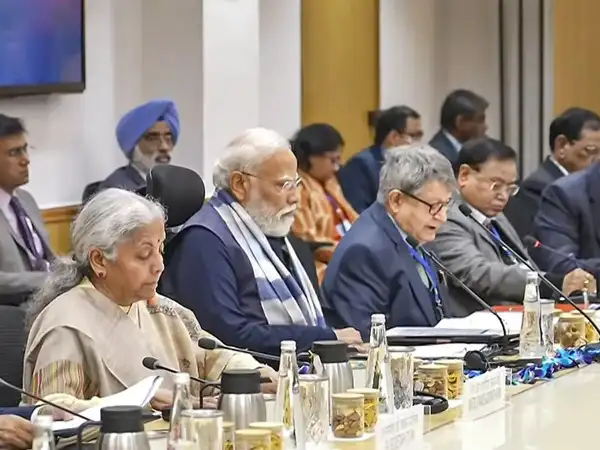
PM Modi chairs Pre-Budget meeting with economists

NEW DELHI: Prime Minister Shri Narendra Modi on Tuesday chaired a pre-Budget meeting with leading economists in New Delhi, an official statement said.

At the meeting, Finance Minister Smt. Nirmala Sitharaman, NITI Aayog Vice Chairman Mr. Suman Bery and other eminent economists were present.

At the meeting, the discussions focused on key priorities and inputs for the upcoming Union Budget.
Earlier, Union Minister for Finance and Corporate Affairs Nirmala Sitharaman held 10 rounds of Pre-Budget Consultations as part of the preparations for the forthcoming Union Budget 2026-27.

The meetings brought together representatives and experts from key sectors of the economy, including agriculture and MSMEs, capital markets, manufacturing, services, and technology.

The series began with consultations with leading economists, followed by representatives from farmer associations and agricultural economists. Subsequent sessions engaged stakeholders from MSMEs, capital markets, startups, manufacturing, BFSI (Banking, Financial Services and Insurance), information technology, tourism and hospitality, and finally trade unions and labour organisations.

During these meetings, sector experts and stakeholders presented their recommendations, challenges, and expectations for the upcoming Budget. The discussions focused on economic growth, employment generation, investment climate, technological advancement, industrial competitiveness, financial sector stability, labour welfare, and sustainable development.

The Union Budget is typically presented on February 1 of each year. This year too, Finance Minister Smt. Nirmala Sitharaman is likely to present the Union Budget for 2026-27 in Parliament on February 1.
Meanwhile, the Government of India is seeking suggestions for the upcoming Budget 2026 from the general public to help make new rules and plans for the country.

According to a post on X by MyGovIndia, the government encouraged people to participate in this important task.

The government stated on X, “Building the Budget with Public Insight. Share your suggestions for Union Budget 2026-27 and contribute to the policies that promote inclusive growth and National development.”
The message invites everyone to visit the MyGov website to submit their views on what the new budget should focus on for the next year.

Source: ANI

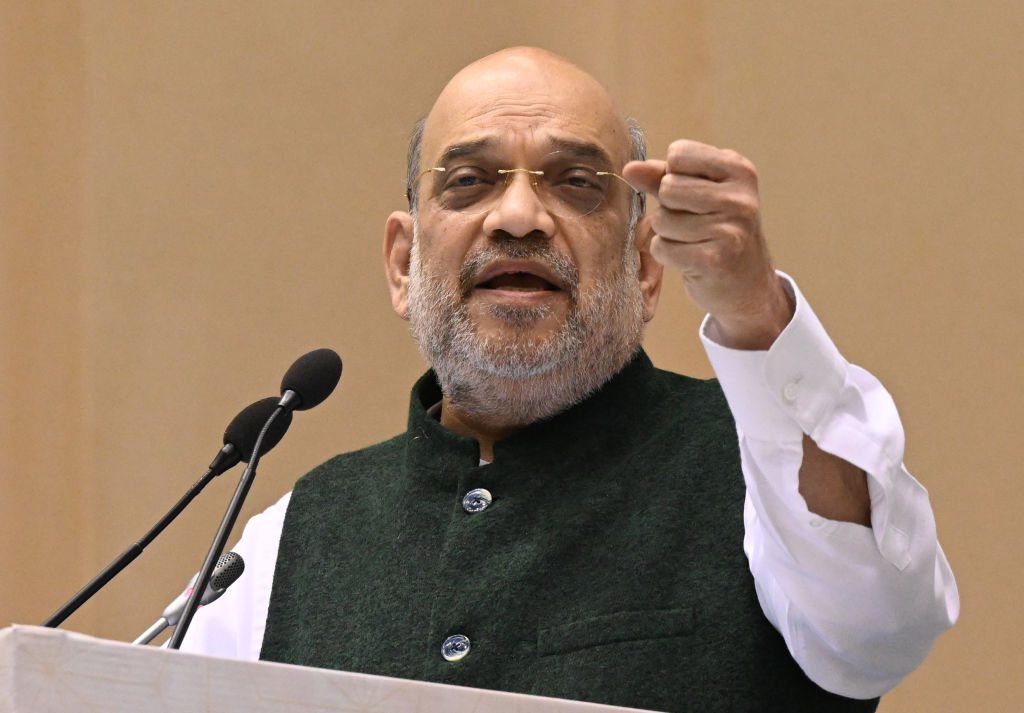
India to become world’s third largest economy by 2027 : Amit Shah

AHMEDABAD : Union Home and Cooperation Minister Shri Amit Shah has said that India will become the world’s third-largest economy by 2027. Addressing the Youth Business Summit at Vishwa Umiya Dham in Ahmedabad, Gujarat, today, Mr Shah said the country’s GDP has reached 4.19 trillion dollars and soon India will become a 5 trillion dollar economy.

He added that in the year 2024-25, 50 per cent of the world’s digital financial transactions took place in India. Mr Shah also attended the cultural program Namotsav based on the life of Prime Minister Narendra Modi at Godhavi, Ahmedabad.

Earlier, while addressing the IMA Netcon 2025, organised by the Indian Medical Association in Ahmedabad, Mr Shah said that the health infrastructure is being built in the country with a holistic perspective. Mr Shah inaugurated various development projects worth 330 crore rupees at Nava Vanjar in the presence of Chief Minister Bhupendra Patel and distributed certificates to the rehabilitated residents of Nava Vanjar village.

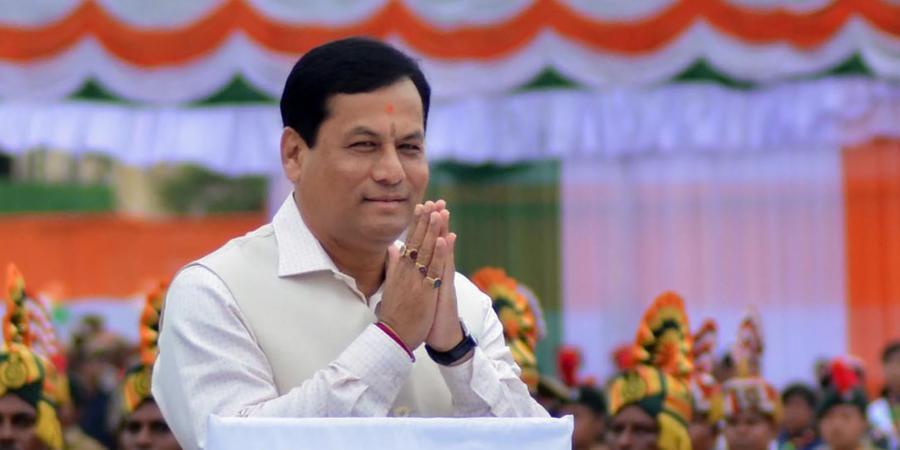
Sarbananda Sonowal commends ShipMin officials for advancing India’s maritime growth

NEW DELHI : Union Minister for Ports, Shipping and Waterways, Shri Sarbananda Sonowal, interacted with senior officials of the Ministry of Ports, Shipping and Waterways (ShipMin India) and acknowledged their dedicated efforts in strengthening India’s maritime sector over the past year.

During the interaction, the Minister highlighted that the last year has been transformative for the sector, marked by landmark legislative reforms, record public and private investments, and accelerated infrastructure development across ports, shipping and inland waterways. These initiatives have laid a strong and sustainable foundation for long-term growth, efficiency and global competitiveness.

Shri Sonowal noted that under the visionary leadership of Hon’ble Prime Minister Shri Narendra Modi, India is witnessing a renewed push towards building a resilient, future-ready maritime ecosystem. Key policy measures, digital reforms, port-led industrialization, and enhanced logistics connectivity have significantly improved ease of doing business and cargo handling efficiency.

The Minister also emphasized the Government’s focused efforts on unlocking the full potential of the Blue Economy, including coastal development, shipbuilding and ship repair, green ports, maritime skill development, and promotion of inland water transport as a cost-effective and sustainable mode of logistics.

Commending the collective contribution of ShipMin officials, Shri Sonowal reiterated the Ministry’s commitment to transforming India into a global maritime hub, strengthening trade competitiveness, generating employment, and supporting the nation’s vision of Viksit Bharat.

The Ministry will continue to work in close coordination with stakeholders to drive innovation, sustainability and growth in India’s maritime and logistics sectors.