MUMBAI : Jeena & Company, a global leader in freight forwarding and supply chain solutions, saw the business volume growth in 2025, navigating a year shaped by geopolitical tensions, trade route disruptions, and cost volatility across global supply chains.
India’s logistics sector witnessed uneven performance across transport modes during the year. While overall freight volumes grew modestly, air cargo emerged as the strongest-performing segment, driven by rising demand for time-sensitive and high-value shipments.
Jeena’s air freight volumes outperformed other modes, recording high growth during FY2025. Demand was largely driven by electronics, pharmaceuticals, perishables, and express cargo, as customers increasingly prioritised speed, reliability, and certainty amid global supply chain uncertainty. The shift was further accelerated by global disruptions such as Red Sea route diversions, prompting many shippers to adopt alternative and faster transport options.
Beyond air cargo, other transport modes also delivered steady performance during the year. Sea freight also showed growth, supported by stable export–import volumes through Indian ports. Road freight continued to anchor domestic logistics operations, handling over 70% of inland cargo movement, even as the sector navigated route elongation, rising operating costs, and freight-rate volatility. Through adaptive strategies and operational resilience, Jeena sustained stable performance across these modes.
To mitigate disruption, Jeena & Company implemented a combination of route diversification, close coordination with global carrier partners, and enhanced scenario planning. The company also leveraged digital tools for real-time shipment visibility, predictive disruption alerts, and proactive customer communication.
Commenting on the company’s performance Prediman Koul, Chief Executive Officer, Jeena & Company said, “2025 reinforced the importance of agility and preparedness in logistics. While geopolitical disruptions created volatility, as trusted partners, we made sure to deliver the best to our customers with our focus on multimodal flexibility, technology adoption, and strategic investment which helped us maintain continuity and deliver steady growth. Air cargo, in particular, played a critical role in supporting customers during periods of heightened uncertainty.”
“Looking ahead, Jeena & Company remains optimistic about growth opportunities in 2026, supported by expanding trade activity, policy-led infrastructure development, and increasing demand across sectors such as automotive, pharmaceuticals, e-commerce, and defence,” he added.
About Jeena and Company:
Founded in 1900, Jeena & Company is a leading global logistics and supply chain solutions provider with operations across 60 countries, six continents, and 27 offices in India.
A trusted legacy brand with a customer-first approach, Jeena specializes in pharma, life sciences, automotive, defense, and project logistics, offering air and sea freight, last-mile delivery, warehousing, customs clearance, and documentation services.
As one of India’s largest national customs brokers, Jeena has pioneered industry-first innovations, including paperless documentation. With recent expansion into Sydney, Australia, the company is strengthening its global footprint in the UK, Europe, the US, Africa, Germany, China, and New Zealand.
MUMBAI: As India’s logistics and trade ecosystem undergoes rapid transformation, senior leadership at FedEx has underscored the country’s growing role in global supply chains, driven by infrastructure integration, air cargo growth, and technology-led execution.
Reflecting on the year gone by, Ms. Kami Viswanathan, President – Middle East, Indian Subcontinentand Africa (MEISA), FedEx, said India is witnessing a structural shift in its logistics landscape, supported by integrated infrastructure planning and faster execution across multimodal networks. Initiatives such as PM GatiShakti, she noted, are strengthening supply-chain resilience and improving efficiency at scale, even as global uncertainty persists.
She highlighted sustained growth in air cargo volumes, particularly from high-value sectors such as pharmaceuticals, electronics and engineering goods, as a clear indicator of continued confidence in India’s position as a manufacturing and export hub. Reiterating FedEx’s long-term commitment to the Indian market, Viswanathan said the company will continue to invest in strengthening its network and operational capabilities to help Indian businesses integrate seamlessly into global value chains with greater reliability, transparency and speed.
Echoing the theme of transformation, Mr. Nitin Navneet Tatiwala, Vice President – Marketing, Customer Experience and Air Network, MEISA, FedEx, described 2025 as one of the most dynamic years for global trade, shaped by shifting supply chains and ongoing trade negotiations. In such an environment, he said, agility has become critical, requiring businesses to identify emerging patterns early and respond decisively to support customers and growth.
Tatiwala emphasised that FedEx is increasingly leveraging data and advanced technologies across its network to redefine how trade is planned and executed. Data-led and AI-enabled systems, he noted, are enhancing planning, routing, automated handling and end-to-end shipment visibility, thereby strengthening the reliability and resilience of the company’s air network.
Looking ahead to 2026, FedEx leadership affirmed that continued investments in technology and network capabilities will remain central to simplifying cross-border trade, strengthening supply-chain resilience and enabling businesses to navigate global uncertainty with greater confidence.
MUMBAI: As the year concludes, MatchLog Solutions reflects on a period marked by purposeful growth, operational excellence, and strategic milestones. Amid evolving market dynamics and global uncertainties, the company has continued to strengthen its position through innovation, customer-centric solutions, and a commitment to sustainability. In this Year-Ender message, Mr. Dhruv Taneja, Founder & Global CEO, shares key reflections on the year gone by and outlines the organisation’s vision for the year ahead.
Year-Ender Quote
“The past year has shown how sharply global container logistics is changing. Freight cycles are unpredictable, inland networks are stretched, and asset utilisation continues to lag in many markets. The industry has reached a point where traditional repositioning models can no longer absorb rising volumes or cost pressures. Efficiency now depends on digital visibility, faster planning, EV trucking adoption, and circular use of existing assets.
This has shaped how we operate at MatchLog. We have built our platform around the practical requirement of reducing empty mileage and improving turnaround time. By widening our network across major manufacturing hubs, strengthening relationships with shipping lines and port operators, scaling our transporter base, and supporting the gradual shift toward EV trucking, we have been able to convert idle container movements into productive cycles. The results have been substantial. Turnaround time has reduced to around four days, and reuse transactions are delivering measurable freight savings and carbon reduction. The year has also reinforced the importance of collaboration. Our growth has come from working with partners who see operational efficiency as the first step toward sustainability and who are increasingly willing to adapt to newer digital platforms and technologies. As the industry moves towards technology-led circular practices, our focus has been to offer systems that create immediate economic value while building long-term environmental impact.
Outlook Quote for the Coming Year
“The coming year will be shaped by how quickly the logistics industry adopts circular, data-led, and technology-driven operating models. Container shortages, higher inland transport costs, and pressure to reduce emissions are creating a clear shift in priorities. Companies are looking for solutions that improve asset productivity without adding new infrastructure. This environment strengthens the relevance of reuse-led networks. Our focus at MatchLog is to scale this model across India and Southeast Asia, where dense trade flows create strong matching opportunities.
We are expanding coverage across key ports, increasing multimodal linkages including EV trucking corridors and deepening system integration with shipping lines and transport operators. As these integrations mature, reuse planning will become more predictable, automated, and aligned with the industry’s growing willingness to adopt newer platforms and technologies. We are preparing to support larger container volumes, wider partner networks, and more advanced carbon reporting as credit frameworks gain structure. The industry is moving towards logistics systems where every container move is traceable, efficient, and environmentally accountable. Our objective is to provide the digital infrastructure that enables this reality. The coming year will be about building higher network density, expanding regional corridors, and creating a unified, technology-first platform that delivers consistent efficiency across markets.“
MUMBAI: India’s rapidly evolving consumption landscape is placing unprecedented pressure on logistics and fulfilment networks, according to year-end reflections shared on behalf of Dr. Ashvini Jakhar, Founder & CEO of Prozo. The insights highlight how 2025 marked a decisive shift from predictable growth patterns to highly volatile, real-time demand environments—forcing companies to rethink how scale and resilience are built.
Reviewing the year gone by, Prozo noted that India’s consumption engine expanded far faster than the operational infrastructure supporting it. Traditional demand cycles, once defined by monthly predictability, gave way to daily and even hourly fluctuations across categories. This structural shift exposed the limitations of linear, capacity-led expansion models. Organisations that sustained performance, the company observed, were those that invested early in network flexibility, sharper forecasting accuracy, and tighter SKU-level control rather than relying solely on footprint expansion.
Another defining trend of 2025 was the evolution of hyperlocal delivery from a marketplace-led feature into a brand-owned capability. Several large brands began testing express fulfilment directly from their own nodes, signalling a long-term move toward owning the last-mile customer experience. At the same time, omni-channel complexity intensified as offline, online, and quick-commerce channels increasingly drew from the same inventory pool. Leadership discussions across the sector, Prozo observed, centred on how to run unified operations without compromising reliability—underscoring that scale is now driven by operational discipline rather than physical size.
Looking ahead to 2026, Prozo expects the focus to shift from operational awareness to operational precision. Shorter planning horizons, tighter replenishment cycles, and growing reliance on real-time visibility will compel companies to reassess the accuracy of their demand engines and the responsiveness of their fulfilment networks. The maturation of omni-channel fulfilment will be a critical inflection point, with brands moving away from siloed store, marketplace, and D2C operations toward infrastructure capable of routing and prioritising orders from a single, unified inventory pool.
The outlook also points to a recalibration of quick-commerce. While growth is expected to continue, long-term sustainability will depend on how effectively hyperlocal nodes are integrated into broader supply chains rather than operated as isolated assets. Capacity planning, Prozo cautioned, will require greater discipline, as volatile demand can no longer be addressed through rapid additions of warehousing space alone. With service expectations rising and tolerance for inefficiency declining, companies will be pushed to examine cost-to-serve metrics at a much deeper level.
According to Prozo, organisations that succeed in 2026 will be those that build precision-led operations—systems and processes capable of remaining stable and reliable even as volumes surge—marking a decisive shift in how supply-chain competitiveness is defined in India.
NEW DELHI : The Micro, Small, and Medium Enterprises (MSME) sector plays a crucial role in India’s economic and social development. It generates significant employment at low capital cost, supports large industries as ancillary units, and promotes industrialization in rural and backward areas—helping to reduce regional imbalances and ensure more equitable income distribution. The Ministry of MSME, Government of India, in collaboration with its various organizations & institutes has pioneered initiatives that promote growth and development of the MSME sector, including Khadi, Village and Coir industries. A range of schemes are being implemented, providing credit support, technological assistance, infrastructure development, skill development and training, as well as measures to enhance the competitiveness and market access of MSMEs.
The year 2025 witnessed several milestone achievements by the Ministry of MSME, including the launch of new campaigns and initiatives, as well as the signing of Memoranda of Understanding with other countries to strengthen bilateral cooperation. The year has been particularly significant for the Ministry, with the introduction of multiple new programmes. Some of the key initiatives and achievements of the Ministry during 2025 are outlined below:
MAJOR ACHIEVEMENTS AND INITIATIVES UNDER VARIOUS SCHEMES/PROGRAMMES DURING 2025:
2.1 Formalization of MSMEs:
The Udyam Registration Portal was launched on 01.07.2020 to facilitate ease of registration for MSMEs and access to all the Schemes and benefits. The registration process is free of cost, paperless and digital. Further, Ministry launched the Udyam Assist Platform (UAP) Portal on 11.01.2023, for bringing Informal Micro Enterprises (IMEs) into the formal ambit, and for availing Priority Sector Lending (PSL) benefits.
More than 7.30 crore enterprises have registered on Udyam Registration Portal and Udyam Assist Platform, from 01.07.2020 to 17.12.2025. This includes 4.37 registrations on Udyam Portal and 2.92 crore on UAP.
Further, to help MSMEs scale operations and access better resources, the Union Budget 2025-26 has increased the investment and turnover limits for classification by 2.5 times and 2 times, respectively. The new definition became effective from 01.04.2025. The comparable Table is given below:
Rs. in Crore
Enterprises
Investment
Turnover
Old
Revised
old
Revised
Micro
1
2.5
5
10
Small
10
25
50
100
Medium
50
125
250
500
2.2 Access to Credit:
2.2.1 Prime Minister’s Employment Generation Programme (PMEGP)
PMEGP is a credit linked subsidy scheme for providing employment opportunities through establishment of micro-enterprises in the non-farm sector by providing Margin Money (subsidy) to beneficiaries availing loan from banks for setting up new enterprises with maximum project cost of Rs. 50 lakh in Manufacturing Sector and Rs. 20 lakh in Service Sector.
Since its inception i.e. FY 2008-09 till FY 2025-26 (as on 16.12.2025), more than 10.71 lakh micro enterprises have been assisted across the country with disbursement of Margin Money subsidy of Rs. 29,249.43 crore, generating a total estimated employment for more than 87 lakh persons.
During 2025-26 (from 1st January, 2025 to 16.12.2025), 84,034 new micro enterprises have been assisted across the country with disbursement of Margin Money subsidy of Rs. 3125.35 crore, generating a total estimated employment for more than 6.7 lakh persons.
Since June 2025, PMEGP applications are being accepted from prospective beneficiaries in 19 regional languages excluding English and Hindi.
2.2.2 Credit Guarantee Scheme
The Credit Guarantee Scheme for Micro and Small Enterprises (CGSMSE) is one of the flagship schemes of the Ministry of MSME, implemented through the Credit Guarantee Fund Trust for Micro and Small Enterprises (CGTMSE) to provide credit guarantees for credit facilities extended by Member Lending Institutions to Micro and Small Enterprises (MSEs) without collateral security or third-party guarantees. CGSMSE is celebrating its 25th anniversary and has crossed one crore guarantees since its inception in this milestone year.
29.03 lakh guarantees have been approved amounting to Rs. 3.77 lakh crore during the period 1st January to 30th November, 2025. In addition, the Government of India, has enhanced the ceiling of guarantee coverage from Rs. 5 crore to Rs. 10 crore and has rationalised the Annual Guarantee Fee for guarantees above Rs. 1 crore effective from 01.04.2025.
Furthermore, a special provision for MSEs promoted by transgender entrepreneurs has been introduced, providing a 10% concession in guarantee fees and enhanced guarantee coverage of 85%, effective from 01.03.2025.
2.2.3 Self Reliant India (SRI) Fund
Self Reliant India (SRI) Fund Scheme of the Ministry of MSME provides equity funding to those MSMEs having potential and viability to grow larger. Since its inception in October 2021 till 30.11.2025, 69 Daughter Funds have been empaneled with NSIC Venture Capital Fund Limited (NVCFL), i.e. Mother Fund. SRI Fund has assisted 682 MSMEs by way of investment of Rs. 1,823 crore.
From 1st January, 2025 to 30th November, 2025, 9 daughter funds were empaneled with NVCFL. More than Rs. 613 crore has been invested to assist 129 potential MSMEs.
2.3 Infrastructure & Capacity Building
2.3.1 PM VISHWAKARMA (National Event on 20.9.2024)
The Prime Minister launched the PM Vishwakarma Scheme on 17.09.2023 to provide end-to-end support to artisans and craftspeople of 18 trades who work with their hands and tools. Target of 30 lakh beneficiary registrations has been successfully achieved within 2 years of scheme’s implementation.
Key Milestones (from 1st January 2025 to 5th December 2025) under the PM Vishwakarma scheme are as under:-
Credit Support: Rs. 2,257 crore sanctioned to 2.62 lakh beneficiaries in the form of collateral-free loans at concessional rate of interest.
Digital Incentive: 6.7 lakh beneficiaries are digitally enabled.
Toolkit Incentive: 10.57 lakh modern toolkits delivered at beneficiaries’ doorstep
Marketing support: 138 trade fairs, exhibitions, and workshops organized across the country to promote artisans and their crafts & skills.
2.3.2 Raising and Accelerating MSME Performance (RAMP) Scheme
RAMP is a World Bank supported Central Sector Scheme aimed at improving access of MSMEs to market, finance and technology upgradation. The programme also aims at strengthening institutions at the Central and State level, and enhancing Centre- State collaboration. So far, the Systematic Investment Plan (SIPs) submitted by all the 36 States and UTs have been evaluated and 398 proposals amounting to Rs. 3211.75 Crore have been approved for the States/UTs. Since inception, all initiatives under RAMP Scheme have impacted more than 10 lakh MSMEs. The Ministry has achieved 50% of the programme target in respect of claiming reimbursement, on account of completion of deliverables.
2.3.3 Micro and Small Enterprises Cluster Development Programme (MSE-CDP)
The Micro and Small Enterprises Cluster Development Programme (MSE-CDP) was launched in 2003. The objective of the scheme is to enhance the productivity and competitiveness of Micro and Small Enterprises (MSEs) through financial assistance for establishment of ‘Common Facility Centers (CFCs), flatted factories, and creation and up-gradation of industrial estates. Under the scheme, 609 projects have been approved of which, 353 projects have been completed so far.
In the FY 2025-26 (till 20.11.2025), 11 projects with a total project cost of Rs. 253.23 crore with Govt. of India’s assistance of Rs. 177.52 crore have been approved and 02 projects have been completed.
2.3.4 Promotion of MSMEs in North Eastern Region and Sikkim
The scheme for Promotion of MSMEs in NER & Sikkim was launched in the year 2016 and has been continued with budget outlay of Rs.295 Cr. for 15th Finance Commission i.e. 2021-2026. It provides financial support to create or upgrade infrastructure and common facilities for MSMEs in the NER to supplement manufacturing, testing, packaging, R&D, product & process innovations and skilling activities.
The scheme comprises of three components, namely,
(i) Setting up of new and modernization of existing Mini Technology Centre,
(ii) Development of new and existing Industrial Estates &
(iii)Development of the Tourism Sector.
As on 15th December 2025 a total of 73 proposals have been approved under this scheme since inception. This include eight infrastructure projects approved during the period from January, 2025 to November, 2025 comprising 04 projects for the state of Assam and 04 projects for Meghalaya, with a total project cost of Rs.114.37Cr. including approved Govt. of India’s grant of Rs. 89.60 Cr.
2.4 Assistance in Procurement and Marketing
2.4.1 Public Procurement Policy for Micro and Small Enterprises
To provide an assured market support to the Micro and Small Enterprises in the country, the Ministry of MSME, Government of India notified the Public Procurement Policy for Micro and Small Enterprises (MSEs), Order, 2012, which mandates 25% annual procurement from MSEs by Central Ministries/Departments/Central Public Sector Enterprises (CPSEs), including 4% from MSEs owned by SC/ST and 3% from MSEs owned by Women entrepreneurs. A total of 358 items are reserved for exclusive procurement from MSEs.
Vis-a-vis the minimum 25% annual procurement, the participating CPSEs and Departments procured a total amount of Rs. 93,017.08 crore (43.58%) from MSEs during the year 2024-25 (as on 19.12.25).
2.4.2 Procurement and Marketing Support (PMS) Scheme
The scheme promotes new market access initiatives and enhances the marketability of products and services in the MSME sector. During the Financial Year 2025–26 (from 01 January 2025 to 30 November 2025), a total of 225 Domestic Trade Fairs/Exhibitions/Expos were organised under the Procurement and Marketing Support (PMS) Scheme. Through various components of the Scheme, 10,271 Micro and Small Enterprises (MSEs) were benefitted during this period.
44th India International Trade Fair (IITF)-2025:
The Union Minister of MSME inaugurated the “MSME, KVIC, NSSH and COIR Pavilions” at the IITF-2025 on 17.11.2024 and Hon’ble MoS, M/o MSME also visited the fair. This year the theme of MSME Pavilion was “Vibrant MSMEs, Viksit Bharat”. The Ministry of MSME was awarded the Silver Medal under the category ‘Empowering India’.
A total of 292 stalls have been allotted to Micro and Small Enterprises (MSEs) as well as Vishwakarmas from 29 States and Union Territories, reflecting the spirit of Ek Bharat Shreshtha Bharat. Of these, over 67% stalls have been allotted to women entrepreneurs, while more than 34% have been allotted to SC/ST entrepreneurs. Additionally, 15 stalls have been provided to entrepreneurs with disabilities (PwD). The event also highlights regional diversity with 43 stalls featuring Geographical Indication (GI) products) and 15 stalls dedicated to ODOP (One District One Product) items. Notably, 288 stalls (98%) are represented by first-time Micro Enterprise participants, and more than 25% of the stalls have been allotted to Vishwakarmas.
2.4.3 National SC-ST Hub (NSSH) Scheme
The scheme aims at capacity enhancement of SC/ST Entrepreneurs and promoting “entrepreneurship culture” amongst the SC/ST population in order to fulfil the mandate of 4% public procurement from SC-ST owned MSEs as laid down in the Central Government Public Procurement Policy. During January to October 2025, 19259 SC/ST entrepreneurs have availed benefits under various components of NSSH Scheme.
In the current year, 111 Special Vendor Development Programmes (SVDPs) have been organized in various locations with CPSEs, SC-ST entrepreneurs and other stakeholders for sensitization and augment their participation in the public procurement process. In addition, 03 Mega Events (Conclave) have been organised at Baripada & Koraput, Odisha and Bodh Gaya, Bihar. To enable CPSEs in achieving the mandated target under Public Procurement Policy and to understand their challenges, four round table discussions were conducted.
The scheme has positively impacted target beneficiaries by providing professional support in upgrading their skills, facilitating market linkages and handholding support which resulted in a 37-fold increase in public procurement from SC/ST owned MSEs (in terms of value) i.e., Rs. 99.37 crore in 2015-16 to Rs. 3731.47 crore in 2024-25 (MSME Sambandh portal). In the current financial year as on date, the share of SC/ST owned MSEs in public procurement is 1.93%. The share of SC/ST owned MSEs in public procurement is expected to increase further by the end of financial year.
2.5 Access to Technology
2.5.1 MSME Champion Scheme
The objective of the MSME Champions Scheme is to select enterprises and modernize their processes, reduce wastages, sharpen business competitiveness, and facilitate their National and Global reach and excellence. The Scheme has three components, namely, ‘MSME-Sustainable (ZED)’, ‘MSME Competitive (LEAN)’ and ‘MSME-Innovative (Incubation, Design & IPR)’.
MSME Innovative scheme was launched on 10th March 2022 with 3 components, namely, Incubation, Design and IPR. Under the ‘Incubation’ component, 773 Host Institutes (HIs) have been approved which will nurture the development of innovative ideas approved through due selection process. Hon’ble President of India launched the MSME Idea Hackathon 5.0 (Smart and Sustainable MSMEs) on the MSME Day, i.e., 27th June 2025. The Ministry has received 52,369 ideas under Hackathon 5.0. Under the ‘Design’ component, 21 MoUs have been signed – 01 IISc, Bangalore, 08 IITs, 12 NITs as Implementing Agencies and 69 Professional Design/Student Projects have been approved. Under the ‘IPR’ component, 191 Patents, 807 Trademarks, 99 Designs and 06 GI registration have been approved by Intellectual Property Facilitation Centre (IPFCs).
MSME Sustainable (ZED) Certification Scheme, launched on 28th April 2022, has witnessed significant progress during the year. A total of 2,71,373 MSMEs registered under the scheme, and 1,92,689 enterprises were successfully certified — including 1,89,268 Bronze, 1,913 Silver, and 1,508 Gold certifications. These certifications have supported enterprises in enhancing their quality, productivity, and overall competitiveness.
MSME Competitive (LEAN) Scheme, launched on 10th March 2023, has achieved notable traction during the year. A total of 32,077 MSMEs registered under the scheme, with 31,987 MSMEs taking the Lean pledge. Further, 7,394 MSMEs attained Basic Lean Certification, and 1,871 MSMEs were registered at the Intermediate level of the Scheme.
2.5.2 Technology Centres
Tool Rooms & technical Institutions:: Ministry of MSME has set up 18 Tool Rooms & Technical Institutions (TRs & TIs), from 1967 to 1999 to provide technological support to industries through design & manufacture of tools, precision components, moulds, dies etc. in sectors such as General engineering, Forging & Foundry, Electronics, Electrical Measuring Instruments, Fragrance & Flavour, Glass, Footwear & Sport Goods, etc. Generally, these are called Technology Centres (TCs). Some TCs apart from extending design, development & manufacturing support for complex tools, parts and components to MSMEs have also supported strategic sectors such as defence, aerospace etc. TCs also provides skilling to youth for industry ready manpower and re-skilling the industry workforce as per need of industry.
Establishment of New Technology Centres/Extension Centres (TCEC): Ministry of MSME is also implementing TCEC scheme to establish 20 new Technology Centres (TCs) and 100 Extension Centres (ECs) across the Country to increase geographical reach of TCs network to provide solution as per local needs of MSMEs for technology, skilled human resources and advisory services. This will increase competitiveness and profitability of MSMEs at grass root level.
The locations for 20 TCs were approved by the Hon’ble Minister of MSME and the project is under implementation. Out of 100 Extension Centres (ECs) to be established under this scheme, 64 locations have been approved by the Hon’ble Minister of MSME. Out of these 64 locations, ECs at 25 locations have become operational. These 25 Extension Centres (operational) have trained 53,963 trainees and assisted 1357 units till 30th November 2025.”
Technology Centre System Programme (TCSP) was approved by CCEA in the year 2014. TCSP aims to set up 15 new Technology Centres (TCs) and to modernize/upgrade existing TCs at an estimated cost of Rs. 2,200 crore with World Bank assistance. The project has been further extended till Sept. 2026 with a revised estimated cost of Rs. 2402 crore.
Nine (09) Technology Centres have been dedicated to the nation. These Centres are at Bhiwadi (Rajasthan), Visakhapatnam (Andhra Pradesh), Bhopal (Madhya Pradesh), Rohtak (Haryana), Kanpur (Uttar Pradesh), Greater Noida (Uttar Pradesh), Baddi (Himachal Pradesh), Imphal (Manipur) and Puducherry. Civil works of TCs at Bengaluru, Sitarganj and Patna has been completed and training activities started. Eight TCs i.e. Bhiwadi, Vizag, Rohtak, Bhopal, Baddi, Kanpur, Durg & Sitarganj have already started AICTE approved Diploma Courses.
These new TCs have assisted 1520 MSMEs and trained 59,357 trainees between January-November2025.
Skilling and Training
Entrepreneurship Skill Development Programme (ESDP):
A total of 8,263 programmes have been conducted, benefiting 3,96,706 persons, under the scheme, from January, 2025 to 11th December, 2025.
2.6.1 Assistance to Training Institutions (ATI):
Under ATI, Assistance is provided to training institutions under the Ministry viz., ni-msme, KVIC, Coir Board, Tool Rooms, NSIC & MGIRI in the form of capital grant for the purpose of creation and strengthening of infrastructure and support for entrepreneurship development and skill development training programmes. Assistance is also provided to existing State level EDIs, State Government owned training Institutes including Districts Industries Centers (DICs) located in Eastern Region and NER for infrastructural support for creation or strengthening/expansion of their training infrastructure. From FY 2021-22 to FY 2024-25, 42,719 trainees trained and 19 Institutes/Organisations/State level EDIs supported, with total expenditure of Rs.108.22 crore under the scheme. Further, a total of 8060 trainees have trained and 9 institutes/organizations have been supported so far with a total expenditure of Rs. 26.98 Cr during FY 2025-26 as on Nov, 25.”.
IT(Information Technology) Initiatives and Cyber Security:
2.7.1 Cyber Security Awareness Month: The Ministry of MSME observed National Cyber Security Awareness Month (October 2025) under the theme “Cyber Jagrit Bharat”, launching initiatives to strengthen its cybersecurity framework and promote awareness among officials, stakeholders, and MSME. Key activities included an Indian Computer Emergency Response Team (CERT-In) Cyber Security Session on October 8, 2025 for over 500 officials, focusing on practical controls, password policies, and cyber hygiene, followed by a Knowledge Session on Building Cyber Resilience on October 15, 2025, with over 1,300 participants including senior officials from the Intelligence Fusion & Strategic Operations (Special Cell), Delhi Police, Senior officials from HDFC Bank, and Punjab National Bank.
2.7.2 Performance Smartboard (https://dashboard.msme.gov.in): The Ministry of MSME has developed a Performance Smartboard, a centralized dashboard that highlights key performance indicators under broad thematic areas i.e. Market Support; Credit and Finance Facilitation; Technology Infrastructure and Enablement; Training and Entrepreneurship Development; Grievance Redressal Mechanisms and Major Schemes and Udyam Portal Insights, for MSME schemes and registrations across the country. The smartboard promotes transparency by aggregating MSME scheme related performance metrics and disseminating the information to the public at large. Through this, MSME gains easier access to scheme performance data, aiding informed decisions on registrations, funding eligibility, and compliance Stakeholders and citizens can access the updated dashboard at: https://dashboard.msme.gov.in.
PM Gati Shakti: The Ministry has aligned digital planning with the PM Gati Shakti National Master Plan by geo mapping nearly 1 Lakh assets across eight thematic GIS layers and 44 sub layers, including field formations. This end-to-end geo enablement spans ZED certified MSMEs and 93,823 PMEGP beneficiaries and is sustained through regular information updates via the mobile app, a three-tier validation mechanism, and a live administrative dashboard. Together, these capabilities deliver granular visibility and spatial intelligence that will help optimize existing schemes—from precise site selection and resource allocation to improved beneficiary targeting and convergence across programmes—while also supporting new initiatives with evidence-based decision making (e.g., identifying infrastructure gaps, modeling alternative delivery scenarios, and calibrating last mile service delivery for measurable outcomes).
2.8 Grievance Redressal
Hon’ble Prime Minister launched an online “CHAMPIONS” Portal on 1st June, 2020, which covers many aspects of e-governance, including grievance redressal and handholding of MSMEs.
Since inception till 18.12.2025, CHAMPIONS Portal has received 1,62,546 grievances, out of which 1,61,540 (99.38%) have been replied to on the portal.
3. Promotion of Khadi Village Industries and Coir Sector
3.1 Khadi and Village Industries
The Government is committed to promote Khadi and Village Industries Sector to foster socio-economic development in rural India. This sector, with its rich legacy and untapped potential, is being revitalized through targeted interventions through Khadi and Gramodyog Vikas Yojana (KGVY). KGVY is a Central Sector Scheme and there is no state component involved in this scheme. Khadi Vikas Yojana (KVY) is one of the major component of KGVY which is aimed for the promotion and development of Khadi sector, while the Gramodyog Vikas Yojana (GVY) is another major component aimed for the promotion and development of Village Industries.
In current FY till 30.11.2025, KVI sales to the tune of Rs.127606.30 Crore (P) have been achieved as compared to the KVI sales of Rs. 110747.40 Crore till 30.11.2024 in FY 2024-25 and the KVI production of Rs.85072.32 Crore (P) have been achieved as compared to the KVI production of Rs. 76017.79 Crore till 30.11.2024 in FY 2024-25.
Achievements/ Initiatives:
In order to increase earnings of artisans, KVIC has increased the spinning wages from Rs. 12.50/- per hank to Rs. 15.00/- per hank and weaving wages by 20% w.e.f. 01.04.2025.
KVIC signed an MoU with National Small Industries Corporation Limited (NSIC) for creating an ecosystem to facilitate enhanced market access through Government as a whole approach.
With a view to energize the spirit of ‘Vocal for Local’ & ‘Atmanirbhar Bharat’, Khadi Mahotsav was organized throughout the country from 17.09.2025 to 23.10.2025 with an aim to promote Khadi & Village Industries products with the tag line “Har Ghar Swadeshi Ghar Ghar Swadeshi”. Under Khadi Mahotsav, various promotional, educational and awareness activities such as Khadi Yatras, various sales campaigns, Exhibitions, multiple seminars etc. were taken up by KVIC.
KVIC along with Khadi Institutions (KIs) from NER participated in the event named “Celebrating North East India Festival” held at Seoul, South Korea from 6th to 8th November, 2025, organized by NEIFT, Guwahati for the purpose of promoting the brand “Khadi India” at the global level.
3.2 COIR Sector
The Coir sector recorded significant progress during 2025, with coir exports reaching Rs. 5,260.77 crore during January – October 2025, reflecting strong global demand. A total of 985 artisans were trained under the Skill Upgradation Programme and Mahila Coir Yojana, including 437 women artisans, strengthening skill development and women empowerment. Coir Board conducted 74 promotional programmes across the country and participated in 35 domestic exhibitions, while 66 entrepreneurs were facilitated to take part in 6 international exhibitions to enhance global market access. During the year, 166 new coir exporters were registered, and the Board also developed 7 new machines/technologies/products, including the development of a thin blended coir yarn spinning machine, promoting innovation, value addition, and modernization in the sector.
In addition, the Coir Board collaborated with Amrita Vishwa Vidyapeetham, Kerala, to undertake Life Cycle Assessment studies of key coir products vis-à-vis synthetic and conventional alternatives, highlighting their environmental benefits. Further, financial assistance of Rs. 633 lakhs was provided to 151 beneficiaries under the International Cooperation Scheme, contributing to capacity building and growth of the coir industry.
4. Achievements of Ministry’s other organisations
National Small Industries Corporation (NSIC)
National Small Industries Corporation (NSIC) NSIC provides credit support for raw material procurement by making the payment to suppliers in the Raw Material Assistance scheme against Bank Guarantee. In FY2024-25, Credit support amounting to Rs.8479.91 crore under Raw Material Assistance (RMA) was given by NSIC to 2482 MSMEs units. Credit support provided during January to November 2025 under RMA is Rs.7841.42 crore (provisional) to more than 2440 MSMEs units. Further, NSIC Technical Services Centres (NTSCs) offer Job oriented skill development training in various disciplines as per requirement of industries. These centres are equipped with the conventional to hi-tech machinery and modern equipment. In FY 2024- 25, a total of 79,295 trainees passed out which is the highest ever achievement. During the period from January to November 2025), 84,386 trainees have been trained from these technical centres. NSIC with support from the Ministry of MSME is working on a proposal to set up NSIC Technical Services Centre at Bodh Gaya to provide hi-tech training for skill development and material testing facility for catering to the requirement of industry, particularly to the MSMEs of the Magadh region of Bihar. The centre has already commenced NSSH operation and Entrepreneurship training and procurement of machinery & equipment for the identified trades are under execution.
4.2 Mahatma Gandhi Institute for Rural Industrialization (MGIRI)
Mahatma Gandhi Institute for Rural Industrialization (MGIRI), Wardha is a National Autonomous Institute, founded on Gandhian principles of self-sufficiency and empowerment for rural communities, especially in fostering sustainable village industries under the aegis of the Ministry of MSME, Government of India.
MGIRI has historically supported rural artisans by promoting traditional crafts, adopting sustainable practices, and enhancing the capacity of rural industries. MGIRI carries out various projects such as developing products, consultancy, incubation and developing machinery benefitting micro enterprises, artisans, spinners, weavers, etc.
With the aim to establish, a high-impact model that empowers rural artisans and entrepreneurs through structured support, a project to reposition MGIRI into a Centre of Excellence (CoE) for Rural Industrialization worth Rs.78.83 Crore approved by the Ministry. To facilitate capacity-building programmes in MGIRI, a proposal to construct a Hostel cum Guest House with an estimated cost of Rs.17.13 Cr has also been approved.
During January to December 2025, MGIRI undertook 84 skill development-training programmes for various sectors. During this period, MGIRI had developed 24 technologies for field trials/dissemination, 30 innovative products/ processes. MGIRI, also conducted training and capacity building programs in Tripura and Leh-Ladakh and conducted field surveys in Nagaland and Mizoram for technology intervention.
4.3 National Institute for Micro, Small and Medium Enterprises (Ni-MSME)
Ni-MSME was originally set up as Central Industrial Extension Training Institute (CIETI) in New Delhi in 1960 under the then Ministry of Industry and Commerce, Government of India. The Institute shifted to Hyderabad in 1962 as a registered Society in the name of Small Industry Extension Training Institute (SIET). After the enactment of MSMED Act, 2006, the Institute expanded focus of its objectives and re-designated its organization structure. In line with the new Act, the Institute rechristened as National Institute for Micro, Small and Medium enterprises (ni-msme). It is currently an organization under the aegis of the Ministry of Micro, Small and Medium Enterprises (formerly Ministry of SSI & ARI), Government of India.
Functions
Enterprise promotion and entrepreneurship development being the central focus of Ni-msme, the Institute’s competencies converge on the following aspects:
Training new corners in Information Technology
Spotlighting of topical issues through conferences, seminars, etc.
Greater attention to need based programmes
Programme evaluation
Diagnostic and development studies for policy formulation; and
Empowering the under-privileged through micro enterprise creation.
During the Year 2025, National Institute for MSME has conducted various Training and Capacity Building Programme, Conferences, Workshops. It conducted 647 national training programs benefitting 22740 trainees; and 82 Workshops/Seminars/Conferences benefitting 5228 trainees. Further, during the year, ni-msme has conducted its maiden paid international training programs in collaboration with Centre on Integrated Rural Development for Asia and the Pacific (CIRDAP), Dhaka, Bangladesh, covering 13 participants from 4 countries
5. Bilateral MoUs signed and significant Meetings held
Memorandum of Understanding between Ministry of MSME and Ministry of Industry, SME and Cooperatives (SME Division), the Republic of Mauritius on cooperation in the field of MSMEs signed on 10.03.2025. Key areas of collaboration under the MoU include capacity building through expert exchanges, industrial surveys, promoting business partnerships, training programs, organizing exhibitions and trade fairs, facilitating technology transfers via business missions, and providing technical assistance.
Memorandum of Understanding between National Small Industries Corporation Ltd. (NSIC), The Republic of India and Office of Small and Medium Enterprises Promotion (OSMEP), The Kingdom of Thailand on cooperation in the field of MSMEs signed on 3rd April, 2025. The MoU will facilitate exchange of business missions to enhance enterprise to enterprise cooperation and help initiate sustainable business alliances between the enterprises of India and Thailand including facilitating technology transfers on demand and on mutually agreed terms for realisation of industrial partnerships between MSMEs of both countries.
Memorandum of Understanding between National Small Industries Corporation Ltd. (NSIC), The Republic of India and Slovak Business Agency (SBA), Slovak Republic on cooperation in the field of MSMEs signed on 09th April, 2025. The MoU will provide a platform for National Small Industries Corporation Ltd. and counterpart organizations in the Slovak Republic to discuss the issues concerning Micro, Small and Medium Enterprises (MSMEs) and explore possibilities of cooperation for the mutual benefit of MSMEs in the two countries. It will provide a framework and enabling environment to the Micro, Small and Medium enterprises of the two countries to understand each others’ strengths, market, technologies, policies, etc.
Memorandum of Understanding between National Small Industries Corporation Ltd. (NSIC), The Republic of India and Small And Medium Enterprises Corporation Malaysia on cooperation in the field of MSMEs signed on 16.10.2025.
On February 4th, 2025, the fourth dispatch (Certification Ceremony) for Trainers under the 5S & Kaizen Program was held at the MSME-DFO Extension Centre in New Delhi. The ceremony was attended by the Joint Secretary (SME) of the Ministry of MSME, Advisor (Japan) at the East Asia Division of the Ministry of External Affairs, and First Secretary at the Embassy of Japan in India. The event included a certificate distribution ceremony, recognizing the trainers who had completed the intensive training under the program. Additionally, an Expert, delivered demonstration lectures on key elements of Japanese manufacturing and the 5S methodology.
The 5th meeting of Micro, Small and Medium Enterprises (MSME) Joint Working Group (JWG) constituted under India-Japan Industrial Competitiveness Partnership (IJICP) was held on July 23rd, 2025, in Udyog Bhawan, New Delhi, India. The meeting was led by Ms. Mercy Epao, Joint Secretary, M/o MSME from India side and Mr. Toshiyuki Shimano, Director, Southwest Asia Office, Ministry of Economy Trade and Industry (METI) from Japan side. During the meeting, both sides discussed on the roadmap for FY2025-26.
The 4th India-Taiwan SME JWG (Joint Working Group) Meeting was hosted by the Ministry of Micro, Small & Medium Enterprises (M/o MSME), India on 10th September 2025 in Kartavya Bhawan 3, New Delhi. 2. The Indian delegation was led by Ms. Mercy Epao, Joint Secretary (SME), Ministry of MSME and the Taiwan delegation was led by Dr. Guann-Jyh Lee, Director General, Small and Medium Enterprise and Startup Administration (SMESA), Ministry of Economic Affairs (MOEA). During the meeting, both sides discussed the outcomes of the previous JWG Meetings and the roadmap for FY 2026-27.
6. Other New Initiatives and major events Organised
6.1 MSME Hackathon 5.0 launched on27.06.2025
The MSME Hackathon 5.0 (Smart and Sustainable MSMEs) was launched by Hon’ble President of India on MSME Day, i.e., 27.06.2025 which aims to promote adoption of latest technologies by MSMEs and expand business by supporting them in design, strategy and execution. The Hackathon was conducted for innovators aged between 18 – 60 years from MSMEs, students and other individuals. MSME Hackathon 5.0 supports innovators by providing financial assistance up to Rs. 15 lakhs for development of selected / approved ideas. In total, 52,369 ideas have been received in Hackathon 5.0 and are currently under evaluation.
6.2 Online Dispute Resolution (ODR) Portal launched on 27.06.2025
The ODR portal was launched by the Hon’ble President of India on June 27, 2025, on the occasion of MSME Day. The portal aims to reduce the incidence of delayed payments for Micro and Small Enterprises (MSEs) and expand access to a technology-enabled ODR mechanism. It provides a multi-layered resolution mechanism and strengthens the existing dispute resolution framework by offering an end-to-end digital process, from case filing to final resolution. The portal also makes dispute resolution economically viable even for very small claims, thanks to its low-cost structure.
Launch of ODR portal on 27.06.2025
6.3 Yashasvini Campaign:
Ministry of MSME has launched the Yashasvini Campaign, on 27.06.2024 during ‘Udyami Bharat – MSME Day event, as a key step towards achieving gender parity by 2029 on the Udyam Registration Portal and Udyam Assist Portal(UAP); and to raise awareness about MSME Schemes and support the realization of the mandated 3% public procurement target from women owned MSEs.
In 2025, a Campaign was held in Mizoram on 27th February, 2025 in collaboration with WEP which facilitated the registration of around 8400 women owned MSMEs on the Udyam and Udyam Assist portals till date in the State.
Since the launch of the first campaign, these campaigns have significantly raised awareness and facilitated the registration of over 12.5 lakh women owned MSMEs on Udyam and udyam Assist portals.
6.4 PM Vishwakarma and National SC-ST Hub Mega Conclave’, 2025
The Conclave was organized in Bodhgaya, Bihar on 17.09.2025 to commemorate the successful completion of two years of the PM Vishwakarma Scheme. Hon’ble Union Minister for MSME & Hon’ble Union Minister of State for MSME graced the event and distributed loan certificates and toolkits to beneficiaries. The event featured experience-sharing sessions by beneficiaries of the PM Vishwakarma Scheme who highlighted how the scheme has enhanced their livelihoods and entrepreneurial opportunities. The Ministry of MSME also signed MoUs with National Institute of Design (NID) and Institute of Rural Management Anand (IRMA) to enhance design support, capacity building, and rural livelihood enhancement under the PM Vishwakarma Scheme.
6.5 MSME Seva Parv-2025: Virasat se Vikas
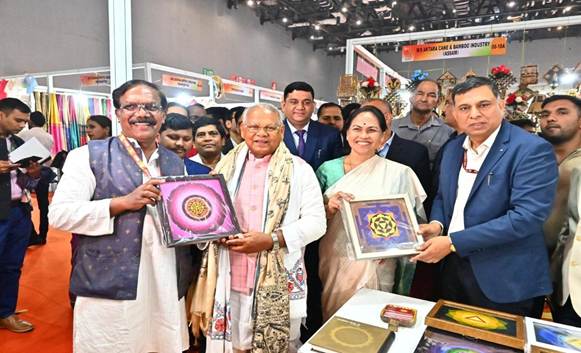
The Ministry of MSME celebrated MSME Seva Parv-2025:Virasat se Vikas from 28th to 30th September, 2025. Shri Jitan Ram Manjhi, Union Minister of MSME, Government of India, presided over the event, and Sushri Shobha Karandlaje, Union Minister of State for MSME, Government of India, inaugurated the occasion today at Rudraksh International Cooperation & Convention Centre, Varanasi, Uttar Pradesh. The event was held to bring together communities, institutions, and individuals in a collective movement of seva, cultural pride, and enhancing awareness of our heritage. More than 1500 beneficiaries of MSME schemes, including PM Vishwakarma, Khadi and Gramodyog Yojana, Prime Minister’s Employment Generation Programme (PMEGP), National SC/ST Hub Scheme, etc. attended the event. The event also featured distribution of Loan certificates to PMV beneficiaries, distribution of Margin Money subsidy to PMEGP beneficiaries and distribution of toolkits to GVY beneficiaries.
Special Campaign 5.0
The Ministry of Micro, Small and Medium Enterprises (MSME), Government of India, along with its attached/ subordinate organizations and field formations, took active part in the Special Campaign 5.0 (during 2nd Oct. – 31st Oct. 2025) and actively carried out all several activities with a special focus on disposal of e-waste generated in government offices, improving overall cleanliness of its offices, spread across the country by removing redundant and obsolete scrap material and for clearing pendency.
During the Campaign, the Ministry of MSME and its field formations have achieved 100% accomplishment on the targets set on 7 specified parameters and more than 95% of the targets set for other 03 parameters.
The Campaign also generated revenue of Rs 22.89 lakh through the disposal of obsolete items, thus freeing up usable office space of 21,046 sq. ft.
The Ministry and its organizations undertook several best practices during the Campaign, in the areas of Transforming Waste into Opportunities; Initiatives focused on sustainable and eco-friendly practices and encouraging Jan Bhagidari in the campaign especially for instilling the values of swachhata and environmental friendly practices among citizen.
NEW DELHI: 1. NATIONAL HIGHWAYS: CONSTRUCTION & ACHIEVEMENTS
1.1 Road Network in the Country: India has the second largest road network in the world and its National Highways span a total length of 1,46,560 km, forming the primary arterial network of the country. The Government of India has undertaken several initiatives to enhance and strengthen the National Highways network through flagship programmes such as the Bharatmala Pariyojana which includes the subsumed National Highway Development Project (NHDP), the Special Accelerated Road Development Programme for the North-East Region (SARDP-NE), the Special Programme for the development of roads in Left Wing Extremism-affected Areas (LWE), including the development of the Vijayawada-Ranchi Road, and Externally Aided Projects (EAP).
1.2 National Highway Network
The National Highway (NH) network has grown around 61%, rising from 91,287 km in 2014 to 146,560 km currently.
The length of operational access-controlled National High Speed Corridors (HSCs) / Expressways has increased from 93 km in 2014 to 3,052 km at present — an increase of about 3,180%.
The length of 4-lane and above National Highways (including Access controlled HSCs / Expressways) has more than doubled, expanding from 18,371 km in 2014 to 43,512 km at present.
1.3 Award and Construction of National Highways
Sr. No.
Year
Awards (in km)
Construction (in km)
Construction (in km / day)
1
2014-15
7972
4,410
12.1
2
2015-16
10098
6,061
16.6
3
2016-17
15948
8,231
22.6
4
2017-18
17055
9,829
26.9
5
2018-19
5493
10,855
29.7
6
2019-20
8948
10,237
28.1
7
2020-21
10964
13,327
36.5
8
2021-22
12731
10,457
28.6
9
2022-23
12376
10,331
28.3
10
2023-24
8581
12,349
33.83
11
2024-25
7538
10,660
29.21
12
2025-26 (till Nov’25)
1951
4,612
17.06
1.4 Bharatmala Pariyojana (including Subsumed National Highways Development Project (NHDP))
The Public Investment Board (PIB) recommended the proposal during its meeting held on 16th June, 2017. Cabinet Committee on Economic Affairs (CCEA) approved the Bharatmala Phase-I in October, 2017.
The status of various components of Bharatmala Pariyojana as on 30th November, 2025 is as under:
Component
Length (in km)
Total Length Completed (in km)
Up to 30.11.2025
Economic Corridors
8,737
6,896
Inter Corridors Roads
2,889
2,397
Feeder Roads
973
702
National Corridors
1,777
1,516
National Corridor Efficiency Improvement
824
767
Expressways
2,422
1,994
Border Roads & International Connectivity Roads
1,619
1,466
Coastal Roads
77
72
Port Connectivity Roads
348
154
Balance Road Works under NHDP
6,758
5,633
Total – Bharatmala
26,425
21,597
Mode wise status of works awarded under Bharatmala Pariyojana is as under:
Mode of Implementation
Awarded
Length (km)
Total Capital Cost(Rs Cr)
% Length
EPC
14,748
4,06,024
56%
HAM
11,269
4,36,522
43%
BOT Toll
408
11,111
1%
Grand Total
26,425
8,53,656
100%
1.5 Special Accelerated Road Development Programme for North-East Region (SARDP-NE)
The status of works taken up under SARDP-NE as on November, 2025 is as under:
Total Length (in km)
Length Completed (in km)
5,998 (Original: 6,418)
5,859
1.6 Left Wing Extremism affected Area (LWE) including Development of Vijayawada-Ranchi Road
The status of works taken up under LWE, including Development of Vijayawada-Ranchi Road, as on 30th November 2025 is as under:
Total Length (in km)
Length Completed (in km)
6,014
5,825
1.7 Externally Aided Projects (EAP)
The status of works taken up under EAP [with loan assistance from World Bank / Japan International Cooperation Agency (JICA) / Asian Development Bank (ADB)] as on November, 2025 is as under:
Total Length (in km)
Length Completed (in km)
2,978
2,604
1.8 NH (O)
The NHs which are not covered under any schemes are prioritised for development in a phased manner based on the traffic requirement under National Highway (Original) works with project based appraisal / approvals undertaken within available budget.
At present, works in about 28,000 km NH length costing about Rs. 7.70 lakh crore are under implementation in the country.
1.9 Maintenance and Repair (M&R) of NH Network
MoRTH is focusing on both development and maintenance of NHs to ensure their traffic worthiness.
The M&R of stretches of NHs, where development works have commenced or Operation, Maintenance and Transfer (OMT) Concessions/ Operation and Maintenance (O&M) Contracts have been awarded, are the responsibility of the concerned Concessionaires/ Contractors till the end of the Defect Liability Period (DLP)/ the Concession Period. Similarly, for NHs stretches undertaken under TOT (Toll Operate and Transfer) and InvIT (Infrastructure Investment Trust), M&R responsibility lies with concerned Concessionaire till the end of the Concession Period. No separate maintenance expenditure is incurred in respect of these NHs stretches.
For all remaining sections of NHs stretches, the Government has prioritized the maintenance and inter-alia evolved a mechanism to ensure M&R of all NHs sections through accountable maintenance agency through Performance based Maintenance Contract (PBMC) or Short Term Maintenance Contract (STMC). Average annual expenditure of Rs. 7,400 Crore has been incurred by MoRTH on M&R of such NHs stretches during the last three years.
Out of total 1.46 lakh km NH network, development works have been taken up in about 34,000 km length while another 59,000 km length is under DLP / Concession Period and 45,000 km under maintenance through Short Term maintenance Contract (STMC) and Performance Based Maintenance Contract (PBMC) works.
Furthermore, balance length is planned to be brought under maintenance contracts during FY 2025–26, ensuring full transition toward the target of 100% NH network coverage under maintenance by FY 25–26.
While STMC works are generally undertaken for a contract period of 1-2 year, PBMC works are undertaken for a contract period of about 5-7 years.
1.10 Asset Monetization:
MoRTH has cumulatively monetised ₹1,52,028 crore through various modes of Asset Monetization till Nov’25. MoRTH has targeted to raise ₹30,000 crore through various modes of Asset Monetization during the current FY 2025-26.
(i) TOT Model – Under this model, the right of collection of user fee (toll) in respect of selected operational highways constructed through public funding are assigned through a concession agreement as a result of bidding for a specified period of 15-30 years to the Concessionaire against upfront payment of a lump-sum amount quoted to the Government/NHAI. During the concession period, the responsibility for operations and maintenance of the road assets rests with the Concessionaire. MoRTH has monetised ₹58,265 crore through Toll Operate Transfer (TOT) till Nov’25. Further, ₹9,270 crore has already been awarded under TOT mode during the current FY 2025-26.
(ii) InVIT Model – NHAI has set up an InvIT under the SEBI InvIT Regulations, 2014, in which NHAI is having 16% stake apart from main investors (CPPIB, OTPP etc.). InvIT is a pooled investment vehicle that issues units to investors, while having three entities for management of the Trust – Trustee, Investment Manager and Project Manager. The three entities have defined roles and responsibilities under the SEBI Regulations. MoRTH has monetised ₹43,638 crore through InvIT, till Nov’25.
(iii) Securitization through SPV Model: A SPV/DME (100% owned by NHAI) has been created by bundling road assets under consideration and securitizing the future user fee from road assets. NHAI will collect toll, maintain the road assets and periodically transfer payments to the SPV sufficient for servicing debt obligations at SPV level. Rs. 50,125 crore has been raised so far through this mode (DME- Delhi Mumbai Expressway) by NHAI.
1.11 Relief for Contractors/Developers of the Road Sector
To enhance private participation in highway projects, contracts (MCA) is being updated – BOT revamped for 1st time since 2007-08; IMC completed & under finalization; HAM MCA being finalized; EPC will be post HAM.
To widen investment scope, MoRT&H has planned to introduce Public InvIT – Raajmarg InvIT. SEBI clearance is under process and target to issue in January’26.
In line with Budget FY25-26, MoRTH has identified a PPP project pipeline of 13,400 km projects with cost Rs. 8.3 Lakh Cr to be developed in PPP mode over the next 3 years.
2. LOGISTICS & ALLIED HIGHWAY INFRASTRUCTURE
2.1. Multi Modal Logistics Parks (MMLPs)
The Ministry finalized the Model Concessionaire Agreement (MCA) for the Multi-Modal Logistics Parks (MMLPs) in October 2021 through an elaborate process of Inter-Ministerial consultations. In addition to the MCA, the Ministry, in November 2021, also finalized and approved the Model RFP document of selection of Concessionaire for development of MMLPs.
A network of 35 Multimodal Logistics Parks is planned to be developed as part of Bharatmala Pariyojana, with a total investment of about Rs. 46,000 crore, which once operational, shall be able to handle around 700 million metric tonnes of cargo. Of this, MMLPs at 15 prioritized locations will be developed with a total investment of about Rs. 22,000 crore.
These MMLPs shall serve as regional cargo aggregation and distribution hubs for various industrial and agricultural nodes, consumer hubs and EXIM gateways such as seaports with multi-modal connectivity. In certain cases, the MMLPs are also being developed in tandem with the Inland Waterway Terminals under the Sagarmala Pariyojana to further reduce the cost of inland cargo movement at a much larger scale as compared to conventional road-based movement.
2.1.1 All these MMLPs are being developed on PPP-DBFOT basis having Concession Period of 45 years. MMLPs will have facility for modal shift, Inland Container Depot (ICD), Container yard, Warehouses, Cold storage, Truck parking, Fuel pump, EV charging, Commercial area, truckers facilities etc. The status of MMLPs awarded in as below.
2.1.2 Status of Awarded MMLPs
S. No.
MMLP
State
Location
Land (Area)
Investment (Rs. Cr.)
Mode
1
Jogighopa
Assam
Jogighopa
190
694
EPC
2
Chennai
Tamil Nadu
Mappedu
181
1423
PPP
3
Indore
Madhya Pradesh
Pithampur
255
1111
PPP
4
Bangalore
Karnataka
Dabbaspete
400
177
PPP
5
Jalna
Maharashtra
Jalna
63
66
EPC
These projects, when completed, will contribute significantly to the growth of India’s logistics sector with reduction in carbon emission and strengthen the country’s infrastructure.
The Bids have been invited for MMLP Anantapur, Pune and Nashik and work of preparation of Feasibility Study Reports is in progress for MMLP at Patna, Jammu, Coimbatore & Hyderabad.
2.2 Way Side Amenities (WSA)
To improve the comfort and convenience of the Highway users, the Ministry has planned the development of state-of-the-art Wayside Amenities (WSA) at about every 40-60 km along the National Highways on PPP mode. These facilities are aimed to provide multiple options of rest and refreshment for the highway commuters during their journey. Some of the mandatory facilities being developed at each WSA are fuel stations, EV charging stations, food court/restaurants, dhabas, convenience stores, clean and hygienic toilet facilities, drinking water, first aid/medical room including childcare room, dedicated area for promoting local artisans, car/bus/truck parking, Trucker facilities like Dhaba’s, dormitories, drone landing facilities/ helipad etc.
A total of 700+ WSAs were planned to be awarded along the National Highways. Out of this 700+ WSA sites planned, a total of 510 WSA have already been awarded till Nov 2025 and out of which 110 sites are operational. These WSAs offer huge opportunities for investors, developers, operators and retailers. All upcoming Greenfield Access-controlled Highway projects are provisioned to have Wayside Amenities. This will also promote local economy by generating employment opportunities and help local people to market their unique produces/handicrafts etc. at village hats developed at these places.
2.3 Ropeways
Ministry has Development Programme – Parvatmala Pariyojana across the country to improve connectivity & convenience for commuters in hilly regions and to decongest urban areas where conventional mode of transport is saturated or not feasible. Under this program, the Ministry envisages provision of safe, economical, convenient, efficient, self-sustainable & world-class ropeway infrastructure providing first & last mile connectivity to improve logistics efficiency in India.
Under Parvatmala Pariyojana, ropeway projects of ~60 km length are planned for award by FY 2023-24 as per the Budget Announcement. Out of these, 05 ropeway projects of 11.01 Km are under implementation on HAM mode viz. Varanasi (Uttar Pradesh), Bijli Mahadev (Himachal Pradesh), Dhosi Hill (Haryana), Mahakaleshwar Temple, Ujjain (Madhya Pradesh) and Sangam Prayagraj (Uttar Pradesh).
02 ropeway projects of 25.45 Km are awarded on DBFOT basis viz. Sonprayag – Kedarnath (Uttarakhand), Govindghat – Hemkund Sahib (Uttarakhand) and 01 ropeway project at Tikitoriya Mata Temple (Madhya Pradesh) on EPC basis.,
02 ropeway projects of 1.69 Km are under advance stage of award viz. Ramtek Gad Temple (Maharashtra) and Shankaracharya Temple (Jammu and Kashmir).
02 projects i.e viz. Kamakhya Temple (Assam) and Brahmagiri to Anjaneri at Trimbakeshwar, Nashik (Maharashtra) are submitted to MoRTH for approval.
02 projects are under feasibility stage i.e Tawang Monastery PT Tso Lake (Arunachal Pradesh) and Kathgodam – Hanuman Garhi Temple Nainital (Uttarakhand).
3. MAJOR EVENTS OF 2025
3.1 INAUGURATIONS / LAYING OF FOUNDATION STONE BY HON’BLE PRIME MINISTER
Jammu & Kashmir: Hon’ble Prime Minister inaugurated the Sonamarg tunnel in Jammu & Kashmir on 13 January, 2025. The Sonamarg Tunnel project, around 12 km long, has been constructed at a cost of over Rs 2,700 crore. It comprises the Sonamarg main tunnel of 6.4 km length, an egress tunnel and approach roads. Situated at an altitude of over 8,650 feet above sea level, it will enhance all-weather connectivity between Srinagar and Sonamarg enroute to Leh, bypassing landslide and avalanche routes and ensuring safer and uninterrupted access to the strategically critical Ladakh region. It will also promote tourism by transforming Sonamarg into a year-round destination, boosting winter tourism, adventure sports, and local livelihoods.
Jammu & Kashmir: In a major boost to last mile connectivity especially in border areas, Hon’ble Prime Minister laid the foundation stone and inaugurated various road projects at Katra, Jammu & Kashmir on 6th June, 2025. He laid the foundation stone of road widening project from Rafiabad to Kupwara on National Highway-701 and the construction of Shopian bypass road on NH-444 worth over Rs 1,952 crore. He also inaugurated two flyover projects at Sangrama Junction on National Highway-1 in Srinagar and at Bemina Junction on National Highway-44. These projects will ease traffic congestion and enhance traffic flow for the commuters.
Chhattisgarh: Enhancing the road infrastructure in the region, Hon’ble Prime Minister dedicated to the nation the upgraded Jhalmala to Sherpar section of NH-930 (37 Km) and Ambikapur-Pathalgaon section of NH-43 (75 Km) to 2 Laning with paved shoulder in Bilaspur, Chhattisgarh on 30th March, 2025. Prime Minister also laid the foundation stone for the upgradation of Kondagaon- Narayanpur section of NH-130D(47.5Km) to 2 Lane with paved shoulder. These projects worth over Rs 1,270 crore will significantly improve accessibility to tribal and industrial regions leading to holistic development of the region.
Uttar Pradesh: Hon’ble Prime Minister laid the foundation stone and inaugurated various development projects worth over Rs 3,880 crore in Varanasi, Uttar Pradesh on 11th April, 2025. Furthermore, he laid the foundation stone for a road bridge between Varanasi Ring Road and Sarnath, flyovers at Bhikharipur and Manduadih crossings of the city and a highway underpass road tunnel on NH-31 at the Varanasi International Airport worth over Rs 980 crore.
Uttar Pradesh: In line with commitment to improve road connectivity in Varanasi, Hon’ble Prime Minister inaugurated and laid the foundation stone of several key infrastructure projects in Varanasi, Uttar Pradesh on 2nd August, 2025. He inaugurated the widening and strengthening of the Varanasi-Bhadohi Road and Chhitauni- Shool Tankeshwar road; and Railway Overbridge at Hardattpur, to ease congestion on the Mohan Sarai – Adalpura Road. He laid the foundation stone for comprehensive road widening and strengthening across multiple rural and urban corridors, including Dalmandi, Lahartara-Kotwa, Gangapur, Babatpur among others and Railway Overbridges at Level Crossing 22C and Khalispur Yard.
Haryana: Hon’ble Prime Minister inaugurated and laid the foundation stone of various development projects in Yamuna Nagar, Haryana on 14th April, 2025. On the occasion he also inaugurated the 14.4 km Rewari Bypass project, worth around Rs 1,070 crore under the Bharatmala Pariyojana. It will decongest Rewari city, reduce Delhi–Narnaul travel time by around one hour, and boost economic and social activity in the region.
Andhra Pradesh: In line with his commitment to ensure world-class infrastructure and connectivity across the country, Hon’ble Prime Minister inaugurated 7 National Highway projects in Andhra Pradesh on 2nd May, 2025. These Projects include widening of various sections of National Highways, construction of Road over bridge and subway among others. These projects will further enhance road safety; create employment opportunities; provide seamless connectivity to religious and tourist places like Tirupati, Srikalahasti, Malakonda and Udayagiri Fort among others.
Andhra Pradesh: To enhance road infrastructure, Hon’ble Prime Minister on 16 October, 2025 in Kurnool, Andhra Pradesh laid the foundation stone for the six-lane Greenfield Highway from Sabbavaram to Sheelanagar over Rs. 960 crores, aimed at easing congestion in Visakhapatnam and facilitating trade and employment. In addition, six road projects worth around a total of Rs. 1,140 crores will be inaugurated, including the four-laning of the Pileru–Kalur section, widening from Kadapa/Nellore border to CS Puram, the four-lane Rail over Bridge (ROB) between Gudivada and Nujella Railway Stations on NH-165, the major bridge across Papagni River on NH-716, the Kanigiri Bypass on NH-565, and the improvement of the bypassed section in N. Gundlapalli Town on NH-544DD. These projects will improve safety, reduce travel time, and strengthen regional connectivity across Andhra Pradesh.
Rajasthan: Hon’ble Prime Minister laid the foundation stone for construction of 3 Vehicle Underpasses, widening and strengthening of National highways in Bikaner, Rajasthan on 22nd May, 2025. The roadways projects, worth over Rs 4850 crore, will facilitate smoother movement of goods and people. The highways extend up to the Indo-Pak border, enhancing accessibility for security forces and strengthening India’s defence infrastructure.
Rajasthan: In a major boost to road infrastructure, Hon’ble Prime Minister inaugurated multiple road projects related to National and State Highways in Barmer, Ajmer, Dungarpur districts among others on 25th September, 2025 in Banswara, Rajasthan. These projects worth over Rs 2,630 crore will improve regional road connectivity, ensure smoother traffic and enhance road safety.
Bihar: In a major boost to the road infrastructure and connectivity in the region, Hon’ble Prime Minister laid the foundation stone for various road projects including the Four-Laning of the Patna–Arrah–Sasaram section of NH-119A, and the Six-Laning of the Varanasi–Ranchi–Kolkata highway (NH-319B) and Ramnagar–Kacchi Dargah stretch (NH-119D), and construction of a new Ganga bridge between Buxar and Bharauli at Karakat, Bihar on 30th May, 2025. These projects will create seamless high-speed corridors in the state along with boosting trade and regional connectivity. He also inaugurated the four Laning of Patna – Gaya – Dobhi section of NH – 22, worth around Rs 5,520 crore and four Laning of the elevated highway and at grade improvements at Gopalganj Town on NH – 27, among others.
Bihar: In a major boost to road infrastructure in the region, Hon’ble Prime Minister laid the foundation stone for 4-laning of Ara bypass of NH-319 that connects Ara-Mohania NH-319 and Patna-Buxar NH-922 providing seamless connectivity and reducing travel time, in Motihari, Bihar on 18th July, 2025. He also inaugurated the 4-lane Parariya to Mohania section of NH-319, worth over Rs 820 crore, part of NH-319 which connects Ara Town to NH-02 (Golden Quadrilateral) that will improve freight and passenger movement. Among others, a 2-lane with paved shoulder from Sarwan to Chakai of NH-333C which will facilitate the movement of goods and people and act as a key link between Bihar and Jharkhand.
Bihar: In line with his commitment to improving connectivity, Hon’ble Prime Minister inaugurated the 8.15 km long Aunta–Simaria bridge project on NH-31, including the 1.86 km long 6 lane Bridge on river Ganga, constructed at a cost of over Rs 1,870 crore, at Gaya in Bihar on 22 August, 2025. It will provide direct connectivity between Mokama in Patna and Begusarai. The bridge has been constructed parallel to an old 2-lane dilapidated rail-cum-road bridge “Rajendra Setu” which is in poor condition forcing heavy vehicles to re-route. The new bridge will reduce this extra travel distance of more than 100 km for the heavy vehicles travelling between North Bihar (Begusarai, Supaul, Madhubani, Purnea, Araria etc) and South Bihar areas (Sheikhpura, Nawada, Lakhisarai etc). It will also help reduce issues of traffic jams in other parts of the region due to the detour which these vehicles were forced to take. It will boost economic growth in the adjoining areas, especially in North Bihar, which are dependent on South Bihar and Jharkhand for getting necessary raw material. It will also provide better connectivity to the famous pilgrimage place of Simaria Dham, which is also the birthplace of famous poet Late Shri Ramdhari Singh Dinkar. He also inaugurated the four-lane Bakhtiyarpur to Mokama section of NH-31, worth around Rs 1,900 crore, which will ease congestion, reduce travel time, and enhance passenger and freight movement. Further, improvement to the two-lane with paved shoulders of Bikramganj–Dawath–Nawanagar–Dumraon section of NH-120 in Bihar will improve connectivity in rural areas, providing new economic opportunities for the local population.
West Bengal: Hon’ble Prime Minister inaugurated two road over bridges (ROBs) constructed under Setu Bharatam Programme, worth over Rs 380 crore, at Topsi and Pandabeshwar in Paschim Bardhaman on 18th July in Durgapur, West Bengal. It will improve connectivity and also help in preventing accidents on Railway level crossing.
West Bengal: In a major boost to road infrastructure in the region, Hon’ble Prime Minister also laid the foundation stone of 7.2 km long six-lane elevated Kona Expressway worth over Rs 1,200 crore in Kolkata at West Bengal on 22nd August, 2025. It will enhance connectivity between Howrah, surrounding rural areas, and Kolkata, saving hours of travel time and giving significant boost to trade, commerce, and tourism in the region.
Tamil Nadu: Hon’ble Prime Minister on 26th July, 2025 dedicated two strategically significant highway projects in Thoothukudi, Tamil Nadu. The first is the 4-laning of the 50 km Sethiyathope–Cholapuram stretch of NH-36, developed at more than ₹2,350 crore under the Vikravandi–Thanjavur corridor. It includes three bypasses, a 1-km four-lane bridge over the Kollidam River, four major bridges, seven flyovers, and several underpasses, reducing travel time by 45 minutes between Sethiyathope–Cholapuram and boosting connectivity to Delta region’s cultural and agricultural hubs. The second project is the 6-laning of the 5.16 km NH-138 Thoothukudi Port Road, built at around ₹200 crore. Featuring underpasses and bridges, it will ease cargo flow, cut logistics costs, and support port-led industrial growth around V.O. Chidambaranar Port.
Delhi: Hon’ble Prime Minister inaugurated two major National Highway projects worth a combined cost of nearly Rs.11,000 crore at Rohini, Delhi on 17th August, 2025. The projects — the Delhi section of the Dwarka Expressway and the Urban Extension Road-II (UER-II) — have been developed under the Government’s comprehensive plan to decongest the capital, with the objective of greatly improving connectivity, cutting travel time, and reducing traffic in Delhi and its surrounding areas. These initiatives reflect Prime Minister Modi’s vision of creating world-class infrastructure that enhances ease of living and ensures seamless mobility. The 10.1 km long Delhi section of Dwarka Expressway has been developed at a cost of around Rs. 5,360 crores. The section will also provide Multi-modal connectivity to Yashobhoomi, DMRC Blue line and Orange line, upcoming Bijwasan railway station and Dwarka cluster Bus Depot.
Manipur: In line with his commitment to improve road connectivity Hon’ble Prime Minister announced 5 National Highway projects worth more than Rs 2,500 crore at Churachandpur in Manipur on 13th September, 2025.
Assam: Hon’ble Prime Minister on 14th September 2025 in Darrang, Assam laid the foundation stone of Guwahati Ring Road Project that will enhance urban mobility, decongest traffic, and improve connectivity in and around the capital city; and Kuruwa–Narengi Bridge over River Brahmaputra improving connectivity and promoting socio-economic development in the region.
3.2 INAUGURATIONS / LAYING OF FOUNDATION STONE BY MINISTER & MINISTERS OF STATE FOR ROAD TRANSPORT & HIGHWAYS
New Delhi: Hon’ble Union Minister for Roads Transport and Highways flagged off the first-ever trials of hydrogen-powered heavy-duty trucks launched by Tata Motors in New Delhi on 4th March, 2025. The historic trial, marks a significant step towards sustainable long-distance cargo transportation in the country, as Tata Motors underscores its commitment to leading the charge in sustainable mobility solutions, aligning with India’s broader green energy goals. It marks a significant step forward in assessing the real-world commercial viability of using hydrogen powered vehicles for long distance haulage as well as setting-up the requisite enabling infrastructure for their seamless operation.
Uttar Pradesh: Hon’ble Union Minister of State for Road Transport and Highways & Corporate Affairs, Shri Harsh Malhotra on 20th May, 2025 laid the foundation stone for 5 vehicular underpasses – Baghnath, Ken Union Chowk, Fazilnagar, Salemgarh and Patheria in Kushinagar. The vehicular underpasses, which were envisioned as an important step towards decongestion and reducing road casualties are being developed at an estimated total cost of Rs. 111 crores with a combined length of 5.4 km and are scheduled to be completed by end of 2026.
Karnataka: Hon’ble Union Minister of Road Transport and Highways inaugurated and laid the foundation stone for 9 National Highway projects spanning 88 km, with an investment exceeding ₹2,000 crore, in Sagara Town, Shivamogga, Karnataka on 14 July, 2025. The newly inaugurated Sharavathi Bridge is poised to significantly improve connectivity between the Malnad and coastal regions, while also facilitating easier access to important pilgrimage centres such as the Sigandur Chowdeshwari and Kollur Mookambika temples. The widening of the 47-kilometre-long Bidar–Humnabad section of NH-367 will substantially reduce travel time between the districts of Kalaburagi and Bidar. Restoration works undertaken in the Shiradi Ghat stretch of NH-75 are expected to ensure safe and uninterrupted traffic movement during the monsoon season, particularly along the vital Mangaluru–Bengaluru corridor.
Andhra Pradesh: Hon’ble Union Minister of Road Transport and Highways inaugurated and laid the foundation stone for 29 National Highway projects covering 272 km, with an investment of over ₹5,233 crore, in Mangalagiri, Andhra Pradesh on 2 August, 2025. Alongside this, foundation stones are being laid for 27 additional projects aimed at enhancing connectivity across Andhra Pradesh. These will improve access to religious sites like Tirupati, Srisailam, and Kadiri, and tourist destinations such as Horsley Hills and Vodarevu Beach. Seamless links to economic hubs—Sri City, Krishnapatnam Port, and Tirupati Airport will be established.
Puducherry: Hon’ble Union Minister of Road Transport and Highways inaugurated and laid the foundation stone for 3 National Highway projects worth over ₹2,000 crore in Puducherry on 13th October, 2025. This includes the foundation stone laying for the construction of a 4 km elevated corridor between Indira Gandhi Square and Rajiv Gandhi Square on NH-32, improvements to the 14 km ECR Road on NH-332A, and the inauguration of the 38 km four-lane Puducherry–Poondiyankuppam section of NH-32. These projects are designed to enhance road safety and ease traffic congestion within the urban stretch from Indira Gandhi Square to Rajiv Gandhi Square, reducing travel time from 35 minutes to just 10 minutes. They will also decongest Puducherry’s urban areas, resulting in significant fuel savings, reduced vehicular emissions, and lower operating costs.
3.3 OTHER EVENTS, ACTIVITIES AND CAMPAIGNS
Special Campaign 5.0
The Ministry of Road Transport and Highways (MoRTH) and its agencies successfully concluded the Special Campaign for Disposal of Pending Matters 5.0 from 2nd to 31st October, 2025. The campaign was launched in the MoRTH by Shri Harsh Malhotra, Minister of State for Road Transport and Highways on 2nd October, by administering Swachhata Pledge undertaking Cleanliness drive in Transport Bhawan. The Ministry has achieved 100% target in Record Management (review of old physical/e-files (18,616) and cleanliness activities. MoRTH and its agencies carried out cleanliness activities at more than 15,000 sites, which included offices, construction camps/sites, NH stretches, Toll Plazas, wayside amenities, Road-side Dhabas, Bus Stops, flyovers etc. Further, Ministry has achieved 99% targets in disposal of Public Grievances (1,147) and Public Grievance Appeals (522). Further, Ministry has disposed 92% i.e. 671 out of 730 identified pending MP references. During the period 10 out of 13 pending PMO References have also been disposed of. Space management and beautification was carried out at various office premises and more than 220 sq ft. of office space was freed up and more than 640 kg of office scrap was also disposed of.
Clean Toilet Picture Challenge
Under the ‘Special Campaign 5.0’, NHAI launched a unique ‘Clean Toilet Picture Challenge’, on 13th October, 2025, under which the National Highway users could report a dirty toilet and get rewarded. The drive encouraged highway users to report dirty toilets at Toll Plazas along the National Highway, rewarding such reports to ensure clean and hygienic facilities. The initiative was open to all National Highway users for reporting dirty toilets by uploading geo-tagged pictures through the latest version of the ‘Rajmargyatra’ app and providing details such as user’s name, location, Vehicle Registration Number and Mobile number. The drive is a part of Government of India’s ‘Special Campaign 5.0’ that reaffirms commitment towards ensuring cleanliness, transparency, and efficiency in governance. Each Vehicle Registration Number (VRN) reporting such instances was eligible for a reward of Rs.1,000 (Rupees One Thousand) in the form of FASTag recharge that was credited to the linked VRN provided by the Highway user.
4. ROAD TRANSPORT
The Ministry is responsible for the formulation of broad policies relating to regulation of road transport in the country, besides making/monitoring arrangements for vehicular traffic to and from neighboring countries. The following Acts/Rules, which embody the policy relating to motor vehicles and State Road Transport Corporations (SRTCs), are being administered by the Ministry:
l. Motor Vehicles Act, 1988
m.Central Motor Vehicles Rules, 1989
n.Road Transport Corporations Act, 1950
o.Carriage by Road Act, 2007
p.Carriage by Road Rules, 2011
4.1 Strengthening ITS in Public Transport System
i. The Ministry has appraised the existing scheme namely “Strengthening ITS in Public Transport System”’ to provide financial assistance to State/UT Governments for use of latest technologies such as GPS/ GSM based vehicle tracking system, computerised reservation/ ticketing system, inter-modal fare integration, passenger information system etc. The Scheme includes cost of capital expenditure of ITS hardware, software, application development, operation, planning, management, administrative work, and appointment of Project Management Unit (PMU).
ii. The Transport Bodies such as State Transport Undertakings, State Transport Corporations, Public Private Partnerships and State Government Bodies (including hilly regions and North-east States) are eligible to avail the financial assistance under the Scheme.
iii. The duration of the scheme is for 4 years (FY 2022-23, 2023-24, 2024-25 and 2025-26 i.e., during remaining period of 15th Finance Commission Cycle). The total outlay of the Scheme is estimated to be Rs.175 Crore from Ministry. Previous Scheme had fund of share of 50% by Ministry but the revamped scheme has fund share of 70% by Ministry and remaining 30% will be contributed by respective Transport Bodies.
iv. As on date, 13 proposals of KSRTC, TSRTC, GSRTC, Bhopal BCLL, Sikkim SNT Mira Bhainder MBMTU, Assam ASTC, Puducherry PRTC, NMMT Navi Mumbai, Rajasthan RSRTC, Uttar Pradesh UPSRTC, Nagaland NST an Chandigarh CTU have been sanctioned amounting to Rs.250 Cr (Central Share of Rs. 175 Cr).
4.2 Citizen Centric Initiatives
4.2.1 Divyangjan-friendly measures: The grounds for applying for temporary registration has been expanded, to include cases of fully built motor vehicles which are to be altered for conversion to an adapted vehicle. Provision has been made to reflect ownership type as Divyangjan during vehicle purchase to provide GST benefits. Provisions have been made to allow alteration of motor vehicles suited to the requirements of Divyangjan. Such adapted vehicles are now eligible to be registered and for which driving license may be procured. Further, relaxation in eligibility criteria of DL has been provided to facilitate persons with mild to medium color blindness to obtain DL, for which they were not eligible earlier. An advisory has been issued by the Ministry regarding facilitation of the vehicles whose ownership type is Divyangjan. Another advisory was issued by the Ministry regarding issuance of driving licence to Divyangjan for e-rickshaws / e-carts.
4.2.2 Cashless Treatment to Road Accident Victims: Cashless Treatment of Road Accident Victims Scheme, 2025 (Scheme) has been notified on a pan India basis vide S.O. 2015(E) dated the 5th May, 2025 and the Guidelines of the Scheme have been notified vide S.O. 2489(E) dated the 4th June, 2025. Under this Scheme any person who is a victim of road accident caused by the use of a motor vehicle shall be entitled to treatment cover upto Rs. 1.5 lakh per victim, subject to a maximum cap of 7 days from the date of accident at any designated hospital across the country.
4.2.3 Safety provisions of E-rickshaws and e-cart: G.S.R. 835(E) dated 11 November 2025, issued by the Ministry of Road Transport and Highways, introduces the Central Motor Vehicles (Seventh Amendment) Rules, 2025, bringing e-rickshaws and e-carts formally under the Central Motor Vehicles Rules (CMVR). This amendment expands the vehicle-category framework to explicitly include these electric vehicles, ensuring they fall under standardized requirements for type approval, registration, safety norms, and manufacturing compliance.
4.2.4 High Security Registration Plates (HSRP) and Advanced Driver Assistance Systems (ADAS): G.S.R. 819(E) dated 03rd November, 2025 aims to strengthen national vehicle-security and safety standards by reinforcing mandatory High Security Registration Plates (HSRP) for all applicable vehicles and advancing provisions related to Advanced Driver Assistance Systems (ADAS) in new vehicle models. The notification aims to curb vehicle theft, eliminate the use of duplicate or tampered number plates, and improve enforcement through secure, tamper-proof identification. At the same time, by laying regulatory groundwork for ADAS features—such as collision-warning, lane-support, and other safety-enhancing technologies—the amendment supports India’s broader road-safety strategy and aligns domestic vehicle standards with global best practices.
4.3 Development of State-wise Vehicle Tracking Platform in States / UTs (under Nirbhaya Framework)
Ministry of Road Transport and Highways has approved a scheme (on 15th January, 2020) for implementation of “Development, Customization, Deployment and Management of State-wise vehicle tracking platform for Safety & Enforcement as per AIS 140 Specifications in States / UTs under Nirbhaya Framework” at total estimated cost of Rs. 463.90 crore (including Central and State share, as per Nirbhaya Framework).
The proposed system envisages enhancing the safety of women and girl children by establishing Monitoring Centers across States/UTs, which shall track all the Public Service Vehicles (PSV) that are fitted with location tracking device and emergency buttons for raising an alert in case of emergency. The Monitoring Centre will monitor the alerts and coordinate with State Emergency Response Support System (SERSS) for responding to distress calls. MoRTH had earlier issued a notification dated 28th November, 2016, wherein Vehicle Location Tracking (VLT) device and emergency buttons were mandated to be fitted in all public service vehicles. Further, the responsibility of fitting VLT device and emergency buttons lies with the vehicle owner, and this scheme shall finance only the setting up of Monitoring Centre in each State/UT for the tracking of PSVs.
MoRTH has received proposals from all 36 States/UTs and disbursed funds of Rs. 255,60 Cr till date. MoRTH has been closely monitoring the implementation of this scheme. Total 18 States/UTs have commissioned the Monitoring Centers so far. More States/UTs are in advanced stages of commissioning the Monitoring Centers.
4.4 Business Centric initiatives
(i) Level playing field for bus body builders: Ministry has prescribed level playing field in the area of manufacturing of buses by OEMs and Bus Body Builders. The said regulations has come into effect from 1st September, 2025. As per the regulations, the Bus Body Builders in the unorganised sector will be also subjected to the type approval process (at par with the OEMs) instead of through the self-certification method, currently in vogue. In addition to the proposed applicability of such uniform test procedures, the bus body builders will also have to meet the applicable safety and performance requirements.
(ii) Tractor-Trailer Interchangeability: The regulatory framework for tractor–trailer interchangeability, ensuring that tractors and the trailers they tow meet uniform safety and coupling standards. The notification brings greater standardisation in mechanical couplers, electrical connectors, identification requirements, and tracking mechanisms, enabling only approved and compatible tractor–trailer combinations to operate on the road. By formalising interchangeability norms, the rule aims to curb the long-standing practice of using unregulated or locally fabricated trailers that compromise road safety. G.S.R. 834(E) aims to improving the safety, traceability and compliance of India’s haulage sector by ensuring that tractors and trailers function as an integrated, regulated combination.
(iii) Bharat New Car Assessment Program (Bharat NCAP): Bharat New Car Assessment Program (Bharat NCAP) was launched on 22nd August, 2023 at New Delhi with an aim to enhance road safety by elevating vehicle safety standards for up to 3.5-ton vehicles in India. This is a voluntary program in which the base variants of a given model shall be tested and will commence from 1st Oct 2023 based on Automotive Industry Standard (AIS) 197. The program aims to create ecosystem of competitive safety enhancements leading to increased awareness among consumers by which consumers can take an informed decision by making a comparative assessment on vehicle performance under crash test conditions. This program brings the opportunity to the OEMs to manufacture vehicles of global safety standards.
4.5 Policy for Data Sharing from the National Transport Repository
The National Transport Repository (NTR) serves as the central database for records including Vahan, Sarathi, eChallan, eDAR, and FASTag. As the NTR contains sensitive personal information accessed by various government and enforcement agencies for specific purposes, data sharing must be strictly regulated. This policy has been developed to ensure uniformity and legal compliance in data sharing. This policy provides clear guidelines in line with recent legal requirements regarding consent for sharing personal data. The policy outlines procedures and safeguards to ensure secure and lawful data sharing, supporting government functions, academic research, and promoting ease of living and ease of doing business. A detailed framework covering datasets, modes of sharing, and the request and approval process for Vahan, Sarathi, eChallan, eDAR, and FASTag has been formalized.
5. VOLUNTARY VEHICLE-FLEET MODERNIZATION PROGRAM (VVMP/ VEHICLE SCRAPPING POLICY)
5.1 Vehicle Scrapping and Testing Service:
MoRT&H has been successful in operationalizing 123 Registered Vehicle Scrapping Facility (RVSF) across 21 States/UTs (50+ RVSFs are under construction to improve geographical coverage) and 160 Automated Testing Station (ATS) across 19 States/UTs (further 340 in pipeline for establishment)
Cumulatively, 3.58 Lakh vehicles have been scrapped (including 1.59 Lakh government vehicles and 1.99 Lakh private vehicles) and 14.6 Lakh vehicles tested till November 2025.
5.2 Citizen Centric Initiatives:
5.2.1 The policy focuses on citizen centricity by allowing vehicles registered in any State to be fitness tested scrapped at any ATS RVSF in the country, A citizen receives a Certificate of Deposit (CD) issued only by RVSFs on scrapping their vehicles. To incentivize vehicles owners to scrap their vehicles at RVSFs, various incentives are provided by Government and Auto OEMs on new vehicles purchased against CDs:
• Concession in motor vehicle tax of up to 25% for Non-Transport vehicles and up to 15% for Transport vehicles which are purchased against Certificate of Deposit vide MoRTH GSR 720 (E). 27 States / UTs have announced the MV tax concession so far
• Waiver of Registration fees for all vehicles across the country which are purchased against a Certificate of Deposit In addition, Auto OEMs have agreed to provide discounts on vehicles purchased against CD, as detailed below:
• PVs: 11 OEMs covering 98% market (Maruti, Tata, Mahindra, Hyundai, Kia, Toyota Honda, JSW MG, Renault, Nissan, Skoda-Volkswagen) agreed lower of 1.5% discount OR Rs.20,000 and Mercedez Benz (12th OEM) has announced Rs. 25,000 discount.
5.2.2 In addition to the above financial incentives, there are a lot of non-financial incentives including:
• Reduction in pollution due to scrapping of old polluting vehicles: Ilt is estimated that on an average, the emissions from a single Pre-BS M&HCV are equivalent to -14 B$ VI M&HCVs. Similarly, emissions from a BS I and BS Il M&HCV are equivalent to -7 BS VI M&HCVs and -6 BS VI M&HCVs respectively.
• Environment-friendly safe disposal of End-of-Life Vehicles
• Better safety features in new vehicles versus old vehicles
• Lower maintenance costs in new vehicles versus old vehicles
5.2.3 Further, to disincentivize vehicle owners from using older vehicles, MoRTH has increased fees for registration, fitness certificate issuance and fitness testing of older vehicles vide MoRTH GSR 568 € & GSR 850€.
For citizen convenience and seamless experience to users, a digital infrastructure has been created on the Vahan portal for V-VMP to facilitate scrapping of end-of-life vehicles and fitness testing.
End-to-end digitisation of citizen journey of scrapping and vehicle fitness testing through Vahan modules (AFMS and VScrap) from booking appointment, submitting application, and issuing applicable certificates (e.g., certificate of deposit on scrapping, fitness test report and certificate)
Fully integrated portals with Vahan database enabling dynamic updation of records like vehicle scrapping status and fitness test results on real-time in respective national databases, eliminating additional manual interventions for citizen:
Citizen incentives linked to CD are configured across relevant state department portals to ensure seamless disbursement of benefits such as MV Tax concession and waiver of registration fee at all touchpoints.
Citizen awareness campaign has also been launched for vehicle owners to be informed of policy benefits.
5.3 Investment promotion and ease of doing business:
• The policy promoted private investment across RVSFs and ATSs where relaxed criteria was defined in MoRTH guidelines to obtain a registration certificate (RC) for setting up RVSFs and ATSs from the respective State Transport Departments.
• Regular investor summits conducted in collaboration with State Governments across 25 States to promote V-VMP policy attracting private investments by showcasing policy objectives, impact, and business opportunities, resulting in a pipeline of 70+ applications for RVSFs and 335+ for ATSs including those which are under construction and in the process of approval.
• Further, any registered investor business in the RVSF and ATS ecosystem is onboarded to the digital infrastructure created under V-VMP for ease of doing business.
• National Single Window System (NSWS): A single window digital clearance portal for investors providing all-in-one approval repository, real-time application status tracking and fast query management, helping streamline approval process between State Transport Dept. and investor.
• E-Auction of Government vehicles to RVSFs for scrapping: Dedicated e-auction portals developed by Metal Scrap Trade Corporation (MSTC) and Government eMarketplace (GeM), onboarded under V-VMP to facilitate transparent and structured exchange of Government vehicles older than 15 years between Government departments (Center, State, PSUs) and RVSFs, enabling price discovery and demand aggregation. RVSFs registered as per MoRTH guidelines can only participate in these auctions and purchase these vehicles for scrapping.
• Digitization of operations at RVSFs and ATSs: Leveraging Vahan modules under VVMP investors can digitally manage end-to-end lifecycle operations at ATS and RVSF . scheduling, booking acceptance, document verification, and certificate issuance. These portals enable seamless process, making it easier and cost-effective for investors to run their operations:
• AFMS portal enabling testing ecosystem: National Informatics Centre (NIC) has developed a module on Vahan for end-to-end lifecycle management of testing through ATS. The Automatic Fitness Management System (AFMS) provides the motor vehicle owners ability to book vehicle fitness tests, view fitness test results and fitness certificate and apply for re-tests. Automated Testing System (ATS) operators will be able to generate available test slots, manage bookings, update vehicle fitness status and upload fitness test results and fitness certificate. The application provides end-to- end visibility into vehicle testing process and its result, thus improving transparency. It also helps in maintaining digital recordings of visual tests. The AFMS portal is linked with other Vahan applications such that latest fitness status is updated across Vahan and may be used by the authorities for enforcement purposes.
• Vscrap portal enabling scrapping ecosystem: NIC has developed another module on Vahan for end-to-end lifecycle management of scrapping through RVSF. The Vscrap portal allows motor vehicle owners to submit online applications for scrapping their old vehicles at any Registered Vehicle Scrapping Facility (RVSF) in the country. The RVSF can accept the application form, negotiate the scrap value for old vehicle, generate a Certificate of Deposit (CD) as a proof of receipt of vehicle for scrapping and generate a Certificate of Vehicle Scrapping (CVS) as a proof of vehicle scrapped.
• CD trading portal: The ‘Certificate of Deposit’ issued to vehicle owners on submission of vehicle for scrapping is linked with multiple incentives on purchase of new vehicles. The incentives include waiver of registration fees, concession on MV Tax and discounts on ex-showroom price by OEMs. Vehicle owners can also trade the CD. To enable the CD trading Digi ELV portal has been developed by NCDEX.
5.4 Digital dashboards and data for compliance tracking:
Dedicated dashboards for real-time monitoring of ATS and RVSF operations allow tracking of policy metrics across Central Government and State Government, providing integrated data across portals that facilitates decision-making and supervision of notified rules.
• Digitally driven process for compliance supervision through audit functionality, enabling digital submission and scrutiny of audit reports via the NSWS portal, ensuring transparency across investors and competent Government authorities
5.5 Financial incentives to State Governments to expedite policy implementation:
• To increase the pace of implementation, incentives worth Rs. 2,000 crore extended to State Governments (on achieving V-VMP milestones in January-March 23) under Department of Expenditure’s (DoE) “Scheme for Special Assistance to States for Capital Investment for 2022-23
• Scheme for special assistance to states extended for2024-25 for Rs. 2,000 crore and Released by DoE vide their letter dated 22nd May to incentivize states to achieve their respective RVSF and ATS infrastructure set-up targets along with creation of initial demand by scrapping Government owned vehicles,
• Rs. 840 crore approved for disbursement by DoE across 16 State Governments on achievement of defined milestones under V-VMP
• Scheme for special assistance to states extended for 2024-25 for Rs. 3,000 crore
• Increased incentives for scrapping of Government and non-government vehicles
• Higher incentives for awarding and operationalisation of ATS
5.6 Current Policy Implementation Status:
5.6.1 Vehicle Scrapping (As on Nov 2025):
i. 123 RVSFs are operational across 21 States / UTs, 57 additional centers are under construction.
ii. As per projections, around 90 scrapping centers are required in India to cater to End of Life Vehicles (ELVs). However, to ensure geographical coverage, 145 RVSFs are required.
iii Approximately 3,60,000 vehicles scrapped in total of which around 1,60,000 are Government owned and around 2,00,000 are non-Government owned.
iv. Priority category Government vehicles scrapped – 23,245 police vehicles, 19,642 buses, 509 fire tenders, 3,872 ambulances.
v. Government vehicles contribute almost 45% of scrapped vehicles till date since we provided an initial impetus to the established RVSF infrastructure (supply-side ecosystem) by mandatory scrapping of Government vehicles older than 15 years.
vi. Monthly volume of Government owned vehicles scrapped is around 6,500 for FY25-26 YTD which is 125% of last year (around 5,200 monthly avg. scrapping volume in FY24- 25).
vii. For non-Government owned vehicles, while more initiatives to boost scrapping volume (demand-side initiatives) needs to be done, there has been a significant growth in scrapping volume.
viii. Monthly volume of non-Government owned vehicles scrapped is -12,500 for FY25-26 YTD which is around 215% of last year (5,800 monthly avg. scrapping volume in FY24 25)
5.6.2 Vehicle Fitness Testing (As on 05.12.2025):
i. 160 Automated Testing Stations are operational across 19 States / UTs, 99 facilities are under construction
ii. A total of around 500 automated testing stations are required in India.
iii. Monthly volume of ATS fitness testing is around 105,000 for FY25-26 YTD, which is around 235% more than last year (45,000 monthly avg. fitness tests at ATS in FY24-25).
6. ROAD SAFETY
6.1 Sadak Suraksha Mitra Program
Road crashes remain a significant public health and safety challenge in India. India reported 4,61,312 road accidents in 2022, with road traffic injuries identified as the leading cause of death for children and young adults aged 5-29 years (WHO). Alarmingly, around 25% fatalities involved individuals below the age of 25 years. Furthermore, individuals aged 18-45 years accounted for around 66% of the total road fatalities- a demographic that represents the nation’s most economically productive group. These statistics emphasize the urgent need for local, district- level interventions to address road safety challenges and reduce fatalities. Many fatalities occur due to delayed emergency response, lack of first aid knowledge, and absence of structured community intervention. Recognizing the need for meaningful youth participation in road safety, the Ministry of Road Transport and Highways and the Ministry of Youth Affairs & Sports, in collaboration with concerned stakeholders and MyBharat, planned the Youth-Led Road Safety Hotspots Initiative called Sadak Suraksha Mitra Program for Youth Volunteers.
The Sadak Suraksha Mitra Program for Youth Volunteers aims to:
a. Engage youths in road safety initiatives through structured studies of accidents spots.
b. Provide data-driven recommendations for rectification to District Road Safety Committees based on study of local context.
c. Enhance road safety measures at the district level through the support of trained volunteers.
d. Identify road safety challenges and assess the effectiveness of existing interventions.
e. Promote community engagement in road safety measures through youth participation.
f. Build a repository of grassroot-level insights to inform actions aimed to enhance road safety.
g. Exchange of Idea through MY Bharat Portal, empower and engage youth to become leaders and active citizens.
6.2 Sadak Suraksha Abhiyan
Sadak Suraksha Abhiyan is a nationwide road safety awareness initiative aimed at reducing road accidents, fatalities, and injuries by promoting safe road user behaviour and strengthening road safety measures across the country. The Abhiyan seeks to sensitize all categories of road users, including drivers, pedestrians, cyclists, school children, and enforcement agencies, about the importance of road safety and compliance with traffic laws. The campaign focuses on promoting adherence to key road safety practices such as wearing helmets and seat belts, prevention of over-speeding, drunken driving, and use of mobile phones while driving, along with improving pedestrian safety and responsible road use. The Sadak Suraksha Abhiyaan campaign scheduled from October 2025 to March 2026 with the approved budget of Rs. 24.97 Cr. The major topics to be covered under this scheme are categorized into several themes, including the Scheme for Cashless Treatment of Road Accident Victims, Vehicle Scrapping Policy and BNCAP, the Brand Umbrella Campaign, among others.
6.3 Scheme of setting up of IDTRs/RTDCs/DTCs.
The Ministry of Road Transport & Highways is implementing the Scheme for Setting up of Institutes of Driving Training and Research (IDTRs), Regional Driver Training Centres (RDTCs) and Driving Training Centres (DTCs) during the 15th Finance Commission Cycle period (2021–22 to 2025–26) with the objective of improving the quality of driver training and enhancing road safety across the country. The scheme guidelines have been reviewed and revised on 15.01.2025 and provides financial assistance for setting up of IDTRs, RDTCs and DTCs. Further, the revision aims to ensure wider geographical coverage, improved accessibility at regional and district levels, and optimal utilization of resources through a graded training ecosystem. The revised Scheme incorporates modern technologies, such as driving simulators and automated driving test tracks, to enhance transparency, objectivity, and quality in driver training and evaluation.
6.4 Rah-Veer (Erstwhile Good Samaritan Scheme)
The Good Samaritan Scheme was launched by the Ministry of Road Transport & Highways (MoRTH) on 3rd October, 2021, with the objective of motivating and rewarding citizens who voluntarily help road accident victims by administering immediate assistance and transporting them to the hospital within the “golden hour”. Under the original scheme, a cash reward of ₹5,000 per incident was provided to each Good Samaritan, along with a certificate of appreciation, after due verification by the District Appraisal Committee. Subsequently, to further enhance public participation and recognition, the scheme was revised and renamed as “Rah-Veer”, with the revised guidelines issued on 21st April, 2025. Under the Rah-Veer Scheme, the financial incentive has been increased from ₹5,000 to ₹25,000 per incident for each eligible Good Samaritan (now termed Rah-Veer). In cases where multiple persons assist the same victim, the amount is shared equally among them. Additionally, ten national-level awards of ₹1,00,000 each are to be conferred annually to the most exemplary Rah-Veers for their outstanding contribution in saving lives.
The revised scheme maintains the same broad framework for verification and disbursement, with district-level scrutiny, acknowledgment by hospitals or police, and payment through the State/UT Transport Department, reimbursed by MoRTH. The enhancement under the Rah-Veer scheme aims to significantly strengthen public response in providing immediate aid to accident victims and to promote a culture of compassion and timely assistance on Indian roads.
6.5 Electronic Monitoring and Enforcement of Road Safety
The Motor Vehicles (Amendment) Act, 2019 enacted in August, 2019 and vide Section 136A provides for installation of electronic monitoring and enforcement of road safety on National Highways, State Highways, roads or in any urban city within a State which has a population up to such limits as maybe prescribed by the Central Government. Accordingly, Ministry has published rule 167A (under Central Motor Vehicles Rule, 1989) in August 2021 vide G.S.R. 575 (E) dated 11th August, 2021 for Electronic Monitoring and Enforcement of Road Safety at high-risk and high-density corridors on National Highways, State Highways and at critical junctions in Million plus cities in India and cities under National Clean Air Programme (NCAP). For the purpose of this Rule, “electronic enforcement device” means a speed camera, closed-circuit television camera, speed gun, body wearable camera, dashboard camera, Automatic Number Plate Recognition (ANPR), weigh in machine (WIM) and any such other technology specified by the State Government.
2. As per the directions of Hon’ble Supreme Court in the matter of WP(C) No.295/2012 – S. Rajaseekaran v/s UoI & Ors. SOP for implementation of electronic monitoring and enforcement of road safety has been prepared and circulated to All the States and UTs on 29.10.2025 for its implementation.
6.6 Scheme for Special Assistance to All States & UTs for Capital
Investment 2025-26 (SASCI) The Ministry of Finance Department of Expenditure has issued Scheme for Special Assistance to All States & UTs for Capital Investment 2025-26 wherein Rs. 3000/- crore is allocated for Implementation of Electronic Enforcement of Road Safety with the objective to promote the electronic enforcement ecosystem in the country and promote road safety towards achievement of the national goal of reducing fatalities at least 50% by 2030. Under scheme guidelines these States/UTs were categorized into three groups —Group A (₹350 Cr), Group B (₹150 Cr), and Group C (₹50 Cr)—based on factors such as higher road traffic fatalities on State Highways, registered vehicle population, and the extent of the State Highways network.
7. E-INITIATIVES
7.1 BhoomiRashi Portal: The Ministry of Road Transport and Highways has launched BhoomiRashi Portal to digitize the land acquisition notification process to accelerate highways infrastructure development projects and payment to compensation for land acquisition. The portal has been made mandatory for processing all the land acquisition proposals w.e.f. 1st April, 2018.
The Portal has made land acquisition process faster and error-free. It has greatly reduced the time period for publication of notifications and brought in efficiency as well as transparency in the whole process.
The key objectives of avoiding parking of funds in bank accounts and ensuring transparent real time deposit of funds in the account of the individuals whose land/property were acquired have successfully been achieved by integrating the payment of compensation with the BhoomiRashi Portal via Public, Finance Management System (PFMS). This initiative of MoRTH has resulted in a more robust and efficient land acquisition for road construction in the country.
The Ministry has also organized workshops and training programmes across the country to make the field offices familiar to the latest updates in BhoomiRashi Portal and new development in LA process.
A total of 18,604 notifications under section 3 of National Highways Act, 1956 have been published and around 1,55,326.1 hectare of land has been acquired under section 3-D of the Act through BhoomiRashi Portal from 1st April, 2018 to 19th December, 2025.
7.2 E-tolling
In order to ensure seamless movement of traffic through fee plazas and increase transparency in collection of user fee using FASTag, the National Electronic Toll Collection (NETC) programme has been implemented on pan-India basis. The National Payment Corporation of India (NPCI) is the Central Clearing House (CCH). There are forty (40) banks (including Public and Private sector banks) engaged as issuer banks for FASTag issuance to road users and twelve (12) acquirer banks to process the transactions at fee plazas.
The Ministry had mandated fitment of FASTag in M&N categories of motor vehicles with effect from 1st January 2021. Category ‘M’ stands for a motor vehicle with at least four wheels used for carrying passengers. Category ‘N’ stands for a motor vehicle with at least four wheels used for carrying goods, which may also carry persons in addition to goods. In order to further promote fee payment through digital mode, reduce waiting time and fuel consumption, and provide for seamless passage through fee plazas, Government has declared all lanes of the fee plazas on National Highways to be “FASTag lane of the fee plaza” w.e.f. the midnight of 15th/16th February 2021.
More than 11.73 Crore FASTags have been issued till November, 2025. The user fee collection via FASTag has grown significantly after declaration of all lanes of fee plazas on National Highways as FASTag Lane of the fee plaza w.e.f. midnight of 15th /16th February 2021. Average Daily collection via FASTag on NH fee plaza is around Rs. 184 Crores and Number of average daily ETC transaction on NH fee plaza is around 120 Lakhs in F.Y. 25-26 (Till Nov 2025). The constant growth and adoption of FASTag by highway users is very encouraging and has helped increase efficiency in toll operations.
Further, to enhance convenience for highway users on NHs, the Ministry has introduced a FASTag-based Annual Pass for non-commercial vehicles, priced at ₹3,000 for 200 fee plaza crossings. This Annual Pass will allow Non-commercial vehicle owners to travel smoothly and affordably across National Highways throughout the country. It simplifies the fee payment process through a one-time payment, reducing the need for repeated transactions. As of November, 2025, a total of 36.13 lakh Annual Passes have been sold, generating a total user fee collection of ₹1,084 crores.
In addition, to further increase the efficiency of tolling operation and in order to ensure seamless and free-flow movement of vehicles along national highways, the Government has decided to implement barrier- free Electronic Toll Collection (ETC) System using Automatic Number Plate Recognition Cameras on selected sections of National Highways as an added facility along with FASTag where the user fee shall be charged from the vehicle users without them having to stop, slow down or stay in a given fee plaza lane.
Further, the Financial Year wise user fee collection on National Highways is as under:
FinancialYear
Total Tolling Length (In Km)
User Fee Collection at Fee Plaza on NHs
Total amount (In Crore Rupees)
2018-19
26,067
25,164.50
2019-20
30,737
27,503.86
2020-21
35,142
27,926.67
2021-22
39,386
33,928.66
2022-23
43,666
48,032.40
2023-24
47,954
55,882.12
2024-25
52,748
61,408.15
2025-26 (up to Nov, 2025)
55,812
44,238.96
8. LEVERAGING TECHNOLOGY
Nationwide Rollout of Network Survey Vehicles (NSVs)
NHAI launched a nationwide rollout of Network Survey Vehicles (NSVs) in 23 states covering 20,933 km for collection, processing and analyzing Road inventory and Pavement condition data of National Highway stretches. Equipped with 3D laser scanners, high-resolution 360° cameras, DGPS, IMU and AI-enabled data processing, these NSVs will automatically detect pavement distress and other inventory parameters, feed data into the NHAI Data Lake, and enable predictive, faster and more efficient maintenance. This shift from manual inspection to high-precision digital monitoring creates a long-term road asset repository and supports evidence-based decision making for upkeep and rehabilitation.
Gold Award for DAMS Deployment
Affirming its commitment in adopting cutting edge technology, NHAI was conferred with the ‘Gold Award’ for the successful implementation of the Drone Analytics Monitoring System (DAMS) in the development and maintenance of National Highways by the Department of Administrative Reforms and Public Grievances (DARPG), Government of India at National Conference on e-Governance 2025.
9. GREEN INITIATIVES
Plantation Drives Commemorating ’Ek Ped Maa Ke Naam 2.0’
Promoting Environment Sustainability and developing ecofriendly National Highways remained central to MoRTH’s approach in 2025 and various plantation drives were organized across the country. MoRTH planted about 58.82463 lakh trees across the country in FY 2025–26.
10. INTERNATIONAL COORPERATION
10.1 BRICS
The 2nd BRICS Transport Ministers’ Meeting was held on 14th May, 2025 in Brasilia, Brazil. Indian delegation was led by Shri Nitin Gadkari, Hon’ble Minister for Road Transport & Highways. A Ministerial Declaration was unanimously accepted by all the BRICS participating members.
10.2 India-Russia Joint Working Group:
The 3rd meeting of JWG for cooperation in Road Transport and Road Industry for implementation of the MoU between India and Russia was held virtually on 16th July, 2025. The Indian delegation was led by Shri V.Umashankar, Secretary, Ministry of Road Transport & Highways. During the meeting, topics such as Green Mobility, High-end bridges design including cable-stayed, suspended and long-arch, Indian-Russian Center of Excellence on tunnels and cooperation in the field of intelligent transport systems were discussed.
10.3 India-Japan Joint Working Group:
The 11th meeting of India-Japan Joint Working Group (JWG) was held in Tokyo, Japan from 30th September-01st October, 2025. The Indian delegation was led by Shri Vinay Kumar, Additional Secretary (Highways).
10.4 SASEC Program:
South Asia Sub-Regional Economic Cooperation (SASEC) Program’s Transport Working Group meeting was held in Kathmandu, Nepal in December, 2025 to discuss the Trade Facilitation and Transport, and Tourism sections of the APSI, including projects (ongoing and additional) and knowledge work (ongoing, additional and proposed) for APSI 2025-27 and APSI 2026-28.
10.5 Meeting with foreign delegations
Various meetings of Hon’ble Minister (RT&H) were held with delegates from different countries during the year 2025. Some of the meetings included Meeting with Transport Minister of Russian Federation, Transport Minister of Singapore and Ambassador of Switzerland. Further a meeting of Shri Harsh Malhotra, Hon’ble MoS (RT&H) was held with the Italian delegation led by Minister of Ports of Italy.
11. INDIAN ACADEMY OF HIGHWAY ENGINEERS (IAHE)
During the year 2025, the Academy has organized 59 In-campus & Off campus training programs. In-campus training program includes one 16-weeks foundation training program for Deputy Managers of NHAI; one Learning and Development program on Development of Multimodal Logistic Transport Connectivity for efficient Highway Infrastructure for officers of NHLML; two training programs on Land Acquisition for National Highways; one training program on Contract Management of Performance Based Contracts, Tolling and Intelligent Transport System (ITS) and Road Maintenance for the Officers of Uganda; one course for National Quality Monitors of NRIDA; Five Certification Courses on Preparation of DPR for Highway Projects for the personnel of consultants, and Seven 15 Days Certificate Courses for Road Safety Auditors etc.
Two off-campus courses were conducted in Goa. One on Engineering, Procurement and Construction (EPC) and Hybrid Annuity Model (HAM) Contracts for Highway Projects, and another on Road Safety and Road Safety Audit.
1545 Engineers and Professionals have participated in In-campus & Off-campus training programs.
GURUGRAM: The Hon’ble Union Minister for Road Transport and Highways, Nitin Gadkari, said India’s continued dependence on fossil fuel imports, currently estimated at around Rs. 22 lakh crore annually – is economically unsustainable, and argued for a diversified transition across electric mobility, ethanol and hydrogen, during a recent episode of Series C, a podcast by Masters’ Union. The podcast is hosted by Pratham Mittal, Founder of Masters’ Union and Tetr College of Business, and a judge on Shark Tank India.
Highlighting the scale of India’s energy imports, Shri Nitin Gadkari said, “Today, we are importing fossil fuels worth around Rs. 22 lakh crore every year. This is a huge burden on the economy.” He added that reducing this dependence is critical not only for economic stability but also for public health and energy security.
Rejecting the idea of a single-solution transition, the Hon’ble Minister said India would need to pursue multiple clean mobility pathways in parallel. “Electric vehicles, ethanol, bio-CNG and hydrogen – all of them will have a role. It is not possible that only one technology will solve everything,” he said, adding that innovation and adoption will determine the pace at which each alternative scales.
Making a cost-based argument for alternative fuels, the Hon’ble Union Minister pointed to the price differential between conventional fuels and ethanol, saying petrol currently costs around Rs. 120 per litre, while ethanol can be produced at an effective cost of around Rs. 25 per litre, while also helping reduce emissions.
Linking cleaner fuels and infrastructure investment to economic outcomes, the Hon’ble Union Minister also spoke about the impact of improved highways on logistics efficiency. He said India’s logistics cost, which earlier stood at around 16 per cent, has now come down to about 9 per cent, bringing it closer to global benchmarks. According to him, lower logistics costs directly improve export competitiveness and reduce the cost of doing business for Indian manufacturers.
He also spoke about hydrogen as a long-term strategic opportunity for India, stating, “Hydrogen is the fuel of the future. Today we are energy importers, but with hydrogen, India can become an energy exporter.” According to him, alternative fuels could help redirect capital currently spent on imports towards rural, agricultural and manufacturing sectors.
The full episode of Series C is available on Masters’ Union’s official digital platforms. Series C is Masters’ Union’s podcast series featuring conversations with leaders across public life and industry, hosted by Pratham Mittal, where students engage speakers on real-world leadership, decision-making, and the trade-offs that shape outcomes. Other eminent personalities who appeared on this podcast are Ronnie Screwvala, co-founder Upgrad, Kiren Rijiju, Union Minister of Parliamentary Affairs of India, Shiv Shivakumar, former Chairman and CEO of PepsiCo, etc.
About Masters’ Union:
Masters’ Union is a premium tech & business school based in the corporate district of Gurugram. It was founded in 2020 with the philosophy of hands-on learning where students learn by doing. The leadership behind Masters’ Union consists of graduates from Stanford, Wharton, and IITs and IIMs. Unlike traditional colleges, the faculty at Masters’ Union comprises MDs, CXOs and AI Experts from companies such as Amazon, Apple, IBM, McKinsey, PwC, and KPMG. Additionally, the Institute also brings in faculty from the world’s top-ranked universities such as Oxford & Harvard. Visit www.mastersunion.org
NEW DELHI : The government is likely to issue guidelines for at least some of the schemes under the recently-approved Export Promotion Mission (EPM) this week, according to sources in the know. The Union Cabinet approved the EPM in November 2025. It had been announced in Budget 2025. The Mission would have an outlay of ₹25,060 crore for the period 2025-26 to 2030-31.
The Mission would have two sub-schemes. Niryat Protsahan would focus on improving access to trade finance and credit for exporters, especially MSMEs. The second sub-scheme, Niryat Disha, is to focus on non-financial ways to enhance Indian exporters’ readiness to compete globally.
However, with nearly a month and half having elapsed since then, the rules and guidelines to implement these sub-schemes have still not been released.
“A series of guidelines need to be issued, with a couple coming this week,” an official in the Ministry of Commerce and Industry told The Hindu. This was confirmed by The Hindu with a second official in the Ministry as well.
NEW DELHI : The Government is considering granting a one-year extension to thousands of small pharmaceutical manufacturers struggling to comply with stricter quality norms, according to two government officials familiar with the matter.
The deliberations come ahead of the January 1, 2026 rollout of the revised Schedule M good manufacturing practices (GMP), aligned with World Health Organization standards.
The Union health and family welfare ministry is scheduled to begin consultations with state governments on the issue from Monday, one of the officials said, reported HT.
Low Compliance Raises Industry Disruption Risks
Officials said low compliance among small and medium enterprises (MSMEs) in the pharmaceutical sector could lead to widespread plant closures and supply disruptions in India’s USD 50-billion pharmaceutical industry, a major global supplier of generic medicines.
The revised Schedule M deadline had earlier been extended from January 1, 2025.
The latest proposal would apply to MSMEs with annual revenues of Rs 250 crore or less, amid concerns that fewer than a third of such units have submitted their upgrade plans, exposing the remainder to potential penalties and shutdowns.
India has about 10,500 drug manufacturing units, of which nearly 8,500 fall under the MSME category.
These units account for roughly 70 per cent of the country’s generic drug production and face estimated upgrade costs of Rs 10–15 crore per facility. Of the 8,500 MSMEs, around 2,000 have already complied with the revised quality norms.
“Out of these 6,500 MSME drug firms, only 1,400 (21.53 per cent) have submitted the necessary upgrade plans to the government,” said one of the officials, requesting anonymity.
Inspections and Structural Constraints
Another official said the issue is under active consideration at the central government level, as states and Union Territories are expected to begin risk-based inspections of manufacturing plants from January 1, 2026. Himachal Pradesh and Uttarakhand have already initiated inspections, the official added.
Government officials said MSME manufacturers have flagged practical challenges in meeting the revised norms, particularly the need for structural changes to plant layouts.
While many firms intend to comply, constraints such as limited space for expansion and the inability to reconfigure existing facilities to meet new workflow requirements remain key concerns.
MARSEILLE : CMA CGM has announced a revision to its weekly India–Mediterranean (Medex) Service, aimed at improving schedule reliability and responding to the evolving operating environment in the Red Sea region.
Under the updated rotation, the service will now call at Malta, Port Said (Egypt), and Beirut. At the same time, earlier port calls at Valencia and Barcelona in Spain, and Fos-sur-Mer in France, have been withdrawn. The revised loop is intended to better match current cargo flows and enhance operational efficiency as carriers navigate continued uncertainty in regional maritime conditions.
The change mirrors a broader industry shift as security concerns in the Red Sea have periodically prompted vessels to avoid the Suez Canal and instead reroute via the longer Cape of Good Hope passage. With conditions showing signs of gradual improvement, shipping lines are cautiously reassessing Red Sea and Suez transits while retaining contingency routing options.
CMA CGM’s updated Medex rotation highlights its focus on network agility and dependable connectivity between South Asia and major Mediterranean hubs—an important consideration for shippers seeking greater schedule predictability in a fluid global trade environment.