Home Blog Page 496

NHAI signs MoU with National Test House to strengthen quality assurance in National Highway projects

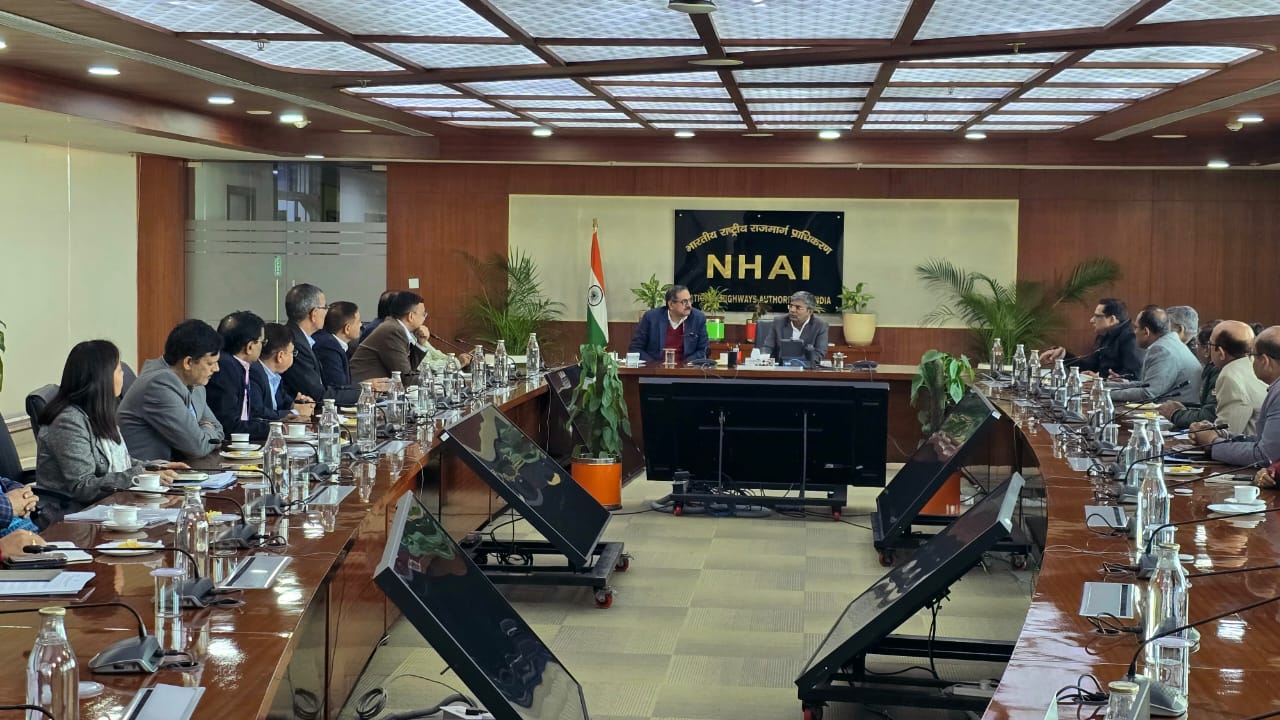
NEW DELHI : In a significant step towards further strengthening quality assurance and quality control mechanism in National Highway development, NHAI has signed a Memorandum of Understanding (MoU) with the National Test House (NTH), premier institution dedicated to quality assurance and testing under the Ministry of Consumer Affairs, Government of India. The MoU was signed by Shri Vipensh Sharma, Member (Projects), NHAI and Dr. Alok Kumar Srivastava, Director General, NTH in the presence of Shri Santosh Kumar Yadav, Chairman, NHAI and Shri Bharat Khera, Additional Secretary, Ministry of Consumer Affairs, Government of India along with senior officers from NHAI and NTH at the NHAI Headquarters in New Delhi.

The MoU aims to reinforce quality assurance and quality control mechanisms in National Highway projects through independent and third-party testing of construction materials, components, and systems, thereby ensuring adherence to prescribed standards and specifications.

As a part of this MoU, NTH will facilitate testing and certification of materials and products used in National Highway projects in accordance with specifications issued by the Ministry of Road Transport and Highways (MoRTH), Bureau of Indian Standards (BIS) codes, and applicable international standards. This will help to ensure uniformity, standardization and regulatory compliance across projects.

The NTH will also provide technical support to NHAI Headquarters, Regional Offices and Project Implementation Units by enabling expert testing, evaluation and technical opinions in complex and critical cases during project execution.

In addition, the partnership will support NHAI’s ongoing initiatives aimed at enhancing road safety and sustainability. Special emphasis will be placed on ensuring performance, reliability, and energy efficiency of safety-critical infrastructure components, including the roadway lighting systems.

The MoU further envisages to promote institutional collaboration through capacity building and knowledge sharing by hosting training programs for NHAI officers, concerned stakeholders and dissemination of best practices in material testing, quality assurance and infrastructure management.

By associating with a nationally recognized and technically competent testing institution, the MoU will strengthen NHAI’s quality assurance framework and enhance transparency & accountability in the execution of National Highway projects. The collaboration underscores NHAI’s commitment to adhering to the highest standards of quality, while delivering reliable and world-class National Highway infrastructure across the country.

From ‘Annadata’ to ‘Urjadata’- Farmers will power India’s future with ethanol and green energy, : Nitin Gadkari

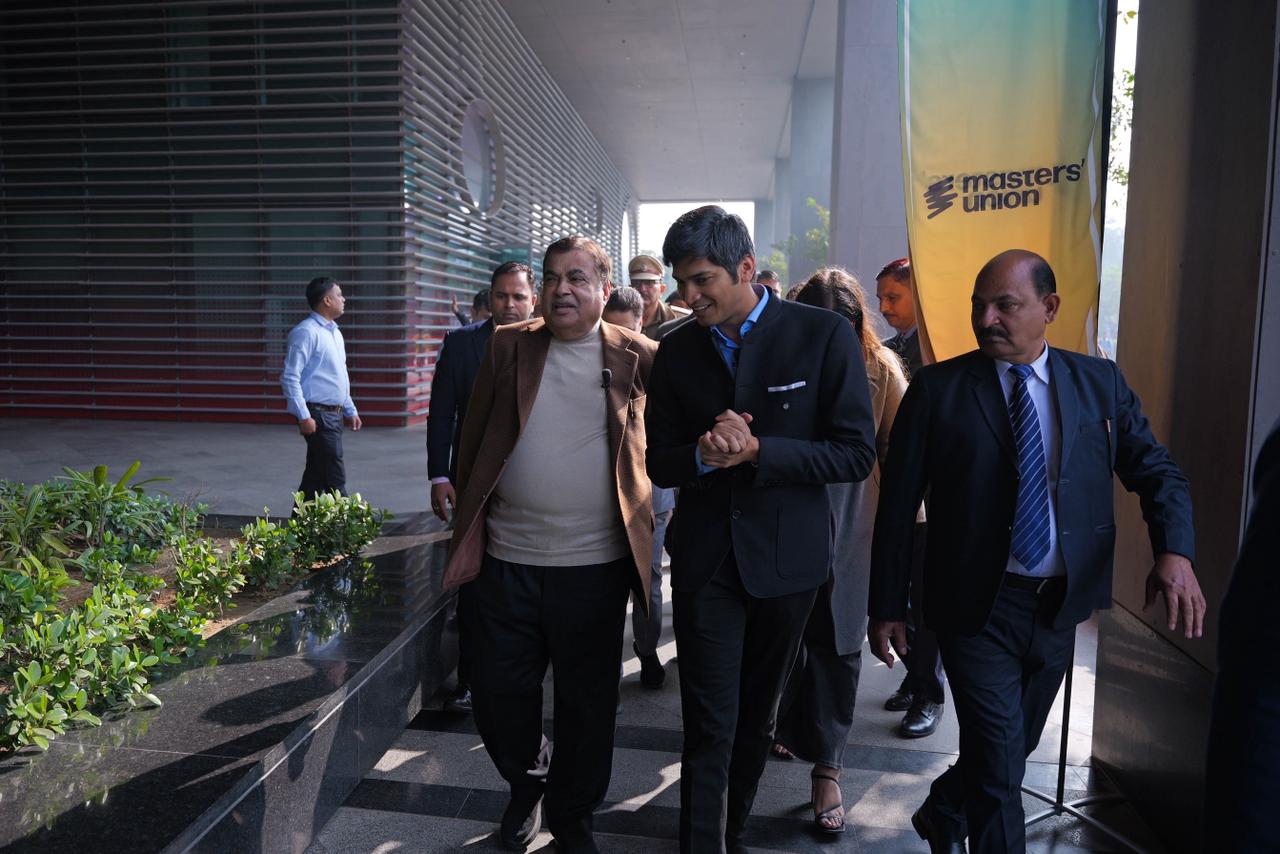
NEW DELHI : The Hon’ble Union Minister for Road Transport and Highways, Shri Nitin Gadkari, outlined a radical transformation for India’s agricultural sector, stating that Indian farmers will soon transition from being solely ‘Annadata’ (food givers) to ‘Urjadata’ (energy givers), during a recent episode of Series C, a podcast by Masters’ Union. The podcast is hosted by Pratham Mittal, Founder of Masters’ Union and Tetr College of Business, and a judge on Shark Tank India.

Highlighting the potential of the ‘Waste to Wealth’ economy, Shri Nitin Gadkari said, “Our farmer will now become an energy giver (Urjadata). He will make bitumen, bio-bitumen, ethanol, Bio-CNG, and electricity.” He emphasized that this shift is essential to making India energy-independent while revitalizing the rural economy.

The Hon’ble Minister cited specific examples of how agricultural waste is being converted into high-value energy resources. He mentioned the facility in Panipat, which is utilizing rice straw (parali) to produce 1 lakh litres of ethanol and 150 tons of bio-bitumen daily, along with 78,000 tons of sustainable aviation fuel annually.

“No material is waste and no person is waste. It depends upon appropriate technology and appropriate vision of leadership to convert waste into wealth,” he stated.

Shri Nitin Gadkari also detailed a vision for decentralized solar power in agriculture. He spoke about a new initiative where farmers can install solar panels in their fields to power EV charging stations. “He will sell electricity cheaper than the market rate and still the farmer will get money,” the Minister explained.

Linking this agricultural shift to the national economy, the Hon’ble Union Minister reiterated that India currently incurs a massive fuel import bill of Rs. 22 lakh crore annually. He argued that by transitioning to alternative biofuels, this capital could be redirected to the rural, agricultural, and tribal sectors, helping create “smart villages” rather than just smart cities.

The full episode of Series C is available on Masters’ Union’s official digital platforms. Series C is Masters’ Union’s podcast series featuring conversations with leaders across public life and industry, hosted by Pratham Mittal, where students engage speakers on real-world leadership, decision-making, and the trade-offs that shape outcomes. Other eminent personalities who appeared on this podcast are Ronnie Screwvala, co-founder Upgrad, Kiren Rijiju, Union Minister of Parliamentary Affairs of India, Shiv Shivakumar, former Chairman and CEO of PepsiCo, etc.

Disclaimer: The media has full permission to use and reference content from the podcast conversation with Hon’ble Union Minister Shri Nitin Gadkari. We kindly request that all references must credit ‘Series C, a podcast hosted by Pratham Mittal, Founder, Masters’ Union, one of India’s leading business and technology schools’. We request for the attribution be maintained in all instances, including by publications that further reference or source the content through you.

About Masters’ Union:

Masters’ Union is a premium tech & business school based in the corporate district of Gurugram. It was founded in 2020 with the philosophy of hands-on learning where students learn by doing. The leadership behind Masters’ Union consists of graduates from Stanford, Wharton, and IITs and IIMs. Unlike traditional colleges, the faculty at Masters’ Union comprises MDs, CXOs and AI Experts from companies such as Amazon, Apple, IBM, McKinsey, PwC, and KPMG. Additionally, the Institute also brings in faculty from the world’s top-ranked universities such as Oxford & Harvard.

A lot to cheer for the Indian Economy in 2025, but rupee, jobs and exports remain a concern

NEW DELHI : Indian Economy, 2025 was all about fighting many macroeconomic baddies. While key indicators like exports and currency depreciation had the country in a chokehold, a robust growth rate of 8% in the first half of the fiscal was like a gift from a higher power.

We survived external and domestic setbacks such as US tariffs that threw markets and trade into turmoil, uneven private investment, unemployment, dips in manufacturing and mining activity, weak domestic demand, and above all, a fragmenting global economy reshaped by wars, and changing supply-chain dynamics.

On balance, the Indian economy coursed through the currents with a serenity that would have done a wise man proud.

Growth

India remains the fastest-growing Asian economy, with the IMF raising its forecast to 6.7%-6.9% for FY26 and 6.5%-6.9% in FY27. The recent personal income tax reductions, an accommodative monetary policy, ongoing GST reforms, and a possible trade deal with the US are expected to lift both hearts and hopes in the coming quarters.

While the headline numbers appear wholesome, growth is not broad-based as it should be. Private consumption and investments need a turnaround and economists warn that growth could slow in the second half owing to a high base effect, the impact of US tariffs and softening global demand.

Sectorally too, while the agricultural sector is holding promise, industrial output needs to be better. Manufacturing and mining activity particularly must gain pace, which in turn can create jobs and attract investments.

As the IMF noted, private investments remain uneven and sluggish, while growth is being fuelled by government investment, which has surged 40% so far this fiscal. In fact, the Indian economy’s endless wait for the private investment cycle to kickstart is much like Titanic’s enduring romance against the odds.

Both the IMF and RBI insist that manufacturing, construction and public capital expenditure act as key growth drivers, while government infrastructure spending, and investments in sectors such as electronics, automobiles and renewables can rebalance from consumption-led growth to investment-led expansion.

But private capex is stuck at 12% of GDP for over a decade. Of the total investments, private capex’s share fell to 34.4% in FY24, the lowest since FY12. Government data also shows that new private capex investment intentions for FY26 stood at Rs 4.89 lakh crore, down 26% over the previous year.

Likewise, as the RBI survey shows, capacity utilisation in the manufacturing sector is struggling to break past 75%. In the 53 quarters since the start of 2012-13, capacity utilisation exceeded 75% on just 10 occasions.

What we actually need is all-round performance of key components including agriculture, industry and services on the supply-side and private consumption, investments, public expenditure and exports on the expenditure side. Put another way, it’s like the Infinity Stones in Avengers films. Only when all the Stones are fully powered does the user get complete control to rule the universe.

Rupee’s descent

The Indian currency is behaving as though it’s mounted on a Ferris wheel that’s spinning uncontrollably.

It started the year at 85.64 and took just 15 trading sessions to cross 91, owing to trade tensions, and persistent capital outflows. As if falling to fresh historic lows, and emerging as Asia’s worst-performing currency isn’t enough, the domestic unit is expected to touch 92 in next three months.

Worse, the rupee’s weakness is not limited to the US dollar alone. It has slipped against other major currencies as well. The Nominal Effective Exchange Rate (NEER), or the weighted average of the rupee’s exchange rate against 40 key trading partners, fell about 8% as of October. Likewise, the Real Effective Exchange Rate (REER), which adjusts NEER to inflation, too fell nearly 9.9%, indicating that the rupee’s depreciation is not just a nominal adjustment but an erosion of purchasing power.

The key reason for the fall in the rupee is not India’s current account deficit (CAD), which is behaving rather obediently. Until there’s a reversal of foreign capital outflows, the rupee may continue to plumb lower depths.

That said, the current decline cannot be compared with the 2013 episode, when the domestic currency survived one of the toughest phases, according to Kotak Securities. As investors rushed out of emerging markets, India was hit the hardest because our economy was already weak and placed in the Fragile Five, inflation was high, CAD stood at 4.8% of GDP and India was heavily dependent on foreign flows to finance the deficit.

The rupee lost almost 20% of its value, import costs surged, bond yields spiked, and markets turned nervous. Real rates were low, and consumption-led growth had led to a high trade deficit. When the dollar liquidity tap was shut during the taper tantrum, the impact was severe.

According to Kotak, the situation is different this time. Real rates are competitive, growth is robust, inflation is under control, reserves are strong, and services exports cushion the impact on the economy. And as the IMF noted, India’s currency system is crawl-like, where the rupee is allowed to move in small, gradual steps, without sharp shocks.

The RBI’s pragmatic interventions are akin to screw-tightening, and not to defend a particular level. Often, countries face trouble when they run out of dollars. Given India has sufficient dollar cover, the rupee, even at 90, is seen as adjusting rather than collapsing.

India emerges as key solar supplier to US, exporting almost 97% of solar modules in FY23-25: PL Capital

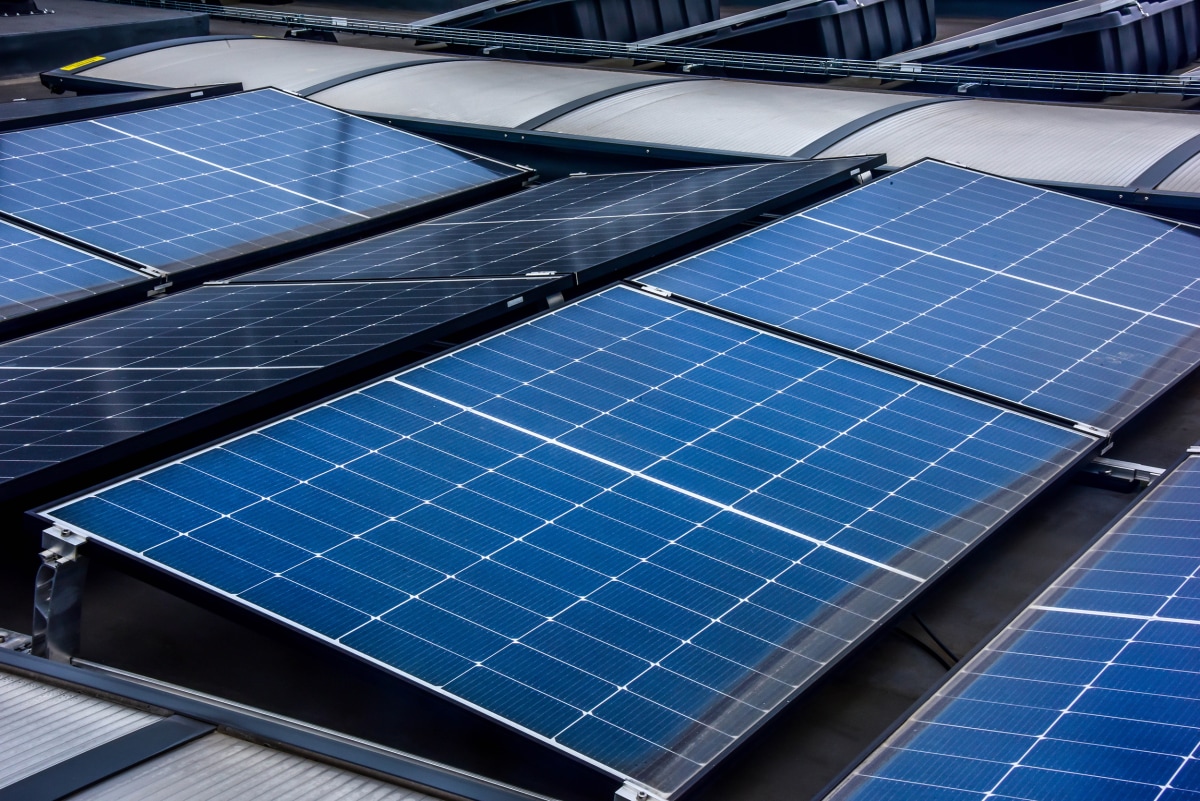
NEW DELHI: Solar power tariffs continue to decline as technology advances and mass adoption increases across the globe. According to a report by PL Capital, India’s solar industry is finding a major customer in the United States. The reason can be attributed to the U.S. restricting imports from China-linked supply chains. As a result, the U.S. became the main buyer, taking about 97 per cent of India’s solar module exports between 2023 and 2025.

The report shows that India’s solar module exports rose nearly nine times in 2023 and doubled again in 2024. It notes that this shift positions India as a “credible alternative supplier in the global solar value chain.”

Cost is a major factor in this trade relationship. Indian solar modules are 19 per cent to 21 per cent cheaper than those made in the U.S., which helps them stay attractive to buyers. However, India faces competition from Southeast Asian countries like Vietnam and Malaysia. While India’s share of U.S. solar imports grew from 3 per cent in 2022 to 11 per cent in 2024, Vietnam still leads with a 36 per cent share. The U.S. solar sector itself had a “milestone year” in 2024 by adding 50 GW of new capacity, fueled by local government incentives.

Despite the recent success, Indian exporters face new challenges. The U.S. government is investigating claims of “alleged dumping margins of 123 per cent for India.” Furthermore, a new 50 per cent tariff on Indian imports is scheduled for August 2025.

This includes a penalty linked to India’s continued oil imports from Russia. These new taxes and investigations represent a “concern for Indian exports” as the U.S. tries to build its own manufacturing base.

To meet both domestic and global demand, India is scaling up its own production. India’s total power generation capacity grew from 356 GW in 2019 to 475 GW in 2025. This growth is mostly due to new renewable energy projects. Experts expect renewable installations to reach 430 GW by 2030, with solar power making up a large portion of this total.

The country’s module manufacturing capacity is estimated to reach 180 GW by 2030. This growth is supported by various government policies aimed at making India a leader in renewable energy.

Source: ANI

The Freight Rate Management Crisis

OSLO: Freight procurement teams have always had a tolerance for chaos.

Multiple suppliers. Conflicting formats. Surcharges that evolve mid-quarter. Urgent “can you check this lane?” emails that derail an entire afternoon. And somewhere inside all of it, a spreadsheet that everyone hopes is “the latest version” even though it probably isn’t.

For years, teams made it work. Not because the system was good, but because the market was predictable enough to absorb the inefficiency.

That world is gone.

Market volatility has forced a reality check across the industry. Freight rate management can still be done manually, but the cost of doing it that way increases every quarter. What once felt manageable in spreadsheets is now slow, risky, and difficult to keep aligned across global teams.

The shippers moving ahead are the ones who have accepted this shift. They are stepping away from improvised Excel files and toward structured processes that bring consistency to how rates are maintained, shared, and used in decisions. Rate management systems have existed for years, yet many of the traditional options are expensive, overloaded with features, and difficult for teams to adopt.

What is changing is the accessibility of a simpler path. Modern platforms offer clean, standardised rate management without the heavy lift of legacy RMS tools. Companies are not moving in this direction because it is trendy. They are moving because the pace of the market now makes fragmented, manual work too inefficient to support the decisions they need to make.

The hidden cost of non-standardized rate management
Talk to any shipper privately and you’ll hear the same story.

Rate management consumes far too much time and delivers far too little clarity.

• Suppliers send updates in incompatible or multiple different formats
• Critical surcharge changes hide deep inside email threads
• Teams spend more time reconciling files than using them
• One wrong press of a key and you can break your formula
• Finance catches an invoice discrepancy too late
• Sales quotes from an outdated file and loses margin
• Leadership asks for an update and the answer is “give me a minute” which actually means “give me an hour”

The work has become harder, not because teams suddenly lack skill, but because freight has become more fragmented, faster moving, and far less forgiving.

Today’s rate management environment has three defining characteristics:

• Too much complexity to track manually
• Even mid-sized shippers can have hundreds of lanes with unique rule sets, validity windows and components.
• Too much volatility
• Rates move weekly. Surcharges shift. Market conditions flip with no warning.
• Too many stakeholders relying on accuracy
• Procurement, logistics, finance, sales, audit, planning.

Everyone touches freight rates now.
• Excel was not built for that.

Why leading shippers are standardizing

This shift didn’t start with a love of new tools.

It started with frustration.

Teams hit a breaking point. They could no longer absorb time loss, version confusion or invoice disputes. They could no longer defend decisions using data they didn’t fully trust. They could no longer keep explaining why internal stakeholders were getting different answers to the same question depending on which spreadsheet they had opened.

So the innovators at organizations began to systemize what had historically been informal and ad hoc.

And that change is reshaping procurement in three big ways.

Rate data is becoming a living asset, not a static file
The old model treated rate data like a record to maintain.

The new model treats it as a strategic input.
Shippers want to know:
• How a contract compares to the market
• Where a lane is trending
• Whether surcharges are aligned
• How a supplier is performing
• What an adjustment would mean for cost exposure
• What Finance should expect next quarter

This requires clean, structured data that doesn’t collapse under pressure.

Standardization brings consistency across teams and regions
When data is standardized, several things happen immediately. Regional teams stop interpreting rate structures differently. Finance gains clarity for audits. Procurement gains leverage for negotiations.Logistics gains visibility into true landed cost. Leadership gains a reliable view of cost exposure. Standardization removes internal noise. And internal noise, more than anything, drags procurement backwards.

The tender cycle becomes faster and more objective
Long tender cycles were always a problem.

Volatility made them a liability.

Procurement teams that standardize rate management can:
• Compare bids against consistent structures
• React to market timing without starting from zero
• Run multiple rounds efficiently
• Cut down the administrative overhead that used to consume entire weeks
Tenders stop being a marathon of file cleaning and become what they should be.
A strategic process supported by clear data.

This shift isn’t theoretical. It’s happening now.

We are watching a quiet but powerful industry reset.

Large shippers. Small shippers. Forwarders.

Teams that once lived inside labyrinthine Excel structures are stepping back and asking a simple question:
What if we stopped reinventing rate management every quarter?

And the moment they standardize, something interesting happens.

The chaos disappears. The debates stop. The internal pressure drops. The data becomes usable. And teams get time back that they haven’t had in years.

Standardized rate management is becoming the new operating model
The freight market will continue to shift. Capacity will tighten and loosen. Surcharges will evolve. Carrier networks will change. Geopolitics will redraw trade lanes again and again. Black swan events will happen when you least expect them.

Teams that standardize their rate management now will weather these shifts with clarity instead of confusion.

With alignment instead of argument.
With confidence instead of uncertainty.

The companies that win the next phase of freight procurement will not be the ones with the most spreadsheets. They will be the ones with the most structure.

Upload Once. Update Everywhere.
Explore how shippers are removing manual work, eliminating version chaos and building consistent, auditable, fast-moving rate workflows with Integrated Rate Management by Xeneta.
Source: Xeneta

PM lauds INSV Kaundinya, built using the ancient Indian stitched-ship technique, embarking on her maiden voyage from Porbandar to Muscat, Oman

NEW DELHI : Prime Minister, Shri Narendra Modi has congratulated the designers, artisans, shipbuilders and the Indian Navy for their dedicated efforts in bringing INSV Kaundinya to life as it embarks on her maiden voyage from Porbandar to Muscat, Oman. Shri Modi stated that INSV Kaundinya is built using the ancient Indian stitched-ship technique which highlights India’s rich maritime traditions. “My best wishes to the crew for a safe and memorable journey, as they retrace our historic links with the Gulf region and beyond”, Shri Modi said.

PM Modi tweeted,” Wonderful to see that INSV Kaundinya is embarking on her maiden voyage from Porbandar to Muscat, Oman. Built using the ancient Indian stitched-ship technique, this ship highlights India’s rich maritime traditions. I congratulate the designers, artisans, shipbuilders and the Indian Navy for their dedicated efforts in bringing this unique vessel to life. My best wishes to the crew for a safe and memorable journey, as they retrace our historic links with the Gulf region and beyond.”

Union Minister of Commerce Shri Piyush Goyal said, ” A proud moment for Bharat’s maritime legacy as INSV Kaundinya sets sail on her maiden voyage from Porbandar, Gujarat to Muscat, Oman.
Crafted using the ancient stitched-ship technique, she stands as a testament to India’s deep understanding of sea voyages, navigation and maritime architecture. As India and the Gulf strengthen trade ties, this initiative revives historic links celebrating India’s role as a seafaring trading civilisation.
Truly commendable effort by the designers, artisans, shipbuilders and the Indian Navy in bringing this vision to life. Wishing the crew smooth seas as they retrace the pathways of our timeless maritime commerce
.”

PM Modi to meet economists ahead of 2026-27 Budget

NEW DELHI : Prime Minister Shri Narendra Modi will meet eminent economists and sectoral experts on Tuesday to seek their views on the upcoming Budget, a senior government official said.

Finance Minister Smt. Nirmala Sitharaman is likely to present the Union Budget for 2026-27 on February 1, 2025. She will present the Budget against a backdrop of geopolitical uncertainties and a steep 50% U.S. tariff on shipments from India.

Besides economists and sectoral experts, Niti Aayog Vice Chairman Suman Bery, NITI Aayog CEO B.V.R. Subrahmanyam and other members of the Aayog will also attend the meeting.

Piyush Goyal announces zero-duty on 100 per cent Australian tariff lines from January 1

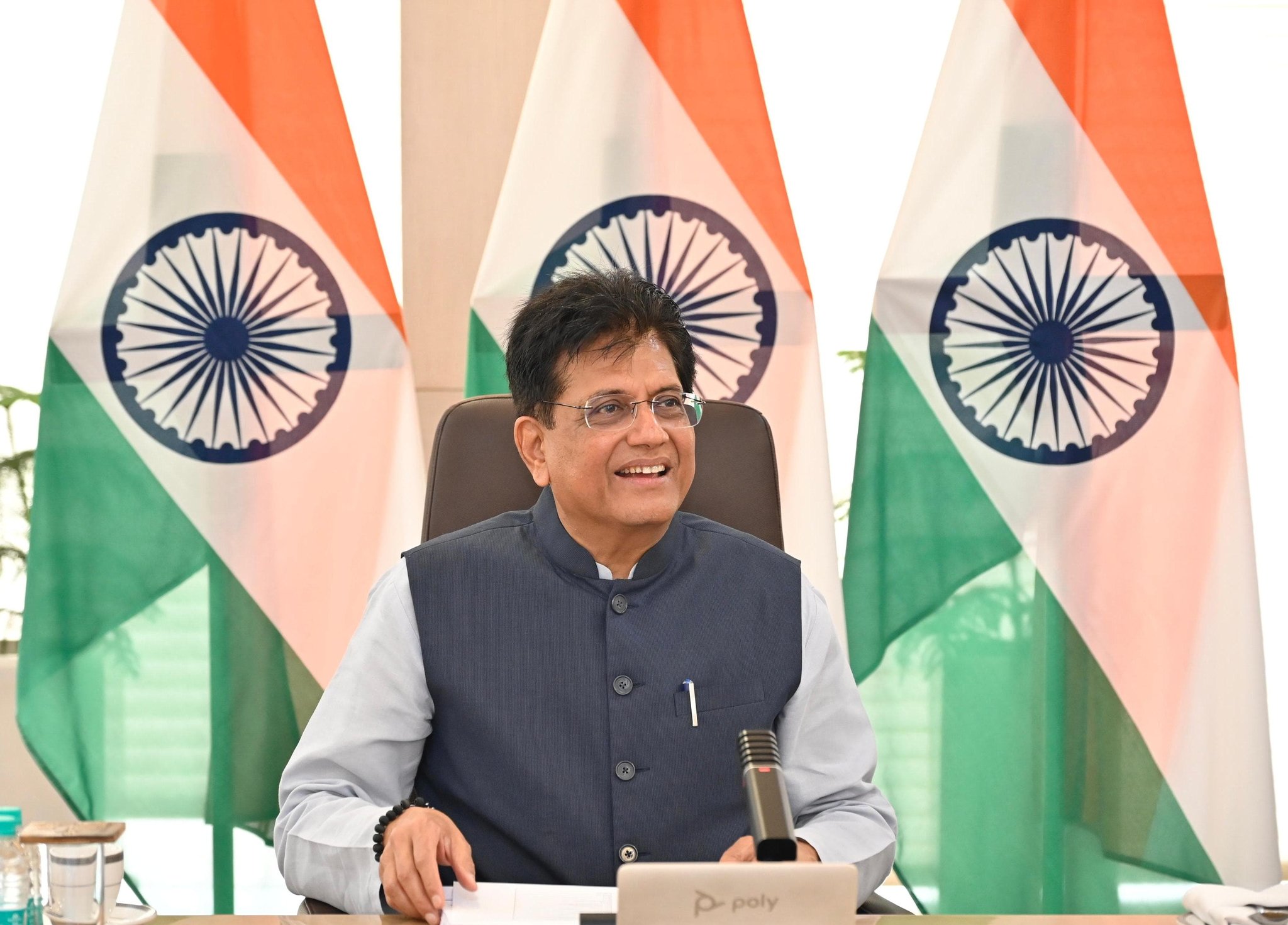
NEW DELHI : Union Commerce and Industry Minister Shri Piyush Goyal said that 100 per cent Australian tariff lines will be zero-duty for Indian exports from 1st of January next year. He said, this will unlock fresh opportunities for labour-intensive sectors.

On the third anniversary of the India-Australia Economic Cooperation and Trade Agreement(ECTA), Mr Goyal said that the agreement has delivered sustained export growth, deeper market access, and stronger supply-chain resilience over the past three years.

In a social media post, the Minister highlighted that the agreement is benefiting Indian exporters, MSMEs, farmers, and workers. Mr Goyal said that the country’s exports to Australia grew by eight per cent in 2024-25, improving the country’s trade balance.

The Minister said that strong gains were witnessed across manufacturing, chemicals, textiles, plastics, pharmaceuticals, petroleum products, and the gems and jewellery sector. He emphasised that Gems and Jewellery exports rose 16 per cent between April and November this year. Mr Goyal said that agri-exports also recorded broad-based growth, with sharp increases in fruits and vegetables, marine products, spices, and exceptional growth in coffee.

Kandla International Container Terminal records cumulative 78,06,220 MTs of annual cargo handling

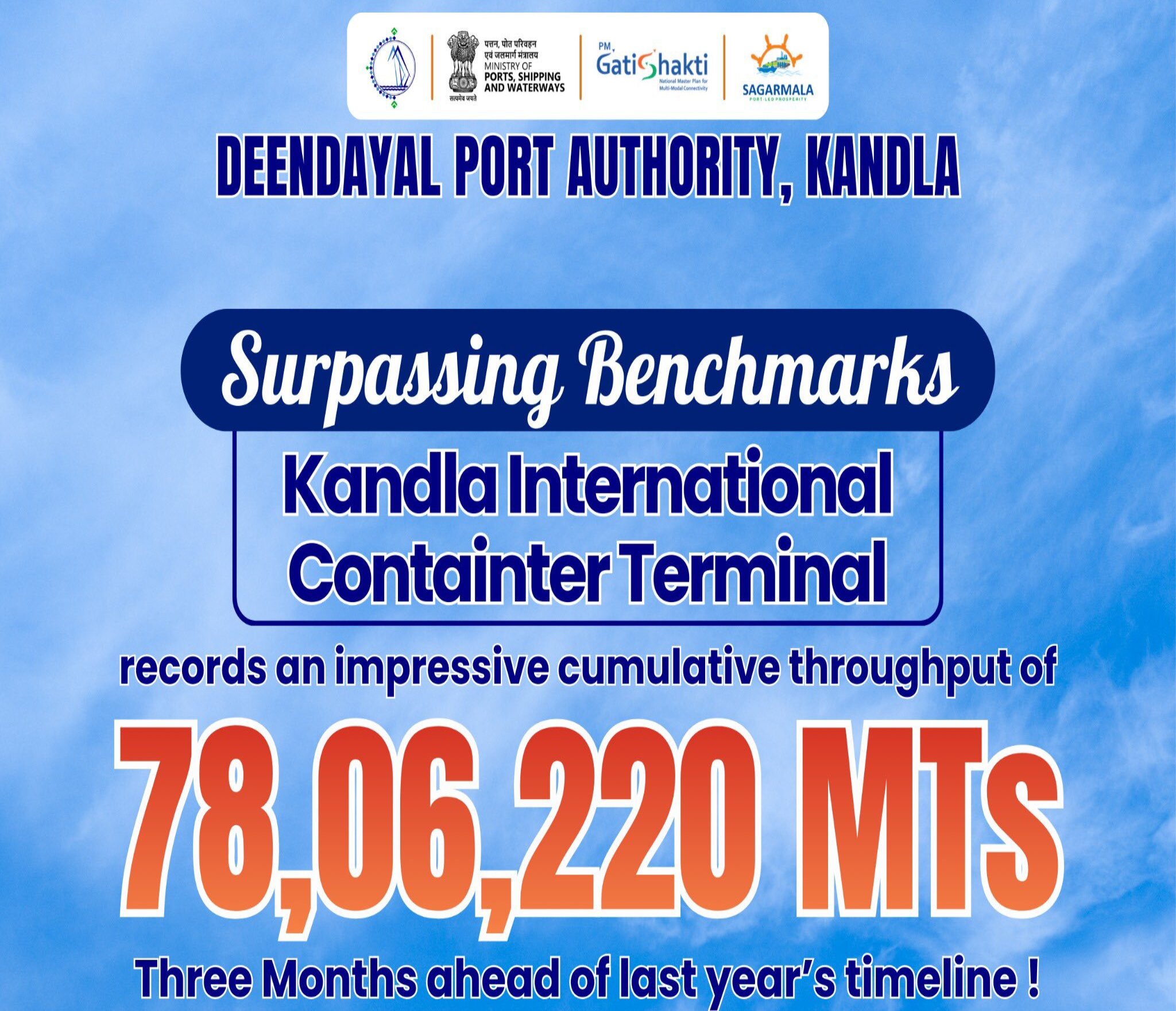
GANDHIDHAM: The Kandla International Container Terminal (KICT) recorded a cumulative 78,06,220 MTs of annual cargo handling, an official statement by Deendayal Port Authority, Kandla on Monday,
“Kandla International Container Terminal (KICT) has surpassed last year’s annual cargo handling of 77,58,498 MTs, recording a cumulative 78,06,220 MTs, achieved an impressive 3 months & 9 days early,” the statement said.

“A testament to operational excellence and relentless momentum,” it added.

Recently, the Ministry of Ports, Shipping & Waterways (MoPSW) notified the operational guidelines for two major shipbuilding initiatives, the Shipbuilding Financial Assistance Scheme (SBFAS) and the Shipbuilding Development Scheme (SbDS), aimed at strengthening India’s domestic shipbuilding capacity and improving global competitiveness.

The approved guidelines lay down a transparent and accountable framework for implementation.

In a separate post, Deendayal Port Authority, Kandla said, “With a combined outlay of Rs 44,700 crore, these landmark initiatives will strengthen India’s shipbuilding capacity, enhance global competitiveness, promote Make in India, and generate employment across the maritime value chain anchoring India’s growth in Atmanirbhar Bharat and the vision of Viksit Bharat.“

As per the government statement, under SBFAS, which has a total corpus of Rs 24,736 crore, the government will provide financial assistance ranging from 15% to 25% per vessel, depending on the vessel category.

The scheme introduces graded support for small normal, large normal and specialised vessels, with stage-wise disbursement linked to defined milestones and backed by security instruments. Incentives for series orders are also included.

The Shipbuilding Development Scheme (SbDS), with a budgetary outlay of Rs 19,989 crore, focuses on long-term capacity and capability creation. The scheme provides for the development of greenfield shipbuilding clusters, expansion and modernisation of existing brownfield shipyards, and the establishment of an India Ship Technology Centre under the Indian Maritime University to support research, design, innovation and skills development.

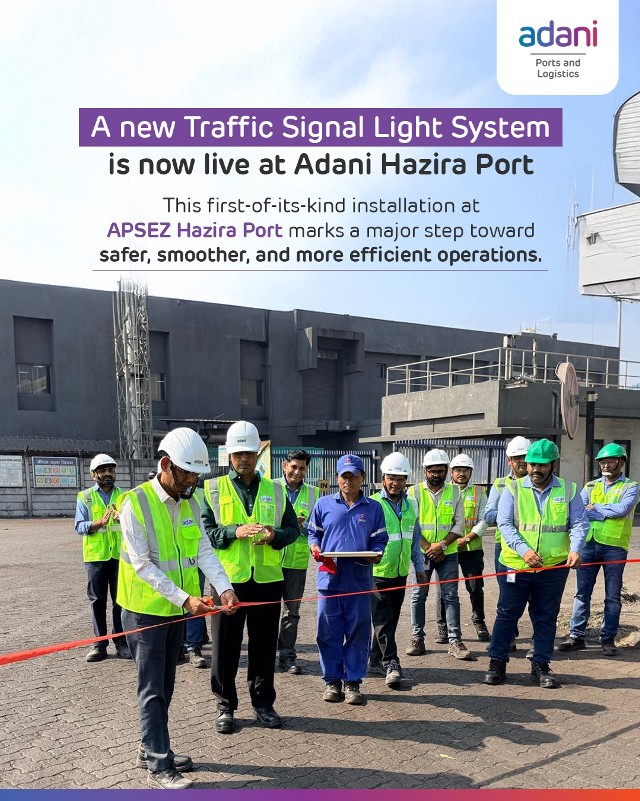
Adani Hazira Port commissions advanced Traffic Signal Light System to enhance Safety and Operational Efficiency

HAZIRA : Adani Hazira Port has successfully commissioned a new Traffic Signal Light System, marking a major milestone in its ongoing efforts to strengthen safety, streamline traffic movement, and improve overall operational efficiency within the port premises.

This first-of-its-kind installation at APSEZ Hazira Port introduces a structured and technology-driven approach to managing vehicular movement, particularly heavy commercial vehicles engaged in cargo handling operations. The system is designed to regulate traffic flow at key junctions inside the port, minimize congestion, and significantly reduce the risk of accidents.

The newly deployed traffic signal system enables:

Improved road safety by ensuring disciplined vehicle movement and reducing conflict points

Smoother cargo evacuation and gate operations, leading to reduced turnaround time

Better coordination between port users, terminal operators, and logistics partners

Enhanced visibility and compliance, especially during peak operational hours and low-visibility conditions

Aligned with Adani Ports and SEZ Limited’s commitment to adopting best-in-class infrastructure and digital solutions, this initiative reinforces the port’s focus on creating a safer working environment for drivers, employees, and stakeholders while supporting seamless cargo movement.

The Traffic Signal Light System forms part of a broader roadmap aimed at modernizing internal port logistics, improving ease of doing business, and supporting the growing cargo volumes handled at Hazira Port.

With this initiative, Adani Hazira Port continues to set new benchmarks in operational excellence, safety standards, and sustainable port management.