Home Blog Page 497

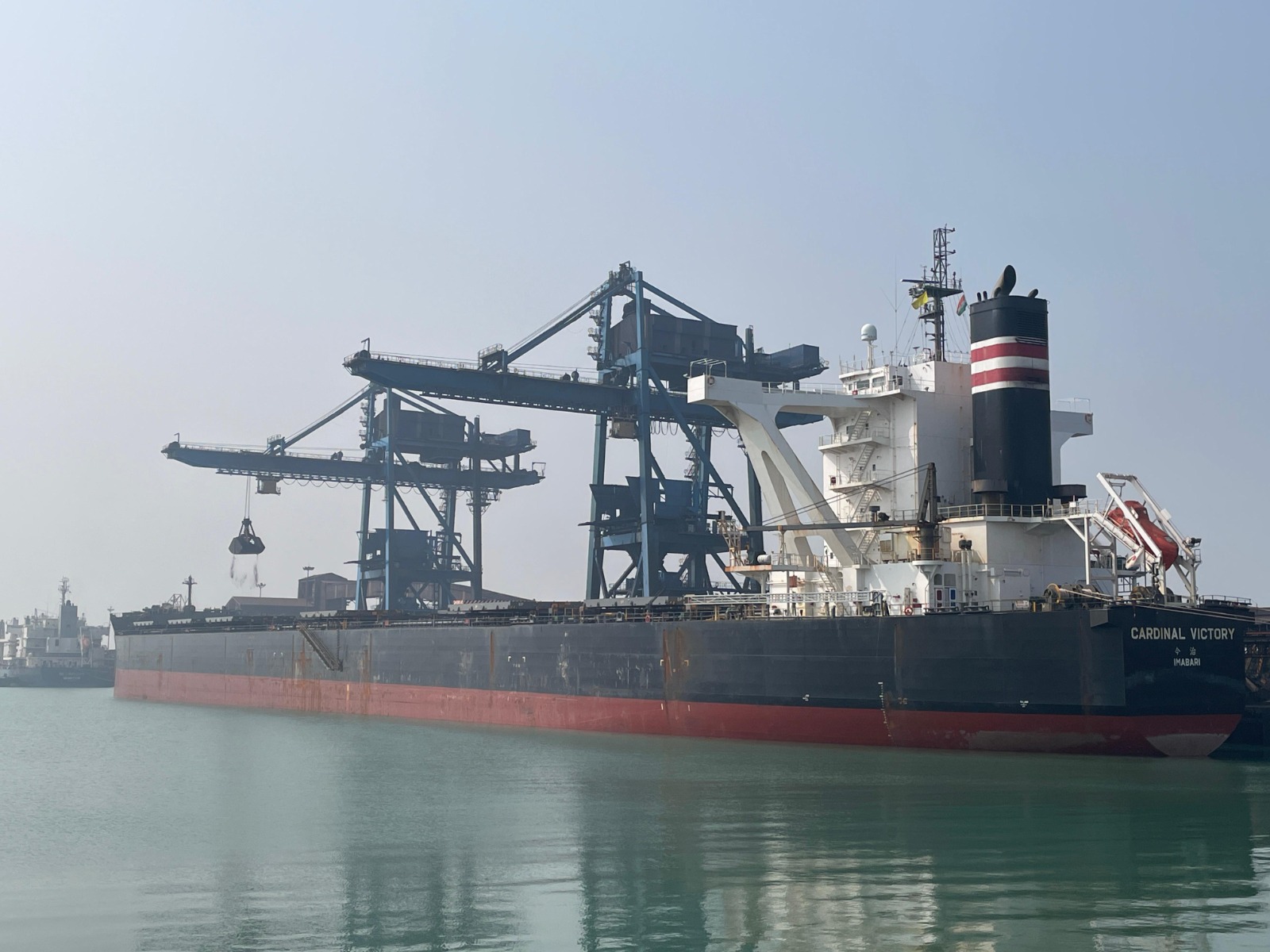
MV Cardinal Victory creates import milestone at Paradip Port’s KICT berth

PARADIP : Paradip Port Authority has achieved a significant operational milestone with the successful berthing and handling of MV Cardinal Victory at the Kalinga International Coal Terminal (KICT), marking a record-breaking import at the terminal.

The vessel discharged an unprecedented volume of imported cargo at the KICT berth, setting a new benchmark for single-vessel import handling at Paradip Port. This achievement underscores the growing capability of KICT to handle large-capacity vessels efficiently and reinforces Paradip Port’s position as a critical gateway for bulk cargo on India’s east coast.

The record operation was enabled by seamless coordination among Paradip Port Authority, KICT, marine services, stevedores, and allied agencies, ensuring safe berthing, swift cargo evacuation, and adherence to all operational and safety protocols. Advanced mechanised handling systems and robust hinterland connectivity further contributed to the smooth turnaround of the vessel.

Officials noted that this milestone reflects Paradip Port’s continued focus on capacity augmentation, process optimisation, and operational excellence to meet the rising demand for imports, particularly of energy and industrial raw materials. The successful handling of MV Cardinal Victory is expected to strengthen stakeholder confidence and support India’s growing trade and industrial requirements.

This achievement marks another step forward in Paradip Port’s journey toward building a resilient, efficient, and future-ready maritime logistics ecosystem.

Port reforms, increased shipbuilding activity drive credit surge to shipping sector

NEW DELHI : India’s shipping sector has seen a surge in bank credit, with data from the RBI reporting that outstanding credit to the sector stood at ₹9,959 crore as of October 2025, up 28 per cent year-on-year from the ₹7,782 crore in the same period last year.

The outstanding credit in the sector has risen nearly 2x compared to the ₹5,364 crore outstanding as of October 2020.

Speaking to businessline, analysts suggest that the growth of disbursements to the sector has seen an increase due to the steady volume growth at India’s major ports and the scaling up of capex-heavy indigenous shipbuilding capabilities.

Bhavik Vora, Partner and Transportation & Logistics Industry Leader, Grant Thornton Bharat, says that the creditworthiness has been supported by improvements in port capabilities.

“Sustained capex by existing ports and capacity addition through new integrated port-led logistics projects has materially strengthened the operating environment for shipping. Major ports have recorded year-on-year growth of around 7-8 per cent in cargo handled through April-November 2025, and core segments such as crude, containerised freight and bulk commodities have translated into more predictable revenues and cash flows, leading to improved credit assessment by lenders,” he said.

Consequently, the ports industry has seen a 30 per cent y-o-y jump in outstanding loans to ₹7,588 crore in October 2025 from ₹5,823 crore in the same month last year – the highest within the infrastructure industries.

Prashant Vashisht, Senior Vice President & Co-Group Head, ICRA Ltd, argues that the increased thrust in domestic shipbuilding has played a major role in the boost in credit.

“Major international shipbuilders are already operating at near-full capacity, with sizable order books extending over the next 3–5 years. This limits India’s ability to quickly procure new vessels from international shipping companies, making it imperative to scale up indigenous shipbuilding capabilities,” he said.

In fact, the government of India on Saturday notified the revamped shipbuilding financial assistance policy through a comprehensive package totalling nearly ₹44,700 crore, where it will provide financial assistance for new domestically made vessels and for the development of new shipbuilding clusters and shipyards.

Moreover, Vashisht added that the granting of infrastructure status to large commercial vessels of 10,000 gross tonnage (GT) or more under Indian ownership and flag, or vessels of 1,500 gross tonnage and above that are built in India, has increased access to more affordable and long-term financing.

Railway Board clears four new lines worth Rs 9K crore for Odisha

BHUBANESWAR : In a significant development, the Railway Board has approved four new railway lines in Odisha. The new projects totalling a distance of 312 km will be executed at a cost of around Rs 9,020.58 crore in public private partnership (PPP) mode.

The broad gauge lines include the 101-km Jajpur Keonjhar Road-Dhamra, 112.5-km Luburi-Tentuloi-Budhapank, 49-km Tikiri-Kutrumali and 49.58-km Balaram-Putagdia-Tentuloi under East Coast Railway (ECoR).

A part of Prime Minister Shri Narendra Modi’s Purvodaya vision, the line between Jajpur Keonjhar Road and Dhamra Port will connect important religious and tourist destinations in Jajpur, Bhadrak and Kendrapara districts. Estimated at Rs 2,987.13 crore, the project will have 10 stations between the originating and destination stations. The line will provide direct rail connectivity to Maa Biraja temple, one of the oldest religious Shakti Peethas at Jajpur Town, famous Shaivite shrine of Baba Akhandalamani at Aradi in Bhadrak and Bhitarkanika National Park in Kendrapara.

The remaining three are part of the dedicated freight corridors, which will be developed to facilitate faster evacuation of goods. While the proposed Balaram-Putagdia-Tentuloi line is part of the inner corridor and Luburi-Tentuloi-Budhapank forms the outer corridor of Talcher coal belt, Tikiri-Kutrumali line will facilitate transport of bauxite ore from Kutrumali and Sijumali mines in Kalahandi and Rayagada districts.

The government has decided to expedite both inner and outer rail corridors for faster transportation of coal. As per the proposed expansion plan of Mahanadi Coalfields Ltd, the coal despatch via railway is expected to touch 162.8 MT by 2029-30. While the inner corridor (phase-II) and outer corridor of Mahanadi Coal Railway Limited (MCRL) will be developed at an estimated cost of around Rs 1,404.36 crore and Rs 3,477.67 crore respectively, the Tikiri-Kutrumali line will be taken up at Rs 1,151.42 crore, all through joint ventures or special purpose vehicle (SPV).

“The ECoR has been advised to conduct necessary consultation with stakeholders or potential investors for design and financial structuring of the projects through PPP mode. The Board has also directed to scrutinise other proposed projects for which DPRs have been completed or are under preparation for implementation,” sources told TNIE.

The zonal railways have been instructed to constitute a PPP facilitating unit at SAG level, consisting of engineering, finance and traffic officers to plan and monitor PPP projects.

“The Jajpur-Keonjhar Road-Dhamra line will fulfil the longstanding demand of people in three districts as it will reduce the distance between Jajpur Road and Dhamra Port by 12 km and benefit 30 lakh people besides facilitating freight movement,” said lawyer Satyaprakash Behuria, who is a part of the outfit that has been spearheading an agitation for expeditious execution of the project.

India’s exports accelerate on strong FTA push and renewed India–US Trade ties

NEW DELHI : India’s external trade performance gathered strong momentum over the past year, with total exports climbing from US$ 64.05 billion in November 2024 to US$ 73.99 billion in November 2025—registering an impressive year-on-year growth of 15.52%. This sustained rise highlights India’s deepening engagement with global markets, driven by structural policy reforms, expanding manufacturing capabilities and stronger international trade linkages.

A major contributor to this export growth has been India’s active trade diplomacy. In recent years, the country has concluded several high-impact Free Trade Agreements (FTAs), while negotiations with additional strategic partners are progressing steadily. These initiatives are aimed at enhancing market access for Indian products and services, improving competitiveness, and reinforcing resilient global supply chains.

Further strengthening the trade outlook is renewed momentum in India–United States economic relations. Prime Minister Narendra Modi and US President Donald Trump recently held discussions focused on advancing bilateral economic cooperation, amid growing indications that both sides are nearing the conclusion of a long-pending trade agreement.

During their interaction, the two leaders reviewed the steady progress in India–US relations and exchanged perspectives on key regional and global issues. They reiterated their commitment to the India–US Comprehensive Global Strategic Partnership, with emphasis on expanding collaboration in trade, critical and emerging technologies, energy, defence and security.

Underscoring strong political backing for closer economic engagement, both leaders affirmed that India and the United States will continue to work together to promote global peace, stability and prosperity. With exports on a clear upward path and trade negotiations gaining traction, India’s global trade prospects appear increasingly promising as the country moves into 2026.

ECGC nudges export­ers towards safer mar­kets

NEW DELHI : State-run export credit agency ECGC Ltd has upgraded risk rank­ings of two dozen coun­tries, thereby sub­stan­tially redu­cing insur­ance costs for Indian export­ers in these geo­graph­ies, to pro­tect export­ers from the adverse impact of US tar­iffs and encour­age them to diver­sify in altern­ate mar­kets, two offi­cials said.

The coun­try risk rat­ings of 24 coun­tries were upgraded under short-term exports after a review, said the offi­cials, ask­ing not to be named. Often, shortterm exports involve the real­isa­tion of the order amount within one year. ECGC—erstwhile the Export Credit Guar­an­tee Cor­por­a­tion of India—sup­por­ted exports worth ₹8.55 lakh crore in 2024-25, over 16.3% annu­al­ised growth. Its net profit in FY25 was ₹2,077 crore, a 3.8% dip from ₹2,159 crore in FY24.

A com­merce min­istry’s year­ en­der con­firmed the devel­op­ment. “Amidst the global eco­nomic uncer­tainty and the likely trade dis­rup­tion caused by the US tar­iff hike, ECGC has under­taken stra­tegic review of coun­try rat­ings to lib­er­al­ize under­writ­ing and encour­age mar­ket diver­si­fic­a­tion,” it said. India’s trade diver­si­fic­a­tion strategy helped the coun­try to post about 2.62% annu­al­ised growth in mer­chand­ise

exports to $292 bil­lion in April-Novem­ber 2025 as export­ers braved 50% tar­iff in the US mar­ket.

“This would assist export­ers, par­tic­u­larly MSEs (micro and small enter­prises), in de-risk­ing their busi­ness and explor­ing new export des­tin­a­tions such as Latin Amer­ica, the Middle East, Africa, East Asia, and other emer­ging mar­kets, thereby redu­cing over-expos­ure to mar­kets affected by tar­iffs, pro­tec­tion­ist policies or restrict­ive mar­ket access,” it added.

The ECGC review has ana­lysed those coun­tries that are affected by the recent geo­pol­it­ical events, along with those hav­ing

high poten­tial for a mutu­ally bene­fi­cial trade rela­tion­ship with India, the offi­cials said. Coun­tries assessed include India’s stra­tegic part­ners as well as coun­tries with poten­tial for trade growth, they said.

The review upgraded Bhutan, Cameroon, Cape Verde, Congo, El Sal­vador, Erit­rea, Ghana, Hon­duras, Kenya, Liberia, Malay­sia, Nicaragua, Nigeria, Panama, Peru, South Africa, Sri Lanka, Sweden, Trin­idad and Tobago, Tur­key, Uganda, Uruguay, Venezuela and Zam­bia.

“In view of the increased uncer­tainty in the global trade land­scape, it is imper­at­ive for the Indian export sec­tor to explore and develop altern­at­ive mar­kets, includ­ing new mar­ket des­tin­a­tion coun­tries… Post the upgrad­a­tion in coun­try rat­ings, the premium rates applic­able for vari­ous ECGC policies will pro­por­tion­ally reduce, as the premium rates depend primar­ily on the coun­try rat­ing of the coun­try of des­tin­a­tion of goods,” one of the offi­cials said.

Higher risks involve higher insur­ance premi­ums. While A1 denotes a min­imal or “insig­ni­fic­ant” risk cat­egory, A2 is low risk, B1 (mod­er­ately low risk), B2 (mod­er­ate risk), C1 (mod­er­ately high risk), C2 (high risk) and D is very high risk.

Accord­ing to the recent review, Malay­sia, Sweden, and Uruguay have been upgraded from A2 to A1. Bhutan, Panama, Peru, South Africa, and Trin­idad and Tobago have been clas­si­fied from B1 to A2.

Upgrad­a­tion is two notches up in the case of Tur­key, from B2 to A2. Cape Verde, Hon­duras, Nicaragua, Nigeria and Uganda have been moved up from B2 to B1.

While Kenya and Liberia have been moved from C1 to the higher cat­egory of B2, El Sal­vador, Ghana, Sri Lanka and Venezuela moved up from C2 to C1. A two-notch jump from D to C1 is seen in two cases—Zam­bia and Erit­rea. Sim­il­arly, Cameroon also moved up from the very high-risk cat­egory (D) to C2.

Govt grants one-year exemption on quality norms for selected imported copper products

NEW DELHI : The government has exempted certain imported copper products from the mandatory quality control order for one year, according to a notification. The exemption is subject to an actual user basis.

The Department for Promotion of Industry and Internal Trade has received various request from industry association for issuance of No Objection Certificate for facilitating the import of specialized copper products for use in various sectors.

“In this regard, DPIIT in consultation with Bureau of Indian Standards has decided to exempt copper products for specific end-use… from the Copper Products (Quality Control) Order, 2024 dated April 26, 2024 for a period of one year,” it said.

The importer will have to inform the Bureau of Indian Standards (BIS) with all relevant details within seven days of clearance of such consignment through email. They also have to maintain a quarterly record in this regard.

“The importer shall submit a plan for indigenisation of goods or articles to the Central Government through email,” the DPIIT notification said, adding the exemption is granted only for the specific end use and only to the end users on Actual User condition for a period of one year from the date of publication of this Order (December 24)

The goods which are exempted include Oxygen Free Copper rods, bars, strips and sheets, Silver bearing Oxygen Free Copper, Oxygen Free Copper strips, and Copper Alloy Strips.

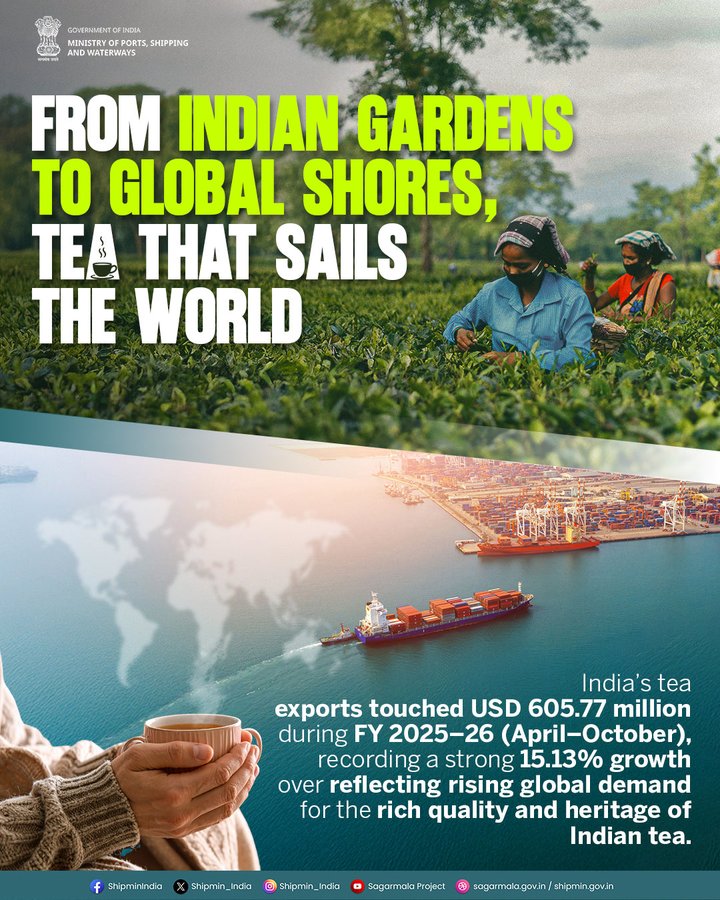
Indian Tea exports surge 15% in FY 2025–26, brewing strong growth in global markets

NEW DELHI : India’s iconic tea industry continues to strengthen its global footprint, with exports recording impressive growth during the current financial year. During FY 2025–26 (April–October), India’s tea exports touched USD 605.77 million, registering a robust 15.13% increase compared to the corresponding period last year.

This strong performance underscores the rising global demand for Indian tea’s superior quality, distinctive aroma and rich heritage, spanning premium orthodox teas, CTC varieties and specialty teas from renowned regions such as Assam, Darjeeling, Nilgiris and Kangra.

Industry stakeholders attribute this growth to a combination of consistent quality standards, improved value realization in key overseas markets, and proactive market diversification. Indian tea continues to find increasing acceptance across traditional destinations as well as emerging markets in West Asia, Europe, the CIS region and North America.

A critical enabler of this export momentum has been India’s efficient port infrastructure and maritime logistics ecosystem. Seamless connectivity between tea plantations, processing centers, container freight stations and major ports has ensured timely movement of consignments to international destinations. Enhanced shipping services, improved turnaround times and digital trade facilitation have further strengthened supply chain reliability.

The growth in tea exports is providing a significant boost to exporters, growers and allied sectors, supporting rural livelihoods and reinforcing India’s position as one of the world’s leading tea producers and exporters. The sector’s positive trajectory also aligns with the nation’s broader objective of expanding agricultural exports and strengthening its presence in global value chains.

With sustained focus on quality, branding and logistics efficiency, India’s tea industry is well placed to maintain this upward momentum, continuing to “brew” growth for the nation while delighting tea lovers across the world.

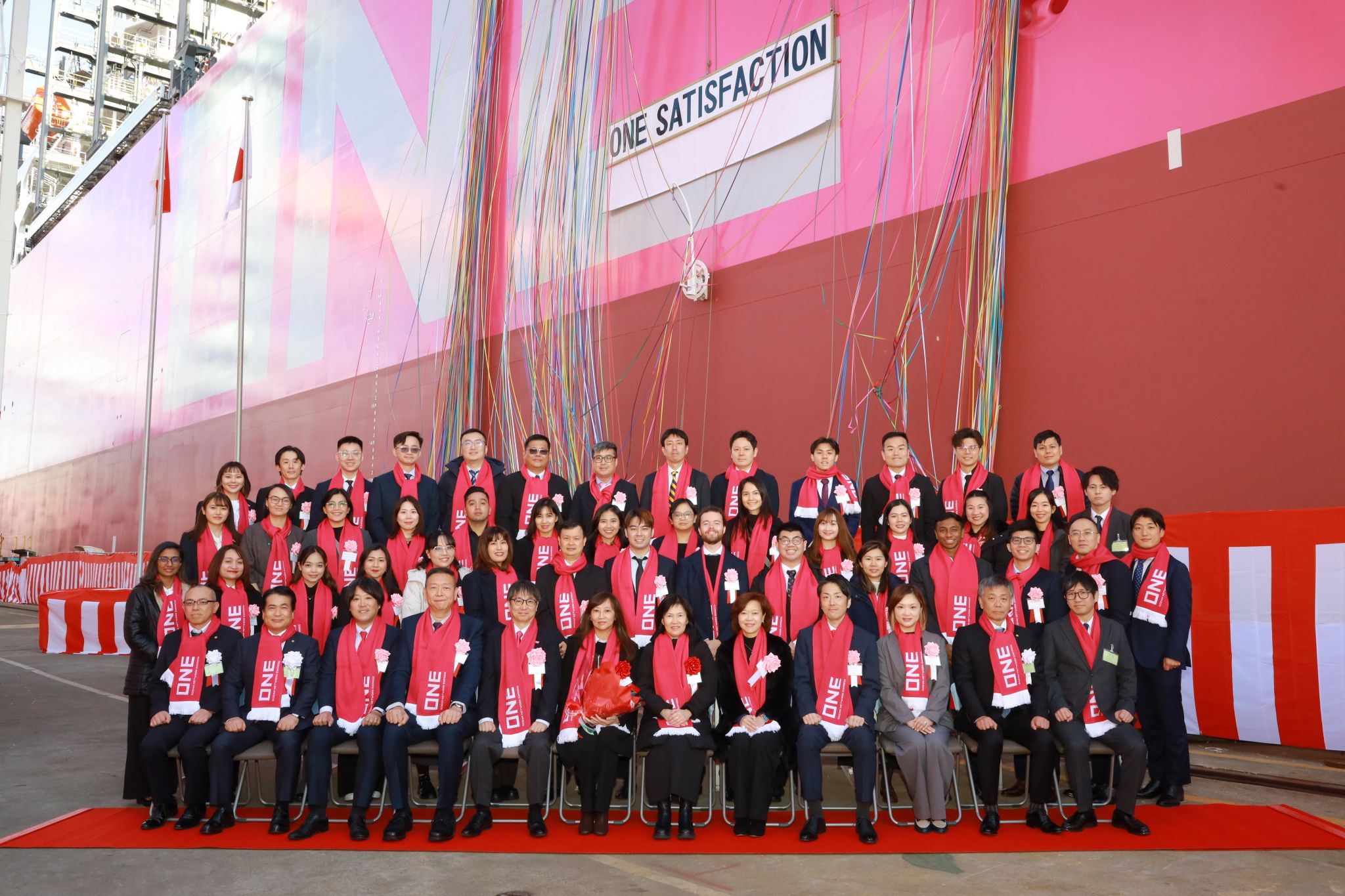
ONE held the naming ceremony of ‘ONE Satisfaction’, the 6th vessel in “S” series, in Japan

TOKYO : Ocean Network Express held the naming ceremony of ONE Satisfaction, the 6th vessel in our “S” series, in Japan on 19 December 2025.

A 13,800 TEU container ship, she is designed with methanol and ammonia-ready capability and is scheduled to commence sea trials, with delivery expected in February 2026.

Her name reflects what matters most to ONE — Customer Satisfaction. At ONE, they remain committed to delivering reliable service quality and seamless customer experience, always striving to be the Number ONE Shipping Partner.

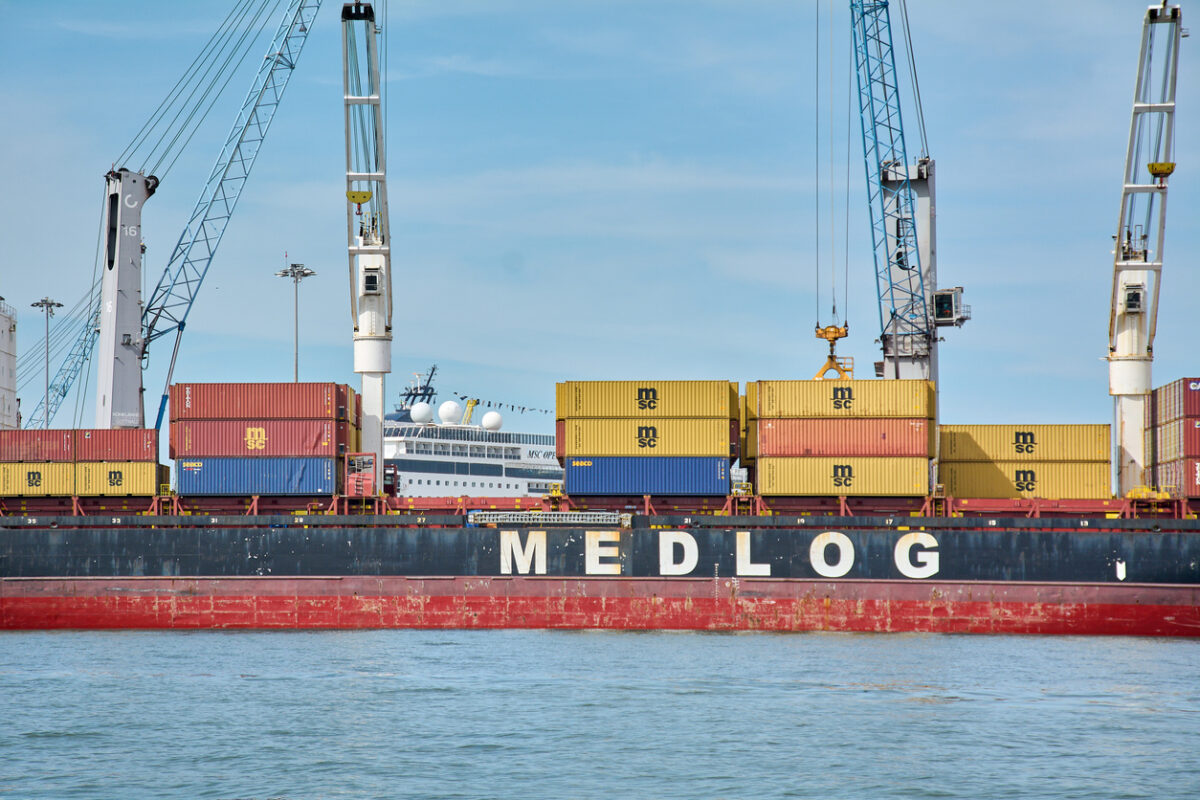
Medlog to take over Pangaon Inland Container Terminal, paving way for full-scale operations

GENEVA : After years of limited activity and financial losses, the Pangaon Inland Container Terminal (ICT) in Keraniganj is set to become fully operational, with Medlog, the logistics arm of Switzerland-based Mediterranean Shipping Company (MSC), scheduled to assume operations in the first week of January, according to the Chattogram Port Authority.

Built in 2013 by the Chattogram Port Authority at a cost of Taka 154 crore, the terminal spans 64 acres and has an annual handling capacity of around 200,000 containers. Despite its strategic location serving Dhaka and surrounding industrial zones, the facility has remained underutilised, largely due to a shortage of container vessels for inland waterways and complexities in operator management.

At present, around 94% of containers linked to Chattogram Port are transported between Dhaka and Chattogram by road, with rail accounting for 4%. Inland waterways, despite their cost advantages, handle only about 1% of container traffic.

Under the new arrangement, Medlog will operate the terminal for a 22-year period. The long-term concession, approved by the Ministry of Shipping on 22nd August, mirrors the model adopted for the Patenga Container Terminal and is intended to encourage large-scale investment in infrastructure and equipment. Officials noted that shorter contracts of 12 to 15 years had previously failed to attract sufficient investor interest.

Medlog has committed to investing approximately Taka 490 crore in the terminal. Planned upgrades include the installation of two mobile harbour cranes, modern cargo-handling equipment, the deployment of specialised vessels and barges, construction of a 10,000 sq metre container freight station, and the establishment of a dedicated cotton warehouse. The operator also plans to introduce full automation across handling systems to speed up import and export processes.

The government has already received Taka 18 crore as signing fees and will earn an annual fixed fee of Taka 1.01 crore, in addition to Taka 250 per container handled.

Port users have expressed cautious optimism over the development. Representatives from trade bodies said expectations would hinge on lower shipping costs and an increase in vessel frequency to ensure the terminal’s viability. Export-oriented industry leaders also noted that effective operations would depend on buyer confidence and reliable cargo movement.

The Chattogram Port Authority stated that the extended contract period was designed to enable sustained investment and modernisation. Officials added that the terminal’s direct connectivity to Dhaka’s commercial centres would help reduce pressure on road transport and lower logistics costs through inland waterways. They also pointed to major ongoing investments at Chattogram Port, including projects backed by the World Bank and Maersk Line, as catalysts for broader improvements in port management.

Medlog Bangladesh Private Limited’s management said the company viewed the Pangaon Inland Container Terminal as a high-potential asset and intended to apply global operational expertise to drive efficiency, profitability and long-term growth, contributing meaningfully to Bangladesh’s logistics and trade ecosystem.

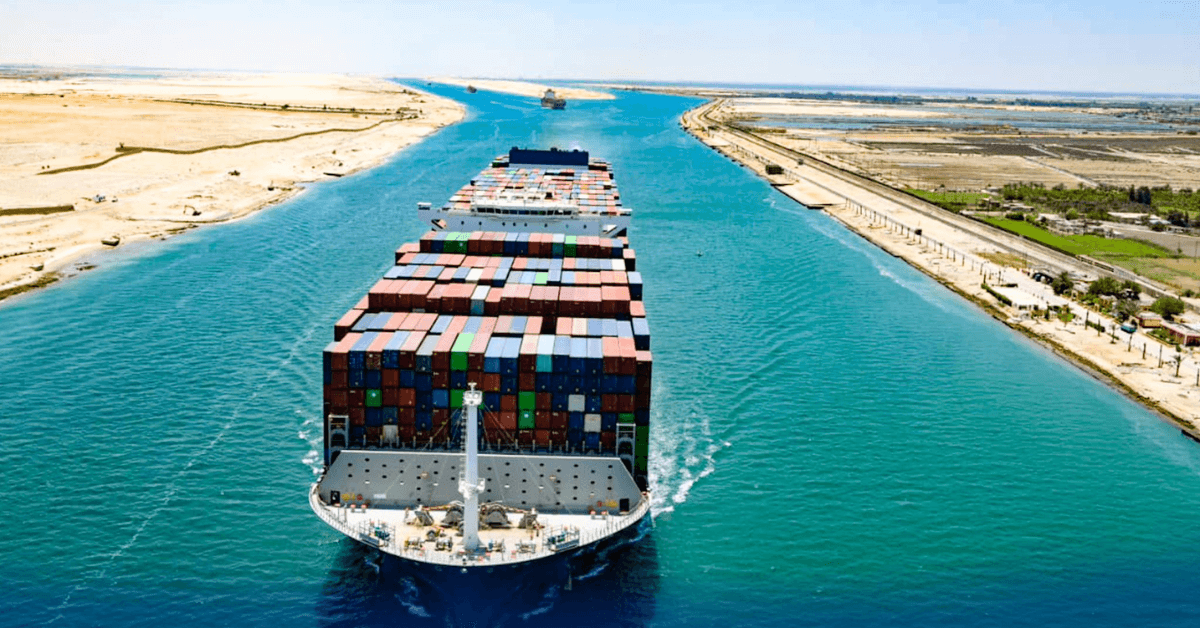
Suez Canal return could dent global container ship demand: BIMCO

LONDON: A potential return to normal Red Sea and Suez Canal routings looms large over the container shipping market outlook, with the shift expected to have a material impact on ship demand and overall market balance in the coming years.

In its Container Shipping Market Overview and Outlook for December, Baltic and International Maritime Council (BIMCO) points to an increased likelihood that carriers may gradually resume Suez Canal transits in the not-too-distant future, a development that could lower ship demand by around 10 per cent.

From January, CMA CGM’s INDAMEX service will fully return to the Suez Canal, while its MEX service will use the canal on the back-haul leg from Europe to Asia.

If these changes prove successful, other carriers may slowly begin adjusting services back to the Suez Canal.

Looking ahead, BIMCO expects supply and demand growth to remain broadly balanced in 2026.

Supply is forecast to grow by 3 per cent, while demand growth is expected to range between 2.5 and 3.5 per cent. In 2027, however, supply growth is estimated to marginally outpace demand, with supply forecast to rise by 3.5 per cent against demand growth of 2.5 – 3.5 per cent.

Overall, the supply-demand balance in 2027 is expected to be slightly weaker than in 2025, while remaining close to 2025 levels during 2026.

A return to normal Suez Canal routings could, on its own, reduce ship demand by 10 per cent.

Moreover, if sailing speeds do not fall as forecast, effective supply could grow by a further 1.2 percentage points per year.

On the demand side, the International Monetary Fund estimates that the global economy will grow by 3.1 per cent in 2026 and 3.2 per cent in 2027.

Growth has so far proven more resilient to the impact of US tariff increases than previously expected.

At the same time, conditions in the global manufacturing sector have improved, with the global manufacturing PMI remaining above 50 over the past four months.

That said, retail sales volumes in the US, the EU and China have grown by less than 2 per cent year-on-year over the past three months, weaker than earlier in the year. US consumer confidence, meanwhile, remains near record lows, reflecting persistent affordability pressures.

Against that backdrop, the likelihood of a return to normal Suez Canal routings has increased further. From January, CMA CGM’s MEX service will again use the Suez Canal in one direction, while the INDAMEX service will return to the canal in both directions.

On the supply side, global fleet capacity is expected to exceed 36 million TEU by the end of 2027.

Capacity growth is forecast to be concentrated in larger vessels, with capacity from ships above 12,000 TEU projected to expand by around 20 per cent, while capacity in the smallest size segments declines.

BIMCO has included 750,000 TEU of recycling in its 2026–2027 forecast, a significant increase compared with the past nine years.

This is expected to help reduce the estimated 1.8 million TEU recycling overhang that has built up over the last five years.

Port congestion increased in 2025 and ended higher than previously estimated, driven largely by congestion at Chinese ports.

Average sailing speeds declined marginally during the year but remained higher than in 2023. Capacity-weighted average sailing speed has so far in 2025 fallen to 14.7 knots from 14.8 knots in 2024, although it remains elevated compared with 14.4 knots in 2023.

As more ships are delivered, carriers are expected to slow vessels further. BIMCO has included a 0.25-knot per-annum reduction in average sailing speeds in both 2026 and 2027.

Should that not materialise, effective supply could grow 1.2 percentage points faster in each of those years.

Assuming a significant increase in recycling of older ships and a reduction in average sailing speeds, average market conditions in 2026 are expected to resemble those of 2025, while 2027 could see slightly weaker conditions.

Ship demand growth is forecast at 2.5 – 3.5 per cent in both 2026 and 2027, while supply is estimated to grow by 3 per cent in 2026 and 3.5 per cent in 2027, according to BIMCO’s chief shipping analyst Niels Rasmussen.

North American import container volumes are expected to contract by 3 per cent in 2025. Negative growth rates are also expected in the first half of 2026, before the market returns to growth in the second half of the year.

Overall, North American import container volumes are forecast to grow by around 2 per cent in both 2026 and 2027.

However, Rasmussen cautioned that risks remain. Up to 70 per cent of US economic growth in 2025 may be driven by AI investments and the wealth effects of rising AI-related share prices.

“Should the AI bubble burst,” Rasmussen said, “it could significantly hurt the US economy with spillover consequences for the world economy and container ship demand growth.”