SEOUL: South Korea is on track to win back a 20 per cent share of the world’s shipbuilding orders this year. This recovery comes as global demand for new ships declines and the United States takes steps to slow China’s maritime power.
Korea accounted for a 22 per cent share of the global market from January to November, according to a report by The Korea Herald. Data from Clarkson Research shows that Korean shipbuilders received orders for 10.03 million compensated gross tonnage (CGT) during this period.
CGT (Compensated Gross Tonnage) in shipbuilding is a standardised unit used to measure a shipyard’s workload and output, accounting for a ship’s type and size.
Although Korea’s total orders fell 5 per cent compared with last year, the country is outperforming its rivals. China is currently the biggest shipbuilder in the world, but its new orders fell by 47 per cent to 26.64 million CGT in the same period.
Last year, Korea’s share was 17 per cent, its lowest since 2016. Experts now expect Korea to stay in the 20 per cent range for the whole year.
The global shipbuilding industry is seeing fewer orders overall. Total orders across the world fell by 37 per cent to 44.99 million CGT from January to November. Korea’s performance is strong because the United States is putting pressure on China.
The US plans to charge a fee of about USD 50 per ton on ships built in China that enter U.S. ports. This makes it risky for shipowners to procure from China, making Korean builders a better choice.
Large Korean companies are already meeting their goals. HD Korea Shipbuilding & Offshore Engineering has secured USD 18.16 billion in orders for 129 ships so far. This exceeds its target of USD 18.05 billion. Hanwha Ocean has secured USD 9.83 billion in orders, more than it received all of last year. Samsung Heavy Industries has reached 76 per cent of its USD 9.8 billion target by securing contracts for a range of tankers and carriers.
“Although Korean shipbuilders have witnessed a rise in revenues, primarily driven by orders for high-value ships such as LNG carriers, China still dominates the world’s shipbuilding market on price-competitiveness,” the report quoted an industry source.
“But the US Make American Shipbuilding Great Again or MASGA project, along with Washington’s curbs on Beijing, is likely to give Korea a strategic edge in gaining more share in the global shipbuilding market.”
US President Donald Trump recently showed support for working with Korean companies. He announced that Huntington Ingalls and Philly Shipyard would lead the building of new US Navy ships. Hanwha Ocean bought the Philly Shipyard.
HD Hyundai and Huntington Ingalls agreed in October to work together on new support ships for the US Navy. This is the first time Korea and the US have collaborated in this way.
LONDON: For banks, trade finance teams, and risk officers, customer due diligence has long been the cornerstone of compliance. But the events of this year proved that knowing your customer is no longer enough.
The vessels moving your commodities, and the behaviors they exhibit, can quietly expose your institution to sanctions breaches, fraud, and reputational damage.
The Hidden Risks Moving Through Global Trade Across the first three quarters of 2025, Windward tracked a sharp rise in deceptive shipping practices and a growing gap between reported movements and what was actually happening at sea.
False flagging surged, with over 1,000 vessels sailing under questionable or misleading registries by Q3. These practices aimed to bypass enforcement, obscure ownership, and sidestep operational restrictions.
False port calls created a web of unreliable documentation, with vessels logging stops they never made, masking sanctioned origins or illicit cargo routes. In many cases, the port call trails were inconsistent with actual AIS and behavioral data.
GPS spoofing and jamming disrupted verification, impacting more than 24,000 vessels across Q1-Q3. New hotspots emerged from the Red Sea and Gulf of Aden to Russia’s Pacific coast, severely degrading the reliability of standard tracking systems.
These deceptive tactics increased operational and compliance risk not just for shipping companies, but also for the financial institutions and trade partners involved in global transactions.
These tactics weren’t limited to sanctioned entities. Legitimate counterparties were increasingly caught in the crossfire, with financial institutions, insurers, and trade facilitators unknowingly exposed to deceptive routes, forged documentation, and vessels engaged in illicit behavior.
Why KYV™ Now Belongs in Your Due Diligence Stack
KYC alone won’t detect a vessel sailing under a false flag. It won’t expose spoofed positions hiding a shipment’s true origin. And it certainly won’t uncover ownership structures engineered to evade scrutiny.
That’s where KYV™ comes in – equipping compliance, risk, and operational teams with the maritime visibility needed to assess vessel behavior, verify exposure, and act with confidence.
By integrating KYV™ into your due diligence workflow, your teams can:
Avoid document-based traps triggered by port call fraud.
Reduce false positives by pairing entity data with real-world vessel behavior.
Flag deceptive practices, like loitering near sanctioned zones or sudden changes in voyage patterns, before exposure occurs.
2025 showed the pattern: every time sanctions escalated, deceptive shipping practices evolved to match. In 2026, staying ahead won’t come from reacting – it’ll come from seeing what’s coming. KYV™ makes that possible.
2026: The Year KYV™ Goes Mainstream As enforcement expands its scope – targeting not just vessels, but their enablers and financiers – KYV™ is becoming the new baseline for maritime compliance.
Windward’s solution delivers more than static lists. It fuses behavioral analytics, ownership intelligence, Document Validation, and Remote Sensing Intelligence to uncover the full picture, verifying vessel identity, confirming actual movements, and spotting red flags before risk enters the books.
Whether it’s verifying a vessel’s reported port call or detecting mismatches between documents and satellite imagery, KYV™ gives institutions the operational clarity to move with confidence, not just meet requirements.
What makes this shift possible is the rise of military-grade Remote Sensing Intelligence, which fuses synthetic aperture radar (SAR) and electro-optical (EO) imagery, with radio frequency (RF) detections, automatic identification systems (AIS), and behavioral analytics to show what vessels actually do, not what their paperwork claims.
This multi-sensor fusion allows KYV™ to expose deceptive patterns that traditional screening misses:
SAR reveals vessels operating in the dark.
EO confirms whether a port call, STS transfer, or anchorage event truly occurred.
RF locates vessels that are transmitting even when AIS is spoofed.
Behavioral analytics identifies deviations, concealment tactics, and intent.
Document Validation ties every reported detail back to real-world evidence.
This is why KYV™ is becoming mainstream in 2026, because due diligence now requires the same multi-layered verification used in remote sensing intelligence. Compliance teams need to confirm reality, not rely on self-reported data.
In 2026, institutions that continue to rely solely on KYC will be operating in the dark and remain exposed to risk. KYV™ is how they stay ahead. Source: Windward
LIMASSOL: Digital innovation and an openness to evolve and adapt will be key to continuing to overcome challenges impacting the supply chain in 2026 and ensure quality is not compromised in galley operations, says leading catering management company MCTC.
The maritime industry has grappled with a year of uncertainty as shipping companies have been forced to deal with geopolitics impacting trade, security threats, rising costs and disruption to the supply chain.
MCTC says digital innovation, strong supplier partnerships and continuous upskilling will be key in supporting vessels worldwide as the industry continues to navigate a complex market next year.
Chief Operating Officer at MCTC, Kyriacos Georgiou said: “Cost inflation and supply-chain complexity are reshaping the way vessels plan, purchase and deliver catering services. Owners need reliability, transparency and efficiency – and that’s exactly where digital tools and proactive planning make a difference.”
MCTC’s digital platforms, including ESTIA and its client portal, give shipowners real-time visibility of consumption patterns, waste metrics and cost trends. This data-driven approach, combined with MCTC’s global supplier network, helps clients maintain consistent provisioning and quality even in unstable markets.
Geopolitical developments and the ongoing disruptions in the Red Sea corridor continue to affect voyage planning, meaning crews can often be on a ship longer than was anticipated.
“Longer voyages and rerouting mean crews must manage stock more carefully, with tighter shelf-life controls and greater contingency planning. Provisioning windows have shrunk, but with coordinated planning and alternative supply ports, we ensure vessels remain fully supported.”
MCTC has increased collaboration with global suppliers, strengthened menu-planning strategies and expanded training to help galley teams handle extended periods at sea.
While global provisioning stability has improved compared with last year, volatility remains – especially for speciality or allergen-sensitive products.
“We still see intermittent shortages, particularly in niche categories such as allergen-free goods or certain fresh produce,” said Mr Georgiou. “We counter this through diversified sourcing, buffer stocks in key hubs and flexible menu planning so that vessels aren’t left without viable alternatives.”
MCTC is also accelerating investment in next-generation training platforms, incorporating VR, AI and digital learning pathways into its service offering.
Mr Georgiou added: “Training is no longer about a one-time classroom course. The future is personalised, data-driven and immersive, where real vessel data shapes learning and VR simulation strengthens practical skills. That’s the vision behind our own training platform ESTIA 2.0 and our ongoing digital training development.”
The company’s training roadmap includes expanded VR modules, AI-integrated learning and micro-learning tailored to individual galley roles.
Crew dietary diversity continues to rise, requiring catering partners to support vegan, vegetarian, halal, gluten-free and allergen-free needs.
“Dietary inclusion is now a basic expectation, not a luxury. We ensure vessels receive a broad product range, culturally sensitive menus and galley teams trained in allergen and hygiene protocols. It’s essential for crew welfare and for maintaining high morale onboard,” he explained.
“Crews are working under increasing pressure, and our role is to give them the tools, knowledge and support they need to succeed. Through real-time consumption monitoring, menu-planning tools and wellness initiatives, we make galley operations smoother and more sustainable.” Source: MCTC
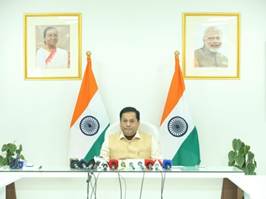
NEW DELHI : The Ministry of Ports, Shipping & Waterways (MoPSW) notified the operational guidelines for two major shipbuilding initiatives—the Shipbuilding Financial Assistance Scheme (SBFAS) and the Shipbuilding Development Scheme (SbDS)—aimed at strengthening India’s domestic shipbuilding capacity and improving global competitiveness. The approved guidelines lay down a transparent and accountable framework for implementation.
Speaking on the occasion, the Union Minister of Ports, Shipping & Waterways (MoPSW), Sarbananda Sonowal said, “Prime Minister Shri Narendra Modi ji’s leadership has given India’s shipbuilding sector a decisive policy reset. These guidelines create a stable and transparent framework that will revive domestic shipbuilding, boosting forward and backward linkage amping ‘Make in India’ initiative, enable large-scale investment and build world-class capacity, positioning India as a major maritime nation on the path to Viksit Bharat and Aatmanirbhar Bharat.”
Under SBFAS, which has a total corpus of ₹24,736 crore, the government will provide financial assistance ranging from 15% to 25% per vessel, depending on the vessel category. The scheme introduces graded support for small normal, large normal and specialised vessels, with stage-wise disbursement linked to defined milestones and backed by security instruments. Incentives for series orders are also included.
The scheme provides for the establishment of a National Shipbuilding Mission to ensure coordinated planning and execution of shipbuilding initiatives. It also introduces a Shipbreaking Credit Note, under which ship owners scrapping vessels at Indian yards will receive a credit equivalent to 40% of the scrap value, linking ship recycling with new ship construction and supporting a circular economy approach. Independent valuation and milestone-based assessments have been made mandatory to strengthen governance and ensure efficient use of public funds.
Over the next decade, SBFAS is expected to support shipbuilding projects worth about ₹96,000 crore, stimulate domestic manufacturing and generate employment across the maritime value chain.
The Shipbuilding Development Scheme (SbDS), with a budgetary outlay of ₹19,989 crore, focuses on long-term capacity and capability creation. The scheme provides for the development of greenfield shipbuilding clusters, expansion and modernisation of existing brownfield shipyards, and the establishment of an India Ship Technology Centre under the Indian Maritime University to support research, design, innovation and skills development.
Under SbDS, greenfield shipbuilding clusters will receive 100% capital support for common maritime and internal infrastructure through a 50:50 Centre–State special purpose vehicle, while existing shipyards will be eligible for 25% capital assistance for brownfield expansion of critical infrastructure such as dry docks, shiplifts, fabrication facilities and automation systems. Disbursements will be milestone-based and monitored by independent evaluation agencies.
The scheme also includes a Credit Risk Coverage Framework, offering government-backed insurance for pre-shipment, post-shipment and vendor-default risks to improve project bankability and financial resilience.
With the creation of modern infrastructure and a skilled workforce, India’s commercial shipbuilding capacity is projected to rise to about 4.5 million gross tonnage per annum by 2047, according to the ministry.
Adding further, Sarbananda Sonowal said, “Viksit Bharat is about reclaiming India’s industrial confidence. By strengthening shipbuilding and maritime capabilities, PM Narendra Modi ji has ensured that India’s growth is anchored in self-reliance, skill and global competitiveness—true to the spirit of Atmanirbhar Bharat.”
Both SBFAS and SbDS will remain valid until March 31, 2036, with an in-principle extension envisaged up to 2047. Together, the schemes are expected to generate employment, promote indigenous technology development and strengthen India’s maritime security and economic resilience.
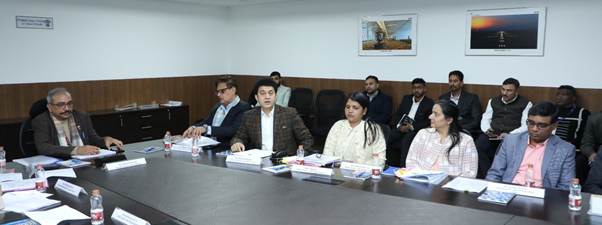
NEW DELHI : The Customs Clearance Facilitation Committee (CCFC) meeting was convened by Delhi Customs at the Kalpana Chawla Conference Hall, IGI Airport, under the chairmanship of the Chief Commissioner of Customs, Delhi Zone.
The meeting brought together partner Government agencies including FSSAI, Plant Quarantine, and the Drug Controller, alongside trade associations such as the Customs Broker Fraternity, ASSOCHAM, and GJEPC. Custodians, importers, exporters, and departmental officers also participated, reflecting the broad spectrum of stakeholders engaged in the Customs clearance ecosystem.
During the deliberations, recent policy and digital initiatives introduced by the Central Board of Indirect Taxes and Customs (CBIC) were highlighted, with particular focus on their implementation framework within the Delhi Customs Zone. Stakeholders raised key operational issues which were constructively discussed, leading to actionable outcomes that will strengthen facilitation and improve efficiency. The transparent and collaborative conduct of the meeting was widely appreciated, reinforcing confidence in Customs processes and enhancing coordination across the EXIM community.
The Delhi Customs Zone reaffirmed its commitment to promoting ease of doing business and advancing trade facilitation within the framework of law. It emphasised that the guiding motto of the Zone rests on the principles of Transparency, Accessibility, and Efficiency. These values are not only central to the functioning of Customs but also serve as a foundation for building trust and ensuring that stakeholders feel empowered to engage openly with the administration.
Looking ahead, the Delhi Customs Zone underscored that ease of doing business is a continuous journey requiring sustained collaboration between Customs, partner agencies, custodians, and the trading community. By embedding the principles of transparency in decision-making, accessibility in processes, and an open-door policy for dialogue and problem-solving, Delhi Customs aims to foster a culture of trust, efficiency, and shared responsibility. The outcomes of the CCFC meeting mark another step forward in institutionalizing these values and ensuring that the EXIM community remains confident in the facilitation framework.
AHMEDABAD: In 2025, Adani Ports and Special Economic Zone Limited (APSEZ) hit a defining inflection point — its ports, logistics and marine businesses outpaced the market, demonstrating the power of a truly integrated, end-to-end ecosystem strengthened by high-performing international ports.
The transformation of APSEZ, India’s largest integrated ports and logistics company, operating ports, terminals, logistics parks, inland container depots and marine services, with a growing international footprint, this year was matched by exceptional financial performance.
Financial Year 2024-25 delivered the highest revenue, EBITDA (Earnings Before Interest, Taxes, Depreciation and Amortisation) and PAT (Profit After Tax) in APSEZ’s history, a testament to operational excellence, strategic expansion and sustained value creation for stakeholders.
In 2024-25, it reported a revenue of Rs 31,079 crore, up 16 per cent versus Rs 26,711 crore in 2023-24. Its Profit After Tax (PAT) Rs 11,061 crore, up 37 per cent versus Rs 8,104 crore in 2023-24.
These record numbers reflect the strength of its integrated model–ports feeding logistics, logistics enhancing marine operations, and international assets amplifying growth.
Amid rising export-import trade (EXIM), coastal shipping momentum and rapid multimodal expansion, APSEZ advanced India’s port-led growth while accelerating its international footprint.
The sector’s opportunities are vast, even as global supply chain volatility, energy transition pressures and transshipment dependence pose challenges.
APSEZ said it strengthened its integrated logistics architecture–ports, terminals, inland networks, marine assets and digital systems–while deepening global partnerships.
The North Queensland Export Terminal (NQXT) acquisition in Australia adds 50 million tonnes per annum (MTPA) of contracted volumes and solidifies the path to 1 billion tonnes by 2030.
Memorandums of Understanding (MoUs) with Bharat Petroleum Corporation Limited (BPCL), Motherson, and Cochin Shipyard Limited (CSL) reinforce APSEZ as India’s logistics backbone.
APSEZ’s global freight network now manages end-to-end supply chains for 11+ gigawatt (GW) of renewable energy systems spanning solar, wind and battery technologies.
APSEZ handled 450 million metric tonnes (MMT) cargo in 2024-25, up 7 per cent year-on-year, with Mundra becoming India’s first port to cross 200 MMT in a single year.
Vizhinjam Port, India’s first fully automated transshipment port, crossed 100,000+ twenty-foot equivalent units (TEUs) in a single month and hosted MSC Irina, the world’s largest container ship.
Colombo West International Terminal (CWIT) in Sri Lanka operationalised; handled 350,000+ TEUs since April, marking a milestone in India-Sri Lanka maritime cooperation.
Dhamra Port in Odisha added a new export berth; two additional berths are underway (future capacity: 92 MMT).
Dighi Port in Maharashtra is set to handle 200,000 cars annually through its partnership with Motherson. NQXT, Australia, is fully integrated, adding strong take-or-pay contracted cargo.
APSEZ’s Agri logistics capacity grew from 1.2 MMT to 1.46 MMT.
Its marine fleet expanded to 127 vessels, including Ocean Sparkle, Astro and TAHID; nine new vessels acquired in Q2 FY26.
Shanti Sagar International signed a landmark contract to build seven clinker vessels, expanding specialised maritime transport capabilities.
India’s first inhouse Water Injection Dredger has been deployed at the Dhamra LNG Basin (Liquefied Natural Gas). Its marine business is on track to triple in size within two years.
APSEZ entered the Global Top 10 in the S&P Global; it ranked in the 97th percentile globally and the only Indian company in the Top 10; it retained #1 Environment Score for the second consecutive year; 12 ports certified as Zero Waste to Landfill; it commissioned 225 megawatt (MW) of renewable energy; and it is on course toward its Net Zero 2040 commitment.
Global partnerships, acquisitions and expansion include NQXT acquisition (Australia); MoU with BPCL for India’s first ship-to-ship (STS) liquefied natural gas (LNG) bunkering at Vizhinjam; partnership with Motherson for automotive logistics at Dighi Port; and contract for seven clinker vessels to expand maritime transport solutions.
Mundra ranked 25th globally in the World Bank’s Container Port Performance Index (CPPI); APSEZ is included in the Nifty 100 ESG Index for leadership in sustainability.
Priorities for 2025-26 included accelerating progress toward 1 billion tonnes throughput; scaling transshipment leadership at Vizhinjam and CWIT; expanding integrated logistics network–silos, ICDs, MMLPs and warehousing; tripling marine services footprint; accelerating sustainability and renewable integration; and digitising end-to-end cargo movement through TMS, ITUP and advanced gate automation.
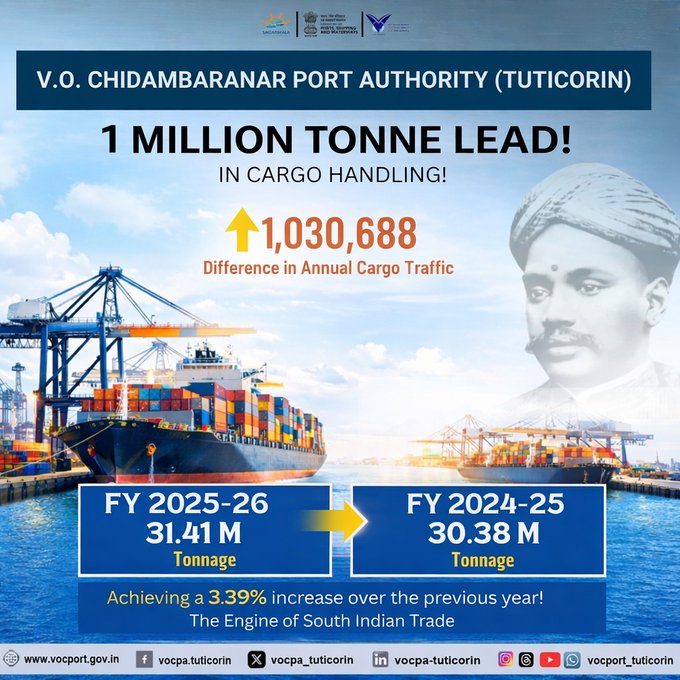
TUTICORIN : V.O. Chidambaranar Port Authority (VOC Port), Tuticorin, has achieved a significant milestone by registering a cargo handling lead of more than one million metric tonnes over the previous financial year, underscoring its strong operational performance and growing importance in regional maritime trade.
As on 27th December 2025, the Port has handled 31.42 million tonnes of cargo, compared to 30.39 million tonnes handled during the corresponding period of FY 2024–25, recording a year-on-year growth of 3.39%.
This sustained growth reflects the Port Authority’s continued focus on operational efficiency, infrastructure optimization, and improved cargo evacuation systems. The performance also highlights VOC Port’s pivotal role in facilitating maritime trade and supporting industrial and commercial activities across South India.
The Port Authority remains committed to further enhancing capacity, service quality, and stakeholder engagement, while aligning with the national vision of strengthening India’s port-led economic development.
NEW DELHI : Focused Efforts, Innovation & Indigenisation is helping transform Indian Railways into a World Class Network. Keeping the common man at its focus, Railways made significant strides toward realising its vision of a world-class network this year. As curtains are set to fall on the year 2025, Indian Railways is set to bring in more & more comfort to your rail travel experience in the New year 2026 by making it truly memorable. After expanding the luxury of a comfortable travel to non-AC passengers through Amrit Bharat trains, Indian Railways is all set to soon operationalise first Vande Bharat Sleeper for AC class travellers. This long awaited public centric initiative will truly redefine the train travel for long distances, drastically cutting short travel time, first on busy routes and thereafter with time on all the routes. Redeveloped Stations across India are offering airport-like facilities to passengers like modern & wider entrances, upgraded toilets, escalators, lifts, food courts & state of the art waiting halls etc.
In a paradigm shift in its catering, Railways is introducing local cuisine taste in various trains. It will add taste & hygiene to our journey’s food experience. Besides the improved experience of passengers, Railways is aiming to become a top carrier in freight services also. Gati Shakti Cargo terminals, record number of wagon productions & running of more trains on our freight corridors is scripting the growth story of India, helping us become world’s second largest freight carrier leaving USA behind. We all can see upgraded stations, modern trains, and enhanced safety systems becoming part of our modern rail travel experience, be it improved passenger experience or an increased ease of doing business that traders, transporters, and industries are experiencing.
With a strong focus on modern infrastructure and connectivity, Indian Railways is driving national growth by delivering superior travel experiences, efficient freight services and modern technology. Prioritizing sustainability & fuelled by innovation, Railways is moving toward eco-friendly & green operations while boosting our country’s economic progress with infrastructure improvements at large scales & capacity addition. The efforts this year reflects Indian Railway’s ongoing commitment to create for its people, a world-class transport network that balances innovation with tradition while serving the needs of a rapidly growing country in its quest for being a Developed Nation. The Year 2025 laid a strong foundation in giving us safer, faster & comfortable rail travel. The New year is all set to offer comfortable sleeper journeys in “long distance travels” through Vande Bharat & Amrit Bharat trains, cutting short the journey time, as well as giving travellers the branded Food & beverage options at Railway Stations.
Faster, Safer & Comfortable Travel at Affordable Cost Vande Bharat Train: ● As on 26th December, 2025, a total of 164 Vande Bharat train services are running across the Indian Railways network. ● During the Calendar year-2025, Indian Railways introduced 15 Vande Bharat express trains. ● Looking ahead, the upcoming Vande Bharat Sleeper is set to transform overnight travel. It will combine speed, comfort, and modern amenities for long-distance passengers. Amrit Bharat Train: ● Amrit Bharat services, which are fully non-AC trains, presently comprising 12 Sleeper Class Coaches and 8 General Class coaches, are providing high quality services to the passengers. ● During the calendar year-2025, 13 Amrit Bharat Express trains have been introduced and are operational. A total of 30 Amrit Bharat train services are running across the Indian Railways network. Namo Bharat Rapid Rail:
● Namo Bharat Rapid Rail Services are designed for high-frequency and regional connectivity, strengthening short and medium-distance mobility in high-demand corridors. ● 2 Namo Bharat Rapid Rail Services have been operational in the country between Bhuj – Ahmedabad and Jaynagar – Patna. Special Train Services: In 2025, Special Train operations were significantly scaled up to cater to seasonal rush, highlighting enhanced planning and a stronger focus on passenger comfort.
● Indian Railway operated a record number of over 43,000 special train trips during the year 2025. ● To cater to Festive and Summer rush 17,340 Special Train Trips for Maha Kumbh, 1,144 for Holi, 12,417 Summer Specials, and 12,383 for Chhath Puja were operated in 2025. Besides, faster & comfortable trains and Modern Railway Stations, focused efforts are being made towards systematic track renewals, enhancement of sectional speeds, induction and upgradation of modern track machines, strengthening of bridges, elimination of level crossings to enhance safety, effective management & protection of railway land. The key achievements in these areas are outlined below.
Enhancing Rail Track Infrastructure
Commissioning of Tracks
Between 1 April and 30 November 2025, Indian Railways commissioned over 900 kilometres of new track lines. Besides laying the new tracks the focus is to renew the existing rail tracks to ensure safer, faster & comfortable travel. Accordingly for the year 2025, following total renewal works were done.
Track Renewal Works
(a) 6880 Track km rails have been renewed with new rails.
(b) Complete track renewal for 7051 track km has been done.
(c) Through Turnout Renewal of 9277 sets have been done.
During the period 2014–25, total 34,428 km of new track was laid across Indian Railways at an average of 8.57 km/day, which is more than twice the average daily commissioning (4.2 km/day) during the period 2009–14.
To support this infrastructure expansion and maintenance, Indian Railways is modernising its track machinery. One tamping machine (HOT-3X) has been upgraded to the high-output 3X-Dynamic (HOT-S-3X) machine, integrating three-sleeper ballast packing with track stabilization. This integration improves traffic block utilisation and reduces manpower requirements. Additionally, during 2025 (till November), 61 new track machines have been inducted, with plans for further upgrades to enhance track maintenance efficiency and reliability.
Raising of Sectional Speed
These modernisation efforts are complemented by raising of sectional speeds to improve train operations and passenger convenience. Sectional speed has been increased to 130 kmph over 599 track km, covering parts of the Golden Quadrilateral, Golden Diagonal, and other B routes. Further, speeds of 110 kmph have been achieved over 4,069 track km, combining infrastructure upgrades with advanced track machinery to ensure faster, safer, and more efficient train operations.
Electrification
Electrification of the railway network on Indian Railways (IR) has been taken up in mission mode. So far, about 99.2% of the Broad Gauge (BG) network has been electrified. Electrification in the remaining network has been taken up. This achievement is significantly higher than the electrification levels of the UK (39%), Russia (52%) and China (82%). A total of 14 Railway Zones and 25 States/Union Territories have now achieved 100% electrification.
Construction of ROBs/ RUBs
In 2025, Indian Railways completed construction of 1,161 ROBs and RUBs, improving safety and traffic flow. Sanctioning and execution of Road Over Bridges (ROBs) and Road Under Bridges (RUBs) is a continuous and ongoing process on Indian Railways. Over the past 11 years, the pace of construction has been significantly accelerated, with more than 13,600 bridges completed—over three times the 4,148 bridges constructed between 2004 and 2014.
In parallel, elimination of manned level crossings (MLCs) continues to enhance safety, with 268 MLCs removed during 2025-26 (till November). Railway bridge safety is further strengthened through rehabilitation efforts, with 1,799 bridges repaired or upgraded during the same period.
LHB Coach Manufacturing and Modernisation
In FY 2025-26 (up to November 2025), more than 4,224 LHB coaches were produced, 18% higher than the corresponding period last year. Between 2014-25, production increased 18-fold compared to 2004-14, ensuring safer, smoother and more comfortable journeys.
Indian Railways has made a major leap in modernisation by manufacturing over 42,600 LHB coaches in the last 11 years. LHB coaches are known for higher safety standards, lower maintenance costs and superior operational efficiency. Railways are further scaling production to meet future demand. Through indigenous production of LHB coaches, Indian Railways is strengthening the Atmanirbhar Bharat and Make in India initiatives.
Production details:
ICF Chennai: 1,659 coaches
MCF Raebareli: 1,234 coaches
RCF Kapurthala: 1,331 coaches
Landmark Projects
Landmark projects were completed or inaugurated across the country, exemplifying this progress. Notably, India opened its first vertical-lift rail bridge at Pamban, bolstered Kashmir connectivity with all-weather rail links (including the world’s highest Chenab bridge), and extended rail access into the Northeast with the new Bairabi–Sairang line. At the same time, the railways expanded modern train services (Vande Bharat, Amrit Bharat, Namo Bharat) and aggressively redeveloped stations and freight corridors, underscoring its role in driving economic growth and sustainability.
All-Weather Rail Connectivity: USBRL and Kashmir Bridges The Udhampur–Srinagar–Baramulla Rail Link (USBRL), a 272 km project through the Himalayas, was completed and dedicated in 2025. It comprises 36 major tunnels and 943 bridges, reflecting exceptional engineering in one of the most challenging terrains in the world. The project features iconic engineering landmarks, including the world’s highest railway arch bridge ‘Chenab Bridge’, a 1,315 m steel arch over the Chenab River (359 m high), India’s first cable-stayed railway bridge ‘Anji Bridge’(deck 331 m above the river) and India’s longest operational railway tunnel ‘T-50’. Together, these three landmarks enable an all-weather rail route into Kashmir, cutting travel times by hours. These bridges and tunnels – built with state-of-the-art safety and environmental measures – symbolise India’s ability to tame extreme terrain for seamless connectivity. The project strengthens connectivity across over 95 villages while ensuring reliable, all-weather transportation and driving growth in employment, tourism, education, and the regional economy.
North East Rail Link: Bairabi–Sairang Line The 51 km Bairabi–Sairang broad-gauge line in Mizoram was inaugurated in September 2025, placing Aizawl on India’s rail map for the first time. Traversing rugged hills, the line includes 45 tunnels, 55 major bridges and 88 minor bridges. On inauguration day the Prime Minister also flagged off three new trains on this route – including the Sairang–Delhi Rajdhani Express – to link Mizoram directly with Delhi, Guwahati and Kolkata. This strategic project is expected to transform regional travel and trade, improving access to markets, education and healthcare for the Northeast.
Strategic Sea Link: New Pamban Bridge The New Pamban Bridge, inaugurated on 6 April 2025, is India’s first vertical-lift railway sea bridge. The New Pamban Bridge, spanning a total length of 2.08 kilometres, connects Rameswaram to the Indian mainland. Spanning 2.08 km over the Palk Strait, it replaces the 110-year-old cantilever bridge, blending heritage with modern design. A 72.5 m central span can be lifted 17 m to let ships pass, and the deck is 3 m higher than the old bridge. Built with stainless-steel reinforcement, special anti-corrosion coatings and a design life of 100+ years, this bridge restores the vital rail link to Rameswaram and boosts regional connectivity. Its completion not only eases pilgrimage and tourism but even revives prospects of future India–Sri Lanka transport links across the Palk Strait.
Mumbai-Ahmedabad High Speed Rail (MAHSR) Project
Mumbai-Ahmedabad High Speed Rail (MAHSR) Project: Government of India has sanctioned 508 km Mumbai-Ahmedabad High Speed Rail (MAHSR) Project in December, 2015 which is under execution with technical and financial co-operation from Government of Japan. The progress of the MAHSR project for the period of 2025-26 is as under:-
Physical Progress: Overall physical progress of 55.63% has been achieved as on 30th November 2025.
Financial Progress: Overall financial progress of 69.62% with an expenditure of ₹ 85,801/- crore has been achieved as on 30th November 2025.
Important Civil Engineering Parameters: Total 412 km of foundation, 405 km of Piers, 344 km of Girder Casting and 330 km of Girder launching completed till 30th November 2025.
Commissioning of Projects in 2025 (Till date)
FY 2025-26 saw policy approvals translating into assets on the ground. Hon’ble Prime Minister dedicated 42 projects to the Nation, inaugurated 13 projects and laid the foundation stone for 21 projects, collectively valued at over ₹25,000 crore.
During the current year, the following projects have been commissioned:
Vijapur–Ambliyasan Gauge Conversion
Domingarh–Gorakhpur–Gorakhpur Cantt.–Kusumhi – 3rd running line and Gorakhpur–Nakaha Jungle Doubling
Bahraich–Nanpara–Nepal Ganj Gauge Conversion
Provision of connectivity at Northern end of Karaikal Port to directly access PEM–KIK NL to improve mobility
Bypass line at Peddapalli for connecting Kazipet–Ballarshah main line to Peddapalli–Karimnagar line
Himmatnagar–Khedbrahma Gauge Conversion
3rd Line connectivity between Chhapra Jn. to Chhapra Kacheri (3.0 Km)
Araria–Galgalia (Thakurganj) New Line
Provision of laying of additional track at Somnath station (2.5 Km)
Bhairabi–Sairang New Line
Tori–Shivpoor 3rd Line
Doubling of Churu–Ratangarh
Deoband (Muzaffar Nagar)–Roorkee New Line
Yamuna Bridge–Agra Fort – Double line with major bridge at Yamuna river
Pune–Miraj–Londa Doubling
Manmad–Jalgaon 3rd line
Safety Indian Railways has achieved remarkable progress in safety performance. Consequential Train Accidents during the period 2004-14 was 1711 (average 171 per annum), which has declined to 31 in 2024-25 and further to 11 in 2025-26 (upto November, 2025). The safety budget has nearly tripled, rising from ₹39,463 crore in FY 2013-14 to ₹1,16,470 crore in the current financial year. Fog safety devices increased from 90 in 2014 to 25,939 in 2025. In the last four months alone, Centralised Electronic Interlocking and Track Circuiting have been completed at 21 stations. Kavach is an indigenously developed Automatic Train Protection (ATP) system which assists the Loco Pilot in operating trains within prescribed speed limits by automatically applying brakes in case of human failure and also enables safe train operations during adverse and inclement weather conditions. In this direction, Kavach Version 4.0 has been commissioned over 738 route kilometres. Major enhancements in Kavach Version 4.0 include increased location accuracy, improved signal aspect information in large yards, station-to-station Kavach interface over Optical Fibre Cable (OFC) and direct interfacing with the existing Electronic Interlocking systems. With these technological upgrades, Kavach Version 4.0 is planned for large-scale deployment across the Indian Railways network. Complementing these safety measures, Indian Railways is also strengthening surveillance infrastructure at stations and onboard trains. Installation of CCTV cameras at stations and in coaches is an ongoing process, and so far, CCTV surveillance systems have been provided at 1,731 stations and in 11,953 coaches to ensure a safe and secure journey for passengers. These CCTV surveillance systems are being installed under capital expenditure, reflecting Indian Railways’ sustained commitment to integrating safety, security and technology. Enhanced Passenger Experience at Redeveloped Stations The Amrit Bharat Station Scheme has mobilized a massive rebuild of passenger stations. Under the scheme, Railway stations have been reimagined as city centres and not just as transit points. To date, 1,337 stations have been selected for overhaul under this program – one of the world’s largest station reconstruction initiatives. Redevelopment works (all done without halting rail traffic) are underway across the country, and as of Dec 2025, 155 stations have been fully modernized. Upgrades include expanded foot-over bridges and concourses, lifts/escalators, improved waiting halls, toilets and seating, multimodal integration (bus/taxi), local kiosks (‘One Station One Product’), digital signage and better amenities for disabled passengers. These enhanced stations improve passenger experience and reflect Railways’ focus on customer comfort and urban integration. Solar-Powered Railway Stations
Indian Railways has taken a major step towards clean and sustainable energy by making 2,626 Railway stations solar-powered nationwide. A total of 898 MW of solar power has been commissioned, with approximately 70% utilised for traction purposes. This has strengthened energy security, reduced electricity expenditure, lowered carbon emissions, and promoted eco-friendly Rail operations. Free Wi-Fi
Indian Railways provides free Wi-Fi services at 6,117 stations, prioritising passenger convenience.
RailOne App: One-Stop Solution for Passengers
Indian Railways has launched the RailOne App, a comprehensive one-stop solution for passenger services, available on Android and iOS platforms.
Key features include:
Unreserved UTS ticketing (3% discount via R-Wallet)
Live train tracking
Grievance redressal
E-catering
Porter booking
Last-mile taxi services
Aadhaar-Authenticated Reservation Reforms Aadhaar verification of users is an important step which has been taken to make the system more robust. To prioritise genuine passengers, only Aadhaar-authenticated users are permitted to book general reserved tickets during the first 15 minutes of reservation opening on the IRCTC website or app. Only Aadhaar-verified users are allowed to book Tatkal tickets. Cutting-edge technology is also being used to identify and prevent unscrupulous users trying to misuse the e-ticketing system. As a result, 5.73 crore suspicious and inactive users registered with IRCTC have been deactivated or temporarily suspended. Continuous efforts are on to deactivate more suspicious users.
Major RPF Operations and Achievements To provide security & facilitation to Railway passengers, the following initiatives have been undertaken by RPF to boost the confidence & sense of security to its passengers:
I. Continuous assistance to passengers by RPF:
Year
No. of complaints attended on Twitter
No. of complaints attended on Helpline No. 182/139
Total
2025 (upto Nov.)
54648
321557
376205
Focused issue based operations
i. Operation Nanhe Faristey & Rescue of children:
Details of children in need of care and protection rescued by RPF
Year
No. of children rescued by RPF
2025 (upto Nov.)
17231
ii. Operation “Jeevan Raksha”:
Year
Saving life on railways
Male
Female
Total
2025 (upto Nov.)
1894
974
2868
iii. Operation Amanat & Luggage Retrieval:
Year
No. of cases of retrieval of left behind luggage of passengers and its return
Value of recovered property (in Rs.)
2025 (upto Nov.)
53607
79,85,11,140
iv. Operation “Matrishakti”:
Year
No. of cases attended and assistance provided in child birth
In Train
In railway premises
Total
2025 (upto Nov.)
198
105
303
Year
No. of cases registered
No. of persons arrested
2025 (upto Nov.)
107606
110940
Operation “Upalabdh” & Action against touts:
Year
No. of cases registered
No. of persons arrested
No. of Future journey ticket seized
Value of Future journey ticket seized
No. of IRCTC user IDs blocked
2025 (upto Nov.)
2449
2690
7974
1,98,92,275
8905
vii. Operation “SEWA”:
Year
No. of persons (Elderly/ Women/ Divyangjan/ Sick/ Injured/ Infants) to whom RPF assisted during their travel in boarding & de-boarding and availing/providing other amenities i.e. Wheel Chairs, Stretcher, medical help, providing ambulance, medicine, infant food etc.
2025 (upto Nov.)
10146
viii. Operation AAHT & Human Trafficking:
Year
No. of Trafficked Persons rescued by RPF
No. of traffickers arrested by RPF
Juvenile
Adult
Total
Boys
Girls
Male
Female
2025 (upto Nov.)
783
88
14
93
978
292
ix. Operation “NARCOS”:
Year
No. of cases detected
Value of NDPS recovered
No. of persons arrested
2025 (upto Nov.)
1980
2,08,52,03,671
1601
x. Operation “WILEP”:
Year
No. of cases detected
No. of persons arrested
Fauna
Flora
2025 (upto Nov.)
43
19
44
xi. Operation “Satark”:
Year
Tobacco Product
Liquor Product
Cases detected
Value
Persons arrested
Cases detected
Value
Persons arrested
2025 (upto Nov.)
140
8,25,05,340
97
4044
6,01,64,423
3356
Economic Corridors Indian Railways is undertaking a series of transformative infrastructure initiatives to enhance capacity, efficiency, and sustainability across the rail network. Key focus areas include the commissioning of dedicated freight corridors to decongest the conventional network, and promotion of Public-Private Partnership (PPP) models to supplement public investment. The following sections outline the progress and status of these major initiatives.
Three Major Economic Corridors
434 projects have been identified under 03 Economic corridors with cost outlay of Rs. 11.17 lakh crore.
Energy, Mineral & Cement corridor: 192 projects
High traffic density routes: 200 projects
Port connectivity: 42 projects
All 434 projects have been mapped on the PM GatiShakti portal. Out of which presently 121 projects covering track length 12,133 Km and costing Rs. 2,02,551 Cr. have been sanctioned, and 162 projects with track length of 16,910 Km and estimated cost of Rs. 3,30,545 crore are under different stages of appraisal/inter-ministerial consultation.
The corridor-based program is intended to improve logistic efficiency and reduce logistic cost.
Dedicated Freight Corridors (DFC’s) Project:
Dedicated Freight Corridor is a mega railway infrastructure project. Two Dedicated Freight Corridors (DFC) viz. Eastern Dedicated Freight Corridor (EDFC) from Ludhiana to Sonnagar (1337 Km) and the Western Dedicated Freight Corridor (WDFC) from Jawaharlal Nehru Port Terminal (JNPT) to Dadri (1506 Km) have been commissioned and operationalized (except 102 km Vaitarna-JNPT Mumbai section which is under progress).
DFC has contributed to creating additional paths on the conventional network by diverting freight traffic to EDFC and WDFC. In Nov. 2025, 403 average trains per day were run. As a result, Railways have been able to run additional goods and coaching services over its network with better punctuality.
Train operations are going on in commissioned sections as follows :-
Corridor
No. of Trains run
NTKM (Millions)
GTKM (Millions)
Oct’25
Cumulative (FY 25-26)
Oct’25
Cumulative (FY 25-26)
Oct’25
Cumulative (FY 25-26)
EDFC
5960
44,094
5,363
41,974
9,855
75,262
WDFC
5979
38,624
3,260
22,138
6,217
40,480
Total
11,939
82,718
8,623
64,111
16,072
1,15,743
The momentum generated by record freight performance and targeted policy interventions during the year has translated into tangible on-ground logistics outcomes across regions. In FY 2025–26, Indian Railways achieved the historic milestone of 1 billion tonnes of freight loading, with daily loading touching 4.4 million tonnes, driven by robust demand from coal, iron ore, cement, and container traffic.
This growth has been supported by structural reforms and capacity augmentation, including the introduction of a simplified flat-rate tariff of ₹0.90 per tonne per kilometre for bulk cement transportation, which has improved cost predictability and encouraged modal shift to rail. Simultaneously, the commissioning of 25 Gati Shakti Cargo Terminals during the current year has strengthened first- and last-mile connectivity, enhanced terminal efficiency, and reduced transit time for freight movement.
Wagon Production:
To increase freight earnings by maximizing induction of new wagons in Indian Railways, wagon manufacturing was scaled up during the last three years on account of the target of 3000 MT loading by 2029-30. In light of this, production of wagons was reinforced, which led to wagon production of 3651, 3880, 4135 in Jan, Feb, March 2025 respectively resulting in the maximum production of wagons i.e. 41,929 in FY 2024-25 (highest among the last 3 years).
During the current calendar year, Jan ’25 to Nov 25 wagon production is 33,703 nos. seeing continuous improvement in wagon supply.
Together, these developments have enabled Indian Railways to not only handle higher freight volumes efficiently, but also to undertake region-specific, first-of-their-kind freight operations, particularly in remote and strategically important areas. The following examples highlight how enhanced freight capacity, tariff rationalisation, and infrastructure expansion have been leveraged to deliver critical logistics solutions during the year.
First Foodgrain Freight Train to Anantnag
In a historic first for the Kashmir Valley, a foodgrain freight train reached the Anantnag Goods Terminal. The train was dispatched from Ajit Wal Railway Station, Punjab, carrying approximately 1,384 tonnes of foodgrains, marking the first bulk rail-based foodgrain supply to Anantnag Railway Station, Jammu & Kashmir.
This development formally integrates the Valley with the national freight rail network, strengthening food supply systems, reducing transportation time and cost, and significantly enhancing regional logistics capacity.
Cement Transportation in the Northeast through Rail
Freight operations on the Bairabi–Sairang line began soon after its inauguration. The first freight movement on 14 September 2025 carried 21 cement wagons from Assam to Aizawl. Since then, the route has transported essential goods such as cement, construction materials, automobiles, sand, and stone chips, supporting infrastructure development and market access in the region.
Supply of Cars to Mizoram by Rail
For the first time, cars have been supplied to Mizoram by rail, marking a historic logistics achievement. An automobile rake carrying 119 Maruti cars from Changsari (near Guwahati) reached Sairang Railway Station near Aizawl.
This development is expected to increase vehicle availability in Aizawl and surrounding areas, reduce dependence on long-distance road transport, and benefit dealers, service providers, and consumers.
Integrated Logistics Hubs and New Freight Services
Indian Railways has also launched new door-to-door freight and parcel services to strengthen integrated logistics, including:
Assured transit container rail service between Delhi and Kolkata
Door-to-door parcel service on the Mumbai–Kolkata route
PPP in Indian Railways:
In a rapidly expanding economy, to meet both economic and environmental goals, the role of Railways is important. In the last few years, increased funding through GBS (Gross Budgetary Support) is provided to expand the network. This alone is not sufficient to match the pace of economic expansion. Both Government and Private Sector Investment is required. PPP Projects in Railways are currently executed under 2012 PPP Policy. So far, 18 projects of ₹ 16,686 crore have been completed through PPP model. 7 projects of ₹ 16,362 crore are under implementation including coal connectivity and port connectivity projects. To make this policy attractive the restructuring & revisions of PPP models are underway.
PPP-Led Locomotive Manufacturing under the Make in India Programme
Between 1 January and 30 November 2025, Indian Railways produced 1,542 electric locomotives. To strengthen self-reliance in locomotive manufacturing and enhance haulage capacity, Indian Railways has adopted advanced public-private partnership models for setting up state-of-the-art locomotive manufacturing units in the country. These initiatives support the ‘Make in India’ programme, promote indigenous supply chains, and ensure long-term maintenance reliability. The status of major locomotive manufacturing projects is outlined below.
Madhepura Electric Locomotive Factory
Indian Railways has supplied 576 high-power 12,000 HP electric locomotives from the Madhepura factory in Bihar under a PPP model, including 76 locomotives delivered during April–November 2025. Set up in partnership with Alstom Transport India Limited, the facility is manufacturing 800 locomotives over 11 years, with over 90% indigenous sourcing, strengthening Make in India and boosting freight haulage capacity.
Marhowra Diesel Locomotive Factory
The Marhowra diesel locomotive factory in Bihar has delivered 773 locomotives (569 of 4,500 HP and 204 of 6,000 HP) so far under a PPP arrangement with Wabtec Locomotive Private Limited, including 73 units supplied in FY 2025–26 (up to November). Around 65% of components are sourced within India. In a major export milestone, the factory has secured USD 400 million in export orders for 150 locomotives to Guinea, Africa, with 14 locomotives already dispatched, marking India’s growing presence in the global rail market.
Dahod Electric Freight Locomotive Facility
The Dahod locomotive manufacturing facility in Gujarat, set up with Siemens Limited, will produce 1,200 electric freight locomotives of 9,000 HP under a long-term manufacturing and maintenance agreement. The facility, dedicated to the nation in May 2025, has completed RDSO trials and statutory safety inspections, paving the way for the large-scale induction of high-power electric locomotives with around 90% indigenous components. Prime Minister Shri Narendra Modi flagged off the first new D9 series 9,000-HP electric locomotive from the facility this year.
AI & Tech led Signalling & Telecom
Indian Railways is also leveraging advanced telecom and digital technologies to enhance operational safety, improve communication reliability, and strengthen passenger information systems. Key initiatives in this domain include AI-enabled intrusion detection, network-wide video surveillance, digital radio communication, optical fiber expansion, and modern passenger guidance systems. The major developments are outlined below.
Intrusion Detection System: Indian Railways has developed an AI enabled solution based on Distributed Acoustic Sensing (DAS) technology for detecting the presence of elephants and other wild animals on railway tracks in identified corridor locations. The system provides advance alerts regarding the movement of such animals, enabling timely preventive action and transmission of warnings to loco pilots, station masters and control rooms thereby reducing the risk of accidents. Presently, the system is operational across 141 Rkm in Northeast Frontier Railway.
Video Surveillance System: Indian Railways has commissioned Video Surveillance System (VSS) at 1731 railway stations across the railway network. The system is equipped with AI based Video Analytics (VA) for automated event detection (such as intrusion detection, loitering detection) and Facial Recognition Software (FRS) for real-time identification and monitoring.
Use of Digital VHF sets over Indian Railways: Communication between Loco pilot and Guard is very critical from a safety point of view. This communication needs to be reliable with clarity in speech. In order to harness the advantages offered by Digital technology based VHF sets, the Railway Board has approved that only Digital 5W Walkie-Talkie sets shall be procured over Indian Railways.
Tunnel Communication System: The project for provision of Tunnel Communication has been taken up in various Railways including the USBRL project for the uninterrupted radio communication from inside the tunnel to headquarters and operation control centers.
Optical Fiber Cable (OFC): Indian Railways have provided 619 Rkms of Optical Fiber Cable till Oct’2025. Thereby, reaching a cumulative total of approx. 67233 RKms of IR network.
Coach Guidance System: Coach Guidance System (CGS) displays the coach position of a scheduled train on a platform. The system considerably enhances passenger convenience by helping them quickly and easily locate their coaches. So far, Coach Guidance Systems have been provided at 1064 stations.
Train Indication Board: The Train Indication Board displays Arrivals/Departures of trains indicating train number, name, time of arrival/departure and platform number. So far, Train Indication Boards have been provided at 1449 stations.
Recruitment
Occurrence and filling up of vacancies are continuous processes on Indian Railways considering its size, spatial distribution and criticality of operation. Adequate and suitable manpower is provided to cater to the regular operations, changes in technology, mechanisations and innovative practices. The vacancies are filled up primarily by placement of indents by Railways with Recruitment agencies as per operational and technological requirements. As per Annual Calendar 2024 and 2025, recruitment of 1,20,579 vacancies has been taken up on Indian Railways including Zonal Railways and Production Units.
Recruitment in the Railway Protection Force (RPF) has been progressing steadily, with the recruitment process for 452 posts of Sub-Inspectors (Executive) having been completed, while recruitment for 4,208 posts of Constables is currently underway.
Recruitment Data
Sports
Indian Railways has long played a pivotal role in nurturing India’s sporting talent, with its sportspersons bringing laurels to the nation across disciplines. As a mark of recognition and reward for their outstanding achievements, it has, during the year, granted out-of-turn promotions to Pratika Rawal, Sneh Rana and Renuka Singh Thakur to the Group ‘B’ officer-grade post of Officer on Special Duty (Sports). The promotions were awarded for their exceptional performances in India’s victorious ICC Women’s World Cup 2025 campaign.
A Year of Transformation, A Future of Assurance: Indian Railways’ Message for 2026 As 2025 comes to a close, Indian Railways extends warm New Year wishes to the people of the nation and reflects with pride on a year of steady progress and purposeful transformation. Significant strides in station redevelopment, strengthened safety systems, wider adoption of digital and sustainable technologies, and continued enhancement of freight corridors have reinforced Indian Railways as a key driver of national growth. These efforts have laid a strong foundation for a future-ready rail network that is faster, safer, greener, and more inclusive.
Welcoming 2026 with renewed confidence and commitment, Indian Railways reaffirms its promise to the nation to deliver rail services with full sincerity and dedication. With a clear vision and continued investment, Indian Railways remains committed to connecting people, empowering regions, strengthening infrastructure, enhancing safety, advancing technology, and improving the overall passenger experience, while driving the nation forward with reliability and excellence.
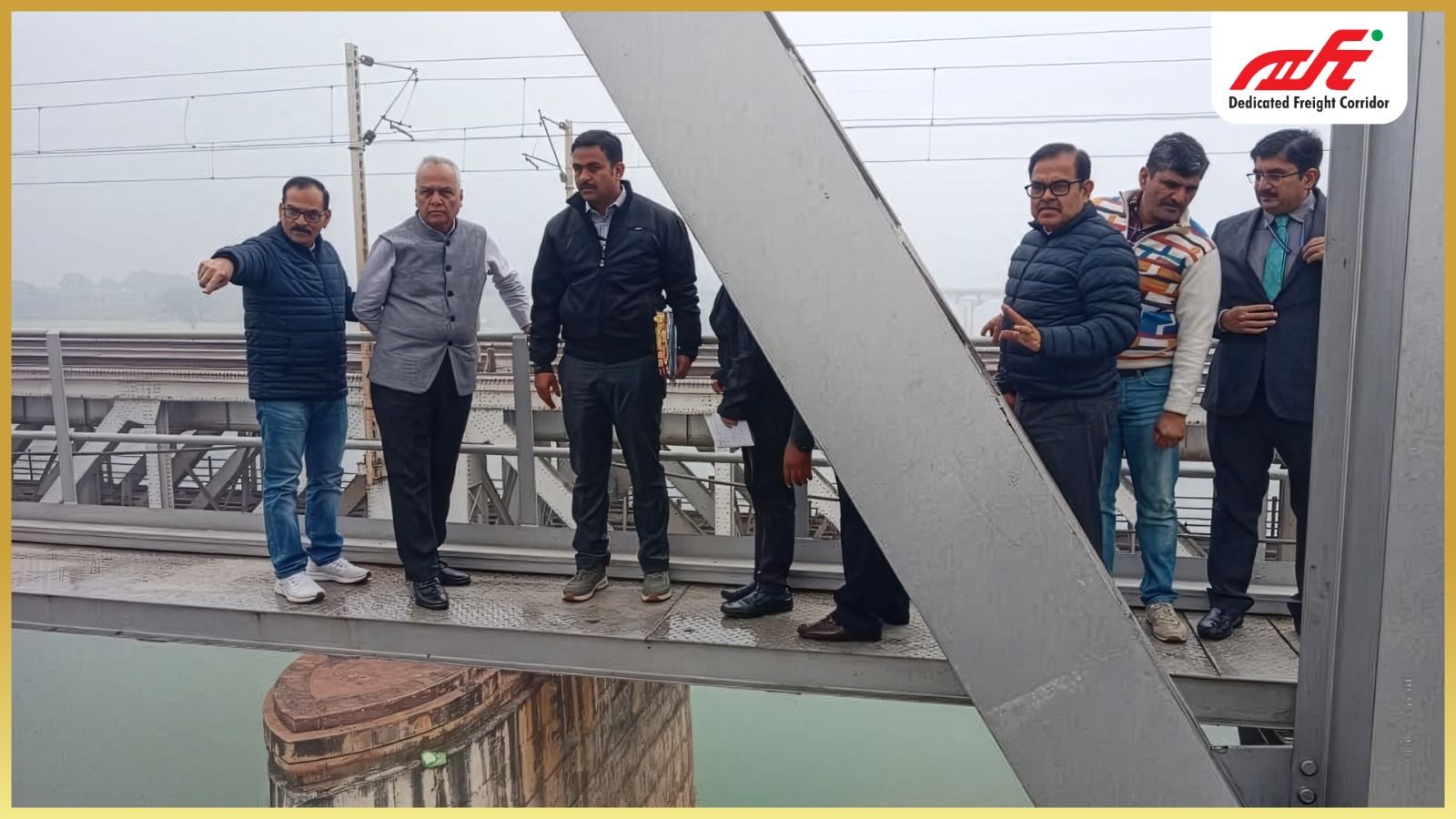
NEW DELHI : Shri Praveen Kumar, Managing Director, Dedicated Freight Corridor Corporation of India Limited (DFCCIL), conducted a comprehensive inspection of the New Manauri–New Durgaoti section of the Eastern Dedicated Freight Corridor (EDFC) on 27 December 2025. The inspection was carried out by rail car, accompanied by senior officials from DFCCIL’s Corporate Office as well as the Prayagraj and Deen Dayal Upadhyaya (DDU) units.
The visit focused on operational preparedness during the winter season, particularly in view of dense fog conditions and the significant increase in passenger movement expected during the Magh Mela. The Magh Mela, one of India’s largest religious congregations, attracts millions of devotees annually and places immense pressure on regional transport infrastructure, especially rail operations.
During the inspection, Shri Praveen Kumar emphasized the need for strict adherence to safety and operational protocols to ensure seamless freight movement while effectively accommodating heightened passenger traffic. He reiterated the importance of aligning operations with Railway Board directives, underlining DFCCIL’s commitment to safe, efficient, and coordinated rail operations during periods of peak demand and low visibility.
Detailed discussions were held with senior officers, including the CGMs from Prayagraj and DDU units, AGM/Operations & Business Development (EDFC), DRM Prayagraj, and AGM (NCR). Key focus areas included optimization of train operations, preventive maintenance strategies, coordination with passenger rail services, and enhanced safety measures during fog-prone conditions.
The inspection was attended by senior officers of DFCCIL, including Shri Sandesh Srivastava, Executive Director (Projects); Shri A. S. Tomar, Group General Manager (S&T); Shri A. B. Saran, Chief General Manager (Prayagraj); Shri Ashish Mishra, General Manager (Security); Shri Shashikant Dwivedi, General Manager (Electrical); and Shri Mannu Prakash Dubey, AGM (Operations & Business Development/EDFC). Senior representatives from Engineering, Mechanical, Electrical, and Signal & Telecommunication departments were also present.
The inspection reaffirmed DFCCIL’s proactive approach towards ensuring operational resilience, safety, and coordination during major public events, while maintaining the efficiency and reliability of dedicated freight operations on the EDFC
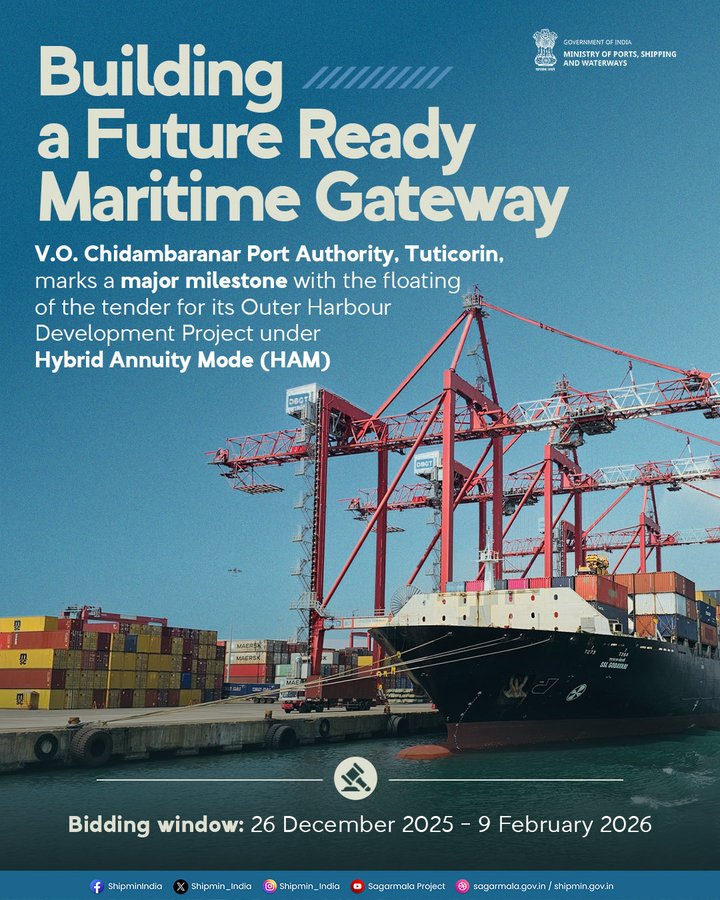
TUTICORIN : V.O. Chidambaranar Port Authority (VOC Port Authority), Tuticorin, has reached a significant milestone with the floating of the tender for its ambitious Outer Harbour Development Project under the Hybrid Annuity Mode (HAM).
The landmark project envisages the development of two state-of-the-art deep-draft terminals, each with a 1,000-metre quay length and an 18-metre draft. Designed to accommodate next-generation large vessels, the terminals will substantially enhance the port’s cargo handling capacity and operational efficiency.
The Outer Harbour Development Project is expected to play a pivotal role in strengthening India’s global trade connectivity by enabling the handling of larger container and bulk vessels, reducing logistics costs, and improving turnaround times. The project also aligns with the Government of India’s vision of port-led development and the creation of future-ready maritime infrastructure.
Once completed, the new terminals will position VOC Port Authority as a key hub on the eastern coast, supporting regional economic growth, boosting exports and imports, and contributing to a resilient, efficient, and sustainable maritime ecosystem.
This milestone marks another decisive step towards modernizing India’s port infrastructure and reinforcing the country’s role in global supply chains.