Home Blog Page 503

Container ship turned missile battery spotted in China

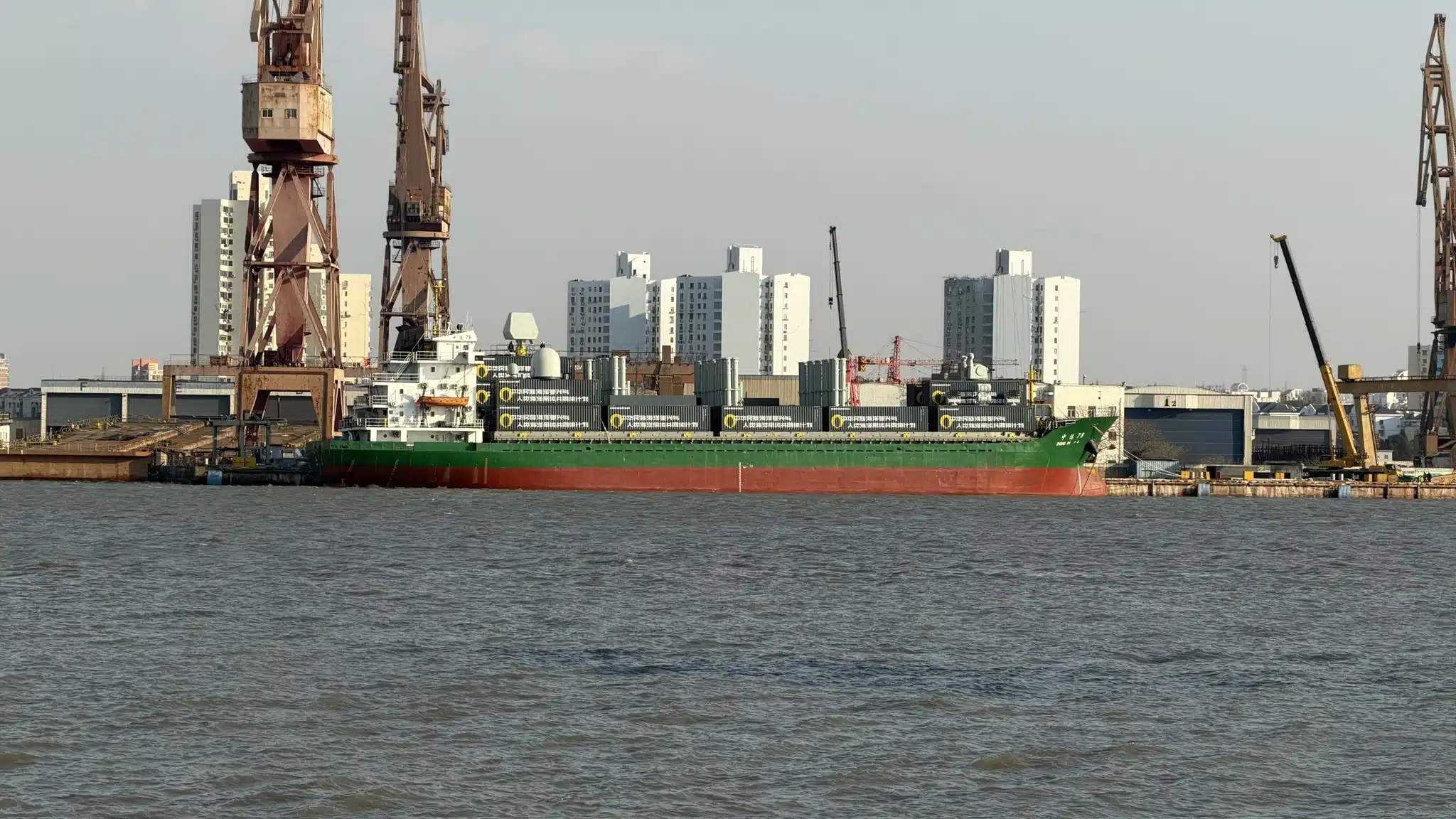
BEIJING : On the Christmas Day of this year, images of a Chinese shipping vessel carrying several containerized vertical launch cells systems appeared online. The basis of the Vessel in question appears to be a standard civilian container carrier, further augmented with radars, Vertical Launch Systems, and other systems.

The otherwise unremarkable vessel features several sets of containerized Vertical Launch Cells, numbering at least 48, split into 3 rows of 16 with what appears to 4 cells per container with each row 4 containers wide. The vessel in question also is fitted with a Type-1130 Close in Weapons system and at least 3 decoy launchers (presumably six when accounting for the possibility of mountings facing the opposite direction) towards the bow.

Sensors have also been fitted within shipping containers, in addition to carried decoys and weaponry with both sensors mounted towards the bridge to the stern of the ship. A Type-344 Fire Control Radar is visible in the foreground, as the array is a standard PLAN sensor built for guiding radar-controlled guns of various calibers up to 130mm, with it usually present on destroyers to assist in prosecuting targets with the main cannon.

An unknown, flat faced, likely AESA array is also mounted slightly to the port and one container higher in height relative to the Type-344, possibly for additional air search or missile guidance capability.

At present, the types of missiles to be carried still remains largely a mystery, although the VLS cells housed within the containers are likely to be able to fire the standard suite of Chinese anti-ship and land attack missiles. Munitions could potentially include the already ship borne CJ-10 land attack cruise missile, the YJ-18 series of anti-ship/land attack cruise missiles, and the YJ-21 anti-ship ballistic missile.

The container ship’s capability to leverage surface to air missiles is also presently unknown, although the capability may be present if the GJB 5860-2006 universal Vertical Launch System and cells are used, potentially allowing for the use of the HHQ-9 series of SAMs.

Throughout the past decade, containerized missile systems have begun to be proliferated around the globe due the flexibility afforded by their use. One of the most notable systems would be the Club-K containerized missile system developed in Russia. The concept detailed that 4 VLS cells would be stored in each container, with the main munition being the Kalibr series of land attack/anti-ship cruise missiles.

The United States has also pursued similar capabilities, with Lockheed’s MK-70 MOD 1 containerized vertical launch system already tested. The MK-70 utilizes 4 strike length Vertical Launch Cells housed in a large container, granting the ability to fire munitions such as the RIM-156 SM-3, the RIM-174 SM-6, and the Tomahawk land attack cruise missile from land or sea platforms.

The U.S Army has also developed a currently designation-less system, featuring the ability to fire 2 HIMARS pods out of a standard size container, shorter than the that of the MK-70. HIMARS PODs and their use entails munitions such as the standard GMLRS or GMLRS-ER series of guided rockets (6 to a pod), to tactical ballistic missiles in the MGM-140 ATACMS (1 to a pod) or the upcoming PRSM (2 to a pod).

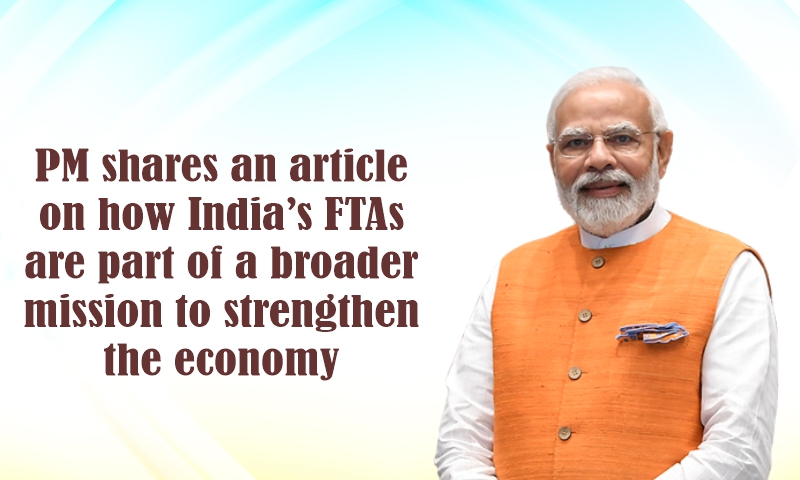
Prime Minister highlights India’s FTAs are part of a broader mission to strengthen the economy

NEW DELHI : The Prime Minister Shri Narendra Modi said about Union Minister Shri Piyush Goyal explains that India’s FTAs today go well beyond tariff reductions, forming part of a broader mission to strengthen the economy and improve the lives of millions. He highlights that the India-New Zealand FTA is a historic milestone as it is India’s first women-led FTA. Almost the entire negotiating team comprised women.

In the article, the Prime Minister highlighted that India’s modern FTAs go beyond traditional tariff reductions and are designed to enhance market access, boost exports, attract global investments, and integrate Indian businesses—especially MSMEs—into global value chains. These agreements are aligned with India’s vision of becoming a competitive, resilient, and trusted partner in global trade.

Emphasising the government’s proactive trade diplomacy, the Prime Minister noted that India’s FTAs focus on new-age sectors such as digital trade, services, innovation, sustainability, and supply chain resilience. By opening new opportunities for Indian industries and workers, the agreements are helping create jobs, promote technology transfer, and encourage domestic manufacturing under the Make in India and Atmanirbhar Bharat initiatives.

The article also pointed out that India’s trade strategy is guided by national interest, ensuring fair terms for farmers, small businesses, and emerging sectors, while safeguarding strategic and economic priorities. The Prime Minister reiterated that well-crafted FTAs play a crucial role in positioning India as a reliable global growth engine amid evolving global economic dynamics.

Concluding the article, the Prime Minister called upon industry, exporters, startups, and entrepreneurs to leverage the expanding network of FTAs to explore new markets, enhance competitiveness, and contribute to India’s journey towards becoming a $5-trillion economy.

Gujarat Govt orders major reshuffle of 26 IAS officers

GANDHINAGAR : The Government of Gujarat has issued a major reshuffle of senior IAS officers, involving transfers, new appointments, and additional charge allocations across key departments. Notable changes include Sanjeev Kumar taking charge as Principal Secretary to the Chief Minister, Dr. Vikrant Pandey’s designation being upgraded to Additional Principal Secretary to the Chief Minister, and several other officers assuming leadership roles in departments such as Finance, Education, Energy & Petrochemicals, Agriculture, Health, and Social Justice & Empowerment.

List of IAS Transferred

(1) Sanjeev Kumar, IAS (RR:GJ:1998), Principal Secretary to Government, Forests & Environment Department is transferred and appointed as Principal Secretary to Chief Minister.

Sanjeev Kumar, IAS (RR:GJ:1998) would also hold additional charge of the post of Principal Secretary to Government, Home Department until further orders relieving Shri M.K. Das, IAS of additional charge of that post.

(2) The appellation of the post held by Dr. Vikrant Pandey, IAS (RR:GJ:2005) is changed from “Secretary to Chief Minister” to “Additional Principal Secretary to Chief Minister.”

Dr. Vikrant Pandey, IAS (RR:GJ:2005) would also hold additional charge of the post of Secretary to Government, Information & Broadcasting Department until further orders relieving Smt. Avantika Singh Aulakh, IAS of additional charge of that post.

(3) On repatriation to the State Government, Ajay Kumar, IAS (RR:GJ:2006) is appointed as Secretary to Chief Minister. Ajay Kumar, IAS (RR:GJ:2006) would hold additional charge of the post of Vice Chairman & Chief Executive Officer, Gujarat Maritime Board, Gandhinagar until further orders vice Rajkumar Beniwal, IAS transferred.

(4) Ramesh Chand Meena, IAS (RR:GJ:1997), Principal Secretary to Government, Ports and Transport Department is transferred and appointed as Principal Secretary to Government, Agriculture, Farmers Welfare and Co-operation Department vice Dr. Anju Sharma, IAS transferred.

(5) Arunkumar M. Solanki, IAS (RR:GJ:1990), Managing Director, Gujarat State Warehousing Corporation, Gandhinagar is transferred and appointed as Additional Chief Secretary to Government, Agriculture, Farmers Welfare & Co-operation Department (Co-operation, Animal Husbandry, Cow Breeding & Fisheries) vice Sandeep Kumar, IAS transferred.

Arunkumar M. Solanki, IAS (RR:GJ:1990) would hold additional charge of the post of Managing Director, Gujarat State Warehousing Corporation, Gandhinagar until further orders.

(6) Mukesh Kumar, IAS (RR:GJ:1996), Principal Secretary to Government, Education Department (Primary & Secondary Education) [who also holds additional charge of the post of Principal Secretary to Government, Education Department (Higher & Technical Education)] is transferred and appointed as Principal Secretary to Government, Education Department (Higher & Technical Education).

(7) Milind Shivaram Torawane, IAS (RR:GJ:2000), Principal Secretary to Government, Panchayats, Rural Housing & Rural Development Department is transferred and appointed as Principal Secretary to Government, Education Department (Primary & Secondary Education) vice Mukesh Kumar, IAS transferred.

(8) Ashwani Kumar, IAS (RR:GJ:1997), Principal Secretary to Government, Sports, Youth & Cultural Activities Department is transferred and appointed as Principal Secretary to Government, Energy & Petrochemicals Department vice S.J. Haider, IAS, who superannuates on 31.12.2025 (A.N.).

(9) Smt. Avantika Singh Aulakh, IAS (RR:GJ:2003), Additional Principal Secretary to Chief Minister is transferred and her services are placed at the disposal of Energy & Petrochemicals Department for appointment as Managing Director, Gujarat State Petroleum Corporation Ltd. (GSPC), Gandhinagar relieving Milind Shivaram Torawane, IAS of additional charge of that post. Smt. Avantika Singh Aulakh, IAS (RR:GJ:2003) would also hold additional charge of the posts of (1) Managing Director, GSPC LNG Ltd., Gandhinagar and (2) Managing Director, Gujarat Gas Ltd., Gandhinagar until further orders.

(10) Sandeep Kumar, IAS (RR:GJ:2002), Secretary to Government, Agriculture, Farmers Welfare & Co-operation Department (Co-operation, Animal Husbandry, Cow Breeding & Fisheries) is transferred and appointed as Secretary to Government, Finance Department (Economic Affairs) vice Smt. Arti Kanwar, IAS transferred.

(11) Jenu Devan, IAS (RR:GJ:2006), Superintendent of Stamps & Inspector General of Registration, Gandhinagar is transferred and appointed as Secretary to Government, Finance Department (Expenditure) relieving Smt. Arti Kanwar, IAS of additional charge of that post. Jenu Devan, IAS (RR:GJ:2006) would continue to hold additional charge of the post of Managing Director, Gujarat Urja Vikas Nigam Ltd., Vadodara until further orders.

(12) Rajesh Manjhu, IAS (RR:GJ:2004), Revenue Inspection Commissioner & Ex-officio Secretary to Government, Revenue Department would hold additional charge of the post of Superintendent of Stamps & Inspector General of Registration, Gandhinagar until further orders vice Jenu Devan, IAS transferred.

(13) Ms. Arti Kanwar, IAS (RR:GJ:2001), Secretary to Government, Finance Department (Economic Affairs) is transferred and appointed as Chief Commissioner of State Tax, Ahmedabad vice Rajeev Topno, IAS transferred.

(14) Dr. Vinod Ramachandra Rao, IAS (RR:GJ:2000), Principal Secretary to Government, Labour, Skill Development and Employment Department is transferred and appointed as Principal Secretary to Government, Forests & Environment Department vice Sanjeev Kumar, IAS transferred.

(15) Dr. Anju Sharma, IAS (RR:GJ:1991), Additional Chief Secretary to Government, Agriculture, Farmers Welfare and Co-operation Department is transferred and appointed as Additional Chief Secretary to Government, General Administration Department (Personnel) relieving Shri Dhananjay Dwivedi, IAS of additional charge of that post.

(16) Hareet Shukla, IAS (RR:GJ:1999), Chief Electoral Officer for the State of Gujarat & Ex-officio Principal Secretary to Government, General Administration Department (Election) would also hold additional charge of the post of Principal Secretary to Government, Ports & Transport Department until further orders vice Ramesh Chand Meena, IAS transferred.

(17) Rajeev Topno, IAS (RR:GJ:1996), Chief Commissioner of State Tax, Ahmedabad is transferred and appointed as Principal Secretary to Government, Health & Family Welfare Department vice Dhananjay Dwivedi, IAS transferred.

(18) On repatriation to the State Government, Dr. Sandhya Bhullar, IAS (RR:GJ:2003) is appointed as Commissioner of Health (Urban) vice Harshadkumar Ratilal Patel, IAS transferred.

(19) Dr. Rajender Kumar, IAS (RR:GJ:2004), Secretary to Government, Industries and Mines Department (Tourism, Devsthanam Management, Civil Aviation & Pilgrimage) is transferred and appointed as Commissioner of Transport vice Anupam Anand, IAS transferred.

(20) Dr. Kuldeep Arya, IAS (RR:GJ:2009), Chief Executive Officer, Special Project (Dholera SIR & Mandal-Bechraji SIR), Gandhinagar is transferred and appointed as Secretary to Government, Industries and Mines Department (Tourism, Devsthanam Management, Civil Aviation & Pilgrimage) vice Dr. Rajender Kumar, IAS transferred. Dr. Kuldeep Arya, IAS (RR:GJ:2009) would also hold additional charge of the post of Chief Executive Officer, Special Project (Dholera SIR & Mandal-Bechraji SIR), Gandhinagar until further orders.

(21) On repatriation to the State Government, Lochan Sehra, IAS (RR:GJ:2002) is appointed as Secretary to Government, Labour, Skill Development and Employment Department vice Dr. Vinod Ramachandra Rao, IAS transferred.

(22) Rajkumar Beniwal, IAS (RR:GJ:2004), Vice Chairman & Chief Executive Officer, Gujarat Maritime Board, Gandhinagar is transferred and his services are placed at the disposal of Energy & Petrochemicals Department for appointment as Managing Director, Gujarat Narmada Valley Fertilizers & Chemicals Ltd., Bharuch relieving Dr. T. Natarajan, IAS of additional charge of that post.

(23) Dhananjay Dwivedi, IAS (RR:GJ:1998), Principal Secretary to Government, Health & Family Welfare Department is transferred and appointed as Principal Secretary to Government, Panchayats, Rural Housing & Rural Development Department vice Milind Shivaram Torawane, IAS transferred. Dhananjay Dwivedi, IAS (RR:GJ:1998) would hold additional charge of the post of Commissioner of Rural Development & Principal Secretary to Government (Rural Development) until further orders relieving Milind Shivaram Torawane, IAS of additional charge of that post.

(24) Harshadkumar Ratilal Patel, IAS (RR:GJ:2005), Commissioner of Health (Urban), Gandhinagar is transferred and appointed as Secretary to Government, Social Justice & Empowerment Department vice Mohammad Shahid, IAS transferred.

(25) Dr. Rahul Babulal Gupta, IAS (RR:GJ:2004), Secretary to Government, Climate Change Department is transferred and appointed as Secretary to Government, Sports, Youth & Cultural Activities Department vice Ashwani Kumar, IAS transferred. Dr. Rahul Babulal Gupta, IAS (RR:GJ:2004) would also hold additional charge of the post of Secretary to Government, Climate Change Department until further orders.

(26) Mohammad Shahid, IAS (RR:GJ:1998), Principal Secretary to Government, Social Justice & Empowerment Department is transferred and appointed as Principal Secretary to Government, Tribal Development Department relieving Smt. Shahmeena Husain, IAS of additional charge of that post.

APSEZ completes acquisition of NQXT Australia

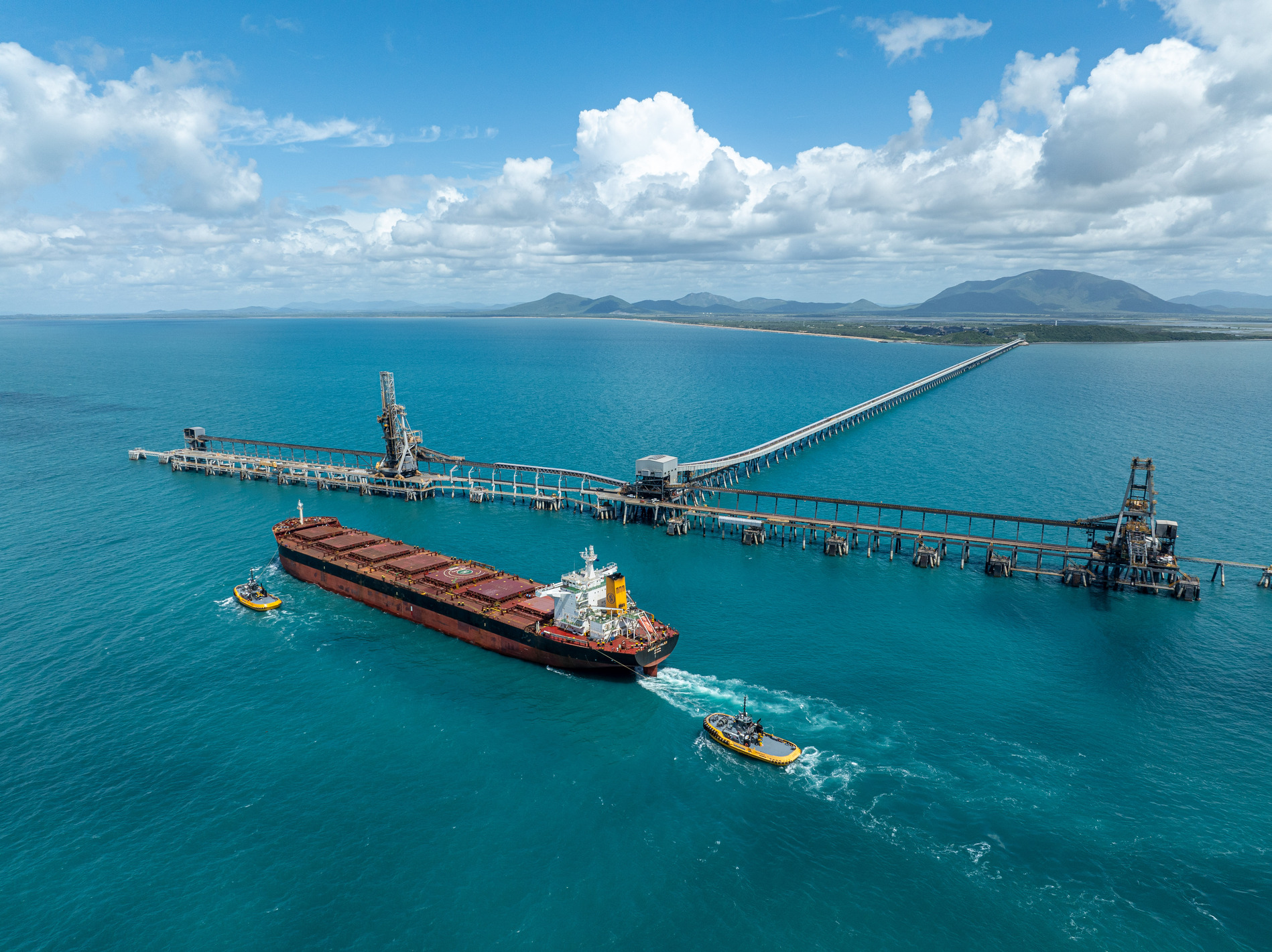
AHMEDABAD : Adani Ports and Special Economic Zone Limited (APSEZ), India’s largest Integrated Transport Utility, has successfully completed the acquisition of 100% interest in NQXT Australia pursuant to completion of all condition precedents, including approvals from ‘majority of minority’ shareholders, Reserve Bank of India, Foreign Investment Review Board of Australia, amongst others. APSEZ has allotted 14,38,20,153 equity shares of face value ₹2 each to the seller, Carmichael Rail and Port Singapore Holdings Pte Ltd on a preferential basis.

“Closure of NQXT’s acquisition is a significant milestone in APSEZ’s growth trajectory towards 1 billion metric tonne cargo by 2030”, said Mr. Ashwani Gupta, Whole-time Director & CEO, APSEZ. “NQXT is an excellent asset with distinct geographical advantages, strong growth prospects, and an enviable sustainability track record. NQXT will enhance our presence along the East-West trade corridor along with our other international ports in Israel, Colombo and Tanzania. I am delighted to welcome NQXT to the APSEZ family and look forward to strengthening our impact on the global trade landscape”.

NQXT is a high-growth, cash generating asset, driven primarily by take-or-pay contracts with customers. During FY25, NQXT had a contracted capacity of 40 million tonnes and delivered A$ 228mn EBITDA (on proforma basis, NQXT represents 6% and 7% of APSEZ’s FY25 revenue and EBITDA respectively).

About NQXTNQXT is a natural deep-water, multi-user export terminal with a name plate capacity of 50 million tonnes per annum. NQXT is under a long-term lease from the Queensland government and is a critical infrastructure asset supporting Australia’s significant resource industry. Located in the Port of Abbot Point in North Queensland, NQXT primarily serves mining customers who are operating in the resource-rich Bowen and Galilee basins and exports largely to fast-growing markets in North and South-East Asia (during FY25, c.88% of cargo was shipped to Asian countries). NQXT has a long remaining lease file of 85 years, with its lease set to expire in year 2110.

Port of Abbot Point has been declared as a Strategic Port and Priority Port Development Area by the Queensland Government. NQXT has an identified pathway and capability to expand throughput to meet the global demand for Queensland’s high-quality resources including potential for green hydrogen exports. NQXT’s operations have contributed over A$ 10 billion to Queensland’s Gross State Product and facilitated 8,000+ jobs across mining and other industries.

NQXT boasts of impeccable sustainability credentials with an excellent safety record (zero FY25 reportable environmental incidents and zero fatalities), diverse workforce (21% female workforce participation, 5% of the workforce identify as Aboriginal and Torres Strait Islander) and deep community involvement (50% of FY25 goods and services procurement with local and regional suppliers and over A$ 2.5mn spent since 2017 on community initiatives in Bowen and Collinsville).

Union Minister Sarbananda Sonowal reviews progress of major Port, Shipping and Waterways Projects

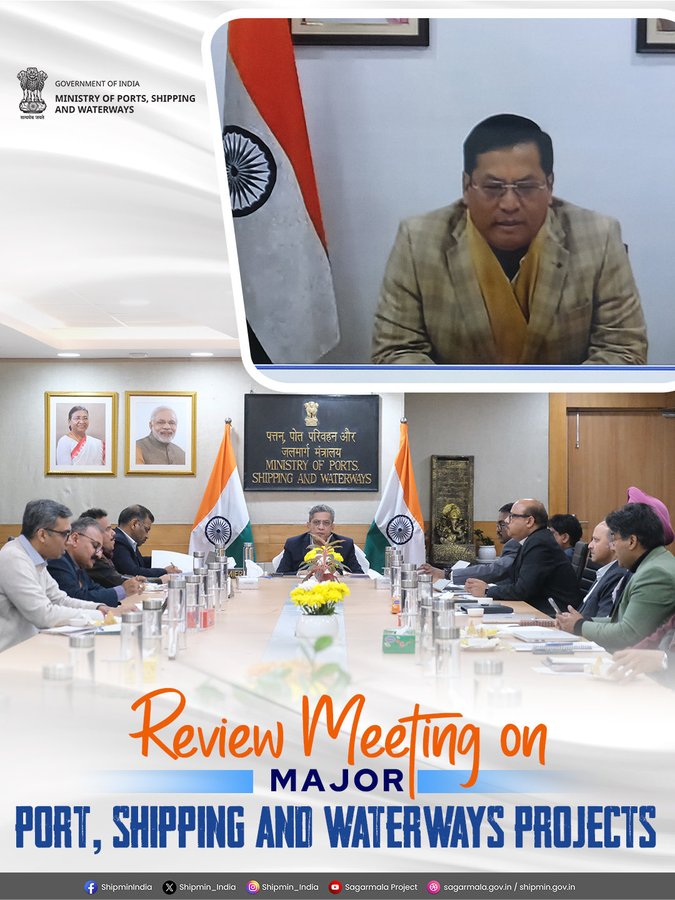
NEW DELHI : Shri Sarbananda Sonowal, Hon’ble Union Minister for Ports, Shipping and Waterways (MoPSW), chaired a comprehensive virtual review meeting to assess the progress of major infrastructure projects in the ports, shipping and inland waterways sectors across the country.

The review focused on key projects targeted for completion in 2026, along with the status of several ongoing mega projects being implemented by various organisations under the Ministry of Ports, Shipping and Waterways. Senior officials of the Ministry, heads of major port authorities, public sector undertakings and leading maritime institutions participated in the meeting.

Detailed presentations were made by major port authorities and MoPSW organisations, outlining project-wise progress, timelines, capacity augmentation plans, technology adoption, and challenges, if any, affecting execution. The review covered projects related to port modernisation, mechanisation, connectivity enhancement, green and sustainable initiatives, shipbuilding and repair infrastructure, and inland waterways development.

The Hon’ble Minister emphasized the importance of timely completion, cost efficiency and quality execution of all projects, in line with the Government’s vision of transforming India into a global maritime hub. He underscored the need for close coordination among stakeholders, proactive resolution of bottlenecks and adoption of innovative solutions to accelerate project implementation.

Shri Sonowal also highlighted the strategic role of ports and waterways in boosting trade, strengthening logistics efficiency, promoting coastal and inland shipping, and supporting the country’s economic growth. He directed officials to align project outcomes with national initiatives such as PM Gati Shakti, Maritime Amrit Kaal Vision 2047, and sustainable development goals, while ensuring environmental compliance and long-term resilience.

The Minister appreciated the efforts made by MoPSW organisations and reiterated the Ministry’s commitment to infrastructure-led growth through modern, efficient and future-ready maritime assets. Regular monitoring and review mechanisms, he said, would continue to ensure steady progress and timely delivery of projects critical to India’s maritime and logistics ecosystem.

NMPA New Chairman Sushil Kumar Singh reviews ongoing and upcoming developmental projects

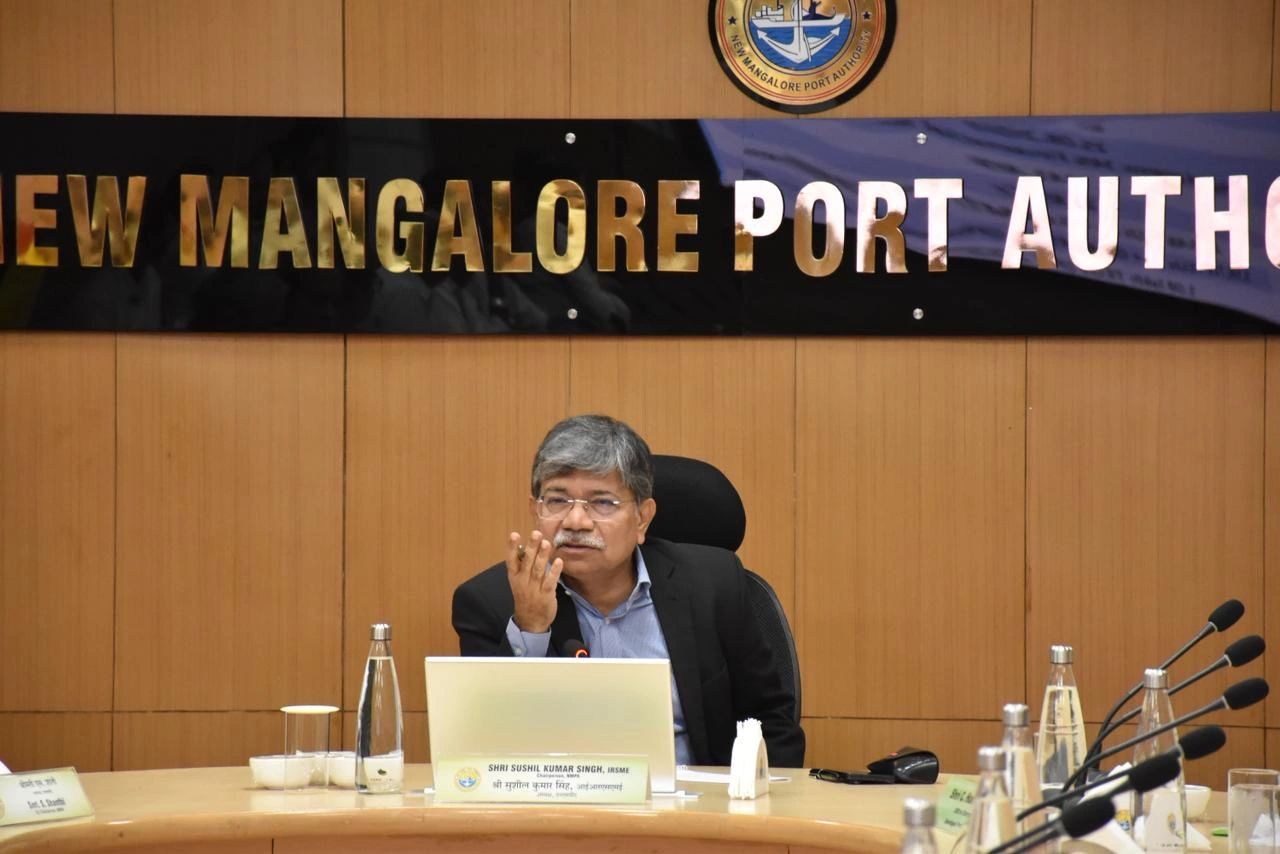
MANGALURU : Shri Sushil Kumar Singh, IRSME, Chairman, New Chairman of New Mangalore Port Authority (NMPA), undertook a comprehensive review of various ongoing and upcoming developmental projects during his visit to the Port.

The Chairman held detailed deliberations with senior officers of NMPA and key stakeholders, focusing on the progress of critical infrastructure projects, adherence to project timelines, enhancement of operational efficiency, and capacity augmentation initiatives. Discussions also covered future development plans aligned with the Port’s long-term growth roadmap and its vision to strengthen its role as a major gateway port on the west coast.

Key areas reviewed included modernization of port infrastructure, cargo handling optimization, mechanization initiatives, connectivity improvements, and sustainability-driven projects aimed at improving environmental performance. Emphasis was laid on timely completion of projects, adoption of advanced technologies, and streamlining operational processes to enhance overall port productivity and customer satisfaction.

Shri Sushil Kumar Singh provided valuable guidance and strategic inputs on accelerating project execution, improving coordination among departments, and ensuring alignment with national maritime objectives such as port-led development, ease of doing business, and green port initiatives. He also underscored the importance of stakeholder engagement and efficient asset utilization to support future traffic growth.

The review meeting reaffirmed NMPA’s commitment to modernization, sustainable development, and strengthening its competitive position in the maritime sector, while contributing to regional economic growth and national logistics efficiency.

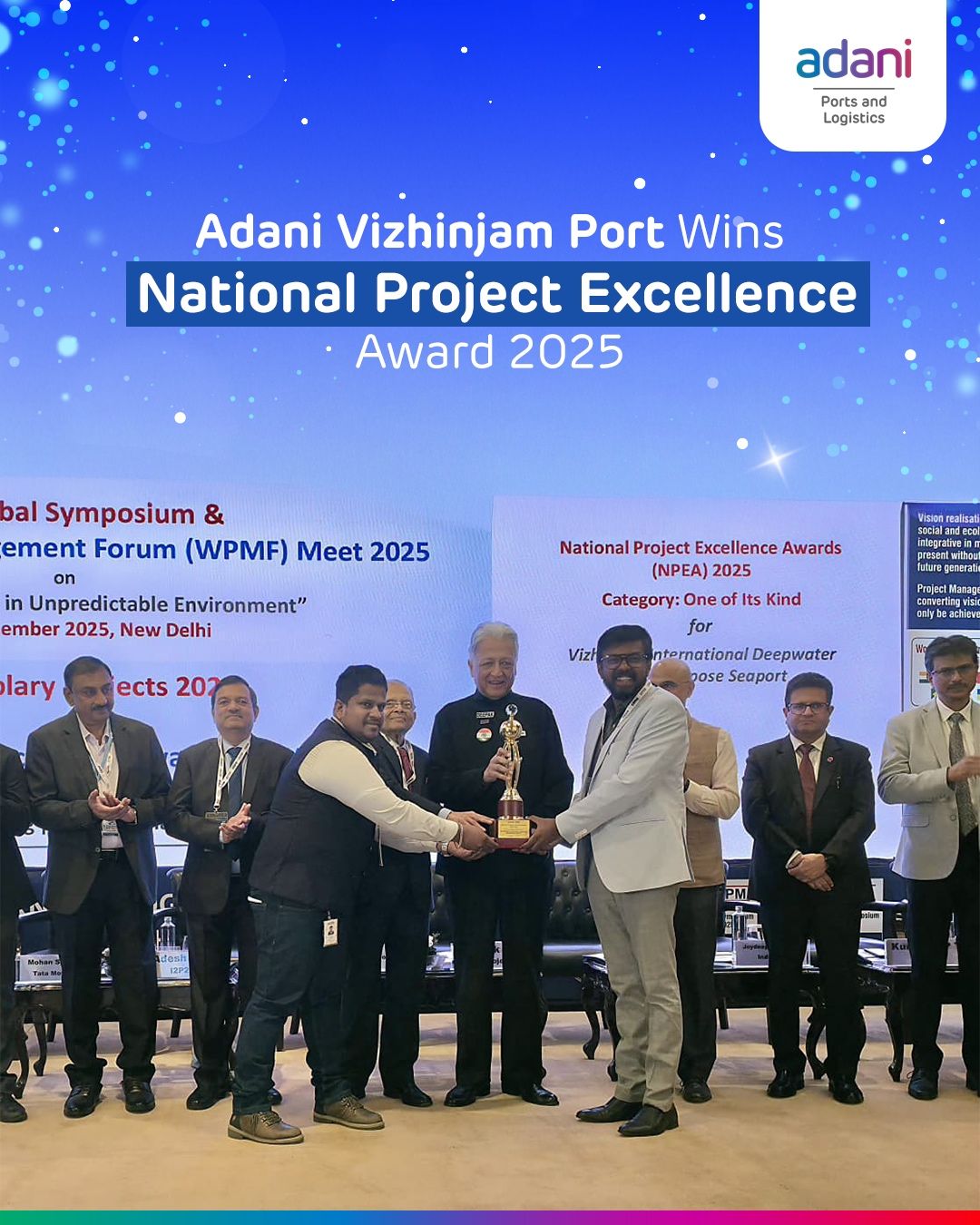
Adani Vizhinjam Port wins National Project Excellence Award 2025

1766481626187 Adani Vizhinjam Port wins National Project Excellence Award 2025

NEW DELHI : Adani Vizhinjam Port Private Limited (AVPPL) has been conferred the National Project Excellence Award 2025 in the “Mega Infrastructure” category, reaffirming its leadership in delivering world-class port infrastructure in India.

The award was presented at the 33rd Global Symposium & 7th World Project Management Forum Meet, themed “Mastering Change in an Unpredictable Environment,” held at Le Méridien, New Delhi. The prestigious event was jointly organized by the International Institute of Projects and Program Management (i2P2M) and the Centre for Excellence in Project Management (CEPM).

The recognition highlights AVPPL’s exemplary project planning, execution excellence, risk management, and its ability to navigate complex challenges while developing one of India’s most strategic deep-water ports. Vizhinjam International Seaport is poised to emerge as a global transshipment hub, strengthening India’s maritime trade and logistics ecosystem.

Receiving the award underscores Adani Group’s commitment to timely delivery, innovation, sustainability, and global best practices in large-scale infrastructure development.

This achievement further reinforces Vizhinjam Port’s role in advancing India’s port-led development vision and enhancing the country’s position in global maritime trade.

New Zealand can absorb $3.3 billion of India’s US tariff-hit exports

NEW DELHI : New Zealand can readily absorb $3.3 billion worth of Indian exports currently facing tariff pressure in the United States, offering Indian manufacturers a viable alternative market as trade frictions rise, a Moneycontrol analysis of trade data shows.

By mapping US imports from India against New Zealand’s “residual” import demand—imports sourced from the rest of the world excluding India—the analysis identifies an overlap of nearly $12.2 billion across a broad set of products. Of this, around $3.3 billion represents a near-term, realistic opportunity for Indian exporters.

The core of this potential lies in product categories where India already has demonstrated export strength to the US, while New Zealand continues to source most of its demand from other suppliers. In many such lines, India’s exports to the US are substantial, yet its presence in New Zealand remains negligible despite meaningful import demand.

Processed foods and beverages account for a large share of the opportunity. India exports sizable volumes of sugar confectionery, sweet biscuits, ready-to-eat and ready-to-cook foods to the US, while New Zealand imports tens of millions of dollars’ worth of the same products from non-Indian suppliers.

A similar pattern emerges in sauces and condiments—including tomato ketchup and mixed sauces—as well as protein concentrates and a wide range of packaged food preparations.

Consumer goods: cosmetics and home care

Another major cluster is cosmetics, toiletries and home-care products. India already exports perfumes and toilet waters, cosmetic preparations, hair and oral care products, and perfuming deodorisers to the US in significant volumes. At the same time, New Zealand’s import demand in these categories remains largely met by other countries, leaving ample headroom for Indian firms.

Plastics and packaging materials also stand out, with New Zealand continuing to import substantial quantities from non-Indian partners despite India’s strong global export base in these products.Textiles, footwear and home furnishings

Textiles, garments and footwear form another prominent segment of the overlap. India exports large volumes of T-shirts and knitwear, women’s dresses, innerwear, and home textiles such as bed linen, blankets and kitchen linen to the US. New Zealand’s remaining import demand for many of these lines—particularly garments, home textiles and footwear—is sizeable.Industrial and high-value goods

On the industrial side, chemicals, plastics, machinery and medical devices underpin a significant portion of the $3.3-billion opportunity. There is strong overlap in pumps, filtration systems, filling and packaging machinery, and transmission components.

New Zealand’s unmet demand for medical and surgical instruments, orthopaedic appliances, and diagnostic and imaging equipment adds a higher-value, skill-intensive dimension to the trade diversion potential.

Analysis suggests that New Zealand offers India not just marginal diversification, but a credible absorption market for exports displaced or pressured by US tariffs.

Union Budget 2026 readies Next-Gen customs overhaul

NEW DELHI : Customs duty reform is shaping up to be the next major structural clean-up on the Government’s reform agenda, with the upcoming Union Budget expected to signal the start of a comprehensive overhaul.

According to people in the know, Finance Minister Smt. Nirmala Sitharaman’s Budget speech is likely to have two dedicated paragraphs outlining the roadmap for revamping customs, underlining its growing importance in improving ease of doing business and strengthening India’s manufacturing competitiveness.

At the heart of the proposed reform is a push to simplify the complex web of customs notifications that has accumulated over the years. The government is considering replacing the current system of multiple exemption and concessional duty notifications with a single, comprehensive customs notification.

Officials believe this move could significantly reduce interpretational disputes, compliance burden and litigation, while also improving transparency for importers and customs officials alike.

Another key pillar of the reform is expected to address duty inversion, particularly in sectors critical to India’s industrial and clean-energy ambitions. Also, focus will be on realigning the tariff structures with India’s free trade agreement (FTA) commitments with multiple nations.

Efficiency at ports and customs stations is also a major focus area under the revamp, sources hinted.

The government is aiming to bring down average customs clearance times to 48 hours, from the current three–four days. This would involve greater use of risk-based assessments, digitisation and streamlined procedures, reducing delays that increase logistics costs and hurt exporters and importers.

Within government circles, the proposed customs revamp is being described as the biggest systemic clean-up since the introduction of the Goods and Services Tax (GST) and earlier income-tax reforms.

“The implementation is likely to be phased, with a rollout beginning from FY27 onwards,” said people cited above.

In the last Budget in 2025, the Government had rationalised custom duty on a host of items including health sector, textile and luxury cars. The government has fully exempted BCD on 36 additional life-saving drugs, targeting treatments for cancer, rare diseases and chronic conditions.

The Budget also exempted cobalt powder and waste, lithium-ion battery scrap, lead, zinc, and 12 other critical minerals. Electronics and electric mobility also feature prominently.

Source : NDTV Profit

Bengal Tiger Line opens West Asia regional headquarters in Dubai, expanding Middle East Presence

KOLKATA : Bengal Tiger Line (Pte) Ltd has further strengthened its Middle East footprint with the inauguration of its West Asia Regional Office in Dubai, marking a key step in the company’s regional growth strategy. The new office was formally inaugurated by the company’s Chief Executive Officer, Mr. Andrew Winter.

Addressing the gathering, Mr. Winter emphasized the broader significance of the new regional hub, noting that it represents more than a physical expansion. He said the Dubai office reflects Bengal Tiger Line’s commitment to unlocking new opportunities, deepening partnerships, and driving long-term growth, while bringing the company closer to its customers, partners, and teams across the region.

The West Asia Regional Office will serve as a central hub to oversee the company’s operations across the region, strengthen customer engagement, and support the expanding service network of the liner operator. Located in Dubai — a globally recognized maritime and logistics gateway — the office will enable closer coordination with key stakeholders and enhance operational efficiency.

The inauguration highlights Bengal Tiger Line’s focus on expanding its presence in high-growth markets and reinforces its long-term vision of providing dependable, customer-focused shipping solutions across Asia, the Middle East, and international trade lanes.