Home Blog Page 504

Mazagon Dock targets ₹1 lakh crore order book by FY26

MUMBAI : Mazagon Dock Shipbuilders is targeting an order book of over ₹1 lakh crore by the end of 2025–26 (FY26), according to Ruchir Agrawal, the company’s Director of Finance. The state-owned defence major is counting on the finalisation of the critical P-75I (Project-75 India) submarine contract, with negotiations currently underway with the Indian Navy, to drive this sharp expansion in its order pipeline.

Speaking on the company’s outlook, Agrawal provided clarity on the path to this ambitious target. He stated that the order book, which stood at approximately ₹27,400 crore as of September 30, has since depleted to around ₹25,000 crore due to execution. The key to reaching the ₹1 lakh crore milestone lies in the P-75I programme, which involves the construction of six advanced submarines.

“The negotiation for 75I is already on, and before the close of this financial year, we should sign the deal,” Agrawal said. “If everything goes well, our order book should be more than a lakh crore… by 2025-26 (FY26) end.” He refrained from disclosing the potential value of the P-75I contract, citing the ongoing negotiation process.

Agrawal also distinguished this from the P-75 Scorpene submarine order, which has seen delays. He clarified that while the Scorpene deal is still active, the company has not yet been called for negotiations and expects to hear more definitive news only by the end of FY26 or early 2026-27 (FY27).

On the financial front, Mazagon Dock is maintaining its guidance despite some operational challenges. The company is holding to its projection of a ₹12,500 crore topline and 15% margins for FY26. “We are holding with that. And we expect that we should meet that, although challenges are there. This year, the monsoon was a little bit extended, but we expect that we will be meeting these targets,” Agrawal said, expressing confidence in achieving the goals.

Regarding the company’s export business, Agrawal acknowledged it remains a small part of the portfolio, with a single order of around ₹715 crore currently in hand, which he stated is loss-making. He indicated that the company would likely pursue more export orders as India’s shipping infrastructure capabilities expand.

Agrawal does not expect any significant reversal of provisions made for multi-purpose vessels (MPV) and coast guard vessels in the upcoming October-December quarter of 2025 (Q3FY26) and January-March quarter of 2026 (Q4FY26). He also does not expect any further increase in these provisions, suggesting a stable outlook on this front.

The company, which has a market capitalisation of around ₹1,01,913.96 crore, has seen its shares gain nearly 9% over the past year,

DFCCIL signs agreement with IRFC

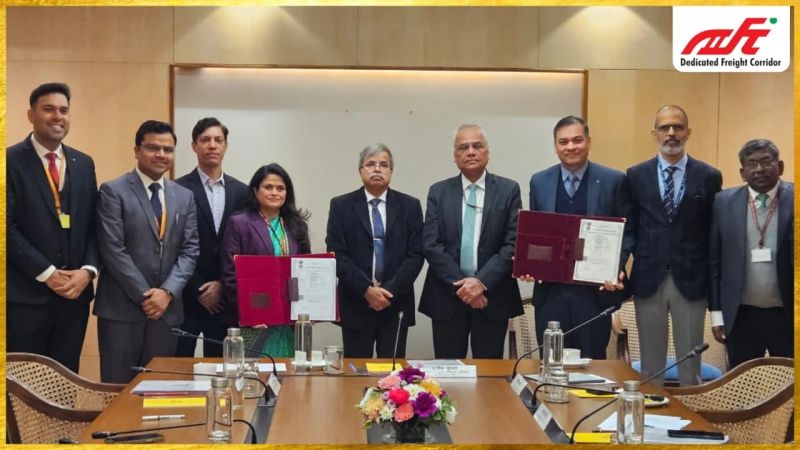
NEW DELHI : In a historic first and a decisive step towards AtmanirbharBharat, DFCCIL has signed an agreement with Indian Railway Finance Corporation (IRFC) to refinance ₹10,000 crore of DFCCIL’s foreign currency debt availed from the World Bank for the Eastern Dedicated Freight Corridor (EDFC).

This first-of-its-kind refinancing arrangement, structured in close coordination with the Ministry of Finance, Ministry of Railways, DFCCIL, IRFC, and the World Bank, is expected to result in savings of ₹2,700 crore for the Government of India.

The agreement was signed between DFCCIL and IRFC under the chairmanship of Sh. Satish Kumar, Chairman & CEO, Railway Board.

Senior leadership of DFCCIL, included Sh. Praveen Kumar, MD, Sh. Shobhit Bhatnagar, Director/OP&BD, Sh. Rahul Kapoor, Director/Finance, and Sh. Anurag Sharma, Director/Infrastructure.

Senior officials from IRFC were also present, led by Ms. Deepa Kotnis, Executive Director/Finance, along with Sh. Nav Goel, GM/Finance and Sh. Ashish Saini, GM/Finance.

A landmark move that strengthens financial self-reliance while reinforcing India’s commitment to building world-class freight rail infrastructure.

Bureau Veritas classes its first methanol dual-fueled container ship as CMA CGM ANTIGONE delivered by CSSC Jiangnan Shipyard

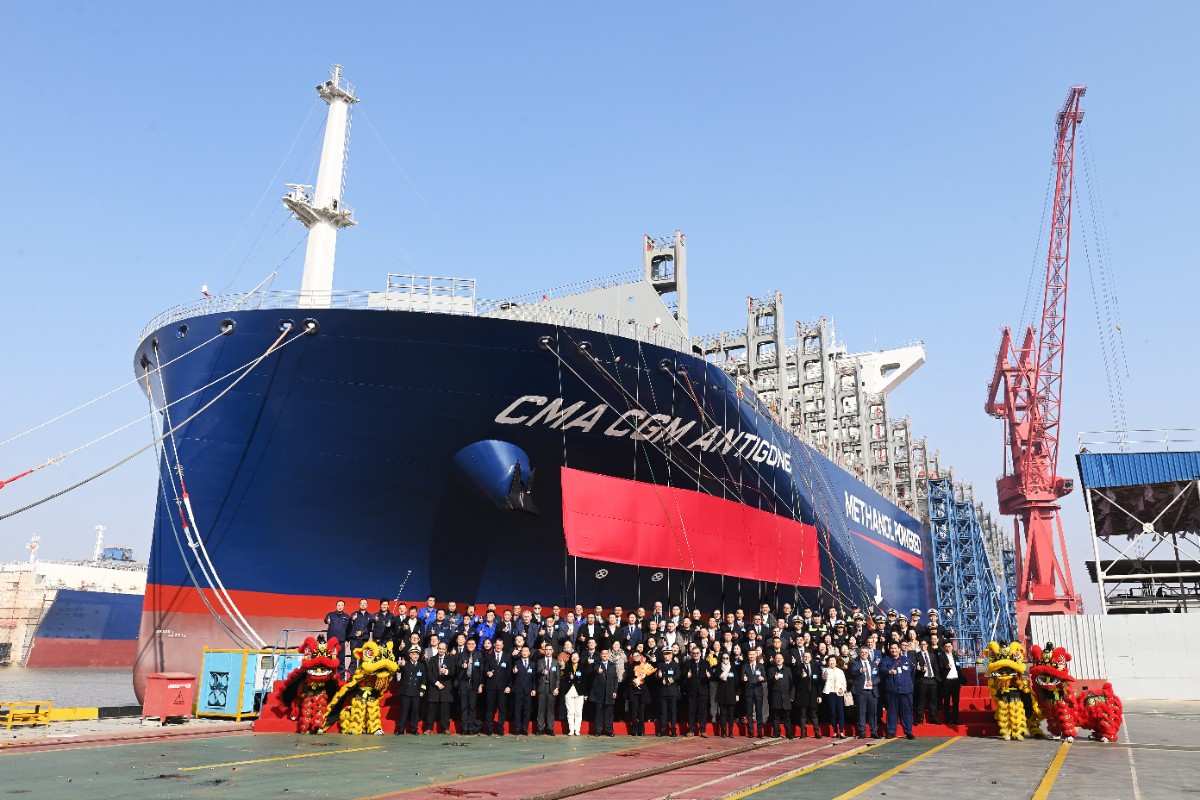
MARSEILLE : Bureau Veritas Marine & Offshore (BV), has classed its first methanol-fueled containership, CMA CGM ANTIGONE. The 15,000 TEU methanol dual-fuel vessel was built by CSSC Jiangnan Shipyard for the CMA CGM Group, and officially named on December 11 and delivered on December 12

CMA CGM ANTIGONE is the lead ship of CSSC Jiangnan Shipyard’s independently designed “Kun” series of 15,000 TEU-class methanol dual-fuel container ships. With an overall length of 366 meters, the vessel represents a new generation of large container ships that combine high operational efficiency with significantly reduced environmental impact. Powered by methanol dual-fuel propulsion, the vessel achieves substantial reductions in nitrogen oxide (NOx) emissions and near elimination of sulfur oxide (SOx) emissions, enabling early compliance with the International Maritime Organization’s (IMO) 2030 emissions reduction targets.

Ahead of the project launch, BV assembled a dedicated team of gas-carrier and alternative-fuel experts to provide specialized training for BV surveyors and the client’s project team and assessed forthcoming international regulations to facilitate early and future compliance. During design review, BV worked closely with Jiangnan Shipyard to optimize structural arrangements and fuel system integration, using advanced simulation tools to meet safety requirements while controlling lightship weight.

In accordance with BV’s Rules for Methanol & Ethanol Fueled Ships, BV provided technical review and risk assessment for key areas including ship design and fuel system safety. During construction, BV surveyors applied refined process control and data-driven monitoring and conducted targeted inspections of fire safety, ventilation, and explosion-proof systems, reinforcing the vessel’s inherent safety.

Xavier Leclercq, VP of New Building at CMA Ships, said: “This ship is the first methanol dual-fuel container ship received by CMA CGM in China. Its successful construction and delivery are the result of the hard work and close cooperation of all project partners: Jiangnan Shipyard, China Shipbuilding Trading Co., Ltd., CMA CGM Group, Bureau Veritas, and all other relevant parties. We extend our sincere gratitude to Jiangnan Shipyard and China State Shipbuilding Corporation for their excellent collaboration and strong support throughout the entire construction process of the ship. We look forward to continuing to work hand in hand for a bright future.”

Hu Hongyu, Vice General Manager of CSSC Jiangnan Shipyard, said: “The delivery of this ship is not only another fruit of the profound friendship and outstanding cooperation between CMA CGM and Jiangnan, but also another model of win-win cooperation between China and France in the field of high-end manufacturing. We sincerely thank CMA CGM Group, Sinosure, and Export-Import Bank of China for their strong support. We wish this container ship smooth sailing and have a long voyage ahead. We also look forward to Jiangnan and CMA CGM continuing to deepen cooperation, innovate in more fields, and work together to write a new chapter in shipping development.”

Maersk settle dispute with Seatrium over $475 million contract for offshore wind vessel

COPENHAGEN : Singapore-based shipbuilder Seatrium said on Monday it has reached a settlement with Denmark’s Maersk to deliver an offshore wind vessel that was intended to work on a project off the coast of New York.

Seatrium announced Maersk terminated the contract on October 10, citing construction delays, but did not say at the time whether it had paid for the work completed.

Under the agreement reached on Monday, Maersk is set to pay the balance of $360 million of the total contract price of $475 million. Around $250 million of the balance will be paid using an interest-bearing credit arrangement for up to 10 years, where it will be repayable through cash generated by the vessel.

Both parties have also agreed to withdraw and discontinue all legal proceedings as the “optimal way forward,” taking into consideration financial impacts and the risk of lengthy and costly proceedings, among others.

As of December 22, the project is around 99.8% completed, Seatrium added in its statement.

Ocean Network Express Secures Minority Stake in Dalian Container Terminal

SINGAPORE : Ocean Network Express (ONE) has announced the signing of an agreement to acquire a minority stake in Dalian Container Terminal (DCT) in Dalian, China.

Located in the largest foreign container trade hub in Northeast China, DCT is one of the biggest dedicated container terminals in the region. The terminal has an annual capacity of 6.6 million TEU (twenty-foot equivalent units). The facility features 14 container berths with a total quay length of 4,390 meters and is equipped with modern equipment and deep drafts to accommodate large container vessels.

Hiroki Tsujii, Global Chief Officer of ONE’s Product and Network division, says, “This acquisition of a minority stake aligns with our strategy of ensuring access at key regional ports. The ownership stake allows us to collaborate with DCT and contribute to its continued infrastructure development and green terminal initiatives, further supporting Dalian’s role as a key gateway for international trade in Northeast China.”

Hanseatic Global Terminals to invest in greenfield container terminal project in Brazil

BRAZIL : Hanseatic Global Terminals (HGT) has signed an agreement with Imetame Group to invest in 50% of the shares in Imetame Logística Porto (ILP) – a joint venture focusing on container terminal operations. Under the agreement, both partners will develop and operate the new “Hanseatic Global Terminals Aracruz” container terminal that will serve as a modern transshipment and gateway port facility.

The terminal, located in Aracruz in the state of Espírito Santo, Brazil, is expected to launch operations by mid-2028 with an annual future capacity of around 1.2 million TEU, 750 meters of quay length and state of the art container handling equipment. With a water depth of 17 meters, the facility is suitable for handling large ships. Imetame Group is a diversified Brazilian conglomerate founded in 1980. The contracting parties have agreed to not disclose financial details of the transaction.

“Latin America is a key strategic market for Hanseatic Global Terminals and Hapag-Lloyd. Our joint venture with the Imetame Group and the development of a new transshipment hub and gateway port on Brazil’s east coast strengthens our terminal portfolio while addressing capacity constraints in a growth region. This investment in the port of Aracruz benefits Brazil by strengthening trade infrastructure via a port closer to consumer markets and key global shipping routes than traditional gateway ports – thereby providing several cargo-originating states an alternative and more efficient access to global markets,” said Dheeraj Bhatia, CEO of Hanseatic Global Terminals.

“We are very pleased to have Hanseatic Global Terminals as a strong strategic partner for the new container terminal in Espírito Santo. Hanseatic Global Terminals possesses great expertise to offer the new terminal’s customers, importers and exporters efficient cargo handling and further strengthen Brazil’s importance in global trade. Beyond operational excellence, we are committed to developing opportunities for the region, boosting jobs and fostering the development of local businesses,“ said Etore Selvatici Cavallieri, Chairman of Imetame Group.

Terminal and infrastructure investments represent a crucial component of Hanseatic Global Terminals’ strategic agenda, aiming at further developing its portfolio to expand to more than 30 terminals by 2030. The closing of the transaction is subject to approval by the relevant antitrust authorities and other relevant regulators and to additional conditions customary for a transaction of this kind.

RapidShyp launches Ayumi, ushering in a new era of 99% accurate predictive logistics for Indian eCommerce

NEW DELHI : RapidShyp, one of India’s fastest-growing, tech-enabled shipping aggregation platforms, recently announced the launch of RapidShyp Ayumi, an advanced AI-powered delivery intelligence engine set to bring extraordinary predictability and clarity to eCommerce logistics. Positioned as “AI that understands your deliveries,” Ayumi is a unified intelligence layer that thinks, learns, and acts with brands, enabling them to prepare smarter fulfilment strategies. Offering up to 99% accurate delivery predictions, the tool introduces a new standard of precision to Indian eCommerce.

Forming the core of its ecosystem is Ayumi Predict, the engine’s high-accuracy RTO identification and prevention module. Built on RapidShyp’s comprehensive dataset, courier signals, and millions of shipment outcomes, Ayumi Predict consistently analyses buyer behaviour, seasonal patterns, and ground-level logistics conditions. Its advanced scoring model assesses past shopping habits, cancellation history, payment behaviour, address quality, location reliability, delivery difficulty, historical delivery outcomes, and regional fulfilment patterns to zero in on the probability of return before an order leaves the warehouse. By identifying high-risk orders ahead of dispatch, Ayumi Predict enables prompt interventions such as address confirmation, verification calls, or COD-to-prepaid nudges. These alerts empower brands to resolve issues at the source, helping lower RTO losses by up to 40%, while saving packaging, workforce, shipping costs, and operational time.

Speaking about the launch, Ravi Goel, CEO of RapidShyp, said, “Logistics has operated for too long on assumptions, delays, and reactive decisions. With Ayumi, RapidShyp is changing that by giving sellers real-time intelligence and precision-driven frameworks that bring predictability to deliveries. This innovation is expected to contribute to nearly 30% month-on-month growth, while helping sellers achieve more reliable, efficient, and cost-effective shipping outcomes. Going forward, RapidShyp will continue to invest in advanced technologies to build a simpler, smarter, and more dependable logistics ecosystem for businesses at every stage.”

Guided by this fundamental principle, Ayumi Promise provides hyper-accurate Estimated Delivery Dates (EDDs). It analyses courier lane performance, real-time network load, seasonal behaviour, and historical delivery patterns to offer accuracy even during festive peaks or demand surges. Designed to avoid static estimates, it delivers timelines that reduce buyer anxiety, lower “Where is my order?” queries, increase delivery confidence, and drive stronger conversion and repeat purchase rates.

Further enhancing fulfilment is Ayumi Select, the platform’s intelligent courier allocation engine. It evaluates lane-level performance, pin code–level reliability, real-time courier stress signals, sorting centre congestion, seasonal trends, and long-term courier consistency to suggest the most suitable carrier for each shipment. Every recommendation is supported by a delivery success-probability score, helping sellers eliminate guesswork and improve first-attempt delivery rates.

These predictive and optimisation capabilities are complemented by Ayumi Sense, an on-demand, conversational logistics co-pilot available via chat and voice. It allows sellers to process orders instantly, answer shipping queries, retrieve performance insights, clarify delivery timelines, and navigate platform features in seconds, offering on-demand assistance that simplifies decision-making for teams of all sizes. Reinforcing its commitment to accessible innovation, RapidShyp offers Ayumi within its zero-platform-fee model. Growing D2C brands and enterprise-scale sellers can simply benefit from AI-led clarity without any additional costs.

With this new tool, RapidShyp further strengthens its position as one of India’s most progressive logistics tech platforms. Its infrastructure spanning multi-courier integrations, extensive pin code reach, automated allocation engines, and an analytics dashboard is now elevated by a precision engine that equips businesses with clarity, predictability, and control across the entire fulfilment cycle.

About RapidShyp:

RapidShyp is a tech-enabled shipping aggregation platform for eCommerce, D2C and B2B brands/enterprises looking to scale their business with reliable logistics services. The platform simplifies logistics by offering access to 16+ leading couriers through a single interface. It also offers one-click integration with popular eCommerce platforms such as Shopify, WooCommerce, and more. Leveraging cutting-edge technology to ease logistics challenges, features like a user-friendly Order Management System, AI-enabled courier recommendation engine, automated manifest and label generation, and streamlined shipping workflows ensure that operations are both efficient and hassle-free. Through its offerings, RapidShyp is empowering brands to focus on growth and customer satisfaction.

Baltic Index falls to five-month low as vessel rates decline across the board

LONDON : The Baltic Exchange’s dry bulk sea freight index, which tracks rates for vessels transporting dry bulk commodities, fell to an over five-month low on Tuesday, as rates across all vessel segments declined.

The main index, which factors in rates for capesize, panamax and supramax shipping vessels, lost 90 points, or 4.5%, to 1,889 points, its lowest since July 15.

The capesize index fell 222 points, or about 6.2%, to 3,337 points, its lowest in over a month.

Average daily earnings for capesize vessels, which typically transport 150,000-ton cargoes such as iron ore and coal, decreased by $1,842 to $27,676.

Iron ore futures prices closed lower on Tuesday, weighed by steel mills undergoing annual furnace maintenance and rising Chinese port inventories.

The panamax index fell to an over 6-month low, losing 16 points, or 1.3%, to 1,266 points, its lowest level since June 9.

Average daily earnings for panamax vessels, which usually carry 60,000 to 70,000 tons of coal or grain, decreased by $149 to $11,391.

Among smaller vessels, the supramax index lost 31 points to 1,162 points.
Source: Reuters

Asian oil floating storage seen declining on lower exports

SINGAPORE : The volume of oil stored on board ships in Asian waters, which has tripled since September to a three-year high, is poised to decline as producers of sanctioned oil slow exports and Chinese refiners ramp up buying, trade sources and analysts said.

A surge of exports from countries subject to Western sanctions led by Iran and Russia, as well as tepid Chinese buying, left a glut of oil looking for buyers in the world’s biggest consuming region. The excess supply has weighed on prices and cushioned the near-term impact from the disruption of exports from Venezuela.

A large amount of oil was shipped out in recent months in anticipation of tighter sanctions, said Mukesh Sahdev, CEO of energy consultancy XAnalysts.

“The floating storage buildup has passed its peak, and the declines will lend support to oil prices. But it will be unlikely to revert to previously low levels given the increased oil production globally,” he said.

Asian oil floating storage hit 70.9 million barrels on December 18, the highest since June 2022 and up from 21 million barrels at the beginning of September, according to Kpler, a data and analytics provider. Iranian oil accounted for more than half of the stored crude at 38.9 million barrels, the data showed.

Iranian, Russian and Venezuelan exports

Iran’s exports topped 1.9 million barrels per day in September and October, the highest since mid-2018, Kpler data showed, falling to 1.8 million bpd for November and 1.1 million bpd so far in December.

Exports from Venezuela have fallen sharply since the US seized a tanker off its coast earlier this month. Venezuelan oil, which accounts for about four per cent of China’s imports, can take 60 days to arrive, slowing the impact of any prolonged disruption from US operations in the region.

Russian oil exports declined in October and November, weighed down by Ukrainian attacks on ships and facilities, the International Energy Agency said, sliding to 4.71 million bpd, from 5.01 million bpd in October and 5.16 million bpd in September.

Western sanctions on top Russian producers in October prompted Chinese state companies and Indian refiners to pause buying, leading some cargoes to be redirected to China’s coastal Shandong province in hopes of finding buyers among independent refiners.

Among them, the US-sanctioned Ladoga loaded 611,640 barrels of Russian ESPO blend at Kozmino in early November and sailed to waters off Singapore on November 13, and was still looking for buyers on December 23, Kpler and LSEG data showed.

However, Russia’s exports have risen recently due to unplanned refinery outages caused by drone attacks as well as ample output.

“Into the end of the year, I could see a slight build-up of floating storage if Russian barrels start accumulating, but in the new year, I expect this to start drawing down with greater independent refiner intake with improved margins and new quotas,” said Kpler senior oil analyst Naveen Das.

Teapot buying

Independent Chinese refiners known as “teapots” made purchases from bonded storage for fast delivery after receiving eight million barrels of fresh government import quota in late November, enabling more floating storage to discharge, trade sources said.

Meanwhile, more quota for 2026 imports is expected by the end of this year, prompting teapots to order more – especially Russian oil – thanks to cheap prices, they added.

Kpler data showed imports into Shandong accelerating to 3.8 million bpd so far this month, up from 3.5 million bpd in November and 3.1 million bpd in October.

Discounts for Russian ESPO blend widened to more than $7 a barrel to ICE Brent in Chinese ports, from $5 to $6 a barrel early this month and a premium in early October.

Discounts on Iranian light crude held around $8 per barrel for this month, versus about $6 in September.

Source : Hellenic Shipping

India and New Zealand announce conclusion of landmark FTA negotiations

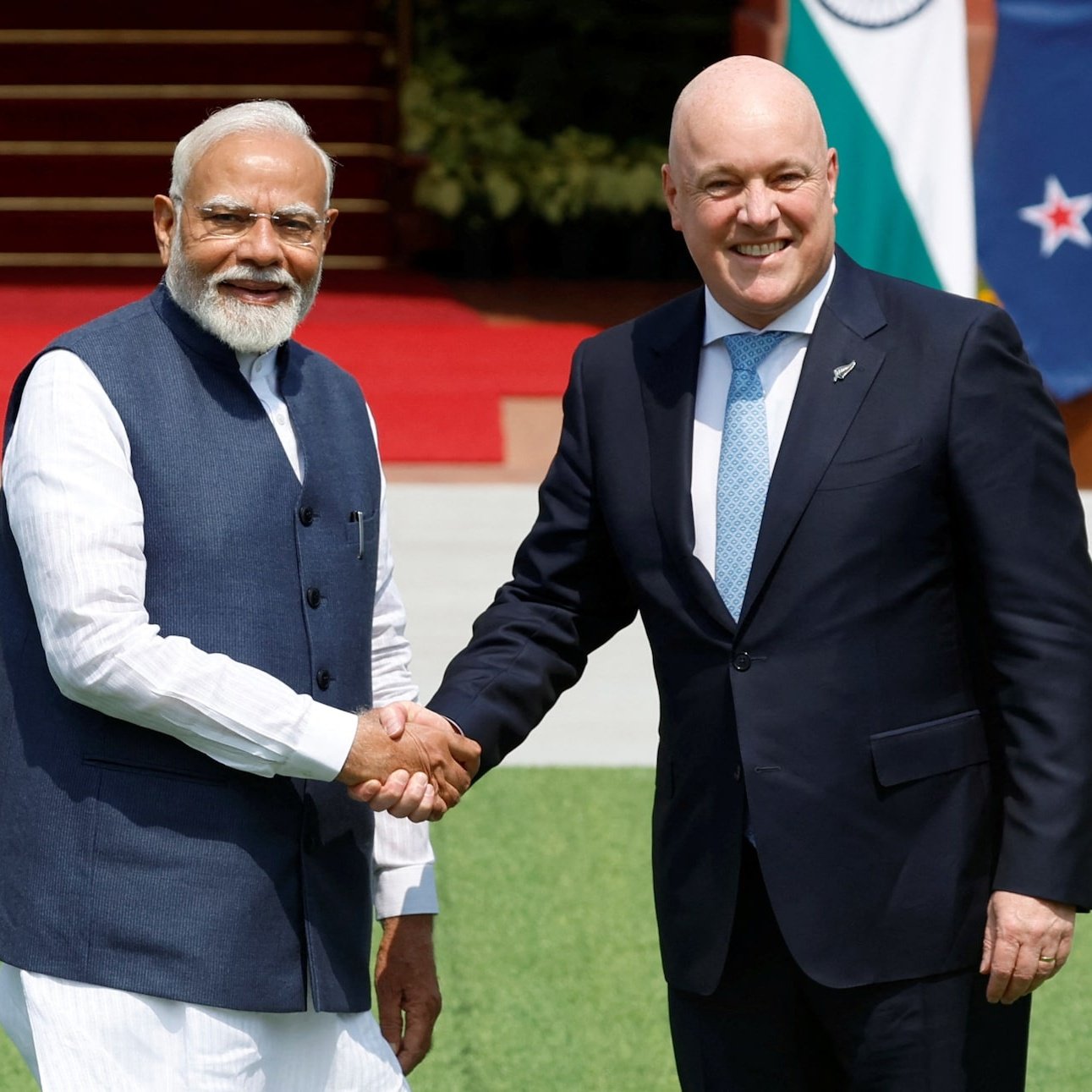
NEW DELHI : India and New Zealand have concluded a comprehensive, balanced and forward-looking Free Trade Agreement (FTA) under the visionary leadership of Hon’ble Prime Minister Shri Narendra Modi, marking a major economic and strategic milestone in India’s engagement with the Indo-Pacific region.

The Agreement stands out as one of India’s fastest-concluded FTAs aligned with the national vision of Viksit Bharat 2047. The negotiations were formally launched on 16 March 2025 during the meeting between Hon’ble Minister of Commerce and Industry Shri Piyush Goyal and Hon’ble Minister for Trade and Investment of New Zealand Mr. Todd McClay. The agreement was concluded by holding continuous and intense discussions spread over 5 formal negotiation rounds, several in-person and virtual intersessions. The FTA establishes a high-quality economic partnership that promotes employment, facilitates skill mobility, drives trade and investment-led growth, fosters innovation for agricultural productivity, and enhances MSME participation to strengthen long-term economic resilience.
Speaking on the conclusion, Minister for Commerce and Industry Shri Piyush Goyal said, “Today this Free Trade Agreement is about building trade around people and launching opportunities – for our farmers, for our entrepreneurs, for our students, for our Women and for our innovators. Boosting yields and farmer incomes, the agreement drives modern agricultural productivity. It opens doors for Indian businesses in the region through well-integrated directional exports and gives our youth choices to learn, work and grow on a global stage”

Elimination of tariffs on 100% of its tariff lines, provides duty-free access for all Indian exports. This market access enhances the competitiveness of India’s labour-intensive sectors including textiles, apparel, leather, footwear, marine products, gems and jewellery, handicrafts, engineering goods and automobiles, directly supporting Indian workers, artisans, women, youth and MSMEs and integrating them deeper into global value chains.

The FTA delivers New Zealand’s best and most ambitious services offer in any of its FTAs to date. India has secured commitments across a wide range of high-value sectors including IT and IT-enabled services, professional services, education, financial services, tourism, construction and other business services, opening substantial new opportunities for Indian service suppliers and high-skill employment.

Rajesh Agrawal, Commerce Secretary, called it “A new generation trade agreement built on tariffs, agricultural productivity, Investment and Talent with complementarity at the core. India’s strengths expand exports, support labour-intensive growth and power services. New Zealand gains deeper, more predictable access to India’s large and growing economy. The movement of people-students, professionals, and skilled workers converges these strengths.”

A future-ready and facilitative mobility framework positions India as a key supplier of skilled and semi-skilled talent. The FTA provides improved entry and stay provisions for Indian professionals, students and youth, including work opportunities during studies, post-study work pathways, dedicated visa arrangements and a Working Holiday visa framework, strengthening people-to-people ties and expanding global exposure for Indian youth.

The FTA Opens Skilled Employment Pathways through a new Temporary Employment Entry Visa pathway for Indian professionals in skilled occupations, with a quota of 5,000 visas at any given time and a stay of up to three years. This pathway covers Indian professions such as AYUSH practitioners, yoga instructors, Indian chefs, and music teachers, as well as high-demand sectors including IT, engineering, healthcare, education, and construction, strengthening workforce mobility and services trade.

Establishment of dedicated Agri-Technology Action Plans on kiwifruit, apples and honey, focus on productivity enhancement, technology, research collaboration, quality improvement and value-chain development, to strengthen domestic capabilities and supporting income growth for Indian farmers. The cooperation includes the establishment of Centres of Excellence, improved planting material, capacity building for growers and technical support for orchard management, post-harvest practices, supply chain performance, and food safety. Projects for apple cultivators and sustainable beekeeping practices will enhance production and quality standards.

The Agreement significantly strengthens the investment partnership between the two countries. New Zealand has committed to facilitate investments of USD 20 billion into India over the next fifteen years, thereby supporting manufacturing, infrastructure, services, innovation and employment under India’s Make in India vision. Indian enterprises are also expected to benefit from their presence in New Zealand and access the wider Pacific Island markets.

Boost to Pharma and Medical Devices through faster regulatory Access by enabling acceptance of GMP and GCP inspection reports from comparable regulators, including approvals by the US FDA, EMA, UK MHRA, and other comparable regulators. This will reduce duplicative inspections, lower compliance costs, and expedite product approvals, thereby facilitating the growth of India’s pharmaceutical and medical devices exports to New Zealand.

Commitment has been extended on Geographical Indications, including amendment of its law to facilitate the registration of India’s wines, spirits and ‘other goods’, a benefit that was accorded to the EU by New Zealand- to be completed under defined timelines.

Cooperation has been agreed in AYUSH, culture, fisheries, audio visual tourism, forestry, horticulture and traditional knowledge systems. The FTA promotes India’s AYUSH systems internationally, encourages medical value travel, and positions India as a global wellness hub.

Apart from tariff liberalisation, the FTA includes provisions to address non-tariff barriers through enhanced regulatory cooperation, transparency, and streamlined customs, Sanitary and Phyto-sanitary (SPS) measures and Technical Barriers to Trade disciplines. All systemic facilitations and fast-track mechanisms for imports that serve as inputs for our manufactured exports ensure that tariff concessions translate into effective and meaningful market access.

India–New Zealand economic engagement has shown steady momentum. Bilateral merchandise trade reached USD 1.3 billion in 2024–25, while total trade in goods and services stood at approximately USD 2.4 billion in 2024, with services trade alone reaching USD 1.24 billion, led by travel, IT and business services. The FTA provides a stable and predictable framework to unlock the full potential of this relationship.

The 3rd FTA concluded this year under the visionary leadership of Hon’ble Prime Minister Shri Narendra Modi, the India–New Zealand Free Trade Agreement represents a new generation trade partnership. It stands as a significant step in India’s journey towards becoming a globally competitive, inclusive and resilient economy under the vision of Viksit Bharat 2047.