Home Blog Page 505

India-New Zealand FTA to open new gateways to prosperity, new milestone in Modi govt: Amit Shah

NEW DELHI: The India-New Zealand Free Trade Agreement (FTA) will open new gateways to prosperity setting up a new milestone in the Narendra Modi government, said Union Home Minister Shri Amit Shah on Monday.

Taking it to social media platform X, Shah said, “Modi govt’s trade diplomacy sets new milestone. India-New Zealand FTA, that brings in USD 20 billion investment and offers lucrative opportunities for Indian innovators, entrepreneurs, farmers, MSMEs, students, and youth, will open new gateways to prosperity.”
“It is a textbook example of how, people-centric foreign policy is fulfilling the aspirations of citizens under PM Narendra Modi Ji’s leadership,”
he said.

Prime Minister Shri Narendra Modi on Monday held a telephone conversation with the Prime Minister of New Zealand Christopher Luxon as the two leaders jointly announced a landmark India-New Zealand Free Trade Agreement. The leaders agreed that the FTA would serve as a catalyst for greater trade, investment, innovation and shared opportunities between both countries.

The FTA would significantly deepen bilateral economic engagement, enhance market access, promote investment flows, strengthen strategic cooperation between the two countries, and also open up new opportunities for innovators, entrepreneurs, farmers, MSMEs, students and youth of both countries across various sectors.

With the strong and credible foundation provided by the FTA, both leaders expressed confidence in doubling bilateral trade over the next five years as well as an investment of USD 20 billion in India from New Zealand over the next 15 years. The leaders also welcomed the progress achieved in other areas of bilateral cooperation such as sports, education, and people-to-people ties, and reaffirmed their commitment towards further strengthening of the India-New Zealand partnership.

The India-New Zealand FTA is expected to deliver a significant boost to India’s exports, with New Zealand offering zero-duty market access on 100 per cent of its tariff lines covering all Indian exports from the date of entry into force.Labour-intensive sectors are among the biggest gainers.

With New Zealand eliminating tariffs that earlier peaked at up to 10 per cent, Indian exporters of textiles and clothing will receive zero-duty access across 1,057 tariff lines.

India’s textile and apparel exports rose to USD 36.9 billion in 2024-25, while exports to New Zealand increased to USD 103 million, a trend expected to accelerate given New Zealand’s annual global textile imports of nearly USD 1.9 billion.

Bilateral merchandise trade between India and New Zealand stood at USD 1.3 billion in 2024-25, registering a 49 per cent growth over the previous year. With zero-duty access, regulatory facilitation and services liberalisation, the FTA is expected to unlock the next phase of growth across multiple Indian export sectors while strengthening India’s footprint in Oceania and the wider Indo-Pacific region.
India–New Zealand pact seventh FTA under PM Modi, reflects shift towards developed economy partnerships: Piyush Goyal

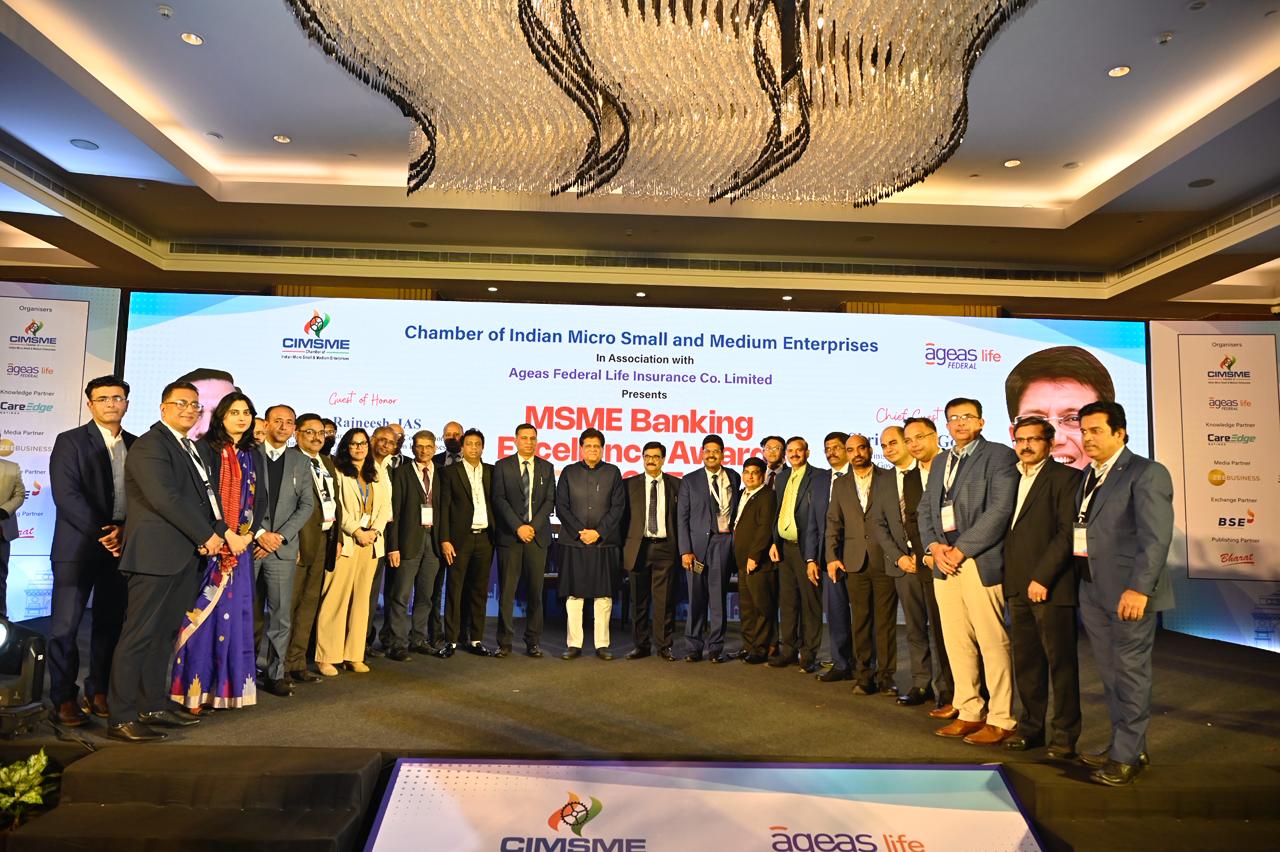
NEW DELHI : Union Minister of Commerce and Industry Shri Piyush Goyal said it was encouraging to see public sector banks competing on equal footing with private and foreign banks while addressing the MSME Banking Excellence Awards in New Delhi. He said that public sector banks have emerged as strong and competitive institutions, standing shoulder to shoulder with private and foreign banks in supporting India’s growth.

MSME Banking Excellence Awards India–New Zealand pact seventh FTA under PM Modi, reflects shift towards developed economy partnerships: Piyush Goyal

Shri Goyal highlighted the critical role of the banking system in supporting micro, small and medium enterprises (MSMEs), noting that access to timely and adequate credit has been central to the growth of small entrepreneurs. He underlined that banks have played a key role in extending institutional finance to MSMEs, including small borrowers who earlier depended on informal sources of credit, thereby enabling them to start businesses, expand operations and improve their livelihoods.

Referring to the announcement of the India–New Zealand Free Trade Agreement earlier in the day, the Minister said it was the seventh FTA concluded under the guidance of Prime Minister Shri Narendra Modi. He noted that India’s recent FTAs have been signed with developed economies, reflecting a shift towards partnerships with countries offering complementary strengths and significant business opportunities.

Shri Goyal stated that India’s FTAs today are comprehensive in nature, encompassing not only market access for goods and services but also elements of technical collaboration to support innovators, farmers and entrepreneurs, thereby enhancing productivity and income. Referring specifically to the India–New Zealand FTA, he said New Zealand has made a binding commitment to invest USD 20 billion as foreign direct investment over the next 15 years. He added that this marked a significant shift compared to the USD 70 million invested by New Zealand in India over the past 25 years. The agreement, he said, includes provisions to claw back concessions if investment commitments are not met, making it a serious and enforceable commitment rather than a mere memorandum of understanding.

The Minister noted that the agreement is expected to bring substantial investments in innovation, manufacturing and exports, with India emerging as a manufacturing base not only for New Zealand but also for other global markets. He emphasised that the MSME sector would be the biggest beneficiary of these developments.

He called upon stakeholders to work together to rapidly realise the opportunities arising from the FTA and to aim at doubling, tripling and even quadrupling bilateral trade in goods and services. He also highlighted that the India–New Zealand FTA was negotiated by a team that was almost entirely women officers, making it the first such agreement finalised by women, and noted that India’s Ambassador is also a woman, underscoring the leadership role played by women in India’s growth journey.

The Minister also noted that the day marked National Mathematics Day, commemorating the birth anniversary of Srinivasa Ramanujan, and linked it to the role of bankers in managing numbers that ultimately translate into economic opportunity for MSMEs.

Congratulating the award winners, Shri Goyal expressed confidence that MSMEs, startups, incubators and young entrepreneurs would continue to receive strong support from the banking system, complemented by various government schemes.

Recalling initiatives undertaken to ease credit access for small entrepreneurs, Shri Goyal referred to the launch of the Mudra loan scheme in the first year of the Prime Minister Narendra Modi’s government and the credit guarantee measures introduced during the COVID-19 pandemic, under which the government became the guarantor for MSME loans without additional collateral. He highlighted that nearly 70 per cent of Mudra loans have been extended to women entrepreneurs. He also referred to the PM SVANidhi scheme, noting how small loans of Rs 10,000, subsequently enhanced to Rs 20,000 and Rs 50,000 based on repayment performance, have helped street vendors avoid exploitative moneylenders and improve their livelihoods.

Appreciating the efforts of banks in supporting small borrowers, Shri Goyal said such initiatives reflected the Prime Minister’s vision of “MSME” as “Maximum Support to Micro, Small and Medium Enterprises”. He observed that the world today views India as a trusted partner offering democracy, rule of law, national treatment to investors and decisive leadership. He attributed India’s transformation into the world’s fastest-growing large economy and a top five global economy to the collective effort of its people and institutions.

The Minister noted that global expectations see India moving from a USD 4 trillion economy to USD 30–35 trillion by 2047, presenting an eight-fold growth opportunity. He pointed out that banks recorded profits of around Rs 3 lakh crore last year, demonstrating their capacity to lend to honest borrowers. He added that MSME credit has grown at a compound annual growth rate of about 14 per cent in recent years, with even greater opportunities ahead as India expands its international trade arrangements while safeguarding the interests of farmers, MSMEs, fishermen and the dairy sector.

Calling upon banks to lend liberally and responsibly to support MSME growth, Shri Goyal said banks, now empowered and should continue to serve the nation with honesty and boldness. He encouraged speedy and transparent loan approvals and disbursements, adequate availability of capital for capex, opex and working capital, and proactive guidance to MSMEs to help them leverage government schemes and capital markets as they grow.

Stating that many large corporates today began their journey as MSMEs, the Minister said the strength of the MSME sector would ultimately determine India’s future growth. He urged banks to be active partners in this journey, describing MSMEs and banks as inseparable twins whose combined growth would power India towards Viksit Bharat 2047.

Congratulating the award winners once again, Shri Goyal extended his best wishes to all bankers and financial sector representatives for the year 2026, calling for faster, inclusive and sustainable growth during the Amrit Kaal.

India-New Zealand FTA in line with vision of Viksit Bharat 2047: India Inc

NEW DELHI: Industry leaders have welcomed the Free Trade Agreement (FTA) between India and New Zealand calling it as forward-looking, next-generation pact that strengthens India’s economic integration with the Indo-Pacific, enhances export competitiveness, supports talent mobility, and reinforces long-term bilateral cooperation in line with the vision of Viksit Bharat 2047.

Speaking on the development, Mr. Anant Goenka, President of FICCI, said, “India’s expanding global trade footprint continues to gain momentum under the leadership of PM Narendra Modi. FICCI welcomes the conclusion of the India-New Zealand Free Trade Agreement, a significant step towards deepening economic engagement with the Indo-Pacific region. The agreement is expected to enhance bilateral trade, investment flows, and further collaboration, creating new growth opportunities for businesses in both countries.”

Mr. Rajeev Juneja, President, PHDCCI said, “We welcome the conclusion of the India-New Zealand Free Trade deal as a partnership aligned with India’s vision of Viksit Bharat 2047. The deal delivers 100% zero-duty market access for Indian exports, and a framework that supports students, professionals, MSMEs, and labour-intensive sectors. Commitments on investment, regulatory cooperation, and duty-free inputs will enhance competitiveness, integrate Indian industry into global value chains across all sectors.”

Mr. Ranjeet Mehta, CEO & Secretary General, PHDCCI said, “India-New Zealand Free Trade Agreement represents a next-generation deal combining trade liberalisation with talent mobility, investment, and productivity-led cooperation. This comes with well-standardized agricultural safeguards and technology-focused partnerships protecting farmer interests while raising productivity. The Agreement provides policy certainty and lowers input costs for manufacturing, creating a vision for long-term economic resilience.”

Mr. Subhrakant Panda, Past President, FICCI and Managing Director, Indian Metals & Ferro Alloys Ltd (IMFA) said, “The India-New Zealand FTA is an example of trade diplomacy at its best. Concluded in a record time of 9 months, it furthers Prime Minister Narendra Modi’s vision of sustainable growth. By complementing broader bilateral cooperation in areas such as education, skill development, and people-to-people contact, it reinforces the long term partnership which is mutually beneficial.”

The Global Trade Research Initiative (GTRI) in a note said, “The India-New Zealand Free Trade Agreement (FTA) represents a framework for deeper cooperation rather than a major trade breakthrough, with its real impact depending on how both countries strengthen practical economic links beyond tariff reductions.”

According to GTRI, given the limited scale of bilateral trade at USD 2.1 billion in FY2025, the FTA is strategic in nature and not volume-driven. While the agreement brings greater predictability in goods, services, mobility and investment, its success will hinge on building supply chains, expanding services trade, deepening education and skills partnerships, and leveraging the Indian diaspora along with mobility provisions.

Source: ANI

India–New Zealand conclude Landmark Free Trade Agreement, Ushering in a New Era of Economic Partnership: President, FIEO

NEW DELHI: Under the visionary guidance and leadership of Hon’ble Prime Minister Shri Narendra Modi ji and New Zealand Prime Minister Mr Christopher Luxon, and through close and collaborative engagement of the Hon’ble Union Commerce and Industry, Mr Piyush Goyal and the New Zealand’s Minister for Trade, Mr Todd McClay, India and New Zealand have successfully concluded a landmark Free Trade Agreement (FTA) in a record time of nine months. This historic achievement marks a significant milestone in the strengthening of bilateral economic ties between the two nations.

Welcoming the announcement, Mr S C Ralhan, President, Federation of Indian Export Organisations (FIEO), stated that the conclusion of the India–New Zealand FTA in such a short span reflects the strong political will and shared economic vision of both countries. This Agreement is a game-changer for Indian exporters and will significantly enhance India’s integration with global value chains.

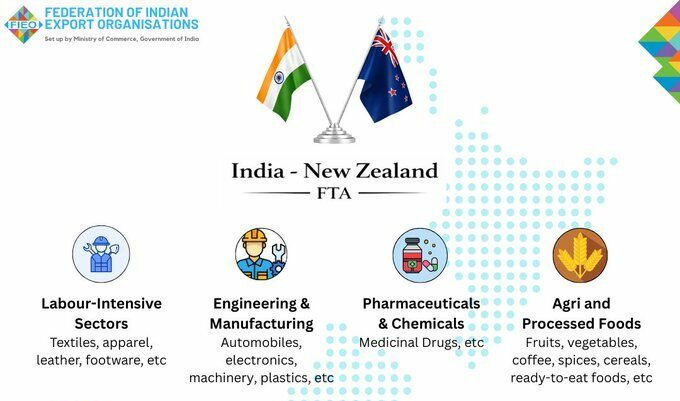
Upon entry into force, the India–New Zealand FTA will provide zero-duty access on 100% of India’s exports, with tariff elimination across all tariff lines. The Agreement will also benefit farmers, MSMEs, workers, artisans, women-led enterprises and youth, while creating immense opportunities for labour-intensive sectors such as textiles, apparel, leather and footwear. Key sectors including engineering and manufacturing, automobiles, electronics, machinery, plastics, pharmaceuticals and chemicals are also expected to gain significantly. Mr Ralhan added that the zero-duty access for Indian exports across all tariff lines is a historic achievement. It will enhance the competitiveness of Indian products in the New Zealand market and provide a major boost to employment-generating sectors.

FIEO Chief reiterated that the FTA provides a strong impetus to bilateral investments, with New Zealand committing to facilitate USD 20 billion in Foreign Direct Investment into India over the next 15 years, particularly in manufacturing, infrastructure, services, innovation and job creation. Mr Ralhan also said that the investment commitment under the FTA sends a powerful signal of confidence in India’s growth story and will contribute meaningfully to manufacturing expansion, innovation and job creation, thereby giving further boost to India’s exports sector.

With a strong focus on farmers’ welfare, the Agreement opens new opportunities for Indian agricultural exports to New Zealand, including fruits, vegetables, coffee, spices, cereals and processed foods. Initiatives such as the Agricultural Productivity Partnership, establishment of Centres of Excellence, and access to New Zealand’s advanced agri-technologies will help improve productivity, quality and farmers’ incomes. Targeted support for horticultural products like honey, kiwifruit and apples will further strengthen sustainable agricultural growth, said Mr Ralhan.

FIEO President also said that this FTA not only expands market access but also focuses on technology transfer and productivity enhancement, which will help Indian farmers move up the value chain and achieve higher incomes. Keeping domestic sensitivities in view, India has safeguarded key agriculture and allied products, including dairy, sugar, coffee, spices, edible oils, precious metals (gold and silver), precious-metal scrap, copper cathodes and rubber-based products, ensuring adequate protection for farmers, MSMEs and domestic industries.

The Agreement unlocks new opportunities for India’s services sector across IT & ITeS, finance, education, tourism, construction and other areas. Notably, New Zealand’s first-ever annexes on health, traditional medicine, student mobility and post-study work create unprecedented avenues for Indian professionals and students. Enhanced mobility provisions, including working holiday visas, post-study work pathways and a dedicated quota of 5,000 temporary employment visas for skilled Indian professionals, will further facilitate global career opportunities for Indian talent. Mr Ralhan observed that the progressive provisions on services, mobility, student opportunities and traditional medicine are forward-looking and will greatly benefit India’s skilled professionals and youth.

FIEO views the India–New Zealand FTA as mutually beneficial and future-oriented agreement that will deepen economic cooperation, strengthen people-to-people ties, and support India’s long-term vision of Viksit Bharat 2047.

Zero-duty access, services mobility to boost Indian exports and jobs following India-New Zealand FTA

NEW DELHI: India is set to secure wide-ranging economic and strategic gains following the conclusion of negotiations on the India-New Zealand Free Trade Agreement, with the pact promising zero-duty market access, enhanced services trade, student and professional mobility, and deeper cooperation across emerging sectors.

A key gain for India is New Zealand’s commitment to eliminate duties on 100 per cent of its tariff lines, 8,284 lines will be implemented immediately upon entry into force.

7 FTA Zero-duty access, services mobility to boost Indian exports and jobs following India-New Zealand FTA

This is India’s 7th FTA (Free Trade Agreement) in the last few years, after Oman, the UK, the EFTA countries, the UAE, Australia, and Mauritius.

This removes tariffs of up to 10 per cent that earlier applied to nearly 450 lines of key Indian exports, including textiles and apparel, leather products, footwear, carpets, ceramics, automobiles, auto components, engineering goods, pharmaceuticals, plastics, rubber, chemicals, and electrical machinery.
New Zealand’s average applied tariff of 2.2 per cent will effectively become zero, significantly improving India’s competitiveness in the market

Labour-intensive sectors such as textiles, clothing, leather, and footwear are expected to see strong export growth, alongside advanced manufacturing sectors including engineering, transport equipment, and pharmaceuticals.

Indian agricultural exports like fruits and vegetables, coffee, spices, cereals, and processed foods will also gain from duty elimination on peak tariffs of up to 5 per cent.

India has secured a calibrated outcome in agriculture through tariff rate quotas (TRQs) for sensitive imports such as apples, kiwifruit, Manuka honey, and milk albumin, combined with minimum import prices and seasonal restrictions.

These TRQs are linked to dedicated agri-technology action plans, focusing on productivity enhancement, farmer capacity building, post-harvest practices, and food safety, overseen by a Joint Agriculture Productivity Council. This structure ensures consumer choice while safeguarding domestic farmers
New Zealand has extended its most ambitious services and mobility offer to India, covering 118 services sectors with MFN treatment in 139 sub-sectors.

Notably, India is the first country with which New Zealand has signed annexes on health and traditional medicine services and student mobility.

Indian students will benefit from no numerical caps, guaranteed 20 hours per week work rights, and extended post-study work visas of up to three years for science, technology, engineering and mathematics (STEM) graduates and four years for PhD holders.

A new temporary employment pathway provides 5,000 visas for skilled Indian professionals in IT, engineering, healthcare, education, construction, and iconic Indian occupations such as AYUSH practitioners, yoga instructors, chefs, and music teachers. Additionally, 1,000 young Indians annually will receive multiple-entry working holiday visas.

Under the investment chapter, New Zealand has committed to increasing FDI into India by USD 20 billion over 15 years, backed by a rebalancing mechanism. Faster customs clearance, mutual recognition in pharmaceuticals and medical devices, improved IPR protection for Indian GI products, and MSME cooperation further strengthen the agreement.

Strategically, the FTA positions India to deepen its footprint in New Zealand and the wider Oceania region and strengthens bilateral cooperation in a rapidly evolving Indo-Pacific economic landscape.

The FTA negotiations concluded after five formal rounds and multiple inter-sessional discussions, covering both conventional trade areas and new-age disciplines such as investment promotion, MSME cooperation, sustainable development, intellectual property, and cultural and traditional knowledge.
The agreement is expected to enter into force after completion of domestic ratification processes next year.

Source: ANI

First Cruise Vessel of the 2025–26 Season Arrives at New Mangalore Port Authority

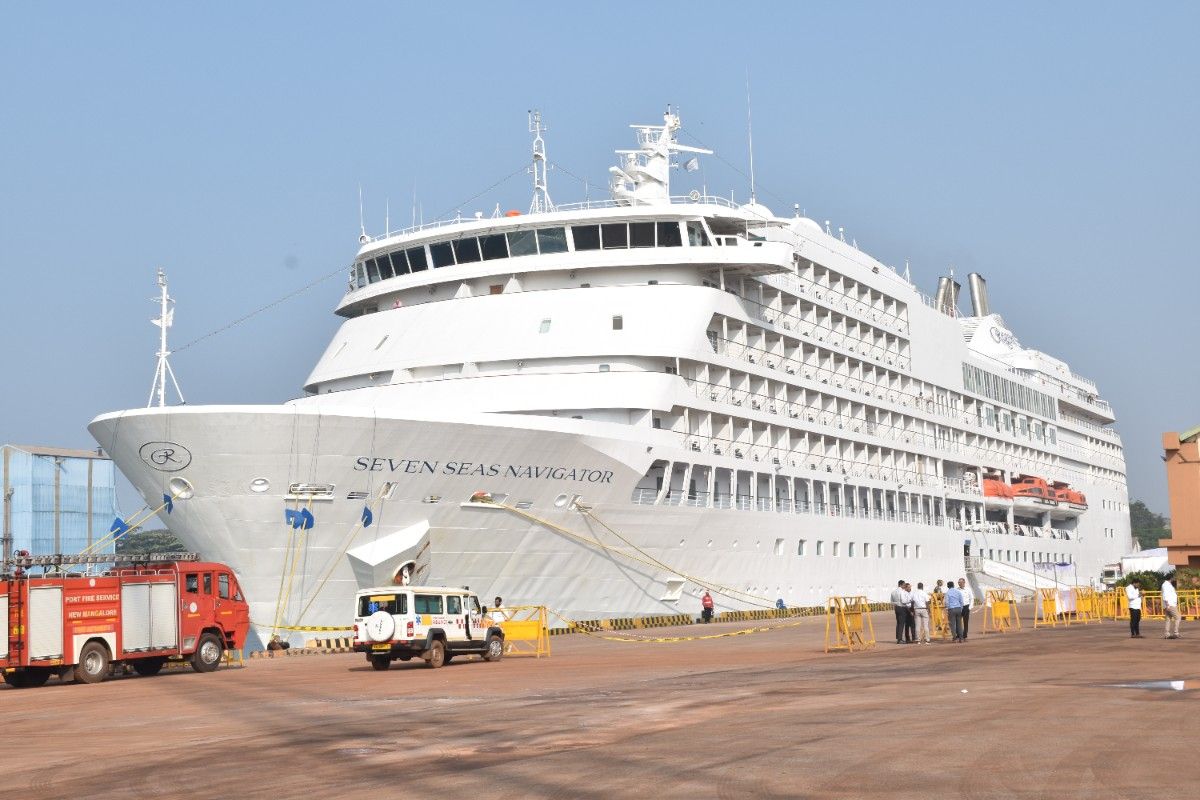
MANGALURU: New Mangalore Port Authority marked the commencement of the 2025–26 cruise season with the arrival of the first cruise vessel, M.S. Seven Seas Navigator, on Monday (22 December 2025). The luxury cruise ship arrived at NMPA at 06:15 hrs, berthed at Berth No. 4 at 07:15 hrs.

DSC 0003 1 First Cruise Vessel of the 2025–26 Season Arrives at New Mangalore Port Authority

Flying the Bahamas flag, M.S. Seven Seas Navigator has a Length Overall (LOA) of 172.50 metres, draft of 7.50 metres, and Gross Registered Tonnage (GRT) of 28,803. The vessel arrived from its last port of call from Mormugao Port. The cruise carried 450 passengers along with 360 crew members.

NMPA extended a warm and vibrant traditional welcome to the international cruise tourists, showcasing the rich cultural heritage of the region. Extensive preparations were made by NMPA and all stakeholder
to ensure a seamless and delightful experience for the visiting tourists.

Smt. Vinitha Sekhar, IRS, Commissioner Customs, Mangalore welcomed the master of the ship along with Traffic Manager, officers and employees of the Port.

In addition, a Meditation Centre set up by the Ministry of AYUSH, free Wi-Fi connectivity provided by NMPA, and a Selfie Stand depicting Mangaluru’s Yakshagana art form installed by the Ministry of Tourism
added unique experiential value for the cruise passengers.

To ensure a smooth immigration process for the large number of arriving passengers, NMPA undertook advanced planning and coordination, significantly reducing waiting times and enhancing the overall passenger experience.

During their stay, passengers visited prominent tourist destinations in and around Mangaluru, including Karkala Gomateshwara Temple, the 1000 Pillar Temple at Moodabidri, Soans Farm, Pilikula Nisargadhama,
Artisan Village, Gokarnanatha Temple, St. Aloysius Chapel, local markets, and Trinity House at Valencia. These visits offered tourists a glimpse into the region’s rich cultural, spiritual, and natural heritage.

After a successful port call, the cruise vessel departed at 16:30 hrs, with passengers carrying fond memories and enriching experiences of their visit to Mangaluru.

The arrival of M.S. Seven Seas Navigator reaffirms NMPA’s growing stature as a preferred cruise destination on India’s west coast, supported by modern infrastructure, efficient port operations, and strong coordination with multiple agencies. With several cruise calls lined up for the season, NMPA continues to play a pivotal role in promoting cruise tourism, regional economy, and cultural exchange.

The ship sailed on its onward to Cochin as its next destination.

Shore leave approved for ship crew at Vizhinjam Port

THIRUVANANTHAPURAM : Vizhinjam International Port is set to open up new tourism opportunities with ship crew members now being permitted to go ashore, visit nearby destinations and return to their vessels. The initiative, expected to provide a significant boost to local tourism, follows the port receiving approval from the Immigration Check Post (ICP).

With the approval in place, crew members aboard vessels calling at Vizhinjam will be able to avail themselves of the ‘shore leave’ facility. While ships are engaged in cargo operations, crew members- including foreign nationals- will be allowed to step ashore and explore nearby destinations.

Visits to temples and popular tourist locations such as Kovalam and Shanghumugham beach are among the activities being planned, after which the crew members will return to their ships.

Officials said the Ports and Tourism departments have already begun discussions to prepare a detailed tourism project to facilitate guided city tours for visiting crew members. Authorities are hopeful of a further expansion in tourism activity, particularly with cruise ships also expected to start calling at the port in the future.

CONCOR rolls out LNG truck fleet to enable cleaner first & last mile freight movement

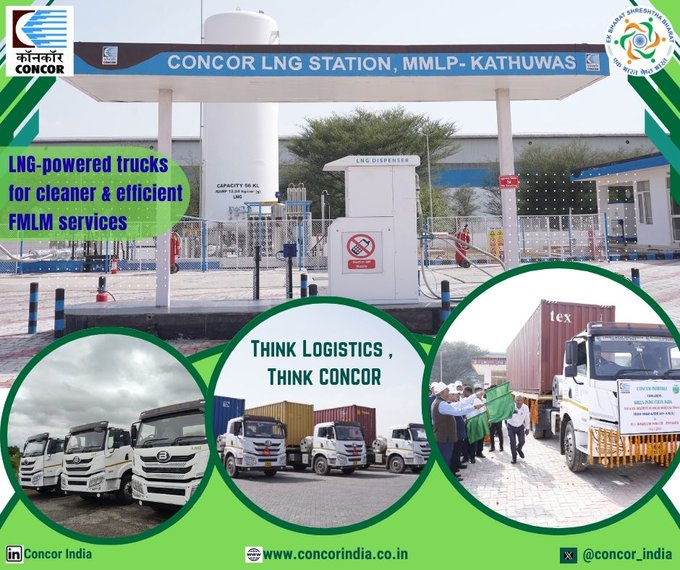
NEW DELHI : Container Corporation of India Ltd. (CONCOR) has advanced its sustainability agenda by inducting 230 LNG-powered trucks into its operations, aimed at transforming first and last mile logistics with environmentally responsible transport solutions.

The newly deployed LNG fleet delivers clear advantages over conventional diesel vehicles, including significantly lower carbon emissions, quieter operations, and reduced fuel costs, making logistics both greener and more economical. This move supports cleaner urban freight movement while improving overall efficiency across CONCOR’s supply chain.

For all the initiatives, Sanjay Swarup, Chairman and Managing Director, CONCOR, said,

“Every mile matters. Cleaner fuel, quieter movement, and smarter logistics together shape a more responsible supply chain. LNG-powered first and last mile connectivity is a step towards logistics that respects both efficiency and the environment.”

To strengthen the supporting infrastructure, CONCOR has made its first LNG fueling station operational at the Multi-Modal Logistics Park (MMLP), Kathuwas. Building on this momentum, a second LNG fuel station is planned shortly at MMLP Dadri, ensuring uninterrupted and scalable LNG-based operations.

Through the integration of LNG-powered vehicles and dedicated fueling facilities, CONCOR continues to lead the transition towards sustainable, cost-effective, and future-ready logistics, reinforcing its commitment to environmentally conscious freight transportation in India.

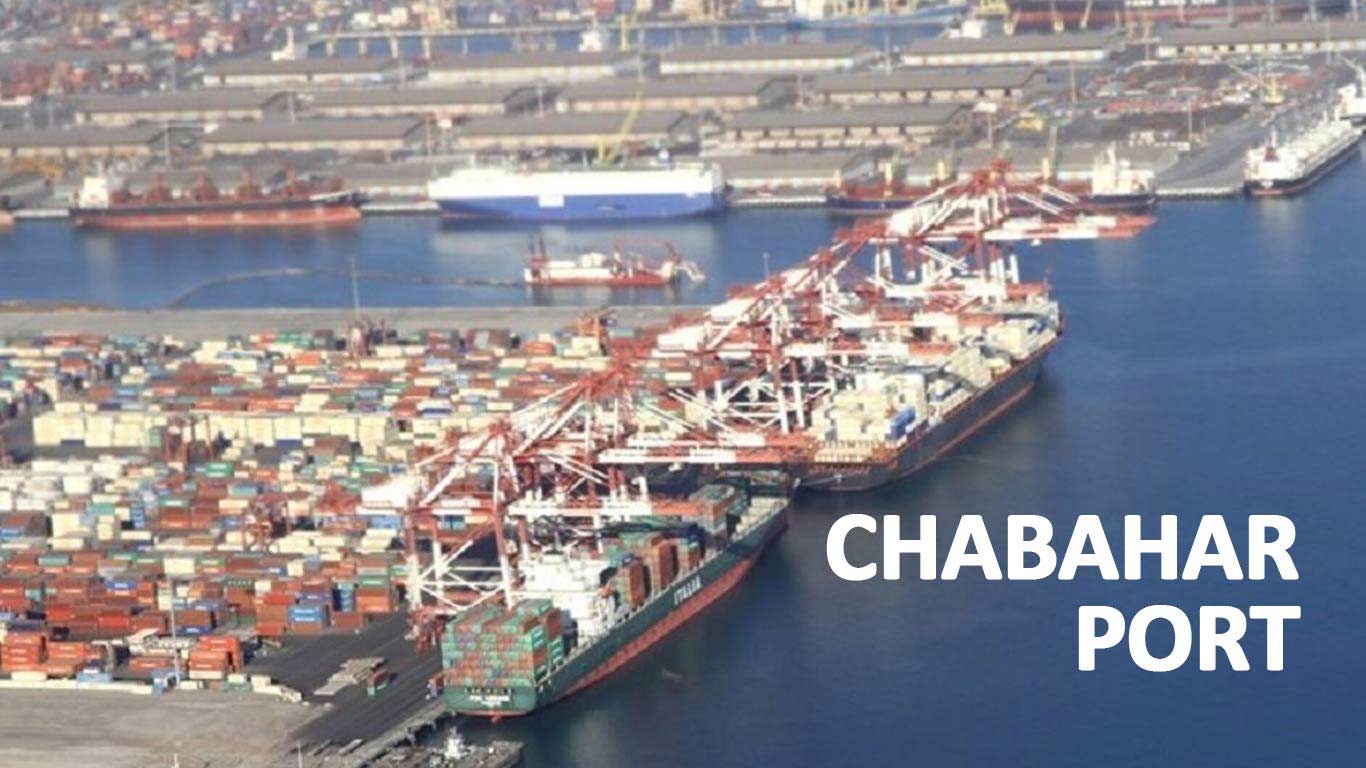
Russia shows interest in India-backed Chabahar Port to enhance Eurasian Trade Corridor

NEW DELHI : Russia is exploring a partnership at Chabahar Port, a development that could reshape regional geopolitics and trade routes. The move comes amid renewed uncertainty after the United States under the Trump administration extended sanctions on Iran, including Chabahar. Following Indian representations, Washington later announced a freeze on those sanctions until early 2026. Russia’s potential entry into Chabahar would pose strategic challenges for both the US and Pakistan.

Chabahar remains India’s key gateway to West and Central Asia, allowing access to Iran, Afghanistan, Turkmenistan, Kyrgyzstan, Uzbekistan, Tajikistan, Russia, and onward to Europe, without reliance on Pakistan. This strategic advantage gains added significance as Pakistan advances the China-backed Gwadar Port, located close to Chabahar. Russian participation would substantially strengthen India’s position by adding weight to its operational and diplomatic objectives at the port. A critical component of this strategy is the International North-South Transport Corridor (INSTC), which currently links Russia to Iran. Moscow is now moving to connect this long-distance freight corridor with Chabahar, enhancing the port’s role as a multimodal hub. Such a linkage would further integrate Indian trade flows with Central Asia and Europe, significantly reducing transit time and costs. Developments in Afghanistan also add momentum to Chabahar’s relevance. The Afghanistan government, amid escalating border tensions with Pakistan, is increasingly looking to India and Iran for trade access. Chabahar’s proximity offers a viable alternative route, which could also benefit the Taliban administration by easing logistical constraints.

Meanwhile, regional tensions continue to simmer. Iran has accused the US of planning to establish a military base in Pakistan near the China-controlled Gwadar port, to counter China. Tehran has also claimed Pakistani complicity, arguing that such a move would undermine Iran’s security interests and disrupt regional trade and energy dynamics. A US military presence in Pakistan would represent a strategic setback for Iran. Located in Sistan-Baluchistan Province, Chabahar was developed with significant Indian investment and technical support. India has pledged $120 million for port development and extended a $250 million credit line for related infrastructure. In 2024–25, New Delhi also provided a ₹100 crore loan to support operations. Additionally, a 700-km railway line from Chabahar through central Iran is under construction, designed to connect directly with the Russia–Iran freight corridor, further cementing Chabahar’s role in regional connectivity.

An unusual pattern in India-US trade– Fall under low tariffs, rise under high : GTRI

NEW DELHI : India’s exports to the US between May and November 2025 followed a clear two-phase pattern: a sharp decline until September, followed by a partial recovery by November, according to an analysis by the trade-focused think tank Global Trade Research Initiative (GTRI).

India’s exports to the U.S. fell 20.7% from $8.8 billion in May to $7.0 billion in November. The decline was much sharper earlier in the year, as exports dropped 37.7% from May to September, reaching a low of $5.5 billion. From that trough, exports partly recovered by 27.3% between September and November, indicating a rebound after a steep mid-year fall.

According to the GTRI, nearly 85% of November exports came from sectors that first declined and then rebounded. For example, Gems and Jewellery exports plunged from $500.2 million in May to $202.8 million in September, then rebounded to $406.2 million in November.

According to GTRI, same pattern is visible across electronics (smartphones), machinery, vehicles and auto components, pharmaceuticals, textiles and garments, carpets, mineral fuels, organic chemicals, plastics, rubber articles, fish, dairy products, and edible fruits and nuts.

“India’s exports fell more sharply during the low-tariff phase and then recovered partially under the higher-tariff regime. This pattern is unusual,” GTRI said.