Home Blog Page 507

V.O.C Port sets new milestone with berthing of largest-ever container vessel

TUTICORIN : V.O. Chidambaranar Port Authority, Tuticorin, is pleased to announce the successful berthing of M.V. MSC Michaela at the Dakshin Bharat Gateway Terminal (DBGT) on December 21, 2025, marking a significant milestone in the port’s operational history.

With an impressive length overall (LOA) of 304 metres and a container carrying capacity of 6,724 TEUs, M.V. MSC Michaela has become the largest container vessel ever to call at V.O. Chidambaranar Port. The vessel’s call underscores the port’s enhanced infrastructure, deep-draft capability, and growing stature as a key container gateway on India’s east coast.

The successful handling of this mainline vessel reflects the port’s continuous investments in modernisation, including upgraded berths, advanced navigational aids, high-capacity container handling equipment, and seamless coordination among marine, terminal, and logistics stakeholders. The operation was executed smoothly, adhering to the highest standards of safety and efficiency.

The call of M.V. MSC Michaela further strengthens V.O. Chidambaranar Port’s position in global shipping networks and reinforces its capability to support larger vessels deployed on long-haul international trade routes. It is also expected to boost regional trade, enhance direct connectivity, and provide significant benefits to exporters and importers across southern India.

V.O. Chidambaranar Port Authority remains committed to expanding capacity, improving operational excellence, and facilitating India’s growing maritime trade through world-class port infrastructure and services.

JSW Infrastructure subsidiary Navkar Corporation wins ₹63.22 Crore Railway Cargo Terminal contract

MUMBAI : JSW Infrastructure Limited announced that its listed subsidiary Navkar Corporation Limited has secured a significant contract from Central Railway for developing a cargo terminal facility. The disclosure was made under Regulation 30 of SEBI Listing Regulations following the receipt of the Letter of Acceptance.

The project will be developed entirely on railway land under the Gati Shakti Cargo Terminal policy. The contract has been awarded by Central Railway’s Mumbai division, according to a regulatory disclosure by JSW Infrastructure, Navkar’s listed parent company.

Under the agreement, Navkar is required to commence construction within three months of receiving approval and complete the project within 18 months. The railway land will be licensed to the company for 35 years, the disclosure stated.

The estimated value of the contract is approximately ₹63.21 crore, though the final amount may vary based on the agreement terms, the company noted.

Navkar Corporation said the new cargo terminal will significantly strengthen its logistics infrastructure and integrated cargo handling operations. “The award of an additional Gati Shakti Cargo Terminal at Somathane will substantially strengthen the Company’s logistics infrastructure and enhance its integrated cargo handling capabilities,” the company said.

The expansion is expected to improve service offerings and reinforce Navkar’s presence in the region.

Adani-built Guwahati airport terminal inaugurated by PM Modi, operations to begin by February end

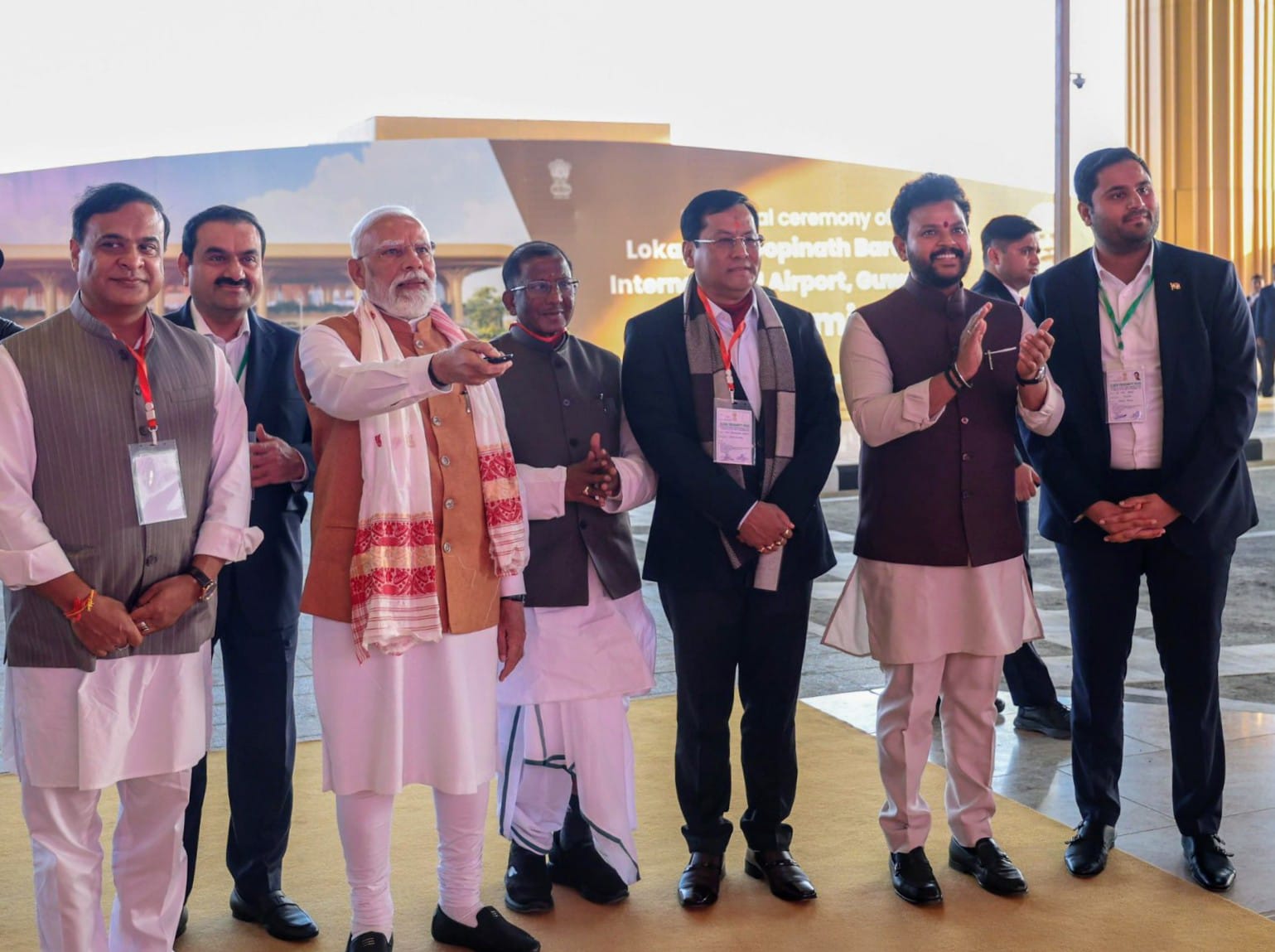
GUWAHATI : Prime Minister Shri Narendra Modi on Saturday inaugurated the new terminal at Lokapriya Gopinath Bordoloi International Airport (LGBIA), Guwahati, completing a rare, accelerated journey from concept to commissioning in under a year.

The project has been developed by Guwahati International Airport Limited, with operations led by Adani Airport Holdings Limited (AAHL).

Gautam Adani, Chairman, Adani Group, said that the Guwahati terminal demonstrates how world-class airport infrastructure can be delivered swiftly while remaining deeply rooted in local identity.

“It will strengthen connectivity, support economic growth across the Northeast, and offer passengers a seamless, modern travel experience,” said the billionaire industrialist.

The overall airport development represents an investment of Rs 5,000 crore, including Rs 1,000 crore earmarked for Maintenance, Repair and Overhaul (MRO) facilities.

Planned integrated domestic and international cargo infrastructure will further strengthen trade, logistics and employment generation across the region.

Its inauguration, with operations expected to commence by the end of February, underscores the pace at which India’s aviation infrastructure is now being conceived, built, tested and readied for live operations.

A comprehensive Operational Readiness and Airport Transfer (ORAT) programme — supported by an expert visiting team from Munich, Germany — has ensured that systems, processes, personnel and passenger flows are aligned for a safe and seamless opening from day one.

Envisioned as a modern gateway rooted in regional identity, the terminal — aptly named “The Bamboo Orchids” —draws inspiration from Assam’s iconic kopou phool (foxtail orchid) and indigenous bamboo varieties such as Bholuka bamboo from Assam and Apatani bamboo from Arunachal Pradesh.

Around 140 metric tonnes of locally sourced bamboo from the region have been used across the terminal, positioning it among India’s most prominent examples of nature-inspired airport architecture, where traditional craftsmanship is reimagined through modern engineering.

Equipped with DigiYatra-enabled processing, smart check-in systems and expansive passenger areas, the terminal is designed to handle 13.1 million passengers annually by 2032.

In FY 2024-25, Guwahati Airport handled 6.50 million passengers, underscoring the region’s accelerating aviation demand.

The terminal’s design was unveiled by the Prime Minister in February at the ‘Advantage Assam 2.0’ event

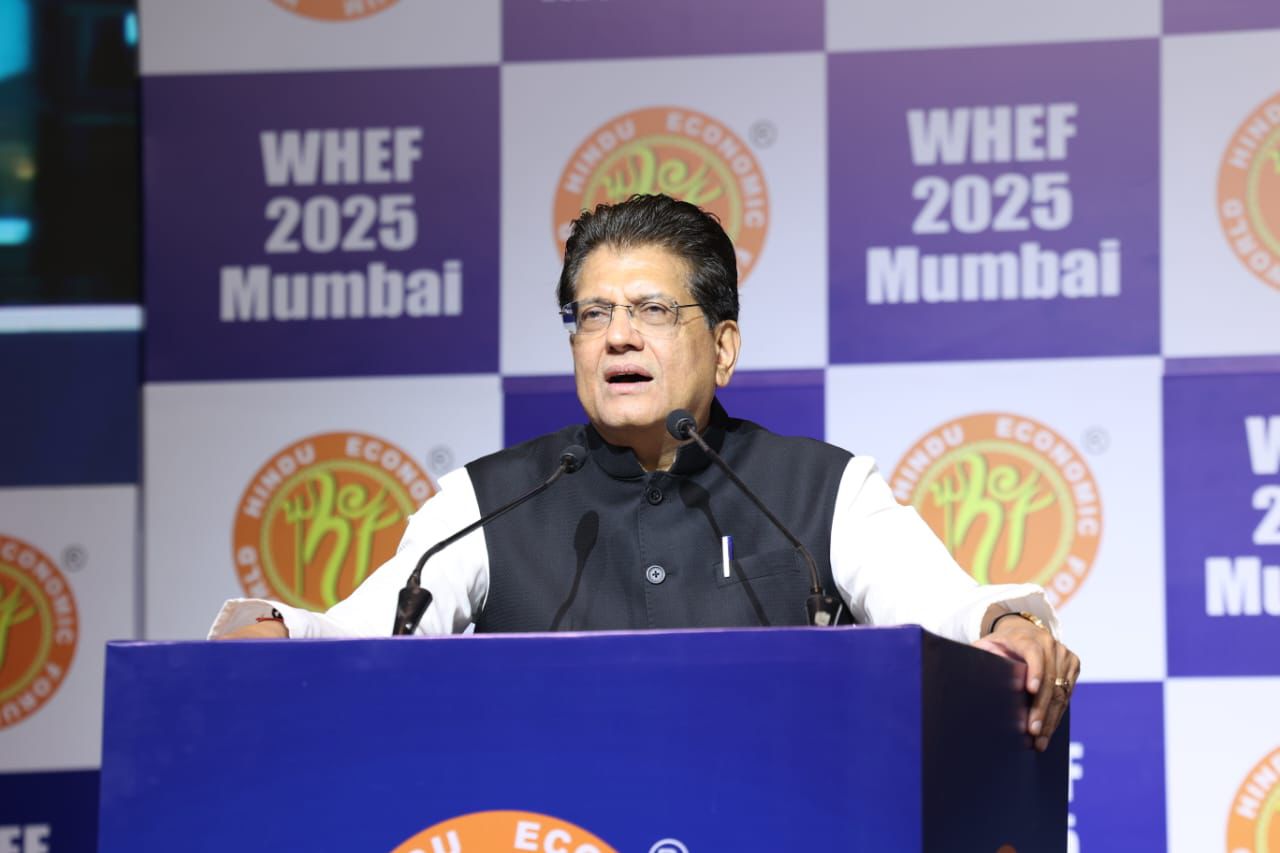
Bharat on track to become 3rd largest economy by 2027, USD 30 trillion by 2047: Piyush Goyal at WHEF

MUMBAI: Union Minister of Commerce and Industry Shri Piyush Goyal said that Bharat is firmly on track to become the world’s third-largest economy by 2027 and a USD 30 trillion-plus economy by 2047, driven by governance reforms, enterprise-led growth, and innovation. He was addressing delegates at the World Hindu Economic Forum (WHEF) while speaking on the vision of Viksit Bharat.

Shri Goyal said Bharat’s development journey is rooted in its civilisational values of Vasudhaiva Kutumbakam, which view the world as one family. He noted that this philosophy, articulated by Swami Vivekananda over a century ago and reinforced globally through Bharat’s G20 presidency in 2023 under Prime Minister Shri Narendra Modi, provides a sustainable model for global governance.

Highlighting Bharat’s economic evolution, the Minister said the country moved through phases of constrained growth after Independence, policy stagnation, and instability, before witnessing meaningful reform. He said the last decade has marked a decisive shift, with Bharat emerging as a global role model due to consistent reforms, political stability, and transparent governance.

Shri Goyal outlined the three core pillars of Bharat’s growth strategy under the current government. The first pillar is public welfare. He said large-scale initiatives in housing, sanitation, food security, electricity, water supply, healthcare, education, and digital connectivity have ensured that basic needs are met for citizens. These measures, he added, have enabled people, especially the youth, to aim higher and participate confidently in economic growth.

The second pillar, he said, is infrastructure. Bharat has seen rapid expansion in highways, expressways, airports, railways, ports, and digital networks. He highlighted that 99 percent of Indian Railways is now electrified, improving efficiency, safety, and sustainability. Infrastructure development, has a strong multiplier effect by generating employment, boosting trade and industry, and strengthening the overall economy, he said.

The third pillar is innovation and enterprise. Shri Goyal said the government has focused on reducing compliance burden, simplifying processes, improving ease of doing business, and promoting research and development. These reforms have encouraged entrepreneurship and job creation, while positioning Bharat as a responsible global growth partner.

Speaking on trade and global engagement, Shri Goyal said Bharat now negotiates Free Trade Agreements (FTAs) with confidence, balance, and national interest at the core. He highlighted key FTAs signed in recent years, including agreements with the UAE, Australia, and the Economic and Trade Agreement with the EFTA bloc comprising Switzerland, Norway, Iceland, and Liechtenstein. He also referred to agreements with Mauritius and ongoing engagements with several developed economies. He indicated that upcoming FTAs will be balanced, fair, and designed to protect and promote Bharat’s industry and manufacturing.

The Minister said these agreements are opening new markets for Bharat’s businesses while ensuring reciprocity. As an example, he pointed to the import of marble blocks from Oman, which will support Bharat’s marble processing industry, particularly in Rajasthan, and give the sector access to wider regional markets.

Shri Goyal noted that Bharat today is viewed globally as a trusted partner with decisive leadership and policy consistency. He said digital public infrastructure such as UPI has become a global benchmark, with several countries seeking to adopt similar systems.

Concluding his address, Shri Goyal said Bharat’s strength lies in its culture, unity, and sense of collective duty. He said that by learning from history, staying united, and working together, Bharat is committed to achieving the goal of Viksit Bharat 2047. He added that Bharat will continue to grow, reform, and lead, without slowing down, until it achieves the goal of a fully developed nation.

About World Hindu Economic Forum (WHEF) 2025

The World Hindu Economic Forum (WHEF) 2025 is a global platform that brings together policymakers, industry leaders, entrepreneurs, investors, and thought leaders from Bharat and across the world to deliberate on economic growth, governance, enterprise, innovation, and sustainable development. The forum focuses on advancing the vision of Viksit Bharat by aligning economic progress with Bharat’s civilisational values, fostering global partnerships, and promoting inclusive and balanced growth.

Nitin Gadkari outlines vision for innovation, sustainability

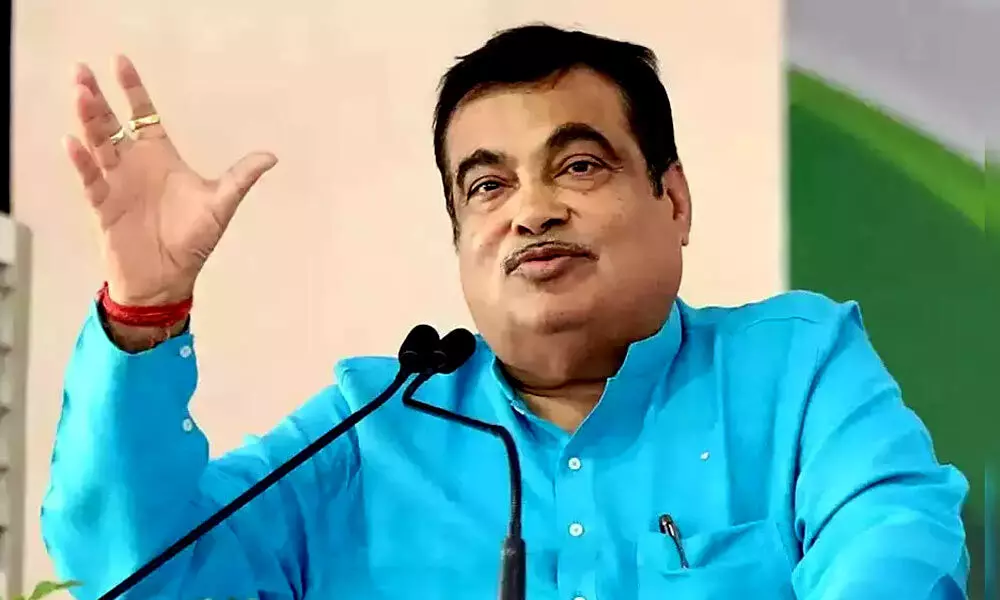
NEW DELHI : Union Minister for Road Transport and Highways Shri Nitin Gadkari on Wednesday said that development and progress are continuous processes and stressed that innovation, technology and sustainability are central to India’s growth story.

Addressing India News Manch, Gadkari said, “Development and progress are continuous processes. Changes are happening at a very large scale—not only in lifestyle or clothing, but across all sectors.”

Highlighting the role of technology, he said knowledge today is closely linked with agriculture, industry and infrastructure.

“Innovation, entrepreneurship, science, technology, research, schemes and successful practices together form knowledge, and conversion of knowledge into wealth is the future,” he said.

Gadkari underlined his belief in sustainable practices, stating, “No material is waste and no person should be left behind.”

He said the road sector has witnessed significant transformation, adding that what is visible today is only the beginning.

Speaking on major infrastructure projects, the minister said extensive work is underway on highways, tunnels, bridges, ropeways, cable cars and funicular railways.

“We are working on 260 projects, including green express highways, ropeways and cable cars,” he said.

Referring to innovative funding models, Gadkari cited the Kedarnath ropeway project, saying, “The project cost is Rs 5,000 crore, but we are not spending a single rupee. Instead, the company will pay us Rs 800 crore annually as royalty.”

On waste management, Gadkari said solid and liquid waste are being used productively in road construction.

“We have already used around 80 lakh tonnes of waste in road projects across Delhi, Dwarka, the Delhi-Mumbai Highway and the Ahmedabad–Dholera road,” he said.

He also spoke about crop residue management, stating that stubble is now being used to produce ethanol, bio-CNG, bio-bitumen and sustainable aviation fuel.

“Farmers are no longer just food providers; they are becoming energy providers,” Gadkari said.

Addressing road safety concerns, the minister acknowledged engineering lapses and said strict action was being taken.

“I want to send 10–20 contractors to jail and blacklist them. Officers will also be suspended if there are deficiencies,” he said, adding that perfection in road engineering is non-negotiable.

He said enforcement has been tightened and safety systems upgraded, noting that helmet rules have been strengthened and emergency assistance measures introduced.

“Anyone who helps an accident victim reach a hospital will be awarded Rs 25,000,” Gadkari said.

Touching upon public transport, Gadkari emphasised the need to reduce dependence on private vehicles.

He spoke about new electric buses equipped with modern amenities, saying, “The ticket cost is 30 per cent cheaper than diesel buses, and the facilities are comparable to air travel.”

Reflecting on his own journey, Gadkari said innovation does not necessarily come from formal degrees.

“I am not a scientist or an engineer. The greatest knowledge in life is practical knowledge,” he said.

Concluding, the minister reiterated that technology, sustainability and innovation would define India’s future growth.

“If roads improve, exports will increase, logistics costs will fall, and India will soon become number one in the world,” he asserted.

JSW Infrastructure strengthens rail led logistics in eastern Karnataka

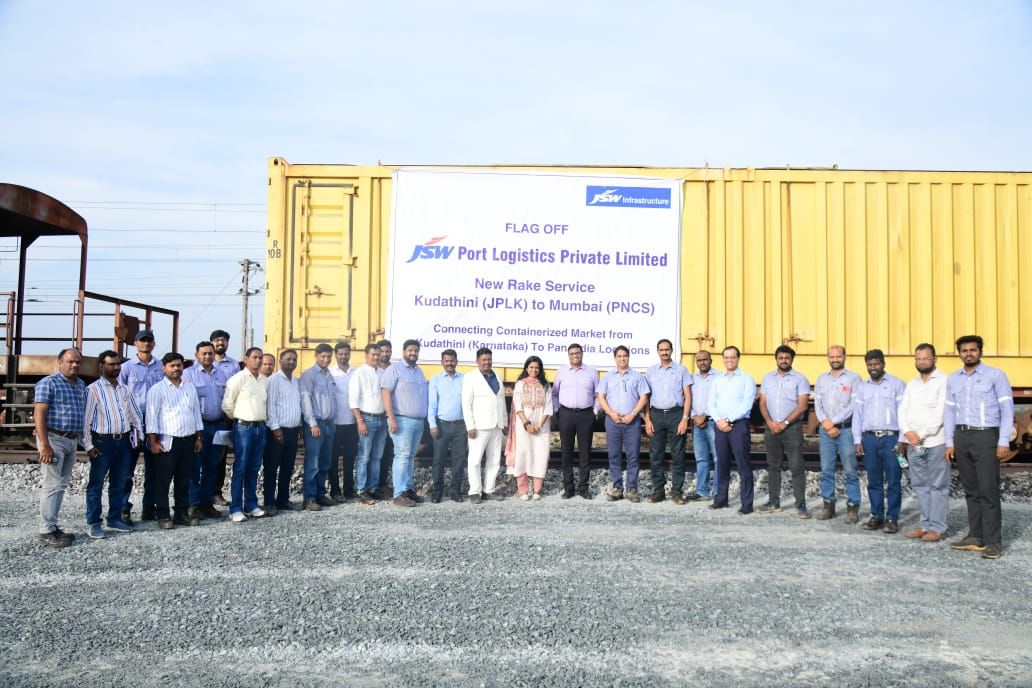
MUMBAI : The first container rake was flagged off yesterday from JSW Infrastructure Ltd.’s newly developed rail terminal at Kudathini (Bellary), Karnataka (Railway siding code: JPLK), marking the first private rail terminal in the region.

1766222469565 JSW Infrastructure strengthens rail led logistics in eastern Karnataka

In addition to containerized cargo, the terminal is designed to handle bulk cargo, with plans underway to develop an Inland Container Depot (ICD) at this location in the near future. Spread across more than 80 acres, the terminal offers excellent road connectivity, enhancing last-mile logistics efficiency.
The flag-off ceremony was attended by JSW Group officials along with officials from the Indian Railways. The inaugural rake was dispatched from the Kudathini terminal to Mumbai.
This terminal will serve the catchment areas of Vijayanagara, Hospete, Gangavati, Bellary, and other cargo clusters in the eastern part of Karnataka, enabling a modal shift from road to rail and delivering long-term, sustainable logistics solutions to customers across the region.

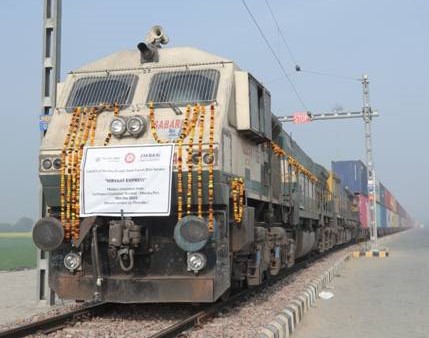
Niryat Cargo Express runs from Icchapuri, Gurugram to Mundra Port

NEW DELHI : Railways have achieved another milestone in freight transportation by operating the Niryat Cargo Express, an export-focused, assured transit service, as a double-stack container train from Ichhapuri Container Terminal in Gurugram to Mundra Port. Earlier, 20 trips of assured transit service have been operated from Garhi, Gurugram. Such a time-tabled train is being operated for the first time from Ichhapuri, Gurugram.

This assured, time-bound weekly service will help exporters by providing faster, reliable, and predictable movement of goods to Mundra Port, reducing delays and logistics costs.

Delhi Division, Northern Railway, has strengthened assured freight movement for exporters. The train was operated as a crack train, meaning minimal halts, and uninterrupted movement, allowing faster transit and timely delivery—particularly useful for high-value export cargo.

India-Oman CEPA to boost trade, MSME exports, energy security: Bank of Baroda economist

NEW DELHI: India has taken another significant step towards deepening its integration with global supply chains by signing a Comprehensive Economic Partnership Agreement (CEPA) with Oman, a move expected to expand bilateral trade, strengthen MSME-led exports and enhance India’s energy security, according to Ms. Dipanwita Mazumdar, Economist at Bank of Baroda.

The agreement signed during Prime Minister Shri Narendra Modi‘s visit to Oman earlier this week focuses on expanding trade and investment flows while creating new opportunities for labour-intensive sectors such as textiles, leather, footwear, gems and jewellery, and engineering products.

These sectors, which are closely linked to employment generation, are expected to see improved market access in Oman under the pact.

In addition, the CEPA significantly enhances commitments in the services sector, covering education, healthcare, computer services, professional services, business services and research and development.
One of the key highlights of the agreement is zero-duty access on 98.08 per cent of Oman’s tariff lines for Indian goods, covering nearly 99.4 per cent of India’s exports to Oman by value.

In return, India has offered tariff concessions on 77.79 per cent of its total tariff lines, accounting for about 94.8 per cent of imports from Oman.

For export-sensitive items, particularly in agriculture, the agreement adopts a tariff-rate quota (TRQ) mechanism, allowing limited quantities to be imported at concessional rates.

India’s exports to Oman stood at US$ 4.1 billion in FY25, accounting for about 0.9% of India’s total exports. While exports moderated slightly after FY23, they have shown strong long-term momentum, growing at a five-year CAGR of 12.4%, significantly higher than the growth in India’s overall exports during the same period.

Exports during April-October 2025 were marginally higher than the corresponding period last year, indicating early signs of recovery.

On the import side, India’s purchases from Oman rose sharply to US$ 6.6 billion in FY25, driven largely by petroleum products.

Imports have grown at a five-year CAGR of 12.2%, faster than India’s overall import growth. As a result, India’s trade deficit with Oman widened sharply to US$ 2.5 billion in FY25, though the deficit has begun to narrow in the current fiscal year as export growth picks up.

Manufactured goods dominate India’s export basket to Oman, followed by petroleum products and agricultural goods.

Within manufacturing, engineering goods and pharmaceuticals account for a substantial share, positioning them as key beneficiaries of the CEPA.

The sectors explicitly targeted under the agreement together account for around 39% of India’s exports to Oman, providing a direct boost to India’s export competitiveness.

On the import front, crude petroleum and petroleum products form the bulk of India’s imports from Oman. Notably, the unit value of petroleum imports from Oman is among the lowest within the Gulf Cooperation Council (GCC), making Oman an attractive and cost-efficient energy partner for India.
This pricing advantage could help India contain its oil import bill and diversify sourcing options.

According to Bank of Baroda’s assessment, the India-Oman CEPA is strategically timed as global trade patterns undergo realignment due to rising tariffs and geopolitical shifts. The agreement strengthens India’s access to overseas markets, supports MSME exporters and enhances resilience in energy imports.

Overall, the pact is expected to play a constructive role in boosting exports, generating employment and improving trade competitiveness, reinforcing India’s broader trade strategy in a challenging global environment.

Source: ANI

Bharatmala vs Sagarmala: Mega infra projects creating India’s next realty hotspots

NEW DELHI : Bharatmala and Sagarmala are India’s dual mega infrastructure drives for the development of highways and ports in India. We examine how PM Gati Shakti platform mobilizes the intersection of road and port infrastructure and transforms certain Tier-3 towns into high-yield investment frontiers.

The flagship infrastructure projects in India, the Bharatmala Pariyojana and Sagarmala Programme, are a national effort to aim at decreasing the logistics expenses of the country by 2030. This efficiency improvement in the structure is the improvement behind the record of 825 billion exports attained by the country in FY25, and systematically driving up high-paying investment prospects in upgraded highway networks, modernized port infrastructure, and new coastal economic zones.

There are separate ministries that are smoothly woven together and unified by the PM Gati Shakti National Master Plan. These projects guarantee an end-to-end supply chain between the manufacturing clusters and the global markets leading to more exports and economic growth of the country.

AspectBharatmala PariyojanaSagarmala Programme
Focus34,800 km highways, economic corridors, expresswaysPort modernization, CEZs, coastal/inland waterways
MinistryRoad Transport & HighwaysPorts, Shipping & Waterways
Investment₹6.92L Cr total; ₹4.72L Cr spent (68%)₹5.79L Cr outlay; ₹1.4L Cr (262 projects) + ₹2.4L Cr PPPs
Progress26K km awarded, 19.8K km built (Feb 2025)839 projects; Sagarmala 2.0 eyes ₹12L Cr by 2035
Export RoleHinterland-to-port roads (30-40% faster trucks)118% coastal shipping growth (35% cheaper EXIM)
Investor PlayCorridor warehouses, MMLPs, roadside retailPort-adjacent industry, cold chains, shipyards

A Factory-to-Port Ecosystem
Bharatmala inland role as an arterial: Systematically links cargo originating in major interior manufacturing zones, such as electronics assembly units in Uttar Pradesh, mineral mines in Rajasthan and agricultural processing facilities in Madhya Pradesh, with coastal ports through 18 specific port connectivity projects with a total length of 424 km (189 km of which have been commissioned thus far).
Role of the maritime terminus – Sagarmala: Makes the waterfront an efficient part of the production system by expanding the rail-road port connections, deep-sea drafts to accommodate mega-container ships and the strategic location of the Coastal Economic Zones (CEZs) to ensure the exporters location plans have production facilities on-site, customs clearance and direct loading into the ships under compact, high-efficiency precincts.
PM Gati Shakti geospatial platform eradicates the past departmental silos:

Ensures highway alignments accurately coincide with port accessways, inland depot of containers and Multi-Modal Logistics Parks (MMLPs) to provide seamless modal transfers.
Achieves 30-50% total logistics cost savings, which is proved by the infrastructure optimization studies by EY.
Allows landlocked manufacturers to get to strategic ports, such as Mundra, Jawaharlal Nehru Port Trust (JNPT) and Chennai 1-2 days earlier as compared to the old routes.
Promotes the switching of bulk commodities (coal, cement, agri-products) to much less expensive coastal shipping and inland waterway networks.
Will save more than ₹35,000-40,000 crore of the total Indian trade ecosystem.
Export Performance Acceleration
Current trade statistics confirm the infrastructure-export correlation: the value of merchandise exports in April-August 2025 amounted to 349 billion, indicating a growth rate of 6.18 percent annually, and cumulative amounts in October were estimated at $492 billion against the backdrop of ongoing tariff pressure on its markets in the world. The official reviews prepared by the Ministry of Commerce may be directly traced to the effects of the convergence in Bharatmala-Sagarmala with the explicit contributing factors being this resilience.

The main beneficiaries of the sector are:

  • Electronics (15-20% export growth): Noida-Gurugram clusters in manufacturing of components benefit Bharatmala corridors to move goods fast to Ennore-Chennai port facilities where finished consumer electronics are shipped out.
  • Petroleum Products (The top export category in India): pounds of oil terminals Working on Sagarmala, supported by the Bharatmala pipeline accompaniment corridors, get a logistic cost reduction approximately 25 percent of the overall logistics cost.
  • Cars and Parts: The flagship project of the Delhi-Mumbai Expressway -Bharatmala- enables the just-in-time delivery to the Mundra Port in order to export in a time sensitive manner to North American and European markets.
  • Agri-Processing and Food Products: Sagarmala inland waterways and corridor-based MMLPs will facilitate faster transportation of perishable goods between central India and Vizag-Paradip, which will make the cold-chain exports feasible significantly in a material way.
  • Textiles and Engineering Goods: Eastern Special Economic Zones combine spinning and cloth production hubs in Odisha-Uttar Pradesh with coastal distribution points of apparel and capital goods EXIM.

New Opportunities in Tier-3 Cities

Stakeholders in the construction frontrunners (Rajasthan: 2,241 km open, 95 percent execution); (Maharashtra: 1,837 km) in the support of the freight superhighway and JNPT-dominated logistics respectively; (Uttar Pradesh: 1,854 km) as North India electronics export hub are all now in place.

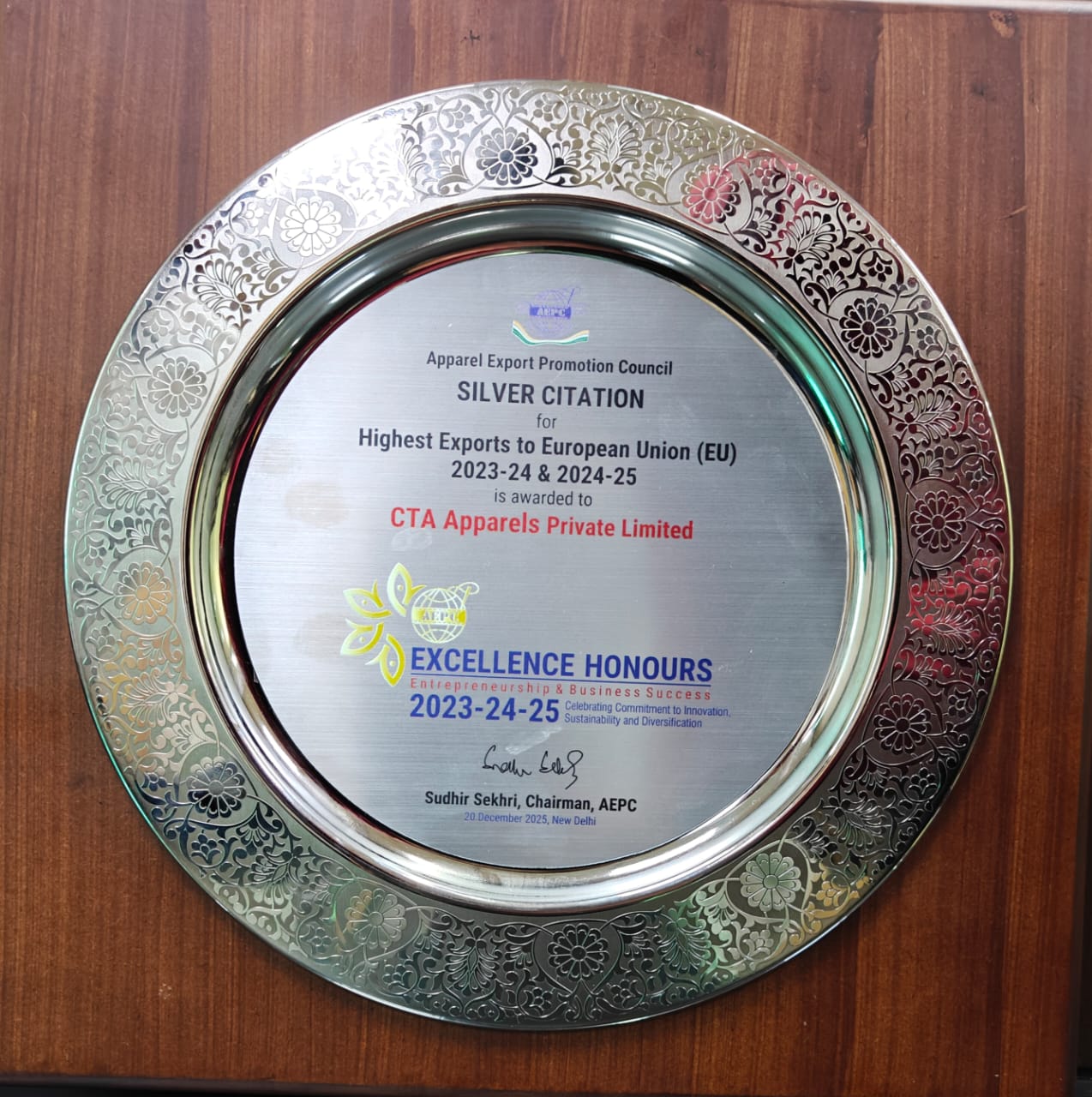
CTA Apparels honoured with Silver Award by the Vice President of India for Highest Exports to the European Union

NEW DELHI: CTA Apparels, one of India’s leading apparel exporters, has been conferred with the Silver Award for Highest Exports to the European Union by the Apparel Export Promotion Council (AEPC) at a prestigious ceremony held in New Delhi on last Saturday. The award was presented by  Shri C.P. Radhakrishnan, Hon’ble Vice President of India, marking a significant milestone in CTA Apparels’ journey of excellence in global apparel manufacturing and exports.

The recognition underscores CTA Apparels’ strong export performance, consistent quality standards, and deep-rooted partnerships with leading European buyers. It also reflects the company’s commitment to compliance, sustainability, and operational excellence across its manufacturing ecosystem.

Addressing the gathering, the  Hon’ble Vice President lauded the outstanding contribution of Indian apparel exporters to the nation’s economy and employment generation. He highlighted the pivotal role of upcoming and recently concluded Free Trade Agreements (FTAs), noting that the FTA with the UK, agreements with Oman, and the forthcoming FTA with the European Union are set to provide a significant boost to India’s textile and apparel exports. He further expressed optimism that trade engagements with the United States will also materialise soon, opening new growth avenues for Indian exporters.

Speaking on the occasion, the leadership at CTA Apparels expressed gratitude to AEPC, its buyers, partners, and the entire CTA team.

“This recognition is a proud moment for all of us at CTA Apparels. It validates our long-term focus on Europe as a key market and our continued investments in sustainable manufacturing, innovation, and people. With supportive trade policies and FTAs on the horizon, we are confident about accelerating India’s apparel export growth globally” said Dr. Mukesh Kansal, Chairman, CTA Apparels.

With this achievement, CTA Apparels reaffirms its position as a trusted global apparel partner and remains committed to strengthening India’s footprint in international markets, particularly across Europe.