Home Blog Page 52

Saudi helicopter crash kills two as tanker attacks threaten Hormuz

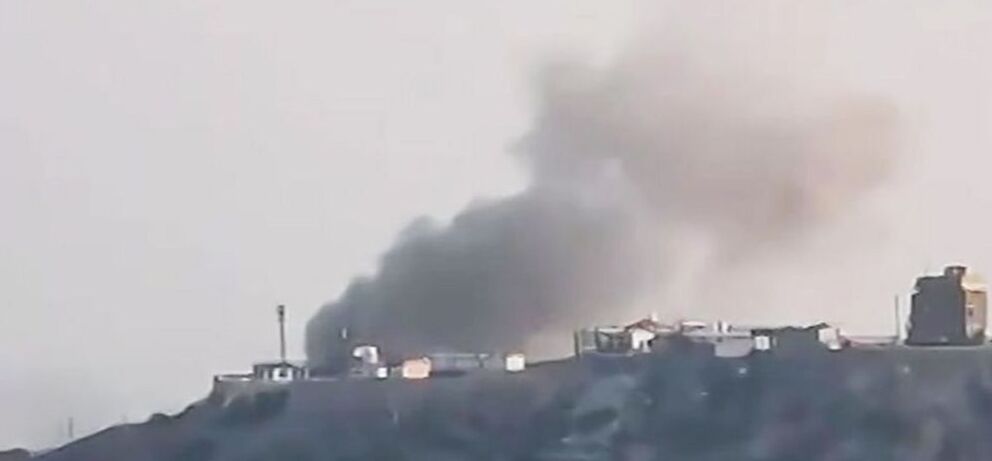
NAJRAN (YEMEN): Two Saudi military personnel were killed in a helicopter crash near Yemen on Sunday, as regional fighting intensified and tanker attacks threatened shipping through the Strait of Hormuz.

The Saudi-led coalition said an AH-6i reconnaissance helicopter crashed in Najran due to a technical malfunction, killing both crew members.

Coalition spokesman Major General Turki al-Maliki said the aircraft crashed in an area under the Saudi National Guard Ministry’s jurisdiction.

The incident followed a claim by Houthi military spokesman Yahya Saree that the group had shot down a Saudi Apache helicopter near Najran on Saturday. Al-Maliki rejected the claim.

Najran has faced repeated Houthi attacks as Yemen’s conflict increasingly becomes another front in the U.S.-led war against Iran.

Meanwhile, Iran’s Islamic Revolutionary Guard Corps said two supertankers struck naval mines on Saturday, triggering fires. The Iranian navy separately reported a tanker burning in the Gulf of Oman.

The IRGC reiterated that the Strait of Hormuz remained closed to vessels travelling without Iranian authorisation.

The United Kingdom Maritime Trade Operations agency also reported two tanker attacks near Saudi Arabia on Friday, including one involving a rocket-propelled grenade fired from a small boat.

The Iranian claims could not be independently verified.

Despite the maritime threats, Iranian Foreign Minister Abbas Araghchi said Tehran had submitted a seven-day proposal through Qatar to reopen the strait if certain conditions were met.

Araghchi said the decision now rested with Washington.

U.S. Central Command offered a contrasting assessment, saying 97% of vessels attempting to cross the strait had done so without being struck by Iranian projectiles.

The military also said it had redirected 138 commercial vessels to enforce its blockade of Iranian ports.

Separately, the Saudi-led coalition reported intercepting ballistic missiles and drones launched by Yemen’s Houthis towards Riyadh, Khamis Mushait and other areas.

Egyptian President Abdel Fattah el-Sisi pledged to defend Saudi Arabia if necessary, seeking parliamentary authorisation for potential military assistance.

U.S. President Donald Trump said the Iran war would end “very quickly” and predicted lower fuel prices once hostilities ceased.

However, Defence Secretary Pete Hegseth warned Iran of further military devastation unless it abandoned its nuclear ambitions.

The developments highlight the widening conflict and mounting threats to regional energy supplies.

Source: Investing.com

5 killed, 16 injured in Houthi attack on Yemen’s Aden presidential palace

ADEN: Five people were killed and 16 injured in a Houthi attack targeting the al-Maashiq Presidential Palace in Yemen’s southern city of Aden, Al Jazeera reported, citing Yemeni Health Minister Qasim Mohammed Buhaibeh, amid escalating hostilities between the Houthi movement and government forces.

In a post on X, Houthi rebels spokesperson Yahya Saree on Thursday claimed responsibility for the attack, saying, “The bombing of the Saudi enemy’s war operations headquarters in Aden comes within the context of the announced equation of striking Saudi mobilizations wherever they may be, and considering any military presence of the Saudi enemy a legitimate target for our forces wherever it may be.”

Chairman of Yemen’s Presidential Leadership Council Rashad al-Alimi called the attack an “extension” of strikes against airports and oil facilities in Yemen and Saudi Arabia, Al Jazeera reported. Al-Alimi said he had directed government forces to “take the necessary measures to protect state institutions, counter terrorist threats, and respond appropriately to sources of danger”.

He added that the “Dawn of Yemen” operation, launched earlier this month, was proceeding towards its objective of “restoring state institutions and extending state authority across the entire national territory, ultimately reaching the capital, Sanaa.”

According to Al Arabiya, Yemen’s Minister of Youth Nayef Saleh al-Bakri said all cabinet ministers in Aden were unharmed and asserted that members of the government would not leave the city following the attack.

Meanwhile, Yemeni government forces claimed to have carried out 1,250 attacks against Houthi positions in the preceding 24 hours as part of the “Dawn of Yemen” campaign. Government forces spokesperson Majed al-Nuzaili said in a post on X that the operations involved combat aircraft, drones, artillery and rocket launchers and destroyed 150 Houthi vehicles. He said the attacks contributed to the destruction of Houthi fortifications, “particularly on the Taiz fronts”.

Separately, the Marib Governorate Media Office said in an official press release that the Houthis fired nine ballistic missiles and seven other projectiles at Marib city on Thursday evening.

The office condemned the attacks as “a flagrant violation of international laws and norms prohibiting attacks on civilians and civilian infrastructure”. It warned that “continued missile attacks on populated areas” represented “a dangerous escalation threatening civilian lives and security” and urged the international community, the United Nations, and humanitarian and human rights organisations to “take concrete action to protect civilians and hold those responsible accountable”.

The escalation follows Houthi claims of attacks on Saudi energy infrastructure and King Khalid International Airport in Riyadh on Wednesday. Houthi rebels spokesperson Yahya Saree said in a statement posted on X that the group had targeted Saudi Aramco facilities in the Eastern Province, the Ras Tanura refinery and the airport using ballistic missiles, cruise missiles and drones.

Saree said the operation was in response to “Saudi aggression” against Yemen. He alleged that the strikes caused destruction and fires at the targeted sites, but the claims have not been independently verified. He warned that Houthi operations against Saudi territory would continue, declaring airports and oil installations “legitimate targets” for the group’s armed forces.

In another post on X on Thursday, Saree alleged that “Saudi warplanes conducted 65 airstrikes and missile attacks targeting civilian assets in the capital Sana’a and the provinces of Lahj, Hodeidah, Taiz, Amran, Saada, and Marib, carried out via F-15 and Typhoon aircraft that took off from Khamis Mushait and Taif airbases, with the missile aggression launched from Najran. This brings the total number of Saudi aggression airstrikes and missiles since the escalation against our country to 2388 airstrikes and missiles.”

Saree claimed the cumulative number of Saudi airstrikes and missile attacks since the escalation began had reached 2,388. These figures and allegations have not been independently verified.

Saudi Deputy Foreign Minister for Public Diplomacy Rayed Krimly accused Iran of encouraging the escalation, Al Jazeera reported. Krimly said Tehran continued to “arm, train and support the Houthi militia in violation of relevant UN Security Council resolutions and in violation of its commitments in the Beijing agreement”, referring to the Saudi-Iranian agreement brokered by China in March 2023.

Krimly also alleged that elements in Russia and China were providing Iran and the Houthis with capabilities or intelligence, including through commercial channels.

“Of course, some of the capabilities of Iran, and of the Houthis, do come – or the intelligence – do come from at least elements in Russia or China, even commercial elements sometimes, but we do discuss these matters regularly with China and Russia, and we will continue to do so,” he said, according to Al Jazeera.

Meanwhile, French Foreign Ministry spokesperson Pascal Confavreux said France had begun deploying military assets in Saudi Arabia to help protect its oil facilities, Al Jazeera reported. French President Emmanuel Macron had said last month that France would send troops and defence systems to protect Yanbu, a key Red Sea energy transport hub.

The Saudi-led coalition also warned civilians earlier in the week to evacuate the Al-Sabahah Central Station of the Yemeni Oil Company in Houthi-controlled Sanaa ahead of a planned military operation. The coalition said it had intercepted two ballistic missiles targeting Khamis Mushait and neutralised three unmanned aerial vehicles north of Riyadh. The Houthis separately claimed to have downed a Saudi reconnaissance aircraft. These claims have not been independently verified.

Separately, Yemen’s Foreign Minister Afrah al-Zouba called on European countries to take a firmer stance on the fighting in Taiz. According to the Yemeni Foreign Ministry, she discussed the clashes and worsening humanitarian conditions, including displacement in southern and western areas, with European Union Ambassador to Yemen Patrick Simonnet.

The conflict intensified in 2014 when the Houthis seized Sanaa and ousted the internationally recognised government, prompting a Saudi-led military intervention in 2015. The latest escalation has raised concerns over regional security, energy supplies and maritime trade through the Red Sea and the strategically important Bab al-Mandeb Strait.

Source: ANI

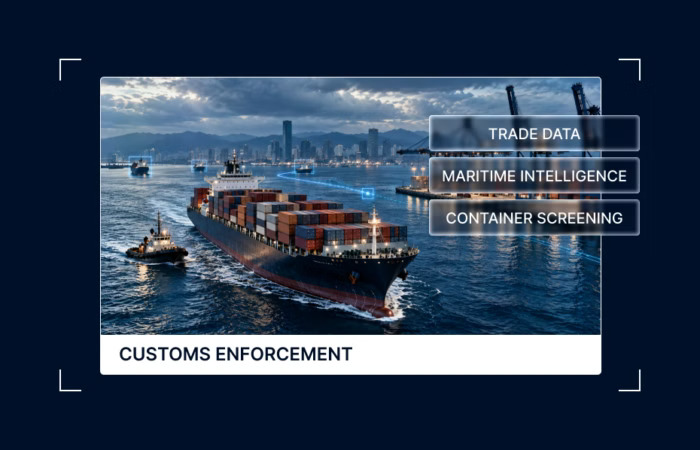
Trade Data vs. Maritime Intelligence: What Customs Agencies actually need

LONDON: Cargo manifests, customs declarations, shipping records, and import and export filings exist to describe commerce. They do that well.

How much crude moved through Yanbu last month? Which companies are shipping dry bulk into Rotterdam? What do the dominant trade flows look like across the Red Sea corridor this quarter? These are real questions with real answers, and the platforms built to answer them serve commodity traders, banks, and supply chain managers properly.

Those are not the questions customs enforcement asks.

Enforcement Asks a Different Set of Questions

Which of the 15,000 containers arriving at this port today holds something that was not declared? Which vessel took a detour through a sanctioned port before arriving here? Which manifest is fraudulent? Which operator has a behavioral history that signals concealment?

Trade data does not answer any of these, and the reason is structural rather than a matter of coverage or refresh rate. Trade data is a record of what parties declared. The enforcement problem begins at the point where the declaration stops being true.

AIS does not close the gap either. A vessel running dark produces no AIS record to check. A vessel broadcasting manipulated positions produces a record that is worse than nothing, because it looks complete. In both cases, the vessel most worth examining is the one generating the least usable data.

That is the shape of the enforcement problem. The subject of the investigation controls the inputs.

Intelligence Starts Where Declarations Stop

All-source maritime intelligence fuses the layers that exist independently of what a vessel or operator chooses to declare.

EO and SAR satellite imagery sees a vessel whether or not it is transmitting. SAR works through cloud and darkness, so coverage does not depend on conditions. RF detection identifies a vessel’s emissions signature when AIS is off, because a ship running dark is still operating equipment that radiates.

Behavioral analytics built on years of vessel activity flag deviations no single manifest could reveal. A route that does not match the stated voyage. A loitering pattern in a corridor associated with transfer activity. A dark period that begins and ends in places that make the gap itself the signal.

Ownership and entity resolution surfaces the beneficial owner behind layers of flag hopping and shell structures, which is how an operator with a history of concealment appears as the same operator rather than as a new company with a clean record.

Fused, these produce an intelligence picture rather than a data feed. The distinction matters operationally. A feed tells an officer what was reported. A picture tells them what happened, with enough specificity to justify an inspection.

Container Targeting Shows the Gap Most Clearly

Container targeting is the sharpest illustration.

Trade data can tell you that a container is declared as machine parts from a legitimate exporter with a clean filing history. Every field checks out. On a declaration-based targeting model, it ranks low and passes.

Trade data can tell you that a container is declared as machine parts from a legitimate exporter with a clean filing history. Every field checks out. On a declaration-based targeting model, it ranks low and passes.

When UK authorities seized roughly $100 million of cocaine from a container ship at London Gateway, the public reporting named almost nothing. A container vessel, a Panama port call, a June arrival. Those three details were enough to run a search, returning three vessels that matched the profile during the relevant window. One carried a documented history, surfaced automatically through adverse media screening, of a 2016 case in which approximately 200 pounds of cocaine were found concealed in a container loaded at Santos.

The routing is the part a declaration cannot show. Panama in early June, across the Atlantic, Antwerp on June 21, Rotterdam on June 23, London Gateway on June 25, then onward to Germany. Each leg generated its own paperwork, and each set of paperwork was accurate. The shape of the voyage, and the vessel’s own history, are what carried the signal.

All-source intelligence can tell you that the vessel carrying it called at a sanctioned port three legs ago with AIS switched off, that the declared exporter shares ownership infrastructure with entities already under sanctions, and that the vessel’s behavioral pattern in the week before loading matches a known concealment sequence.

None of that is visible in the declaration. All of it is available before arrival.

That is the difference between a declaration and an intelligence product. A declaration describes an intention. An intelligence product describes a history. Customs officers allocating finite inspection capacity need the second one, because the first was written by the party they are assessing.

The timing compounds the advantage. Declarations arrive close to arrival, leaving a narrow window to act. Vessel behavior accumulates across the entire voyage, which means the risk picture can be built while the ship is still at sea.

What Do You See When the Vessel Switches Off?

That is the test, and it is worth applying to any source an agency relies on.

Trade data sees nothing. The declaration describes the leg that was filed, not the voyage that happened, and it arrives regardless of what the vessel did in between.

AIS sees nothing. That is the point of switching it off.

All-source intelligence still has a picture. Satellite detection places the vessel. RF confirms it. Behavioral models read the gap itself as an indicator rather than a blank. Ownership intelligence connects the operator to everything else it controls. With all-source operational intelligence, whatever an agency needs to complete the picture comes in alongside the rest, whether that is national holdings, partner reporting, industry data, or a source specific to the mission.

Concealment is not an edge case in customs enforcement. It is the case. A targeting model that performs well on cooperative vessels and loses sight of uncooperative ones is optimized against the wrong population.

The vessels that matter most are the ones that stopped reporting. What an agency can see during those windows determines what it can stop.

Source: WINDWARD

DP World appoints Jason Varsamidis as CEO and MD, Asia Pacific

SINGAPORE : DP World recently announced the appointment of Jason Varsamidis as Chief Executive Officer and Managing Director of its Asia Pacific region, effective immediately.

Jason will lead DP World Asia Pacific’s portfolio of ports and terminals and logistics businesses across 22 geographies, with more than 12,000 employees. He brings close to three decades of experience with DP World and the then P&O Ports, which he joined in 1997.

Jason has most recently served as Chief Financial Officer of DP World Asia Pacific since 2020, where he played a central role in shaping the region’s strategy, investment agenda and business performance. Before that, he was Chief Financial Officer of DP World Australia for seven years. Across his career, he has overseen mergers and acquisitions, infrastructure projects and business turnaround programmes.

In his new role, Jason will focus on driving regional strategy and operational performance, strengthening endto-end supply chains and expanding DP World’s integrated logistics capabilities to deliver greater value for customers.

Yuvraj Narayan, Group CEO, DP World, said: “Jason is a highly respected leader with a deep understanding of our business and the markets in which we operate. His track record and commercial acumen make him well placed to lead Asia Pacific, one of our key growth engines. His appointment provides continuity for the business and keeps us firmly focused on our strategic priorities, our customers and our people.”

Jason Varsamidis said: “I’m honoured to lead DP World in Asia Pacific. We have a strong business, talented people and real opportunities across this region. I’ll work closely with our leadership team and colleagues to maintain momentum, deliver for our customers and partners, and keep advancing our strategic priorities.”

DP World Asia Pacific will announce arrangements for the Chief Financial Officer role separately.

Gujarat CM Bhupendra Patel reviews progress of NMHC at Lothal

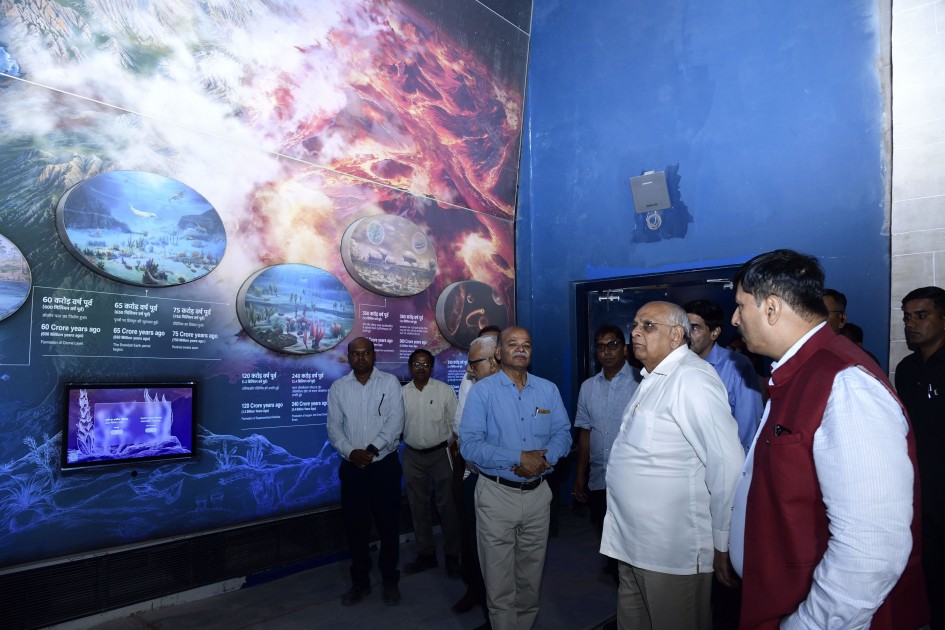
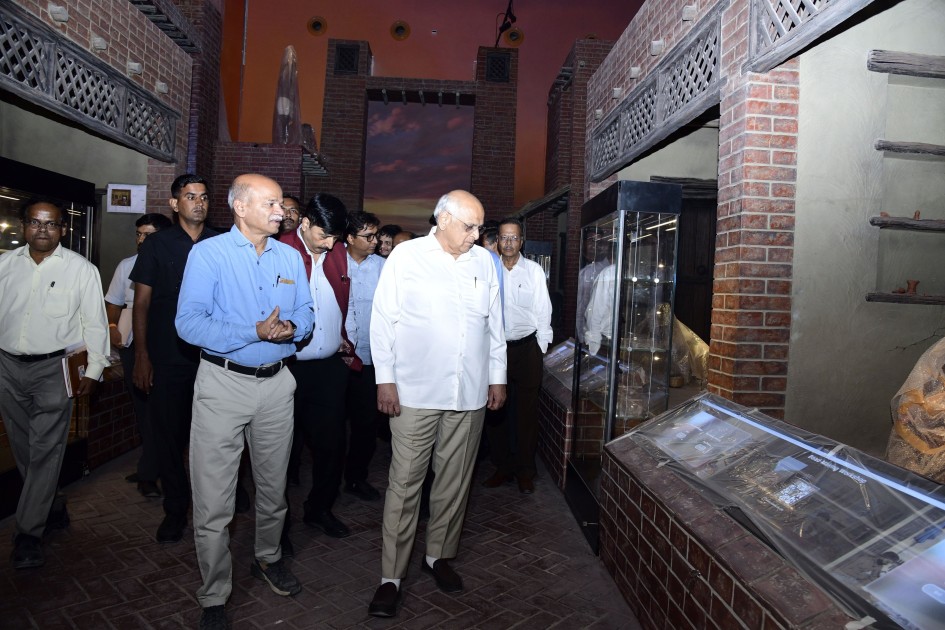
LOTHAL: The National Maritime Heritage Complex at Lothal, envisioned in line with Prime Minister Shri Narendra Modi’s slogan of “Vikas Bhi, Virasat Bhi”, is being developed at the historic site associated with the ancient Indus Valley Civilisation. The complex aims to showcase India’s rich maritime history and heritage through world-class museums, galleries and other visitor attractions, according to the release.

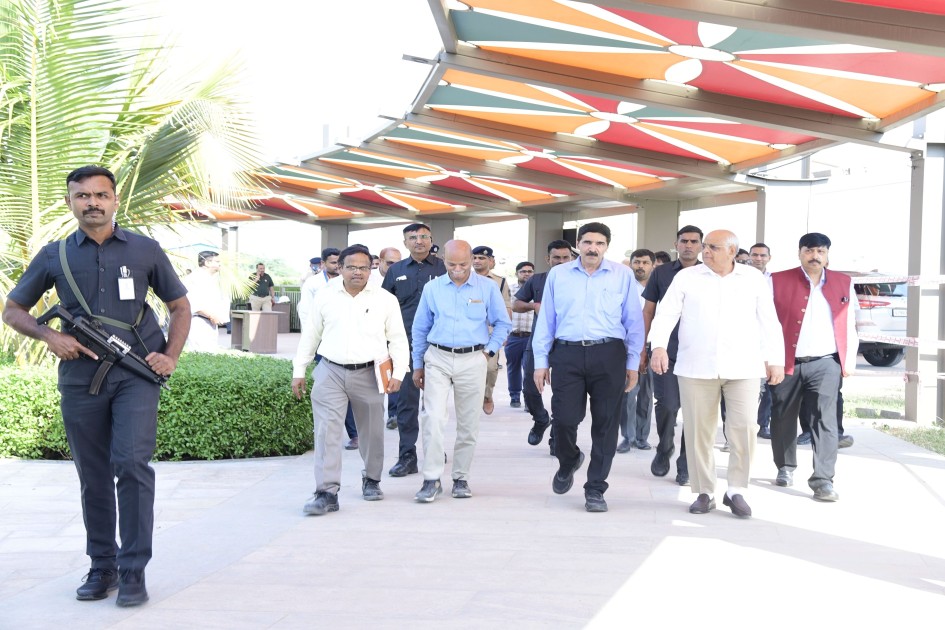
During the visit, Gujarat Chief Minister Shri Bhupendra Patel reviewed the current status of construction activities and ongoing projects. He also received detailed information about the facilities being developed under Phase I and Phase II of the National Maritime Heritage Complex.

The project, being developed under the leadership and guidance of Prime Minister Narendra Modi, will feature a museum dedicated to India’s maritime heritage, elaborate galleries and what is planned to be the world’s tallest Lighthouse Museum.

Bhupendra Patel held a meeting with senior officials and representatives associated with the project. During the meeting, a detailed presentation was made on the proposed facilities under both phases, the distinctive features of the site, the development works completed so far and the projects planned for the coming stages.

The press release stated that the Chief Minister also reviewed the implementation timeline and emphasised the importance of completing the project within the stipulated schedule. The complex is envisioned as a major international tourist attraction, highlighting India’s maritime legacy and the historical significance of Lothal.

Nitin Gadkari announces Rs 991 crore for six-laning of 57.8 km Kandla–Mundra Port Highway

NEW DELHI: The Centre has approved Rs 991.19 crore to widen a 57.80 km stretch of National Highway 41 between Gandhidham (Kandla) and Mundra in Gujarat to six lanes. Union Road Transport and Highways Minister Shri Nitin Gadkari announced the approval on 15 October.

This section is a vital freight transport route connecting Deendayal (Kandla) Port and Mundra Port. Both these ports serve as the primary gateways for trade and logistics to North India, fulfilling the needs of industries, agriculture, and markets. The entire road widening work will be carried out within the existing ‘Right of Way’ (available land) boundaries.

This corridor, which handles over 55,000 PCU (Passenger Car Units) daily, primarily sees the movement of heavy vehicles heading toward the ports. It will now be made even safer, faster, and congestion-free. The project includes a new flyover, new underpasses for vehicles, reconstruction of major and minor bridges, and special safety measures at identified high-risk accident-prone locations.

This upgraded highway will reduce travel time by approximately 20%, lower logistics costs, and accelerate the movement of goods between the ports and North India’s industrial and agricultural regions. It will boost trade, industry, and employment in Kutch, further strengthen Gujarat’s role as India’s maritime gateway, and advance the nation one step closer to building a world-class logistics network for a ‘Developed India.’

The highway section is a key route for goods traffic serving Deendayal Port at Kandla and Mundra Port, both important gateways for the country’s trade and logistics network.

The corridor carries more than 55,000 passenger car units (PCUs) of traffic daily, with heavy vehicles accounting for a significant share of movement towards the ports.

The project includes construction of a new flyover and vehicle underpasses, reconstruction of major and minor bridges, and safety improvements at identified accident-prone locations.

.

India–Norway Maritime Cooperation gains momentum as MoPS&W Secretary Vijay Kumar meets Kongsberg Group President and CEO

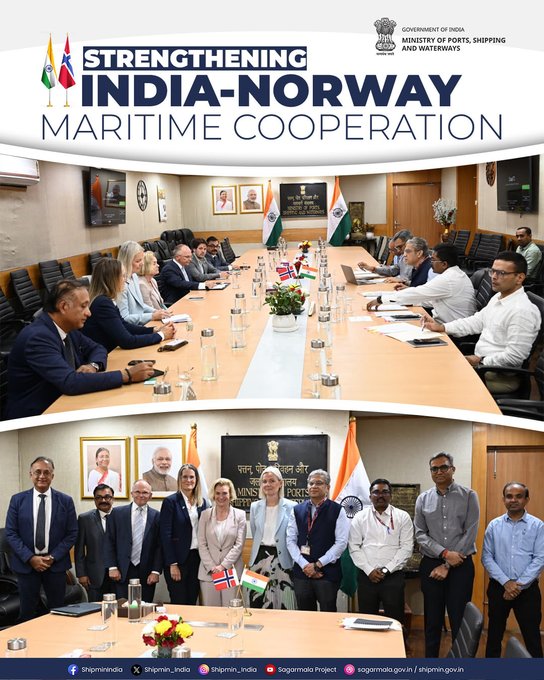
NEW DELHI: Shri Vijay Kumar, IAS, Secretary, Ministry of Ports, Shipping and Waterways (MoPS&W), held a meeting with the President and Chief Executive Officer (CEO) of Kongsberg Group to explore new avenues for strengthening India–Norway Maritime Cooperation, with a focus on advanced technologies, sustainable shipping and modern port operations.

The discussions centred on key areas of mutual interest, including advanced maritime training, digitalisation of port operations, sustainable shipbuilding, green maritime solutions and technology transfer. The engagement highlighted the potential for greater collaboration between India and Norway in developing a modern, efficient and environmentally sustainable maritime ecosystem.

Focus on Smart Ports and Green Maritime Technologies

Digitalisation emerged as a key area of discussion, particularly in advancing smart port operations through the adoption of modern technologies and digital solutions. Such initiatives can contribute to improved operational efficiency, enhanced connectivity and more effective management of port infrastructure.

The meeting also explored opportunities for cooperation in advanced maritime training and skill development, aimed at strengthening technical capabilities and preparing maritime professionals to meet the evolving requirements of the global shipping industry.

Sustainable shipbuilding and green maritime solutions formed another important component of the discussions, reflecting the growing emphasis on cleaner technologies, energy efficiency and environmental sustainability across the maritime sector.

Technology transfer was also identified as an important area for potential collaboration, with opportunities to leverage technological expertise and innovation to support the modernisation of India’s maritime infrastructure and capabilities.

Strengthening India–Norway Maritime Partnership

The engagement reinforces the shared commitment of India and Norway to expanding maritime cooperation through innovation, technology and sustainable development. Greater collaboration in these areas can support India’s efforts to modernise its ports, strengthen maritime skills, promote sustainable shipping and enhance the global competitiveness of its maritime sector.

The meeting marks a positive step towards exploring new opportunities for bilateral cooperation and advancing a future-ready, technology-driven and environmentally responsible maritime industry in line with India’s long-term maritime development ambitions.

DGMA Deputy DG Prashant Patil visits HIMT Maritime Training Institute in Chennai

0

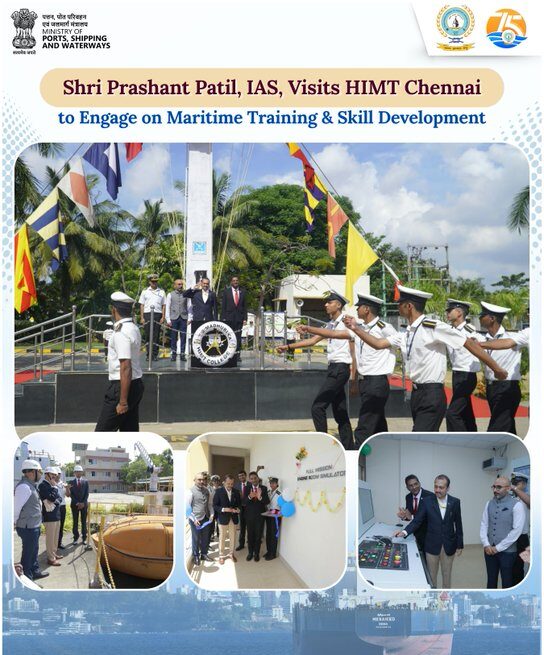
CHENNAI: Shri Prashant Patil, IAS, Deputy Director General (Maritime Administration), visited HIMT’s Pre-Sea and Post-Sea Maritime Training Institute in Chennai on 16 October 2026, highlighting the importance of quality maritime education, competency-based training and seafarer welfare in advancing India’s maritime ambitions.

The visit commenced with a ceremonial march past and salute by the cadets, reflecting their discipline and commitment to the maritime profession. Shri Patil subsequently toured the institute’s nautical and engineering simulators, interacted with post-sea officers and addressed the gathering of maritime trainees and professionals.

Focus on India’s Maritime Vision and Global Leadership

During his address, Shri Patil highlighted the significance of Maritime India Vision 2030 and Maritime Amrit Kaal Vision 2047 in strengthening India’s position as a leading global maritime nation. He emphasised the need to develop a highly skilled, professionally competent and future-ready seafaring workforce capable of meeting the evolving requirements of the international shipping industry.

Underscoring the importance of competency-based maritime education, he stressed that training must go beyond theoretical knowledge to encompass technical proficiency, practical skills, digital literacy, effective communication and leadership capabilities.

Mission 20%: Expanding India’s Global Seafaring Workforce

A key highlight of the address was Mission 20%, which aims to increase India’s share of the global seafaring workforce to 20%. Achieving this ambition requires high-quality maritime training, enhanced professional competencies and expanded employment opportunities for Indian seafarers in the global shipping industry.

Shri Patil also emphasised that seafarers’ welfare must remain a priority. He highlighted the importance of effective grievance redressal mechanisms, crisis management, protection of seafarers’ rights, mental well-being and access to legitimate employment opportunities.

Safety, Integrity and Professional Excellence

Addressing the cadets and maritime professionals, Shri Patil encouraged them to make safety their foremost priority, uphold the highest standards of professional ethics and demonstrate responsible leadership throughout their maritime careers. He underlined the importance of cultivating a strong safety culture and maintaining integrity and excellence while serving aboard ships across the world’s oceans.

The visit reinforced the importance of collaboration between maritime administration and training institutions in nurturing competent, ethical and safety-conscious maritime professionals. Such initiatives support India’s long-term maritime development objectives and strengthen the country’s contribution to the global shipping and seafaring community.

The interaction served as an important opportunity to motivate aspiring seafarers and experienced maritime professionals to uphold the highest standards of competence, responsibility and professionalism while representing India on the international maritime stage.

FFFAI’s FIATA Diploma Course Revalidated for 2026–2030

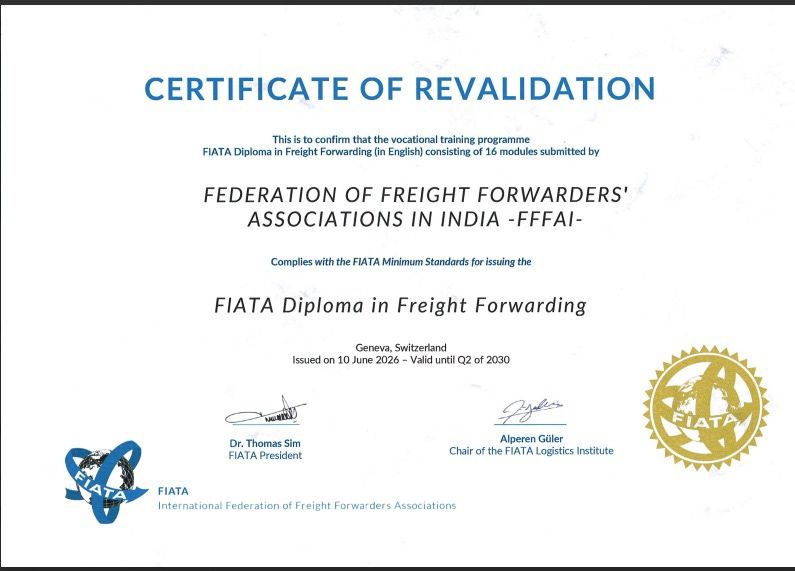
MILAN/MUMBAI: The Federation of Freight Forwarders’ Associations in India (FFFAI) has announced a significant milestone in professional logistics education, with the FIATA Logistics Institute revalidating the FIATA Diploma Course conducted by the Indian Institute of Freight Forwarders (IIFF), the training arm of FFFAI, for the period 2026–2030.

FFFAI FIATA Diploma Course Certificate FFFAI’s FIATA Diploma Course Revalidated for 2026–2030

Mr. Tej Contractor, President of IIFF, received the revalidation certificate on behalf of FFFAI at the 2026 FIATA World Congress in Milan, Italy.

FFFAI stated that it remains the only national association in India authorised to conduct the FIATA Diploma Course, a distinction it has held since 2014.

The revalidation reinforces FFFAI and IIFF’s continued commitment to professional training and skill development in the freight forwarding and logistics sector, supporting the development of the next generation of industry professionals in India.

US Announces $17 Million Grant to upgrade Colombo Port’s Digital Infrastructure

Funding to strengthen Sri Lanka’s Maritime Single Window and Port Community System, streamline documentation and enhance coordination among port, customs and shipping stakeholders

COLOMBO: The United States has announced a US$17 million grant to modernise digital systems at the Port of Colombo, aiming to streamline maritime documentation, improve regulatory efficiency and strengthen coordination among key port and shipping stakeholders.

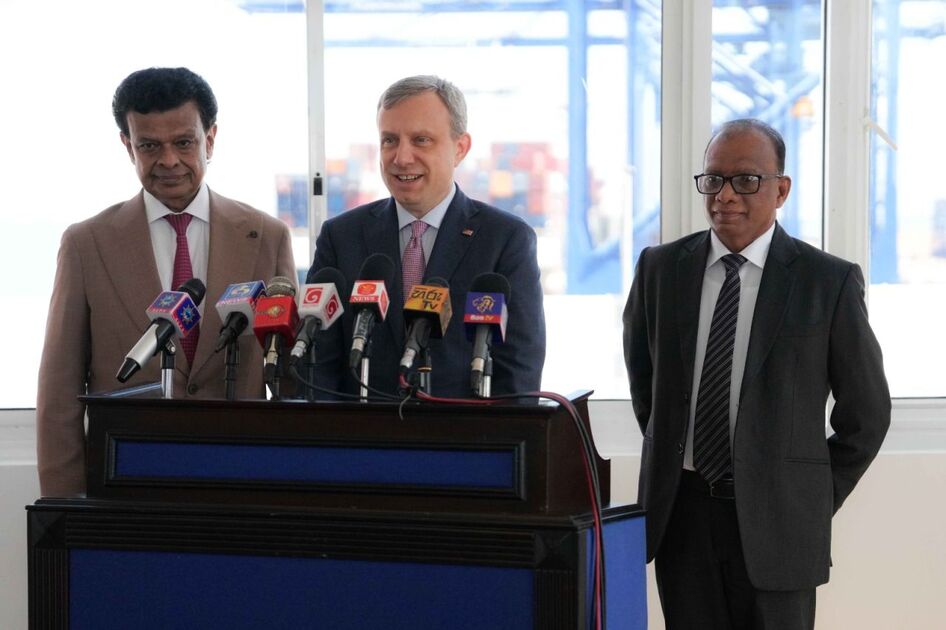
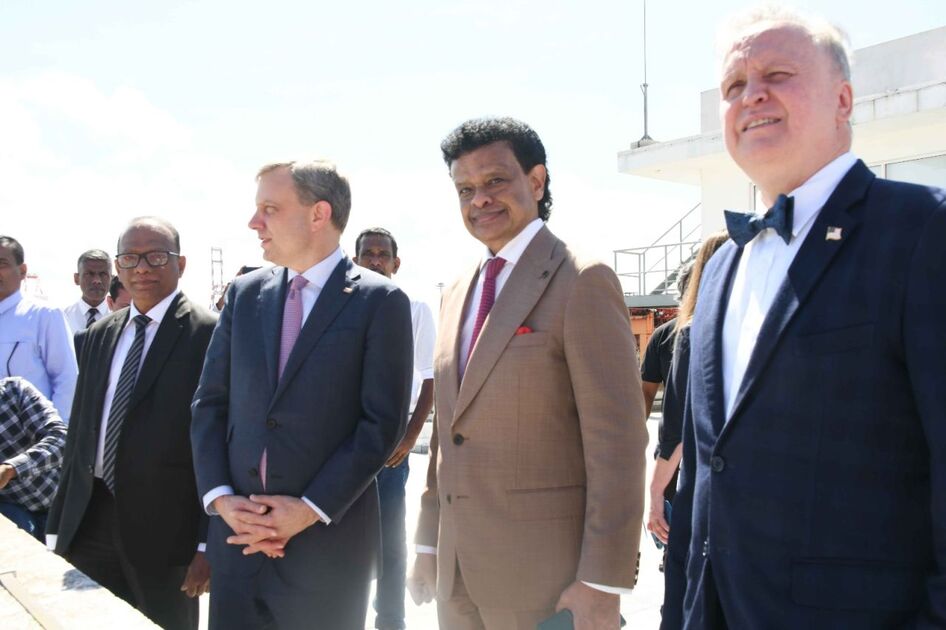
US Ambassador visiting Colombo Port 1 US Announces $17 Million Grant to upgrade Colombo Port’s Digital Infrastructure

U.S. Ambassador to Sri Lanka H.E. Eric Stern Meyer announced the funding during his visit to the Port of Colombo, where he met senior management of the Sri Lanka Ports Authority (SLPA), including Chairman Dr. Parakrama Dissanayake. The meeting was attended by Hon. Anura Karunathilaka, Minister of Ports and Civil Aviation and Minister of Energy, and Mr. W. W. S. Mangala, Secretary to the Ministry of Ports and Civil Aviation.

The grant will support improvements to Sri Lanka’s Maritime Single Window (MSW) and Port Community System (PCS), strengthening digital information exchange and administrative processes across the maritime ecosystem.

Driving Digital Efficiency

The proposed upgrades aim to improve coordination among the SLPA, Customs, shipping lines, terminal operators and other port stakeholders. Better integration of data and documentation could reduce paperwork, accelerate cargo clearance and enhance coordination of vessel and cargo operations.

The Maritime Single Window facilitates the electronic submission of regulatory information, while the Port Community System enables data exchange among public authorities and private-sector participants. Together, these platforms can help reduce administrative bottlenecks and improve operational efficiency.

Boosting Colombo’s Competitiveness

The investment comes at a significant time for the Port of Colombo, a major container transshipment hub in the Indian Ocean. As ports increasingly embrace digitalisation to improve service delivery and trade facilitation, integrated information systems are becoming critical to operational performance and competitiveness.

The proposed modernisation is expected to strengthen the digital foundations of Colombo’s port operations and support smoother coordination across Sri Lanka’s maritime and logistics network. Its impact will depend on effective implementation, integration among participating agencies and adoption by port stakeholders.

The announcement underscores the growing role of digital infrastructure in building more efficient, connected and competitive ports.