Home Blog Page 53

GCCI Raises Key MSME Policy Concerns with iNDEXTb in Gujarat

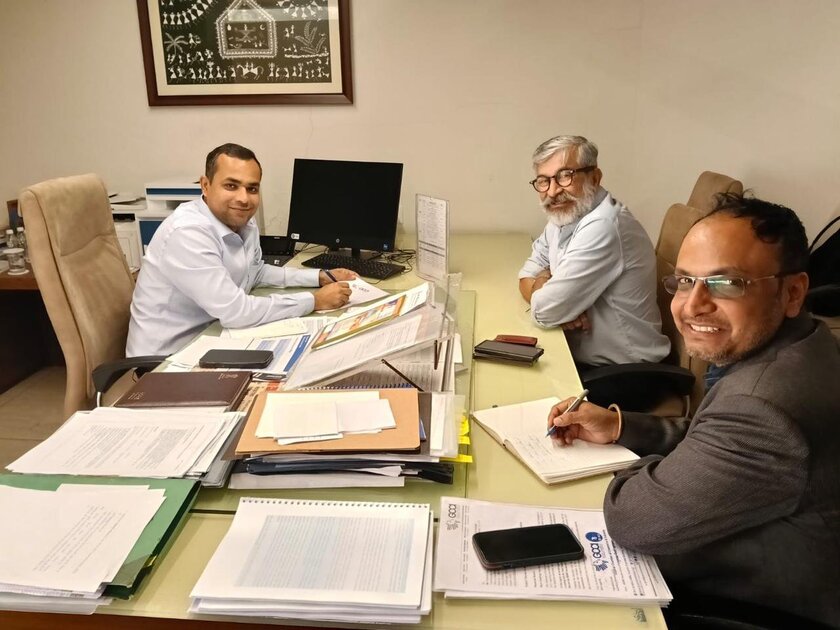
GANDHINAGAR: The Gujarat Chamber of Commerce & Industry (GCCI) has taken up a series of key policy issues affecting Micro, Small and Medium Enterprises (MSMEs) and industries across Gujarat during an interaction with senior officials of the Industrial Extension Bureau (iNDEXTb) at Udyog Bhavan, Gandhinagar, on October 16, 2026.

The interaction was held under the leadership of Shri Hiten Vasant, Vice President, GCCI, with Shri Amit Prakash Yadav, IAS, Joint Managing Director, Industrial Extension Bureau, and Shri Prashant Gupta, Secretary General, GCCI, participating in the discussions.

The meeting focused on addressing practical challenges faced by industries in accessing government incentives, clarifying policy provisions and improving the implementation of support measures for MSMEs under Gujarat’s industrial policy framework.

MSME Incentives and Policy Clarity Take Centre Stage

A major focus of the discussion was the rationalisation of Security Deposit (SD) and Earnest Money Deposit (EMD) requirements for MSMEs, with the objective of addressing the financial burden such requirements can place on smaller enterprises.

The participants also discussed the applicability of Section 43B in relation to government payments, seeking greater clarity on the relevant provisions and their implications for businesses.

Several issues concerning industrial subsidies and investment eligibility were also raised. These included clarification on subsidy eligibility for construction undertaken on leased land, as well as the availability of subsidies for existing industrial units installing solar power systems.

The eligibility of service-sector industries for incentives was another important point of discussion, reflecting the need for clarity on the scope of industrial support measures across different business segments.

Focus on Capital Investment, Power Subsidies and Expansion

The interaction also addressed eligibility for capital subsidies and power subsidies in cases where businesses obtain financing through Non-Banking Financial Companies (NBFCs).

Other issues included the eligibility criteria for industrial expansion and whether investment in solar installations could be included while calculating the 50% investment threshold specified under the applicable policy provisions.

These concerns are particularly relevant for businesses planning capacity expansion, adopting renewable energy solutions and making fresh investments while seeking to benefit from government incentives.

Continuation of Market Development Assistance

GCCI also raised the issue of continuing Exhibition and Market Development Assistance under the Viksit Gujarat Industrial Policy 2026.

Such assistance can play an important role in enabling MSMEs to participate in trade exhibitions, showcase their products and services, explore new markets and strengthen their competitiveness. Clarity on the continuation and applicability of these support measures is therefore important for enterprises seeking to expand their domestic and international market presence.

GCCI Seeks Greater Clarity for Effective Policy Implementation

The interaction provided GCCI with a platform to present industry concerns directly to the Industrial Extension Bureau and seek clarification on relevant policy provisions. The issues discussed underline the importance of transparent eligibility criteria, practical implementation mechanisms and accessible incentives for businesses of different sizes and sectors.

For Gujarat’s MSME ecosystem, resolving such concerns can help reduce procedural uncertainties, improve access to government support and facilitate investment in industrial expansion, renewable energy adoption and market development.

The discussions reflect GCCI’s continued engagement with government agencies to communicate industry requirements and support a more enabling business environment across Gujarat.
World Bank Group mobilises USD 36 billion in 4 years for India’s development, USD 9.6 billion for MSMEs

NEW DELHI: The World Bank Group announced that it has helped India in mobilising a total of USD 36 billion over the past four years for development in various sectors, aiming to enhance investment and generate employment.

Out of the overall amount, USD 9.6 billion was directed towards micro, small, and medium enterprises (MSMEs) to promote growth driven by the private sector and generate jobs.

Mobilising private capital entails securing investments from private investors to support development initiatives and enhance public financing.

According to Manuel Reyes-Retana, Division Director, South Asia, IFC, a member of the World Bank Group, private capital mobilisation by the World Bank Group has increased almost five times over four years, growing from about USD 3 billion in FY22 to USD 14.5 billion in FY26 and facilitating a total of USD 36 billion for development across various sectors.

“We’re observing encouraging reactions from private sector investors and increasing momentum in this field. Investors globally, including those in India, are progressively seeking to diversify their assets and investment instruments,” he informed.

The assurances offered by International Finance Corporation (IFC) and Multilateral Investment Guarantee Agency (MIGA) are positively regarded by the investor community, he noted.

“These guarantees are valued by institutional investors due to their familiarity with the governance practices and underwriting standards of the World Bank Group. Consequently, institutional investors are increasingly pursuing these assets,” he stated.

The World Bank Group serves as a link between governmental development goals and private sector investment by enhancing markets, creating feasible projects, and minimising risks via funding, guarantees, and collaborations, he stated.

Through the USD 436-million Raising and Accelerating MSME Performance (RAMP) initiative, the World Bank backed reforms concerning Trade Receivables Discounting System (TReDS), a digital platform allowing businesses to turn unpaid invoices into cash.

The initiative has allowed over 2.5 lakh MSMEs to access capital more quickly, and 30 non-banking financial companies have become part of the platform, thereby increasing the lender pool.

According to the World Bank Group, credit guarantees for businesses owned by women have risen from 14 per cent to 18 per cent in two years, generating over USD 1 billion.

The inaugural Green MSME Guarantee Fund in India has supported more than 4,000 MSMEs, facilitating investments of USD 40 million in green and circular-economy initiatives, it stated.

The investments form a key aspect of the World Bank Group’s collaboration with India to help fulfil its goal of evolving into an upper-middle-income economy within the next ten years and realising the Viksit Bharat vision by 2047.

AYUSHEXCIL and NICDC Logistics Data Services sign MoU to strengthen Ayush Export Logistics through digital transformation

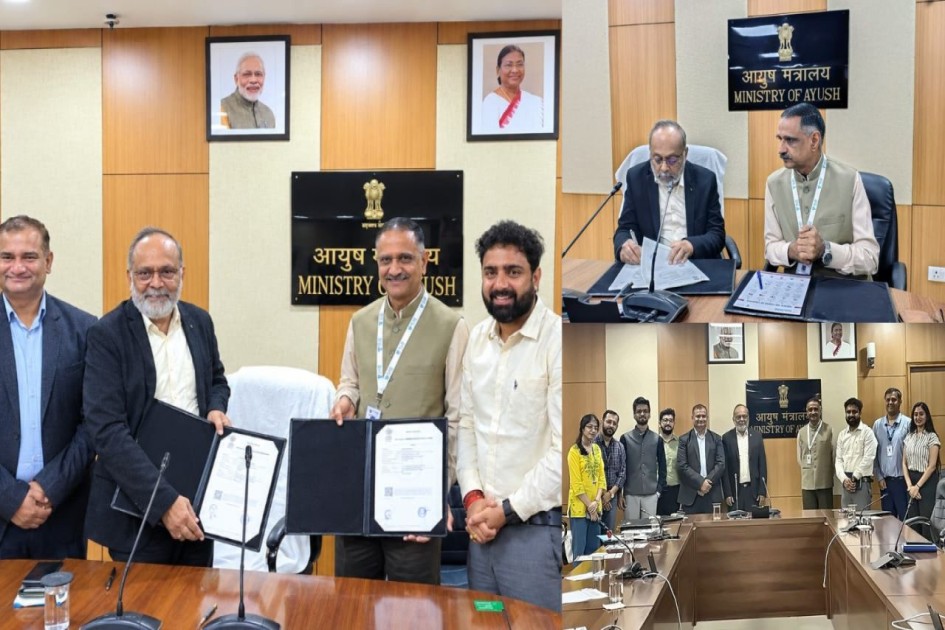
NEW DELHI : The Ayush Export Promotion Council (AYUSHEXCIL) and NICDC Logistics Data Services Limited (NLDSL) have signed a Memorandum of Understanding (MoU) to strengthen logistics efficiency, improve supply chain visibility and enhance the global competitiveness of India’s Ayush exports through digital transformation.

The collaboration aims to empower Ayush exporters with technology-driven logistics solutions, enabling them to access integrated services and streamline their export operations. The initiative is expected to support a more efficient, transparent and connected logistics ecosystem for India’s traditional medicine and wellness sector.

Developed under the guidance of Shri Rajat Kumar Saini, Managing Director and Chief Executive Officer of NICDC and Chairman of NLDSL, the Logistics e-Marketplace (LeMP) provides a single-window digital platform bringing together end-to-end multimodal logistics services.

The platform enables users to access a range of services, including logistics discovery and planning, bidding, certification, warehousing, regulatory compliance, insurance, banking and financial services. By integrating these services, LeMP seeks to simplify logistics processes, improve operational coordination and enhance supply chain visibility for exporters.

The MoU was signed at Ayush Bhawan, New Delhi, by Shri Sanjay Shrivastava, Director, AYUSHEXCIL, and the NLDSL team.

Digital Solutions to Support Export Growth

The partnership marks an important step towards strengthening the logistics infrastructure supporting India’s Ayush exports. By leveraging digital platforms and integrated logistics services, AYUSHEXCIL and NLDSL aim to facilitate smoother export operations, improve access to logistics service providers and help exporters navigate the complexities of international trade.

The initiative also aligns with the broader objective of enhancing India’s export capabilities by promoting technology-enabled logistics, multimodal connectivity and greater supply chain transparency.

Through this collaboration, AYUSHEXCIL and NLDSL seek to create new opportunities for Ayush exporters, strengthen India’s position in international markets and contribute to the development of a more efficient and globally competitive export ecosystem.

India selling more to US despite tariffs, but China trade gap keeps rising

NEW DELHI: India‘s shipments to the United States are rising despite tariff-related disruptions. Simultaneously, exports to China are growing even faster, but the trade deficit with Beijing continues to widen.

So, if India is selling more goods to both countries, why is one relationship proving resilient while the other is adding to the country’s trade imbalance?

The latest figures offer a clue. India’s merchandise exports to the US reached $50.81 billion during April-September 2026, up from $45.73 billion a year earlier. This is an increase of about 11.1 per cent, according to the latest trade figures reported by the government.

China presents a different picture. India’s exports to the neighbouring country surged 40.7 per cent to $19.26 billion during January-September 2026. But imports from China rose 23.3 per cent to $125.19 billion. The result was a trade deficit of $105.93 billion, up 20.7 per cent from a year earlier.

India-US Trade: Exports Grow Despite Tariff Pressures
The rise in exports to the US is significant because Indian businesses have faced uncertainty over American trade policy. The first phase of an India-US trade deal is nearing completion, but negotiations have involved questions about tariff rates and whether Indian exporters will enjoy an advantage over competitors such as Vietnam, Bangladesh and Indonesia.

According to a Reuters report, the proposed deal has reduced the announced tariff burden from the earlier 50 per cent level to 18 per cent, although finalisation remained pending. Now, the latest export numbers suggest that US demand for Indian goods has not disappeared despite tariffs. But they do not, by themselves, prove that tariffs have had little impact. Exports might have grown even faster without the additional costs, while some businesses could have absorbed lower margins to retain customers.

India’s overall merchandise exports rose 18.51 per cent to $259.89 billion during April-September 2026-27, compared with $219.30 billion in the corresponding period a year earlier. This was faster than the 11.1 per cent growth in exports to the US. In other words, US-bound shipments are increasing, but they are growing more slowly than India’s merchandise exports as a whole.

Electronics, petroleum products, chemicals and engineering goods have helped drive the wider export expansion. Electronics exports alone rose 70.44 per cent year on year to $5.31 billion in September, according to the Ministry of Commerce.

India-China Trade: Why The Deficit Keeps Growing
The China story is more complicated. India is exporting more to its neighbour, but it is importing far more. According to China’s General Administration of Customs, India’s exports to China reached $19.26 billion in January-September 2026. Imports from China, however, stood at $125.19 billion. The gap between the two was $105.93 billion.

The deficit is not new. India’s trade gap with China stood at $112.6 billion in 2025-26 as imports rose to $131.63 billion while exports reached $19.47 billion.

The key issue is the size of the two trade flows. Even when exports rise sharply in percentage terms, they may not be large enough to offset imports that are many times higher. China supplies India with electronics, machinery, chemicals and other industrial inputs. These products feed into Indian manufacturing, infrastructure and consumer markets. India, meanwhile, sells a smaller basket of goods to China, including ores, fuels, seafood and agricultural products.

This creates a structural challenge. Indian businesses can sell more to China and still see the trade deficit widen if imports remain much larger. For example, a 40.7 per cent increase in exports sounds substantial. But India’s exports to China were only $19.26 billion during the first nine months of 2026, against imports of $125.19 billion. The difference in the starting values matters as much as the growth rates.

US vs China: What The Latest India Trade Numbers Show
The figures below cover different periods because India’s official trade data follows the April-March financial year, while the latest China figures cited here cover the January-September calendar period.

What The Numbers Mean For India
Sohom Banerjee, senior economic and AI expert, told NDTV that the quality of export growth matters as much as the headline numbers. “The economic quality of this growth deserves equal scrutiny. Gross export receipts reveal little about the margins retained by Indian firms, the domestic value added within their products, or the employment supported by additional shipments.”

He also pointed out that higher exports do not automatically translate into proportionately higher profits or more jobs. Businesses may offer discounts to retain overseas buyers, while some of the additional costs associated with tariffs may be absorbed by exporters or passed on to importers and consumers. India’s electronics sector illustrates both the opportunity and the challenge. Rising shipments can lift export earnings, but the long-term gains will depend partly on how much of the product is manufactured domestically, rather than assembled using imported components.

Banerjee said India should use its export resilience to strengthen its negotiating position and productive capabilities. He also highlighted the importance of affordable export credit, timely tax refunds, reliable logistics and help with meeting international standards. The same logic applies to trade with China. Expanding exports is useful, but reducing the deficit will also require Indian businesses to become more competitive in products that China currently supplies in large quantities.

India’s FTA gains uneven: Exports to UAE rise 28%, Australia sees modest growth, Mauritius declines

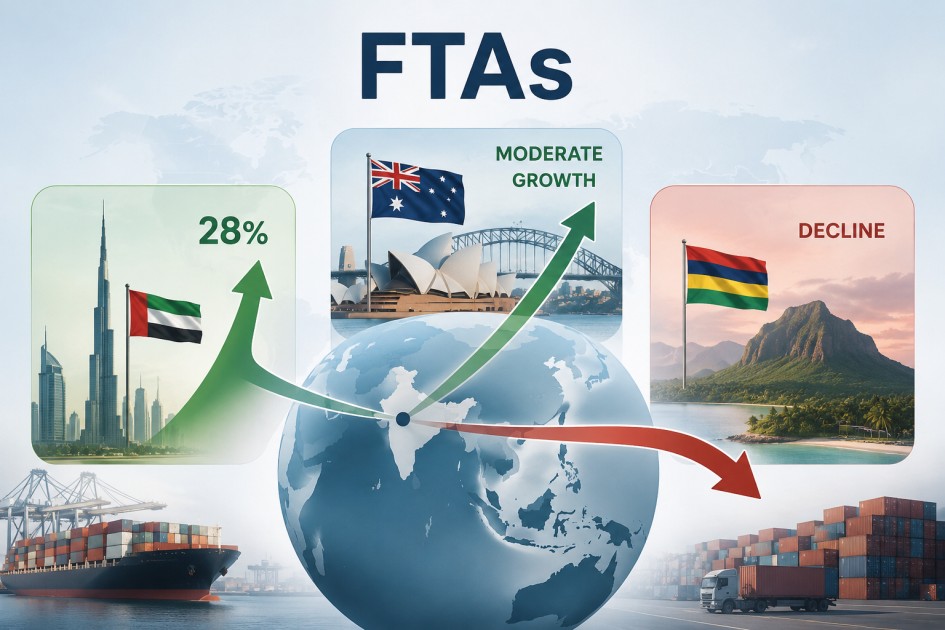
NEW DELHI: India’s free trade agreements (FTAs) have delivered uneven results, with exports to the United Arab Emirates rising nearly 28 percent, shipments to Australia recording only modest growth and exports to Mauritius declining, a Moneycontrol analysis of trade data shows.

The analysis of merchandise exports to three FTA partners shows that shipments to the UAE increased 27.8 percent to $36.26 billion from a pre-agreement average of $28.38 billion. Exports to Australia grew just 2.3 percent to $7.74 billion from $7.56 billion, while those to Mauritius declined 24.3 percent to $631.8 million from $834.5 million in the two years before and the time period after the signing of FTA.

The Australia and UAE agreements came into force in 2022, while the Mauritius agreement started in 2021. Taken together, exports to the three countries increased 21.3 percent to $44.63 billion from $36.78 billion.

More recent agreements with the United Kingdom and the four-member European Free Trade Association (EFTA) have also shown signs of stronger trade activity. But the initial experience suggests that tariff concessions alone do not guarantee a sustained increase in exports.

The UAE has emerged as the strongest performer among the three established FTA partners in the dataset, with export gains extending across consumer and capital goods.

Consumer goods exports to the UAE increased 25.7 percent to $18.77 billion from $14.93 billion. Capital goods exports recorded an even sharper increase of 77.1 percent, rising to $7.87 billion from $4.44 billion.

Together, these two categories accounted for more than 90 percent of the increase in Indian exports to the UAE.

The India-UAE Comprehensive Economic Partnership Agreement came into force in May 2022.

Australia presents a different picture. Despite its Economic Cooperation and Trade Agreement coming into effect in December 2022, India’s overall exports have remained relatively stable in the supplied dataset.

Consumer goods exports increased just 2.4 percent to $5.93 billion, while intermediate goods exports declined 12.8 percent to $829.5 million.

Capital goods were a brighter spot, with exports growing 20.8 percent to $868.8 million.

Mauritius recorded a contraction in the supplied comparison, with consumer goods exports declining 28.6 percent to $447.5 million and intermediate goods shipments falling 25.8 percent to $89.9 million. Capital goods exports, however, increased 24.4 percent to $52.3 million.

EFTA trade grows, Norway emerges as bright spot

India’s newer agreement with EFTA, comprising Switzerland, Norway, Iceland and Liechtenstein, has shown encouraging early results.

A previous Moneycontrol analysis showed that India’s merchandise trade with Norway, excluding mineral fuels, gems, jewellery and precious metals, increased 27.6 percent to $771.5 million during November 2025–July 2026, compared with $604.6 million a year earlier.

India’s exports to Norway rose 27.8 percent to $389.2 million, while imports increased 27.4 percent to $382.3 million.

Across EFTA, India’s exports excluding these volatile commodity categories increased 9.7 percent to $1.15 billion, slightly outperforming the 8.1 percent growth recorded in comparable exports globally.

Switzerland, however, showed a more modest increase in Indian exports of 2.8 percent to $754 million, even as imports from the country increased 11.9 percent.

UK deal sees trade rise, but imports grow faster

The latest agreement with the UK has also recorded an increase in bilateral trade, although the initial gains have been accompanied by faster import growth.

Bilateral merchandise trade increased 15.08 percent year-on-year to nearly $2 billion in August 2026, the first full month after the India-UK FTA came into force on July 15.

Indian exports increased 10.35 percent to $1.26 billion, while imports from the UK rose 24.23 percent to $733 million.

Consequently, India’s trade surplus with Britain narrowed to $527.4 million from $552.1 million a year earlier.

India has since signed agreements with the EU and New Zealand. The government expects the EU agreement to come into force by the end of the year.

India is also negotiating a trade deal with the US, and is considering expansion of its previous deal with Mercosur countries.

Source: Moneycontrol

APEDA facilitates export of 1.755 MT of Organic Palmyra Jaggery Powder from Tamil Nadu to Bulgaria

ERODE (Tamil Nadu): The Agricultural and Processed Food Products Export Development Authority (APEDA), under the Ministry of Commerce and Industry, Government of India, facilitated the flag-off of the maiden export consignment of 1.755 MT of NPOP- and EU-certified organic Palmyra Jaggery Powder (Palmyra Blossom Nectar) from Gobichettipalayam in Erode district of Tamil Nadu to Varna, Bulgaria, on 15 October 2026.

The consignment marks an important step towards introducing India’s traditional Palmyra-based products to international markets and diversifying the country’s organic export basket.

The consignment, manufactured and exported by M/s Wellbeing Foods, Erode, in collaboration with M/s Chetty Exports Private Limited, Chennai, will be shipped by sea through Chennai Port. The overseas importer and distributor is M/s Sow Life Ltd, Bulgaria, based in Bulgaria.

The initiative aims to strengthen market linkages for Tamil Nadu’s traditional Palmyra-based products and create new opportunities for producers engaged in organic cultivation. The initiative covers 137 acres under organic cultivation and is expected to benefit farmers through improved market access and export-oriented value chains. The reported price realisation is approximately 15-22% for farmers and 17% higher for the manufacturer, as compared to the domestic market, thereby offering an opportunity to improve returns for participating farmers and support sustainable livelihoods.

Palmyra Jaggery Powder, derived from Palmyra blossom nectar, is a traditional Indian sweetener with potential for value addition and wider international market acceptance. As an alternative to refined sugar, it offers potential nutritional benefits, including vitamins and minerals.

The ceremony was graced by Chairman, APEDA, Shri Abhishek Dev, who also flagged off the consignment. The ceremony was also attended by Secretary, APEDA, Dr. Saswati Bose; senior APEDA officials; representatives of the exporting companies; international partners; progressive farmers; and other stakeholders associated with the export value chain. Their participation highlighted the collaborative efforts to strengthen India’s agricultural exports.

Palmyra-based products are associated with traditional production practices and the use of the Palmyra palm, which has long been part of the agricultural and cultural landscape of Tamil Nadu. Developing export-ready products from this resource offers scope to expand market opportunities while supporting producers and the wider value chain.

APEDA continues to facilitate the export of certified organic and value-added agricultural products by supporting market development, quality compliance and linkages between Indian producers and overseas buyers. The maiden export of organic Palmyra Jaggery Powder to Bulgaria is expected to open avenues for further market expansion and strengthen the presence of India’s traditional products in international markets.

DTDC Udaan seeks to Connect Kashmir’s Local Sellers with India’s Growing E-commerce Market

MUMBAI: A Pashmina shawl crafted in Kashmir, saffron grown in the Valley, or a willow cricket bat made by a local manufacturer has a story rooted in the region. The next opportunity is to take these products to customers far beyond their place of origin. For Kashmir’s artisans, manufacturers and small businesses, reaching buyers across India and overseas could open new avenues for growth, but doing so requires access to digital sales channels, dependable logistics and fulfilment infrastructure that can support business beyond local markets.

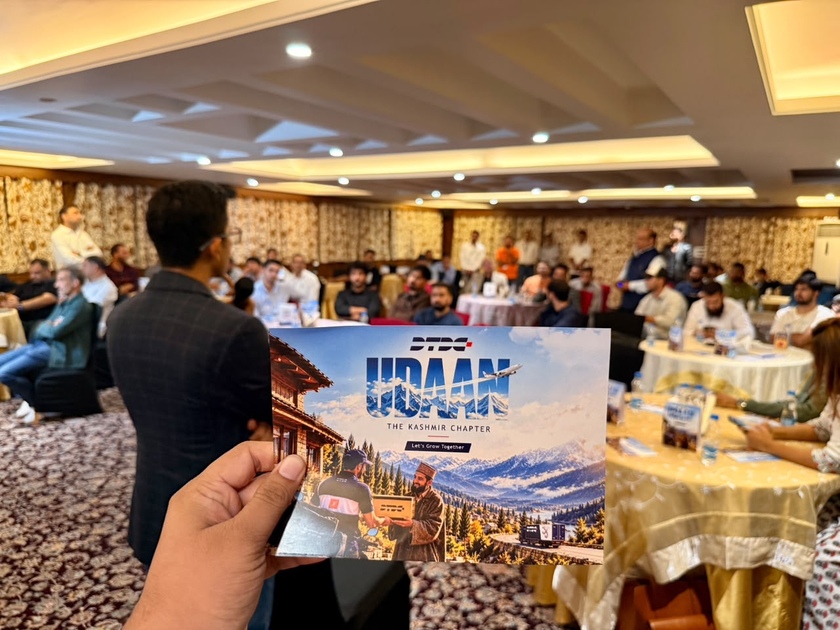
Seeking to help bridge this gap, DTDC Express Ltd. has launched DTDC Udaan in Kashmir, the first chapter of an initiative aimed at helping regional businesses explore new markets and build their presence beyond their immediate geographies. By bringing logistics, digital commerce and fulfilment capabilities closer to local enterprises, the initiative seeks to help Kashmir’s distinctive products find a wider customer base.

Kashmir’s business ecosystem spans traditional crafts and regional produce as well as manufacturing enterprises. Products such as Pashmina shawls, GI-tagged saffron, premium dry fruits, handicrafts and willow sports equipment carry strong regional identities and established market appeal. Yet, for smaller businesses, expanding beyond familiar trade networks can involve challenges ranging from building an online presence and reaching new customers to managing shipping and fulfilling orders across geographies. Addressing these barriers can help local enterprises explore opportunities in India’s growing e-commerce market and, where feasible, reach international buyers.

The first chapter of DTDC Udaan was marked by an event in Srinagar that brought together 48 business owners and trade leaders from across Kashmir’s commercial ecosystem. Participants included willow sports equipment manufacturers such as Tramboo Sports and Hangul Sports, alongside businesses dealing in traditional products and regional produce. The session opened with a keynote address by Rajesh Nair, Business Head, North, DTDC, followed by discussions on how digital commerce, logistics and fulfilment can support business expansion. 

Speaking on the launch, Mr. Abhishek Chakraborty, CEO, DTDC Express Ltd., said, “Across Bharat, there are businesses creating exceptional products with the potential to reach customers around the world. Kashmir, with its world-renowned Pashmina shawls, GI-tagged saffron, traditional handicrafts and willow sports equipment, is a wonderful example of this. Through DTDC Udaan, we want to help bridge the gap between local enterprise and global opportunity by bringing our logistics network, technology and fulfilment capabilities closer to these businesses. With 16,500+ channel partners as an integral part of our network, we can offer not just connectivity but also local points of contact to guide and handhold businesses as they grow. Kashmir marks the first chapter of DTDC Udaan, and we look forward to extending this initiative to regional business ecosystems across Bharat.”

For a small business in Kashmir, reaching a customer in another part of India or overseas can represent an important step towards growth. Digital platforms can provide an additional channel to showcase products and attract new buyers, while logistics and fulfilment capabilities can help businesses serve customers across geographies. Together, these can complement existing trade networks and give local sellers more avenues to take their products to market, without being limited to demand within their immediate vicinity.

As part of this broader opportunity, Kaarigo, DTDC’s e-commerce platform for authentic Indian products, artisans and regional sellers, offers a route for local makers and MSMEs to establish an online presence and connect with customers beyond their existing markets. For businesses offering products rooted in Kashmir’s craft and cultural heritage, digital commerce can help bring greater visibility to their offerings and create another avenue to reach consumers across India and beyond.

About DTDC

DTDC Express Ltd. is one of India’s leading multinational integrated logistics companies, headquartered in Mumbai. DTDC offers a comprehensive range of technology-enabled logistics services, serving a wide spectrum of customers across diverse industry verticals. Today, it operates India’s largest physically accessible express logistics Network and has over 16,500+ exclusive channel partners, which contribute to its sales and service capabilities.

HMM to invest $1.6 bn in 12 container ships to expand fleet

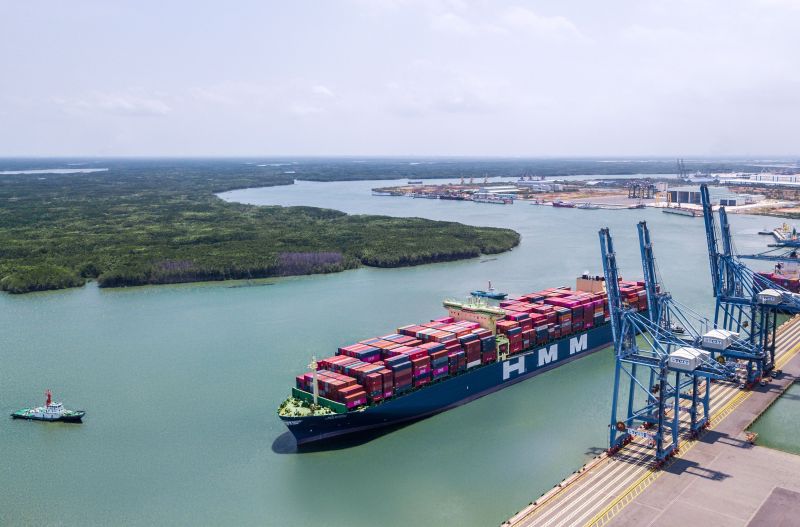
SEOUL: South Korea‘s largest container shipping company HMM plans to invest $1.62 billion to acquire 12 container ships as part of a broader strategy to expand its fleet and capitalize on growing global shipping demand. The investment, equivalent to 8.16% of the company’s shareholders’ equity, covers eight newbuild container ships with a capacity of 13,000 TEU each, alongside four secondhand vessels comprising three 2,800-TEU ships and one 1,700-TEU ship. The 12 vessels will provide a combined capacity of 114,100 TEU. Through the investment, HMM aims to strengthen its fleet competitiveness and improve operational efficiency by expanding both its large container ships and its smaller feeder vessels.

The acquisition of secondhand vessels is expected to help the company expand its fleet more quickly than placing newbuild orders alone. Ships in the 1,700-TEU to 2,800-TEU range can operate as feeder vessels, connecting major ports served by larger container ships with smaller regional ports and facilitating cargo distribution.

The investment period runs from 15 October 2026 to 31 December 2029, reflecting the expected delivery schedule of the vessels. HMM noted that the final investment amount and timeline may change depending on revisions to vessel specifications and delivery schedules.

The fleet investment comes as HMM advances its relocation to Busan, where it began operations at a temporary headquarters in Bujeon-dong, Busanjin-gu, on 12 October.

HMM is also pursuing digitalisation to improve fleet competitiveness. In January 2026, the company signed agreements with Avikus to deploy AI-based autonomous navigation solutions across an initial 40 vessels, alongside a memorandum of understanding with HD Korea Shipbuilding & Offshore Engineering and Avikus for joint research and technical cooperation. The initiative aims to improve autonomous navigation technology using operational data, with HMM considering wider fleet deployment depending on the results.

TMS Tanker Conference 2026 to examine market shifts, energy transition and operational resilience

DUBAI: The clock is ticking down to the start of the eagerly awaited The Maritime Standard Tanker Conference 2026, which will bring together senior executives and industry stakeholders from across the global tanker shipping business to examine in depth the market, commercial and operational developments shaping the future direction of this sector at a critical time in its history.

Taking place on 11th November 2026 at Atlantis, The Palm, Dubai, the conference will be held under the theme “Navigating the Next Wave: Market Rebalancing, Energy Transition, and Operational Resilience in Tanker Shipping.” The programme will examine how tanker owners, operators, investors, maritime service providers and other stakeholders are recalibrating their strategies in response to changing market conditions, evolving trade patterns, regulatory developments, technological advances and growing operational demands.

The conference will feature presentations, panel discussions and audience interaction across two focused sessions, addressing both the changing market environment and the operational priorities influencing tanker shipping.

The opening session, “Market Rebalancing and Strategic Positioning in a Changing Landscape,” will examine how tanker owners and operators are responding to evolving market conditions, shifting trade patterns and changing commercial priorities. Discussions will consider the impact of evolving global trade flows on tanker demand and routing strategies, alongside market dynamics across crude, product, chemical and gas tanker segments.

The session will also examine the influence of trade policies, regulatory frameworks and wider market developments on tanker shipping, as well as the implications for fleet deployment and commercial strategy. Speakers will discuss supply and demand trends, fleet optimisation, newbuilding and retrofit investment, lifecycle management and the factors influencing long-term asset value and competitiveness.

The second session, “Operational Resilience and Innovation in the Energy Transition Era,” will focus on how tanker operators are strengthening vessel and fleet performance while responding to technological, regulatory and commercial changes. The discussion will explore the use of digitalisation and artificial intelligence to improve operational efficiency and decision-making, as well as smart vessel operations and performance monitoring to support energy efficiency.

The session will also consider practical approaches to decarbonisation through fuels, retrofits and operational measures, alongside the growing importance of cybersecurity for digitally connected vessels. Other areas of focus will include operational and commercial risk management, insurance and compliance, resilience across energy supply chains, and the protection of critical maritime infrastructure such as ports, terminals and storage facilities.

10Collaboration across the maritime value chain will also feature prominently, reflecting the increasing need for tanker owners, operators, technology providers, service companies and other industry stakeholders to work together to address operational and commercial challenges.

Through its two-session programme, the TMS Tanker Conference 2026 will provide a broad examination of the factors influencing tanker shipping, from market positioning and fleet strategy to operational performance, innovation and resilience. The programme is designed to reflect both current industry conditions and the longer-term developments that are likely to shape tanker markets and operations.

The conference will bring together senior decision makers and professionals from across the tanker and wider maritime sectors, providing an opportunity to exchange industry perspectives and examine practical approaches to maintaining performance and competitiveness in a changing operating environment.

Further information about the conference programme and participation is available at TMS Tanker Conference 2026.

World’s largest wind-propelled RO/RO gets its rotor sails

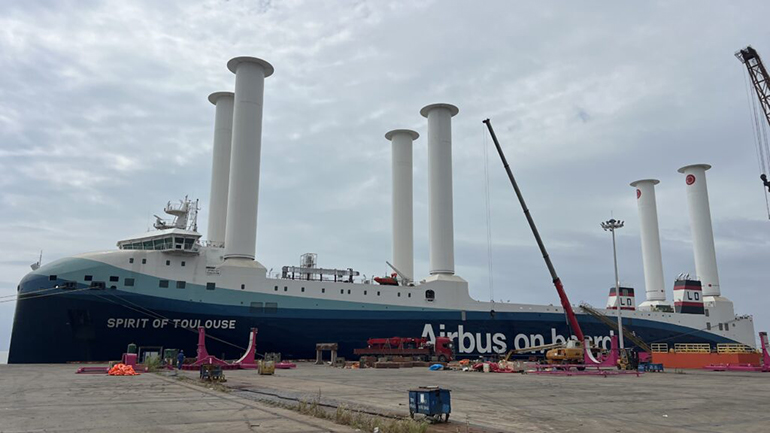
SHANGHAI: NLD Armateurs and Norsepower report that Spirit of Toulouse, the lead vessel in the new fleet of three low-emission RO/RO ships being built to support Airbus’s transport operations has now been installed with six Norsepower rotor sails. The installation, carried out by a Wuchang Shipbuilding Industry Group team at a Shanghai outfitting makes the ship not only the largest RO/RO vessel in the world to be equipped with wind propulsion but also the vessel with the largest number of mechanical sails in the world.

The six Norsepower rotor sails, each measuring 35 x 5 meters, are paired with two dual-fuel main engines complemented by two dual-fuel generator sets, capable of running on e-methanol, bio-methanol or marine diesel oil. Norsepower’s wind propulsion is designed to work in synergy with the vessel’s methanol propulsion system, reducing fuel consumption and improving efficiency across the voyage rather than acting as a standalone add-on.

Spirit of Toulouse is the first of three sister ships — alongside Spirit of Mobile and Spirit of Mirabel —under charter to Airbus to move large aircraft sub-assemblies between the manufacturer’s production sites in Europe and North America.

Norsepower and LD Armateurs first announced their collaboration in early 2024. Construction began at the shipyard by October of that year, and the lead vessel was launched in February 2026. Rotor sail installation has now been completed ahead of sea trials.

“Spirit of Toulouse is much more than a new vessel,” said Samira Draoua, CEO of LD Armateurs. “It is a tangible demonstration of how the maritime industry can accelerate its transition by combining innovation, operational expertise, and strong industrial partnerships. Bringing together six rotor sails and dual-fuel methanol propulsion on a ship of this scale is a world first that illustrates LD Armateurs’ commitment to pioneering tangible solutions for lower-carbon shipping.”

Heikki Pöntynen, CEO of Norsepower, said : “Completing installation of six Norsepower rotor sails on Spirit of Toulouse is a significant milestone for wind propulsion in the RO/RO segment. Working in synergy with the vessel’s dual-fuel methanol engines, the rotor sails give LD Armateurs a vessel designed to cut fuel consumption and emissions from her first voyage. We’re proud of how smoothly this project has moved from agreement to installation, and we look forward to seeing the technology proven out on the transatlantic route.”

Fitting six rotor sails to a single hull is a demanding undertaking, and the shipyard project team built a dedicated construction plan for the job, refined through expert review and clearly defined roles before work began on site.

Commissioning activities commenced immediately following the installation of the first rotor sail. With all sails installed, the rotor sails will undergo comprehensive testing during the vessel’s upcoming sea trials to confirm their performance and seamless integration with onboard systems. Further optimization and fine-tuning will continue during the maiden voyage from China to France, ensuring the technology delivers its full operational potential.