Home Blog Page 520

Xeneta Ocean Container Shipping Market Update

OSLO: This update uses ocean container shipping data and intelligence from Xeneta and eeSea.

Peter Sand, Xeneta Chief Analyst

“Looking at the fundamentals of supply and demand on major fronthaul trades right now and it doesn’t stack up, so something has to give. Spot rates are relatively flat even though offered capacity is going up, particularly from Far East to US East Coast, North Europe and Mediterranean.

“Carriers will try to push further rate increases in mid-December – and we may see a slight uptick – but this won’t last for too long due to the downward pressure from increasing supply. The impact of higher supply will be seen most acutely on US fronthauls where demand isn’t as strong compared to trades into Europe.

“There are increasing signs of a gradual return of container ships to the Red Sea region, highlighted most recently by CMA CGM INDAMEX service now transiting Suez Canal on fronthaul and backhauls voyages. This will only add to the downwards pressure on rates, particularly on trades from Far East to US East Coast and Europe, which transit the Suez Canal.”

Data highlights

Market average spot rates – 11 December 2025
Far East to US West Coast: USD 1 861 per FEU (40ft container)
Far East to US East Coast: USD 2 709 per FEU
Far East to North Europe: USD 2 395 per FEU
Far East to Mediterranean: USD 3 330 per FEU
North Europe to US East Coast: USD 1 571 per FEU

Offered capacity (4-week rolling average) – w/c 8 December 2025
Far East to US West Coast: +1.7% from a week ago
Far East to US East Coast: +10.2% from a week ago
Far East to North Europe: +11.0% from a week ago
Far East to Mediterranean: +18.4% from a week ago
North Europe to US East Coast: –0.7% from a week ago

Trade view: FAR EAST to US WEST COAST

Spot rates

Week-on-week: Slipped around 2% (≈ –USD 33/FEU). After previous rebound, this latest move points back towards softer short-term pricing.

Month-on-month: Down roughly 22% (≈ –USD 511/FEU) compared with 11 November. Remains materially cheaper than a month ago, underlining how much pricing power carriers have given up over this period.

Offered capacity

Week-on-week: Increased about 1.7% (≈ +5.3k TEU). No sign of supply being pulled back; if anything, more space being made available.

Month-on-month: Slightly higher than a month ago, up around 0.4% (≈ +1.3k TEU). Broader picture of stable-to-rising supply alongside sharply lower rates, keeping the market firmly in shippers’ favor.

Trade view: FAR EAST to US EAST COAST

Spot rates

Week-on-week: Fell roughly 1.5% (≈ –USD 41/FEU). Modest pullback, suggesting tentative firming of rates seen earlier has stalled.
Month-on-month: Against 11 November, rates are down close to 9% (≈ –USD 257/FEU). Clear month-on-month correction, even if the weekly moves now look relatively small.
Offered capacity

Week-on-week: Climbed about 10% (≈ +17.4k TEU). Points to a decisive supply build-up into the US East Coast.
Month-on-month: Up around 16% (≈ +26.3k TEU). Broader story is more ships chasing softer demand, which helps explain why spot levels are under downward pressure despite only modest weekly rate changes.

Trade view: FAR EAST to NORTH EUROPE

Spot rates

Week-on-week: Essentially unchanged, flat week-on-week (≈ +USD 1/FEU). Market appears to be consolidating at current levels.
Month-on-month: Versus 11 November, rates are about 7–8% higher (≈ +USD 165/FEU). Far East to North Europe one of the lanes where month-on-month pricing is clearly higher, not lower.
Offered capacity

Week-on-week: Jumped roughly 11% (≈ +30.4k TEU). Carriers adding a significant amount of space into this trade.
Month-on-month: Almost 10% higher than a month ago (≈ +27.3k TEU). Demand has been strong enough – or carrier discipline firm enough – to keep rates from softening despite heavy capacity inflow.

Trade view: FAR EAST to MEDITERRANEAN

Spot rates

Week-on-week: Edged down about 0.4% (≈ –USD 13/FEU), essentially flat in the very short term after recent strong gains.
Month-on-month: Compared with 11 November, rates up around 18% (≈ +USD 515/FEU). Far East to Mediterranean a clear outperformer, with sustained upward pressure on spot levels over the month.
Capacity

Week-on-week: Surged about 18% (≈ +28.1k TEU). Rather than tightening, the lane has seen a substantial weekly increase in available space.
Month-on-month: Up a little over 9% (≈ +15.2k TEU). Combination of rising capacity and sharply higher rates signals a very strong underlying market, with demand and risk premia more than offsetting additional supply.

Trade view: NORTH EUROPE to US EAST COAST

Spot rates

Week-on-week: Almost unchanged, slipping around 0.1% (≈ –USD 2/FEU). Pricing remarkably steady over past seven days.
Month-on-month: Up a modest 0.3% (≈ +USD 5/FEU). Remains stable to slightly firmer on a monthly view, with none of the sharp swings seen on the Transpacific.
Capacity

Week-on-week: Declined about 0.7% (≈ –0.4k TEU). Small weekly reduction suggests a touch of short-term supply discipline.
Month-on-month: Capacity down roughly 6–7% (≈ –3.6k TEU). Carriers have trimmed back space compared with mid-November, which has helped keep this trade balanced and prevented rates from sliding.

Source: Xeneta

Maharashtra to build India’s largest shipyard as CM Fadnavis pushes for 2026 deadline

MUMBAI : Chief Minister Shri Devendra Fadnavis, while chairing a review meeting of the Ports Development Department at the Legislature’s Council Hall in Nagpur cited that Maharashtra is set to become home to India’s largest shipyard.

Citing the state’s 720-km coastline, the strategic development of the upcoming Vadhavan Port, and strong maritime growth prospects, the Maharashtra CM has directed officials to fast-track plans and take steps to establish the shipyard by 2026.

Ports and Fisheries Development Minister Shri Nitesh Rane joined the meeting, along with senior officials including Chief Secretary Rajesh Aggarwal, Additional Chief Secretary (Transport & Ports) Sanjay Sethi, and Maharashtra Maritime Board CEO Pradeep P. They were also present in the meeting along with the CM.

DPR to be prepared for mega shipyard
Fadnavis further instructed the department to prepare a detailed project report (DPR) for the proposed shipyard and identify a suitable site. He emphasised that Maharashtra must leverage its coastal advantage and emerging port infrastructure to strengthen India’s shipbuilding capabilities.

To improve connectivity and boost port-based development, Fadnavis directed that land acquisition for the Kolhapur–Vaibhavwadi railway line begin immediately. The railway link will support the growth of Jaigad, Angre, Redi, and Vijayawada ports. He added that the state government would participate financially in the project.

CM Fadnavis also noted that the Maharashtra State Road Development Corporation (MSRDC) is building a highway connecting Vadhavan Port to Nashik and stressed the need for planned development along both sides of the corridor.

Highlighting the potential of coastal districts, the CM said, “A dedicated company should be established jointly by MIDC and the Ports Department to attract industries and promote port-led industrialisation.”

Fadnavis further emphasised that “the rising prominence of Vadhavan Port calls for the creation of a Special Planning Authority (SPA) to oversee integrated regional development”.

Mumbai Water Metro to outpace Kochi
Reviewing the status of the Mumbai Water Metro Project, the Maharashtra CM said, “The system must be modern, fully electric, and technologically superior to Kochi’s water metro. Initially, hybrid boats will be deployed, followed by fully electric vessels, with new boats set to be procured for the network.”

As reported, around 21 terminals will be constructed along with the development of 200 nautical mile routes. The DPR is currently under preparation.

Fadnavis also stated that Maharashtra’s maritime growth plans focused on shipbuilding and water transport that will play a vital role in shaping the state’s industrial and infrastructural future.

India and New Zealand discuss ways to fast-track FTA talks

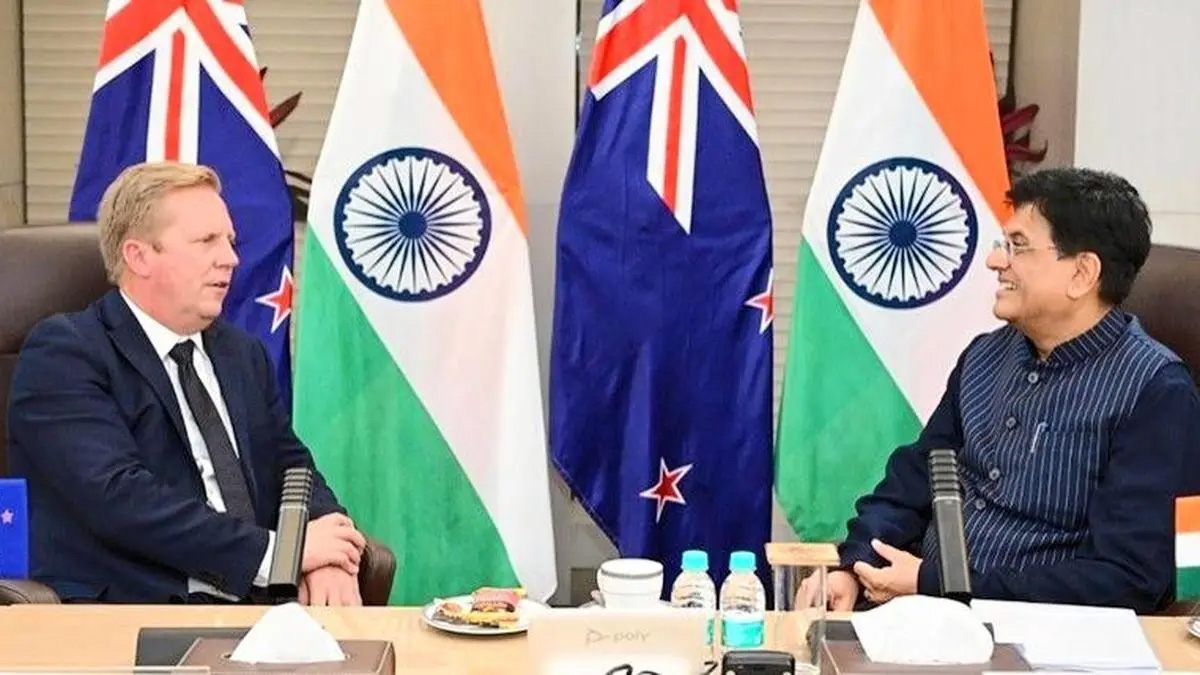
NEW DELHI : India and New Zealand on Friday discussed ways to fast-track negotiations for the proposed free trade agreement (FTA) between the two countries. New Zealand Trade Minister Todd McClay is here to review the progress of negotiations with Commerce and Industry Minister Shri Piyush Goyal.

After the bilateral meeting, Goyal said in a social media post: “We discussed key aspects of the India-New Zealand FTA and explored ways to advance the negotiations for the mutual benefit of both countries”.
The talks were formally launched on March 16, 2025. So far, four rounds of talks have been completed.
India’s bilateral merchandise trade with New Zealand stood at USD 1.3 billion in 2024-25, registering a growth of nearly 49 per cent over the previous year.

The proposed FTA is expected to further boost trade flows, promote investment linkages, strengthen supply chain resilience, and create a predictable framework for businesses in both countries.
New Zealand’s average import tariff is just 2.3 per cent.

In a free trade agreement, two countries either significantly reduce or eliminate customs duties on the maximum number of goods traded between them. They also ease norms to promote trade in goods and services.

India and New Zealand began negotiating the Comprehensive Economic Cooperation Agreement (CECA) in April 2010 to boost trade in goods, services, and investment. After nine rounds of discussions, however, the talks stalled in 2015.

India’s key goods exports to New Zealand include clothing, fabrics, and home textiles; medicines and medical supplies; refined petrol; agricultural equipment and machinery such as tractors and irrigation tools, auto, iron and steel, paper products, electronics, shrimps, diamonds, and basmati rice.
The main imports are agricultural goods, minerals, apples, kiwifruit, meat products, such as lamb, mutton, milk albumin, lactose syrup, coking coal, logs and sawn timber, wool, and scrap metals.

Source : PTI

DPA Advancing the Green Transition in Maritime India

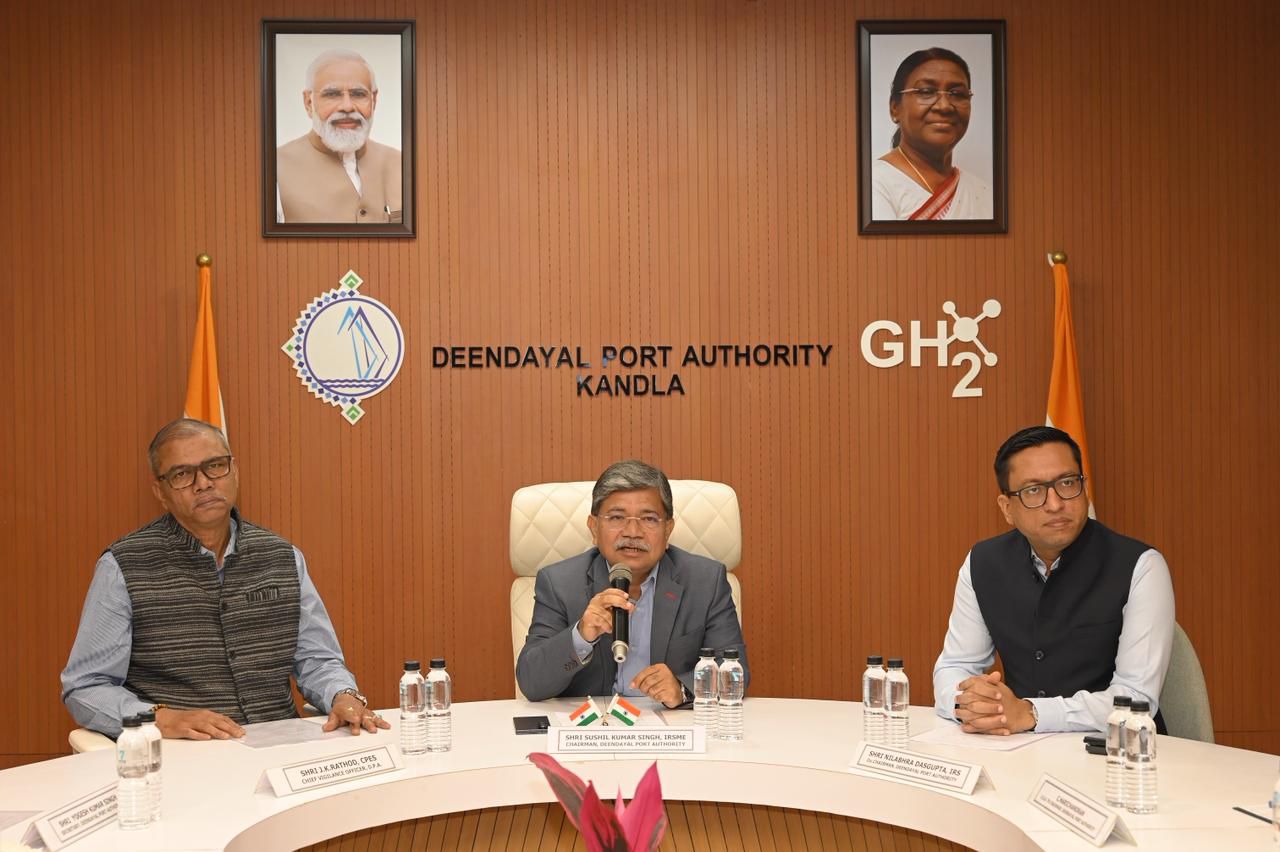
GANDHIDHAM : Shri Sushil Kumar Singh, IRSME, Chairman, Deendayal Port Authority (DPA), Kandla inaugurated the two-day workshop on “Desalination – Travel through Time & Notable Developments in the Field of Green Transition” at DPA’s Admin Building, Gandhidham. The workshop was organised in collaboration of CSIR- Central Salt and Marine Chemicals Research Institute.

The workshop witnessed participation from Major Ports, industry leaders, DPA Officials & Employees.

During the two-day workshop on “Desalination – Travel through Time & Notable Developments in the Green Transition,” participants witnessed a Live demonstration of a Seawater Electrolyzer and Desalination technology.

The cutting-edge showcase left participants truly mesmerised, highlighting the future of sustainable water–energy solutions.

CONCOR secures 278th rank in Fortune India 500, reinforces its position among India’s Corporate Leaders

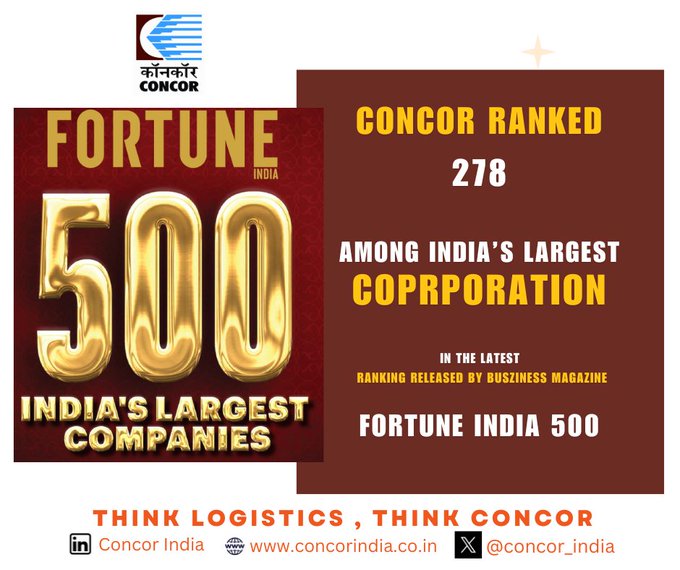
NEW DELHI : Container Corporation of India Ltd. (CONCOR) has been ranked 278th in the Fortune India 500, reaffirming its strong standing among India’s largest and most influential corporations. The recognition reflects CONCOR’s consistent performance, operational reliability, and sustained growth across its logistics and multimodal transportation businesses.

As India’s leading integrated logistics service provider, CONCOR continues to play a pivotal role in strengthening the country’s supply chain ecosystem. With its extensive network of inland container depots (ICDs), container freight stations (CFSs), terminals, and rail services, the company has been instrumental in facilitating seamless movement of EXIM and domestic cargo across the country.

CONCOR’s performance has been driven by focused investments in infrastructure, digitalisation of operations, expansion of end-to-end logistics solutions, and customer-centric initiatives. The company has also made steady progress in enhancing efficiency, improving asset utilisation, and adopting technology-led solutions to support faster, more reliable cargo movement.

Aligned with national priorities such as PM Gati Shakti and Make in India, CONCOR continues to contribute significantly to trade facilitation, port-led development, and reduction of logistics costs. Its commitment to sustainability, including increased use of rail-based transportation and greener logistics practices, further underscores its role in building a resilient and future-ready logistics ecosystem.

The Fortune India 500 ranking stands as a testament to CONCOR’s strong fundamentals, governance standards, and long-term growth outlook, as the company continues to support India’s expanding trade and economic aspirations.

Asia Regional PSC Training on MARPOL Annex V & Marine Litter – Kochi

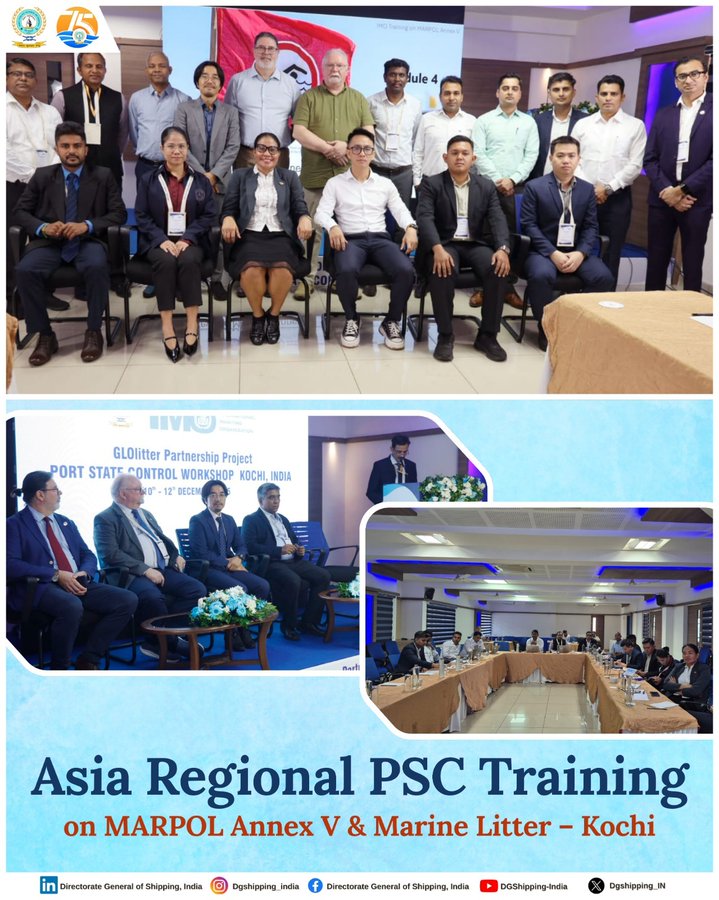
KOCHI : The Mercantile Marine Department, Kochi and the Directorate General of Shipping are hosting the Asia Regional Port State Control (PSC) Training and Demonstration on MARPOL Annex V and Marine Litter from 10–12 December 2025 in Kochi.

The programme is being conducted under the Ocean Litter Programme of the International Maritime Organization (IMO).

The three-day training brings together participants from India, Indonesia, Sri Lanka, Thailand, Vietnam, Timor-Leste and the Philippines, strengthening regional cooperation on marine environmental protection.

Expert trainers Mr Peter Van den Dries (Belgium) and Mr Ricardo Boke (Chile) are leading the sessions, covering:

  • Sources, types and impacts of marine litter
  • International regulatory frameworks and policy developments
  • Implementation and enforcement of MARPOL Annex V
  • Practical PSC procedures and demonstrations

The workshop reinforces India’s commitment to advancing Annex V compliance, enhancing PSC capability, and supporting regional action against sea-based marine litter.

Transforming districts into export hubs

NEW DELHI : Recently, the Reserve Bank of India reduced its benchmark policy rate, with the RBI Governor highlighting declining exports as a key area of concern. Over the past decade (FY15 to FY25), India’s merchandise exports have grown at a CAGR of just 3.4 per cent. Labour-intensive sectors such as textiles and apparel, gems and jewellery, leather products, and agricultural goods have expanded at an even slower pace of 2-2.5 per cent, while high-value electronics and automobiles have largely buoyed the overall export basket.

For mass employment, accelerating growth in these traditional sectors is crucial. India’s District as Export Hub (DEH) policy is a strategic vision to boost labour-intensive exports and job creation by leveraging each district’s unique skills and products. It aligns with India’s aspiration to expand the country’s share in global manufactured trade flows, by adopting a hyper local focus. With targeted infrastructure, institutional support, and global market access, it can transform local strengths into export competitiveness. While in principle, DEH initiative is one of the most promising pathways for generating jobs where populations reside, ground realities reveal a starkly different picture.

The first bottleneck is the absence of reliable and comprehensive exporter databases at the district level. Export Promotion Bureaus (EPBs) at the State level maintain lists only of those exporters who are registered with them. But this represents only a fraction of the actual exporter universe. For Uttar Pradesh this figure is 25-30 per cent. The Directorate General of Foreign Trade (DGFT), which maintains the most accurate and exhaustive list of import-export certificate (IEC) holders, does not share district-wise exporter data with EPBs, and consequently, districts remain effectively blind. This systemic data gap makes evidence-based hyper-local and focused policy-making virtually impossible. How can a district be groomed into an export hub when the State government and EPBs do not know who its exporters are, what they produce, or what challenges they face?

Government supports Startup Ecosystem through three flagship schemes under Startup India Initiative

NEW DELHI : Under the Startup India initiative, the Government is implementing three flagship Schemes, namely, Fund of Funds for Startups (FFS), Startup India Seed Fund Scheme (SISFS) and Credit Guarantee Scheme for Startups (CGSS) to support startups across categories and sectors at various stages of their business cycle.

FFS has been established to catalyze venture capital investments and is operationalized by Small Industries Development Bank of India (SIDBI), which provides capital to Securities and Exchange Board of India (SEBI)-registered Alternative Investment Funds (AIFs) which in turn invest in startups. Supported AIFs have invested around Rs. 2,838.9 crore in 154 women-led startups in calendar years 2020, 2021, 2022, 2023, 2024, and 2025, as on 31st October 2025. The State/Union Territory (UT)-wise and year-wise details are placed as Annexure-I.

SISFS provides financial assistance to seed stage startups through incubators. SISFS is implemented from 1st April 2021. As on 31st October 2025, supported incubators under the Scheme have approved funds of around Rs 284.79 crore to 1,635 women-led startups. The State/UT-wise and year-wise details are placed as Annexure-II.

CGSS is implemented for enabling collateral free loans to startups through eligible financial institutions [Member Institutes (MIs)]. CGSS is operationalized by the National Credit Guarantee Trustee Company (NCGTC) Limited and has been operationalized from 1st April 2023. As on 31st October 2025, 24 loans amounting to around Rs 33.17 crore have been guaranteed to women-led startup borrowers under CGSS. The State/UT-wise and year-wise details are placed as Annexure-III.

(The sector-wise number of women-led startups supported by selected AIFs under the FFS, and amount invested in them in calendar years 2020, 2021, 2022, 2023, 2024, and 2025 as on 31st October 2025 is placed as Annexure-IV.

The sector-wise number of women-led startups selected by incubators under the SISFS, and funds approved to them in calendar years 2021, 2022, 2023, 2024, and 2025 as on 31st October 2025 is placed as Annexure-V.

The sector-wise details of number and amount of loans guaranteed to women-led startup borrowers under CGSS in calendar years 2023, 2024, and 2025 as on 31st October 2025 is placed as Annexure-VI.

It would be difficult to put together a statistic covering all types of new businesses and their success rate with any level of accuracy or lack of subjectivity. Therefore, the information with respect to the success rate of these startups is not centrally maintained by the Government.

The Government is undertaking various initiatives on pan-India basis to provide mentorship and training for women entrepreneurs. Details of such initiatives are placed as Annexure-VII.

This information was given by the Minister of State for Ministry of Commerce & Industry, Shri Jitin Prasada, in a written reply in the Rajya Sabha

Pranav Adani sets out infrastructure-led blueprint for India’s Multi-Trillion-Dollar Economy

AHMEDABAD : Pranav Adani, Director of Adani Enterprises Limited, has articulated a comprehensive vision for how India can accelerate its economic ascent and chart a course toward a multi‑trillion‑dollar economy.

Speaking in a televised interview, he underscored the pivotal role of robust infrastructure in realising the nation’s growth ambitions, suggesting that confidence, scale and sustained execution will define India’s economic trajectory in the coming decade.

Adani highlighted that India is well‑positioned to achieve its USD 5 trillion GDP goal and could potentially reach USD 10 trillion within the next ten years, as forecast by global institutions.

He argued that the country’s expanding infrastructure network, anchored by integrated strategic investments, mirrors the contours of its evolving economic landscape.

In the interview, Pranav Adani outlined how the Adani Group’s infrastructure portfolio supports India’s economic expansion.

The conglomerate operates a network of 14 ports handling around a quarter of India’s cargo, alongside eight major airports, including the upcoming Navi Mumbai Airport, scheduled to begin operations on 25 December, and a renewable energy pipeline exceeding 50 GW under development. Urban transformation projects serving millions are also part of the group’s long‑term infrastructure efforts.

Adani argued that infrastructure requires a 20–40‑year commitment, emphasising that countries grow when companies invest with a generational mindset instead of seeking immediate returns.

Renewal and Regional Opportunities
A focal point of the discussion was the Dharavi Redevelopment Project (DRP) in Mumbai, one of the world’s largest urban renewal programmes.

With more than one million residents, the initiative aims to construct modern housing, formalise livelihoods and unlock new economic opportunities in the community.

Adani emphasised that placing resident‑centric rehabilitation at the heart of the redevelopment effort will be key, relying on transparent and phased delivery to build trust.

He also highlighted strategic investments in emerging growth regions, particularly in India’s Northeast. With expansions in aviation, logistics, transmission and renewable power, Adani said the region could develop into a gateway to ASEAN markets, supported by the conglomerate’s capacity to deliver large projects on schedule and at scale.

Pranav Adani reinforced the Adani Group’s governance credentials, noting that its companies maintain investment‑grade credit ratings, operate some of the world’s most efficient infrastructure assets and continue to attract long‑term global partnerships.

He attributed the group’s rapid rise to disciplined execution and transparent processes.

Addressing India’s youth, Adani urged them to embrace risk, innovate relentlessly and contribute to nation‑building, particularly as the country prepares for its centenary in 2047.

He said that this is the era for bold builders and urged taking a long‑term view that prioritises national impact.

Hapag-Lloyd orders eight new dual-fuel methanol container ships

HAMBURG: Hapag-Lloyd has signed a contract with the Chinese shipyard CIMC Raffles for the construction of eight new container ships. The ordered units will each have a capacity of 4,500 TEU and are scheduled for delivery in 2028 and 2029. The investment volume amounts to more than USD 500 million.

The new ships will be equipped with state-of-the-art dual-fuel methanol engines. They will be up to 30 percent more efficient than older generations of ships in the same size class and will be able to save up to 350,000 metric tons of CO2e per year when using methanol propulsion. The ships, which are part of Hapag-Lloyd’s first newbuild project involving this sustainable propulsion technology, will complement the growing portfolio of dual-fuel container ships in the company’s fleet: At present, a total of 37 dual-fuel liquefied natural gas (LNG) units that can also operate using biomethane are in operation or planned.

In addition, in April 2024, Hapag-Lloyd had already agreed with Seaspan Corporation to have five 10,100 TEU container ships converted to dual-fuel methanol propulsion in 2026 and 2027. Moreover, in November 2024, Hapag-Lloyd had concluded an agreement with the Chinese energy producer Goldwind for the supply of 250,000 metric tons of green methanol per year. The green methanol, which will consist of a mixture of biomethanol and e-methanol, will reduce greenhouse gas emissions by at least 70 percent and thereby comply with all current sustainability certifications.

Furthermore, it was decided that another 14 newbuildings in the size classes 1,800 TEU (4 units), 3,500 TEU (6 units) and 4,500 TEU (4 units) will be chartered on a long-term basis. The ships will be delivered between 2027 and 2029. As previously announced on November 13, 2025, Hapag-Lloyd is thus investing in a total of 22 new vessels in the segment with a capacity of less than 5,000 TEU.

“Continuously modernizing our fleet is firmly anchored in our Strategy 2030. The new ships will help replace older tonnage, further decarbonize the Hapag-Lloyd fleet, and reduce our dependence on the charter market. What’s more, operating these state-of-the-art ships will be much more cost-efficient,” said Rolf Habben Jansen, CEO of Hapag-Lloyd AG.

Hapag-Lloyd remains committed to its goal of being a driver of sustainability in container shipping and to the gradual decarbonization of its fleet. By 2030, the company plans to reduce the absolute greenhouse gas emissions of its fleet operations by around one third compared to 2022. Net-zero fleet operations are to be achieved by 2045.