Home Blog Page 521

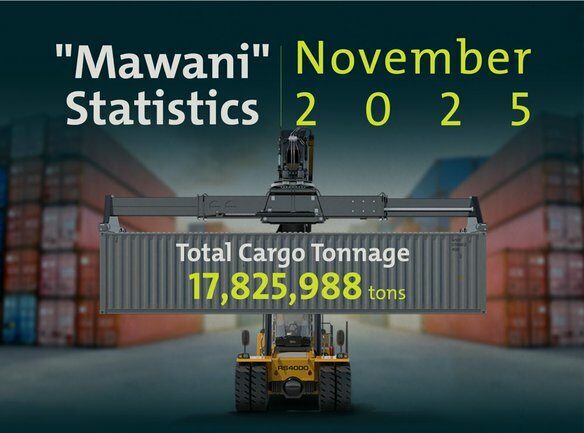
MAWANI transshipment containers rose by 8.22% in November 2025

RIYADH : Saudi ports supervised by the Saudi Ports Authority (MAWANI) said that transshipment containers rose by 8.22% to 162,250 TEUs, compared to 149,930 TEUs a year earlier. Mawani recorded a 2.97% decline in container throughput during November 2025, reaching 649,000 TEUs, compared to 669,170 TEUs in November 2024.

The authority added that import containers dropped to 241,490 TEUs, while export containers also fell to 245,540 TEUs.

The total cargo throughput, which includes general cargo, dry bulk, and liquid bulk, grew by 0.21% to 17.83 million tons, compared to 17.79 million tons a year ago. General cargo totaled 1.19 million tons, dry bulk (4.02 million tons), and liquid bulk (12.61 million tons).

MAWANI also noted that vessel traffic rose by 6.81% to 1,020 ships, compared to 955 ships in November 2024. Meanwhile, passenger numbers surged by 70% to 112,920, while the number of vehicles handled declined by 22.7% to 77,130 units.

The ports received 722,140 head of livestock, marking a 0.78% year-on-year (YoY) rise.

CMA CGM doubles number of Women Seafarers in one year under ‘She Sails’ Initiative

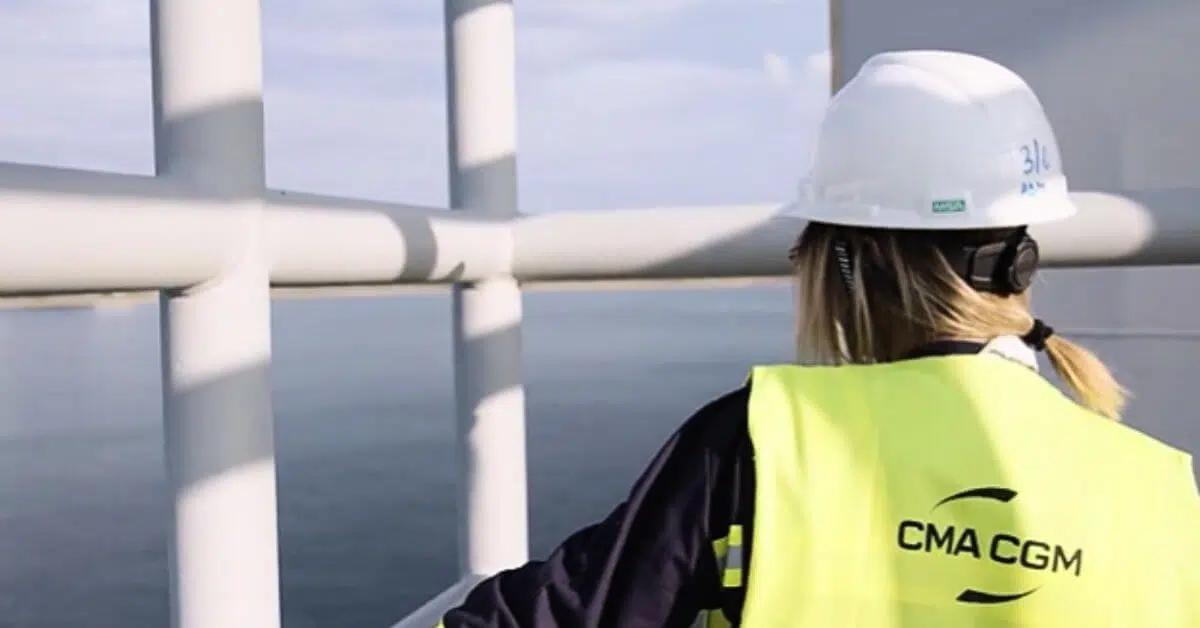
MARSEILLE : CMA CGM has made significant progress in increasing the number of women working at sea, reporting that its She Sails programme has doubled its women seafarers in just one year.

The number rose from 200 in 2024 to 403 by the end of 2025, an increase of more than 100% since the programme began in December 2024.

The company has now set a new goal of having 1,000 women at sea by 2030, showing its long-term commitment to gender diversity and equal opportunities in the merchant navy.

The She Sails programme was designed to encourage more women to join maritime careers, promote the wide range of career paths available within the Group, and support young women considering careers at sea. The programme also focuses on sharing experiences among women seafarers to inspire the next generation.

Christine Cabau Woehrel, CMA CGM’s Executive Vice President in charge of Operations and Assets, said through a Group communication that the programme had demonstrated its effectiveness within its first year.

She said the results had exceeded expectations, adding that more women were moving into key positions, progressing more quickly, and gaining confidence, which has improved team diversity and overall performance. She added that the success brings both pride and responsibility, and the Group plans to continue its efforts to ensure equal opportunities.

The company reported 74 promotions among women this year. This includes 8 women promoted to senior officer roles, which are described as the four highest levels of responsibility on board. 48 women progressed from cadet to junior officer, and one progressed from deckhand to qualified deckhand, which the Group said was a first.

The programme has also been supported by a growing international network. CMA CGM stated that the programme has mobilised 42 ambassadors across 19 countries and has strengthened links with maritime academies.

Three formal agreements were signed during the year, one in Abu Dhabi and two in India, and two additional partnerships are being prepared in the Philippines and Indonesia to support the recruitment of more women cadets.

CMA CGM said the first anniversary is just the beginning. The Group reaffirmed its commitment to supporting women at sea, ensuring fair access and advancement, and helping to transform the global merchant navy with stronger gender diversity.

DP World launches 36-hour Dubai-Iraq Sea Link, cutting costs and transit times

DUBAI : DP World has launched a new 36-hour maritime service between Dubai’s Mina Rashid and Iraq’s Umm Qasr Port, providing a faster alternative to overland trucking and accommodating up to 145 accompanied trailers per sailing.

The service was inaugurated at Mina Rashid with the official welcome of DP World Express – the dedicated RoRo vessel operating the new route. The vessel has recently undergone upgrades at Drydocks World and is scheduled to begin operations in December 2025.

The ceremony brought together senior UAE and Iraqi officials including H.E. Dr. Muzaffar Mustafa Al-Jubouri, Ambassador of the Republic of Iraq; H.E. Sultan Ahmed bin Sulayem, Group Chairman & CEO, DP World; Dr. Abdulla Busenad, Director General of Dubai Customs; Brigadier Nabil Mohammed Algergawi, Assistant Director General – Sea & Land Ports Affairs, GDRFA; Dr. Emad Ali Al-Azzawi, Acting Consul General of the Republic of Iraq; Abdulla Bin Damithan, CEO & Managing Director, DP World GCC; and Shahab Al Jassmi, Chief Commercial Officer – Ports & Terminals, DP World GCC.

The vessel will transport non-containerised, full trailer units with drivers travelling on board, providing customers a direct and secure door-to-door solution between the UAE and Iraq. It will also facilitate onward transit to neighbouring countries, improve reliability and reduce cross-border complexities.

His Excellency Sultan Ahmed bin Sulayem, Group Chairman and CEO, DP World, said: “Our new Dubai-Iraq service will establish a faster and more efficient maritime bridge between Iraq and the UAE to help trade flow across the Middle East. This service gives customers a predictable route that reduces time, cost and complexity and supports long-term economic opportunity on both sides of the corridor.”

The introduction of the service reflects strong market demand for faster, more controlled trailer movements, reducing handling requirements and simplifying planning across key trading sectors.

The corridor strengthens access into Iraq’s main commercial centres and supports wider connectivity into Jordan and Syria through established inland routes, boosting regional trade. On the return journey, DP World Express will carry export cargo from Iraq back to the UAE, supporting two-way trade and increasing efficiency across the region’s supply chains.

Abdulla Bin Damithan, CEO & Managing Director, DP World GCC, added: “The shift to accompanied trailers reflects clear customer demand for faster, more reliable cross-border movement. By offering a direct maritime solution from Mina Rashid, we are enabling businesses to plan with confidence, respond quickly to market needs and streamline how goods move across the region.”

The new service enhances DP World’s integrated logistics capabilities and expands direct maritime connectivity for non-containerised cargo. It also promises sustainability benefits by reducing CO2 emissions associated with alternative transport and logistics options.

Russia attacks two Ukrainian ports, damaging three Turkish-owned vessels

KYIV : Russia attacked two Ukrainian ports on Friday, damaging three Turkish-owned vessels including a ship carrying food supplies, Ukrainian officials and one ship owner said, days after Moscow threatened to cut “Ukraine off from the sea”.
Last week, Russian President Vladimir Putin vowed retaliation against Kyiv’s maritime drone attacks on Moscow’s “shadow fleet” tankers thought to be used to export oil, which Kyiv says is Russia’s main source of funding for its almost four-year-old war.

The attack on Friday came hours after Turkish President Tayyip Erdogan told Putin that a limited ceasefire for energy facilities and ports could be beneficial.

Ukrainian President Volodymyr Zelenskiy posted photos which showed a large fire burning aboard a ship in the port of Chornomorsk in Odesa region, with firefighters tackling the blaze.

“This proves once again that Russians not only fail to take the current opportunity for diplomacy seriously enough, but also continue the war precisely to destroy normal life in Ukraine,” he said.

That vessel’s owner, Cenk Shipping, said the Cenk T vessel had been subject to attack around 1600 Ukraine time (1400 GMT).

There were no casualties among the crew, and damage was limited, it added.

Reuters verified the moment of the attack seen on a video published on X. The vessel in the clip matched Cenk T, and the cranes and buildings matched satellite imagery of the Chornomorsk port.

Fabian Hinz, research fellow for defence and military analysis at the International Institute for Strategic Studies, said the weapon seen was a Russian Geran-2 drone in its loitering configuration.

Russia’s defence ministry did not immediately reply to a Reuters request for comment.

“The strike is aimed at civilian logistics and commercial shipping,” Ukraine’s Deputy Prime Minister Oleksiy Kuleba said.

NAVIGATION SAFETY TARGETED

Russia attacked Ukrainian ports with drones and ballistic missiles, Kuleba added.

He said that one employee of a private company had been injured in a separate attack on Odesa port, and that a cargo loader had been damaged there.

Ukraine’s navy spokesperson told Reuters that three vessels were damaged in total, all Turkish-owned. But the spokesperson did not provide additional details.
Turkey’s foreign ministry confirmed damage in the Chornomorsk port, adding that there were no reports of injured Turkish citizens.
Reuters was able to verify the vessel by the design and name of the bow that matched file imagery of the Cenk T vessel.
“We reiterate the need for an arrangement whereby, in order to prevent escalation in the Black Sea, attacks targeting navigational safety as well as the parties’ energy and port infrastructure are suspended,” the ministry’s statement said.
The three large Black Sea ports in the Odesa region are a key economic artery for Ukraine, which is a major commodities exporter.
In addition to the attacks on Moscow’s “shadow fleet” tankers, Ukraine has ramped up pressure on Russia by hitting targets in the Caspian Sea this week, including vessels allegedly carrying military equipment and a major oil rig.

Source : Reuters

US forces raided ship headed to Iran from China in Indian Ocean, WSJ says

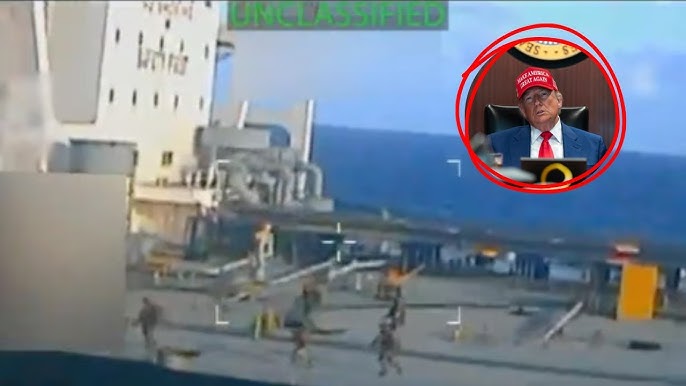
WASHINGTON : A U.S. special operations team in the Indian Ocean raided a ship headed to Iran from China last month and seized military-related articles, the Wall Street Journal reported on Friday, citing U.S. officials.

The cargo consisted of components potentially useful for Iran’s conventional weapons, one official said, adding the shipment had been destroyed.

U.S. forces boarded the ship several hundred miles off the coast of Sri Lanka, according to the newspaper, which added the vessel was later allowed to proceed.
Source : Reuters

Seaborne Car Trade: 32 million cars and 8% growth projected for 2025

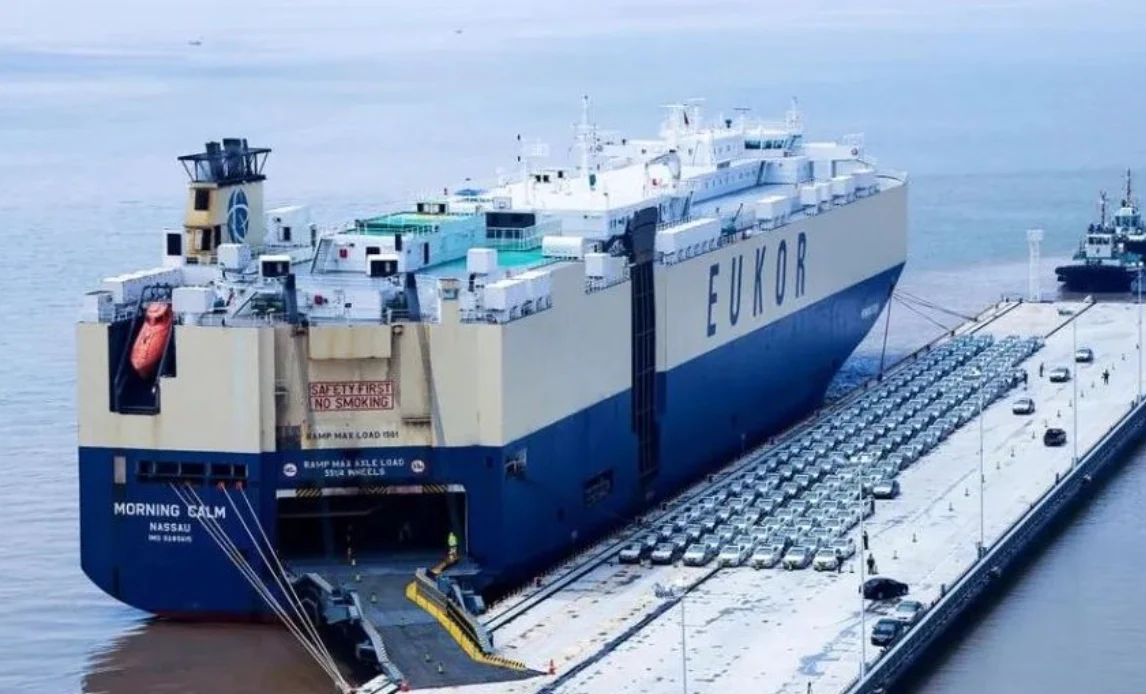
LONDON: The annual review of the car carrier sector from Clarksons Research, Car Carrier Trade & Transport 2025, has been released onto Shipping Intelligence Network.

Summarising the report, Steve Gordon, Managing Director of Clarksons Research, commented: “2025 has been a mixed year for the car carrier sector, with charter and asset markets correcting (though still firm by historical standards), operator earnings and freight rates remaining resilient, and trade volumes ‘outperforming’ expectations despite US tariffs. Highlights from the latest report include:

  • Global seaborne car trade volumes projected to grow by a robust 8% to 32.1m cars in 2025
  • Chinese car exports on track to grow ~30% to a record 6.2m cars, while US car imports are set for a ‘modest’ ~7% decline despite tariff impacts
  • Car imports into a range of key developing regions seeing rapid growth in 2025, with Africa and Latin America projected to see their strongest car imports in a decade, while Middle East imports (+11% to 3.4m cars) are set to hit a new record;
  • Electric Vehicles (EVs) are set to account for ~15% of global seaborne car trade in 2025
  • Car carrier fleet is experiencing a phase of significant growth, with 13% fleet expansion for 2025 projected driven by record newbuild deliveries of ~570k ceu
  • Charter market trending lower through 2025, but seems to have found a floor recently: our 1 year TC rate for 6,500 ceu PCTC stood at $42,500/day in November, down 63% from early 2024’s exceptional highs but still double the pre-Covid 10 year average
  • Car carrier newbuild ordering has slowed markedly, with just 6 vessels of 22,000 ceu ordered in 2025 so far, down from an average of 500,000 ceu p.a. across 2021-24, while secondhand asset pricing has eased
  • Fuelling transition progress continues in the sector, with 1m ceu (~20% of total fleet capacity) now alternative fuel capable
  • A range of demand scenarios possible ahead (e.g. sustaining strong growth in Chinese exports uncertain, any return to normal levels of Red Sea / Suez Canal transits would reduce shipping demand), our base case outlook is for trade growth to cool to 2-3% next year against 7% fleet growth.

The latest edition of this market leading report includes coverage of car carrier charter markets, car industry and seaborne car trade trends, trends in the car carrier fleet, asset and newbuilding market trends, and market supply-demand projections.

Shipping Intelligence Network (SIN) is Clarkson Research’s market leading digital platform and the most comprehensive source of data on shipping and trade. The system provides immediate access to uniquely powerful data and analysis tracking and projecting market supply / demand, freight, vessel earnings, vessel values and macro-economic data around trade flows and global economic developments.

About Clarksons Research

Clarksons Research, the data and analytics arm of Clarksons, are the market leaders in the provision of independent data and intelligence around shipping, trade, offshore and the maritime energy transition. Millions of data points are processed and analysed each day to provide trusted and insightful intelligence to thousands of stakeholders across maritime. Better data for better decisions.

BIMCO adopts FuelEU Maritime and ETS clauses for the sale and purchase of ships

LONDON: The Documentary Committee of BIMCO has adopted a FuelEU Maritime Clause and an ETS Clause for incorporation into Memoranda of Agreements (MoAs) for the sale and purchase of ships.

The FuelEU Maritime Regulation and the EU Emissions Trading System (EU ETS) impact the sale and purchase of ships, and the clauses have been developed to help provide certainty for both parties during the process.

“Regulations such as the FuelEU Maritime and EU ETS are complex and reshape our industry. Therefore, contractual clarity is essential. The new clauses offer parties the tools they need to manage compliance obligations and avoid uncertainty during ship transactions,” says Stinne Taiger Ivø, Deputy Secretary General and Director of Contracts at BIMCO.

Both clauses are developed to clearly define responsibilities, costs and data-sharing obligations under the current regulatory frameworks, and the ETS clause can also be used for similar emission trading schemes that may come into force in the future.

The FuelEU Maritime Clause for MoAs 2025 sets out the seller’s responsibilities to ensure compliance at the time of delivery of the ship. The clause includes provisions on disclosure of verified compliance balances for previous reporting periods and provides for a partial FuelEU report after delivery.

It also includes mechanisms for price adjustments, based on positive or negative compliance balances, restrictions on borrowing advance compliance balance before delivery and obligations for buyers to supply post-delivery data as needed.

At delivery, buyers assume full responsibility for FuelEU compliance, including rights related to banking, borrowing, and pooling compliance balances.

The ETS Clause for MoAs 2025 provides a framework for allocating responsibilities related to greenhouse gas emission allowances during ship sale and purchase transactions. Sellers must comply with all reporting requirements for the period up to delivery, submit a verified partial emission report following delivery and surrender emission allowances for emissions incurred before transfer of ownership.

Buyers assume responsibility for emission allowances from the time of delivery onward. The clause also includes an indemnity provision to protect buyers against claims or liabilities arising from the sellers’ non-compliance prior to delivery to ensure clarity and fairness.

“With this latest addition, BIMCO is expanding its portfolio of carbon clauses to support the industry through regulatory change. Like the clauses already in the portfolio, the new clauses are practical, consensus-driven solutions which have been developed using input from a broad range of stakeholders to ensure that they work in practice,” says Nicholas Fell, Chair of BIMCO’s Documentary Committee.
Source: BIMCO

Helm reaches 400 Customers for Helm CONNECT, strengthening its position as the Operational Backbone of Modern Fleets

VICTORIA B.C.: Helm Operations announced that it has reached 400 customers and more than 10,000 vessels and assets running on Helm CONNECT worldwide, marking a major milestone for one of the maritime industry’s most widely adopted maintenance and operations platforms.
 
The achievement reflects Helm’s expanding role as the operational foundation for fleets across towing, offshore support, passenger vessels, barges, dredging, and other specialized service segments. As more operators in more verticals adopt Helm CONNECT, the platform is increasingly becoming the connective layer fleets rely on to standardize, streamline, and scale their daily operations.
 
“This milestone isn’t just about hitting a number — it’s a reflection of the trust operators place in us across very different parts of the industry,” said James Wadsworth, CEO of Helm Operations. “From high-frequency passenger operations to complex offshore support and everything in between, customers are choosing Helm because it delivers reliability, consistency, and clarity across their fleets. We’re proud to see more organizations using Helm CONNECT as the backbone of how they run.”

Helm’s continued growth is being driven by operators looking to modernize their maintenance, safety, compliance, and crewing processes — and by Helm’s ability to support these needs across a wide range of operational models. Recent projects, including Washington State Ferries’ fleet-wide crew dispatch modernization, demonstrate how large and complex organizations are turning to Helm for mission-critical operational systems that need to scale cleanly and perform under pressure.
 
“With more customers depending on Helm CONNECT every day, we’re focused on building the next generation of tools that help fleets operate smarter and more efficiently,” Wadsworth added. “From deeper integrations to predictive insights and intelligent automations, the future of fleet management is connected and user-centered, and we’re excited to be helping our customers get there.”

Helm CONNECT is now used daily in more than 35 countries, powering asset management, safety programs, crewing, dispatch, regulatory compliance, and operational workflows across thousands of vessels and shoreside teams. Helm continues to expand its partner ecosystem and integration capabilities, strengthening its position as the central operating system for maritime fleets across a growing range of operational environments.

Drewry: World Container Index Up 2% Last Week

LONDON: Drewry’s World Container Index increased 2% to $1,957 per 40ft container this week.

Drewry’s detailed assessment for Thursday, 11 Dec 2025

  • The Drewry World Container Index (WCI) rose 2% to $1,957 per 40ft container, marking the second consecutive weekly increase. The increase was primarily due to higher spot rates on Asia–Europe trade lanes, despite a contrasting dip in Transpacific freight rates.
  • The recovery in Transpacific headhaul rates proved short-lived, after rebounding last week from a low point not seen since January 2025, spot rates declined again this week. Spot rates from Shanghai to Los Angeles declined 7% to $2,103 per 40ft container, while those to New York decreased 5% to $2,756.
  • According to Drewry’s Container Capacity Insight, blank sailings on the Transpacific trade lane increased this week and are projected to rise further, with 12 cancellations already announced for next week. Although carriers are increasing these cancellations to prop up falling spot rates, the strategy is struggling due to a lack of volume. Since most Christmas inventory was already shipped in November, there is currently insufficient cargo to support freight rates. Consequently, Drewry expects rates to soften slightly in the coming week.
  • Spot rates on the Shanghai–Genoa route saw a double-digit surge, rising 13% to $3,004 per 40ft container, while Shanghai to Rotterdam rates increased by 5% to $2,361. Unlike the Transpacific trade lane, spot rates on the Asia–Europe trade route have successfully maintained stable or rising rate levels for four consecutive weeks. This strength is driven by a shift in seasonal patterns. Over the last three years, Drewry has observed double-digit month-on-month demand growth in December, establishing strong year-end volumes as the “new normal.” With the Lunar New Year falling in February 2026, carriers are already seeing early bookings, leading Drewry to forecast further slight rate increases next week.

Ocean spot market freight rates against 6,700 global port pairs

If you need spot market container freight rate information on other routes to those above, find out more about our Container Freight Rate Insight (CFRI) online service, which covers 6,700 global port pairs updated monthly (2,450 updated fortnightly).

Source: Drewry

Baltic Index falls to near One-Month Low on Weaker Rates

LONDON: The Baltic Exchange’s Dry Bulk Sea Freight index, which tracks rates for vessels transporting dry bulk commodities, fell to a near one-month low on Friday, and logged a weekly decline, as vessel rates weakened across the board.

The main index, which factors in rates for capesize, panamax and supramax shipping vessels, fell by 89 points, or 3.9%, to 2,205 points, its lowest since November 17. The index logged a weekly loss of 15.9%, its steepest drop since January 20.

The capesize index lost 221 points, or about 5.6%, to 3,706 points, its lowest since November 24. It logged a weekly loss of 22.7%.

Average daily earnings for capesize vessels, which typically transport 150,000-ton cargoes such as iron ore and coal, decreased by $1,838 to $30,731.

Dalian iron ore slipped on Friday and were set for a second weekly loss, weighed down by easing demand in top consumer China and higher portside stocks, although Beijing’s pledge of fiscal stimulus and stabilising property market capped losses.

The panamax index fell by 36 points, or 2.1%, to 1,688 points, its lowest in over two months. The index logged a weekly decline of 6.2%.

Average daily earnings for panamax vessels, which usually carry 60,000-70,000 tons of coal or grain, decreased by $325 to $15,194.

Among smaller vessels, the supramax index lost 16 points to 1,371 points. It saw a weekly fall of 3.4%.
Source: Reuters