Home Blog Page 519

Green Hydrogen Pilot Project at Chidambaranar Port

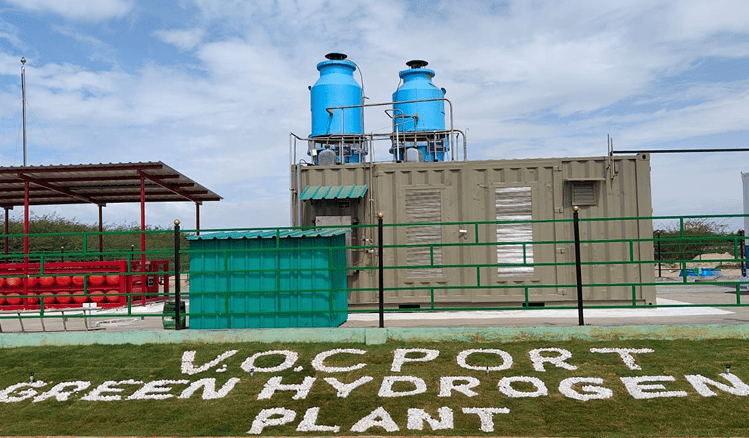
NEW DELHI: The objective of the Green Hydrogen Pilot Project at VoC Port is to create a bunkering facility for Green Hydrogen or its derivatives to support the phased development of Green Fuel utilization by demonstrating it in the shipping sector. It supports vessels operating on international and domestic sea routes by providing refuelling facilities for green fuels. The expected outcomes of this project include a substantial reduction in CO2 emissions and creation of numerous direct and indirect job opportunities in manufacturing and storage of green fuel and related services.

This information was given by the Union Minister of Ports, Shipping and Waterways, Shri Sarbananda Sonowal Ji, in a written reply to the Lok Sabha.

MoPSW informs on Status of National Waterways 37

NEW DELHI: The River Gandak is declared as National Waterway  (NW) – 37 under National Waterways Act, 2016. Two jetties  have been deployed on NW-37 (River Gandak) at Mangalpur (Nautan) & opposite bank  in Bettiah. M/s. Rail India Technical and Economic Service Ltd. (RITES) have been  engaged to update the Detailed Project Report (DPR) prepared by Government of Bihar  in 2013 at a cost of Rs. 92.75 lakh.

To ascertain the potential for cargo and passenger movement on the River Gandak, upgradation of DPR has been awarded to M/s RITES. 

For operationalization of NW–37 (River Gandak), two Community Jetties have  been deployed at Mangalpur (Nautan) & opposite bank in Bettiah.

Routes including waterways for movement of cargo have already been included in the Treaty of Transit between Govt. of India and Nepal. 

This information was given by the Union Minister of Ports, Shipping and Waterways, Shri Sarbananda Sonowal Ji, in a written reply to the Lok Sabha

MoPSW brief on Inland Port Facility in Rajasthan

NEW DELHI: Deendayal Port Authority provides one of the cheapest transport facilities for export sector and it offers one of the lowest Cargo and Vessel related Charges amongst all Major Ports in the country.

Inland Port facilities are already available in Rajasthan through 12 notified Inland Container Depots (ICDs) by Central Board of Indirect Taxes and Customs (CBIC), which support the movement of export–import cargo. These ICDs can be utilized for customs clearance and related logistics services, for the trade. A list of the Inland Container Depots located in Rajasthan is attached as below.

Sl. No.Inland Container Depots (ICD)
1Bhilwara
2Bhiwadi
3Jaipur
4Jodhpur
5Kota
6Udaipur
7Ravatha Road, Kota
8Mandavariya (Kishangarh), District Ajmer
9Hindaun City, District Karauli
10Kathuwas and Mandhan Village, District Alwar
11Dhanakya
12Kishangarh

This information was given by the Union Minister of Ports, Shipping and Waterways, Shri Sarbananda Sonowal Ji, in a written reply to the Lok Sabha.

Mizoram gets its First Rail-Carried Cars, Marking a Significant Milestone in the Region’s Transportation

MIZORAM: Sairang Railway Station handled its first-ever direct inward automobile rake,  carrying 119 Maruti cars from Changsari near Guwahati. This historic movement will enhance vehicle availability in Aizawl, reduce dependence on long road transport, and benefit Mizoram’s automobile sector, including dealers, service providers, and customers, marking a significant step in the State’s infrastructural and economic development. This achievement reflects Indian Railways’ commitment to expanding connectivity, supporting regional development, and fostering inclusive growth across the country.

The Bairabi-Sairang railway line is a major infrastructure milestone for Mizoram. Carved meticulously through challenging terrain, the line stretches over 51.38 km and passes through 45 tunnels. This railway line plays a very important role in  supporting the region’s strategic integration with the rest of the country.

The line was inaugurated by Hon’ble Prime Minister Shri Narendra Modi on 13 September 2025. On this occasion, he flagged off the Rajdhani Express between Aizawl (Sairang) and Delhi (Anand Vihar Terminal), the Mizoram Express between Aizawl (Sairang) and Guwahati, and an Express train between Aizawl (Sairang) and Kolkata. This marked Mizoram’s full integration into India’s national rail network.

Passenger response to the new train services has been very encouraging. All three trains are running with high occupancy i.e. the Sairang-Anand Vihar Terminal Rajdhani Express at 147%, the Sairang-Guwahati Mizoram Express at 115%, and the Sairang-Kolkata Express at 139%. Passengers find the trains  convenient, pocket friendly and save significant time. Rail connectivity has improved the ease of travel to major cities and economic hubs. It has also enhanced access to education and medical facilities in nearby states.

Freight operations on the Bairabi-Sairang line began soon after the inauguration. The first freight movement on 14 September 2025 carried 21 cement wagons from Assam to Aizawl. Since then, the route has transported essential goods like cement, construction materials, automobiles, sand, and stone chips.

The first parcel consignment from Sairang was also booked on 19 September 2025, when Anthurium flowers were transported to Anand Vihar Terminal through the parcel van (Sairang–Anand Vihar Terminal Rajdhani Express). Between 17 September and 12 December 2025, a total of 17 rakes were handled. These developments show the line is becoming a reliable logistics corridor, lowering transport costs and supporting Mizoram’s economic and infrastructural growth.

Surat-Chennai expressway curtailed; corridor to now start from Nashik

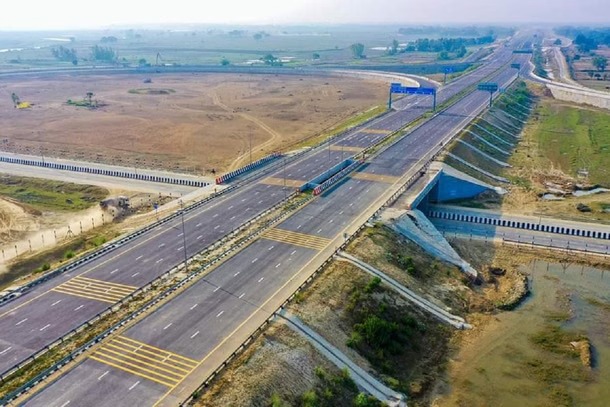
SURAT : The proposed six-lane Chennai–Surat National Highway corridor under the Bharatmala Pariyojana has been shortened, with the Union Ministry of Road Transport and Highways deciding to realign the project to run from Chennai to Nashik instead of Surat. The decision has reportedly been taken due to major challenges in land acquisition between Surat and Nashik, along with delays in obtaining environmental clearances.

Earlier, the expressway was planned as a 1,271-km-long corridor from Surat to Chennai, with an estimated project cost of around ₹50,000 crore. Under the revised plan, the expressway will now extend only up to Nashik, reducing its total length to about 900 km. The highway was originally designed to pass through Surat, Nashik, Ahmednagar, Solapur, Kalaburagi, Kurnool, Kadapa and Tirupati, connecting Gujarat, Maharashtra, Telangana and Tamil Nadu.

As per the new plan, the Maharashtra State Road Development Corporation (MSRDC) will construct a greenfield expressway from Bharvir Khurd on the Samruddhi Expressway to Tawa village on NH-48 (Mumbai–Ahmedabad Highway). This corridor is expected to serve largely the same purpose that the Surat–Nashik stretch of the Chennai–Surat Expressway was intended to fulfil.

Initially, the project was divided into two sections—513 km from Surat to Solapur and 707 km from Solapur to Chennai. Despite the truncation, officials maintain that the core objective of the expressway remains unchanged. The six-lane, access-controlled corridor will continue to allow vehicles to travel at speeds of up to 120 kmph, significantly improving long-distance connectivity between central and southern India.

MSC launches bid for ZIM, setting stage for rivalry with Hapag-Lloyd

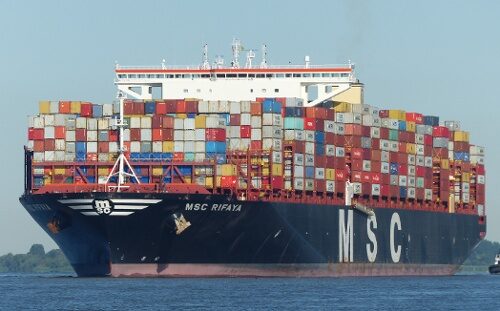
GENEVA : Who will buy ZIM? Calcalist has learned that the Swiss shipping company MSC, fully owned by the Aponte family and considered the world’s second-largest shipping company, has submitted a bid to ZIM’s board of directors to acquire the Israeli shipping company. MSC has now emerged as the leading contender, alongside Germany’s Hapag-Lloyd, which has also already submitted a bid.
Hapag-Lloyd, considered the fifth-largest shipping company globally by container capacity, is traded on the Frankfurt Stock Exchange at a market value of approximately €21 billion. Among its shareholders are investment arms linked to Qatar, which holds 12.3% of the shares, and Saudi Arabia, with a 10.2% stake. This ownership structure may be connected to ZIM’s 5.5% share-price decline on the New York Stock Exchange last Friday, following several consecutive days of gains.

Capital-market sources estimate that the decline reflects rising investor concerns that the Israeli government, particularly the Ministry of Transportation, may intervene to block the sale of ZIM, which currently has no controlling shareholder, to foreign entities. These concerns intensified after ZIM Workers’ Union chairman Oren Caspi met on Thursday with Transportation Minister Miri Regev and conveyed employees’ opposition to a sale to foreign companies.

According to the union, such a transaction could pose a national-security risk and harm Israel’s supply chain by granting Saudi or Qatari interests indirect influence over what it describes as the country’s maritime lifeline. The union further argues that ZIM is the only shipping company that maintained regular service to Israel during periods of war and that it directly employs around 1,000 workers in Israel.

The workers note that roughly 98% of Israel’s trade, by weight, depends on maritime transport. They argue that “ZIM was the only shipping company that called at Israeli ports during the Swords of Iron war, delivering food, medicine, ammunition, and critical military equipment,” and warn that “once control passes to hostile foreign entities, the country will completely lose this capability.”

Shipping-industry sources dispute this claim, noting that Hapag-Lloyd also continued to sail to Israel during the war and transported goods to Israeli ports. Industry estimates suggest that, beyond security considerations, ZIM employees are also concerned about potential layoffs should a foreign buyer acquire the company and consider relocating its headquarters abroad. As a result, the workers are demanding that the state exercise the powers granted to it through its golden share and prevent the sale of ZIM to foreign entities.

Transportation Minister Regev expressed sympathy with the union’s concerns and, according to sources familiar with the matter, even pledged to raise the issue for discussion at a cabinet meeting. However, the sale of ZIM was not discussed at the cabinet meeting held on Thursday evening. Regev attended only part of the meeting due to other personal commitments.

ZIM is currently conducting a structured sale process led by the investment bank Evercore. The process was launched several months ago after ZIM CEO Eli Glickman, together with Rami Ungar, Kia’s importer to Israel and owner of Ray Shipping, submitted a bid to acquire the company. That bid was rejected after the board determined it was lower than ZIM’s cash holdings.

Following the rejection, the board decided to initiate an orderly process to solicit acquisition offers. At this stage, the leading bids are from MSC and Hapag-Lloyd. Industry sources believe that Glickman and Ungar have not yet said their final word and may return with an improved offer. Should the two ultimately acquire the company, it is estimated that ZIM employees would not be adversely affected.

Alongside the sale process, ZIM’s board is preparing for a shareholder vote scheduled for next week on the election of a new board of directors. A group of Israeli shareholders, including More Gemel, Reading Capital, and Sparta, owned by Alon Gonen, founder of fintech company Plus500, has nominated three new board candidates, despite their lack of experience in the shipping sector.

The group holds approximately 8% of ZIM’s shares and is seeking to persuade additional Israeli institutional investors to support its slate, with the goal of replacing the current board chaired by Yair Seroussi, the former chairman of Bank Hapoalim.

Geopolitical Risks increasingly drive Deteriorating Shipping Outlook : Fitch Ratings

NEW YORK: Geopolitical and policy risks have become bigger drivers of our ‘deteriorating’ 2026 outlook for the global shipping sector than underlying industry fundamentals, Fitch Ratings says. These risks include potential tariff-related escalation; other protectionism-driven tensions such as port fees; the possible resumption of Red Sea transits; a potential conflict in Venezuela; and increasing competition for control of shipping value chains.

We expect container-shipping performance to weaken in 2026, according to Global Shipping Outlook 2026, as lower freight rates resulting from a weakened supply-demand balance will lead to lower profits, alongside the risk to freight rates from a potential resumption of Red Sea transits. We expect regional variations, with container trade to North America remaining particularly weak compared with other regions.

The container order book, at about 30% of the existing fleet, is at its highest level in more than 10 years. This reflects continuing new orders to replace ageing fleets and to upgrade vessels to multi‑fuel capability to meet emissions‑reduction targets, as well as capacity growth. As a result, we expect supply to exceed demand; however, we also expect partial mitigation through increased fleet idling (from about 1% currently), blank sailings, scrapping and slow steaming.

Tankers should continue to perform well, particularly crude tankers, due to growth in end demand and tonne-miles. Seaborne oil trade grew in 2025 due to higher production by OPEC+ and non-OPEC+ producers, leading to about a 3% supply increase, with the same expected in 2026. The rise in tonne-miles related to oil exports from Russia, and Red Sea disruption has kept overall demand for tankers high.

We expect weak performance in the dry-bulk segment but volumes should be stable year on year. Order books remain healthy, at close to 11% and 16% of the existing fleet for dry bulk and tankers, respectively, which are needed to replace the ageing fleets. Further significant growth is limited by the shortage of yard slots for new orders over the next three years.

We expect performance across other segments, such as liquefied natural gas shipping and car carriers, to remain broadly stable.

A further increase in trade protectionism could also alter trade flows and limit demand for certain high-margin or critical products in the medium term. Some new trade lanes could strengthen to offset those more affected by tariffs, but we believe protectionism is overall negative for the shipping industry.

Emissions regulations have developed further and there is better visibility over the International Maritime Organisation’s longer-term plan through the Net-Zero framework, although it is yet to be approved. These regulatory developments are likely to put pressure on shipping companies’ margins in the medium term, and the extent of pass-through is not yet known.

Fitch Report shipping supply demand Geopolitical Risks increasingly drive Deteriorating Shipping Outlook : Fitch Ratings

Source: Fitch Ratings

Baltic strengthens its presence in Shanghai as Maritime London hosts inaugural UK-China Shipping Forum

LONDON: Maritime London, the UK’s industry-led body for maritime professional services, hosted the inaugural UK-China Shipping Forum on 4 December at Shanghai’s Jinmao Tower as part of Pudong International Shipping Week 2025. The event brought together senior figures from across the global maritime sector for wide-ranging discussions on regulation, trade, technology and decarbonisation, and marked a strengthened presence for the Baltic in China.

Organised in partnership with Silverstream Technologies and supported by the UK Department for Business & Trade, Beyond Shipping, the China Shipping Association of London and Xinde Marine, the forum explored how the sector is adapting to increasingly complex commercial and regulatory pressures. Maritime London Chief Executive Jos Standerwick said the day served as “a physical example of how China and the UK can collaborate” at a time when the industry is navigating both uncertainty and opportunity.

Following welcoming remarks from Henry Oliver of the UK Department for Business & Trade, Ms Liu Xiaodan of the Shanghai Pudong New Area Commission of Commerce delivered the opening address. Presentations from Xu Chen of Xinhua Indices and Mark Assaf of UNCTAD provided insights into international shipping centre competitiveness and the newly released Maritime Transport Report 2025.

The Baltic featured prominently, with Jin Yu Cheong, Head of Baltic Asia, joining Jos Standerwick, Mark Assaf, Janice Lee of Hill Dickinson and Vineet Puri of Citi on the panel “Navigating regulatory and trade uncertainties”. The group examined how freight markets, contracts, maritime labour and vessel financing are adjusting to rapid regulatory and geopolitical shifts, highlighting the Baltic’s role in providing trusted benchmarks and market insight in uncertain conditions.

The second session, moderated by former ICS Secretary General Guy Platten, focused on the role of Energy Efficiency Technologies in the transition to alternative fuels. Silverstream CEO Noah Silberschmidt outlined how the company’s air lubrication system is generating independently verified efficiency gains and extended commercial life for vessels.

The forum concluded with a networking reception overlooking the Shanghai skyline.

Beyond the forum, the Baltic continued to make its presence felt in Shanghai. At the invitation of Guotai Futures, Ying Sun, Assistant to the Baltic Chief Representative, delivered a presentation at the company’s FFA event during Pudong Maritime Week, addressing an audience of around 100 market participants. The session offered an opportunity to provide an update on the Baltic’s indices and growing role in the Asia-Pacific market.

Together, these engagements highlight the Baltic’s deepening ties with China’s maritime community and its commitment to supporting transparent, data-driven markets across the global shipping ecosystem.
Source: Baltic Exchange

Toll Group launches Singapore’s first electric decarbonisation hub

SINGAPORE: Toll Group, a leading global transportation and logistics provider, is accelerating the decarbonisation of maritime logistics with the launch of Singapore’s first decarbonisation hub* dedicated to electric supply vessels. This 12-month proof of concept, developed in partnership with Yinson GreenTech, sets a new benchmark for smart, safe, and sustainable port operations aligned with Singapore’s Green Plan 2030 and Toll Group’s commitment to achieving global net-zero ambitions.

The initiative is expected to cut emissions by up to 80% per trip, saving more than a tonne of CO₂ per trip, while optimising vessel movements and leading to overall improvements in operational efficiency.

“This project will deliver real-world data and insights to guide future regulations and accelerate innovation across Asia,” said Jonathon Kottegoda-Breden, President Asia Logistics, Toll Group. “By establishing Singapore’s first decarbonisation hub dedicated to electric supply vessels, we aim to enable broader adoption of green maritime technologies, reduce fossil fuel dependency, and cut emissions throughout the region.”

The hub integrates electric marine transport, smart warehousing, and efficient cargo trucking into a digitally connected end-to-end operation. Real-time coordination ensures clean, responsive logistics and service levels for customers in one of the world’s most dynamic logistics hubs.

“Singapore is a critical growth engine for Toll, and this launch reflects our commitment to building smarter, cleaner supply chains,” continued Jonathon Kottegoda-Breden. “We’re pioneering a blueprint for sustainable maritime logistics across Asia.”

Purpose-built charging infrastructure and smart cargo handling equipment will maximise uptime and ensure predictable turnarounds for time-sensitive cargo. Digitally verified processes will guarantee fast, safe, and efficient transfers.

“By integrating electric vessels with smart infrastructure and digital processes, we’re showing how sustainable solutions can deliver both operational efficiency and significant emissions reductions,” added Rajeev Sood, Executive Vice President – Energy, Marine & Renewables, Asia Logistics, Toll Group.

Strategically located near Changi Airport and Singapore’s Eastern Anchorages, the hub enables rapid air-sea connectivity, efficient trailer access, and consolidated warehousing, reinforcing Singapore’s position as a forward-looking logistics hub for the region.

As Toll advances this next phase of sustainable logistics, the company remains committed to helping move the businesses that move the world.

The launch was marked by a media and customer event featuring a ribbon-cutting ceremony and an exclusive product tour, giving attendees a first-hand look at the hub’s advanced infrastructure and electric vessel technology.
Source: Toll Group

Somali piracy surge: Update & guidance

After several years of relative calm, piracy activity off Somalia has flared again since late October, with coordinated pirate action groups operating far offshore in the Somali Basin and adjacent Indian Ocean. The most serious event occurred on 6 November 2025, when the Malta flagged tanker HELLAS APHRODITE was fired upon and boarded approximately 560 nm southeast of Eyl. The crew followed contingency procedures and remained secured in the citadel. On the afternoon of 7 November, EU NAVFOR Operation ATALANTA forces, led by ESPS VICTORIA, executed a coordinated show of force; the pirates abandoned the tanker, and all 24 crew members were confirmed safe and uninjured. Authorities assessed the surrounding area’s threat level as critical and commenced an intensive search for the mothership dhow, believed to be supporting long range attacks. Subsequently, ATALANTA reported taking control of the dhow with support from regional partners, further disrupting the group’s operations.

Current threat picture
Industry analysis and official reporting indicate that pirates have retained the capability to operate 300–600 nm offshore, and under favourable conditions, up to ~800–1,000 nm.

This resurgence follows notable cases over 2023–2024 (including MV RUEN and MV ABDULLAH) and is occurring amid periods when regional naval assets are committed elsewhere (e.g., Red Sea tasking), creating windows of opportunity for long range operations. The International Maritime Bureau (IMB) has also highlighted a broader rise in incidents across 2025 and continues to stress the importance of crew safety and the need for consistent reporting.

What MISTO and BMP MS mean for voyage planning
The Maritime Industry Security Threat Overview (MISTO, 26 Nov 2025) provides a consolidated, factual description of prevailing maritime threats, including Somali pirates in the Northwest Indian Ocean, framed in terms of capability, intent, and opportunity. MISTO is designed to be read in conjunction with BMP Maritime Security (March 2025), which replaces earlier regional BMP guidance with a global threat and risk framework.

In practical terms, operators should ensure that voyage specific risk assessments explicitly consider the current Somali Basin threat picture, confirm the ship’s hardening and watchkeeping posture, and formalise UKMTO/MSCIO registration and daily reporting. BMP MS also provides structured guidance for incident response and post incident procedures, including evidence preservation that can be material to later claims defence.

AIS policy remains a company and flag state decision. U.S. MARAD currently advises U.S.-flagged vessels to turn off AIS in the Red Sea, Gulf of Aden and Somali Basin unless safety considerations dictate otherwise, while recommending AIS use in the Persian Gulf. Non-U.S. operators should follow flag state and company policy, balancing deconfliction needs with targeting risk.

Regardless of AIS or other security settings, vessels should ensure they have multiple reliable communication options and consistently report their position and status to the relevant authorities during high-risk transits.

Author:

Ruby Hassan Somali piracy surge: Update & guidance

Ms.Ruby Hassan, Vice President, Global Head of Claims Transformation, ruby.hassan@skuld.com