Home Blog Page 537

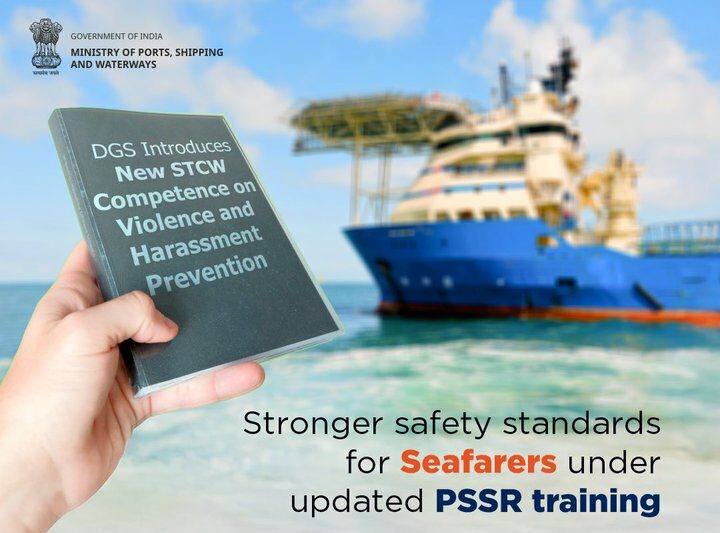
India Strengthens Seafarer Safety Training with New Competence on Violence and Harassment Prevention

MUMBAI: The Directorate General of Shipping (DGS) has taken a significant step toward enhancing crew welfare and workplace safety at sea by issuing Circular No. 53 of 2025, introducing a new training competence to address violence, harassment, bullying, sexual harassment, and sexual assault in the maritime sector.

As part of this new mandate, a three-hour module has been incorporated into the Personal Safety & Social Responsibilities (PSSR) course under Basic Safety Training, aligning with the Standards of Training, Certification and Watchkeeping (STCW) Convention.

The module will be implemented across all Maritime Training Institutes (MTIs) from 15 December 2025, becoming mandatory from 1 January 2026 for all seafarers.

To ensure smooth transition and compliance:

  • MTIs must update their training curriculum to include the new competency module.
  • Seafarers currently ashore are required to complete an e-learning course identified as Course ID 957, as specified by DGS.

The initiative reinforces India’s commitment to global maritime safety norms and aims to foster a workplace culture where seafarers feel safe, respected, and protected against any form of abuse onboard ships.

Industry stakeholders have welcomed the move, noting that stronger behavioural awareness and preventive training are critical in addressing a growing global concern in maritime operations.

With this measure, India continues to uphold its leadership in seafarer welfare while strengthening safeguards for those serving at sea.

CONCOR enhances Karnataka’s Global Trade Connectivity with Multimodal Logistics Strength

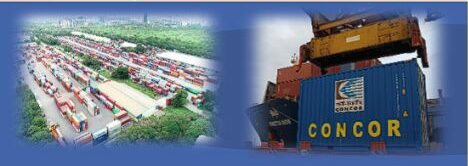
BENGALURU: In a major boost to Karnataka’s logistics and industrial ecosystem, Container Corporation of India Ltd. (CONCOR) has reinforced its multimodal presence across the state through strategic terminals and advanced supply chain offerings. The infrastructure is designed to seamlessly connect Karnataka-based industries with key domestic markets and global trade hubs.

CONCOR Karnataka 1 CONCOR enhances Karnataka’s Global Trade Connectivity with Multimodal Logistics Strength

Anchored by its flagship Inland Container Depot (ICD) at Whitefield, Bengaluru, CONCOR operates scheduled rail services to prominent gateway ports including Jawaharlal Nehru Port Trust (JNPT) in Mumbai, and Chennai Region ports—CCTL, CITPL, Ennore Port and Kattupalli Port. The corporation further offers rail connectivity to its extensive network of terminals across India, enhancing operational flexibility and market reach for shippers.

With growing emphasis on sustainability, CONCOR has deployed eco-friendly LNG-powered trailers for First Mile and Last Mile (FMLM) road logistics, supporting greener cargo movement.

Keeping pace with evolving supply chain needs, CONCOR’s warehousing facilities in Karnataka cater to Exim-Transit, bonded storage, domestic warehousing, open yards, cold chain and distribution requirements. Complementing physical infrastructure, CONCOR’s owned shipping containers facilitate direct international shipping connections to the Middle East and Southeast Asia—empowering exporters with cost-efficient and reliable solutions.

A suite of digital initiatives—such as online e-filing, e-booking, container tracking and mobile applications—underscores the organisation’s focus on Ease of Doing Business. These offerings enhance visibility, speed of operations and customer convenience throughout the logistics cycle.

With its multimodal logistics edge, CONCOR remains committed to delivering end-to-end logistics solutions, enabling Karnataka’s businesses to scale globally with greater efficiency and competitiveness

Government declares Dakshina Kannada a District Export Hub under DEH Initiative

MANGALURU : The Government has designated Dakshina Kannada as a District Export Hub under the Districts as Export Hubs (DEH) initiative, with seafood and cashew added as potential export products. This recognition underscores the district’s strong export potential and aligns with ongoing efforts to promote balanced and sustainable economic growth across the country. The identified focus areas under this initiative are expected to further strengthen local industry, enhance value-added activities, and expand market opportunities for enterprises in the region. The designation is aimed at fostering increased participation in global trade and supporting long-term development within the district.

Support for Exporters Facing Logistics Disruptions: Under the DEH initiative, the Government has undertaken multiple measures to enhance logistics efficiency and mitigate vulnerabilities arising from international supply chain disruptions and freight volatility. Key interventions include:

  1. District Export Action Plans (DEAPs): Identification of logistics gaps such as connectivity issues, warehousing deficits, packaging, and testing infrastructure, with targeted recommendations for district-level improvements.
  2. Operationalisation of SEPCs and DEPCs: State and District Export Promotion Committees facilitate coordinated action among district authorities, customs, logistics providers, MSME bodies, and industry associations to resolve logistics issues promptly.
  3. Infrastructure & Logistics Enhancement: Measures include improving first-mile connectivity, establishing common facility centres, enhancing warehousing and testing facilities, and strengthening linkages to ports and dry ports.
  4. Promotion of E-commerce Exports: Partnerships with platforms such as Amazon, Shiprocket, and DHL provide MSMEs with cost-effective courier and small-consignment shipping alternatives to buffer against freight rate volatility.
  5. Dak Ghar Niryat Kendras (DNKs): Expansion of postal export facilities for documentation, packaging, and small-parcel shipments, providing alternative channels during logistics disruptions.
  6. Capacity-Building & Outreach: DGFT Regional Authorities and district administrations conduct exporter awareness programs on logistics planning, export procedures, packaging norms, and compliance requirements.
  7. Monitoring of Export Performance: District-wise export data is regularly analysed to identify emerging challenges and enable responsive interventions.

Under the Districts as Export Hubs (DEH) initiative, the Government is undertaking a structured process to identify and address district-specific export bottlenecks, including those relating to logistics, connectivity, and warehousing. For the Dakshina Kannada district, a District Export Action Plan (DEAP) has been formulated, highlighting requirements for improved export infrastructure, including enhanced first-mile linkages to New Mangalore Port, augmentation of warehousing and consolidation facilities, and support infrastructure for identified export products.

Further, a District Export Promotion Committee (DEPC) has been constituted to facilitate coordinated action among district authorities, exporters, the port authority, customs, logistics agencies, and relevant State and Central departments. Through this mechanism, infrastructure-related requirements identified in the DEAP—including port-connected warehousing and logistics support—are being taken up with the concerned implementing agencies for appropriate consideration.

The DEH initiative serves as a facilitative and consultative framework to ensure that district-level export requirements are aligned with ongoing and proposed infrastructure development efforts in the region, including those associated with New Mangalore Port, thereby strengthening the overall export ecosystem in Dakshina Kannada district.

The Districts as Export Hubs (DEH) initiative serves as a facilitative framework aimed at strengthening district-level export potential and supporting local value-chain development.

The initiative supports retention of value-chains locally through awareness as below:

• District Export Action Plans (DEAPs): Identification of value-chain gaps in processing, packaging, testing, and logistics.

• Institutional Coordination: DEPCs/SEPCs facilitate convergence between authorities, exporters, and relevant agencies to address bottlenecks.

• Infrastructure and Capacity-Building Facilitation: Warehousing, common facility centres, testing labs, training, and market access support are promoted to reduce dependency on intermediaries.

NHAI signs MoU with Reliance Jio to deploy Telecom-based Safety Alert System across National Highways

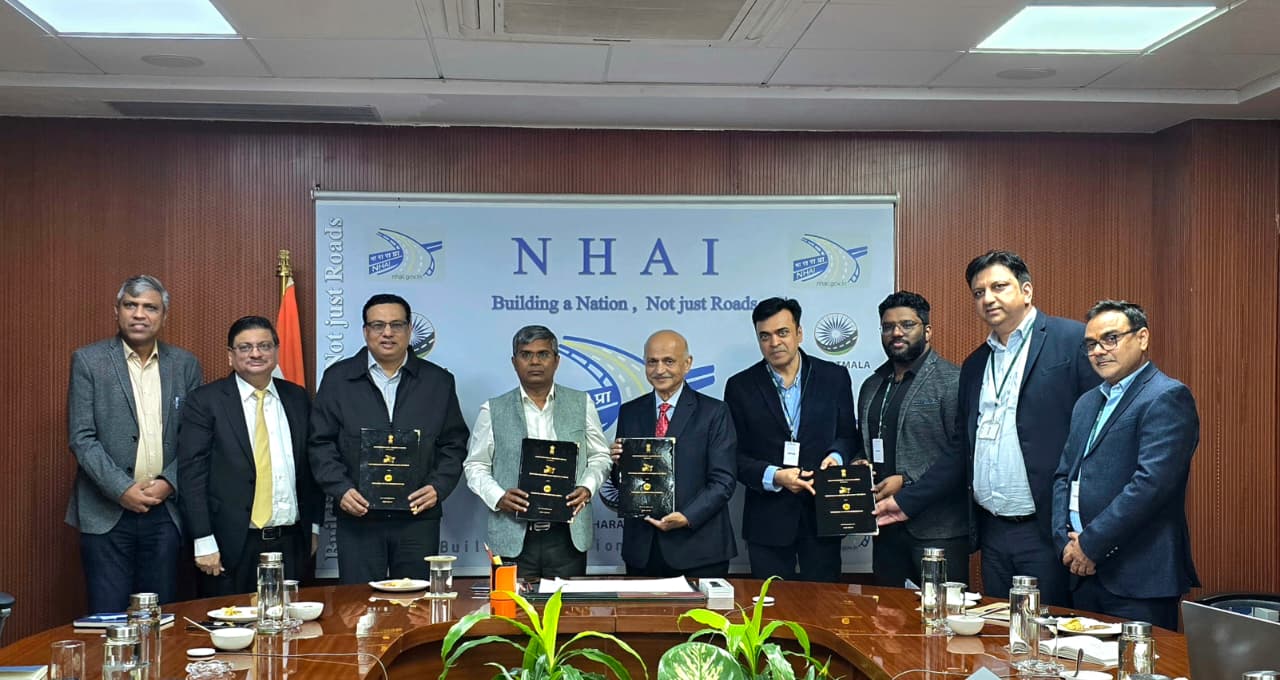
NEW DELHI : To enhance safety and offer seamless travel experience on National Highways, NHAI has signed a Memorandum of Understanding (MoU) with Reliance Jio to introduce a telecom-based safety alert system across National Highway network. Using Jio’s existing 4G and 5G network, travellers will receive advance warnings on their mobile phones as they approach identified risk locations such as accident-prone stretches, stray-cattle zones, fog-affected areas and emergency diversions.

The initiative aims to strengthen road-safety by providing timely information to National Highway users, enabling them to adjust speed and driving behaviour well in advance. Alerts will be sent through SMS, WhatsApp and high-priority calls to National Highway users. The system will be integrated in a phased manner with NHAI’s digital platforms, including ‘Rajmargyatra’ mobile application and emergency helpline number 1033.

The automated system will work for all Jio mobile users on or near the National Highways and will provide early warning to National Highway commuters before they enter a hazardous zone. The solution will use existing telecom towers and can be deployed quickly, without additional roadside hardware. This strategic partnership shall leverage Jio’s digital infrastructure – serving over 500 million subscribers in the country.

Commenting on the initiative, NHAI Chairman Shri Santosh Kumar Yadav said, “This initiative marks an important step forward in providing timely and reliable information to commuters, enabling them to make informed decisions and adopt safer driving practices well in advance. I am sure that this initiative will set a new benchmark in technology-enabled road safety management on National Highway.”

Mr. Jyotindra Thacker, President, Reliance Jio, stated that the initiative uses the reach of Jio’s telecom network to deliver timely safety alerts at scale, contributing to safer and more informed National Highway travel.

The initial pilot deployment of the initiative will support risk-zone identification and alert thresholds under few regional offices in NHAI. The initiative will fully comply with all applicable regulatory provisions and data-protection requirements.

NHAI will take similar exercise with other telecom service providers also. By combining robust digital infrastructure with real-time communication tools, the initiative will help to significantly enhance commuter awareness and reduce preventable road incidents. NHAI remains committed to adopt innovative, scalable solutions that will enable safer, smarter and more efficient National Highway travel across the country.

DPIIT recognises 1,97,692 startups under Startup India Initiative

NEW DELHI : The Department for Promotion of Industry and Internal Trade (DPIIT) has recognised 1,97,692 entities as startups under the Startup India initiative as of 31st October 2025. These recognitions have been granted in accordance with the eligibility conditions prescribed under G.S.R. Notification 127(E) dated 19 February 2019, which outlines the criteria for entities to be classified as startups.

As on 31st October 2025, 6,385 recognised startups are categorized as closed (i.e., dissolved/struck-off), as per the Ministry of Corporate Affairs (MCA) [basis data shared on 11th November 2025]. The State/Union Territory (UT)-wise number of entities which are categorized as closed (i.e., dissolved/struck-off) are placed as Annexure-I.

The Government has not observed any increase in startup closures. Closures that do occur are generally influenced by factors such as the viability of the business model, alignment with market demands, domestic and global economic conditions, the nature of products and services developed, the ability to attract funding, and other business specific considerations.

Startup India is an initiative of the Government of India. Under Startup India initiative, the Government is implementing three flagship Schemes, Fund of Funds for Startups (FFS), Startup India Seed Fund Scheme (SISFS), and Credit Guarantee Scheme for Startups (CGSS) to provide funding opportunities and support startups across sectors at various stages of their business cycle.

FFS has been established with a corpus of Rs. 10,000 crore to catalyze venture capital investments and is operationalized by Small Industries Development Bank of India (SIDBI), which provides capital to Securities and Exchange Board of India (SEBI)-registered Alternative Investment Funds (AIFs) which in turn invest in startups. The amount committed and disbursed to AIFs in calendar years 2023, 2024, and 2025 as on 31st October 2025 are placed as Annexure-II.

SISFS provides financial assistance to seed stage startups through incubators. SISFS is implemented from 1st April 2021 with a corpus of Rs. 945 crore. The amount approved and disbursed to incubators in calendar years 2023, 2024, and 2025 as on 31st October 2025 are placed as Annexure-III.

CGSS is implemented for enabling collateral free loans to startups through eligible financial institutions. CGSS is operationalized by the National Credit Guarantee Trustee Company (NCGTC) Limited and has been operationalized from 1st April 2023. The amount of loans guaranteed to startup borrowers in calendar years 2023, 2024, and 2025 as on 31st October 2025 are placed as Annexure-IV.

GIFT City on fast track after bid for 2030 CWG

GANDHINAGAR : GIFT City,Gandhinagar is expanding rapidly post-2030 Commonwealth Games bid, focusing on infrastructure and residential development to attract more residents.

Ahmedabad’s successful bid for the 2030 Commonwealth Games last week has renewed attention on GIFT (Gujarat International Finance Tec) City, a central business district in Gujarat’s Gandhinagar district

The idea to build an international financial centre on a greenfield site was conceived in 2007 by the then Gujarat chief minister Narendra Modi. After initial years of slow growth and setbacks, the government converted GIFT into a fully state-owned company.

By 2011, the state had carved out a contiguous 3-sq-km (900-acre) plot along the Sabarmati and laid down the physical foundations—wide roads, a riverfront edge and perhaps the country’s most advanced underground utility systems.

The decisive shift came in 2020, when the Centre created the International Financial Services Centre Authority (IFSCA), a unified regulator for banking, insurance, funds, aircraft leasing and other offshore financial activity.

About 25 buildings are now operational and almost fully occupied, bringing roughly 27,000 people into the city each day. Another 37 towers are under construction. For now, GIFT remains primarily a workplace rather than a place where people live, but that is beginning to change. Around 930 homes have been delivered and more than 7,000 are under construction.

Yogesh C Bhavsar, president of the National Real Estate Development Council (Gujarat), said that with Ahmedabad’s real estate market now nearly 60–70% saturated, the combination of upcoming global events, the growth of foreign university campuses, and steady organic urbanisation will accelerate GIFT City’s next phase of expansion.

“The long-term target is to eventually accommodate a density of about 250,000 people per square kilometre, comparable to Navi Mumbai’s,” said Loveleen Garg, chief planner and vice president (Planning), GIFT City.

With the hard infrastructure set in place, GIFT is investing in public spaces to attract residents. A 27-acre Central Park is under development along the extended riverfront. It will feature courts for soccer, box cricket, pickleball and basketball, a golf driving range, jogging and cycling tracks, plazas, lawns and an amphitheatre. A dedicated food zone with restaurants and kiosks is also planned to draw workers and residents into shared spaces.

Hiran Shah, who runs Capital Russian Bakery in GIFT City, said the demand for retail spaces is now rising. “We see one or two new families moving in every day. Currently, the two occupied residential towers—Shobha and SJ Sangath—are around 30% full. Most of my customers are office-goers,” he said. Shah travels 55 km daily to reach his bakery from Ahmedabad’s Shilaj area.

Upendra Sagar, a State Bank of India employee who drives from Gandhinagar, said, “People mostly come in the morning and go back in the evening as there isn’t much to stay back for yet”.

He said the neighbourhood has “very few cafés” and there is hardly any street life . “ Most of my colleagues are from outside Gujarat. Sagar said he isn’t considering shifting to GIFT for now, but after five years, when all the social amenities are in place, he hopes more people will shift to GIFT City.

Officials say improved connectivity will transform GIFT into a bustling, compact city over the next few years. Two new metro stations have been sanctioned as part of the Ahmedabad–Gandhinagar line extension, and a direct road link to the airport is expected to bring travel time down to about ten minutes. GIFT will also connect to the Sabarmati high-speed rail terminal, and once the Mumbai–Ahmedabad bullet train becomes operational, officials estimate that travel between GIFT and the Bandra-Kurla Complex could be about two hours and fifteen minutes.

What sets GIFT apart is its carefully engineered, below-ground infrastructure. Beneath the surface runs an underground utility tunnel—described by officials as the city’s “nervous system”—carrying power cables, fibre, potable and recycled water, district cooling pipelines and automated waste ducts. About 5.5–5.7 km of the planned 16 km tunnel is complete. All repairs occur inside the tunnel, keeping the surface “completely digging-free,” said Anil Parmar, Vice President (Engineering).

At its core, GIFT’s IFSC is also taking shape as the offshore financial district it was envisioned to be. The zone now hosts 35 global banks and a rapidly expanding fund ecosystem with 320 investment funds managed by 97 fund managers.

“Entities operating out of the IFSC have raised more than $58 billion for India so far,” said K Rajaraman, chairman of the IFSCA and former Union finance secretary. The tax architecture—including a 10-out-of-15-year income-tax holiday—is “aligned with Singapore”, he added.

The masterplan permits 62 million sq ft of built-up space; about 10% is currently active, but development rights for nearly half the total capacity—29.47 million sq ft—have already been allotted. “Based on ongoing work, we expect about 50 % of the entire project’s capacity to be physically built within three years,” said Nisarg Acharya, head of commercial at GIFT City company limited.

Source : HT

Large increase in new tariffs but also measures to ease global trade : WTO

GENEVA : The value of global goods imports affected by new tariffs and other import measures increased more than fourfold from mid-October 2024 to mid-October 2025 compared to the prior 12-month period, marking the highest coverage in over 15 years of WTO trade monitoring, according to the WTO Director-General’s latest annual overview of developments in the international trading environment. At the same time, WTO members introduced trade-facilitating measures on both imports and exports, covering one-and-a-half times more trade than the previous period, and were pursuing dialogue more than retaliation.

Imports worldwide worth USD 2,640 billion, or 11.1 per cent of total imports, were affected primarily by tariffs along with other trade measures introduced between mid-October 2024 and mid-October 2025 – more than four times the USD 611 billion coverage recorded in the preceding period. Including similar measures on exports, the total trade affected was worth about USD 2,966 billion (more than three times the USD 888 billion recorded in the previous report).

Over the same period, WTO members and observers also introduced a large number of new trade-facilitating measures on goods – 331 in total – covering trade estimated at USD 2,090 billion (approximately 1.5 times higher than the USD 1,441 billion recorded in the last report).

“The sharp jump in the trade coverage of tariffs reflects the increased protectionism we have seen since the start of the year. Nearly a fifth (19.7 per cent) of world imports are now affected by tariffs and other such measures introduced since 2009 – compared to 12.6 per cent only a year ago,” noted WTO Director-General Ngozi Okonjo-Iweala. “At the same time, we see members acting to facilitate trade and engaging in dialogue rather than retaliation. This speaks to the value they continue to see in maintaining smooth cross-border trade flows. WTO members should use the current trade disruptions to advance long-overdue reforms of the WTO. Members have an opportunity to tackle some of the underlying concerns linked to recent unilateral measures, while repositioning the WTO to better help them seize exciting new trade opportunities.” Her remarks are available here.

WTO economists estimate world merchandise trade growth at 2.4 per cent in 2025 and at 0.5 per cent in 2026, with stronger-than-expected trade growth in the first half of 2025 driven by import frontloading, strong demand for AI-related products, and continuing trade growth among most WTO members, particularly developing economies.

During the review period, WTO members initiated 32.3 trade remedy investigations per month -just below the 2024 peak of 37.3 per month. While trade remedy investigations do not necessarily lead to the imposition of measures, a higher number of initiations of investigations often signals a potential increase in measures imposed. The average number of trade remedy terminations was 11.4 per month – amongst the lowest level since 2012, suggesting that many trade remedy actions remain in place. Trade remedy actions – particularly anti-dumping measures – remain a key trade policy tool for many WTO members, accounting for 46.5 per cent of all trade measures on goods recorded in this report.

On services, WTO members introduced 124 new measures between mid-October 2024 and mid-October 2025, a level broadly consistent with recent years. Most were aimed at facilitating trade or improving regulatory frameworks. Over half of these measures were applied across most sectors. Of these, one half impacted services supply through commercial presence (also known as “mode 3”) and around a quarter through the movement of professionals (known as “mode 4”). Additionally, a fifth of the new measures targeted the Internet and other network-enabled services.

During the review period, WTO members introduced an increased number of general economic support measures, many of which were linked to key sectors such as the environment, energy and agriculture. The report notes a possible shift toward non-financial interventions and the pursuit of broader strategic policy objectives.

WTO members continued to raise trade concerns in WTO committees and bodies throughout the review period, most of which related to measures or policies implemented by their peers. WTO committees remained important platforms for addressing trade-related issues, enabling members to engage on actual or potential areas of friction, the report finds.

“Overview of Developments in the International Trading Environment” reports on monitoring have been published continuously since 2009, pursuant to Paragraph G of the Trade Policy Review Mechanism mandate in Annex 3 to the WTO Agreement. Issued under the responsibility of the Director-General, these reports aim to assist the Trade Policy Review Body in analysing the impact of international trade developments on the multilateral trading system.

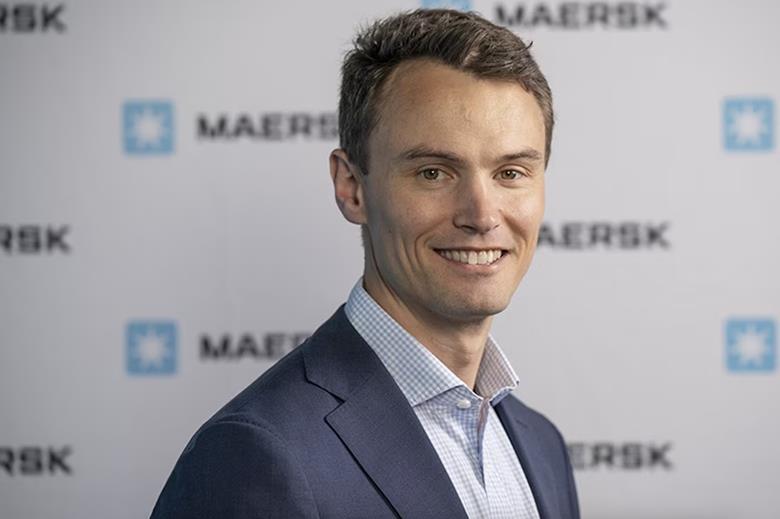
Maersk announces Christopher Cook as new UK and Ireland MD from January 2026

COPENHAGEN : Maersk has announced that Christopher Cook, currently Managing Director of its India, Bangladesh and Sri Lanka (IBS) area, will take over as the new Managing Director of UK and Ireland area at the start of the new year.

The British national joined Maersk as a trainee in 2002 and has worked over the last two decades across Africa, Europe, the Middle East and India with both Damco and Maersk.

Cook has spent the last seven years in the IMEA region, initially as managing director in the UAE area, successfully leading the integration and transformation of the business there.

Most recently, he served as managing director for the IBS area where he operationalised the long-term strategy for the region, deepened the operational execution capability and lifted the profitability with successful growth across the portfolio, the group said.

”I am very pleased to welcome Chris to our region Europe leadership team as our new head of UK and Ireland area,” said Aymeric Chandavoine, EVP and President for Europe at Maersk.

”Chris is no stranger to the UK and brings a strong customer focus.

”He is also known for his passion about people and developing strong culture in the organisations he leads,” he added.

With Cook moving on, Maersk has appointed Thomas Theeuwes as its new managing director for India, Bangladesh and Sri Lanka, also effective 1 January 2026.

Theeuwes brings nearly two decades of global expertise to the role, most recently serving as managing director of the West Africa area since 2024.

”It is with great pleasure that I welcome Thomas to his new role in one of our most important markets,” said Richard Morgan, managing director of the Indian subcontinent, Middle East, and Africa.

”Thomas is a seasoned leader, and his experience from various parts of the world will aid our growth in this region.”

Theeuwes said called the IBS markets ”extremely exciting” and said they offer great growth potential.

”I am excited to work closely with our talented team here,” he enthused.

”Together, we will strengthen Maersk’s position as a trusted logistics partner for our customers while driving solutions that create value for them and our stakeholders.

Morgan also recognised Cook’s “significant contributions” as he moved onto his new role.

“Christopher has been pivotal in operationalising our long-term strategy and delivering exceptional growth across India, Bangladesh, and Sri Lanka,” he outlined.

”His leadership has positioned us strongly for the next phase of development, and we look forward to his continued success in his new role.”

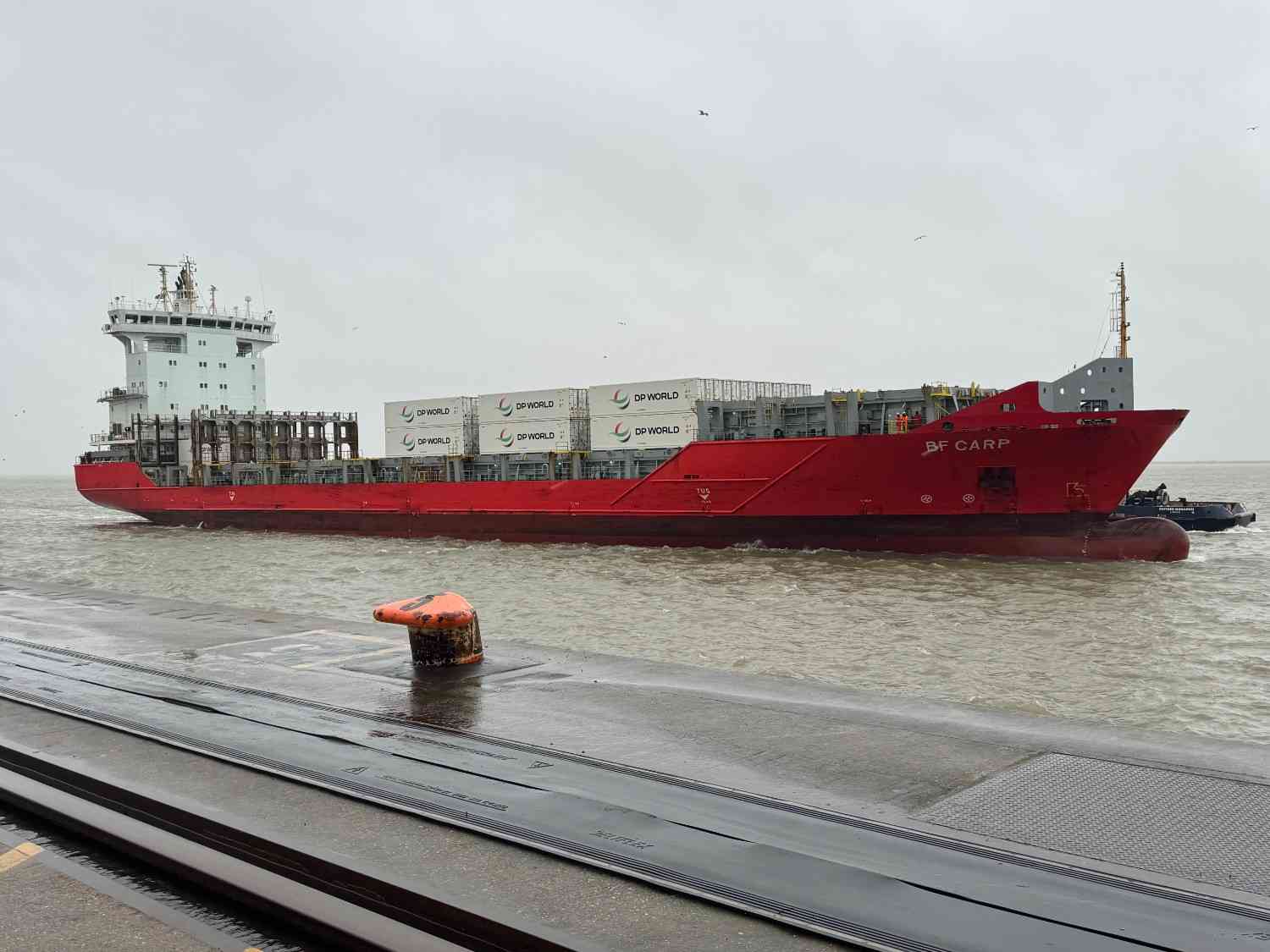
DP World’s first Atlas Service arrives in the UK from Morocco

LONDON: DP World’s first ever Atlas service has arrived at London Gateway, revolutionising fresh produce logistics between Morocco, the UK and Europe.

The maiden service, which is also bound for DP World-owned terminal Antwerp Gateway, berthed at London Gateway on 1 December. This new dedicated sea route will transform the way fruit and vegetables are transported to the UK and Europe – delivering fresher produce faster and at lower cost, while slashing carbon emissions by up to 70%.

By shifting up to 150,000 tonnes of fresh produce annually from road to sea, the service offers a scalable, sustainable logistics solution that reduces emissions by up to 250kg CO₂/ton-km.

Rashid Abdulla, MD and CEO of DP World Europe, said: “The launch of our first Atlas service from Agadir marks a major step forward in sustainable logistics. This tailor-made solution combines speed, reliability and digital transparency to deliver better quality produce to retailers and consumers – while helping our customers meet climate goals.”

Each weekly sailing will transport tomatoes, blueberries, peppers and citrus from Morocco’s key growing regions to UK and EU retail networks.

Unlike traditional trucking routes that span over 3,000km the Atlas service ensures a smoother, safer journey for produce. The use of DP World’s Unifeeder vessels and 1,250 brand new 40’ high cube refrigerated containers (reefers) guarantees freshness and condition upon arrival.

To support the service, DP World has invested in 1,000 x 40’ high-cube and 750 x 20’ dry containers, ensuring capacity for both fresh and general cargo. Full visibility is provided via a state-of-the-art digital platform, offering true end-to-end supply chain transparency. The southbound service sails from London Gateway to Antwerp Gateway on to Casablanca and back to Agadir.

Morocco currently exports over 1.1 million metric tonnes of fruit and vegetables annually to Western Europe, with volumes growth expected at more than 10% year-on-year. The Atlas service is designed to meet this rising demand while supporting Morocco’s position as a leading exporter of high-quality produce.

Ben Coleman MP, UK Trade Envoy to Kingdom of Morocco and Francophone West Africa, said: “I welcome the introduction of this maritime link between the UK and Morocco, which is a clear signal of our shared ambition to deepen trade ties. Developing new trade routes is an important part of the UK Government’s growth agenda. This service will strengthen supply chains and unlock export opportunities for UK and Moroccan businesses.”

Claus Larner, Vice President, Perishables, at DP World, said: “Morocco’s export sector is booming but road transport limits its potential. The Atlas Service underlines DP World’s long-term commitment to Morocco and our customers. By integrating ports, ships and digital platforms, we’re creating an unbroken supply chain from field to shelf.”

Built around fixed berthing windows and dedicated reefer capacity, the Atlas Service ensures day-certain arrivals in the UK and Antwerp. Exporters benefit from pre-booked inspection slots, reefer plug-ins and guaranteed terminal access, while importers enjoy streamlined customs and inland logistics from DP World’s terminals.

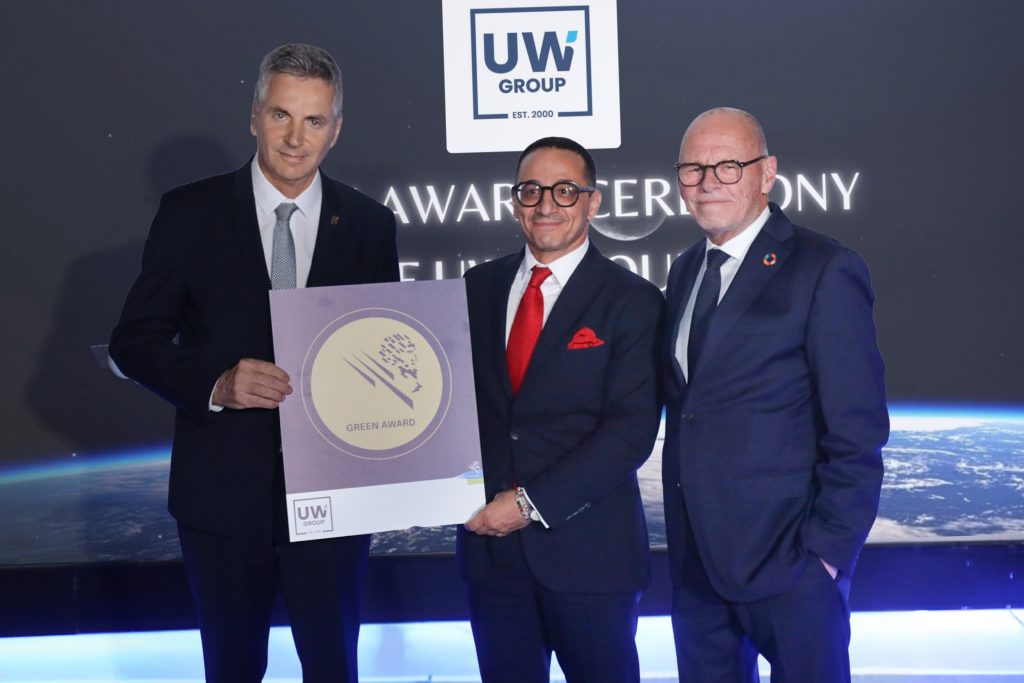
UW Group joins Green Award as Incentive Provider, supporting safety and sustainability in maritime operations

ATHENS: UW Group, a leading maritime service and representation company, as the newest Incentive Provider in the Green Award programme.

Through its companies UMAR Shipping Services and WSR Ship Repairs, UW Group delivers comprehensive technical, supply, and repair solutions to the global shipping industry. The Group provides tailored, reliable, and cost-effective maritime support through its international network of offices.

Under this partnership, Green Award Certificate Holders will enjoy various benefits on equipment and services branded by the UW Group. The offer applies to selected products, such as marine lighting and instrumentation, and underwater services, including hull cleaning, propeller polishing, inspections, and more.

Said Mr. Thrasos Tsangarides, Chief Executive Officer of UW Group. “By aligning with this initiative, we aim to contribute to the industry’s decarbonization efforts, encourage higher standards of performance, and strengthen our role as a partner dedicated to long-term environmental and operational excellence.”

“We are delighted to welcome UW Group as a Green Award Incentive Provider,” said Jan Fransen, Executive Director of Green Award Foundation. “Their global reach, technical expertise, and commitment to sustainability make them a strong partner in our joint mission to promote cleaner, safer, and higher-quality shipping.”

UW Group’s participation enhances the portfolio of incentives available to certified companies and supports the Green Award’s mission to reward front-runners in safety, quality, and environmental performance across the maritime sector, said Capt. Dimitrios Mattheou, Chairman of the Green award foundation.

About UW Group

Founded in 2000, UW Group is a global maritime service provider operating through UMAR Shipping Services and WSR Ship Repairs, with offices strategically located around the world. The Group offers high-quality technical support, equipment, and underwater services to ship management companies worldwide. Guided by its vision “to be better than the promise we keep,” UW Group is committed to excellence, innovation, and sustainability in the maritime industry.