Home Blog Page 539

MoL concluded on establishing a standard design framework utilizing MILES for liquefied CO2 carriers and alternative fuel ships

TOKYO : Mitsubishi Shipbuilding Co., Ltd., a part of Mitsubishi Heavy Industries Group, Imabari Shipbuilding Co., Ltd., “K” LINE, MOL, NYK Line, JMU and NSY have concluded a Memorandum of Understanding (MoU) to establish a standard design framework to efficiently develop and carry out the initial design of liquefied CO2 (LCO2) carriers and next generation alternative fuel ships utilizing decarbonization technologies (such as ammonia fuel) where MILES Co., Ltd. (formerly known as MI LNG Company) as a platform will be responsible to develop and carry out initial design of the ships so that other shipyards in Japan will be able to carry out the functional and production design based on those common initial designs.

Those seven companies, through the establishment of this standard design framework, aim to collaborate with other domestic shipyards to realize the development and initial design of the ships with global competitiveness.

“K” Line, MOL, and NYK Line have decided to invest in MILES to accelerate this cross-industry collaboration in Japan, and will work to promote construction at multiple shipyards in Japan by utilizing this standard design framework.

Furthermore, JMU and NSY have also decided to invest in MILES in order to strengthen such collaboration so that the standard specifications and designs provided by MILES can be widely used in the domestic industry, thereby regaining global competitiveness for the Japanese shipbuilding industry.

Through this MoU, the companies will aim to contribute to the further progress of a sustainable carbon neutral society.

IMO delay could spark fragmentation risks, warns EmissionLink

LONDON : Philippos Ioulianou, Managing Director of EmissionLink, has warned the IMO’s decision to delay its Net Zero Framework is creating a regulatory vacuum that threatens to fragment global shipping decarbonisation efforts.

“What looks like a pause is, in reality, an open door for national governments to move ahead with their own systems,” Mr Ioulianou said. “Instead of gaining clarity, we risk creating a patchwork of unaligned carbon schemes that will make global compliance significantly harder for shipowners.”

Several countries are already moving to fill the void. The UK’s Emissions Trading Scheme (UK ETS) will come into force in June 2026, Turkey is preparing its own version, and Gabon on Africa’s west coast has openly discussed a local carbon levy. According to Mr Ioulianou, more governments are likely to follow, driven as much by fiscal pressures as environmental goals.

“For many governments facing widening budget gaps, carbon pricing offers a quick route to new revenue,” he noted. “Without a unified global framework, carbon markets could become less about decarbonisation and more about balancing the books.”

Mr Ioulianou warns that regionalised systems will multiply reporting formats, verification rules and administrative burdens, creating real operational risks.

“Good luck to the shipowner who gets it wrong. Picture a vessel calling at a West African port, unaware of a newly introduced local regulation. The port authority could detain it for non-compliance and the owner is left footing the bill”, he said.

He added that some owners are already adjusting trade patterns to avoid overlapping schemes. “We’re hearing from Asian owners who are quietly steering clear of certain European routes due to compliance complexity. That should concern everyone.”

Mr Ioulianou also raised concerns about how revenues from emerging national carbon schemes will be used.

“There is no assurance that these funds will flow back into decarbonisation,” he said. “Some governments won’t even know how much they’ll collect until year-end and once the money arrives, the temptation to redirect it to other priorities will be strong.”

With more uncertainty set to continue, Mr Ioulianou urged shipowners to strengthen their approach to monitoring and managing compliance.

“Managing this manually, port by port or across scattered spreadsheets, is no longer realistic,” he said. “Owners need real-time intelligence on regulatory changes and data they can act on — long before they reach the next port of call.”

Mr Ioulianou highlighted EmissionLink’s role in supporting the industry through this shift. “We continuously track global emissions schemes, translating fast-moving regulation into practical guidance. Our aim is to help owners stay compliant, keep trading and avoid being caught out by local policy changes.”

Without decisive action from the IMO, Mr Ioulianou warned, the trend toward regionalisation could become irreversible.

“Every new national scheme makes it harder for the IMO to rebuild a globally aligned approach later,” he said. “Once rules fracture into regional pieces, putting them back together will be extremely difficult.”

“The delay was meant to give the industry time to adapt. Instead, it risks creating confusion, competition and complacency. The world isn’t waiting for a decision, it’s moving ahead, one emissions scheme at a time.”

Source: Hellenic Shipping

Washington State Ferries selects ABB to power their first hybrid-electric newbuild vessels

WASHINGTON: ABB has secured an order with Washington State Ferries (WSF), the United States’ largest ferry operator, to supply and integrate hybrid-electric propulsion systems for two hybrid-electric 160-auto ferries that initiate the owner’s ambitious System Electrification Program1.

With the first two ships scheduled for delivery from Eastern Shipbuilding Group, one apiece in 2030 and 2031, the contract also includes an option for a third ferry. WSF has previously announced plans to build up to 16 ships by the end of 2040, as part of a ferry electrification program targeting lower emissions.

ABB will supply and integrate end-to-end systems including power distribution, advanced energy management, and marine automation for ferries that will include the largest ship batteries ever installed in the US. Based on ABB Onboard DC Grid™ and PEMS™ power and energy management system, the hybrid-electric propulsion systems will achieve substantially lower fuel consumption and operating costs than existing WSF vessels serving the same routes. Each ship’s 13.2-megawatt-hour energy storage systems will also enable all-electric, emissions-free operations on short routes and in port.

The order builds on ABB’s early-stage involvement as the propulsion single source vendor in the WSF project, announced in 20242, with the contract amended to reflect the confirmed initial shipbuilding contract for two ships plus one option.

“The Washington State Ferries System Electrification Program is the largest of its kind in the United States, and ABB’s continued involvement, secured through this new order, helps mitigate risk and ensure on-time vessel delivery,” said David Sowers, System Electrification Program Administrator for Washington State Ferries. “ABB’s state-of-the-art hybrid-electric propulsion systems demonstrate the company’s proven expertise in complex system integration. These systems will substantially reduce emissions and enhance operational reliability across the WSF fleet, advancing our long-term modernization objectives and helping people and businesses thrive throughout the Puget Sound.”

The ABB systems on board will also reduce vessel noise and vibrations, increasing comfort for passengers and crew while minimizing impact to local wildlife and coastal communities.

“This contract marks another important step in our collaboration with Washington State Ferries,” said Bruce Strupp, Vice President Americas, ABB’s Marine & Ports division. “It reflects the trust placed in ABB’s hybrid-electric propulsion technology and our ability to deliver reliable, scalable solutions that support WSF’s long-term sustainability goals. We’re proud to continue helping WSF modernize its fleet to maintain reliable service and reduce environmental impact.”

CJC opens Genoa office as new route to maritime market

GENOA: Campbell Johnston Clark (CJC) has announced that it has opened new offices in Genoa, following an agreement to engage an established team of maritime lawyers focusing on both English and Italian law.

The international maritime law firm, which already has offices in London, Newcastle, Singapore and Miami, will be joined by a seven-strong team located in London and Genoa, led by Enrico Vergani. Vergani has also been appointed as a director of CJC.

Listed for his shipping expertise in Italy in The Chambers & Partners and The Legal 500 EMEA directories, Vergani’s areas of specialisation include project financing, litigation and international arbitration plus shipbuilding/ship conversion contract law.

In addition to Vergani, CJC’s London office will be joined by Giulia Morelli, who focuses on commercial litigation and arbitration as well as international sanctions, Marco Pirino (Italian lawyer) whose practice also focuses on aviation and customs and Filippo Vergani (Trainee Solicitor). In Genoa, CJC will be represented by Marco Mastropasqua (lawyer) who will lead the local team and has over 20 years of market expertise, Luna Montervino Lisi (Italian lawyer) and Katya Barbieri (PA), working from premises in the heart of the commercial maritime district, in Galleria Mazzini.

“This is both a natural progression for CJC and a reaffirmation of the firm’s ambitions in both contentious and non-contentious areas of maritime law as we conclude our 15th anniversary year,” said Alistair Johnston, Director, CJC. “Having worked closely with the Italian shipping market over the years CJC has built up a strong relationship with Owners, brokers and insurers there and particularly in Genoa. This development will hopefully reinforce the relationships that we have enjoyed throughout CJC’s 15 years.”

“We look forward to bringing CJC’s energy and quality to this market and it is a source of great pride that an English law firm is investing in Genoa to reinforce its relationship with London,” said Vergani. “There is a genuine sense of excitement in our team over what we can achieve in connecting these two markets and historic centres for marine insurance as part of a law firm whose shipping focus so closely aligns with our own expertise and experience.”

Inmarsat Maritime unveils next phase of Nexus evolution with ViaSat-3 network

Inmarsat Maritime, a ViaSat company, has unveiled the next phase in the evolution of its NexusWave bonded connectivity service, following the successful launch of the ViaSat-3 Flight 2 satellite and in anticipation of the launch of the ViaSat-3 Flight 3 satellite.

As the two ViaSat-3 satellites are scheduled to enter service in 2026, NexusWave customers will benefit from a dramatic increase in available bandwidth via a new generation of maritime terminal, with additional capacity expected from VS3 Flight 2 over the Americas and VS3 Flight 3 over Asia-Pacific. This means that by investing in NexusWave today, maritime customers can expect a major step forward in performance, more consistent speeds, and even better flexibility to meet their evolving needs.

NexusWave is Inmarsat’s fully managed, bonded multi-network service combining capacity from GEO Ka-band, LEO, LTE, and L-band networks in a single intelligent connectivity solution. With the introduction of the ultra-high-capacity, high-speed ViaSat-3 satellites, customers will enjoy faster data transfers and improved network efficiency to support digitalisation and crew welfare at scale for a truly ‘office-like’ and ‘home-like’ onboard internet experience.

The new VS60 maritime terminal, engineered by Intellian and powered by Viasat software defined radio technology, will further strengthen NexusWave architecture and support bandwidth-intensive applications, such as enterprise networking, video streaming, crew welfare, and mission-critical operations. During recent sea trials, the VS60 terminal, purpose built for the ViaSat-3 era, achieved download speeds exceeding 250 megabits per second. The VS60 terminal also incorporates multiple layers of protection to safeguard sensitive data and ensure operational integrity.

In addition, ViaSat-3 satellites feature more than 1,000 steerable spot beams, which are designed to allow bandwidth to be moved dynamically to match demand across global shipping lanes, ports, and offshore locations.

Gert-Jan Panken, Vice President, Inmarsat Maritime, said: “The combination of NexusWave’s bonded, multi-orbit architecture, and the new ViaSat-3-ready terminal developed with Intellian puts us in a strong position to support the operational priorities of global fleets. It reinforces our long-term commitment to reliability, security, and customer experience at sea, and enables fleets to scale seamlessly with future capacity as the network expands.”

Ben Palmer OBE, President, Viasat Commercial, added: “NexusWave was built to deliver consistent performance in an increasingly complex connectivity landscape. As ViaSat-3 capacity becomes available, we’re taking another big step forward for our customers and partners by bringing more bandwidth, better flexibility, and a forward-thinking upgrade path to ensure connected confidence for the future.”

ClassNK issues Certificate of Technology Qualification for Ship Shore Coupler developed by Kawasaki Heavy Industries and TB Global Technologies

TOKYO: ClassNK has conducted Technology Qualification (TQ) for Ship to Shore Couplers (hereinafter ‘this product’) for liquefied hydrogen (LH2) transport jointly developed by Kawasaki Heavy Industries, Ltd. and TB Global Technologies, Ltd. and the relevant certificate has been issued. TQ is for qualification of safety of a new technology, showing equivalent to the technology based on existing rules and regulations, and this is the first case in ClassNK for liquefied hydrogen marine equipment.

Development of liquefied hydrogen carriers that enable large-scale and efficient transportation is actively underway, to build a hydrogen supply chain that is expected to be a clean energy source in a decarbonized society. In order to support the social implementation and commercialization of such a new technology, ClassNK has issued Guidelines for Technology Qualification*1, which provide a certification process for technologies based on new concepts and designs that cannot be addressed by existing rules and standards.

This product, jointly developed by Kawasaki Heavy Industries and TB Global Technologies, is a flanged-style coupler for connecting the cargo handling piping of a liquefied hydrogen carrier to a marine loading arm installed on the jetty at a liquefied hydrogen site (see Figure 1).

ClassNK has reviewed this product based on Guidelines for Technology Qualification, Guidelines for Liquefied Hydrogen Carriers*2, which cover various safety requirements for liquefied hydrogen carriers, and the other relevant standards.

For ensuring safe loading and unloading of liquefied hydrogen at cryogenic temperatures (-253°C), ClassNK examined various safety evaluations including risk assessment based on the novelty of the components of the product, qualification tests including the ones using liquefied hydrogen at Noshiro Rocket Testing Center of the Japan Aerospace Exploration Agency (JAXA). Upon confirming the satisfaction of the defined requirements, the certificate of technology qualification was issued.

“India’s success at IMO is proof of PM Narendra Modi ji’s maritime vision:” Sarbananda Sonowal

NEW DELHI: India has been re-elected to the Council of the International Maritime Organization (IMO) in Category B, which includes 10 countries with the largest interest in international seaborne trade. India secured the highest number of votes in the category, receiving 154 out of 169 valid ballots cast during the elections held Nov. 28 at the 34th IMO Assembly in London.

The Union Minister of Ports, Shipping and Waterways Shri Sarbananda Sonowal described the outcome as a major endorsement of India’s growing global maritime influence. “India’s success at IMO is a proof to our dynamic Prime Minister Narendra Modiji’s maritime vision,” said Shri Sarbananda Sonowal.

“This is a proud moment for India’s maritime sector and for our nation. Under the visionary and transformative leadership of Hon’ble Prime Minister Shri Narendra Modi ji, India has once again been re-elected to the IMO Council for the 2026–27 term with the highest vote tally in Category B,” Shri Sarbananda Sonowal said. “This exceptional mandate from the global community is a powerful affirmation of Prime Minister Modi ji’s unwavering commitment to building a safe, secure, efficient and green maritime domain. His leadership has placed India firmly at the forefront of global maritime progress and positioned the country as a trusted voice in shaping the future of international shipping.”

Sarbananda Sonowal added that the result reflects the faith the global maritime fraternity places in India’s constructive engagement and policy leadership in international shipping. He said India’s proactive role in promoting sustainability, maritime safety and decarbonisation initiatives has helped strengthen global confidence.

India’s re-election comes soon after the successful hosting of India Maritime Week 2025, inaugurated by PM Narendra Modi, which drew participation from representatives of more than 100 countries and showcased India’s evolving maritime capabilities. The event served as a platform for discussions on investment, technology adoption, port-led development and maritime security.

India’s continued prominence at the IMO marks the second consecutive biennium in which the country has secured the highest number of votes in Category B. Officials described the achievement as a milestone in advancing the Amrit Kaal Maritime Vision 2047 — a long-term blueprint to transform India into a globally competitive maritime hub. The initiative is guided by Modi and led by Sonowal along with Minister of State for Ports, Shipping and Waterways Shantanu Thakur.

The IMO Council comprises 40 elected member states divided among three categories and functions as the organisation’s executive body between assembly sessions. On the sidelines of the Assembly, the Indian delegation conducted bilateral and multilateral meetings with several nations, international maritime associations and IMO officials to expand partnerships in maritime safety, maritime digitalisation, green shipping, seafarer welfare and port development.

Besides India, the IMO Assembly has elected the following Member States to serve on category B comprising 10 countries with the largest interest in international seaborne trade which includes Australia, Brazil, Canada, France, Germany, the Netherlands, Spain, Sweden and the United Arab Emirates (UAE).

Industry observers say India’s strong performance positions it as a key influencer in global maritime rule-making and policy development, particularly at a time when the sector is undergoing major transitions driven by sustainability and technology.

India continues to enhance its role in the global maritime ecosystem by advancing initiatives aimed at environmentally responsible shipping, improving maritime security infrastructure, modernising port logistics, and developing smart and resilient supply chains.

The government has said it remains committed to strengthening India’s leadership role in collaborative maritime governance and contributing to the growth and stability of global trade.

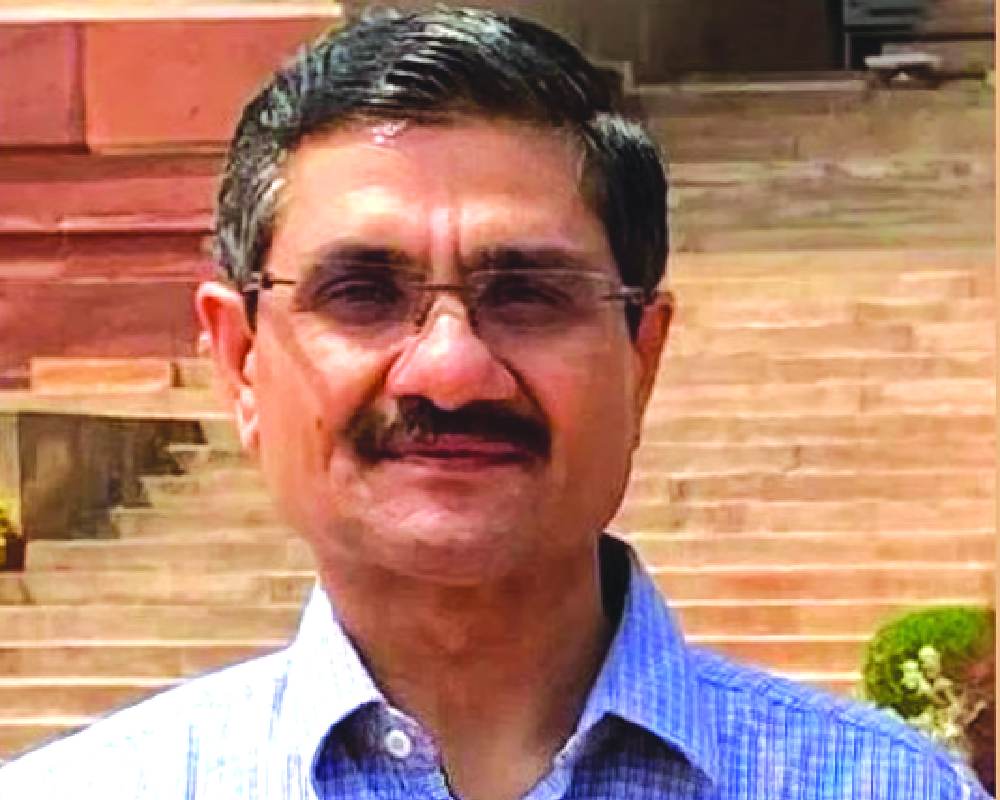
Vivek Chaturvedi, 1990-Batch IRS Officer, Appointed as New CBIC Chairman

NEW DELHI: Shri Vivek Chaturvedi, a 1990-batch Indian Revenue Service (IRS) officer serving as a member of the Central Board of Indirect Taxes and Customs (CBIC), has been appointed as the new Chairman of the indirect taxes apex policy-making body.

In an order issued by the Department of Personnel & Training (DoPT), it is said, “The Appointments Committee of the Cabinet has approved the appointment of Shri Vivek Chaturvedi, IRS (C&IT:1990), Member, Central Board of Indirect Taxes & Customs (CBIC), to the post of Chairman. Central Board of Indirect Taxes & Customs.”

Shri Chaturvedi replaces the outgoing Chairman of the CBIC. Shri Sanjay Kumar Agarwal, an IRS officer of the 1988 batch, formally completes his tenure with his retirement on November 28, 2025.

Before joining the CBIC as its member, Shri Chaturvedi served as the Principal Director General of Vigilance and Chief Vigilance Officer in the organisation. He had succeeded Vivek Ranjan, Member (Tax Policy & Legal), who had completed his tenure on August 31, 2025.

With a strong background in vigilance, compliance, and tax administration, Shri Chaturvedi is seen as a capable and experienced officer to help steer the CBIC through its policy refinement and compliance enhancement agenda.

His role as the Chief Vigilance Officer was very significant, as it highlighted the government’s continued emphasis on transparency, internal oversight and integrity within its tax institutions.

Shri Chaturvedi’s appointment as the CBIC chairman also underscores the Centre’s focus on ensuring stability and continuity in the leadership amid an evolving regulatory landscape shaped by ongoing GST reforms, tightening of compliance frameworks and greater digitisation in customs processes.

With over three decades in service, Shri Chaturvedi’s experience is expected to bring in significant initiatives to streamline indirect tax policies and strengthen enforcement mechanisms under the CBIC mandate.

Government reforms, manufacturing push lift Q2 growth to 8.2%: Goyal

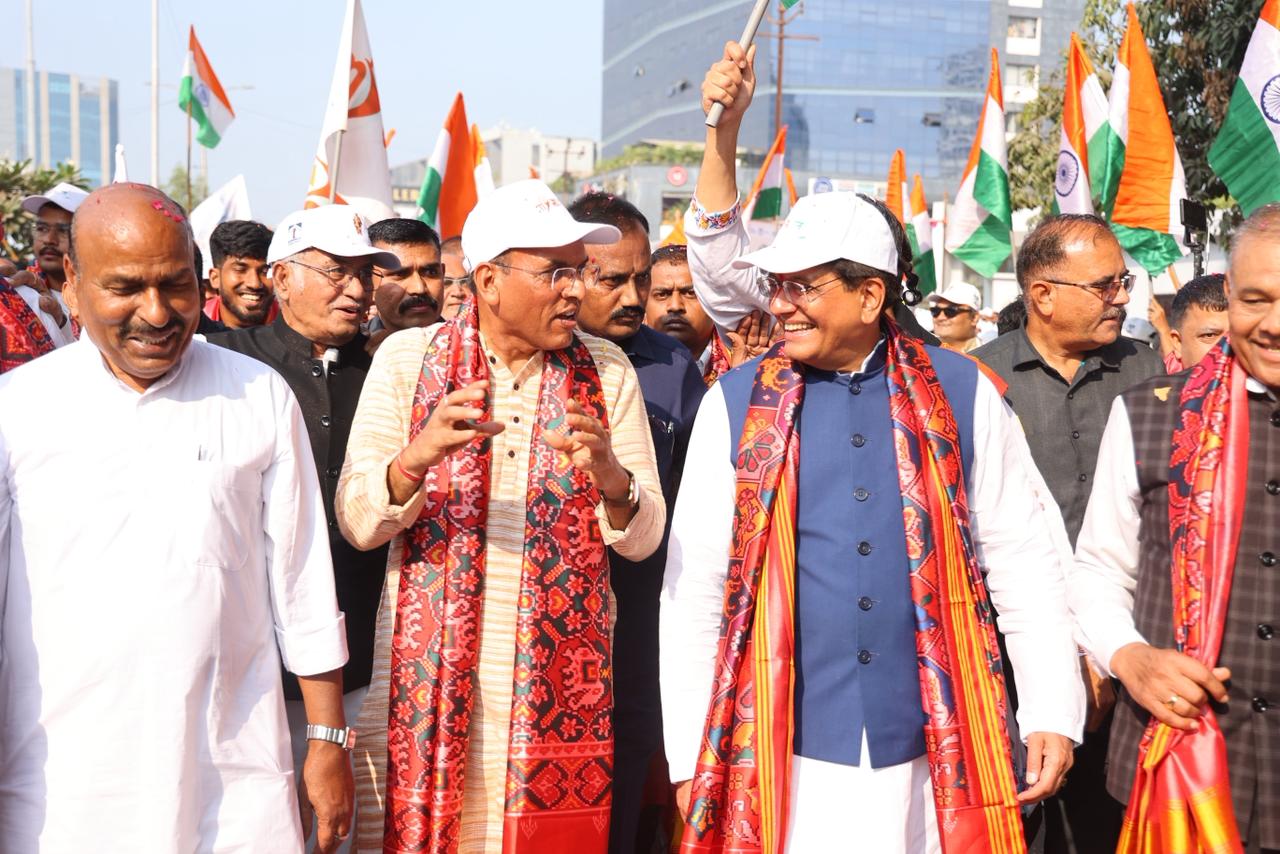
VADODARA : Commerce and Industry Minister Shri Piyush Goyal on Saturday (November 29, 2025) said a host of steps and reforms undertaken by the government to improve ease of doing business have helped the economy post an 8.2% growth in the July-September quarter of the current fiscal.

He said the country’s exports too are registering healthy growth despite global uncertainties at the trade front. “The 8.2% growth reflects the host of reform measures taken by the government. Number of measures have been taken to boost domestic manufacturing and promote ease of doing business,” he said here while participating in a national padyatra in Vadodara, organised as part of the 150th birth anniversary celebrations of Sardar Shri Vallabhbhai Patel.

The Gujarat government is organising this ‘padyatra’ (foot march) from Karamsad to the Statue of Unity in the Narmada district of the State to commemorate the birth anniversary.

He added that the growth numbers have refuted claims made by certain quarters, and it showed that India is the world’s fastest-growing major economy.

“We will continue to see relentless growth,” Mr. Goyal said, adding India’s merchandise and services exports too have recorded high growth during April-October this fiscal.

During April-October this fiscal, merchandise exports increased marginally by 0.63% to $254.25 billion, and imports rose 6.37% to $451.08 billion.

During the first nine months of this financial year, services exports stood at $237.55 billion, compared to $216.45 billion in April-October 2024.

The 8.2% gross domestic product (GDP) growth, which follows a 7.8% expansion in the preceding April-June quarter, helped India retain the title of the world’s fastest growing major economy, according to official data.

The GDP growth came ahead of the festive season consumption boost on the back of the implementation of a significant reduction in the goods and services tax (GST).

The expansion, which was more than China’s 4.8%, was driven by higher public investments, services demand, industrial output and firm consumption, besides statistical effects of a low base (the economy grew at a below-average 5.6% in the same quarter last fiscal).

Manufacturing output rose 9.1% against a growth of 7.7% in the preceding quarter and 7.6% in the year-ago period, while construction expanded 7.2% from 7.6% in the previous quarter.

Deendayal Port sets New 24-Hour Record with Fully EV-Powered Pine Log Discharge

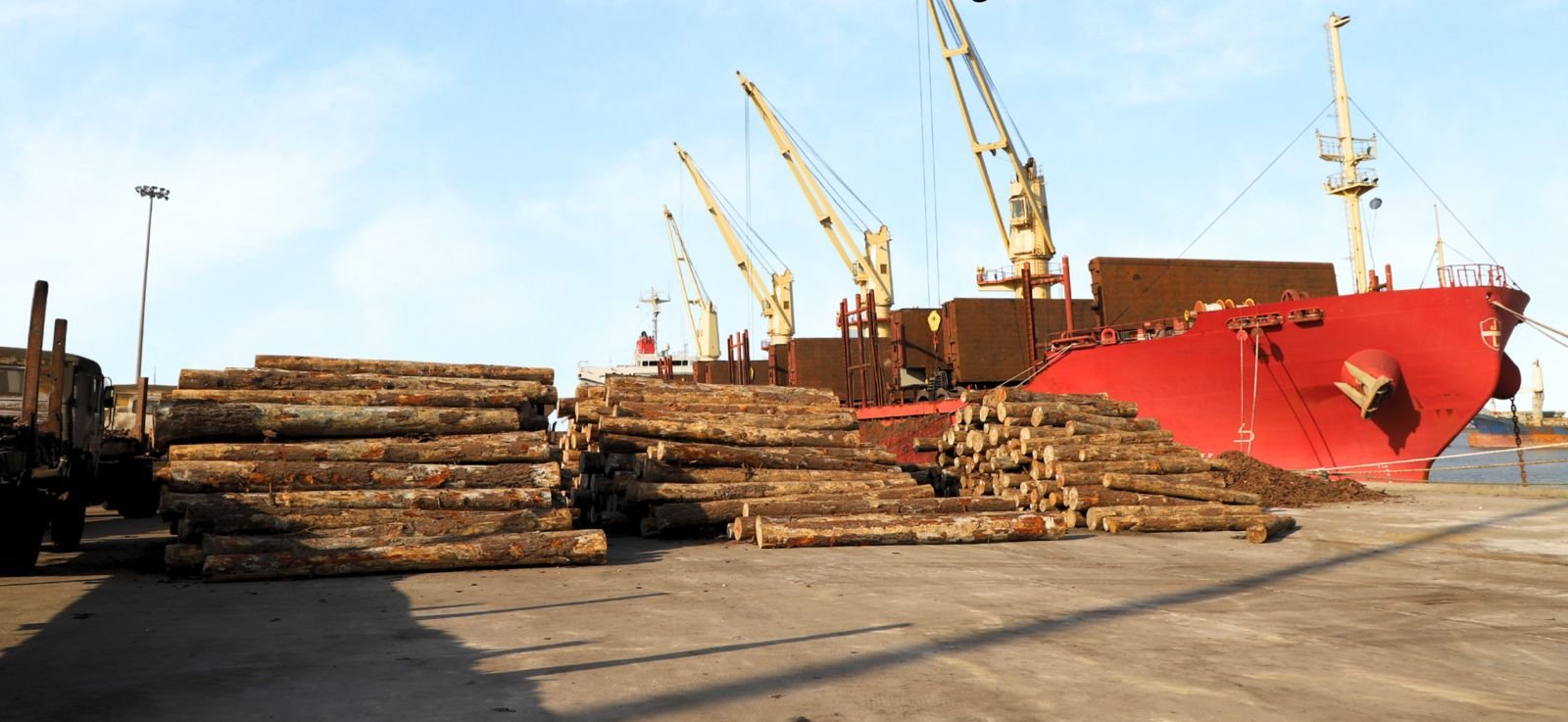
GANDHIDHAM: Deendayal Port Authority (DPA), Kandla has achieved a major operational milestone by setting a new 24-hour discharge record of 15,687 CBM of pine logs on the vessel MV TOMINI SOLANO—a feat accomplished entirely through EV loader–based operations. The achievement marks a significant step forward in the port’s shift toward greener, more efficient cargo handling.

The record, created at Berth CJ-14, highlights the port’s growing focus on sustainability, operational precision and high-performance teamwork. According to DPA, the accomplishment reflects meticulous planning, seamless coordination and the exceptional on-ground efforts of its workforce.

Key Operational Highlights – MV TOMINI SOLANO

  • Total Cargo Handled: 23,455.81 JCBM (23,991 pieces)
  • Average Discharge Rate: ~11,546 JCBM/day (≈481 JCBM/hour)
  • Record Achieved: 15,687 CBM discharged within 24 hours

DPA extended special appreciation to Synergy/Swayam Shipping, acknowledging their consistent performance and flawless execution throughout and beyond the record-setting window.

The port authority noted that this achievement underscores its commitment to improving operational efficiency while simultaneously advancing sustainability goals through increased adoption of electric cargo-handling equipment.

“With every milestone, we continue to raise benchmarks in efficiency, sustainability and overall performance at Deendayal Port,” DPA remarked, reaffirming its mission to strengthen India’s maritime capabilities.