Home Blog Page 540

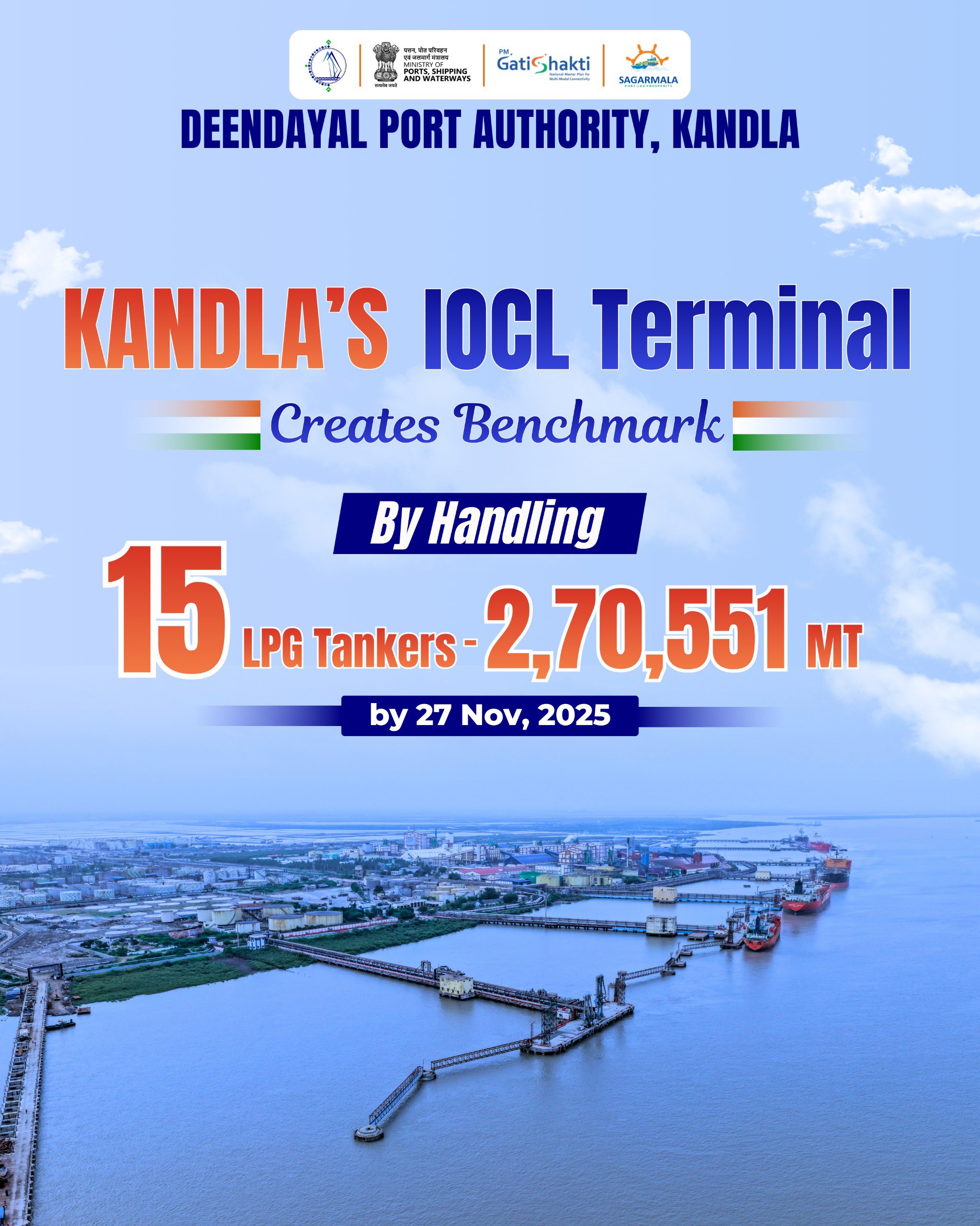
DPA Kandla sets new benchmarks in cargo handling with 15 LPG tankers and 2,70,551 MT

GANDHIDHAM: Deendayal Port Authority (DPA), Kandla, has achieved a new milestone, setting a benchmark in cargo handling. According to the port authority, IOCL’s LPG Terminal at DPA handled 15 LPG tankers and 2,70,551 metric tonnes till November 27 this year, surpassing the previous record of 14 tankers in March 2024.

The port expects to reach 17 tankers by the end of the month.

On Saturday, the Deendayal Port Authority on X said, “DPA Kandla sets a new benchmark! IOCL’s LPG Terminal at DPA achieves a record-breaking milestone with 15 LPG tankers and 2,70,551 MT handled till 27 Nov, 2025 – surpassing the previous best of 14 tankers (Mar ’24). Expected to touch 17 tankers by month-end!”

Earlier this week, Deendayal Port Authority (DPA), Kandla, set a new record by becoming the fastest major port in India to handle 100 million tons of cargo in the financial year 2025-26.

This achievement reflects DPA Kandla’s strong handling capacity across liquid, dry bulk, break-bulk and container cargo segments. The early crossing of the 100 million metric ton (MMT) mark underscores the port’s rising efficiency and supports India’s broader goal of advancing under the Maritime Amrit Kaal Vision, which aims to boost trade and industrial growth along the western coast.

The achievement strengthens India’s maritime competitiveness and helps improve ease of doing business, logistics efficiency, and trade connectivity across Gujarat and northern India.

Shri Sarbananda Sonowal, Minister of Ports, Shipping & Waterways, congratulated Team Deendayal Port Authority for the achievement.

Enterprising Marine Engineer projects A.P. as ‘Shipbuilding and Logistics Hub’

TIRUPATI : An enterprising marine engineer Mohanraju Muppala, who played a key role in bringing digital connectivity to commercial vessels on high seas, envisages Andhra Pradesh as an emerging ‘shipbuilding and logistics hub’. He has submitted a report to the State Government to this effect.

Hailing from the tiny village of Chenchuraju Kandriga in Tirupati district where he had not seen a bus as a child, this youth shot to fame almost a decade back when he led the IT team that introduced satellite communication to the ships, bridging the gap between the crew and their families on land.

Mr. Mohanraju studied marine engineering and MBA in Information Technology and Customer Services, which took him places. When he joined the Denmark-based Clipper Fleet Management in 2014, the maritime sector was largely dependent on mechanical practices and less on technology and even internet was rare on commercial vessels.

As the head of Vessel IT, he was instrumental in introducing IT infrastructure in 300 ships, handling IT policy and regulations, network technology, satellite communications, and ERP migration to cybersecurity.

Mr. Mohanraju has proposed to the government to tap the State’s potential by developing a ‘global shipping hub’ on a par with Rotterdam, Hong Kong and Singapore, taking advantage of its long sea coast.

“As the Chief Minister Nara Chandrababu Naidu is keen on transforming the State into a logistics and shipping hub, I have prepared a roadmap and submitted it to the State government, envisaging creation of a Special Economic Zone (SEZ) dedicated to international trade, warehousing and logistics,” he told The Hindu.

‘’The SEZ can become a ‘customs-exempt’ area where global shipping companies can store and transit their cargo without entering the Indian market, which makes it a global stocking point,’’ he explained in his report.

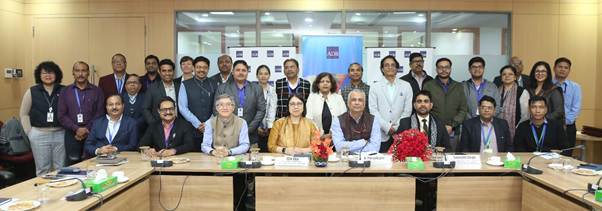
Govt of India and ADB sign loans worth $800 million for development projects, and a Technical Assistance grant of $1 million, in four states

NEW DELHI: The Government of India and the Asian Development Bank (ADB) Friday signed agreements for three loans with worth over $800 million for projects in Maharashtra, Madhya Pradesh and Gujarat.

The Government of India’s engagement with ADB for the finalisation of the loans was led by Joint Secretary (ADB & Japan), Department of Economic Affairs, under whose guidance the loan signing process was carried out.

Accordingly, the loan agreements for the Maharashtra Power Distribution Enhancement Programme for Agricultural Solarization ($500 million); Indore Metro Rail Project (¥27,147,200,000, equivalent to $190.6 million), and Gujarat Skills Development Programme ($109.97 million) were signed by Shri Saurabh Singh, Deputy Secretary, Department of Economic Affairs, Ministry of Finance, on behalf of the Government of India, and Ms. Mio Oka, Country Director, India Resident Mission, on behalf of ADB.

In addition, a Technical Assistance (TA) grant of $1 million was also signed to provide implementation support for the upcoming Sustainable Wetland and Integrated Fisheries Transformation (SWIFT) Project in Assam designed to enhance the state’s wetland ecosystems and fisheries.

In Maharashtra, the $500 million ADB-supported programme aims to modernise rural power infrastructure, promote distributed renewable energy generation, and improve agricultural productivity by providing farmers with reliable daytime solar electricity for irrigation. By 2028, the programme aims to provide daytime electricity to at least 900,000 agricultural consumers. Key components include modernising Maharashtra’s electricity distribution network for renewable integration entailing upgradation of substations, installing transformers, building high- and low-tension lines, and deploying 500 MWh of battery storage.

The Japanese Yen denominated loan (¥27,147,200,000, equivalent to $190.6 million) for Indore Metro Project will finance construction of 8.62-km underground metro line with seven stations, connecting congested areas of Indore to the airport. The project includes multimodal integration with existing bus and feeder services, improving access to educational institutions and markets. The Madhya Pradesh Metro Rail Corporation Limited will implement the project, with operations expected to begin by January 2030.

In Gujarat, the $109.97 million Skills Development Programme, aims to equip the state’s workforce with industry-aligned, advanced skills that boost job readiness in high-growth sectors. These sectors include logistics, automotive, manufacturing, information technology, renewable energy, healthcare and agri-tech. Led by the state’s Labour, Skill Development and Employment Department in collaboration with Kaushalya: The Skill University (KSU), the programme will help upgrade 11 mega ITIs, establishing centres of excellence and partnering with affiliated private training providers through a hub-and spoke model anchored by KSU. Courses will be designed in close collaboration with industry to ensure alignment with market demands and job trends.

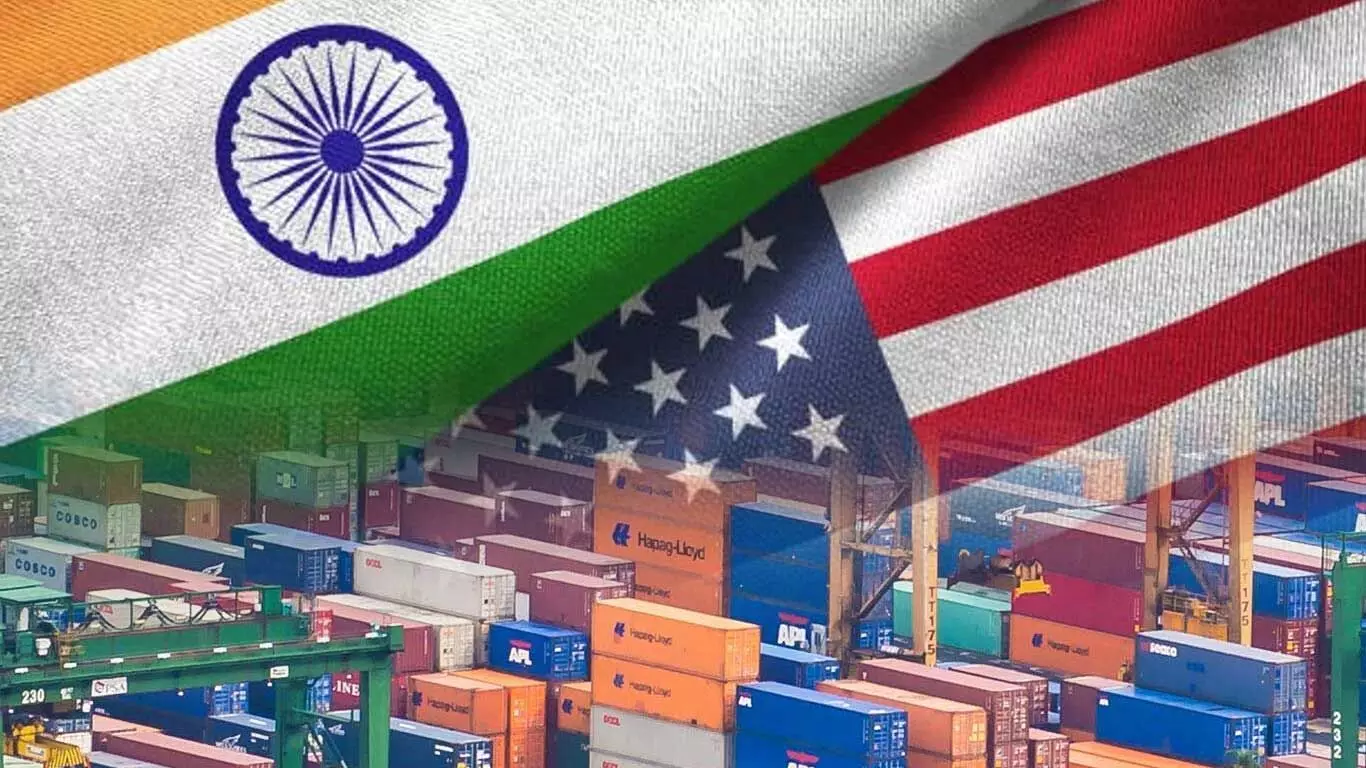
India’s exports to US down 28.5 pc in last five months due to high tariffs : GTRI

NEW DELHI : India‘s exports to its largest foreign market, the US, have suffered a sharp reversal due to aggressive tariff hikes, think tank GTRI said in a report on Saturday.

Between May and October 2025, shipments fell 28.5 per cent, from USD 8.83 billion to USD 6.31 billion, it said. The decline followed a rapid escalation in US duties that began at 10 per cent on April 2, rose to 25 per cent on August 7, and reached 50 per cent by late August, making Indian goods among the most heavily taxed of any US trading partner, it added.

In comparison, China faced tariffs of about 30 per cent, while Japan dealt with only 15 per cent.
Tariff-exempt items such as smartphones, pharmaceuticals and petroleum products accounted for 40.3 per cent of October exports but still fell 25.8 per cent, from USD 3.42 billion in May to USD 2.54 billion in October — a contraction of USD 881 million, the Global Trade Research Initiative (GTRI) said.

It added that products facing uniform global tariffs — mainly iron, steel, aluminum, copper and auto parts formed just 7.6 per cent of shipments in October. Exports in this category fell 23.8 per cent between May and October, sliding from USD 629 million in May to USD 480 million in October, or about USD 149 million, it said.

The steepest decline occurred in labour-intensive products where India alone faced 50 per cent tariffs.
These goods, which represented 52.1 per cent of October exports, collapsed 31.2 per cent, falling from USD 4.78 billion to USD 3.29 billion — nearly USD 1.5 billion erased in just five months, it said.
“Smartphones, India’s single biggest product line to the US, suffered a 36 per cent decline, sliding from USD 2.29 billion in May to USD 1.50 billion in October — a loss of almost USD 790 million,” GTRI Founder Ajay Srivastava said.

Monthly exports fell consistently from USD 2 billion in June to USD 1.52 billion in July, crashed to USD 964.8 million in August, eased further to USD 884.6 million in September, and finally recovered to USD 1.5 billion in October, he said.

Pharmaceutical exports, he said, also dipped marginally 1.6 per cent, from USD 745.6 million to USD 733.6 million. Similarly, he said petroleum product shipments declined 15.5 per cent, falling from USD 291 million in May to USD 246 million in October.

Further, the report said that labour-intensive sectors such as gems and jewellery, textiles, garments, chemicals, and seafood recorded a dip in the outbound shipments. Chemical exports tumbled 38 per cent, declining from USD 537 million to USD 333 million.

Source : PTI

India pushing for FDI-linked FTAs to attract global investors, says Commerce Secy Rajesh Agrawal

NEW DELHI: India is steering its ongoing free trade agreement (FTA) negotiations toward securing foreign direct investment (FDI) commitments from partner countries, Commerce Secretary Shri Rajesh Agrawal said, signalling a strategic shift in how upcoming trade pacts are being structured by the country.

Speaking at FICCI’s Annual General Meeting and Annual Convention, he said integrating with “big consumer markets” was essential, and a wider FTA network would give global investors tariff predictability and clarity, encouraging them to invest in India.

Shri Agrawal said India is actively nudging developed economies to bring specific FDI-related commitments to the negotiating table. “In other FTAs that we are negotiating, which are coming to the fore in the next calendar year, you will find many of them will have this provision—like the EFTA deal—wherein FDI is something that will be committed by our partner country,” he said.

India’s recent trade pact with the European Free Trade Association (EFTA) has become a template for the government’s push to secure investment-linked outcomes through FTAs. Under the agreement, EFTA countries agreed to mobilise $100 billion in FDI over 15 years across sectors such as manufacturing, infrastructure and technology in exchange for gradual tariff concessions from India. Commerce ministry officials said the government views this structure as a model for future FTAs, arguing that pairing market access with assured long-term investments strengthens India’s industrial base and gives global firms greater confidence to localise operations.

Rupee and Trade Deficit

On the rupee’s movement, Shri Agrawal said the issue will be best addressed by the Department of Economic Affairs, but added that exporters typically do not suffer when the currency weakens. “From the export perspective, when the rupee devalues, the exporter in the room does not feel bad, so that’s not a problem,” he said.

He attributed October’s wider trade deficit to a sharp spike in precious metals imports. “If you look deep down, one of the key drivers for the trade deficit was our precious metals imports. There was pent-up demand for gold and silver. In the first six months, our imports in this category were 75 percent lower on-year. This year that pent-up demand has all been met in October, leading to a higher trade deficit,” Shri Agrawal said.

Tariffs batter India’s exports to US; GTRI suggests rolling out Export Promotion Mission

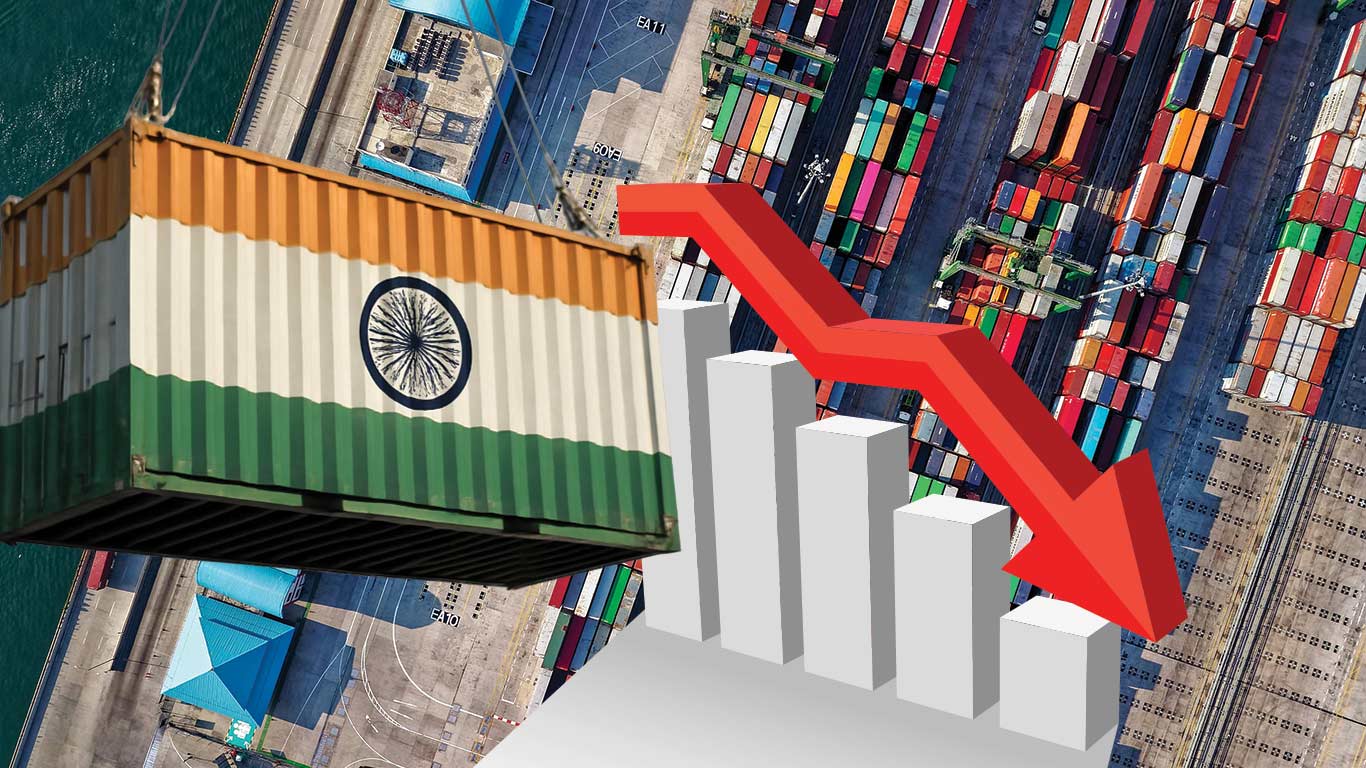
NEW DELHI: India’s exports to its largest export market, the United States, have suffered a sharp reversal under the impact of aggressive tariff hikes. Between May and October 2025, shipments fell 28.5 per cent, plunging from USD 8.83 billion to USD 6.31 billion, according to trade-focused think-tank Global Trade Research Initiative (GTRI).

The decline in exports followed a rapid escalation in US duties that began at 10 per cent on April 2, rose to 25 per cent on August 7, and reached 50 per cent by late August.

The spike in tariffs made Indian goods among the most heavily taxed of any US trading partner, according to a GTRI report Saturday.

For comparison, China faced tariffs of about 30 per cent, while Japan at 15 per cent.

India’s exports to the US during the period has been divided into three tariff regimes in the GTRI report — Tariff-exempt items such as smartphones, pharmaceuticals and petroleum products accounted for 40.3 per cent of October exports but still fell 25.8 per cent, from USD 3.42 billion in May to USD 2.54 billion in October–a contraction of USD 881 million.

Products facing uniform global tariffs–mainly iron, steel, aluminum, copper and auto parts–formed just 7.6 per cent of shipments in October. Exports in this category fell 23.8 per cent, sliding from USD 629 million in May to USD 480 million in October, or about USD 149 million, data maintained by GTRI showed.
The steepest decline in exports occurred in labour intensive products where India alone faced 50 per cent tariffs. Gems and jewellery, solar panel, textiles and garment, chemicals, seafoods.

These goods, which represented 52.1 per cent of October exports, collapsed 31.2 per cent, falling from USD 4.78 billion to USD 3.29 billion–nearly USD 1.5 billion erased in just five months, GTRI has asserted.
Even tariff-free products felt the shock.

Smartphones, India’s single biggest product line to the US, suffered a 36 per cent decline, sliding from USD 2.29 billion in May to USD 1.50 billion in October–a loss of almost USD 790 million.

Monthly exports fell consistently from USD 2.0 billion in June to USD 1.52 billion in July, crashed to USD 964.8 million in August, eased further to USD 884.6 million in September, and finally recovered to USD 1.5 billion in October, GTRI said, without giving any rationale.

Pharmaceutical exports dipped only 1.6 per cent, while petroleum product shipments declined 15.5 per cent.

In the metals (US Tariffs of 50 per cent) and auto parts (US Tariffs of 25 per cent) category, the export drop reflects weakening US industrial demand rather than loss of competitiveness, as tariff treatment was equal across suppliers, GTRI opined.

Against that stark backdrop, GTRI urges the government to roll out the Export Promotion Mission and press Washington to drop the Russia-related additional tariff of 25 per cent imposed on Indian goods.
“First, the Export Promotion Mission–announced in March and approved by the Cabinet on Nov. 12–still exists only on paper. Nearly eight months into the fiscal year, no schemes are operational, while long running programs such as the Market Access Initiative and the Interest Equalisation Scheme have made no payments this year,” GTRI noted.

With annual funding capped below Rs 4,200 crore, GTRI believes that the Mission will miss its goals unless the government quickly issues guidelines, restores regular disbursals and gives exporters clear eligibility rules and timelines.

The Union Cabinet chaired by Prime Minister Shri Narendra Modi earlier this month has approved the Export Promotion Mission (EPM) — a flagship initiative announced in the Union Budget 2025-26 to strengthen India’s export competitiveness, particularly for MSMEs, first-time exporters, and labour-intensive sectors.
The Mission will provide a comprehensive, flexible, and digitally driven framework for export promotion, with a total outlay of Rs.25,060 crore for 2025-26 to 2030-31.

Besides, GTRI argued that removing 25 per cent additional tariffs would halve the effective US tariff burden on Indian goods to 25 per cent, offering relief to labour-intensive sectors. GTRI urged the Government to make these two steps central to restoring part export competitiveness and resetting talks with the US on a “more even footing”.

Source: ANI

India’s Logistics Transformation puts Fashion Supply Chains into high gear

NEW DELHI: India’s textile and apparel industry is entering a new era of speed, transparency and global competitiveness as sweeping upgrades across the country’s logistics ecosystem begin to take hold. With the government accelerating digital integration, expanding transport infrastructure and promoting end-to-end supply-chain visibility, the fashion sector is shifting its focus from cost efficiency to time-bound performance.

A new suite of national logistics reforms—led by the PM Gati Shakti Master Plan, Unified Logistics Interface Platform (ULIP) and the Logistics Data Bank (LDB)—is giving exporters unprecedented real-time visibility. As more than 30 logistics and customs systems are digitally interconnected, shipment tracking has become faster, documentation is smoother and clearances far more predictable.

End-to-end container traceability, once viewed as a premium service, has now emerged as a standard industry expectation—particularly crucial in the fast-fashion business where rapid decision-making hinges on reliable, real-time data.

India’s freight movement is receiving a major boost from the rollout of dedicated freight corridors, upgraded ports, multimodal logistics parks and significantly improved first- and last-mile connectivity. Reduced turnaround times at ports and more dependable inland movement are enabling textile exporters to align with the tight delivery schedules of global fashion houses.

This combination of logistics efficiency and predictable transport windows is helping India position itself as a competitive alternative in global sourcing strategies.

The timing of this logistics overhaul aligns with rising global expectations around sustainability, transparency and delivery speed. Historically, Indian apparel exporters struggled with long transit durations and fragmented tracking systems. Today, they are benefiting from a more responsive logistics backbone that enhances their reliability in the eyes of international buyers.

On the domestic front, India’s fast-growing e-commerce fashion sector—propelled by quick-commerce models and increasingly demanding consumers—is also gaining from better warehousing networks, integrated delivery systems and faster express logistics.

A recent industry assessment shows India’s logistics cost declining to 7.97% of GDP, a notable shift that suggests infrastructure and policy reforms are beginning to streamline inefficiencies that previously weighed down the apparel supply chain.

As multimodal connectivity strengthens and digital platforms continue to unify the supply chain, India’s fashion industry is poised to operate as a fast-response ecosystem—marked by shorter production cycles, transparent processes and improved lead times.

Industry experts believe India is on track to become one of the world’s most preferred sourcing destinations for apparel. At the same time, domestic brands stand to gain from a logistics network that is evolving to keep pace with global retail standards.

Newly implemented Labour Codes to catalyse growth in India’s exports

NEW DELHI: The central government’s recent integration of 29 laws into four streamlined Labour Codes, enabling an environment that promotes industrial efficiency while safeguarding workers’ interests, is expected to catalyse growth in India’s export sector.

The Export-Oriented Industries (EOIs)– including textiles, garments, leather, electronics, gems & jewellery, pharmaceuticals, auto components and IT-enabled services- are critical contributors to India’s employment and foreign exchange earnings.

Their competitiveness depends heavily on the ability to maintain a flexible, compliant, and skilled workforce while adhering to international labour standards.

The labour reform brings about a series of benefits for India’s export sector, especially simplifying compliance for employers and enabling improved workforce management, according to a statement from PIB Headquarters on Sunday.

Labour Codes for EOI Newly implemented Labour Codes to catalyse growth in India's exports

One of the most impactful reforms is the introduction of a uniform definition of “wages” across all labour codes. This provision eliminates the ambiguity created by multiple, inconsistent definitions in earlier laws.
For EOIs operating in multiple states, it simplifies payroll administration and compliance, ensuring uniformity in wage calculations for social security contributions, bonus, and gratuity, the PIB Headquarters statement has asserted.

The provision for fixing a National Floor Wage by the government establishes a benchmark below which no state can fix its minimum wage. For EOIs functioning across states, this offers predictability in labour cost structures and eliminates regional disparities.

The legal recognition of digital wage payments encourages the adoption of transparent and traceable payment systems.

According to the government, EOIs will benefit from the ability to maintain verifiable payment records, which are often required by global buyers and compliance audits.

The prohibition of gender-based discrimination in recruitment and wages also ensures equal remuneration for equal work.

For EOIs, this aligns domestic practices with international labour and human rights standards, particularly those demanded by global retail and sourcing partners.

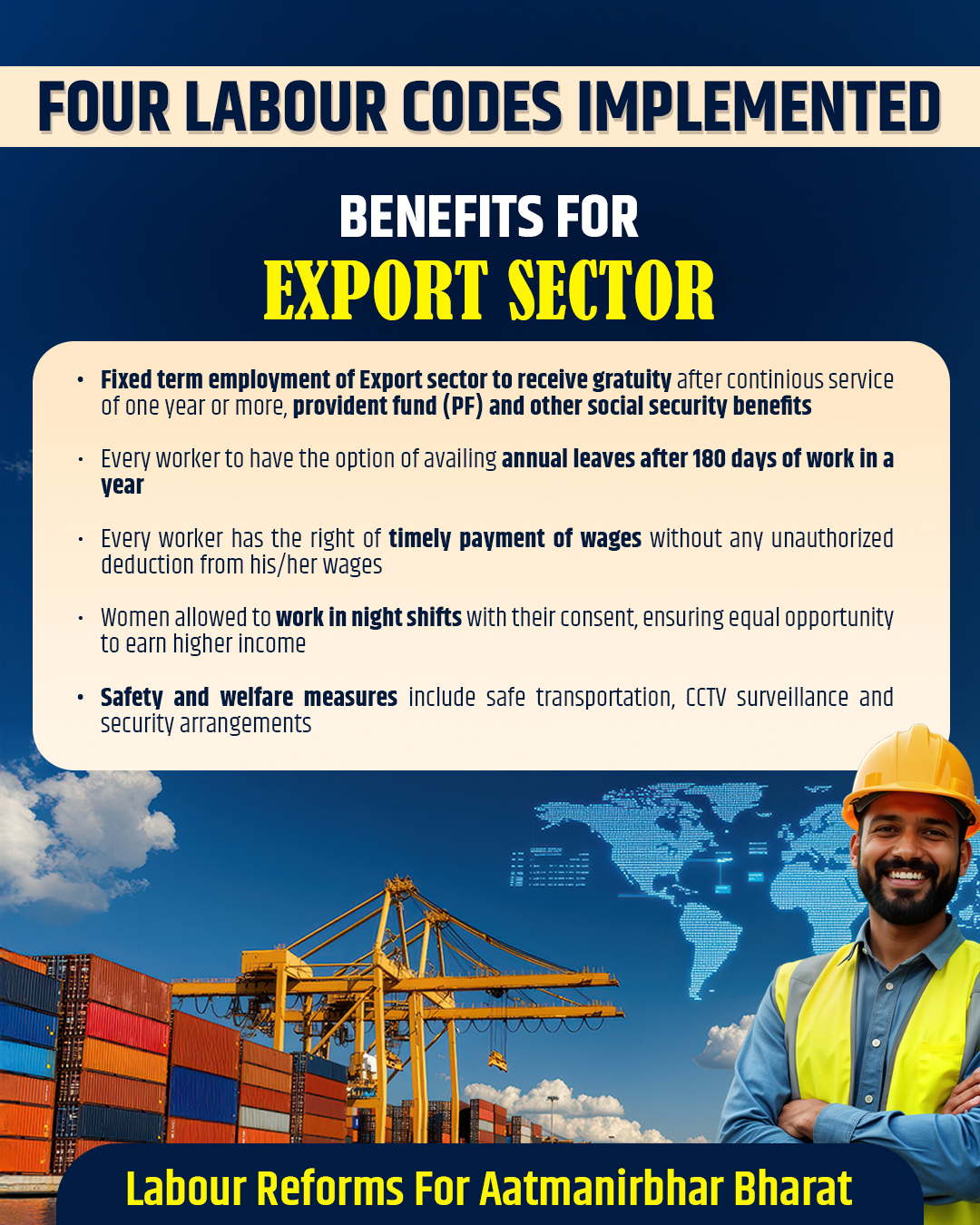
The provision for Fixed-Term Employment (FTE) allows employers to hire workers directly for a specific duration or project, with all statutory benefits equivalent to those of permanent workers.

The government asserts that this is particularly beneficial to EOIs that experience fluctuating or seasonal demand linked to global order cycles. Industries gain flexibility to scale their workforce up or down without resorting to informal or contractual hiring, thereby remaining compliant with law and maintaining a positive image among international clients.

Raising the threshold for prior government approval for lay-off, retrenchment, or closure from 100 to 300 workers offers industries operational flexibility to adjust to changing export orders and global market conditions.

“This provision gives exporters the confidence to expand employment during peak demand periods without the fear of excessive rigidity during downturns,” the government said.

The governments (State/Central, as applicable) have been given full flexibility for fixing the limit of working hours.

Earlier this limit was 75 overtime hours in a quarter which now can be fixed by the (State/Central, as applicable) Government. This flexibility in hours of work will enable industry to fix the hours of work as per the business needs including when they get peak orders.

“It will also generate growth and employment,” the PIB Headquarters’ statement noted.
The introduction of single registration and unified returns provisions reduces the multiplicity of licenses and inspections under different labour laws.

EOIs, which often operate multiple production units or engage numerous contractors, benefit from simplified compliance and reduced administrative costs, including when they get peak orders.

The codes promote digital maintenance of employment records, registers, and returns. EOIs, which are frequently audited by overseas clients and certification agencies, gain credibility through transparent and traceable digital documentation.

The provision of Inspector-cum-Facilitator and Randomised Digital Inspections aims to reduce the traditional “inspector raj,” where inspections were often seen as intrusive and burdensome.

“Inspectors will function more as facilitators- helping employers comply with law, creating awareness among workers. This shift promotes harmonious environment and facilitates ease of doing business,” the government said.

The Third-Party Audit and Certification provision has been made for third-party audit and certification of start-up establishments or class of establishments. It will help EOIs to assess and improve health and safety without intervention of Inspector-cum-Facilitator.

First-time offences that carry only a fine can now be settled by paying 50 per cent of the maximum penalty. Offences that earlier involved a fine, imprisonment, or both can be settled by paying 75 per cent of the maximum penalty, making the law less punitive and more focused on encouraging compliance.
Further, employers can avoid prolonged litigation by paying a prescribed penalty that enables quicker resolution, minimizes litigation, and lowers compliance risk for small EOIs.

Improvement Notice and Decriminalisation of Offences provision aims to replace criminal penalties (like imprisonment) with civil penalties (like monetary fines).

The employer will be given mandatory 30 days’ notice for compliance before taking any legal action.
Several offences have been decriminalized replacing criminal penalties with fines making the law less punitive and more compliance-oriented which will promote voluntary compliance, reduce fear of prosecution and make enforcement facilitative for export sector.

The universalisation of social security through provisions covering all employees (including fixed-term, contract, gig workers), strengthens the protection net for workers in export industries.

Employers in export sectors benefit from clarity and consolidation of earlier fragmented schemes such as provident fund, ESI, and gratuity under one framework.

The mandatory establishment of Grievance Redressal Committees in workplaces employing 20 or more workers ensures that issues are resolved internally and promptly. Export industries, which must maintain uninterrupted production schedules, benefit from the reduction in industrial unrest and legal disputes.
Uniform and comprehensive provisions on occupational safety, health, and welfare are expected to benefit export industries by providing a single, harmonised set of standards applicable across states and sectors.

“Compliance with these standards enhances workplace safety and supports certification under international social compliance regimes, which are increasingly demanded by global buyers,” the government said.

The provision permitting employment of women during night shifts, subject to their consent and adequate safety measures, greatly benefits EOIs that function on a 24-hour production cycle to meet international orders.

“Industries in sectors like apparel, electronics, and IT-enabled services can now legally employ women during late hours with proper transportation, security, and welfare arrangements. This supports continuous production and order fulfilment,” the government noted.

The provision for free annual health check-ups ensures that every employee, irrespective of their employment category, has access to preventive healthcare. In export sectors like textiles, leather, electronics, and garment manufacturing, workers are frequently exposed to dust, chemicals, noise, and ergonomic strain. Regular health assessments help in early detection of occupational illnesses, enabling timely treatment and preventing chronic conditions. For women workers, periodic check-ups provide crucial preventive care and contribute to overall well-being.

The provision of annual leave with wages- made available to every employee completing 180 days of work in a calendar year (reduced from the earlier 240-day requirement) will be beneficial for workers in EOIs, who often face intense production pressures and tight export deadlines, this ensures adequate rest, recovery, and work-life balance without any loss of income. Paid annual leave will enable them to spend time with their families, attend to personal or health needs, and return to work rejuvenated, leading to better morale and efficiency.

The rationalisation of working hours, weekly rest, and leave entitlements creates a uniform and predictable framework for export units. Workers will benefit from regulated work schedules, rest periods, and welfare amenities such as canteens, crèches, and medical facilities. The combination of structured work time and welfare will improve job satisfaction for the workers.

Each provision under the Labour Codes, according to the government, strengthens India’s export ecosystem in a distinct yet interconnected way.

For EOIs, the Codes offer the flexibility, simplification, and predictability needed to compete in dynamic global markets while meeting rising international compliance standards. For workers, these same reforms guarantee fair wages, social security, safety, equality, and opportunities for upskilling- enhancing both their welfare and dignity at work.

“Together, the Codes advance India toward a modern labour regime that balances ease of doing business with ease of living for workers, driving both economic growth and inclusive development across the export sector,” the PIB Headquarters’ statement concluded.

In a historic decision, the government of India announced that the four Labour Codes – the Code on Wages, 2019, the Industrial Relations Code, 2020, the Code on Social Security, 2020 and the Occupational Safety, Health and Working Conditions Code, 2020 and are being made effective immediately from November 21, 2025. The four Codes rationalised 29 existing labour laws.

While drafting the four Codes, the government argued that many of India’s labour laws were framed in the pre-Independence and early post-Independence era (1930s-1950s), when the economy and the world of work were fundamentally different. While most major economies have updated and consolidated their labour regulations in recent decades, India continued to operate under fragmented, complex and in several parts outdated provisions spread across 29 Central labour laws.

Global commodity prices expected to decline by roughly 7%, precious metals to rise 5% in 2026: Report

NEW DELHI: Global commodity prices are expected to fall by nearly 7 per cent in 2026, continuing a fourth straight year of decline. The fall is being linked to slower global economic growth, trade tensions, policy uncertainty, and abundant oil supplies. Precious metals, however, are projected to rise by around 5 per cent next year, building on a strong investment-led gain of over 40 per cent in 2025, according to a report by financial services firm Prabhudas Lilladher.

In the metals segment, global copper prices touched nearly USD 11,200 per tonne due to tight supply and mining disruptions. As per the report, Gold reached a record high of USD 4,370 an ounce in late October 2025, while Indian gold prices hovered around Rs 1,27,500 per 10 grams amid festive and safe-haven demand.

The report also said base metals like copper, aluminium, and zinc are expected to remain supported by limited supply and steady demand, though sharp gains are unlikely without major disruptions. Precious metals such as gold and silver are expected to retain their safe-haven status, with prices responding to movements in the U.S. dollar, inflation trends, and geopolitical factors.

Energy prices are likely to dip about 10 per cent in 2026, following a 12 per cent drop in 2025. Metals and minerals are expected to remain steady, while agricultural commodities may edge lower due to ample supply.

In October, global crude markets faced challenges, but India’s fuel consumption climbed to a five-month high. Demand rose 7.7 per cent from September to 20.17 million metric tonnes, boosted by post-monsoon transport needs. Gasoline demand increased by 8 per cent and diesel by 12.2 per cent month-on-month.

The domestic price of oil-linked natural gas for November was set at USD 6.55 per MMBtu, down from USD 6.96 in October. The report noted that while oversupply from OPEC+ and rising exports from non-OPEC nations continue to pressure prices, geopolitical shocks or a rebound in industrial fuel demand could cause short-term spikes.

Agricultural commodities also reflected seasonal patterns. The Agricultural Commodity Price Index (ACPI) declined in October due to good harvests and abundant global supplies of grains, oilseeds, and beverages. In India, steady arrivals of wheat, rice, and oilseeds kept domestic prices stable. Prabhudas Lilladher said that while extreme weather, higher input costs, or stronger global trade could lift prices, slower growth and large inventories may push them lower.

Looking ahead, the firm projects Brent crude (crude oil from the North Sea that serves as a global price benchmark for about two-thirds of the world’s crude oil) to average between USD 60 and 70 per barrel in 2026, with downside risk to USD 56 if surplus supplies persist and upside potential beyond USD 85 if disruptions occur.

Gold may rise to USD 4,500 per ounce, while silver is expected to trade between USD 50 and 60 per ounce through 2025. The World Bank anticipates a mild 2 per cent decline in the agricultural price index in 2026, keeping the overall commodity outlook subdued.

Source: ANI

Four-day International Organic Event inaugurated in Shillong, bringing global buyers, experts and youth delegates to Meghalaya

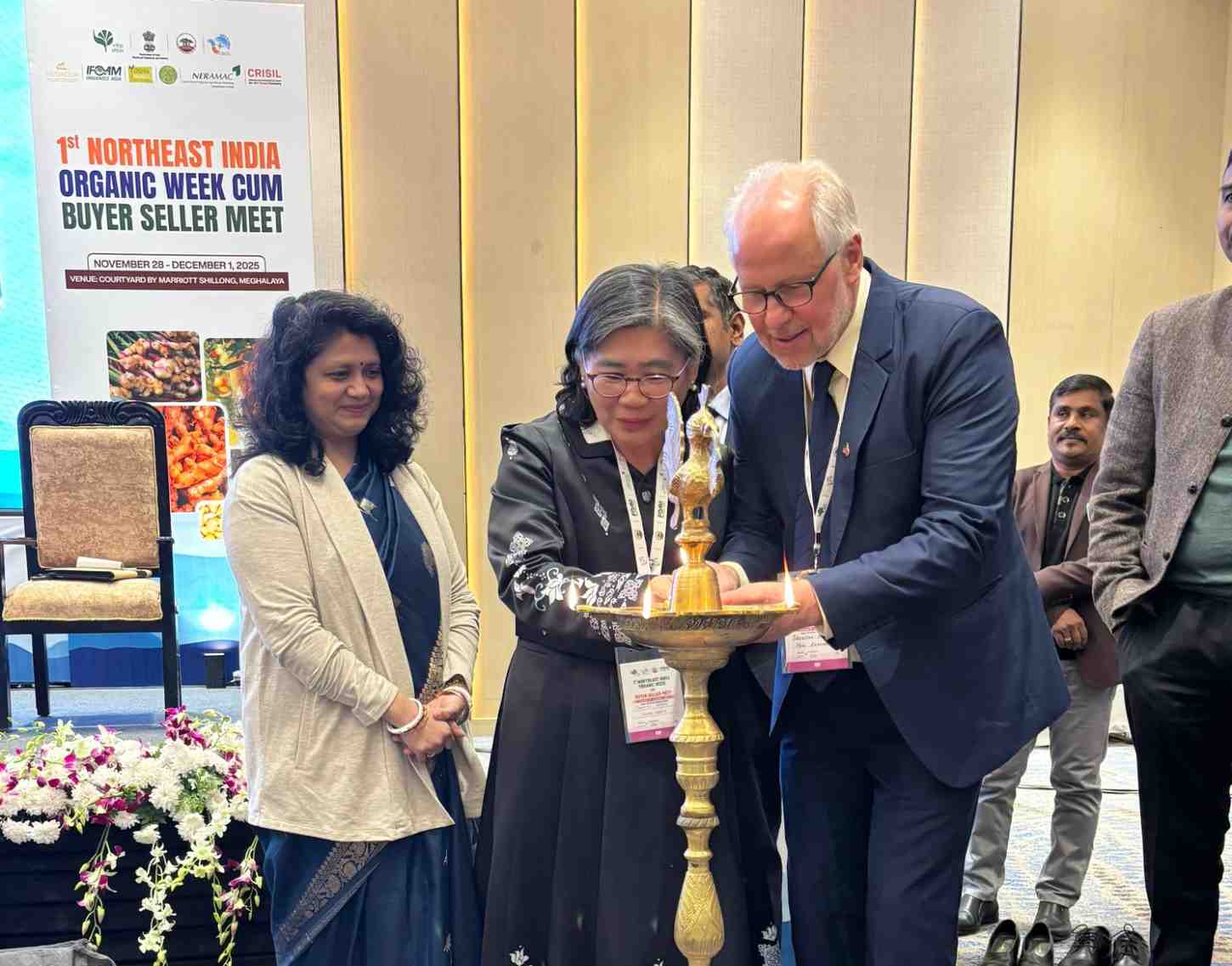
SHILLONG: The four-day international programme featuring the APEDA Buyer–Seller Meet, 1st Northeast India Organic Week, and the 4th IFOAM World Organic Youth Summit (28 November – 1 December 2025) was formally inaugurated last Friday at Courtyard by Marriott, Shillong.

Organised by the Department of Agriculture & Farmers’ Welfare, Government of Meghalaya, in collaboration with MEGNOLIA, APEDA, IFOAM–Organics Asia, and assisted by NERAMAC, the event brought together international buyers, importers, organic experts, and youth delegations from multiple countries.

The inaugural ceremony was graced by distinguished dignitaries including Shri. Satinder Kumar Bhalla, Secretary, North Eastern Council, Dr. Vijay Kumar D, Commissioner & Secretary, Government of Meghalaya; Shri. Abhishek Dev, Chairman, APEDA; Dr. Shakil P. Ahammed, Chief Secretary, Government of Meghalaya; Smt. Saloni Verma, Deputy Secretary Government of Meghalaya, Brenden Hoare, Adviser, IFOAM Jennifer Chang, Executive Director, IFOAM Asia; Shri Bhaskar Barua, Managing Director NERAMAC, Dr. Saswati Bose, General Manager APEDA, Mathew John, President, IFOAM Asia; and Smt. Priyanka Uday, Associate Director, CRISIL.

Speaking at the inauguration, Shri Abhishek Dev, Chairman, APEDA, highlighted the significance of strengthening the global visibility of Northeast India’s organic produce. He said, “The first edition of the Northeast India Organic Meet has brought together stakeholders from 22 countries, demonstrating strong international interest in the region’s organic potential. We have collaborated with the State Government, Ministry of Agriculture, NEC and IFOAM Asia, with an aim to amplify the global profile of Meghalaya’s organic products.”

He further added, “Going forward, we aim to make this an annual event, hosted by different Northeast states each year to promote regional organic value chains worldwide. We also encourage farmers, FPOs and stakeholders from Meghalaya to participate in the upcoming BIOFACH, where India is a partner country, to further showcase their produce on a global platform.”

The event aims to strengthen global market linkages for organic products from Northeast India, promote sustainable and regenerative agriculture, and foster youth leadership through dialogue and international collaboration. With B2B sessions, cultural programmes, and field visits planned, the event marks a significant milestone in showcasing the organic potential of Meghalaya and the Northeastern Region.