Home Blog Page 542

Delhi-Mumbai Expressway to connect major industrial hubs, boost growth in Gujarat and Maharashtra : Gadkari

NEW DELHI : Union Road Transport and Highways Minister Shri Nitin Gadkari on Friday said during a review of the Vadodara–Mumbai Expressway on the Delhi–Mumbai corridor that the expressway will boost economic growth across Gujarat and Maharashtra. Delhi–Mumbai Expressway is scheduled to be completed by March 2026.

Gadkari who reviewed the stretch, directed the officials to ensure strict adherence to quality standards, timely completion, and robust safety measures at all construction sites. “The expressway will significantly reduce travel time, enhance connectivity to major industrial hubs and PM Gati Shakti nodes, and boost economic growth across Gujarat and Maharashtra,” said Gadkari during the inspection of package six and seven of the greenfield Vadodara–Mumbai expressway on the Delhi – Mumbai corridor.

It may be noted that while the Delhi–Mumbai expressway is scheduled to be completed by March 2026, and a number of sections are already functional, work on several sections is pending in Gujarat and Maharashtra.

Delhi-Mumbai Expressway being implemented by the ministry comprises spurs in 53 numbers of packages having 1386 km length, said a government statement. “As of June 2024, total 26 numbers of packages have been completed. The physical progress of the work is 82% and cumulative length of 1136 km has been constructed,” a note from the ministry said.

“The corridor provides connectivity to major economic centers within Delhi, Uttar Pradesh, Haryana, Rajasthan, Madhya Pradesh, Gujarat and Maharashtra. The impact includes reduction in distance from Delhi to JNPT by about 180 km and reduction in travel time of up to 50% to connected destinations,” it added.

It may be noted that the highway ministry is constructing highways at the rate of 34 km/day now comapared with about 9 km a day construction in the UPA regime. The ministry has been a frontrunner in capex deployment in the current year as well. It has spent ₹1.71 lakh crore in H1 out of the allocation of ₹2.72 lakh crore for the current financial year.

PPA achieves the fastest ever 100 MMT cargo throughput in a fiscal

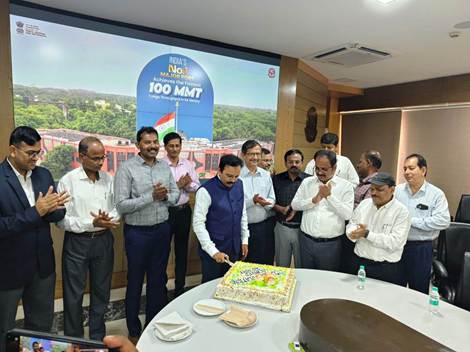
PARADIP : Paradip Port of Odisha created history by achieving the fastest ever 100 MMT cargo throughput in a Fiscal since its inception on 27th November. This is the 9th consecutive year the port has crossed the 100 MMT mark and clocked 100.15 MMT and thus by exhibited a growth of 4.78 % on Y-o-Y basis and it has done so 12 days earlier than last fiscal. Notably, in FY 2024-25, the coveted mark of 100 MMT was achieved on 9th December 2024. The record was achieved in 241 days in current fiscal against 253 days in last financial year.

Despite market challenges, the port continues to set new benchmarks. Faster operations, system improvements and consistent support from stakeholders have helped PPA stay ahead. Growth in coastal thermal coal, container cargo, Gypsum & Flux, POL and Steel cargo has strengthened PPA’s position as a leading coastal shipping hub. Coal cargo handling constitutes around 45% of total cargo volume at the Port and it has shown 3.76% growth against the corresponding period of the previous fiscal. Similarly, containerised cargo volume has grown by 32%, Gypsum & Flux volume has surged by 24%, Steel cargo by 35% and POL has grown by 31% on Y-o-Y basis in the current fiscal. Thus Paradip port is emerging as a coastal shipping hub of the country.

For the above feat, Shri P.L. Haranadh, Chairman, PPA while interacting with local media has expressed his gratitude to Shri Sarbananda Sonowal Ji, Hon’ble Minister of Port Shipping and waterways, under whose inspiration, dynamic leadership and guidance, PPA could achieve the incredible success. He congratulated all Officers/Employees, the user industries, Stevedores, Steamer Agents, Trade Unions, PPP Operators for such amazing accomplishment in the ability of the Port to serve them. Chairman, PPA also appreciated the support of Govt. authorities like Ministry of Ports, Shipping & Waterways (GoI), Govt. of Odisha, Indian Railways, Customs and other deptts for their continued support. Shri T. Venu Gopal, Dy.Chairman, Shri A.K.Bose, Advisor, Traffic and Shri G.Edison, Traffic Manager, PPA was also present on the occasion.

With a clear focus on efficiency and growth, PPA is on track to target an all-time high in this fiscal.

VOC Port receives the first Clinker vessel in line with the MoU with Ambuja Cement Limited

TUTICORIN : V.O. Chidambaram Port has received the first clinker consignment in line with the Memorandum of Understanding (MoU) signed with Ambuja Cement Limited, Gujarat, on 19.11.2025, as part of the Minimum Guaranteed Tonnage-based Incentive Scheme for coastal clinkers. The MoU ensures coastal movement of 2,50,000 metric tonnes of clinker annually.

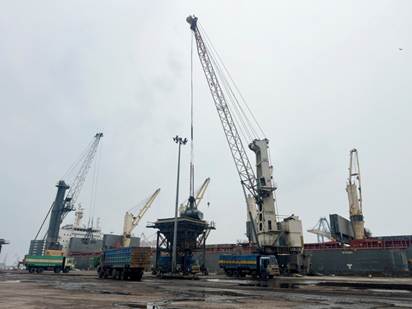
On 24.11.2025, as part of this MoU commitment, the vessel MV Lima Trader was berthed at NCB-II. It carried 56,440 metric tonnes of coastal clinker from Sanghi Port, Gujarat. The vessel was received by M/s Seaport Shipping as the ship agent and is being handled by M/s Seaport Logistics as the stevedore. The clinker will be transported by road to Ambuja’s grinding unit at Mela Arasadi, Tuticorin, located around 24 kms from the Port, for further processing into cement.

Shri Susanta Kumar Purohit, IRSEE, Chairperson, in his message conveyed that this landmark shipment is a major step toward sustainable and cost-effective coastal transportation, aligning with the Government of India’s vision for promoting coastal shipping. He also noted that more clinker vessels under this MoU are expected to call at the Port in the coming months, further strengthening cargo volumes and reinforcing the Port-and industry partnership.

The above details were furnished in a Press -Release by the V.O. Chidambaram Port Authority on Friday.

DG Shipping official visits proposed shipbuilding & ship repair clusters at Dighi (MH) and Thoothukudi (TN)

THOOTHUKUDI : As part of the Ministry of Ports, Shipping and Waterways (MoPSW)’s ongoing efforts to strengthen India’s shipbuilding and ship repair ecosystem, Shri Ravi Kumar Moka, Ship Surveyor-cum-Deputy Director General (Technical), Directorate General of Shipping, conducted visits to two prospective shipbuilding cluster locations.

Proposed Maritime-Linked Industrial Cluster at Dighi Port Industrial Area (DPIA), Raigad, Maharashtra
The DGS team—accompanied by Shri Amal Aloshie, Shri Rohit Tagade, Shri Akshay S, and MIDC representative Shri Ajinkya Hatkar, with support from NICDC and MMB—carried out a comprehensive site review. DPIA’s proximity to Dighi Port, its connectivity to NH-66, and multimodal access via the Konkan Railway and the Dedicated Freight Corridor position it as a strong candidate for shipbuilding-linked and maritime-support industries.

Proposed Shipbuilding & Ship Repair Cluster at V.O. Chidambaranar Port, Thoothukudi, Tamil Nadu
The DGS team—accompanied by Shri Hari Prasad and VOC Port official Shri Stanley, with support from Guidance Tamil Nadu and TNMB—conducted a detailed review of the identified site for developing a shipbuilding cluster. The location is envisioned to attract global partnerships, including ongoing discussions with HD–Korea Shipbuilding.

These visits reflect the Directorate’s continued efforts to evaluate and develop future-ready greenfield shipbuilding and ship repair clusters and ancillary ecosystems across India—an important step toward strengthening the nation’s shipbuilding capabilities, allied industries, and sustainable maritime future.

Indian Economy likely to have grown between 7-7.5% during Q2 of FY26, suggest reports

NEW DELHI : A Finance Ministry report on Thursday indicated that the economic growth rate during the July-September quarter (Q2 of Fiscal Year 2025-26) could be in the range of 7-7.5 per cent. Statistics Ministry will release the official data for growth on Friday.

“Various independent economic assessments place real GDP growth for Q2 FY26 in the range of 7.0–7.5 per cent, indicating continued strength in underlying economic activity. Overall, the economy enters the second half of FY26 on a stable footing, anchored by well-contained inflation, resilient domestic demand and supportive policy dynamics, even as global uncertainties warrant continued vigilance,” the Monthly Economic Review (MER) prepared by the Economic Affairs Department of the Finance Ministry said.

Growth during the April-June quarter (Q1 of Fiscal Year 2024-25) was 7.8 per cent. RBI has projected growth rate of 7 per cent for Q2. In a research report SBI said that growth could be 7.5 per cent with possibility of upside surprise. A report by CareEdge expects real GDP growth for Q2 FY26 to be 7.2 per cent, while the GVA growth is projected at 7.3 per cent. Further, it said: “We expect GDP growth to moderate in H2 FY26, averaging 6.3 per cent while real GDP and GVA growth for FY26 expected at 6.9 per cent y-o-y,” it said.

Meanwhile, ICRA has projected the year-on-year (y-o-y) GDP expansion to ease to 7.0 per cent in Q2 from 7.8 per cent in Q1. Further, it projects the growth in the gross value added (GVA) to record a narrower dip to 7.1 per cent from 7.6 per cent, respectively.

Though the said quarter had just a week of GST rate cut, most of the agencies listed this as one of the reasons for higher growth. The MER said that the overall macroeconomic environment remains stable, supported by easing inflation, resilient domestic demand, and continued policy momentum. “The favourable impact of GST rationalisation is increasingly visible in consumption indicators, while robust agricultural activity—reflected in the strong onset of Rabi sowing and adequate reservoir levels—has reinforced the outlook for food supply and rural incomes,” the MER said.

Further, it said that corporate performance remains healthy, with sustained profitability and stable balance sheets. Domestic financial markets continue to draw strength from firm institutional participation. Meanwhile, “the external sector remains shaped by a complex global environment, although the persistent strength in services exports provides an important counterbalance to the volatility in merchandise trade,” the MER said.

Inflation based on Consumer Price Index (CPI) eased to an all-time low of 0.25 per cent in October, driven by the transmission of GST cuts, a favourable base effect and pronounced declines in food prices. Now, MER said that the inflation outlook remains encouraging, supported by softening global commodity prices, benign energy markets, and targeted domestic supply interventions. However, the balance of risks warrants continued vigilance. Global uncertainties—including shifting trade policies, geopolitical frictions, and financial market volatility—pose potential headwinds to exports, capital flows, and investor sentiment.

Notwithstanding these challenges, “the confluence of well-anchored inflation expectations, sustained public capital expenditure, and firming rural and urban demand places the economy on a stable footing, positioning it to navigate emerging risks and preserve its growth momentum through the remainder of FY26,” the MER concluded.

Source : BL

CBIC wins top prize in Public Outreach & Communication Category at India International Trade Fair (IITF) 2025

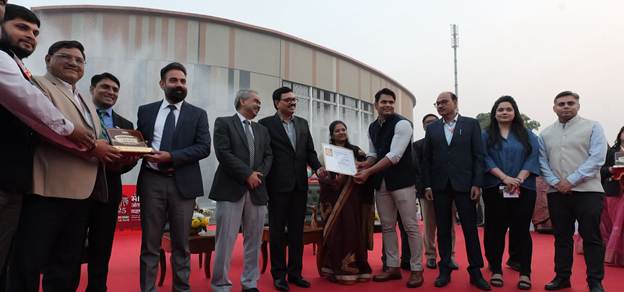
NEW DELHI : In acknowledgement of its comprehensive outreach efforts, innovative public engagement formats and inclusive communication strategy, the GST & Customs Pavilion has bagged the Gold Prize in the ‘Public Outreach and Communication’ Category at IITF 2025 in New Delhi.

The Central Board of Indirect Taxes and Customs (CBIC) successfully showcased its flagship ‘GST & Customs Pavilion’ at the India International Trade Fair (IITF) 2025 in New Delhi, from 14th-27th November 2025.

Built around the theme “Next-Gen GST: सरल कर, खुशहाल राष्ट्र”, the Pavilion aimed at deepening public understanding of the Government of India’s latest reforms in indirect taxation and trade facilitation. Designed as an interactive and educational space, the Pavilion served as an important public interface where taxpayers, industry representatives, students, and citizens could engage with CBIC’s ongoing initiatives to simplify compliance and enhance service delivery.

The CBIC pavilion received overwhelming footfall and active participation from people across age groups, professions and sectors, reflecting strong public interest and optimism toward recent GST reforms.

Key Highlights of the CBIC Pavilion

  1. Expert Helpdesks for Instant Support
    Eight helpdesks from GST, Customs, GSTN, ICEGATE and CPGRAMS provided quick, on-the-spot assistance with registration, refunds, return filing, grievances and trade procedures.
  2. Multilingual Learning Content
    Educational videos and tutorials—available in 10 regional languages plus Hindi and English—simplified GST and Customs processes for all visitors.
  3. Interactive Digital Exhibits
    Digital screens and interactive displays showcased CBIC’s key reforms, technological upgrades and achievements, highlighting smoother, more transparent compliance systems.
  4. Engaging Awareness Activities
    Magic shows, puppet shows, quizzes, caricature artists, VR games and selfie corners made tax awareness fun and accessible, supported by informative brochures.
  5. Youth-Focused Career Guidance
    Dedicated sessions introduced students to career opportunities in CBIC and its role in revenue administration and trade facilitation.

The CBIC expresses gratitude to all visitors, stakeholders and partners for their enthusiastic participation and reaffirms its ongoing commitment to simplifying taxes, enhancing transparency and building a more citizen-friendly indirect taxation ecosystem.

103rd Meeting of Network Planning Group under PM GatiShakti evaluates key infrastructure projects

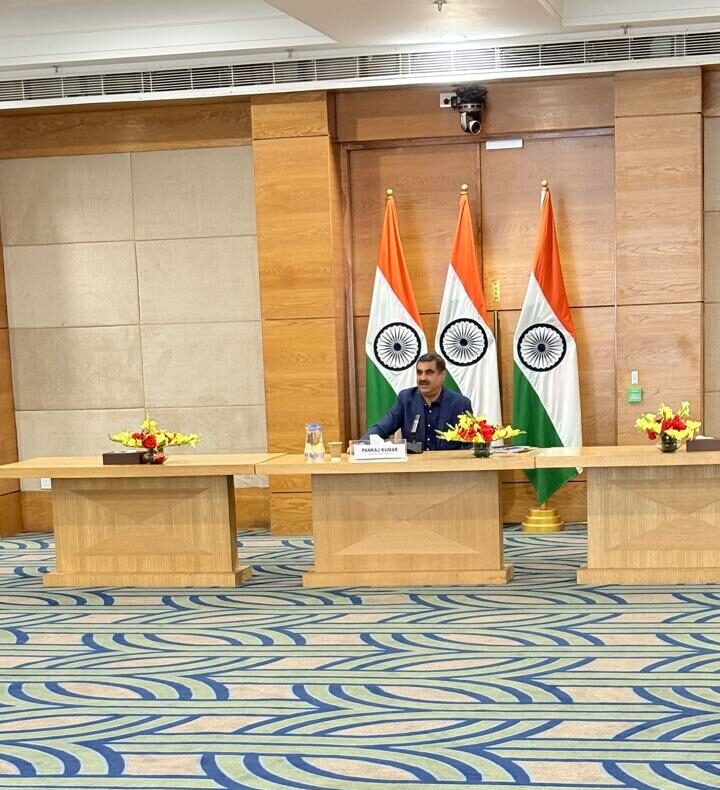
NEW DELHI : The 103rd Meeting of the Network Planning Group (NPG), convened today to evaluate infrastructure projects. The meeting focused on enhancing multimodal connectivity and logistics efficiency in alignment with the PM GatiShakti National Master Plan (PMGS NMP).

The NPG evaluated 03 projects in which 03 Rail projects for their conformity to the PM GatiShakti principles of integrated multimodal infrastructure, last-mile connectivity to economic and social nodes and ‘Whole of Government’ approach. These initiatives are expected to boost logistics efficiency, reduce travel times, and deliver significant socio-economic benefits to the catchment areas of the project. The evaluation and anticipated impacts of these projects are detailed below:

Ministry of Railways(MoR)

  1. Barbenda -Damrughutu doubling and Damrughutu – Bokaro 3rd and 4th line (West Bengal & Jharkhand) : The Ministry of Railways has proposed the construction of a third and fourth railway line between Barbenda and Damrughutu, spanning 51.761 km across the State of West Bengal and Jharkhand. The project involves augmenting the existing Barbenda–Damrughutu–Bokaro Steel City corridor under the South Eastern Railway to meet rising traffic demands and enhance operational efficiency.

The scope of work includes the construction of one major bridge, eighteen minor bridges, one Road Under Bridge (RUB), and the extension of an existing level crossing. As part of the third-line development, upgrades will be undertaken across five station yards, including block cabins, along with the construction of five major bridges, fifty-two minor bridges, five RUBs, and the extension of five additional level crossings.

This corridor is a vital freight route serving major industrial establishments such as Bokaro Steel Plant (BSL), Tata Steel Limited, Dalmia Cement, and Hindustan Petroleum Corporation. The proposed enhancement will significantly improve freight mobility, reduce congestion and delays, support industrial growth in the region, and strengthen the overall reliability of the BBDA–DRGU–BKSC railway corridor.

  1. Jamalpur Munger Sabdalpur Double line including bridge over Ganga including Jamalpur avoiding line (Bihar): The Ministry of Railways has proposed the construction of the Jamalpur–Munger Double Line along with a new bridge over the River Ganga and the Jamalpur avoiding line under the Eastern and East Central Railway in Bihar. The 15 km project, which includes the double line, Ganga bridge, and bypass alignment, is planned for completion by July 2030.

The corridor passes through the densely populated Gangetic plains of Munger and Begusarai and holds strategic importance as a key link between North Bihar and the southeastern regions of Bihar and Jharkhand. The alignment will enhance connectivity for major industrial hubs including ITC Ltd. (India Tobacco Division, Dairy Plant, and Packaging & Printing Unit), Sitakund Industrial Area, the Ordnance Gun Factory, Jamalpur Railway Workshop, Bhagalpur Mega Handloom Cluster, Kahalgaon and Barauni Thermal Power Stations, Barauni Refinery, Hindustan Urvarak & Rasayan Ltd., and the Kanti Thermal Power Plant.

The project is expected to significantly boost economic and social development by providing faster, safer, and seamless rail connectivity. It will also serve as a vital link between industrial and mining zones, lowering transportation costs and improving the global competitiveness of Indian industries. Additionally, the project will generate substantial direct and indirect employment opportunities during both construction and operation, particularly in loading and unloading facilities, industrial areas, and railway yards.

  1. 4th Line between Santragachi -Panskura-Kharagpur (West Bengal): The Ministry of Railways has proposed the construction of a fourth railway line between Santragachi and Kharagpur in the State of West Bengal, aimed at strengthening one of the region’s most vital and heavily utilized corridors. The route currently handles substantial freight and passenger traffic, facilitating the movement of essential commodities such as food grains, coal, cement, clinker, and steel, while also accommodating approximately 115 coaching trains each day.

The proposed fourth line will extend across 110.919 km, with a total track length of 133.781 km. It traverses 50.319 km in Howrah district, 26.70 km in East Medinipur, and 33.9 km in West Medinipur. The project scope covers upgrades across 30 station yards and the construction of one important bridge, 15 major bridges, 100 minor bridges, and 12 Road Under Bridges (RUBs). With freight volumes projected to rise from 20.37 MTPA in Year 1 to 28.12 MTPA by Year 11, the expansion is essential to easing congestion, enhancing operational capacity, and ensuring more reliable movement of goods and passengers. The project is expected to significantly improve the efficiency and resilience of rail transport across this critical corridor.

The meeting was chaired by Joint Secretary, Logistics, Department for Promotion of Industry, and Internal Trade (DPIIT)

MAMII brings European maritime leaders together to accelerate methane measurement and abatement

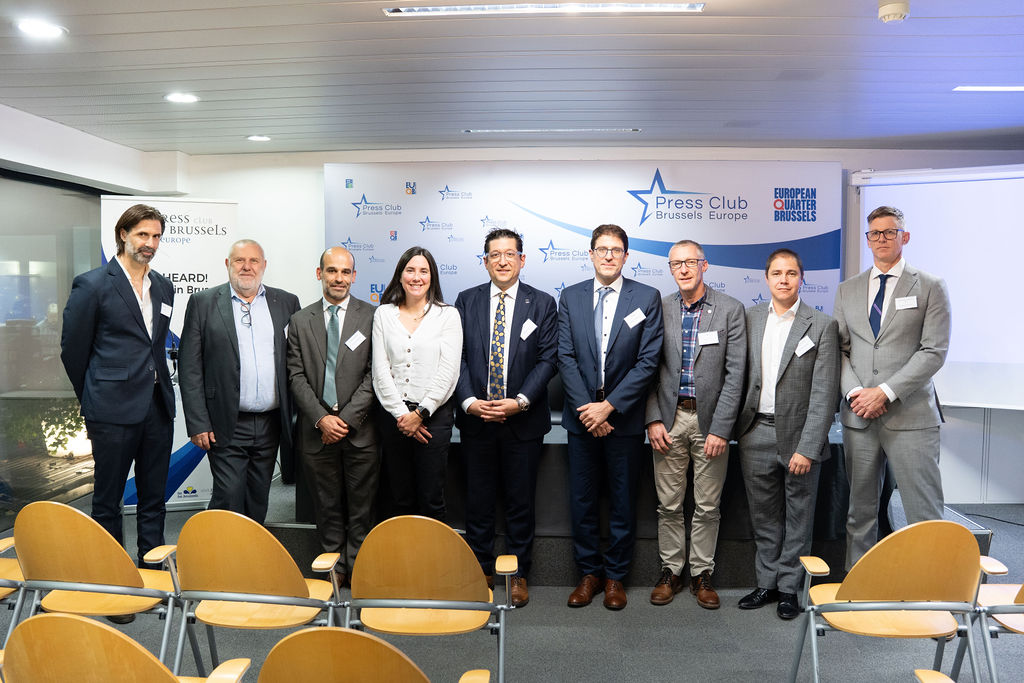
BRUSSELS: The Methane Abatement in Maritime Innovation Initiative (MAMII) hosted its first event in Brussels last week, bringing shipowners, engine designers, technology providers and EU policymakers together to accelerate efforts to reduce methane emissions from shipping.

Led by Safetytech Accelerator, established by Lloyd’s Register, MAMII is a coalition of shipping leaders, which aims to reduce the environmental impact of liquefied natural gas (LNG) in shipping while assisting the transition to future fuel solutions.

Delegates discussed the rapid advances in methane measurement and abatement and the need for stronger alignment between innovation and regulation, as well as the right mix between action and accuracy.

With methane recognised as 28 times more potent than CO2 on a 100-year scale and the second most significant GHG emission, participants underscored that methane abatement represents one of the fastest, most impactful climate solutions available to shipping today.

The event examined developments across the full emissions chain.

Upstream transparency is improving through enhanced monitoring tools, enabling more informed LNG sourcing. However, tank-to-wake emissions, where combustion slip remains the dominant contributor, remain the largest challenge. Several engine types have seen 60–70% reductions in methane slip in recent years, supported by the emergence of aftertreatment systems that could scale reductions up to an additional 80–90%.

Technology providers demonstrated solutions ranging from catalyst-based aftertreatment and advanced sensor systems to AI-driven emissions analysis and handheld methane leak detection devices for pipelines.

Shell’s Technology Manager, Stephen Brown, confirmed that the company’s in-house methane abatement catalyst system will enter shipboard trials in December. This marks the third MAMII-member aftertreatment technology trial. Early results from all member trials have been positive, and commercial readiness is expected as soon as 2027.

Industry representatives called for clearer, predictable and science-based frameworks that provide certainty for investment. They highlighted the importance of updated default values reflecting technological progress, reliable measurement methodologies, and incentives for early adopters alongside support for retrofitting. Alignment between EU and IMO regulations was seen as essential for global consistency and operational clarity.

Panos Mitrou, MAMII chair and Lloyd’s Register Global Gas Segment Director, said: “Methane abatement is both a climate obligation and a strategic opportunity for technology development. It is a great example for the industry to demonstrate action and compliance. It can offer substantial emissions reductions, generating positive cash flows and balance, in carbon cost measures.

“The Brussels event marked a significant milestone for our initiative, strengthening cooperation between regulators, industry and innovators.

“The consensus was clear: momentum is building, solutions are advancing rapidly and reducing methane emissions is within reach for the maritime sector. We must now focus on expanding these solutions to global fleets, improving the data supporting our decisions, and guiding the industry confidently towards significant methane reduction.”

About MAMII
The Methane Abatement in Maritime Innovation Initiative (MAMII) is an international coalition bringing together shipowners, engine manufacturers, technology innovators and research institutions to accelerate the development and adoption of solutions that reduce methane emissions across the maritime sector.

About Safetytech Accelerator

Safetytech Accelerator is a non-profit innovation accelerator dedicated to improving safety and resilience in high-risk industries. It was established by Lloyd’s Register and the Lloyd’s Register Foundation in 2018 and was subsequently incorporated as an autonomous business in 2021. Its mission is to help critical industries adopt emerging technologies that can reduce accidents, strengthen regulatory compliance, and improve the overall safety performance of sectors such as maritime, energy, construction, and critical infrastructure.

The organisation has built a global ecosystem of technology companies and has delivered many pilots and proof-of-concept projects. Its overall aim is to accelerate responsible innovation, bring cutting-edge safety technology into real-world use faster, and ultimately make safety-critical industries safer, more efficient, and more resilient.

Drewry: World Container Index down 2% last week

LONDON: Drewry’s World Container Index decreased 2% to $1,806 per 40ft container last week.

Drewry’s detailed assessment for Thursday, 27 Nov 2025

The Drewry World Container Index (WCI) decreased 2% to $1,806 per 40ft container. The decline was primarily due to reduced rates on the Transpacific and Asia–Europe trade routes.

Spot rates on the Transpacific headhaul route continue to decrease for the third consecutive week, with rates from Shanghai to New York falling 6% to $2,735 per 40ft container and rates to Los Angeles reducing 4% to $2,089. According to Drewry’s Container Capacity Insight, blank sailings on the Transpacific trade are expected to decrease next week, which could increase available capacity. Consequently, Drewry anticipates a slight softening in rates next week.

After 6 weeks of continuous increase, spot rates on the Asia–Europe trade route decreased this week with rates from Shanghai to Genoa and Rotterdam falling 1% this week, to $2,300 and $2,165 per 40ft container. Carriers on this trade route are attempting to raise spot rates by implementing higher FAK levels, ranging from $3,100 to $4,000 per 40ft container, effective 1 December. This move is aimed at boosting spot rates ahead of the upcoming annual contract negotiation season.

The national strike in Belgium has disrupted port operations and increased congestion at the Port of Antwerp. This congestion is expected to worsen as a few carriers are planning to return to the Suez Canal route, which will further strain port efficiency, leading to longer delays and surging spot rates.

Drewry’s Container Forecaster expects the supply-demand balance to weaken in the next few quarters, particularly if normal Suez Canal transits resume.
Source: Drewry

Baltic Index Rises To Nearly 2-Year High On Strong Capesize Demand

LONDON: The Baltic Exchange’s Dry Bulk Sea Freight index, which tracks rates for vessels transporting dry bulk commodities, climbed to its highest level in nearly two years on Friday and was on course for a weekly gain, driven by strong demand for capesize vessels.

The main index, which factors in rates for capesize, panamax and supramax shipping vessels, rose by 80 points, or 3.2%, to 2,560 points. The contract hit its highest level since December 2023 and was up 12.5% this week.

The capesize index climbed 245 points, or about 5.8%, to 4,481 points, marking its highest level since March 2024. The contract rose over 22% this week.

Average daily earnings for capesize vessels, which typically transport 150,000-ton cargoes such as iron ore and coal, increased by $2,025 to $37,158.

Iron ore futures prices dipped, but logged their third straight weekly gain on recent infrastructure demand.

The panamax index fell by 10 points, or 0.5%, to 1,952 points, but the contract was up 1.2% for the week.

Average daily earnings for panamax vessels, which usually carry 60,000-70,000 tons of coal or grain, decreased by $89 to $17,566.

Among smaller vessels, the supramax index was up by 4 points, or 0.3%, to 1,441 points. The contract was up 0.6% during the week.
Source: Reuters