Home Blog Page 546

India sets a new manufacturing vision: CII Summit 2025 calls for innovation-led growth as Maharashtra announces $1 trillion roadmap

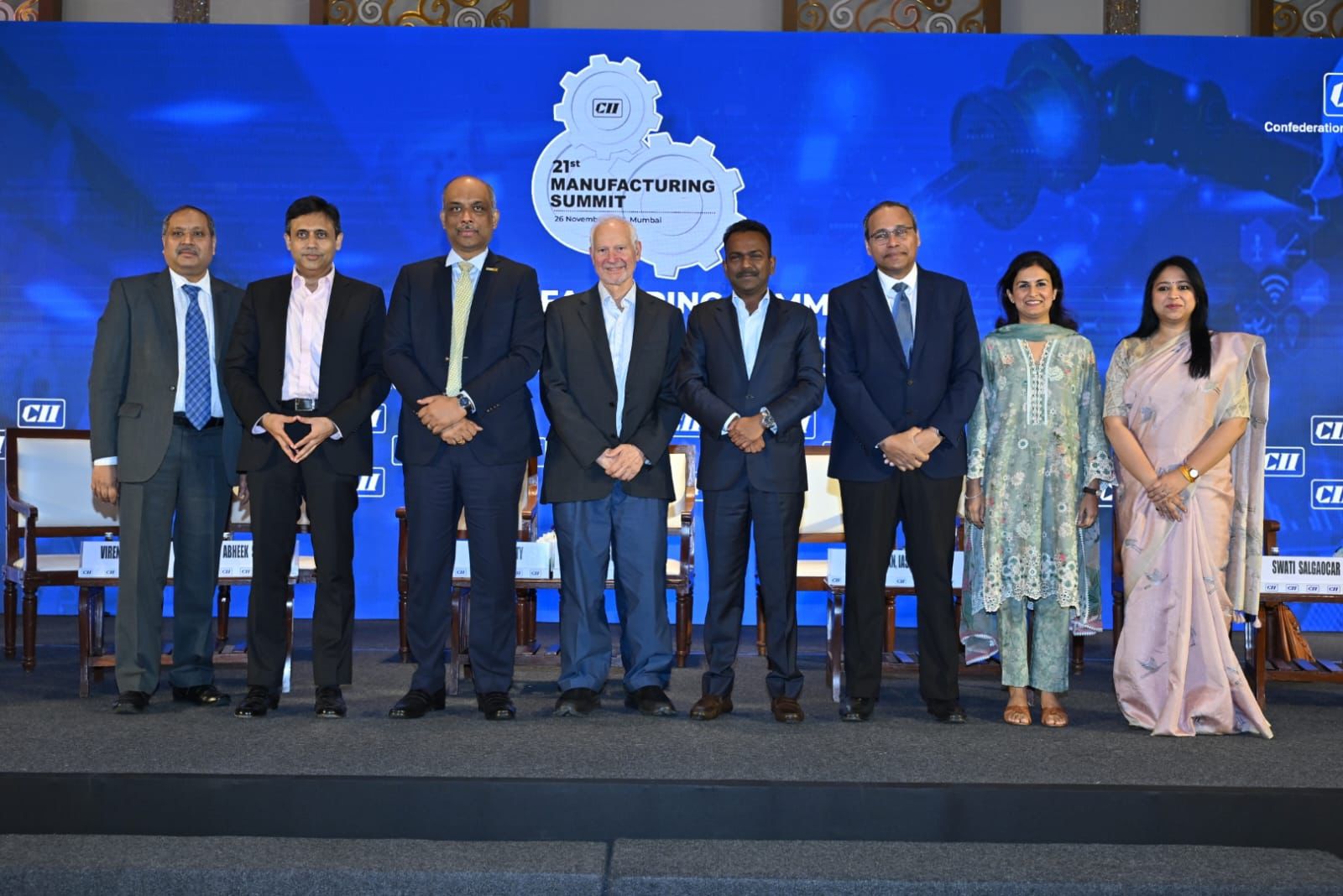
MUMBAI : The Confederation of Indian Industry (CII) organised the 21st edition of the CII Manufacturing Summit 2025 on 26 November 2025 at the Jio World Convention Centre, Mumbai. With the theme “Shaping India’s Manufacturing Future: Competitiveness, Sustainability & Global Leadership,” the Summit convened senior government leaders, industry pioneers, technologists, and global strategists to chart a forward-looking agenda for India’s manufacturing transformation. As a flagship platform of CII, the Summit provided a timely forum for deep reflection on policy direction, technological shifts, and India’s global manufacturing ambitions.

Opening the Summit with an encouraging message, Dr P Anbalagan (IAS), Secretary (Industries), Government of Maharashtra, set the tone for the State’s economic aspirations. “Maharashtra is not just contributing to India’s growth story — it is shaping it. With a USD 530 billion economy, the nation’s highest FDI share, and a young, skilled workforce, we stand firmly at the forefront of industrial and technological transformation. Our vision for a $1 trillion economy by 2030 is anchored in inclusive, region-balanced development and powered by emerging sectors from EVs to semiconductors. With the New Industrial Policy 2025, we aim to unlock $850 billion in manufacturing and services investments, strengthening our leadership in innovation, exports, and sustainable industry.”

Building on this economic blueprint, industry leaders underscored the urgent need for India to seize this moment of global rebalancing in manufacturing. Mr Jamshyd N Godrej, Past President, CII & Chairman, CII Manufacturing Summit 2025, emphasised India’s readiness for a decisive leap: “Manufacturing has always been the engine that powers nations, and India now stands on the brink of a defining leap. With a strong policy push, rising investments, and a youthful workforce ready to embrace advanced technologies, we have the opportunity to shape a manufacturing future that is competitive, sustainable, and globally respected.”

Continuing this momentum, Mr R Mukundan, President-Designate, CII and MD & CEO, Tata Chemicals Ltd., highlighted the importance of capability-building: “Manufacturing leadership in the twenty-first century will be shaped not by scale alone, but by the ability to innovate, digitalise, and empower people… We have a historic opportunity to position India as a trusted, competitive, and future-ready global manufacturing hub.”

Ms Swati Salgaocar, Past Chairperson, CII Western Region, noted India’s growing confidence and global outlook: “Indian manufacturing is becoming more ambitious, more modern, and more outward-looking. The journey ahead requires sustained commitment—from industry to invest in capacity and R&D, from government to keep reforms moving, and from institutions like CII to strengthen training, capabilities, and global partnerships. Today’s Summit is a key step in shaping this future.”

Adding a strong policy perspective, experts in manufacturing excellence highlighted the alignment of national initiatives that now support India’s industrial rise. Mr Deepak Shetty, Chairman, CII Manufacturing Excellence Council and CEO & MD, JCB India, remarked: “From the Production-Linked Incentive schemes to Gati Shakti, GST 2.0, and the National Manufacturing Mission, India now has an aligned set of policy catalysts that can unlock a $7.5 trillion manufacturing economy by 2047. The foundation has been laid—our task now is to convert momentum into measurable outcomes.”

Concluding the leadership reflections, global strategy experts reinforced that competitiveness will depend on India’s ability to master technological and sustainability transitions simultaneously. Mr Abheek Singhi, Chair of Practices, Managing Director & Senior Partner, Boston Consulting Group, stated: “Technology is accelerating, infrastructure is upgrading, and sustainability is non-negotiable. These constants define the future of manufacturing — and India must lead by mastering them.”
EU Delegation likely to land in India as FTA discussions enter decisive stage

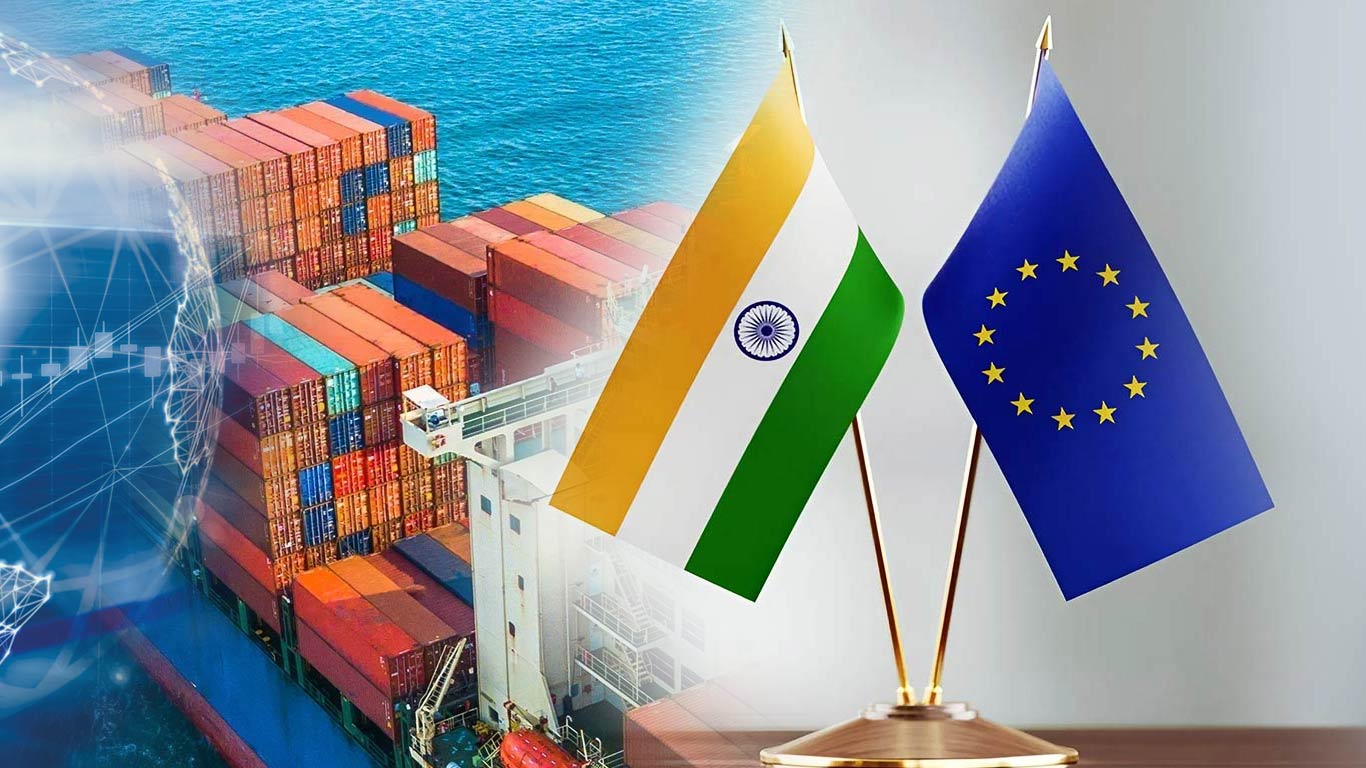
NEW DELHI : The European Union (EU) is set to dispatch a trade delegation to Delhi in the second week of December for a final push to substantially conclude the India-EU Free Trade Agreement (FTA) by year-end. Key outstanding issues, including the EU’s controversial carbon border tax and steel import quotas, are likely to be addressed, sources said.

The two sides are keen to make a formal announcement on the India-EU FTA at the India-EU Summit in New Delhi, possibly on January 27, to be attended by Prime Minister Shri Narendra Modi and the EU leadership, a source tracking the matter said.

“A team from the EU is likely to be in India in December second week (around December 8) to give a final push for the India-EU FTA by sorting out the remaining few topics. We can expect something to happen. This FTA is essential for the benefit of both EU and India,” said sources closely associated with Indo-German trade and commerce.

On Tuesday, the EU and India issued a joint statement on the India-EU Foreign Policy and Security Consultations and the Sixth Strategic Partnership Review Meeting on November 18-19 where the two underlined the year-end goal for the pact, among other issues.

Pacts in focus
“The two sides reaffirmed the shared ambition to conclude negotiations on the free trade agreement by the end of this year and to accelerate negotiations on the investment protection agreement and the agreement on geographical indications,” per the statement.

While there has been considerable progress in most areas related to market access in goods and services, including the complex rules of origin, the vexed areas of EU regulatory mechanisms including the Carbon Border Adjustment Mechanism (CBAM) and the EU Deforestation Regulations (EUDR), are yet to be sorted out.

CBAM will lead to carbon taxes on sectors such as steel, aluminium and cement from 2026 while the EUDR regulations could affect exports of agricultural products as exporters would need to prove that their products are `deforestation-free’.

“India has been insisting that the EU agree to some mechanism that would ensure that the benefits of the FTA will not get offset by the EU regulations but the bloc is resisting it,” the first source said.

Delhi also wants some assurance of flexibility on the EU proposal to cut down on duty-free quotas in steel imports and increase tariffs on over-quota shipments, the source added.

These issues were discussed in detail during Commerce & Industry Minister Shri Piyush Goyal’s visit to Brussels on October 26-28 where he met European Commissioner for Trade and Economic Security Maros Sefcovic.

Later, EU DG Trade Sabine Weyand was in New Delhi on November 5-6, 2025, for high-level talks with India’s Commerce Secretary Rajesh Aggarwal on key technical and policy issues.

India’s bilateral trade in goods with the EU was $136.53 billion in 2024-25 (exports worth $75.85 billion and imports worth $60.68 billion), making it the largest trading partner for goods, per government numbers.

EU opens doors to 102 Indian seafood exporters, easing impact of US tariffs

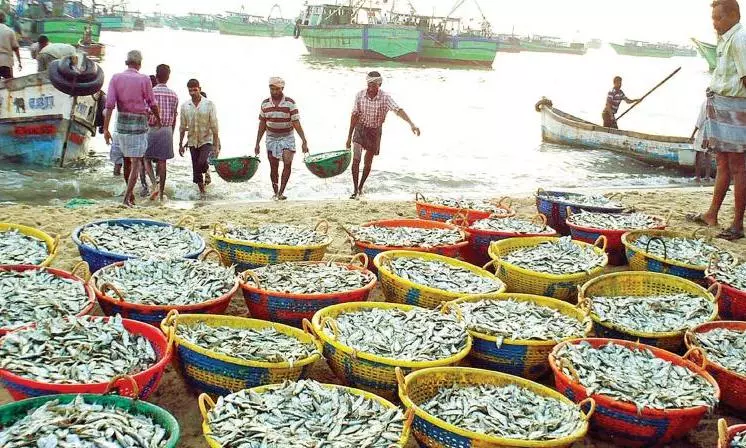
NEW DELHI : Commerce Minister Shri Piyush Goyal on Tuesday said that several Indian seafood exporters have avoided major losses from the recent US tariff decision, as the European Union has approved 102 Indian exporters to access its market after nearly nine years.

Goyal said the government had expected a temporary setback for the marine sector since the US did not move ahead with a bilateral trade agreement this year. However, the EU’s decision has provided a major boost.

“Our seafood exports, which we thought would take a hit as we have not concluded the bilateral trade agreement… We are happy to note that thanks to quality control measures, Indian seafood exporters have gained access to the EU market after nine years,” Goyal said.

With the Quality Control Order (QCO) strengthening domestic standards, the Ministry believes Indian exporters are now more competitive and better placed to explore new global markets. Goyal added that seafood exports have seen strong growth over the last three months following the EU’s approval.

He noted that the sector was among the worst hit after US President Donald Trump imposed tariffs. Despite this, exports have shown improvement. “From April to October last year our seafood export was $4.21 billion. This year it is already $4.82 billion. All of this leads to job creation and business opportunities,” he said.

European nations have traditionally been tough markets for marine products, with the bloc not approving any Indian fishing or processing units for almost a decade. The Commerce Ministry said the breakthrough came after India tightened its quality ecosystem through a series of QCOs, which also played a key role during negotiations with the EU.

According to the Ministry, the EU’s approval is important not just for immediate export gains but also for India’s long-term goal of positioning itself as a dependable supplier of high-standard marine products.

Indo-German Chamber of Commerce signs two key deals pertaining to MSME and skilling

NEW DELHI : The Indo-German Chamber of Commerce (IGCC) on Tuesday signed two major deals pertaining to MSME and skilling. The first MoU was between the Gedee Technical Training Institute (GTTI), the Madras Export Processing Zone (MEPZ), and the Section 8 Company with shareholders from the members of IGCC and the German Business Group, Chennai, for the support and establishment of a dedicated Skill Development Centre at MEPZ, Tambaram.

The centre will offer structured training pathways focused on developing specialists in advanced machining and engineering disciplines. MEPZ has earmarked a 30,000 sq. ft. dedicated facility to house the centre’s workshops, CNC laboratories, simulation units, and training bays. In phase 1, the center will offer short-term, industry-aligned programs in CNC machining, CNC lathe and milling operations, CNC programming, ANSYS simulation, and mastercam-based CAM. And in phase 2, they will introduce long-term, deep domain programs tailored to high-precision manufacturing, enabling trainees to specialise in sectors that face critical skill shortages globally.

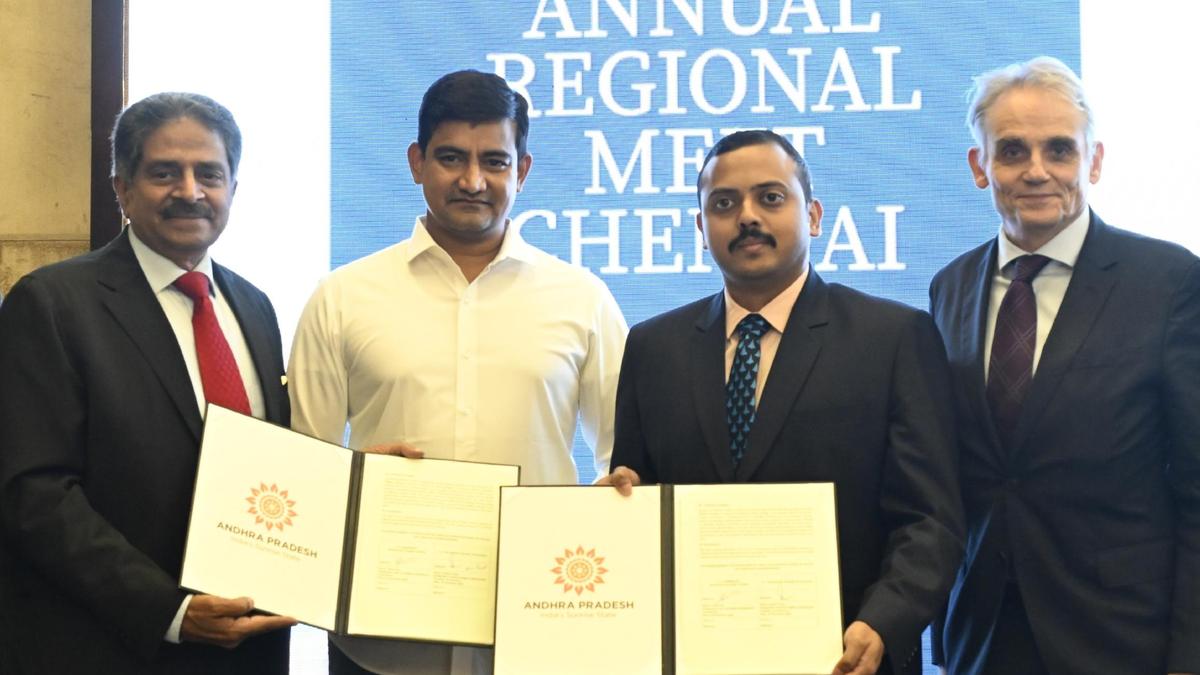
The second one was the exchange of the letter of intent between IGCC and the Andhra Pradesh MSME Development Corporation to strengthen the MSME sector in Andhra Pradesh. The formal documents were exchanged in the presence of Kondapalli Srinivas, Minister for MSME, Government of Andhra Pradesh. This partnership will promote the entry and expansion of German industries across manufacturing and trade sectors in the state. This collaboration will further support the introduction of German curriculum–based technical training and facilitate the establishment of technical training centres in Andhra Pradesh to boost industrial skill capabilities.

Andhra Pradesh’s MSME Minister said: “We are creating ecosystem for SME units. We are developing over 175 MSME parks. We are creating sector based parks primary focusing on medical equipment. We got large industries and we will align the small units with them.”

Ranjit Pratap, Chairman, Southern Region Council, IGCC, said, “Indo-German trade and manufacturing in India are booming. IGCC aims to facilitate and improvise the existing bonhomie between the two countries. These partnerships demonstrate our commitment to advancing industrial potential and developing skilled talent that will define future growth of our country.”

Rites to export in-service diesel locomotives to South Africa : CMD Mithal

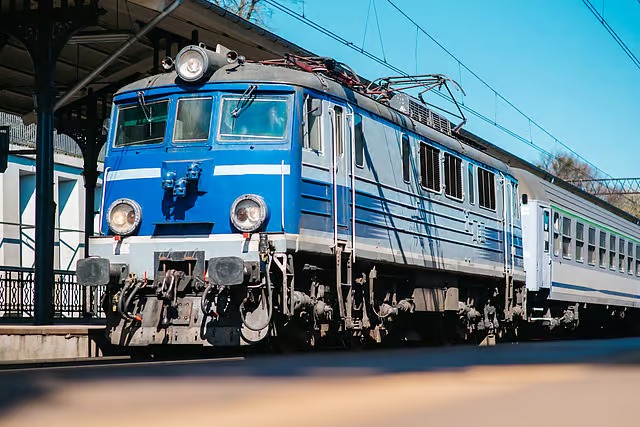
NEW DELHI : RITES Limited, a firm under the Ministry of Railways, for the first time will export in-service diesel locomotives to South Africa from the end of this fiscal year, the company’s Chairman and Managing Director, Rahul Mithal, said.

Since Indian Railways is almost fully electrified, it is exploring opportunities to export its in-service diesel locomotives, having over 15 years of functional life remaining, he said.

RITES has secured orders to export 18 in-service locomotives to South Africa after suitable modifications to suit the country’s operational requirements, he said.

While RITES has been exporting new locomotives, this is the first time the company has secured an order for the export of in-service locomotives, he added. South Africa follows the Cape Gauge system, where the distance between the tracks is 1,067 mm, whereas India’s rail system operates on the Broad Gauge system with a track width of 1,676 mm.

“We will deliver the first modified in-service diesel locomotive by Q4FY26, and with our promising products and services, we hope to secure more such orders from South Africa’s neighbouring countries,” Mithal told PTI.

He added that while RITES has been exporting new locomotives, this is the first time the company has secured an order for the export of in-service locomotives.

Indian Railways has over 500 diesel locomotives that can potentially be exported, Mithal said, adding that RITES believes that the first export order delivery could open new markets abroad.

Besides, RITES has been awarded the task of designing and making operational passenger holding areas at 76 major stations across the country, in collaboration with the Railway Land Development Authority (RLDA).

Among other significant achievements is RITES’ order of exporting 200 passenger coaches to Bangladesh, Mithal said, adding that in another couple of months, the first train set of 20 coaches will be exported.

The Navratna central public sector enterprise (CPSE) offers consultancy services across 13 verticals such as railways, highways, metros, airports, buildings, ports & waterways, urban city planning, bridge & tunnel engineering and sustainability, among others.

The company recently announced its financial performance for the second quarter (July-September), which showed double-digit sequential growth with over 150 fresh orders worth Rs 850 crore, he said.

Mithal said the company has maintained a consistent strike rate of receiving one order a day for the past seven financial quarters, and in Q2, it outperformed this with 1.6 orders a day.

He said the company’s focus on its five-point action plan — securing one order a day, one export order a quarter, achieving an order book of Rs 10,000 crore by the first quarter of the next financial year, sequential improvement with expeditious execution of orders, and maintaining profit margins above 15 per cent — has put it on the right path with the right decisions.

Source : PTI

Acts of exceptional bravery at sea honoured at IMO Annual Awards ceremony.

LONDON: Officer Lee Tae Young, a first mate from the Republic of Korea, has been awarded the IMO Award for Exceptional Bravery at Sea, in recognition of his heroic actions that saved 12 fellow crew members from the Geum Seong No. 135 when it sunk in November 2024. 

He was honoured during a special ceremony recognizing seafarers held in London on 24 November 2025, in the margins of the IMO Assembly taking place from 24 November to 3 December 2025.  

IMO Secretary-General Mr. Arsenio Dominguez applauded Mr. Lee “for the extraordinary leadership, courage and selflessness” he displayed, adding that the safety of seafarers remains paramount at IMO.  

IMOBraveryAwards insidepic medium 1 Acts of exceptional bravery at sea honoured at IMO Annual Awards ceremony.

Ms. Lydia Ferrad of the International Transport Workers’ Federation (ITF), which had nominated Mr. Lee, accepted the award on his behalf. 

A story of survival and comradeship 

In a statement to IMO ahead of the awards, Mr. Lee recounted how he risked life for his crewmates on 8 November 2024, when the fishing vessel Geum Seong No. 135 rapidly listed and capsized:  

“In that instant, my body moved instinctively, my actions preceding my thoughts. I acted on the belief, ingrained from my days as a scuba diving instructor, that cool headedness saves lives.”  

Mr. Lee, who had no prior search and rescue training, immediately jumped into action, throwing two life rings and helping crew members climb to safety in extremely difficult conditions. While some crew members managed to hang on to the propeller – the only part of the vessel that remained above water – others were swept away by strong currents and waves.  

“I prioritized my colleagues over my own safety. It wasn’t so much a choice I made, but rather a feeling of family, having lived together on the sea. That feeling remains unchanged to this day,” he continued. 

Out of the 27 crew members on board the vessels, 12 were rescued by Mr. Lee. He was the last to leave the Geum Seong No. 135. 

“At every moment I wanted to give up, my family’s faces came to mind. And my colleagues before me looked at me with eyes that said, ‘I want to live.’ That gaze made my body move again,” he added. 

He was grateful for the award, while stressing that the safety of seafarers is not an individual responsibility, but one that both shipowners and governments must share: “We must never forget that a single lapse in vigilance can take a life.” 

Certificates of Commendation 

During the event, Certificates of Commendation were presented to the following:   

  • Captain Flouris Dimitrios and the crew of the tug supply vessel Aigaion Pelagos, nominated by Greece, for their exceptional bravery, exemplary seamanship and resource management skills in the salvage operation of the M/T Sounion. The Captain and crew successfully averted the catastrophic environmental disaster under adverse safety and security conditions, risking their own lives. The vessel was sailing in the Red Sea carrying about 150,000 metric tons of heavy crude oil and nearly 3,000 metric tons of fuel/bunkers on board, when it was struck by three uncrewed aerial devices and lost engine power. After the crew evacuated, several explosions and fires dispersed on the main deck, causing extensive damage to the vessel.  The crew carried out an extensive salvation operation, boarding the abandoned vessel under extreme heat and hazardous conditions, managing to extinguish all the fires and ensure the cargo was stationary. The actions of the Aigaion Pelagos Captain and crew were crucial in preventing an environmental disaster.   
    Captain Dimitrios was at the Awards Ceremony to receive the certificates.     
  • The Captain and crew of the Rescue 901 helicopter of the 103 Squadron, Gander NL&L, Royal Canadian Airforce, nominated by Canada for their courage, tenacity and technical skill displayed during the rescue of the 20 crew members of the 207-meter-long disabled cargo vessel MBC Baltic III. The helicopter required hand flying due to turbulence from persistent and extreme aircraft altitude, while the vessel violently rocked amidst 18-foot waves and 40-55 knots of wind. Though the ship’s deck grew dangerously slippery due to ice and the bridge in complete disarray with scattered debris, the rescue team successfully managed to hoist the whole crew to safety.    
    Major Peter Wright and several crew members received the certificates.      
  • The Members of the Special Rescue Team of the Japanese Coast Guard, nominated by Japan, for their courage and determination during the rescue of the remaining survivor of the Japanese tugboat Shouei-Maru that caught fire and capsized due to a collision with a cargo ship while towing a barge.  Divers from the Kobe Coast Guard Office found and rescued the captain of the boat, who unfortunately passed away at the hospital. The Special Rescue Team later arrived at the site of the incident and struck the tugboat with a hammer to check for survivors. When they heard hammering back, the Team dived into the upturned tugboat without hesitation, risking their lives by entering without waiting for safety measures in poor conditions. After half an hour, the crew member was found and brough to safety just before the boat sank. This rescue operation was extremely difficult and carried out at great personal risk to the members of the Special Rescue Team who took part in it to save a life.    
    The certificates were received by Mr. Kento Noda, Leader of the Special Rescue Team, Japan Coast Guard.  
  • Aviation Survival Technician Second Class (AST2) Micheal Diglio, Coast Guard rescue swimmer at the Coast Guard Air Station Clearwater of the United States Coast Guard, nominated by the United States, for his brave and decisive actions during the rescue of two mariners stranded aboard the disabled sailing vessel Venture amidst the extreme conditions of the tropical storm Debby. After seeing a distress flair in the darkening sky, AST2 Diglio had to rely on the helicopter’s senses instead of visual cues during the search. Once the vessel was located, he deployed into the sea under time pressure due to the limited fuel reserves, battling rough currents and torrential rain to intercept the survivors. 
    After securing the first survivor amid towering waves and 50-knot winds, he signalled for the hoist whilst keeping the mariner stable during the ascent. He repeated this for this rescue process for the second survivor. AST2 Diglio displayed selflessness and courageous leadership whilst executing a life-threatening rescue operation.  
    AST2 Diglio was in London to accept his certificate at the Awards Ceremony.    

Letters of Commendation   

The following have been sent Letters of Commendation:   

  • Lieutenant Md. Shoiful Alam and the crew of the Bangladesh Coast Guard Tug Promotto, nominated by Bangladesh, for demonstrating courage and determination during a fire-fighting operation on the crude oil tanker Banglar Sourabh, successfully averting an oil spill and preventing significant marine environmental damage in poor weather conditions.    
  • The Master and the crew of the M/V Maersk Leader, nominated by Brazil, for rescuing all 20 crew members of the Bram Force, which has caught fire during a night operation with low visibility and a 2.5-meter swell. The crew completed six round trips between vessels to bring them to safety.    
  • Captain Todor Ivanov Todorov and the crew of the M/V Eleen Armonia, nominated by Bulgaria, for rescuing 34 crew members from the burning vessel Hasil Abadi 28, which was not visible on radar, battling the fire at great risk of explosion.    
  • Captain Xu Jiamin, Master of the M/V Luo Tong 7002, nominated by China, for leading a successful rescue of all 17 crew members from the drifting crane ship Yu Hang Qi Zhong 28 during a typhoon, using expert ship-handling skills in complete darkness and 4–5-metre waves.   
  • Mr. Li Wenxia, crew member of the of rescue helicopter B-7312, Beihai No.1 Rescue Flying Service, BeiHai Rescue Bureau, nominated by China, for showing exceptional resolve during the rescue of a fisherman who was holding onto the mast remaining above water of fishing vessel Jileyu 02163.     
  • Captain Qiang Li and the crew of the hopper dredger Jun Yang 1, nominated by China, who towed the powerless Leo Empire away from a reef, preventing a fuel spill and saving all seven crew members from a life-threatening situation and serious environmental incident.    
  • Captain Xiao Wei and the crew of the M/V Xin An Ning, nominated by China, for rescuing three people set adrift at sea after their pneumatic boat lost control and contact for five days without food or water.    
  • Captain Zhao Guoqiang and the crew of the M/S Amoy Century, nominated by China, who responded without hesitation to a distress call and rescued by the M/V ASL Bauhinia, which was on fire with hazardous cargo and 22 crew members and three security guards aboard, despite the danger of the explosion.    
  • Captain Kondrate Gvadzabia and the crew of the oil/chemical tanker Owl 5, nominated by Georgia, for demonstrating exceptional seamanship skills and professionalism by manoeuvring in rough seas and darkness to evacuate a critically ill civilian for helicopter extraction.    
  • Mr. Albert Buettner, Mr. Peter Pfeiffer, Mr. Alex Hempel and Mr. Rene Baudisch, the leader and the members of the Towing Assistance Team (TAT), Central Command for Maritime Emergencies (CCME), nominated by Germany, for showing great resolve in towing the powerless M/T Eventin, preventing it from grounding and causing major environmental damages from the 100,000 tons of crude oil aboard.    
  • Captain Soni Thomas and the crew of the INS Teg, Indian Navy, nominated by India, displayed outstanding bravery in rescuing nine survivors from the capsized tanker Prestige Falcon during strong winds and limited visibility, though one life was sadly lost.    
  • Captain Sabinesh S. Vayath and the crew of the M/V Maersk Yukon, nominated by Panama, for their vigilance and skill in rescuing two fishermen adrift for four days after their boat’s engine broke down, maneuvering the vessel in harsh conditions to bring them to safety.    
  • The crew members of the search and rescue vessel BRP Melchora Aquino (MRRV-9702), Philippine Coast Guard, nominated by the Philippines, demonstrated leadership and courage when rescuing 16 of 17 crew members from the sinking M/T Terranova during a typhoon, preventing a massive fuel spill of 1.4 million litres.    
  • Captain Byungsuk Park, Master of the fishing vessel 999 Bumsung, and Captain Hyeongtaek Im, Master of the fishing vessel 621 Yeongsin, nominated by the Republic of Korea, coordinated the night rescue of 10 fishermen from the capsized 136 Danuri, in conditions of large waves and strong winds.    
  • Captain Hyunwoo Park, Master of the fishing vessel New Angel, nominated by the Republic of Korea, for bravely rescuing 11 passengers, some of whom were drifting at sea with life jackets and close to hypothermic shock, from the flooded and grounded vessel Fighting, rushing to the half sunken vessel to save lives.    
  • Captain Atıl Aycan Aksoy, Master of the tug vessel Kurtarma 5, nominated by Türkiye, who prevented a collision by skilfully pushing the drifting Bunun Ace away from shore and passing boats moored, avoiding disaster.    
  • The crew members of the M/T T. Caroline, nominated by Türkiye, for courageously saving two people from the sinking sailing yacht Delfin and Deniz in rough seas, when helicopter and tug assistance was deemed unfeasible.    
  • Lieutenant Robert Turns, Lieutenant Commander Joshua Womboldt, AMT2 Eric Lamy and AST2 Hunter Joseph, crew members of helicopter CG- 6048, Coast Guard Air Station Kodiak, United States Coast Guard, nominated by the United States, for carrying out a high-risk nighttime rescue beyond operational limits in complete darkness and challenging circumstances to save an unresponsive mariner from the fishing vessel Alaska Victory.    

Seafarers’ migrant rescues recognized   

The bravery, professionalism and compassion demonstrated by crews of merchant vessels in the rescue of migrants at sea around the world was given special recognition, with the captains and crews of 11 different vessels, nominated by China, the United Kingdom, and the Cruise Lines International Association (CLIA).    

Galaxy Leader 

The Secretary-General further recognized the courage of the captain and crew of the cargo vessel Galaxy Leader, who endured more than a year in captivity between November 2023 and January 2025.  

“Their ordeal serves as a stark reminder of the many seafarers who, through no fault of their own, have been held hostage or subject to prolonged detention and grave danger at sea amid geopolitical tensions,” said Secretary-General Dominguez.  

IMO Award for Exceptional Bravery at Sea   

This annual Award was established by IMO to provide international recognition for those who perform acts of exceptional bravery, displaying outstanding courage in attempting to save life at sea or in attempting to prevent damage to the marine environment.    

Dr. Rosalie Balkin receives IMO International Maritime Prize

LONDON: Dr. Rosalie Balkin, Secretary-General of the Comité Maritime International (CMI), has been presented with the prestigious International Maritime Prize.

Dr. Balkin, who was nominated by the Government of Australia, was honoured at the annual IMO Awards Ceremony, held in London on 24 November 2025. The ceremony followed the first day of the 34th session of the IMO Assembly, taking place from 24 November to 3 December 2025.   

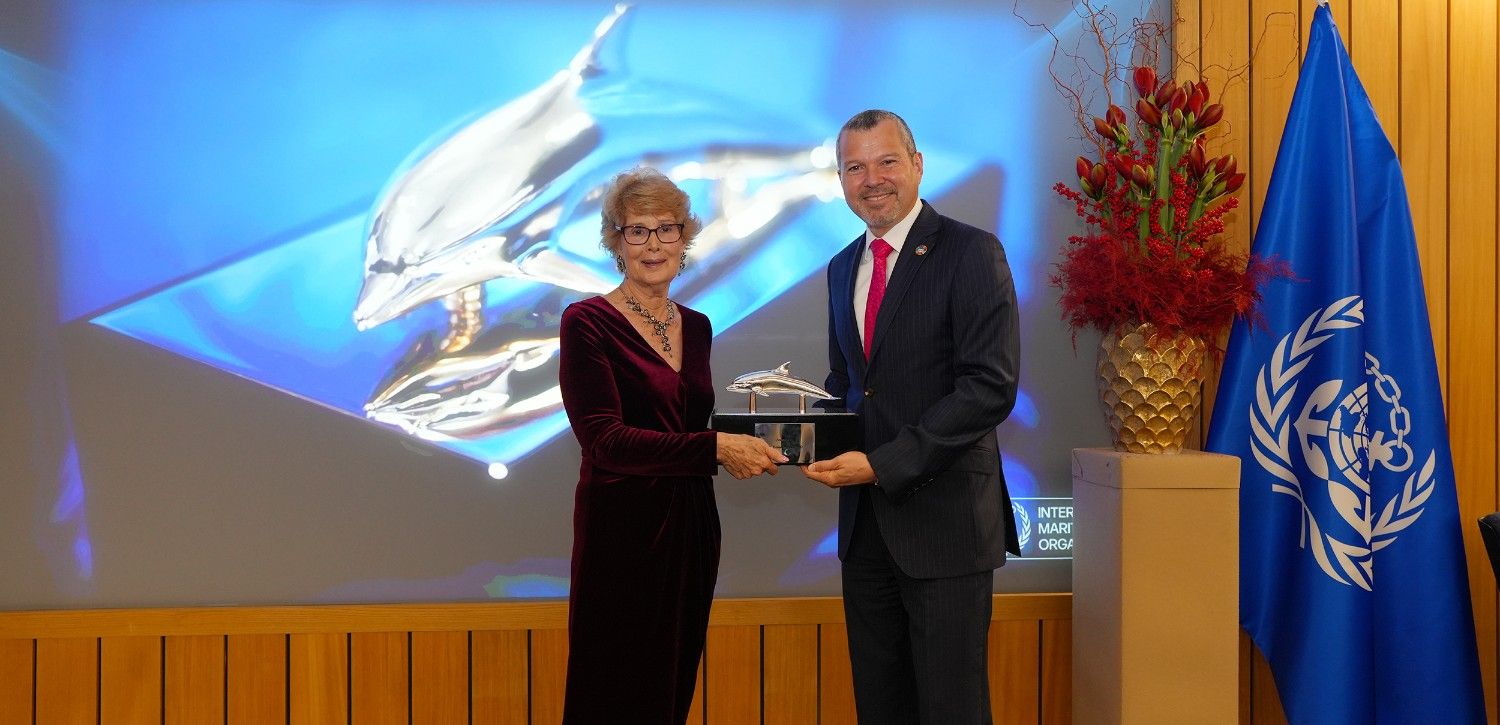
Handing Dr. Balkin the silver dolphin trophy, IMO Secretary-General Mr. Arsenio Dominguez commended her five-decade career, in which she has broken new ground, including as the first woman to lead the CMI – the world’s oldest organization focused on unifying international maritime law – since it was founded in 1897.   

He stated: “Dr. Balkin life’s work reflects an exceptional combination of excellence, integrity, and a firm commitment to advancing the global maritime community.”  

Dr.RosalieBalkinMaritimePrize25 insidepic medium Dr. Rosalie Balkin receives IMO International Maritime Prize

Accepting the Prize, Dr. Balkin reflected on her achievements: ”May I say how very proud and lucky I feel to have been given the opportunity to participate in the work of IMO and its related organisations. It is indeed a wondrous thing to be so richly rewarded for doing the work I still love to do.” 

The awards ceremony also honoured seafarers for exceptional bravery at sea.   

Academic excellence 

Dr. Balkin began her legal career in academia and has held various positions in a number of universities, including Wits University (South Africa), Melbourne and New South Wales Universities (Australia) and Cambridge University (United Kingdom).  

She has published extensively in public international law and international maritime law and was Academic Coordinator of The IMLI Treatise on Global Ocean Governance, Vol III: IMO and Global Ocean Governance, published by Oxford University Press in 2018. She is also the co-author (with Prof JLR Davis) of The Law of Torts, now in its sixth edition. 

Dr. Balkin served twice on the Board of Governors of the World Maritime University (WMU) and currently serves as Ethics Officer to the WMU President, offering advice on ethical matters and settlement of disputes. 

IMO role 

Dr. Balkin was the first woman appointed the Director of Legal Affairs and External Relations Division at IMO (1998-2013) and later the first female Assistant Secretary-General (2011-2013). 

During her tenure at IMO, Dr. Balkin oversaw several landmark diplomatic conferences that led to the adoption of new international conventions on maritime safety, pollution liability, wreck removal, and passenger protection. 

Notable conventions adopted while she was in the role include:  

  • 2001 International Convention on Civil Liability for Bunker Oil Pollution Damage;  
  • 2002 Athens Convention on the Carriage of Passengers and their Luggage at Sea;  
  • 2003 Supplementary Fund Protocol which established the International Oil Pollution Compensation Supplementary Fund;  
  • 2005 Protocol to the Convention for the Suppression of Unlawful Acts against the Safety of Maritime Navigation;  
  • 2005 Protocol to the Protocol of 1988 for the Suppression of Unlawful Acts against the Safety of Fixed Platforms Located on the Continental Shelf;  
  • 2007 Nairobi International Convention on the Removal of Wrecks; and  
  • 2010 International Convention on Liability and Compensation for Damage in Connection with the Carriage of Hazardous and Noxious Substances by Sea.    

Furthermore, as Legal Adviser to the International Oil Pollution Compensation (IOPC) Funds since 2014, she was instrumental in preparing the resolutions for dissolving the 1971 IOPC Fund, which was replaced by the 1992 Fund, strengthening the global compensation regime.  

Commitment to Australia’s maritime sector  

In Australia, Dr. Balkin has served in senior roles across the public service, including as Primary Legal Adviser to the Commonwealth Ombudsman and later as Assistant Secretary in the Attorney-General’s Department’s Office of International Law. During this time, she led the Australian delegation to the IMO Legal Committee meetings and was elected its Vice Chair in 1993.  

From 2018 to 2021, she served on the Board of the Australian Maritime Safety Authority (AMSA), emphasizing her long-standing commitment to the maritime sector. In 2018, she was appointed an Officer of the Order of Australia, one of the nation’s highest civilian honours, for her distinguished service to maritime law, global shipping standards, and legal education.  

Support for seafarers 

Dr. Balkin is a founding member of the Advisory Group of Seafarers’ Rights International, which advocates for fair treatment and legal protection of seafarers.  

International Maritime Prize  

The International Maritime Prize is awarded annually by IMO to the individual or organization judged to have made a significant contribution to the work and objectives of the Organization. The Prize is marked by the presentation to the winner of a dolphin sculpture and includes a financial award.   

DHL reveals Asia Pacific’s retailers are optimistic for the coming Black Friday and Cyber Monday shopping season

SINGAPORE: Black Friday and Cyber Monday are fast approaching, and Asia Pacific retailers are preparing for one of the busiest shopping periods of the year. The inaugural DHL eCommerce Trends Report: Business Edit reveals that Black Friday/Cyber Monday remains very much a staple in the sales calendar of online retailers. The report is based on a survey conducted among 4,050 businesses globally across 19 countries. The countries from Asia Pacific are Australia, India, Malaysia and Thailand.

Positive sales momentum anticipated in Asia Pacific

Across Asia Pacific, 85% of businesses stated that they will participate in this year’s Black Friday/Cyber Monday. Thailand leads the region with 92% of businesses confirming plans to join in, with India also showing high engagement where 90% of respondents also claiming participation. This appetite underscores the strategic importance of these events for retailers seeking to close the year on a high note.

Sales momentum is evident: Close to 7 out of 10 (69%) e-commerce companies in Asia Pacific reported higher Black Friday/Cyber Monday sales in 2024 compared to 2023. Thailand takes the crown once again with 88% registering increased sales – also the highest globally. Other markets in the region also recorded stronger sales during Black Friday/Cyber Monday. In fact, 1 in 2 companies in Asia Pacific responded that they sell more during this period.

Big deals, bigger expectations

The report also reveals that online shoppers intend to spend during Black Friday/Cyber Monday. According to the DHL eCommerce Trends Report: Shopper Edit, nearly 3 in 4 shoppers globally plan to buy during Black Friday/Cyber Monday, with Asia Pacific consumers reporting similar enthusiasm. Around 7 out of 10 shoppers in the region will be active shoppers during Black Friday, with Thailand and Australia leading the region at 78% and 73%, respectively. The top three product categories that shoppers will buy are electronics, clothing, and footwear.

The DHL eCommerce Trends Report: Shopper Edit surveyed 24, 000 online buyers across 24 key markets worldwide, including four countries in the APAC region: Australia, India, Malaysia and Thailand.

However, trust remains a critical factor. In Asia Pacific, 79% of retailers believe customers completely trust their offers, compared to the global average of 69%. Yet, barely half of the shoppers in the region admitted that they completely or mostly trust the retailer’s Black Friday offers and prices. This is reflected in 55% of Australian shoppers, 41% of Indian shoppers, 38% of Malaysia and 30% of Thai shoppers – signaling a perception gap that retailers must address.

Pablo Ciano, CEO at DHL eCommerce, said, “Black Friday is no longer just about discounts—it’s about trust and experience. In Asia Pacific, consumers are still keen to buy but their confidence is tempered by economic uncertainty as well as the reliability of retailers’ offerings. Retailers must double down on transparency and delivery excellence to better capture the opportunities these mega shopping events can provide.”

While discounts and exclusive deals are key motivators for online shoppers, delivery options and sustainability are a deal-breaker. Asia Pacific shoppers will abandon their carts when their preferred delivery options are unavailable or when they have concerns about sustainability. While 88% of Asia Pacific e-commerce companies proclaimed that sustainability is important to their business, not all of them show their customers the environmental impact of the delivery or returns. Similarly, although “delivery offering” is one of the top two reasons behind cart abandonment, half of the businesses responded that they would still partner with a logistics provider that was “cheaper” but had poor brand trust.

As Asia Pacific enters the peak shopping season, Black Friday and Cyber Monday remain powerful levers for growth. While consumers may be cautious, their appetite for value, convenience, and trust-driven experiences is clear. Retailers that embrace transparency, prioritize sustainability, and deliver on promises will not only capture sales during these marquee events but also build lasting relationships in an increasingly competitive e-commerce landscape.

To explore all the key findings, visit:DHL eCommerce insights

DHL – The logistics company for the world
DHL is the leading global brand in the logistics industry. Our DHL divisions offer an unrivalled portfolio of logistics services ranging from national and international parcel delivery, e-commerce shipping and fulfillment solutions, international express, road, air and ocean transport to industrial supply chain management. With approximately 400,000 employees in more than 220 countries and territories worldwide, DHL connects people and businesses securely and reliably, enabling global sustainable trade flows. With specialized solutions for growth markets and industries including technology, life sciences and healthcare, engineering, manufacturing & energy, auto-mobility and retail, DHL is decisively positioned as “The logistics company for the world”.

DHL is part of DHL Group. The Group generated revenues of approximately 84.2 billion euros in 2024. With sustainable business practices and a commitment to society and the environment, the Group makes a positive contribution to the world. DHL Group aims to achieve net-zero emissions logistics by 2050.

Pakistan to export 100,000 Tonnes of rice to Bangladesh amid strengthened trade ties

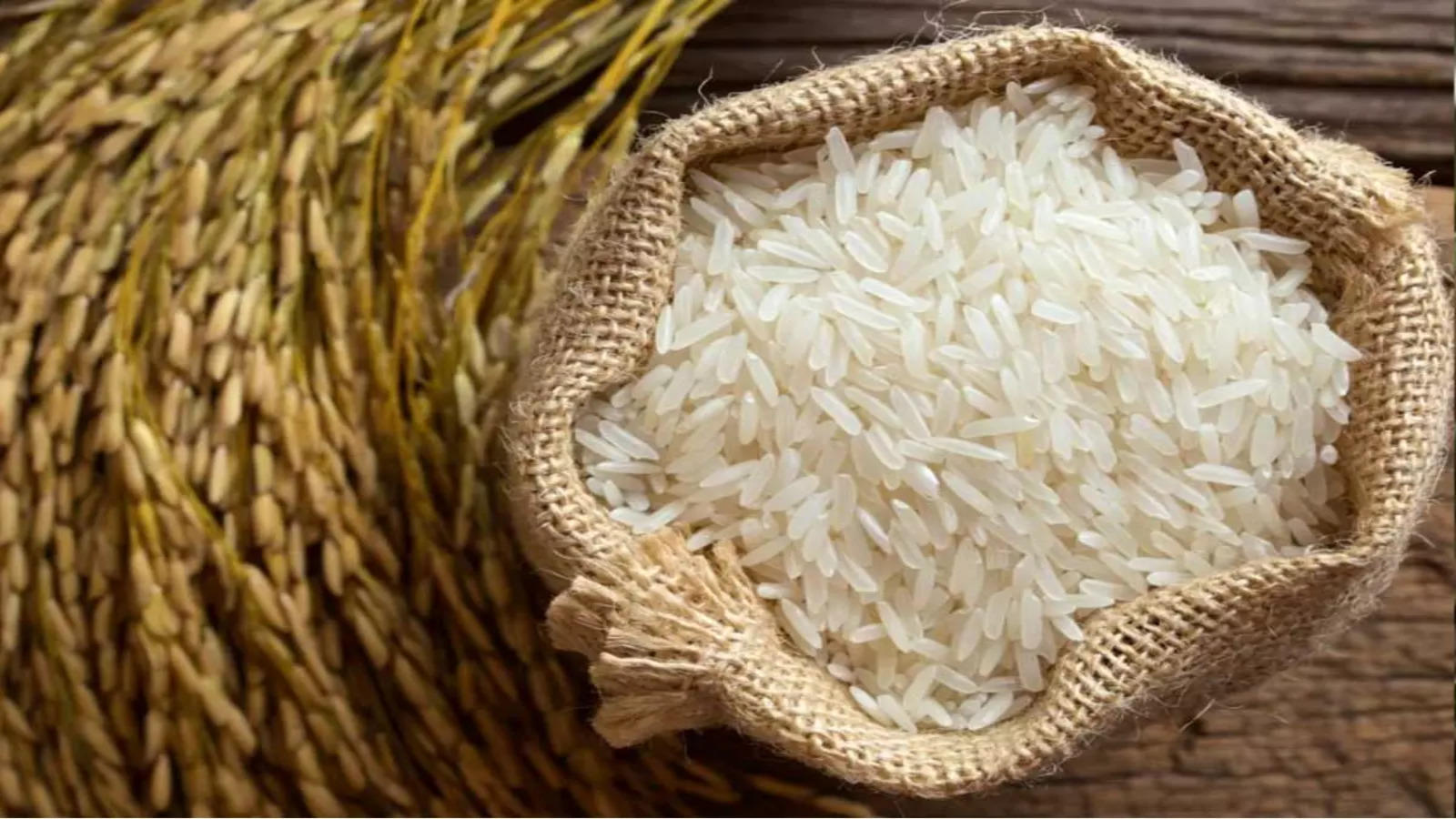
ISLAMABAD : Pakistan is set to export 100,000 tonnes of rice to Bangladesh, signaling a notable improvement in trade relations between the two nations since the removal of former Bangladeshi Premier Sheikh Hasina.

The Trading Corporation of Pakistan (TCP) issued a tender for this shipment last week.

The first batch, consisting of 50,000 tonnes, was exported earlier this year following the resumption of government-level rice trade between the two countries in February.

Pakistan is set to export 100,000 tonnes of rice to Bangladesh, signaling a notable improvement in trade relations between the two nations since the removal of former Bangladeshi Premier Sheikh Hasina last August.

The Trading Corporation of Pakistan (TCP) issued a tender for this shipment last week, according to a TCP official. This will be the largest rice consignment ever sent from Pakistan to Bangladesh.

The first batch, consisting of 50,000 tonnes, was exported earlier this year following the resumption of government-level rice trade between the two countries in February.

Waqar Ahmed, a leading rice exporter from Punjab, noted that stronger trade with Bangladesh could boost Pakistan’s rice industry, which has faced a 28 percent decline in exports during the first quarter of fiscal year 2025-26. “It is because of the many barriers we face from the government, which complicates the entire process,” he explained.

Nuclear-powered containerships could unlock $68 million in annual savings and eliminate GHG emissions

LONDON: Nuclear-powered containerships have the potential to eliminate bunker costs, cut greenhouse gas (GHG) emissions and deliver faster transit times, while maintaining safety and economic competitiveness.

The findings are drawn from a new Lloyd’s Register and LucidCatalyst report for Seaspan Corporation Pte. Ltd. The report examines the technical, economic, and regulatory potential of integrating small modular reactors (SMRs) into the containership fleet. LucidCatalyst performed a comprehensive analysis of the costs and benefits for Seaspan’s business model and collaboratively developed requirements that, if met, would create significant value.

For vessel operators, nuclear-powered vessels eliminate their largest operating costs, up to $50 million annually in bunker fuel and an estimated $18 million in carbon penalties.

According to the analysis, a single 15,000 TEU nuclear-powered containership operating at 25 knots (39% faster than conventional vessels) could deliver up to 38% higher annual cargo capacity compared to conventionally fuelled vessels through a combination of increased speed (enabling 6.3 versus 5 round voyages annually) and 5% additional container space from the elimination of fuel tanks and systems.

The report highlights that translating these requirements into a rigorous, requirements-led supply chain and procurement strategy, through a cross-industry consortium, is essential for widespread success. If industry pledges to purchase more than 1,000 units in 10–15 years, it estimates that modular reactors could be produced for US$750–1,000 per kilowatt, significantly cheaper than conventional nuclear power plants, and maintained within standard vessel drydock cycles. Each unit would be designed to operate for around five years between refuelling, drastically reducing downtime and providing independence from global bunkering networks.

The study outlines a roadmap showing how manufactured nuclear propulsion units could reach commercial readiness within four years of starting an intensive program, with total system costs below $4,000/kW and fuel costs under $50/MWh. Market modelling indicates potential uptake of 40–90 GW by 2050, depending on regulatory progress and industry adoption.

The findings also point to best practices for designing a competitive supply chain that provides depth of supply, competition on price and performance, and avoids vendor ‘lock-in’, as well as innovative reactor and fuel-leasing models that could help shipowners and operators manage upfront costs while maintaining safety and regulatory compliance.

The report forms the first phase of a three-part programme. The next stage will focus on concept design and regulatory readiness, including engagement with shipyards, port authorities, and nuclear regulators. A final phase will create a detailed implementation roadmap, outlining risk management, certification, and investment strategies for large-scale deployment.

Meg Dowling, Senior Engineer – Nuclear Technology and Alternative Fuels, Lloyd’s Register, said: “The energy transition and long-term sustainability challenges of shipping demands long-term solutions that can scale. Nuclear propulsion offers not just a decarbonised solution, but a transformative economic opportunity for shipowners and charterers alike. The results of this research give us a strong foundation to define how systems can be integrated within the commercial fleet to provide a credible pathway towards safe, commercially viable, zero-emission shipping.”

Peter Jackson, Chief Technology Officer at Seaspan Corporation Pte. Ltd., said: “As part of our ongoing efforts to find safe and commercially viable energy transition pathways, we have partnered with LR and Lucid Catalyst to explore nuclear propulsion for containerships. Small Modular Reactors (SMR’s) is a very exciting technology offering several desirable benefits for shipowners and operators, as outlined in this report. Naturally there are challenges to overcome, but I am confident that ongoing work in this area and studies like this will soon allow nuclear powered containerships to be operating safely, economically, and emission free.”

Eric Ingersoll, Managing Partner, LucidCatalyst, added: “Nuclear propulsion transforms shipping economics, not just emissions. Our analysis shows that nuclear-powered containerships will likely outcompete conventionally fuelled and green fuelled competitors—dominating their trading routes through superior performance without requiring green premiums. The key to unlocking this advantage is organising the market through sophisticated supply chain and technology strategies. By forming a cross-industry consortium, we can build a responsive supply chain and achieve competitive reactor costs, making nuclear the economically optimal choice for shipowners and charterers alike.”

LR has been leading industry efforts to develop the safety, regulatory and assurance frameworks needed for nuclear propulsion at sea. It is a founding member of the Nuclear Energy Maritime Organisation (NEMO) and an active contributor to the IAEA’s Atomic Technologies Licensed at Sea (ATLAS) programme. Both initiatives are shaping the global regulatory landscape for commercial nuclear shipping.

LR recently issued Navigating Nuclear Energy in Maritime, a new guidance document providing the first roadmap for the safe and responsible use of nuclear technology in commercial shipping and offshore industries. This guidance builds on LR’s industry-leading Fuel for Thought: Nuclear research programme, which brings together decades of classification, safety and compliance expertise with specialist nuclear insight to provide an evidence-based framework for project teams at every stage of development.