Home Blog Page 545

DHL Summit Solutions, Inc. (DSSI) accelerates sustainable transport with largest-owned EV fleet in the Philippines

 STA. ROSA, LAGUNA, PHILIPPINES: DHL Summit Solutions, Inc. (DSSI), the joint venture between DHL Supply Chain APAC and JG Summit Holdings, Inc., on Wednesday marked a major milestone in its sustainability journey with the inauguration of its Electric Vehicle (EV) fleet.

With its investment in 23 electric vehicles and 22 prime movers, DSSI is becoming one of the largestlogistic operators with an owned EV fleet in the Philippines. This strategic investment reinforces DSSI’s commitment to sustainable transport and operational excellence in support of DHL Group’s global goal of increasing the share of EVs in its first- and last-mile delivery fleet to over 66 percent by 2030 and achieving net-zero greenhouse gas emissions by 2050.

“This milestone reflects the strong partnership between DHL Supply Chain and JG Summit Holdings, Inc., and our shared ambition to build a cleaner and more efficient transport network for the Philippines. Through DSSI, we are stepping up our decarbonization efforts with larger EV fleets, smarter routing and emission reduced transport solutions. The launch of this new fleet in the Philippines is another important step in that journey. It raises the bar for sustainable logistics in the country while strengthening our ability to support customers with reliable and future-ready transport services,” said Edwin Wong, CEO of DHL Supply Chain Southeast Asia and interim Managing Director of DSSI.

Alan Surposa, Chief Resource Officer, JG Summit Holdings, Inc., added, “Our collaboration with DHL Supply Chain through DSSI reflects JG Summit’s commitment to building a logistics network that is both efficient and environmentally responsible. By investing in EVs and advanced technologies, we are helping shape a cleaner, smart future for the Philippines.”

The new fleet reflects DSSI’s two-pronged approach to sustainable transport:

  • Lower emissions – Deploying zero tailpipe-emission EVs to reduce greenhouse gas emissions and contribute to better air quality in urban centers.
  • Higher efficiency – Utilizing advanced prime movers equipped with smart systems to optimize routing and load planning, enabling fewer trucks to move more goods with greater efficiency.

Beyond the fleet investment, DSSI is creating an integrated and connected transport ecosystem via DHL’s Connected Control Tower (CCT) system. The CCT creates visibility and optimizes transport flows by centralizing management activities while overseeing every step of the process – from order receipt to shipment delivery – for more efficient, automated, and transparent operations. With real-time visibility, predictive maintenance, and data-driven scheduling enabled by digital platforms, the fleet achieves higher utilization, reduced downtime, and improved reliability.

“This rollout is not just about adding new vehicles. It is about giving our drivers and operations teams the tools to work smarter and safer. The new EVs and prime movers come with advanced safety features, better driving comfort and real-time data systems that help them perform their best every day. This is how we build a transport network that is cleaner, more connected and ready for the future,” added Warren Bodley, Vice President of Transport, DHL Supply Chain Southeast Asia.

In addition to reducing emissions, DSSI’s new EV fleet also provides a unique operational advantage. EVs can operate during cargo truck-ban hours in major city centers – typically from 6am to 10am and 5pm to 10pm, excluding Sunday and holidays in certain zones – giving DSSI more flexibility in meeting time-sensitive delivery windows in restricted urban areas.

Formed in 2019, DSSI is a joint venture between DHL Supply Chain and JG Summit, providing domestic transportation, logistics, warehousing and distribution services across the Philippines. The company continues to invest in sustainable, future-ready solutions that support the country’s growing logistics needs.

Canada’s Foreign Minister says Ottawa is working fast to advance India trade deal

CAPETOWN : Canadian Foreign Minister Anita Anand said on Monday (November 24, 2025) that Canada and India will move quickly to advance a trade deal after two years of strained relations, noting Ottawa has a new foreign policy in response to U.S. President Donald Trump’s trade war.

Ms. Anand’s statement follows a meeting between Canadian Prime Minister Mark Carney and Indian Prime Minister Shri Narendra Modi at the Group of 20 summit in South Africa this past weekend, where the leaders agreed to restart stalled talks for a new trade deal.

Relations between Canada and India have been strained since Canadian police accused New Delhi of playing a role in the June 2023 assassination of a Canadian Khalistani leader near Vancouver.”The leaders were adamant that this work proceed as quickly as possible so that timing is going to be expeditious,” Ms. Anand said in a telephone interview with The Associated Press.

Ms. Anand noted Mr. Carney’s goal to double non-U.S. trade over the next decade. Canada is one of the most trade-dependent countries in the world, and more than 75% of Canada’s exports go to the U.S. Most exports to the U.S. are exempted by the USMCA trade agreement but that deal is up for review in 2026.

“This is a completely new approach to foreign policy that is responsive to the global economic environment in which we find ourselves,” Ms. Anand said. “There is a new government, a new foreign policy, a new Prime Minister and a new world order where countries are becoming more protectionist and this is a moment for Canada as a trading nation.” Canada is also seeking better relations with Beijing. Mr. Carney and Chinese President Xi Jinping took a step toward mending the long-fractured ties between their countries last month with a meeting at the Asia-Pacific summit.

In 2023, Ottawa suspended trade talks after going public with allegations from the Royal Canadian Mounted Police that the Indian government was behind the assassination of Hardeep Singh Nijjar.

Nijjar, 45, was fatally shot in his pickup truck after he left the Sikh temple he led in Surrey, British Columbia.

Relations improved in June when Mr. Carney invited Mr. Modi to the G7 summit in Alberta and when both countries agreed to restore their top diplomats in August.

“This is a step by step process. And in the last six months, significant steps have been taken,” Ms. Anand said.

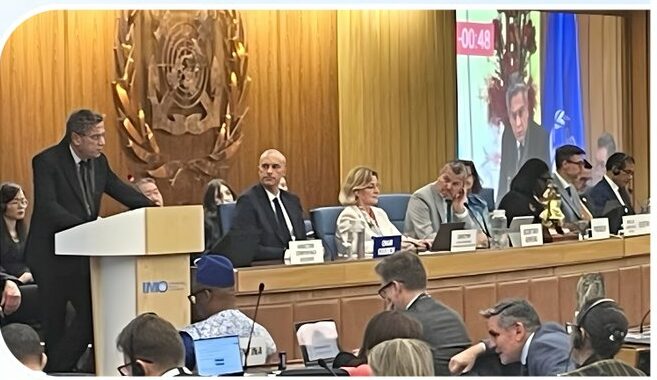
MoPSW Secy addresses the IMO Assembly in London

LONDON : Shri Vijay Kumar, Secretary, Ministry of Ports, Shipping and Waterways (MoPSW), addressed the International Maritime Organization (IMO) Assembly in London on Wednesday, reaffirming India’s commitment to advancing safe, sustainable and cooperative global shipping.

In his remarks, Shri Kumar underscored India’s focus on seafarer welfare, highlighting ongoing initiatives to enhance training, safety standards and professional support for Indian seafarers—one of the world’s largest maritime communities.
He also reiterated India’s strong push towards green and energy-efficient shipping, outlining efforts to reduce emissions, adopt cleaner fuels and promote environmentally responsible maritime operations.

Touching upon maritime security, the Secretary emphasised India’s proactive role in safeguarding sea lanes, supporting collaborative surveillance and strengthening regional and global cooperation to ensure safe and secure navigation.

He further noted India’s growing contribution to shaping global maritime dialogue, reflecting the nation’s expanding capabilities, regulatory advancements and commitment to multilateral engagement.

India is contesting the IMO Council elections (Category B) for the 2026–2027 term, aiming to deepen its participation in the global maritime governance framework and continue contributing to the IMO’s strategic objectives.

New global report ranks top container ports worldwide

SINGAPORE: Singapore is named the world’s leading container port in the first edition of the Leading Container Ports of the World (LCP) report, an independent global analysis published by DNV and Menon Economics. Shanghai and Ningbo-Zhoushan follow in second and third place, with Rotterdam and Busan completing the global top five.

Maritime transport carries close to 90 percent of global trade by volume, and container ports alone handle more than 80 percent of non-bulk merchandise. Today, these ports are undergoing a profound transformation, driven by rising trade flows, rapid advances in technology, and mounting pressure to meet climate targets.

Against this backdrop, DNV and Menon Economics have introduced the industry’s first global container port ranking. The LCP report compares leading practices of 160 ports against 35 indicators grouped into five pillars: enablers, connectivity and customer value, productivity, sustainability, and overall impact. These indicators are based on objective data, such as throughput volumes, berth productivity, emissions per Twenty-foot Equivalent Unit (TEU), and alternative fuel availability, and are complemented by expert assessments from leading shipping stakeholders. The LCP ranking complements other reports, such as the Leading Maritime Cities of the World (LMC) report, by providing a focused assessment of container port performance.

Knut Ørbeck-Nilssen, CEO Maritime at DNV, commented: “Container ports quietly underpin much of the global economy. Every year, they move more than 930 million TEUs, supporting the flow of goods that keep businesses running and communities supplied. As global trade patterns shift and the industry faces new pressures, ports that are able to adapt, communicate clear strategies, and invest in future-proofing their operations will continue to lead and set the pace for the sector’s evolution. This report aims to provide trusted insights that help ports and stakeholders navigate these changes with confidence.”

The report recommends that ports invest in scalable infrastructure, accelerate digitalization, and lead on sustainability while maintaining strong customer relationships and building resilience against disruptions. Clear strategic planning and transparent communication are essential for ports aiming to secure long-term competitiveness.

Port Authorities play a critical role in shaping the future of container ports. Forward-thinking strategies that prioritize productivity, service quality, digitalization and sustainability are essential for long-term competitiveness. While some ports did not rank among the top due to overall performance indicators, many port authorities across regions demonstrate a forward leaning mindset and are actively investing to close these gaps, a trend clearly reflected in the report.

Dr. Erik Jakobsen, Partner and Chair of Menon Economics, added: “The top-performing container ports are both expanding capacity and rethinking how technology shapes daily operations. We see ports where automation and digital tools are woven into every process, from vessel scheduling to cargo handling. Investments in cleaner energy and integrated transport links are also making a difference, helping ports operate more efficiently and adapt to new demands.”

Global top five container ports:

  1. Singapore
    Singapore achieved the highest overall score, leading in all five pillars of the ranking. Its world-class infrastructure, transparent governance, and strong connectivity make it a global benchmark. The port serves all major shipping lines and offers the most mainline services. Advanced automation and early investments in alternative fuel bunkering, green shipping corridors, and emissions reduction measures reinforce its leadership in sustainability.
  2. Shanghai (China)
    Shanghai is the world’s busiest container port, processing 51.5 million TEUs in 2024. It holds the highest Liner Shipping Connectivity Index score and offers extensive mainline services. The port combines smart technologies with efficient handling of Ultra Large Container Vessels and ranks second in sustainability thanks to robust shore power infrastructure and green corridor initiatives.
  3. Ningbo-Zhoushan (China)
    Ningbo-Zhoushan is the fastest-growing container port globally, handling 39.3 million TEUs in 2024 and recording a 26% increase in volume over the past three years. Its growth reflects its strategic role in China’s Belt and Road Initiative and its expanding global connectivity.
  4. Busan (South Korea)
    Busan serves as Northeast Asia’s logistics hub and a key transshipment point linking Chinese, Japanese, and Korean markets. Its strategic position and operational efficiency make it a critical node in regional and global supply chains.
  5. Rotterdam (Europe)
    Rotterdam is Europe’s largest container port and a leader in sustainability and innovation. It invests heavily in alternative fuel infrastructure, onshore power supply, and digital twin technology, consistently ranking as the top maritime gateway in Europe.

Notably, several of these ports (Singapore, Shanghai, Busan, and Rotterdam) are also featured in the LMC report, underscoring their dual role as global trade gateways and integrated maritime hubs.

In addition to the global ranking, the LCP report features regional rankings, with New York & New Jersey, Hamburg, Tanger Med, Jebel Ali and Sydney recognized as leaders in their respective regions.

The report is available to download here.

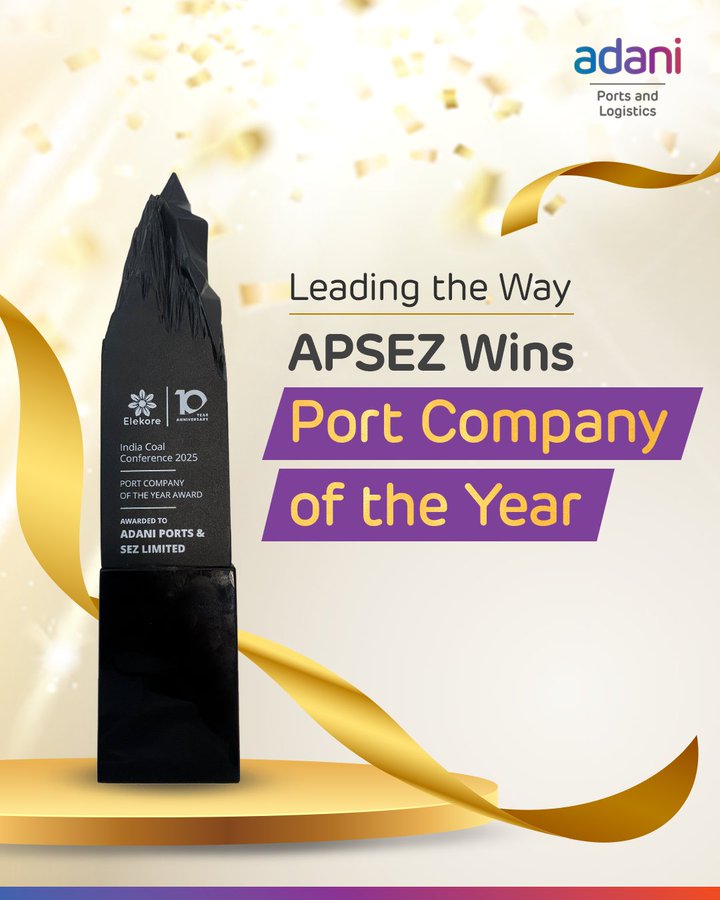
Adani Ports & SEZ wins ‘Port Company of the Year’ at India Coal Conference 2025

AHMEDABAD : Adani Ports and Special Economic Zone (APSEZ) has been honoured with the prestigious ‘Port Company of the Year’ award at the India Coal Conference 2025, reaffirming its position as a leading force in India’s maritime and logistics sector.

The recognition highlights APSEZ’s sustained commitment to operational excellence, customer-centric innovation, and its growing role in supporting India’s energy and commodities supply chain. The award also underscores the strong confidence placed in the company by its partners, stakeholders, and industry collaborators.

APSEZ stated that the achievement reflects the relentless efforts of its team, whose dedication continues to drive the organisation towards shaping the future of port-led infrastructure and integrated logistics solutions in the country.

The honour further cements APSEZ’s leadership in enhancing trade efficiency, expanding capacity, and strengthening India’s presence in the global maritime landscape.

Gujarat Pipavav Port says ₹17,000-cr MoU with GMB non-binding; major spend to follow concession extension

AHMEDABAD : Gujarat Pipavav Port Ltd (GPPL) has signalled that its recently signed ₹17,000-crore Memorandum of Understanding (MoU) with the Gujarat Maritime Board (GMB) is not a binding contract, and that the proposed investments will only be executed once the port secures an extension of its operating concession.

The MoU with GMB is not a binding contract with GMB. This is subject to concession extension. This expenditure will happen post the concession extension,” Girish Aggarwal, Managing Director of the company said about the agreement signed with Gujarat government in October 2025. The 30-year concession agreement of the port is set to expire on September 29, 2028.

GPPL said the proposed ₹17000 crore investment pipeline will be spread across a period of 30 years and spans a wide range of marine and landside assets aimed at scaling capacity across multiple cargo categories. “So the investments are around infrastructure development in the port of Pipavav. This would be around new liquid new jetties, liquid bulk container, RoRo, land site development etcetera, etcetera. So it encompasses a variety of infrastructure developments within the port,” Aggarwal told investors recently.

However, the company stressed that details of the plan are still evolving. “It is a little premature to talk about details of the ₹17,000 crore expansion. As I said, the ₹17,000 crore MOU is subject to concession extension. It is based on a master plan that will span the overall concession period and we would decide how we expand, you know as we move forward, I think it is a little bit premature to get into details,” he added.

Concession agreement
GPPL indicated that discussions with the GMB and Gujarat government regarding the concession agreement were advancing positively, with no concerns flagged so far. “In terms of concession extension again, we are moving in the right direction. Of course, the final decision, we will only hear from GMB and the Government of Gujarat. Things are progressing in the right direction and there are no red flags that I would like to call out,” Aggarwal remarked.

Separately, the company’s ongoing liquid berth expansion is set to drive significant capital expenditure over the next year. GPPL reaffirmed that the ₹700-crore liquid jetty remains on track for commissioning in November–December 2026. “So we had announced a ₹700 crore expansion for the liquid jetty which will get commissioned in November-December 2026. A majority of the ₹700 crore will be spent between January-June 2026,” the official added.

Source : BL

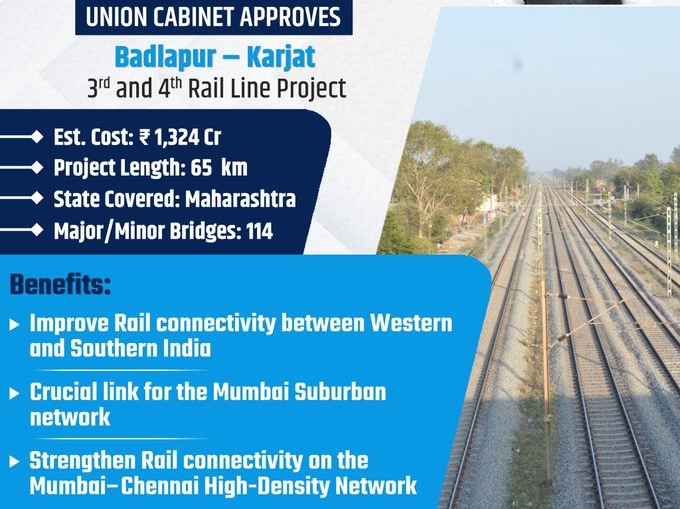
Cabinet approves two multitracking projects covering 4 Districts across the states of Maharashtra and Gujarat, increasing the existing network of Indian Railways by about 224 Kms

NEW DELHI: The Cabinet Committee on Economic Affairs, chaired by the Prime Minister Shri Narendra Modi, Wednesday has approved Two projects of Ministry of Railways with total cost of Rs. 2,781 crore (approx.). These projects include:

  1. Devbhumi Dwarka (Okha) – Kanalus Doubling – 141 kms
  2. Badlapur – Karjat 3rd and 4th line – 32 kms

The increased line capacity will significantly enhance mobility, resulting in improved operational efficiency and service reliability for Indian Railways. These multi-tracking proposals are poised to streamline operations and alleviate congestion. The projects are in line with the Prime Minister Shri Narendra Modiji’s Vision of a New India which will make people of the region “Atmanirbhar” by way of comprehensive development in the area which will enhance their employment/ self-employment opportunities.

The projects are planned on PM-Gati Shakti National Master Plan with focus on enhancing multi-modal connectivity & logistic efficiency through integrated planning and stakeholder consultations. These projects will provide seamless connectivity for movement of people, goods, and services.

The two projects covering 4 Districts across the states of Maharashtra and Gujarat, will increase the existing network of Indian Railways by about 224 Kms.

The approved multi-tracking project will enhance connectivity to approx. 585 villages, which are having a population of about 32 lakhs.

The approved doubling from Kanalus to Okha (Devbhoomi Dwarka) would provide enhanced connectivity to Dwarkadhish temple facilitating access to key pilgrimage destination and lead to all round development of Saurashtra region.

Badlapur – Karjat section forms part of Mumbai suburban corridor. The 3rd and 4th line project will improve the connectivity in Mumbai suburban area and meet the future demands of passengers, along with providing connectivity to Southern India.

This is an essential route for transportation of commodities such as coal, salt, container, cement, POL etc. The capacity augmentation works will result in additional freight traffic of magnitude 18 MTPA (Million Tonnes Per Annum). The Railways being environment friendly and energy efficient mode of transportation, will help both in achieving climate goals and minimizing logistics cost of the country, reduce oil import (3 Crore Litres) and lower CO2 emissions (16 Crore Kg) which is equivalent to plantation of 64 (Sixty Four) Lakh trees.

India will become Atmanirbhar in rare earth magnets in three-four years: Ashwini Vaishnaw

NEW DELHI: India will become self-reliant in rare earth magnets in three-to-four years, Union Minister Shri Ashwini Vaishnaw said on Wednesday, after he announced that the Union Cabinet has approved a Rs 7,280 crore scheme to promote the manufacturing of sintered Rare Earth Permanent Magnets (REPM).

“We will become Atmanirbhar within three-four years, considering that our production capacity would increase,” the minister said, responding to media query on when will India will become self-reliant on rare earth magnets.

REPMs are one of the strongest types of permanent magnets and are vital for electric vehicles, renewable energy, electronics, aerospace, and defence applications. The Scheme will support the creation of integrated REPM manufacturing facilities, involving conversion of rare earth oxides to metals, metals to alloys, and alloys to finished REPMs.

Driven by the rapidly growing demand from electric vehicles, renewable energy, industrial applications, and consumer electronics, India’s consumption of REPMs is expected to double by 2030 from 2025. At present, India’s demand for REPMs is met primarily through imports. With this initiative, India will establish its first ever integrated REPM manufacturing facilities, generating employment, strengthening self-reliance and advancing the nation’s commitment to achieve Net Zero by 2070.

The total financial outlay of the scheme is Rs 7280 crore, comprising a sales-linked incentives of Rs. 6450 crore on REPM sales for five (5) years and capital subsidy of Rs.750 crore for setting up an aggregate of 6,000 MTPA of REPM manufacturing facilities.

The scheme envisions allocating the total capacity to five beneficiaries through a global competitive bidding process. Each beneficiary will be allotted up to 1,200 MTPA of capacity.

The total duration of the scheme will be seven years from the date of award, including a two-year gestation period for setting up an integrated REPM manufacturing facility, and five years for incentive disbursement on the sale of REPM.

This initiative by the Government of India is a landmark step towards strengthening the domestic REPM manufacturing ecosystem and enhancing competitiveness in the global markets. By fostering indigenous capabilities in REPM production, the scheme will not only secure the REPM supply chain for domestic industries but also support the nation’s Net Zero 2070 commitment. It embodies the Governments unwavering commitment to build a technologically self-reliant, globally competitive, and sustainable industrial base, in line with the vision of Viksit Bharat @2047.

“The entire industry is very enthusiastic about this program, because this will create resilience in manufacturing supply and value chains,” Vaishnaw said.

The government expects higher participation from the industry, as was witnessed under the semiconductor chips manufacturing programme, he said, referring to the consultations the Ministry of Heavy Industries had held with various stakeholders.

At present, India fulfils its permanent magnet needs through imports, be it from Japan, China, Australia, among others, he said.

“With today’s programme, and its implementation, our import dependence will practically reduce to zero. We will completely become Atmanirbhar in the manufacturing of permanent magnets. We will collaborate with some countries, which include Australia and Japan. There are a few technologies which are common in both semiconductor and permanent magnet manufacturing. There are also a few companies who are common in both the manufacturing,” the minister said.

India has among the top three rare-earth reserves in the world, the minister said.

The incentive under REPM would be in the form of both capex and production incentives, the minister said, without getting into specifics.

Both government and private companies will be able to participate in REPM manufacturing, he said.
Companies involved in electronics, steel, and automobile manufacturing showed interest in REPM, Vaishnaw said.

Guidelines for the REPM program will be rolled out rapidly, and its execution too will be fast paced, he said.

On probable locations for the five REPM units, he said it will be decided by the companies.

“REPM is a strategic sector, where we have to be present. Without this sector, manufacturing activities in many sectors may stop,” the minister noted.

Source: ANI

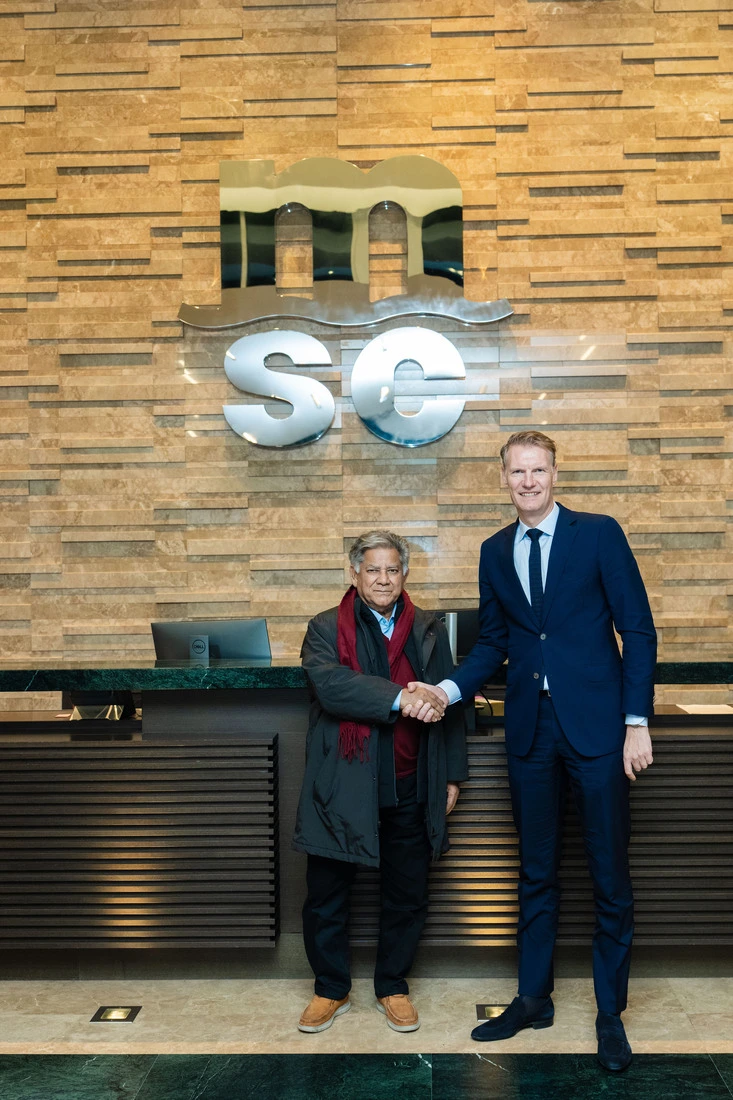
MSC Group to boost trade connectivity for Bangladesh with Inland Terminal Investment

GENEVA : MEDLOG, the global logistics operator and part of the MSC Group of companies, has signed an important concession agreement to operate the Pangaon Inland Container Terminal (PICT). This strategic project will enhance inland supply chain connectivity, ease cargo flows, and support both the communities and broader industrial growth of Bangladesh.

“As a world leader in container shipping, serving over 500 ports and investing in more than 100 terminals globally as well as operating a significant number of inland terminals through MEDLOG, the MSC Group brings with it a unique understanding of how cargo ecosystems evolve and thrive. Our investment in the Pangaon Inland Container Terminal reflects our belief that Bangladesh has the potential to become one of South Asia’s major gateways for regional and global trade,” said Soren Toft MSC CEO.

The PICT near the capital Dhaka is strategically located on the Buriganga River, and close to the high-speed Dhaka–Mawa–Bhanga Expressway. The terminal will help build trade resilience and efficiency by shifting the country’s cargo movement from congested roads to low emission inland waterways.

Under the new concession, MEDLOG will oversee operations, supply and automation at PICT, bringing global expertise and advanced technology to optimize inland logistics. MEDLOG will also expand terminal facilities to support growing trade volumes to offer an annual handling capacity of 160,000 TEUs. In addition, to strengthen multimodal connectivity, MEDLOG will charter inland barges from PICT to connect Pangaon with other river terminals and seaports.

“At MEDLOG, we firmly believe that inland container traffic plays a pivotal role in building efficient, sustainable supply chains. By investing in dedicated river terminals, barge links and multimodal infrastructure, we are committed to shifting cargo from congested roads to waterways, reducing carbon emissions, easing urban congestion and supporting our customers’ growth. Our aim is clear: deliver reliable inland connectivity that benefits trade, the environment and local communities,” said Salvatore Prudente, Executive Director of MEDLOG.

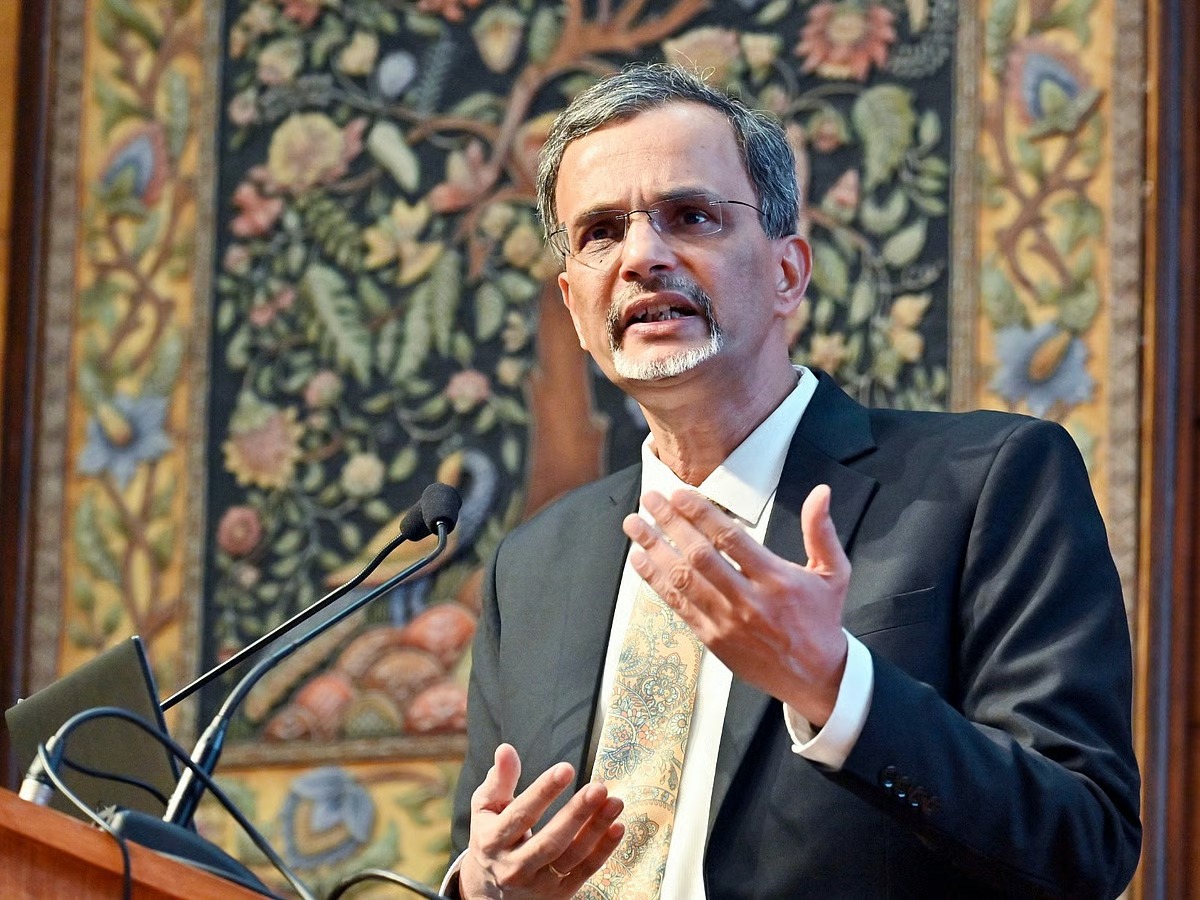
Indian Economy to surpass $4 trillion in FY26 : CEA Nageswaran

NEW DELHI : Chief Economic Advisor V Anantha Nageswaran on Tuesday said the size of Indian Economy is expected to cross $4 trillion in current fiscal.

He said with the geopolitics in a “huge state of flux”, economic growth is very vital prerequisite to maintain India’s standing and leverage in the global scheme of things.

India currently is the fifth largest economy in the world with a GDP of around $3.9 trillion. Speaking at the IVCA Green Returns Summit 2025, Nageswaran said the Indian economy is already sort of crossing the $4 trillion mark, in the course of the current financial year, from $3.9 trillion at the end of March 2025.

“So, whatever we do with respect to greening the economy, energy transition, environment, dealing with climate change and climate volatility have to be aligned with our priorities, both in the near term and the medium term,” he said.

Nageswaran said the country is well aware of the potential consequences of global warming and climate change and more generally for agriculture environment, and coastlines, etc. “That is why we as a country are committed to achieving net zero by 2070,” Nageswaran said.