Home Blog Page 554

JBIC Governor Mr. Nobumitsu Hayashi led delegation visit to NICDC’s Flagship Industrial Park Dholera SIR, Gujarat

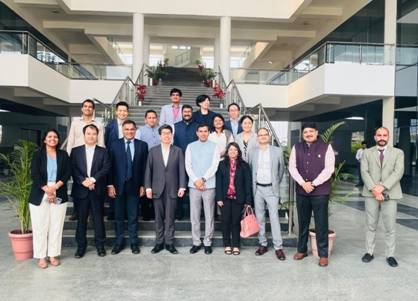
DHOLERA : The Governor of the Japan Bank for International Cooperation (JBIC), Mr. Nobumitsu Hayashi, led a delegation to the National Industrial Corridor Development Corporation (NICDC) flagship industrial park, Dholera Special Investment Region (Dholera SIR), Gujarat, on Friday to review the progress of India’s first and emerging Semicon City and assess the fast-advancing greenfield and ‘Plug-and-Play’ industrial infrastructure ecosystem. The visit comes at a time when India is witnessing unprecedented momentum in semiconductor manufacturing, with Dholera positioned at the forefront as the country’s most ambitious greenfield smart industrial city.

During the visit, JBIC Governor Mr. Hayashi appreciated the world-class planning, infrastructure readiness and strong governance framework of Dholera SIR. He expressed confidence in India’s semiconductor growth story and noted the rapid progress of the Tata Electronics Semiconductor Fabrication Facility. He stated that Dholera’s integrated systems, scalable utilities and future-ready infrastructure make it a globally competitive destination for advanced electronics and semiconductor investments.

The visit began at the ABCD Building, Dholera’s administrative and command centre, where the delegation reviewed the integrated planning framework, digital governance architecture and centralised utility management systems. The delegation then visited major utility installations, including the Integrated Command and Control Centre (ICCC), the Experience Centre and the Torrent Power 400 kV Substation, highlighting Dholera’s strong utility backbone and readiness for advanced manufacturing.

At the Tata Electronics Semiconductor Fabrication Facility in Dholera SIR, the delegation held discussions with Tata Group leadership and reviewed the 163-acre semiconductor fabrication plant being developed with an investment of ₹91,000 crore in partnership with Powerchip Semiconductor Manufacturing Corporation (PSMC), Taiwan. The facility, India’s first commercial semiconductor fabrication plant, will commence production in 2027, manufacturing 50,000 wafers per month across 110 nm to 28 nm nodes and generating more than 20,000 high-skilled jobs. JBIC Governor Hayashi expressed optimism that the project would strengthen India–Japan technological collaboration and contribute to global semiconductor value chains.

The Chief Executive Officer and Managing Director of the National Industrial Corridor Development Corporation (NICDC), Shri Rajat Kumar Saini, briefed the delegation on the key features of Dholera SIR. The Managing Director of the Dholera Industrial City Development Limited (DICDL), Shri Kuldeep Arya, along with officials from NICDC and DICDL, was also present.

Japanese companies continue to expand their presence across NICDC industrial cities, reflecting strong confidence in India’s manufacturing ecosystem. The Toyota Group remains a major contributor with investments across multiple NICDC nodes covering more than 116 acres and exceeding ₹1,700 crore. The latest addition to the pipeline is NX Logistics India Private Limited, which has expanded operations from its 12.86-acre facility in Shendra (AURIC) to a new facility in Dholera, raising its total commitment to ₹86 crore and creating 400 jobs. Other Japanese companies, including Nippon Express, Nagata, Sango and Fuji Silvertech, are also scaling operations across logistics, component manufacturing and industrial infrastructure projects.

Dholera Industrial City has emerged as a key destination for strategic international engagements exploring opportunities in advanced manufacturing, semiconductors and smart industrial ecosystems. Recently, the Ambassador of Japan to India and Bhutan, Mr. Ono Keiichi, led a 70-member Japanese business delegation representing sectors such as semiconductors, electronics, machinery, infrastructure, logistics and financial services. The visit strengthened Japan’s engagement and reinforced Dholera’s position as a preferred destination for Japanese investors. Earlier, the Vice Governor of Iwate Prefecture, Japan, Mr. Jun Sasaki, along with representatives from the Japan International Cooperation Agency (JICA), visited Dholera on 04 September 2025 to explore collaboration opportunities in industrial development and high-technology manufacturing.

Over the past year, Dholera has hosted delegations from JBIC, the Japan Chamber of Commerce, the Japan External Trade Organization (JETRO), JICA, leading Japanese corporations and global investors. These engagements, along with continuous discussions with Japanese companies evaluating semiconductor, electronics system design and manufacturing (ESDM) and advanced manufacturing opportunities, highlight Dholera’s growing role in India–Japan industrial cooperation under the National Industrial Corridor Development Programme (NICDP).

Dholera is also developing into a complete smart industrial city supported by robust social infrastructure. Key facilities under development include a 200-bed multispeciality hospital, an integrated school, a guest house, a corporate hotel, an international tent city, a multi-cuisine food court and a fire station. Private developers are progressing with residential and commercial projects, including a mixed-use complex in the Activation Area with apartments, retail and business spaces.

With rapid infrastructure development, a strong pipeline of global investors and India’s most comprehensive semiconductor manufacturing ecosystem, Dholera is emerging as a major driver of India’s industrial transformation and a preferred hub for next-generation industries. The visit of JBIC Governor Hayashi reflects international confidence in Dholera’s capabilities and its strengthening role in global and India–Japan semiconductor value chains.
ZIM Reports Financial Results for the Third Quarter of 2025

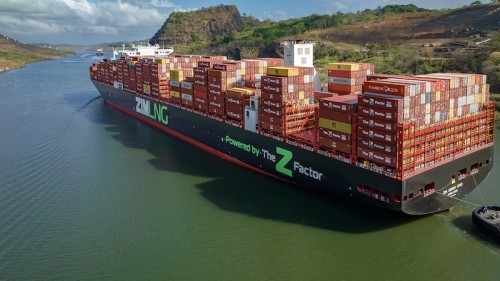
HAIFA: ZIM Integrated Shipping Services Ltd. announced on Friday its consolidated results for the three and nine months ended September 30, 2025.

Third Quarter 2025 Highlights

  • Net income for the third quarter was $123 million (compared to $1,126 million in the third quarter of 2024), or diluted earnings per share of $1.024 (compared to $9.34 in the third quarter of 2024).
  • Operating income (EBIT) for the third quarter was $259 million, compared to $1,235 million in the third quarter of 2024.
  • Adjusted EBITDA for the third quarter was $593 million, a year-over-year decrease of 61%.
  • Adjusted EBIT for the third quarter was $260 million, compared to $1,236 million in the third quarter of 2024.
  • Revenues for the third quarter were $1.78 billion, a year-over-year decrease of 36%.
  • Carried volume in the third quarter was 926 thousand TEUs, a year-over-year decrease of 5%.
  • Average freight rate per TEU in the third quarter was $1,602, a year-over-year decrease of 35%.
  • Net leverage ratio1 of 0.9x as of September 30, 2025, compared to a net leverage ratio of 0.8x as of December 31, 2024; net debt1 of $2.64 billion as of September 30, 2025, compared to net debt of $2.88 billion as of December 31, 2024.

Eli Glickman, ZIM President & CEO, stated, “Our business resilience was evident in the third quarter, during which we delivered solid earnings while navigating a volatile rate environment, influenced by a complex geopolitical landscape, frequent changes in tariff policies and an ongoing global trade war. With larger, more modern, cost-effective capacity, we continued to capitalize on our agile fleet deployment strategy, which enables ZIM to respond quickly to developments in market conditions, now facing downward pricing pressure. In addition to adapting our Transpacific network based on prevailing demand trends, we have diversified our geographic footprint to capture new growth opportunities. Consistent with our commitment to sharing our success with our investors, the company has declared a quarterly dividend of $0.31 per share, or a total of $37 million, distributing 30% of quarterly net income in accordance with our dividend policy. I am proud to lead a company that, since its IPO about five years ago, has distributed approximately $5.7 billion to its shareholders—more than 25 times what the company raised in its IPO in January 2021.” 

Mr. Glickman added, “The current market environment has been marked by disruptions and fluctuations more frequent and acute than in the past. Amidst such uncertainty, our focus remains on controlling what we can and taking proactive steps to drive sustainable and profitable growth over the long term. We intend to build on our progress to date through continued diligent execution—further strengthening ZIM’s business resilience, both commercially and operationally, and advancing our competitive position in the industry.”

Mr. Glickman concluded, “Looking ahead, while fourth quarter market conditions have weakened, we are increasing the midpoints of our 2025 guidance ranges based on our strong performance to date. Overall, we believe our differentiated commercial strategy, enhanced fleet profile, and improved cost structure position ZIM to weather near-term volatility and deliver long-term value for shareholders.”

Summary of Key Financial and Operational Results
Q3-25Q3-24  9M-25   9M-24
Carried volume (K-TEUs)……………………9269702,7652,768
Average freight rate ($/TEU)……………….1,6022,4801,6221,889
Total Revenues ($ in millions)……………..1,7772,7655,4196,260
Operating income (EBIT) ($ in millions)..2591,2358731,870
Profit before income tax ($ in millions)….1721,1336021,604
Net income ($ in millions)……………………1231,1264431,591
Adjusted EBITDA ($ in millions)…………..5931,5311,8442,725
Adjusted EBIT ($ in millions)……………….2601,2368721,891
Net income margin (%)741825
Adjusted EBITDA margin (%)……………..33553444
Adjusted EBIT margin (%)………………….15451630
Diluted earnings per share ($)…………….1.029.343.6613.17
Net cash generated from operating
activities ($ in millions)……………………….
6281,4981,9242,600
Free cash flow1 ($ in millions)……………..5741,4541,7872,470
SEP-30-25DEC-31-24
Net debt ($ in millions)……………………….2,6422,876

Financial and Operating Results for the Third Quarter Ended September 30, 2025
Total revenues were $1.78 billion for the third quarter of 2025, compared to $2.77 billion for the third quarter of 2024, mainly driven by the decrease in freight rates as well as a smaller decline in carried volume.

ZIM carried 926 thousand TEUs in the third quarter of 2025, compared to 970 thousand TEUs in the third quarter of 2024. The average freight rate per TEU was $1,602 for the third quarter of 2025, compared to $2,480 for the third quarter of 2024.

Operating income (EBIT) for the third quarter of 2025 was $259 million, compared to $1,235 million for the third quarter of 2024. The decrease was driven primarily by the above-mentioned decrease in revenues.

Net income for the third quarter of 2025 was $123 million, compared to $1,126 million for the third quarter of 2024, also mainly driven by the above-mentioned decrease in revenues.

Adjusted EBITDA for the third quarter of 2025 was $593 million, compared to $1,531 million for the third quarter of 2024. Adjusted EBIT was $260 million for the third quarter of 2025, compared to $1,236 million for the third quarter of 2024. Adjusted EBITDA and Adjusted EBIT margins for the third quarter of 2025 were 33% and 15%, respectively. This compares to 55% and 45% for the third quarter of 2024, respectively.

Net cash generated from operating activities was $628 million for the third quarter of 2025, compared to $1,498 million for the third quarter of 2024.

Financial and Operating Results for the Nine Months Ended September 30, 2025
Total revenues were $5.42 billion for the first nine months of 2025, compared to $6.26 billion for the first nine months of 2024, primarily driven by the decrease in freight rates.

ZIM carried 2,765 thousand TEUs in the first nine months of 2025, compared to 2,768 thousand TEUs in the first nine months of 2024. The average freight rate per TEU was $1,622 for the first nine months of 2025, compared to $1,889 for the first nine months of 2024.

Operating income (EBIT) for the first nine months of 2025 was $873 million, compared to $1,870 million for the first nine months of 2024. The decrease was primarily driven by the above-mentioned decrease in revenues as well as the increase in depreciation.

Net income for the first nine months of 2025 was $443 million, compared to $1,591 million for the first nine months of 2024, mainly driven by the above-mentioned factors driving the change in EBIT, as well as the accounting of income taxes.

Adjusted EBITDA was $1.84 billion for the first nine months of 2025, compared to $2.72 billion for the first nine months of 2024. Adjusted EBIT was $872 million for the first nine months of 2025, compared to $1,891 million for the first nine months of 2024. Adjusted EBITDA and Adjusted EBIT margins for the first nine months of 2025 were 34% and 16%, respectively. This compares to 44% and 30% for the first nine months of 2024.

Net cash generated from operating activities was $1.92 billion for the first nine months of 2025, compared to $2.60 billion for the first nine months of 2024.

Liquidity, Cash Flows and Capital Allocation
ZIM’s total cash position (which includes cash and cash equivalents and investments in bank deposits and other investment instruments) decreased by $135 million from $3.14 billion as of December 31, 2024 to $3.01 billion as of September 30, 2025. Capital expenditures totaled $67 million for the third quarter of 2025, compared to $50 million for the third quarter of 2024. Net debt position as of September 30, 2025, was $2.64 billion compared to $2.88 billion as of December 31, 2024, a decrease of $234 million. ZIM’s net leverage ratio as of September 30, 2025, was 0.9x, compared to a net leverage ratio of 0.8x as of December 31, 2024.

Third Quarter 2025 Dividend
In accordance with the Company’s dividend policy, the Company’s Board of Directors declared a regular cash dividend of approximately $37 million, or $0.31 per ordinary share, reflecting approximately 30% of third quarter 2025 net income. The dividend will be paid on December 8, 2025, to holders of record of ZIM ordinary shares as of December 1, 2025.

All future dividends are subject to the discretion of Company’s Board of Directors and to the restrictions provided by Israeli law.

Use of Non-IFRS Measures in the Company’s 2025 Guidance
A reconciliation of the Company’s non-IFRS financial measures included in its full-year 2025 guidance to corresponding IFRS measures is not available on a forward-looking basis. In particular, the Company has not reconciled Adjusted EBITDA and Adjusted EBIT because the various reconciling items between such non-IFRS financial measures and the corresponding IFRS measures cannot be determined without unreasonable effort due to the uncertainty regarding, and the potential variability of, the future costs and expenses for which the Company adjusts, the effect of which may be significant, and all of which are difficult to predict and are subject to frequent change.

Updated Full-Year 2025 Guidance 
The Company has updated its full year 2025 guidance and now expects to generate Adjusted EBITDA between $2.0 billion and $2.2 billion and Adjusted EBIT between $700 million and $900 million. Previously, the Company expected to generate Adjusted EBITDA between $1.8 billion and $2.2 billion and Adjusted EBIT between $550 million and $950 million.

India’s largest conglomerate stops Russian oil imports amid global pressure

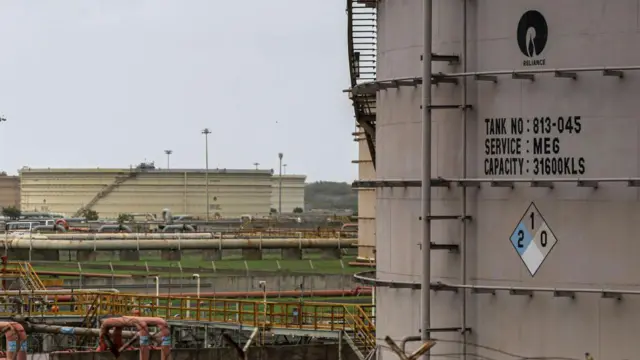
NEW DELHI : India’s largest conglomerate Reliance Industries, owned by billionaire Mukesh Ambani, has stopped importing Russian crude oil for its export-only refining unit at Jamnagar in the western state of Gujarat.

The move aims to comply with an EU ban on fuel imports made from Russian oil through third countries, which takes effect next year. It also aligns with US sanctions on major Russian oil producers Rosneft and Lukoil, set to kick in on Friday.

“This transition has been completed ahead of schedule to ensure full compliance with product-import restrictions coming into force on 21 January 2026,” Reliance said in a statement.

The White House has welcomed the move by Reliance.

“We welcome this shift and look forward to advancing meaningful progress on US-India trade talks,” the White House press office said, in a statement to the Washington Post.

Delhi’s purchase of Russian oil has been a major sticking point between India and the US. Trump slapped India with 50% tariffs in August, including a 25% penalty for buying Russian oil and arms, which he says was funding Moscow’s war on Ukraine – a charge India has denied.

India’s purchases of discounted Russian oil shot up from barely 2.5% of imports before the war began in 2022, to around 35.8% in 2024-25.

Reliance is India’s largest importer of Russian oil, and accounts for around 50% of Russian oil flows into the country.

The Jamnagar refinery is the largest single-site refining complex in the world – with two separate units dedicated for exports and the domestic market.

Mounting global pressure appears to be having a desired effort on India after months of resistance from Delhi to reduce oil purchases from Moscow. Over the past couple of months, oil refiners in India have been lowering their imports, according to several reports.

Reliance reduced orders from sanctioned Russian companies by 13% while increasing monthly imports from Saudi Arabia to 87% and Iraq to 31% in October, according to a Carnegie Endowment report.

Indian state-controlled refineries are also skipping Russian crude imports for December contracts according to Bloomberg.

Given India has sharply curtailed its imports, Washington must “immediately scrap the additional 25% tariff on Indian goods”, Ajay Srivastava of the Global Trade and Research Initiative (GTRI) think-tank said.

“Maintaining the tariff despite India meeting US expectations undermines goodwill and risks slowing already delicate trade negotiations,” Mr Srivastava said.

Negotiations for a broader trade deal between India and the US have been severely hampered by the former’s Russian oil purchases, but the tensions appear to be gradually letting up after months of uncertainty.

ONGC awards 300 MW solar project as part of push toward 10 GW renewable capacity by 2030

NEW DELHI : Oil and Natural Gas Corporation (ONGC) has taken a significant step toward its renewable energy target of 10 GW by 2030, awarding a 300 MW ISTS-connected solar power project that will generate approximately 710 million units of green power annually.

The company announced the development in an X post on Friday, calling it a major leap in its clean-energy journey and a contribution to India’s national mission of achieving 500 GW of renewable energy capacity by 2030.

The new solar project forms a central component of ONGC’s integrated plan to develop 300 MW of solar and 300 MW of wind power for captive consumption across major operational hubs, including Hazira, Uran and ONGC’s group entity OPaL. With this addition, the company said its onshore green power consumption is expected to surge from 6 per cent to 47 per cent, marking a transformational shift toward sustainable operations.

“To achieve its renewable energy target of 10 GW by 2030, ONGC has taken another major leap in its clean-energy journey by awarding a 300 MW ISTS-connected Solar Power Project with a capacity to generate ~710 million units of green power every year. This milestone strengthens ONGC’s commitment to India’s national mission of 500 GW of RE capacity by 2030. This project forms a core part of ONGC’s integrated plan to develop 300 MW Solar + 300 MW Wind for captive consumption across key operational hubs like Hazira, Uran and group entity @OpalIndiaIn,” the energy major added in the post.
“ONGC, along with ONGC Green Ltd (OGL), now operates a renewable energy portfolio of 2.85 GW. The company noted that with upcoming tenders for 300 MW wind, 600 MW solar and 1,200 MWh battery energy storage systems (BESS), the combined ONGC-OGL portfolio is poised to expand to 3.70 GW in the near future,” the post read.

According to ONGC, each addition to its renewable energy footprint enhances India’s energy security, reduces emissions and accelerates the nation’s transition toward a cleaner future. The company reiterated its commitment through the message: “Energy Now. Energy Next. A greener India in the making.”

Source : ANI

TS Lines orders up to four Eco-Efficient Container Vessels from Fujian Mawei Shipbuilding

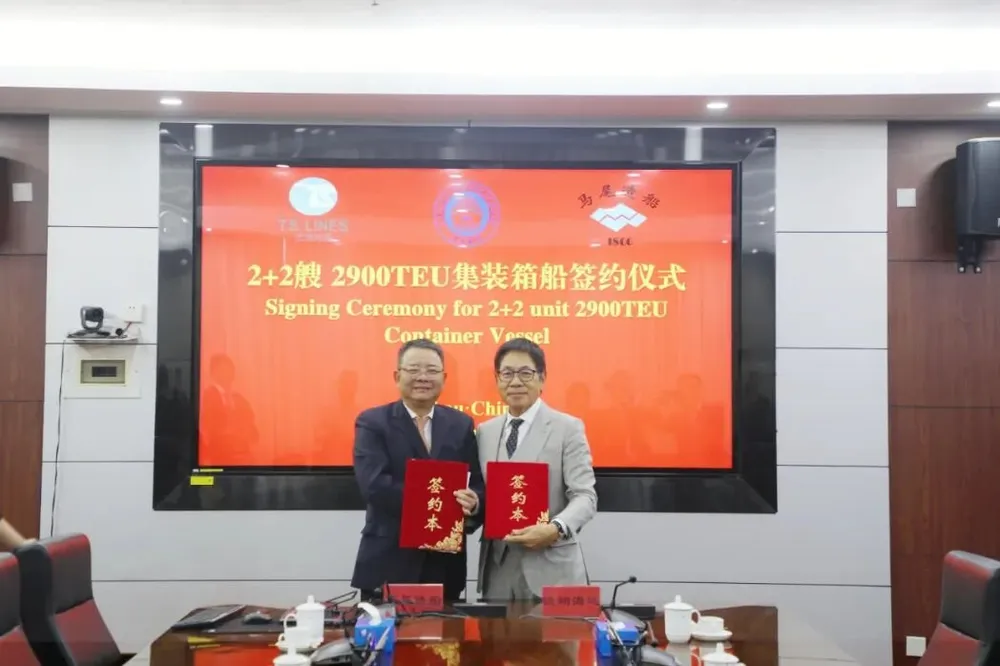
SINGAPORE / TAIPEI : TS Lines, a leading intra-Asia container carrier, has announced the signing of a shipbuilding agreement with Fujian Mawei Shipbuilding for the construction of two firm 2,900-TEU container vessels, with options for an additional two ships of the same class. The newbuilding programme forms part of TS Lines’ long-term fleet expansion and sustainability strategy.

The order reinforces the carrier’s continued partnership with Mawei Shipbuilding, which has delivered several feeder vessels for TS Lines in previous years.

Next-Generation, Efficient Vessel Design
The newly ordered vessels feature an advanced wide-hull “Chittagong-type” design with an S-Bow configuration, engineered to reduce resistance, enhance fuel efficiency, and improve operational performance across regional routes. Each vessel is approximately 186 metres long, 35.2 metres wide, and carries a deadweight of around 36,000 tonnes.

These eco-efficient vessels are designed to support TS Lines’ goal of lowering emissions intensity and improving cost competitiveness across its fast-growing intra-Asia network.

Strengthening TS Lines’ Feeder Fleet
With this latest order, TS Lines continues to expand its modern fleet of owned vessels, reducing dependence on chartered tonnage and increasing schedule reliability.

The newbuildings are expected to seamlessly integrate into the carrier’s East and Southeast Asian service loops, supporting strong regional cargo demand and enabling improved operational flexibility.

Leadership Commentary
A TS Lines spokesperson said:
“This order represents another important step in strengthening our owned fleet and enhancing service reliability for our customers. Fujian Mawei Shipbuilding has been a valued partner, and these new vessels align with our commitment to operational efficiency and environmental responsibility.”

A representative from Fujian Mawei Shipbuilding added: “We are delighted to continue our cooperation with TS Lines. Our advanced hull design and shipbuilding quality will contribute significantly to the carrier’s sustainability and fleet-modernization goals.”

About TS Lines
TS Lines is a Taiwan-based container shipping company operating an extensive service network across East Asia, Southeast Asia, the Indian Subcontinent, and Oceania. The company maintains a strong focus on schedule reliability, customer service, and sustainable growth through continuous fleet modernization.

About Fujian Mawei Shipbuilding
Fujian Mawei Shipbuilding, one of China’s oldest and most experienced shipyards, specializes in feeder container vessels, offshore support vessels, and technologically sophisticated ship types. The shipyard is recognized for its hull-design innovation and efficient vessel construction standards.

Samsung Heavy lands nearly $1.4 bn box-ship deal, boosting shares

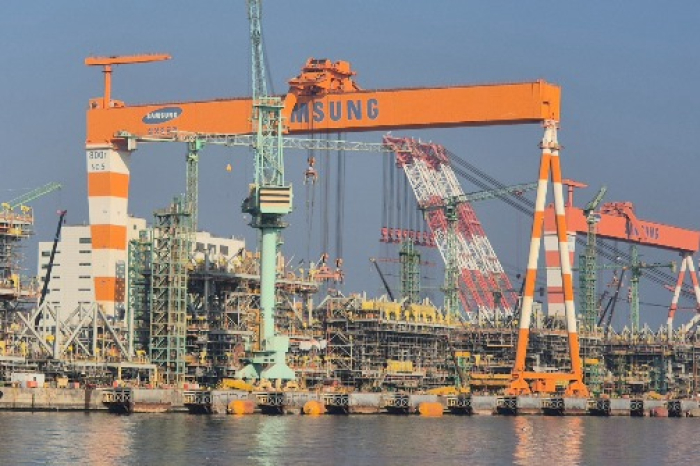
SEOUL : Samsung Heavy Industries Co., one of South Korea’s top three shipbuilders, has secured a landmark order for seven container carriers worth nearly 2 trillion won ($1.4 billion), giving the yard one of its largest single contracts and sending its shares higher on Thursday.

The company said in a regulatory filing that an Asia-based shipowner on Wednesday placed the order, valued at about 1.92 trillion won, equivalent to roughly 19% of the company’s most recent annual sales.

The vessels are scheduled for delivery between late 2025 and late 2029.

With the new contract, Samsung Heavy has booked a total of $6.9 billion in orders so far this year, achieving 70.4% of its full-year target of $9.8 billion, the company said.

It has secured orders for 39 vessels year-to-date, including liquefied natural gas carriers, shuttle tankers, container ships, ethane carriers and crude tankers, along with a preliminary contract for offshore production facilities.

The company’s cumulative order backlog now stands at 132 vessels worth $28.2 billion, giving the shipbuilder several years of production visibility, it said.

INVESTORS CHEER THE ORDER

The contract propelled Samsung Heavy’s shares upward, as investors viewed the deal as fresh evidence that the global shipbuilding cycle may be turning upward.

Korean brokerages have begun raising the shipbuilder’s target prices, citing improving order quality, firmer vessel pricing and signs of recovery in high-end offshore projects.

The latest order adds to Samsung Heavy’s recent momentum. Recently, the company secured a separate contract from a North American customer for two crude carriers valued at a combined 290 billion won.

In offshore, the yard won a preliminary agreement to build a floating liquefied natural gas (FLNG) production unit worth about $650 million in July and has received a letter of award from a US energy company, raising hopes of a full contract to follow.

FLNG units make up a massive offshore structure that extracts, liquefies and transfers natural gas from subsea fields. Samsung Heavy has built some of the world’s most complex FLNG units.

Samsung Heavy’s broader business outlook has also brightened.

Its preliminary third-quarter results showed revenue rising more than 13% from a year earlier and operating profit nearly doubling, supported by stronger ship prices and a growing share of high-value vessels and offshore units.

Drewry: World Container Index stable last week

LONDON: Drewry’s World Container Index remained stable at $1,852 per 40ft container last week.

Drewry’s detailed assessment for Thursday, 20 Nov 2025

  • The Drewry World Container Index (WCI) remained stable this week at $1,852 per 40ft container. The Index maintained stability due to decreased Transpacific rates and increased Asia-Europe rates offsetting each other.
  • Spot rates on the Transpacific Headhaul continue to decrease for the second consecutive week, with rates from Shanghai to New York falling 10% to $2,922 per 40ft container and rates to Los Angeles falling 7% to $2,172. As per Drewry’s Container Capacity Insight, blank sailings on the Transpacific trade are expected to decrease next week, leading to more available capacity. Hence, Drewry expects rates to soften slightly next week.
  • The Asia-Europe trade route recorded its sixth straight week of increasing spot rates. Rates from Shanghai to Genoa increased 6% to $2,319 per 40ft container and from Shanghai to Rotterdam rose 8% to $2,193. Carriers on the Asia–Europe trade route are trying to push spot rates up by introducing higher FAK rates ranging from $3,100 to $4,000 per 40ft box, effective 1 December, in an attempt to elevate spot rates before the start of the new annual contract negotiation season.
  • Drewry’s Container Forecaster expects the supply-demand balance to weaken in the next few quarters, particularly if normal Suez Canal transits resume.

Ocean spot market freight rates against 6,700 global port pairs

If you need spot market container freight rate information on other routes to those above, find out more about our Container Freight Rate Insight (CFRI) online service, which covers 6,700 global port pairs updated monthly (2,450 updated fortnightly).
Source: Drewry

Baltic Index hits near two-year high on higher larger vessel rates

LONDON: The Baltic Exchange’s Dry Bulk Sea Freight index, which monitors rates for vessels moving dry bulk commodities, rose to a nearly two-year high on Friday and was on course for a weekly gain, aided by an increase in larger vessel rates.

The main index, which factors in rates for capesize, panamax and supramax shipping vessels, rose by 5 points to 2,275 points, its seventh consecutive gain and the highest level since March 2024. The contract was up nearly 7% this week.

The capesize index (.BACI) gained 6 points to 3,653 points, marking its highest level since late July. The contract rose over 12% this week.

Average daily earnings for capesize vessels (.BATCA), which typically transport 150,000-ton cargoes such as iron ore and coal, increased by $48 to $30,292.

Iron ore futures prices declined for a second straight session, weighed down by signs of softer demand and shrinking steel margins in top consumer China.

The panamax index (.BPNI) rose by 16 points, or 0.8% to 1,928 points.

Average daily earnings for panamax vessels (.BPWT), which usually carry 60,000-70,000 tons of coal or grain, increased by $150 to $17,354.

Among smaller vessels, the supramax index (.BSIS) was down 3 points to 1,432 points, snapping a eleven session win streak. However, the contract was up 1.9% for the week.
Source: Reuters

“Revamped Inland Waterways to Power Northeast’s Growth, Boost Petroleum Exports to from Assam:” Sarbananda Sonowal

NEW DELHI: Union Minister of Ports, Shipping and Waterways Shri Sarbananda Sonowal said the rapid modernisation of India’s inland waterways, particularly in the Northeast, is set to unlock major economic opportunities and strengthen the petroleum supply chain and export routes connecting Assam to Bangladesh and Southeast Asia.

Speaking at the North East Oil & Gas Conclave 2025, the Union Minister said, “Under the dynamic leadership of Prime Minister Shri Narendra Modi ji, the renewed focus on Inland Water Transport (IWT) has enabled smooth and swift cargo movement, reduce logistics costs and provide a reliable multimodal network for the movement of petroleum products and industrial cargo across the Brahmaputra and Barak river systems. This has not only revived one of the oldest and proven conduits of economic prosperity but also repurposed the economic activity and prosperity in the hinterland of the region.”

The Minister said that jetties and terminals in Assam — including Pandu, Jogighopa, Dhubri, Bogibeel, Karimganj and Badarpur — have emerged as critical hubs for cross-border trade. These river terminals facilitate the export of petroleum products and large industrial consignments to Bangladesh and onward destinations, cutting transit distance, travel time and fuel consumption compared to road transport.

Shri Sarbananda Sonowal highlighted that the transport of over-dimensional cargo (ODC) to Numaligarh Refinery for its expansion, and the ongoing movement of petroleum products using river routes, have demonstrated the operational efficiency and scalability of waterways as a long-term logistics solution. Year-round navigation ensured through extensive dredging and fairway maintenance enables uninterrupted movement of heavy cargo for refinery, exploration and downstream industries.

“The Inland Waterways sector today stands as the backbone of energy transportation for the Northeast, reinforcing India’s energy security and unlocking new trade corridors,” Shri Sarbananda Sonowal said, noting that annual cargo movement on NW-2 is now approaching 6 lakh tonnes, driven by faster turnaround and reliable navigation.

The Union Minister said the government has undertaken ₹1,000 crore worth of inland waterway projects in the Northeast in the past two years, including permanent cargo terminals, ship repair facilities, tourist jetties and urban water transport systems. A ₹239 crore ship repair facility at Pandu is under development, expected to significantly reduce maintenance costs for river vessels that currently travel to Kolkata through Bangladesh for repairs.

Investments are also being directed toward modern river-based tourism infrastructure, lighthouse development, and skill and training facilities. A Regional Centre of Excellence in Dibrugarh, being built at a cost of ₹188 crore, will train nearly 5,000 students in maritime skills and logistics operations.

He emphasised that Inland Waterways are central to India’s Act East Policy and the country’s goal of building a future-ready logistics ecosystem. “Our efforts are aimed at reducing logistics costs, boosting trade, and creating new employment and industrial opportunities. The Northeast is ready to lead India into a new era of connectivity, sustainability and prosperity,” Shri Sonowal said.

Shri Sonowal noted that a number of major projects have been undertaken for the Northeast by the Ministry of Ports, Shipping and Waterways in the past few years. He said that 76 national waterways will become operational by 2027. Cargo movement on national waterways reached an all-time high of 146 million tonnes last year, compared to just 18 million tonnes earlier. During India Maritime Week 2025, the Inland Waterways Authority of India signed MoUs worth ₹40,000 crore to enhance the efficiency of waterborne logistics. He added that the unprecedented increases — 767% in operational waterways, 635% in cargo volume, 233% in investment and 62% in multimodal terminals — reflect remarkable progress in the inland waterways sector.

The Union Minister thanked the Confederation of Indian Industry (CII) for organising the conclave and called for deeper collaboration between government and industry to accelerate private participation, innovation and infrastructure development in the energy and transport sectors.

The Union Minister was joined at the event by Assam Minister Kaushik Roy, Assam Chief Secretary Ravi Kota, Joint Secretary of the Union Ministry of Petroleum and Natural Gas Vinod Sesan, and CII Assam Oil and Gas Chair S. K. Baruah, among other dignitaries.

Piyush Goyal holds talks with Israel’s Finance Minister on bolstering economic ties

TEL AVIV: Commerce and Industry Minister Shri Piyush Goyal on Thursday held a series of meetings in Israel aimed at strengthening India–Israel economic cooperation. The visit included high-level discussions with government leaders, industry CEOs and innovators across critical sectors.

Shri Goyal said he had a productive meeting with Israel’s Minister of Finance Bezalel Smotrich, during which the two sides discussed advancing India–Israel trade and investment collaboration. “We discussed advancing India-Israel trade and investment cooperation and tapping emerging opportunities,” Goyal said in a post on X.

Piyush Goyal at India Israel Business Summit Tel Aviv 2 Piyush Goyal holds talks with Israel’s Finance Minister on bolstering economic ties

The Minister also held a bilateral meeting with Nir Barkat, Israel’s Minister of Economy and Industry, in Tel Aviv. “Discussed how competitive advantages on both sides can pave the way for greater collaboration between businesses in our nations,” Shri Goyal stated.

As part of the visit, Goyal met top Israeli industry leaders to expand sectoral cooperation. He engaged with Alon Tavor, CEO of IDE Technologies Group, on the company’s operations in India and explored opportunities to deepen collaboration in wastewater management, desalination and sustainable technologies.

He also held a meeting with Nadav Zafrir, CEO of Check Point Software Technologies, to discuss the company’s growing cooperation with India and avenues to strengthen the partnership in cybersecurity, talent development and digital innovation. Check Point Software Technologies, headquartered in Tel Aviv, provides AI-powered, cloud-delivered security solutions to governments and corporations worldwide, including the Check Point Infinity Architecture that protects networks, cloud systems and devices from cyberattacks.

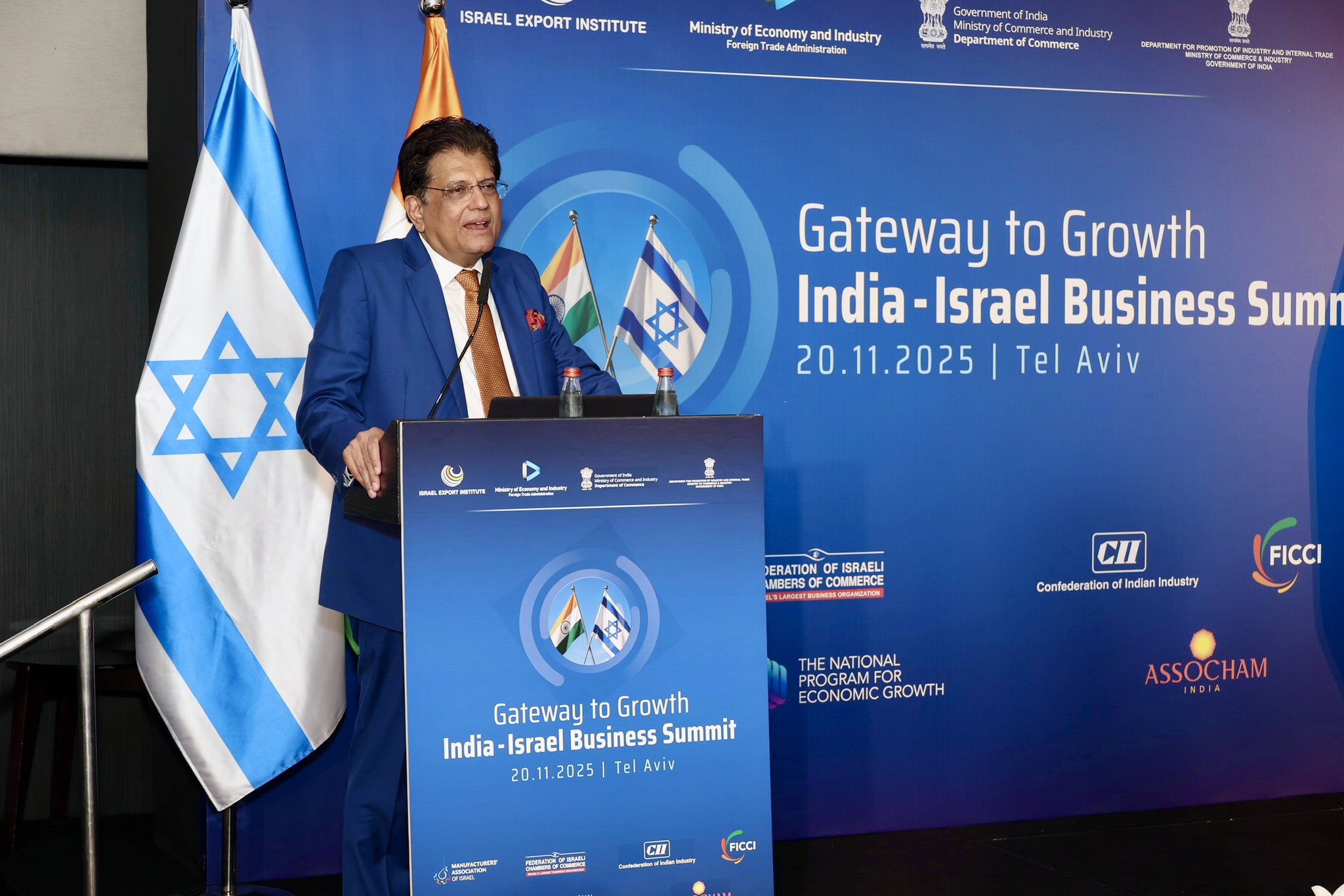
Shri Goyal addressed the India–Israel Business Summit in Tel Aviv on the theme ‘Gateway to Growth.’ “Truly delighted to be in Tel Aviv for the first time. My first engagement was the address at the India-Israel Business Summit on the theme ‘Gateway to Growth’ along with my friend and the Minister of Economy and Industry of Israel, Nir Barkat,” he said in another post. He added that the large Indian business delegation accompanying him reflects the “huge potential that is waiting to be unlocked between businesses on both sides across several key sectors.”

“At the event, I spoke about the complementarities between India’s industrial ecosystem and Israel’s innovation ecosystem and invited Israeli companies and start-ups to co-develop, co-design, and co-produce in India,” the Minister wrote.

During the visit, Shri Goyal also met Itamar Ben Meir, CEO of NTA – Metropolitan Mass Transit System Ltd., to discuss potential opportunities for Indian companies in Israel’s upcoming metro projects and wider collaboration in urban mobility and infrastructure. He further held talks with Gaby Miodownik, CEO of Netafim, to review the company’s work in India and identify areas to expand cooperation in precision irrigation, agri-tech and sustainable farming solutions.