Home Blog Page 555

“India’s logistics sector is entering a high-growth decade; it needs a modern and future ready workforce”: Jayant Chaudhary

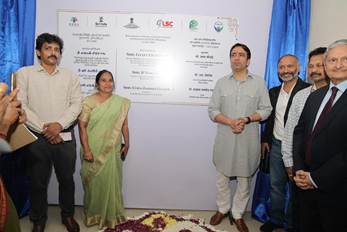
HYDERABAD: Minister of State (I/C), Ministry of Skill Development and Entrepreneurship (MSDE) and Ministry of Education, Government of India, Shri Jayant Chaudhary, on Thursday inaugurated the – Centre of Logistics Training Excellence, in the campus of National Skill Training Institute (NSTI) Hyderabad, which marked a major step in advancing technology-driven skilling for India’s logistics sector. While addressing on the occasion he said “India’s logistics sector is entering a high-growth decade, powered by the National Logistics Policy, PM Gati Shakti and unprecedented investments in multimodal infrastructure. But this transformation can only be sustained if we build a workforce that is as modern and future-ready as the systems we are creating,” .

“Centres like Centre of Logistics Training for Excellence, Hyderabad show what the next generation of logistics skilling must look like—technology-led, industry-designed and sharply aligned to real operational needs. As automation, digital supply chains and new mobility models redefine the sector; skilled professionals will be the backbone of India’s competitiveness. Our commitment is clear: to equip lakhs of young Indians with the capabilities that will drive the efficiency, resilience and global leadership of India’s logistics economy,”he further added.

Global Chief Sustainability Officer, Redington Ltd., R. Venkatesh,  said, “The Centre of Logistics Training for Excellence in Chennai demonstrated how technology-enabled learning can truly transform the employability of India’s logistics workforce. The impact we witnessed in Chennai—high engagement, strong industry alignment, and improved job readiness—reaffirmed our belief in scaling this model across the country. With the Centre of Logistics Training for Excellence, we are deepening that commitment by bringing world-class simulators, digital learning tools, and industry-relevant training to Hyderabad. Our goal is to build a future-ready talent pool that can confidently meet the demands of a fast-evolving, technology-led logistics sector and contribute meaningfully to India’s economic progress.”

The centre has been established by Redington Foundation, the CSR arm of Redington Limited, in partnership with the Logistics Sector Skill Council (LSC).The launch of the Centre of Logistics Training for Excellence, Hyderabad builds on the proven success of Centre of Logistics Training for Excellencein Chennai, which was established in January 2024 and has since emerged as a benchmark for modern, industry-aligned logistics skilling. Over the past year, the Chennai centre has trained unemployed youth as well as working professionals through advanced AR/VR modules, industry-grade simulators, and strong collaborations with academia and industry partners. Its outcomes have demonstrated the scalability and relevance of this high-impact training model, paving the way for the expansion to Hyderabad—one of India’s fastest-growing logistics hubs.

The new centre in Hyderabad offers significantly enhanced capabilities, including simulation labs for truck driving, warehouse operations, and forklift management. With a curriculum co-developed by LSC and industry experts, Centre of Logistics Training for Excellence, Hyderabad integrates Industry 4.0 principles and emerging supply chain technologies to ensure learners receive job-ready, future-oriented competencies that match the expectations of a technology-led logistics sector. The centre is poised to strengthen the employability of Telangana’s youth and contribute to building a robust talent pipeline for the region.

The establishment of Centre of Logistics Training for Excellence, Hyderabad reinforces MSDE’s commitment to strengthening robust national skilling architecture for logistics and supply chain management. The Ministry’s continued focus on developing sector-specific Centre of Excellence reflects its vision to enhance industry capabilities, boost employability, and advance India’s progress toward building a globally competitive workforce across sectors.

2nd Vibrant Gujarat Regional Conference at Rajkot to focus on Kutch – Saurashtra Region

GANDHINAGAR : The Government of Gujarat is organizing four Vibrant Gujarat Regional Conferences (VGRC) at Mehsana, Rajkot, Surat and Vadodara; ahead of the next edition of the Vibrant Gujarat Global Summit to be held in January 2027. Each conference will serve as a gateway to accelerated regional growth and inclusive development. In the run up to each Regional Conference, a one-day district-level programme will be organised to highlight local opportunities and initiatives.

The Second Vibrant Regional Conference (VGRC) is scheduled in Rajkot on January 8th and 9th, 2026. With a primary focus on transforming local industries into global players, this event aims to secure broader market recognition and partnerships. The conference will include seminars addressing pivotal topics, like agriculture, Mining, Tourism, and Industrial growth. Participants will also benefit from a dedicated MSME Conclave, a dynamic Reverse Buyer Seller Meet (RBSM), exhibitions and trade fairs, making it an essential platform for establishing effective partnerships and networking. In addition, district-level programs will be organized in Amreli, Bhavnagar, Botad, Devbhumi Dwarka, Gir-Somnath, Jamnagar, Junagadh, Kutch, Morbi, Porbandar and Surendranagar in the month of December 2025.

VGRC North Gujarat was successfully held in Mehsana, resulting in the signing of 1,264 MoUs with a proposed investment of INR 3.25 lakh crore. The two-day conference witnessed participation, with over 29,000 registered attendees and more than 440 international delegates representing more than 80 countries according to the State government’s press release. The conference hosted more than 160 Business-to-Business (B2B) and more than 100 Business-to-Government (B2G) meetings, fostering partnerships and investment opportunities. More than 410 exhibitors showcased their innovations and products, including the active participation of more than 170 MSMEs, and startups. Udyami Mela disbursed incentives worth of more than INR 900 crore to more than 9,000 entrepreneurs. The BharatNext startup pitching festival announced INR 41.56 crore worth of investment, while the RBSM (Reverse Buyer-Seller Meet) organised more than 2,200 meetings, with more than 850 Gujarat based sellers, and generated business inquires worth of INR 500+ crore for exports, highlighting Gujarat’s entrepreneurial strength.

Kutch and Saurashtra region is marked by geographical diversity and cultural vibrancy, combining natural heritage with dynamic economic growth. The region thrives on its maritime legacy and strategic ports, such as Kandla and Mundra, serving as a gateway for logistics, trade, and green shipping. It is a pioneer in petrochemicals, ceramics, and engineering, supported by robust infrastructure and innovation-driven initiatives. The spiritual and heritage tourism circuits create a unique balance between tradition and a business-driven market.

Focus sectors for VGRC Kutch and Saurashtra include Ceramics, Engineering, Ports & Logistics, Fisheries, Petrochemicals, Agro & Food Processing, Minerals, Green Energy Ecosystem, Skill Development, Startups, MSMEs, Tourism & Culture. The region also includes thriving business opportunities like Export (For Ceramic, Cotton and Plastic), Brass components, seafood processing, Coastal Tourism and many more.

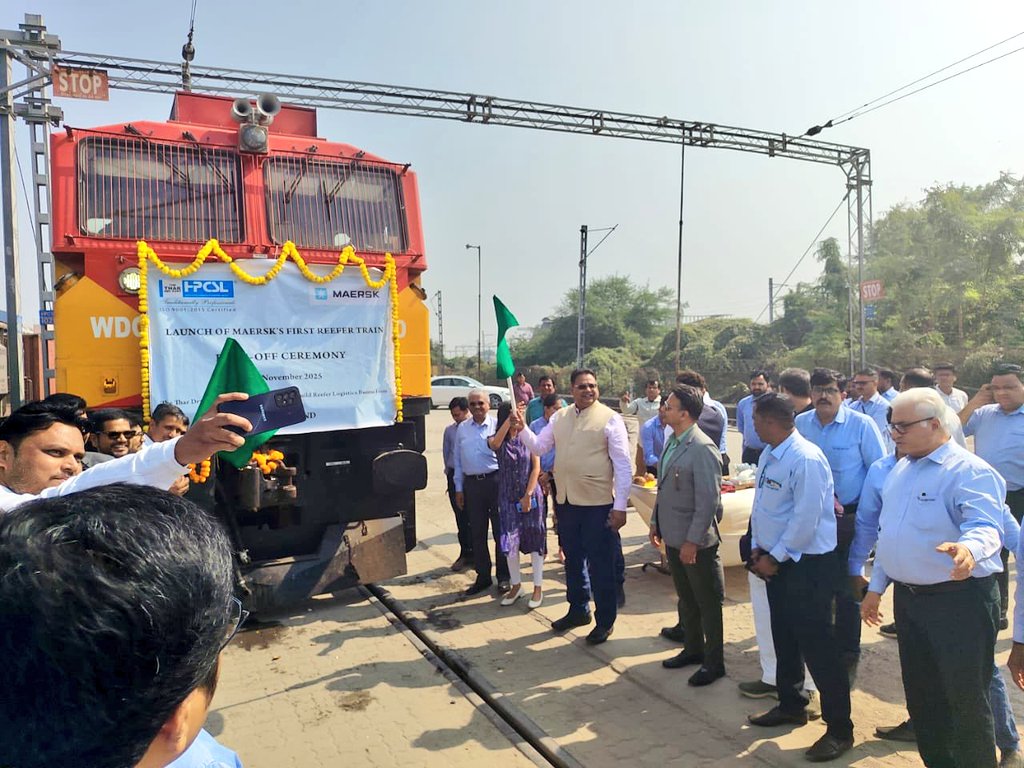
Western Railway flags off first-ever refrigerated container train from Sanand

AHMEDABAD : The Western Railway’s Ahmedabad division on Monday launched its first-ever refrigerated train, a specialised reefer container rake, from Sanand.

Maersk Reefer Train flagged off from Sanand Western Railway flags off first-ever refrigerated container train from Sanand

The inaugural service, flagged off by divisional railway manager Ved Prakash, departed for Pipavav Port with cargo from HyFUN Industries, McCain Foods, and the Balaji Group. The train transported 1,061.81 tonnes of temperature-controlled goods and generated revenue of ₹6.57 lakh.

Shri Ajit Shah, President of the Sanand Industries Association, noted that the region currently hosts 17 pharmaceutical units, with more than 35 in the pipeline. He said the new refrigerated train service will significantly boost industrial growth.

Govt set to release ₹800 Cr pending dues for exporters under new IES framework

NEW DELHI : The government is preparing to clear nearly ₹800 crore in pending dues owed to exporters under the Interest Equalisation Scheme (IES), as it readies to roll out a revamped version of the scheme under the newly approved Export Promotion Mission (EPM), a senior official said.

The pending claims, which pertain to arrears up to December 31, 2024, are expected to be disbursed shortly. The move is likely to bring relief to exporters—particularly micro, small and medium enterprises (MSMEs)—who have been struggling with rising global uncertainties and tightening financial conditions.

Exporters have been facing additional pressure in recent months following the 50% tariffs imposed by the United States on several Indian products. Industry bodies have repeatedly urged the government to expedite IES payments to help offset the rising cost of credit and maintain export competitiveness.

The IES, which offers interest subvention on pre-shipment and post-shipment rupee export credit, had lapsed on December 31, 2024. The updated version of the scheme will now be implemented as part of the Export Promotion Mission, a comprehensive programme cleared by the Cabinet to strengthen India’s export ecosystem.

Under the EPM, the government aims to streamline exporter support by integrating both financial and non-financial assistance. The revamped framework will include credit support, market access initiatives, branding, export readiness programmes, logistics solutions, and compliance facilitation.

Alongside IES dues, the government is also working to clear pending payments under the Market Access Initiative (MAI), which supports exporters through market development activities such as trade fairs, buyer-seller meets, and product promotion.

According to officials, the clearance of pending IES claims will improve liquidity for thousands of exporters who depend on subsidised credit to maintain orders, especially in labour-intensive sectors. The move is seen as part of the larger strategy to navigate global trade headwinds and sustain export growth.

Exporters welcomed the development, noting that timely release of funds would help stabilise working capital cycles at a time when global demand remains uneven. The rollout of the revamped IES under the EPM is expected to offer a more predictable, structured support system for the sector in the years ahead.

India registers record exports in both Q1 and Q2 of FY26

NEW DELHI: India’s export sector has delivered a powerful message of resilience and global competitiveness in by far in 2025-26, recording its highest-ever quarterly exports in both Q1 and Q2, and culminating in the highest-ever export performance for the first half of any financial year.

This achievement comes at a time when global trade continues to be weighed down by geopolitical tensions, supply-chain disruptions, inflationary pressures, and uneven demand recovery across major markets.

In the first quarter (April-June 2025), India’s overall exports, merchandise and services combined, reached USD 209.0 billion, surpassing the previous year’s Q1 figure of USD 202.5 billion.

The Q1 performance also reflects India’s improved export competitiveness, supply-chain modernisation, and greater integration with global value chains.

The momentum strengthened further in the second quarter (July-September 2025), with overall exports rising to USD 209.9 billion, the highest-ever for any Q2 in India’s trade history.

This leap from USD 193.2 billion in the corresponding quarter of the previous year signals a broad-based export recovery, despite subdued global demand and trade contraction in several competing economies.
India’s robust showing in Q2 was driven by rising smartphone shipments, improved agricultural exports supported by stable monsoon conditions, and strong services exports.

Taken together, India’s exports in the first half of 2025-26 (April-September 2025) stood at USD 418.9 billion, up from USD 395.7 billion in the same period of 2024, reflecting a growth of 5.86 per cent.

This marks the highest-ever H1 export performance for the country. The data underscores the continued resilience of India’s export ecosystem and the benefits of structural reforms undertaken in recent years, including logistics improvements, enhanced port capacity, export facilitation measures, and targeted incentives for high-growth sectors.

India’s H1-2025-26 performance stands out amid global headwinds.

Several major economies saw flat or declining exports due to slowing demand, high freight costs, and currency volatility.

India, on the other hand, leveraged its diversified export basket, improved competitiveness under Production-Linked Incentive (PLI) schemes, and expanding services exports to push ahead of global trends.

With the momentum of H1-2025-26 and continued policy support for exporters, India is poised for a strong performance in the remainder of 2025-26.

The highest-ever quarterly and half-yearly exports testify not only to India’s resilience but also to its growing role as a dependable and competitive partner in global trade.

Source: ANI

India mulls wider Swadeshi manufacturing policy to cut import dependence amid FY27 Budget preparations

NEW DELHI : In the Budget for 2025-26, the government announced the National Manufacturing Mission, covering certain small, medium and medium industries to further Make in India, with an outlay of Rs 100 crore. The Indian government is considering a broader Swadeshi manufacturing policy to reduce dependence on foreign goods and better navigate unpredictable global trade actions, according to sources.

Inter-ministerial discussions, including with the finance ministry, have begun to explore ways to boost domestic manufacturing and expand the scope of the National Manufacturing Mission (NMM), one government official said.

These discussions come amid preparations for the upcoming Budget for the next financial year, which is likely to be presented on February 1.

In the Budget for 2025-26, the government announced the National Manufacturing Mission, covering certain small, medium and medium industries to further Make in India, with an outlay of Rs 100 crore.

The NMM presently provides policy support for certain sectors like clean-tech manufacturing and domestic value addition for solar PV cells, EV batteries, motors and controllers, electrolysers, wind turbines, very high voltage transmission equipment and grid scale batteries. It also covers certain labour-intensive sectors such as footwear and leather.

“At present, the focus is on five clusters, such as engineering, electronics, consumer products, life sciences and chemicals. Going forward, some new labour-intensive clusters may be added,” this official said.

To be sure, the central government has yet to decide whether the policy will feature in the FY27 Budget, even as discussions continue.

Efforts to broaden India’s manufacturing policy comes as the sector’s share of GDP remains stuck at about 16 to 17 percent, still far from the goal of reaching 25 percent by 2030.

A second source in the know of the matter said that a good start was made with the manufacturing mission on clean-tech, but given the volatile global trade environment, it is time for a full-fledged manufacturing policy “on MSMEs, job creation, technology upgradation, aimed at reducing dependence on foreign countries.”

To be sure, India does have the production-linked incentive (PLI) scheme to enhance domestic manufacturing, with an outlay of Rs 1.97 lakh crore across various sectors for a five-year period starting 2021–22.

But the PLI scheme has had a mixed journey so far since large-scale electronics manufacturing has seen unparalleled success, sectors such as steel and textiles remain laggards due to low utilisation.

Need for Swadeshi

The push for a broader manufacturing policy follows a period when most Indian exports are facing steep 50 percent tariffs in the US. Additionally, sourcing rare-earth magnets has become challenging, with China, the major supplier, intensifying export curbs.

At the same time, other economies like the European Union are responding with higher steel duties and tighter import quotas, reflecting the ripple effects of the US levies under President Donald Trump.

Even as this plays out, India is actively negotiating free trade agreements with several countries and economic blocs.

Commerce Minister Shri Piyush Goyal on November 18 highlighted the need to transform the India into a domestic manufacturing and industrial hub.

He stated that India must expand competitive manufacturing and strengthen self-reliance in goods that can be produced efficiently within the country. While noting that certain products may still have to be sourced from abroad due to gaps in technology, scale or capability, he cautioned that this must be accompanied by a careful assessment of supply-chain vulnerabilities.

Goyal urged Indian industry to examine whether they are excessively dependent on a single geography or supplier, especially in a global environment where trade can be weaponised, citing the risks associated with dependence on external suppliers for critical items and stressed that developing India as a global manufacturing hub must remain high on the national agenda.

Source : Moneycontrol

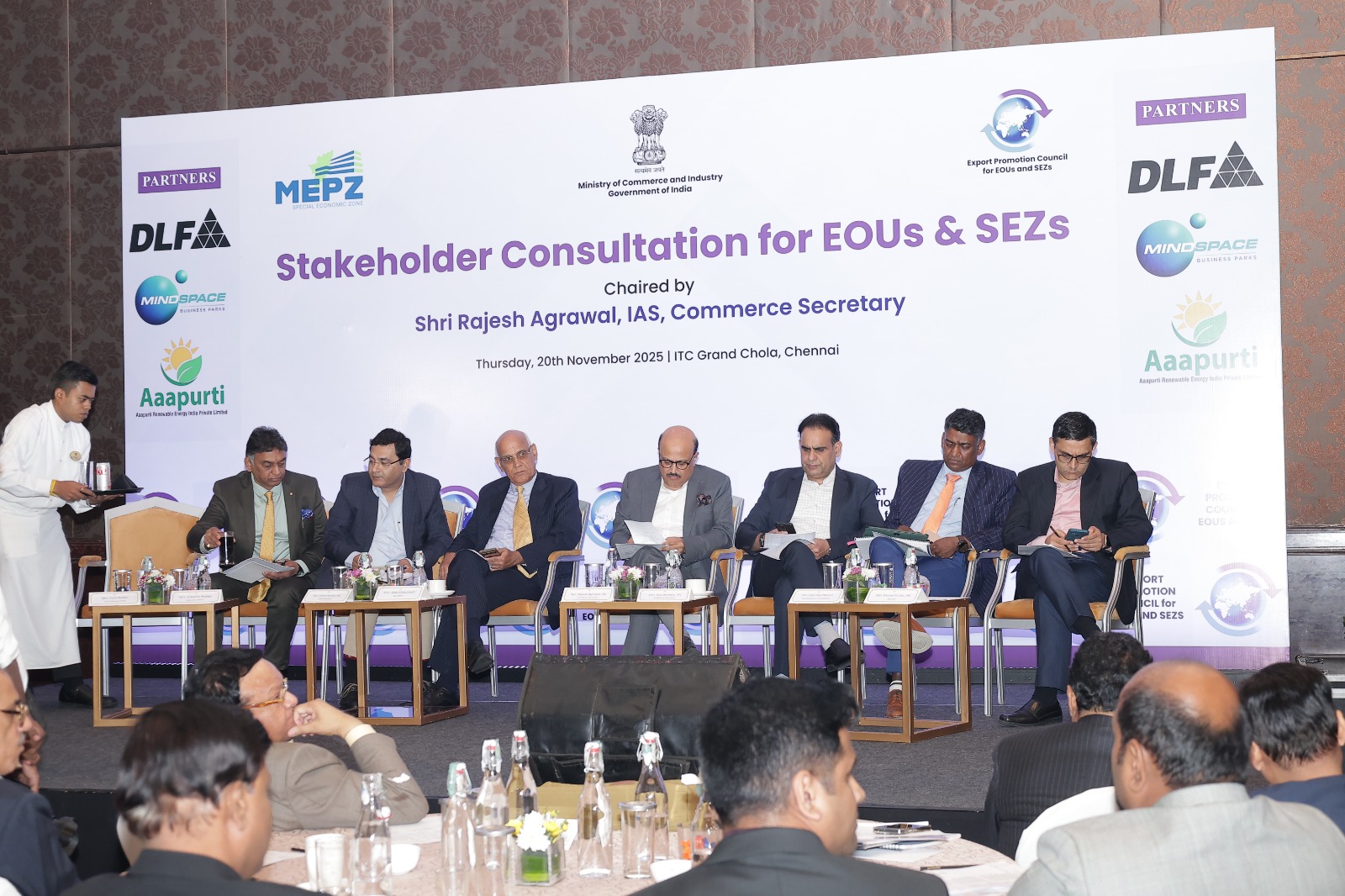
Commerce Secretary Chairs 134th Meeting of Board of Approval at MEPZ SEZ, Chennai

CHENNAI: The 134th meeting of the Board of Approval (BoA) for Special Economic Zones (SEZs) was convened in Chennai on Thursday, chaired by Commerce Secretary Shri Rajesh Agrawal, IAS, at the MEPZ Special Economic Zone. The session brought together Zonal Development Commissioners and senior officials of the Department of Commerce, including Shri Ajay Bhadoo, Additional Secretary, and Shri Vimal Anand, Joint Secretary.

The high-level consultation focused on strengthening the SEZ framework through data-backed decision-making and improved performance metrics. In his address, the Commerce Secretary underscored the importance of leveraging hard data to enhance the value proposition of SEZs, calling for comparative benchmarking of SEZ performance with State industrial clusters across parameters such as employment generation, R&D expenditure, and Net Foreign Exchange Earnings (NFEE).

Shri Agrawal further emphasised the need to identify bottlenecks in procedures, streamline operations, and expand the Key Performance Indicators (KPIs) to incorporate strategic and people-centric dimensions, ensuring a more holistic assessment of SEZ effectiveness.

Presentations from the Department of Commerce and MEPZ SEZ provided a comprehensive review of current SEZ/EOU performance, covering administrative frameworks, investments, export growth, employment trends, and land utilisation. They also highlighted Tamil Nadu’s strong, sector-driven industrial ecosystem, which continues to support high-value manufacturing and export competitiveness.

As part of the visit, an industry interface session was organised with regional leadership of the Export Promotion Council for EOUs & SEZs (EPCES), giving industry stakeholders an opportunity to share trade-specific insights and policy suggestions.

The meeting reaffirmed the government’s commitment to strengthening India’s SEZ architecture through targeted reforms, improved policy responsiveness, and closer engagement with industry.

India responding to global textile demand with strength and confidence: MoS Pabitra Margherita

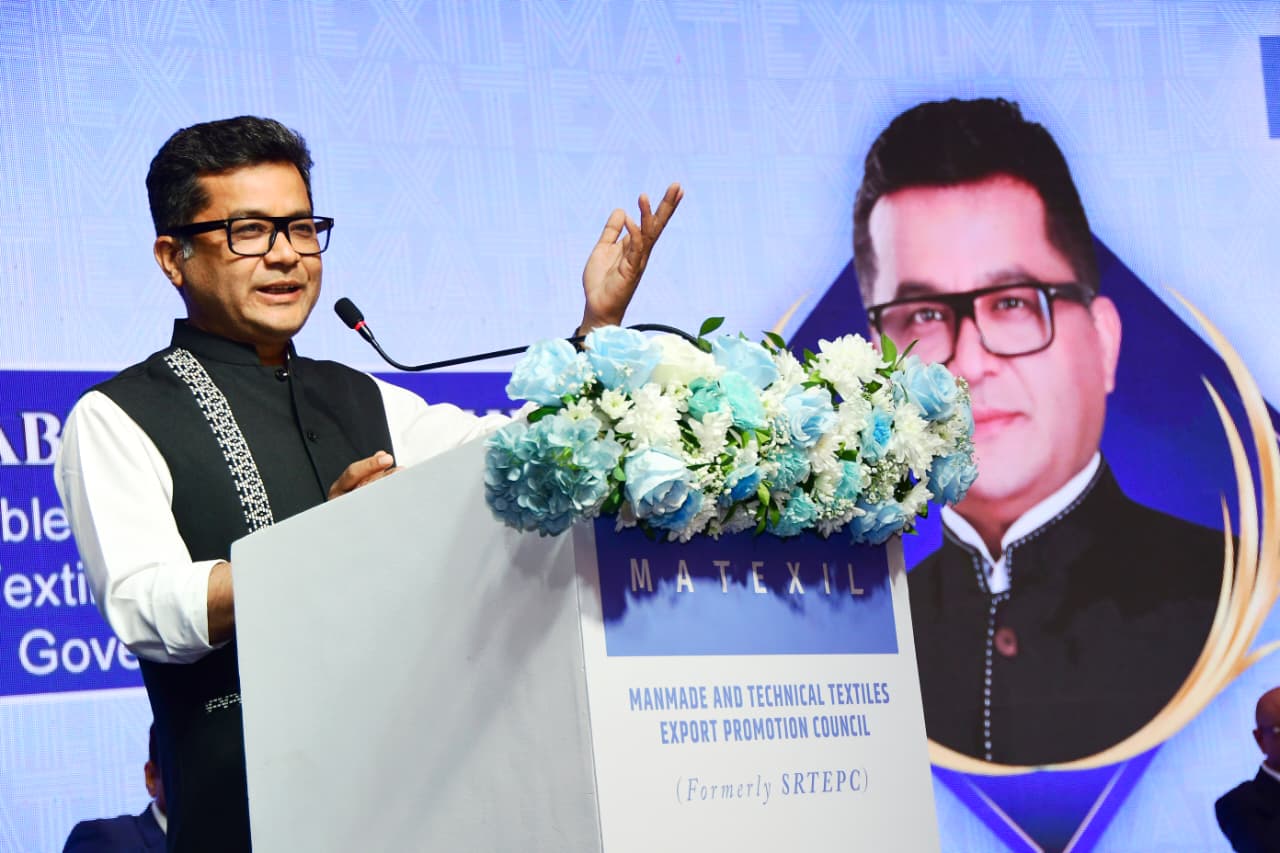
MUMBAI : Global demand for textiles is at an all-time high, with the world increasingly turning toward high-performance, functional and sustainable materials. India is responding to this shift with strength and confidence, said Shri Pabitra Margherita, Union Minister of State for Textiles and External Affairs, while addressing the Manmade and Technical Textiles Export Promotion Council (MATEXIL)’s Export Award Function for 2023–24 and 2024–25 in Mumbai on Thursday.

MoS Shri Margherita conferred awards for export excellence in technical textiles. Nearly 80 outstanding performers from the sector were honoured across various categories. Congratulating the awardees, Shri Margherita said the celebration was not only about recognising winners but also about acknowledging every worker, engineer, designer, entrepreneur and exporter who drives the textile sector forward. “Your work gives strength to millions of families and pride to our nation,” he remarked.

The Minister noted that man-made fibres (MMF) and technical textiles are at the forefront of the global shift toward sustainable and advanced materials. MMF today accounts for nearly 70–75% of the global fibre market, signalling a significant transformation in consumer demand and industrial applications. “India is responding to this shift with strength and confidence,” he added.

Shri Margherita highlighted that India’s MMF exports grew by 6.5% in 2024–25, while technical textiles exports increased by over 15%, reflecting the nation’s rising competitiveness in this sunrise sector. With global demand continuing to grow, India is poised to capture a larger share of the expanding international market. He emphasised that India’s high-quality products are strengthening the country’s reputation as a trusted global partner.

“Together, we move towards the goal of USD 100 billion in textile exports and a USD 350 billion textile market by 2030, aligned with our vision of a Viksit Bharat by 2047,” he said.

Shri Margherita also stressed the practical approach of Prime Minister Shri Narendra Modi and Union Textiles Minister Shri Giriraj Singh in easing industry constraints and strengthening value-chain opportunities. He said the Ministry of Textiles has implemented transformational initiatives such as the Production Linked Incentive (PLI) Scheme and the National Technical Textiles Mission, which are enhancing capabilities at every stage of the value chain. He assured that the Ministry stands firmly with all stakeholders in the textile ecosystem.

The dual-year awards highlighted strong performance across 2023–24 and 2024–25, a period during which India’s technical textiles sector recorded robust growth driven by innovation, diversification and global expansion. Awards were presented across twelve categories—including agro, medical, industrial and protective textiles—in recognition of exemplary contributions to India’s export excellence.

Prominent awardees included Garware Technical Fibres Ltd., Arvind Limited and KT Exports India Pvt. Ltd., among other leading industry players. Special awards were also presented to organisations and individuals for their significant contributions to strengthening India’s technical textiles ecosystem.

MATEXIL’s Technical Textiles Dossier was also released during the event. A panel discussion on “Prospects and Potential for Technical Textiles Exports by GenNext” featured young entrepreneurs and thought leaders who discussed emerging market trends, sustainability imperatives and global opportunities.

Dignitaries present at the event included Chairman of MATEXIL Shri Shaleen Toshniwal; Convenor of the Technical Textiles Subcommittee Shri Pramod Khosla; Immediate Past Chairman Shri Bhaderesh Dodhia; and Vice Chairman Shri Anil Rajvanshi, along with senior government officials and key stakeholders from the textiles industry.

Ministry of Steel introduces ‘SARAL SIMS’ to make Steel Import Registration easier for Small Importers and Export-Linked Imports

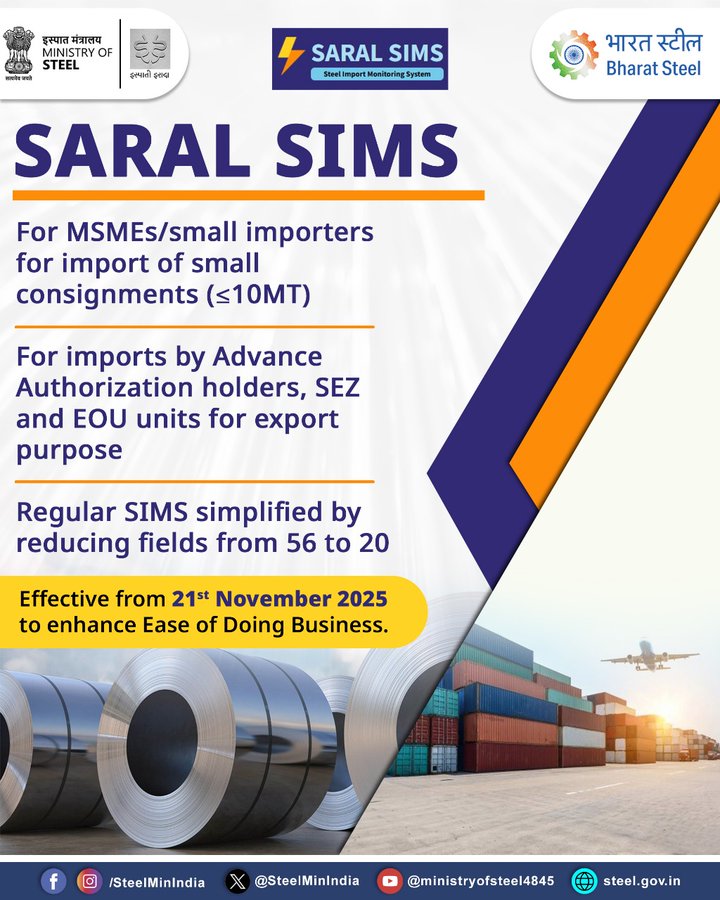
NEW DELHI: In an effort to simplify the process of compulsory registration under the Steel Import Monitoring System (SIMS) for imports of small consignments pertaining to iron and steel items classified under the Chapters 72, 73 and 86 of ITC (HS), 2022 by MSMEs and other small importers as well as imports made under Advance Authorization, SEZ and EOU route for export purposes, a new facility of registration process ‘SARAL SIMS’ has been introduced.

2.         Importers can now access the facility of SARAL SIMS at www.sims.steel.gov.in/SARAL. While generating SARAL SIMS registration, the importers have to declare only the total intended quantity of import in the portal. They will be issued a SARAL SIMS number, against which they can import any number of steel consignments for the year without requirement of consignment wise SIMS number.

The importer can avail the facility of SARAL SIMS for-

  1. Import of small consignments (less than or equal to10MT) subject to annual cap of 1000 MT (‘SARAL SIMS for small import’), or
  2. Import under Advance Authorization/SEZ/EOU route (‘SARAL SIMS for export purposes’) without any quantity threshold.

Importer will be required to file Annual Return by furnishing the details of actual import made against SARAL SIMS registrations generated in a particular financial year by 30th April of the next financial year.

Importer can make import against the SARAL SIMS registration generated in a particular financial year up to 30th April of next financial year.

If the importers exceeds the threshold of 1000 MT of actual imports under SARAL SIMS in a financial year, they will be required to generate regular SIMS registration for subsequent imports during the financial year. However once they migrate to regular SIMS, they will not be able to use SARAL SIMS facility for that financial year.

For the current financial year 2025-26, the threshold for SARAL SIMS for small imports is 500 MT for a period up to April 2026. From next financial year 2026-27, annual cap of 1000 MT will apply.

The registration process under the regular SIMS has also been significantly simplified by reducing the number of fields to be furnished by importers from 56 to 20. These changes are aimed at simplifying the registration process for importers and enhancing the ease of doing business.

Further the requirement of clarification/NOC  from Ministry of Steel for Non QCO covered grades is also being revoked. Hence importers will be able to generate SIMS number from the SIMS portal for Non QCO covered steel grades without any requirement of clarification / NOC from Ministry of Steel.

Above changes will be effective from 21.11.2025.

UAE launches programme to attract 1,000 international companies

DUBAI : The UAE on Thursday launched an international economic programme to attract the world’s top 1,000 companies specialising in international trade, as part of efforts to further strengthen the nation’s global position in foreign trade.

His Highness Sheikh Mohammed bin Rashid Al Maktoum, Vice President and Prime Minister of the UAE and Ruler of Dubai, made the announcement via his X account.

“We launched an international economic programme to strengthen the UAE’s global position in foreign trade. The programme aims to attract the world’s top 1,000 companies specialising in international trade, launch a digital gateway linking thousands of UAE exporting companies to global markets, and create greater opportunities and new markets for their products and exports. The initiative reinforces the UAE’s position as a key hub on international trade routes”, the Vice President said.

The programme, announced in Dubai and led by the Ministry of Foreign Trade, builds on the UAE’s rapid trade growth and its expanding network of international partnerships. It aims to connect UAE exporters with high-demand markets, streamline trade processes, and introduce new tools that strengthen the country’s role as a global gateway for goods and services.

Dr. Thani bin Ahmed Al Zeyoudi, Minister of Foreign Trade, said the programme reflects the leadership’s belief that trade is a key engine of economic development.

“The initiatives under the UAE Global Center of Trade programme will ensure we capture an ever-increasing share of international commerce, whether that’s through offering new horizons for UAE exporters or providing a raft of benefits for companies seeking a platform for international expansion,” he said.

“By rolling out new tools to simplify exports, utilizing AI to identify new markets and high-potential sectors, promoting the excellence of our private sector across the world, and educating our businesses and entrepreneurs on the opportunities provided by our foreign trade network, we can better leverage our strategic position at a global crossroads. This is a moment for the UAE to restate the case for global trade and to demonstrate its ability to power the next stage of prosperity.”

The programme supports the UAE’s record trade performance. In the first nine months of 2025, non-oil trade grew 24.6% year-on-year to Dh2.67 trillion. Exports reached Dh579.4 billion, while re-exports totalled Dh597.7 billion.

8 new initiatives at a glance

  1. Attracting international trading companies
    The initiative targets 1,000 new global trading firms by using advanced analytics to identify market opportunities, demand trends and high-potential sectors, particularly in countries with Comprehensive Economic Partnership Agreements.
  2. UAE Export Portal
    A digital platform that connects UAE exporters with trusted global buyers, offering customs guidance, CEPA information, AI-based market insights and access to new markets.
  1. Ready2Trade
    A training programme offering advanced and introductory modules on global sales strategies, export procedures, compliance and documentation. It aims to support more than 10,000 companies.
  2. UAE Trade Days
    A series of promotional events in key markets that link UAE exporters with international importers and help build long-term commercial networks.
  3. UAE International Trade Expo
    A major global event hosted in the UAE, expected to attract 600 companies from 50 countries and draw 100,000 visitors.
  4. UAE Traders of the Future Programme
    An initiative designed to train and graduate 100 Emiratis each year in global trade skills, network-building, and risk management.
  1. Young Traders Programme
    A programme that introduces high-school and university students to the world of international trade through workshops, field visits and interactive learning.
  2. Leveraging AI to optimise foreign trade
    Fifteen AI-driven systems will support forecasting, supply-chain planning and risk management by analysing millions of data points from customs, ports and global markets.

Together, these initiatives aim to cement the UAE’s role as a leading centre for global commerce and expand the country’s reach across the world’s fastest-growing markets.

Source : Gulf News