Home Blog Page 559

JSW Infra in pact to develop 27 MTPA port in Oman

MUMBAI : JSW Infrastructure, the second-largest private commercial port operator in India, and Minerals Development Oman plan to develop a greenfield 27 million tonne per annum port with an investment of $419 million (₹3,730 crore) in Oman.

The construction is expected to be completed in 36 months, targeting commencement of commercial operations in the first half of 2029.

The company’s wholly owned step-down subsidiary, JSW Overseas FZE, will acquire 51 per cent stake in South Minerals Port Company SAOC, a newly incorporated special purpose vehicle (SPV) established by the Minerals Development Oman.

The remaining 49 per cent stake in the port SPV will be held by MDO. The greenfield port will support the industrial minerals project in the Dhofar Governorate of Oman.

Export potential
With abundant reserves of limestone, gypsum and dolomite — critical inputs for India’s steel and cement industries—the country offers immense export potential.

The proposed port will serve as a vital gateway, streamlining bulk mineral exports from MDO’s concessions and strengthening supply chain efficiency and regional trade connectivity.

Sajjan Jindal, Chairman, JSW Group said the strategic investment will lay the foundation for deeper trade connectivity and economic cooperation.

“Together, we aim to build worldclass assets that strengthen our long-term partnership and set a new benchmark for regional growth,” he added.

Long-term value
Rinkesh Roy, CEO & Joint Managing Director, JSW Infrastructure said the association with MDO is a commitment to build a world-class maritime infrastructure that delivers long-term value for all stakeholders.

Oman’s strategic location along key global maritime routes, coupled with advanced logistics and proximity to major markets in South Asia, Southeast Asia and East Africa, make it a natural hub for mineral exports, he said.

JSW Infrastructure has set a long-term goal of expanding cargo handling capacity to 400 mtpa by 2030, up from the current 177. It also aligns with Oman’s Vision 2040, which prioritises economic diversification by transitioning from a hydrocarbon-centric economy to diversified, non-oil growth and the development of world–class infrastructure.

Source : BL

Piyush Goyal launches Trade Intelligence and Analytics Portal

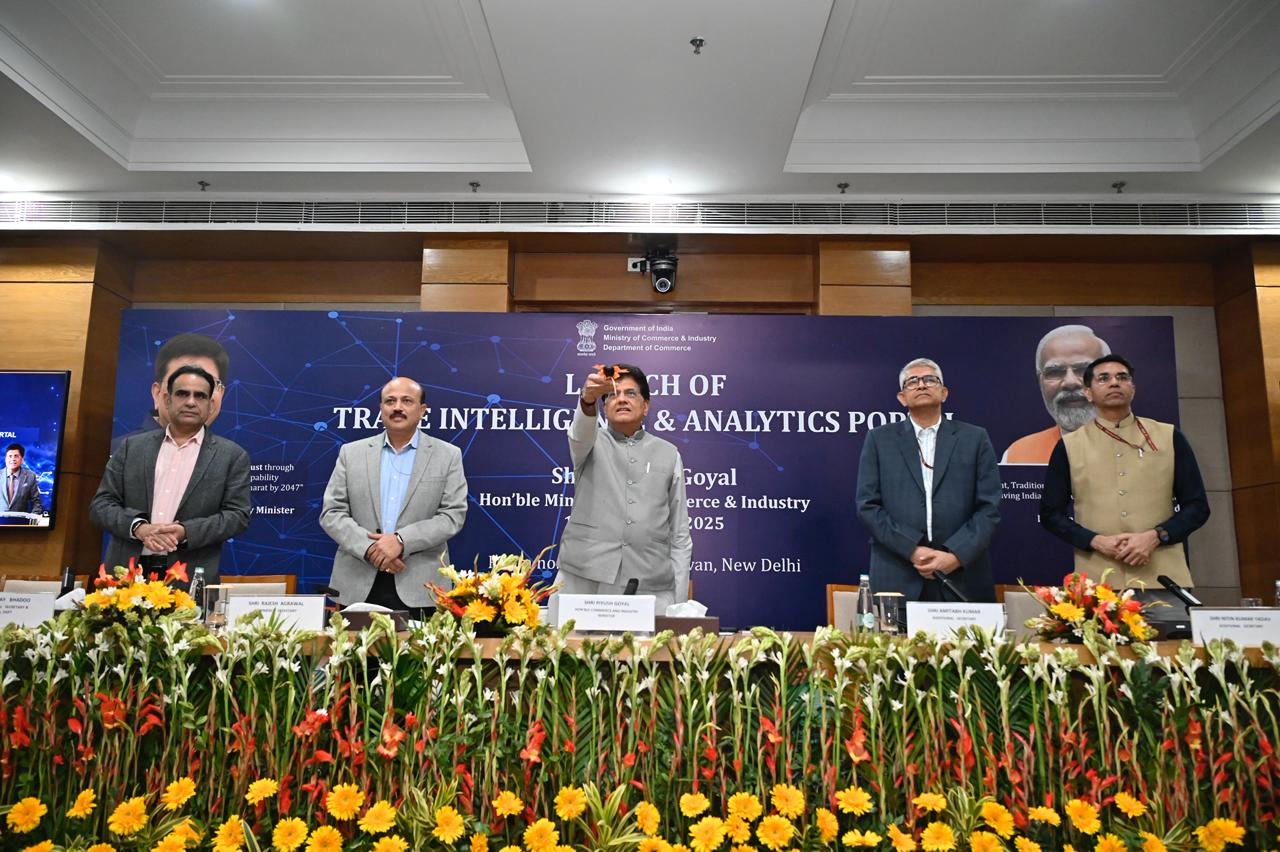
NEW DELHI : Union Minister of Commerce and Industry, Shri Piyush Goyal launched the Trade Intelligence & Analytics (TIA) Portal on Tuesday in New Delhi. The Minister said that business needs to be more transparent with trade data to help stakeholders take the best decisions.

Shri Goyal stated that the Trade Intelligence Portal will open up new insights for importers, exporters, startups, and MSMEs. He added that smaller businesses, even in the remotest regions, will now have access to data that was previously available only to larger enterprises.

The Minister highlighted that there are huge opportunities in the global services sector that will now be accessible to all. He also noted that the portal will help exporters better utilise the Free Trade Agreements.

The Minister said that unless exports contribute significantly to foreign exchange reserves, it will be difficult to bring stability to forex rates, and without such stability, India will remain vulnerable to foreign forces. He described the current world tariff situation as a wake-up call and urged that government and the private sector must pool resources at this critical moment to avoid regretting a lost opportunity.

Shri Goyal invited stakeholders to bring their demands and assured that the Ministry will make every effort to address them. If an issue concerns the Department itself, it will be resolved quickly; if it concerns other departments, Commerce will actively coordinate and work towards a solution. He urged stakeholders to be more demanding so that necessary improvements can be accelerated.

Shri Goyal said the Ministry of Commerce has put in significant effort to develop this platform. He said the portal has the potential to support trade diversification, expand India’s trade basket to newer areas and newer products, and help recognise lost opportunities.

Recognizing the need for a robust intelligence and analytics framework to support evidence-based policymaking and enable targeted sectoral interventions, the Department of Commerce initiated the development of the Trade Intelligence & Analytics (TIA) Portal in March 2024. The Department felt it necessary to expand these capabilities across all commodity and territorial divisions, Export Promotion Councils (EPCs), and missions abroad in target countries.

In this context, the Department has developed a one-stop analytics Trade Intelligence & Analytics (TIA) Portal, designed to enhance trade analytics and foster data-driven evidence-based policymaking through a comprehensive and integrated platform. This one-stop solution caters to various perspectives, including India, global, and bilateral trade, with multiple databases covering trade and macro-economic indicators, providing trade insights crucial for informed decision-making. TIA Portal serves as a centralized digital hub that consolidates diverse trade databases—both global (UN Comtrade) and bilateral—into a single integrated system. Multiple existing analytics requirements were designed and developed into automated analytical capabilities, which now offer depth and breadth in understanding India’s bilateral trade dynamics as well as global trade flows between more than 220 nations. Trade Watch Tower provides country and commodity-level intelligence through specialized tools and visualisations that allow users to identify global as well as bilateral trends with enhanced analytical capabilities for identifying market diversification opportunities.

The portal offers more than 270 interactive visualisations across over 28 dashboards. With the phasing out of legacy trade information dissemination portals such as the Department of Commerce Monitoring Dashboard, Niryat Portal and Tradestat Portal, the new and more exhaustive capabilities of the TIA Portal significantly improve accessibility and usability of trade data at one place. Database collation has been automated through APIs for convenient user access, and seamless data extraction capability has been developed to extract and download commodity and country data. Automation has also been undertaken for workflows such as the Monthly Trade Report (more than 300 pages) and surge reports prepared in two versions based on trade alert data and final data (each more than 30 pages).

The Trade Data Analytics Portal is a cost-effective, open-source solution that prioritizes accessibility, scalability, and user-centric design. With no software licensing costs and only minimal server infrastructure expenses, it offers a sustainable model for long-term deployment. The portal integrates intuitive visualizations, advanced drill-down tools and automated workflows that reduce manual data handling and duplication of effort. By replacing fragmented and ad-hoc analytics with a unified and automated system, the portal enhances operational efficiency and empowers stakeholders to base strategies and policy decisions on empirical evidence. This improves responsiveness to global trade developments and strengthens the Department’s capacity for proactive, data-driven interventions.

The TIA Portal offers a comprehensive suite of tools and dashboards supporting global trade analysis and market intelligence. It provides extensive visual analytics with more than 270 interactive visualizations across more than 28 dashboards offering insights into bilateral and India-level trade patterns. Country and commodity intelligence tools help identify focus products for each market. The Trade Watch Tower identifies Champion Products by scanning global demand and mapping India’s supply capabilities. Dedicated dashboards track the performance of Production Linked Incentive (PLI) commodities, helping assess policy impact and market competitiveness. Surge monitoring tools track import and export surges across commodities and countries, including both FTA and non-FTA partners, enabling early detection of anomalies and emerging risks. A Critical Minerals Dashboard covers more than 30 critical minerals and maps India’s trade flows and global sourcing destinations at the HS code level. A Tariff Analysis Dashboard and a Target Monitoring Dashboard are under development for tariff insights and performance tracking.

The portal also provides tools to compare and contrast macroeconomic, trade and investment indicators across countries, enabling benchmarking, competitive assessments and strategic evaluations. To support advanced trade analytics, the portal incorporates trade indices such as the Trade Complementarity Index, which assesses alignment between India’s export profile and partner countries’ import needs; the Revealed Comparative Advantage index, which highlights products where India holds a competitive edge; and the Trade Intensity Index, which measures the strength of bilateral trade relationships relative to global flows. These indices enable deeper analytical capabilities and support evidence-based planning for trade expansion and policy formulation.

Piyush Goyal highlights manufacturing, skilling, investment and technology as four pillars of India’s Vision of a developed nation by 2047

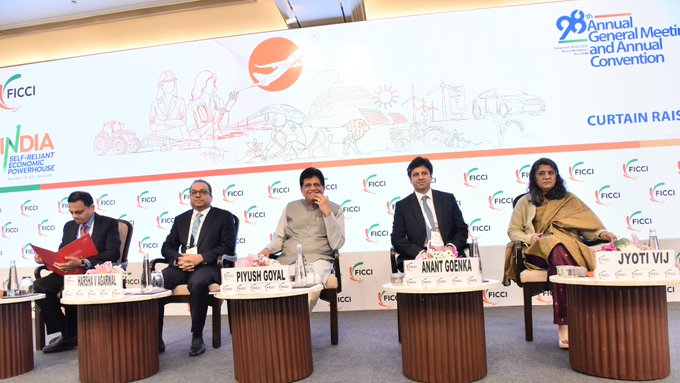
NEW DELHI : Union Minister of Commerce & Industry, Shri Piyush Goyal highlighted manufacturing, skilling, investment and technology as the four key dimensions for India’s journey towards becoming a developed nation by 2047 at the Curtain Raiser of the 98th Annual General Meeting and Annual Convention of the Federation of Indian Chambers of Commerce & Industry (FICCI) in New Delhi today.

Shri Piyush Goyal said that the first key dimension for India’s journey towards becoming a developed nation by 2047 is the need to transform the country into a domestic manufacturing and industrial hub. He stated that India must expand competitive manufacturing and strengthen self-reliance in goods that can be produced efficiently within the country. While noting that certain products may still have to be sourced from abroad due to gaps in technology, scale or capability, he cautioned that this must be accompanied by a careful assessment of supply-chain vulnerabilities. He urged Indian industry to examine whether they are excessively dependent on a single geography or supplier, especially in a global environment where trade can be weaponised. The Minister highlighted the risks associated with dependence on external suppliers for critical items and stressed that developing India as a global manufacturing hub must remain high on the national agenda.

He identified the second dimension as the need to convert the post-2000 “Amrit generation” into a highly skilled, performance-driven workforce. Shri Goyal noted that India’s long-standing challenge has been underemployment rather than unemployment, and the solution lies in skilling the workforce in the right direction. He emphasised that the country must move beyond the aspiration for only white-collar jobs and instead focus on producing technically proficient workers whose skills meet industry standards. He said that developing welders, electricians and technicians who work with discipline and accuracy will be essential, and called for a shift in mindset towards valuing training, practical capability and results over degrees alone.

The third dimension highlighted by the Minister is the creation of an investment-friendly ecosystem that supports ease of doing business. He said that the Government is committed to removing bottlenecks, reducing compliance burdens, decriminalizing outdated provisions and eliminating obsolete laws to facilitate business activity.

Shri Goyal underlined the Government’s commitment to creating an investment-friendly ecosystem through ease of doing business, deregulation, decriminalisation of laws and reduction of compliance burdens. He informed that the Government is undertaking continuous consultations to further streamline FDI and FII processes to enable faster and more efficient investment flows into the country.

He added that a robust investment ecosystem would generate employment, bring new technologies into the country, support research and innovation, and strengthen advanced sectors such as defence and security. He underlined that stable policies, a predictable business environment, steady investment inflows and currency stability will be critical for India’s progress in the Amrit Kaal.

Shri Goyal said that the fourth dimension centres on technology, innovation and the development of a strong knowledge ecosystem. He emphasised the importance of integrating cutting-edge technologies such as artificial intelligence, quantum computing and machine learning into India’s growth model. With 2.3 million STEM graduates produced annually and rapid expansion in the setting up of Global Capability Centres, he noted that the country already possesses a strong talent base. He highlighted the Government’s continued support for startups and innovation, including the recently announced ₹100,000 crore Research, Development and Innovation (RDI) Fund.

Shri Goyal also highlighted the transformative impact of the Jan Vishwas (Amendment of Provisions) Act, stating that it reflects the Government’s commitment to trust-based governance. He said that the legislation has played a crucial role in decriminalising minor offences, reducing the compliance burden on industry and fostering a more predictable and facilitative business environment. He noted that the Jan Vishwas reforms have enhanced industry confidence, encouraged entrepreneurship and strengthened ease of doing business, thereby supporting India’s broader vision of creating a modern, efficient and investment-friendly regulatory ecosystem.

Shri Goyal affirmed that global companies now recognise India’s strength in talent and innovation, positioning the country to play a leadership role in emerging technologies in the years ahead.

Shri Goyal emphasised the critical importance of national security in today’s volatile global environment. He said that cybersecurity, technological safeguards and secure digital infrastructure would be central pillars of India’s economic stability and development.

The Minister stated that Prime Minister Shri Narendra Modi’s “politics of trust” has enabled India’s transformation into one of the world’s fastest-growing major economies. He said that mutual trust between citizens, businesses and the Government has helped India lift over 250 million people out of poverty and rise from the 11th largest to the 4th largest economy, now on track to become the 3rd largest and a USD 30–35 trillion economy.

He highlighted FICCI’s historic legacy, its role in nation building, and the organisation’s contribution to India’s economic journey.

Shri Goyal noted that the idea of establishing FICCI was encouraged by Mahatma Gandhi, who envisioned it as an institution that would go beyond commerce and industry to promote economic nationalism. He said that FICCI has upheld the principles of self-reliance since its inception and has evolved into a significant partner in India’s development over the past 98 years.

The Minister appreciated FICCI’s efforts in representing more than 250,000 companies across the country and its expanding global partnerships. He emphasised that FICCI’s reach should extend to the remotest parts of India, carrying forward the vision of “FICCI Bharat 2047”.

Shri Goyal outlined the Government’s five-point agenda for partnership with FICCI — FICCI: F for Fiscal discipline, I for Innovation, C for Connectivity & critical infrastructure, C for Commerce, and I for Inclusive growth. He urged FICCI to enhance its advocacy efforts, set bold targets, study global best practices, mentor next-generation leaders, and extend support to MSMEs across districts to strengthen India’s export competitiveness and formalisation.

The Minister called oon FICCI to expand its presence across India and drive mission-mode efforts on sustainability, quality consciousness, compliance and outward-looking business strategies. He said that India remains a beacon of stability and growth in an uncertain world, and affirmed that with collective effort, India will emerge as a developed and prosperous nation by 2047.

India’s US exports jump despite 50% tariffs as trade tensions ease

NEW DELHI : India’s goods exports to the US rose for the first time in five months in October, jumping 14.5% from September, even as Donald Trump’s steep tariffs remain in place.

Exports to India’s largest foreign market had dropped sharply last month after 50% US tariffs on India – including a 25% penalty for buying Russian oil – kicked in on 27 August.

The improved data came as Indian state-run oil firms agreed to import more annual liquified petroleum gas (LPG) from the US and Trump exempted many farm goods from reciprocal tariffs that could benefit India.

Trade deal negotiations between the two countries are under way, with an Indian official saying that key aspects of the deal were nearing closure.

The jump in exports to the US came even as India’s overall goods exports fell 11.8% year-on-year in October, with 15 of its top 20 markets seeing a decline in bilateral trade.

“Tariff-exempt sectors such as smartphones and pharmaceuticals may have performed better – though this remains a tentative assumption,” said Ajay Srivastava of Global Trade Research Initiative (GTRI), a Delhi-based think tank, commenting on the latest trade numbers.

“Despite the October rebound, India’s shipments to the US have dropped nearly 28.4% between May and October, erasing more than $2.5bn in monthly export value,” Mr Srivastava added.

But trade tensions between the two countries appear to be gradually letting up after months of uncertainty.

On Monday, India said it had concluded a first-ever major deal that will see its state-run oil companies sourcing some 10% of the country’s annual LPG needs from the US.

Petroleum Minister Hardeep Singh Puri described the decision as a “historic development” and said the world’s largest and fastest growing LPG market has now opened up to the United States.

The Trump administration has been urging Delhi to ramp up its purchase of US petroleum products and reduce its dependency on Russian oil.

India became one of the biggest markets for Russian oil as Western nations imposed sanctions on Moscow after the Ukraine war started in 2022.

Last year, India bought $52.7bn of Russian crude – 37% of its oil bill – but Trump has reiterated time and again, that the country has agreed to reduce its purchases, something India has not officially confirmed.

Delhi is walking a diplomatic tightrope on energy imports as Russian President Vladimir Putin prepares to visit Delhi early next month to finalise several agreements and projects, local reports say.

Yet trade talks between India and the US – stalled for months over Delhi’s refusal to cut Russian oil imports – now appear to be moving quickly despite this.

On Monday, a senior government official told The Hindu newspaper that the first phase of the trade deal is “more or less near closure”.

India is also set to benefit from the US’s decision to roll back reciprocal tariffs on certain agricultural products such as tea, coffee and spices – a move that, analysts say, would effectively exempt about $1bn worth of India’s agricultural exports to the US from duties.

Source : BBC

ICRA highlights shifting growth drivers as industry outpaces services first time in four quarters

NEW DELHI: India’s growth drivers are set to shift in second quarter (Q2) of FY2026, with industry expected to outpace services for the first time in four quarters, even as overall GDP expansion moderates, according to credit rating agency ICRA.

The rating agency expects GDP growth to ease to 7.0 per cent year-on-year from 7.8 per cent in Q1 FY2026, with Gross Value Added (GVA) growth likely to dip slightly to 7.1 per cent from 7.6 per cent.

ICRA stated that while the services and agriculture sectors are expected to lose some momentum, a strengthening industrial performance, driven by manufacturing, construction, and favourable base effects, is anticipated to underpin the quarter’s economic activity.

ICRA expects net indirect taxes in nominal terms to contract on a year-on-year basis in Q2 FY2026, after a 9.5 per cent rise in Q1. The decline is driven by the Government of India’s indirect taxes, which are projected at -5.2 per cent compared with 11.3 per cent in the previous quarter, alongside a shallower contraction in subsidies at -4.6 per cent versus -7.3 per cent in Q1.

As a result, the gap between GDP and GVA growth is likely to return to negative territory at around 10 basis points in Q2 FY2026, after being positive at 18 basis points in the preceding quarter.

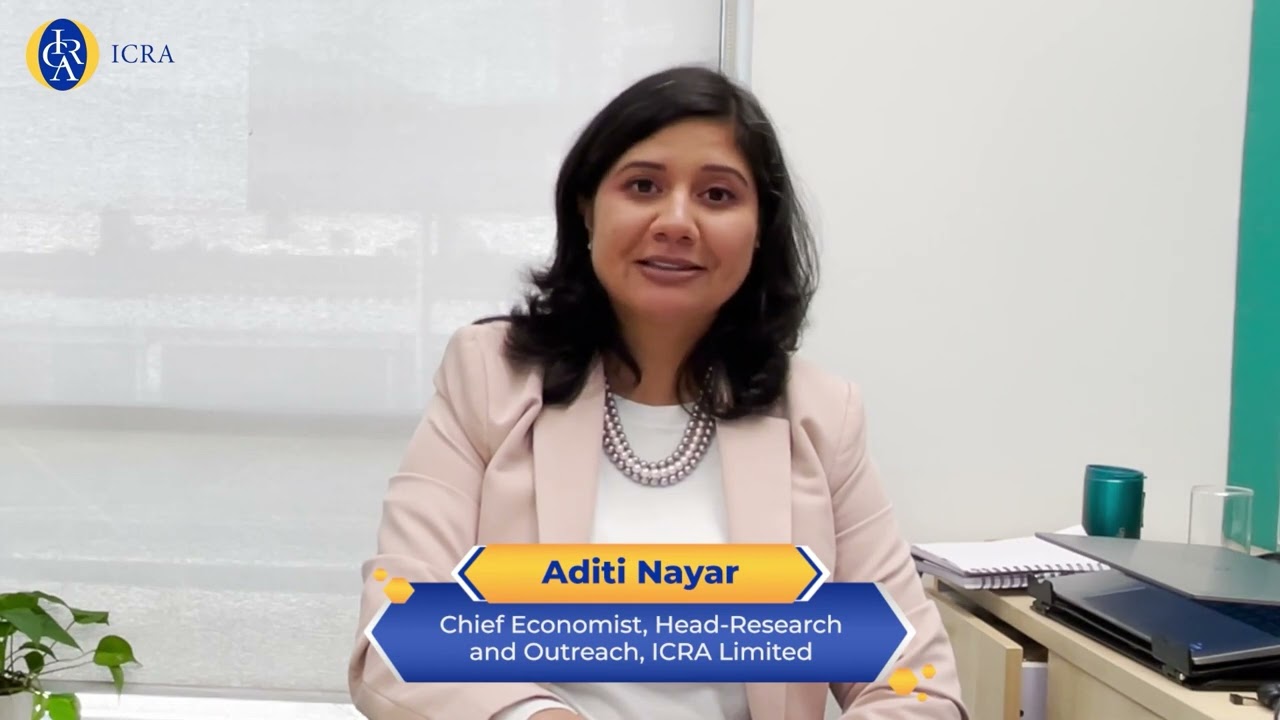
Aditi Nayar, Chief Economist, Head-Research & Outreach, ICRA, said, “A lower YoY rise in Government spending is likely to weigh on the pace of the GDP and GVA growth in Q2 FY2026 compared to Q1 FY2026.”

“However, inventory stocking related to the early onset of the festive season, enhanced by the GST-rationalisation induced volume pickup, and upfronting of exports to the US ahead of the tariffs, are expected to boost the performance of the manufacturing sector, and help industry GVA growth outpace that of the services after a gap of four quarters,” Nayar added.

“Unless the GoI’s capex allocation is enhanced and the tariff-related uncertainties ebb, the GDP growth appears set to ease below 7.0 per cent in H2 FY2026. While the well-timed GST rationalisation may result in a steady boost in volumes of consumer non-durables going ahead, consumer durables may see a trend of premiumisation instead of a sustenance of the spike in volumes that was seen during the festive season,” she noted.

On an enlarged base, the growth rate of the Government of India’s (GoI’s) gross capital expenditure moderated to 30.7 per cent in Q2 FY2026 (+10.3 per cent in Q2 FY2025) from 52.0 per cent in Q1 FY2026 (-35.0 per cent in Q1 FY2025). Simultaneously, in absolute terms, the monthly average capex rose to Rs. 1,019 billion in Q2 from Rs. 917 billion in Q1, despite the above-normal monsoons.

The agency added that based on the available data for 22 state governments, their aggregate capital outlay and net lending contracted by 4.6 per cent YoY in Q2 FY2026 (+7.3 per cent in Q2 FY2025), after the 23 per cent expansion in Q1 FY2026 (-19.1 per cent in Q1 FY2025), mainly reflecting the unfavourable base effect. On average, the monthly capex rose to Rs 544 billion in Q2 FY2026 from Rs 378 billion in Q1 FY2026, while being around half of the GoI’s level.

Further, the GoI’s non-interest revenue expenditure contracted by a sharp 11.2 per cent YoY in Q2 FY2026, against the 6.9 per cent uptick seen in Q1 FY2026. Besides, the YoY growth in the combined non-interest revenue expenditure of the aforementioned 22 state governments halved to 5.3 per cent in Q2 FY2026 from 10.9 per cent in Q1 FY2026.

The YoY expansion in India’s services exports eased to 8.7 per cent in Q2 FY2026 (absolute: USD 101.6 billion) from 10.1 per cent in Q1 FY2026 (USD 97.4 billion), the slowest pace of growth in six quarters. Overall, ICRA estimates the YoY growth in the services GVA to moderate to 7.4 per cent in Q2 FY2026 from the eight-quarter high of 9.3 per cent in Q1 FY2026, dampened by the lower expansion in Government spending and services exports.

Although the early onset of the monsoons and abundant rains supported kharif sowing, episodes of flooding in some parts of the country in August-September 2025 and untimely rains in October 2025 may have damaged the standing crops and/or delayed harvesting. While kharif sowing exceeded last year’s acreage, the adverse base is anticipated to keep the agri-GVA expansion at around 3.5 per cent in Q2 FY2026 (+4.1 per cent in Q2 FY2025), similar to 3.7 per cent in Q1 FY2026 (+1.5 per cent in Q1 FY2025).
ICRA pegs the industrial GVA growth to record a broad-based improvement to a five-quarter high of 7.8 per cent in Q2 FY2026 from 6.3 per cent in Q1 FY2026, supporting the overall GVA expansion in that quarter.

Besides, construction activity appears to have held up in Q2 FY2026, as evinced in the improvement in the construction/infrastructure goods’ output and the absolute increase in Government capex, notwithstanding the seasonal disruptions.

ICRA projects the construction GVA growth to rise slightly to 8.0 per cent in Q2 FY2026 from 7.6 per cent in Q1 FY2026. While the mining and electricity sectors are also expected to show an improvement in their YoY GVA performance in the quarter, owing to the favourable bases, growth trends are expected to remain tepid.

Source: ANI

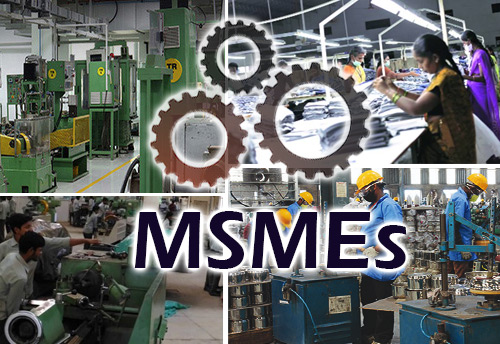
Jitan Ram Manjhi inaugurates MSME, KVIC, COIR and NSSH Pavilions at the 44th India International Trade Fair

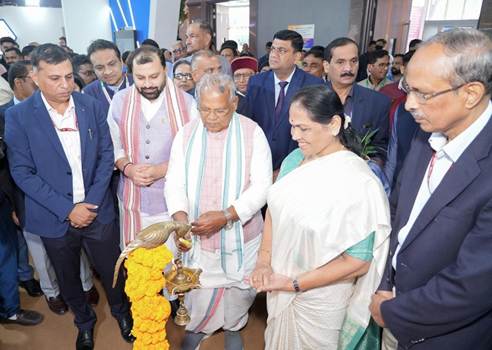
NEW DELHI : Union Minister for Micro, Small and Medium Enterprises (MSME), Shri Jitan Ram Manjhi, inaugurated the MSME, KVIC and COIR Pavilions in Hall No. 6 and NSSH Pavilion in Hall No. 5 at the 44th India International Trade Fair (IITF) at Bharat Mandapam, New Delhi, on Tuesday. The event was graced by Sushri Shobha Karandlaje, Minister of State in the Ministry of MSME and Ministry of Labour & Employment and Shri Manoj Kumar, Chairman, Khadi & Village Industries Commission (KVIC).

Shri S.C.L Das, Secretary, Ministry of MSME accompanied the delegates. Senior officers from the Ministry of MSME, Office of the Development Commissioner (MSME), Khadi & Village Industries Commission (KVIC), National Small Industries Corporation (NSIC) and COIR Board were also present on the occasion.

Following the inauguration, Union Minister Shri Jitan Ram Manjhi and Minister of State Sushri Shobha Karandlaje visited stalls in the Pavilions and witnessed live demonstration of various traditional manufacturing processes, encouraging the participants and exhibitors.

Highlights of the Pavilions

MSME Pavilion, themed “Vibrant MSMEs, Viksit Bharat”, highlights the role of MSMEs in driving inclusive growth, contributing to the vision of Atmanirbhar Bharat.

A total of 292 stalls have been allotted to Micro and Small Enterprises (MSEs) as well as Vishwakarmas from across 29 States and Union Territories, showcasing the spirit of Ek Bharat Shreshtha Bharat as:

More than 67% stalls allotted to women entrepreneurs
More than 34% stalls allotted to SC/ST entrepreneurs
15 stalls allotted to entrepreneurs with disabilities (PwD)
43 stalls feature Geographical Indication (GI) products
15 stalls dedicated to ODOP (One District One Product) items
288 (98%) first-time participants and exhibitors representing Micro Enterprises
More than 25% stalls allotted to Vishwakarmas.

The various segments of products on display include Textiles, Handloom, Handicrafts, Green and eco-friendly products, Products made by Vishwakarmas, Glass & Ceramics, Leather goods, Beauty products, Metal crafts, Games & Toys, Dry fruits, Food products, Coir products and several other unique offerings from across the country.

Coir Board Pavilion observed participation from 31 exhibitors from various parts of the country which depict the skills and craftsmanship of coir workers in producing a variety of unique handicrafts and handmade toys, ornaments, etc.

The range displayed at the pavilion also includes traditional coir products like handloom coir mat, mattings, Rubberized Mattress, handicraft coir products, carpets, coir pith, coir geo-textiles, etc. The fair offers opportunities to entrepreneurs engaged in the Coir sector to showcase their products to a wide range of potential customers, foster B2B and B2C collaborations and create new avenues for growth and self-reliance.

Khadi India Pavilion, based on the theme ‘Viksit Bharat @ 2047’ includes 150 exhibitors from various States and Union Territories, exhibiting products of Khadi and Village Industries encompassing 63 Khadi Institutions, 81 units assisted under Prime Minister’s Employment Generation Programme (PMEGP) and 6 units under Scheme of Fund for Regeneration of Traditional Industries (SFURTI). The Khadi India Pavilion supports 101 representatives from SC/ST/OBC communities and 47 women entrepreneurs, exhibiting their products and showcasing the spirit of Ek Bharat Shreshtha Bharat.

High-quality Khadi fabrics including silk sarees from Southern states of the country, muslin from West Bengal, Madhubani products from Bihar, Phulkari from Punjab, Kalamkari from Andhra Pradesh, herbal & cosmetic products from Uttarakhand and woollen products from J&K and Leh are available for sale at the Pavilion.

National SC-ST Hub (NSSH) Pavilion at Hall No. 5 is showcasing products of SC-ST entrepreneurs spread across 35 stalls. The Pavilion has exhibitors from 10 States namely; Uttar Pradesh, Maharashtra, Delhi, Assam, Karnataka, Punjab, Jharkhand, Telangana, Himachal Pradesh and Nagaland. Footwear, Sports Goods, Handicrafts, Bamboo products, Food products, machine components and Leather Goods are displayed for sale in the Pavilion.

Gujarat plans major revision of MSME investment limits in new industrial policy

GANDHINAGAR : Gujarat is preparing to update the definition and investment turnover limits for MSMEs and large industries under its new industrial policy, due in early 2026.

The changes are intended to draw more industries to the state and boost its appeal as a competitive manufacturing hub.

According to officials, both investment and turnover limits for MSMEs are likely to be increased significantly. The revision is intended to ensure that more units qualify for higher incentives, reported TOI.

The investment limit for micro industries may rise from the current Rs 1 crore to Rs 2.5 crore, for small industries from Rs 10 crore to Rs 25 crore, and for medium industries from Rs 50 crore to Rs 125 crore.

Similarly, turnover limits may be doubled to Rs 10 crore for micro units, Rs 100 crore for small units and Rs 500 crore for medium units.

According to officials, the revisions are meant to offset inflation and enhance Gujarat’s incentive structure, ensuring more enterprises become eligible for state subsidies and benefits.

For large industries, the state is considering increasing the maximum incentive from Rs 2,500 crore to Rs 10,000 crore. Sectors identified under the central government’s upcoming Production-Linked Incentive (PLI) schemes will automatically be treated as sunrise sectors in the new policy.

The government also plans to extend the Atmanirbhar Gujarat Scheme for Large and Thrust Sector Industries until 2030, aligning it with the tenure of the forthcoming industrial policy.

The scheme currently supports 14 sectors including pharmaceuticals, automobiles, electronics, telecom and textiles.

The new industrial policy is expected to play a pivotal role in strengthening Gujarat’s position as a leading investment destination.

Suraj Group organises “LeSha – Annual Sports Day 2025”

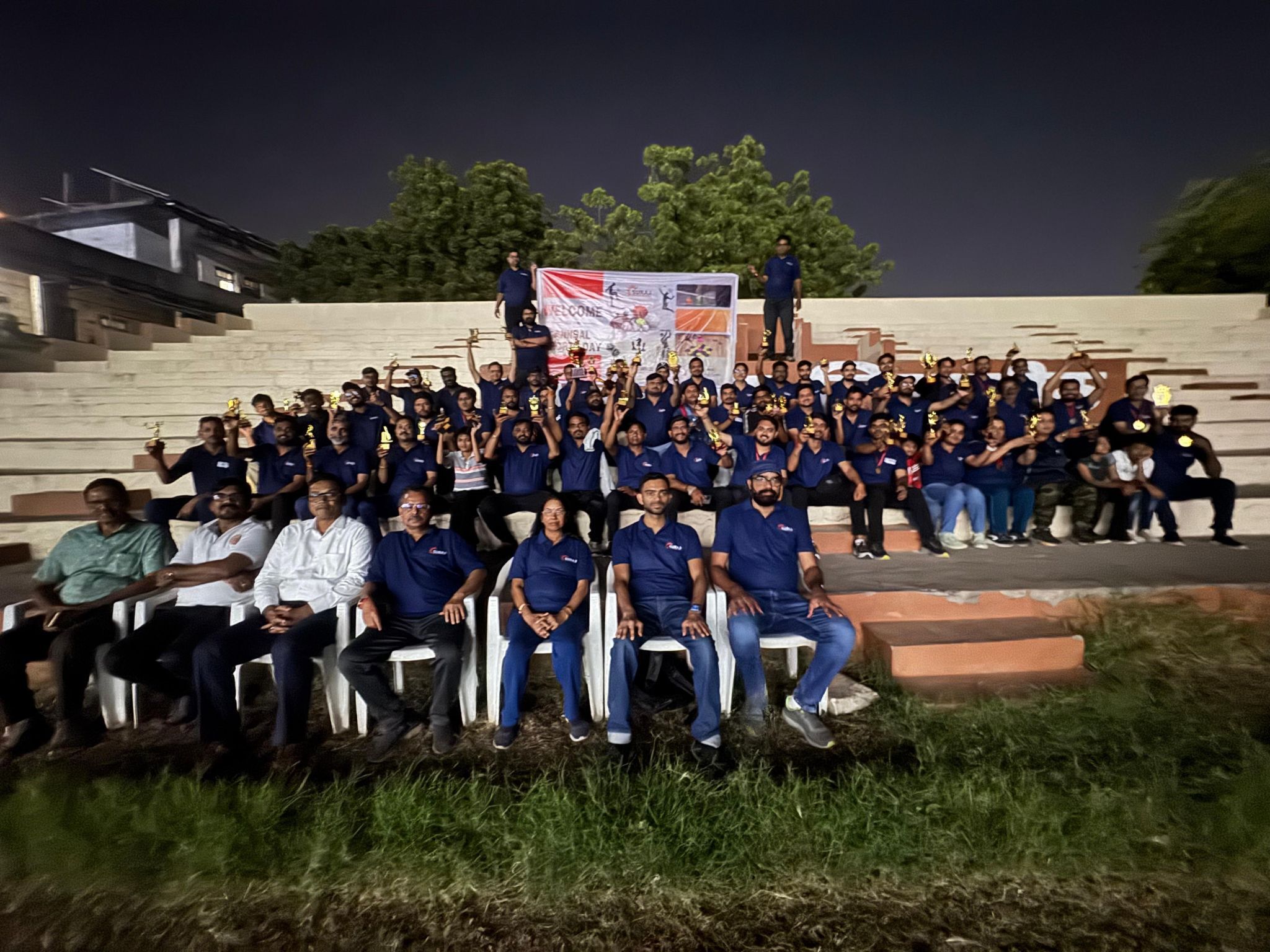
AHMEDABAD: Suraj Group, a leading name in the logistics and forwarding industry, successfully organized its much-awaited “LeSha – Annual Sports Day 2025” on Saturday, November 8, 2025, at the Gujarat Vidyapith Sports Complex, Ahmedabad. The day-long event, held from 7:00 AM to 7:00 PM, brought together employees, management, and their families for a celebration filled with energy, excitement, and togetherness.

1762758109143 1 Suraj Group organises “LeSha – Annual Sports Day 2025”

The event featured a lively mix of indoor and outdoor games, including cricket, badminton, carrom, chess, lemon and spoon race, musical chairs, and the ever-popular tug of war. Each competition reflected true sportsmanship and camaraderie, showcasing the team spirit that defines Suraj Group’s work culture.

The occasion was graced by special guests, who appreciated the enthusiasm of the participants and commended the management for organizing such a meaningful employee engagement initiative.

Speaking on the occasion, a company spokesperson shared,

“At Suraj Group, we believe that great teams are built not just through work, but through shared experiences that strengthen trust and unity. LeSha is our annual celebration of the people who power our organization.”

The management extended heartfelt thanks to all employees, participants, families, and children whose energy and enthusiasm made the day memorable.

LeSha 2025 truly embodied Suraj Group’s vision of promoting wellness, teamwork, and holistic growth — reinforcing the belief that a strong organization thrives when its people grow together, both professionally and personally.

India likely to allow export of 5 lakh metric tonnes of organic wheat

NEW DELHI : India is likely to permit the export of 5 lakh metric tonnes (LMT) of organic aata, government sources told Business Today. This would mark the first major relaxation in wheat-based product exports after more than three years of restrictions.

The proposal comes at a time when the country is witnessing strong wheat procurement, record-low inflation of 0.3 percent, and comfortable buffer stocks, creating room for calibrated easing of controls.

During the 2024 to 25 rabi marketing season, wheat procurement touched 29.92 million metric tonnes (MMT) till June 30, which is the highest level in three years and close to the government target of 31 MMT.

Officials said the food ministry has been evaluating lifting curbs on exports of wheat and products like aata, maida and sooji, backed by expectations of a bumper harvest and excellent monsoon conditions, which are the best in five years.

The agriculture ministry had earlier projected a record 117.5 MMT wheat output for the July 2024 to June 2025 period, raising confidence about domestic availability. Before export restrictions were imposed in 2022, India’s wheat exports had surged to a record 2.12 billion dollars.

Allowing the export of organic wheat is likely to be the first step in a phased reopening of India’s wheat-based export basket. Analysts say even a limited resumption could help improve global supply, especially for import-dependent countries in Asia, Africa and the Middle East, while allowing Indian millers and processors to tap strong international demand for specialty and organic grain products.

Afghanistan’s National Carrier reduces cargo rates to India to increase trade

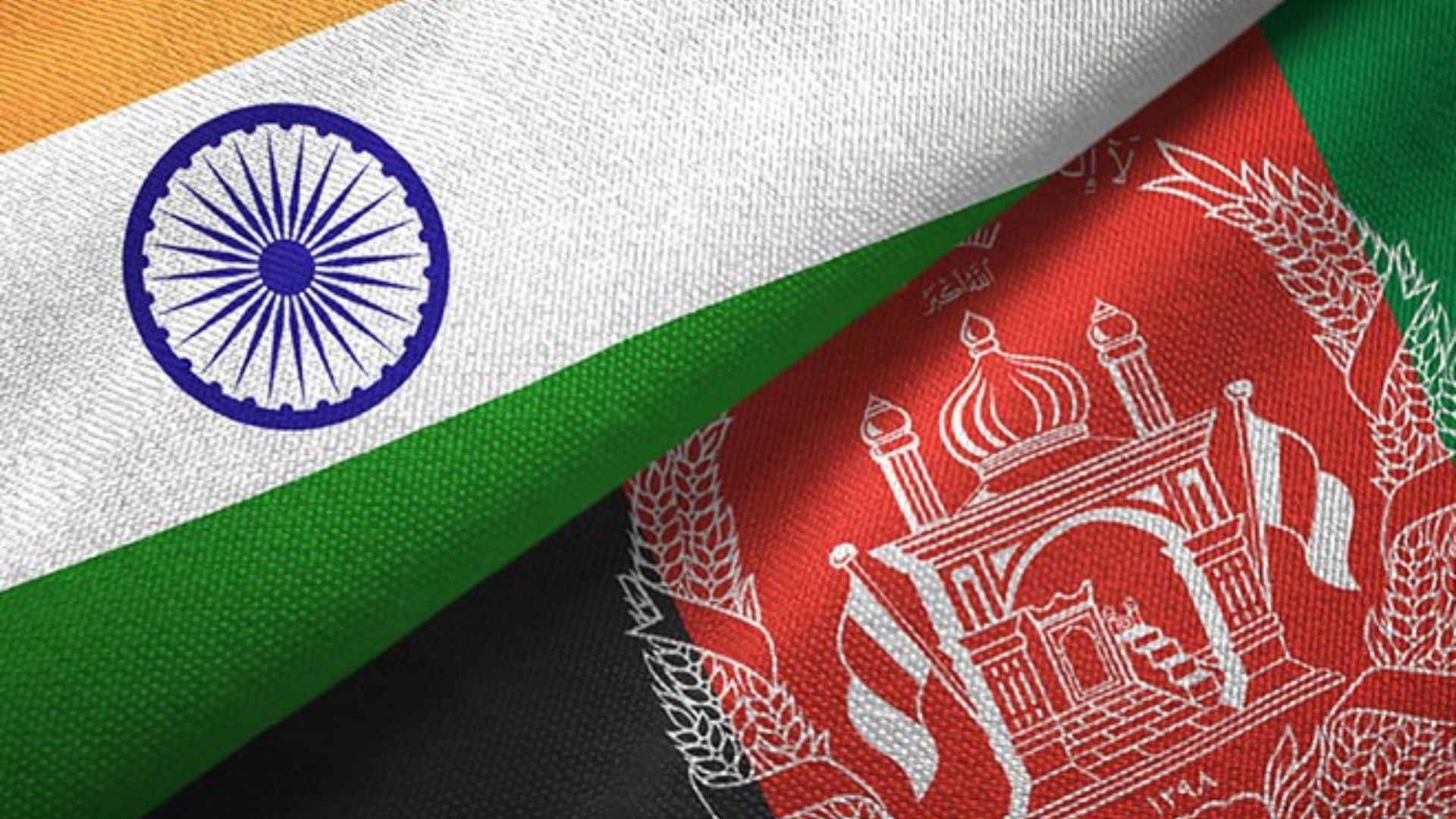
KABUL : Afghanistan’s national carrier, Ariana Afghan Airlines, has slashed cargo rates between Afghanistan and India by more than half in a dramatic discount offered only on the Delhi route to increase trade between the 2 countries. The move marks the clearest sign yet that Kabul is accelerating a strategic economic reorientation away from Pakistan and towards Iran, India, and Central Asia.

Starting immediately, Afghan exports to India, primarily pomegranates, almonds, saffron, etc, will fly for $1 per kilogram to Delhi, while imports from India will cost just 80 cents per kilogram on the cargo flight of Ariana Afghan Airlines. “Earlier, Ariana was charging $2 per kilogram for cargo between Delhi and Kabul,” said Mawlawi Bakhturahman Sharafat, the airline’s director general. “Now, it has been instructed to reduce the rate to 80 cents per kg from Delhi to Kabul and $1 per kg from Kabul to Delhi.”

Sharafat described the cuts as unprecedented. He highlighted that “no such discounts have been given to any other foreign routes” and “the special discounts are only for India routes. This shows the strong relationship between the 2 countries.” The director general of the oldest airline of Afghanistan added that Delhi was chosen deliberately, explaining that “we selected Delhi, because people of India, Afghanistan have strong and close ties. Politically we have a good relationship.”

The announcement comes weeks after Pakistan sealed the Torkham crossing, the crossing that once carried the bulk of Pakistan-Afghanistan trade. The crossing remains closed, following Pakistan’s attack on Afghanistan in October. The ties between the 2 countries are at an all-time low. The numbers tell the story of Afghanistan’s pivot. In the past six months, bilateral trade with Iran has soared to $1.626 billion, overtaking the $1.108 billion recorded with Pakistan, according to Afghan government data. Much of that commerce now flows through Chabahar Port on Iran’s southern coast, a facility built with heavy Indian investment precisely to give landlocked Afghanistan a Pakistan-free gateway to the sea.

Last month in New Delhi, Afghan Foreign Minister Amir Khan Muttaqi urged Indian companies to invest in his country and announced new direct cargo flights linking Delhi with Kabul, Amritsar with Kabul, and Amritsar with Kandahar, routes designed to rush Afghan fresh fruit to Indian tables within hours rather than weeks. With the cargo route discount and push for trade with India, Iran, clearly, Afghanistan is rewriting its economic map, and Pakistan is no longer at its center.

Source : WION