NEW DELHI: India’s current account deficit (CAD) is expected to rise to 1.7 per cent of GDPin the current financial year FY26, higher than the bank’s earlier projection of 1.2 per cent, according to a report by Union Bank of India.
The rise is mainly attributed to persistent global trade tariff pressures that continue to keep the trade deficit elevated despite weak demand and lower commodity prices.
It stated, “We expect a rise in current account deficit to 1.7 per cent of GDP in FY26, as global trade tariff pressures continue to keep trade deficit elevated”.
A current account deficit (CAD) occurs when a country’s total value of imports of goods, services, and capital is greater than the total value of its exports and other income. It indicates that more money is flowing out of the country than is flowing in.
The report highlighted that the trade deficit is likely to witness seasonal pressures due to festive demand effects. Lower commodity prices, especially oil, may, however, help limit the overall impact.
The bank noted that subdued oil prices could support India’s external balance as the country’s current account is highly sensitive to fluctuations in crude prices.
Every USD 10 per barrel move in oil prices affects the annual current account balance by close to USD 15 billion. The report added that this sensitivity means lower oil prices are likely to have a “salutary effect” on India’s trade dynamics.
However, risks to the current account outlook have emerged from commodity price volatility, particularly crude oil, and the possibility of prolonged export weakness if the US-India trade deal impasse continues. The report pointed out that the India-US Bilateral Trade Agreement (BTA) is nearing finalization, potentially by late November. The agreement is expected to cut tariffs from 50 per cent to 15-16 per cent. While the near-term impact may be limited, the deal is expected to strengthen India’s export base over time and partially offset trade balance pressures in the coming quarters.
As per data, India’s merchandise trade deficit widened to a record high of USD 41.68 billion in October 2025, compared to USD 32.15 billion in the previous month.
The reading surpassed market expectations, marking a significant turning point in the country’s trade balance.
The gold deficit also surged to record levels in October as festive and wedding-season demand, combined with pent-up buying after subdued imports earlier in the year, pushed gold inflows sharply higher.
While gold imports in November are expected to moderate in volume, they are likely to remain elevated in value due to strong investment demand despite high prices.
The report stated that gold demand is set to stabilise after the festive season but will likely stay elevated compared to earlier months.
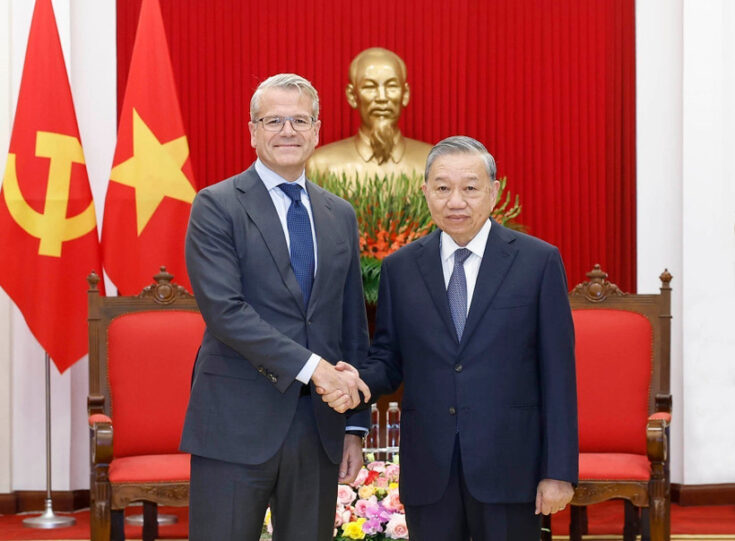
HANOI : Party General Secretary To Lam met Vincent Clerc, Chief Executive Officer of Denmark’s A.P. Moller – Maersk, in Hanoi on Tuesday 18 November to discuss future cooperation and new investment opportunities in Vietnam’s logistics and port sectors.
General Secretary Lam welcomed the positive development of the Vietnam–Denmark Comprehensive Partnership and the Green Strategic Partnership, noting that both frameworks support ongoing collaboration in sustainable growth and low-carbon development. He said Vietnam is prioritising the expansion of modern and green infrastructure, including seaports, to enhance national competitiveness.
He encouraged Maersk to consider investments in areas such as marine economy development and new logistics projects that connect industrial zones, major cities and regional supply chains. Vietnam, he added, remains committed to creating favourable conditions for international logistics companies.
Vincent Clerc highlighted Vietnam as an important market for Maersk and said the group’s vessels first called at Vietnamese ports more than a century ago. He outlined Maersk’s strategic plans in the country, including efforts to connect Vietnam with major global manufacturing and logistics hubs.
He said the company is seeking opportunities to develop large, modern and green container ports and strategic logistics projects to support Vietnam’s import–export growth, sustainable economic development and long-term net-zero ambitions.
CAIRO : The Chairman and Managing Director of the Suez Canal Authority, Ossama Rabiee, said on Saturday that the Suez Canal is ready to receive mega container ships.
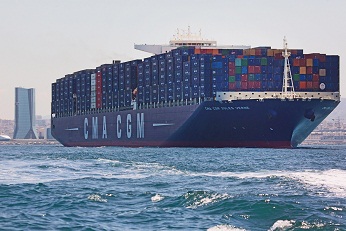
The authority confirmed that the Canal is fully prepared to receive mega container ships. This announcement came during his inspection of navigation through the Canal from aboard the mega container ship CMA CGM Jules Verne, which was transiting the Canal as part of the northbound convoy, en route from Singapore to Lebanon, after safely transiting through the Red Sea and the Bab El-Mandab Strait.
This voyage marks the first transit of the ship, affiliated to the French shipping line CMA CGM, from the south through Bab El-Mandab, and its third transit through the Canal.
It is resuming transits after its last two southbound voyages this year, on June 20 and September 20, following the implementation of incentives.
The ship is 396-meters-long, 53.6-meters-wide, with an 11.5-meters draft, and a gross tonnage of 176,000 tons.
During his visit to the ship, Rabiee welcomed the crew and asked about their impressions of transiting through the Red Sea and the Bab El-Mandab Strait, as well as the quality of navigational services provided by the Canal.
Rabiee also observed the transit of the container ship CMA CGM Helium, a 335-meter-long, 51 meter-beam ship, with a 9.5-meter draft and 130,000 gross tonnage, on its maiden voyage through the Canal as part of the northbound convoy, en route from Singapore and calling at Alexandria.
The chairman of the Suez Canal Authority said that all necessary procedures be taken to ensure a safe transit. This includes assigning a team of SCA chief pilots, providing navigational assistance by accompanying tugboats, and ensuring real-time monitoring from the Main Traffic Control Center and Trafic Control Stations located along the Canal.
He explained that the restoration of calmness once more to the Red Sea region will impose a new reality on the shipping community, through the serious consideration by the shipping lines of amending navigation schedules so as to return to transiting through Bab el-Mandab and the Suez Canal once more.
The chairman also emphasized that the SCA will intensify its meetings with the major shipping lines within the upcoming period to discuss ways to ensure the prompt return of container ships affiliated to them to transiting through the Canal – either through experimental voyages, partial return or a multi-phased full return.
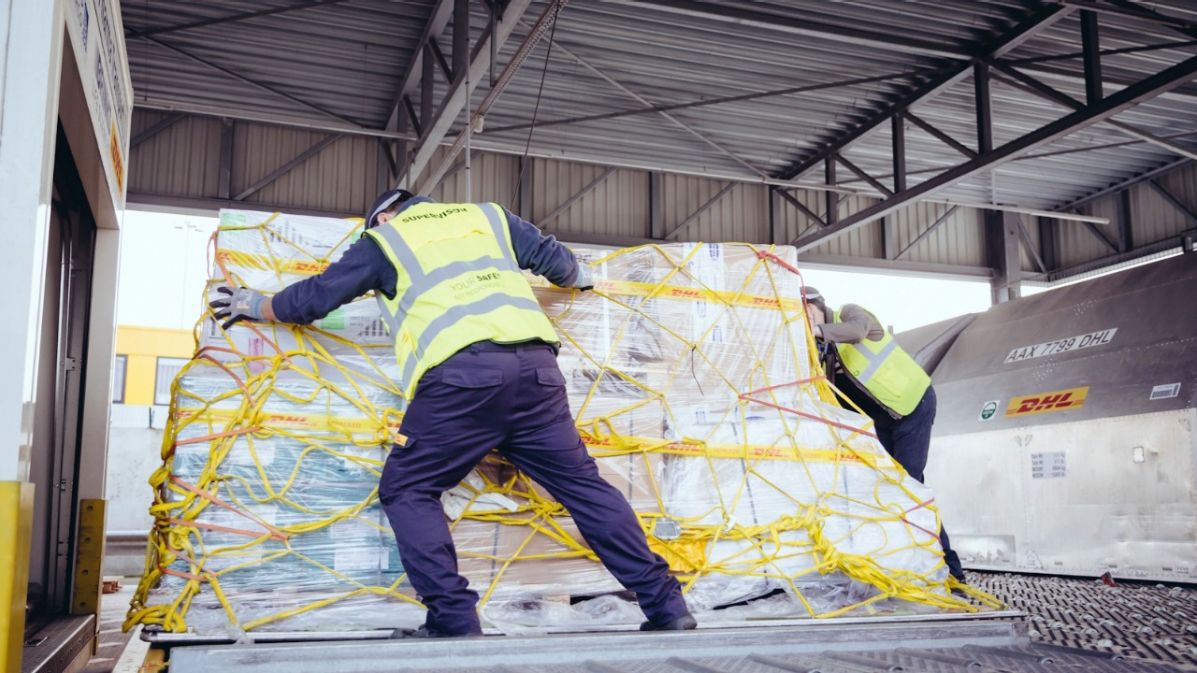
SINGAPORE: DHL Express has optimized its network with additional capacity for its Hong Kong and Penang route. The upgraded route will be served by a Boeing 767 freighter, replacing the previous Airbus A321, providing the network with an additional 20 tons of cargo capacity per flight.
Operating daily with its partner Raya Airways, DHL aims to support the rising demand for time-sensitive shipments from technology and semiconductor manufacturers in Malaysia’s northern manufacturing hub. The Boeing 767 freighter will offer enhanced payload and range capabilities, accommodating more shipments and ensuring customers in Penang are better connected to their trading partners in Hong Kong and beyond.
“For decades, Penang has been an attractive destination for tech giants, and we are proud of our strong footprint and network that has contributed to that growth,” said Peter Bardens, Senior Vice President for Network Operations & Aviation – Asia Pacific, DHL Express. “By introducing a larger aircraft and a daily schedule, we’re not only increasing capacity but also reinforcing our dedication to connecting Asia’s innovation hubs with the rest of the world. As trade lanes alter, we remain focused on maintaining our network’s flexibility and agility to cater to changing customer needs.”
This strategic enhancement reflects DHL’s commitment to supporting Malaysia’s growing role in global supply chains, particularly in the electronics and semiconductor sectors. The move comes as Penang continues to attract high-value investments and expand its footprint in the global tech ecosystem. The state recently recorded a significant manufacturing investment of approximately EUR2.56 billion (RM12.5 billion) in the first half of 2025, a 150% increase compared to the same period in 2024.
“The network enhancement aligns with findings from the DHL Global Connectedness Tracker 2025, which shows that Asia Pacific is increasingly playing a central role in global trade, despite geopolitical tensions and tariff disruptions. Intra-Asia trade continues to show momentum, with Malaysia being ranked among the top 10 fastest-growing trading nations globally in the first half of 2025,” said Julian Neo, Country Manager, DHL Express, Malaysia.
“Our partnership with DHL Express has grown over the years through operational reliability and close collaboration. The introduction of the Boeing 767 further strengthens our support for Penang’s expanding electrical and electronics industries, while enhancing Malaysia’s connectivity to global markets. We look forward to continuing this partnership as we grow our capacity and serve the evolving needs of our customers,” said Mohamad Najib Ishak, Group Managing Director, Raya Airways.
Malaysia’s trade value growth underscores its resilience and rising importance in global supply chains, amid shifting trade dynamics. It is one of the 20 markets globally that DHL Group has identified with the highest growth potential. The recently concluded DHL GoTrade Summit 2025, held for the first time outside Germany in Kuala Lumpur, also underscores the logistics provider’s commitment to elevating local enterprises and reinforcing Malaysia’s position as a key player in the global marketplace.
LONDON: The Assembly of the International Maritime Organization (IMO) will meet for its 34th regular session from 24 November to 3 December 2025, to elect Members of the IMO Council and approve the Organization’s work programme and budget.
The Assembly is the highest Governing Body of the IMO, consisting of all Member States. The Assembly session will be preceded by the 135th session of the IMO Council (19-21 November).
Election of Council
The Assembly, which meets every two years in regular sessions, elects the forty Members of the Council. The Council is the Executive Organ of IMO and is responsible, under the Assembly, for supervising the work of the Organization.
A new 40-Member IMO Council for the 2026-2027 biennium will be elected, including:
Category (a): 10 States with the largest interest in providing international shipping services
Category (b): 10 States with the largest interest in international seaborne trade
Category (c): 20 States not elected under (a) or (b) above, which have special interests in maritime transport or navigation, to ensure representation of all major geographic areas of the world.
The candidates for the election are listed here. The election will take place on Friday 28 November, with an in-person, secret ballot.
The newly elected Council will meet on 4 December (for the Council’s 136th session) and will elect its Chair and Vice-Chair.
Strategic plan, budget and work programme
The Assembly is expected to adopt the revised Strategic Plan for the six-year period 2024 to 2029 and the Organization’s budget and work programme for 2026 and 2027.
IMO Awards Ceremony
IMO will host the IMO Awards Ceremony on the evening of the first day of the Assembly, 24 November from 5.00pm. The event will be held at IMO Headquarters in London, and will include the presentation of:
The Assembly will adopt several resolutions on key aspects of the Organization’s work, including those covering:
IMO Capacity Development Strategy
Procedures for port State control, 2025
Survey Guidelines under the Harmonized System of Survey and Certification (HSSC), 2025
2025 Non-exhaustive list of obligations under instruments relevant to the IMO Instruments Implementation Code (III Code)
Framework and procedures for the IMO Member State Audit Scheme
Code on Alerts and Indicators, 2025
Criteria for the provision of mobile satellite communication systems in the global maritime distress and safety system (GMDSS)
Charges for distress, urgency and safety communications through recognized mobile satellite services in the GMDSS
Consolidated Text of the Convention on the International Maritime Organization
Progressive use of Arabic as a working language of the Organization
Criteria and procedures for live streaming to the public of IMO Assembly plenary meetings
Rules of Procedure of the Assembly
Relations with non-governmental organizations
Follow online
Plenary sessions will be livestreamed on IMO’s Youtube Channel. The election of the Council will be held in person, via secret ballot and will not be livestreamed. Results will be shared via IMO on X and on the IMO website.
HONG KONG: Major ship-recycling countries in Asia have taken steps to enhance compliance and safety in ship recycling across the region, in line with the Hong Kong International Convention for the Safe and Environmentally Sound Recycling of Ships (Hong Kong Convention).
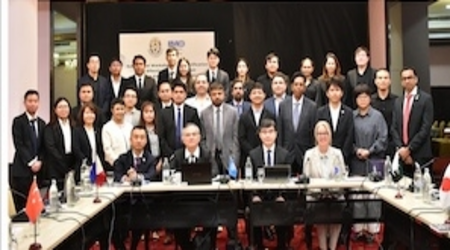
Building on previous IMO initiatives, a subregional workshop in Bangkok, Thailand (11-13 November) aimed to equip 29 government officials from Bangladesh, China, India, Indonesia, Japan, Pakistan, Philippines, Thailand, Türkiye and Viet Nam with the knowledge and skills needed to ratify, implement and enforce the Hong Kong Convention (HKC) and related Guidelines.
The HKC, which entered into force on 26 June 2025, aims to ensure that ships are recycled at the end of their operational lives without putting human health or the environment at risk. It sets out clear responsibilities for shipowners, shipyards, recycling facilities, and national authorities in flag, port and recycling States.
Understanding the Hong Kong Convention
Through case studies, presentations and interactive discussions, participants were introduced to the Convention’s technical requirements and the obligations of key stakeholders. They also explored the steps needed for accession, common challenges in implementation and approaches to ensuring compliance.
The workshop focused on building practical experience for early implementation and enforcement of the Convention, with participants exchanging lessons learned and best practices. Particular emphasis was placed on strengthening port State control (PSC) inspections and raising awareness in countries that have yet to ratify the Convention.
Of those represented, Bangladesh, Pakistan, India and Türkiye, which together constitute over 90% of the world’s ship recycling capacity, have already acceded to the HKC, while the Philippines is progressing towards accession.
Empowering women
In support of IMO’s commitment to gender equality, a representative of the Women in Maritime Association (WIMA Asia) highlighted regional challenges and opportunities for empowering women in the maritime sector.
The session also showcased national and community-led initiatives from WIMA Asia chapters in Indonesia, Malaysia, Mongolia, the Philippines, Republic of Korea, Timor-Leste and Viet Nam, including mangrove restoration, support for fisherfolk and coastal clean-ups. Participants identified opportunities for future collaboration, particularly in ship recycling, environmental protection and maritime leadership.
The workshop was funded by the People’s Republic of China through IMO’s Integrated Technical Cooperation Programme (ITCP) and hosted by Thailand’s Marine Department. It forms part of IMO’s ongoing support to major ship-recycling countries worldwide.
LONDON: Baltic Exchange has launched a new Time Charter Equivalent (TCE) earnings calculator, designed to bring clarity and consistency to freight assessments in an increasingly complex market. The calculator builds on the Baltic’s long-standing TCE methodology, which has been in use since 2008. Users can see the constituent parts of the standard calculation, including income lines, expenses, port and canal charges, helping ensure transparency and accurate benchmarking. This is particularly valuable as ships adapt to new trading patterns driven by geopolitical tensions and shifting global routes.
“Market participants have been asking for greater transparency and consistency in how freight earnings are compared. The new calculator builds directly on our established TCE benchmarks, turning a complex calculation into a clear, practical tool that reflects real-world trading conditions against the Baltic standard vessels and routes,” said Stephen Aitchison, Senior Freight Market Assessor at Baltic Exchange.
“This calculator provides useful output from a complicated set of variables into a normalised and comparable format, including those related to emissions regulation,” said Martin Crawford-Brunt, Emissions Lead at Baltic Exchange.“It allows users to assess their vessel against the trusted Baltic market standard, enabling them to understand the differential in $/mt or $/day.”
“The clear display of the many freight components supports better-informed commercial decisions as it allows users to test alternative speeds and consumptions by route,” added Crawford-Brunt. “It’s a practical tool for owners, charterers and brokers alike, to shows the potential commercial benefit of efficiency measures.”
The tool currently focuses on dry bulk carriers, oil tankers (crude and products), LNG and LPG carriers, reflecting the standardised Baltic routes for these sectors. It is designed to evolve, with future iterations expected to integrate complex emissions regulations and other operational variables.
“The goal is to provide a tool that improves the quality of conversation between freight buyers and sellers, enabling better decision-making and more accurate pricing,” said Crawford-Brunt. “This is an evolving tool, and we welcome feedback from users to help us refine and enhance its capabilities.”
The calculator complements other Baltic tools, including the FuelEU Maritime calculator and voyage cost estimators, enabling users to assess the impact of fuel choices, emissions compliance, and efficiency improvements in a fully integrated framework. By linking these tools, the Baltic provides a comprehensive suite for transparent freight and operational analysis across the market.
The new TCE earnings calculator represents a step forward in Baltic’s commitment to bringing clarity to freight markets, supporting the industry as it navigates increasing regulatory and operational complexity.
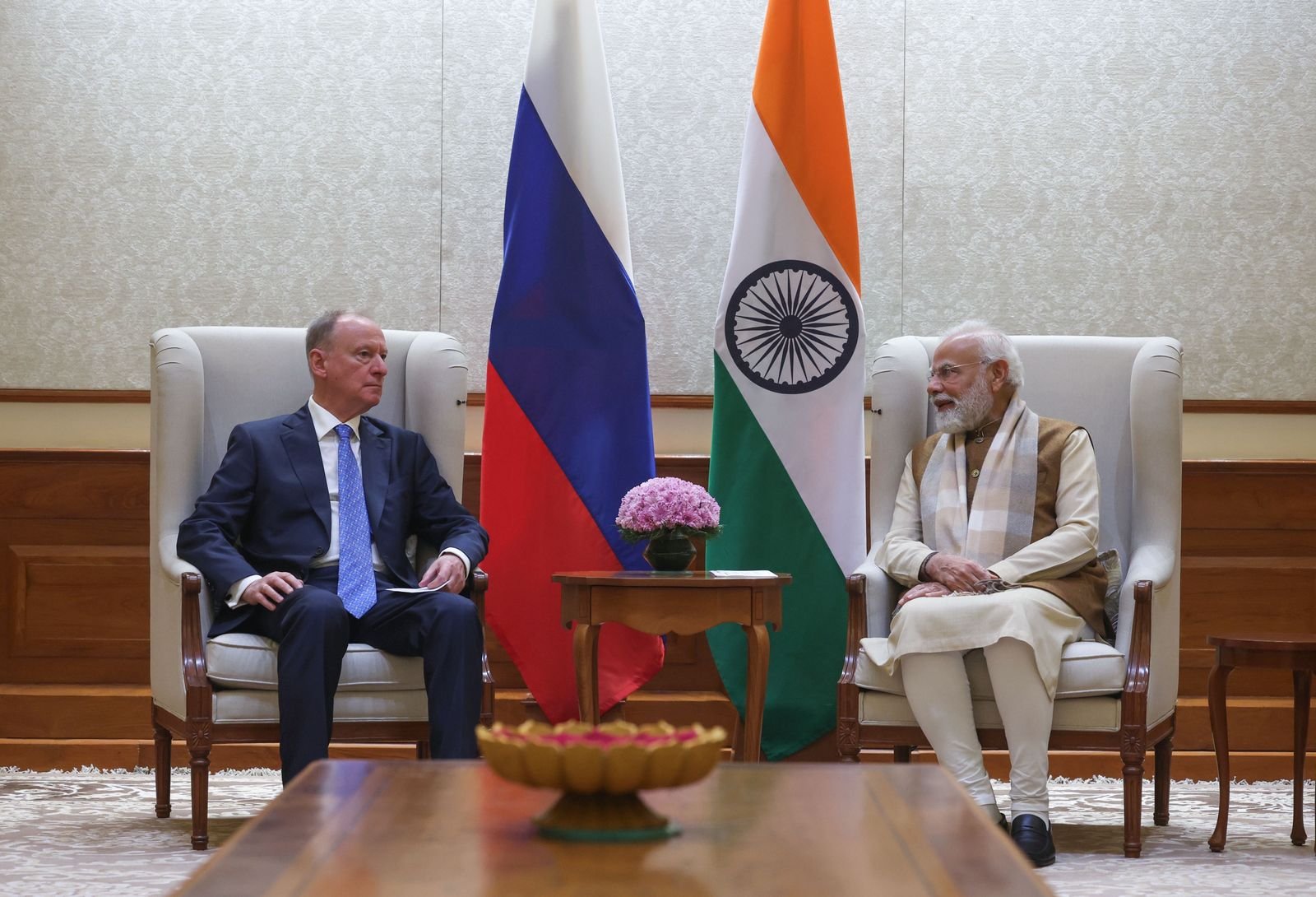
NEW DELHI : Prime Minister Shri Narendra Modi welcomed Mr. Nikolai Patrushev, Aide to the President of Russia and Chairman of the Maritime Board of Russia, for a high-level meeting focused on expanding bilateral cooperation in the maritime domain. The two leaders held “productive discussions,” according to the Prime Minister’s Office, underscoring new opportunities in several key areas
The Russian embassy in New Delhi said the two sides discussed various issues of Russian-Indian cooperation, particularly in the maritime sector. “Emphasised their mutual interest in deepening interaction between Russia and India to strengthen their maritime capabilities, the embassy said in post on social media app ‘Telegram’. Patrushev also discussed the key points for the Russia-India summit, scheduled for early December, the Russian embassy said.
Patrushev’s visit comes just weeks ahead of Putin’s expected visit to India to meet Modi for the annual leader’s summit. Putin and Modi are expected to discuss multiple issues of trade, crude oil supplies and military equipment deliveries. Putin had earlier instructed his government to examine proposals for expanding trade and economic ties with India, including addressing challenges related to logistics, payments, and the rising trade imbalance.
The meeting between PM Modi and Nikolai Patrushev underscores a clear push by India and Russia to deepen maritime cooperation — not just in traditional domains like shipbuilding and ports, but also in strategic, green, and future-facing areas such as the blue economy and Arctic operations. This could mark a significant step in their bilateral relationship, especially ahead of the upcoming India–Russia summit.
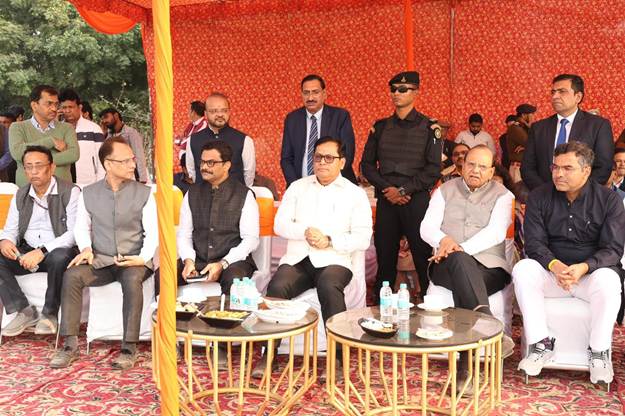
NEW DELHI : The Union Minister for Ports, Shipping and Waterways (MoPSW), Sarbananda Sonowal, Delhi Lieutenant Governor Vinai Kumar Saxena and Delhi Tourism Minister Kapil Mishra reviewed the progress of the Yamuna Boat Tourism and Ferry Infrastructure Development Project, which aims to introduce recreational boat cruises and ferry services on the River Yamuna for residents and visitors in the National Capital.
The project, located upstream of the Wazirabad Barrage between Sonia Vihar and Jagatpur, is expected to provide a new green tourism experience and enhance connectivity through eco-friendly river travel. The initiative is being developed at an estimated cost of ₹20 crore.
The River Yamuna, notified as National Waterway 110 (NW-110), stretches 1,080 kilometres from Delhi’s Jagatpur to Prayagraj in Uttar Pradesh. As part of efforts to promote inland water transport and short-distance urban tourism, the Ministry of Ports, Shipping and Waterways (MoPSW) is developing facilities along a 6–7 km round-trip corridor between Sonia Vihar and Jagatpur.
After reviewing the on-ground progress, Shri Sonowal said the initiative reflects the government’s commitment to sustainable and modern waterways.
“Under the dynamic leadership of Prime Minister Shri Narendra Modi, India’s waterways have witnessed a transformational revival after decades of neglect. Eco-friendly cruise tourism on the Yamuna is a major milestone, paving the way for cleaner, greener and more efficient water transport that will boost connectivity and tourism in the heart of Delhi,” said Shri Sarbananda Sonowal.
To support implementation, the Inland Waterways Authority of India (IWAI) has signed an MoU with key departments of the Delhi Government, including Irrigation and Flood Control, Delhi Development Authority (DDA), Delhi Jal Board (DJB) and Delhi Tourism and Transportation Development Corporation (DTTDC). The agreement focuses on developing cruise tourism along a four-kilometre stretch of NW-110.
The corridor will function as a hub for eco-friendly cruise operations, powered by electric-solar hybrid boats that can accommodate 30 to 40 passengers. The vessels will feature safety equipment including life jackets and public announcement systems. IWAI has already installed two floating jetties with a capacity of 50 passengers each at Sonia Vihar. Additional on-shore amenities such as parking, basic facilities, and recreational spaces are planned.
The project is expected to revitalise recreational activities, enhance green mobility and reshape Delhi’s tourism landscape by offering new river-based experiences for residents and tourists.
Speaking further on the possibilities of Yamuna as a conduit of commute leading towards ease of movement and economic growth, Sarbananda Sonowal further said, “The development of inland water transport on the Yamuna opens an exciting new chapter for Delhi. Beyond enabling cleaner modes of travel, this project will enhance the experience of residents and tourists alike by adding a unique river-cruise dimension to the Capital’s tourism landscape. With eco-friendly boat services and modern passenger facilities, Yamuna will not only emerge as a vibrant recreational corridor but also as a dynamic water transport link that strengthens connectivity and economic opportunities in the heart of the city.”
The Union Minister and Lieutenant Governor of Delhi were also joined by Pravesh Sahib Singh, Minister for Public Works Department, Legislative Affairs, Irrigation & Flood Control, Water and Gurudwara Elections, Delhi Govt along with Kapil Mishra, Law & justice, Labour, Employment, Development, Art, Culture & Language, Tourism, Delhi Govt. Senior officials from IWAI including Sunil Kumar Singh, Chairman (I/C), IWAI and others from Delhi Govt were also present during the review visit.
Across India, IWAI is strengthening national waterways by developing terminals, improving fairways, installing night navigation aids and upgrading lock systems. Under the Harit Nauka sustainability initiative, electric catamarans have already been launched in Varanasi and Ayodhya, with additional deployments planned for Patna & Guwahati. IWAI recently completed trials of India’s first indigenously built hydrogen fuel-cell powered vessel, advancing the country’s green mobility goals.
Adding on the revitalisation of inland waterways in the country, Shri Sarbananda Sonowal said, “Under the visionary leadership of Hon’ble Prime Minister Narendra Modi ji, the inland waterways sector—once neglected and overlooked for almost six decades—has undergone a transformational turnaround since 2014. What was long seen as an under-utilised asset is today revolutionising how India moves people and goods with speed, sustainability and efficiency. The remarkable growth in cargo movement, infrastructure expansion and green mobility solutions stands as a testament to PM Modi ji’s resolve to unlock the vast potential of our rivers for national progress.”
The IWT sector has recorded an unprecedented rise in trade and movement of goods over the past decade. The number of operational national waterways increased by 767%, while the volume of cargo handled on national waterways grew by 635%. The sector also saw a 62% increase in multimodal terminals and a 233% rise in investments in national waterways.
Major reforms—including the National Waterways Act, 2016, which declared 111 national waterways, and the Inland Vessels Act, 2021, replacing century-old legislation—have played a key role in driving expansion and modernisation.
Today, India’s 111 national waterways span 20,187 kilometres across 23 states and four Union Territories. Thirty-two National Waterways are currently operational for shipping and navigation. The number of operational waterways is targeted to reach 76 by 2027. Cargo movement on national waterways reached an all-time high of 146 million tons between April 2024 and March 2025, marking the strongest performance to date.
NEW DELHI : Union Minister of Commerce and Industry, Shri Piyush Goyal, while addressing the Indo American Chamber of Commerce in New Delhi on Tuesday, emphasised that the India–US Strategic Partnership remains strong, stable and continuously expanding across strategic and economic sectors. He said there is no cause for concern regarding the bilateral relationship and reiterated that the friendship between the two nations stands on firm pillars of democracy, diversity and a shared developmental vision.
Shri Goyal stated that the United States views India as a trusted partner, and both countries remain committed to expanding trade and commerce. He noted that a comprehensive partnership such as the India–US relationship comprises several elements that may progress at different speeds. He added that negotiations are a continuous process and India must safeguard its interests while balancing the sensitivities of farmers, fishermen, small industries and businesses.
Shri Goyal said India has moved from being among the “Fragile Five” to becoming one of the top five global economies in the last 10–12 years. He projected that India is on track to become the world’s third-largest economy by 2027. He cited strong banking systems, low inflation, controlled fiscal deficits, growing consumer sentiment and infrastructure expansion supported by GST reforms as key contributors to India’s robust economic fundamentals.
Referring to the Prime Minister’s vision, Shri Goyal recalled the statement that India is not merely an emerging market but an emerging model of development. He outlined the pillars on which India’s journey towards Amrit Bharat 2047 is progressing strong macroeconomic fundamentals, inclusive and sustainable growth, a welfare-driven development model covering 140 crore citizens, the strength of a vibrant democracy and the power of India’s demographic dividend led by a skilled and talented youth.
He noted that India produces 2.4 million STEM graduates every year and continues to deepen partnerships with several developed countries through Free Trade Agreements, either concluded or under negotiation. He said India is an aspirational nation where every child today gets access to basic needs such as food, clothing, housing, healthcare, education, electricity, clean water and digital connectivity challenges that were widespread in earlier decades.
The Minister highlighted the scale of India’s market and the pace of its growth, noting that the Indian economy has more than doubled in the last decade. He stated that at current growth rates, India’s economy is doubling every eight years and aspires to become a USD 30–35 trillion economy by 2047. He also cited Uttar Pradesh as an example of dramatic economic transformation over the last eight years, becoming a preferred investment destination with large volumes of investments grounded and monitored consistently.
He described India’s growth story as one of resilience, reliability and security mentioning that strong governance enabled education, housing and employment in tribal and remote regions. He mentioned that 4 crore poor families have received free housing in the last 10 years, with an additional 2 crore houses planned under the current term.
Shri Goyal said India’s development potential rests on a secure nation, clean governance, decisive leadership and continuous reforms. He noted that the Government has been eliminating cumbersome compliances, reducing procedural burdens, decriminalising minor offences and enabling ease of doing business. He said India’s youthful population, with an average age of 28.4 years, is driving growth and seeking a better quality of life.
The Minister said that despite global volatility and challenges, India stands as an oasis of stability. He highlighted that the Indian stock market has grown nearly four-and-a-half times in the last 11 years, with more than 2,000 Global Capability Centres many from the United States operating in India and leveraging Indian talent. He said the Government is supporting startups, entrepreneurship and innovation, citing the recently launched second Fund of Funds for Startups worth Rs. 10,000 crore and the Rs. 1 lakh crore fund for research, development and innovation.
He stated that India provides one of the greatest opportunities for global businesses and expressed readiness to work with US companies on new ideas, technology adoption and innovation across sectors such as artificial intelligence, quantum computing, design and advanced technologies. He said India aims to benchmark itself against the world’s best and progress collectively towards the goal of becoming a developed nation.
Shri Goyal said that India’s performance during COVID-19 demonstrated its collective capacity, resilience and unity. He noted that India continues to outperform global growth projections and is on course to record higher exports in both goods and services by the end of the financial year. He expressed confidence that India will remain the fastest-growing large economy for many years.
The Minister called for collective efforts to build a prosperous India by 2047, urging cooperation and collaboration to overcome challenges and achieve the nation’s development aspirations. He said that when 1.4 billion Indians work together with unity and purpose, any obstacle can be overcome.